How M&S responds to its cyber-attack could have a serious impact on its future – and its customers

Source: The Conversation – UK – By Aybars Tuncdogan, Reader in Digital Innovation and Information Security, King’s College London

raymond orton/Shutterstock

The cyber-attack on Marks & Spencer will lead to an estimated £300 million hit to the company’s profits this year. It now aims to have online shopping at the store back to normal by August, more than three months after IT systems were compromised.

Fans of M&S clothing and food will be relieved after all of the uncertainty. But that level of uncertainty, as well as the huge cost, is surely a sign that big retailers, which millions of people rely on, need to change how they think about – and invest in – cybersecurity.

It has to be an absolute priority. After all, few marketing strategies or HR initiatives can save a company £300 million in just six weeks. But perhaps a more sophisticated cybersecurity department could have done just that.

To be fair, M&S faced a relatively rare, high-impact ordeal. Most cyber-attacks of this nature don’t affect customers so directly, and much of the recovery typically happens behind the scenes.

But M&S shoppers saw online orders collapse, contactless payments fail and refunds, gift cards and loyalty points not functioning. Disruption in stock-management and warehousing led to empty shelves and food waste.

On June 27, M&S issued a public apology and a £5 digital gift card to affected customers. But research suggests that the most important element of keeping customers onside is the quality of the recovery process, and whether normal service is eventually resumed.

To get back to normal service, it is possible that a ransom was paid to the cyber attackers, but M&S has refused to confirm or deny this. (One survey found that many organisations hit by cyber attacks agreed to pay a ransom – and then suffered a subsequent breach, often from the very same culprits.)

But even when normal service returns, when hackers steal customer data, as they did with M&S, research suggests that this information is often reused by criminals in identity theft and phishing. A study even found that victims of data breaches are more likely to have mortgage applications denied.

From what we know about the breach at M&S, it seems that the cyber-attackers simply used a phishing technique to get the support desk of a third-party contractor to reset the password of an admin-level account. That said, although in this case the main vulnerability was human, the lesson to be learnt here is that sometimes just one vulnerability can shake the whole system to its core.

This is why business owners need to think of cybersecurity not just as a tedious and inconvenient IT issue, but as a core function of the business. Otherwise, as the M&S case illustrates, it is simply not possible for the rest of the corporate structure to operate.

Testing times

So cybersecurity targets must be incorporated into every department to ensure collective defence. And organisations also need to stress-test the different aspects of their systems.

That could be checking on human responses, but it should also include technology (like a vulnerability in the web server), physical barriers (a poorly secured server room door) and HR procedures (failure to revoke ex-employee access).

Laptop in use with with graphic of padlock and security images.
Lock down your laptop.
Thapana_Studio/Shutterstock

These lines of defence have to be stress-tested regularly and from multiple angles, rather than being considered an annual checkbox activity for compliance.

Scenario-based tests – essentially a cyber fire-drill — such as internal threat simulations and response exercises, can provide useful insights into an organisation’s readiness to detect, respond to and recover from cyber-attacks.

It’s also important that organisations learn to communicate clearly once a breach occurs. Research into responses to data breaches suggests that any backlash is sharper when the company seems to be trying to hide the breach, which may later be publicised by the criminals instead.

Consumers should also remember that they are not powerless. We may not be able to prevent a data breach, but all of us can help to stop attackers from infiltrating our online worlds by something as simple as not re-using the same passwords.

By remaining sceptical, we can prevent attackers from using the information they stole to phish us later. And by thinking carefully about what personal data we share with companies, we can reduce the impact of future breaches.

The Conversation

Aybars Tuncdogan does not work for, consult, own shares in or receive funding from any company or organisation that would benefit from this article, and has disclosed no relevant affiliations beyond their academic appointment.

ref. How M&S responds to its cyber-attack could have a serious impact on its future – and its customers – https://theconversation.com/how-mands-responds-to-its-cyber-attack-could-have-a-serious-impact-on-its-future-and-its-customers-260429

From Kabul to the catwalk – the surprising global history behind fashion’s fur revival

Source: The Conversation – UK – By Magnus Marsden, Professor of Social Anthropology, University of Sussex

The winter season of 2024-25 marked a resurgence of fur clothing – both faux and real – in fashion across Europe and North America. Shearling jackets and embroidered “Penny Lane coats” featured widely in reports on the latest fashion trends. Vintage fur coats are also back in vogue.

To many, the resurgence came as a surprise. The anti-fur movement, especially influential in the 1980s, continues to shape perceptions of fur. In the 2010s, cities including New York and Los Angeles banned the use of fur to make clothes. The UK meanwhile banned the farming of fur-bearing animals, and, alongside the EU, has committed itself to legislating against all fur imports.

Just last year the town of Worthing, in England, debated whether their mayor should wear ceremonial robes trimmed with fur or not. Despite these trends, many young people have embraced the renewed trend of wearing real fur.

Some clothes made from animal skins became popular during the counter-cultural movement of the 1960s, but historically, fur has mostly marked status, wealth and luxury. Today, many critics interpret fur’s return to fashion as a cultural expression of rightwing politics.


Looking for something good? Cut through the noise with a carefully curated selection of the latest releases, live events and exhibitions, straight to your inbox every fortnight, on Fridays. Sign up here.


Fur is prominent in the “boom boom” fashion trend, which emphasises excess and “male-coded values”. It has been described by fashion journalists as “over-the-top and unashamed about its own greed and lack of wokeness”.

Fur clothing is a reminder of the moral tensions between need and desire, and luxury and excess. In addition to being inter-generational, these debates are also about gender. For much of the 20th century, fur coats symbolised femininity, erotic power and class position in the west. But by the 1980s, advertising campaigns depicted women who wore fur as either stupid and unthinking or thinking and unspeakably cruel, leading many to jettison it.

Anti-fur protests were held across the US in 1994.

Fur’s return to fashion has injected old debates with new significance. Some young people are willing to wear faux fur because it does not involve killing animals. But others argue that, because it is made from synthetic material, faux fur is actually more environmentally damaging and prefer to wear the real thing. They claim that wearing vintage fur is a form of “sustainable consumption” but are challenged by those who argue that this fashion trend ultimately justifies killing animals to make clothes.

The boom boom trend is said to embody a contemporary expression of 1980s “conspicuous consumerism”, but in an era of economic austerity the adoption of fur by young people suggests the clothes they wear identify their desires rather than their financial reality.

A global history of fur

Today, as in the 1980s, the perspectives, interests and experiences of non-Europeans are often unheard in debates around fur. A decline of fur-bearing animal populations in North America and Siberia from the early 19th century, led to a global expansion in fur farming.


Read more:
How central Asian Jews and Muslims worked together in London’s 20th-century fur and carpet trade


From the 1850s, for example, Central Asia supplied furs to Europe and North America. Local artisans cured the pelts of karakul lambs – a native breed – to yield a rich and glossy fur. In central and south Asia, men of high status wore karakul hats; in Europe and America, they were mostly used to make women’s coats.

After the Russian revolution of 1917, many nomadic and semi-nomadic pastoralists, who raised sheep and other animals, left central Asia and moved with their flocks to neighbouring Afghanistan. The trade in karakul fur grew in the country, and foreign currency reserves came to depend on lambskins sold at auctions in London and New York.

In the 1960s, sheepskin coats made in Afghanistan – known as “Afghans” – became popular in the west, being worn by stars including Brian Jones of the Rolling Stones. The 1969 British edition of Vogue featured an interview with an icon of “oriental chic”, the “beautiful, dashing, intelligent, adventurous” Afghan socialite, Safia Tarzi, who lived in Paris, and ran a boutique clothing shop in Kabul.

The Afghan coat enjoyed a resurgence in 2000 having been worn by the character Penny Lane (Kate Hudson) in the film Almost Famous.


Read more:
Friday essay: how ‘Afghan’ coats left Kabul for the fashion world and became a hippie must-have


In the 1980s, the anti-fur campaign contributed to a declining market for karakul. For decades, rumours of Central Asian shepherds extracting lambs from the wombs of sheep to ensure a steady yield of delicate pelts had circulated. Moral opposition to the practice was not confined to the west.

During my research on globally dispersed activists, intellectuals and merchants from Afghanistan, a man from Afghanistan, now based in London, told me that his father banned his family from wearing karakul hats because sheep and their lambs were treated cruelly.

In the 1990s, civil war destroyed much of the infrastructure of the karakul industry in Afghanistan, but a trickle of pelts reached auction houses located in Frankfurt, Copenhagen and Helsinki.

In the 2000s, international development organisations attempted to revive the trade, though sales never returned to anyway near the levels of the 1970s. By the 2010s, families in northern Afghanistan struggling economically opted to send sons to travel illegally to Turkey to find work as shepherds for commercially oriented Turkish farmers.

Promotional videos of fashion houses occasionally touch on the Penny Lane coat’s ties to Afghanistan, but media coverage of fur fashions rarely address its historical connections to central Asia.

The Conversation

Magnus Marsden received funding from the Arts and Humanities Research Council including for the research upon which this article is based.

ref. From Kabul to the catwalk – the surprising global history behind fashion’s fur revival – https://theconversation.com/from-kabul-to-the-catwalk-the-surprising-global-history-behind-fashions-fur-revival-256382

Biblical Women Ageing Disgracefully: artist Sarah Lightman reimagines characters battling midlife, motherhood and menopause

Source: The Conversation – UK – By Dawn Llewellyn, Associate professor of Religion and Gender, Theology and Religious Studies, University of Chester

What happens when the women immortalised in old master paintings step out of their gilded frames and into the chaos of modern domestic life? That’s the question artist Sarah Lightman tackles, with wit, irreverence and insight, in her exhibition Biblical Women Ageing Disgracefully, now on at Chester Visual Arts, Grovesnor Shopping Centre.

In works from her Biblical Domestic (2021–2024) and Menstrual Hystery (2024) series, Lightman trades halos for housework, and heavenly glory for the cluttered reality of her own everyday life. Her saints and heroines aren’t meditating in divine serenity – they’re battling menopause, messy kitchens and midlife malaise.

With humour and intimacy, Lightman probes the distance between the idealised women of religious art and the ageing bodies we’re taught to hide. Her characters, drawn from both the canon of western Christian art and the sacred Jewish texts of her upbringing, are lovingly reimagined through a feminist lens.

What if Mary hated soft play as much as the rest of us? What if Eve was just trying to get through another basket of laundry? What if biblical women aged in real time?

With bold colours, absurdist touches and deep empathy, Biblical Women Ageing Disgracefully reframes these archetypes for today – and starts fresh conversations about visibility, care and womanhood.

Old masters, new messes

In Fridge Frustrations (2022), Caravaggio’s Judith Beheading Holofernes (1599) becomes a scene of domestic dread. Judith still holds Holofernes’ severed head – but now her crisis is storage, not salvation:

Judith can’t find anywhere in the fridge for her organic and fresh cut of Holofernes.

Lightman retains the dramatic composition of the original but shifts its meaning entirely. Her watercolour medium softens the baroque oil intensity, introducing levity without losing emotional depth.

In The Annunciation of the Menopause (2024), she riffs on The Annunciation by Fra Angelico (1425-26), the early Renaissance fresco where the Virgin Mary receives the angel Gabriel’s news that she’ll bear the son of God.

Here, Mary’s serene acceptance is swapped for something far more visceral: she sits beside an exam table mid heavy bleed, not in graceful surrender but bodily discomfort. Gabriel is gone, replaced by a gynaecologist in latex gloves. The walls? Tiled not with gold leaf but with packets of Always. This is no divine encounter – just hot flushes, greasy hair and hormonal chaos. No spiritual serenity in sight.

Instead of youthful grace, Lightman gives us perimenopausal truth: gritty, awkward, real.

Not a rejection, but a rewriting

Lightman’s work is unabashedly feminist and unapologetically funny – but it’s also rooted in reverence. Her reinterpretations of women from Hebrew scripture honour the complexity of these figures and draw from the feminist Jewish tradition of midrash: creative interpretation that fills in the biblical silences.

Lightman isn’t discarding these sacred stories: she’s inhabiting them. She paints the parts we were never told, the thoughts and struggles left out of the male-dominated canon. Her canvases ask: what if we didn’t accept the gaps in these women’s lives? What if we imagined them into our own?

Context matters – and Biblical Women Ageing Disgracefully is exhibited not in a white-walled gallery but in Chester’s Grosvenor Precinct, having previously shown at Chester’s cultural centre Storyhouse. The location is deliberate. These Madonnas and menopausal saints appear exactly where they live now: among shopping bags, toddler tantrums and the quiet sighs of women holding it all together.

Meeting Eve, Mary, Bathsheba, Susanna and Lot’s wife in a shopping centre creates a surreal and poignant dissonance. It collapses the sacred and the ordinary, and invites viewers to see their own lives reflected in these ancient figures.

Messy, mortal and magnificent

It’s a risk, of course, putting menopause, motherhood, grief, housework and rape culture centre stage. There’s a version of this exhibition that could have been grim. But Lightman’s palette is anything but dour. Her watercolours are vibrant and playful, her titles sharp with satire. These women aren’t tragic martyrs; they’re exhausted, yes, but also knowing, cheeky and in on the joke.

Lightman treats art history not as a fixed monument, but as a toolkit to be deconstructed and rebuilt. She gives her saints their bodies back – saggy, sweaty, miraculous – and their agency too.

What makes Biblical Women Ageing Disgracefully so powerful is its embrace of contradiction. It is sacred and silly, sincere and subversive, heartbreaking and hilarious. It is, in essence, a feminist midrash in watercolour: retelling holy stories through the grit and glory of contemporary womanhood, and holding them close even as it pushes them open.

Biblical Women Ageing Disgracefully is on display at Chester Visual Arts, Grovesnor Shopping Centre until July 13.

The Conversation

The authors do not work for, consult, own shares in or receive funding from any company or organisation that would benefit from this article, and have disclosed no relevant affiliations beyond their academic appointment.

ref. Biblical Women Ageing Disgracefully: artist Sarah Lightman reimagines characters battling midlife, motherhood and menopause – https://theconversation.com/biblical-women-ageing-disgracefully-artist-sarah-lightman-reimagines-characters-battling-midlife-motherhood-and-menopause-260522

How a lottery-style refund system could boost recycling

Source: The Conversation – Canada – By Jiaying Zhao, Associate Professor, Psychology, University of British Columbia

Imagine you’re standing at a bottle depot with an empty pop can. You can get a dime back, or you can take a chance at winning $1,000. Which would you choose?

Every year, the world produces two trillion beverage containers but only 34 per cent of glass bottles, 40 per cent of plastic bottles and 70 per cent of aluminium cans are recycled.

To increase recycling rates, many countries have adopted deposit refund systems, where you pay a small deposit, say 10 cents, when you buy an eligible beverage container and get this deposit back when you return it to a local depot.

Through this system, approximately 80 per cent of containers in British Columbia and almost 85 per cent of containers in Alberta are recovered. Still, that leaves millions of containers as litter, in landfills or incinerated every year, contributing to pollution and greenhouse gas emissions.

With Canada’s goal of zero plastic waste by 2030 drawing near, a new approach to recycling beverage containers could make a difference.

We recently conducted a research experiment to find out if more people would recycle more often if they had a chance to win a prize.

A lottery-style refund to boost recycling

Psychology research shows that people tend to prefer a small chance to win a large reward over a guaranteed small reward. For example, people would more often prefer a small chance to win $5,000 over receiving a $5 reward.

Applying this insight to recycling, we turned the small guaranteed refund of $0.10 in B.C. and Alberta into a 0.01 per cent chance of getting $1,000. We set up recycling tables at food courts in Vancouver and at a RibFest event in Spruce Grove, Alta.

When people brought their beverage containers to us to recycle, we presented them with five options for a refund. They could get their guaranteed 10 cents, or a chance to win a larger amount of money, the highest option being $1,000.

We found that people preferred the chance to win $1,000 over the other options, and they felt the happiest after making this choice.

To see if the lottery option actually increased recycling, we conducted an experiment where we told people ahead of time that they would get their guaranteed 10-cent refund or that they had a chance to win $1,000 for each bottle they brought to our study.

We found that people brought 47 per cent more beverage containers when we offered them a chance to win $1,000 than when we offered them the guaranteed refund.

Overall, our findings suggest that offering a chance to win a larger amount of money can meaningfully boost beverage container recycling. The excitement of a potential big win can motivate people who may not be enticed by the typical small, guaranteed refund.

Choice matters

A one-size-fits-all approach won’t work. People recycle for different reasons. They also have different risk tolerances, and some may rely on the guaranteed refund for additional income. To capture diverse preferences and needs, it’s vital that the lottery-style refund is offered in addition to the guaranteed refund, not instead of it.

It would also be beneficial to include smaller, more frequent prizes alongside the grand prize, so people win relatively frequently to keep motivations high.

This is Norway’s approach to their recycling lottery, with 39 per cent of people choosing the lottery option when they recycle. In 2023, Norway’s recycling lottery achieved a 92.3 per cent container return rate.

Importantly, our research does not capture people who collect large bags of containers to return to the depot. It’s possible that this demographic may have different preferences for the refund, and future research should examine this group in particular.

Green lottery for good

The lottery-style refund has the same expected payout as the 10-cent refund per bottle. This means that, on average, people will take home the same amount of money as with the guaranteed option, without incurring additional losses or gains. This benevolent factor distinguishes the lottery-style refund from other types of lotteries or gambling that often profit off the players.

Since the only way to enter this lottery-style refund is to recycle beverage containers, it’s impossible to directly re-enter any winnings into the lottery. There are also no near-misses, losses disguised as wins, exciting lights and sounds or other sensory stimulation often associated with gambling.

Some might be apprehensive about potential gambling dangers of creating a lottery system. However, there has not been a single case linking the recycling lottery to gambling addiction. There is also no evidence that purchases of beverage containers would increase as a result of the lottery-style refund.

Our study’s transparent design, with clear odds, ensures fairness, unlike casino games built to take players’ cash. For this approach to be successful, deposit refund systems must maintain this transparency in lottery-style program operations and payouts.

If done right, offering a chance to win a higher amount of money for recycling can meaningfully increase recycling rates, contribute to a circular economy and allow people to choose the refund option that works best for them.

The Conversation

Jiaying Zhao receives funding from the Social Sciences and Humanities Research Council of Canada.

Jade Radke receives funding from the Social Sciences and Humanities Research Council of Canada Doctoral Fellowship and the University of British Columbia Indigenous Graduate Fellowship.

ref. How a lottery-style refund system could boost recycling – https://theconversation.com/how-a-lottery-style-refund-system-could-boost-recycling-259896

The Great Lakes are powerful. Learning about ‘rip currents’ can help prevent drowning

Source: The Conversation – Canada – By Chris Houser, Professor in Department of Earth and Environmental Science, and Dean of Science, University of Waterloo

Between 2010 and 2017, there were approximately 50 drowning fatalities each year associated with rough surf and strong currents in the Great Lakes.

In addition to the personal loss experienced by family and friends, these drownings create an annual economic burden on the regional economy of around US$105 million, and that doesn’t include the direct costs of search and rescue.

Types of rip currents

Rip currents — commonly referred to as rips or colloquially as rip tides — are driven by the breaking of waves. These currents extend away from the shoreline and can flow at speeds easily capable of carrying swimmers far from the beach.

Structural rips are common throughout the Great Lakes (Grand Haven on the eastern shore of Lake Michigan, for example) and develop when groynes, jetties and rock structures deflect the alongshore current offshore, beyond the breaking waves. Depending on the waves and the structure, a shadow rip can also develop on the other side of the groyne or jetty.

Rips can also develop anywhere that variations in the bathymetry (the topography of the sand underwater) — such as nearshore bars — causes wave-breaking to vary along the beach, which makes the water thrown landward by the breaking waves return offshore as a concentrated flow at the water’s surface. These are known as channel or bathymetric rips and are they can form along sand beaches in the Great Lakes.

While it can be difficult to spot a channel rip, they can be identified by an area of relatively calm water between breaking waves, a patch of darker water or the offshore flow of water, sediment and debris.

A person caught in a rip is transported away from shore into deeper water, but they are not pulled under the water. If they are a weak swimmer or try to fight the current, they may panic and fail to find a way out of the rip and back to shore before submerging.

Rip current hazards

Most rip fatalities occur on unsupervised beaches or on supervised beaches when and where lifeguards are not present. While many popular beaches near large urban centres have lifeguards, many beaches don’t. Along just the east coast of Lake Huron, there are more than 40 public beaches, including Goderich, Bayfield, Southampton and Sauble Beach, but only two have lifeguard programs (Sarnia and Grand Bend).

Simple warning signs are used on many beaches, but visitors either don’t pay attention or don’t know how to interpret the warning.

Non-local visitors are a high-risk group for drownings. They are less likely to make safe swimming choices than residents or regular beach-goers, because visitors are generally unfamiliar with the beach and its safety measures, have poor knowledge of beach hazards like rip currents and breaking waves and are overconfident in their swimming ability.

Recent findings from a popular beach on Lake Huron suggest that those with less experience at the beach tend to make decisions of convenience rather than based on beach safety. Residents with greater knowledge of the local hazards tend to avoid swimming near where the rip can develop.

But even when people are aware of rip currents and other beach hazards, they may not make the right decisions. Despite the presence of warnings, people’s actions are greatly influenced by the behaviour of others, peer pressure and group-think. The social cost of not entering the water with the group may appear to outweigh the risk posed by entering the water.

Rip channel and current on Lake Huron. (Chris Houser)

The behaviour of beach users is affected by confirmation bias, a cognitive shortcut where a person selectively pays attention to evidence confirming their pre-existing beliefs and ignores evidence to the contrary. When someone enters the water and does not encounter strong waves or currents, they’re more likely to engage in risky behaviour on their next visit to that beach or a similar beach.

Vacationers and day visitors can stay safe only if they are aware that there is the potential for rip currents and rough surf at beaches in the Great Lakes. Just because a beach is accessible and has numerous attractions does not mean it is safe.

Advocating for beach safety

In the United States, the National Oceanographic and Atmospheric Administration runs programs designed to educate beach users about surf and rip hazards. But Canada hasn’t implemented a national beach safety strategy.

Education about rips and dangerous surf falls on the shoulders of advocates, many of whom have been impacted by a drowning in the Great Lakes. The Great Lakes Surf Rescue Project has been tracking and educating school and community groups about rip currents and rough surf in the Great Lakes since 2010.

Several new advocacy groups have started in recent years, including Kincardine Beach Safety on Lake Huron and the Rip Current Information Project on Lake Erie. Given that there is limited public interest in surf-related drownings and limited media coverage, these advocacy groups are helping to increase awareness of rip currents and rough surf across the Great Lakes.

To ensure a safe trip to the beach, beachgoers should seek out more information about rip currents and other surf hazards in the Great Lakes.

The Conversation

Chris Houser receives funding from NSERC.

ref. The Great Lakes are powerful. Learning about ‘rip currents’ can help prevent drowning – https://theconversation.com/the-great-lakes-are-powerful-learning-about-rip-currents-can-help-prevent-drowning-260060

The toxic management handbook: six guaranteed ways to make your best employees flee

Source: The Conversation – France – By George Kassar, Full-time Faculty, Research Associate, Performance Analyst, Ascencia Business School

If performance management is not implemented properly, it can demotivate and drive out employees. PeopleImages.comYuri A/Shutterstock

Who said that an organization’s main resource and true competitive advantage lies in its employees, their talent or their motivation? After all, maybe your real goal is to empty out your offices, permanently discourage your staff and methodically sabotage your human capital.

If that’s the case, research in performance management offers everything you need.

Originally rooted in early 20th-century rationalization methods, performance management has become a cornerstone of modern management. It has evolved to adapt to contemporary HR needs, focusing more on employee development, engagement and strategic alignment. In theory, it should help guide team efforts, clarify expectations and support individual development. But if poorly implemented, it can become a powerful tool to demotivate, exhaust and push out your most valuable employees.

Here’s how to scare off your best talent. Although the following guidelines are meant to be taken tongue-in-cheek, they remain active in the daily work of some managers.

Management by ‘vague’ objectives

Start by setting vague, unrealistic or contradictory goals. Above all, avoid giving goals meaning, linking them to a clear strategy or backing them with appropriate resources. In short, embrace the “real” SMART goals: stressful, arbitrary, ambiguous, repetitive, and totally disconnected from the field!

According to research in organizational psychology, this approach guarantees anxiety, confusion and disengagement among your teams, significantly increasing their intention to leave the company.

Silence Is Golden

Avoid all forms of dialogue and communication. Never give feedback. And if you absolutely must, do it rarely and irregularly, make sure it’s disconnected from actual work, and preferably in the form of personal criticism. The absence of regular, task-focused and actionable feedback leaves employees in uncertainty, catches them off-guard during evaluations and gradually undermines their engagement.

How your employees interpret your intentions and feedback matters most. Be careful though: if feedback is perceived as constructive, it may actually boost motivation and learning engagement. But if the same feedback is seen as driven by a manager’s personal agenda (or, ego-based attribution), it backfires, leading to demotivation, withdrawal and exit.

A weekly e-mail in English featuring expertise from scholars and researchers. It provides an introduction to the diversity of research coming out of the continent and considers some of the key issues facing European countries. Get the newsletter!

Performance evaluation ‘trials’

Hold annual performance review meetings in which you focus solely on mistakes and completely ignore successes or invisible efforts. Be rigid, critical and concentrate only on weaknesses. Make sure to take full credit when the team succeeds; after all, without you, nothing would have been possible. On the other hand, when results fall short, don’t hesitate to highlight errors, assign individual blame and remind them that “you did warn them!”

This kind of performance evaluation, better described as a punitive trial, ensures deep demotivation and accelerates team turnover.

Internal competition, maxed out

Promote a culture of rivalry among colleagues: circulate internal rankings regularly, reward only the top performers, systematically eliminate the lowest ranked without even thinking of helping them improve, devalue the importance of cooperation and let internal competition do the rest. After all, these are the core features of the “famous” method popularized by the late Jack Welch at General Electric.

If you notice a short-term boost of motivation, don’t worry. The long-term effects of Welch’s “vitality curve” will be far more harmful than beneficial. Fierce internal competition is a great tool for destroying trust among teammates and creating a persistently toxic atmosphere, leading to an increase in the number of voluntary departures.

Ignore wellbeing and do not listen, no matter what

We’ve already established that feedback and dialogue should be avoided. But if, by misfortune, they do occur, make sure not to listen to complaints or warning signs related to stress or exhaustion. Offer no support or assistance, and of course, completely ignore the right to disconnect.

By neglecting mental health and refusing to help your employees find meaning in their work – especially when they perform tasks seen as meaningless, repetitive or emotionally draining – you directly increase the risk of burnout and chronic absenteeism.

In addition, always favour highly variable and poorly designed performance bonuses: this will heighten income instability and kill off whatever engagement remains.


À lire aussi :
Meditation and mindfulness at work are welcome, but do they help avoid accountability for toxic culture?


The subtle art of wearing people down

Want to take your talent-repelling skills even further? Draw inspiration from what research identifies as practices and experiences belonging to the three major forms of workplace violence. These include micromanagement, constant pressure, lack of recognition, social isolation and others that generate long-term suffering. Though often invisible, their reoccurence gradually wears employees down mentally, then physically, until they finally break.


Obviously, these tips are meant to be taken ironically.

Yet, unfortunately, these toxic practices are all too real in the daily routines of certain managers. If the goal is truly to retain talent and ensure lasting business success, it is essential to centre performance management practices around meaning, fairness and the genuine development of human potential.

The Conversation

George Kassar ne travaille pas, ne conseille pas, ne possède pas de parts, ne reçoit pas de fonds d’une organisation qui pourrait tirer profit de cet article, et n’a déclaré aucune autre affiliation que son organisme de recherche.

ref. The toxic management handbook: six guaranteed ways to make your best employees flee – https://theconversation.com/the-toxic-management-handbook-six-guaranteed-ways-to-make-your-best-employees-flee-260733

Antidepressant withdrawal: new review downplays symptoms but misses the mark for long-term use

Source: The Conversation – UK – By Mark Horowitz, Visiting Clinical Research Fellow in Psychiatry, UCL

marevgenna/Shutterstock.com

A new review of antidepressant withdrawal effects – written by academics, many of whom have close ties to drug manufacturers – risks underestimating the potential harms to long-term antidepressant users by focusing on short-term, industry-funded studies.

There is growing recognition that stopping antidepressants – especially after long-term use – can cause severe and sometimes debilitating withdrawal symptoms, and it is now acknowledged by the UK government as a public health issue.

One of the main reasons this issue took decades to recognise after the release of modern antidepressants onto the market is because medical guidelines, such as those produced by Nice (England’s National Institute for Health and Care Excellence), had for many years declared withdrawal effects to be “brief and mild”.

This description was based on studies run by drug companies, where people had only taken the medication for eight to 12 weeks. As a result, when patients later showed up with severe, long-lasting symptoms, many doctors didn’t take them seriously because these experiences contradicted what the guidelines led them to expect.

Our recent research helps explain this mismatch. We found a clear link between how long someone takes antidepressants and how likely they are to experience withdrawal symptoms – and how severe these symptoms are.

We surveyed NHS patients and found that people who had used antidepressants for more than two years were ten times more likely to have withdrawal effects, five times more likely for those effects to be severe, and 18 times more likely for them to be long lasting compared with those who had taken the drugs for six months or less.

For patients who used antidepressants for less than six months, withdrawal symptoms were mostly mild and brief. Three-quarters reported no or mild symptoms, most of which lasted less than four weeks.

Only one in four of these patients was unable to stop when they wanted to. However, for long-term users (more than two years), two-thirds reported moderate or severe withdrawal effects, with one-quarter reporting severe withdrawal effects. Almost one-third of long-term users reported symptoms that lasted for more than three months. Four-fifths of these patients were unable to stop their antidepressants despite trying.

About 2 million people on antidepressants in England have been taking them for over five years, according to a BBC investigation. And in the US at least 25 million people have taken antidepressants for more than five years. What happens to people in eight-to-12-week studies is a far cry from what happens to millions of people when they stop.

Studying what happens to people after just eight to 12 weeks on antidepressants is like testing car safety by crashing a vehicle into a wall at 5km/h – ignoring the fact that real drivers are out on the roads doing 60km/h.

History repeating itself?

Against this backdrop, a review has just been published in Jama Psychiatry. Several of the senior authors declare payments from drug companies. In what looks like history repeating itself, the review draws on short-term trials – many funded by the pharmaceutical industry – that were similar to those used to shape early treatment guidelines. The authors conclude that antidepressants do not cause significant withdrawal effects.

Their main analysis is based on eleven trials that compared withdrawal symptoms in people who had stopped antidepressants with those who had continued them or stopped taking a placebo. Six of these trials had people on antidepressants for eight weeks, four for 12 weeks and just one for 26 weeks.

They reported a slightly higher number of withdrawal symptoms in people who had stopped antidepressants, which they say does not constitute a “clinically significant” withdrawal syndrome. They also suggest the symptoms could be explained by the “nocebo effect” – where negative expectations cause people to feel worse.

In our view, the results are likely to greatly underestimate the risk of withdrawal for the millions of people on these drugs for years. The review found no relationship between the duration of use of antidepressants and withdrawal symptoms, but there were too few long-term studies to test this association properly.

The review probably underestimates, in our view, short-term withdrawal effects too by assuming that the fact that people experience withdrawal-like symptoms when stopping a placebo or continuing an antidepressant cancels out withdrawal effects from antidepressants. But this is not a valid assumption.

We know that antidepressant withdrawal effects overlap with side-effects and with everyday symptoms, but this does not mean they are the same thing. People stopping a placebo report symptoms such as dizziness and headache, because these are common occurrences. However, as was shown in another recent review, symptoms following discontinuation of a placebo tend to be milder than those experienced when stopping antidepressants, which can be intense enough to require emergency care.

So deducting the rate of symptoms after stopping a placebo or continuing an antidepressant from antidepressant withdrawal symptoms is likely to underestimate the true extent of withdrawal.

The review also doesn’t include several well-designed drug company studies that found high rates of withdrawal symptoms. For example, an American study found that more than 60% of people who stopped antidepressants (after eleven months) experienced withdrawal symptoms.

The authors suggest that depression after stopping antidepressants is probably a return of the original condition, not withdrawal symptoms, because similar rates of depression were seen in people who stopped taking a placebo. But this conclusion is based on limited and unreliable data (that is, relying on participants in studies to report such events without prompting, rather than assessing them systematically) from just five studies.

We hope uncritical reporting of a review based on the sort of short-term studies that led to under-recognition of withdrawal effects in the first place, does not disrupt the growing acceptance of the problem and slow efforts by the health system to help potentially millions of people who may be severely affected.

The authors and publisher of the new review have been approached for comment.

The Conversation

Mark Horowitz is the author of the Maudsley Deprescribing Guidelines which outlines how to safely stop antidepressants, benzodiazepines, gabapentinoids and z-drugs, for which he receives royalties. He is co-applicant on the RELEASE and RELEASE+ trials in Australia funded by the NHMRC and MRFF examining hyperbolic tapering of antidepressants. He is co-founder and consultant to Outro Health, a digital clinic which helps people to safely stop no longer needed antidepressants in the US. He is a member of the Critical Psychiatry Network, an informal group of psychiatrists.

Joanna Moncrieff was a co-applicant on a study of antidepressant discontinuation funded by the UK’s National Institute for Health Research. She is co-applicant on the RELEASE and RELEASE+ trials in Australia funded by the NHMRC and MRFF examining hyperbolic tapering of antidepressants. She receives modest royalties for books about psychiatric drugs. She is co-chair person of the Critical Psychiatry Network, an informal group of psychiatrists.

ref. Antidepressant withdrawal: new review downplays symptoms but misses the mark for long-term use – https://theconversation.com/antidepressant-withdrawal-new-review-downplays-symptoms-but-misses-the-mark-for-long-term-use-260708

Sacred sites in South Africa can protect natural heritage and culture: here’s how

Source: The Conversation – Africa – By Ndidzulafhi Innocent Sinthumule, Associate Professor, University of Johannesburg

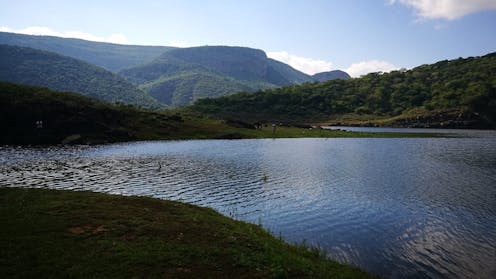
Lake Fundudzi By Iris Auda – Own work, CC BY-SA 4.0, CC BY

Nature isn’t confined to officially protected areas. A lot can be done to conserve biodiversity in other places too. The United Nations Convention on Biological Diversity agreed in 2018 on the idea of “other effective area-based conservation measures” (OECMs). These are geographically defined areas which can be managed in ways that protect biodiversity, ecosystem functions and “where applicable, cultural, spiritual, socio-economic, and other locally relevant values.” Geographer Ndidzulafhi Innocent Sinthumule has explored the potential for sacred natural sites in South Africa to contribute to nature conservation.

Why does South Africa need to protect more land?

In South Africa, although protected areas play a vital role in biodiversity conservation, they are not sufficient. A lot of biodiversity occurs outside formal protected areas. Protected areas make up only 9.2% (or 11,280,684 hectares) of the country’s total land area. The National Protected Area Expansion Strategy, which was last updated in 2016, aims to increase the percentage of protected areas in the country to 16%.

My view is that the target can only be achieved by recognising other areas that have high conservation value, such as sacred natural sites. These are places with special spiritual and cultural value.

Recognising sacred natural sites as “other effective area-based conservation measures” entails officially declaring them as protected areas.

There are also other sites with conservation potential. These could be on public, private or community land. This means they are governed by a variety of rights holders. Apart from sacred natural sites, other examples include military land and waters, and locally managed marine areas.

Whatever their other, primary purpose, they can also deliver conservation of biodiversity.

Where are South Africa’s sacred natural sites?

There are areas in South Africa known as sacred sites because of their cultural, spiritual, or historical value, often linked to ancestral beings, religion and traditional beliefs.

They are often places of reverence, where rituals, ceremonies, burials, or pilgrimage are conducted, and where the custodians of the areas feel a deep connection to something larger than themselves.


Read more:
Sacred rivers: Christianity in southern Africa has a deep history of water and ritual


Examples of sacred natural sites include these in Limpopo province, in the north of the country:

In the province of KwaZulu-Natal, there are Mazizini and Mabasa forests, regarded as sacred by local communities.

In the Free State province, the local Basotho people regard certain caves as sacred and ancestral sites:

How do the sites fit in with protecting diversity?

The study aimed to assess opinions and perceptions about the opportunities and challenges of sacred natural sites in contributing to global conservation goals.

I interviewed academics involved in research on Indigenous knowledge, people involved in discussions about conservation, and custodians of sacred natural sites – 39 people in all.

Study participants identified a number of opportunities. They said:

  • Sacred natural sites frequently harbour high levels of biodiversity, including rare and endemic species, because they have been protected for a long time through cultural practices. Giving them more legal protection and funding, and integrating them into national conservation strategies, would protect hotspots of biological diversity.

  • Integrating traditional ecological knowledge and practices into mainstream conservation efforts would promote more inclusive and culturally sensitive approaches to environmental management.

  • It would expand the total land area under conservation.

  • It might create conservation corridors that would facilitate movement of animals and ecological processes between isolated habitat patches.

  • Sacred natural sites could serve as carbon sinks or storehouses of carbon emissions. Sacred forests have old, tall trees and well developed canopy – the layer of foliage that forms the crown of a forest.

  • They can serve as tourist destinations where visitors will learn about biodiversity and about religious and cultural practices.


Read more:
‘Sacred forests’ in West Africa capture carbon and keep soil healthy


The study participants also identified challenges.

  • A big one was access rights and harmonising cultural and formal conservation practices. Access to sacred natural sites and the use of resources by the public is usually not permitted.

  • There was a fear that external intervention by government, nongovernmental organisations and conservationists might sideline local people and lead to the loss of their sacred sites.

  • External interventions might promote scientific knowledge at the expense of the traditional ecological knowledge that has protected sacred natural sites for millennia.

  • Respondents were concerned about elites capturing all the benefits and not sharing them equitably.

  • A methodological challenge might be how to study conservation effectiveness while respecting cultural sensitivities.

How would a sacred natural site be officially recognised?

At the moment, sacred natural sites are not designated or recognised as an “other conservation measure”. Currently, there are no standard procedures, criteria, or guidelines available for declaring them as such in South Africa. These would have to be determined by the national Department of Forestry, Fisheries and the Environment.

The process should begin with identifying all sacred natural sites to understand where they are and what contribution they could make towards biodiversity conservation. The department should do this in consultation with local communities and traditional leaders who understand the local environment. It should be in line with the international principle of Free, Prior, and Informed Consent. This acknowledges the right of Indigenous peoples to give or withhold their consent for any action that would affect their lands.


Read more:
South African communities vs Shell: high court victories show that cultural beliefs and practices count in climate cases


This will set up sacred natural sites as a conservation model that contributes to both biodiversity protection and cultural heritage preservation. The involvement of communities will ensure that sacred natural sites are a sustainable solution.

All the respondents in my study said that designating a site as an “other conservation measure” should give control or legal protection, ownership and stewardship roles to local communities who have protected the area for ages.

The Conversation

Ndidzulafhi Innocent Sinthumule does not work for, consult, own shares in or receive funding from any company or organisation that would benefit from this article, and has disclosed no relevant affiliations beyond their academic appointment.

ref. Sacred sites in South Africa can protect natural heritage and culture: here’s how – https://theconversation.com/sacred-sites-in-south-africa-can-protect-natural-heritage-and-culture-heres-how-260207

Should the UK name heatwaves like storms? It won’t make people take them more seriously

Source: The Conversation – UK – By Andrea Taylor, Associate Professor in Risk Communication, University of Leeds

The UK Met Office has given storms forenames for the past decade as part of an effort to raise public awareness of extreme weather before it strikes. Heatwaves are becoming increasingly frequent and severe due to greenhouse gas emissions, predominantly from burning fossil fuel, which are raising global temperatures by trapping more heat in Earth’s atmosphere.

These extreme heat events aren’t named in the UK. Should that change?

Effective communication strategies are necessary to make people aware of upcoming heatwaves and help them understand how to reduce their risk. Spain started naming them in 2023, with Heatwave Zoe. Italy has a longstanding but unofficial tradition of naming heatwaves according to mythology and classical history.

The results include Lucifero (Lucifer, another name for the devil) and Cerbero (Cerberus, the three-headed dog that guards the underworld in Greek myth), popularised by the private weather service il Meteo (ilmeteo.it).

Severe heatwaves in summer 2023 and 2024 prompted a campaign to name heatwaves after fossil fuel companies, to increase awareness of their role in climate change.

However, there is limited evidence to indicate whether this would be effective in encouraging people to take proper safety precautions during heatwaves, such as staying in the shade between 11am and 3pm, closing the curtains of sun-facing windows during the day and making sure to have enough water if travelling and looking out for those who may struggle to keep themselves cool and hydrated, such as elderly people living alone.

To explore how effective naming heatwaves might be, my research team conducted online experiments with 2,152 people in England and 1,981 people in Italy.

Lucifer is scarier than Arnold

Participants were asked to imagine that next summer, they were to receive a warning that a heatwave was about to affect their country. Participants were randomly assigned information about an event that was was either unnamed, given a threatening name (Lucifer/Lucifero), or a more neutral name (Arnold).

Then they were asked how much of a risk they though that the event would pose and the actions they would anticipate taking. English participants were also asked about their thoughts on storm-naming practices in the UK and whether they felt that this should be extended to heatwaves.

We found that naming a heatwave had no effect on the intention of people to take protective measures against it in either country. In Italy, there was no difference between how people perceived the unnamed heatwave and Lucifero, but Arnold was judged to be slightly less concerning and severe.

This suggests that, while naming a heatwave does not increase concern, departing from Italy’s established convention of using threatening names does reduce it slightly.

Rear view of a senior man in an armchair.
Isolated older people are typically most at risk during heatwaves.
Ground Picture/Shutterstock

Our participants in England rated Lucifer as more severe and concerning than an unnamed heatwave, though not by much. When asked about their thoughts on naming weather events more broadly, English participants tended to agree that naming storms made people more likely to engage with weather warnings, but only a minority were in favour of naming heatwaves. Overall we found that, while some people were generally supportive of naming weather events, others worried it could sensationalise them.

It probably won’t help much

We did not find enough evidence to support naming heatwaves in the UK.

Despite a large sample, we found only a very small effect on perceived risk and did not detect any greater intention to take safety precautions for a named heatwave. We also found that responses differed between England and Italy.

Heatwaves can cross national borders. The fact that there are national differences in how people respond to naming them could lead to unintended differences in how people interpret the risk in different places.

And unlike storms, which usually take place over a single day with a clearer start and end, heatwaves can last from days to weeks – it’s not always clear whether a prolonged hot spell is one heatwave or a series of them, which could lead to confusion if named.

Heatwaves are an opportunity to discuss the risks posed by climate change. But naming heatwaves risks coming across as sensationalist to some members of the public. This might have the opposite effect, and make people less likely to heed safety messaging about severe heat.


Don’t have time to read about climate change as much as you’d like?

Get a weekly roundup in your inbox instead. Every Wednesday, The Conversation’s environment editor writes Imagine, a short email that goes a little deeper into just one climate issue. Join the 45,000+ readers who’ve subscribed so far.


The Conversation

Andrea Taylor receives funding from The Lloyds Register Foundation, UKRI and Horizon Europe.

ref. Should the UK name heatwaves like storms? It won’t make people take them more seriously – https://theconversation.com/should-the-uk-name-heatwaves-like-storms-it-wont-make-people-take-them-more-seriously-260635

I’m a statistics professor who became embroiled in the world of online chess drama

Source: The Conversation – Canada – By Jeffrey S. Rosenthal, Professor of Statistics, University of Toronto

As a mild-mannered statistics professor, it’s not often that I get
contacted directly by the CEO of a multi-million-dollar company, much less regarding allegations of cheating and malfeasance among world champions.

But that’s precisely what happened last summer. Erik Allebest, CEO of the world’s largest online chess site, Chess.com, asked me to investigate former world chess champion Vladimir Kramnik’s concerns about the long winning streaks of top player Hikaru Nakamura.

Kramnik argued that these streaks had very low probability and were therefore very suspicious and “interesting.” He didn’t quite accuse Hikaru of cheating, but the implication was clear. Feelings were running high, with Kramnik’s supporters posting angry comments (often in Russian) about cheating as many Chess.com players and Hikaru partisans dismissed the accusations.

Who was right? Who was wrong? Who could say?

Allebest asked me to conduct an independent, unbiased statistical analysis to see just how unlikely those chess winning streaks actually were.

Now, I am no stranger to public statistical disputes, having published a
best-selling book about everyday probabilities and conducted the statistical analysis for the high-profile lottery retailer scandal. But could statistical analysis really help to clarify this simmering controversy on the world’s biggest chess stage?

Statistician Jeffrey Rosenthal responds to questions about statistics for WIRED in a video that has received 2.4 million views since February 2022.

Calculating probabilities

To sort this out, I first had to calculate the probability of each player winning or tying each game. Different players can have very different abilities, and more advanced players have a greater chance of defeating less experienced opponents. But just how great?

Chess.com assigns a chess rating to each player after each game, and these ratings were shared with me. My analysis suggested that a certain logistic — or s-shaped — curve function provided an accurate estimate of each game’s probabilities.

Furthermore, deviations from this probability in successive game results were approximately independent, so the influence of one game on the next could be safely ignored. This gave me a clear probability of each player winning each game.

I could then analyze those winning streaks that had provoked so much ire. It turned out that Hikaru, unlike most other top players, had played lots of games against much weaker players. This gave him a very high probability of winning each game. But even so, should he have such long winning streaks, sometimes more than 100 games in a row?

Testing randomness

To check this, I conducted some Monte Carlo simulations, which repeat a test with random variations.

I wrote computer programs to randomly assign wins and losses and draws to each of Hikaru’s games, according to the probabilities from my model. I had the computer measure the most surprising winning streaks each time. This allowed me to measure how Hikaru’s actual streaks stacked up against what we should expect.

I found that in many of the Monte Carlo simulations, the
simulated results included streaks just as unlikely as the actual ones.
This demonstrated that Hikaru’s chess results were just about what might
be expected. He had such a high probability of winning each game, and had played so many games on Chess.com, that such long winning streaks were likely to emerge according to the rules of probability alone.

Responses to findings

I wrote up a brief report of my findings, and sent it to Chess.com.
It ran a news item on its site, which elicited many comments, mostly supportive.

Hikaru then posted his own video commentary, also supporting my analysis. But meanwhile, Kramnik posted a 29-minute video criticizing my research.

Kramnik did include some substantive points, so I wrote an addendum to my report to address his concerns and show that they would not effect the conclusion. I also converted my report into a formal paper, which I submitted to a research journal.

I then got busy with my teaching duties and put the chess controversies
out of my mind until I received a response in December. It consisted of three referee reports and editor comments, with detailed comments totalling six single-spaced pages.

I also then discovered that Kramnik had posted a second 59-minute video critiquing my addendum and raising additional points, too.

I addressed Kramnik’s and the referees’ additional points while revising my article for publication. My paper was finally published in the Harvard Data Science Review.

I was glad to have my findings published in a prestigious statistics journal, thus giving them a formal stamp of approval. And perhaps, at long last, to settle this particular champion-level chess controversy.

The Conversation

Jeffrey S. Rosenthal receives research funding from NSERC of Canada, but received no compensation from Chess.com or anyone else for this work.

ref. I’m a statistics professor who became embroiled in the world of online chess drama – https://theconversation.com/im-a-statistics-professor-who-became-embroiled-in-the-world-of-online-chess-drama-256294