Three types of drought – and why there’s no such thing as a global water crisis

Source: The Conversation – UK – By Filippo Menga, Visiting Research Fellow, Professor of Geography, University of Reading

Lithium fields in the Atacama Desert, Chile. Freedom_wanted/Shutterstock

Hosepipe bans have been announced in parts of England this summer. Following the driest spring in over a century, the Environment Agency has issued a medium drought risk warning, and Yorkshire Water will introduce restrictions starting Friday, 11 July. It’s a familiar story: reduced rainfall, shrinking reservoirs and renewed calls for restraint: take shorter showers, avoid watering the lawn, turn off the tap while brushing your teeth.

These appeals to personal responsibility reflect a broader way of thinking about water: that everyone, everywhere, is facing the same crisis, and that small individual actions are a meaningful response. But what if this narrative, familiar as it is, obscures more than it reveals?

In my new book, Thirst: The global quest to solve the water crisis, I argue that the phrase “global water crisis” may do more harm than good. It simplifies a complex global reality, collapsing vastly different situations into one seemingly shared emergency. While it evokes urgency, it conceals the very things that matter: the causes, politics and power dynamics that determine who gets water and who doesn’t.

What we call a single crisis is, in fact, many distinct ones. To see this clearly, we must move beyond the rhetoric of global scarcity and look closely at how drought plays out in different places. Consider the UK, the Horn of Africa, and Chile: three regions facing water stress in radically different ways.

UK: a crisis of infrastructure

Drought in the UK is rarely the result of absolute water scarcity. The country receives relatively consistent rainfall throughout the year. Even when droughts occur, the underlying issue is how water is managed, distributed and maintained.

Roughly a fifth of treated water is lost through leaking pipes, some of them over a century old. At the same time, privatised water companies have come under growing scrutiny for failing to invest in infrastructure while paying billions in dividends to shareholders. So calls for households to use less water often strike a dissonant note.

The UK’s droughts are not just the product of climate variability. They are also shaped by policy decisions, regulatory failures and eroding public trust. Temporary scarcity becomes a recurring crisis due to the structures meant to manage it.

Horn of Africa: survival and structural vulnerability

In the Horn of Africa, drought is catastrophic. Since 2020, the region has endured five consecutive failed rainy seasons – the worst in four decades. More than 30 million people across Ethiopia, Somalia and Kenya face food insecurity. Livelihoods have collapsed and millions of people have been displaced.

Climate change is a driver, but so is politics. Armed conflict, weak governance and decades of underinvestment have left communities dangerously exposed. These vulnerabilities are rooted in longer histories of colonial exploitation and, more recently, the privatisation of essential services.

Adaptation refers to how communities try to cope with changing climate conditions using the resources they have. Local efforts to adapt to drought (such as digging new wells, planting drought-resistant crop or rationing limited supplies) are often informal or underfunded.

When prolonged droughts strike in places already facing poverty, conflict or weak governance, these coping strategies are rarely enough. Framing climate-induced drought as just another chapter in a global water crisis erases the specific conditions that make it so deadly.

woman in africa dress pushes jerrycan along desert in drought
Drought in Africa can be catastrophic.
Dieter Telemans/Panos Pictures, CC BY-NC-ND

Chile: extraction and exclusion

Chile’s water crisis is often linked to drought. But the underlying issue is extraction. The country holds over half of the world’s lithium reserves, a metal critical to electric vehicles and energy storage.

Lithium is mined through an intensely water-consuming process in the Atacama Desert, one of the driest places on Earth, often on Indigenous land. Communities have seen water tables drop and wetlands disappear while receiving little benefit.

Chile’s water laws, introduced under the Pinochet regime, allow private companies to hold long-term rights regardless of environmental or social cost. Here, water scarcity is driven less by rainfall and more by law, ownership and global demand for renewable technologies. Framing Chile’s situation as just another example of a global water crisis overlooks the deeper political and economic forces that shape how water is managed – and who gets to benefit from it.

No single crisis, no single solution

While drought is intensifying, its causes and consequences vary. In the UK, it’s about infrastructure and governance. In the Horn of Africa, it’s about historical injustice and systemic neglect. In Chile, it’s about legal frameworks and resource extraction.

Labelling this simply as a global water crisis oversimplifies the issue and steers attention away from the root causes. It promotes technical solutions while ignoring the political questions of who has access to water and who controls it.

This approach often favours private companies and international organisations, sidelining local communities and institutions. Instead of holding power to account, it risks shifting responsibility without making meaningful changes to how power and resources are shared.

In Thirst, I argue that the crisis of water is a cultural and political one. Who controls water, who profits from it, who bears the cost of its depletion: these are the defining questions of our time. And they cannot be answered with generalities. We don’t need one big solution. We need many small, just ones.

This article features a reference to a book that has been included for editorial reasons. If you click on one of the links to bookshop.org and go on to buy something, The Conversation UK may earn a commission.


Don’t have time to read about climate change as much as you’d like?

Get a weekly roundup in your inbox instead. Every Wednesday, The Conversation’s environment editor writes Imagine, a short email that goes a little deeper into just one climate issue. Join the 45,000+ readers who’ve subscribed so far.


The Conversation

Filippo Menga does not work for, consult, own shares in or receive funding from any company or organisation that would benefit from this article, and has disclosed no relevant affiliations beyond their academic appointment.

ref. Three types of drought – and why there’s no such thing as a global water crisis – https://theconversation.com/three-types-of-drought-and-why-theres-no-such-thing-as-a-global-water-crisis-260723

How a popular sweetener could be damaging your brain’s defences – new study

Source: The Conversation – UK – By Havovi Chichger, Professor, Biomedical Science, Anglia Ruskin University

Found in everything from protein bars to energy drinks, erythritol has long been considered a safe alternative to sugar. But new research suggests this widely used sweetener may be quietly undermining one of the body’s most crucial protective barriers – with potentially serious consequences for heart health and stroke risk.

A new study from the University of Colorado suggests erythritol may damage cells in the blood-brain barrier, the brain’s security system that keeps out harmful substances while letting in nutrients. The findings add troubling new detail to previous observational studies that have linked erythritol consumption to increased rates of heart attack and stroke.

In the new study, researchers exposed blood-brain barrier cells to levels of erythritol typically found after drinking a soft drink sweetened with the compound. They saw a chain reaction of cell damage that could make the brain more vulnerable to blood clots – a leading cause of stroke.


Get your news from actual experts, straight to your inbox. Sign up to our daily newsletter to receive all The Conversation UK’s latest coverage of news and research, from politics and business to the arts and sciences.


Erythritol triggered what scientists call oxidative stress, flooding cells with harmful, highly reactive molecules known as free radicals, while simultaneously reducing the body’s natural antioxidant defences. This double assault damaged the cells’ ability to function properly, and in some cases killed them outright.

But perhaps more concerning was erythritol’s effect on the blood vessels’ ability to regulate blood flow. Healthy blood vessels act like traffic controllers, widening when organs need more blood – during exercise, for instance – and tightening when less is required. They achieve this delicate balance through two key molecules: nitric oxide, which relaxes blood vessels, and endothelin-1, which constricts them.

The study found that erythritol disrupted this critical system, reducing nitric oxide production while ramping up endothelin-1. The result would be blood vessels that remain dangerously constricted, potentially starving the brain of oxygen and nutrients. This imbalance is a known warning sign of ischaemic stroke – the type caused by blood clots blocking vessels in the brain.

Even more alarming, erythritol appeared to sabotage the body’s natural defence against blood clots. Normally, when clots form in blood vessels, cells release a “clot buster” called tissue plasminogen activator that dissolves the blockage before it can cause a stroke. But the sweetener blocked this protective mechanism, potentially leaving clots free to wreak havoc.

The laboratory findings align with troubling evidence from human studies. Several large-scale observational studies have found that people who regularly consume erythritol face significantly higher risks of cardiovascular disease, including heart attacks and strokes. One major study tracking thousands of participants found that those with the highest blood levels of erythritol were roughly twice as likely to experience a major cardiac event.

However, the research does have limitations. The experiments were conducted on isolated cells in laboratory dishes rather than complete blood vessels, which means the cells may not behave exactly as they would in the human body. Scientists acknowledge that more sophisticated testing – using advanced “blood vessel on a chip” systems that better mimic real physiology – will be needed to confirm these effects.

The findings are particularly significant because erythritol occupies a unique position in the sweetener landscape. Unlike artificial sweeteners such as aspartame or sucralose, erythritol is technically a sugar alcohol – a naturally occurring compound that the body produces in small amounts. This classification helped it avoid inclusion in recent World Health Organization guidelines that discouraged the use of artificial sweeteners for weight control.

Erythritol has also gained popularity among food manufacturers because it behaves more like sugar than other alternatives. While sucralose is 320 times sweeter than sugar, erythritol provides only about 80% of sugar’s sweetness, making it easier to use in recipes without creating an overpowering taste. It’s now found in thousands of products, especially in many “sugar-free” and “keto-friendly” foods.

A man reaching for a protein bar in a shop.
Erythritol can be found in many keto-friendly products, such a protein bars.
Stockah/Shutterstock.com

Trade-off

Regulatory agencies, including the European Food Standards Agency and the US Food and Drug Administration, have approved erythritol as safe for consumption. But the new research adds to a growing body of evidence suggesting that even “natural” sugar alternatives may carry unexpected health risks.

For consumers, the findings raise difficult questions about the trade-offs involved in sugar substitution. Sweeteners like erythritol can be valuable tools for weight management and diabetes prevention, helping people reduce calories and control blood sugar spikes. But if regular consumption potentially weakens the brain’s protective barriers and increases cardiovascular risk, the benefits may come at a significant cost.

The research underscores a broader challenge in nutritional science: understanding the long-term effects of relatively new food additives that have become ubiquitous in the modern diet. While erythritol may help people avoid the immediate harms of excess sugar consumption, its effect on the blood-brain barrier suggests that frequent use could be quietly compromising brain protection over time.

As scientists continue to investigate these concerning links, consumers may want to reconsider their relationship with this seemingly innocent sweetener – and perhaps question whether any sugar substitute additive is truly without risk.

The Conversation

Havovi Chichger does not work for, consult, own shares in or receive funding from any company or organisation that would benefit from this article, and has disclosed no relevant affiliations beyond their academic appointment.

ref. How a popular sweetener could be damaging your brain’s defences – new study – https://theconversation.com/how-a-popular-sweetener-could-be-damaging-your-brains-defences-new-study-261500


Comparing ICE to the Gestapo reveals people’s fears for the US – a Holocaust scholar explains why Nazi analogies remain common, yet risky

Source: The Conversation – USA – By Daniel H. Magilow, Professor of German, University of Tennessee

U.S. Immigration and Customs Enforcement officers gather for a briefing before an enforcement operation on Jan. 27, 2025, in Silver Spring, Md. Associated Press

Minnesota Gov. Tim Walz recently sparked controversy by comparing U.S. Immigration and Customs Enforcement to Nazi Germany’s notorious secret police, the Gestapo.

“Donald Trump’s modern-day Gestapo is scooping folks up off the streets,” Walz said during a May 2025 speech at the University of Minnesota Law School’s commencement ceremony.

“They’re in unmarked vans, wearing masks, being shipped off to foreign torture dungeons, no chance to mount a defense, not even a chance to kiss a loved one goodbye, just grabbed up by masked agents, shoved into those vans, and disappeared,” Walz added.

ICE, tasked with enforcing immigration policies, has dramatically increased the number of nationwide arrests of immigrants since President Donald Trump returned to office in January 2025. ICE’s arrests of immigrants have more than doubled in 38 states since then.

In recent months, other Democratic politicians, including U.S Rep. Dan Goldman of New York, have also compared ICE to the Gestapo, or Adolf Hitler’s “secret police,” as Rep. Seth Moulton of Massachusetts said in April.

But do ICE’s tactics actually resemble those of the Gestapo?

Because I am a scholar of modern Germany and the Holocaust, people regularly ask me if this analogy is accurate. The answer is complicated.

Men are seen looking afraid and with their hands up, looking toward two men with uniforms and helmets, in a faded black-and-white photo.
The Gestapo arrests a group of Jewish men hiding in a cellar in Poland in 1939, in what was possibly a staged German propaganda photo.
Keystone/Hulton Archive/Getty Images

Understanding the Gestapo

The Nazi regime established the Gestapo, short for the German phrase Geheime Staatspolizei, meaning secret state police, soon after Hitler became chancellor of Germany in January 1933. Among other responsibilities, the Gestapo was tasked with investigating political crimes and monitoring opposition activity. It later enforced racial laws in Germany and across occupied Europe.

As part of its daily work, the Gestapo identified and monitored the regime’s political enemies. It arrested, interrogated, detained and tortured suspects and sent others to concentration camps. To identify suspects, it often relied on anonymous denunciations that came not only from zealous Nazis, but also from disgruntled neighbors or business competitors who tipped off the Gestapo to Jews and other people.

While the Gestapo was relatively small in terms of personnel, it projected an image of being, as one scholar wrote, “omniscient, omnipotent, and omnipresent.”

It enforced the regime’s will and suppressed dissent not through sheer manpower but by creating a pervasive sense of fear. This aura of menace and terror has long outlived the Nazi regime itself.

ICE’s operations

ICE, with around 21,000 officers and staff operating in a country of more than 340 million, is smaller both in absolute terms and on a per capita basis. At its height between 1943 and 1945, the Gestapo had between 40,000 and 50,000 personnel in a country of 79 million.

ICE is set to expand its work in the next few years with an additional US$75 billion in funding that Congress appropriated in July as part of Trump’s tax and spending bill.

And while ICE focuses on immigration, the Gestapo had a more expansive role. It was responsible for suppressing all forms of political dissent, not just violations of immigration law.

ICE operates with vastly more advanced technologies that did not exist in the 1940s, including facial recognition and social media monitoring.

There is technically more transparency around ICE’s work than the Gestapo’s, since ICE is a federal agency that is subject to its work and information being reviewed by politicians and the public alike. But in June 2020, the first Trump administration reclassified ICE, which is part of the Department of Homeland Security, as a “security/sensitive agency.” This designation makes it harder for people to request and receive information about ICE’s work through Freedom of Information Act records requests.

Like the Gestapo, ICE can seem performative in its work, like when it carried out a dramatic July raid of a cannabis farm in California in which balaclava-wearing officers used tear gas against protesters.

The Gestapo in today’s world

Since World War II and the fall of the Nazi regime, the term Gestapo has become shorthand in the United States to describe police repression.

Using the word Gestapo to describe the worst possible authoritarian oppression has been popularized in popular movies in everything from the 1943 film “Casablanca” and “The Black Gestapo” in 1975 to “Inglourious Basterds” in 2009 and “Jojo Rabbit” in 2019.

Walz’s remarks in May, though provocative, were also far from isolated in politics. Politicians from both sides of the aisle, as well as political observers, regularly use Gestapo and Nazi metaphors to attack their opponents.

In 2022, Rep. Marjorie Taylor Greene of Georgia famously confused the term Gestapo with gazpacho soup in a gaffe that went viral. “Now we have Nancy Pelosi’s gazpacho police spying on members of Congress,” she said.

In 2024, Trump accused President Joe Biden of running a “Gestapo administration” as the Justice Department prosecuted Trump for attempting to overturn the 2020 election.

Overall, mentions of the word Gestapo in social media increased by 184% between 2017 and 2024, according to the nonprofit group Foundation to Combat Antisemitism.

The U.S. Holocaust Memorial Museum is among the organizations that have condemned making comparisons to the Holocaust and the Nazis for many reasons, including their historical inaccuracy and because they are insulting to people whose families remain scarred by the Holocaust.

A woman wearing a blue shirt grimaces as she is held back by a man wearing a black shirt that says 'police.' Other people appear to fight alongside them.
A Paraguayan woman whose relative was detained by ICE agents scuffles with officers in the halls of an immigration court in New York City on July 16, 2025.
Spencer Platt/Getty Images

What historical comparisons really say

Analogies can be useful for clarifying complex ideas. But especially when they stretch across decades and vastly different political contexts, they risk oversimplifying and trivializing history.

I believe that comparing ICE to the Gestapo is less a historical judgment than a reflection of modern anxiety – a fear that the U.S. is veering toward authoritarianism reminiscent of 1930s Germany.

If politicians and other public figures are looking for historical comparisons to modern law enforcement agencies that use severe tactics, there is, unfortunately, no shortage of options: the Soviet Union’s secret police agencies NKVD and KGB, Iran’s former secret police and intelligence agency SAVAK or East Germany’s Stasi, to name just a few.
All of those organizations denied suspects due process and grossly violated human rights in order to protect political regimes – but they don’t necessarily easily compare to ICE, either.

Still, politicians and political observers alike most often turn to the Gestapo and other Nazi references instead.

Ultimately, the Gestapo, Nazi Germany and the Holocaust serve as a powerful, shared cultural reference point. The catastrophes of World War II epitomize the worst possible outcomes of evil left unchecked.

They have become the master moral paradigm and an ethical compass for the world today. In an age of polarization, World War II and the Holocaust remain the mirror in which Americans examine their present.

The Conversation

Daniel H. Magilow received funding from the National Endowment for the Humanities (although DOGE cancelled the grant in April 2025).

He serves as Co-Editor-in-Chief of Holocaust and Genocide Studies, the journal of the United States Holocaust Memorial Museum’s Jack, Joseph and Morton Mandel Center for Advanced Holocaust Studies

ref. Comparing ICE to the Gestapo reveals people’s fears for the US – a Holocaust scholar explains why Nazi analogies remain common, yet risky – https://theconversation.com/comparing-ice-to-the-gestapo-reveals-peoples-fears-for-the-us-a-holocaust-scholar-explains-why-nazi-analogies-remain-common-yet-risky-260767

Congo and critical minerals: What are the costs of America’s peace?

Source: The Conversation – Canada – By Evelyn Namakula Mayanja, Assistant Professor, Interdisciplinary Studies, Carleton University

In March 2025, President Félix Tshisekedi of the Democratic Republic of Congo (DRC) offered the country’s critical mineral reserves to the United States and Europe in exchange for security and stability.

At the time, the March 23 (M23) militia insurgency was unleashing violence: killing civilians, committing sexual violence, displacing communities and looting mineral resources. Since 1996, eastern Congo has been engulfed in wars and armed conflicts driven by regional powers and more than 120 armed groups.

The U.S.-brokered peace agreement between Rwanda and the DRC raises critical questions: Is this a genuine path to sustainable peace, or a continuation of U.S. President Donald Trump’s strategy to secure access to critical minerals through coercive diplomacy?


Read more:
4 things every peace agreement needs – and how the DRC-Rwanda deal measures up


Global arms race for critical minerals

The global shift toward renewable energy, digital infrastructure and military modernization has sparked a geopolitical scramble for critical and rare earth minerals.

In early 2025, Trump signed a series of executive orders that introduced aggressive and imperial-style tactics to secure access to mineral wealth. He threatened Canada with annexation and tariffs, demanded access to Greenland’s resources and linked U.S. support for Ukraine to access to its mineral reserves.

The DRC’s offer must be viewed through this lens of global resource competition.

Congo’s critical mineral wealth

The DRC holds some of the world’s richest deposits of critical minerals and metals. A 2012 article estimated the value of Congo’s untapped mineral wealth at US$24 trillion, a figure nearing the U.S. first-quarter 2025 GDP of $29.962 trillion.

The DRC produces 70 per cent of the world’s cobalt, ranks fourth in copper, sixth in industrial diamonds and also possesses vast reserves of nickel and lithium, including the Manono deposit expected to yield 95,170 tonnes of crude lithium.

But the struggle to control these resources has fuelled a cycle of armed violence, displacement and exploitation. Despite several peace agreements, peace and stability remain elusive.

America’s interests in Congo

U.S. involvement in Congo stretches back to the Cold War, when it played a role in the 1961 assassination of Patrice Lumumba, Congo’s first elected prime minister who sought economic sovereignty.

In 1996, the U.S. was accused of backing Rwanda and Uganda in the initial invasion of eastern Congo. A U.S. diplomat, “Mr. Hankins,” was quoted in Goma saying: “I am here …to represent American interests.”

In 2024, President Joe Biden met Tshisekedi to advance the Lobito Corridor, a strategic trade route to counter China’s dominance in the region. Chinese companies currently control around 80 per cent of Congo’s copper market.

When Trump signed the 2025 peace agreement, he openly stated the U.S. would gain “a lot of mineral rights … foreign trade and investment from the regional critical mineral supply chains.”

U.S.-brokered peace deal

The deal, however, prioritizes America’s access to minerals over the well-being of Congolese citizens. Historically, Congo’s mineral wealth has enriched elites and foreign powers while leaving its people impoverished and vulnerable. The new agreement could entrench existing inequalities and inflame tensions further.

The U.S. has also cut off aid for war survivors, including emergency medical kits and antiretrovirals for rape victims, undermining humanitarian efforts.

Crucially, the agreement overlooks:

  • The root causes and drivers of conflict at national, regional and international levels.

  • The role of Rwanda and Uganda, whose militaries and intelligence services have long been implicated in supporting groups like M23. Gen. Muhoozi Kainerugaba, son of Ugandan President Yoweri Museveni, has referred to M23 as “our brothers” and threatened military action in Congo.

  • The voices of Congolese civil society, war survivors and the public, who were excluded from the negotiation process.

  • State fragility and institutional collapse — major enablers of protracted violence.

  • The grievances of Hutu and Tutsi communities in the DRC, deeply rooted in colonial and regional politics.

  • The presence of more than 120 armed groups, many of them proxies for foreign powers engaging in what some scholars call “geocriminality.”

Between January and February 2025 alone, more than 7,000 people were killed in the DRC. The United Nations and several human rights organizations have documented mass atrocities, including crimes of genocidal magnitude.

A path toward real peace

The peace agreement fails to demand justice for crimes committed against the Congolese people. Nobel Peace laureate Denis Mukwege condemned the deal for “rewarding aggression, legitimizing the plundering of Congo’s natural resources, and sacrificing justice for a fragile peace.”

It also ignores the roles of international mining corporations and external entities that have long profited from Congo’s instability.

True and lasting peace in the DRC cannot be imposed from the outside. U.S.-led mineral extraction without justice risks deepening the crisis. Since 1999, UN peacekeepers have been deployed in the Congo , yet violence continues.

Sustainable peace will require:

  • An end to impunity;

  • Thorough investigations into war crimes;

  • Regional truth-telling processes;

  • Justice and reparations for victims;

  • And most importantly, inclusion of Congolese voices in shaping their future.

Without these commitments, the U.S. risks replicating a long history of exploitation, trading in minerals while ignoring the human cost.

The Conversation

Evelyn Namakula Mayanja receives funding from Social Sciences and Humanities Research Council and from Carleton University

ref. Congo and critical minerals: What are the costs of America’s peace? – https://theconversation.com/congo-and-critical-minerals-what-are-the-costs-of-americas-peace-260567

In a world first, The Hague wants to arrest Taliban leaders over their treatment of women – what happens next?

Source: The Conversation – Global Perspectives – By Yvonne Breitwieser-Faria, Lecturer in Criminal Law and International Law, Curtin University

Earlier this month, the International Criminal Court (ICC) issued arrest warrants against the Taliban leadership in Afghanistan.

The court’s Pre-Trial Chamber II cited reasonable grounds for believing supreme leader Haibatullah Akhundzada and chief justice Abdul Hakim Haqqani were guilty of “ordering, inducing or soliciting the crime against humanity of persecution on gender grounds.”

The warrants – the first ever on charges of gender persecution – are being hailed as an “important vindication and acknowledgement of the rights of Afghan women and girls”.

But will they improve the plight of women and girls in Afghanistan, given the Taliban does not recognise the court or its jurisdiction?

The signs are not good with the Taliban denying the allegations and condemning the warrants as a “clear act of hostility [and an] insult to the beliefs of Muslims around the world”.

Erased from public life

Strict rules and prohibitions have been imposed on the Afghan people since the Taliban returned to power in August 2021.

Women and girls have been singled out for even worse treatment by reason of their gender.

According the warrants, the Taliban has

severely deprived, through decrees and edicts, girls and women of the rights to education, privacy and family life and the freedoms of movement, expression, thought, conscience and religion.

Women are banned from public places and girls from attending school once they turn 12.

Zahra Nader is the editor-in-chief of newsroom Zan Times which investigates human rights violations in Afghanistan. She says Afghan women and girls are being silenced, restricted and stripped of their basic human rights.

It is this discriminatory system of control of woman and girls in Afghanistan that is at the core of the court’s prosecution.

The warrants also accuse the Taliban of persecuting

other persons who don’t conform with the Taliban’s ideological expectations of gender, gender identity or expression; and on political grounds against persons perceived as ‘allies of girls and women.

This is the first time an international tribunal or court has confirmed crimes against humanity involving LGBTQIA+ victims. This marks an important milestone in the protection of sexual minorities under international law.

Crimes against humanity

International law clearly spells put the offences which constitute crimes against humanity.

The aim is to protect civilians from serious and widespread attacks on their fundamental rights. Different definitions of crimes against humanity have been included in the statutes of a handful of international tribunals and courts.

The definition under the Rome Statute of the International Criminal Court is the most comprehensive. It includes severe deprivation of personal liberty, murder, enslavement, rape, torture, forced deportation or apartheid.

Specifically, the Taliban leaders are accused under Article 7(1)(h) of the Rome Statute, which states:

Persecution against any identifiable group or collectivity on political, racial, national, ethnic, cultural, religious, gender […] or other grounds that are universally recognised as impermissible under international law.

Physical and direct violence is not necessary for persecution on “gender […] grounds” to be established. Systemic and institutionalised forms of harm, which can be the imposition of discriminatory societal norms, are sufficient.

Women and girls are often disproportionately affected by Taliban policies and rules. But proving gender-based crimes have occurred is not enough. Discriminatory intent must also be established.

The Taliban has been open about its religious beliefs and interpretations, suggesting a clear intention to persecute on the grounds of gender.

Not just symbolic

As with other cases, the court relies on the cooperation of states to execute and surrender those accused.

The interim government in Kabul which was formed after the US-led invasion in 2001 became a party to the Rome Statute in 2003. Afghanistan remains legally obligated to prosecute perpetrators of these crimes – it must accept the Court’s jurisdiction in the matter.

The Purple Saturdays Movement, an Afghan women-led protest group, is warning the arrest warrants must be more than just symbolic. Any failure to prosecute would likely result in an escalation of human rights violations:

The Taliban has historically responded to international pressure not with reform, but by intensifying such repressive policies.

Hopeful step

It is important to note the strict policies and widespread abuses targeting women and girls in Afghanistan are ongoing, despite the intervention by the International Criminal Court.

The court’s Office of the Prosecutor is stressing its commitment to pursuing “effective legal pathways” to bring the Taliban leadership to account. The Afghan Women’s Movement in Exile wants an independent international judicial committee established to monitor and accelerate the legal process.

It is not yet clear if the warrants will actually lead to arrest and prosecution in The Hague. But we know this is possible. A prime example being the the arrest earlier this year of former Philippines President Rodrigo Duterte.

At the very least, the arrests warrants are a hopeful step towards accountability for the Taliban and justice for the women and girls of Afghanistan.

The Conversation

Yvonne Breitwieser-Faria does not work for, consult, own shares in or receive funding from any company or organisation that would benefit from this article, and has disclosed no relevant affiliations beyond their academic appointment.

ref. In a world first, The Hague wants to arrest Taliban leaders over their treatment of women – what happens next? – https://theconversation.com/in-a-world-first-the-hague-wants-to-arrest-taliban-leaders-over-their-treatment-of-women-what-happens-next-261008

How the world’s nuclear watchdog monitors facilities around the world – and what it means that Iran kicked it out

Source: The Conversation – USA – By Anna Erickson, Professor of Nuclear and Radiological Engineering, Georgia Institute of Technology

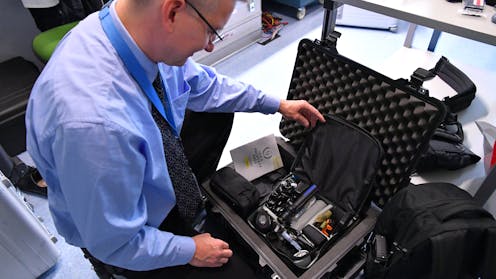
This travel case holds a toolkit containing equipment for inspecting nuclear facilities. Dean Calma/IAEA, CC BY

What happens when a country seeks to develop a peaceful nuclear energy program? Every peaceful program starts with a promise not to build a nuclear weapon. Then, the global community verifies that stated intent via the Treaty on the Non-Proliferation of Nuclear Weapons.

Once a country signs the treaty, the world’s nuclear watchdog, the International Atomic Energy Agency, provides continuous and technical proof that the country’s nuclear program is peaceful.

The IAEA ensures that countries operate their programs within the limits of nonproliferation agreements: low enrichment and no reactor misuse. Part of the agreement allows the IAEA to inspect nuclear-related sites, including unannounced surprise visits.

These are not just log reviews. Inspectors know what should and should not be there. When the IAEA is not on site, cameras, tamper-revealing seals on equipment and real-time radiation monitors are working full-time to gather or verify inside information about the program’s activities.

Safeguards toolkit

The IAEA safeguards toolkit is designed to detect proliferation activities early. Much of the work is fairly technical. The safeguards toolkit combines physical surveillance, material tracking, data analytics and scientific sampling. Inspectors are chemists, physicists and nuclear engineers. They count spent fuel rods in a cooling pond. They check tamper seals on centrifuges. Often, the inspectors walk miles through hallways and corridors carrying heavy equipment.

That’s how the world learned in April 2021 about Iran pushing uranium enrichment from reactor-fuel-grade to near-weapons-grade levels. IAEA inspectors were able to verify that Iran was feeding uranium into a series of centrifuges designed to enrich the uranium from 5%, used for energy programs, to 60%, which is a step toward the 90% level used in nuclear weapons.

Around the facilities, whether for uranium enrichment or plutonium processing, closed-circuit surveillance cameras monitor for undeclared materials or post-work activities. Seals around the facilities provide evidence that uranium gas cylinders have not been tampered with or that centrifuges operate at the declared levels. Beyond seals, online enrichment monitors allow inspectors to look inside of centrifuges for any changes in the declared enrichment process.

Seals verify whether nuclear equipment or materials have been used between onsite inspections.

When the inspectors are on-site, they collect environmental swipes: samples of nuclear materials on surfaces, in dust or in the air. These can reveal if uranium has been enriched to levels beyond those allowed by the agreement. Or if plutonium, which is not used in nuclear power plants, is being produced in a reactor. Swipes are precise. They can identify enrichment levels from a particle smaller than a speck of dust. But they take time, days or weeks. Inspectors analyze the samples at the IAEA’s laboratories using sophisticated equipment called mass spectrometers.

In addition to physical samples, IAEA inspectors look at the logs of material inventories. They look for diversion of uranium or plutonium from normal process lines, just like accountants trace the flow of finances, except that their verification is supported by the ever-watching online monitors and radiation sensors. They also count items of interest and weigh them for additional verification of the logs.

Beyond accounting for materials, IAEA inspectors verify that the facility matches the declared design. For example, if a country is expanding centrifuge halls to increase its enrichment capabilities, that’s a red flag. Changes to the layout of material processing laboratories near nuclear reactors could be a sign that the program is preparing to produce unauthorized plutonium.

Losing access

Iran announced on June 28, 2025, that it has ended its cooperation with the IAEA. It removed the monitoring devices, including surveillance cameras, from centrifuge halls. This move followed the news by the IAEA that Iran’s enrichment activities are well outside of allowed levels. Iran now operates sophisticated uranium centrifuges, like models IR-6 and IR-9.

Removing IAEA access means that the international community loses insight into how quickly Iran’s program can accumulate weapon-grade uranium, or how much it has produced. Also lost is information about whether the facility is undergoing changes for proliferation purposes. These processes are difficult to detect with external surveillance, like satellites, alone.

a satellite view of a complex of buidlings on a desert landscape
A satellite view of Iran’s Arak Nuclear Complex, which has a reactor capable of producing plutonium.
Satellite image (c) 2025 Maxar Technologies via Getty Images

An alternative to the uranium enrichment path for producing nuclear weapons material is plutonium. Plutonium can’t be mined, it has to be produced in a nuclear reactor. Iran built a reactor capable of producing plutonium, the IR-40 Heavy Water Research Reactor at the Arak Nuclear Complex.

Iran modified the Arak reactor under the now-defunct Joint Comprehensive Plan of Action to make plutonium production less likely. During the June 2025 missile attacks, Israel targeted Arak’s facilities with the aim of eliminating the possibility of plutonium production.

With IAEA access suspended, it won’t be possible to see what happens inside the facility. Can the reactor be used for plutonium production? Although a lengthier process than the uranium enrichment path, plutonium provides a parallel path to uranium enrichment for developing nuclear weapons.

Continuity of knowledge

North Korea expelled IAEA inspectors in 2009. Within a few years, they restarted activities related to uranium enrichment and plutonium production in the Yongbyon reactor. The international community’s information about North Korea’s weapons program now relies solely on external methods: satellite images, radioactive particles like xenon – airborne fingerprints of nuclear activities – and seismic data.

What is lost is the continuity of the knowledge, a chain of verification over time. Once the seals are broken or cameras are removed, that chain is lost, and so is confidence about what is happening at the facilities.

When it comes to IAEA inspections, there is no single tool that paints the whole picture. Surveillance plus sampling plus accounting provide validation and confidence. Losing even one weakens the system in the long term.

The existing safeguards regime is meant to detect violations. The countries that sign the nonproliferation treaty know that they are always watched, and that plays a deterrence role. The inspectors can’t just resume the verification activities after some time if access is lost. Future access won’t necessarily enable inspectors to clarify what happened during the gap.

The Conversation

Anna Erickson receives funding from DOE National Nuclear Security Administration.

ref. How the world’s nuclear watchdog monitors facilities around the world – and what it means that Iran kicked it out – https://theconversation.com/how-the-worlds-nuclear-watchdog-monitors-facilities-around-the-world-and-what-it-means-that-iran-kicked-it-out-260689

The first video of Earth’s surface lurching sideways in an earthquake offers new insights into this force of nature

Source: The Conversation – Global Perspectives – By Jesse Kearse, Postdoctoral Researcher, Geophysics, Kyoto University

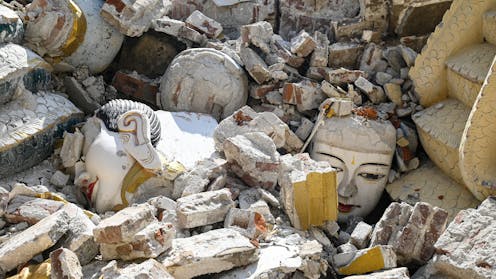
Sai Aung MAIN/AFP via Getty Images

During the devastating magnitude 7.7 Myanmar earthquake on March 28 this year, a CCTV camera captured the moment the plate boundary moved, providing the first direct visual evidence of plate tectonics in action.

Tectonic plate boundaries are where chunks of Earth’s crust slide past each other – not smoothly, but in sudden, violent ruptures.

The footage shows Earth’s surface lurching sideways, like a gigantic conveyor belt switched on for just a second, as the fault slips.

What we’re seeing is the propagation of a large earthquake rupture – the primary mechanism that accommodates plate boundary motion at Earth’s surface. These shear fractures travel at several kilometres per second, making them notoriously difficult to observe.

This video explains the moment Myanmar’s Sagaing Fault ruptured in a large earthquake, allowing the tectonic plate boundary to shift. Research: https://doi.org/10.1785/0320250024.

These rare events, separated by centuries, have shaped our planet’s surface over millions of years, creating features such as Aotearoa New Zealand’s Alpine Fault and the Southern Alps.

Until now, seismologists have relied on distant seismic instruments to infer how faults rupture during large earthquakes. This video sheds new light on the process that radiates seismic energy and causes the ground to shake.

Analysis of the video

In our new study, we analysed the video frame by frame. We used a technique called pixel cross-correlation to reveal that the fault slipped 2.5 metres sideways over a duration of just 1.3 seconds, with a maximum speed of 3.2 metres per second.

The total sideways movement in this earthquake is typical of strike-slip fault ruptures, which move the land sideways (in contrast to faults that move land up and down).

But the short duration is a major discovery.

The timing of when a fault starts and stops slipping is especially difficult to measure from distant recordings, because the seismic signal becomes smeared as it travels through Earth.

In this case, the short duration of motion reveals a pulse-like rupture – a concentrated burst of slip that propagates along the fault like a ripple travels down a rug when it’s flicked from one end.

Capturing this kind of detail is fundamental to understanding how earthquakes work, and it helps us better anticipate the ground shaking likely to occur in future large events.

Validation of the ‘slickenline’ hypothesis

Our analysis also revealed something more subtle about the way the fault moved.

We found the slip didn’t follow a straight path. Instead it curved. This subtle curvature mirrors patterns we’ve observed previously at fault outcrops.

Called “slickenlines”, these geological scratch marks on the fault record the direction of slip.

Our work shows the slickenlines we see on outcrops are curved in a manner similar to the curvature seen in the CCTV footage. Based on our video analysis, we can be certain that curved slip occurs, giving credence to our interpretations based on geological observations.

In our earlier research, we used computer models to show that curved slickenlines could emerge naturally when an earthquake propagates in a particular direction. The Myanmar rupture, which is known to have travelled north to south, matches the direction predicted by our models.

This alignment is important. It gives us confidence in using geological evidence to determine the rupture direction of past earthquakes, such as the curved slickenlines left behind after the New Zealand Alpine Fault’s 1717 earthquake.

This first glimpse of a fault in motion shows the potential for video to become a powerful new tool in seismology. With more strategic deployments, future earthquakes could be documented with similar detail, offering further insight into the dynamics of fault rupture, potentially revolutionising our understanding of earthquake physics.

The Conversation

Jesse Kearse receives funding from Royal Society Te Apārangi Marsden Fund.

ref. The first video of Earth’s surface lurching sideways in an earthquake offers new insights into this force of nature – https://theconversation.com/the-first-video-of-earths-surface-lurching-sideways-in-an-earthquake-offers-new-insights-into-this-force-of-nature-261004

Is spinal cord stimulation safe? Does it work? Here’s what you need to know if you have back pain

Source: The Conversation – Global Perspectives – By Caitlin Jones, Postdoctoral Research Associate in Musculoskeletal Health, University of Sydney

AsiaVision/Getty

Spinal cord stimulators are electrical devices that are surgically implanted in the body to treat long-term pain. They have a battery pack and leads that deliver electrical impulses directly to the spinal cord. The devices are thought to work by providing electrical impulses that interfere with how the brain senses pain.

Spinal cord stimulators are mainly used to treat chronic back pain, especially when other less invasive treatments have not worked. They also aim to reduce people’s reliance on risky pain medicines. These include opioids, which research shows are ineffective and harmful for low-back pain.

But research, including our own, shows spinal cord stimulators work no better than a placebo. And they can also carry risks.

Do they work?

In a 2023 Cochrane review, researchers reviewed data from 13 randomised controlled trials on low-back pain and found no benefits in the short and medium term. These international reviews draw together the most robust evidence to provide a detailed summary of what we know on a particular topic.

Only one of the trials in the review tested efficacy in the longer term (six months). That trial found no benefits of spinal cord stimulation.

An earlier Cochrane review looked at the evidence of spinal cord stimulation for chronic pain in general, including for neck pain. Reviewers looked at 15 randomised controlled trials and couldn’t be certain about its benefits, largely due to the quality and reliability of the available trials.

Are there side effects?

Aside from disappointing results for pain relief, there are risks and side effects to consider.

We co-authored an analysis of 520 adverse events reported to Australia’s Therapeutic Goods Administration (TGA). We found 79% of reported events were rated as severe, with 13% life-threatening. The same research found 80% of events required surgery to correct.

Our recent analysis in the Medical Journal of Australia looked at data from private health insurers. These cover 90% of spinal cord stimulation implants in Australia. Five major insurers, which covered 76% of privately insured people, contributed de-identified data.

We found about one-quarter of people who had a spinal cord stimulator implanted needed corrective surgery afterwards. These surgeries occurred within a median of about 17 months. This indicates these surgeries are not routine or expected interventions, such as to replace batteries, which are meant to last five to ten years.

Our previous research shows the sorts of reasons for corrective surgery. These include to replace a malfunctioning device, or the person was in more pain, had an infection, or a puncture of the delicate tissues covering the spinal cord.

However, even our latest findings are likely to underestimate the risk of these devices.

Sometimes the lead delivering the electrical current moves away from the spinal cord to elsewhere in the body. This requires surgery to reposition the lead, but does not necessarily require new hardware, such as a brand new lead. So this type of corrective surgery is not counted in the data from the private health insurance companies.

How much does it cost?

We found spinal cord stimulators cost about A$55,000 per patient, including the device, its insertion, and managing any associated additional surgeries.

For people who only had a “trial” – where the leads are implanted temporarily but the battery pack remains outside the body – this cost was about $14,000 per patient.

These figures do not include any out-of-pocket costs.

What do regulators say about the devices?

In 2022 the TGA began a review of spinal cord stimulators on the market because of safety and performance concerns.

As a result, several devices were removed from the Australian Register of Therapeutic Goods – that is, they were banned from use in Australia, but existing stock could still be used.

The rest of the devices had conditions imposed, such as the manufacturers being required to collect and report safety data to the TGA at regular time points.

Should I do my own online research?

Yes, but be careful. Unfortunately not all online information about spinal cord stimulators is correct.

Look for sites independent of those who manufacture or implant these devices.

Government agencies, health departments and universities that have no financial interests in this area may be a better option.

The Cochrane Library is also a reliable and independent source for trustworthy health information.

What shall I ask my doctor?

The Australian health department provides useful advice for consumers about medical implants.

It says medical implants “are considered higher-risk therapeutic goods, and the decision to get one should not be taken lightly”. It recommends asking your health professional these questions:

  • do I really need this medical implant?

  • what are the risks/benefits?

  • is the medical implant approved?

  • where can I get more information?

  • what happens if I experience an adverse event?

What else could I do for my back pain?

There are other treatment options that are effective and have fewer risks than spinal cord stimulation.

For example, education about how to manage your pain yourself, exercise, cognitive behavioural therapy (a type of psychological therapy), and non-steroidal anti-inflammatory medicines (such as ibuprofen) all have solid evidence to back them. All offer benefits that are not outweighed by their potential risks.

Australian research has shown other types of therapy – such as sensorimotor retraining and cognitive functional therapy – are also effective. You can discuss these and other options with your health professional.

Spinal cord stimulation is a good example of a treatment that got ahead of the evidence. Although the devices have been around since the 1960s, we’ve only had reliable trials to test whether they work in recent years.

Everyone wants to find ways to help people with chronic pain, but we must ensure medical care is grounded in reliable science.

The Conversation

Christopher Maher holds a research fellowship funded by the National Health and Medical Research Council.

Caitlin Jones does not work for, consult, own shares in or receive funding from any company or organisation that would benefit from this article, and has disclosed no relevant affiliations beyond their academic appointment.

ref. Is spinal cord stimulation safe? Does it work? Here’s what you need to know if you have back pain – https://theconversation.com/is-spinal-cord-stimulation-safe-does-it-work-heres-what-you-need-to-know-if-you-have-back-pain-261364

Hold up, humans. Ants figured out medicine, farming and engineering long before we did

Source: The Conversation – Global Perspectives – By Tanya Latty, Associate Professor in Entomology, University of Sydney

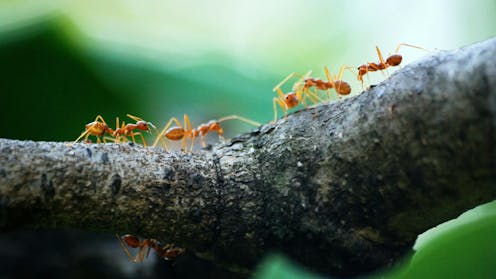
Tambon Nong Chaeng/Pexels

Think back to a time you helped someone move a heavy object, such as a couch. While at first the task may have appeared simple, it actually required a suite of advanced behaviours.

The job needed verbal commands for social coordination (“pivot!”) and anticipation of near-future events (moving other furniture out of the way). It also required a clear, shared vision of the final goal (which room to take the couch to).

It’s a small but satisfying example of human cooperation. But before we all get too pleased with ourselves, consider that ants – creatures with tiny brains and no capacity for speech – routinely pull off feats that rival, and sometimes exceed, our own.

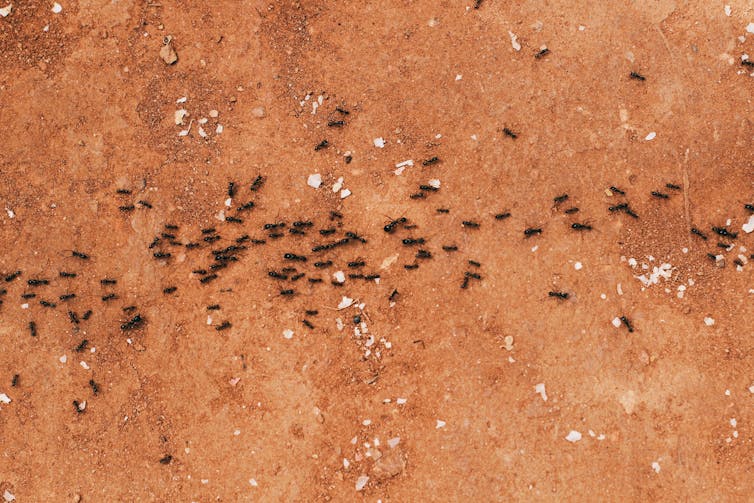
black ants on red dirt
Ants routinely pull off feats that rival, and sometimes exceed, our own.
Andre Moura/Pexels

Understanding ant intelligence

Earth is literally crawling with ants. Scientists estimate there are at least 20 quadrillion ants on Earth. That’s 20 followed by 15 zeros – more ants than stars in our galaxy!

These incredible insects are amongst the most successful organisms on the planet. Part of the success comes from an ability to form complex societies, ranging from a few individuals to millions. And those societies, or colonies, are remarkably co-operative.

Take, for example, ants’ abilities to move large food items. To do it, they mobilise teams of dozens – or even hundreds – of fellow workers. Together, they efficiently work together to transport the load back to the nest.

Longhorn crazy ants (Paratrechina longicornis) are even known to clear debris from a path before a heavy object arrives – seemingly anticipating its trajectory and preparing the way.

One experiment pit longhorn crazy ants against humans, all tasked with moving T-shaped objects (scaled to body size) through tight spaces. In some trials, the human teams were not permitted to speak or use gestures.

And the result? Ants performed better in larger groups compared to smaller ones, showing the clear benefits of collective action. In contrast, human performance did not improve with group size. And when communication was restricted, human performance declined as group size increased.

All this highlights how ants rely on collective intelligence, without the need for central control or sophisticated cognition.

Expert farmers

Humanity’s invention of agriculture 12,000 years ago is understandably hailed as one of our greatest achievements.

But leaf cutter ants beat us to it. These ants (from the species Atta and Acromyrmex) evolved to undertake large-scale agriculture about 55 million years ago.

These ants cut and transport fresh leaves not to eat directly, but to feed a fungus that serves as their main food source.

This evolutionary partnership allows the ants to feed colonies with populations in the millions.

Remarkably, leaf cutter ants have also evolved a form of biological pest control to protect their crops from bacteria. Some worker ants patrol the gardens, detecting infected sections of the fungus. Then they apply antibiotics produced by bacteria that live on their bodies.

What’s more, many ant species farm aphids and other sap-sucking insects.

As these farmed insects feed on plant sap, they excrete a sugary liquid the ants eagerly collect. In return, ants serve as bodyguards, defending their tiny livestock from predators such as ladybirds and lacewings.

In some species, queen ants gently carry sap-sucking insects in their jaws as they fly off to start new colonies. Fossilised ants preserved in amber suggest this behaviour evolved up to 20 million years ago, long before humans domesticated animals.

Ant medicine

Medical care may seem like a distinctly human innovation. But several ant species have evolved sophisticated ways to treat injuries.

When a Florida carpenter ant (Camponotus floridanus) is injured during a battle between colonies, its nest-mates will amputate a damaged limb to prevent infection from spreading. Ants receiving this battlefield care are more likely to survive than ants left untreated.

Some ants can also detect infection and treat infected wounds by cleaning them and applying antimicrobial secretions from specialised glands.

Master builders

Some ant species are known to literally put their bodies on the line for the colony.

Army ants (Eciton burchellii) join their bodies together to form structures. These include bridges across gaps on the forest floor, and “scaffolds” across steep terrain to prevent other ants from slipping.

Even the nest is made of hundreds of thousands of ants joined together, complete with tunnels and chambers housing the larvae and the queen. The entire structure is packed up and rebuilt each day, after the colony emigrates a few hundred metres into the forest.

Ants crawling across leaf litter
Army ants join their bodies together to form structures.
Smartse/Wikimedia, CC BY

Weaver ants (Oecophylla smaragdina), meanwhile, self-assemble into rope ladders to span vertical gaps.

They also form a line of workers that pull leaves together in treetops to form nests. Once the leaves are winched into place, other ants arrive with ant larvae in their jaws. Each larva produces a tiny blob of silk which the ants use to glue the leaves together.

Fire ants (Solenopsis invicta), a major pest species, owes its invasive success partly to a unique method of dispersal.

When their underground nests are flooded by rain, the ants join together into a huge raft which floats on a layer of buoyant larvae. These rafts can ride floodwaters in safety for hundreds of kilometres, until the ants reach dry land.

Ants forming a raft to float on water
When their nests are flooded, fire ants join together into a huge raft.
TheCoz/Wikimedia, CC BY

Lessons for humanity?

Humans rightly take pride in our greatest achievements – agriculture, medicine, engineering and building civilisations. But remarkably, ants mastered these innovations millions of years before we did.

Ants may be tiny – but by working together they can build complex societies and solve many problems. They might even teach humans a thing or two.

The Conversation

Tanya Latty co-founded and volunteers for conservation organisation Invertebrates Australia, is former president of the Australasian Society for the Study of Animal Behaviour and is on the education committee for the Australian Entomological Society. She receives funding from the Australian Research Council, NSW Saving our Species, and Agrifutures Australia

Chris R. Reid receives funding from the Australian Research Council and Macquarie University. He is secretary of the Australasian Society for the Study of Animal Behaviour and is on the education committee for the Australasian Entomological Society.

ref. Hold up, humans. Ants figured out medicine, farming and engineering long before we did – https://theconversation.com/hold-up-humans-ants-figured-out-medicine-farming-and-engineering-long-before-we-did-258922

Sun advice from a skin cancer researcher and physician

Source: The Conversation – Canada – By Elaine McWhirter, Chair, Melanoma/Skin Disease Site Group, Juravinski Cancer Centre, Hamilton Health Sciences, and Associate Professor, Oncology, McMaster University

There is certainly growing awareness of the damaging effects of overexposure to the sun, including skin cancers.

Still, I see in both my medical practice as a skin cancer specialist and in the course of my research as an associate professor of oncology that there are still many harmful habits and ideas about tanning that still circulate.

As a result, many may think they’re already doing enough to look after themselves and their families when the incidence of skin cancer is actually growing. Clearly, we need to do more to stay safe, and that starts with knowledge.

Perhaps someday, we will look at lying on a beach slathered with oil in the same way we look at smoking cigarettes. Ultraviolet (UV) radiation is also a carcinogen and, like smoking, is a modifiable risk factor for cancer.

Here are some sun facts to think about and act on:

  • Being outdoors and in the shade is better than being in the direct sun, but even in the shade, one is still exposed to damaging UV rays, especially if there are nearby reflective surfaces, such as water or sand.
  • Sun protection is necessary all year round. Damage can happen when people think July and August are the only months when it’s necessary to pay attention to sun exposure. Hauling out the bike during a winter thaw? Protect yourself. Spring gardening or fall raking and it’s only 10 degrees outside? It’s time for some protection. Check your local weather forecast for the UV index; if it’s three or greater, wear sunscreen.

  • Sun exposure is cumulative over the course of a lifetime. If you had too much sun as a child or young adult, it’s even more important to protect yourself over the entire course of your adult life. Having two blistering sunburns as a child or young adult increases the lifetime chance of developing the most harmful form of skin cancer, melanoma, by 10 times.

  • Any suntan or sunburn is evidence of sun damage. Developing a tan is the body’s response to harm to the DNA of cells in our skin. The persistent idea of a “healthy tan” is simply incorrect. When I see someone tanning, I see a future with premature wrinkles and risk of skin cancers, including melanoma. A burn is far more damaging. Avoid both.

  • While fair-skinned people with red or blonde hair and blue or green eyes are the most susceptible to serious harm from the sun, all people, regardless of their skin, hair or eye colour, are vulnerable and should limit exposure.

  • Sunscreen with a sun protection factor (SPF) of 50, applied every two to three hours, starting 30 minutes before exposure, is the most practical protection for exposed skin. Pick something you like, whether a lotion, stick or spray, and be sure to use enough. Reapply more often when you are very active outdoors, and hourly if in water. Remember when applying sunscreen to protect your feet, which is easy to forget in flip flops. I see a lot of ears and back of necks get missed as well!

  • Wear a hat, of course, but also choose your hat carefully. Ball caps leave the ears and neck too exposed. The best hats have broad brims that go all the way around the head. The very best hats have a flap in the back that covers the neck.

  • It is possible to experience sun damage even through your clothes. Special SPF clothing, made from purposely formulated material and labelled as such, is optimal for reducing sun exposure. A white cotton summer T-shirt offers an SPF of maybe four or five — a small fraction of the protection a good sunscreen or SPF clothing will provide.

  • Though sun exposure does provide beneficial Vitamin D, it is better to use Vitamin D supplements year-round — something in the range of 600-800 IU is a good benchmark – rather than risking unprotected sun exposure.

  • People exposed to the sun at higher altitudes, such as skiers, are receiving more UV exposure than people at lower altitudes and should protect themselves accordingly.

  • Skiers, boaters, swimmers and fishers are all more susceptible to sun damage because they are both in the direct path of the sun and receive significant UV exposure from light reflecting off snow or water. Many people describe receiving a windburn from such outdoor activities when what they have is a sunburn.

  • People who swim outdoors should seriously consider a special swimming shirt — like a rash guard or board shirt that surfers use — made from swimsuit fabric with SPF.

Remember to check your skin monthly for skin cancer using the ABCDE rule. Our warm weather season is short, and it’s important to enjoy the outdoors. The point isn’t to be sun-scared — just stay sun-safe.

The Conversation

Elaine McWhirter has participated in advisory boards for BMS, Merck, Pfizer, Novartis,Regeron and Sanofi. She was a Board member of Melanoma Canada from 2015-2024.

ref. Sun advice from a skin cancer researcher and physician – https://theconversation.com/sun-advice-from-a-skin-cancer-researcher-and-physician-260749