Microbes in deep-sea volcanoes can help scientists learn about early life on Earth, or even life beyond our planet

Source: The Conversation – USA – By James F. Holden, Professor of Microbiology, UMass Amherst
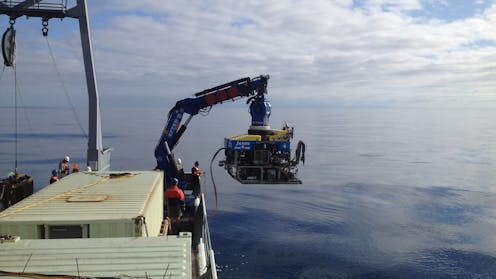
A submersible, which travels to the seafloor to collect rock and microbe samples, is lifted by the arm of a research vessel. James F. Holden

People have long wondered what life was first like on Earth, and if there is life in our solar system beyond our planet. Scientists have reason to believe that some of the moons in our solar system – like Jupiter’s Europa and Saturn’s Enceladus – may contain deep, salty liquid oceans under an icy shell. Seafloor volcanoes could heat these moons’ oceans and provide the basic chemicals needed for life.

Similar deep-sea volcanoes found on Earth support microbial life that lives inside solid rock without sunlight and oxygen. Some of these microbes, called thermophiles, live at temperatures hot enough to boil water on the surface. They grow from the chemicals coming out of active volcanoes.

Because these microorganisms existed before there was photosynthesis or oxygen on Earth, scientists think these deep-sea volcanoes and microbes could resemble the earliest habitats and life on Earth, and beyond.

To determine if life could exist beyond Earth in these ocean worlds, NASA sent the Cassini spacecraft to orbit Saturn in 1997. The agency has also sent three spacecraft to orbit Jupiter: Galileo in 1989, Juno in 2011 and most recently Europa Clipper in 2024. These spacecraft flew and will fly close to Enceladus and Europa to measure their habitability for life using a suite of instruments.
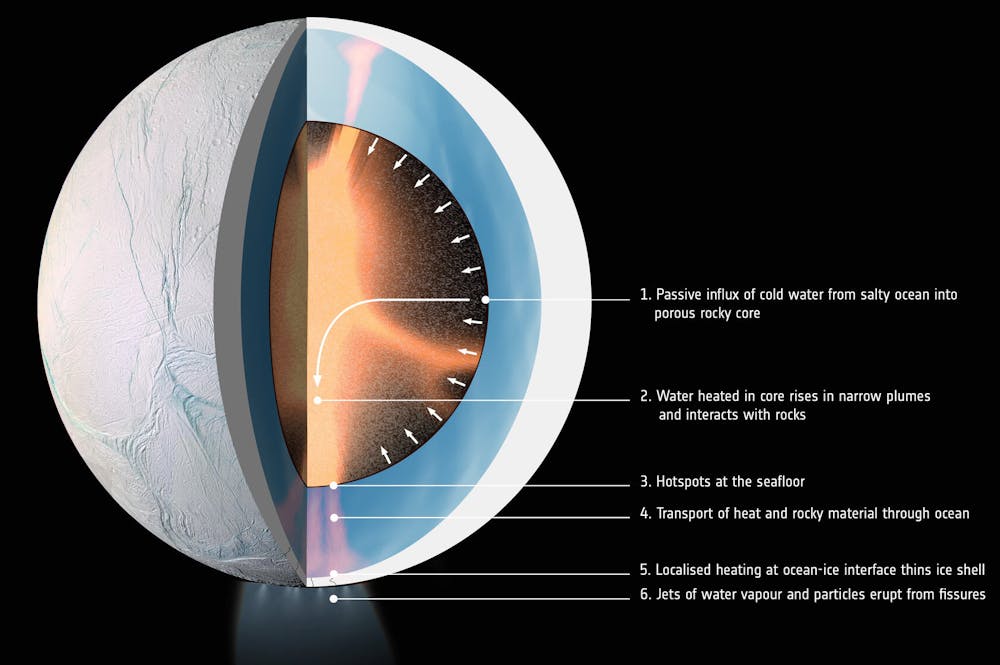
A diagram showing the inside of a gray moon, which has a hot, rocky core.
A diagram of the interior of Saturn’s moon Enceladus, which may have hot plumes beneath its ocean.
Surface: NASA/JPL-Caltech/Space Science Institute; interior: LPG-CNRS/U. Nantes/U. Angers. Graphic composition: ESA

However, for planetary scientists to interpret the data they collect, they need to first understand how similar habitats function and host life on Earth.

My microbiology laboratory at the University of Massachusetts Amherst studies thermophiles from hot springs at deep-sea volcanoes, also called hydrothermal vents.

Diving deep for samples of life

I grew up in Spokane, Washington, and had over an inch of volcanic ash land on my home when Mount St. Helens erupted in 1980. That event led to my fascination with volcanoes.

Several years later, while studying oceanography in college, I collected samples from Mount St. Helens’ hot springs and studied a thermophile from the site. I later collected samples at hydrothermal vents along an undersea volcanic mountain range hundreds of miles off the coast of Washington and Oregon. I have continued to study these hydrothermal vents and their microbes for nearly four decades.

A small, cylindrical capsule with equipment attached to the top travels underwater.
Crewed submarines travel deep underwater to collect samples from hydrothermal vents.
Gavin Eppard, WHOI/Expedition to the Deep Slope/NOAA/OER, CC BY

Submarine pilots collect the samples my team uses from hydrothermal vents using human-occupied submarines or remotely operated submersibles. These vehicles are lowered into the ocean from research ships where scientists conduct research 24 hours a day, often for weeks at a time.

The samples collected include rocks and heated hydrothermal fluids that rise from cracks in the seafloor.

The submarines use mechanical arms to collect the rocks and special sampling pumps and bags to collect the hydrothermal fluids. The submarines usually remain on the seafloor for about a day before returning samples to the surface. They make multiple trips to the seafloor on each expedition.

Inside the solid rock of the seafloor, hydrothermal fluids as hot at 662 degrees Fahrenheit (350 Celsius) mix with cold seawater in cracks and pores of the rock. The mixture of hydrothermal fluid and seawater creates the ideal temperatures and chemical conditions that thermophiles need to live and grow.

Tall clouds of smoke rising from rocks in the ocean.
Plumes rising from hydrothermal vents in the Atlantic Ocean.
P. Rona / OAR/National Undersea Research Program; NOAA

When the submarines return to the ship, scientists – including my research team – begin analyzing the chemistry, minerals and organic material like DNA in the collected water and rock samples.

These samples contain live microbes that we can cultivate, so we grow the microbes we are interested in studying while on the ship. The samples provide a snapshot of how microbes live and grow in their natural environment.

Thermophiles in the lab

Back in my laboratory in Amherst, my research team isolates new microbes from the hydrothermal vent samples and grows them under conditions that mimic those they experience in nature. We feed them volcanic chemicals like hydrogen, carbon dioxide, sulfur and iron and measure their ability to produce compounds like methane, hydrogen sulfide and the magnetic mineral magnetite.

A microscope image of a microbe, which looks like a big, circular dot.
The thermophilic microbe Pyrodictium delaneyi isolated by the Holden lab from a hydrothermal vent in the Pacific Ocean. It grows at 194 degrees Fahrenheit (90 Celsius) on hydrogen, sulfur and iron.
Lin et al., 2016/The Microbiology Society

Oxygen is typically deadly for these organisms, so we grow them in synthetic hydrothermal fluid and in sealed tubes or in large bioreactors free of oxygen. This way, we can control the temperature and chemical conditions they need for growth.

From these experiments, we look for distinguishing chemical signals that these organisms produce which spacecraft or instruments that land on extraterrestrial surfaces could potentially detect.

We also create computer models that best describe how we think these microbes grow and compete with other organisms in hydrothermal vents. We can apply these models to conditions we think existed on early Earth or on ocean worlds to see how these microbes might fare under those conditions.

We then analyze the proteins from the thermophiles we collect to understand how these organisms function and adapt to changing environmental conditions. All this information guides our understanding of how life can exist in extreme environments on and beyond Earth.

Uses for thermophiles in biotechnology

In addition to providing helpful information to planetary scientists, research on thermophiles provides other benefits as well. Many of the proteins in thermophiles are new to science and useful for biotechnology.

The best example of this is an enzyme called DNA polymerase, which is used to artificially replicate DNA in the lab by the polymerase chain reaction. The DNA polymerase first used for polymerase chain reaction was purified from the thermophilic bacterium Thermus aquaticus in 1976. This enzyme needs to be heat resistant for the replication technique to work. Everything from genome sequencing to clinical diagnoses, crime solving, genealogy tests and genetic engineering uses DNA polymerase.

A diagram showing a double helix strand of DNA, with a polymerase enzyme pulling the two strands apart and helping them become two new strands.
DNA polymerase is an enzyme that plays an essential role in DNA replication. A heat-resistant form from thermophiles is useful in bioengineering.
Christinelmiller/Wikimedia Commons, CC BY-SA

My lab and others are exploring how thermophiles can be used to degrade waste and produce commercially useful products. Some of these organisms grow on waste milk from dairy farms and brewery wastewater – materials that cause fish kills and dead zones in ponds and bays. The microbes then produce biohydrogen from the waste – a compound that can be used as an energy source.

Hydrothermal vents are among the most fascinating and unusual environments on Earth. With them, windows to the first life on Earth and beyond may lie at the bottom of our oceans.

The Conversation

James F. Holden receives funding from NASA.

– ref. Microbes in deep-sea volcanoes can help scientists learn about early life on Earth, or even life beyond our planet – https://theconversation.com/microbes-in-deep-sea-volcanoes-can-help-scientists-learn-about-early-life-on-earth-or-even-life-beyond-our-planet-260977

Idi Amin made himself out to be the ‘liberator’ of an oppressed majority – a demagogic trick that endures today

Source: The Conversation – Global Perspectives – By Derek R. Peterson, Ali Mazrui Professor of History & African Studies, University of Michigan

Idi Amin addresses the United Nations General Assembly in 1975. Bettmann/Getty Images

Fifty years ago, Ugandan President Idi Amin wrote to the governments of the British Commonwealth with a bold suggestion: Allow him to take over as head of the organization, replacing Queen Elizabeth II.

After all, Amin reasoned, a collapsing economy had made the U.K. unable to maintain its leadership. Moreover the “British empire does not now exist following the complete decolonization of Britain’s former overseas territories.”

It wasn’t Amin’s only attempt to reshape the international order. Around the same time, he called for the United Nations headquarters to be moved to Uganda’s capital, Kampala, touting its location at “the heart of the world between the continents of America, Asia, Australia and the North and South Poles.”

Amin’s diplomacy aimed to place Kampala at the center of a postcolonial world. In my new book, “A Popular History of Idi Amin’s Uganda,” I show that Amin’s government made Uganda – a remote, landlocked nation – look like a frontline state in the global war against racism, apartheid and imperialism.

Doing so was, for the Amin regime, a way of claiming a morally essential role: liberator of Africa’s hitherto oppressed people. It helped inflate his image both at home and abroad, allowing him to maintain his rule for eight calamitous years, from 1971 to 1979.

The phony liberator?

Amin was the creator of a myth that was both manifestly untrue and extraordinarily compelling: that his violent, dysfunctional regime was actually engaged in freeing people from foreign oppressors.

The question of Scottish independence was one of his enduring concerns. The “people of Scotland are tired of being exploited by the English,” wrote Amin in a 1974 telegram to United Nations Secretary General Kurt Waldheim. “Scotland was once an independent country, happy, well governed and administered with peace and prosperity,” but under the British government, “England has thrived on the energies and brains of the Scottish people.”

Even his cruelest policies were framed as if they were liberatory. In August 1972, Amin announced the summary expulsion of Uganda’s Asian community. Some 50,000 people, many of whom had lived in Uganda for generations, were given a bare three months to tie up their affairs and leave the country. Amin named this the “Economic War.”

In the speech that announced the expulsions, Amin argued that “the Ugandan Africans have been enslaved economically since the time of the colonialists.” The Economic War was meant to “emancipate the Uganda Africans of this republic.”

“This is the day of salvation for the Ugandan Africans,” he said. By the end of 1972, some 5,655 farms, ranches and estates had been vacated by the departed Asian community, and Black African proprietors were queuing up to take over Asian-run businesses.

Men and women walk down stairs leading from an airplane.
Ugandan Asian refugees arrive at an airport in the U.K. after being expelled from Uganda.
P. Felix/Daily Express/Hulton Archive/Getty Images

A year later, when Amin attended the Organization of African Unity summit in Addis Ababa, Ethiopia, his “achievements” were reported in a booklet published by the Uganda government. During his speech, Amin was “interrupted by thunderous applauses of acclamation and cheers, almost word for word, by Heads of State and Government and by everybody else who had a chance to hear it,” according to the the report.

It was, wrote the government propagandist, “very clear that Uganda had emerged as the forefront of a True African State. It was clear that African nationalism had been born again. It was clear that the speech had brought new life to the freedom struggle in Africa.”

Life at the front

Amin’s policies were disastrous for all Ugandans, African and Asian alike. Yet his war of economic liberation was, for a time, a source of inspiration for activists around the world. Among the many people gripped by enthusiasm for Amin’s regime was Roy Innis, the Black American leader of the civil rights organization Congress of Racial Equality.

In March 1973, Innis visited Uganda at Amin’s invitation. Innis and his colleagues had been pressing African governments to grant dual citizenship to Black Americans, just as Jewish Americans could earn citizenship from the state of Israel.

Over the course of their 18 days in Uganda, the visiting Americans were shuttled around the country in Amin’s helicopter. Everywhere, Innis spoke with enthusiasm about Amin’s accomplishments. In a poem published in the pro-government Voice of Uganda around the time of his visit, Innis wrote:

“Before, the life of your people was a complete bore,

And they were poor, oppressed, exploited and economically sore.

And you then came and opened new, dynamic economic pages.

And showered progress on your people in realistic stages.

In such expert moves that baffled even the great sages,

your electric personality pronounced the imperialists’ doom.

Your pragmatism has given Ugandans their economic boom.”

In May 1973, Innis was back in Uganda, promising to recruit a contingent of 500 African American professors and technicians to serve in Uganda. Amin offered them free passage to Uganda, free housing and free hospital care for themselves and their families. The American weekly magazine Jet predicted that Uganda was soon to become an “African Israel,” a model nation upheld by the energies and knowledge of Black Americans.

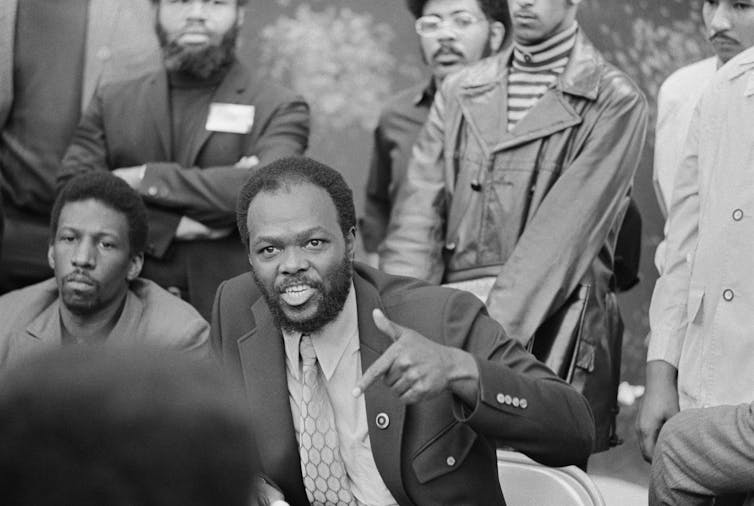
A man gesticulates while talking
Roy Innis, national director of the Congress of Racial Equality, in 1972.
Bettmann/Getty Images

As some have observed, Innis was surely naive. But his enthusiasm was shared by a great many people, not least a great many Ugandans. Inspired by Amin’s promises, their energy and commitment kept institutions functioning in a time of great disruption. They built roads and stadiums, constructed national monuments and underwrote the running costs of government ministries.

Patriotism and demagoguery

Their ambitions were soon foreclosed by a rising tide of political dysfunction. Amin’s regime came to a violent end in 1979, when he was ousted by the invading army of Tanzania and fled Uganda.

But his brand of demagoguery lives on. Today a new generation of demagogues claim to be fighting to liberate aggrieved majorities from outsiders’ control.

In the 1970s, Amin enlisted Black Ugandans to battle against racial minorities who were said to dominate the economy and public life. Today an ascendant right wing encourages aggrieved white Americans to regard themselves as a majority dispossessed of their inheritance by greedy immigrants.

Amin encouraged Ugandans to regard themselves as frontline soldiers, engaged in a globally consequential war against foreigners. In today’s America, some people similarly feel themselves deputized to take matters of state into their own hands. In January 2021, for instance, a right-wing group called “Stop the Steal” organized a rally in Washington. Vowing to “take our country back,” they stormed the Capitol building.

The racialized demagoguery that Idi Amin promoted inspired the imagination of a great many people. It also fed violent campaigns to repossess a stolen inheritance, to reclaim properties that ought, in the view of the aggrieved majority, to belong to native sons and daughters. His regime is for us today a warning about the compelling power of demagoguery to shape people’s sense of purpose.

The Conversation

Derek R. Peterson receives funding from the John D. and Catherine T. MacArthur Foundation and the Andrew Mellon Foundation.

– ref. Idi Amin made himself out to be the ‘liberator’ of an oppressed majority – a demagogic trick that endures today – https://theconversation.com/idi-amin-made-himself-out-to-be-the-liberator-of-an-oppressed-majority-a-demagogic-trick-that-endures-today-256969

Filipino sailors dock in Mexico … and help invent tequila?

Source: The Conversation – USA (2) – By Stephen Acabado, Professor of Anthropology, University of California, Los Angeles

Bottles of tequila now command premium prices in trendy bars. On Instagram, celebrity-backed brands of the agave-based Mexican spirit jostle for attention. And debates over cultural appropriation and agave sustainability swirl alongside booming tourism in Jalisco, the western Mexican state that serves as the world’s tequila distillation hub.

But behind the spirit’s flash of marketing and growing popularity lies a rarely asked question: Where did the knowledge to distill agave come from in the first place?

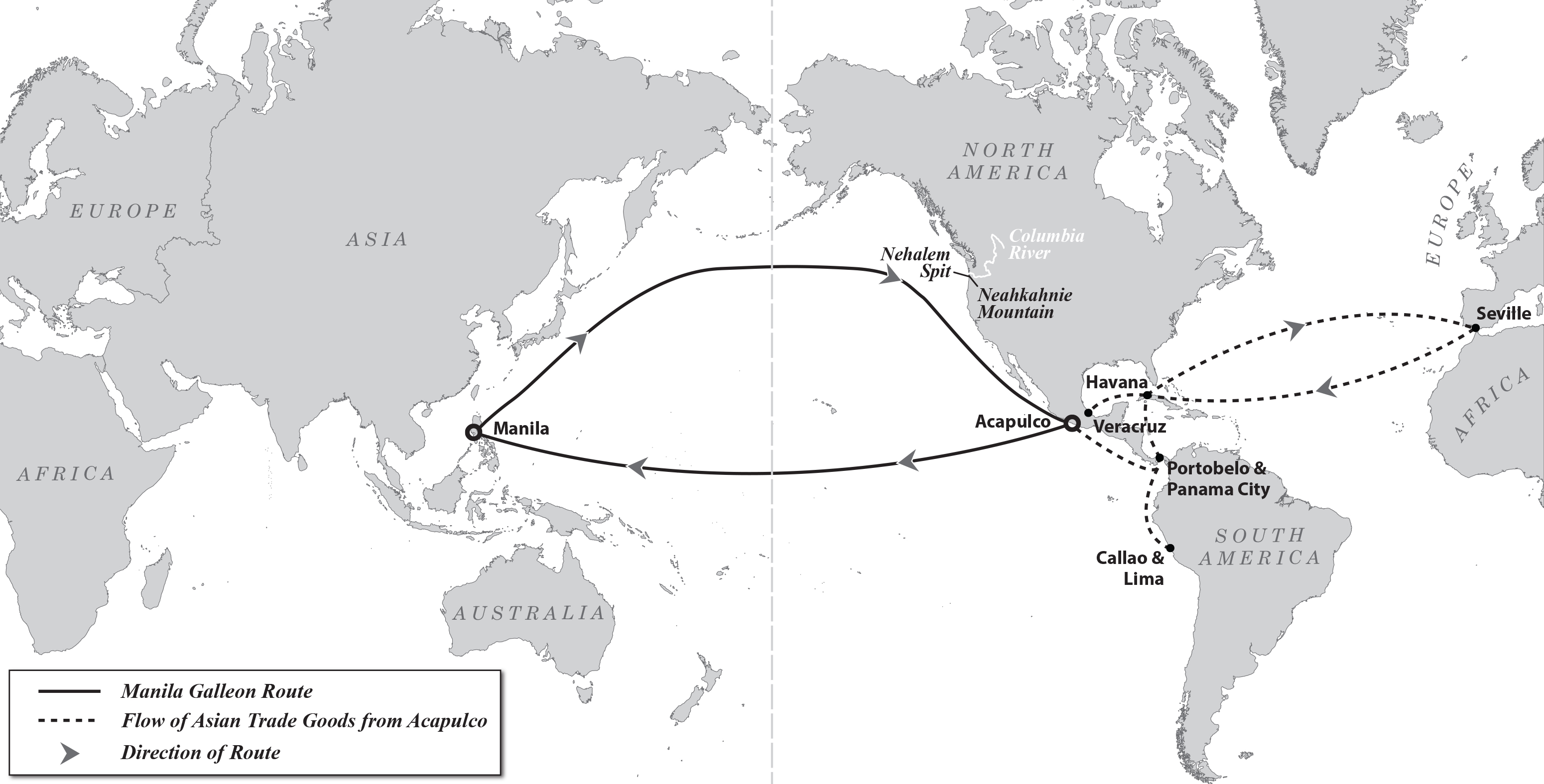
In recent years, scholars studying how Indigenous communities responded to colonialism and global trade networks have begun to look more closely at the Pacific world. One key focus is the Manila-Acapulco galleon trade route, which linked Asia and the Americas for 250 years, from 1565 to 1815.

Map of the world with lines from one continent to the next indicating trading routes.
The Manila-Acapulco galleon trade route.
Jesse Nett/Oregon Encylopedia

After Spain colonized the Philippines in 1565, Spanish galleons – towering, multidecked sailing ships – carried Chinese silk and Mexican silver across the ocean. But far more than goods traveled aboard those ships. They moved people, ideas and technologies.

Among them was the craft of distillation.

This overlooked connection may help explain how distilled agave spirits such as tequila came into being. While tequila is unmistakably a Mexican creation, the techniques used to produce it may owe something to Filipino sailors, who brought with them deep knowledge of transforming coconut sap into a potent spirit known as lambanog.

3 competing theories

For centuries, the rise of tequila has been credited to the Spanish. After the conquest of Mexico in the 16th century, colonizers introduced alembic stills, which are based on Moorish and Arabic technology. Unlike simple boiling, distillation requires managing heat and capturing purified vapor. These stills represented a major technological leap, allowing people to transform fermented drinks into distilled spirits.

Agave, long used to make the fermented drink pulque, soon became the base for something new: tequila and mezcal.

Colonial records, including the “Relaciones Geográficas,” a massive data-gathering project initiated by the Spanish Crown in the late 16th century, describe local Mesoamerican communities learning distillation from Spanish settlers. This version is well documented. But it assumes that technology moved in only one direction, from Europe to the Americas.

A second idea suggests that Mesoamerican communities already had some understanding of vapor condensation. Archaeologists have found ceramic vessels in western Mexico that may have been used to capture steam. While distillation requires additional steps, this prior knowledge may have primed Indigenous groups to more readily adopt new techniques.

As Mexican ethnobotanists Patricia Colunga-GarcíaMarín and Daniel Zizumbo-Villarreal have argued, “The adoption of distillation was likely not simply imposed, but creatively adapted to local knowledge systems.”

A third perspective, which other researchers and I are exploring, traces a potential Filipino influence. The galleon trade brought thousands of Filipino sailors and laborers to Mexico, particularly along the Pacific coast. In places such as Guerrero, Colima and Jalisco, Filipino migrants introduced methods for fermenting and distilling coconut sap into lambanog, the coconut-based spirit.

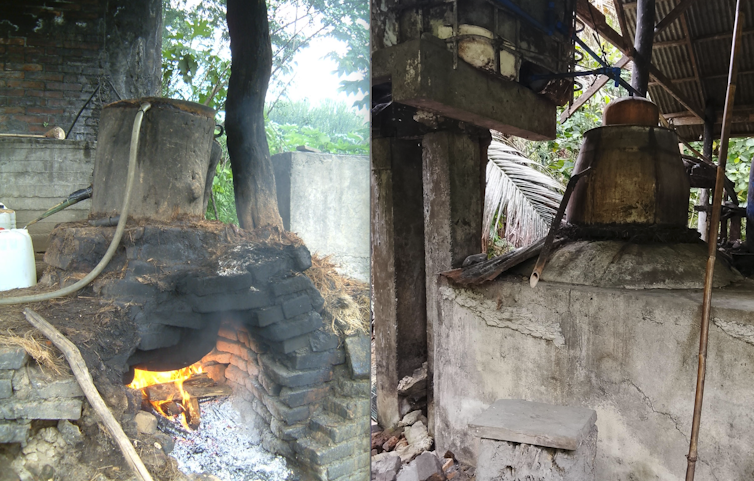
The stills they used, sometimes called Mongolian stills, were built with clay and bamboo and included a condensation bowl. Historian Pablo Guzman-Rivas has noted that these stills more closely resemble the earliest Mexican agave distillation setups than European alembics. He has also documented oral traditions in some coastal Mexican communities to link local distillation practices to their Filipino ancestors.

Side by side images of metal distilling containers with tubes emerging from each of them.
The still on the left in Jalisco, Mexico, has similarities to the lambanog on the right from Infanta, Quezon, Philippines.
Photo on left courtesy of Patricia Colunga-GarcíaMarín and Daniel Zizumbo-Villarreal; photo on right courtesy of Sherry Ann Angeles and Rading Coronacion, CC BY-SA

Beyond the bottle

Filipino influence extends beyond the distilling pot.

In Colima and other Pacific port towns, traces of the Manila galleon trade ripple through daily life – in kitchens, cantinas and even in architecture. The word “palapa,” used in Mexico and Central America today to describe rustic thatched roofs, is exactly the same as the term for coconut fronds that’s primarily used in the Bicol Region of the Philippines.

Filipino migrants in Mexico also shared knowledge of boatbuilding, fermentation and food preservation. Coconut vinegar, fish sauce and palm sugar-based condiments became part of Mexican cuisine. One of the most enduring legacies is tuba, the fermented coconut sap still popular in coastal areas of the Mexican state of Guerrero, where Filipino sailors once settled. Known locally by the same name, tuba is sold in markets and along roadsides, often enjoyed as a refreshing drink or as a cooking ingredient.

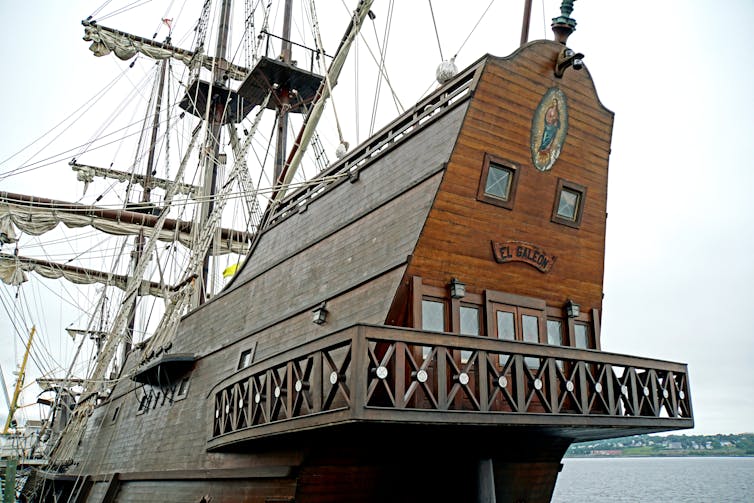
The rear of a large wooden sail boat with more than one deck.
A replica of a galleon, the Spanish trading ship that traversed the world’s oceans from the 16th century to the 18th century.
Dennis Jarvis/flickr, CC BY-SA

Exchange moved both ways. Filipino vessels carried corn, peanuts, sweet potatoes and cacao back across the Pacific, reshaping food in the Philippines. These exchanges took place under the shadow of colonialism and forced labor, but their legacies endure in language, in taste and even in the roofs over people’s heads.

Technical knowledge rarely travels through official channels alone. It moves with cooks in ship galleys, with carpenters below deck, with laborers who desert ships to settle in unfamiliar ports. Sometimes it was a way to build a roof or preserve a flavor. Other times, it was a method for turning a fermented plant into a spirit that could keep for long voyages. And by the early 1600s, new types of distilled agave spirits were being made in Mexico.

Tequila is unmistakably a product of Mexico. But it is also a product of movement. Whether Filipino migrants directly introduced distillation methods or whether they emerged from a mix of Indigenous experimentation and European tools, every time you sip tequila, you’re tasting an echo of those long ocean crossings from many centuries ago.

The Conversation

Stephen Acabado receives funding from the Henry Luce Foundation and the National Science Foundation.

– ref. Filipino sailors dock in Mexico … and help invent tequila? – https://theconversation.com/filipino-sailors-dock-in-mexico-and-help-invent-tequila-258166

How mothers supporting mothers can help fill the health care worker shortage gap and other barriers to care

Source: The Conversation – USA (3) – By Sona Dimidjian, Professor of Psychology and Neuroscience, University of Colorado Boulder

For generations, women have relied on informal networks of friends, family and neighbors to navigate the complexities of birth and motherhood. Today, research is finally catching up to what generations of women have known: Peer support can be a lifeline.

Despite growing evidence, the unique wisdom and strength that arise when mothers help mothers has been surprisingly under‑explored in the scientific literature, but that’s beginning to change. Peer-delivered programs are beginning to bring together long-standing community traditions and structured, evidence-based approaches to support the mental health of new and expectant moms.

We are clinical psychologists at the University of Colorado Boulder Renée Crown Wellness Institute. Our work and research weaves together psychological science and the wisdom of mothers supporting mothers. Our program, Alma, supports women in restoring well-being in ways that are community-rooted, evidence-based and scalable.

Pressure on parents

Nearly 50% of parents report feeling overwhelmed by stress on most days. An even larger share, about 65%, experience feelings of loneliness, according to a 2024 report from the U.S. Department of Health and Human Services. These feelings hit mothers especially hard, the report says.

A woman holding a baby on a couch covers her eyes in distress.
Many mothers report experiencing depression during pregnancy, which is one of th emost common complications of childbirth.
kieferpix/GettyImages

In 2025, mothers in the United States continue to shoulder most of the caregiving of children while also managing work, personal health and household responsibilities. The transition to motherhood is often marked by emotional and psychological strain. In fact, 10% to 20% of women experience depression during pregnancy, the postpartum period or both. Depression is one of the most common complications of childbirth. A similar number of women also face significant anxiety.

In many communities, mental health resources are scarce and stigma around mental health issues persists; therefore, many mothers are left to navigate such challenges alone and in silence. Antidepressants are widely prescribed, but research suggests that many women stop using antidepressants during pregnancy – yet they don’t start therapy or an alternative treatment instead.

Psychotherapy is the most preferred care option among new and expectant mothers, but it is often inaccessible or nonexistent. This is due in part to a workforce shortage of mental health providers.

The shortage has contributed to long wait times, geographic disparities and cultural and language barriers between providers and patients. This is especially true for underserved populations. In fact, more than 75% of depressed mothers do not receive the care they need.

Science of peer support

The science of peer support is part of a larger field exploring community health workers as one way to address the shortage of mental health providers. Peer mentors are trusted individuals from the community who share common experiences or challenges with those they serve. Through specialized training, they are equipped to deliver education, offer mental health support and connect people with needed resources.

A study that analyzed 30 randomized clinical trials involving individuals with serious mental illness found that peer support was associated with significant improvements in clinical outcomes and personal recovery. Researchers have proposed that peer support creates space for learning and healing, especially when peers share lived experience, culture and language.

As clinical psychologists, we heard from mothers in our work and communities that wanted to help other moms recover from depression, navigate the challenges of motherhood and avoid feeling alone. This insight led us to co-create Alma, a peer-led mental health program based on behavioral activation.

Behavioral activation is a proven method for treating depression based on decades of randomized clinical trials, including in new and expectant mothers. It helps new and expectant mothers reengage in meaningful activities to improve mood and functioning.

The Alma program

Alma is based on the principle that depression must be understood in context and that changing what you do can change how you feel. One strategy we use is to help a mother identify an activity that brings a sense of accomplishment, connection or enjoyment – and then take small steps to schedule that activity. Mothers might also be guided on ways to ask for help and strengthen their support networks. Alma is offered in English and Spanish.

Peer mentors typically meet with moms once a week for six to eight sessions. Sessions can take place in person or virtually, allowing flexibility that honors each family’s needs. Traditionally, peer mentors have been recruited through long-standing relationships with trusted community organizations and word-of-mouth referrals. This approach has helped ensure that mentors are deeply rooted in the communities they serve. Alma peer mentors are compensated for their time, which recognizes the value of their lived expertise, their training and the work involved in providing peer mentoring and support.

“This was the first time I felt like someone understood me, without me having to explain everything,” shared one mother during a post-program interview that all participants complete after finishing Alma.

To date, more than 700 mothers in Colorado have participated in Alma. In one of our studies, we focused on 126 Spanish-speaking Latina mothers who often face significant barriers to care, such as language differences, cost and stigma. For nearly 2 out of 3 mothers, symptoms of depression decreased enough to be considered a true, measurable recovery — not just a small change.

Notably, most of the depression improvement occurred within the first three Alma meetings. We also observed that peer mentors delivered the Alma program consistently and as intended. This suggests the program could be reliably expanded and replicated in other settings with similar positive outcomes.

A second study, conducted through a national survey of Spanish-speaking Latina new and expectant mothers, found that peer-led mental health support was not only perceived as effective, but also highly acceptable and deeply valued. Mothers noted that they were interested in peer-led support because it met them where they were: with language, trust and cultural understanding.

Supporting mothers works

Supporting mothers’ mental health is essential because it directly benefits both mothers and their children. Those improvements foster healthier emotional, cognitive and social development in their children. This interconnected impact highlights why investing in maternal mental health yields lasting benefits for the entire family.

It also makes strong economic sense to address mood and anxiety disorders among new and expectant mothers, which cost an estimated US$32,000 for each mother and child from conception through five years postpartum. More than half of those costs occur within the first year, driven primarily by productivity losses, preterm births and increased maternal health care needs.

Beyond the impact on individual families, the broader economic toll of untreated mood and anxiety disorders among new and expectant mothers is substantial. For example, it’s estimated that $4.7 billion a year are lost to mothers who have to miss work or reduce their job performance because of symptoms like fatigue, anxiety and depression.

Together – as individuals, families, communities and institutions – we can cultivate a world where the challenges of parenting are met with comprehensive support, allowing the joy of parenting to be fully realized. Because no one should have to do this alone.

Read more of our stories about Colorado.

The Conversation

Sona Dimidjian reports funding from philanthropic foundations and the National Institute of Health, and founding and receiving revenue from Mindful Noggin, Inc. and Access Consulting, LLC.

Anahi Collado reports receiving funding from philanthropic foundations.

– ref. How mothers supporting mothers can help fill the health care worker shortage gap and other barriers to care – https://theconversation.com/how-mothers-supporting-mothers-can-help-fill-the-health-care-worker-shortage-gap-and-other-barriers-to-care-257520

Dogs are helping people regulate stress even more than expected, research shows

Source: The Conversation – USA (3) – By Kevin Morris, Research Professor of Social Work, University of Denver

Studies show that dogs help humans cope with stress. marcoventuriniautieri/E+ via Getty Immages

In a 2022 survey of 3,000 U.S. adults, more than one-third of respondents reported that on most days, they feel “completely overwhelmed” by stress. At the same time, a growing body of research is documenting the negative health consequences of higher stress levels, which include increased rates of cancer, heart disease, autoimmune conditions and even dementia.

Assuming people’s daily lives are unlikely to get less stressful anytime soon, simple and effective ways to mitigate these effects are needed.

This is where dogs can help.

As researchers at the University of Denver’s Institute for Human-Animal Connection, we study the effects animal companions have on their humans.

Dozens of studies over the last 40 years have confirmed that pet dogs help humans feel more relaxed. This would explain the growing phenomenon of people relying on emotional support dogs to assist them in navigating everyday life. Dog owners have also been shown to have a 24% lower risk of death and a four times greater chance of surviving for at least a year after a heart attack.

Now, a new study that we conducted with a team of colleagues suggests that dogs might have a deeper and more biologically complex effect on humans than scientists previously believed. And this complexity may have profound implications for human health.

How stress works

The human response to stress is a finely tuned and coordinated set of various physiological pathways. Previous studies of the effects of dogs on human stress focused on just one pathway at a time. For our study, we zoomed out a bit and measured multiple biological indicators of the body’s state, or biomarkers, from both of the body’s major stress pathways. This allowed us to get a more complete picture of how a dog’s presence affects stress in the human body.

The stress pathways we measured are the hypothalamic-pituitary-adrenal, or HPA, axis and the sympathoadrenal medullary, or SAM, axis.

When a person experiences a stressful event, the SAM axis acts quickly, triggering a “fight or flight” response that includes a surge of adrenaline, leading to a burst of energy that helps us meet threats. This response can be measured through an enzyme called alpha-amylase.

At the same time, but a little more slowly, the HPA axis activates the adrenal glands to produce the hormone cortisol. This can help a person meet threats that might last for hours or even days. If everything goes well, when the danger ends, both axes settle down, and the body goes back to its calm state.

While stress can be an uncomfortable feeling, it has been important to human survival. Our hunter-gatherer ancestors had to respond effectively to acute stress events like an animal attack. In such instances, over-responding could be as ineffective as under-responding. Staying in an optimal stress response zone maximized humans’ chances of survival.

An man pets a dog in a gym.
Dogs can be more helpful than human friends in coping with stressful situations.
FG Trade/E+ via Getty Images

More to the story

After cortisol is released by the adrenal glands, it eventually makes its way into your saliva, making it an easily accessible biomarker to track responses. Because of this, most research on dogs and stress has focused on salivary cortisol alone.

For example, several studies have found that people exposed to a stressful situation have a lower cortisol response if they’re with a dog than if they’re alone – even lower than if they’re with a friend.

While these studies have shown that having a dog nearby can lower cortisol levels during a stressful event, suggesting the person is calmer, we suspected that was just part of the story.

What our study measured

For our study, we recruited about 40 dog owners to participate in a 15-minute gold standard laboratory stress test. This involves public speaking and oral math in front of a panel of expressionless people posing as behavioral specialists.

The participants were randomly assigned to bring their dogs to the lab with them or to leave their dogs at home. We measured cortisol in blood samples taken before, immediately after and about 45 minutes following the test as a biomarker of HPA axis activity. And unlike previous studies, we also measured the enzyme alpha-amylase in the same blood samples as a biomarker of the SAM axis.

As expected based on previous studies, the people who had their dog with them showed lower cortisol spikes. But we also found that people with their dog experienced a clear spike of alpha-amylase, while those without their dog showed almost no response.

No response may sound like a good thing, but in fact, a flat alpha-amylase response can be a sign of a dysregulated response to stress, often seen in people experiencing high stress responses, chronic stress or even PTSD. This lack of response is caused by chronic or overwhelming stress that can change how our nervous system responds to stressors.

In contrast, the participants with their dogs had a more balanced response: Their cortisol didn’t spike too high, but their alpha-amylase still activated. This shows that they were alert and engaged throughout the test, then able to return to normal within 45 minutes. That’s the sweet spot for handling stress effectively. Our research suggests that our canine companions keep us in a healthy zone of stress response.

Having a dog benefits humans’ physical and psychological health.

Dogs and human health

This more nuanced understanding of the biological effects of dogs on the human stress response opens up exciting possibilities. Based on the results of our study, our team has begun a new study using thousands of biomarkers to delve deeper into the biology of how psychiatric service dogs reduce PTSD in military veterans.

But one thing is already clear: Dogs aren’t just good company. They might just be one of the most accessible and effective tools for staying healthy in a stressful world.

The Conversation

Kevin Morris receives funding for this research from the Morris Animal Foundation, the Human-Animal Bond Research Institute, and the University of Denver.

Jaci Gandenberger receives funding from the University of Denver to support this research.

– ref. Dogs are helping people regulate stress even more than expected, research shows – https://theconversation.com/dogs-are-helping-people-regulate-stress-even-more-than-expected-research-shows-254563

Amid fragile ceasefire, violence in southern Syria brings Druze communities’ complex cross-border ties to the fore

Source: The Conversation – USA (3) – By Asher Kaufman, Professor of History and Peace Studies, University of Notre Dame

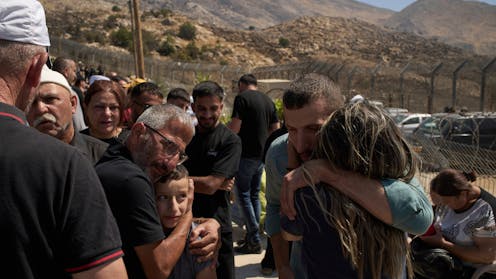
Druze from Syria hug relatives from the Israeli Druze community before crossing the border in the Israeli-controlled Golan Heights on July 17, 2025. AP Photo/Leo Correa

A fragile ceasefire was put in place in southern Syria on July 19, 2025, after days of violence between Druze militias and Bedouin tribes that drew in government forces and prompted Israeli strikes on the capital, Damascus, as a warning to pull back from Druze areas. The United States helped broker the latest agreement, fearing a spillover of violence to other parts of Syria.

The conflict’s quick escalation brings to the fore multiple layers of politics and identity in the region – particularly among the Druze, who form an important minority in several countries and make up about 2% of Israel’s population. As a historian of the Middle East, I have researched Druze cross-border communal ties and followed closely their predicaments since the start of the Syrian civil war in March 2011.

A wide road seen from above, with damaged buildings alongside it and smoke rising against a blue sky.
Bedouin fighters deploy in Mazraa village on the outskirts of Sweida, as smoke rises from clashes with Druze militias, on July 18, 2025.
AP Photo/Ghaith Alsayed

Cross-border brotherhood

The Druze are a monotheistic religious community that split from a branch of Shiite Islam in the 11th century. Today, they live mainly in three countries: Lebanon, Syria and Israel, with a small presence in northern Jordan.

Despite their geographical dispersion, they have managed to retain a strong sense of communal identity. One of the most important creeds of their faith is “protection of brothers of the faith.”

Another article of faith that helps to buttress shared communal solidarity is belief in reincarnation: that with physical death, the soul is transferred to the body of a newly born Druze.

Although Druze history shows that the community is not always united, the belief in and practice of cross-border solidarity is very strong. According to their popular saying, “the Druze are like a copper tray. Wherever you hit it, the whole tray reverberates.”

National identity

After World War I, the creation of the modern states in the Middle East divided the Druze community between Syria, Lebanon and the British mandate of Palestine, which is now Israel.

A person holding a brightly colored flag waves as night falls in a hilly area.
A young member of the Druze community in the Golan Heights waves to Syrian Druze clerics while they cross the border back to Syria on March 15, 2025.
AP Photo/Leo Correa

In Israel, they have largely integrated into the Jewish state. Like Jewish citizens, Druze men are required to serve in the military, and many have attained leadership positions in the security sector and politics.

A popular cliché has developed about their “blood oath” with the Jewish state. In a July 15 statement, Prime Minister Benjamin Netanyahu and Defense Minister Israel Katz cited Israel’s “deep covenant of blood with our Druze citizens” and their connections to Druze in Syria.

Their integration has been marred by discrimination, a prime example of which is the 2018 law that defines Israel as the nation-state for Jews. Still, many retain a strong sense of Israeli identity that sets them apart from Arab Palestinian citizens of Israel.

An additional Druze community lives in the Golan Heights, territory that Israel seized from Syria in 1967 and has occupied since. Most Druze there declined to receive Israeli citizenship, and remained loyal to Syria until the outbreak of the civil war there. Since then, there has been a notable change in their relationship with Israel, marked by increased numbers who have acquired Israeli citizenship.

Druze communities elsewhere in the region have also adopted aspects of their countries’ culture, including Arab nationalism and Syrian or Lebanese national sentiments. Still, cross-border solidarity among Druze has remained strong – and often resurfaced in times of crisis.

War in Syria

When the Syrian civil war erupted in March 2011, Syrian Druze were targeted at times by both the Assad regime, which pressured them to support it, and by Islamist rebel groups that regarded them as infidels. The Druze straddled a fine line throughout the war, seeking, not always successfully, to be left on their own.

In 2015, that tension came to a boiling point. Druze regions throughout Syria became sites of military confrontations, involving Druze militias, the Syrian army and opposition fighters.

Israeli Druze organized mass rallies in support of their brothers in Syria and called on the Israeli government to intervene. Israel, in turn, protected Syrian Druze villages close to its border with Syria in the Golan Heights. The Israeli government covertly supported Druze areas deeper in Syria, and sent clear messages to combatants on all sides not to harm the Druze.

Since the fall of the Assad regime in Damascus in December 2024, Ahmad al-Sharaa, the new Syrian leader, has attempted to bring divided and ruined Syria together under his authority.

However, religious and ethnic minorities have been highly suspicious of the new government. Many of its members hail from al-Sharaa’s own militia during the civil war, Hayat Tahrir al Sham, which targeted religious minorities and enforced its own interpretation of Islam on the population under its control.

Spiraling crisis

The most recent violence took place in Mount Druze, a region in Sweida province that is home to most of the community in Syria. It was sparked by an incident where a local Bedouin band robbed and killed a Druze man. The incident quickly became a catalyst for major fighting between Druze, Bedouins and dispatched units of the Syrian army.

A man in camo walks down a road as two men up ahead on a bicycle look at a covered body on the ground.
Syrian government forces in Mazraa village, on the outskirts of Sweida, pass by a dead Druze militia fighter on July 14, 2025.
AP Photo/Ghaith Alsayed

State security forces tried to impose their authority, but in the process killed scores of Druze. They also violated Druze cultural norms by filming the forced shaving of Druze men’s mustaches, including respected religious men, and posting the clips on social media. According to the Syrian Observatory for Human Rights, more than 1,100 people have been killed in the fighting.

The fragile agreement that the Sweida Druze signed with the new government in May, as part of the government’s efforts to solidify authority over the divided country, collapsed following these incidents.

Befitting the saying about the reverberation of the copper tray, Israeli Druze immediately mobilized, joined by Druze in the Golan Heights. Hundreds crossed the border to Syria. Many called on the government in Jerusalem to intervene, though others were opposed.

On July 16, the Israeli military targeted the Syrian army by striking Damascus – sending a clear threat to al-Sharaa. Israel also struck military targets in southern Syria.

Later that day, the Syrian government reached a ceasefire agreement with the Druze in Sweida, which collapsed soon after. On July 19, following more fighting and violence – and mediation by the United States, Turkey and Jordan – a new ceasefire was put in place, though new fighting has been reported.

A changing Middle East

Even before these recent incidents, Israel became a key player in post-Assad Syria by occupying areas close to their shared border. Now, Israel has deepened its involvement by defending the Druze population in the country – as many Israeli Druze had hoped it would since the start of the civil war in 2011.

Apart from supporting the Druze, Israel’s military actions are also tied to its efforts to project power amid the tectonic shifts in the Middle East since the Hamas attacks on Oct. 7, 2023. In Syria, it seeks to guarantee its influence on the reshaping of the country after civil war. Domestically, Netanyahu is interested in prolonging Israel’s state of emergency, as it extends the survival of his far-right and unpopular government. Syria provides him with another front to maintain this state of emergency.

For many Israeli Druze, meanwhile, this still-unfolding episode constitutes another example in their history of seeking to protect their brothers in faith. Among Druze in the Middle East, they are uniquely positioned, with many serving in the region’s most powerful military.

On July 19, Israel’s public broadcaster, Kan news, reported that 2,000 Israeli Druze, including reserve soldiers, signed a petition that said: “we are getting ready to volunteer to fight alongside our brothers in Sweida. It is our time to defend our brothers, our land and our religion.”

The Conversation

Asher Kaufman does not work for, consult, own shares in or receive funding from any company or organization that would benefit from this article, and has disclosed no relevant affiliations beyond their academic appointment.

– ref. Amid fragile ceasefire, violence in southern Syria brings Druze communities’ complex cross-border ties to the fore – https://theconversation.com/amid-fragile-ceasefire-violence-in-southern-syria-brings-druze-communities-complex-cross-border-ties-to-the-fore-261337

Three types of drought – and why there’s no such thing as a global water crisis

Source: The Conversation – UK – By Filippo Menga, Visiting Research Fellow, Professor of Geography, University of Reading

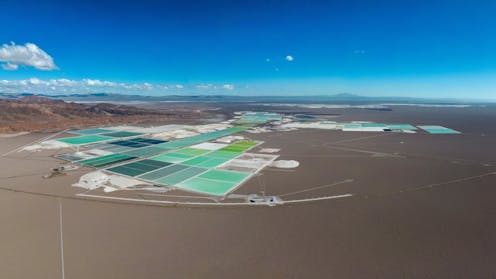
Lithium fields in the Atacama Desert, Chile. Freedom_wanted/Shutterstock

Hosepipe bans have been announced in parts of England this summer. Following the driest spring in over a century, the Environment Agency has issued a medium drought risk warning, and Yorkshire Water will introduce restrictions starting Friday, 11 July. It’s a familiar story: reduced rainfall, shrinking reservoirs and renewed calls for restraint: take shorter showers, avoid watering the lawn, turn off the tap while brushing your teeth.

These appeals to personal responsibility reflect a broader way of thinking about water: that everyone, everywhere, is facing the same crisis, and that small individual actions are a meaningful response. But what if this narrative, familiar as it is, obscures more than it reveals?

In my new book, Thirst: The global quest to solve the water crisis, I argue that the phrase “global water crisis” may do more harm than good. It simplifies a complex global reality, collapsing vastly different situations into one seemingly shared emergency. While it evokes urgency, it conceals the very things that matter: the causes, politics and power dynamics that determine who gets water and who doesn’t.

What we call a single crisis is, in fact, many distinct ones. To see this clearly, we must move beyond the rhetoric of global scarcity and look closely at how drought plays out in different places. Consider the UK, the Horn of Africa, and Chile: three regions facing water stress in radically different ways.

UK: a crisis of infrastructure

Drought in the UK is rarely the result of absolute water scarcity. The country receives relatively consistent rainfall throughout the year. Even when droughts occur, the underlying issue is how water is managed, distributed and maintained.

Roughly a fifth of treated water is lost through leaking pipes, some of them over a century old. At the same time, privatised water companies have come under growing scrutiny for failing to invest in infrastructure while paying billions in dividends to shareholders. So calls for households to use less water often strike a dissonant note.

The UK’s droughts are not just the product of climate variability. They are also shaped by policy decisions, regulatory failures and eroding public trust. Temporary scarcity becomes a recurring crisis due to the structures meant to manage it.

Horn of Africa: survival and structural vulnerability

In the Horn of Africa, drought is catastrophic. Since 2020, the region has endured five consecutive failed rainy seasons – the worst in four decades. More than 30 million people across Ethiopia, Somalia and Kenya face food insecurity. Livelihoods have collapsed and millions of people have been displaced.

Climate change is a driver, but so is politics. Armed conflict, weak governance and decades of underinvestment have left communities dangerously exposed. These vulnerabilities are rooted in longer histories of colonial exploitation and, more recently, the privatisation of essential services.

Adaptation refers to how communities try to cope with changing climate conditions using the resources they have. Local efforts to adapt to drought (such as digging new wells, planting drought-resistant crop or rationing limited supplies) are often informal or underfunded.

When prolonged droughts strike in places already facing poverty, conflict or weak governance, these coping strategies are rarely enough. Framing climate-induced drought as just another chapter in a global water crisis erases the specific conditions that make it so deadly.

woman in africa dress pushes jerrycan along desert in drought
Drought in Africa can be catastrophic.
Dieter Telemans/Panos Pictures, CC BY-NC-ND

Chile: extraction and exclusion

Chile’s water crisis is often linked to drought. But the underlying issue is extraction. The country holds over half of the world’s lithium reserves, a metal critical to electric vehicles and energy storage.

Lithium is mined through an intensely water-consuming process in the Atacama Desert, one of the driest places on Earth, often on Indigenous land. Communities have seen water tables drop and wetlands disappear while receiving little benefit.

Chile’s water laws, introduced under the Pinochet regime, allow private companies to hold long-term rights regardless of environmental or social cost. Here, water scarcity is driven less by rainfall and more by law, ownership and global demand for renewable technologies. Framing Chile’s situation as just another example of a global water crisis overlooks the deeper political and economic forces that shape how water is managed – and who gets to benefit from it.

No single crisis, no single solution

While drought is intensifying, its causes and consequences vary. In the UK, it’s about infrastructure and governance. In the Horn of Africa, it’s about historical injustice and systemic neglect. In Chile, it’s about legal frameworks and resource extraction.

Labelling this simply as a global water crisis oversimplifies the issue and steers attention away from the root causes. It promotes technical solutions while ignoring the political questions of who has access to water and who controls it.

This approach often favours private companies and international organisations, sidelining local communities and institutions. Instead of holding power to account, it risks shifting responsibility without making meaningful changes to how power and resources are shared.

In Thirst, I argue that the crisis of water is a cultural and political one. Who controls water, who profits from it, who bears the cost of its depletion: these are the defining questions of our time. And they cannot be answered with generalities. We don’t need one big solution. We need many small, just ones.

This article features a reference to a book that has been included for editorial reasons. If you click on one of the links to bookshop.org and go on to buy something, The Conversation UK may earn a commission.


Don’t have time to read about climate change as much as you’d like?

Get a weekly roundup in your inbox instead. Every Wednesday, The Conversation’s environment editor writes Imagine, a short email that goes a little deeper into just one climate issue. Join the 45,000+ readers who’ve subscribed so far.


The Conversation

Filippo Menga does not work for, consult, own shares in or receive funding from any company or organisation that would benefit from this article, and has disclosed no relevant affiliations beyond their academic appointment.

– ref. Three types of drought – and why there’s no such thing as a global water crisis – https://theconversation.com/three-types-of-drought-and-why-theres-no-such-thing-as-a-global-water-crisis-260723

How a popular sweetener could be damaging your brain’s defences – new study

Source: The Conversation – UK – By Havovi Chichger, Professor, Biomedical Science, Anglia Ruskin University

Found in everything from protein bars to energy drinks, erythritol has long been considered a safe alternative to sugar. But new research suggests this widely used sweetener may be quietly undermining one of the body’s most crucial protective barriers – with potentially serious consequences for heart health and stroke risk.

A new study from the University of Colorado suggests erythritol may damage cells in the blood-brain barrier, the brain’s security system that keeps out harmful substances while letting in nutrients. The findings add troubling new detail to previous observational studies that have linked erythritol consumption to increased rates of heart attack and stroke.

In the new study, researchers exposed blood-brain barrier cells to levels of erythritol typically found after drinking a soft drink sweetened with the compound. They saw a chain reaction of cell damage that could make the brain more vulnerable to blood clots – a leading cause of stroke.


Get your news from actual experts, straight to your inbox. Sign up to our daily newsletter to receive all The Conversation UK’s latest coverage of news and research, from politics and business to the arts and sciences.


Erythritol triggered what scientists call oxidative stress, flooding cells with harmful, highly reactive molecules known as free radicals, while simultaneously reducing the body’s natural antioxidant defences. This double assault damaged the cells’ ability to function properly, and in some cases killed them outright.

But perhaps more concerning was erythritol’s effect on the blood vessels’ ability to regulate blood flow. Healthy blood vessels act like traffic controllers, widening when organs need more blood – during exercise, for instance – and tightening when less is required. They achieve this delicate balance through two key molecules: nitric oxide, which relaxes blood vessels, and endothelin-1, which constricts them.

The study found that erythritol disrupted this critical system, reducing nitric oxide production while ramping up endothelin-1. The result would be blood vessels that remain dangerously constricted, potentially starving the brain of oxygen and nutrients. This imbalance is a known warning sign of ischaemic stroke – the type caused by blood clots blocking vessels in the brain.

Even more alarming, erythritol appeared to sabotage the body’s natural defence against blood clots. Normally, when clots form in blood vessels, cells release a “clot buster” called tissue plasminogen activator that dissolves the blockage before it can cause a stroke. But the sweetener blocked this protective mechanism, potentially leaving clots free to wreak havoc.

The laboratory findings align with troubling evidence from human studies. Several large-scale observational studies have found that people who regularly consume erythritol face significantly higher risks of cardiovascular disease, including heart attacks and strokes. One major study tracking thousands of participants found that those with the highest blood levels of erythritol were roughly twice as likely to experience a major cardiac event.

However, the research does have limitations. The experiments were conducted on isolated cells in laboratory dishes rather than complete blood vessels, which means the cells may not behave exactly as they would in the human body. Scientists acknowledge that more sophisticated testing – using advanced “blood vessel on a chip” systems that better mimic real physiology – will be needed to confirm these effects.

The findings are particularly significant because erythritol occupies a unique position in the sweetener landscape. Unlike artificial sweeteners such as aspartame or sucralose, erythritol is technically a sugar alcohol – a naturally occurring compound that the body produces in small amounts. This classification helped it avoid inclusion in recent World Health Organization guidelines that discouraged the use of artificial sweeteners for weight control.

Erythritol has also gained popularity among food manufacturers because it behaves more like sugar than other alternatives. While sucralose is 320 times sweeter than sugar, erythritol provides only about 80% of sugar’s sweetness, making it easier to use in recipes without creating an overpowering taste. It’s now found in thousands of products, especially in many “sugar-free” and “keto-friendly” foods.

A man reaching for a protein bar in a shop.
Erythritol can be found in many keto-friendly products, such a protein bars.
Stockah/Shutterstock.com

Trade-off

Regulatory agencies, including the European Food Standards Agency and the US Food and Drug Administration, have approved erythritol as safe for consumption. But the new research adds to a growing body of evidence suggesting that even “natural” sugar alternatives may carry unexpected health risks.

For consumers, the findings raise difficult questions about the trade-offs involved in sugar substitution. Sweeteners like erythritol can be valuable tools for weight management and diabetes prevention, helping people reduce calories and control blood sugar spikes. But if regular consumption potentially weakens the brain’s protective barriers and increases cardiovascular risk, the benefits may come at a significant cost.

The research underscores a broader challenge in nutritional science: understanding the long-term effects of relatively new food additives that have become ubiquitous in the modern diet. While erythritol may help people avoid the immediate harms of excess sugar consumption, its effect on the blood-brain barrier suggests that frequent use could be quietly compromising brain protection over time.

As scientists continue to investigate these concerning links, consumers may want to reconsider their relationship with this seemingly innocent sweetener – and perhaps question whether any sugar substitute additive is truly without risk.

The Conversation

Havovi Chichger does not work for, consult, own shares in or receive funding from any company or organisation that would benefit from this article, and has disclosed no relevant affiliations beyond their academic appointment.

– ref. How a popular sweetener could be damaging your brain’s defences – new study – https://theconversation.com/how-a-popular-sweetener-could-be-damaging-your-brains-defences-new-study-261500

The hidden history behind every rose blooming this summer

Source: The Conversation – UK – By Alexander Bowles, Glasstone Research Fellow, Plant Science, University of Oxford

ilovephoto_KA/Shutterstock

As roses fill gardens and hedgerows this season, there is a story, millions of years in the making, unfolding beneath their petals.

Analysis of rose genomes and floral structure is revealing how the stunning diversity we admire is rooted in the genes of these plants, offering new insight into how the beauty in our world is built at the molecular level.

Modern roses are a riot of colour. Some roses are showy and fragrant while others are modest and understated. Jude the Obscure is coloured in peach, Kew Gardens a soft white and Catherine’s Rose a coral pink.


Many people think of plants as nice-looking greens. Essential for clean air, yes, but simple organisms. A step change in research is shaking up the way scientists think about plants: they are far more complex and more like us than you might imagine. This blossoming field of science is too delightful to do it justice in one or two stories.

This story is part of a series, Plant Curious, exploring scientific studies that challenge the way you view plantlife.


All modern roses, in one way or another, stem from a pool of ancient ancestors. The genus Rosa first appeared over 30 million years ago, while the more recent ancestral species that gave rise to today’s roses emerged around 6 million years ago. Diversifying over this time, all modern roses have come into being from these plants.

An April 2025 study by Chinese researchers suggests that the first Rosa flowers 30 million years ago were probably yellow. The researchers studied key traits of modern roses, like petal colour and the number of petals, and mapped them onto an evolutionary tree of roses. Tracing these traits through time allowed them to see how roses have changed over millions of years. For example, the next colours to appear in rose petals were pinks and reds. They also found the ancestor of modern roses alive 6 million years ago was probably pink.

The 2025 study’s evolutionary reconstruction of key rose traits suggests the first roses were simple in form, bearing a single layer of petals. Jude the Obscure and Catherine’s Rose are both double-flowered roses, meaning their blooms have extra petals. These extra petals originated through natural mutations, which were later selected for during rose breeding.

Scent is one of the main appeals of roses in our gardens. Jude the Obscure has a strong fruity fragrance, while Catherine’s Rose is said to have a subtle hint of mango. Yet, some roses are completely scentless.

Floral fragrances come from plant compounds. For instance, roses that emit a lemony aroma owe it to the compound citronellol. Scientists aren’t sure why some Rosa species produce these compounds, but they probably help attract specific pollinators or serve as part of the plant’s defence system.

A 2024 study found that fragrant roses have more genes involved in the production of scent compounds compared to their less fragrant cousins. These fragrant plants produce compounds in high abundance, their complex aromas attracting pollinators and our senses alike. This suggests that, over time, scent production became an advantageous strategy for some roses, because it costs energy to produce these genes.

After their origin over 30 million years ago, roses gradually evolved a remarkable range of forms, colours and fragrances. Today, there are more than 300 accepted species in the genus Rosa. Fossil evidence and genetic studies suggest that the ancestors of roses first evolved in central Asia, probably in modern-day China and the Himalayan foothills. Their natural diversity helped roses adapt to temperate climates, spreading throughout Asia. From there, they gradually expanded westward, reaching Europe around 15 to 25 million years ago.

In only the last couple of centuries, roses have undergone a second wave of diversification, this time driven by human hands. Modern rose breeders selected between eight and 20 wild rose species — particularly from Asia, such as Rosa chinensis and Rosa multiflora, as well as European species Rosa gallica and Rosa canina — to create all modern cultivated varieties. This process enhanced traits that appeal to our senses and produced flowers with more petals, deeper and more vibrant colours and stronger, more complex scents.

The origin of rose breeding: Rosa multiflora, Rosa canina and Rosa gallica
Wikimedia

For example, genes involved in petal development have been selected to produce fuller, double-flowered blooms. Other genes associated with pigment production have been targeted to enhance deeper and more vibrant colours. Likewise, genes involved in the synthesis of scent compounds, such as one known as NUDX1, have been favoured to intensify rose fragrance.

Other characteristics flower breeders targeted include recurrent flowering, disease resistance and reduced prickle formation. Many wild rose species originally had far more prickles than modern garden varieties. Outside of our gardens, this may leave them more vulnerable to grazing animals.

This botanical experiment, guided by human hands, has shaped the stunning diversity we cherish today. This cultivation is what sets roses apart from their close relatives. Rubus, a closely related genus including blackberries and raspberries, has more than 800 species. There are over 300 Rosa species but it is estimated there are over 35,000 varieties of modern rose.

Rose breeding is still evolving, with future varieties promising new petal shapes, enhanced pest resistance and greater resilience to climate extremes.

Beauties such as Jude the Obscure, Kew Gardens and Catherine’s Rose are the result of centuries of careful cultivation and scientific understanding. So, the next time you walk through a rose garden, take a moment to appreciate the deep history behind each bloom.

The Conversation

Alexander Bowles receives funding as a Glasstone Fellow at the University of Oxford.

– ref. The hidden history behind every rose blooming this summer – https://theconversation.com/the-hidden-history-behind-every-rose-blooming-this-summer-259719

I watched a simulated oil spill in the Indian Ocean – here’s how island and coastal countries worked together to avoid disaster

Source: The Conversation – UK – By Kate Sullivan de Estrada, Associate Professor in the International Relations of South Asia, University of Oxford

Preparing to react to a maritime ’emergency’. Romuald Robert, CC BY

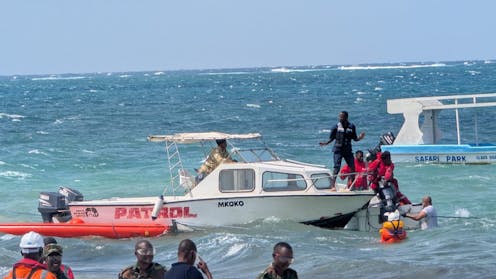
The coils of black hose, drum skimmers designed to collect oil from the ocean’s surface, and orangey-red containment booms all looked out of place on the white sand of Mombasa’s touristy Nyali beach. But on July 9, dozens of emergency responders in red and orange hi-vis gear took over a portion of this beach. They were braving the wind and choppy Indian Ocean waves as they mock up the onshore response to a simulated oil spill at sea.

I research how countries in the western Indian Ocean cooperate to make the seas around them safer, and I was there to observe a field training exercise that brought together around 200 participants from ten coastal and island states for one week in east Africa’s largest port city. Codenamed MASEPOLREX25, it put two types of emergency response to the test.

The first was Kenya’s national-level response to marine oil pollution, guided by its national contingency plan. The second was a regional-level response that can bring in outside help from other nations. The organiser of the exercise, the Indian Ocean Commission (IOC) – an intergovernmental group of Western Indian Ocean islands headquartered in Mauritius – wanted the countries of the region to rehearse a joint response to marine pollution.

People dressed in orange suits prepare for the emergency exercise.
Preparations begin on Kenya’s Nyali beach for the emergency exercise.
Romuald Robert., CC BY

The exercise put two IOC-designed regional centres through their paces. Think of them like a pair of regional helpdesks for ocean security, each with a distinct purpose.

How does it unfold?

The exercise began the day before with a briefing on the marine pollution scenario. The Kenyan authorities had received a distress call from the fictional captains of two damaged vessels.

An oil tanker with a deadweight tonnage of 50,000 had collided with a feeder ship in Tanzanian waters, just south of Kenya’s maritime zone. The captain of the tanker suspected that 3,000-to-4,000 metric tonnes of intermediate fuel oil (persistent, thick oil that won’t evaporate by itself) had spilled into the ocean.

Such an incident is plausible. A 2023 IOC-commissioned internal study pinpointed the Kenya-Tanzania border as a hotspot for marine pollution risk. Two major ports sit in close proximity in a busy maritime transit corridor.

Clustered around an incident board, Kenya’s incident management team mounted their national response. Nuru Mohammed, liaison officer for the Kenya Maritime Authority, explained that the assessment of the size of the spill and expectations of its behaviour had already led the team to anticipate the need for regional support. At this time of year, the sea current would carry the slick northward into Kenyan waters.

At the back of everyone’s minds was the 2020 Wakashio incident, in which a bulk carrier owned by a Japanese shipping company but flagged to Panama ran aground to the southeast of Mauritius. An estimated 800-to-1,000 tonnes of fuel oil spilled into the sea, affecting 30km of Mauritian coastline. The cost to marine life, food security and human health were compounded by economic and connectivity challenges posed by the COVID pandemic.

Preparations for the exercise continue on the beach near Mombassa.
Responders prepare oil-spill equipment on the beach near Mombasa.
Romuald Robert, CC BY-SA

For the exercise, aerial surveillance of the mock spill triggered the first attempt at containment. A live video feed of the offshore national response showed rice husks, a substitute for the oil, afloat on the waves. Two vessels sprayed simulated oil-spill dispersants in challenging winds.

In real life, as in this exercise, oil properties determine how the spill will behave. IOC consultant Peter Taylor warned that churning waves could mix with the oil forming emulsions that were viscous and not dispersible.

We turned our attention to the chat feed on SeaVision, an information-sharing platform. A notification popped up. The Regional Maritime Information Fusion Centre (RMIFC) in Madagascar had shared mapped and timestamped projections of the drift of the oil slick for the following 72 hours. The centre’s director, Alex Ralaiarivony, later explained how it could provide other technical support such as satellite imagery, and could calculate the proportions of oil that were likely to become submerged, evaporate, remain adrift and reach the shoreline.

By July 9, the fictional oil spill had reached the coast. The team on Nyali beach hurried to deploy an oil containment boom, a floating barrier that can shield sensitive areas such as shorelines.

Back at headquarters, SeaVision was busy with messages. The other centre, the Regional Coordination of Operations Centre (RCOC) in Seychelles, was urgently requesting more shoreline equipment to help with oil spills, such as booms, from regional partners. Mauritius and Madagascar both made offers to help that Kenya accepted, and the RCOC coordinated a Dornier aircraft from Seychelles for collection and delivery.

How does the emergency response work?

The two centres help countries in the Western Indian Ocean secure their maritime zones against threats such as piracy, illegal, unreported and unregulated fishing, the trafficking of illicit goods – and marine pollution incidents.

In Madagascar, the RMIFC gathers and analyses maritime data from multiple sources to detect potential threats at sea. This enables early warning of threats like oil spills, as well as suspicious ships or boats engaged in illicit maritime activities.

The RCOC in Seychelles responds to these threats. It draws on a shared pool of aircraft and ships belonging to its members, using these to coordinate joint responses – whether through sea patrols, boarding and inspecting ships, or laying the legal groundwork to prosecute offenders.

The two regional centres serve seven states: IOC island members Comoros, Madagascar, Mauritius, Seychelles and France — through its island territory of La Réunion — as well as East African coastal states Kenya and Djibouti.

On July 10, the exercise ended with an evaluation. One takeaway was that the two regional centres could have been used even more – for instance, to coordinate technical assistance from different partners. But a key purpose of the exercise was to help participating countries understand what the centres offer, and get them used to a regional-level response.

Coastal and island states thousands of kilometres apart are being brought closer by maritime threats in their shared ocean. And the two centres are building their operational capacity to support the whole region, while also creating trust among countries. This matters in a geopolitical context of strategic competition in the Indian Ocean, where islands and East African coastal states sometimes want to put their own needs first.

At the end of the exercise, IOC officer-in-charge Raj Mohabeer reminded participants that the island and coastal states of the Western Indian Ocean have vast maritime zones and face multiple seaborne security threats to their economies, ecologies and livelihoods. “No developing country can deal with a significant marine pollution event alone.”

The Conversation

Kate Sullivan de Estrada receives funding from Research England’s Policy Support Fund allocation to the University of
Oxford via the Public Policy Challenge Fund. Her project under the Fund is titled “Balancing ‘Sovereignty Trade-offs’ in Small-State Maritime Security Co-operation: The Case of the Indian Ocean Commission.”

– ref. I watched a simulated oil spill in the Indian Ocean – here’s how island and coastal countries worked together to avoid disaster – https://theconversation.com/i-watched-a-simulated-oil-spill-in-the-indian-ocean-heres-how-island-and-coastal-countries-worked-together-to-avoid-disaster-260895