NASA’s Pandora telescope will study stars in detail to learn about the exoplanets orbiting them

Source: The Conversation – USA – By Daniel Apai, Associate Dean for Research and Professor of Astronomy and Planetary Sciences, University of Arizona

A new NASA mission will study exoplanets around distant stars. European Space Agency, CC BY-SA

On Jan. 11, 2026, I watched anxiously at the tightly controlled Vandenberg Space Force Base in California as an awe-inspiring SpaceX Falcon 9 rocket carried NASA’s new exoplanet telescope, Pandora, into orbit.

Exoplanets are worlds that orbit other stars. They are very difficult to observe because – seen from Earth – they appear as extremely faint dots right next to their host stars, which are millions to billions of times brighter and drown out the light reflected by the planets. The Pandora telescope will join and complement NASA’s James Webb Space Telescope in studying these faraway planets and the stars they orbit.

I am an astronomy professor at the University of Arizona who specializes in studies of planets around other stars and astrobiology. I am a co-investigator of Pandora and leading its exoplanet science working group. We built Pandora to shatter a barrier – to understand and remove a source of noise in the data – that limits our ability to study small exoplanets in detail and search for life on them.

Observing exoplanets

Astronomers have a trick to study exoplanet atmospheres. By observing the planets as they orbit in front of their host stars, we can study starlight that filters through their atmospheres.

These planetary transit observations are similar to holding a glass of red wine up to a candle: The light filtering through will show fine details that reveal the quality of the wine. By analyzing starlight filtered through the planets’ atmospheres, astronomers can find evidence for water vapor, hydrogen, clouds and even search for evidence of life. Researchers improved transit observations in 2002, opening an exciting window to new worlds.

When a planet passes in front of its star, astronomers can measure the dip in brightness, and see how the light filtering through the planet’s atmosphere changes.

For a while, it seemed to work perfectly. But, starting from 2007, astronomers noted that starspots – cooler, active regions on the stars – may disturb the transit measurements.

In 2018 and 2019, then-Ph.D. student Benjamin V. Rackham, astrophysicist Mark Giampapa and I published a series of studies showing how darker starspots and brighter, magnetically active stellar regions can seriously mislead exoplanets measurements. We dubbed this problem “the transit light source effect.”

Most stars are spotted, active and change continuously. Ben, Mark and I showed that these changes alter the signals from exoplanets. To make things worse, some stars also have water vapor in their upper layers – often more prominent in starspots than outside of them. That and other gases can confuse astronomers, who may think that they found water vapor in the planet.

In our papers – published three years before the 2021 launch of the James Webb Space Telescope – we predicted that the Webb cannot reach its full potential. We sounded the alarm bell. Astronomers realized that we were trying to judge our wine in light of flickering, unstable candles.

The birth of Pandora

For me, Pandora began with an intriguing email from NASA in 2018. Two prominent scientists from NASA’s Goddard Space Flight Center, Elisa Quintana and Tom Barclay, asked to chat. They had an unusual plan: They wanted to build a space telescope very quickly to help tackle stellar contamination – in time to assist Webb. This was an exciting idea, but also very challenging. Space telescopes are very complex, and not something that you would normally want to put together in a rush.

The Pandora spacecraft with an exoplanet and two stars in the background
Artist’s concept of NASA’s Pandora Space Telescope.
NASA’s Goddard Space Flight Center/Conceptual Image Lab, CC BY

Pandora breaks with NASA’s conventional model. We proposed and built Pandora faster and at a significantly lower cost than is typical for NASA missions. Our approach meant keeping the mission simple and accepting somewhat higher risks.

What makes Pandora special?

Pandora is smaller and cannot collect as much light as its bigger brother Webb. But Pandora will do what Webb cannot: It will be able to patiently observe stars to understand how their complex atmospheres change.

By staring at a star for 24 hours with visible and infrared cameras, it will measure subtle changes in the star’s brightness and colors. When active regions in the star rotate in and out of view, and starspots form, evolve and dissipate, Pandora will record them. While Webb very rarely returns to the same planet in the same instrument configuration and almost never monitors their host stars, Pandora will revisit its target stars 10 times over a year, spending over 200 hours on each of them.

NASA’s Pandora mission will revolutionize the study of exoplanet atmospheres.

With that information, our Pandora team will be able to figure out how the changes in the stars affect the observed planetary transits. Like Webb, Pandora will observe the planetary transit events, too. By combining data from Pandora and Webb, our team will be able to understand what exoplanet atmospheres are made of in more detail than ever before.

After the successful launch, Pandora is now circling Earth about every 90 minutes. Pandora’s systems and functions are now being tested thoroughly by Blue Canyon Technologies, Pandora’s primary builder.

About a week after launch, control of the spacecraft will transition to the University of Arizona’s Multi-Mission Operation Center in Tucson, Arizona. Then the work of our science teams begins in earnest and we will begin capturing starlight filtered through the atmospheres of other worlds – and see them with a new, steady eye.

The Conversation

Daniel Apai is a professor of astronomy, planetary sciences and optical science at the University of Arizona. He receives funding from NASA.

ref. NASA’s Pandora telescope will study stars in detail to learn about the exoplanets orbiting them – https://theconversation.com/nasas-pandora-telescope-will-study-stars-in-detail-to-learn-about-the-exoplanets-orbiting-them-272155

Cyclone Senyar: Why hazards continue to turn into disasters in Indonesia

Source: The Conversation – Canada – By Lisa Hiwasaki, Assistant Professor, Management of International Cooperation and Humanitarian Action, Université Laval

Weeks after Cyclone Senyar made landfall in northern Sumatra, Indonesia, the province of Aceh continues to struggle. The cyclone passed through the Strait of Malacca in late November, bringing heavy rains and causing widespread flooding in parts of Indonesia, Malaysia and Thailand. More than 500 people were killed and 250,000 people displaced in Aceh alone.

The cyclone’s unusually high death toll and catastrophic impacts have been attributed to a range of factors, including warming ocean temperatures due to climate change, deforestation and other environmental changes, Aceh’s unique geographical and topographical setting and how rarely cyclones occur near the equator.

What’s missing from the discussion is the root cause of why Aceh was ill-prepared for the hazard. Like many other regions in the Global South, Aceh’s vulnerability can be traced back to colonialism, which created an inequitable distribution of power, wealth and resources. Post-colonial development continues to reinforce it.

The impact of Cyclone Senyar has drawn parallels to the 2004 Aceh tsunami that devastated the province and surrounding areas. Since then, disaster preparedness in Aceh has come a long way. Yet the aftermath of Senyar suggests that disaster preparedness efforts have not tackled Aceh’s underlying vulnerabilities.

Indonesia’s national meteorological agency gave multiple warnings of the hazard well in advance. But neither the national agency responsible for disaster management, the National Agency for Disaster Countermeasure, nor the Aceh Provincial Disaster Management Agency were able to translate warnings into effective action or effectively lead emergency response efforts. Such institutional failures are among the challenges that contribute to vulnerability in Aceh.

In our ongoing research among coastal communities in Aceh, we explore how their livelihoods have been impacted by external shocks, as well as the diverse ways they have adapted to navigate these stresses.


Read more:
Death and devastation: why a rare equatorial cyclone and other storms have hit southern Asia so hard


The colonial roots of Aceh’s vulnerability

Starting in the late 16th century, the Dutch colonial government established infrastructure and policies to facilitate resource extraction in Indonesia. The focus of European colonizers was on the eastern part of the archipelago to control the spice trade in the Maluku region. However, it was in Aceh that the Dutch spent the most resources to conquer.

The Dutch East India company opened the port of Kuala Langsa in 1907, in the same area where Cyclone Senyar made landfall. That was followed by large-scale investment in rubber and palm oil plantations. Colonialists supported top-down governance and implemented policies that gave lasting economic and political advantages to those who aligned themselves with the Dutch.

An example is the Ethische politiek (Ethical Policy); among other things, it provided educational opportunities to local elites with the aim of helping the Dutch lead the colony. Local elites were also given land that had previously been communal, to expand agriculture and exploit natural resources, creating divisions within the Acehnese.

Colonial rule also had a lasting impact on the natural environment: highly biodiverse forests were converted to monocrop plantations, ports were expanded to accommodate larger ships and both land and seas were exploited for resources.

Post-independence pressures

Post-independence governments have maintained the top-down institutions put in place by the Dutch. They have also emphasized a continued economic focus on extractive industries, such as pepper, copra and petroleum to fuel Indonesia’s rapid economic growth. These coupled together continue to have devastating impacts on the environment and on the livelihoods of the communities.

In the 1970s, communities in Kuala Langsa, a village in the city of Langsa along Aceh’s east coast, shifted their livelihoods to intensive tiger prawn aquaculture as part of the push to develop marine fisheries under then-president Suharto’s “New Order” political economy regime.

However, a viral disease outbreak led to the collapse of the tiger prawn industry in the early 1990s. Intensive prawn aquaculture significantly degraded the coastal mangrove forests and reduced water quality. That, in turn, undermined the viability of small-scale fisheries that local communities had traditionally relied on.

The conflict between the government and separatists in Aceh from 1976 to 2005 led to an influx of migrants to Kuala Langsa from other parts of the province, putting additional pressures on the environment.

The 2004 tsunami destroyed many mangrove forests along Langsa’s coastline, further negatively affecting the livelihoods of communities that depended on shrimp, crab and fish living in the mangroves.

Policy decisions increase vulnerability

The hazard that struck Langsa and other parts of Aceh did not turn into such a devastating disaster due to climatic and geophysical factors alone. Hazards turn into disasters due to decisions made by those in power that make people vulnerable.

Between 1990 and 2024, almost 160,000 hectares of land was deforested to make way for palm oil monoculture plantations under permits issued by the Ministry of Forestry. Land converted into monoculture plantations loses its capacity to absorb rainwater, turning torrential rain into runoff that can create landslides. The forest on which communities depended for fruits such as durian, mangoes, rambutan and medicinal plants were impacted, affecting local incomes and sources of food, as well as their local knowledge associated with them.

Aceh’s vulnerability stems from environmental degradation from rampant resource extraction, instability and displacement due to armed conflict, top-down, centralized decision-making by the government and weak institutions stemming from poor governance and corruption.

Measures to strengthen disaster preparedness in Aceh have not tackled the region’s underlying vulnerabilities. Oftentimes, projects meant to promote resilience and development do not address the factors and processes that decrease the vulnerability of the most marginalized.

Disaster contingency plans continue to focus on geological hazards instead of taking a multi-hazard approach. These plans have not been successful in strengthening preparedness of institutions responsible for reducing disaster risk.

As the fourth-most flood-prone region in Indonesia, local and provincial authorities in Aceh need to prepare for extreme weather events so future events like Cyclone Senyar do not wreak such havoc.

As climate change increases the frequency and intensity of storms, it is imperative that disaster risk reduction efforts centre on reducing vulnerability and social justice. Equitable distribution of wealth, power and resources can only be realized when local and Indigenous knowledge is acknowledged to help build sustainable communities.

The Conversation

Lisa Hiwasaki has received funding from the Social Sciences and Humanities Research Council of Canada.

Haekal A. Haridhi does not work for, consult, own shares in or receive funding from any company or organisation that would benefit from this article, and has disclosed no relevant affiliations beyond their academic appointment.

ref. Cyclone Senyar: Why hazards continue to turn into disasters in Indonesia – https://theconversation.com/cyclone-senyar-why-hazards-continue-to-turn-into-disasters-in-indonesia-272242

4 ways to empower students to spark social change

Source: The Conversation – Canada – By Oral Robinson, Lecturer & Chair, Honours Program, Department of Sociology, University of British Columbia

College students in the humanities and social sciences are constantly learning about the world’s biggest problems — from inequality, wars, forced displacement, hunger and famine, discrimination and climate change to unjust policies and laws.

While this knowledge helps them see the world in new ways, it can also be overwhelming.

Many students end up feeling discouraged, emotionally burdened or even silenced by the weight of these issues. Educators working in transformative learning — teaching that trains learners to take action — note that students want to help, but they often feel powerless, stuck and unsure of what to do next.

So how can teachers show students how to use what they learn to create real change? How can we turn students into change-makers without making them feel defeated?

When learning feels social and personal, students stop feeling overwhelmed and start believing they can truly make a difference. This finding emerged from a study I conducted with Rohil Sharma, an undergraduate researcher and co-ordinator of the Student as Partners Program at the Centre for Teaching and Learning at the University of British Columbia.

Effective teaching practices

To practise effective teaching practices for transformative learning, I implemented 14 instructional strategies in a second-year university sociology course.

The course analyzes contemporary family issues like gender inequality, globalization, cultural shifts, legal changes and colonialism. Students reflected on how these forces shape their personal lives and explored actionable ways to improve their circumstances.

We surveyed students to find out which teaching methods made them feel confident enough to address these issues and why.

When we asked students about effective teaching practices, the results were enlightening. Students did not want to simply sit and listen. They felt most empowered by four strategies: interactive lectures, small-group conversations, whole-class discussions and personal reflections.

Interactive lectures

Students cited interactive lectures, which invited students to question instructors, respond to prompts and participate in activities, as among the most effective strategies for building confidence to address social problems. Lectures that included reflective questions, short writing exercises and real-world scenarios encouraged deeper and more creative thinking.

Likewise, when role-playing and case studies were built into lectures, our students reported that they were better able to see how decisions and policies affect different people in different ways. These activities made it clear that social systems are shaped by human choices, and that choices can be questioned and changed. One student reflected:

“When the professor shares experiences and lets us reflect and respond, the issues stop being scary textbook facts and start feeling like problems I actually have the power to help fix.”

Rather than asking students to sit back and listen, we encourage educators to actively invite student participation.

Small conversations

Students also favoured small-group discussions because they created space for students to speak honestly without the pressure of addressing the entire class or being closely monitored by the instructor.

In these settings, students were more comfortable expressing confusion, asking questions and listening to one another. Our findings suggest that these conversations helped students connect social issues to real life.

Students also realized that their classmates were grappling with similar questions, which helped turn uncertainty into connection and shared purpose. As one student explained:

“Sharing our connections to the course content allowed me to see how our experiences and feelings were similar … we could then have shared solutions, which was empowering.”

Whole-class discussions

Whole-class discussions added another important layer to students’ understanding of how they can challenge social problems. Hearing a wide range of perspectives helped students understand that social issues are complex and connected to power and privilege.

With guidance, students learn to practise listening respectfully, disagreeing thoughtfully and explaining their ideas clearly. These discussions helped students link personal experiences to larger social patterns, showing that individual stories are part of broader social patterns.

For many students, this realization sparked a desire to act rather than remain passive. As one participant noted:

“Discussions in class are the best way to get a general view of social problems … hearing diverse experiences … provides a realistic context and solution.”

Personal reflection

Connecting all the favoured strategies is personal reflection. When students had time to consider how social issues affected their own lives or communities, learning was reported to feel more meaningful.

Reflection helped students process emotions, clarify what they care about and recognize inequality around them. It also showed them that change does not have to begin with something dramatic.

One student shared:

“By pinpointing how issues had permeated my own life, I was able to recognize how much control I actually had over the situation and felt like I could spearhead change in my life and the lives of those around me.”

This confirmed our observation that even small changes in the classroom can help students see themselves as people who can make a difference.

Everyday activities can be life-changing

Overall, our research adds to the body of work on transformative learning, showing that students crave more than passive listening and are eager to translate knowledge into actionable solutions.

Furthermore, we find that empowering students to address social issues does not require a complete classroom overhaul. Simple, everyday activities can be life-changing when integrated into traditional teaching.

The key is shifting from one-way lectures toward open dialogue, peer collaboration and personal reflection. These changes foster the trust and inspiration students need to ask better questions, listen deeply and see themselves as capable of creating real-world change.

This story was co-authored by Rohil Sharma, co-ordinator of the Student as Partners Program at the Centre for Teaching and Learning at UBC.

The Conversation

Oral Robinson does not work for, consult, own shares in or receive funding from any company or organisation that would benefit from this article, and has disclosed no relevant affiliations beyond their academic appointment.

ref. 4 ways to empower students to spark social change – https://theconversation.com/4-ways-to-empower-students-to-spark-social-change-272013

Cyclone Senyar: Why hazards continue to turn into disasters in Aceh

Source: The Conversation – Canada – By Lisa Hiwasaki, Assistant Professor, Management of International Cooperation and Humanitarian Action, Université Laval

Weeks after Cyclone Senyar made landfall in northern Sumatra, Indonesia, the province of Aceh continues to struggle. The cyclone passed through the Strait of Malacca in late November, bringing heavy rains and causing widespread flooding in parts of Indonesia, Malaysia and Thailand. More than 500 people were killed and 250,000 people displaced in Aceh alone.

The cyclone’s unusually high death toll and catastrophic impacts have been attributed to a range of factors, including warming ocean temperatures due to climate change, deforestation and other environmental changes, Aceh’s unique geographical and topographical setting and how rarely cyclones occur near the equator.

What’s missing from the discussion is the root cause of why Aceh was ill-prepared for the hazard. Like many other regions in the Global South, Aceh’s vulnerability can be traced back to colonialism, which created an inequitable distribution of power, wealth and resources. Post-colonial development continues to reinforce it.

The impact of Cyclone Senyar has drawn parallels to the 2004 Aceh tsunami that devastated the province and surrounding areas. Since then, disaster preparedness in Aceh has come a long way. Yet the aftermath of Senyar suggests that disaster preparedness efforts have not tackled Aceh’s underlying vulnerabilities.

Indonesia’s national meteorological agency gave multiple warnings of the hazard well in advance. But neither the national agency responsible for disaster management, the National Agency for Disaster Countermeasure, nor the Aceh Provincial Disaster Management Agency were able to translate warnings into effective action or effectively lead emergency response efforts. Such institutional failures are among the challenges that contribute to vulnerability in Aceh.

In our ongoing research among coastal communities in Aceh, we explore how their livelihoods have been impacted by external shocks, as well as the diverse ways they have adapted to navigate these stresses.


Read more:
Death and devastation: why a rare equatorial cyclone and other storms have hit southern Asia so hard


The colonial roots of Aceh’s vulnerability

Starting in the late 16th century, the Dutch colonial government established infrastructure and policies to facilitate resource extraction in Indonesia. The focus of European colonizers was on the eastern part of the archipelago to control the spice trade in the Maluku region. However, it was in Aceh that the Dutch spent the most resources to conquer.

The Dutch East India company opened the port of Kuala Langsa in 1907, in the same area where Cyclone Senyar made landfall. That was followed by large-scale investment in rubber and palm oil plantations. Colonialists supported top-down governance and implemented policies that gave lasting economic and political advantages to those who aligned themselves with the Dutch.

An example is the Ethische politiek (Ethical Policy); among other things, it provided educational opportunities to local elites with the aim of helping the Dutch lead the colony. Local elites were also given land that had previously been communal, to expand agriculture and exploit natural resources, creating divisions within the Acehnese.

Colonial rule also had a lasting impact on the natural environment: highly biodiverse forests were converted to monocrop plantations, ports were expanded to accommodate larger ships and both land and seas were exploited for resources.

Post-independence pressures

Post-independence governments have maintained the top-down institutions put in place by the Dutch. They have also emphasized a continued economic focus on extractive industries, such as pepper, copra and petroleum to fuel Indonesia’s rapid economic growth. These coupled together continue to have devastating impacts on the environment and on the livelihoods of the communities.

In the 1970s, communities in Kuala Langsa, a village in the city of Langsa along Aceh’s east coast, shifted their livelihoods to intensive tiger prawn aquaculture as part of the push to develop marine fisheries under then-president Suharto’s “New Order” political economy regime.

However, a viral disease outbreak led to the collapse of the tiger prawn industry in the early 1990s. Intensive prawn aquaculture significantly degraded the coastal mangrove forests and reduced water quality. That, in turn, undermined the viability of small-scale fisheries that local communities had traditionally relied on.

The conflict between the government and separatists in Aceh from 1976 to 2005 led to an influx of migrants to Kuala Langsa from other parts of the province, putting additional pressures on the environment.

The 2004 tsunami destroyed many mangrove forests along Langsa’s coastline, further negatively affecting the livelihoods of communities that depended on shrimp, crab and fish living in the mangroves.

Policy decisions increase vulnerability

The hazard that struck Langsa and other parts of Aceh did not turn into such a devastating disaster due to climatic and geophysical factors alone. Hazards turn into disasters due to decisions made by those in power that make people vulnerable.

Between 1990 and 2024, almost 160,000 hectares of land was deforested to make way for palm oil monoculture plantations under permits issued by the Ministry of Forestry. Land converted into monoculture plantations loses its capacity to absorb rainwater, turning torrential rain into runoff that can create landslides. The forest on which communities depended for fruits such as durian, mangoes, rambutan and medicinal plants were impacted, affecting local incomes and sources of food, as well as their local knowledge associated with them.

Aceh’s vulnerability stems from environmental degradation from rampant resource extraction, instability and displacement due to armed conflict, top-down, centralized decision-making by the government and weak institutions stemming from poor governance and corruption.

Measures to strengthen disaster preparedness in Aceh have not tackled the region’s underlying vulnerabilities. Oftentimes, projects meant to promote resilience and development do not address the factors and processes that decrease the vulnerability of the most marginalized.

Disaster contingency plans continue to focus on geological hazards instead of taking a multi-hazard approach. These plans have not been successful in strengthening preparedness of institutions responsible for reducing disaster risk.

As the fourth-most flood-prone region in Indonesia, local and provincial authorities in Aceh need to prepare for extreme weather events so future events like Cyclone Senyar do not wreak such havoc.

As climate change increases the frequency and intensity of storms, it is imperative that disaster risk reduction efforts centre on reducing vulnerability and social justice. Equitable distribution of wealth, power and resources can only be realized when local and Indigenous knowledge is acknowledged to help build sustainable communities.

The Conversation

Lisa Hiwasaki has received funding from the Social Sciences and Humanities Research Council of Canada.

Haekal A. Haridhi does not work for, consult, own shares in or receive funding from any company or organisation that would benefit from this article, and has disclosed no relevant affiliations beyond their academic appointment.

ref. Cyclone Senyar: Why hazards continue to turn into disasters in Aceh – https://theconversation.com/cyclone-senyar-why-hazards-continue-to-turn-into-disasters-in-aceh-272242

‘Heated Rivalry’ shows how queer joy can disrupt hockey’s culture of masculinity

Source: The Conversation – Canada – By JJ Wright, Assistant Professor, Sociology and Gender Studies, MacEwan University

The reason people are so captivated by Heated Rivalry, the new Crave romance adapted from Rachel Reid’s popular novel, isn’t just because the storyline is unprecedented, but because the two main characters find queer joy in impossible circumstances. In doing so, the series creates new possibilities for imagining relationships, masculinity and society.

The show centres on a romance between two professional hockey players, Ilya Rozanov (Connor Storrie) and Shane Hollander (Hudson Williams), who are rivals in a fictitious professional hockey league.

Queer joy in Heated Rivalry unsettles hockey’s hypermasculine order and makes new ways of relating seem possible. As my research on queer joy articulates, this form of joy holds transformative, collective power for reimagining the world beyond oppressive norms.

It’s no wonder that far from being limited to the show’s large queer fan base, straight women are also hooked. Men who are emotionally attuned, show vulnerability and express care are rare in a world increasingly dominated by the manosphere and its violent misogyny.


No one’s 20s and 30s look the same. You might be saving for a mortgage or just struggling to pay rent. You could be swiping dating apps, or trying to understand childcare. No matter your current challenges, our Quarter Life series has articles to share in the group chat, or just to remind you that you’re not alone.

Read more from Quarter Life:


Hockey culture and masculinity

In the fantasy world of Heated Rivalry, Ilya and Shane are constantly confronted with the harsh realities of hockey culture and its expectations for men. Those expectations are not exaggerated, and closely mirror real-life professional hockey.

As veteran player Scott Hunter (François Arnaud) says to the media after publicly coming out as gay: “I didn’t want to be that thing that hockey players throw around as an insult.” His statement captures how masculinity in hockey is built around proving that you’re not weak, not soft, not gay.

Scott and Kip kiss on ‘Heated Rivalry.’ (Crave)

Within this culture, emotional stoicism, physical dominance and the routine objectification and dehumanization of women function as ways of asserting power over others.

This context helps explain why there’s currently no out gay player in the entire National Hockey League (NHL).

Emotional repression

Anger is the only emotion that is permissible for men to express in hockey. Rage-fuelled fights and punishing physical play are rewarded with cheers and highlight reels. That emotional narrowing produces consequences beyond the rink.

It helps normalize a culture where misogyny, racism, homophobia, transphobia and ableism are routinely dismissed as “locker-room talk.”

A 2022 report by Hockey Canada found that of the 512 penalties called for on-ice harassment, 61 per cent involved sexual orientation or gender identity, followed by race (18 per cent) and disability (11 per cent).

This isn’t an environment where gay players, especially racialized or disabled ones, can feel safe, let alone joyful, in their queerness.

Yet Heated Rivalry insists on joy, and that is precisely what makes the series electric. It’s exhilarating to watch Ilya and Shane find deep, passionate connection in a sport designed to keep men emotionally severed. Queer joy emerges despite hockey culture’s cruelty, forging itself inside conditions that were never meant to hold it.

Visibility and resistance

Heated Rivalry has sparked an “online frenzy,” leading to public watch parties, group chats and conversations online about what kinds of men — and sex — we’re allowed to imagine. This shared excitement is a reflection of the pleasure of watching something long considered forbidden become visible and celebrated.

Much queer representation remains dominated by pain and suffering, but Heated Rivalry refuses a tragic queer script and centres joy, unsettling the social order that has historically sought to deny queer people access to pleasure and fulfillment.

That disruption is especially powerful when set against the realities of contemporary hockey. In 2024, the NHL briefly banned Pride Tape, seemingly confirming that hockey is not “for everyone.”

Around the same time, some players refused to wear Pride jerseys during themed games, largely citing Christian Biblical commitments or anti-gay Kremlin laws, and the NHL responded by banning these jerseys altogether.

The Pride Tape ban was reversed after public outcry, yet the ban on specialty jerseys remains. These realities help explain why gay players continue to hide, and why the storyline of a Russian player forced into secrecy resonates so deeply. So, too, does the casting of Hudson Williams, who is half-Korean, as Shane Hollander in a sport still dominated by whiteness.

Consent and intimacy

Hockey’s hypermasculinity has real consequences. In 2022, it came to light that Hockey Canada had paid $8.9 million since 1989 in sexual abuse settlements, exposing a culture of entitlement, silence and impunity.

Queer joy in Heated Rivalry is transformative because of its ethical eroticism. In my research, I’ve argued that queer sexual joy has the capacity to shift sexual cultures away from rape culture, opening space for reciprocity, greater authenticity and embodied pleasure.

That’s why moments where Ilya pauses to ask for consent while having sex with Shane are so important. They dismantle the idea that men are entitled to other people’s bodies and that consent processes ruin the moment.

What makes Heated Rivalry’s sex scenes feel different is that they don’t rely on the familiar trope of gay men roughhousing during sex as they work through internalized homophobia. What we see instead is tenderness, erotic curiosity and emotional commitment.

Even popular “hockey bros” podcasts Empty Netters and What Chaos have discussed the show seriously, commenting openly on both its emotional impact and eroticism. Such conversations begin to loosen rigid norms around masculinity, desire and permissible pleasure.

Once queer joy is made visible, it becomes harder to accept a sporting culture — and a society — that insists it remain impossible.

The Conversation

JJ Wright receives funding from the Social Sciences and Humanities Council of Canada and Public Safety Canada.

ref. ‘Heated Rivalry’ shows how queer joy can disrupt hockey’s culture of masculinity – https://theconversation.com/heated-rivalry-shows-how-queer-joy-can-disrupt-hockeys-culture-of-masculinity-272790

Ghanaian celebrities are dealing with mental illness stigma behind closed doors – why speaking up matters

Source: The Conversation – Africa (2) – By Lyzbeth King, PhD Student, School of Communication Studies, Ohio University

Imagine living in a country where talking openly about depression or anxiety can cost you your job, your reputation, or even your freedom. That is still the reality in Ghana, where mental illness is often explained in spiritual terms, and seeking help can mean being taken to a prayer camp instead of seeing a therapist. Even with global mental health awareness campaigns flooding social media and calendar days dedicated to ending stigma, many Ghanaians continue to struggle in silence.

We study communication and wanted to understand how Ghanaian celebrities, in particular, communicatively manage the stigma that is associated with their mental illness. Celebrities are often treated as near-superhuman figures; they are admired for their talent, resilience and public influence. But they suffer too.

For our research, we reached out to some celebrities who helped us reach out to others who were experiencing or had experienced a mental illness. Altogether, 20 celebrities were interviewed.

Most of them told us they hide their struggles and turn to private prayer rather than professional care. Fear of being labelled “weak”, judged as “spiritually afflicted” or losing work opportunities keeps them quiet. Instead of speaking out, they pray behind closed doors, hoping their symptoms will disappear before anyone notices.

Their status makes it even harder for them to speak openly about their mental illnesses. Their careers depend on credibility and the impression of strength. As a result, they cope privately, turning to prayer rather than professional help.

Celebrities influence public perceptions. Therefore, understanding how they manage mental illness stigma can offer valuable insights into broader societal attitudes and behaviours towards mental health communication.


Read more:
Why Africa needs to invest in mental health


Insights from our conversations

Our candid conversations with 20 Ghanaian celebrities in the entertainment and sports industries revealed the unique ways they manage stigma associated with mental illness. For example:

I would wake up at dawn and walk to a church and pray. I could stand outside for the dawn dew to fall on me just so that I could pray and ask God to use the dew to change the happenings in my life. (male, actor)

Some reported that prayer served not only as a way of managing stigma, but also as a source of healing from the mental illness itself. One said that “prayers and fasting” helped.

Others use a combination of acceptance and praying to cope. Acceptance is a stigma management strategy identified by health and stigma researcher Rebecca Meisenbach. It refers to acknowledging the existence of stigma around a certain condition and its application to the individual.

Acceptance as a stigma management strategy manifests through behaviours such as displaying symptoms associated with the mental illness and forming bonds with other individuals who are similarly stigmatised.

Our study participants said they managed stigma by connecting with others going through similar experiences:

When I was dealing with depression and all of that, the person I spoke to about it was my cousin. He was also depressed at the time. So it was like, we are sharing notes. You know, and we end up encouraging each other. (male, actor and comedian)

Another male actor and comedian shared:
“Among celebrities who go through mental health issues, we talk. We have discussions among ourselves. It will not be possible to go out and say it publicly but among ourselves, I can call a colleague and say, guy, I have been experiencing this breakdown.”


Read more:
Unpacking the role of religious counselling services in Ghana


What needs to be done

Our research shows an important truth for Ghanaians. The people we admire most are also actively navigating mental health challenges behind closed doors. Their silence and ways of handling their mental struggles reflect the same fears many ordinary Ghanaians carry. If people in the spotlight are quietly battling mental illnesses, it shows that mental illness is far more common than some people are willing to admit.

This is why real mental illness conversations must begin now. To reduce mental illness stigma, it must be openly spoken about, and every shift starts somewhere: in our homes, religious spaces and workplaces. When people speak honestly about their struggles, and if others listen and respond with compassion, it creates a culture where seeking mental help is not seen as shameful.

Celebrity stories show that prayer plays a central role in how celebrities largely cope with mental illness. Prayer is meaningful, culturally rooted and, for many, spiritually essential. But prayer should not replace medical help. In short, prayer and seeking medical help should not be seen as mutually exclusive; rather, they should be seen as complementary.

Mental health professionals and religious leaders can help reframe mental illness healing as a process that can be accomplished through both medical care and spiritual prayers and not as a choice between them, especially in a religious culture like Ghana. Doing this can offer a more holistic pathway to recovery and a more accepting community for people who fear stigmatisation.

Healing does not have to be hidden, and help does not have to be feared. A new culture of openness can begin with each person who chooses to speak, listen and support. We hope that this shift starts now and that Ghana becomes a place where spiritual care and medical support work in tandem to make mental health care accessible and stigma-free.

The Conversation

The authors do not work for, consult, own shares in or receive funding from any company or organisation that would benefit from this article, and have disclosed no relevant affiliations beyond their academic appointment.

ref. Ghanaian celebrities are dealing with mental illness stigma behind closed doors – why speaking up matters – https://theconversation.com/ghanaian-celebrities-are-dealing-with-mental-illness-stigma-behind-closed-doors-why-speaking-up-matters-270710

Africa’s climate finance rules are growing, but they’re weakly enforced – new research

Source: The Conversation – Africa – By Paola D’Orazio, Associate Professor, IÉSEG School of Management

Climate change is no longer just about melting ice or hotter summers. It is also a financial problem. Droughts, floods, storms and heatwaves damage crops, factories and infrastructure. At the same time, the global push to cut greenhouse gas emissions creates risks for countries that depend on oil, gas or coal.

These pressures can destabilise entire financial systems, especially in regions already facing economic fragility. Africa is a prime example.

Although the continent contributes less than 5% of global carbon emissions, it is among the most vulnerable. In Mozambique, repeated cyclones have destroyed homes, roads and farms, forcing banks and insurers to absorb heavy losses. Kenya has experienced severe droughts that hurt agriculture, reducing farmers’ ability to repay loans. In north Africa, heatwaves strain electricity grids and increase water scarcity.

These physical risks are compounded by “transition risks”, like declining revenues from fossil fuel exports or higher borrowing costs as investors worry about climate instability. Together, they make climate governance through financial policies both urgent and complex. Without these policies, financial systems risk being caught off guard by climate shocks and the transition away from fossil fuels.

This is where climate-related financial policies come in. They provide the tools for banks, insurers and regulators to manage risks, support investment in greener sectors and strengthen financial stability.

Regulators and banks across Africa have started to adopt climate-related financial policies. These range from rules that require banks to consider climate risks, to disclosure standards, green lending guidelines, and green bond frameworks. These tools are being tested in several countries. But their scope and enforcement vary widely across the continent.

My research compiles the first continent-wide database of climate-related financial policies in Africa and examines how differences in these policies – and in how binding they are – affect financial stability and the ability to mobilise private investment for green projects.

A new study I conducted reviewed more than two decades of policies (2000–2025) across African countries. It found stark differences.

South Africa has developed the most comprehensive framework, with policies across all categories. Kenya and Morocco are also active, particularly in disclosure and risk-management rules. In contrast, many countries in central and west Africa have introduced only a few voluntary measures.

Why does this matter? Voluntary rules can help raise awareness and encourage change, but on their own they often do not go far enough. Binding measures, on the other hand, tend to create stronger incentives and steadier progress. So far, however, most African climate-related financial policies remain voluntary. This leaves climate risk as something to consider rather than a firm requirement.

Uneven landscape

In Africa, the 2015 Paris Agreement marked a clear turning point. Around that time, policy activity increased noticeably, suggesting that international agreements and standards could help create momentum and visibility for climate action. The expansion of climate-related financial policies was also shaped by domestic priorities and by pressure from international investors and development partners.

But since the late 2010s, progress has slowed. Limited resources, overlapping institutional responsibilities and fragmented coordination have made it difficult to sustain the earlier pace of reform.

Looking across the continent, four broad patterns have emerged.

A few countries, such as South Africa, have developed comprehensive frameworks. These include:

  • disclosure rules (requirements for banks and companies to report how climate risks affect them)

  • stress tests (simulations of extreme climate or transition scenarios to see whether banks would remain resilient).

Others, including Kenya and Morocco, are steadily expanding their policy mix, even if institutional capacity is still developing.

Some, such as Nigeria and Egypt, are moderately active, with a focus on disclosure rules and green bonds. (Those are bonds whose proceeds are earmarked to finance environmentally friendly projects such as renewable energy, clean transport or climate-resilient infrastructure.)

Finally, many countries in central and west Africa have introduced only a limited number of measures, often voluntary in nature.

This uneven landscape has important consequences.

The net effect

In fossil fuel-dependent economies such as South Africa, Egypt and Algeria, the shift away from coal, oil and gas could generate significant transition risks. These include:

  • financial instability, for example when asset values in carbon-intensive sectors fall sharply or credit exposures deteriorate

  • stranded assets, where fossil fuel infrastructure and reserves lose their economic value before the end of their expected life because they can no longer be used or are no longer profitable under stricter climate policies.

Addressing these challenges may require policies that combine investment in new, low-carbon sectors with targeted support for affected workers, communities and households.

Climate finance affects people directly. When droughts lead to loan defaults, local banks are strained. Insurance companies facing repeated payouts after floods may raise premiums. Pension funds invested in fossil fuels risk devaluations as these assets lose value. Climate-related financial policies therefore matter not only for regulators and markets, but also for jobs, savings, and everyday livelihoods.

At the same time, there are opportunities.

Firstly, expanding access to green bonds and sustainability-linked loans can channel private finance into renewable energy, clean transport, or resilient infrastructure.

Secondly, stronger disclosure rules can improve transparency and investor confidence.

Thirdly, regional harmonisation through common reporting standards, for example, would reduce fragmentation. This would make it easier for Africa to attract global climate finance.

Looking ahead

International forums such as the UN climate conferences (COP) and the G20 have helped to push this agenda forward, mainly by setting expectations rather than hard rules. These initiatives create pressure and guidance. But they remain soft law. Turning them into binding, enforceable rules still depends on decisions taken by national regulators and governments.

International partners such as the African Development Bank and the African Union could support coordination by promoting continental standards that define what counts as a green investment. Donors and multilateral lenders may also provide technical expertise and financial support to countries with weaker systems, helping them move from voluntary guidelines toward more enforceable rules.

South Africa, already a regional leader, could share its experience with stress testing and green finance frameworks.

Africa also has the potential to position itself as a hub for renewable energy and sustainable finance. With vast solar and wind resources, expanding urban centres, and an increasingly digital financial sector, the continent could leapfrog towards a greener future if investment and regulation advance together.

Success stories in Kenya’s sustainable banking practices and Morocco’s renewable energy expansion show that progress is possible when financial systems adapt.

What happens next will matter greatly. By expanding and enforcing climate-related financial rules, Africa can reduce its vulnerability to climate shocks while unlocking opportunities in green finance and renewable energy.

The Conversation

Paola D’Orazio does not work for, consult, own shares in or receive funding from any company or organisation that would benefit from this article, and has disclosed no relevant affiliations beyond their academic appointment.

ref. Africa’s climate finance rules are growing, but they’re weakly enforced – new research – https://theconversation.com/africas-climate-finance-rules-are-growing-but-theyre-weakly-enforced-new-research-270990

Damn the torpedoes! Trump ditches a crucial climate treaty as he moves to dismantle America’s climate protections

Source: The Conversation – USA (2) – By Gary W. Yohe, Professor of Economics and Environmental Studies, Wesleyan University

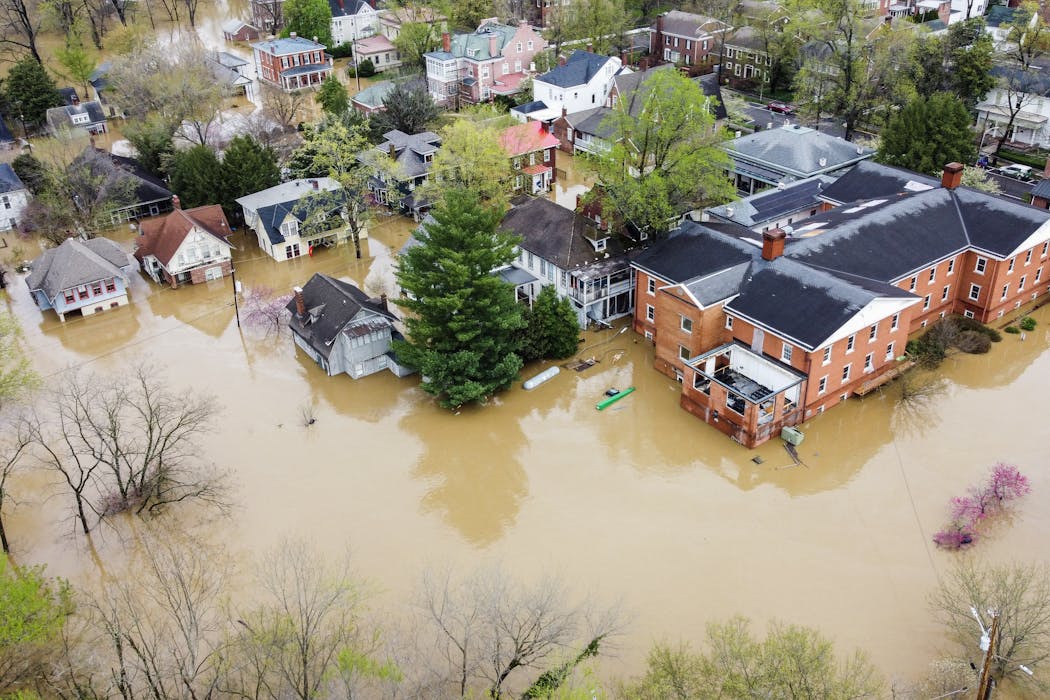
Severe storms triggered flooding across the central and eastern U.S. in April 2025, including in Kentucky’s capital, Frankfort. Leandro Lozada/AFP via Getty Images

On Jan. 7, 2026, President Donald Trump declared that he would officially pull the United States out of the world’s most important global treaty for combating climate change. He said it was because the treaty ran “contrary to the interests of the United States.”

His order didn’t say which U.S. interests he had in mind.

Americans had just seen a year of widespread flooding from extreme weather across the U.S. Deadly wildfires had burned thousands of homes in the nation’s second-largest metro area, and 2025 had been the second- or third-hottest year globally on record. Insurers are no longer willing to insure homes in many areas of the country because of the rising risks, and they are raising prices in many others.

For decades, evidence has shown that increasing levels of greenhouse gases in the atmosphere, largely from burning fossil fuels, are raising global temperatures and influencing sea level rise, storms and wildfires.

The climate treaty – the United Nations Framework Convention on Climate Change – was created to bring the world together to find ways to lower those risks.

Trump’s order to now pull the U.S. out of that treaty adds to a growing list of moves by the admnistration to dismantle U.S. efforts to combat climate change, despite the risks. Many of those moves, and there have been dozens, have flown under the public radar.

Why this climate treaty matters

A year into the second Trump administration, you might wonder: What’s the big deal with the U.S. leaving the United Nations Framework Convention on Climate Change now?

After all, the Trump administration has been ignoring the UNFCCC since taking office in January. The administration moved to stop collecting and reporting corporate greenhouse gas emissions data required under the treaty. It canceled U.S. scientists’ involvement in international research. One of Trump’s first acts of his second term was to start the process of pulling the U.S. out of the Paris climate agreement. Trump made similar moves in his first term, but the U.S. returned to the Paris agreement after he left office.

This action is different. It vacates an actual treaty that was ratified by the U.S. Senate in October 1992 and signed by President George H.W. Bush.

People stand near a bridge and searchers look through debris that has washed up.
Volunteers and law enforcement officers searched for weeks for victims who had been swept away when an extreme downpour triggered flash flooding in Texas Hill Country on July 4, 2025. More than 130 people died, including children attending a youth camp.
Ronaldo Schemidt/AFP via Getty Images

America’s ratification that year broke a logjam of inaction by nations that had signed the agreement but were wary about actually ratifying it as a legal document. Once the U.S. ratified it, other countries followed, and the treaty entered into force on March 21, 1994.

The U.S. was a global leader on climate change for years. Not anymore.

Chipping away at climate policy

With the flurry of headlines about the U.S. intervention in Venezuela, renewed threats to seize Greenland, persistent high prices, immigration arrests, ICE and Border Patrol shootings, the Epstein files and the fight over ending health care subsidies, important news from other critical areas that affect public welfare has been overlooked for months.

Two climate-related decisions did dominate a few news cycles in 2025. The Environmental Protection Agency announced its intention to rescind its 2009 Endangerment Finding, a legal determination that certain greenhouse gas emissions endanger the public health and welfare that became the foundation of federal climate laws. There are indications that the move to rescind the finding could be finalized soon – the EPA sent its final draft rule to the White House for review in early January 2026. And the Department of Energy released a misinformed climate assessment authored by five handpicked climate skeptics.

Both moves drew condemnation from scientists, but that news was quickly overwhelmed by concern about a government shutdown and continuing science funding cuts and layoffs.

A man holds a fire hose to try to safe a property as a row of homes behind him burn
Thousands of people lost their homes as wildfires burned through dry canyons in the Los Angeles area and into neighborhoods in January 2025.
AP Photo/Ethan Swope

This chipping away at climate policy continued to accelerate at the end of 2025 with six more significant actions that went largely unnoticed.

Three harmed efforts to slow climate change:

Three other moves by the administration shot arrows at the heart of climate science:

Fossil fuels at any cost

In early January 2025, the United States had reestablished itself as a world leader in climate science and was still working domestically and internationally to combat climate risks.

A year later, the U.S. government has abdicated both roles and is taking actions that will increase the likelihood of catastrophic climate-driven disasters and magnify their consequences by dismantling certain forecasting and warning systems and tearing apart programs that helped Americans recover from disasters, including targeting the Federal Emergency Management Agency.

To my mind, as a scholar of both environmental studies and economics, the administration’s moves enunciated clearly its strategy to discredit concerns about climate change, at the same time it promotes greater production of fossil fuels. It’s “damn the torpedoes, full speed ahead!” with little consideration for what’s at risk.

Trump’s repudiation of the UNFCCC could give countries around the world cover to pull back their own efforts to fight a global problem if they decide it is not in their myopic “best interest.” So far, the other countries have stayed in both that treaty and the Paris climate agreement. However, many countries’ promises to protect the planet for future generations were weaker in 2025 than hoped.

The U.S. pullout may also leave the Trump administration at a disadvantage: The U.S. will no longer have a formal voice in the global forum where climate policies are debated, one where China has been gaining influence since Trump returned to the presidency.

The Conversation

Gary W. Yohe does not work for, consult, own shares in or receive funding from any company or organization that would benefit from this article, and has disclosed no relevant affiliations beyond their academic appointment.

ref. Damn the torpedoes! Trump ditches a crucial climate treaty as he moves to dismantle America’s climate protections – https://theconversation.com/damn-the-torpedoes-trump-ditches-a-crucial-climate-treaty-as-he-moves-to-dismantle-americas-climate-protections-273148

As the Arctic warms up, the race to control the region is growing ever hotter

Source: The Conversation – UK – By Klaus Dodds, Interim Dean, Faculty of Science & Technology, Middlesex University

Donald Trump and his senior officials insist that Greenland must become part of the US. This is for national security purposes, they say, maintaining that Denmark, of which Greenland is a constituent part, is not investing enough in defending the strategically vital region beyond – as the US president put it – adding “one more dog sled”.

The 1951 defence agreement between Denmark and the US is likely to be the first casualty of any hostile American takeover, since article 2 of that agreement recognises explicit Danish sovereignty over Greenland.

Framing this dispute as an issue of security ignores the fact that for the past 70 years, the US military has largely had a free hand in how it uses its military facilities in the northwest of Greenland to conduct strategic space and hemispheric defence – without interference from Copenhagen.

But America’s 2025 national security strategy, released last November, speaks of establishing US dominance in the western hemisphere, including Greenland. It shifts attention away from great power competition to a world shaped decisively by the interests and wishes of “larger, richer and stronger nations”.

If spheres of influence and domination are back in vogue, then smaller economies including Denmark and even Canada come under direct threat. Whether faced with dismemberment or incorporation into the US, the prospects are deeply concerning.

But the current dramas affecting the Arctic region cannot be blamed entirely on Trump. Russia’s president, Vladimir Putin, has played his part too. Approaching the fourth anniversary of his country’s invasion of Ukraine, it is not hard to discern how a costly conflict in one part of Europe has had direct implications for other northern European territories.

Soon after Putin launched his full-scale invasion of Ukraine in February 2022, the intergovernmental Arctic Council was suspended because seven out out of the eight Arctic states (Canada, Denmark-Greenland, Finland, Iceland, Norway, Sweden and the US) decided they could no longer work with the largest Arctic state, Russia.

The Arctic Council was widely regarded as the centrepiece of what a circumpolar Arctic could achieve, working hard to construct key issues such as environmental protection, sustainable development and scientific collaboration. While the Arctic states could freely diverge from one another on non-Arctic matters, there was a superstructure of working groups and taskforces that generated notable scientific and technical reports, including the Arctic Economic Council.

Ukraine shattered all of that. Finland and Sweden joined Nato in 2023. Russia pivoted towards China and India, a shift that started after the first round of sanctions following its illegal annexation of Crimea in 2014.

The Arctic has fragmented into Russo-Asian and Euro-American segments. Western scientists are no longer able to access and work with Russian scientists, and circumpolar collaboration is suspended.

Some bilateral cooperation remains between countries such as Norway and Russia over areas of mutual interest, including managed fisheries in the Barents Sea and search and rescue. But high-level political engagement is now impossible.

Vector map of the Arctic
Contested: the Arctic is increasingly seen as a potential area of conflict as the competition for great power status between Russia, China and the US develops.
Dimitrios Karamitros/Shutterstock

Russia is instead likely to keep exploring ways of engaging with its Brics-plus group of partners including China, India, UAE and Saudi Arabia – both through direct economic trade, and in scientific projects in Svalbard and the vast Russian north.

Even if there is a peace settlement involving Ukraine, a return to normality seems impossible given the gravity of Russian operations in areas such as critical infrastructure sabotage, shadow fleet operations, and disinformation. Russia is engaged in risky and provocative behaviour, designed to be both disorientating and costly to its recipients.

It is no exaggeration to say that Europe’s Arctic states – and their close allies including the UK, Estonia and Poland – are now part of an arc of crisis that stretches from Svalbard and the High North of Europe to the Baltic Sea region and Ukraine. The long-held idea of the Arctic being a zone of peace and cooperation is an illusion.

Trump, Putin and the new great game

The US president wants Greenland – and expects to get it. There might be a strong element of ego-politics rather than geopolitics to this quest. Making America great again appears (in Trump’s eyes) to involve making it larger – and grabbing resources is part and parcel of that ambition.

Greenland’s resource potential has been repeatedly cited – as has the enhanced shipping activity of China and Russia, which has elevated concerns that US national security might be jeopardised.

2026 could see a slew of annexation and territorial swaps. For example, Trump takes Greenland while Putin takes the Norwegian archipelago of Svalbard. After all, neither leader is terribly invested in international treaties and organisations.

A cynical deal could also be done to allow Putin to have his way with Ukraine. The ground would thus be prepared for a new world order in which Putin, China’s president Xi Jinping and Trump all have their spheres of domination, not just influence.

A smaller group of regional superpowers might also be granted their own spheres, with Middle East-based countries looming large in that accommodation alongside the other global superpower, India. The idea might be that a new group of ten-or-so countries would create their new standard operating procedures. Venezuela was just the start, in other words.

What all of this would mean for the Arctic region, if it came to pass, is multifaceted. But above all, European Arctic states would no longer have any security guarantees from the US.

Difficult choices

Whatever happens, the 1951 defence agreement is a cold war relic that did not protect Denmark from great power overreach. The US stationed nuclear-armed bombers in Greenland in the late 1950s without bothering to consult Copenhagen.

Nato unity has now been jeopardised, and Norway and the UK face some difficult choices. Norway needs the US (and Russia) to respect its sovereignty over Svalbard, and it needs the US not to abandon the Nato article 5 commitment to collective defence. Meanwhile, as the UK and Norway work closely on North Atlantic anti-submarine defence, they need to focus on deterring Russia, rather than having to deter a hostile US as well.

American dominance and Russian belligerence are clearly taking their toll – at a time when the warming of the Arctic is having increasingly adverse effects on local and regional ecologies, and Indigenous and other communities in the far north. The Arctic is melting, thawing and becoming more flammable – and geopolitical fuel is being added to the fire.

The Conversation

Klaus Dodds does not work for, consult, own shares in or receive funding from any company or organisation that would benefit from this article, and has disclosed no relevant affiliations beyond their academic appointment. He is the coauthor of Unfrozen: The Fight for the Future of the Arctic.

ref. As the Arctic warms up, the race to control the region is growing ever hotter – https://theconversation.com/as-the-arctic-warms-up-the-race-to-control-the-region-is-growing-ever-hotter-273118

Why Greenland is indispensable to global climate science

Source: The Conversation – UK – By Martin Siegert, Deputy Vice-Chancellor (Cornwall), University of Exeter

Maridav / shutterstock

A 30-minute stroll across New York’s Central Park separates Trump Tower from the American Museum of Natural History. If the US president ever found himself inside the museum he could see the Cape York meteorite: a 58-tonne mass of iron taken from northwest Greenland and sold in 1897 by the explorer Robert Peary, with the help of local Inuit guides.

For centuries before Danish colonisation, the people of Greenland had used fragments of the meteorite to make tools and hunting equipment. Peary removed that resource from local control, ultimately selling the meteorite for an amount equivalent to just US$1.5 million today. It was a transaction as one-sided as anything the president may now be contemplating.

But Donald Trump is now eyeing a prize much larger than a meteorite. His advocacy of the US taking control of Greenland, possibly by force, signals a shift from dealmaking to dominance. The scientific cost would be severe. A unilateral US takeover threatens to disrupt the open scientific collaboration that is helping us understand the threat of global sea-level rise.

Greenland is sovereign in everything other than defence and foreign policy, but by being part of the Kingdom of Denmark, it is included within Nato. As with any nation, access to its land and coastal waters is tightly controlled through permits that specify where work may take place and what activities are allowed.

Over many decades, Greenland has granted international scientists access to help unlock the environmental secrets preserved within its ice, rocks and seabed. US researchers have been among the main beneficiaries, drilling deep into the ice to explain the historic link between carbon dioxide and temperatures, or flying repeated Nasa missions to map the land beneath the ice sheet.

The whole world owes a huge debt of thanks to both Greenland and the US, very often in collaboration with other nations, for this scientific progress conducted openly and fairly. It is essential that such work continues.

The climate science at stake

Research shows that around 80% of Greenland is covered by a colossal ice sheet which, if fully melted, would raise sea level globally by about 7 metres (the height of a two storey house). That ice is melting at an accelerating rate as the world warms, releasing vast amounts of freshwater into the North Atlantic, potentially disrupting the ocean circulation that moderates the climate across the northern hemisphere.

Aerial view of Greenland glacier
Hundreds of glaciers flow from Greenland’s ice sheet to the ocean.
Delpixel / shutterstock

The remaining 20% of Greenland is still roughly the size of Germany. Geological surveys have revealed a wealth of minerals, but economics dictates that these will most likely be used to power the green transition rather than prolong the fossil fuel era.

While coal deposits exist, they are currently to expensive to extract and sell, and no major oil fields have been discovered. Instead, the commercial focus is on “critical minerals”: high-value materials used in renewable technologies from wind turbines to electric car batteries. Greenland therefore holds both scientific knowledge and materials that can help guide us away from climate disaster.

Unilateral control could threaten climate science

Trump has shown little interest in climate action, however. Having already started to withdraw the US from the Paris climate agreement for a second time, he announced in January 2026 the country would also leave the Intergovernmental Panel on Climate Change, or IPCC, the global scientific body that assesses the impacts of continued fossil-fuel burning. His rhetoric to date has been about acquiring Greenland for “security” purposes, with some indications of accessing its mineral wealth, but without mention of vital climate research.

Under the 1951 Greenland defence agreement with Denmark, the US already has a remote military base at Pituffik in northern Greenland, now focused on space activities. While both countries remain in Nato, the agreement already allows the US to expand its military presence if required. Seeking to guarantee US security in Greenland outside Nato would undermine the existing pact, while a unilateral takeover would risk scientists in the rest of the world losing access to one of the most important climate research sites.

Lessons from Antarctica and Svalbard

Greenland’s sovereign status and its governance is different to some other notable polar research locations. For example, Antarctica has, for more than 60 years, been governed through an international treaty ensuring the continent remains a place of peace and science, and protecting it from mining and other environmental damage.

Svalbard, on the other hand, has Norwegian sovereignty courtesy of the 1920 Svalbard treaty but operates a largely visa-free system that allows citizens of nearly 50 countries to live and work on the archipelago, as long as they abide by Norwegian law. Interestingly, Norway claims that scientific activities are not covered by the treaty, to almost universal disagreement among other parties. Russia has a permanent station at Barentsburg, Svalbard’s second-largest settlement, from which small levels of coal are mined.

Unlike Antarctica or Svalbard, Greenland has no treaty that explicitly protects access for international scientists. Its openness to research therefore depends not on international law, but on Greenland’s continued political stability and openness – all of which may be threatened by US control.

If it is minded to take a radical approach, Greenland could develop its own treaty-style approach with selected partner states through Nato, enabling security cooperation, mineral assessment and scientific research to be carried out collaboratively under Greenlandic regulations.

The future for Greenland should lie with Greenlanders and with Denmark. The future of climate science, and the transition to a safe prosperous future worldwide, relies on continued access to the island on terms set by the people that live there. The Cape York meteorite – taken from a site just 60 miles away from the US Pituffik Space Base – is a reminder of how easily that control can be lost.


Don’t have time to read about climate change as much as you’d like?

Get a weekly roundup in your inbox instead. Every Wednesday, The Conversation’s environment editor writes Imagine, a short email that goes a little deeper into just one climate issue. Join the 45,000+ readers who’ve subscribed so far.


The Conversation

Martin Siegert receives funding from the UK Natural Environment Research Council.

ref. Why Greenland is indispensable to global climate science – https://theconversation.com/why-greenland-is-indispensable-to-global-climate-science-273064