How the Trump administration co-opts pop culture and religion for political gain

Source: The Conversation – Global Perspectives – By Brent Keogh, Lecturer in the School of Communications, University of Technology Sydney

The Conversation

On April 15, United States Secretary of Defense Pete Hegseth led a prayer session at the Pentagon. But instead of quoting from any recognised canon of sacred scripture, Hegseth’s prayer sounded unmistakably like Samuel L. Jackson’s “Jules”, a hitman character from Quentin Tarantino’s iconic 1994 film Pulp Fiction.

In his interrogation of white-collar criminal Brett, Jules delivers a heavily embellished monologue that draws from, and expands on, Ezekiel 25:17. The scene climaxes, in typical Tarantino style, with the brutal murder of Brett and his colleagues.

Hegseth’s version, which he said was recited by the Sandy 1 Combat Search and Rescue (CSAR) mission in Iran, deviates only slightly from Jackson’s monologue.

The biggest difference in this case is the symbolism. The target here is not a bunch of college kids with a briefcase they shouldn’t have, but the nation of Iran. Hegseth is the mobster and the American military are the hitmen on a violent but “divinely sanctioned” war.

The tone has changed, too. While Jackson’s monologue is highly dramatic, stylised, and imbued with more than just a little irony, Hegseth’s reframe renders it serious and devotional.

Leaving aside the cognitive dissonance of an avowedly “Christian” administration conflating Tarantino with scripture, this moment speaks to a rather unsettling relationship between Trump, pop culture and religion.

From business mogul, to Jedi, to the Pope

Trump courted pop culture prior to his politics, most notably in cameos such as Home Alone 2 (1992), The Little Rascals (1994), and as the host of The Apprentice (2004-17). He even leveraged his celebrity status to boost himself to the presidential platform.

As president, he has continued to tap into pop culture dialogues. He uses the power of social media and AI to promote his brand and policies, while weighing in on the culture wars.

On May 4 of last year (Star Wars Day), Trump posted an image on X of himself as a muscular Jedi, via the official White House account. However, he seems unaware that by brandishing a red lightsaber he is actually representing himself as a Sith Lord, the epitome of evil in the Star Wars universe.

In October, he posted an AI-generated video of himself in Top Gun mode, pouring what appeared to be faeces on protesters attending a No Kings rally.

He also took advantage of the buzz surrounding the Catholic Church’s 2025 conclave, and the popular film of same name, by posting an AI image of himself as the Pope.

By using the shared texts, cultural energy and narratives of pop culture, Trump is able to slam his opponents, take advantage of a polarised political context, and whip up support from his base.

These moments allow his administration to shape public conversation and draw attention back to them, sometimes with the explicit disapproval of the content creators involved. Responding to Trump’s Star Wars post, Mark Hamill (the actor who played Luke Skywalker) said the post was: “proof this guy is full of Sith”.

Bigger than Jesus?

Trump’s supporters have historically viewed his engagement with popular culture as humorous, cheering on their hero in the White House. But detractors sense a darker side. Each of these moments symbolically elevates the Trump administration, often at the expense of others.

The May 4 post is a case in point. The target here is the “radical Left” and Trump is raised to the rank of Jedi master (or Sith Lord). In the Top Gun video, Trump demonstrates his disdain for citizens exercising their democratic right to protest.

What connects these examples is the hubris of the administration, centred around its seemingly charismatic leader. Trump’s engagement with contemporary culture has shifted from relatively harmless cameos to putting himself at the centre of a Manichaean battle of good versus evil. Using both pop culture and religious references, he frames himself as a divine figure, fighting a cosmic war for the soul of the universe.

The most recent (and most on-the-nose example) of Trump’s hubris came earlier this month. As part of his continuing war of words with Pope Leo XIV, he posted an AI photo depicting himself as Jesus.

Here, he elevates himself beyond the union of ecclesiastical and political power to the highest possible authority figure in Christianity.

In doing so, he parallels the Ancient Roman emperors who conceived of themselves as “sons of God” and demanded allegiance and worship from their subjects (often at the tip of a blade).

The emperor cult of the Roman Empire is still very much alive in Trump’s America.

In these entanglements of pop culture, religion and politics, the MAGA movement sends a clear message to anyone with a ear to listen: this is our Master Jedi, our Maverick, our Messiah, even, and he will respond with “great vengeance and furious anger” against his enemies.

The Conversation

Brent Keogh does not work for, consult, own shares in or receive funding from any company or organisation that would benefit from this article, and has disclosed no relevant affiliations beyond their academic appointment.

ref. How the Trump administration co-opts pop culture and religion for political gain – https://theconversation.com/how-the-trump-administration-co-opts-pop-culture-and-religion-for-political-gain-281011

We can’t know if Donald Trump has dementia. Even if he did, it wouldn’t excuse his actions

Source: The Conversation – Global Perspectives – By Joyce Siette, Associate Professor | Deputy Director, The MARCS Institute for Brain, Behaviour and Development, Western Sydney University

Over recent weeks, speculation has grown about US President Donald Trump’s erratic behaviour during the US-Israel war on Iran.

While questioning Trump’s mental fitness for office, various commentators have suggested he has malignant narcissism, Alzheimer’s disease or frontotemporal dementia, and is experiencing accelerating cognitive decline and a “profound psychological crisis”.

The claim of frontotemporal dementia in particular has stuck. This form of dementia can affect judgement, empathy, language skills and impulse control.

Trump’s critics say frontotemporal dementia explains his escalating threats, profanities and tendency to ramble.

But is frontotemporal dementia really the answer?

Diagnosing someone with this condition from afar is not only irresponsible – it’s impossible. It may also inadvertently give Trump an “out” for offensive but intentional behaviour, while increasing stigma for those who live with dementia.

What is frontotemporal dementia?

Frontotemporal dementia describes a group of neurodegenerative disorders that mostly affect the frontal and temporal lobes of the brain. These are regions involved in behaviour, personality, language and decision-making.

Unlike dementia due to Alzheimer’s disease, frontotemporal dementia rarely begins with memory loss. Instead, early symptoms involve changes in social conduct, emotional regulation or language abilities.

There are several variants. The most common is behavioural-variant, which presents as a gradual decline in how a person behaves, interacts with others and expresses their personality.

Frontotemporal dementia is rare. Each year, around two or three out of 100,000 people are diagnosed with frontotemporal dementia worldwide. At any time, roughly nine out of 100,000 people live with the condition.

How is it diagnosed?

Diagnosis is complex and cannot rely on observation alone.

To make a diagnosis, a multidisciplinary team of clinicians will examine the person’s personal and medical history. This includes information from family members, neurological examinations and formal cognitive testing to consider possible diagnoses.

Brain imaging, such as MRI or PET scans, are used to identify changes in the structure and function of the brain. In some cases, genetic testing may be used when family history suggests inherited risk.

A “possible” diagnosis requires someone to demonstrate at least three of six core features. These are:

  • disinhibition
  • apathy
  • loss of empathy
  • compulsive behaviour
  • hyperorality (excessive tendency to examine objects using the mouth)
  • loss of executive functions, the set of cognitive abilities that underpin our ability to plan and make decisions.

Importantly, these features must also show clear progression over time.

But that is only the beginning. To reach a “probable” diagnosis, there must be imaging evidence as well as clear changes in a person’s ability to function independently in daily activities.

A “definite” diagnosis can only be confirmed through genetic testing or brain changes linked to disease. This can only happen after death because it requires physically examining the brain itself.

Even with these criteria, frontotemporal dementia remains one of the most challenging diseases to diagnose accurately. Its symptoms often overlap with psychiatric disorders such as bipolar disorder and schizophrenia, and its presentation varies widely between people.

Careful differential diagnosis, which rules out other conditions, is therefore required.

Why we shouldn’t diagnose from a distance

Diagnosing frontotemporal dementia – or any form of dementia – is a complex process. Any “diagnosis” made without meeting the person, or looking at clinical evidence, is just speculation.

But there are other dangers in blaming controversial actions on dementia, such as Trump’s recent threat to wipe out “a whole civilisation” if Iran did not comply with US demands.

First, attributing behaviour we don’t like to dementia reduces accountability for intentional actions.

We know frontotemporal dementia affects brain regions that control impulse and social understanding. It does not explain political extremism, strategic decision-making or ideological conviction – especially where it has been longstanding.

Second, it further stigmatises those who live with the condition, reinforcing the idea that people with dementia are erratic, dangerous or morally compromised.

This stigma remains a major barrier to effective dementia care and prevention. Misconceptions can delay diagnosis, discourage families from seeking help, and make people with dementia feel more isolated.

In frontotemporal dementia, where changes in personality are already misunderstood, the risk of mischaracterisation is particularly acute.

The ethics of restraint

Humans are driven to make sense of troubling events. This negativity bias that has served us well in evolution. But it creates an asymmetry worth noting.

When leaders behave admirably, their actions are rarely attributed to neurological health. But when behaviour is troubling, the impulse to medicalise it can be strong. This selective framing turns diagnosis into a rhetorical tool rather than a clinical question.

The health of political leaders is a legitimate public concern. But there is a difference between evidence-based reporting (grounded in disclosed medical information) and speculative diagnosis based on observation from a distance.

Medical professionals have long recognised this boundary. Ethical guidelines warn against diagnosing individuals without examination, in part because doing so undermines trust in both medicine and the media.

Speculation about dementia may feel like a way of making sense of behaviour that is difficult, unsettling or even morally questionable. But it is a poor substitute for clinical rigour.

For those living with frontotemporal dementia, it risks turning a serious neurological disease into a casual metaphor that explains little and harms a lot.

The Conversation

Joyce Siette receives funding from the National Health and Medical Research Council.

Paul Strutt does not work for, consult, own shares in or receive funding from any company or organisation that would benefit from this article, and has disclosed no relevant affiliations beyond their academic appointment.

ref. We can’t know if Donald Trump has dementia. Even if he did, it wouldn’t excuse his actions – https://theconversation.com/we-cant-know-if-donald-trump-has-dementia-even-if-he-did-it-wouldnt-excuse-his-actions-281131

How the war in Iran has brought European countries closer together – without Trump

Source: The Conversation – Global Perspectives – By Romain Fathi, Associate Professor, School of History, ANU / Chercheur Associé at the Centre d’Histoire de Sciences Po, Australian National University

The United States under President Donald Trump and the European Union have a complicated relationship. On one hand, European countries and the US have built some of the strongest alliances since the end of the second world war. On the other, since the start of Trump’s second term in 2025, they have openly clashed on significant issues: tariffs, NATO contributions, Palestinian statehood, Israel’s interventionism, Ukraine support levels and Greenland’s sovereignty.

Trump’s sudden war on Iran is the latest of these clashes, but it is distinctive because it is shaking the world’s economy. The US war on Iran, alongside Israel’s war on Lebanon, is accelerating a notable reshaping of European alliances and strategic thinking about the union’s future.

The EU has more than 450 million inhabitants, and its GDP is nearly on par with that of the US or China. Despite its polymorphic nature, and in fact perhaps because of it, it is a world player that can exercise considerable sway over international affairs.

European leaders are now attempting to drive a lasting ceasefire, and perhaps even peace, between the US and Iran, with the aim of reopening the strait of Hormuz as soon as possible.

A non-UN/NATO sanctioned conflict

EU countries believe in the rules-based order and international institutions. This is not only because of their democratic constitution and values, but also because they offer them better protection than “might makes right”.

Trump’s unilateral war on Iran sits well beyond international conventions. It was neither sanctioned by a UN mandate or resolution, nor approved by NATO. As a result, European leaders have refused to contribute.

Spain and Italy have outwardly refused to allow US weapon-carrying planes bound for the Iran conflict to use their bases. Meanwhile, France is taking a more case-by-case approach in authorising or declining use of its airspace as part of operations linked to the conflict.

Spain, Italy, Germany, France and the United Kingdom have also refused to send direct military support to contribute to Trump’s war. However, France and the UK are willing to deploy within a peace or maritime security framework once the war is over.

Europe united, at last?

Trump’s war on Iran has accelerated a much deeper, more significant process: the coordination of European leaders on central issues such as European strategic independence in defence, diplomacy and energy.

Since Trump’s return to the Oval Office, there has been a subtle but important diversification of the EU’s diplomatic and military agreements with regional partners. Six such agreements have been signed by the EU, followed by a dozen more bilateral agreements of its member states with other countries.

This greater European coordination is being validated and reinforced by the war in Iran. The global disruption in the production and circulation of petro-based products generated by the near total closure of the Straight of Hormuz is prompting urgent European responses.

On April 17, in Paris, UK and French leaders Keir Starmer and Emmanuel Macron, flanked by their German and Italian counterparts Friedrich Merz and Giorgia Meloni, co-presided over a conference on navigation in the Strait of Hormuz. They were joined by 49 other countries, with more than half of the EU’s member states present alongside representatives of EU institutions and international organisations.

The meeting proposed the “full, immediate, and unconditional reopening of the Strait of Hormuz”. The leaders agreed to start planning, from London next week, a neutral mission to guarantee safety and free passage in the strait.

The war in Iran and Trump’s criticisms of the pope have ruptured Trump’s relationship with Meloni, whose electoral base has grown worried about the US president’s unpredictability.

A shifting tide

For a time, Trump and the MAGA movement had worked hard, and somewhat successfully, to drive a wedge between European leaders. They supported the far right in Germany, Viktor Orbán in Hungary, and Meloni in Italy.

But, just three days before Meloni arrived in Paris, Orbán faced an enormous electoral defeat. During the 16 years of his iron-fist rule in Hungary, the pro-Russian Orbán had been a critic of Europe, creating considerable headaches for the EU by blocking a range of initiatives and providing sensitive information to his friend Vladimir Putin. His replacement by a more moderate leader, Péter Magyar, has sparked significant hope in European chancelleries for greater unity.


Read more:
What Viktor Orbán’s election loss means for Putin, Trump and the rise of right-wing populism


The internal divisions that Trump relied on to deal with Europe are eroding.

Furthermore, his threats to acquire Greenland only months ago were met by immediate European reactions such as putting a commercial agreement with the US on ice, launching operation “Arctic Endurance”, and affirming Danish and European sovereignty. The EU has once again shown its ability to resist Washington’s pressures and affirm its strategic autonomy.

Where now for Europe?

These episodes in national and international affairs have prepared the ground for a more united approach to the current crisis. European leaders, so often hampered by divisions exacerbated by Russia and the US, are now in a unique position to weigh in on the current Iran crisis and the shock it is delivering to the global economy.

This is because the concerns that unite them – energy security, potential inflation and unemployment – overrule any ideological affinity towards Moscow or Washington.

Besides greater diplomatic integration of European member states, the current crisis is also a catalyst for the European Commission to accelerate its efforts to limit consumption of fossil fuel, safeguard supply networks and accelerate the electrification of Europe’s economies through nuclear and renewables.

Paradoxically, the Iran and Hormuz crises have – as Russia’s invasion of Ukraine did in 2022 – driven further European integration. This renewed faith in a European voice is happening both between member states and between European institutions such as the European Parliament, the European Commission and the Foreign Affairs Council.

This rapprochement between European leaders is starting to yield outcomes beyond the Iranian crisis. Visiting Polish Prime Minister Donald Tusk on April 20, Macron declared he was “reasonably optimistic” for a “new era in Europe”, starting with more support for Ukraine, previously vetoed by the departed Orban.

The significant disruptions created by Trump’s attack on Iran may well have the side effect of a more autonomous and sovereign Europe. Despite the tensions between the US and European states, all have an interest in a peaceful Iran – and Ukraine.

For some in Europe, the war in Iran may be resolved amicably if further collaboration is achieved through US support in Ukraine.

The Conversation

Romain Fathi does not work for, consult, own shares in or receive funding from any company or organisation that would benefit from this article, and has disclosed no relevant affiliations beyond their academic appointment.

ref. How the war in Iran has brought European countries closer together – without Trump – https://theconversation.com/how-the-war-in-iran-has-brought-european-countries-closer-together-without-trump-281025

If Justice Alito resigns before the midterms, a Trump nominee to the Supreme Court is likely to sail through confirmation

Source: The Conversation – USA – By Paul M. Collins Jr., Professor of Legal Studies and Political Science, UMass Amherst

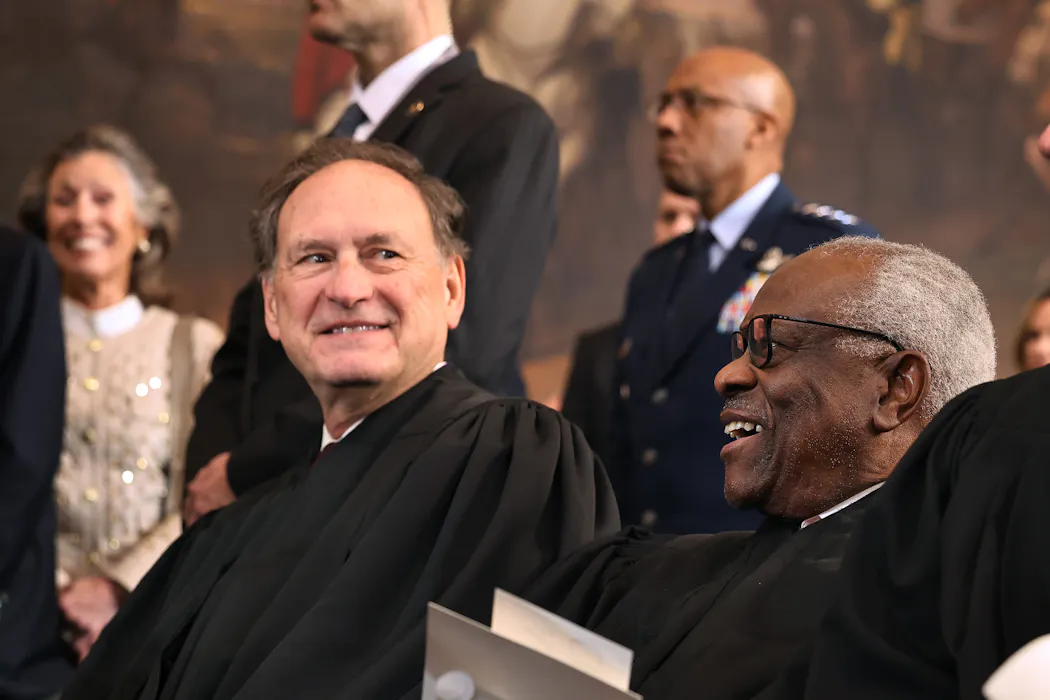
Supreme Court Justices Samuel Alito and Clarence Thomas share a laugh at the U.S. Capitol on Jan. 20, 2025. Chip Somodevilla/Getty Images

Washington is buzzing with the possibility that President Donald Trump might name one or more Supreme Court justices before the November midterm elections.

In a conversation with Fox Business TV host Maria Bartiromo on April 15, 2026, Trump discussed the potential retirement of Justice Samuel Alito, 76, the reliably conservative justice appointed by President George W. Bush in 2005.

Trump praised Alito as “a great justice” and said that he is prepared to appoint a replacement, should Alito retire.

Trump added, “In theory, it’s two – you just read the statistics – it could be two, could be three, could be one.”

Trump didn’t say who the other potential retiring justices are. Speculation from pundits is that he is referring to Justice Clarence Thomas, 77, another solid conservative vote. Thomas, appointed by George H.W. Bush in 1991, is the court’s oldest justice and longest-serving member.

In the same Fox interview, Trump pointed to former Justice Ruth Bader Ginsburg, who was under intense pressure to retire during President Barack Obama’s presidency. Ginsburg opted to stay on the bench and died in September 2020.

Republicans blocked Obama’s appointment of Merrick Garland in 2016 after the death of Justice Antonin Scalia. Then, in 2020, Trump replaced Ginsburg with Justice Amy Coney Barrett, solidifying a 6-3 conservative majority.

As a scholar of the Supreme Court confirmation process, I know the timing of Trump’s comments is closely linked to November’s midterm elections.

If Democrats were to take over the Senate following the midterms, it is very unlikely they would confirm a Trump-appointed Supreme Court nominee. Instead, they would probably follow the precedent set by Republicans in 2020 and block a Trump pick.

The clock is ticking on November’s midterm elections, and Democrats’ chances of taking back the Senate are improving. Assuming a current Supreme Court justice retires, here’s what has to happen for Trump and Senate Republicans to successfully confirm a successor.

The Supreme Court confirmation process

The Constitution says that the Senate provides “advice and consent” on presidential appointments to the Supreme Court. Over the course of the nation’s history, this has developed into a complex process.

Once the Senate receives a nomination from the president, it goes to the Judiciary Committee.

This is where the most public part of the confirmation process takes place: confirmation hearings. These typically last three to four days and feature a high stakes question-and-answer session with the nominee.

Prior to the hearings, senators and the nominee engage in a substantial amount of preparation.

Senators, with their staffs, do extensive background research on the nominee, which helps inform their questioning. Some of this is accomplished through the Senate Judiciary Committee questionnaire, to which nominees provide written answers. Supreme Court Justice Ketanji Brown Jackson’s 2022 questionnaire was 149 pages long. It included questions about organizational memberships, public speeches and judicial opinions authored.

A Black woman with her back to the camera listens to a man speak behind a bench.
Supreme Court nominee Ketanji Brown Jackson listens to U.S. Senate Judiciary Committee members on Capitol Hill on March 21, 2022.
AP Photo/J. Scott Applewhite, Pool

Meanwhile, the nominee makes courtesy calls to senators to build support for confirmation.

At roughly the same time, the nominee takes part in hearing preparation, known as “murder boards.” Here, the nominee’s allies play the roles of members of the Judiciary Committee, anticipating the type of tough questions the nominee will face from skeptical senators from the opposition party of the appointing president.

During Jackson’s murder boards, for instance, the focus was on expected Republican attacks that Jackson was soft on crime.

Within a few days of the end of the confirmation hearings, the Judiciary Committee votes on its recommendation to the full Senate. Then the nomination goes back to the full Senate for more discussion and a final confirmation vote. A simple majority is needed to confirm a Supreme Court nominee.

For the nine members of the court, it has taken an average of 70 days between presidential appointment and Senate confirmation, according to data from The U.S. Supreme Court Database. But this number has decreased recently, with Barrett and Jackson taking 30 and 41 days, respectively, to be confirmed.

So, as long as there is roughly a month before the November midterms, it is likely that there is enough time for the Republican Senate to confirm a Trump nominee.

Democrats have limited options

In 2017, Senate Republicans ended the filibuster for Supreme Court nominees. It was a move to secure the confirmation of Neil Gorsuch.

This reduced the threshold for confirmation from 60 votes to 51 votes. Perhaps most importantly, it also severely limited the options available to the minority party to block a Supreme Court confirmation.

With a 53-47 Republican majority in the Senate, so long as Republicans stick together, it will be very difficult for Senate Democrats to block a Trump nominee.

There are some delay tactics available to Democrats – they can perhaps even grind the entire Senate to a halt – but they may pay a political price for these tactics. Republicans, for instance, may try to paint Democrats as obstructionist, potentially motivating a voter backlash against the Democratic Party in the midterm elections.

Nonetheless, Democrats may view this as a fight worth having, since the confirmation of another Republican-appointed justice will ensure conservative dominance on the court for decades – if not generations – to come.

The Conversation

Paul M. Collins Jr. does not work for, consult, own shares in or receive funding from any company or organization that would benefit from this article, and has disclosed no relevant affiliations beyond their academic appointment.

ref. If Justice Alito resigns before the midterms, a Trump nominee to the Supreme Court is likely to sail through confirmation – https://theconversation.com/if-justice-alito-resigns-before-the-midterms-a-trump-nominee-to-the-supreme-court-is-likely-to-sail-through-confirmation-280887

Did NASA’s Curiosity rover find signs of ancient life on Mars? An astrobiologist explains how we determine ‘life’

Source: The Conversation – Canada – By Allyson Brady, Assistant Professor, Department of Biology, Carleton University

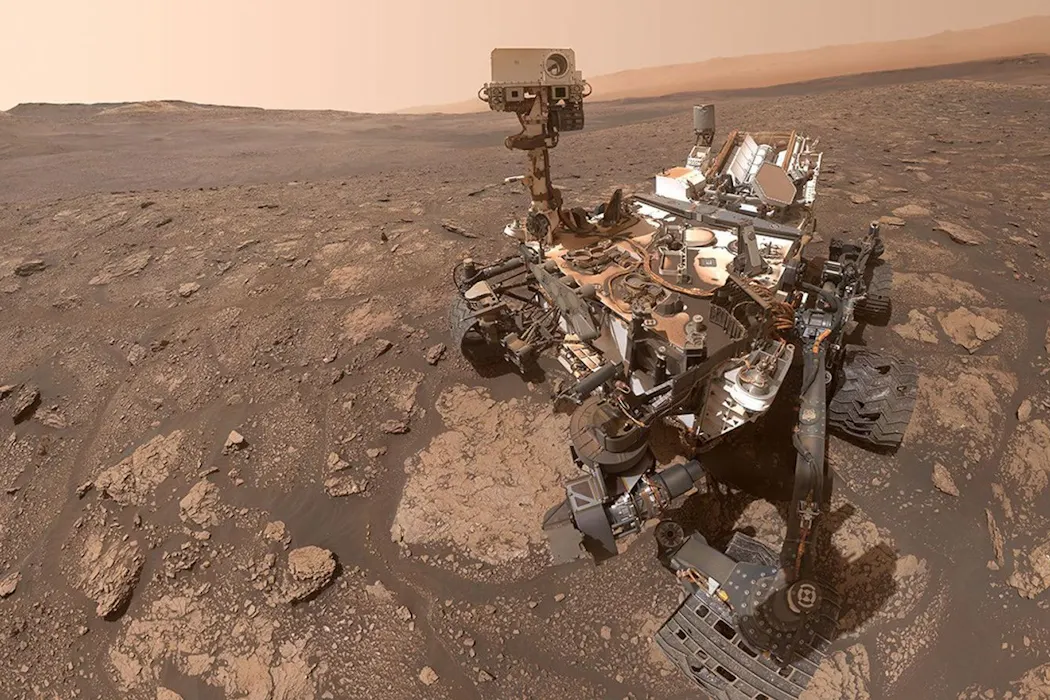
NASA’s Curiosity Mars rover took this selfie in 2020, after drilling a rock sample from a spot nicknamed “Mary Anning.” After years of extensive analysis, the sample has revealed the greatest diversity of organic molecules ever found on Mars.
(NASA/JPL-Caltech/MSSS)

NASA’s Curiosity rover has identified seven new organic compounds on the planet Mars, according to new research published in Nature Communications.

The researchers believe this organic matter may have been preserved on Mars for more than 3.4 billion years. But is it evidence of life?

It’s not yet possible to determine whether it was delivered by a meteor (or comet or interplanetary dust particles), was formed through geological processes or may be linked to potential ancient life on Mars.

This begs a few questions: What exactly is life? How do we know what to look for? Why is it so hard to determine if an organic compound came from life or not?

As an astrobiologist, my job is to study life in the universe. I have participated in several NASA and Canadian Space Agency (CSA) projects focused on learning how to detect signs of life, as well as training astronauts to be field scientists.

This has taken me to field sites in the Antarctic, hot springs in Western Canada, volcanoes in Hawaii and underwater in British Columbia.

The study of extreme environments on Earth, along with exploration of the lifeless surface of the moon, can help us understand what life can look like. It can also help us understand the other potential non-biological processes that can form organic compounds like ones that have been found on Mars.

Astronaut Chris Hadfield dives into Pavilion Lake, B.C., as part of an international, multidisciplinary project to explore the origin of rare freshwater carbonate rock formations (microbialites). Similar processes possibly occurred on other planets.
(CSA/Donnie Reid)

Life in extreme environments on Earth

On Earth, scientists study life in extreme environments that we might also expect to find on early Earth or other planets such as Mars. We call these “analogue” environments.

For example, micro-organisms can thrive in the hot springs of Yellowstone National Park, deep underground or in cold icy places like Antarctica.

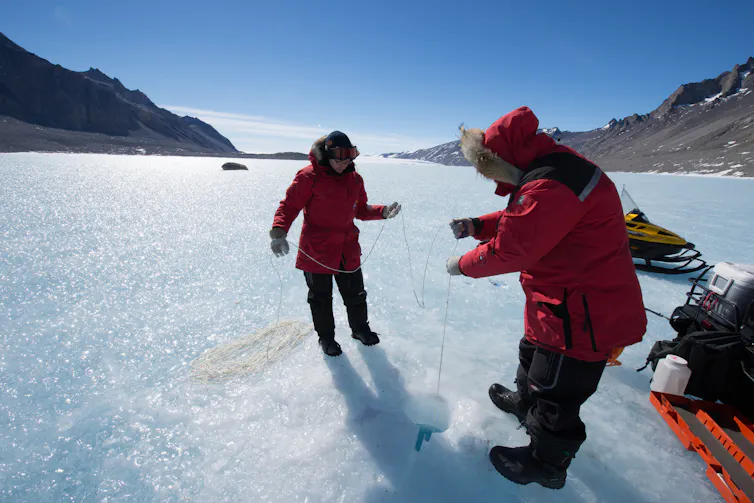
Two people in red snow coats on a frozen lake with deep blue sky in the background.
The author (left) collects water samples from Lake Untersee for a biosignature study. This is one of Antarctica’s largest and deepest surface lakes, known for its distinctive water chemistry.
(Klemens Weisleitner)

As astrobiologists, we can use these analogue environments to test equipment and concepts of operation that may be used to plan life-detection missions on other planets. They also help us better understand how life can survive in extreme environments.

Importantly, these environments help us recognize what kinds of evidence life can leave behind. Identifying biosignatures, or unambiguous signs of life, that can be targeted when looking for life elsewhere is critically important.

On Earth, it’s not hard to find evidence of life. Simply look around you. We are also constantly discovering the existence of life in places where it may have once seemed impossible, such as these microbes buried deep in ocean mud.

Marine microbiologist Karen Lloyd introduces deep-subsurface microbes: tiny organisms that live buried deep in ocean mud.

In fact, finding locations where there is no life is often more challenging.

What is not a sign of life?

The moon does not contain life. Unlike Mars, where there’s mounting evidence of a warmer watery past, as far as we know there’s little evidence to suggest the moon ever had the right conditions to support life.

The moon is a valuable study site for astrobiology because it offers clues about what is not a sign of life. The moon is constantly being hit by objects such as meteorites and asteroids, objects that would have also hit early Earth and Mars, leaving visible craters on the surface.


Read more:
How the Artemis II crew trained to observe and photograph the moon: A NASA science team geologist explains


Meteorites can contain organic molecules such as amino acids and hydrocarbons that look very much like ones we would expect to be left behind by living organisms.

Micro-organisms, just like your own cells, contain lipids, proteins and nucleic acids. When they die, their organic molecules can become trapped in material such as sediments or minerals, and in some cases, preserved over long periods of time. Even if somewhat degraded, they might survive over millions or even billions of years in a recognizable form even if life itself is no longer present.

A closeup view of the moon's cratered surface, grey in colour.
A closeup view taken by the Artemis II crew of Vavilov Crater, on the rim of the older and larger Hertzsprung basin, on the surface of the moon.
(NASA)

But life is not the only way organic molecules can form. Some abiotic chemical reactions can produce organic molecules with no life required. These abiotic processes can lead to the formation of simple organic molecules, life’s building blocks, that form the basis of more complex components.

Reports of gases such as methane or the detection of hydrocarbons on Mars could be related to life. However, scientists know that there are other ways these could have formed. As with the compounds discovered by NASA’s Curiosity rover, they may not readily meet the biosignature criteria of being unambiguously biological.

It’s not easy to decide what is a biosignature and what might have an alternative explanation. Studying other locations or materials without life can help.

Analysis of samples brought back to Earth from the asteroid Bennu in 2023 found organics such as sugars, including ribose, for example. Ribose is a component of RNA. This does not mean that there is life on Bennu, instead it shows that these biologically important molecules may be widely distributed in the solar system.

These kinds of investigations tell us that there are some organics that may not make good biosignatures because there is an alternative non-biological explanation.

From the moon to Mars

Exploration of the moon helps create an inventory of organic molecules that, while often associated with life, also have another explanation. They may have been delivered by a meteorite and been preserved all this time.

For example, studies of lunar regolith — the dusty moon version of soil — brought back from the Apollo missions and from recent Chinese-led missions have identified organic molecules such as amino acids, ketones and amines. If these same organics are found on other planets, it means that they are not necessarily signs of life. At least, not on their own.

Prior to NASA’s recent Artemis II mission, astronauts, including Canadian Jeremy Hansen, underwent geology training at sites like the Kamestastin Lake impact structure in Labrador. This training prepared them to make detailed geological observations of the moon.

Artemis II crew Victor Glover, Reid Wiseman and Jeremy Hansen huddle around a camera in the Orion spacecraft.
Artemis II crew Victor Glover, Reid Wiseman and Jeremy Hansen configure their camera equipment shortly before beginning their lunar flyby observations, April 2026.
(NASA)

These geological features might play a role in the preservation of organics, possibly shielding them from high temperatures and destructive radiation, sort of like a fridge. Similar features on Mars may then be good targets for astrobiology investigations.

With a 2028 moon landing planned for NASA’s Artemis IV mission, we will soon have even more lunar material to study. These missions are critical for helping astrobiologists fine-tune those unambiguous signs of life that we can then search for when we get to Mars.

As NASA’s Curiosity and Perseverance rovers continue exploring Mars, and new missions are planned, in the future we may be able to more confidently answer the question of is it life?

The Conversation

Allyson Brady receives funding from the Natural Sciences and Engineering Research Council of Canada and has been supported by the Canadian Space Agency in the past.

ref. Did NASA’s Curiosity rover find signs of ancient life on Mars? An astrobiologist explains how we determine ‘life’ – https://theconversation.com/did-nasas-curiosity-rover-find-signs-of-ancient-life-on-mars-an-astrobiologist-explains-how-we-determine-life-280658

Extreme rain on snow is testing aging dams across Michigan and Wisconsin – this is the future in a warming world

Source: The Conversation – USA (2) – By Richard B. (Ricky) Rood, Professor Emeritus of Climate and Space Sciences and Engineering, University of Michigan

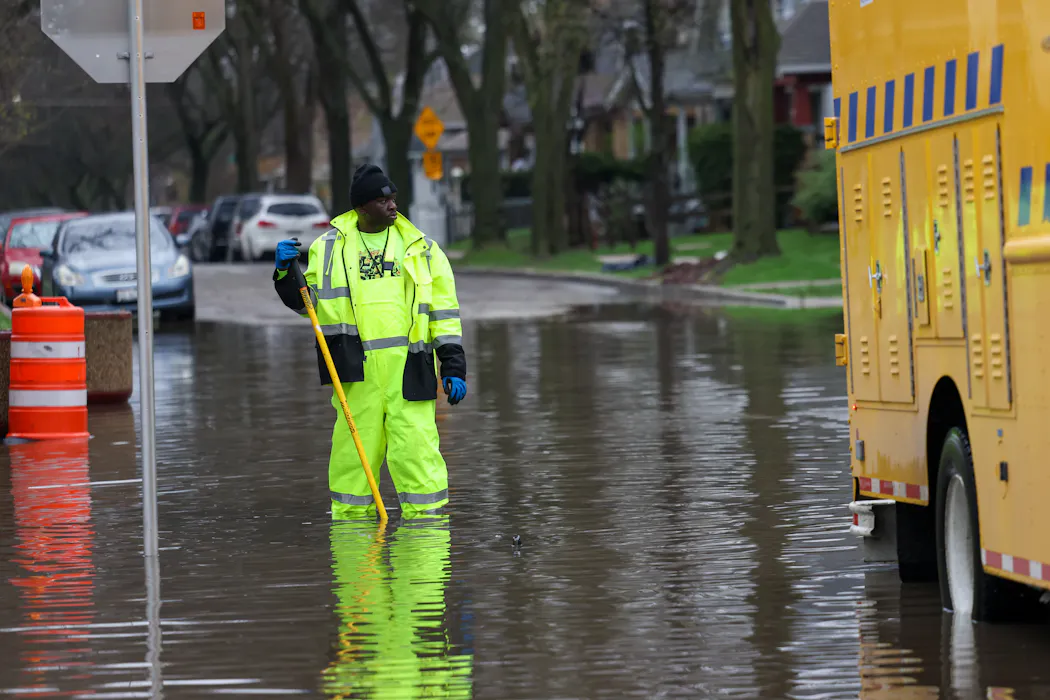
In the upper Midwest, aging infrastructure, from dams to city drains, was overwhelmed by floodwater in April 2026. Jonathan Aguilar/Milwaukee Neighborhood News Service/CatchLight via Getty Images

Michigan and parts of Wisconsin are in the midst of a historic flooding event in spring 2026. Days of heavy rainfall on top of snow have sent lakes and rivers over their banks and threatened several dams in both states, forcing people to evacuate homes downstream. By April 20, 2026, nearly half of Michigan’s counties were under a state of emergency. In Cheboygan, Michigan, large pumps were brought in to lower pressure on a century-old dam in the city.

The region’s aging water infrastructure was never designed for the volume of water it is facing. That’s a troubling sign for the future, with flooding becoming more common as global temperatures rise.

In many areas, the damage has been exacerbated by a culture of building homes and cabins on the shores of inland lakes and along riverine lakes behind small, often privately owned dams. Many of these dams were built over 100 years ago, with some long forgotten.

Michigan State Police captured scenes of stressed dams and flooding across Cheboygan County, near the tip of the Lower Peninsula, including the century-old dam in the city of Cheboygan that was nearly overwhelmed by flood water.

I am a professor emeritus of meteorology at the University of Michigan whose work focuses on helping communities adapt to climate change. The warming climate is worsening the flood risk, and disasters like the one Michigan is experiencing are setting higher benchmarks for safety as communities plan future infrastructure.

Where is all the water coming from?

For much of Michigan and Wisconsin, as well as northern Illinois, 2026 has been the wettest March and April on record.

In March, much of that precipitation fell as snow, including in an enormous blizzard that brought 3 feet of snow to parts of Michigan. In mid-April, persistent rains began. The rain, on top of all that snow, sent floodwaters running into rivers, streets and homes. The water carries large amounts of ice that damages shores, infrastructure and homes.

The moisture for much of these storms has been funneled northward from the warm Gulf of Mexico, thanks in part to a high pressure system sitting over the southeastern U.S.

A US map showing the highest increase in rainfall from extreme downpours across the Upper Midwest and Northeast.
Extreme downpours are becoming intense across the United states. This map shows the percentage change in total precipitation falling on the heaviest 1% of rainy days from 1958 to 2021.
NOAA/adapted from Fifth National Climate Assessment

The problem of warming winters

The kind of flooding Michigan and Wisconsin are experiencing in 2026 is what forecasters expect to see more of as global temperatures rise.

Winters have been warming faster than other seasons across the U.S. In Michigan and Wisconsin, winter months used to be reliably below freezing, but that’s changing. In the Cheboygan area, near the tip of Lower Michigan, March temperatures used to be below freezing on all but a few days. By the 1991-2020 period, the region averaged 10 days above or close to the freezing point – about twice as many as the 1951-1980 period.

Charts show the shift toward warmer March weather.
March is warming, as a comparison of daily high temperatures in the Cheboygan area in 1991-2020 and 1951-1980 shows. The bar chart comparison shows that the number days above freezing is rising.
GLISA

The air coming in from the south is also warmer than in the past. Nationally, 2026 was the warmest March on record in 132 years of record-keeping in the contiguous U.S., with an average temperature more than 9 degrees Fahrenheit (5 degrees Celsius) higher than the 30-year average. So, in addition to snowmelt starting earlier, melting is happening faster.

Michigan’s average wintertime temperature rose by more than 4 F (2.3 C) from 1951 to 2023. Though winter 2026 in Michigan was colder than the 1991-2020 average, the Gulf of Mexico, where the moisture originated, was warmer than average, accelerating the snowmelt.

How warming leads to downpours and flooding

A few aspects of a warming climate can lead to flooding.

First, temperatures are increasing. In higher temperatures, moisture evaporates faster from the ground, plants and surface water. That moisture, once in the atmosphere, eventually falls again as precipitation. However, for each degree Celsius that temperatures increase, the atmosphere can hold about 7% more moisture, resulting in more heavy downpours.

A warmer winter also means more melting snow and more rain-on-snow events that can quickly increase the amount of runoff into rivers.

Much of the upper Midwest was exceptionally wet in March and April 2026.
Since March 1, 2026, most of Michigan and Wisconsin have experienced their wettest stretch in the 134 years that the region’s precipitation has been recorded.
Iowa Environmental Mesonet

The Great Lakes region and much of the Northeast already experience more precipitation than in the past. Winters with more persistent wetness – not just snow but also rain – prime the region for floods. With continued warming in the coming decades, 2026 might be among the least disruptive in the future.

Data shows that a scenario of persistent wetness, changes in winter and seasonal runoff is part of the future for Michigan and the other states and Canadian provinces along the Great Lakes Basin, as well as New England.

Fixing dams for the future

All of this means communities across the region will have to pay closer attention to the growing risks facing their vital infrastructure – particularly dams.

Even prior to the 2026 floods, Michigan had a well-documented problem with its aging inventory of 2,600 dams. In May 2020, an intense storm system that stalled over the region brought so much rain that the Edenville and Sanford dams both failed near Midland, Michigan, forcing 10,000 people to evacuate and causing an estimated US$200 million in damage.

After that disaster, a state task force issued recommendations for fixing the state’s water control infrastructure to meet the growing risks. But a member of the task force told The Detroit News in April 2026 that little had been done to address those recommendations.

Water spills from the Cheyboygan dam, where the water level came close to the top, threatening the century-old dam's integrity.
Officials ordered evacuations as floodwater nearly overwhelmed the century-old dam in Cheboygan, Mich., in April 2026.
Michigan Department of Natural Resources via AP

Because warming will continue for the coming decades, the 2026 flooding should be considered at the lower end of capacity for stormwater infrastructure and dams. Rather than relying on the statistics that described floods in the past, planners will have to anticipate the floods of the future.

Michigan is often touted as a climate haven because it is relatively cool and has plenty of water. The state is not, however, immune to the amped-up weather of a warming climate. Environmental security in the future requires improved and more adaptive infrastructure.

The Conversation

Richard B. (Ricky) Rood receives funding from the National Oceanic and Atmospheric Administration.

ref. Extreme rain on snow is testing aging dams across Michigan and Wisconsin – this is the future in a warming world – https://theconversation.com/extreme-rain-on-snow-is-testing-aging-dams-across-michigan-and-wisconsin-this-is-the-future-in-a-warming-world-281221

Erectile disorder: How science is moving beyond viagra

Source: The Conversation – Canada – By Franklin Calazana, Ph.D student, psychology, Université du Québec à Montréal (UQAM)

Erectile disorder (ED) refers to a persistent difficulty achieving or maintaining an erection sufficient for satisfying sexual activity. It affects millions of men worldwide, including up to one in four in the United States. Beyond physical functioning, erectile difficulties can impact sexual confidence, self-esteem, relationship satisfaction and quality of life.

Although prevalence increases with age, age alone does not explain ED. Medical conditions such as diabetes, cardiovascular disease and the after-effects of surgery (prostate surgery particularly) can disrupt erectile functioning.

Psychological contributors are also common. Performance anxiety, stress and relational concerns frequently cause ED or interact with biological factors, making ED a complex condition, not a single, isolated problem.

Treatment for erectile dysfunction

Currently, most treatment approaches include medication, sex therapy or a combination of both. Phosphodiesterase type 5 inhibitors, such as Viagra and Cialis, are widely prescribed and increase blood flow to the penis in response to sexual stimulation.

Their on-demand dosing and ease of oral use make them appealing. However, they are not appropriate for everyone. Certain medical conditions, side-effects, concerns about reduced spontaneity, lack of efficacy or cost can limit their usefulness.

Sex therapy offers another well-established treatment option. It can help individuals and couples reduce performance anxiety, improve communication and sexual satisfaction and rebuild sexual confidence. Yet access is uneven. Cost, waitlists, geographic limitations and stigma prevent many people from receiving timely care.

At the same time, technology is transforming how ED is assessed and treated. From app-connected devices to immersive virtual-reality environments, new tools are expanding both research and clinical possibilities.

At the EROS Research Chair, we study how innovations can be integrated into ED treatment. Several promising directions are already emerging.

Monitoring erectile health: Anytime, anywhere

Smart penile rings are transforming assessment. These wearable devices are placed around the penis during sleep or sexual activity and collect continuous data on erection strength and duration. The data are stored online, accessible through the user’s app, and can be shared with specialists.

The data are more objective than patient recall and offer more information than a clinic visit can provide, making it possible to assess whether difficulties are consistent or situational, or if they are improving with treatment.

Devices such as the Techring connect to a smartphone app and can be used independently at home, providing greater privacy, convenience and patient engagement.

Virtual reality

Virtual reality (VR) creates immersive, computer-generated environments that simulate real-life experiences. In sexual health research, VR allows arousal and erectile responses to be examined in controlled, yet realistic contexts.

Recent studies show men with ED display different responses to VR sexual scenarios compared to men without the condition. In 2024, our team found reduced arousal levels, while other researchers observed weaker and shorter-lasting erections during scenarios such as masturbation, oral sex and penetrative intercourse.

Beyond diagnosis, VR may help identify which situations are most challenging for a given individual: specific activities, partner contexts or environmental factors. This information can guide more personalized treatment planning rather than relying solely on generalized recommendations.

The promise of regenerative medicine

Most existing treatments manage symptoms rather than address underlying tissue damage. Regenerative approaches, including platelet-rich plasma, stem cell therapies and low intensity shock-wave therapy aim to stimulate blood vessel and tissue growth and repair.

Pre-clinical studies, largely in animal models, suggest potential improvements in erectile function and acceptable short-term safety. Early human findings for shock-wave therapy indicate possible benefits for penile blood flow.

However, these interventions remain experimental. Protocols are not standardized and long-term effectiveness and safety are still unclear. Larger, high-quality human trials are needed.

Vacuum devices: A low-tech option, reimagined

Vacuum erection devices have existed for decades. They create negative pressure around the penis to draw blood in, then a constriction ring helps maintain the erection.

Older models use a physical pump to create that negative pressure. Newer models are battery-operated, quieter and can be app-connected, reducing awkwardness and required physical effort of older models.

Although not new, vacuum devices remain a valuable option, particularly for people who cannot use medications or prefer non-pharmacologic approaches. They may also be combined with medication for additive effect.

A new era for erectile health

For decades, ED treatment relied heavily on self-reporting and a narrow set of treatment options. Now, wearable technologies offer objective, real-time data, VR provides insight into situational and contextual factors and regenerative therapies seek to rectify damaged tissue. Even established tools like vacuum devices continue to evolve.

Together, these advances support an increasingly personalized, data-driven and patient-centred care model. Although many technologies are still emerging, they promise a future in which ED is understood and treated with greater precision, nuance and compassion.

This article was co-authored by Elisabeth Gordon, MD, CST. She is a psychiatrist and certified sex therapist and a fellow at the International Society for the Study of Women’s Sexual Health.

The Conversation

David Lafortune receives funding from the Social Sciences and Humanities Research Council (SSHRC).

Franklin Calazana and Éliane Dussault do not work for, consult, own shares in or receive funding from any company or organisation that would benefit from this article, and have disclosed no relevant affiliations beyond their academic appointment.

ref. Erectile disorder: How science is moving beyond viagra – https://theconversation.com/erectile-disorder-how-science-is-moving-beyond-viagra-270935

Cash cows, scapegoats — and now global talent: Asian international students want to be seen for who they are

Source: The Conversation – Canada – By Elizabeth Buckner, Associate Professor of Higher Education, University of Toronto

Canada’s 2024 cuts to international study permits led to significantly larger reductions in study permit approvals than intended, according to a report by the auditor general tabled in March 2026.

The report found the reduction in study permit approvals was driven by a decline in applications and lower-than-projected approval rates, with smaller provinces disproportionately affected.


Read more:
Should I stay or should I go? Rural international students face housing, job crunch


The report also highlights how the reforms failed to meaningfully improve oversight and program integrity. Instead, they emphasized surveillance and monitoring.

For decades, international students were celebrated in Canada for their economic contributions, skills and diversity. But as the number of temporary migrants in Canada skyrocketed after the COVID-19 pandemic, international students became convenient scapegoats for a broader housing and affordability crisis.


Read more:
International students cap falsely blames them for Canada’s housing and health-care woes


In 2024, the federal government announced a major shift, cutting the number of international study permits it would issue by roughly a third. In part, this was justified in the name of reining in excess and fraud.

Examining shifting policy

As researchers who have studied the racialization of Asian international students and their experiences, we’ve watched as federal policy and public discourse around international students has dramatically shifted, making students’ daily lives more difficult, often with inadequate institutional supports.

In our recent book Not your Cash Cow, Not Your Scapegoat: Student Migration and Canadian Universities, we study the experiences of over 145 international students from China, India and South Korea at five flagship universities.

We find that colleges and universities continue to support international students through piecemeal services, rather than reckoning with what it would mean to become anti-racist organizations.

Changing notions of student migrants

Another report issued recently from the Standing Committee on Citizenship and Immigration, presented to the House of Commons, acknowledges aspects of international students’ precarity and vulnerabilities.

But solutions to address these conditions are notably absent from its recommendations. Instead, it reinforces claims that position international students as contributing to housing costs, health-care wait times and youth unemployment.

In the 2025 budget, the federal government signalled yet another shift in its approach and language around international students.

The budget announced a desire to welcome international graduate students as part of a broader strategic effort to recruit exceptional “global talent,” with new scholarships for international doctoral students.

This approach repositions certain international students as highly desirable. It privileges those with high levels of cultural and economic capital. At the same time, it signals a desire to further cut the number of study permits available generally.

A racialized group facing racist backlash

As the volatility of the past few years makes clear, policy efforts remain focused on managing the scale and composition of international student populations.

University discussions of international students tend to celebrate their diversity while ignoring race, while student migrants have been on the receiving end of xenophobia and racism.


Read more:
International students are not to blame for Canada’s housing crisis


The vast majority of international students in Canada come from Asia: Indian students make up the largest share, with many hailing from Punjab.

Much of the blame in terms of casting international students as responsible for housing pressures has been directed at these Indian students, even as they themselves are among the most affected. This has occurred alongside an alarming rise in police-reported hate crimes targeting South Asians.

Chinese international students also experienced the brunt of anti-Asian racism during the COVID-19 pandemic.

Skepticism around Canada’s global alliances

The federal government’s current shift towards welcoming “global talent” is its Canada-India Talent and Innovation Strategy, which aims to boost national science and innovation capacity.

This also coincides with rampant skepticism over China’s growing role in international science and concerns over intellectual property.

At the same time, international students face greater scrutiny, regulations and differential tuition policies.

Many international students pay up to six times what domestic students pay. Average international student tuition has continued to increase since 2024, while many programs and student services are being cut to the detriment of students and communities.

Diverse experiences of Asian students

Our research examines how the administrative and legal category of the “international student” flattens the diverse and heterogeneous experiences of students from Asia and their multidimensional everyday lives.

The stereotypes, micro-aggressions, othering and racism that international students face on- an off-campus were exacerbated by COVID-19 but predate and outlast the pandemic.

We also found that international students are often not included in their institutions’ equity, diversity and inclusion (EDI) efforts, which tend to focus primarily on domestic students.

International students are also under-supported by campus support services that often lack cultural awareness and sensitivity. Such conditions contribute to a sense of conditional belonging and inclusion.

Yet, despite these structural and interpersonal challenges, many international students from Asia build deep connections and communities, often through online networks or in spaces comprised of multiple ethnic communities. Many continue to hold long-term aspirations to stay in Canada.

Shift in buzzwords

The shift in federal language, which now names selected “exceptional” international students as a source of “global talent,” is not new.

It echoes earlier innovation strategies of the 2000s, which sought to recruit international students as skilled migrants and “highly qualified personnel” for a knowledge economy.

As with prior waves, this language shift represents long-standing patterns in Canadian history, whereby immigration policy oscillates between recruitment and restriction.

If our project teaches us anything, it’s that the shift from scapegoating international students to now selectively welcoming “global talent” will not change broader structural conditions. New recruits will still face challenges around racism and integration.

It may even introduce new forms of academic competition and suspicion in a society where some institutions have already been criticized as “too Asian.”

Neighbours, classmates, friends

Our research has made clear that recent policy shifts risk reproducing long-standing assumptions — that international students are welcome only to the extent that they are useful. We call this “transactional integration” in our book. Previously, international students were useful for their revenue and future labour, but now Canada needs them for its competitiveness agenda.

Yet again, this transactional and conditional approach to inclusion means Canadian may never get to know the international students who come to study, with their full and complex lives and their distinctive needs.

These are people who will be our neighbours, classmates and friends — if we are willing to see student migrants defined by qualities other than their visa status.

The Conversation

Elizabeth Buckner receives funding from Social Sciences and Humanities Research Council, Government of Canada.

Ashley Manuel, Eun Gi (Cathy) Kim, and Sophie Xiaoyi Liu do not work for, consult, own shares in or receive funding from any company or organisation that would benefit from this article, and have disclosed no relevant affiliations beyond their academic appointment.

ref. Cash cows, scapegoats — and now global talent: Asian international students want to be seen for who they are – https://theconversation.com/cash-cows-scapegoats-and-now-global-talent-asian-international-students-want-to-be-seen-for-who-they-are-278359

How emoji use at work can determine how competent your colleagues think you are

Source: The Conversation – Canada – By Erin Leigh Courtice, Postdoctoral Research Associate, Department of Psychology, Toronto Metropolitan University

A positive emoji appended to a positive or neutral message is fine, but using one to sugarcoat bad news may detract from competence. (Unsplash/Tim Witzdam)

You’ve typed it, deleted it and typed it again. You need to let your colleague know there’s a problem with a project at work. Should you use a grinning face — 😄 — in that Slack message to soften the blow, or an angry face — 😠 — to show your distress?

If you’ve experienced this type of internal debate, you’re not alone. Instant messaging now dominates workplace communication, with 91 per cent of businesses using two or more chat platforms. But when we instant message, we can’t see our colleagues’ facial expressions. We try to compensate with emojis, using them as stand-ins for non-verbal cues.

But do emojis actually help, or can they backfire?

My recent study, conducted with colleagues at the University of Ottawa and published in Collabra: Psychology, reveals that emoji choice matters. The emoji you pick, and whether it matches the tone of your message, may impact both how competent your co-workers think you are, and how appropriate your message is for the workplace.

The research project

We asked 243 research participants to read short workplace instant messages from a hypothetical co-worker.

The messages varied on three dimensions: the emotional tone (positive, negative or neutral), the emoji attached (a grinning face 😀, an angry face 😠 or none) and whether the sender was described as a woman or a man.

Participants rated how competent they thought the message sender was. They also rated how appropriate the message felt for a professional setting.

An open-plan modern office space, with people working at computers.
Add a grinning face emoji to a negative message, and you may come across as passive-aggressive or insincere.
(Unsplash/Arlington Research)

No emoji is often the safest bet

Overall, messages with no emoji received the highest ratings for competence and appropriateness. A neutral “Can I have Tuesday off?” read as perfectly professional. So did a more positive: “Just attended another super-effective presentation.”

When the sender added a 😀 to either message, the ratings held steady. This is likely a reassuring finding if you’re someone who likes using emojis to sprinkle warmth into your messages.

On the other hand, when the sender added a 😠, competence and appropriateness ratings dropped.

This finding was remarkably consistent: across positive, neutral and negative sentence content, the no-emoji version was either the top-rated option or statistically tied for first place.

Match emoji and message tone

But the real story is that emojis need to match the tone of your message. A grinning face 😀 attached to “Someone broke the printer again” came across as less competent and less appropriate than either a negative emoji or no emoji at all.

Here, the mismatch may have created the impression that the message was passive-aggressive or insincere.

Notably, an angry face 😠 paired with a negative message fared better than one tacked onto a positive or neutral one. However, sending that same negative message with no emoji still outperformed the congruent but angry version.

For negative messages, emojis that fit the emotional tone of the text don’t really help. Those that clash actively hurt.

A woman works at a laptop on a desk surrounded by windows.
Many remote workers rely on instant messaging for workplace communication.
(Unsplash)

Women rated women more strictly

We also tested whether the sender and participant gender changed any of this. For competence, they didn’t — which is notable given evidence that women are judged more harshly for expressing negative emotion in face-to-face workplace settings.

One possibility is that text-based communication mutes the impact of gender enough to blunt that bias. When gender cues are reduced to a name or profile picture at the top of a chat window, rather than continuously signalled through appearance or voice, recipients may simply process them less.

For appropriateness, we found a small but significant effect: women rated negative emojis from women senders as less appropriate than men did. It’s a modest finding, but it aligns with research suggesting that women sometimes hold other women to stricter professional standards — an interesting thread worth pulling on in future work.

Small choices carry weight

The key takeaway for emojis at work is this: match, don’t mask. A positive emoji appended to a positive or neutral message is fine, but using one to sugarcoat bad news may detract from perceptions of competence.

Negative emojis are generally riskier than their positive counterparts, but if you’re going to use one, at least make sure the message underneath is genuinely negative. And when in doubt, the plainest option — no emoji — almost never hurts.

We’re still collectively figuring out the norms of digital professional communication. Of course, a controlled study with undergraduates reading hypothetical messages can only tell us so much about your workplace messaging thread. Workplaces will all have their own norms to navigate, and most of us run private experiments every day in our chat apps.

Studies like this one suggest that the small choices — a grinning face here, or an angry face there — may carry more weight than we think. The good news is that the underlying principle is pretty intuitive: say what you mean, and let the emoji agree with you.

The Conversation

The current study was supported in part by funding from the Social Sciences and Humanities Research Council of Canada.

ref. How emoji use at work can determine how competent your colleagues think you are – https://theconversation.com/how-emoji-use-at-work-can-determine-how-competent-your-colleagues-think-you-are-280702

Sorry, Tampa Bay, mixed-use districts don’t reverse the dismal economics of sports venues

Source: The Conversation – USA (2) – By J.C. Bradbury, Professor of Economics, Kennesaw State University

The plan for a new Rays stadium looks promising. But will it deliver for Tampa taxpayers? Tampa Bay Rays

When the Atlanta Braves opened Truist Park in 2017, Major League Baseball Commissioner Rob Manfred called it a “watershed” moment.

What drew so much attention to the new Braves’ stadium in suburban Cobb County, Georgia, at the time was its construction within a mixed-use development, known as The Battery Atlanta. Truist Park anchors a live-work-play campus that includes restaurants, shops, hotels, offices and residences. The idea was to create a year-round attraction rather than build a standalone stadium that serves only as a game-day destination.

Manfred declared that this sort of mixed-used district “provides a road map for clubs to get new stadiums built.” And he’s not alone in that belief.

The Tampa Bay Rays’ new owner, Florida home-building mogul Patrick Zalupski, hopes to mimic the Braves’ approach, calling it “the gold standard of what we want to build and develop here in Tampa Bay.”

But what do mixed-use projects like The Battery mean for host communities?

As an economist – and lifelong Braves fan – who lives a few miles from the complex, I’ve had the unique opportunity to experience The Battery as a community member, as well as study it as a scholar. I’ve attended many games, visited on off-days and examined its impact on surrounding businesses, county property values, sales tax receipts and tourism. My forthcoming book, “This One Will Be Different: False Promises and Fiscal Realities of Publicly Funded Stadiums,” looks at the history and economics of public stadium projects, including my hometown Truist Park.

Tampa as a public partner

Critical to Zalupski’s proposal to build a new US$2.3 billion ballpark is a hefty contribution from taxpayers. He is asking the city of Tampa and Hillsborough County to fund at least $1 billion of the cost.

That’s more than triple the $300 million Cobb County devoted to build Truist Park in Georgia, which was funded by a combination of property, hotel and rental car taxes.

In addition to that $1 billion, the state of Florida is offering $180 million for transportation improvements and rebuilding Hillsborough College, whose land would be donated to host the new development.

Rays CEO Ken Babby insists that the immense public outlay is worth it. He described it as “a generational opportunity” for the community that “will strengthen the region by creating jobs, encouraging economic investment and supporting long-term growth.”

But 50 years of consistent research findings show that sports venues don’t generate a financial windfall for host cities. The overwhelming evidence regarding the limited economic benefits of stadiums has produced a strong consensus among economists that sports venues are not worthwhile public investments.

It may seem counterintuitive that stadium events fail to boost local economies, because fans clearly do spend vast sums of money attending games. But most of the spectators in the crowd are locals, who reallocate their spending from other area merchants, rather than generating new commercial activity.

Mixed-use to the rescue?

When the Braves and Cobb County leaders announced their stadium vision, they confidently predicted that The Battery was the key that would unlock the economic potential of the stadium. Truist Park’s complementary development was touted as a game changer that would propel its economic success.

Knowing that past stadium deals had been unprofitable for surrounding communities, the team acknowledged that a standalone venue was unlikely to pay off financially. But with The Battery, president of the Braves Development Company Mike Plant promised, “We’re going to build a city, and we’re going to create tons of jobs, tons of density and year-round tax revenues.”

Now that Truist Park is entering its 10th season, we can assess what the stadium development has meant for the local economy using historical data.

The Braves’ mixed-use development has indeed boosted the team’s bottom line. In 2025, for example, Atlanta Braves Holdings reported that the mixed-use component added $97 million in revenue – primarily from rent, parking and advertising – on top of $635 million from baseball operations.

With those numbers, it’s no wonder the Rays want to follow the Braves’ blueprint.

side-by-side photos of The Battery during the off season and on game day
On the left, fans walk through The Battery to Truist Park on game day, April 11, 2022. On the right, The Battery during the off-season, Feb. 22, 2022.
J.C. Bradbury

Unfortunately, the Battery hasn’t been a boon for taxpayers. My research shows that the relocation of the Braves did attract some new spending into Cobb County. But the gains have been far too small to cover the county’s debt service and other funding obligations, generating an annual loss of around $15 million.

And what spending may be imported into Cobb happens during the baseball season. In other words, The Battery has not been a year-round attraction.

Why didn’t Truist Park’s ancillary development strategy work?

Just as spending inside the ballpark mostly represents a reshuffling of local commerce, purchases within the surrounding district largely come at the expense of other off-campus area businesses. And though nearly $100 million in revenue from the mixed-use development may seem impressive, it’s trivial in comparison to Cobb County’s $80 billion economy.

A new gold standard or fool’s gold?

If the Braves’ mixed-use development hasn’t been able to pay off Cobb’s much smaller $300 million subsidy, it casts serious doubt on Tampa’s ballpark-village strategy to cover its billion-dollar ask of taxpayers.

The evidence shows that stadiums aren’t capable of funding themselves, even with a mixed-use component. The public funding has to come from someone, and it’s local taxpayers who ultimately pick up the tab.

I believe the Rays’ plan and similar stadium developments being discussed in Kansas City, Chicago, Denver and elsewhere should be viewed as risky bets rather than sound public investments.

Read more of our stories about Florida.

The Conversation

J.C Bradbury is a faculty affiliate of KSU’s Bagwell Center for the Study of Markets and Economic Opportunity, which has previously provided him with a summer research support (last received in 2022).

ref. Sorry, Tampa Bay, mixed-use districts don’t reverse the dismal economics of sports venues – https://theconversation.com/sorry-tampa-bay-mixed-use-districts-dont-reverse-the-dismal-economics-of-sports-venues-280862