One of Hurricane Katrina’s most important lessons isn’t about storm preparations – it’s about injustice

Source: The Conversation – USA (2) – By Ivis García, Associate Professor of Landscape Architecture and Urban Planning, Texas A&M University
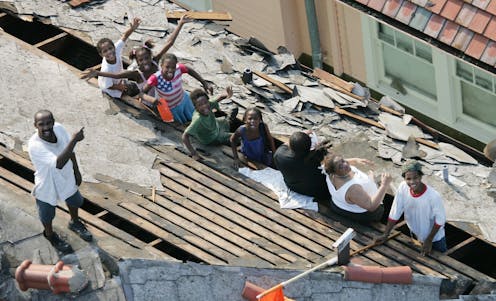
New Orleans residents wait to be rescued from a rooftop two days after Hurricane Katrina made landfall. AP Photo/David J. Phillipp

Twenty years after Hurricane Katrina swept through New Orleans, the images still haunt us: entire neighborhoods underwater, families stranded on rooftops and a city brought to its knees.

We study disaster planning at Texas A&M University and look for ways communities can improve storm safety for everyone, particularly low-income and minority neighborhoods.

Katrina made clear what many disaster researchers have long found: Hazards such as hurricanes may be natural, but the death and destruction is largely human-made.

A man with a destressed look walks in thigh-deep water while people watch from a doorway several steps above street level.
People walk out of their homes into New Orleans’ flooded streets after Hurricane Katrina on Aug. 29, 2005. In parts of the city, homes were underwater up to their roofs.
Mark Wilson/Getty Images

How New Orleans built inequality into its foundation

New Orleans was born unequal. As the city grew as a trade hub in the 1700s, wealthy residents claimed the best real estate, often on higher ground formed by river sediment. The city had little high ground, so everyone else was left in “back-of-town” areas, closer to swamps where land was cheap and flooding common.

In the early 1900s, new pumping technology enabled development in flood-prone swamplands and housing spread, but the pumping caused land subsidence that made flooding worse in neighborhoods such as Lakeview, Gentilly and Broadmoor.

Then redlining started in the 1930s. To guide federal loan decisions, government agencies began using maps that rated neighborhoods by financial risk. Predominantly Black neighborhoods were typically marked as “high risk,” regardless of the actual housing quality.

This created a vicious cycle: Black and low-income families were already stuck in flood-prone areas because that’s where cheap land was. Redlining kept their property values lower. Black Americans were also denied government-backed mortgages and GI Bill benefits that could have helped them move to safer neighborhoods on higher ground.

In this 1939 map prepared for the Federal Home Loan Bank Board, redlining separated New Orleans into grades. Green is an A, or first grade; followed by blue, yellow and red, which is last as a D, or fourth grade. The Lower Ninth Ward is the red block farthest to the right.
National Archives via Mapping Inequality/University of Richmond

Hurricane Katrina showed how those lines translate to vulnerability.

When history came calling

On Aug. 29, 2005, as Hurricane Katrina battered New Orleans, the levees protecting the city broke and water flooded about 80% of the city. The damage followed racial geography − the spatial patterns of where Black and white residents lived due to decades of segregation − like a blueprint.

About three-quarters of Black residents experienced serious flooding, compared with half of white residents.

People off all ages, including young children, stand in line to board a bus.
New Orleans residents who evacuated to the Superdome during Hurricane Katrina board buses to be taken to Houston on Sept. 1, 2005. Many of them lost their homes, and with much of New Orleans damaged, Houston took in evacuees.
Robert Sullivan/AFP via Getty Images

Between 100,000 and 150,000 people couldn’t evacuate. They were disproportionately people who were elderly, Black, poor and without cars. Among survivors who did not evacuate, 55% did not have a car or another way to get out, and 93% were Black. More than 1,800 people lost their lives.

This lack of transportation — what scholars call “transportation poverty” — left people stranded in the city’s bowl-shaped geography, unable to escape when the levees failed.

Recovery that made things worse

After Hurricane Katrina, the federal government created the Road Home program to help homeowners rebuild. But the program had a devastating design flaw: It calculated aid based on prehurricane home value or repair costs, whichever was less.

That meant low-income homeowners, who already lived in areas with lower property values due to the history of discrimination, received less money. A family whose US$50,000 home needed $80,000 in repairs would receive only $50,000, while a family whose $200,000 home needed the same $80,000 in repairs would receive the full repair amount. The average gap between damage estimates and rebuilding funds was $36,000.

As a result, people in poor and Black neighborhoods had to cover about 30% of rebuilding costs after all aid, while those in wealthy areas faced only about 20%. Families in the poorest areas had to pay thousands of dollars out-of-pocket to complete repairs, even after government help and insurance, and that slowed the recovery process.

A house missing it walls and with a torn-down fence.
Homes damaged by Hurricane Katrina still sat vacant in New Orleans’ Lower Ninth Ward in 2013.
AP Photo/Patrick Semansky

This pattern isn’t unique to New Orleans. A study examining data from Hurricane Andrew in Miami (1992) and Hurricane Ike in Galveston (2008) found that housing recovery was consistently slow and unequal in low-income and minority neighborhoods. Lower-income families are less likely to have adequate insurance or savings for quick rebuilding. Low-value homes with extensive damage still had not regained their prestorm value four years later, while higher-value homes sustaining even moderate damage gained value.

Ten years after Katrina, while 70% of white residents felt New Orleans had recovered, only 44% of Black residents could look around their neighborhood and say the same.

Community-led solutions for climate resilience

Katrina’s lessons in the inequality of disasters are important for communities today as climate change brings more extreme weather.

Federal Emergency Management Agency denial rates for disaster aid remain high due to bureaucratic obstacles such as complex application processes that bounce survivors among multiple agencies, often resulting in denials and delays of critical funds. These are the same systemic barriers that added to the reasons Black communities recovered more slowly after Hurricane Katrina. FEMA’s own advisory council reported that institutional assistance policies tend to enrich wealthier, predominantly white areas, while underserving low-income and minority communities throughout all stages of disaster response.

A 2021 photo showing the low-lying neighborhood and  the canal just across a flood wall.
Homes were rebuilt along the Industrial Canal, shown here in 2021, where a levee break flooded the Lower Ninth Ward during Hurricane Katrina.
Patrick T. Fallon/AFP via Getty Images

The lessons from New Orleans also point to ways communities can build disaster resilience across the entire population. In particular, as cities plan protective measures — elevating homes, buyout programs and flood-proofing assistance — Hurricane Katrina showed the need to pay attention to social vulnerabilities and focus aid where people need the most assistance.

The choice America faces

In our view, one of Katrina’s most important lessons is about social injustice. The disproportionate suffering in Black communities wasn’t a natural disaster but a predictable result of policies concentrating risk in marginalized neighborhoods.

In many American cities, policies still leave some communities facing a greater risk of disaster damage. To protect residents, cities can start by investing in vulnerable areas, empowering a community-led recovery and ensuring race, income or ZIP code never again determine who receives help with the recovery.

Natural disasters don’t have to become human catastrophes. Confronting the policies and other factors that leave some groups at greater risk can avoid a repeat of the devastation the world saw in Katrina.

The Conversation

Ivis García receives funding from National Science Foundation, U.S. Department of Housing and Urban Development, Ford Foundation, National Academy of Sciences, Fundación Comunitaria de Puerto Rico, UNIDOS, Texas Appleseed, Natural Hazard Center, Chicago Community Trust, American Planning Association, and Salt Lake City Corporation.

Deidra D Davis receives funding from the National Academy of Sciences, Engineering, and Medicine. The views expressed are those of Deidra D Davis and do not necessarily represent those of the National Academy of Sciences, Engineering, and Medicine.

Walter Gillis Peacock receives funding from the National Science Foundation to conduct research related to issues discussed in this article. The opinions expressed are those of Walter Gillis Peacock and do not necessarily reflect those of the National Science Foundation.

ref. One of Hurricane Katrina’s most important lessons isn’t about storm preparations – it’s about injustice – https://theconversation.com/one-of-hurricane-katrinas-most-important-lessons-isnt-about-storm-preparations-its-about-injustice-261936
Data centers consume massive amounts of water – companies rarely tell the public exactly how much

Source: The Conversation – USA (2) – By Peyton McCauley, Water Policy Specialist, Sea Grant UW Water Science-Policy Fellow, University of Wisconsin-Milwaukee

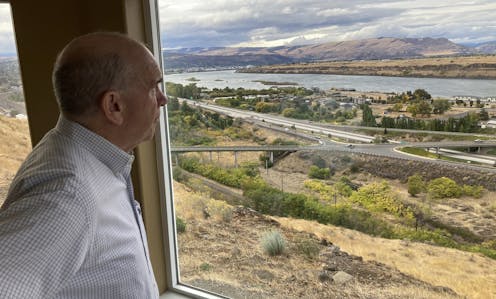
The Columbia River running through The Dalles, Oregon, supplies water to cool data centers. AP Photo/Andrew Selsky

As demand for artificial intelligence technology boosts construction and proposed construction of data centers around the world, those computers require not just electricity and land, but also a significant amount of water. Data centers use water directly, with cooling water pumped through pipes in and around the computer equipment. They also use water indirectly, through the water required to produce the electricity to power the facility. The amount of water used to produce electricity increases dramatically when the source is fossil fuels compared with solar or wind.

A 2024 report from the Lawrence Berkeley National Laboratory estimated that in 2023, U.S. data centers consumed 17 billion gallons (64 billion liters) of water, and projects that by 2028, those figures could double – or even quadruple. The same report estimated that in 2023, U.S. data centers consumed an additional 211 billion gallons (800 billion liters) of water indirectly through the electricity that powers them. But that is just an estimate in a fast-changing industry.

We are researchers in water law and policy based on the shores of Lake Michigan. Technology companies are eyeing the Great Lakes region to host data centers, including one proposed for Port Washington, Wisconsin, which could be one of the largest in the country. The Great Lakes region offers a relatively cool climate and an abundance of water, making the region an attractive location for hot and thirsty data centers.

The Great Lakes are an important, binational resource that more than 40 million people depend on for their drinking water and supports a US$6 trillion regional economy. Data centers compete with these existing uses and may deplete local groundwater aquifers.

Our analysis of public records, government documents and sustainability reports compiled by top data center companies has found that technology companies don’t always reveal how much water their data centers use. In a forthcoming Rutgers Computer and Technology Law Journal article, we walk through our methods and findings using these resources to uncover the water demands of data centers.

In general, corporate sustainability reports offered the most access and detail – including that in 2024, one data center in Iowa consumed 1 billion (3.8 billion liters) gallons of water – enough to supply all of Iowa’s residential water for five days.

The computer processors in data centers generate lots of heat while doing their work.

How do data centers use water?

The servers and routers in data centers work hard and generate a lot of heat. To cool them down, data centers use large amounts of water – in some cases over 25% of local community water supplies. In 2023, Google reported consuming over 6 billion gallons of water (nearly 23 billion liters) to cool all its data centers.

In some data centers, the water is used up in the cooling process. In an evaporative cooling system, pumps push cold water through pipes in the data center. The cold water absorbs the heat produced by the data center servers, turning into steam that is vented out of the facility. This system requires a constant supply of cold water.

In closed-loop cooling systems, the cooling process is similar, but rather than venting steam to the air, air-cooled chillers cool down the hot water. The cooled water is then recirculated to cool the facility again. This does not require constant addition of large volumes of water, but it uses a lot more energy to run the chillers. The actual numbers showing those differences, which likely vary by the facility, are not publicly available.

One key way to evaluate water use is the amount of water that is considered “consumed,” meaning it is withdrawn from the local water supply and used up – for instance, evaporated as steam – and not returned to the ecosystem.

For information, we first looked to government data, such as that kept by municipal water systems, but the process of getting all the necessary data can be onerous and time-consuming, with some denying data access due to confidentiality concerns. So we turned to other sources to uncover data center water use.

Sustainability reports provide insight

Many companies, especially those that prioritize sustainability, release publicly available reports about their environmental and sustainability practices, including water use. We focused on six top tech companies with data centers: Amazon, Google, Microsoft, Meta, Digital Realty and Equinix. Our findings revealed significant variability in both how much water the companies’ data centers used, and how much specific information the companies’ reports actually provided.

Sustainability reports offer a valuable glimpse into data center water use. But because the reports are voluntary, different companies report different statistics in ways that make them hard to combine or compare. Importantly, these disclosures do not consistently include the indirect water consumption from their electricity use, which the Lawrence Berkeley Lab estimated was 12 times greater than the direct use for cooling in 2023. Our estimates highlighting specific water consumption reports are all related to cooling.

Amazon releases annual sustainability reports, but those documents do not disclose how much water the company uses. Microsoft provides data on its water demands for its overall operations, but does not break down water use for its data centers. Meta does that breakdown, but only in a companywide aggregate figure. Google provides individual figures for each data center.

In general, the five companies we analyzed that do disclose water usage show a general trend of increasing direct water use each year. Researchers attribute this trend to data centers.

A closer look at Google and Meta

To take a deeper look, we focused on Google and Meta, as they provide some of the most detailed reports of data center water use.

Data centers make up significant proportions of both companies’ water use. In 2023, Meta consumed 813 million gallons of water globally (3.1 billion liters) – 95% of which, 776 million gallons (2.9 billion liters), was used by data centers.

For Google, the picture is similar, but with higher numbers. In 2023, Google operations worldwide consumed 6.4 billion gallons of water (24.2 billion liters), with 95%, 6.1 billion gallons (23.1 billion liters), used by data centers.

Google reports that in 2024, the company’s data center in Council Bluffs, Iowa, consumed 1 billion gallons of water (3.8 billion liters), the most of any of its data centers.

The Google data center using the least that year was in Pflugerville, Texas, which consumed 10,000 gallons (38,000 liters) – about as much as one Texas home would use in two months. That data center is air-cooled, not water-cooled, and consumes significantly less water than the 1.5 million gallons (5.7 million liters) at an air-cooled Google data center in Storey County, Nevada. Because Google’s disclosures do not pair water consumption data with the size of centers, technology used or indirect water consumption from power, these are simply partial views, with the big picture obscured.

Given society’s growing interest in AI, the data center industry will likely continue its rapid expansion. But without a consistent and transparent way to track water consumption over time, the public and government officials will be making decisions about locations, regulations and sustainability without complete information on how these massive companies’ hot and thirsty buildings will affect their communities and their environments.

The Conversation

The authors do not work for, consult, own shares in or receive funding from any company or organization that would benefit from this article, and have disclosed no relevant affiliations beyond their academic appointment.

ref. Data centers consume massive amounts of water – companies rarely tell the public exactly how much – https://theconversation.com/data-centers-consume-massive-amounts-of-water-companies-rarely-tell-the-public-exactly-how-much-262901

Misspelled names may give brands a Lyft – if the spelling isn’t too weird

Source: The Conversation – USA (2) – By Annika Abell, Assistant Professor of Marketing, University of Tennessee

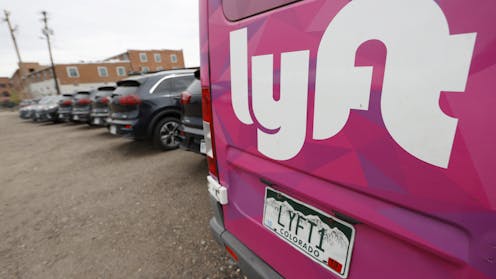
Misspelled brand names can be catchy – but don’t always connect with consumers. AP Photo/David Zalubowski

Consumers don’t mind when companies use misspelled words – think Lyft for “lift” or Froot Loops for “fruit loops” – as their brand names, as long as the alterations aren’t too extreme and the misspelling makes sense.

Those are the main findings of a new peer-reviewed paper I published with fellow marketing scholar Leah Warfield Smith. This builds on previous work that found that using misspelled brand names usually backfires.

Misspelled brand names like Kool-Aid, Reddi-wip and Crumbl seem to be everywhere. They are especially common in the names of smartphone apps and in certain industries, like fashion. Companies often do this to stand out or perhaps so they can use the misspelled word as their domain name.

Despite their popularity, we know little about how consumers respond to different types of misspelled names, especially when those names deviate significantly from correct or standard spelling. Our study aims to fill this gap.

In a series of six experiments, we tested consumer reactions to fictional and several real brand names with varying levels and types of misspellings.

Mild misspellings, such as combining two real words such as SoftSoap were perceived just as positively as correctly spelled names. When consumers saw different levels of misspellings – consider the brand names Eazy Clean, Eazy Klean and Eezy Kleen – they reacted more negatively the further the name deviated from the correct spelling “easy clean.”

However, we also found that relevance matters. A misspelled name that aligns with the product or brand identity can still be successful. For example, consumers responded just as well to Bloo Fog – a playful nod to Oolong tea – as to the correctly spelled “blue fog.” In contrast, Blewe Fog – a misspelling without a linguistic connection to the product’s name – performed worse.

Other experiments showed similar, more positive effects when the name related to the owner’s identity, for example Sintymental Moments by Joe Sinty, or a visual cue as in Toadal Fitness with a toad logo. In each case, the misspelling was more acceptable when it made conceptual sense to consumers.

Why it matters

The findings suggest that two main concepts play a role in how consumers process brand names: linguistic fluency – or how easily a name is pronounced and read – and conceptual fluency – how easily the meaning of a name is understood or how well it aligns with the product.

Linguistic fluency decreases with more severe misspellings, resulting in more negative responses. But if the misspelling adds some kind of meaning – related to the product, person or logo – these adverse effects can be easily mitigated.

For marketers and brand strategists, the takeaway is that misspellings can work, but only when they make sense. Naming a tea brand Bloo Fog might succeed where Blewe Fog fails, but only if consumers understand the name-product connection. Understanding when a misspelling helps or hurts a brand is crucial to crafting the right brand name; ideally, one that can be perceived positively while reaping the benefits of misspellings, such as increased memorability, uniqueness or trademark acquisition.

What still isn’t known

While this research uncovers how consumers react to different types of misspellings, it leaves open important questions about long-term effects. For example, do consumers still notice the misspelling in a 60-year-old brand name like Kwik Trip, a convenience store chain in the Midwest?

We also do not know how the effects of misspellings play out across different languages, cultures or product categories.

The Research Brief is a short take on interesting academic work.

The Conversation

Annika Abell does not work for, consult, own shares in or receive funding from any company or organization that would benefit from this article, and has disclosed no relevant affiliations beyond their academic appointment.

ref. Misspelled names may give brands a Lyft – if the spelling isn’t too weird – https://theconversation.com/misspelled-names-may-give-brands-a-lyft-if-the-spelling-isnt-too-weird-256792

Reverse discrimination? In spite of the MAGA bluster over DEI, data shows white Americans are still advantaged

Source: The Conversation – USA (2) – By Fred L. Pincus, Emeritus Professor of Sociology, University of Maryland, Baltimore County

There’s no evidence of widespread racial discrimination against white people. Sebastian Gorczowski/iStock/Getty Images Plus

Two big assumptions underlie President Donald Trump’s attack on diversity, equity and inclusion policies. The first is that discrimination against people of color is a thing of the past. The second is that DEI policies and practices discriminate against white people – especially white men – in what’s sometimes called “reverse discrimination.”

I’m a sociologist who’s spent decades studying race and inequality, and when I read the documents and statements coming out of the Trump White House, these assumptions jump out at me again and again – usually implicitly, but always there.

The problem is that the evidence doesn’t back these assumptions up.

For one thing, if discrimination against white Americans were widespread, you might expect large numbers to report being treated unfairly. But polling data shows otherwise. A 2025 Pew survey found that 70% of white Americans think Black people face “some” or “a lot” of discrimination in general, and roughly two-thirds say the same of Asian and Hispanic people. Meanwhile, only 45% of white Americans believe that white people in general experience that degree of discrimination.

In other words, white Americans believe that people of color, as a group, face more discrimination than white people do. People of color agree – and so do Americans overall.

In a second national study, using data collected in 2023, Americans were asked if they had personally experienced discrimination within the past year. Thirty-eight percent of white people said they had, compared to 54% of Black Americans, 50% of Latinos and 42% of Asian Americans. In other words, white Americans are much less likely to say that they’ve been discriminated against than people of color.

The ‘hard’ numbers show persistent privilege

These statistics are sometimes called “soft” data because they reflect people’s perceptions rather than verified incidents. To broaden the picture, it’s worth looking at “hard” data on measures like income, education and employment outcomes. These indicators also suggest that white Americans as a group are advantaged relative to people of color.

For example, federal agencies have documented racial disparities in income for decades, with white Americans, as a group, generally outearning Black and Latino Americans. This is true even when you control for education. When the Census Bureau looked at median annual earnings for Americans between 25 and 64 with at least a bachelor’s degree, it found that Black Americans received only 81% of what comparably educated white Americans earned, while Latinos earned only 80%. Asian Americans, on the other hand, earned 119% of what white people earned.

These gaps persist even when you hold college major constant. In the highest-paying major, electrical engineering, Black Americans earned only 71% of what white people did, while Latinos earned just 73%. Asian Americans, in contrast, earned 104% of what white people earned. In the lowest-paid major, family and consumer sciences, African Americans earned 97% of what white people did, and Latinos earned 94%. Asian Americans earned 117% of what white people earned. The same general pattern of white income advantage existed in all majors with two exceptions: Black people earned more in elementary education and nursing.

Remember, this is comparing individuals with a bachelor’s degree or higher to people with the same college major. Again, white Americans are still advantaged in most career paths over Black Americans and Latinos.

Disparities persist in the job market

Unemployment data show similar patterns. The July 2025 figures for workers at all education levels show that Black people were 1.9 times more likely to be unemployed than white Americans. Latinos were 1.4 times more likely to be unemployed, and Asian Americans, 1.1 times.

This same white advantage still occurs when looking only at workers who have earned a bachelor’s degree or more. Black Americans who have earned bachelor’s degrees or higher were 1.3 times more likely to be unemployed than similarly educated white Americans as of 2021, the last year for which data is available. Latinos with college degrees were 1.4 times more likely to be unemployed than similar white Americans. The white advantage was even higher for those with only a high school degree or less. Unfortunately, data for Asian Americans weren’t available.

In another study, researchers sent 80,000 fake resumes in response to 10,000 job listings posted by 97 of the largest employers in the country. The credentials on the resumes were essentially the same, but the names signaled race: Some had Black-sounding names, like Lakisha or Leroy, while others had more “white-sounding” names like Todd or Allison. This method is known as an “audit study.”

This research, which was conducted between 2019 and 2021, found that employers were 9.5% more likely to contact the Todds and Allisons than the Lakishas and Leroys within 30 days of receiving a resume. Of the 28 audit studies that have been conducted since 1989, each one showed that applicants with Black- or Latino-sounding names were less likely to be contacted that those with white-sounding or racially neutral names.

Finally, a 2025 study analyzed 600,000 letters of recommendation for college-bound students who used the Common App form during the 2018-19 and 2019-20 academic years. Only students who applied to at least one selective college were included. The study found that letters for Black and Latino students were shorter and said less about their intellectual promise.

Similarly, letters in support of first-generation students – that is, whose parents hadn’t graduated from a four-year college, and who are disproportionately likely to be Black and Latino – had fewer sentences dedicated to their scientific, athletic and artistic abilities, or their overall academic potential.

These and other studies don’t provide evidence of massive anti-white discrimination. Although scattered cases of white people being discriminated against undoubtedly exist, the data suggest that white people are still advantaged relative to non-Asian people of color. White Americans may be less advantaged than they were, but they’re still advantaged.

While it’s true that many working-class white Americans are having a tough time in the current economy, it’s not because of their race. It’s because of their class. It’s because of automation and overseas outsourcing taking away good jobs. It’s because of high health care costs and cuts in the safety nets.

In other words, while many working-class white people are struggling now, there’s little evidence race is the problem.

The Conversation

Fred L. Pincus does not work for, consult, own shares in or receive funding from any company or organization that would benefit from this article, and has disclosed no relevant affiliations beyond their academic appointment.

ref. Reverse discrimination? In spite of the MAGA bluster over DEI, data shows white Americans are still advantaged – https://theconversation.com/reverse-discrimination-in-spite-of-the-maga-bluster-over-dei-data-shows-white-americans-are-still-advantaged-262394

Teenagers are choosing to study Stem subjects – it’s a sign of the times

Source: The Conversation – UK – By Mike Watts, Professor of Education, Brunel University of London

SpeedKingz/Shutterstock

A-level results in 2025 show the increasing popularity of Stem (science, technology, engineering and maths) among students. For students taking three A-levels – the majority – the most popular combination of subjects was biology, chemistry and maths.

The subject with the greatest rise in entries from 2024 is further maths, followed by economics, maths, physics and chemistry. Maths remains the most popular subject, with entries making up 12.7% of all A-level entries.

Conversely, subjects such as French, drama, history and English literature are falling in exam entry numbers.

There is considerable incentive for young people who may be looking beyond school and university to the job market to study Stem. Research has found that Stem undergraduate degrees bring higher financial benefits to people and to the public purse than non-Stem subjects.

Many of the world’s fastest-growing jobs need Stem skills. These include data analysts, AI specialists, renewable energy engineers, app developers, cybersecurity experts and financial technology experts.

Within Stem itself, science alone is a broad church that spans astronomy to zoology and all letters of the alphabet between. Add to this the many variations of technology, engineering and maths and the range of subjects and specialisms is enormous.

It might come as no surprise, then, that young people have considerable scope in the possible careers and employment they might follow in life. From accountancy to the environment, medical engineering to computer technology, etymology to vulcanology, the possibilities are vast. There is little doubt that this very broad arena is attractive as possible employment.

Group of students in science class
Young people are choosing to study science, technology, engineering and maths.
Rawpixel.com/Shutterstock

What’s more, maths, engineering and the sciences are now vital parts of careers that might have once seemed unrelated. It was once the case that the division between arts and science was seen as unbridgeable: you were firmly on one side or the other. Today this is far less evident.

Artists, in their many manifestations, are almost by default material scientists. Architects, photographers, musicians, video-makers, sound and lighting technicians are (arguably) technical engineers. Landscape gardeners are environmentalists, chefs are food scientists.

Everyday Stem

Stem affects everyday life at all levels. Wearing a smart watch to track our health and fitness, as so many of us do, requires analysis of data, averages and percentages. We need maths skills to navigate our personal finances. Following directions means programming a Satnav.

Young people take their attitudes, advice and directions from a multitude of sources. Concern about the environment may lead teens to consider careers in areas such as ecology or environmental engineering. The ubiquity of social media apps and the tech companies that run them raises awareness of the use of computer science or tech skills.

And leaving aside Instagram, TikTok and other social media, Sir David Attenborough’s TV series Blue Planet prompted a surge of interest in marine ecology and plastic pollution.

Nor are young people immune to social influences more broadly. In more diffuse ways, peers and parents are also influential in shaping career choices, as are science centres, museums, botanical gardens, planetariums, aquariums, environmental centres, city farms and such like.

Then there are teachers and schools. Positive experiences in school Stem prompt further study. There is increasing evidence that individual project work, industrial placements, role-model scientists, school outreach and class visits all play an important part in promoting career intentions and aspirations.

One important factor here is imbuing students with a positive Stem identity. When young people think they are good at Stem subjects and are able to be successful, they are much more likely to choose a Stem career.

The upshot here is that, as the world changes, and changes quickly, so does the realisation that Stem is an essential and invaluable dimension of life and that career prospects are varied and available at many, many levels. It seems little wonder that students have to come to see this and are enrolling in study and employment in greater numbers than before.

The Conversation

Mike Watts does not work for, consult, own shares in or receive funding from any company or organisation that would benefit from this article, and has disclosed no relevant affiliations beyond their academic appointment.

ref. Teenagers are choosing to study Stem subjects – it’s a sign of the times – https://theconversation.com/teenagers-are-choosing-to-study-stem-subjects-its-a-sign-of-the-times-263218

Laws are introduced globally to reduce ‘psychological harm’ online – but there’s no clear definition of what it is

Source: The Conversation – UK – By Magda Osman, Professor of Policy Impact, University of Leeds

myboys.me/Shutterstock

Several pieces of legislation across the world are coming into effect this year to tackle harms experienced online, such as the UK’s Online Safety Act and Australia’s Online Safety Act. There are also new standards, regulations, acts and laws related to digital products (including smart devices such as voice assistants, virtual headsets) and services such as social media platforms.

Of the many harms these types of legislation are designed to address, “psychological harm”, “mental distress” or similar terms are commonly included.

Unfortunately, when psychological harm and the like are referred to, there is typically no detailed corresponding definition of them. But while we might have an intuitive understanding of what psychological harm is, we still need precision on what it means in law. This means evidencing what it is, agreeing on how to measure it and designing the best methods to tackle it.

How do we do this? An obvious place to look is psychological science.

The origin story

The earliest reference to psychological harm was made in the 1940s. Back then, it was about the destabilising impact of war propaganda and the use of psychology to subvert people’s understanding of reality. Psychological harm was a broad term, which also applied to those witnessing the horrors of war on the front line.

In the 1950s and 1960s, psychological harm was more associated with advertising tactics that aggressively exploit people’s emotions and insecurities.

Fast forward to the early 2000s, and tools for assessing psychological harm emerged alongside clinical assessments of mental health disorders. For instance, research on abuses experienced online, such as cyberbullying and cyberstalking, documented several psychological impacts. These ranged from withdrawal from social groups, self-doubt and reduced self-esteem to mental health disorders such as depression, anxiety and PTSD.

More terms entered into clinical and forensic lexicons, such as “psychological distress”, “psychological damage” and “psychological injury”. All of them concern some form of mental adverse experience which may happen immediately or as a delayed reaction to traumatic events.

Where we are now

In reviewing the 80 years’ worth of work in clinical, forensic and cognitive psychology, here is what I see as the major issues concerning psychological harm.

There is no agreement as to where to draw the boundary between psychological harm or related concepts and mental disorders outlined in the diagnostic manual called DSM-5-TR (such as depression, anxiety or personality disorders).

There is also no standardised measure of psychological harm or psychological distress or damage. For instance, if we just take social media, there are different metrics that vary even on how they measure negative mental experiences on Tiktok, Instagram and Threads, Facebook, Youtube and Weibo.

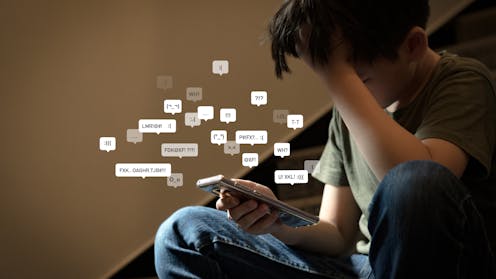
Upset and depressed girl holding smartphone sitting on college campus floor holding head.
Cyberbullying can cause major harm.
Ground Picture/Shutterstock

Why does this matter? Take for example cyberbullying. There are 17 tools in existence to measure psychological harm. And because the tools don’t all align, we don’t have an accurate picture of rates of psychological harm. Some tools are too narrow in scope – they fail to include severe cases that require psychiatric treatment. And other assessments are too broad – failing to exclude those that are malingering.

What’s more, how we perceive and experience adverse events, which can be very serious and debilitating, vary – they are subjective in nature. Research in clinical and forensic psychological recognises this. These disciplines have spent time establishing standards of assessment when supporting legal decisions for ensuring appropriate punitive measures when we face terrible situations.

Three practical suggestions

For legislation to do the job of guarding against psychological harm from serious adverse experiences online and through digital technologies, forensic psychology offers a path forward.

The first thing is to have an agreed definition. For example, in 2025, the psychologist Amanda Heath proposed a viable general-purpose definition as “a sustained drop in stable functioning, negatively impacting wellbeing”.

This works in the same way as legal requirements for defining physical harm, which needs a baseline of functioning to show how an injurious event causes a change to it. The severity of the damage varies, based on, say the length of recovery (such as a week, a month, a year, never). In the same way, the length of recovery from exposure to illegal content online would indicate the severity of the psychological harm experienced.

Second, there should to be a process for demonstrating causality between a particular adverse event online and the harm itself. So far, there doesn’t appear to be any set criteria laid out in online safety or harm acts for establishing causality.

Again, legislators could learn from forensic research, which outlines two levels in psychological injury cases that establish causality – psychologically and legally. Forensic psychologists weigh the evidence for the relative ratio of pre-existing and event or post-event factors to determine causality using something called counterfactual analysis.

For example, sometimes people have pre-existing injuries, vulnerabilities, or psychopathologies. So in such cases there needs to be a baseline, where the evidence shows how an indiviudal’s conditions have been exacerbated by experiencing an injurious event. For example, if we applied this analysis to psychological harm experienced online it would work like this. Forensic psychologists would weight the evidence to determine that, in the absence of seeing the illegal content, an individual would not have experienced PTSD to the same extent that they are experiencing it currently.

Finally, there need to be standards for the evidence used to show causality between a particular adverse event online and the harm itself, which we don’t yet see in current online safety or harm acts.

In forensic psychology, on the other hand, the legal standards of evidence are high, requiring independent corroboration of psychological impacts. This is where psychiatric assessment tools of PTSD, depression and anxiety are used along with other sources of evidence. Physical outcomes (such as neurological damage) and behavioural outcomes (such as substance abuse, self-harm) are also required.

To serve the public, the law needs to improve. This can’t be achieved without a fleshed out definition of psychological harm, tools of assessment and a framework that traces a causal path from the injurious content to the harm it is considered to have caused.

The Conversation

Magda Osman receives funding from ESRC, EPSRC, Research England, UKRI Innovate UK, Wellcome Trust, Turing Institute, Food Standards Agency, DFG, British Academy, DSTL, Counterterrorism Policing.

ref. Laws are introduced globally to reduce ‘psychological harm’ online – but there’s no clear definition of what it is – https://theconversation.com/laws-are-introduced-globally-to-reduce-psychological-harm-online-but-theres-no-clear-definition-of-what-it-is-263061

Bolivia election: voters bring two decades of leftist politics to an end

Source: The Conversation – UK – By Amalendu Misra, Professor of International Politics, Lancaster University

A seismic political shift has taken place in Bolivia. The country’s leftist Movimiento al Socialismo (Mas) party, which has dominated Bolivian politics for nearly 20 years, was voted out of power in a general election on August 17.

Centre-right Rodrigo Paz Pereira and rightwing Jorge “Tuto” Quiroga, who briefly led the country in 2001, will now compete for the presidency in a run-off vote in October. According to the electoral court’s preliminary tally, Paz Pereira won 32.2% of the vote and Quiroga won 26.9%.

Bolivia’s deeply unpopular president, Luis Arce, who was the Mas presidential candidate in 2020, chose not to run. And his pick, current interior minister Eduardo del Castillo, only won 3.16% of the vote. That is just enough for the party to avoid losing its legal status.

Beyond exhaustion with the rule of Mas, the election was dominated by two critical issues. First was the dire state of the economy. Bolivia is enduring its worst economic crisis in four decades, with US dollars and fuel in short supply. Inflation also jumped from 12% in January to 23% in June. Many Bolivians are struggling to make ends meet.

Second, voters were confronted with a decision to continue Bolivia’s old style status quo politics of patronage or opt for a new political ideology. Bolivians have long experienced divisive politics under the old order. The voters were clear; they wanted change.

Speaking after the results were announced, Paz Pereira said: “Bolivia is not only calling for a change of government, it is also calling for a change to the political system. This is the beginning of a great victory and a great transformation.”

End of an era

The results are likely to put an end to the political career of Evo Morales, Bolivia’s three-time former president and the founder of Mas. Morales first entered office in 2006 as part of the “pink tide” of leftist leaders that swept into power across Latin America during the commodities boom of the early 2000s.

He was long seen as the shining light of the Latin American left. His policies lifted millions of people, particularly Bolivian indigenous communities who have suffered centuries of marginalisation and discrimination, out of poverty.

But his critics accuse him of undermining Bolivia’s political and legal institutions by, for example, appointing loyalists to the judiciary and electoral bodies.

In 2016, when a referendum narrowly failed to lift restrictions on presidential term limits, Morales appointed a constitutional court to circumvent the rules and scrap term limits altogether. This gave him the power to run for office indefinitely.

Then, in 2019, widespread protests over a disputed election resulted in Morales losing the support of the military and police. He fled Bolivia, with his supporters saying he was forced out in a coup. Morales has remained highly active in Bolivian politics since then, though this has morphed into a contentious struggle for influence.

Mas has fallen victim to bitter infighting. Arce and Morales, who initially both wanted to be the Mas 2025 presidential candidate, became locked in a fight for control of Mas. And when a constitutional court ruling barred Morales from running, he accused the government of trying to disqualify his candidacy.


Read more:
Bolivia slides towards anarchy as two bitter rivals prepare for showdown 2025 election


Morales called for his supporters to boycott the vote. Preliminary results suggest 19.1% of ballots were null and void, an unusually high proportion in Bolivia’s electoral history. This followed months of regular violent protests, which were most intense in rural areas where support for Morales is concentrated.

The election outcome can be seen as representing the resolve of Bolivian citizens to prevent the further erosion of their democratic institutions and put a stop to the politics of populism. While waiting to vote at polling stations across La Paz, several people said they were choosing to vote for el menos peor, the lesser evil.

Paz Pereira was a surprise vote leader. Opinion polls had suggested Samuel Doria Medina, one Bolivia’s most successful businessman, was the frontrunner. But support for Paz Pereira seems to have surged after he teamed up with Edman Lara, a TikTok-savvy former police captain who went viral for denouncing corruption within the police.

Quiroga and Doria Medina, who has now announced he will back Paz Pereira in the run-off, used their election campaigns to warn of the need for a fiscal adjustment to save Bolivia from insolvency. This may include the elimination of food and fuel subsidies, which some analysts say risks sparking social unrest.

The road ahead for Bolivia’s incoming president will be hard and bumpy. His first task will be to rein in runaway inflation. Then he will have to put back together a fractured nation marked by racial and ideological divides.

He will also have to work on realigning Bolivia’s relationship with rest of the world – by extricating itself from its strong association with pariah regimes like Iran, Venezuela and Russia. The new leader has a mountain to climb.

The Conversation

Amalendu Misra does not work for, consult, own shares in or receive funding from any company or organisation that would benefit from this article, and has disclosed no relevant affiliations beyond their academic appointment.

ref. Bolivia election: voters bring two decades of leftist politics to an end – https://theconversation.com/bolivia-election-voters-bring-two-decades-of-leftist-politics-to-an-end-263238

Transatlantic unity at the White House disguises lack of progress towards just peace for Ukraine

Source: The Conversation – UK – By Stefan Wolff, Professor of International Security, University of Birmingham

At a high-stakes meeting at the White House on August 18, the US president, Donald Trump, and his Ukrainian counterpart, Volodymyr Zelensky, tried to hammer out the broad contours of a potential peace agreement with Russia. The tone of their encounter was in marked contrast to their last joint press conference in Washington back in February which ended with Zelensky’s humiliation by Trump and his vice president, J.D. Vance.

The outcomes of the presidential get-together, and the subsequent, expanded meeting with leaders of the European coalition of the willing, were also a much more professional affair than Trump’s summit with his Russian counterpart, Vladimir Putin, on August 15. The results of the meetings in the White House were still far from perfect. But they are a much better response to the reality in which Ukrainians have lived for the past more than three-and-a-half years than what transpired during and after the brief press conference held by the two leaders after their meeting in Alaska.

This relatively positive outcome was not a foregone conclusion. Over the weekend, Trump had put out a statement on his Truth Social platform that: “President Zelenskyy (sic) of Ukraine can end the war with Russia almost immediately”. But this came with the proviso that Zelensky would need to accept Ukraine’s loss of Crimea to Russia and forego his country’s future Nato membership. This, and similar ideas of land swaps between Russia and Ukraine, have already been roundly rejected by the Ukrainian president.

Importantly, Kyiv’s position has been fully backed by Ukraine’s European allies. Leaders of the coalition of the willing issued a joint statement on August 16 to the effect that any territorial concessions were Ukraine’s to make or refuse.

On Nato membership, their statement was more equivocal. European leaders asserted that Russia should not be allowed to have a veto on Ukraine’s choices.
But the coalition’s reiteration of the commitment that it is “ready to play an active role” in guaranteeing Ukraine’s future security opened up a pathway to Trump to “Article 5-like protections” for Ukraine against future Russian aggression and promising “a lot of help when it comes to security”. Nato’s Article 5 guarantees that an attack on one member is an attack on all and commits the alliance to collective defence.

A possibly emerging deal – some territorial concessions by Ukraine in exchange for peace and joint US and European security guarantees – appeared to become more certain during the televised meeting between Trump and his visitors before their closed-door discussions. In different ways, each of the European guests acknowledged the progress that Trump had made towards a settlement and they all emphasised the importance of a joint approach to Russia to make sure that any agreement would bring a just and lasting peace.

As an indication that his guests were unwilling to simply accept whatever deal he had brought back with him from his meeting with Putin in Alaska, the US president then interrupted the meeting to call the Russian president. Signals from Russia were far from promising with Moscow rejecting any Nato troop deployments to Ukraine and singling out the UK as allegedly seeking to undermine the US-Russia peace effort.

Peace remains elusive

When the meeting concluded and the different leaders offered their interpretations of what had been agreed, two things became clear. First, the Ukrainian side had not folded under pressure from the US, and European leaders, while going out of their way to flatter Trump, held their ground as well. Importantly, Trump had not walked away from the process either but appeared to want to remain engaged.

Second, Russia had not given any ground, either. According to remarks by Putin’s foreign policy advisor, Yuri Ushakov, posted on the Kremlin’s official website, Russia would consider “the possibility of raising the level of representatives of the Ukrainian and Russian parties”. His statement falls short of, but does not rule out, the possibility of a Zelensky-Putin summit, which Trump announced as a major success after the White House meetings yesterday.

Such a meeting was seen as the next logical step towards peace by all the participants of the White House meeting and would be followed, according to Trump, by what he called “a Trilat” of the Ukrainian, Russian and American presidents. The lack of clear confirmation by Russia that such meetings would indeed happen raises more doubts about the Kremlin’s sincerity.

But the fact that a peace process – if it can be called that – remains somewhat intact is a far cry from an actual peace agreement. Little if anything was said in the aftermath of the White House meeting on territorial issues. Pressure on Russia only came up briefly in comments by European leaders, whose ambitions to become formally involved in actual peace negotiations remain a pipe dream for the time being. And, despite the initial optimism about security guarantees, no firm commitments were made with Zelensky only noting “the important signal from the United States regarding its readiness to support and be part of these guarantees”.

Peace in Ukraine thus remains elusive, for now. The only tangible success is that whatever Trump imagines as the process to a peace agreement did not completely fall apart. But as this process unfolds, its progress, if any, happens at a snail’s pace. Meanwhile the Russian war machine deployed against Ukraine grinds forward.

At the end of the day, yesterday’s events changed little. They merely confirmed that Putin keeps playing for time, that Trump is unwilling to put real pressure on him and that Ukraine and Europe have no effective leverage on either side.

Trump boldly claimed ahead of his meetings with Zelensky and the leaders of the coalition of the willing that he knew exactly what he was doing. That may be true – but it may also not be enough without knowing and understanding what his counterpart in the Kremlin is doing.

The Conversation

Stefan Wolff is a past recipient of grant funding from the Natural Environment Research Council of the UK, the United States Institute of Peace, the Economic and Social Research Council of the UK, the British Academy, the NATO Science for Peace Programme, the EU Framework Programmes 6 and 7 and Horizon 2020, as well as the EU’s Jean Monnet Programme. He is a Trustee and Honorary Treasurer of the Political Studies Association of the UK and a Senior Research Fellow at the Foreign Policy Centre in London.

ref. Transatlantic unity at the White House disguises lack of progress towards just peace for Ukraine – https://theconversation.com/transatlantic-unity-at-the-white-house-disguises-lack-of-progress-towards-just-peace-for-ukraine-263353

Going with the flow: how penguins use tides to travel and hunt

Source: The Conversation – UK – By Rory Wilson, Professor of Aquatic Biology and Sustainable Aquaculture, Swansea University

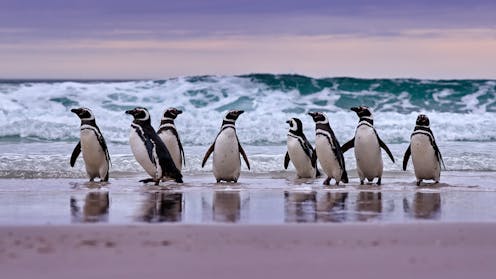
Magellanic penguins in the surf. Ondrej Prosicky/Shutterstock

Poohsticks, the game in which Piglet and Winnie the Pooh throw sticks into the river from one side of a bridge, and then rush over to the other side to see whose stick appears first, is all about current flow. Disappointingly, neither Piglet nor Pooh mention fluid dynamics despite its pivotal importance in determining who won.

Unlike sticks, though, animals can respond to those flows. The movement of water and air – with their winds and currents – can affect flying and swimming animals profoundly. And as we recently discovered, penguins are far more tuned in to these dynamics than anyone realised.

Anyone who’s ever swum in the sea will know how cross-currents can drag you along the coast, even when you’re trying to swim straight in. Magellanic penguins, a South American penguin, face this challenge daily, but they appear to have found a clever solution.

Penguins can swim far from land but seem to know exactly where they are. More importantly, they seem to know how to get back to their breeding colonies, whether currents are confounding them or not.

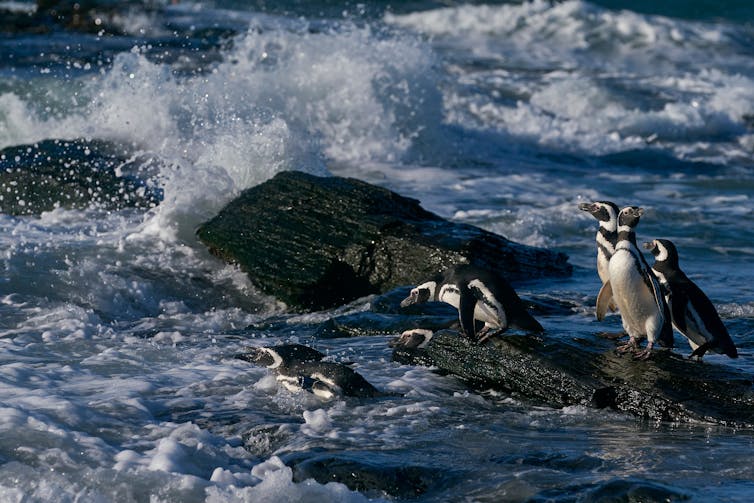
A group of Magellanic penguins going to sea from some rocks.
Masters of navigation.
Jeremy Richards/Shutterstock

To understand how they do this, our team – which included researchers from Argentina, Germany, Japan and the UK – fitted high-tech tracking tags to Magellanic penguins breeding in Argentina. These birds often forage up to 43 miles offshore, far beyond the range of visual landmarks. And it’s unlikely they’re using the seafloor as a map, as Magellanics rarely dive that deep.

The tech we placed on the penguins recorded some pivotal information. Global positioning systems (GPS) gave the birds’ positions when they were at the surface between dives. And trajectories underwater could be calculated using dead reckoning. This is what a car navigation system does when it goes into a tunnel – it starts with the last GPS position and uses vectors on the car heading and speed to work out the path.

Our team did this with the penguins’ data, calculating the underwater pathways for every second of their one to three day trips. We then integrated this with the currents. This was no simple undertaking because currents change dramatically over the tidal cycle and vary with position.

So what could the penguins do in such a dynamic environment? One option (assuming they somehow knew both where they were and where home was) would be to head straight for the colony. But doing this would often have meant swimming against strong currents, sometimes of up to 2 metres per second (around 4.5mph). That’s about the same speed as an Olympic swimmer.

Although penguins can cruise at that speed, going faster to beat the current would cost them a lot of extra energy.


Read more:
Swimming in the sweet spot: how marine animals save energy on long journeys


Interestingly, we found that during slack water, when the currents were trivial, the penguins headed directly home. So, somehow they knew where they were in relation to the colony. Theories about how animals might do this include them using magnetic field sensing, celestial cues, or even using smell to find their way but it’s a mysterious and hotly debated topic among experts.

When the current was strong, the penguins generally aimed in the right direction to return home. But they often combined this with swimming in the same general direction as the current, which typically flowed across the direct line to the nest. So, some birds appeared set to overshoot the colony, probably landing further down the coast.

However, the yin and yang of tidal currents means that what flows one way on the rising tide reverses on the ebb. The penguins seemed to understand this. They swam roughly equivalent, but mirror-imaged, trajectories on both incoming and outgoing tides, according to the direction of the current.

This strategy effectively cancels out potential overshoots over the course of a tidal cycle. Once they were close enough to the colony, the penguins launched into a final burst of power and made a direct line for home. This strategy increases the length of the path to get home. But it’s easy travelling since much of the work to move is done by the current and the increased distance gives the penguins opportunities to find prey.

Navigational experts

This suggests that Magellanic penguins can detect both the direction and speed of ocean currents. While some theories propose that animals sense small-scale turbulence to gauge flow, the mechanisms remain poorly understood.

Still, what these penguins manage is remarkable. It’s a kind of navigational party trick that helps ensure they return reliably to feed their chicks, seemingly untroubled by shifting currents.

Ocean and air circulation patterns are becoming more chaotic with climate change. If penguins, and other marine animals, can keep navigating our waters with skill and instinct, it’s one small piece of good news in a rapidly changing world.

The Conversation

The authors do not work for, consult, own shares in or receive funding from any company or organisation that would benefit from this article, and have disclosed no relevant affiliations beyond their academic appointment.

ref. Going with the flow: how penguins use tides to travel and hunt – https://theconversation.com/going-with-the-flow-how-penguins-use-tides-to-travel-and-hunt-262267

William Blake’s painting The Ghost of a Flea speaks to processing childhood trauma

Source: The Conversation – UK – By Sarah Corbett, Lecturer in Creative Writing, Lancaster University

The Ghost of a Flea by William Blake (1819-1820). Tate Britain/Collage made with Canva

In William Blake’s painting The Ghost of a Flea (1820) a huge muscled figure fills the frame. He steps forward, the right side of his body towards the viewer. In one outstretched hand he holds a bleeding bowl (used to catch the blood released during bloodletting) made from an acorn. In the other, a curved thorn stands in for a knife. His tongue protrudes from between his teeth and his eyes bulge from his head. His ears are pointed with frills, or gills, almost reptilian.

White paint dots his eye, so that he appears to be both looking ahead and looking at us. He is stood on a stage between curtains with a backdrop of stars, one falling in a blaze of light. He is at once light and heavy, balanced on his toes as if he is engaged in a dance, or creeping towards his victim.

Painted in thick brown tempera (a pigment bound in water and egg, or oil and egg) and cracked with age, it is gold leaf that gives the painting its light. It’s in the creature’s muscles, the stars that fall behind him, the rim of the acorn bowl, the curtains he parts with his bulk and the boards of the stage that break into undulations at his step. The whole effect is one of movement, and of a creature occupying a space that is both vast and framed. But the painting is tiny – a rectangular hardwood panel measuring only 8.42 by 6.23 inches.


This article is part of Rethinking the Classics. The stories in this series offer insightful new ways to think about and interpret classic books and artworks. This is the canon – with a twist.


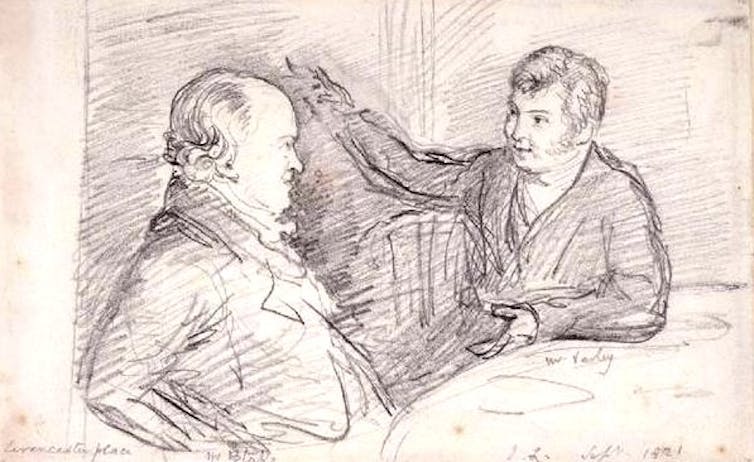
The Ghost of the Flea is a development of an original sketch from a group of visionary heads (chalk and pencil drawings of historical and mythical characters seen in visions) that Blake had drawn for watercolour artist and astrologer John Varley. Blake claimed to have seen and spoken with spirits since he was a child and in a series of late night seances, Varley persuaded Blake to draw the images of these visions to illustrate his book, Treatise on Zodiacal Physiognomy (1828).

My poem of the same title, in my 2018 collection, A Perfect Mirror, recalls Blake’s vision of the flea’s ghost as a way of writing about a series of terrifying experiences I had as a child. Blake’s monstrous “ghost” is the perfect embodiment of a horror I could neither name nor give shape to for many years: “The corner of the bedroom housed him / gigantic in a speck of dust.”

These experiences, triggered by trauma, involved a level of disassociation where I would lose all sense of scale, my body in space becoming both impossibly tiny and horrifically vast: “at once huge / and far away, immensely tiny and close.”

Blake’s painting captures the paradox of this disembodiment. The flea’s ghost is not what we expect of the tiniest of creatures, but instead expresses the flea’s innermost essence.

I grew up during the cold war, when the threat of nuclear annihilation was close at hand. This threat affected me deeply. My sense of horror was not only a personal one, but one that stretched to imagining the millions of souls that would be released from their bodies by nuclear catastrophe. In my poem, the white eyes of the flea’s apparition become “soft white pods of spider nests / where the million bodies might / any minute come rushing”.

While acknowledging the horror and giving it form, the poem self-consciously steps back from it. Now I am the poet, looking back on the experience and framing it through art. The process of writing, or any other artistic process, is only therapeutic in how far writing (or painting) is able to distance the traumatic experience from the writer.

The artist or writer does this through the process of shaping, crafting, rewriting and editing. The very act of “framing” draws attention to the artistic process. As Blake “frames” his monster in paint between draped curtains on the tiny hardwood panel I, the poet, frame and shape the frightening memories and images in lines and stanzas. This is the “stage” whereby experience is transmuted through the artifice of the painting or poem.

sketch of two men in animated conversation
William Blake in Conversation with John Varley by John Linnell (1818).
Wiki Commons

Images are central to this process in poetry and in visual art, but it is often in visual art that these images are more readily available. Powerful visual images can work like dreams, coding meaning and experience in ways that reach the subconscious mind and impart understanding that might otherwise stay hidden. Without needing to fully articulate an experience, it must be “proved upon our pulse”, as the poet John Keats put it.

This is only one of the reasons I am drawn to ekphrastic writing (writing that describes another art form). To my mind, the purpose of ekphrasis goes far beyond this. The poem must do more than simply recreate or describe the work of art – it should be a conversation between art forms that can range from discussing to expanding, or stepping off from the ideas and motifs the original works evoke. Most importantly, ekphrastic work should not only be a synthesis of the original and of new ideas and thinking, but a new work of art that stands in its own right.

My intention in my poem The Ghost of a Flea was to hold such a conversation with Blake through his painting, The Ghost of a Flea. Blake is a poet and artist who speaks profoundly to my own personal and artistic experience – and whose work remains a well of inspiration and encouragement.

Beyond the canon

As part of the Rethinking the Classics series, we’re asking our experts to recommend a book or artwork that tackles similar themes to the canonical work in question, but isn’t (yet) considered a classic itself. Here is Sarah Corbett’s suggestion:

Laurie Anderson in 2020.
New Zealand Government, CC BY-SA

An image of the doomsday clock opens Laurie Anderson’s artwork, the “opera” Ark, which blends song and story with images in a three-hour essay about the apocalypse.

As a child, I would “see” the doomsday clock on my bedroom wall, counting me down to my own destruction. I had to count back from 100 to hold in balance the second hand of the clock that threatened to strike the hour of midnight. At the last moment I would find the courage to escape from my room, and the nightmare would vanish, only to return the next evening.

Despite the multiple threats humanity now faces, from nuclear war to AI to climate collapse, Anderson’s performance looks for ways to bring us together in a collective healing. I found poetry – or perhaps, more accurately, poetry found me. The function of art is not only to awaken us to the truths around us, but to give us ways to re-imagine our future.

This article features references to books that have been included for editorial reasons, and may contain links to bookshop.org. If you click on one of the links and go on to buy something from bookshop.org The Conversation UK may earn a commission.


Looking for something good? Cut through the noise with a carefully curated selection of the latest releases, live events and exhibitions, straight to your inbox every fortnight, on Fridays. Sign up here.


The Conversation

Sarah Corbett received funidng from the AHRC for Doctoral study, 2007 – 10

ref. William Blake’s painting The Ghost of a Flea speaks to processing childhood trauma – https://theconversation.com/william-blakes-painting-the-ghost-of-a-flea-speaks-to-processing-childhood-trauma-234131