Personality tests have become increasingly popular in daily life. From hiring to dating, they promise to help us understand who we are and how we are similar, or different, to others.
But do these tests paint an accurate picture? And could it be harmful to take them too seriously?
What are personality tests?
A personality test is an instrument designed to elicit a response that may reveal someone’s “personality” – that is, their patterns of behaving and thinking across different situations.
These tests can take the form of self-reporting questionnaires, such as the Myers-Briggs Type Indicator (first developed in the 1940s) and the Big Five Inventory (developed in the 1990s).
Or they may be “projective” tests, where the individual talks freely about their interpretation of ambiguous stimuli. One famous example of this is the Rorschach inkblot test, developed in the early 1920s by Swiss psychiatrist Hermann Rorschach.
The first card in the Rorschach inkblot test. There are ten cards in total. Wikimedia
Early beginnings
Personality testing isn’t new. Historical texts from across the globe suggest humans have been interested in understanding and categorising personality for thousands of years.
Around 400 BCE, Greek philosopher Hippocrates suggested an individual’s temperament was influenced by the balance of four bodily fluids, known as “humours”.
Even earlier, around 1115 BCE, government officials in ancient China examined the behaviour and character of individuals to determine their suitability for different jobs in the public system.
However, the systematic and scientific development of tools to understand and categorise personality only began in the 20th century.
One of the first was developed in 1917 by the United States army to predict how new recruits may react to war, and whether they were at risk of “shell shock” (now classified as post-traumatic stress disorder). The goal was to identify individuals who may be unsuitable for combat.
This assessment had 116 “yes” or “no” items, including questions about somatic symptoms, social adjustment, and medical and family history. Examples included “Have you ever fainted away?” and “Do you usually feel well and strong?”. Those who scored highly were referred to a psychologist for further assessment.
Since then, thousands of similar “personality” tests have been developed and used across clinical, occupational and educational settings. Many of these, such as the Myers-Briggs test, have gained mainstream appeal thanks to the internet and media.
Why are we drawn to these tests?
The answer to this lies not in the specific characteristics of the tests, but in the deep-seated psychological need they promise to satisfy.
The drive to understand oneself starts at an early age and continues throughout life. We ask ourselves questions such as “who am I?” and “how do I fit into the world?”
Personality tests are a simple way to get answers to these difficult questions. It can be quite comforting – even exhilarating – to see yourself reflected in the results.
According to American psychologist Abraham Maslow’s theory of human needs, people are driven towards self-improvement and “self-actualisation”, which broadly refers to the realisation of one’s potential.
So, people may be drawn to personality tests in the hope that knowing their personality “type” will help them make better choices for their personal growth, whether that’s in their career, relationships, or health.
Maslow also identified another human need: the need for belonging. Learning your personality type, and the types of those around you, is one way to find “your kind of people”. According to social identity theory, finding a group we feel we belong to feeds back into our sense of who we are.
One of the main critiques is that completing the test more than once within a short period of time can generate different results (what is called poor “test-retest reliability”). Since personality is generally stable in the short-term, you would ideally expect the same results.
Furthermore, Myers-Briggs and similar tests use broad, positive, and sufficiently vague language when describing personality types. In doing so, they effectively harness the “Barnum effect” or “Forer effect”: the tendency for people to accept general statements as unique descriptions of themselves.
Sound familiar? That’s because horoscopes do the same thing. The results of horoscopes and personality tests can “feel right” because they are designed to resonate with universal human experiences and aspirations.
That said, personality tests are still routinely used in research and clinical practice – although experts suggest using measures that are proven to be scientifically sound.
One common test used in clinical practice is the revised form of the Minnesota Multiphasic Personality Inventory (MMPI-2-RF). This 338-item test measures problematic personality traits that may impact an individual’s mental health.
While it has its own set of problems, the MMPI-2-RF is useful in accurately assessing for symptoms of personality disorders, and predicting how different personality traits may impact treatment outcomes.
Taking tests too seriously
If you pigeonhole yourself into a rigid personality type, you run the danger of limiting yourself to the boundaries of this label. You may even use the label to excuse your own or others’ problematic behaviours as “just ESTP things”.
Moreover, by seeing the world purely through these simplified categories, we may ignore the fact that personality can evolve over long periods. By putting others, or ourselves, into a box, we fail to see people as individuals who are capable of change and growth.
While there’s nothing wrong with taking a personality test for fun, out of curiosity, or even to explore aspects of your identity, it’s important to not get too attached to the labels – lest they become all that you are.
The authors do not work for, consult, own shares in or receive funding from any company or organisation that would benefit from this article, and have disclosed no relevant affiliations beyond their academic appointment.
Antarctica has long been seen as a remote, unchanging environment. Not any more.
The ice-covered continent and the surrounding Southern Ocean are undergoing abrupt and alarming changes. Sea ice is shrinking rapidly, the floating glaciers known as ice shelves are melting faster, the ice sheets carpeting the continent are approaching tipping points and vital ocean currents show signs of slowing down.
Published today in Nature, our new research shows these abrupt changes are already underway – and likely to significantly intensify in the future.
Several authors of this article have witnessed these startling changes during fieldwork on the ice. These changes spell bad news for wildlife, both iconic and lesser known. But the changes will reach much further. What’s happening in Antarctica right now will affect the world for generations to come, from rising sea levels to extreme changes in the climate system.
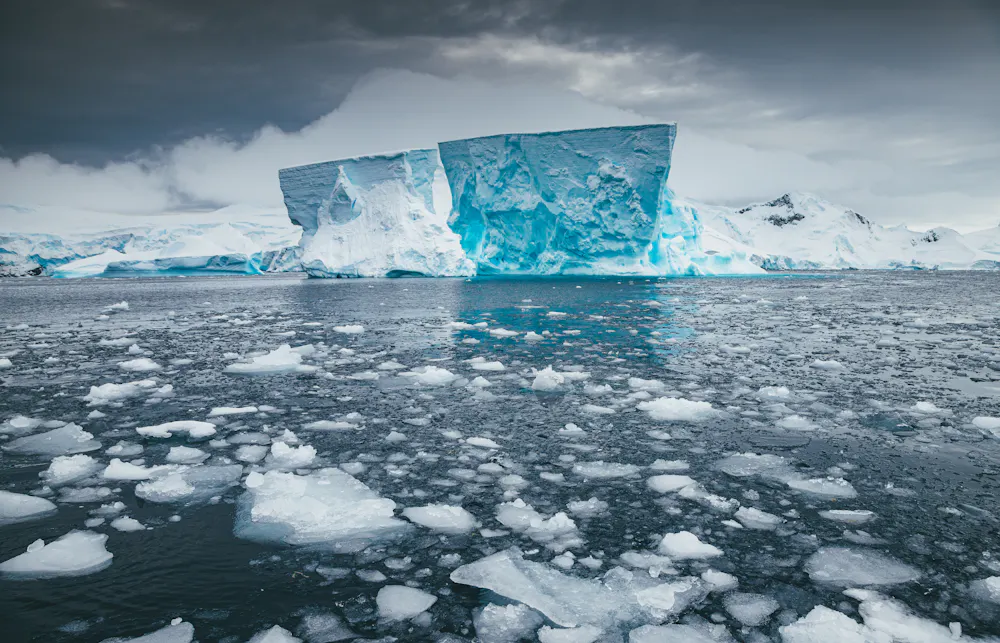
Antarctica’s enormity can give the illusion of permanence. But abrupt changes are arriving. David Merron Photography/Getty
What is an abrupt change?
Scientists define an abrupt change as a climatic or environmental shift taking place much faster than expected.
What makes abrupt changes so concerning is they can amplify themselves. For example, melting sea ice allows oceans to warm more rapidly, which melts more sea ice. Once triggered, they can be difficult or even impossible to reverse on timescales meaningful to humans.
While it’s common to assume incremental warming will translate to gradual change, we’re seeing something very different in Antarctica. Over past decades, the Antarctic environment had a much more muted response overall to human-caused climate warming compared to the Arctic. But about a decade ago, abrupt changes began to occur.
Shrinking sea ice brings cascading change
Antarctica’s natural systems are tightly interwoven. When one system is thrown out of balance, it can trigger cascading effects in others.
Sea ice around Antarctica has been declining dramatically since 2014. The expanse of sea ice is now shrinking at double the rate of Arctic sea ice. We found these unfolding changes are unprecedented – far outside the natural variability of past centuries.
The implications are far reaching. Sea ice has a reflective, high-albedo surface which reflects heat back to space. When there’s less sea ice, more heat is absorbed by darker oceans. Emperor penguins and other species reliant on sea ice for habitat and breeding face real threats. Less sea ice also means Antarctica’s ice shelves are more exposed to waves.
The expanse of ocean covered by sea ice began shrinking in 2014 and the rate is accelerating. Ted Mead/Getty
Vital ocean currents are slowing
The melting of ice is actually slowing down the deep ocean circulation around Antarctica. This system of deep currents, known as the Antarctic Overturning Circulation, plays a critical role in regulating Earth’s climate by absorbing carbon dioxide and distributing heat.
In the northern hemisphere, the Atlantic Meridional Overturning Circulation is facing a slowdown.
We’re now observing a similar risk in Southern Ocean currents. Changes to the Antarctic Overturning Circulation may unfold at twice the rate of the more famous North Atlantic counterpart.
A slowdown could reduce how much oxygen and carbon dioxide the ocean absorbs and leave vital nutrients at the seafloor. Less oxygen and fewer nutrients would have major consequences for marine ecosystems and climate regulation.
The West Antarctic Ice Sheet alone has enough ice to raise global sea levels by more than five metres – and scientists warn we could be nearing the point where this ice sheet could collapse even without substantial further warming, though this might take centuries to millennia.
These enormous ice sheets represent the risk of a global tipping point. They contribute the greatest uncertainty to projections of future sea level rise because we don’t know just how quickly they could collapse.
Antarctica’s biological systems are also undergoing sudden shifts. Ecosystems both under the sea and on land are being reshaped by warming temperatures, unreliable ice conditions and human activity bringing pollution and the arrival of invasive species.
It’s essential to protect these ecosystems through the Antarctic Treaty, including creating protected areas of land and sea and restricting some human activities. But these conservation measures won’t be enough to ensure emperor penguins and leopard seals survive. That will require decisive global action to reduce greenhouse gas emissions.
Which future?
Antarctica is often seen as a symbol of isolation and permanence. But the continent is now changing with disturbing speed – much faster than scientists anticipated.
These abrupt changes stem largely from the extra heat trapped by decades of unchecked greenhouse gas emissions. The only way to avoid further abrupt changes is to slash emissions rapidly enough to hold warming as close to 1.5°C as possible.
Even if we achieve this, much change has already been set in motion. Governments, businesses and coastal communities must prepare for a future of abrupt change. What happens in Antarctica won’t stay there.
The stakes could not be higher. The choices made now will determine whether we face a future of worsening impacts and irreversible change or one of managed resilience to the changes already locked in.
Nerilie Abram received funding from the Australian Research Council (ARC).
Ariaan Purich receives funding from the Australian Research Council (ARC).
Felicity McCormack receives funding from the Australian Research Council (ARC).
Jan Strugnell receives funding from the Australian Research Council (ARC).
Matthew England receives funding from the Australian Research Council (ARC).
For 30 years, vaccine recommendations from the Centers for Disease Control and Prevention have aligned closely with those from the American Academy of Pediatrics, or AAP. But on Aug. 19, 2025, the AAP published new vaccine recommendations that diverge from those of the CDC.
The pediatrician association’s move comes on the heels of unprecedented changes made earlier this year by Robert F. Kennedy Jr., as head of the Department of Health and Human Services, in how the government approves and issues guidance on vaccines.
In a Q&A with The Conversation U.S., David Higgins, a pediatrician, preventive medicine physician and vaccine delivery researcher from the University of Colorado Anschutz Medical Campus, explains the new guidance and what it means for parents. Higgins is also a member of the American Academy of Pediatrics.
What are the AAP’s new vaccine recommendations?
The AAP recommends that all children 6 to 23 months old receive a complete COVID-19 vaccine series, consistent with recommendations for this age group in previous years.
For children and adolescents ages 2 to 18, the AAP now advises a single dose if they are at higher risk, a change from previous years, when vaccination was recommended for all in this age group. Children at higher risk include those who have certain chronic medical conditions, who live in long-term care or group settings, who have never been vaccinated, or who live with family members at high risk.
The AAP also recommends that COVID-19 vaccines remain available for any child or adolescent whose parent wants them to be protected, regardless of risk status. In all cases, the most updated version of the vaccine should be used.
How do these recommendations differ from CDC guidance?
The difference is substantial. The CDC currently advises what it calls “shared clinical decision-making” for children ages 6 months to 17 years who are not moderately or severely immunocompromised. This means the decision is left up to individual discussions between families and their health care providers, but the vaccine is not treated as a routine recommendation. These current guidelines were made after Kennedy bypassed the agency’s normal independent review process.
That framework can be confusing for families and difficult for providers to implement. By contrast, the AAP recommendations identify the ages and conditions where the risk is highest while also supporting vaccine availability for any families who want it.
Will parents be able to follow these recommendations?
This is still unclear. The AAP recommendations do not automatically guarantee insurance coverage.
By law, insurance plans and the federal Vaccines for Children program, which provides vaccines for eligible children who might not otherwise be vaccinated due to cost or lack of insurance, are tied to Advisory Committee on Immunization Practices recommendations. Unless insurers and policymakers act to align with the AAP recommendations, there is a risk that parents would be forced to pay the costs out of pocket.
Vaccine supply may also be an issue. Currently, only two COVID-19 vaccines are available for children under 12. Moderna’s vaccine is approved only for children with at least one high-risk condition, while Pfizer’s authorization for younger children may not be renewed. If that happens, any remaining Pfizer doses for this age group may be unusable, leaving a shortfall in available vaccines for children.
Finally, implementation may differ depending on the type of provider. Some vaccine providers, such as pharmacists, operate under policies tied strictly to CDC recommendations, which may make it harder to follow AAP’s schedule unless rules are updated.
What happens next?
Parents and providers are likely to face continued confusion, just as COVID-19 cases rise as children return to school. Much will depend on whether the Advisory Committee on Immunization Practices updates its own recommendations at its upcoming meeting, expected in September, and whether pediatric COVID-19 vaccines remain available.
Until then, parents can speak with their pediatricians to understand the best protection for their children.
David Higgins volunteers as Vice President of the Colorado Chapter of the American Academy of Pediatrics and as a board member of Immunize Colorado. He was not involved in the development or publication of the American Academy of Pediatrics’ immunization guidelines. The views and opinions expressed in this article are solely his own and do not represent those of the American Academy of Pediatrics.
Source: The Conversation – Canada – By Leda Stawnychko, Associate Professor of Strategy and Organizational Theory, Mount Royal University
The workplace has long been a setting for connection — and sometimes romance. In Canada, these relationships are far from rare.
A 2019 ADP Canada survey of 885 employees found that one in three have been romantically involved with a colleague. Younger workers aged 18 to 34 were especially likely to report such relationships (41 per cent).
Similar patterns emerge in the United States and the United Kingdom, where surveys have found that 18 per cent of partnered respondents (those married, living with a partner or in a committed relationship) met their significant other at work.
Dating today can feel like a mix of endless swipes, red flags and shifting expectations. From decoding mixed signals to balancing independence with intimacy, relationships in your 20s and 30s come with unique challenges. Love IRL is the latest series from Quarter Life that explores it all.
These research-backed articles break down the complexities of modern love to help you build meaningful connections, no matter your relationship status.
When trust is undermined, research shows that collaboration suffers, morale declines and workplace culture deteriorates. This is why organizations often have policies surrounding workplace romances.
However, Canada does have legal frameworks that require employers to maintain a safe, respectful workplace. These include the Canadian Human Rights Act, provincial human rights codes, and occupational health and safety legislation.
To meet these obligations, many organizations implement policies that prohibit supervisor-subordinate relationships or require disclosure.
These policies exist for good reason: workplace romances can blur professional boundaries, increase the risk of sharing confidential information inappropriately, allow personal feelings to influence decisions, or create situations where one partner feels pressured to act in ways that conflict with organizational policies or ethical standards.
These concerns are underscored by the prevalence of misconduct. According to a 2024 Statistics Canada report, almost half of women and nearly one-third of men say they have experienced inappropriate sexualized behaviour at work.
Why some couples keep it quiet
Many employees choose not to disclose their workplace relationships. According to the ADP Canada survey, nearly half (45 per cent) of those in workplace relationships kept it secret from someone at work, most often management or human resources.
Similarly, a 2023 survey of more than 600 working Americans from the Society for Human Resource Management across a variety of ages, industries and job levels found that 82 per cent of workers who had been in a workplace romance kept it secret from their employer.
This lack of disclosure means employers may be unaware of relationships and therefore less able to protect all parties if conflicts, ethical concerns or allegations arise.
Making love work in the workplace
If you find yourself navigating romance at work, here are five steps to protect both your relationship and your career:
2. Know the rules. Review your organization’s policy on workplace romance. While the law may not always address it directly, many employers require disclosure or limit relationships within reporting lines. Understanding these rules early can help you avoid misunderstandings or career surprises.
4. Manage perceptions and set boundaries. Even if your relationship doesn’t affect your work, others may see it differently. Agree with your partner on boundaries, communicate thoughtfully and commit to upholding professional conduct.
Handled well, these steps won’t just protect your career but also help your relationship stand on solid ground.
Falling for someone at work can be both exciting and rewarding. With mindfulness, open communication and respect for professional boundaries, it can become a story you cherish and proof that romance and professionalism can flourish together.
Leda Stawnychko receives funding from the Social Sciences and Humanities Research Council of Canada.
Shawna Boyko does not work for, consult, own shares in or receive funding from any company or organisation that would benefit from this article, and has disclosed no relevant affiliations beyond their academic appointment.
Plastic is one of the most remarkable materials ever created. It’s cheap, lightweight and endlessly versatile. It can be shaped into anything from shopping bags to lifesaving tools in hospitals, and it’s clean, safe and can be sterilised. Depending on its purpose, it can be used just once – for example, in medical settings where hygiene is critical – or kept in service for years.
Perhaps surprisingly, plastic can even have environmental benefits thanks to its light weight, which reduces fuel use in transport. But we have become so dependent on plastic that global production reached around 414 million tonnes in 2023 – a figure that continues to rise every year.
Plastic is part of countless everyday objects. Take a toothbrush: the bristles are usually nylon, while the handle is often made from lightweight polyethylene or polypropylene. A manual toothbrush might have a volume of 8.5-19 cm³. Now imagine that over time, it breaks down into microplastics – fragments smaller than five millimetres – or even nanoplastics, which are a thousand times smaller.
If microplastics can be as small as 1 micrometre (about the size of a bacterium) – or even 0.1 micrometres (roughly the size of the SARS-CoV-2 virus) – a single toothbrush could theoretically break into 8.5-19 trillion microplastics. And these particles are small enough to be inhaled or ingested.
Plastics don’t simply “vanish” in the environment: they fragment. Sunlight, especially ultraviolet-B (UV-B) radiation, makes plastic brittle; physical stress – waves, wind, abrasion – breaks it into ever-smaller pieces. Even the state of the stratospheric ozone layer, which controls how much UV-B reaches Earth, can influence how quickly plastics degrade. Some bacteria and fungi can also contribute to breaking down certain plastics, but this is slow and often incomplete.
The result? Most plastic waste ends up as a soup of micro- and nanoplastics drifting through our environment.
While larger plastic debris can cause obvious harm, such as entangling wildlife or being swallowed by seabirds, microplastics are a quieter but potentially more insidious problem.
Plastic everywhere
Microplastics have now been found inside 1,300 species of invertebrates and are present at every level of the food chain. These particles are oil-like (hydrophobic), which helps them cross biological membranes and enter the cells of living organisms – unlike water-loving (hydrophilic) particles such as grains of sand, which follow a different biological path.
Their size matters, too. Smaller particles can travel more easily within the body, reaching organs far from where they first entered. Exposure can occur through swimming in polluted water or via food and drink – either because the food itself contains plastic particles (such as seafood from contaminated waters) or because it’s been contaminated during packaging or industrial processing.
Micro- and nanoplastics can also be inhaled in airborne dust, particularly in certain workplaces, such as textile manufacturing or sandblasting with plastic-based materials. In everyday life, we can breathe in synthetic fibres shed from our clothes or tiny particles released from tyre wear.
Once inside, microplastics have been found to move – a process called translocation – within animals, a phenomenon that has not been found in humans yet.
Evidence now shows that micro- and nanoplastics are present in human liver, kidney, lung, spleen, blood, heart and brain. In one study, nanoplastic shards of polyethylene were detected in human brains, at higher concentrations than in the liver and kidney. They have been found in the fat plaque in arteria which is related to cardiovascular problems. They have also been found in the placenta and breast milk, suggesting that these particles can be transferred across generations.
Given how common plastics are in food and drink, their presence in the human body isn’t surprising – but detecting them is technically challenging. Samples are often collected in hospital environments where plastics are everywhere, creating a high risk of contamination.
But the science is still young. Large-scale epidemiological studies, which could take years to complete, will be needed to determine whether plastics directly cause these illnesses.
The emerging picture is not reassuring. While scientists are still uncovering the full scope of risks, the precautionary principle suggests we should act now to reduce exposure. That means continuing to track how plastics break down, how they enter our bodies and what they might be doing once inside.
Microplastics are no longer “just” an environmental issue: they’re a public health concern. And because plastic production is still rising, the scale of the problem is likely to grow before it shrinks.
Rosa Busquets receives funding from UKRI/Horizons (CleanWater project 101131182) and DASA (UK). She is honorary academic at UCL and Al-Farabi Kazakh National University.
Marcel Jansen receives funding from EPA (Ireland) and DAFM (Ireland)
The Minoan culture was the first highly complex society on modern European soil, with palaces, writing, stunning art – and even flushing toilets. The Minoans lived in the bronze age (circa 3000-1200BC) on the Mediterranean island of Crete, which served as a stepping stone between Europe, Africa and Asia.
My new book, The Minoans, presents key features of their archaeology, including architecture, art, religion, writing, bureaucracy and the economy. It explores how this pioneering European civilisation has influenced western culture – and how Minoan culture has been reconstructed, re-imagined and represented in museum displays.
Traditionally, the ancient Greeks have been viewed as the fountainhead of European civilisation, but Minoan culture was flourishing many hundreds of years earlier. Despite this expanse of time, there was a loose dialogue between them: the Minoans influenced the Mycenaeans, who themselves were early Greeks, and the later classical Greeks indicate some “memory” of the Minoans, as filtered down through their myths.
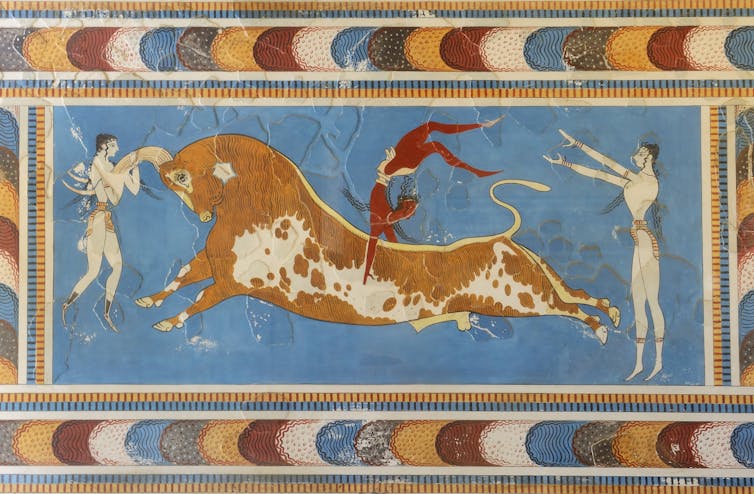
For example, in the later Greek stories (from the first millennium BC), Crete is closely associated with bulls. Zeus took the form of a bull when he seized the Phoenician princess Europa and forced her to the island to initiate the Minoan bloodline. She bore Minos whose wife, Pasiphae, submitted to her passion for Poseidon’s bull, producing the minotaur.
In Minoan art, bulls are everywhere. Archaeologists have found bronze age ritual libation vessels – used for pouring liquid sacrifices to the gods – crafted into the shape of a bull’s head, and large gold rings depicting people leaping over bulls. The echoes of history, myth and ritual seem to have rippled through the generations, to later be reproduced and re-imagined by the ancient Greeks.
It is therefore essential for people who want to understand the history of Europe to study the influence the Minoans have had on the ancient Greeks and modern Europeans – in particular, the evidence coming from the great digs conducted on the island in the early 20th century. These include the excavations by the British archaeologist Arthur Evans at Knossos, Crete, a vast site with complexity that may lend itself to the Greek labyrinth myth.
While the image of the bull is particularly widespread here, there is little association between this creature and women, as later appears in the myths. Women are linked with other animals, though, such as serpents, as shown by the snake goddess figurines that Evans found in the Palace of Knossos in 1903.
Snakes in Minoan art
These snake goddesses were found hidden in large stone-lined pits, in a very fragmentary state. Numerous riches were in this deposit: hundreds of shells, clay and stone vessels, clay seal impressions (used for documentation), Linear A inscriptions (a writing script) and animal bones.
The remains of five or six female figurines were found, but only two have been reconstructed. They have become icons of Minoan culture and poster girls for Crete, standing out due to their eye-catching costumes. These are tight, corseted jackets that leave the breasts bare, with floor-length full skirts – their heaviness serving to emphasise the exposed breasts even more.
The remains of the figurines found in the Palace of Knossos in 1903. Wiki Commons
The slightly larger one is a matronly figure with a tall, conical hat. Her snake-entwined arms are held at around 45 degrees, palms up and set approximately in line with her navel. Snakes drape over her as she stares straight ahead.
The second figure raises her bright white arms, bent at the elbow, up and out to her sides, flexed slightly forward. She clutches snakes, and a feline creature balances on her hat.
These figurines offer food for thought about the reconstruction processes that archaeologists undertake. First, Evans gave the title “goddess” to the larger figurine, and “votary” (meaning a worshipper who has taken vows) to the smaller one. This is arbitrary: we cannot know who these figurines represented, whether they were human, as a dignitary or priestess, or divine – we just sense they were VIPs.
Furthermore, when viewing these extraordinary objects in the Heraklion Museum in Crete today, the visitor may be unaware of the extent to which they have been reconstructed, and how much is an early 20th-century creation.
For example, the votary’s head, with its distinctive, wide-eyed stare, is entirely modern, as is her left arm, added soon after she was excavated. The object held in her right hand was broken off – only a very small piece of the original remained in her clenched fist. The reconstruction of snakes as the objects she holds is not so absurd – her sister has them running all over her as a comparison – but recent research has cast some doubt on what she originally held.
In addition to reconstructing the originals, people have also re-imagined these striking figurines in numerous ways – in replicas as souvenirs, as Barbie dolls, in graffiti (particularly in Heraklion) and in advertisements. They have appeared as book covers and inspired modern literature as well as visual and performative art.
Adaptations of them have come to life in poetry, opera, dance and music. A performer led the historical procession as the snake goddess in the opening ceremony for the 2004 Olympic Games in Athens. My project, the Many Lives of a Snake Goddess, seeks to understand the cultural biographies of these objects. It shows their legacy has been great partly because we have recreated them in such varied ways.
Minoan Crete is important not only because of any claims made for its place as the fountainhead of European civilisation, but also because its art and archaeology have done so much to shape modern culture.
Looking for something good? Cut through the noise with a carefully curated selection of the latest releases, live events and exhibitions, straight to your inbox every fortnight, on Fridays. Sign up here.
Ellen Adams does not work for, consult, own shares in or receive funding from any company or organisation that would benefit from this article, and has disclosed no relevant affiliations beyond their academic appointment.
Infrastructure planning needs more democracy, not less.
The UK has wasted billions of pounds of public and private money through failed infrastructure projects recently. Our research suggests there is a better way.
The planning and infrastructure bill now in parliament is an example of how the government’s approach fails. The bill has been criticised for pitting the environment against economic growth. Less well reported is that it removes a cornerstone of our democracy; the opportunity for citizens to participate in decision-making about the infrastructure that affects them. The bill removes the duty for the developers of big infrastructure projects to consult with local communities and local authorities before the formal planning process.
There has been a democratic deficit in infrastructure planning since the 2008 Planning Act established a separate planning process for infrastructure projects deemed nationally significant. These are larger with the need for them established in national policy statements produced by the relevant government department. For example, the Department for Transport produces policy statements that establish the need for new road and rail projects, as does the Department for Energy Security and Net Zero for wind or nuclear projects.
This process was meant to be both faster and fairer but the emphasis was always on speed. Despite the belief among policymakers that planning slows down the delivery of infrastructure the evidence suggests that factors outside of planning are the biggest source of delay.
The problems of delays and rising costs that beset projects like the nuclear power station Hinkley Point C, London’s super sewer the Thames tideway tunnel and the high-speed rail line HS2 have little to do with planning. These simply exemplify the problem of so-called “megaprojects” that take longer, cost more and deliver less than is promised.
The planning and infrastructure bill will not make the process fairer. Communities and groups affected will only get to make their case in writing and in public hearings where time to speak is limited, often to 15 minutes. The process makes it harder for communities to have their voices heard. It may not even be faster as speed in the planning stages comes at the expense of passing on problems to the more costly construction phase.
Deliberation means better decisions
Yet, when citizens are involved in public deliberative forums with experts and planners, they can make well-reasoned, long-term decisions. When communities and experts work together infrastructure can be co-designed. This is why we were part of a group of planning academics that recently called for amendments to the Bill to establish an expert body to support innovative democratic participation in infrastructure planning.
There are precedents. Canada’s 1977 Berger inquiry into proposals to construct a gas pipeline on land along the Mackenzie Valley subject to claims by Aboriginal organisations. The inquiry became a benchmark for the use of public deliberation in the environmental and social assessment of complex infrastructure. Justice Thomas Berger’s approach saw experts and citizens testify on equal terms. The inquiry went to the communities that were affected. It travelled over 17,000 miles across Canada’s northwest hearing testimony from Aboriginal and non-Aboriginal Canadians in eight different languages.
The use of public deliberation to inform decision-making has increased considerably since then. In 2020, a report from the Organisation for Economic Co-operation and Development, an international policy advice forum, showed that infrastructure, urban and strategic planning are consistently the top policy areas where deliberative forums are used.
Following conflicts over high-speed rail lines in the 1990s, France pioneered deliberative discussion for all large infrastructure projects. These are subjected to early, non-binding scrutiny, conducted by an independent agency with years of experience in organising democratic discussion. They found it was more efficient and quicker to bring people into discussions early on.
France also organised national debates on climate change. This public deliberation on energy or transport policy builds political consensus for years so policy does not change with each change of government. In the UK, this could provide a basis for the new generation of National Policy Statements on infrastructure.
The previous UK government’s own Innovation in Democracy programme – an initiative that tests the use of deliberative assemblies in local government – showed how they can be designed to fit the geographies of infrastructure. This is important because the consequences often go beyond local authority boundaries through which representative democracy is organised.
Despite huge challenges like the transition to renewable energy or mitigating climate change that new infrastructure has to deal with, trust in planning is often low, mirroring a general decline in faith in politics. Deliberative democracy can restore trust between citizens and politicians and address the problems of climate change.
Infrastructure decisions are technically complex. New, large-scale infrastructure is disruptive, expensive and rarely aligns with electoral time frames. Yet the costs and consequences of poor decisions are with us for a long time. Rather than a delay, planning in this way is time well spent.
Don’t have time to read about climate change as much as you’d like?
I have received funding from the German Government’s Humboldt Foundation and the UK’s Engineering and Physical Sciences Research Council to study the controversies surrounding big infrastructure projects.
Tim Marshall received funding from ESRC, a Research Fellowship 2010-2102.
Source: The Conversation – Canada – By Abbas Yazdinejad, Postdoctoral Research Fellow, Artificial Intelligence, University of Toronto
Imagine receiving a robocall, but instead of a real person, it’s the voice of a political leader telling you not to vote. You share it with your friends, your family — only to find out it was a hyper-realistic AI voice clone. This is not a hypothetical.
In January 2024, a fake Joe Biden robocall reached New Hampshire Democrats urging them to “stay home” ahead of the state primary. The voice may have been synthetic, but the panic was real — and it’s a preview of the threats facing democracies around the world as elections become the most valuable targets for AI‑driven disinformation.
Left unchecked, the harms posed by this new disinformation threat are myriad, with the potential to erode public trust in our political system, depress voter turnout and destabilize our democratic institutions. Canada is not immune.
Deepfakes are artificially generated media — video, audio or images — that use AI to realistically impersonate real people. The benign applications (movies, education) are well understood, but the malicious applications are quickly catching up.
Open-source generative AI tools like ElevenLabs and OpenAI’s Voice Engine can produce high-quality cloned voices with just a few seconds of audio. Apps like Synthesia and DeepFaceLab put video manipulation in the hands of anyone with a laptop.
These tools have already been weaponized. Beyond the Biden robocall, Trump’s campaign shared an AI‑generated image of Taylor Swift endorsing him — an obvious hoax, but one that nonetheless circulated widely.
Meanwhile, state‑backed entities have deployed deepfakes in co-ordinated disinformation campaigns targeting democracies, according to the Knight First Amendment Institute, a free speech advocacy organization.
Why it matters for Canada
Canada recently concluded its 2025 federal election — conducted without robust legal safeguards against AI‑enabled disinformation.
Unlike the European Union, where the AI Act mandating clear labelling of AI‑generated text, images, and videos has been enacted, Canada has no binding regulations requiring transparency in political advertising or synthetic media.
Instead, it relies on voluntary codes of conduct and platform‑based moderation, both of which have proven inconsistent. This regulatory gap leaves the Canadian information ecosystem vulnerable to manipulation, particularly in a minority‑government situation where another election could be called at any time.
Alarm is mounting around the world. A September 2024 Pew Research Center survey found 57 per cent of Americans were “very” or “extremely” worried that AI would be used to generate fake election information; Canadian polls show a similar level of concern.
Closer to home, researchers recently discovered deepfake clips — some mimicking CBC and CTV bulletins — circulating in the run-up to Canada’s 2025 vote, including one purported news item that quoted Mark Carney, showing how fast AI‑powered scams can show up in our feeds.
What we can do
No single solution will be a panacea, but Canada could take the following key steps:
Content-labelling laws: Emulate the European Union and mandate labels for AI-generated political media. The EU requires content creators to label manufactured content.
Detection tools: Invest in Canadian deepfake detection research and development. Some Canadian researchers are already advancing this work, and the resulting tools should be integrated into platforms, newsrooms and fact-checking systems.
Media literacy: Expand public programs to teach AI literacy and how to spot deepfakes.
Election safeguards: Equip Elections Canada with rapid-response guidance for AI-driven disinformation.
Platform accountability: Hold platforms responsible for failing to act on verified deepfakes and require transparent reporting on removals and detection methods for AI-generated content.
Empowering voters in the AI age
Democracies are built on trust in elected officials, in institutions and in the information voters consume. If they can’t trust what they read or hear, that trust erodes and the very fabric of civil society begins to unravel.
AI can also be part of the solution. Researchers are working on digital‑watermarking
schemes to trace manufactured content and media outlets are deploying real‑time, machine-learning‑powered fact checks. Staying ahead of AI‑powered disinformation will take both smart regulation and an alert public.
The political future of Canada’s minority government is uncertain. We cannot wait for a crisis to act. Taking action now by modernizing legislation and building proactive infrastructure will help ensure democracy isn’t another casualty of the AI era.
Abbas Yazdinejad is a postdoctoral research fellow in artificial intelligence and cybersecurity in the AIMML at the University of Toronto.
Jude Kong receives funding from NSERC, NFRF, IDRC, FCDO and SIDA. He is affiliated with Artificial Intelligence and Mathematical Modelling Lab (AIMMLab), Africa-Canada Artificial Intelligence and Data Innovation Consortium (ACADIC), Global South Artificial Intelligence for Pandemic and Epidemic Preparedness and Response Network (AI4PEP), Canadian Black Scientist Network (CBSN).
Ukraine’s president, Volodymyr Zelensky, had good cause to be optimistic following his recent White House meetings with Donald Trump and the leaders of the European “coalition of the willing”. While a concrete peace plan has yet to emerge, Trump appears to have come around to the European position that security guarantees will be vital if any peace deal is to stick.
This is real progress. But what shape would security guarantees take in the case of Ukraine, and will they be enough to deter the Russian president, Vladimir Putin, from breaking the peace at some future date?
Talk of security guarantees is nothing new. Zelensky and his European allies have been stressing their importance for much of the conflict. But what does appear significant is the way in which the latest proposals have been framed.
It has been suggested that Ukraine should be offered security guarantees that resemble what Italy’s prime minister, Giorgia Meloni, called an “article 5 model”. This is a reference to the defence provision of Nato’s founding treaty, which specifies that an attack on one member is an attack on them all and requires a collective response.
Nato’s Article 5 is the gold standard of security guarantees. The wording is open to interpretation, but no one doubts that the principle of collective defence it embodies is the core purpose of the 32 nations which make up the alliance. Article 5 is backed by credible force that outclasses Russian military might.
Certainly, questions hang over article 5’s reliability. The provision has only ever been activated once – following the 9/11 attacks on the United States in 2001. But the unusual circumstances of that single invocation do not render the provision any less valuable.
The fact that European allies came to America’s assistance (rather than the US coming to the aid of Europe) means article 5 is a symbolic resource in transatlantic relations, which Nato’s European members can wield to remind the US president of his country’s commitment.
This is important. Trump has periodically suggested the US would not be prepared to defend perceived alliance “free-riders”. But the agreement at Nato’s Hague summit in June to raise defence spending among the allies went a long way to head off a transatlantic rupture by allaying Trump’s fears on that score.
Worries that the American military presence in Europe would be summarily withdrawn have so far proved unfounded. The US president now praises Nato as being engaged with America in what the White House has called a “new era of shared responsibility”.
Levels of commitment
The true effect of article 5 lies in the wars that have not occurred rather than those which have. Under Putin, Russia has attacked both Georgia and Ukraine. It has not invaded a Nato ally. This is why Ukraine has always been so keen to become a member of Nato, something that has been accepted in principle by most members of the alliance for some years.
But since the invasion of Ukraine, that route to an article 5 security guarantee has been expressly ruled out by the Trump administration, as well as by Nato itself. Instead, the alliance’s secretary general, Mark Rutte, has referred to “article 5-type of security guarantees for Ukraine”. What has still to be publicly discussed is precisely what this might entail.
Some of the parameters are, however, becoming clear. Trump suggested that he wants Europeans to be “the first line of defence”, with the US providing intelligence, weapons (paid for by Europe) and air support of some kind. He was quite clear there would be no US “boots on the ground”.
Ukraine’s European allies are now mulling over what their role as guarantors of security for a peace deal might look like. It has been reported the head of the UK’s armed forces, Tony Radakin, will tell a meeting of military commanders at the Pentagon that the UK is prepared to send troops to Ukraine – not as a frontline fighting force, but to provide security at ports and air bases. How many members of the coalition of the willing are prepared to do the same remains uncertain.
Patchwork of agreements
What went unmentioned at the White House meeting was the significant set of security and defence commitments Ukraine already enjoys with the Nato allies. Since the G7 Joint Declaration of Support for Ukraine of July 2023, Ukraine has signed bilateral security and defence agreements with 27 of Nato’s 32 members.
Typically, these provide for consultation within 24 hours if Ukraine is attacked, in order (as Ukraine’s agreements with the UK and France both put it) “to determine measures needed to counter or deter the aggression”.
There are also common provisions for military capacity building, recognition of Ukraine’s territorial integrity, and post-war reconstruction. Taken in the round, these agreements thus already provide the political basis for a comprehensive and effective set of security guarantees.
Two more things are needed. First, the bilateral US-Ukraine security agreement of June 2024, signed under the previous US president, Joe Biden, needs to be reaffirmed by the Trump administration. Second, the Europeans need to convert their latticework of agreements with Ukraine into an effective security and defence mechanism.
This can be done as the French president, Emmanuel Macron, has suggested, by continuing to arm the Ukrainian military. But if the article 5 parallel means anything, it will require – as Rose Gottemoeller, a former Nato deputy director general, pointed out on the BBC – an effective deterrent effect. And that means US participation.
With minimal involvement by the US, the question is whether the Franco-British-led “coalition of the willing” is up to the task – and whether there is the collective political will to organise and deploy a deterrent force in the face of Russian objections.
These are the debates playing out in Europe and across the Atlantic – and which become daily more urgent, as Russia’s advance in eastern Ukraine continues to gather momentum.
Mark Webber is Senior Non-resident fellow at the NATO Defence College in Rome and a trustee of NATO Watch. He has previously received funding from the Economic and Social Research Council (ESRC) and the British Academy to carry out research on NATO.
Source: The Conversation – UK – By Jane Kershaw, Gad Rausing Associate Professor of Viking Age Archaeology, University of Oxford
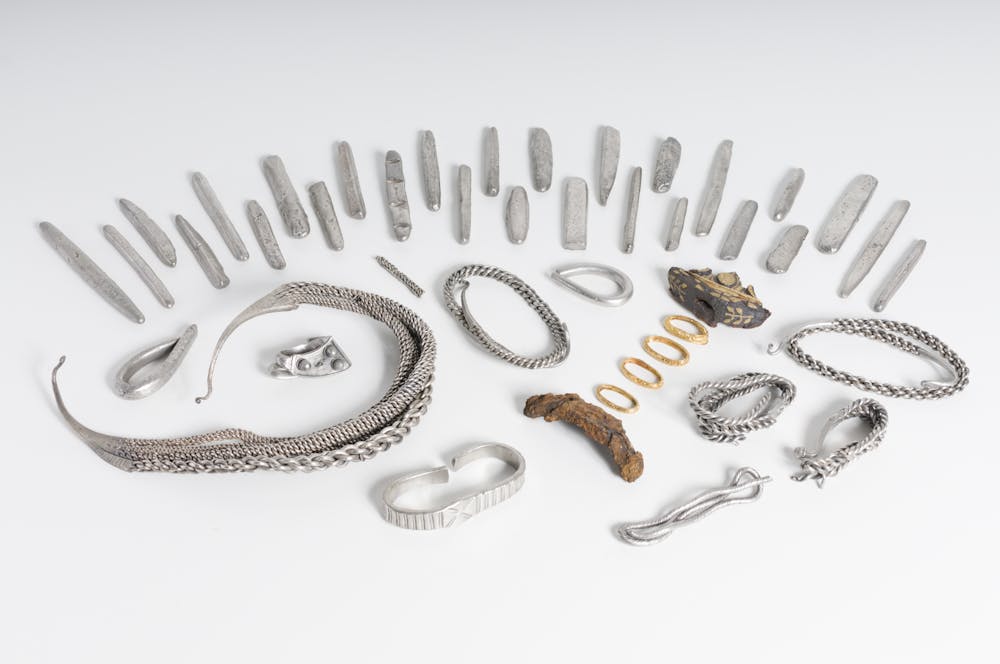
In the archaeology galleries of the Yorkshire Museum, an incredible Viking silver neck-ring takes centre stage. The ring is made of four ropes of twisted rods hammer-welded together at each end, its terminals tapering into scrolled S-shaped hooks for fastening behind the neck. Weighing over half a kilo, it makes a less-than-subtle statement about the wealth and status of its Viking owner some 1,100 years ago.
The neck-ring was part of a large silver and gold hoard found in 2012 by metal detectorists Stuart Campbell and Steve Caswell near Bedale in North Yorkshire. As the first precious object out of the ground, it was initially mistaken by Campbell for a discarded power cable.
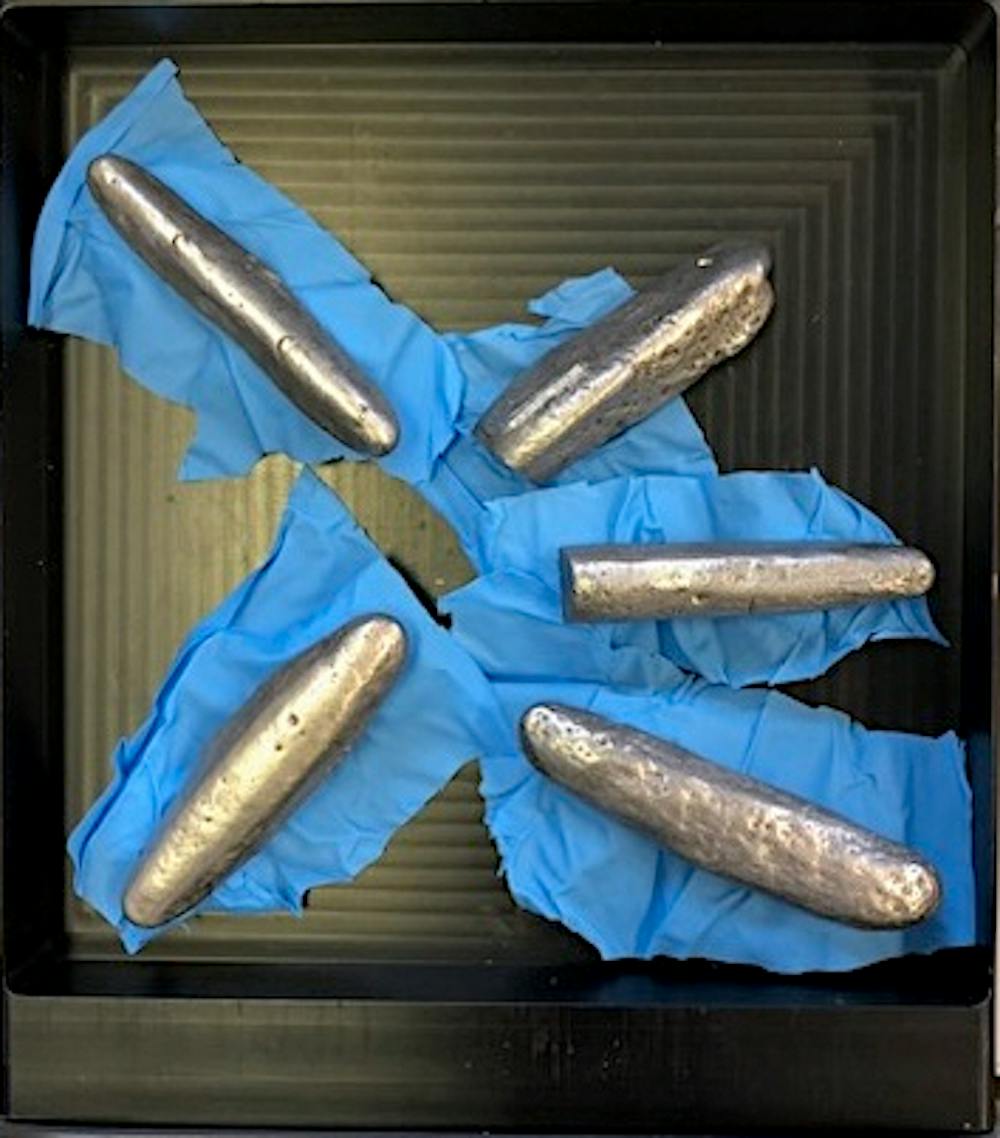
Six years later, I got the chance to analyse the Bedale hoard, as it is now known, for its isotopes and trace elements. Alongside the neck-ring and a gold Anglo-Saxon sword pommel (probably acquired in England by these Viking raiders), the hoard contained a spectrum of cast-silver artefacts spanning the Viking age: Irish-Scandinavian artefacts from Dublin, rings from southern Scandinavia, and many cigar-shaped bars or ingots that could have been cast anywhere.
As an archaeologist investigating the historical secrets held by jewellery such as this, picking up these heavy objects and turning them over in my hands was a visceral experience. I felt connected with the desires, ambition and sheer force of these invaders from the north who had wreaked havoc on communities in northern England around AD900.
Indeed, the entire Viking age (circa 750-1050) is often described as an “age of silver”. This form of wealth was so desired that its acquisition was a primary driver of the expansion out of Scandinavia that the Vikings are most famed for. To acquire it, they were prepared to risk their own lives – and take those of many others.
The story of the Bedale hoard’s discovery. Video by the Yorkshire Museum.
Tens of thousands of silver objects and coins are known from hoards and settlements across the Scandinavian homelands of Norway, Denmark and Sweden, as well as far overseas – from England to Russia and beyond. The study of this silver’s origins opens a window on the vast web of connections these warrior-traders established – a study invigorated in recent years by scientific techniques drawn from geochemistry.
Now, our analysis of the Bedale hoard and other Viking valuables promises to change the story of when their fellow-Scandinavians began travelling thousands of miles to the east to secure the silver that so captivated them.
The origins of these ‘violent chancers’
The word “Viking” comes from the Old Norse víkingr, meaning someone who participated in a sea raid or military expedition. The seeds of the outburst of piracy and overseas expansion that characterised the Viking age were sown in the 5th and 6th centuries, following the demise of the Roman empire.
While Scandinavia was never actually part of the Roman empire, its fall severed important trade links and led to factional fighting. In addition, volcanic eruptions in the mid-6th century induced prolonged climatic cooling, leading to crop failure and famine. Together, these events fractured Scandinavian society: archaeologists can point to abandoned settlements and cultivation fields as evidence for community displacement and decline.
The Insights section is committed to high-quality longform journalism. Our editors work with academics from many different backgrounds who are tackling a wide range of societal and scientific challenges.
There was also a striking absence of silver in the region at this time, despite Scandinavia possessing native silver ores. While Roman silver plate and coin had previously reached Scandinavia and been melted down to make huge, stunning “relief” brooches worn by women, this flow of silver had declined sharply by the 6th century. In the following century, most jewellery was made of copper alloy – silver wasn’t being mined, and in this overwhelmingly agrarian society, precious metal was an unnecessary luxury.
In Scandinavia, where farming was challenging due to short summers and long harsh winters, wealth and power lay in good farming land and cattle – with payments typically made in butter, cloth, horses, sheep, hides and iron. As archaeologist Dagfinn Skre explains:
In an economy in which the supply of necessities was threatened, a man who had his moveable wealth in cows … would survive, but one who had it invested in metal would die. His metal would be close to worthless – for who would exchange their cows, butter or grain for metal in times of famine?
Yet out of this period of domestic struggle, a new and ambitious elite emerged in Scandinavia, particularly around the fjords of Norway and in the central Mälaren valley in Sweden – fertile regions which afforded access to both inland resources and coastal waterways.
Dubbed “violent chancers” by historian Guy Halsall, they seized abandoned land and valuable resources such as tar, furs and iron for weapons. They developed multiple, competing chiefdoms which they defended through a martial culture propped up by lavish consumption, trade and violence.
Archaeologists can point to tangible survivals of this culture: luxury imports such as glass claw beakers, elaborately furnished burials under huge mounds, monumental halls and full-on military kits. These warriors had shields decorated with bird-of-prey figures, crested helmets covered with silver foils, and swords with pommels covered in gold and garnets. They were not to be messed with.
Their success, coupled with these coastal people’s refined tradition of boat-building, enabled them to build and kit out fleets of ships. Surviving examples indicate these were long and narrow, with hulls made of overlapping (clinker) planking and shallow keels suitable for use in creeks, estuaries and beach landings. At first propelled by oar, the later adoption of sails enabled these ships to undertake long sea crossings.
In the late-8th century, Scandinavians began launching violent seaborne attacks on centres of wealth in neighbouring countries – first the coastal towns, monasteries and churches of modern-day Britain, Ireland and France, then later expanding their raids into Germany and Spain, and as far south as the north coast of Morocco. These centres of population provided human capital for the Viking slave trade, while enriching the invaders with portable wealth in the form of liturgical plates and reliquaries (from monasteries), silver coin and other high-status artefacts.
A raid on the north-east England island monastery of Lindisfarne in 793 – the first documented attack in the west – was probably launched from Norway. Its precise targeting suggests the raiders were well-informed about their destination, and no doubt attracted by stories of the riches held there. Writing afterwards, York cleric Alcuin described how the church had been “spattered with the blood of the priests of God, stripped of all its furnishing, exposed to the plundering of pagans”.
Alcuin blamed the attacks on his community’s “fornications, adulteries and incest” which have “poured over the land … even against the handmaids dedicated to God” – that is, nuns. The Vikings had made off not just with church treasure, but had also led away youths “into captivity”.
The capture of slaves was a common tactic. Some, like the boys from Lindisfarne, might have ended their days in Scandinavia or have been sold on at slave markets. But often, they were ransomed back to their communities for cash. After Vikings captured the abbot of St Denis in 858, for example, church treasuries “were drained dry” in order to meet their ransom demands of nearly 700lb of gold and 3,250lb of silver. “But even all this was far from being enough,” lamented the period’s chronicler Prudentius, bishop of Troyes.
The Viking pattern of raiding, looting and slaving is a dominant theme of 9th-century annals from Ireland, England and the Carolingian continent (spanning much of modern-day western Europe). In 842, Vikings made a surprise early-morning attack on the trading port of Quentovic in modern-day France. “They plundered it and laid waste,” recorded Prudentius, leaving “nothing in it except those buildings which they had been paid to spare”.
Accounts such as these record massive sums of silver extracted by the Vikings or offered as protection money. The extent of Viking accumulation of silver is staggering: the annals suggest that over the 9th century, the total loot in Viking hands amounted to 30,000lb of silver – or 7 million Carolingian pennies.
This stock is likely to have provided a stimulus to the economic development of nascent towns such as York and Lincoln in Scandinavian-settled areas of England, which are thought to have been more economically buoyant than their counterparts in “English” England.
Why did the Vikings come to value silver so highly? While the ownership of land and livestock was determined by strict laws of inheritance, silver could be obtained independently and with little resource investment, bypassing these normal routes of advancement. In this sense, silver embodied a new kind of dynamism coinciding with a different mode of behaviour.
These “nouveau rich” Vikings could not necessarily buy land with silver, but it gave them status – enabling people without inherited assets to acquire, and pass on, wealth. While the division of farmland and cattle upon marriage or death could be tricky, silver was ideally suited to such payments.
To these new generations of Scandinavians, silver became a standard of value that could guarantee investments, settle disputes and underwrite inheritance claims. It could be used to cement relationships – acting, as archaeologist Soren Sindbaek puts it, as a “virtual social glue”.
Silver analysis leads to a staggering result
But as well as value, silver stores information in its chemical composition that can reveal where it came from – something I have investigated as head of a research team over the last five years. We have analysed hundreds of silver Viking-age objects including from the Bedale hoard, with its rich mixture of rings and ingots cast by Scandinavians.
To make the hoard’s massive twisted silver neck-ring, for example, Viking metalcasters would have melted down numerous silver coins or small pieces of deliberately cut “hacksilver”. Once melted, the silver was cast into ingots, then gently hammered into long rods which were heated and twisted together to form the neck-ring.
However, this process masked the original sources of that silver. The only way to tell where it came from would require techniques from geochemistry – so I took the objects to the British Geological Survey’s laboratory in the suburbs of Nottingham, where isotope scientist Jane Evans drilled tiny samples from each silver object to measure them for lead isotopes.
Just like the isotopes (of oxygen, strontium and sulphur) that are laid down in bone and teeth – from which we can trace people’s childhood origins – isotopes of lead can be used to trace silver back to its source. Most silver ores contain trace amounts of lead, the four stable isotopes of which vary according to the ore’s geological age and composition. These lead isotopes give each ore a “fingerprint”, which carries over into silver coins and other artefacts made from it.
Given the location of the Bedale hoard in North Yorkshire, I was confident that much of the silver would have come from local Anglo-Saxon and also Carolingian sources in mainland western Europe. In England, the Vikings started to settle from around 865. How they did so – whether by seizing land, purchasing it, or settling previously uninhabited areas – isn’t entirely clear, but the loot seized during their raids must have helped the process.
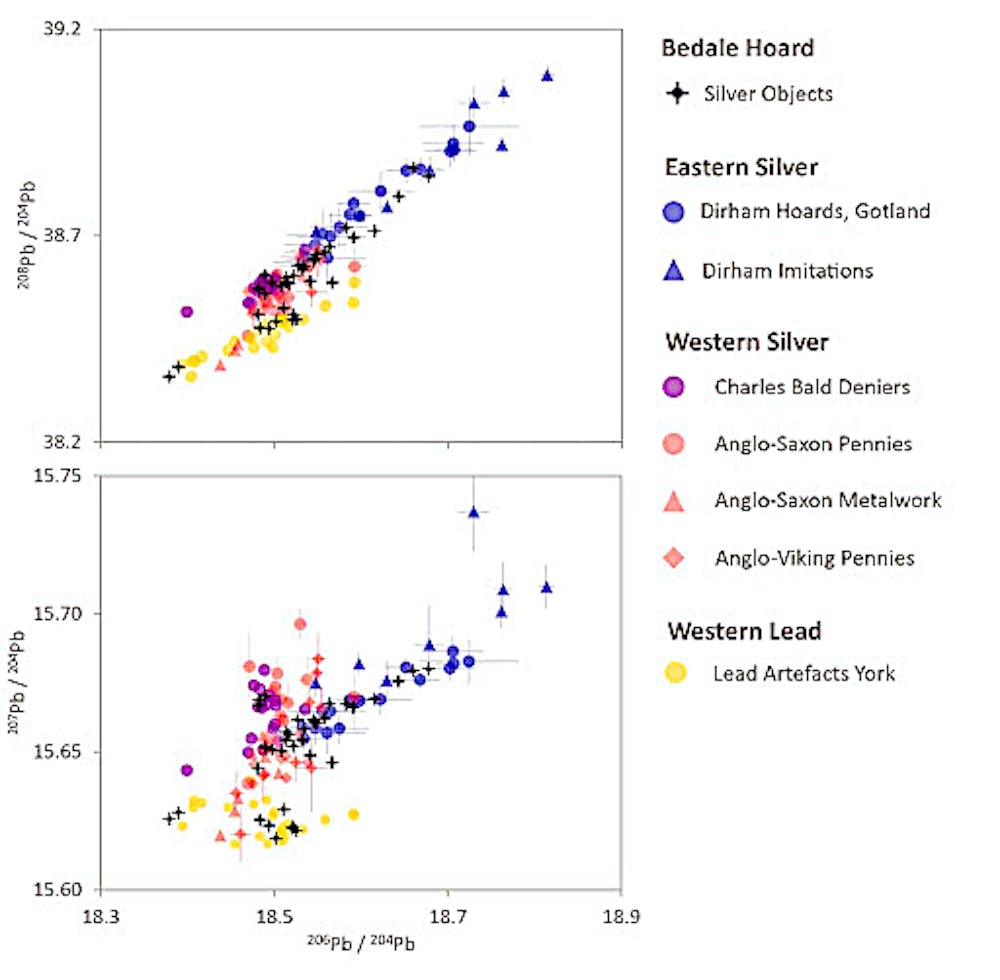
Plotting the ratios of the lead isotopes in the Bedale hoard for the first time, many of the results were as expected: several silver objects matched the ratios of Anglo-Saxon and Carolingian coinage, and other objects had been refined to raise their silver content prior to casting, using local lead in the process of cupellation.
Geochemical analysis of Bedale hoard items
Charts comparing lead isotope ratios of items in the Bedale hoard ((black crosses)) with possible sources of these silver elements. The nine ingots plot closely with Islamic sources of silver (in blue). Jane Kershaw, CC BY-NC-SA
But while many of the artefacts in the Bedale hoard yielded predictable results, a group of nine ingots stood out. Rather than matching western silver sources or local lead, they had the same isotope ratios as the Islamic currency of dirhams.
Dirhams minted between AD750 and 900 by the Umayyads and Abbasids, in what is today Iran and Iraq, were a particularly close match. Two of these ingots were marked with a cross, although whether this carried Christian meaning or was simply a way of marking out ownership is unclear. Either way, these massive ingots must have been cast in Scandinavia from Islamic silver dirhams and brought over to England in Viking hands, before being buried in North Yorkshire.
This result is staggering. The names of villages around Bedale like Snape and Newton-le-Willows sound very far from Mesopotamia – yet the Bedale hoard contained a substantial component of silver minted in Baghdad, Tehran and Isfahan.
These results have made us question the timing of the Viking age’s eastern expansion. While Islamic dirhams are plentiful in Scandinavia, they predominantly date to the 10th century. However, our analysis suggests that dirhams were already arriving in Scandinavia in the 9th century in much larger quantities than previously thought – with many being melted down as a raw material for casting.
To understand how this happened, we need to meet the Scandinavians who looked east rather than west in search of silver and other riches.
Who were the Scandinavians who went east?
While the Viking raids on western Europe are best-known thanks to the many surviving written accounts, some of their fellow-Scandinavians – largely drawn from modern-day Sweden – headed east, establishing riverine, trade-based settlements in what is now Russia and Ukraine.
The route led across the Baltic Sea and Gulf of Finland into northern Russia, transporting furs and slaves from northern Europe to the markets of the Islamic Caliphate. Finds of dirhams in Scandinavia represent the profit from this trade and show that it, too, had silver at its heart.
Over time, these Scandinavians adapted to life on the eastern waterways, adopting some cultural practices from local people such as the nomadic Khazars. The 10th-century diplomat, Ahmad ibn Fadlan, gave a frank description of this new community of traders – known as Rus rather than Vikings – who he met on the River Volga in northern Russia:
They are the filthiest of God’s creatures. They do not clean themselves after urinating or defecating, nor do they wash themselves after having sex …They are like wandering asses.
In 921, Ibn Fadlan had been sent by the Abbasid caliph, al-Muqtadir, as part of an embassy to the king of the Volga Bulgars, located near the modern town of Kazan in Tartastan, Russia. His travelogue-style account, or risāla, of that journey has become famous for the many eyewitness accounts of people he met along the way – including the Rus from northern Europe, whom he met as they traded with merchants from the Islamic empire at the market of Bulgar on the River Volga, roughly midway between Scandinavia and Baghdad.
The Rus people’s long and difficult journey from Scandinavia would have taken several months, involving multiple rivers and portages – when their boats had to be dragged across land. They traversed boreal forest and the Eurasia steppe, which was populated by various nomadic tribes. In this landscape, the only option was to travel by river – or, in winter, to use the river as an ice highway, substituting boats for sledges. But for the Rus, travelling this perilous eastern route, the Austrvegr, was worth the risk.
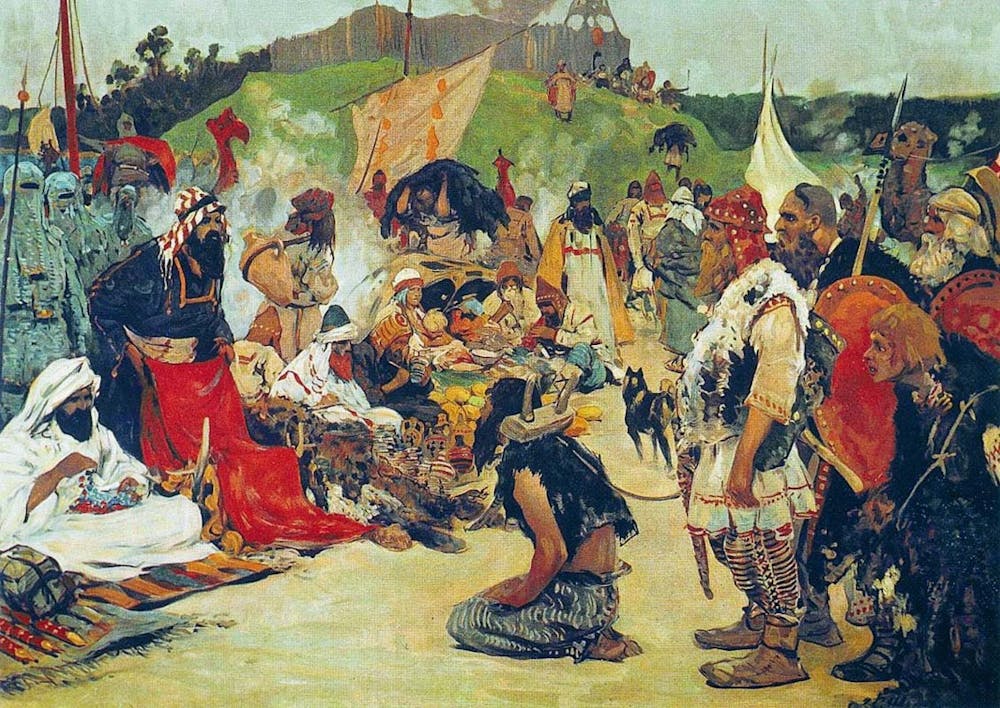
Painting of trade negotiations between Rus traders and Eastern Slav locals in the 10th century, by Russian artist Sergey Ivanov (1909). Wikimedia Commons
According to Ibn Fadlan, the Rus acted as middlemen, acquiring furs and slaves from hunter societies in forested areas and organising their shipment down river via trading posts that later developed into permanent settlements. The goods were sent to major markets such as Itil (on the Caspian Sea) and Bulgar, where they would be purchased by merchants from the caliphate.
What the Rus wanted in return for slaves and furs was dirhams: the fine silver coins, weighing roughly 3g each, which made up the currency of the Islamic Caliphate. The early 10th-century writer, Ahmad ibn Rustah, explained how the Rus “earn their living by trading in sable, grey squirrel and other furs. They sell them for silver coins which they set in belts and wear around their waist.”
Ibn Fadlan’s highly detailed travelogue explains that once a trader amassed 10,000 dirhams, he melted them down to create a neck-ring for his wife. After 20,000 dirhams, he made two. This was no doubt an exaggeration – such a neck-ring would weigh 65lb of silver – but the notion that a smallish group of traders acquired tens of thousands of silver dirhams is supported by archaeology.
For these Rus “traders”, just as important as the fur trade was the trade in enslaved people, who seem mainly to have been captured from the Slavic lands and what is now northern Russia, rather than western Europe. Scholars sometimes describe the Austrvegr as a trading route, but human trafficking can hardly be described as “trade” in the mercantile way that we understand it today. It was based on coercion and violence – the terrorising nature of Viking activity in the west was replicated in the east.
The Rus “treat their slaves well and dress them suitably”, Ibn Rusta wrote, “because for them they are an article of trade”. Yet it’s also clear that female slaves were exploited for sex. These reports underscore the grim reality of the Rus “trade” – that their insatiable quest for silver entailed human suffering.
Astonishingly, some 400,000 dirhams survive in Scandinavia and the Baltic, making the dirham the most common archaeological find type for the Viking age. However, most of these coins date to the first half of the 10th century.
Yet according to our analysis of the Bedale hoard, rather than the Viking age “starting” in the west, the eastern and western expansions may have happened in parallel from the end of the 8th century – with the wealth of the east a prime motivator of the Viking movement out of Scandinavia.
Today, in some of the place-names near Bedale in North Yorkshire, we see evidence of Scandinavian settlement: Aiskew is Old Norse for “Oak Wood”, and Firby means “Frith’s village”. But now we also have evidence of a connection between the Bedale hoard and Rus traders bringing silver back to Scandinavia from their exploits in the east – up to a century earlier than had been thought.
Laser analysis brings new discoveries
In our analysis of the Bedale hoard, lead isotopes alone weren’t enough to draw definitive conclusions. We needed additional data to confirm the Islamic origin of the nine ingots.
Not only do lead isotopes differ between source ores – so do trace elements. Gold and bismuth levels are especially helpful in evaluating the origin of silver, because, unlike other elements, they do not change when silver is melted down.
After digesting the results of the lead isotopes, I returned to the suburbs of Nottingham. With Simon Chenery, we put the Bedale hoard objects under an excimer laser (a type of ultraviolet laser), ablating tiny amounts of silver in order to record the levels of trace elements. This time, thrillingly, the results came through in real time.
They showed, for the Islamic-looking ingots, the telltale pattern of low gold that is characteristic of Abbasid silver. Abbasid dirhams of this date typically have gold levels below 0.4%, reflecting the low-gold character of nearby silver mines in the Taurus mountains, whereas gold levels in coins from western Europe are higher – around 1% in the late 9th century.
We discovered, too, that other artefacts were probably made from a mix of both western and eastern silver sources. This was true of the massive silver neck-ring as well as a smaller neck-ring from the hoard. Indeed, these two items appear to have been made from the same silver stock, suggesting that they travelled from their source to Bedale together.
While both could have been made in Scandinavia, the contribution of western silver raises the possibility that they were produced locally in Yorkshire, by metal casters with access to both distant, Islamic dirhams and local, Anglo-Saxon silver.
Our analysis shows the Islamic contribution to the Bedale hoard is more significant than we would have expected for a Viking hoard from England. In all, the nine ingots weigh 715g, equivalent to around 240 dirhams. And taking into account the Islamic contribution to the “mixed” silver artefacts, Islamic silver comprises around a third of the total weight of silver from the hoard (weighing around 3,700g).
Clearly, the Vikings were not only extracting silver from areas they raided and conquered, they were also bringing it in via their long-distance trade networks in the east. This result reveals the unexpected connectedness of the Vikings’ eastern and western expansions. Far from being separate phenomena, the profits of one directly fed into the activities of the other. Gains made from the Austrvegr may have enabled a group of Scandinavians to launch raids to the west and acquire further wealth and land.
In the west, these raids lasted for around 70 years from the late 8th century, spanning two or three generations. But eventually, the Vikings decided to settle. In northern England, where Bedale is located, they proceeded “to plough and to support themselves”, according to the Anglo-Saxon Chronicle entry for 876 AD. Finds of female Scandinavian dress items from England suggest that whole families, not just retired warriors, settled there.
Many questions remain about the nature of this settlement – including whether the raiders-turned-settlers lived separately from or with the native Anglo-Saxon population, and how the settlement process was brokered. But the former Vikings and their families appear to have integrated relatively quickly, adopting Christian forms of burial, developing craft industries in towns, and embracing coinage as a means of exchange. Among the settled Scandinavian population, the violence ceased.
Silver remained an important medium for displaying values and even identities. From around 900, new Anglo-Scandinavian rulers minted their own coinage – sometimes preserving traditional features familiar to Anglo-Saxons, but also adding new aspects that proclaimed a Scandinavian background. Coins minted by the new rulers of York, a focus of Scandinavian settlement in northern England, could have a Christian cross on one side and a Thor’s hammer – an overt pagan symbol – on the other.
These Anglo-Scandinavian coins were in use across Scandinavian-settled regions of England and are testimony to the continued importance of silver to the Viking economy – now channelled into a form that was more regulated and acceptable to the local Anglo-Saxon community. Geochemical analysis of the silver in these coins also reveals glimpses of this process of assimilation. Our investigation of a handful of examples, using the same techniques of lead isotope and trace element analysis, suggests they were made mainly with Anglo-Saxon silver – but again with a modest contribution from Islamic dirhams.
The end of the eastern adventure
The geochemical analysis of silver helps reveal the reasons for the extraordinary expansion of the Vikings and their fellow Scandinavians – including pointing to the wealth gained in eastern markets as a major (and hitherto neglected) “pull” factor. To a greater degree than has traditionally been acknowledged, eastern silver travelled across the Scandinavian world of the Viking age.
The huge number of Samanid dirhams found in Scandinavia point to the 930s-940s as the most fruitful decades for the Scandinavian travellers’ trade with the east. The Rus’s slave and fur trade continued until around 950 – and silver analysis again helps to explain why it came to a fairly sudden end. Analysis of the silver content of dirhams shows their fineness declined sharply from the 940s and 950s – a reflection, no doubt, of the drying up of silver mines in Central Asia.
It did not take long for Vikings to seek out silver sources closer to home. They turned to coins from the area of modern-day Germany, struck with silver from the newly-exploited Harz mountains, which they obtained mainly through trade. The decline in the silver content of dirhams thus led to a major reconfiguration of Scandinavian trade routes.
From this point on, long-distance trade with the east declined significantly. The Vikings instead turned again to the west, establishing trade links with England and Germany. In the late 10th century, increasingly powerful Scandinavian kings also launched new seaborne raids, exploiting the weakness of English kings such as Æthelred II “the Unready” (978–1016) and initiating what has become known as the “second Viking age” in England.
These raids, launched from around 980, were bigger, more centrally organised, and successful. The Vikings obtained significant quantities of “Danegeld”: protection payments made in coin. Ultimately, in 1016, the Danish king Cnut established himself on the English throne. The nature of the relationship between England and Scandinavia during this period is also being explored through silver, in a project on coinage from the recently-discovered Lenborough hoard.
If the pattern identified for the Bedale hoard plays out across other Viking hoards, it will prompt a major re-evaluation of the movements of the earliest Scandinavian warrior-traders. As part of the same project, we have been analysing Viking silver hoards of a similar 9th-century date from Sweden and Denmark, the Carolingian continent, southern Scotland and the west coast of England. Preliminary results suggest a regional pattern, but with Islamic silver appearing to be dominant in many cases.
What’s clear is that in the 9th century, the Vikings were already awash in Islamic silver. Meanwhile, more undiscovered treasures like that found in Bedale lie quietly underground, waiting to reveal their secrets.
To hear about new Insights articles, join the hundreds of thousands of people who value The Conversation’s evidence-based news. Subscribe to our newsletter.
Jane Kershaw receives funding from the European Research Council.















.jpg)