Will the Oasis reunion usher in a Britpop summer – or is it just a marketing ploy?

Source: The Conversation – UK – By Glenn Fosbraey, Associate Dean of Humanities and Social Sciences, University of Winchester

Ink Drop/Shutterstock

The trend for naming summers has become something of a cultural phenomenon. Think for example of 2019, which was branded a “hot girl summer”, inspired by rapper Megan Thee Stallion’s song.

In 2021 there was the much-ridiculed “white boy summer” (named after a song of the same name by Tom Hanks’s son, Chet). Then 2022 was “feral girl summer” and 2024, of course, was a “brat summer”, after Charli XCX’s cultural phenomenon album Brat.

And this summer? Well, with the likes of Oasis, Pulp, Supergrass, Suede, Shed Seven and Cast all playing UK dates between June and August, it’s “Britpop summer”, of course. The question is, though, whether these names are actually (and accurately) representing the zeitgeist, or if they are just the result of savvy marketing strategies.


Read more:
Brat by Charli XCX is a work of contemporary imagist poetry – and a reclamation of ‘bratty’ women’s art


Such things may now be occurring more frequently, but they’re nothing new. The year 1967 was famously coined “the summer of love”, a moniker supposedly invented by the Californian local government to put a positive spin on the druggy, hairy, hippy gatherings taking place across the state.

Then, just over two decades later, there came the imaginatively titled “second summer of love” in 1988 which, like its predecessor was drug-inspired, but this time involved British ravers taking ecstasy in London warehouses instead of hippies “dropping acid” in San Franciscan parks.


Looking for something good? Cut through the noise with a carefully curated selection of the latest releases, live events and exhibitions, straight to your inbox every fortnight, on Fridays. Sign up here.


The “summer of love” has largely been presented to us as a psychedelic utopia, wherein London was the “swinging, cool and hip” epicentre of a new cultural movement. Everyone was blissfully stoned, with messages of peace and love on their lips, kaftans and floral blouses on their bodies and flowers in their hair.

In reality, though, in the UK at least only 8% of adults had actually tried cannabis and fewer than 1% had taken LSD or acid, and the fashion of the day (for men, anyway) involved sensible slacks and short-back-and-sides.

Such un-psychedelic appetites also spilled over into mainstream music. Although it’s now the UK’s bestselling album ever, in 1967, The Beatles’ Sgt. Pepper’s Lonely Hearts Club Band was only the sixth-biggest album of the year in terms of sales. It was bested by the very suitably non-flower-power Herb Alpert, The Monkees and The Sound of Music soundtrack.

Pink Floyd’s debut album, The Piper at the Gates of Dawn – “the founding masterpiece in psychedelic music” – sold 275,000 copies in 1967 in the UK (compared to The Sound of Music’s 2.4 million) and was number 34 on the list of big-selling albums in the UK that year.

The same year, 1967, also saw the “best double-A side ever released”, The Beatles’ Penny Lane and Strawberry Fields Forever. It was kept off the number one spot by Engelbert Humperdinck’s Please Release Me.

Inside the so-called ‘second summer of love’.

It seems, then, that for most of the British public, it was less a “summer of love” and more a “summer of Humperdinck”. Fast-forward five decades, and we see the same kinds of things happening. The year 2019 was a “hot girl summer”, Megan Thee Stallion’s song only peaked at 40 in the UK singles charts and her gigs sold poorly.

Like our “summer of Humperdinck”, were such things based on popularity, we may have expected a “Sheeran summer”, with Ed Sheeran’s duet with Justin Bieber, I Don’t Care, dominating the charts and airwaves.

Similarly, although 2024 was a “brat summer”, Charli XCX’s album was actually only the UK’s eighth-biggest selling album of the year, with Taylor Swift’s very un-Brat-like The Tortured Poets Department achieving 783,820 salesalmost double Brat’s.


Read more:
Taylor Swift’s The Tortured Poets Department and the art of melodrama


Britpop summer

Britpop itself may have peaked in 1995, but in the summer of 1996, with Oasis and Blur still omnipresent, Tony Blair talking about the prospect of freedom, aspiration and ambition, England progressing through the Euros on home soil, and sunny day after sunny day, it was (according to The Guardian, at least) the most optimistic period in recent British history where anything seemed possible.

Pulp performed a secret set at Glastonbury 2025 to huge crowds.

We may all have become more cynical in the intervening years, but in the midst of another heatwave, with Pulp at Glastonbury, and the Gallaghers reunited, it does feel like there’s something in the air again.

Indeed, standing among tens of thousands of fellow music fans in the sweltering heat watching Jarvis Cocker strutting his gangly stuff, if I ignored the grey in his beard, the iPhones in the crowd, and the aching in my legs, it could have been the nineties all over again.

Britpop summer? I’m all for it. And maybe this will be one time that the name really does represent the nation’s mood.

The Conversation

Glenn Fosbraey does not work for, consult, own shares in or receive funding from any company or organisation that would benefit from this article, and has disclosed no relevant affiliations beyond their academic appointment.

ref. Will the Oasis reunion usher in a Britpop summer – or is it just a marketing ploy? – https://theconversation.com/will-the-oasis-reunion-usher-in-a-britpop-summer-or-is-it-just-a-marketing-ploy-260256

Mauna Loa Observatory captured the reality of climate change. The US plans to shut it down

Source: The Conversation – Global Perspectives – By Alex Sen Gupta, Associate Professor in Climate Science, UNSW Sydney

Izabela23/Shutterstock

The greenhouse effect was discovered more than 150 years ago and the first scientific paper linking carbon dioxide levels in the atmosphere with climate change was published in 1896.

But it wasn’t until the 1950s that scientists could definitively detect the effect of human activities on the Earth’s atmosphere.

In 1956, United States scientist Charles Keeling chose Hawaii’s Mauna Loa volcano for the site of a new atmospheric measuring station. It was ideal, located in the middle of the Pacific Ocean and at high altitude away from the confounding influence of population centres.

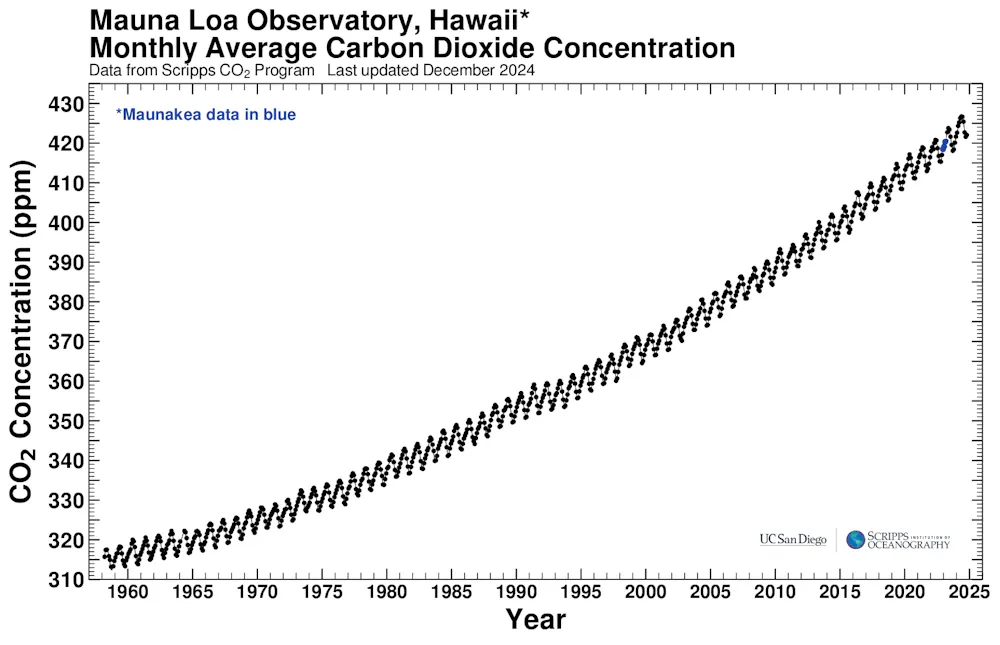
Data collected by Mauna Loa from 1958 onward let us clearly see the evidence of climate change for the first time. The station samples the air and measures global CO₂ levels. Charles Keeling and his successors used this data to produce the famous Keeling curve – a graph showing carbon dioxide levels increasing year after year.

But this precious record is in peril. US President Donald Trump has decided to defund the observatory recording the data, as well as the widespread US greenhouse gas monitoring network and other climate measuring sites.

We can’t solve the existential problem of climate change if we can’t track the changes. Losing Mauna Loa would be a huge loss to climate science. If it shuts, other observatories such as Australia’s Kennaook/Cape Grim will become even more vital.

keeling curve graph.
The Keeling Curve tracking steadily rising carbon dioxide levels in the atmosphere came from data gathered at Mauna Loa.
Scripps Institution of Oceanography at UC San Diego, CC BY-NC-ND

What did Mauna Loa show us?

The first year of measurements at Mauna Loa revealed something incredible. For the first time, the clear annual cycle in atmospheric CO₂ was visible. As plants grow in summer, they absorb CO₂ and draw it out of the atmosphere. As they die and decay in winter, the CO₂ returns to the atmosphere. It’s like Earth is breathing.

Most land on Earth is in the Northern Hemisphere, which means this cycle is largely influenced by the northern summer and winter.

The annual cycle of carbon dioxide is largely due to plant growth and decay in the northern hemisphere.

It only took a few years of measurements before an even more profound pattern emerged.

Year on year, CO₂ levels in the atmosphere were relentlessly rising. The natural in-out cycle continued, but against a steady increase.

Scientists would later figure out that the ocean and land together were absorbing almost half of the CO₂ produced by humans. But the rest was building up in the atmosphere.

Crucially, isotopic measurements meant scientists could be crystal clear about the origin of the extra carbon dioxide. It was coming from humans, largely through burning fossil fuels.

Mauna Loa has now been collecting data for more than 65 years. The resulting Keeling curve graph is the most iconic demonstration of how human activities are collectively affecting the planet.

When the last of the Baby Boomer generation were being born in the 1960s, CO₂ levels were around 320 parts per million. Now they’re over 420 ppm. That’s a level unseen for at least three million years. The rate of increase far exceeds any natural change in the past 50 million years.

The reason carbon dioxide is so important is that this molecule has special properties. Its ability to trap heat alongside other greenhouse gases means Earth isn’t a frozen rock. If there were no greenhouse gases, Earth would have an average temperature of -18°C, rather than the balmy 14°C under which human civilisation emerged.

The greenhouse effect is essential to life. But if there are too many gases, the planet becomes dangerously hot. That’s what’s happening now – a very sharp increase in gases exceptionally good at trapping heat even at low concentrations.

nasa image earth from space.
Greenhouse gases are the reason Earth isn’t an icebox. But the rate humans are emitting them is leading to very rapid changes.
Reid Wiseman/NASA, CC BY-NC-ND

Keeping our eyes open

It’s not enough to know CO₂ is climbing. Monitoring is essential. That’s because as the planet warms, both the ocean and the land are expected to take up less and less of humanity’s emissions, letting still more carbon accumulate in the air.

Continuous, high-precision monitoring is the only way to spot if and when that happens.

This monitoring provides the vital means to verify whether new climate policies are genuinely influencing the atmospheric CO₂ curve rather than just being touted as effective. Monitoring will also be vital to capture the moment many have been working towards when government policies and new technologies finally slow and eventually stop the increase in CO₂.

The US administration’s plans to defund key climate monitoring systems and roll back green energy initiatives presents a global challenge.

Without these systems, it will be harder to forecast the weather and give seasonal updates. It will also be harder to forecast dangerous extreme weather events.

Scientists in the US and globally have sounded the alarm about what the closure would do to science. This is understandable. Stopping data climate collection is like breaking a thermometer because you don’t like knowing you’ve got a fever.

If the US follows through, other countries will need to carefully reconsider their commitments to gathering and sharing climate data.

Australia has a long record of direct atmospheric CO₂ measurement, which began in 1976 at the Kennaook/Cape Grim Baseline Air Pollution Station in north-west Tasmania. This and other climate observations will only become more valuable if Mauna Loa is lost.

It remains to be seen how Australia’s leaders respond to the US retreat from climate monitoring. Ideally, Australia would not only maintain but strategically expand its monitoring systems of atmosphere, land and oceans.

The Conversation

Alex Sen Gupta receives funding from the Australian Research Council.

Katrin Meissner receives funding from the Minderoo Foundation and has received funding from the Australian Research Council in the past.

Timothy Raupach receives funding from QBE Insurance, Guy Carpenter, and the Australian Research Council.

ref. Mauna Loa Observatory captured the reality of climate change. The US plans to shut it down – https://theconversation.com/mauna-loa-observatory-captured-the-reality-of-climate-change-the-us-plans-to-shut-it-down-260403

Philadelphians with mental illness want to work, pray, date and socialize just like everyone else – here’s how creating more inclusive communities is good for public health

Source: The Conversation – USA (3) – By Mark Salzer, Professor of Social and Behavioral Sciences, Temple University

About 6% of American adults have a serious mental health condition. Dmitrii Marchenko/Moment Collection via Getty Images

Do you remember the COVID-19 shutdowns?

Many Americans could no longer do the activities they enjoyed once businesses, schools, churches, gyms and community organizations shut their doors. Even spending time with friends and family became nearly impossible.

Now imagine living that kind of isolation all the time.

For millions of Americans with serious mental health conditions, being unable to engage in meaningful activities is not just a temporary crisis – it’s daily life.

Community inclusion refers to everyone’s right to participate in meaningful social roles. This includes working, going to school, practicing one’s faith or simply connecting with others in shared activities.

Yet, for the estimated 15.4 million U.S. adults living with significant mental health conditions – about 6% of the adult population – community inclusion is far from guaranteed. Compared with the general population, they are far less likely to be involved in social activities that bring purpose and connection, as well as health benefits.

I am a psychologist who has worked in inpatient and outpatient psychiatric settings, and I directed a federally funded research and training center at Temple University in Philadelphia for more than 20 years that focuses on independent living and participation of people with serious mental illnesses.

My colleagues and I have conducted research which demonstrates that people with such conditions want to participate in their community just like everyone else. We also found that they can do so – with proper supports like medications, therapy, rehabilitation services and communities making reasonable accommodations for them. And furthermore, they should: Community inclusion is good for their health.

Benefits of community life

Community involvement gets people with mental illness out of bed and out of the house. It encourages movement and activity, which enhances physical health.

This is especially critical because people with serious mental illnesses die 15 to 20 years earlier than the general population – often due to preventable illnesses like diabetes, cancer and cardiovascular disease.

Regular participation in life’s routines provides social and emotional stimulation that also boosts cognitive functioning, like memory and problem-solving, and reduces depression and loneliness.

Illustration shows people of different gender, ethnicity and dress style walking on the street
Community involvement is good for physical and mental health.
Namthip Muanthongthae/Moment Collection via Getty Images

What really causes exclusion

Some people may assume that people with severe mental illnesses are restricted from active participation in their communities solely due to the mental health symptoms themselves.

For example, they might think that cognitive issues related to schizophrenia make it too difficult for people to work or go to school; or that mania, anxiety and depression prevent them from having good relationships with others.

But environment also plays a major role.

The social model of disability suggests that people are not disabled by their diagnosis. Instead, they experience a disability through limitations in their communities because of physical, structural and social barriers.

For example, someone with anxiety or depression may be penalized in a college class that deducts points for students who do not speak up.

A person with a disability that causes fluctuating moods or low energy might not succeed in a rigid nine-to-five job without accommodations.

And a churchgoer who talks to themselves or has to walk around during services because their medications make them jittery – a condition called akathisia – or who is known to have been diagnosed with schizophrenia might be asked to leave because their presence makes others uncomfortable.

The result is that people are unable to participate not simply because of an impairment, but because of an environment that does not accommodate or appreciate their unique attributes.

Helping people with mental illness rejoin community life

Some programs here in Pennsylvania are working to change that.

Education Plus helps Philadelphia residents with mental health conditions complete college and financial aid application forms, obtain school accommodations for their disability, and develop good study habits or learn to ask for help from their instructors.

Pathways to Housing PA offers transitional job opportunities to people who have been homeless, and organizes picnics, trips to Phillies baseball games and other fun activities that create a sense of community belonging.

A voter access initiative at an inpatient psychiatric facility in Pennsylvania helps patients check their voter registration status, register to vote and apply for mail-in ballots.

The nonprofit Compeer in suburban Philadelphia connects community volunteers to people with mental illnesses to engage in mutual leisure or educational interests. This oftentimes leads to long-term friendships.

And a current study I am conducting is examining ways to support faith communities in Montgomery County to be more welcoming and embracing of individuals with mental illnesses.

People smiling and shaking hands while standing in pews in a church
Churches and other faith communities can welcome members with mental illnesses by accepting their different behaviors.
zamrznutitonovi/iStock/Getty Images Plus via Getty Images

What you can do

Family members, friends and mental health professionals can simply ask people with mental illnesses about their interests – whether it’s employment, going to school, dating or making new friends – and then encourage and support them in pursuing those interests.

Creating inclusive communities means not just offering services to people with serious mental illness, but also changing negative beliefs and behaviors toward them. This includes embracing people who might express emotions differently, require flexibility or simply behave in ways we’re not used to.

For example, say you’re in a coffee shop and encounter a person who is muttering to themselves and may not have bathed in a few days. Maybe you make eye contact, smile and say hello. Certainly reconsider complaining.

It takes empathy, open-mindedness and patience to create a community that welcomes people with mental illness and increases the likelihood that they can participate in society like everyone else.

Read more of our stories about Philadelphia.

The Conversation

Mark Salzer receives funding from the National Institute on Disabilities, Independent Living, and Rehabilitation Research. He previously served on the Board of Directors for Pathways to Housing PA and works closely with Horizon House, including in the development of the Education Plus program mentioned in the article.

ref. Philadelphians with mental illness want to work, pray, date and socialize just like everyone else – here’s how creating more inclusive communities is good for public health – https://theconversation.com/philadelphians-with-mental-illness-want-to-work-pray-date-and-socialize-just-like-everyone-else-heres-how-creating-more-inclusive-communities-is-good-for-public-health-254441

One year in, Labour has a surprising amount to celebrate. But you wouldn’t know it

Source: The Conversation – UK – By Rohan McWilliam, Professor of Modern British History, Anglia Ruskin University

A year in, Starmer still has a mountain to climb. Flickr/Number 10 , CC BY-NC-ND

In the build-up to the 2024 election, Keir Starmer worked hard to show that his party could run Britain better than the Tories. He promised his government would offer stability after years of chaos – but also change. He stood for honesty but also a technocratic approach that resisted the easy answers of the populist right. The grown ups would be back in charge.

A year on, as he marks his first year in office, we might ask: how much difference did Labour’s 2024 election win make in the longer trajectory of British life? Are historians in future likely to say (as they often do about the 1945 and 1979 elections) that it led to political and social transformation?

Of course, it’s too early to say for certain, but not too early to look for signs.

In electoral terms, Labour gained a stonking 174-seat majority in 2024. But this victory came off the back of a remarkably slim vote share of 33.7% in an election with a near-historically low turnout. That suggests an emotional connection had not been made with the electorate (although it also reflected the way that the traditional two-party system is falling apart).

This result has defined Labour since then. It is a government that is undoubtedly in power but with a leader who few really understand. At a conference on the Starmer government held at Anglia Ruskin University in June 2025, I asked the audience how many could produce a one-sentence summary of what the government’s ideology was. Only a few felt they could do so.

In July 2024, Labour promised change. But what did “change” mean? Starmer’s Labour has failed to really spell out its sense of purpose. Starmer admits that he finds ideas difficult. In this sense (and this sense alone) he resembles President George H.W. Bush, who admitted he had trouble with the “vision thing”.

Starmer looks for solutions to particular problems rather than offering a view of the kind of Britain he wants to create. Without some kind of clear ideological purpose, however, the government ends up merely reacting to events whereas it should be shaping the narrative.

The good, the bad, and the not-very-Labour

When Labour returned to power in 1945, 1964 and 1997, there had been extensive discussions about the direction of Labour policy and how it could change society. In 1945, Clement Attlee’s focus was on welfare. Harold Wilson in 1964 drew on Tony Crosland’s revisionist approach to socialism, while in 1997 Tony Blair promised a “third way” in politics, reflecting the ideas of intellectuals such as Anthony Giddens.

This openness to new ideas barely happened between 2020 and 2024 beyond a sense that Labour needed to re-connect with the “red wall” voters it had lost.

On top of this, the government has become known for doing some remarkably un-Labour things. In September 2024, it changed the rules on winter fuel benefits to limit them to only some pensioners (although it has since partially backtracked under immense pressure from Labour MPs).

It continues to resist calls to abolish the two child-benefit cap that restricts some forms of support to families with a maximum of two children, despite clear evidence that doing so is an easy way to reduce child poverty. Most catastrophically, it has been humiliated by a backbench rebellion which forced it to gut its welfare bill.


Read more:
The mistakes Keir Starmer made over disability cuts – and how he can avoid future embarrassment


The government claims it is having to correct the dismal economic inheritance left by the Tories, preventing it from splashing the cash in the way Labour supporters want. Chancellor of the exchequer Rachel Reeves talks about “hard choices” in order to show how disciplined Labour is, thus hopefully reassuring investors and the bond market.

The result was the winter fuel payment crisis, which (despite a u-turn) threatens to become Labour’s poll tax – an iconic policy the electorate refuses to forgive.

Starmer and Reeves demonstrated very limited understanding of the politics of this decision: they seemed prepared to hurt poorer people while apparently leaving the wealthy largely untouched.

Starmer would argue that his government’s ideology has been expressed through its five missions, the most important of which is to stimulate economic growth. The June 2025 spending review was aimed at directing investment particularly towards the north of England and building infrastructure, including investment in transport. The government has also retained its focus on getting to net zero (which suggests a degree of radicalism).


Want more politics coverage from academic experts? Every week, we bring you informed analysis of developments in government and fact check the claims being made.

Sign up for our weekly politics newsletter, delivered every Friday.


Another mission that is also more obviously Labour in character is rebuilding the NHS, particularly by reducing waiting lists. Breaking down barriers to opportunity (another mission) has led to investment in education and the creation of breakfast clubs so that all children start the day properly fed.

Labour still talks the language of class, recognising how poorer people face obstacles. Similarly, the focus on stopping crime and making Britain’s streets safe has echoes of both Jim Callaghan and Tony Blair. The government’s preparedness (so far) to negotiate increased pay awards in the public sector also suggests a distinctive Labour approach – evidence that it is not simply offering austerity-lite. Starmer has even started the process of renationalising the railways.

Despite claims that it is maintaining austerity, the government has increased public expenditure by the highest level in decades. In that sense, the 2024 election has led to a new direction for the country.

Labour can make the claim that it is building a state that can respond to the demands of an ageing population, in a challenging global environment, who will be affected by the results of climate change. This (in one sentence) should be its message.

A familiar refrain

If we look at the new government in historical perspective, we should note that it is not unusual for people to complain that Labour lacks ideology or a moral purpose: such things were said about every prime minister the party has produced, from Ramsay MacDonald onwards. Starmer may well seem better in retrospect.

The overall impression of the prime minister, however, is that he is consumed by caution. Much of the time his government seems to chase the talking points put out by Reform UK, the best example being the “island of strangers” speech.

It may be that future historians will argue that the real significance of the 2024 election was not Labour’s capture of seats but the way it exposed the latent support for Nigel Farage’s new party that had been building across the country. However, there are still several years to recover this legacy, should Starmer commit to learning from the mistakes made in the first year of his tenure.

The Conversation

Rohan McWilliam is affiliated with The Labour Party (ordinary member).

ref. One year in, Labour has a surprising amount to celebrate. But you wouldn’t know it – https://theconversation.com/one-year-in-labour-has-a-surprising-amount-to-celebrate-but-you-wouldnt-know-it-259837

One ‘big, beautiful’ reason why Republicans in Congress just can’t quit Donald Trump

Source: The Conversation – USA – By Charlie Hunt, Associate Professor of Political Science, Boise State University

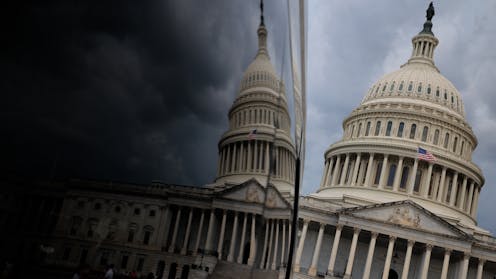
The U.S. Capitol is seen shortly after the Senate passed its version of the One Big Beautiful Bill Act on July 1, 2025. Chip Somodevilla/Getty Images

As the U.S. House of Representatives voted to approve President Donald Trump’s sweeping domestic tax and spending package, many critics are wondering how the president retained the loyalty of so many congressional Republicans, with so few defections.

Just three Republican senators – the maximum allowed for the One Big Beautiful Bill Act to still pass – voted against the Senate version of the bill on July 1, 2025. In the House, only two Republicans voted against the bill, which passed the chamber on July 3.

Among other things, the bill will slash taxes by about US$4.5 trillion over a decade and exempt people’s tips and overtime pay from federal income taxes.

But the bill has been widely panned, including by some Republicans.

Democrats have uniformly opposed it, in part thanks to the bill’s sweeping cuts to Medicaid and Affordable Care Act marketplace funding. This could lead to an estimated 12 million more people without insurance by 2034.

The legislation is also likely to add between $3 trilion and $5 trillion to the national debt by 2034, according to the Congressional Budget Office.

The power of the presidency

Trump is not the first president to bend Congress to his will to get legislation approved.

Presidential supremacy over the legislative process has been on the rise for decades. But contrary to popular belief, lawmakers are not always simply voting based on blind partisanship.

Increasingly, politicians in the same political party as a president are voting in line with the president because their political futures are as tied up with the president’s reputation as they have ever been.

Even when national polling indicates a policy is unpopular – as is the case with Trump’s budget reconciliation bill, which an estimated 55% of American voters said in June they oppose, according to Quinnipiac University polling – lawmakers in the president’s party have serious motivation to follow the president’s lead.

Or else they risk losing reelection.

A white man with glasses, dark hair and a dark suit with a white shirt and red tie smiles and appears to speak into a microphone as people surround him.
Speaker of the House Mike Johnson speaks to reporters at the Capitol building on July 3, 2025.
Alex Wong/Getty Images

Lawmakers increasingly partisan on presidential policy

Over the past 50 years, lawmakers in the president’s party have increasingly supported the president’s position on legislation that passes Congress. Opposition lawmakers, meanwhile, are increasingly united against the president’s position.

In 1970, for example, when Republican President Richard Nixon was in the White House, Republicans in Congress voted along with his positions 72% of the time. But the Democratic majority in Congress voted with him nearly as much, at 60% of the time, particularly on Nixon’s more progressive environmental agenda.

These patterns are unheard of in the modern Congress. In 2022, for example – a year of significant legislative achievement for the Biden administration – the Democratic majority in Congress voted the same way as the Democratic president 99% of the time. Republicans, meanwhile, voted with Biden just 19% of the time.

Elections can tell us why

Over the past half-century, the two major parties have changed dramatically, both in the absolutist nature of their beliefs and in relation to one another.

Both parties used to be more mixed in their ideological outlooks, for example, with conservative Democrats and liberal Republicans playing key roles in policymaking. This made it easier to form cross-party coalitions, either with or against the president.

A few decades ago, Democrats and Republicans were also less geographically polarized from each other. Democrats were regularly elected to congressional seats in the South, for example, even if those districts supported Republican presidents such as Nixon or Ronald Reagan.

Much of this has changed in recent decades.

Congress members are not just ideologically at odds with colleagues in the other party – they are more similar than ever to other members within their party.

Districts supporting the two parties are also increasingly geographically distant from each other, often along an urban-rural divide.

And presidents in particular have become polarizing partisan figures on the national stage.

These changes have ushered in a larger phenomenon called political nationalization, in which local political considerations, issues and candidate qualifications have taken a back seat to national politics.

Ticket splitting

From the 1960s through most of the 1980s, between one-quarter and one-half of all congressional districts routinely split tickets – meaning they sent a politician of one party to Congress while supporting a different party for president.

These are the same few districts in Nebraska and New York, for example, that supported former Vice President Kamala Harris for president in 2024 but which also elected a Republican candidate to the House that same year.

Since the Reagan years, however, these types of districts that could simultaneously support a Democratic presidential nominee and Republicans for Congress have gone nearly extinct. Today, only a handful of districts split their tickets, and all other districts select the same party for both offices.

The past two presidential elections, in 2020 and 2024, set the same record low for ticket splitting. Just 16 out of 435 House districts voted for different parties for the House of Representatives and president.

Members of Congress follow their voters

The political success of members of Congress has become increasingly tied up with the success or failure of the president. Because nearly all Republicans hail from districts and states that are very supportive of Trump and his agenda, following the will of their voters increasingly means being supportive of the president’s agenda.

Not doing so risks blowback from their Trump-supporting constituents. A June 2025 Quinnipiac University poll found that 67% of Republicans support the bill, while 87% of Democrats oppose it.

These electoral considerations also help explain the unanimous opposition to Trump’s legislation by the Democrats, nearly all of whom represent districts and states that did not support Trump in 2024.

Thanks to party polarization in ideologies, geography and in the electorate, few Democrats could survive politically while strongly supporting Trump. And few Republicans could do so while opposing him.

But as the importance to voters of mere presidential support increases, the importance of members’ skill in fighting for issues unique to their districts has decreased. This can leave important local concerns about, for example, unique local environmental issues or declining economic sectors unspoken for. At the very least, members have less incentive to speak for them.

The Conversation

Charlie Hunt does not work for, consult, own shares in or receive funding from any company or organization that would benefit from this article, and has disclosed no relevant affiliations beyond their academic appointment.

ref. One ‘big, beautiful’ reason why Republicans in Congress just can’t quit Donald Trump – https://theconversation.com/one-big-beautiful-reason-why-republicans-in-congress-just-cant-quit-donald-trump-260345

Rare wooden tools from Stone Age China reveal plant-based lifestyle of ancient lakeside humans

Source: The Conversation – Global Perspectives – By Bo Li, Professor, Environmental Futures Research Centre, School of Science, University of Wollongong

Excavation at the Gantangqing site. Liu et al.

Ancient wooden tools found at a site in Gantangqing in southwestern China are approximately 300,000 years old, new dating has shown. Discovered during excavations carried out in 2014–15 and 2018–19, the tools have now been dated by a team of archaeologists, geologists, chronologists (including me) and paleontologists.

The rare wooden tools were found alongside an assortment of animal and plant fossils and stone artifacts.

Taken together, the finds suggest the early humans at Gantangqing were surprisingly sophisticated woodworkers who lived in a rich tropical or subtropical environment where they subsisted by harvesting plants from a nearby lake.

Maps showing the location of Gantangqing in China and the excavated locations in Gantangqing.
The location of the Gantangqing site and excavation trenches.
Liu et al. / Science

Why ancient wooden tools are so rare

Wood usually decomposes relatively rapidly due to microbial activity, oxidation, and weathering. Unlike stone or bone, it rarely survives more than a few centuries.

Wood can only survive for thousands of years or longer if it ends up buried in unusual conditions. Wood can last a long time in oxygen-free environments or extremely dry areas. Charred or fire-hardened wood is also more durable.

At Gantangqing, the wooden objects were excavated from low-oxygen clay-heavy layers of sediment formed on the ancient shoreline of Fuxian Lake.

Wooden implements are extremely rare from the Early Palaeolithic period (the first part of the “stone age” from around 3.3 million years ago until 300,000 years ago or so, in which our hominin ancestors first began to use tools). Indeed, wooden tools more than even 50,000 years old are virtually absent outside Africa and western Eurasia.

As a result, we may have a skewed understanding of Palaeolithic cultures. We may overemphasise the role of stone tools, for example, because they are what has survived.

What wooden tools were found at Gantangqing?

The new excavations at Gantangqing found 35 wooden specimens identified as artificially modified tools. These tools were primarily manufactured from pine wood, with a minority crafted from hardwoods.

Some of the tools had rounded ends, while others had chisel-like thin blades or ridged blades. Of the 35 tools, 32 show marks of intentional modification at their tips, working edges, or bases.

Two large digging implements were identified as heavy-duty digging sticks designed for two-handed use. These are unique forms of digging implements not documented elsewhere, suggesting localised functional adaptations. There were also four distinct hook-shaped tools — likely used for cutting roots — and a series of smaller tools for one-handed use.

Nineteen of the tools showed microscopic traces of scraping from shaping or use, while 17 exhibit deliberately polished surfaces. We also identified further evidence of intensive use, including soil residues stuck to tool tips, parallel grooves or streaks along working edges, and characteristic fracture wear patterns.

The tools from Gantangqing are more complete and show a wider range of functions than those found at contemporary sites such as Clacton in the UK and Florisbad in South Africa.

Photo of several different crude wooden tools.
The wooden tools from Gantangqing took a variety of forms.
Liu et al. / Science

How old are the Gantangqing wooden tools?

The team used several techniques to figure out the age of the wooden tools. There is no way to determine their age directly, but we can date the sediment in which they were found.

Using a technique called infrared stimulated luminescence, we analysed more than 10,000 individual grains of minerals from different layers. This showed the sediment was deposited roughly between 350,000 and 200,000 years ago.

Chart showing different layers of sediment and their ages.
Dating the different layers of sediment excavated at the site produced a detailed timeline.
Liu et al. / Science

We also used different techniques to date a mammal tooth found in one of the layers to roughly 288,000 years old. This was consistent with the mineral results.

Next we used mathematical modelling to bring all the dating results together. Our model indicated that the layers containing stone tools and wooden implements date from 360–300,000 years ago to 290–250,000 years ago.

What was the environment like?

Our research indicates the ancient humans at Gantangqing inhabited a warm, humid, tropical or subtropical environment. Pollen extracted from the sediments reveals 40 plant families that confirm this climate.

Plant fossils further verify the presence of subtropical-to-tropical flora dominated by trees, lianas, shrubs and herbs. Wet-environment plants show the local surroundings were a lakeside or wetlands.

Animal fossils also fit this picture, including rhinoceros and other mammals, turtles and various birds. The ecosystem was likely a mosaic of grassland, thickets and forests. Evidence of diving ducks confirms the lake must have been at least 2–3 metres deep during human occupation.

Photo of an assortment of stone and bone tools
Examples of stone and bone tools found at Gantangqing.
Liu et al. / Science

What were the Gantangqing wooden tools used for?

The site contained evidence of plants such as storable pine nuts and hazelnuts, fruit trees such as kiwi, raspberry-like berries, grapes, edible herbs and fern fronds.

There were also aquatic plants that would have provided edible leaves, seeds, tubers and rhizomes. These were likely dug up from shallow mud near the shore, using wooden tools.

These findings suggest the Gantangqing hominins may have made expeditions to the lake shore, carrying purpose-made wooden digging sticks to harvest underground food sources. To do this, they would have had to anticipate seasonal plant distributions, know exactly what parts of different plants were edible, and produce specialised tools for different tasks.

Why the Gantangqing site is important

The wooden implements from Gantangqing represent the earliest known evidence for the use of digging sticks and for the exploitation of underground plant storage organs such as tubers within the Oriental biogeographic realm. Our discovery shows the use of sophisticated wood technology in a very different environmental context from what has been seen at sites of similar age in Europe and Africa.

The find significantly expands our understanding of early hominin woodworking capabilities.

The hominins who lived at Gantangqing appear to have lived a heavily plant-based subsistence lifestyle. This is in contrast to colder, more northern settings where tools of similar age have been found (such as Schöningen in Germany), where hunting large mammals was the key to survival.

The site also shows how important wood – and perhaps other organic materials – were to “stone age” hominins. These wooden artifacts show far more sophisticated manufacturing skill than the relative rudimentary stone tools found at sites of similar age across East and Southeast Asia.

The Conversation

The excavation, curation, and research of the Gantangqing site were supported by
National Cultural Heritage Administration (China), Yunnan Provincial Institute of
Cultural Relics and Archaeology, Yuxi Municipal Bureau of Culture and Tourism,
Chengjiang Municipal Bureau of Culture and Tourism, Australian Research Council
(ARC) Discovery Projects, Strategic Priority Research Program of the Chinese
Academy of Sciences, Hong Kong Research Grants Council (RGC), National Natural
Science Foundation of China (NSFC).

ref. Rare wooden tools from Stone Age China reveal plant-based lifestyle of ancient lakeside humans – https://theconversation.com/rare-wooden-tools-from-stone-age-china-reveal-plant-based-lifestyle-of-ancient-lakeside-humans-260204

What MAGA means to Americans

Source: The Conversation – USA – By Jesse Rhodes, Associate Professor of Political Science, UMass Amherst

A Trump supporter holds up a MAGA sign during a rally in Green Bay, Wis., on April 2, 2024. AP Photo/Mike Roemer

A decade ago, Donald Trump descended the golden escalator at Trump Tower in New York City and ignited a political movement that has reshaped American politics. In a memorable turn of phrase, Trump promised supporters of his 2016 presidential campaign that “we are going to make our country great again.”

Since then, the Make America Great Again movement has dominated the U.S. political conversation, reshaped the Republican Party and become a lucrative brand adorning hats, T-shirts and bumper stickers.

When asked what MAGA means to him, Trump, in a 2017 interview with The Washington Post said, “To me, it meant jobs. It meant industry, and meant military strength. It meant taking care of our veterans. It meant so much.”

But Democratic leaders have a different interpretation of the slogan.

Former President Bill Clinton in 2016 said of MAGA: “That message where ‘I’ll give you America great again’ is if you’re a white Southerner, you know exactly what it means, don’t you? What it means is ‘I’ll give you an economy you had 50 years ago, and I’ll move you back up on the social totem pole and other people down.”

While MAGA is ubiquitous, little is known about what it means to the American public. Ten years on, what do Americans think when they hear or read this phrase?

Based on the analysis of Americans’ explanations of what “Make America Great Again” means to them, we found evidence suggesting that the public’s views of MAGA mirror the perspectives offered by both Trump and Clinton.

Republicans interpret this phrase as a call for the renewal of the U.S. economy and military might, as well as a return to “traditional” values, especially those relating to gender roles and gender identities. Democrats, we found, view MAGA as a call for a return to white supremacy and growing authoritarianism.

A man descends an escalator as other people watch.
Donald Trump rides an escalator to a press event to announce his candidacy for the U.S. presidency at Trump Tower on June 16, 2015, in New York City.
Christopher Gregory/Getty Images

What MAGA means

We are political scientists who use public opinion polls to study the role of partisanship in American politics. To better understand American views about MAGA, in April 2025 we asked 1,000 respondents in a nationally representative online survey to briefly write what “Make America Great Again” meant to them.

The survey question was open-ended, allowing respondents to define this phrase in any way they saw fit. We used AI-based thematic analysis and qualitative reading of the responses to better understand how Democrats and Republicans define the slogan.

For our AI-based thematic analysis, we instructed ChatGPT to provide three overarching themes most touched upon by Democratic and Republican respondents. This approach follows recent research demonstrating that, when properly instructed, ChatGPT reliably identifies broad themes in collections of texts.

Republican interpretation of MAGA

Our analysis shows that Republicans view the slogan as representing the “American dream.” In part, MAGA is about restoring the nation’s pride and economic strength. Reflecting these themes, one Republican respondent wrote that MAGA means “encouraging manufacturers to hire Americans and strengthen the economy. Making the USA self-sufficient as it once was.”

MAGA is also closely related among Republicans with an “America First” policy. This is partly about having a strong military – a common theme among Republican respondents – and “making America the superpower” again, one respondent wrote.

Republicans also wrote that putting America first means emphasizing strict enforcement of immigration laws against “illegals” and cutting off foreign aid. For example, one Republican respondent said that MAGA meant “stopping illegals at the border, ending freebies for illegals, adding more police and building a strong military.”

Finally, Republicans see the slogan as calling for a return to “traditional” values. They expressed a strong desire to reverse cultural shifts that Republican respondents perceive as a threat.

As one Republican put it, MAGA “means going back to where men would join the military, women were home raising healthy minded children and it was easy to be successful, the crime rate was extremely low and it used to be safe for kids to hang out on the streets with other kids and even walk themselves places.”

Another Republican made the connection between MAGA and traditional gender roles even more explicit, highlighting the link between MAGA and opposition to transgender rights: “MAGA people know there are only 2 sexes and a man can never be a woman. If you believe otherwise you are destroying AMERICA.”

A large banner of a man is seen through tree leaves in the foreground.
A banner showing a picture of President Donald Trump is displayed outside of the U.S. Department of Agriculture building on June 3, 2025, in Washington, D.C.
Kevin Carter/Getty Images

Democratic MAGA views

Democrats have a very different understanding of the MAGA slogan. Many Democrats view MAGA as a white supremacist movement designed to protect the status of white people and undermine the civil rights of marginalized groups.

One Democrat argued that “‘Make America Great Again’ is a standard borne by people who’ve seen a decrease in the potency of their privilege (see: cisgendered white men) and wish to see their privilege restored or strengthened. In essence, it’s a chant for all racist, fascist and otherwise bigoted actors to unite under.”

Another Democrat wrote that MAGA was a call to “take us backwards as a society in regards to women’s, minority’s, and LGBTQ people’s rights … It would take us to a time when only White men ruled.”

Democrats also view MAGA as a form of nostalgia for a heavily mythologized past. Many Democratic respondents described the past longed for by Republicans as a “myth” or “fairytale.” Others argued that this mythologized past, though appealing on the surface, was repressive for many Americans.

One Democrat said that MAGA meant “returning America to a fantasy version of the past with the goal of advancing the success of white, straight, wealthy men by any means necessary and almost always to the detriment of other segments of the population.”

A man dressed in a white hat and tshirt holds a sign that reads 'Trump won't erase us.'
A person holds a ‘Trump won’t erase us’ sign while walking in the WorldPride Parade on June 7, 2025, in Washington, D.C.
Kevin Carter/Getty Images

Finally, many Democrats interpret the slogan as reflecting an authoritarian cult of personality. In this vein, a Democratic respondent said of MAGA, “It’s a call to arms for MAGA cult members, who believe that Trump and the Republicans party will somehow improve their lives by targeting people and policies they don’t like, even when it is against their best interests and any rational thought process.”

While some Republicans expressed racist, xenophobic or anti-trans sentiments in their understanding of MAGA, some Democrats revealed outright condescension toward MAGA believers.

“The MAGA’s are brainwashed, idiotic members of society who know nothing more than to follow the lead of an idiotic president who has the vocabulary of a 3rd grader,” one Democrat wrote. “It is nonsense idiots parrot,” another respondent said.

In all, in the 10 years since Donald Trump burst onto the political scene, much has been written about the conflicting visions of past, present and future at the heart of America’s partisan divisions.

With the Trump administration’s proclaimed commitment to return the U.S. to its “golden age” and a strong resistance to his efforts, only time will tell which vision of America will prevail.

The Conversation

Jesse Rhodes has received funding from the National Science Foundation, the Spencer Foundation, and Demos. He is a member of the American Civil Liberties Union.

Douglas Rice has received funding from the National Science Foundation.

Adam Eichen, Gregory Wall, and Tatishe Nteta do not work for, consult, own shares in or receive funding from any company or organization that would benefit from this article, and have disclosed no relevant affiliations beyond their academic appointment.

ref. What MAGA means to Americans – https://theconversation.com/what-maga-means-to-americans-259241

Fewer people doesn’t always mean better outcomes for nature – just look at Japan

Source: The Conversation – Global Perspectives – By Peter Matanle, Senior Lecturer in Japanese Studies, University of Sheffield

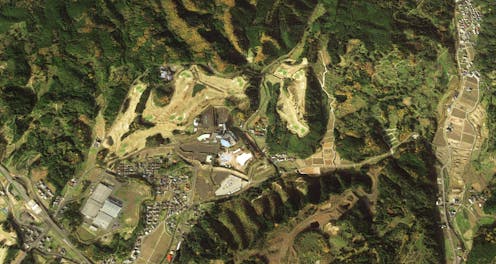
Satellite photo of rural Saga prefecture, Japan, showing farmland disuse, consolidation and intensification and urban development. Google Earth Pro, CC BY-NC-ND

Since 1970, 73% of global wildlife has been lost, while the world’s population has doubled to 8 billion. Research shows this isn’t a coincidence but that population growth is causing a catastrophic decline in biodiversity.

Yet a turning point in human history is underway. According to UN projections, the number of people in 85 countries will be shrinking by 2050, mostly in Europe and Asia. By 2100, the human population is on course for global decline. Some say this will be good for the environment.

In 2010, Japan became the first Asian country to begin depopulating. South Korea, China and Taiwan are following close behind. In 2014, Italy was the first in southern Europe, followed by Spain, Portugal and others. We call Japan and Italy “depopulation vanguard countries” on account of their role as forerunners for understanding possible consequences in their regions.

Given assumptions that depopulation could help deliver environmental restoration, we have been working with colleagues Yang Li and Taku Fujita to investigate whether Japan is experiencing what we have termed a biodiversity “depopulation dividend” or something else.


Get your news from actual experts, straight to your inbox. Sign up to our daily newsletter to receive all The Conversation UK’s latest coverage of news and research, from politics and business to the arts and sciences.


Since 2003, hundreds of citizen scientists have been collecting biodiversity data for the Japanese government’s Monitoring Sites 1,000 project. We used 1.5 million recorded species observations from 158 sites.

These were in wooded, agricultural and peri-urban (transitional spaces on outskirts of cities) areas. We compared these observations against changes in local population, land use and surface temperature for periods of five to 20 years.

Our study, published in the journal Nature Sustainability, includes birds, butterflies, fireflies, frogs and 2,922 native and non-native plants. These landscapes have experienced the greatest depopulation since the 1990s.

Due to the size of our database, choice of sites and the positioning of Japan as a depopulation vanguard for north-east Asia, this is one of the largest studies of its kind.

Japan is not Chernobyl

Biodiversity continued to decrease in most of the areas we studied, irrespective of population increase or decrease. Only where the population remains steady is biodiversity more stable. However, the population of these areas is ageing and will decline soon, bringing them in line with the areas already seeing biodiversity loss.

Unlike in Chernobyl, where a sudden crisis caused an almost total evacuation which stimulated startling accounts of wildlife revival, Japan’s population loss has developed gradually. Here, a mosaic pattern of changing land use emerges amid still-functioning communities.

While most farmland remains under cultivation, some falls into disuse or abandonment, some is sold for urban development or transformed into intensively farmed landscapes. This prevents widespread natural succession of plant growth or afforestation (planting of new trees) that would enrich biodiversity.

In these areas, humans are agents of ecosystem sustainability. Traditional farming and seasonal livelihood practices, such as flooding, planting and harvesting of rice fields, orchard and coppice management, and property upkeep, are important for maintaining biodiversity. So depopulation can be destructive to nature. Some species thrive, but these are often non-native ones that present other challenges, such as the drying and choking of formerly wet rice paddy fields by invasive grasses.

Vacant and derelict buildings, underused infrastructure and socio-legal issues (such as complicated inheritance laws and land taxes, lack of local authority administrative capacity, and high demolition and disposal costs) all compound the problem.

abandoned home in Japan
An abandoned house, or akiya, in Niigata prefecture, Japan.
Peter Matanle, CC BY-NC-ND

Even as the number of akiya (empty, disused or abandoned houses) increases to nearly 15% of the nation’s housing stock, the construction of new dwellings continues remorselessly. In 2024, more than 790,000 were built, due partly to Japan’s changing population distribution and household composition. Alongside these come roads, shopping malls, sports facilities, car parks and Japan’s ubiquitous convenience stores. All in all, wildlife has less space and fewer niches to inhabit, despite there being fewer people.

What can be done?

Data shows deepening depopulation in Japan and north-east Asia. Fertility rates remain low in most developed countries. Immigration provides only a short-term softer landing, as countries currently supplying migrants, such as Vietnam, are also on course for depopulation.

Our research demonstrates that biodiversity recovery needs to be actively managed, especially in depopulating areas. Despite this there are only a few rewilding projects in Japan. To help these develop, local authorities could be given powers to convert disused land into locally managed community conservancies.

Nature depletion is a systemic risk to global economic stability. Ecological risks, such as fish stock declines or deforestation, need better accountability from governments and corporations. Rather than spend on more infrastructure for an ever-dwindling population, for example, Japanese companies could invest in growing local natural forests for carbon credits.

Depopulation is emerging as a 21st-century global megatrend. Handled well, depopulation could help reduce the world’s most pressing environmental problems, including resource and energy use, emissions and waste, and nature conservation. But it needs to be actively managed for those opportunities to be realised.


Don’t have time to read about climate change as much as you’d like?

Get a weekly roundup in your inbox instead. Every Wednesday, The Conversation’s environment editor writes Imagine, a short email that goes a little deeper into just one climate issue. Join the 45,000+ readers who’ve subscribed so far.


The Conversation

Nothing to disclose

Kei Uchida received funding from JSPS Kakenhi 20K20002.

Masayoshi K. Hiraiwa does not work for, consult, own shares in or receive funding from any company or organisation that would benefit from this article, and has disclosed no relevant affiliations beyond their academic appointment.

ref. Fewer people doesn’t always mean better outcomes for nature – just look at Japan – https://theconversation.com/fewer-people-doesnt-always-mean-better-outcomes-for-nature-just-look-at-japan-259414

Queen Hatshepsut’s statues were destroyed in ancient Egypt – new study challenges the revenge theory

Source: The Conversation – Global Perspectives – By Jun Yi Wong, PhD Candidate in Egyptology, University of Toronto

After the Egyptian pharaoh Hatshepsut died around 1458 BCE, many statues of her were destroyed. Archaeologists believed that they were targeted in an act of revenge by Thutmose III, her successor. Yet the condition of the statues recovered in the vicinity of her mortuary temple varies and many survive with their faces virtually intact.

Now a new study by archaeologist Jun Yi Wong re-examines the original excavations and offers an alternative explanation. Much of the damage may in fact be from the “ritual deactivation” of the statues and their reuse as raw material. We asked him to explain.


Who was Queen Hatshepsut and why was she important?

Hatshepsut ruled as the pharaoh of Egypt around 3,500 years ago. Her reign was an exceptionally successful one – she was a prolific builder of monuments, and her reign saw great innovations in art and architecture. As a result, some regard her as one of the greatest rulers – male or female – in ancient Egypt. She has also been described as the “first great woman in history”.

Hatshepsut was the wife and half sister of pharaoh Thutmose II. Following the premature death of her husband, she acted as regent for her stepson, the young Thutmose III. However, about seven years later, Hatshepsut ascended the throne and declared herself ruler of Egypt.

Why was it believed her statues were destroyed in revenge?

After her death, Hatshepsut’s names and representations such as statues were systematically erased from her monuments. This event, often called the “proscription” of Hatshepsut, is currently part of my wider research.

There’s little doubt that this destruction began during the time of Thutmose III, since some of Hatshepsut’s erased representations were found concealed by his new constructions.

The statues that formed the subject of my recently published study were discovered in the 1920s. By this time, Thutmose III’s proscription of Hatshepsut was already well known, so it was immediately (and rightly) assumed it was caused during his reign. Some of the broken statues were even found underneath a causeway built by Thutmose III, so there is little doubt that their destruction took place during his reign.

Because the statues were found in fragments, early archaeologists assumed that they must have been broken up violently, perhaps due to Thutmose III’s animosity towards Hatshepsut. For instance, Herbert Winlock, the archaeologist who led the excavations of 1922 to 1928, remarked that Thutmose III must have “decreed the destruction of every portrait of (Hatshepsut) in existence” and that

Every conceivable indignity had been heaped on the likeness of the fallen Queen.

The problem with such an interpretation is that some of Hatshepsut’s statues have survived in relatively good condition, with their faces virtually intact. Why was there such a great variation in the treatment of the statues? That was essentially the main question of my research.

How did you go about finding the answer?

It was clear that the damage to Hatshepsut’s statues was not caused solely by Thutmose III. Many of them were left exposed and not buried, and many were reused as building material. Indeed, not far from where the statues were discovered, the archaeologists found a stone house that was partially built using fragments of her statues.

Of course, the question is to what extent these reuse activities added to the damage of the statues. Fortunately, the archaeologists who excavated the statues left behind field notes that are quite detailed.

Based on this archival material, it is possible to reconstruct the locations in which many of these statues were found.

The results were quite intriguing: statues that are scattered over large areas, or have significant missing parts, tend to have sustained significant damage to their faces. In contrast, statues found in a relatively complete condition typically have their faces fully intact.

In other words, statues that were subjected to heavy reuse activities are far more likely to have sustained facial damage.

Therefore, it is likely that Thutmose III was not responsible for the facial damage sustained by the statues. Instead, the destruction that he was responsible for was far more specific, namely the breaking of these statues across their neck, waist and knees.

This form of treatment is not unique to Hatshepsut’s statues.

Fascinating. So what does this mean?

The practice of breaking royal statues across their neck, waist and knees is common in ancient Egypt. It’s often referred to as the “deactivation” of statues.

For the ancient Egyptians, statues were more than just images. For example, newly made statues underwent a rite known as the opening of the mouth, where they were ritually brought to life. Since statues were regarded as living and powerful objects, their inherent power had to be neutralised before they could be discarded.


Read more:
Cleopatra’s skin colour didn’t matter in ancient Egypt – her strategic role in world history did


Indeed, one of the most extraordinary discoveries in Egyptian archaeology is the Karnak Cachette, where hundreds of royal statues were found buried in a single deposit. The vast majority of the statues have been “deactivated”, even though most of them depict pharaohs who were never subjected to any hostilities after their death.

This suggests that the destruction of Hatshepsut’s statues was motivated mainly by ritualistic and pragmatic reasons, rather than revenge or animosity. This, of course, changes the way that her relationship with Thutmose III is understood.

The Conversation

Jun Yi Wong receives funding from the Andrew W. Mellon Foundation.

ref. Queen Hatshepsut’s statues were destroyed in ancient Egypt – new study challenges the revenge theory – https://theconversation.com/queen-hatshepsuts-statues-were-destroyed-in-ancient-egypt-new-study-challenges-the-revenge-theory-260326

A new Gaza ceasefire deal is on the table – will this time be different?

Source: The Conversation – Global Perspectives – By Julie M. Norman, Senior Associate Fellow on the Middle East at RUSI; Associate Professor in Politics & International Relations, UCL

The US president, Donald Trump, says that Israel has agreed to terms for a 60-day ceasefire in Gaza. If that sounds familiar, it is.

The idea of a two-month truce has been discussed since the collapse of the last shortlived ceasefire in March. A similar proposal was floated in May, but Hamas viewed it as an enabling mechanism for Israel to continue the war after a brief pause, rather than reaching a permanent peace deal.

As the devastation in Gaza worsens by the day, will this time be any different?

The proposal, put forward by Qatari mediators, reportedly involves Hamas releasing ten living hostages and the bodies of 18 deceased hostages over the 60-day period, in exchange for the release of a number of Palestinian prisoners.


Get your news from actual experts, straight to your inbox. Sign up to our daily newsletter to receive all The Conversation UK’s latest coverage of news and research, from politics and business to the arts and sciences.


The remaining 22 hostages would be released if a long-term deal is reached. The 60-day ceasefire period would also involve negotiations for a permanent end to hostilities and a roadmap for post-war governance in Gaza.

But the plan is similar to the eight-week, three-phase ceasefire from January to March of this year, which collapsed after the first phase of hostage exchanges. Since then peace talks have hit a recurrent impasse.

For Hamas, a long-term ceasefire means the permanent end to the war and the withdrawal of Israeli forces from Gaza. Israel, meanwhile, wants to see the complete removal of Hamas from power, the dismantling and disarming of its military wing and the exile of remaining senior Hamas leaders.

But despite the persistent challenges, there are several reasons that this attempt for a ceasefire might be different. First and foremost is the recent so-called “12-day war” between Israel and Iran, which Israel has trumpeted as a major success for degrading Iran’s nuclear capabilities (although the reality is more nuanced).

The perceived win gives Israel’s prime minister, Benjamin Netanyahu, political maneuverability to pursue a ceasefire over the objections of far-right hardliners in his coalition who have threatened to bring down the government in previous rounds.

The Iran-Israel war, in which the US controversially carried out strikes on Iran’s nuclear sites, also revived Trump’s interest in the Middle East. Trump entered office just as the phased Gaza ceasefire deal was being agreed. But Trump put little diplomatic pressure on Israel to engage in serious talks to get from the first phase of the agreement to phase two, allowing the war to resume in March.

Now however, after assisting Israel militarily in Iran, Trump has significant leverage he can use with Netanyahu. He will have the chance to use it (if he chooses) when Netanyahu visits Washington next week.

Both men also view Iran’s weakened position as an opportunity for expanding the Abraham accords. This was the set of agreements normalising relations between Israel and several Arab states, including the United Arab Emirates, Bahrain, Sudan and Morocco, which Trump brokered at the end of his first term.

Netanyahu has long eyed a US-backed deal with Saudi Arabia, and a smaller-scale declaration with Syria is reportedly now under discussion as well. But those deals can’t move forward while the war in Gaza is going.

Additional obstacles

However, the recurrent obstacles to a deal remain – and it’s unclear if the proposed terms will include guarantees to prevent Israel resuming the war after the 60-day period.

New issues have also arisen since the last round of talks that could create further challenges. Hamas is demanding a return to traditional humanitarian aid distribution in Gaza – or at least the replacement of the controversial US and Israeli-backed Gaza Humanitarian Foundation (GHF).

The GHF’s four distribution sites, located in militarised zones, replaced over 400 previously operating aid points, and more than 400 people have been killed while seeking aid near the sites, since May 26. More than 170 international non-governmental organisations and charities have called for the GHF to be shut down.

Israel’s military control over Gaza has also become further entrenched since the last ceasefire. More than 80% is thought to be covered by evacuation orders – and new orders for north Gaza and Gaza City were issued on June 29 and July 2 respectively.

Israeli officials have described the renewed operations as military pressure on Hamas to accept a ceasefire. But Netanyahu has also spoken openly about long-term military occupation of Gaza.

He recently stated that Israel would remain in “full security control of Gaza” even after the war. Even if a temporary ceasefire is agreed, the road ahead is strewn with difficulties in moving towards a long-lasting ceasefire or reaching an acceptable “day-after” agreement.

Still, the current moment offers an opportunity for a breakthrough. Trump has a renewed interest in getting to a ceasefire and Netanyahu has a rare political window to enter an agreement and get hostages home. Hamas, meanwhile, has been weakened, not only by Israel’s relentless military pounding, but by increasing disillusionment from the people of Gaza, who are desperate for an end to the war.

There is no shortage of reasons to end the war in Gaza. The only question is if Israel and Hamas have the will to do so.

The Conversation

Julie M. Norman does not work for, consult, own shares in or receive funding from any company or organisation that would benefit from this article, and has disclosed no relevant affiliations beyond their academic appointment.

ref. A new Gaza ceasefire deal is on the table – will this time be different? – https://theconversation.com/a-new-gaza-ceasefire-deal-is-on-the-table-will-this-time-be-different-260219