What’s at risk for Arctic wildlife if Trump expands oil drilling in the fragile National Petroleum Reserve-Alaska

Source: – By Mariah Meek, Associate Professor of Integrative Biology, Michigan State University

Teshekpuk caribou graze in the National Petroleum Reserve-Alaska. Bob Wick/BLM, CC BY

The largest tract of public land in the United States is a wild expanse of tundra and wetlands stretching across nearly 23 million acres of northern Alaska. It’s called the National Petroleum Reserve in Alaska, but despite its industrial-sounding name, the National Petroleum Reserve-Alaska, or NPR-A, is much more than a fuel depot.

Tens of thousands of caribou feed and breed in this area, which is the size of Maine. Migratory birds flock to its lakes in summer, and fish rely on the many rivers that crisscross the region.

The area is also vital for the health of the planet. However, its future is at risk.

The Trump administration announced a plan on June 17, 2025, to open nearly 82% of this fragile landscape to oil and gas development, including some of its most ecologically sensitive areas.

Some of the extraordinary wildlife in the wetlands around Teshekpuk Lake, a fragile “special area” in the National Petroleum Reserve-Alaska that the Trump administration would open to further drilling.

I am an ecologist, and I have been studying sensitive ecosystems and the species that depend on them for over 20 years. Disturbing this landscape and its wildlife could lead to consequences that are difficult – if not impossible – to reverse.

What is the National Petroleum Reserve-Alaska?

The National Petroleum Reserve-Alaska was originally designated in 1923 by President Warren Harding as an emergency oil supply for the U.S. Navy.

In the 1970s, its management was transferred to the Department of Interior under the Naval Petroleum Reserves Production Act. This congressional act requires that, in addition to managing the area for energy development, the secretary of the interior must ensure the “maximum protection” of “any significant subsistence, recreational, fish and wildlife, or historical or scenic value.”

The Bureau of Land Management is responsible for overseeing the reserve and identifying and protecting areas with important ecological or cultural values – aptly named “special areas.”

A map of the NPR-A shows five large areas currently set aside as
The Trump administration plans to open parts of the ‘special areas,’ shown here, that were designated to protect wildlife in the National Petroleum Reserve-Alaska, including in the fragile Colville River and Teshekpuk Lake regions.
U.S. Bureau of Land Management

The Trump administration now plans to expand the amount of land available for drilling in the NPR-A from about 11.7 million acres to more than 18.5 million acres – including parts of those “special areas” – as part of its effort to increase U.S. oil drilling and reduce regulations on the industry.

I recently worked with scientists and scholars at The Wilderness Society to write a detailed report outlining many of the ecological and cultural values found across the reserve.

A refuge for wildlife

The reserve is a sanctuary for many Arctic wildlife, including caribou populations that have experienced sharp global declines in recent years.

The reserve’s open tundra provides critical calving, foraging, migratory and winter habitat for three of the four caribou herds on Alaska’s North Slope. These herds undertake some of the longest overland migrations on Earth. Infrastructure such as roads and industrial activity can disrupt their movement, further harming the populations’ health.

The NPR-A is also globally significant for migratory birds. Situated at the northern end of five major flyways, birds come here from all corners of the Earth, including all 50 states. It hosts some of the highest densities of breeding shorebirds anywhere on the planet.

An estimated 72% of Arctic Coastal Plain shorebirds – over 4.5 million birds – nest in the reserve. This includes the yellow-billed loon, the largest loon species in the world, with most of its U.S. breeding population concentrated in the reserve.

A black and white bird with a yellow bill sits on a nest mostly surrounded by water.
A yellow-billed loon sits on a nest in the National Petroleum Reserve-Alaska. These migratory birds, along with many other avian species, summer in the reserve.
Bob Wick/BLM, CC BY

Expanding oil and gas development in the National Petroleum Reserve-Alaska could threaten these birds by disrupting their habitat and adding noise to the landscape.

Many other species also depend on intact ecosystems there.

Polar bears build dens in the area, making it critical for cub survival. Wolverines, which follow caribou herds, also rely on large, connected expanses of undisturbed habitat for their dens and food. Moose browse along the Colville River, the largest river on the North Slope, while peregrine falcons, gyrfalcons and rough-legged hawks nest on the cliffs above.

A large stretch of the Colville River is currently protected as a special area, but the Trump administration’s proposed plan will remove those protections. The Teshekpuk Lake special area, critical habitat for caribou and migrating birds, would also lose protection.

Two brown bears walk through low-level brush. The big one looks back at the camera.
Brown bears, as well as polar bears, rely on the National Petroleum Reserve-Alaska for habitat and finding food.
Bob Wick/BLM, CC BY

Indigenous communities in the Arctic, particularly the Iñupiat people, also depend on these lands, waters and wildlife for subsistence hunting and fishing. Their livelihoods, food security, cultural identity and spiritual practices are deeply intertwined with the health of this ecosystem.

Oil and gas drilling’s impact

The National Petroleum Reserve-Alaska is vast, and drilling won’t occur across all of it. But oil and gas operations pose far-reaching risks that extend well beyond the drill sites.

Infrastructure like roads, pipelines, airstrips and gravel pads fragment and degrade the landscape. That can alter water flow and the timing of ice melt. It can also disrupt reproduction and migration routes for wildlife that rely on large, connected habitats.

Networks of winter ice roads and the way exploration equipment compacts the land can delay spring and early summer thawing patterns on the landscape. That can upset the normal pattern of meltwater, making it harder for shore birds to nest.

Caribou migrating
The Western Arctic Caribou herd population has fallen significantly in recent years. Here, some of the herd cross a river outside the NPR-A.
Kyle Joly/NPS

ConocoPhillips’ Willow drilling project, approved by the Biden administration in 2023 on the eastern side of the reserve, provides some insight into the potential impact: An initial project plan, later scaled back, included up to 575 miles (925 kilometers) of ice roads for construction, an air strip, more than 300 miles (nearly 485 kilometers) of new pipeline, a processing facility, a gravel mine and barge transportation, in addition to five drilling sites.

Many animals will try to steer clear of noise, light and human activity. Roads and industrial operations can force them to alter their behavior, which can affect their health and how well they can reproduce. Research has shown that caribou mothers with new calves avoid infrastructure and that this impact does not lessen over time of exposure.

Industrial buildings in the snow have several roads and pipelines running to them and three wells with flares and blackened areas around them.
Oil production facilities, like this one in Prudhoe Bay, require miles of road and pipeline, in addition to the wells and facilities.
Simon Bruty/Anychance/Getty Images

At Alaska’s Prudhoe Bay, the largest oilfield in the U.S., decades of oil development have led to pollution, including hundreds of oil spills and leaks, and habitat loss, such as flooding and shoreline erosion, extensive permafrost thaw and damage from roads, construction and gravel mining. In short, the footprint of drilling is not confined to isolated locations — it radiates outward, undermining the ecological integrity of the region. Permafrost thaw now even threatens the stability of the oil industry’s own infrastructure.

Consequences for the climate

The National Petroleum Reserve-Alaska and the surrounding Arctic ecosystem also play an outsized role in regulating the global climate.

Vast amounts of climate-warming carbon is currently locked away in the wetlands and permafrost of the tundra, but the Arctic is warming close to three times faster than the global average.

Roads, drilling and development can increase permafrost thaw and cause coastlines to erode, releasing carbon long locked in the soil. In addition, these operations will ultimately add more carbon dioxide to the atmosphere, further warming the planet.

The decisions made today will shape the future of the Arctic – and one of the last wild ecosystems in the United States – for generations to come.

The Conversation

Mariah Meek has received funding from the National Science Foundation, the US Fish and Wildlife Service, and several state agencies. In addition to being a professor, she is also the director of research for The Wilderness Society, where she supervises a team of scientists doing research to understand ecological interactions in the Alaskan Arctic.

ref. What’s at risk for Arctic wildlife if Trump expands oil drilling in the fragile National Petroleum Reserve-Alaska – https://theconversation.com/whats-at-risk-for-arctic-wildlife-if-trump-expands-oil-drilling-in-the-fragile-national-petroleum-reserve-alaska-259493


Hurricane forecasters are losing 3 key satellites ahead of peak storm season − a meteorologist explains why it matters

Source: – By Chris Vagasky, Meteorologist and Research Program Manager, University of Wisconsin-Madison

Many coastal communities rely on satellite data to understand the risks as hurricanes head their way.
Ricardo Arduengo/AFP via Getty Images

About 600 miles off the west coast of Africa, large clusters of thunderstorms begin organizing into tropical storms every hurricane season. They aren’t yet in range of Hurricane Hunter flights, so forecasters at the National Hurricane Center rely on weather satellites to peer down on these storms and beam back information about their location, structure and intensity.

The satellite data helps meteorologists create weather forecasts that keep planes and ships safe and prepare countries for a potential hurricane landfall.

Now, meteorologists are about to lose access to three of those satellites.

On June 25, 2025, the Trump administration issued a service change notice announcing that the Defense Meteorological Satellite Program, DMSP, and the Navy’s Fleet Numerical Meteorology and Oceanography Center would terminate data collection, processing and distribution of all DMSP data no later than June 30. The data termination was postponed until July 31 following a request from the head of NASA’s Earth Science Division.

How hurricanes form. NOAA

I am a meteorologist who studies lightning in hurricanes and helps train other meteorologists to monitor and forecast tropical cyclones. Here is how meteorologists use the DMSP data and why they are concerned about it going dark.

Looking inside the clouds

At its most basic, a weather satellite is a high-resolution digital camera in space that takes pictures of clouds in the atmosphere.

These are the satellite images you see on most TV weather broadcasts. They let meteorologists see the location and some details of a hurricane’s structure, but only during daylight hours.

Hurricane Flossie spins off the Mexican coast on July 1, 2025. Images show the top of the hurricane from space as day turns to night. NOAA GOES

Meteorologists can use infrared satellite data, similar to a thermal imaging camera, at all hours of the day to find the coldest cloud-top temperatures, highlighting areas where the highest wind speeds and rainfall rates are found.

But while visible and infrared satellite imagery are valuable tools for hurricane forecasters, they provide only a basic picture of the storm. It’s like a doctor diagnosing a patient after a visual exam and checking their temperature.

Infrared bands show more detail of Hurricane Flossie’s structure on July 1, 2025. NOAA GOES

For more accurate diagnoses, meteorologists rely on the DMSP satellites.

The three satellites orbit Earth 14 times per day with special sensor microwave imager/sounder instruments, or SSMIS. These let meteorologists look inside the clouds, similar to how an MRI in a hospital looks inside a human body. With these instruments, meteorologists can pinpoint the storm’s low-pressure center and identify signs of intensification.

Precisely locating the center of a hurricane improves forecasts of the storm’s future track. This lets meteorologists produce more accurate hurricane watches, warnings and evacuations.

Hurricane track forecasts have improved by up to 75% since 1990. However, forecasting rapid intensification is still difficult, so the ability of DMPS data to identify signs of intensification is important.

About 80% of major hurricanes – those with wind speeds of at least 111 mph (179 kilometers per hour) – rapidly intensify at some point, ramping up the risks they pose to people and property on land. Finding out when storms are about to undergo intensification allows meteorologists to warn the public about these dangerous hurricanes.

Where are the defense satellites going?

NOAA’s Office of Satellite and Product Operations described the reason for turning off the flow of data as a need to mitigate “a significant cybersecurity risk.”

The three satellites have already operated for longer than planned.

The DMSP satellites were launched between 1999 and 2009 and were designed to last for five years. They have now been operating for more than 15 years. The United States Space Force recently concluded that the DMSP satellites would reach the end of their lives between 2023 and 2026, so the data would likely have gone dark soon.

Are there replacements for the DMSP satellites?

Three other satellites in orbit – NOAA-20, NOAA-21 and Suomi NPP – have a microwave instrument known as the advanced technology microwave sounder.

The advanced technology microwave sounder, or ATMS, can provide data similar to the special sensor microwave imager/sounder, or SSMIS, but at a lower resolution. It provides a more washed-out view that is less useful than the SSMIS for pinpointing a storm’s location or estimating its intensity.

Two satellite views of the same storm from different instruments. The SSMIS provides higher resolution of the storm.
Images of Hurricane Erick off the coast of Mexico, viewed from NOAA-20’s ATMS (left) and DMPS SSMIS (right) on June 18 show the difference in resolution and the higher detail provided by the SSMIS data.
U.S. Naval Research Laboratory, via Michael Lowry

The U.S. Space Force began using data from a new defense meteorology satellite, ML-1A, in late April 2025.

ML-1A is a microwave satellite that will help replace some of the DMSP satellites’ capabilities. However, the government hasn’t announced whether the ML-1A data will be available to forecasters, including those at the National Hurricane Center.

Why are satellite replacements last minute?

Satellite programs are planned over many years, even decades, and are very expensive. The current geostationary satellite program launched its first satellite in 2016 with plans to operate until 2038. Development of the planned successor for GOES-R began in 2019.

Similarly, plans for replacing the DMSP satellites have been underway since the early 2000s.

Scientists and engineers in protective white lab clothing use a lift to move a satellite vertical for loading aboard a rocket for launch.
Scientists prepare a GOES-R satellite for packing aboard a rocket in 2016.
NASA/Charles Babir

Delays in developing the satellite instruments and funding cuts caused the National Polar-orbiting Operational Environmental Satellite System and Defense Weather Satellite System to be canceled in 2010 and 2012 before any of their satellites could be launched.

The 2026 NOAA budget request includes an increase in funding for the next-generation geostationary satellite program, so it can be restructured to reuse spare parts from existing geostationary satellites. The budget also terminates contracts for ocean color, atmospheric composition and advanced lightning mapper instruments.

A busy season remains

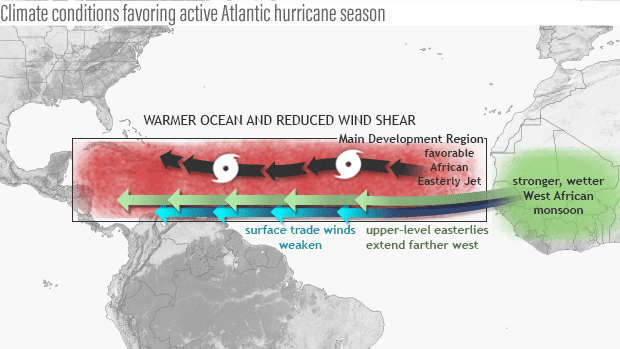
The 2025 Atlantic hurricane season, which runs from June 1 to Nov. 30, is forecast to be above average, with six to 10 hurricanes. The most active part of the season runs from the middle of August to the middle of October, after the DMSP satellite data is set to be turned off.

Hurricane forecasters will continue to use all available tools, including satellite, radar, weather balloon and dropsonde data, to monitor the tropics and issue hurricane forecasts. But the loss of satellite data, along with other cuts to data, funding and staffing, could ultimately put more lives at risk.

The Conversation

Chris Vagasky is a member of the American Meteorological Society and the National Weather Association.

ref. Hurricane forecasters are losing 3 key satellites ahead of peak storm season − a meteorologist explains why it matters – https://theconversation.com/hurricane-forecasters-are-losing-3-key-satellites-ahead-of-peak-storm-season-a-meteorologist-explains-why-it-matters-260190

Diversifying the special education teacher workforce could benefit US schools

Source: – By Elizabeth Bettini, Assistant Professor of Special Education, Boston University

The demographics of the special education teacher workforce have remained static, but the student population these educators serve is becoming more diverse. Courtney Hale/E+ via Getty Images

Teachers of color positively impact all students, including students of color with disabilities. Yet, the special education teacher workforce is overwhelmingly white.

In our recent research, we found that special education teacher demographics are not keeping pace with changes in the student population.

In 2012, about 80% of U.S. public school teachers were white, including about 80% of special education teachers, while less than 20% were teachers of color. By contrast, in the same year, students of color constituted 47% of those diagnosed with disabilities.

In our recent study, we examined whether these numbers have changed. Analyzing multiple national datasets on the teacher workforce, we found the proportion of special education teachers of color has been static, even as the student population is rapidly becoming more diverse.

So, the special education teacher workforce is actually becoming less representative of the student population over time. Specifically, in 2012, 16.5% of special education teachers were people of color, compared with 17.1% in 2021. In that same span, the share of students with disabilities who are students of color rose from 47.3% in 2012 to 53.9% in 2021.

In fact, for the special education teacher workforce to become representative of the student population, U.S. schools would need to triple the number of special education teachers of color.

As scholars who study teacher recruitment and retention and teacher working conditions, we are concerned that this disparity will affect the quality of education students receive.

Why does a diverse teacher workforce matter?

A Black teacher stands before rows of students sitting at desks.
Without more support from the government, the U.S. teacher workforce is likely to remain predominantly white.
gradyreese/iStock via Getty Images

For children of color, the research is clear: Teachers of color are, on average, more effective than white teachers in providing positive educational experiences and outcomes for students of color, including students of color with disabilities.

One study found that low-income Black male students who had one Black teacher in third, fourth or fifth grade were 39% less likely to drop out of high school and 29% more likely to enroll in college.

Moreover, teachers of color are just as effective as white teachers – and sometimes more effective – in teaching white students.

Providing pathways

The U.S. has institutions dedicated to attracting and retaining educators of color: Programs at historically Black colleges and universities, Hispanic-serving institutions and other minority-serving institutions prepare a substantial number of new teachers of color annually.

Further, many local initiatives support educators of color and attract teachers who might not otherwise have opportunities to join the profession.

These include: Grow Your Own programs that recruit effective teachers of color from local communities, teacher residency programs that help schools retain teachers of color, and
scholarships and loan forgiveness programs that support all teachers, including teachers of color.

However, the U.S. educator workforce faces broad challenges with declining interest in the teaching profession and declining enrollment in teacher preparation programs. In this context, our findings indicate that without significant investments, the teacher workforce is likely to remain predominately white – at significant cost to students with disabilities.

Anti-DEI movement cuts funding

A frustrated student sits at a desk while a teacher stands behind her in the background.
The Trump administration has canceled teacher preparation grants that recruit teachers of color and has taken other actions that could lead to a less diverse and skilled educator workforce.
Klaus Vedfelt/Getty Images

While there have been long-standing challenges, recent steps taken by the Trump administration could limit efforts to boost teacher diversity.

In its push to end diversity, equity and inclusion programs, the administration has cut grant funding for programs designed to develop a diverse educator workforce.

The administration has also cut millions of dollars dedicated to training teachers to work in underfunded, high-poverty schools and has threatened additional funding cuts to universities engaging in equity-based work.

These federal actions make the teacher workforce less adept at addressing the substantial challenges facing U.S. schools, such as declining interest in the teaching profession and and persistent racial disparities in student outcomes.

Given the strong evidence of the benefits of teachers of color and the national trends that our research uncovered, federal and state investments should prioritize supporting prospective teachers of color.

The Conversation

Elizabeth Bettini’s research has been funded by the US Department of Education’s National Center for Special Education Research within the Institute of Education Sciences, the US Department of Education’s Office of Special Education Programs, and the Spencer Foundation. She is affiliated with the Council for Exceptional Children’s Division for Research and Teacher Education Division, for which she edits the journal Teacher Education and Special Education.

LaRon A. Scott has received funding from the U.S. Department of Education Office of Special Education Programs. He is affiliated with the Council for Exceptional Children’s Teacher Education Division and the American Association for Individuals with Intellectual and Developmental Disabilities.

Tuan D. Nguyen receives funding from the National Science Foundation to do work around STEM teachers and computer science education.

ref. Diversifying the special education teacher workforce could benefit US schools – https://theconversation.com/diversifying-the-special-education-teacher-workforce-could-benefit-us-schools-254916

AI literacy: What it is, what it isn’t, who needs it and why it’s hard to define

Source: – By Daniel S. Schiff, Assistant Professor of Political Science, Purdue University

AI literacy is a lot more than simply knowing how to prompt an AI chatbot. DNY59/E+ via Getty Images

It is “the policy of the United States to promote AI literacy and proficiency among Americans,” reads an executive order President Donald Trump issued on April 23, 2025. The executive order, titled Advancing Artificial Intelligence Education for American Youth, signals that advancing AI literacy is now an official national priority.

This raises a series of important questions: What exactly is AI literacy, who needs it, and how do you go about building it thoughtfully and responsibly?

The implications of AI literacy, or lack thereof, are far-reaching. They extend beyond national ambitions to remain “a global leader in this technological revolution” or even prepare an “AI-skilled workforce,” as the executive order states. Without basic literacy, citizens and consumers are not well equipped to understand the algorithmic platforms and decisions that affect so many domains of their lives: government services, privacy, lending, health care, news recommendations and more. And the lack of AI literacy risks ceding important aspects of society’s future to a handful of multinational companies.

How, then, can institutions help people understand and use – or resist – AI as individuals, workers, parents, innovators, job seekers, students, employers and citizens? We are a policy scientist and two educational researchers who study AI literacy, and we explore these issues in our research.

What AI literacy is and isn’t

At its foundation, AI literacy includes a mix of knowledge, skills and attitudes that are technical, social and ethical in nature. According to one prominent definition, AI literacy refers to “a set of competencies that enables individuals to critically evaluate AI technologies; communicate and collaborate effectively with AI; and use AI as a tool online, at home, and in the workplace.”

AI literacy is not simply programming or the mechanics of neural networks, and it is certainly not just prompt engineering – that is, the act of carefully writing prompts for chatbots. Vibe coding, or using AI to write software code, might be fun and important, but restricting the definition of literacy to the newest trend or the latest need of employers won’t cover the bases in the long term. And while a single master definition may not be needed, or even desirable, too much variation makes it tricky to decide on organizational, educational or policy strategies.

Who needs AI literacy? Everyone, including the employees and students using it, and the citizens grappling with its growing impacts. Every sector and sphere of society is now involved with AI, even if this isn’t always easy for people to see.

Exactly how much literacy everyone needs and how to get there is a much tougher question. Are a few quick HR training sessions enough, or do we need to embed AI across K-12 curricula and deliver university micro credentials and hands-on workshops? There is much that researchers don’t know, which leads to the need to measure AI literacy and the effectiveness of different training approaches.

Ethics is an important aspect of AI literacy.

Measuring AI literacy

While there is a growing and bipartisan consensus that AI literacy matters, there’s much less consensus on how to actually understand people’s AI literacy levels. Researchers have focused on different aspects, such as technical or ethical skills, or on different populations – for example, business managers and students – or even on subdomains like generative AI.

A recent review study identified more than a dozen questionnaires designed to measure AI literacy, the vast majority of which rely on self-reported responses to questions and statements such as “I feel confident about using AI.” There’s also a lack of testing to see whether these questionnaires work well for people from different cultural backgrounds.

Moreover, the rise of generative AI has exposed gaps and challenges: Is it possible to create a stable way to measure AI literacy when AI is itself so dynamic?

In our research collaboration, we’ve tried to help address some of these problems. In particular, we’ve focused on creating objective knowledge assessments, such as multiple-choice surveys tested with thorough statistical analyses to ensure that they accurately measure AI literacy. We’ve so far tested a multiple-choice survey in the U.S., U.K. and Germany and found that it works consistently and fairly across these three countries.

There’s a lot more work to do to create reliable and feasible testing approaches. But going forward, just asking people to self-report their AI literacy probably isn’t enough to understand where different groups of people are and what supports they need.

Approaches to building AI literacy

Governments, universities and industry are trying to advance AI literacy.

Finland launched the Elements of AI series in 2018 with the hope of educating its general public on AI. Estonia’s AI Leap initiative partners with Anthropic and OpenAI to provide access to AI tools for tens of thousands of students and thousands of teachers. And China is now requiring at least eight hours of AI education annually as early as elementary school, which goes a step beyond the new U.S. executive order. On the university level, Purdue University and the University of Pennsylvania have launched new master’s in AI programs, targeting future AI leaders.

Despite these efforts, these initiatives face an unclear and evolving understanding of AI literacy. They also face challenges to measuring effectiveness and minimal knowledge on what teaching approaches actually work. And there are long-standing issues with respect to equity − for example, reaching schools, communities, segments of the population and businesses that are stretched or under-resourced.

Next moves on AI literacy

Based on our research, experience as educators and collaboration with policymakers and technology companies, we think a few steps might be prudent.

Building AI literacy starts with recognizing it’s not just about tech: People also need to grasp the social and ethical sides of the technology. To see whether we’re getting there, we researchers and educators should use clear, reliable tests that track progress for different age groups and communities. Universities and companies can try out new teaching ideas first, then share what works through an independent hub. Educators, meanwhile, need proper training and resources, not just additional curricula, to bring AI into the classroom. And because opportunity isn’t spread evenly, partnerships that reach under-resourced schools and neighborhoods are essential so everyone can benefit.

Critically, achieving widespread AI literacy may be even harder than building digital and media literacy, so getting there will require serious investment – not cuts – to education and research.

There is widespread consensus that AI literacy is important, whether to boost AI trust and adoption or to empower citizens to challenge AI or shape its future. As with AI itself, we believe it’s important to approach AI literacy carefully, avoiding hype or an overly technical focus. The right approach can prepare students to become “active and responsible participants in the workforce of the future” and empower Americans to “thrive in an increasingly digital society,” as the AI literacy executive order calls for.

The Conversation will be hosting a free webinar on practical and safe use of AI with our tech editor and an AI expert on June 24 at 2pm ET/11am PT. Sign up to get your questions answered.

The Conversation

Funding from Google Research helped to support part of the authors’ research on AI literacy.

Funding from the German Federal Ministry of Education and Research under the funding code 16DHBKI051 helped to support part of the authors’ research on AI literacy.

Arne Bewersdorff does not work for, consult, own shares in or receive funding from any company or organization that would benefit from this article, and has disclosed no relevant affiliations beyond their academic appointment.

ref. AI literacy: What it is, what it isn’t, who needs it and why it’s hard to define – https://theconversation.com/ai-literacy-what-it-is-what-it-isnt-who-needs-it-and-why-its-hard-to-define-256061

The hidden bias in college admissions tests: How standardized exams can favor privilege over potential

Source: – By Zarrina Talan Azizova, Associate Professor of Education, Health and Behavior, University of North Dakota

At first glance, calls from members of Congress to restore academic merit in college admissions might sound like a neutral policy.

In our view, these campaigns often cherry-pick evidence and mask a coordinated effort that targets access and diversity in American colleges.

As scholars who study access to higher education, we have found that when these efforts are paired with pressure to reinstate standardized tests, they amount to a rollback of inclusive practices.

A Department of Education letter sent to congressional offices from Feb. 14, 2025, stated that is “unlawful for an educational institution to eliminate standardized testing to achieve a desired racial balance or to increase racial diversity.” The letter also claimed that the most widely used admissions tests, the SAT and ACT, are objective measures of merit.

In our recent peer-reviewed article, we analyzed more than 70 empirical studies about the SAT’s and ACT’s roles in college admissions. Our work found several flaws in how these exams function, especially for historically underserved students.

Measuring college readiness

Two male students sit in a campus library reviewing notes.
Supporters of admissions tests contend that they are objective tools for measuring whether students are ready for college-level coursework.
The Good Brigade/Digital Vision via Getty Images

Several elite universities – including Yale, Dartmouth and the Massachusetts Institute of Technology – have reinstated SAT or ACT requirements, reversing test-optional policies that institutions expanded during the COVID-19 pandemic.

These changes have reignited debates about how well these tests measure students’ academic preparedness and how colleges should weigh them in admissions decisions.

During a May 21, 2025, hearing of the U.S. House Subcommittee on Higher Education and Workforce Development, some witnesses argued that using test scores allows colleges to admit students based on merit. Others maintained that test scores can function as barriers to higher education.

Our research shows that while these tests are statistically reliable – that is, they produce consistent results for students across subjects and during multiple attempts under similar conditions – they are not as valid as some argue.

High school grade-point averages are typically better predictors of students’ success in college than either test.

In addition, the tests are not equitable or similarly predictive for all students, especially given gender, race and socioeconomic demographics.

That is because they systematically favor those with more access to high-quality schooling, stable socioeconomic conditions and opportunities to engage with test prep coaches and courses. That test prep can cost thousands of dollars.

In short, both tests tend to reflect privilege more than potential.

For example, students from higher-income households routinely outperform their peers on the ACT and SAT.

This isn’t surprising, considering wealthier families can afford test prep services, private tutoring and test retakes. These advantages translate into higher scores and open doors to selective colleges and scholarship opportunities.

Meanwhile, students from low-income families often face challenges – such as less experienced instructors and less access to high-level science, math and advanced placement courses – that test scores do not factor in.

Reflecting deep inequities

An overhead photo of students in a study group sitting around a small glass table.
In the U.S., high school GPA can be a better predictor than standardized tests of college success.
Clerkenwell/Vetta via Getty Images

In our published review, we found that these disparities aren’t incidental – they’re systemic.

Our review revealed long-standing evidence of bias in test design and differences in average scores along lines of race, gender and language background.

These outcomes don’t just reflect academic differences; they reflect inequities that shape how students prepare for and perform on these tests.

We also found that high school GPA outperforms standardized tests in predicting college success. GPA captures years of classroom performance, effort and teacher feedback. It reflects how students navigate real-world challenges, not just how they perform on a single timed exam.

For many students, particularly those from historically marginalized backgrounds, grades can offer a better indication of how prepared they are for college-level work.

This issue matters because admissions decisions aren’t just technical evaluations – they are value statements. Choosing to center test scores in admissions rewards certain kinds of knowledge, experiences and preparation.

The American Council on Education defines equity as opportunities for success. It means building educational environments that recognize diverse forms of potential and equip all learners to thrive.

It’s worth noting that research on testing often focuses on elite institutions, where standardized test scores are more likely to be used as high-stakes screening tools. Our systematic review found that, even in elite schools, the tests’ ability to accurately predict college academic performance is often limited (moderate in statistical terms).

But most college students attend state universities, public regional universities, minority-serving institutions, or colleges that accept most applicants. Our study found that at these institutions, standardized test scores are even less likely to predict how students will do.

This may be because state universities and public regional universities are more likely to serve highly diverse student populations, including older, part-time and first-generation students and those who are balancing work and family responsibilities.

Where does higher ed go from here?

An elevated view of college students walking up stairs.
Prioritizing standardized tests in college admissions could close the doors of opportunity for some capable students.
David Schaffer/istock via Getty Images Plus

With the debate over the role of standardized tests in the admissions process, higher education stands at a crossroads: Will colleges yield to political pressure and narrow definitions of merit and ignore equity? Or will institutions reaffirm their mission by embracing broader, fairer tools for recognizing talent and supporting student success?

The answer depends on what values are prioritized.

Our research and that of others make it clear that standardized tests should not be the gatekeepers of opportunity.

If universities define merit on test scores alone, they risk closing the doors of opportunity to capable students.

The Conversation

The authors do not work for, consult, own shares in or receive funding from any company or organization that would benefit from this article, and have disclosed no relevant affiliations beyond their academic appointment.

ref. The hidden bias in college admissions tests: How standardized exams can favor privilege over potential – https://theconversation.com/the-hidden-bias-in-college-admissions-tests-how-standardized-exams-can-favor-privilege-over-potential-256967

Companies haven’t stopped hiring, but they’re more cautious, according to the 2025 College Hiring Outlook Report

Source: – By Murugan Anandarajan, Professor of Decision Sciences and Management Information Systems, Drexel University

Recent college grads face a tough job market in 2025, but employers are still hiring. sturti/E+ via Getty Images

Every year, I tell my students in my business analytics class the same thing: “Don’t just apply for a job. Audition for it.”

This advice seems particularly relevant this year. In today’s turbulent economy, companies are still hiring, but they’re doing it a bit more carefully. More places are offering candidates short-term work experiences like internships and co-op programs in order to evaluate them before making them full-time offers.

This is just one of the findings of the 2025 College Hiring Outlook Report. This annual report tracks trends in the job market and offers valuable insights for both job seekers and employers. It is based on a national survey conducted in September 2024, with responses from 1,322 employers spanning all major industries and company sizes, from small firms to large enterprises. The survey looks at employer perspectives on entry-level hiring trends, skills demand and talent development strategies.

I am a professor of information systems at Drexel University’s LeBow College of Business in Philadelphia, and I co-authored this report along with a team of colleagues at the Center for Career Readiness.

Here’s what we found:

Employers are rethinking talent pipelines

Only 21% of the 1,322 employers we surveyed rated the current college hiring market as “excellent” or “very good,” which is a dramatic drop from 61% in 2023. This indicates that companies are becoming increasingly cautious about how they recruit and select new talent.

While confidence in full-time hiring has declined, employers are not stepping away from hiring altogether. Instead, they’re shifting to paid and unpaid internships, co-ops and contract-to-hire roles as a less risky route to identify talent and “de-risk” full-time hiring.

Employers we surveyed described internships as a cost-effective talent pipeline, and 70% told us they plan to maintain or increase their co-op and intern hiring in 2025. At a time when many companies are tightening their belts, hiring someone who’s already proved themselves saves on onboarding reduces turnover and minimizes potentially costly mishires.

For job seekers, this makes every internship or short-term role more than a foot in the door. It’s an extended audition. Even with the general market looking unstable, interest in co-op and internship programs appears steady, especially among recent graduates facing fewer full-time opportunities.

These programs aren’t just about trying out a job. They let employers see if a candidate shows initiative, good judgment and the ability to work well on a team, which we found are traits employers value even more than technical skills.

What employers want

We found that employers increasingly prioritize self-management skills like adaptability, ethical reasoning and communication over technical skills such as digital literacy and cybersecurity. Employers are paying attention to how candidates behave during internships, how they take feedback, and whether they bring the mindset needed to grow with the company.

This reflects what I have observed in classrooms and in conversations with hiring managers: Credentials matter, but what truly sets candidates apart is how they present themselves and what they contribute to a company.

Based on co-op and internship data we’ve collected at Drexel, however, many students continue to believe that technical proficiency is the key to getting a job.

In my opinion, this disconnect reveals a critical gap in expectations: While students focus on hard skills to differentiate themselves, employers are looking for the human skills that indicate long-term potential, resilience and professionalism. This is especially true in the face of economic uncertainty and the ambiguous, fast-changing nature of today’s workplace.

Technology is changing how hiring happens

Employers also told us that artificial intelligence is now central to how both applicants and employers navigate the hiring process.

Some companies are increasingly using AI-powered platforms to transform their hiring processes. For example, Children’s Hospital of Philadelphia uses platforms like HireVue to conduct asynchronous video interviews. HR-focused firms like Phenom and JJ Staffing Services also leverage technologies such as AI-based resume ranking, automated interview scheduling and one-way video assessments.

Not only do these tools speed up the hiring process, but they also reshape how employers and candidates interact. In our survey, large employers said they are increasingly relying on AI tools like resume screeners and one-way video interviews to manage large numbers of job applicants. As a result, the candidate’s presence, clarity in communication and authenticity are being evaluated even before a human recruiter becomes involved.

At the same time, job seekers are using generative AI tools to write cover letters, practice interviews or reformat resumes. These tools can help with preparation, but overreliance on them can backfire. Employers want authenticity, and many employers we surveyed mentioned they notice when applications seem overly robotic.

In my experience as a professor, the key is teaching students to use AI to enhance their effort and not replace it. I encourage them to leverage AI tools but always emphasize that the final output and the impression it makes should reflect their own thinking and professionalism. The bottom line is that hiring is still a human decision, and the personal impression you make matters.

This isn’t just about new grads

While our research focuses on early-career hiring, these findings apply to other audiences as well, such as career changers, returning professionals and even mid-career workers. These workers are increasingly being evaluated on their adaptability, behavior and collaborative ability – not just their experience.

Many companies now offer project-based assignments and trial roles that let them evaluate performance before making a permanent hire.

At the same time, employers are investing in internal reskilling and upskilling programs. Reskilling refers to training workers for entirely new roles, often in response to job changes or automation, while upskilling means helping employees deepen their current skills to stay effective and advance in their existing roles. Our report indicates that approximately 88% of large companies now offer structured upskilling and reskilling programs. For job seekers and workers alike, staying competitive means taking the initiative and demonstrating a commitment to learning and growth.

Show up early, and show up well

So what can students, or anyone entering or reentering the workforce, do to prepare?

  • Start early. Don’t wait until senior year. First- and second-year internships are growing in importance.

  • Sharpen your soft skills. Communication, time management, problem-solving and ethical behavior are top priorities for employers.

  • Understand where work is happening. Over 50% of entry-level jobs are fully in-person. Only 4% are fully remote. Show up ready to engage.

  • Use AI strategically. It’s a useful tool for research and practice, not a shortcut to connection or clarity.

  • Stay curious. Most large employers now offer reskilling or upskilling opportunities – and they expect employees to take initiative.

One of the clearest takeaways from this year’s report is that hiring is no longer a one-time decision. It’s a performance process that often begins before an interview is even scheduled.

Whether you’re still in school, transitioning in your career or returning to the workforce after a break, the same principle applies: Every opportunity is an audition. Treat it like one.

The Conversation

Murugan Anandarajan does not work for, consult, own shares in or receive funding from any company or organization that would benefit from this article, and has disclosed no relevant affiliations beyond their academic appointment.

ref. Companies haven’t stopped hiring, but they’re more cautious, according to the 2025 College Hiring Outlook Report – https://theconversation.com/companies-havent-stopped-hiring-but-theyre-more-cautious-according-to-the-2025-college-hiring-outlook-report-257870

Trump administration’s conflicting messages on Chinese student visas reflect complex US-China relations

Source: – By Meredith Oyen, Associate Professor of History and Asian Studies, University of Maryland, Baltimore County

The U.S. announced plans to scrutinize and revoke student visas for students with ties to the Chinese Communist Party or whose studies are in critical fields, but appears to have reconsidered. The decision and apparent about-face could have a wide-ranging impact on both nations. LAW Ho Ming/Getty Images

President Donald Trump appears to have walked back plans for the U.S. State Department to scrutinize and revoke visas for Chinese students studying in the country.

On June 11, 2025, Trump posted on his social media platform TruthSocial that visas for Chinese students would continue and that they are welcome in the United States, as their presence “has always been good with me!”

The announcement came weeks after Secretary of State Marco Rubio announced that his department would begin scrutinizing and revoking student visas for Chinese nationals with ties to the Chinese Communist Party, or whose studies are in critical fields.

The contradictory moves have led to confusion among Chinese students attending college or considering studying in the United States.

Over time, Chinese nationals have faced barriers to studying in the U.S. As a scholar who studies relations between the two nations, I argue that efforts to ban Chinese students in the United States are not unprecedented, and historically they have come with consequences.

Student visas under fire

Two students sit side by side studying in a library.
The Trump administration laid out the terms for revoking or denying student visas to Chinese nationals but then backtracked.
STAP/Getty Images

Since the late 1970s, millions of Chinese students have been granted visas to study at American universities. That total includes approximately 277,000 who studied in the United States in the 2023-2024 academic year.

It is difficult to determine how many of these students would have been affected by a ban on visas for individuals with Chinese Community Party affiliations or in critical fields.

Approximately 40% of all new members of the Chinese Communist Party each year are drawn from China’s student population. And many universities in China have party connections or charters that emphasize party loyalty.

The “critical fields” at risk were not defined. A majority of Chinese students in the U.S. are enrolled in math, technology, science and engineering fields.

A long history

A student holding chalks writes Mandarin text on a blackboard.
Since the late 1970s, the number of Chinese students attending college in the U.S. has increased dramatically.
Kenishiroite/Getty Images

Yung Wing became the first Chinese student to graduate from a U.S. university in 1852.

Since then, millions of Chinese students have come to the United States to study, supported by programs such as the “Chinese Educational Mission,” Boxer Indemnity Fund scholarships and the Fulbright Program.

The Institute for International Education in New York estimated the economic impact of Chinese students in the U.S. at over US$14 billion a year. Chinese students tend to pay full tuition to their universities. At the graduate level, they perform vital roles in labs and classrooms. Just under half of all Chinese students attending college in the U.S. are graduate students.

However, there is a long history of equating Chinese migrants as invaders, spies or risks to national security.

After the outbreak of the Korean War in 1950, the U.S. Department of Justice began to prevent Chinese scholars and students in STEM fields – science, technology, engineering and math – from returning to China by stopping them at U.S. ports of entry and exit. They could be pulled aside when trying to board a flight or ship and their tickets canceled.

In one infamous case, Chinese rocket scientist Qian Xuesen was arrested, harassed, ordered deported and prevented from leaving over five years from 1950 to 1955. In 1955, the United States and China began ambassadorial-level talks to negotiate repatriations from either country. After his experience, Qian became a much-lauded supporter of the Communist government and played an important role in the development of Chinese transcontinental missile technology.

During the 1950s, the U.S. Department of Justice raided Chinatown organizations looking for Chinese migrants who arrived under false names during the Chinese Exclusion Era, a period from the 1880s to 1940s when the U.S. government placed tight restrictions on Chinese immigration into the country. A primary justification for the tactics was fear that the Chinese in the U.S. would spy for their home country.

Between 1949 and 1979, the U.S and China did not have normal diplomatic relations. The two nations recognized each other and exchanged ambassadors starting in January 1979. In the more than four decades since, the number of Chinese students in the U.S. has increased dramatically.

Anti-Chinese discrimination

The idea of an outright ban on Chinese student visas has raised concerns about increased targeting of Chinese in the U.S. for harassment.

In 1999, Taiwanese-American scientist Wen Ho Lee was arrested on suspicion of using his position at Los Alamos National Laboratory in New Mexico to spy for China. Lee remained imprisoned in solitary confinement for 278 days before he was released without a conviction.

In 2018, during the first Trump administration, the Department of Justice launched its China Initiative. In its effort to weed out industrial, technological and corporate espionage, the initiative targeted many ethnic Chinese researchers and had a chilling effect on continued exchanges, but it secured no convictions for wrongdoing.

Trump again expressed concerns last year that undocumented migrants from China might be coming to the United States to spy or “build an army.”

The repeated search for spies among Chinese migrants and residents in the U.S. has created an atmosphere of fear for Chinese American communities.

Broader foreign policy context

two puzzle pieces — one representing the United States flag and the other the Chinese flag — stand separated against a neutral background
An atmosphere of suspicion has altered the climate for Chinese international students.
J Studios/Getty Images

The U.S. plan to revoke visas for students studying in the U.S. and the Chinese response is being formed amid contentious debates over trade.

Chinese Ministry of Foreign Affairs spokesperson Lin Jian accused the U.S. of violating an agreement on tariff reduction the two sides discussed in Geneva in May, citing the visa issues as one example.

Trump has also complained that the Chinese violated agreements between the countries, and some reports suggest that the announcement on student visas was a negotiating tactic to change the Chinese stance on the export of rare earth minerals.

When Trump announced his trade deal with China on June 11, he added a statement welcoming Chinese students.

However, past practice shows that the atmosphere of uncertainty and suspicion may have already damaged the climate for Chinese international students, and at least some degree of increased scrutiny of student visas will likely continue regardless.

The Conversation

Meredith Oyen does not work for, consult, own shares in or receive funding from any company or organization that would benefit from this article, and has disclosed no relevant affiliations beyond their academic appointment.

ref. Trump administration’s conflicting messages on Chinese student visas reflect complex US-China relations – https://theconversation.com/trump-administrations-conflicting-messages-on-chinese-student-visas-reflect-complex-us-china-relations-258351

What if universal rental assistance were implemented to deal with the housing crisis?

Source: – By Alex Schwartz, Professor of Urban Policy, The New School

Thousands of American families that can’t find affordable apartments are stuck living in extended-stay motels. Michael S. Williamson/The Washington Post via Getty Images

If there’s one thing that U.S. politicians and activists from across the political spectrum can agree on, it’s that rents are far too high.

Many experts believe that this crisis is fueled by a shortage of housing, caused principally by restrictive regulations.

Rents and home prices would fall, the argument goes, if rules such as minimum lot- and house-size requirements and prohibitions against apartment complexes were relaxed. This, in turn, would make it easier to build more housing.

As experts on housing policy, we’re concerned about housing affordability. But our research shows little connection between a shortfall of housing and rental affordability problems. Even a massive infusion of new housing would not shrink housing costs enough to solve the crisis, as rents would likely remain out of reach for many households.

However, there are already subsidies in place that ensure that some renters in the U.S. pay no more than 30% of their income on housing costs. The most effective solution, in our view, is to make these subsidies much more widely available.

A financial sinkhole

Just how expensive are rents in the U.S.?

According to the U.S. Department of Housing and Urban Development, a household that spends more than 30% of its income on housing is deemed to be cost-burdened. If it spends more than 50%, it’s considered severely burdened. In 2023, 54% of all renters spent more than 30% of their pretax income on housing. That’s up from 43% of renters in 1999. And 28% of all renters spent more than half their income on housing in 2023.

Renters with low incomes are especially unlikely to afford their housing: 81% of renters making less than $30,000 spent more than 30% of their income on housing, and 60% spent more than 50%.

Estimates of the nation’s housing shortage vary widely, reaching up to 20 million units, depending on analytic approach and the time period covered. Yet our research, which compares growth in the housing stock from 2000 to the present, finds no evidence of an overall shortage of housing units. Rather, we see a gap between the number of low-income households and the number of affordable housing units available to them; more affluent renters face no such shortage. This is true in the nation as a whole and in nearly all large and small metropolitan areas.

Would lower rents help? Certainly. But they wouldn’t fix everything.

We ran a simulation to test an admittedly unlikely scenario: What if rents dropped 25% across the board? We found it would reduce the number of cost-burdened renters – but not by as much as you might think.

Even with the reduction, nearly one-third of all renters would still spend more than 30% of their income on housing. Moreover, reducing rents would help affluent renters much more than those with lower incomes – the households that face the most severe affordability challenges.

The proportion of cost-burdened renters earning more than $75,000 would fall from 16% to 4%, while the share of similarly burdened renters earning less than $15,000 would drop from 89% to just 80%. Even with a rent rollback of 25%, the majority of renters earning less than $30,000 would remain cost-burdened.

Vouchers offer more breathing room

Meanwhile, there’s a proven way of making housing more affordable: rental subsidies.

In 2024, the U.S. provided what are known as “deep” housing subsidies to about 5 million households, meaning that rent payments are capped at 30% of their income.

These subsidies take three forms: Housing Choice Vouchers that enable people to rent homes in the private market; public housing; and project-based rental assistance, in which the federal government subsidizes the rents for all or some of the units in properties under private and nonprofit ownership.

The number of households participating in these three programs has increased by less than 2% since 2014, and they constitute only 25% of all eligible households. Households earning less than 50% of their area’s median family income are eligible for rental assistance. But unlike Social Security, Medicare or food stamps, rental assistance is not an entitlement available to all who qualify. The number of recipients is limited by the amount of funding appropriated each year by Congress, and this funding has never been sufficient to meet the need.

By expanding rental assistance to all eligible low-income households, the government could make huge headway in solving the rental affordability crisis. The most obvious option would be to expand the existing Housing Choice Voucher program, also known as Section 8.

The program helps pay the rent up to a specified “payment standard” determined by each local public housing authority, which can set this standard at between 80% and 120% of the HUD-designated fair market rent. To be eligible for the program, units must also satisfy HUD’s physical quality standards.

Unfortunately, about 43% of voucher recipients are unable to use it. They are either unable to find an apartment that rents for less than the payment standard, meets the physical quality standard, or has a landlord willing to accept vouchers.

Renters are more likely to find housing using vouchers in cities and states where it’s illegal for landlords to discriminate against voucher holders. Programs that provide housing counseling and landlord outreach and support have also improved outcomes for voucher recipients.

However, it might be more effective to forgo the voucher program altogether and simply give eligible households cash to cover their housing costs. The Philadelphia Housing Authority is currently testing out this approach.

The idea is that landlords would be less likely to reject applicants receiving government support if the bureaucratic hurdles were eliminated. The downside of this approach is that it would not prevent landlords from renting out deficient units that the voucher program would normally reject.

Homeowners get subsidies – why not renters?

Expanding rental assistance to all eligible low-income households would be costly.

The Urban Institute, a nonpartisan think tank, estimates it would cost about $118 billion a year.

However, Congress has spent similar sums on housing subsidies before. But they involve tax breaks for homeowners, not low-income renters. Congress forgoes billions of dollars annually in tax revenue it would otherwise collect were it not for tax deductions, credits, exclusions and exemptions. These are known as tax expenditures. A tax not collected is equivalent to a subsidy payment.

Silhouette of older man standing at sliding glass door.
Only about 25% of eligiblge households receive rental assistance from the federal government.
Luis Sinco/Los Angeles Times via Getty Images

For example, from 1998 through 2017 – prior to the tax changes enacted by the first Trump administration in 2017 – the federal government annually sacrificed $187 billion on average, after inflation, in revenue due to mortgage interest deductions, deductions for state and local taxes, and for the exemption of proceeds from the sale of one’s home from capital gains taxes. In fiscal year 2025, these tax expenditures totaled $95.4 billion.

Moreover, tax expenditures on behalf of homeowners flow mostly to higher-income households. In 2024, for example, over 70% of all mortgage-interest tax deductions went to homeowners earning at least $200,000.

Broadening the availability of rental subsidies would have other benefits. It would save federal, state and local governments billions of dollars in homeless services. Moreover, automatic provision of rental subsidies would reduce the need for additional subsidies to finance new affordable housing. Universal rental assistance, by guaranteeing sufficient rental income, would allow builders to more easily obtain loans to cover development costs.

Of course, sharply raising federal expenditures for low-income rental assistance flies in the face of the Trump administration’s priorities. Its budget proposal for the next fiscal year calls for a 44% cut of more than $27 billion in rental assistance and public housing.

On the other hand, if the government supported rental assistance in amounts commensurate with the tax benefits given to homeowners, it would go a long way toward resolving the rental housing affordability crisis.

This article is part of a series centered on envisioning ways to deal with the housing crisis.

The Conversation

Alex Schwartz has received funding from the Catherine and John D. MacArthur Foundation. Since 2019 he has served on New York City’s Rent Guidelines Board. He has a relative who works for The Conversation.

Kirk McClure received funding from the U.S. Department of Housing and Urban Development and receives funding from the National Science Foundation.

ref. What if universal rental assistance were implemented to deal with the housing crisis? – https://theconversation.com/what-if-universal-rental-assistance-were-implemented-to-deal-with-the-housing-crisis-257213

Michelin Guide scrutiny could boost Philly tourism, but will it stifle chefs’ freedom to experiment and innovate?

Source: – By Jonathan Deutsch, Professor of Food and Hospitality Management, Drexel University

Chef Phila Lorn prepares a bowl of noodle soup at Mawn restaurant in Philadelphia. AP Photo/Matt Rourke

The Philadelphia restaurant scene is abuzz with the news that the famed Michelin Guide is coming to town.

As a research chef and educator at Drexel University in Philadelphia, I am following the Michelin developments closely.

Having eaten in Michelin restaurants in other cities, I am confident that Philly has at least a few star-worthy restaurants. Our innovative dining scene was named one of the top 10 in the U.S. by Food & Wine in 2025.

Researchers have convincingly shown that Michelin ratings can boost tourism, so Philly gaining some starred restaurants could bring more revenue for the city.

But as the lead author of the textbook “Culinary Improvisation,” which teaches creativity, I also worry the Michelin scrutiny could make chefs more focused on delivering a consistent experience than continuing along the innovative trajectory that attracts Michelin in the first place.

Ingredients for culinary innovation

In “Culinary Improvisation” we discuss three elements needed to foster innovation in the kitchen.

The first is mastery of culinary technique, both classical and modern. Simply stated, this refers to good cooking.

The second is access to a diverse range of ingredients and flavors. The more colors the artist has on their palette, the more directions the creation can take.

And the third, which is key to my concerns, is a collaborative and supportive environment where chefs can take risks and make mistakes. Research shows a close link between risk-taking workplaces and innovation.

According to the Michelin Guide, stars are awarded to outstanding restaurants based on: “quality of ingredients, mastery of cooking techniques and flavors, the personality of the chef as expressed in the cuisine, value for money, and consistency of the dining experience both across the menu and over time.”

The criteria do not mention innovation.

It’s possible the high-stakes lure of a Michelin star, which awards consistent excellence, could lead Philly’s most vibrant and creative chefs and restaurateurs to pull back on the risks that led to the city’s culinary excellence in the first place.

A line of chefs wearing black aprons at work in an open kitchen.
Local food writers believe Vernick Fish is a top contender for a Michelin star.
Photo courtesy of Vernick Fish

The obvious contenders

Philadelphia’s preeminent restaurant critic Craig LaBan and journalist and former restaurateur Kiki Aranita discussed local contenders for Michelin stars in a recent article in the Philadelphia Inquirer.

The 19 restaurants LaBan and Aranita discuss as possible star contenders average just over a one-mile walk from the Pennsylvania Convention Center.

Together they have received 78 James Beard nominations or awards, which are considered the “Oscars” of the food industry. That’s an average of over four per restaurant.

And when I tried to book a table for two on a Wednesday and Saturday before 9 p.m., about half were already fully booked for dinner two weeks out, in July, which is the slow season for dining in Philadelphia.

If LaBan’s and Aranita’s predictions are right, Michelin will be an added recognition for restaurants that are already successful and centrally located.

Exterior shot of a restaurant with outdoor seating in ground floor of rowhome
Black Dragon Takeout fuses Black American cuisine with the aesthetics of classic Chinese American takeout.
Jeff Fusco/The Conversation, CC BY-SA

Off the beaten path

When the Michelin Guide started in France at the turn of the 19th century, it encouraged diners to take the road less traveled to their next gastronomic experience.

It has since evolved into recommendations for a road well traveled: safe, lauded and already hard-to-get-into restaurants. In Philly these could be restaurants such as Vetri Cucina, Zahav, Vernick Fish, Provenance, Royal Sushi and Izakaya, Ogawa and Friday Saturday Sunday, to name a few on LaBan and Aranita’s list.

And yet Philadelphia has over 6,000 restaurants spread across 135 square miles of the city. Philadelphia is known as a city of neighborhoods, and these neighborhoods are rich with food diversity and innovation.

Consider Jacob Trinh’s Vietnamese-tinged seafood tasting menu at Little Fish in Queen Village; Kurt Evans’ gumbo lo mein at Black Dragon Takeout in West Philly; the beef cheek confit with avocado mousse at Temir Satybaldiev’s Ginger in the Northeast; and the West African XO sauce at Honeysuckle, owned by Omar Tate and Cybille St.Aude-Tate, on North Broad Street.

I hope the Michelin inspectors will venture far beyond the obvious candidates to experience more of what Philadelphia has to offer.

Small stacks of red hardback books that say 'Michelin France 2025'
The Michelin Guide announced it will include Philadelphia and Boston in its next Northeast Cities edition.
Matthieu Delaty/Hans Lucas/AFP via Getty Images

Raising the bar

In the frenzy surrounding the Michelin scrutiny, chef friends have invited me to dine at their restaurants and share my feedback as they refine their menus in anticipation of visits from anonymous Michelin inspectors.

Restaurateurs have been asking my colleagues and me for talent suggestions to replace well-liked and capable cooks, servers and managers whom owners perceive to be just not Michelin-star level.

And managers are texting us names of suspected reviewers, triggered by some tell-tale signs – a solo diner with a weeknight tasting menu reservation, no dietary restrictions or special requests, and a conspicuously light internet presence.

In all, I am excited about Philadelphians being excited about Michelin. Any opportunity to spotlight the city’s restaurant community and tighten its food and service quality raises the bar among local chefs and restaurateurs and makes the experience better for diners. And the prospect of business travelers and culinary tourists enjoying lunches and early-week dinners can help restaurants, their workers and the city earn more revenue.

But in the din of the press events and hype, let’s not forget that Philadelphians don’t need an outside arbiter to tell us what we already know: Philly is a great place to eat and drink.

Read more of our stories about Philadelphia.

The Conversation

Jonathan Deutsch does not work for, consult, own shares in or receive funding from any company or organization that would benefit from this article, and has disclosed no relevant affiliations beyond their academic appointment.

ref. Michelin Guide scrutiny could boost Philly tourism, but will it stifle chefs’ freedom to experiment and innovate? – https://theconversation.com/michelin-guide-scrutiny-could-boost-philly-tourism-but-will-it-stifle-chefs-freedom-to-experiment-and-innovate-256752

Why power skills – formerly known as ‘soft skills’ – are the key to business success

Source: – By Sandra Sjoberg, Vice President and Dean, Academic Programs, Western Governors University School of Business

What does it take to lead through complexity, make tough decisions and still put people first? For me, the answer became clear during a defining moment early in my career – one that changed my path entirely.

Today I am a business-school educator, but I began my career in the corporate world. I faced a challenge so intense that it motivated me to go back to school and earn a Ph.D. so I could help others lead with greater purpose and humanity.

Back then, I was working for a multinational home goods company, and I was asked to play a role in closing a U.S. factory in the Midwest and moving its operations abroad. It was, by every business metric, the right economic decision. Without it, the company couldn’t stay competitive. Still, the move was fraught with emotional and ethical complexities.

Witnessing the toll on employees who lost their jobs, and the broader effects on their community, changed how I thought about business decision-making. I saw that technical skills alone aren’t enough. Effective leadership also requires emotional intelligence, ethical reasoning and human-centered thinking.

That experience was a turning point, leading me to higher education. I wanted to fulfill a greater purpose by equipping future business leaders with critical human-centric skills. And to do that, I needed to learn more about these skills – why they matter, how they shape outcomes, and how we can teach them more effectively.

Often called “soft skills” or “people skills,” these are also, more appropriately, referred to as “power skills” or “durable skills.” And they aren’t just nice to have. As my own experience shows and as research confirms, they are central to success in today’s business world.

Power skills: Underappreciated, yet in demand

Research on power skills dates back to at least 1918, when the Carnegie Foundation published A Study of Engineering Education. That report concluded that 85% of engineering professionals’ success came from having well-developed people skills, and only 15% was attributed to “hard skills.” These early findings helped shape our understanding of the value of nontechnical skills and traits.

Today, employers arguably value these skills more than ever. But while demand for these skills is growing across industries, there’s not enough supply. For example, nearly 7 in 10 U.S. employers plan to prioritize hiring candidates with “soft” or “power” skills, according to LinkedIn’s most recent Global Talent Trends report.

Yet 65% of employers cite soft skills as the top gap among new graduates, according to Coursera’s 2025 Micro-Credentials Impact Report. New hires are struggling in the areas of communication, active listening, resilience and adaptability, the survey found.

Power skills are transferable across roles, projects and industries, which makes them especially valuable to hiring managers. And research continues to show that these skills drive innovation, strengthen team dynamics and help organizations navigate uncertainty — key reasons why employers prioritize them.

Three power skills to prioritize

So what does it look like to lead with power skills? Here are three key areas that have shaped my own journey — and that I now help others develop:

Adaptability: Adaptability goes beyond simply accepting change. It’s the ability to think, feel and act effectively when the situation changes – which, in today’s business environment, is all the time.

Consider a company expanding into a new international market. To succeed, it must invest in cultural research, adapt its operations to regional norms and align with local regulations – demonstrating adaptability at both strategic and operational levels.

That’s why adaptability is one of the most in-demand skills among employers, according to a recent LinkedIn study. Adaptable workforces are better equipped to respond to shifting demands. And with the rise of artificial intelligence and rapid tech disruption, organizations need agile, resilient employees more than ever.

Empathy: As I learned firsthand during my time in the corporate world, empathy – or the ability to understand and respond to the feelings, perspectives and needs of others – is essential.

Empathy not only fosters trust and respect, but it also helps leaders make decisions that balance organizational goals with human needs. More broadly, empathetic leaders create inclusive environments and build stronger relationships.

At Western Governors University, we have an entire course titled “Empathy and Inclusive Collaboration,” which teaches skills in active listening, creating culturally safe environments and cultivating an inclusive mindset.

Inclusivity: Effective communication and teamwork consistently rank high as essential workforce skills. This is because organizations that excel in communication and collaboration are more likely to innovate, adapt to change and make informed decisions.

While managing a global transition, I saw how hard and necessary it was to listen across cultural lines, to foster collaboration across borders and departments. When teams collaborate well, they bring diverse perspectives that can foster creativity and efficiency. The ability to communicate openly and work together is crucial for navigating complex problems and driving organizational success.

The business landscape is evolving rapidly, and technical expertise alone is no longer enough to drive success. Power skills like adaptability, empathy and inclusivity are crucial, as both research and my own experiences have taught me. By prioritizing power skills, educators and businesses can better prepare leaders to navigate complexity, lead with purpose and thrive in a constantly changing world.

The Conversation

Sandra Sjoberg is affiliated with Western Governors University.
Sandra Sjoberg is a member of the industry association, American Marketing Association.
Sandra Sjoberg was a former employee at Amerock, a division of Newell Rubbermaid that, while not mentioned directly in the article, is the basis for the corporate experience shared in the article.

ref. Why power skills – formerly known as ‘soft skills’ – are the key to business success – https://theconversation.com/why-power-skills-formerly-known-as-soft-skills-are-the-key-to-business-success-257310