China may not invade Taiwan, but rather blockade it. How would this work, and could it be effective?

Source: The Conversation – Global Perspectives – By Claudio Bozzi, Lecturer in Law, Deakin University

US officials believe Chinese President Xi Xinping has set a deadline for his military to be capable of invading Taiwan by 2027 – the centennial anniversary of the founding of the People’s Liberation Army (PLA).

US Secretary of Defense Pete Hegseth mentioned this date at a security conference in Singapore in May, warning of the “imminent threat” China poses to Taiwan.

The PLA has invested heavily in expanding and modernising its operations in recent years. Since 2015, it has built the world’s largest navy and coast guard.

But rather than threaten an invasion of Taiwan, China seems increasingly likely to pressure the self-governing, democratically ruled island with an extended blockade to force it to capitulate.

In preparation for such a possible action, China has developed a new command structure enabling it to coordinate its air, sea and land-based weapons systems to enact a strategy of lianhe fengkong (联合封控), or joint blockade. This would effectively cut Taiwan off from the outside world.

In late July, the Centre for Strategic and International Studies (CSIS) produced a report on 26 simulated war games it conducted to determine what a Chinese blockade of Taiwan would look like.

Taiwan’s natural gas supplies were predicted to run out after ten days of a blockade. Coal and oil supplies would run out in a matter of weeks. If Taiwan’s electricity was reduced to 20% of its pre-blockade levels, all manufacturing would cease. Casualties were expected to be in the thousands.

Taiwan is particularly vulnerable to a blockade. It relies more than any other developed nation on port calls relative to the size of its economy. Its biggest ports are on its west coast, facing mainland China. The island also has limited emergency food and fuel reserves.


What is a blockade under the law?

Imposing a naval blockade during armed conflict is an established right under customary international law. Blockades are not illegal per se, but they must comply with the laws of war. It’s a complicated and controversial area of the law.

To be legal, a blockade must first be effective. That is, the blockading power must maintain a force that prevents access to the enemy’s coast.

Other nations must be notified of the instigation of the blockade and its geographical extent.

A blockade must be enforced impartially against all vessels, except neutral vessels in distress. Any vessel breaching the blockade would be subject to being stopped, captured or fired upon.

Lastly, a blockade cannot prevent access to neutral ports or the delivery of humanitarian assistance to civilians.

Blockade strategies

China may use one of several blockade strategies against Taiwan. In contrast to an invasion, blockades can be scaled up or back, or reversed, depending on the unfolding security situation.

For instance, China may attack merchant shipping vessels seeking to enter Taiwanese waters to deliver essential cargo, coercing Taiwan to submit to China’s takeover. This is known as a kinetic blockade.

Alternatively, it may implement its preferred strategy of “winning without fighting”. Given the sheer size of its navy, coastguard and maritime militia, China could simply encircle the island and block access to its ports.

This could isolate Taiwan from the global economy to the point of forcing it to surrender, or weaken it sufficiently to enable an invasion, without engaging in open hostilities. This is a non-kinetic blockade.

Other ways of impeding naval passage

China may also use measures that fall short of a blockade, but have similar effects. It has passed a suite of domestic laws that legitimise military and non-military aggression of this kind.

For example, the navy or coast guard may:

  • lay mines in the sea without declaring a formal blockade
  • establish maritime danger or exclusion zones for foreign ships, and
  • intercept, detain and regulate foreign vessels.

These tactics would only be effective because China’s domestic laws have exploited ambiguities in jurisdiction over its surrounding waters.

For example, China has passed laws requiring notification from foreign vessels if they enter waters it considers its own and under its control, and allowing its ships to alter or suspend maritime traffic for security or military purposes.

Those powers, however, are inconsistent with international law. China, for example, considers the Taiwan Strait as Chinese territory. Under the UN Convention on the Law of the Sea, however, the strait is considered international waters, which enables freedom of navigation for all vessels.

Also, creating an unstable security environment around Taiwan (similar to what Houthi forces have done in the Red Sea), or threatening penalties and sanctions for failing to comply, may in effect be tantamount to a blockade.

How to counter a blockade

It is not clear how other nations would respond to a Chinese invasion or blockade.

In recent years, China has attempted to project its naval power by establishing no-go zones in its neighbourhood, such as turning the South China Sea into its own fortified waters.

One way to oppose China, then, would be a counter-blockade. This would entail allied naval forces, likely led by the United States, closing the choke points, such as the Malacca Strait, on which Chinese seaborne trade with global markets depends.

However, counter-blockades are problematic, too. The impact on the world economy would be huge, as a blockade of the Malacca Strait, for example, could impact all trade between Asia and the rest of the world. China has also stockpiled domestic resources and expanded its land-based trade routes in recent years.

The best option, then, might be supporting Taiwan to survive a long blockade, forcing China to back down.

This means helping Taiwan become more resilient by increasing its food, fuel and medicine stockpiles, developing robust communication and cyber defences, and strengthening its port and energy infrastructure.

If the US built up its naval capacity in the Pacific, it could also use frigates to escort convoys of merchant ships to break a Chinese blockade, though the CSIS war games indicated this could come at a considerable cost of lives and ships – and increase the potential for all-out war.

The Conversation

Claudio Bozzi does not work for, consult, own shares in or receive funding from any company or organisation that would benefit from this article, and has disclosed no relevant affiliations beyond their academic appointment.

ref. China may not invade Taiwan, but rather blockade it. How would this work, and could it be effective? – https://theconversation.com/china-may-not-invade-taiwan-but-rather-blockade-it-how-would-this-work-and-could-it-be-effective-257731

What chaos at the US CDC could mean for the rest of the world

Source: The Conversation – Global Perspectives – By Michael Toole, Associate Principal Research Fellow, Burnet Institute

Ever since Robert F Kennedy (RFK) Jr was appointed United States Secretary of Health and Human Services, the Centers for Disease Control and Prevention (CDC) has been under pressure to abandon its traditional evidence-based approach to public health in America and across the world.

That pressure came to a head last week with the sacking of recently appointed CDC director Susan Monarez. According to her lawyers, the longtime government scientist, who had been in the role less than a month, was targeted after she refused to “rubber-stamp unscientific, reckless directives”.

Monarez will be replaced by Jim O’Neill, deputy director of the Department of Health and Human Services. Critics note he has no medical or scientific training.

On the same day as Monarez’s firing, three senior officials resigned. They included the CDC’s chief medical officer, and two others with leadership roles in areas including vaccines and emerging diseases.

I worked at the CDC between 1986 and 1995. Almost all of my work was with activities overseas.

While the CDC is a key institution overseeing and funding public health in the US, it’s also instrumental in global health. Consequently, turmoil at the CDC could have an impact not just in the US, but around the world.

Vaccine scepticism: a threat to public health

Soon after the inauguration of US President Donald Trump for the second time in January 2025, threats to American public health became clear. RFK Jr was confirmed as the Secretary of Health and Human Services in February, with authority over the CDC.

By April, 25% of CDC staff had been fired and its contract spending was cut by 35%. Cancelled CDC programs included those focused on the prevention of lead poisoning in children, environmental health, and sexually transmitted infections including HIV.

Notably, RFK Jr has a long history of vaccine scepticism.

In 2019–20, more than 5,700 people became infected when a measles outbreak ravaged the island nation of Samoa. Some 83 people died, most of them children.

In the lead up, a number of ads spread vaccine misinformation on Facebook, sowing doubt about safety of the measles vaccine. Some were found to have been funded by Children’s Health Defense, an organisation founded by RFK Jr.

RFK Jr’s department has dismissed and replaced the 17 expert members of the Advisory Committee on Immunization Practices with eight new people – a number of whom have reportedly expressed anti-vaccination views.

During RFK Jr’s tenure so far, his department has:

RFK Jr is arguably the most important figure overseeing health in the US. It’s difficult to overestimate the harm his actions will do to vaccine confidence and uptake in America and around the world.

A long history of international aid

While the CDC had long provided advice to the World Health Organization (WHO) on malaria control, the first major overseas initiative was as an active partner in the WHO’s successful global smallpox eradication program. Along with the Soviet Union, the CDC initially focused on West Africa in the 1960s and then India and Bangladesh in the 1970s.

The CDC’s first international emergency health response occurred during the Biafra conflict, which led to widespread famine in the Eastern part of Nigeria. In 1968, at the request of the International Committee of the Red Cross, the CDC mobilised staff to monitor nutrition and design programs to combat malnutrition.

The agency’s largest ever overseas intervention began in March 2014 when an Ebola outbreak occurred in Guinea, Sierra Leone and Liberia. By July 2015, the CDC had allocated 3,000 staff to Ebola, with 1,200 on the ground in West Africa, including neighbouring countries such as Nigeria and Senegal. CDC staff provided technical advice on strengthening laboratory diagnosis, contact tracing and surveillance.

Following the Ebola outbreak, the Global Health Security Agenda was established as a coordinated epidemic preparedness initiative with members from more than 60 countries, United Nations agencies and non-governmental organisations. The Obama administration funded US involvement generously with the CDC leading US contributions.

Threats to global health

The first sign of a US withdrawal from global health came soon after Trump’s inauguration when he signed executive orders cancelling US membership of the WHO and suspending all US foreign development assistance.

This led to the cancellation of large programs to prevent and treat HIV and AIDS, malaria, tuberculosis and hepatitis.

Soon after, CDC officials were ordered to cease all communications with the WHO, leading to CDC experts leaving global advisory committees, among other things.

The dismantling of the US Agency for International Development (USAID) has led to a loss of 83% of its programs and the cancellation of 5,200 contracts. This has stymied its ability to effectively deliver lifesaving aid, including in countries devastated by conflict and famine, such as Sudan. One study predicted the cuts in USAID funding could lead to 14 million extra deaths by 2030.

Budget and staff cuts have seriously reduced the CDC’s capacity to engage in global initiatives. For example, the Maternal and Child Health Branch was shut down and all 22 staff terminated. This branch helped low- and middle-income countries implement programs to prevent HIV in pregnant women and their babies.

The loss of financial resources and a large number of expert staff means the agency faces an uncertain future. Interference in its procedures to develop science-based health policies will gravely affect its ability to carry out its mandate both domestically and globally. The CDC has lost the trust of the American people and is no longer regarded as the preeminent public health agency in the world.

Governments, research institutes and health development agencies around the world must unite to decry this loss of global health expertise. Millions of lives depend on forceful action.

The Conversation

Michael Toole receives funding from the National Health and Medical Research Council. He worked for the US CDC between 1986 and 1995. The content of this article represents the views of the author and not those of the Burnet Institute.

ref. What chaos at the US CDC could mean for the rest of the world – https://theconversation.com/what-chaos-at-the-us-cdc-could-mean-for-the-rest-of-the-world-264188

80 years since the end of World War II, a dangerous legacy lingers in the Pacific

Source: The Conversation – Global Perspectives – By Stacey Pizzino, Lecturer, School of Public Health, The University of Queensland

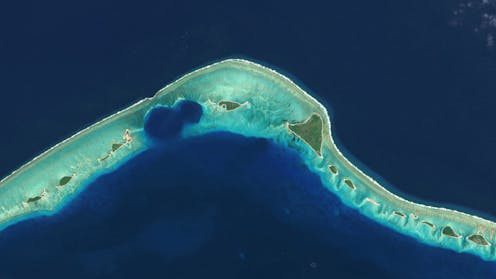
Aerial view of Enewetak Atoll showing nuclear test craters. Gallo Images/Orbital Horizon/Copernicus Sentinel Data 2021

On September 2, 1945, the second world war ended when Japan officially surrendered. Today, on the 80th anniversary, the physical legacy of the conflict remains etched into land and sea.

Nowhere is this more evident than in the Pacific. There, fierce battles left behind sunken warships, aircraft and unexploded bombs. These remnants are not only historical artefacts but toxic time capsules.

They leak fuel, heavy metals and other hazardous substances into fragile ecosystems, threatening biodiversity and, potentially, human health.

This problem is a reminder of the enduring environmental harms of conflict. Toxic remnants of war can damage ecosystems and communities long after the fighting stops.

The Pacific as a dumping ground

World War II in the Pacific involved four years of conflict between Japan and Allied forces. The war began in the region in December 1941 when Japan attacked a United States naval base at Pearl Harbour, Hawaii.

The Pacific conflict included the Battle of the Coral Sea, the Battle of Midway and the Guadalcanal campaign in the Solomon Islands.

Pacific islands became staging grounds for battles. Weapons were stockpiled and hazardous material discarded. Ships and aircraft were sunk. When the war ended, much of this material was simply left behind.

Among the remains are an estimated 3,800 wrecks still lying on the Pacific Ocean floor.

An environmental hazard

As remnants of war degrade, they often leach toxic pollutants into nearby waters and soils. These can build up in marine life, enter the food chain and pose serious risks to both biodiversity.

At Palau, a WWII Japanese ship sank in Koror Harbour and became known as the Helmet Wreck. It contains Japanese depth charges leaking acid into surrounding waters.

Researchers have shown the long-term environmental impacts in the Baltic Sea of unexploded WWII ordnance – bombs, shells and grenades that failed to detonate. An estimated 3000kg of dissolved ammunition chemicals have been found.

Coral reefs and mangroves, which are vital for coastal protection, are especially vulnerable to both chemical exposure and physical damage.

For example, researchers examined the effects off Puerto Rico of unexploded ordnance. They found nearby sea animals contained potentially toxic compounds leaking from the ordnance, which meant the substances had entered the food web.

Human communities on high alert

Unexploded ordnance continues to endanger communities. Just last year, for example, more than 200 bombs were found buried beneath a school in the Solomon Islands.

In places such as Palau, Papua New Guinea and the Solomon Islands, these dangers are unearthed regularly. They can be found by farmers working their land, children playing or fisherman working.

Buried bombs, sunken ships and downed aircraft often contain fuel and heavy metals. This includes lead and cadmium which can interfere with the body’s hormone system and cause serious health issues.

Research into the human health impacts of war remains is limited – especially in the Pacific. But existing studies suggest exposure is linked to serious consequences.

For example, parental exposure to wartime contaminants has been linked to birth defects in Gaza and Vietnam.

And a study of Britsh Army ammunition technicians released earlier this year found significantly higher rates of bladder cancer than the general population. This suggests occupational exposure to explosive compounds may pose long-term health risks.

Climate change is increasing the risk

As Earth’s climate warms, extreme weather events are worsening and seas are rising. This is exacerbating the dangers posed by wartime remnants.

For example Cyclone Pam, in March 2015, exposed unexploded WWII ordnance in Kiribati and Tuvalu. Further investigations revealed remnants including high explosive projectiles, mortars and 5,300 rounds of ammunition.

In 2020, a visiting fisherman found an unexploded bomb near Lord Howe Island. Then-Environment Minister Sussan Ley suggested the device may have been shifted by a cyclone or ocean currents.

Similarly, floods and landslides can move these hazards over significant distances, increasing uncertainty around their locations and complicating clearance efforts.

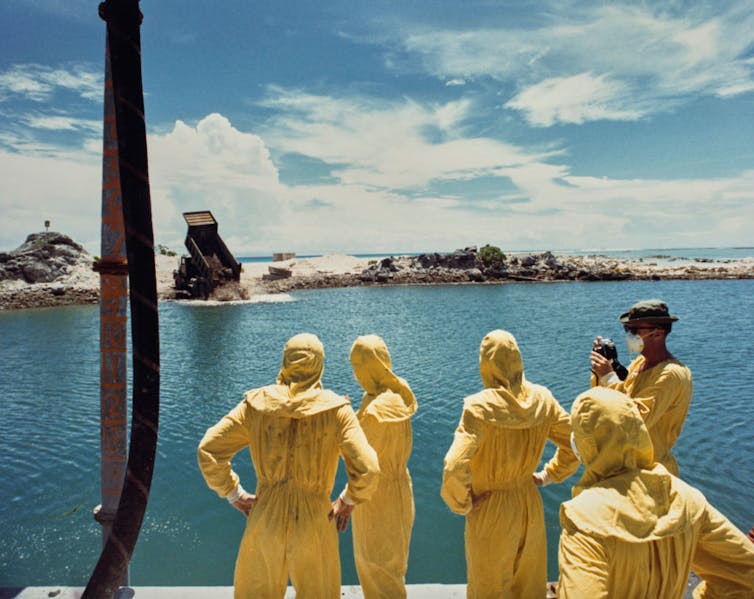
Rising sea levels are threatening to breach one of the Pacific’s most toxic legacies – the Runit Dome in the Marshall Islands. This concrete structure was built in the late 1970s to contain radioactive waste from US nuclear testing decades earlier.

Research shows extreme storms could increase radioactive sediments in the area to up to 84 times higher than normal. There are also concerns cracks in the dome’s surface could lead to contamination of surrounding waters.

Five people in yellow protective clothing stand near the water.
In this 1978 photo from Runit Island, military personnel in protective clothing watch as concrete and soil is used to cover up a crater left by the US after it conducted nuclear tests decades earlier.
Department of Defense/US Army/FPG/Archive Photos/Getty Images

Reflecting on war’s toxic legacy

Despite the risks to people and health in the Pacific, remediation has been slow. The 80th anniversary of WWII offers an opportunity to reflect on the toxic legacy of war – and to act.

The scale of the problem demands coordinated, well-funded action. The work should not just remove dangerous materials, but restore damaged ecosystems and monitor long-term health impacts.

Some support has been offered. It includes Operation Render Safe, a program to remove war remnants led by the Australian Defence Force. But more is needed.

Regional partners – including Australia, New Zealand, Japan and the United States – have a chance to lead. This means investing in environmental cleanup, supporting affected communities and acknowledging historical responsibility.

It also means listening to Pacific voices, who have long called for greater attention to the war’s toxic legacy. Their knowledge, resilience and lived experience must be central to any response.


The authors acknowledge Nixon Panda for his contribution to this article.

The Conversation

The authors do not work for, consult, own shares in or receive funding from any company or organisation that would benefit from this article, and have disclosed no relevant affiliations beyond their academic appointment.

ref. 80 years since the end of World War II, a dangerous legacy lingers in the Pacific – https://theconversation.com/80-years-since-the-end-of-world-war-ii-a-dangerous-legacy-lingers-in-the-pacific-264127

How to save global cancer research from Trump’s cuts

Source: The Conversation – UK – By Michael Head, Senior Research Fellow in Global Health, University of Southampton

ImagePixel/Shutterstock.com

Cancer kills one in five people globally. Yet, except for a one-off increase in 2021, the flow of money for cancer research has trended downward every year since 2016.

Our new analysis of more than 100,000 public and philanthropic grants reveals where research funding is being allocated. There are very likely to be reductions in funding from the US under the Trump government. So it’s important to understand how other groups of countries, such as the Commonwealth, can address this shortfall.

The Commonwealth is a network of 56 nations. Membership includes high-income countries such as the UK, Canada and Australia, and lower-income members in Africa and the Caribbean. Together, its members account for over 14% of cases of common cancers globally in 2020 – a share projected to rise to 17% by 2050.

Survival rates vary dramatically, from under 5% five-year survival in some lower-income countries to 60% in wealthier countries. Understanding how research funding flows within this diverse group offers a roadmap for fairer investment and opportunities for international collaboration. This can also help address the likely funding gaps from the US.

As a part of the Lancet Oncology Commission for Cancer in the Commonwealth, we and partners across several institutions took the most comprehensive look to date at global cancer research investment (2016–23). We mapped over 107,955 awards worth US$51.4 billion (£38.1 billion), categorising each project by cancer type, type of research and funder. We then used global and Commonwealth-wide network maps to reveal which countries were central to awarded grants, publications, clinical trials and patents, and which countries remained peripheral.

Our analysis showed that laboratory studies received 76% of funding (US$39 billion), while clinical trials drew just 7.3% (US$3.7 billion).

Breast cancer accounted for 10.3% of the funds (US$5.3 billion), and blood cancers accounted for 9% (US$4.7 billion). Despite their central role in treatment, surgery research was the focus of only 1.7% (US$0.8 billion) and radiotherapy 3.1% (US$1.6 billion).

Lower-income countries received less than 0.1% of total grants, highlighting a stark mismatch between cancer burden and research capacity.

Funders’ heavy focus on laboratory science potentially starves the late-stage trials and implementation research that translate discoveries into patient care.

The small amount of investment in surgery and radiotherapy research risks slowing advances in methods that already save lives today. Equally, the near-absence of funding led by lower-income countries perpetuates a cycle where countries with the greatest projected rise in cancer cases have the least capacity to respond.

Within the Commonwealth, the UK, Australia and Canada dominate both in terms of providing and receiving grant funding. These three countries serve as hubs for collaboration – linking lower-income countries to the US and EU.

In contrast, collaboration among lower-income Commonwealth countries on developing new drugs and technology remains weak, suggesting untapped potential in turning lab discoveries into new treatments and products across a wider breadth of countries.

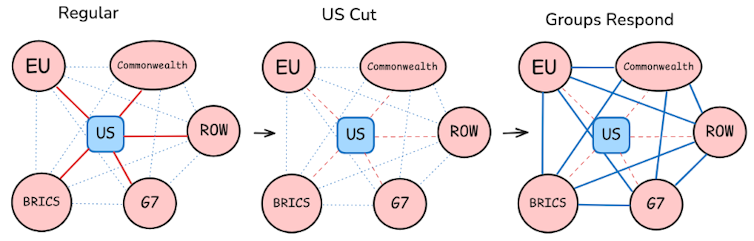
With an unpredictable president in the White House, it’s vital to understand how other groups of countries can address the likely gaps. To this end, we illustrated below the effect of a potential funding cut from the US, and then measured the effort required for each group of countries to compensate for a hypothetical 50% cut of the US funding.

Global collaboration networks before (left) and after (middle) the US funding cut, and how each group of countries can compensate for the cut (right).
CC BY-NC-SA

Cutting US funding will significantly weaken international collaboration ties, which makes sharing ideas and skills harder. Yet, as shown in the table below, each group has sufficient stock of domestic grants where turning only a small proportion into cross-border grants is enough to restore the collaboration level. That is, the EU to raise its share from 4.18% to 4.48%, non-US G7 countries from 1.11% to 1.20%, the rest of the world from 1.63% to 1.89%, the Commonwealth from 0.66% to 0.69%, and Brics (Brazil, Russia, India, China and South Africa) from 0.49% to 0.99%.

Group domestic international int_pct int_pct_target compensation
EU 5224 228 4.18% 4.48% 16
BRICS 4198 20 0.49% 0.99% 21
G7_no_US 18720 210 1.11% 1.20% 17
CW 7028 47 0.66% 0.96% 21
ROW 8114 135 1.63% 1.89% 21
Total grants per group and the extra cross-border grants needed to rebuild collaboration levels. Column ‘domestic’ is the number of grants carried out entirely within one country. Column ‘international’ (‘int_pct’) is the number (and percentage) of grants involving partners in more than one country. Column ‘int_pct_target’ is the share of international grants each group needs to reach the same level of research-link strength as before the funding cut. Column ‘compensation’ is how many additional cross-border grants each group must add to get back to the original level of research-link strength.

The numbers tell a straightforward story. When the US cuts cancer research funding, it breaks connections among researchers worldwide. This makes it harder for scientists to share discoveries and learn from each other – ultimately hurting cancer patients everywhere.

But other countries can step up to fill this gap. The table shows that each group of countries already funds plenty of domestic research. They just need to redirect a small portion of these existing grants to include international partners. This would restore the global research network to its previous strength.

This is an opportunity for governments to work together and take the lead on cancer research when the US steps back.

Four practical steps could make this happen.

  1. Match funding to where cancer hits hardest. Review current grants to ensure money goes to the deadliest cancers and the countries with the worst survival rates.
  2. Create research hubs in poorer countries. Build centres of excellence in lower-income Commonwealth countries that can train researchers, share data and run clinical trials.
  3. Fund surgery and radiotherapy research. These treatments save lives today, but get barely any research money. They deserve dedicated funding streams.
  4. Help researchers turn discoveries into treatments. Create programmes that help scientists in all Commonwealth countries – not just wealthy ones – patent their discoveries and develop them into actual medicines.

Looking ahead

Cancer kills nearly 10 million people each year, with over 20 million new cases diagnosed. By 2050, deaths are estimated to reach 18 million. The numbers are getting worse, not better.

The Commonwealth’s wealthy countries – the UK, Canada and Australia – could serve as bridges, connecting researchers across rich and poor nations. Done right, this could reshape how the world fights cancer, ensuring no country gets left behind simply because they lack resources.

The Conversation

Michael Head has previously received funding from the Bill & Melinda Gates Foundation, Research England and the UK Department for International Development, and currently receives funding from the UK Medical Research Foundation, and UK Research and Innovation

Markus Brede receives funding from UK Research and Innovation and has previously received funding from the Royal Society and the Alan Turing Institute.

Anbang Du does not work for, consult, own shares in or receive funding from any company or organisation that would benefit from this article, and has disclosed no relevant affiliations beyond their academic appointment.

ref. How to save global cancer research from Trump’s cuts – https://theconversation.com/how-to-save-global-cancer-research-from-trumps-cuts-258642

Research shows English children’s wellbeing drops when they start secondary school – here’s why

Source: The Conversation – UK – By Paty Paliokosta, Associate Professor of Special and Inclusive Education, Kingston University

Rawpixel.com/Shutterstock

For many pupils, the move to secondary school is a moment of anticipation – new friends, new subjects, and a growing sense of independence. But research in England shows this transition often comes with a hidden cost: a sharp and lasting decline in wellbeing.

Data from a 2024-2025 survey carried out by education support and research company ImpactEd Group with over 80,000 pupils shows a drop in children’s wellbeing between year six – the last year of primary school – and year eight.

This report found that enjoyment of school plummets, feelings of safety decline, and belief that their efforts will lead to success (known as self-efficacy) drops significantly. Children receiving free school meals were also less likely to say they enjoyed school, with this gap continuing to widen into secondary school.

This isn’t just adolescent growing pains. Secondary school pupils in the UK are more miserable than their European peers. Data from the Pisa programme, which assesses student achievement and wellbeing internationally, shows that in 2022 the UK’s 15-year-olds had the lowest average life satisfaction in Europe.

It’s a systemic problem – but one that can be changed.

Difficult transitions

Moving to secondary school involves much more than a change of location. Pupils must adapt to new teachers, routines, academic demands and social dynamics. And this takes place while they are going through puberty, one of the most intense periods of emotional and neurological development.

Research on school transitions stresses that success depends not only on a child’s “readiness,” but also on the school system’s capacity to support them.

Unfortunately, many schools prioritise performance metrics over relationships. This may leave many pupils – particularly those who are neurodivergent, have special educational needs, or who come from minoritised backgrounds – feeling disconnected and unsupported. This can deeply affect their wellbeing.

One major barrier to belonging is the use of zero-tolerance behaviour policies. These strict approaches to discipline – silent corridors, isolation booths, high-stakes punishments such as suspensions – are becoming more common in large secondaries and academies. Advocates have claimed these policies create firm boundaries in schools. But for many pupils, especially those with ADHD, autism, or a history of trauma, they may instead create anxiety, alienation and disengagement from school.

Children with special educational needs are excluded from school at some of the highest rates in the country. According to the Children and Young People’s Mental Health Coalition, a collaborative network of over 300 organisations including mental health organisations and youth support services, many of these children are not “misbehaving,” but expressing unmet emotional and mental health needs. Punitive responses frequently worsen their difficulties.

Pupils on stairs at school
The environment of secondary school can be very different to that of primary education.
Rawpixel.com/Shutterstock

Schools that adopt behaviour policies that focus on emotional literacy and building trust have reported success in building a caring environment.

A hidden curriculum

While these challenges affect many students, working-class pupils often face a more acute and entrenched form of educational alienation. A deeper look into the structure of secondary education in England reveals systemic inequalities that shape how different children experience school.

According to Professor Diane Reay, a leading expert on education and social class, the British school system continues to fail working-class children. Her research suggests that schools in disadvantaged areas are more likely to feature rigid discipline, “teaching to the test,” and a narrow, fact-heavy curriculum. In such spaces, there is little room for creativity, critical thinking, or personal expression.

Instead of feeling seen and valued, many working-class students may experience school as a place of constant control and low expectations. They are more likely to encounter deficit narratives: being told what they lack, rather than having their strengths recognised or nurtured.

This dynamic plays out most starkly during the transition to secondary school. Pupils from working-class backgrounds often enter year seven already disadvantaged – socially, economically, and in terms of cultural capital. This means that in unfamiliar settings where middle-class norms dominate, they may not speak the “right” way, dress the “right” way, or know the unspoken rules. These students frequently find themselves on the outside looking in.

Beyond class, issues of race and cultural background also play a key role in how pupils experience school. Students from minority backgrounds often also encounter what researchers refer to as the “hidden curriculum”.

This is a set of unspoken norms that reflect white, middle-class values, and which they may be unfamiliar with. This affects everything from which stories are told in the curriculum to how the behaviour of students is interpreted by teachers.

The year-seven dip is not inevitable. But reversing it requires more than tweaks to transition plans or behaviour policies. It demands a fundamental shift in how we understand inclusion, belonging and educational success. Schools need to put policies in place that help students feel safe, connected and empowered to manage conflict. And they should recognise that working-class and marginalised pupils face systemic barriers, and commit to dismantling them.

The Conversation

Dr Paty Paliokosta is an Associate Professor in Inclusive Education and leads the Inclusion and Social Justice SIG at Kingston University, London. She co-leads the National SENCO Advocacy Network.

ref. Research shows English children’s wellbeing drops when they start secondary school – here’s why – https://theconversation.com/research-shows-english-childrens-wellbeing-drops-when-they-start-secondary-school-heres-why-260737

ChatGPT only talks in clichés – here’s why that’s a threat to human creativity

Source: The Conversation – UK – By Vittorio Tantucci, Senior lecturer in Linguistics and Chinese Linguistics, Lancaster University

Ground Picture/Shutterstock

When you chat with ChatGPT, it often feels like you’re talking to someone polite, engaged and responsive. It nods in all the right places, mirrors your wording and seems eager to keep the exchange flowing.

But is this really what human conversation sounds like? Our new study shows that while ChatGPT plausibly imitates dialogue, it does so in a way that is stereotypical rather than unique.

Every conversation has quirks. When two family members talk on the phone, they don’t just exchange information — they reuse each other’s words, rework them creatively, interrupt, disagree, joke, banter or wander off-topic.

They do so because human talk is naturally fragmented, but also to enact their own identities in interaction. These moments of “conversational uniqueness” are what make real dialogue unpredictable and deeply human.

We wanted to contrast human conversation with AI ones. So we compared 240 phone conversations between Chinese family members with dialogues simulated by ChatGPT under the same contextual conditions, using a statistical model to measure patterns across hundreds of turns.

To capture human uniqueness in our study, we mainly focused on three levels of human interaction. One was “dialogic resonance”. That’s to do with re-using each other’s expressions. For example, when speaker A says “You never call me”, speaker B may respond “You are the one who never calls”.

Another factor we included was “recombinant creativity”. This involves inventing new twists on what’s just been said by an interlocutor. For example, speaker A may ask “All good?”, to which speaker B responds “All smashing”. Here the structure is kept constant but the adjective is creatively substituted in a way that is unique to the exchange.

A final feature we included was “relevance acknowledgement”: showing interest and recognition of the other’s point, such as “It’s interesting what you said, in fact …” or “That’s a good point …”.

What we found

ChatGPT did remarkably well – even too well – at showing engagement. It often echoed and acknowledged the other speaker even more than humans do. But it fell short in two decisive ways.

First, the lexical diversity was much lower for ChatGPT than for human speakers. Where people varied their words and expressions, AI recycled the same ones.

Most importantly, we spotted a lot of stereotypical speech in the AI-generated conversations. When it simulated giving advice or making requests, ChatGPT defaulted to predictable parental-style recommendations such as “Take care of your health” and “Don’t worry too much”.

This was unlike real human parents who mixed in clarifications, refusals, jokes, sarcasm and even impolite expressions at times. In our data, a far more human way of showing concern for a daughter’s health at college was often through making implications rather than direct instructions — for example, a mother asking, “Why in the world are you juggling two jobs?” with the implied meaning that she will burn out if she keeps being this busy.

In short, ChatGPT statistically flattened human dialogues in the context of our enquiry, replacing them with a polished, plausible but ultimately rather dry template.

Why this matters

At first glance, ChatGPT’s consistency feels like a strength. It makes the system reliable and predictable. Yet these very qualities also make it less human. Real people avoid sounding repetitive. They resist clichés. They build conversations that are recognisably theirs.

This is what defines unique identities in interaction — how we want to be perceived by others. There are words, expressions and intonations you would never use, not necessarily because they are impolite, but because they do not represent who you are or how you want to sound to others.

Being accused of being “boring” is definitely something most people try to avoid; it’s effectively what brings about American playboy Dickie Greenleaf’s death in the famous Patricia Highsmith novel, The Talented Mr Ripley, when he says it of his friend, Tom Ripley. The conversational choices we make are not simply appropriate ways to talk, but strategies for locating ourselves in society and constructing our singular identity with every conversation.

This gap matters in all sorts of ways. If AI cannot capture the uniqueness of human interaction, it risks reinforcing stereotypes of how people ought to speak, rather than reflecting how they actually do. More troubling still, it may promote a new procedural ideology of conversation — one where talk is reduced to sounding engaged yet remains uncreative; a functional but impoverished tool of cooperation.

Our findings suggest that AI is remarkably good at modelling the normative patterns of dialogue — the things people say often and conventionally. But it struggles with the idiosyncratic and unexpected, which are essential for creativity, humour and authentic human conversation.

The danger is not only that AI sounds nothing but plausible. It is that humans, over time, may begin to imitate its style in a way that AI’s stereotyped behaviour may start to reshape conversational norms.

In the long run, we may find ourselves “learning” from AI how to converse — gradually erasing creativity and uniqueness from our own speech. Conversation, at its core, is not just about efficiency. It is about co-creating meaning and social identities through innovation and extravagance, even more than we realise.

What might be at stake, then, assuming AI can’t overcome this problem, is not simply whether it can converse like humans — but whether humans will continue to converse like themselves.

The Conversation

Vittorio Tantucci receives funding from Leverhulme Trust.

ref. ChatGPT only talks in clichés – here’s why that’s a threat to human creativity – https://theconversation.com/chatgpt-only-talks-in-cliches-heres-why-thats-a-threat-to-human-creativity-263592

Four reasons why the UK lags behind its rivals on productivity

Source: The Conversation – UK – By Guilherme Klein Martins, Lecturer in Economics, University of Leeds

alice-photo/Shutterstock

Many people in the UK feel they are working harder than ever. A higher cost of living and more precarious work arrangements push many households to take on longer hours and multiple jobs. Data back this feeling: from 2010 to 2024, the UK had the largest increase in hours worked per person among OECD countries.

Yet headlines keep telling us that UK productivity is stagnating. So if everyone is working more, why isn’t the economy growing faster? Unfortunately, there’s a lot more in play than just how many hours we put in each week.

Labour productivity, measured as the total GDP produced per hour worked, is lower for the UK than for many of its peers, such as France, Germany and the USA. Yet from 2000 to 2010, UK labour productivity increased by 11%, more than France and Germany, where gains were 10.6% and 10.2% respectively.

Since then, though, the UK has faced a series of circumstances that have harmed the economy. From 2010 to 2024, fortunes shifted. While productivity in the euro area increased by about 10% and almost 15% in the US, the increase in the UK was only 6.2%.

So what happened to the UK during this time to damage its productivity, growth and earnings? Four forces stand out.

1. A prolonged dose of austerity

Beginning in 2010, the UK embarked on cuts to departmental spending and public investment at the same time as raising taxes. Austerity suppresses demand in the short run. More importantly, though, it reduces public investment and spending on things like infrastructure, skills, research and development, and public services that private firms need to expand and modernise.

The result is a slower diffusion of technology that would enhance productivity. My research has uncovered persistent “scarring” effects on output, employment and investment more than a decade after austerity.

2. Political uncertainty – Brexit and beyond

Uncertainty rose markedly from the early 2010s and spiked around the Brexit referendum and negotiations, as reflected in news-based uncertainty indices and business surveys. When uncertainty is high, firms delay or cancel investment. That is especially damaging for long-term projects (building factories, buying equipment, investing in training) and for intangible investment (spending on things like software and employee training, for example) that underpins productivity growth.

Economic uncertainty in Europe and the UK:

This leads to chronic under-investment. The UK has had the lowest level of investment among G7 countries for almost every year since 1990. And research has shown this to be the single most important element in the stagnation of UK productivity.

3. Weak industrial strategy

Across the OECD there has been a revival of modern industrial policy – multi-year programmes targeting green technologies, semiconductors, advanced manufacturing and their supply chains.

The UK published an industrial strategy earlier this year, but the mix has been comparatively light on direct public investment and specific sectors. Comparing industrial policy strategies is tricky, but evidence suggests that the UK’s approach has been smaller in scale, less predictable and less focused than that of its peers.

4. An economy tilted towards finance

A final aspect that helps explain general productivity in the UK is its economic structure – in particular, its concentration in finance. Around 8.7% of the UK’s GDP is in the financial and insurance activities, much more than that of the EU (4.6%) and more than double that of countries like Germany and France.

On the other hand, the share of manufacturing in the UK economy is 8.9%, compared to 15.7% in the EU, 10.7% in France, and 19.9% in Germany. This matters because sectors differ systematically in productivity levels and growth rates. Over the past three decades, sectors like machinery and equipment, chemicals and pharmaceuticals, and information and communications have shown much stronger productivity growth than finance.

Productivity growth in the UK:

De-industrialisation is not unique to the UK, and some of it reflects automation and reorganisation of global supply chains. But advanced economies that retained and upgraded segments of manufacturing – particularly those closest to the technology frontier – have tended to enjoy stronger productivity growth and more innovation in their service sectors.

Taken together, these forces interact and compound. Austerity removed public investment and corresponding benefits just when firms needed them, while uncertainty raised barriers and encouraged firms to wait rather than invest.

In that environment, the absence of coordinated industrial policy meant there were no clear signals or platforms for scaling new technologies. And the UK’s finance-heavy structure channelled talent and savings into financial assets rather than into projects that could expand capacity and accelerate innovation. Ultimately, this results in a chronic shortfall of productive investment.

A route out is straightforward, if politically demanding. Commit to a multi-year public investment programme that also attracts interest from the private sector. And adopt a stronger and more focused industrial strategy around the green, tech and science sectors (matched with planning and skills reform).

If these levers are pulled together – and sustained – UK productivity, and with it real wages, need not remain stuck.

The Conversation

Guilherme Klein Martins is affiliated with The Research Center on Macroeconomics of Inequalities (Made/USP)

ref. Four reasons why the UK lags behind its rivals on productivity – https://theconversation.com/four-reasons-why-the-uk-lags-behind-its-rivals-on-productivity-264149

What we do (and don’t know) about autism and ageing – new research

Source: The Conversation – UK – By Gavin Stewart, British Academy Postdoctoral Research Fellow, Social Genetic and Developmental Psychiatry Centre, King’s College London

Autistic people experience different challenges as they age compared to their non-autistic peers. fizkes/ Shutterstock

Autism is often thought of as a childhood condition, but this is far from true. Autism is a lifelong condition – and most autistic people are adults. Yet less than 1% of autism research has focused on older autistic people.

This means we know very little about the needs of autistic people are they grow older – and whether they face unique health challenges as they age.

So to better understand what the current evidence tells us about autism in midlife and old age, a colleague and I recently conducted a narrative review of more than 70 published papers from across the globe.

Our findings revealed that autistic people are more likely to face poorer health outcomes in midlife and old age compared to their non-autistic peers.

Our review found that the core characteristics of autism (such as differences in communication, repetitive behaviours and dedicated interests) remain relatively stable into later adulthood – although there’s some variability in individual experiences. For example, some autistic people find that their senses become more sensitive as they age, while others don’t find this to be the case.

For those diagnosed with autism later in life, receiving this diagnosis often proved life-changing – giving them greater self-understanding and acceptance of themselves.

More health-related difficulties

Health problems are a major concern for autistic people as they get older.

We found that autistic people are more likely to experience most physical and mental health conditions than their non-autistic peers. This included greater risk of being diagnosed with cardiovascular disease, anxiety and depression and other age-related conditions such as osteoporosis and Parkinson’s disease.

Our review also revealed that autistic adults may be more likely to experience more complex health problems. For instance, one study showed autistic people were more likely to be diagnosed with multiple mental health conditions.

For those in midlife, menopause is a challenging transition. Many autistic people reported experiencing more severe physical and psychological menopause symptoms compared to non-autistic people.

We also uncovered evidence that found life expectancy may be lower in autistic adults compared to non-autistic people. This is often linked to conditions such as epilepsy and high rates of suicide.

Many autistic people also encountered barriers in accessing physical and mental healthcare and support – often because services lacked autism awareness. This further contributed to poorer health outcomes.

A mixed picture for cognitive health

The evidence was rather mixed when it came to cognitive abilities in midlife and old age.

Some autistic adults maintain strong cognitive skills in later life. But others struggle with memory and executive function (thinking and planning), which are important cognitive skills in day-to-day living.

Two elderly people try to complete a puzzle.
Some autistic people struggle with important cognitive skills as they get older.
Lucigerma/ Shutterstock

While many autistic people will cognitively age in a similar way to non-autistic people, there’s some evidence that autistic adults may face a higher risk of cognitive decline and dementia. However, more large-scale research is needed to better understand this.

The importance of social support

Studies consistently found that autistic adults report lower quality of life compared to non-autistic peers. Mental health difficulties play a significant role in lower quality of life.

A key factor here appears to be social support. Our review found that autistic adults who had strong social networks reported higher quality of life – while loneliness and isolation were linked to poorer wellbeing. This could be because many autistic adults report having fewer social connections and experiencing greater isolation – particularly men.

We also found that factors such as receiving their autism diagnosis, learning to manage their capacity for social interactions and being in social situations and maintaining autonomy play important roles in positively shaping quality of life as autistic people get older.

Important considerations

When thinking about the findings of this review, it’s important to recognise limitations in the current research.

Only a small fraction of autism research has actually investigated ageing and autism. And what published literature has been done of this topic has focused on those diagnosed in adulthood. This overlooks a lot of autistic people. People who are diagnosed with autism in childhood and those with intellectual disabilities or higher support needs, are often excluded from research.

Under-diagnosis of autism is another major issue. Although autism affects around 1% of the global population, health records in the UK show very low diagnosis rates among middle-aged and older adults.

Estimates also suggest that around 89% of autistic people aged 40–59, and 97% of those aged 60 or over, may be undiagnosed. This is, in part, due to autism historically being viewed as a condition that only affected children. Additionally, gender biases in autism diagnoses were common – resulting in women and girls being historically overlooked.

In the future, we need more studies that track autistic people and their experiences throughout their life – including as they get older. We also need to make sure research is representative of autistic people more broadly – for example, by including people with higher support needs and those diagnosed earlier in life.

Finally, autistic adults themselves must be involved in steering the direction of research and the creation of resources and policies. With their input, we can support healthier, more fulfilling and socially connected lives, so they are able to age well with dignity and autonomy.

While ageing in autistic people has been historically overlooked, we’re making a lot of progress in addressing this major gap in research. While the current evidence included in our review has identified a lot of challenges that middle-aged and older autistic people might face, it has also highlighted opportunities for where autistic people can be better supported as they get older – such as improving access to healthcare and helping people remain socially engaged.

With a better understanding of autism in midlife and later life, we can begin to reduce the health risks that autistic adults face as they age and improve wellbeing.

The Conversation

Gavin Stewart receives funding from the British Academy.

ref. What we do (and don’t know) about autism and ageing – new research – https://theconversation.com/what-we-do-and-dont-know-about-autism-and-ageing-new-research-264140

North Korea’s hidden wildlife trade: new research reveals state involvement

Source: The Conversation – UK – By Joshua Elves-Powell, Associate Lecturer in Biodiversity Conservation and Ecology, UCL

Reports suggest long-tailed goral skins are being sold illegally to buyers in China. Joshua Elves Powell

North Korea is notorious for its illicit trade in weapons and narcotics. But a new investigation that I conducted with colleagues in the UK and Norway reveals a new concern: the illegal trade in wildlife, including species supposedly protected by North Korea’s own laws.

Based on interviews with North Korean refugees (also referred to as “defectors” or “escapees”) – from former hunters to wildlife trade middlemen – our four-year study shows that almost every mammal species in North Korea larger than a hedgehog is opportunistically captured for consumptive use or trade. Even highly protected species are being traded, sometimes across the border to China.

Perhaps most striking: this isn’t only happening in the black market. The North Korean state itself appears to profit from unsustainable and illegal wildlife exploitation.

After the North Korean economy collapsed in the 1990s, the country suffered a severe famine that resulted in between 600,000 and 1 million deaths. No longer able to rely on the state for food, medicine and other basic needs, many citizens took to buying and selling goods – sometimes stolen from state-run factories, or smuggled across the border with China – within a growing informal economy.

This included wild animals and plants, a valuable food resource. Others valued wildlife for its use in traditional Korean medicine, or for producing goods such as winter clothing. Importantly, wildlife could also be sold to generate valuable revenue. For this reason, as well as a domestic market in wild meat and animal body parts, an international trade developed in which smugglers would try to sell North Korean wildlife products across the border into China.

Aerial view of Korean DMZ
The 4km wide demilitarised zone between North and South Korea has become a wildlife haven.
Eleteurtre / shutterstock

This trade is not officially recognised by either government and North Korea is one of the few countries that is not a party to Cites – the treaty that regulates international trade in endangered species – so there is little official data. Many of the techniques that researchers usually employ, such as market surveys or analyses of seizure or trade data, are simply impossible in the case of North Korea.

We turned instead to the testimony of North Korean refugees. They included former hunters, middlemen, buyers, and even soldiers who had been posted to hunting reserves set aside for North Korea’s ruling family. To protect their safety, all interviews were anonymous. To help verify our data we compared them to reports from China and South Korea, while reported changes in some forest resources could be verified using satellite-based remote sensing.

Their accounts provide an astonishing level of insight into human interactions with – and use of – wild animals and plants in North Korea.

North Korean state involvement in wildlife trade

Perhaps most concerning, however, were reports which suggested the North Korean state itself is directly involved in wildlife trade. Although it was clear from interviews that participants were often not aware of the legal status of wildlife trade in different species, based on our analysis, some of that trade would appear to be illegal.

Participants described state-run wildlife farms producing otters, pheasants, deer and bears, and their body parts, for trade. (Indeed, North Korea is believed to have first started farming bears for their bile, before the practice spread to China and South Korea.) The state also collected animal skins via a quota-based system, with residents submitting skins to a government agency, while state-sanctioned hunters and local communities sometimes gifted wildlife products to the state or its leaders as a form of tribute.

black bear
North Korea has bear farms. One of the products produced is bear bile, for use in traditional medicine. (photo taken in South Korea).
Joshua Elves Powell

One species our interviewees identified was the long-tailed goral. Long hunted for its skin, this species is now highly protected under Cites. Our data suggested that gorals were destined for sale to buyers in China. As a party to the convention, this trade would violate China’s commitments under Cites.

Impacts beyond North Korea’s borders

The Korean peninsula is a globally important site for numerous mammal species. Its northern regions are connected by land to areas in China where these species are now recovering. However, unsustainable hunting and deforestation threaten their potential recovery in North Korea.

This has wider consequences. For instance, it has been hoped that the Amur leopard, one of the world’s rarest big cats, may one day naturally recolonise South Korea. But this is currently highly unlikely – these animals will face severe threats simply crossing North Korea.

Meanwhile, China’s conservation goals – such as restoring the Amur tiger in its northeastern provinces – may be undermined if threatened species which cross its border with North Korea are killed for trade. Furthermore, illegal cross-border trade in wildlife from North Korea would constitute a breach of China’s Cites commitments – a serious issue, with potentially severe ramifications for legal trade in animals and plants. To address this risk, Beijing must do more to tackle domestic demand for illegal wildlife.

North Korean wildlife trade is currently a blind spot for global conservation. While our findings help shed light on the issue of illegal and unsustainable trade, tackling this threat to North Korea’s natural resources will ultimately depend on the decisions taken by Pyongyang. Compliance with domestic protected species legislation should be an immediate priority.

The Conversation

Joshua Elves-Powell received funding from the London NERC DTP and his work is supported by Research England.

ref. North Korea’s hidden wildlife trade: new research reveals state involvement – https://theconversation.com/north-koreas-hidden-wildlife-trade-new-research-reveals-state-involvement-264237

The Thursday Murder Club: everything is eclipsed by the cakes in this sanitised Netflix adaptation

Source: The Conversation – UK – By Andrew Dix, Senior Lecturer in American Literature and Film, Loughborough University

In his essay Decline of the English Murder, the writer George Orwell evokes the pleasure to be had in reading about killing. After a good meal (including pudding), you are in the mood to read: “the sofa cushions are soft underneath you, the fire is well alight, the air is warm.” And what is it, in “these blissful circumstances”, that you want to read about? “Naturally,” says Orwell, “a murder”.

Substitute Orwell’s fires for contemporary radiators, and he might be describing the millions of readers in our own moment who have turned contentedly to stories of killing in the Thursday Murder Club books by Richard Osman. Comprising 2020’s title novel and three follow-ups (a fourth, The Impossible Fortune, is due in late September), these murder mysteries set in an idyllic retirement village in Kent have proved phenomenally successful.

Why have so many people, including some not previously invested in crime fiction, been drawn to these novels? It is not as if the series has been scrubbed free of potentially off-putting material. The Thursday Murder Club itself, for example, features not only two new killings for the quartet of older investigators to unravel, but memories of brutal gangland executions and a tragic suicide.

Such content, however, rarely ruffles The Thursday Murder Club’s smooth storytelling. The relaxed narrative voice, replicating Osman’s register as a genial quiz show host on TV, makes difficult things manageable. So, too, do the novel’s copious references to cakes: whenever a murder threatens to become too much, there is always a lemon drizzle or Viennese whirl to soothe.

Now The Thursday Murder Club has been adapted for the screen, enjoying a short cinema release before its streaming on Netflix. This adaptation has Hollywood heft behind it: produced by Amblin Entertainment (Steven Spielberg’s company), directed by Chris Columbus (veteran of Home Alone, Mrs Doubtfire and two instalments of the Harry Potter franchise), and with music by Thomas Newman (whose other composing credits include the Bond films Skyfall and Spectre).

If anything, Osman’s already sugared original has been further sweetened in its transit to the screen. The novel’s gangland subplot, for example, is shaved down to a few hints; and a doomed love affair that in the book precipitates suicide has been erased entirely. While some condensing is inevitable in transposing a 400-page novel to a two-hour film, the excisions made by Columbus and the co-screenwriters Katy Brand and Suzanne Heathcote are in the interests not only of economy, but of sanitisation for still further mass-market appeal.

One of the delights offered by Osman’s original is its knowing references to other crime fiction. In a suggestive scene, the investigators talk about their own favourites in the genre. Patricia Highsmith says one; Ian Rankin says another; Mark Billingham says a third. Here they evoke kinds of crime fiction entirely distinct from the novel in which they are situated as characters.

Columbus’s film doesn’t carry across such mischievous allusiveness. Given its medium, however, it can enlist visual pleasures unachievable by the print-bound Osman.

In the 1980s, film theorist Tom Gunning coined the term “cinema of attractions”. This he offered as a way of characterising films that suspend or downplay the storytelling itself and seek instead to engage audiences by other means, such as spectacle that is unusual, beautiful or amusing.

Gunning had especially in mind work produced in cinema’s inaugural decade from 1895 onwards, when a film’s running time was limited, allowing no scope for narrative development. But his idea is fruitful in thinking about filmmaking of later periods, too. If it offers us a framework for considering the Marvel Cinematic Universe – all those standalone CGI effects like the look of the villain Thanos or the rendering of otherworldly environments – it is also apt in reviewing the new Thursday Murder Club.

The film engages in some narrative business, of course, offering a set of murders for investigation and solution. Who killed two of the figures behind upsetting plans to bulldoze the retirement village in favour of an event centre? Whose body is the unexpected extra one found in a tomb in the graveyard adjoining the complex?

Arguably, however, the storytelling here is relatively uninvolving and peripheral to the film’s chief effects. Many viewers are likely to be absorbed instead by the abundant display of British and Irish acting royalty: in particular, Helen Mirren as resourceful former secret agent Elizabeth (“I have a wide portfolio of skills”), Pierce Brosnan as retired union leader Ron who is itching for new campaigns, and Ben Kingsley as suave former psychologist Ibrahim.

And then, as in Osman’s novel, there are the cakes.

Reviewing recipe books, the writer Angela Carter referred to the “awesome voluptuousness” taken on by food whenever it is photographed in that genre. Carter’s description fits perfectly the cakes we see in Columbus’s film. Indeed, the Victoria sponge and the coffee and walnut cake made by the fourth investigator Joyce (Celia Imrie) have a prodigious depth, a lavish creaminess, that threaten to act even these British stars off the screen.


Looking for something good? Cut through the noise with a carefully curated selection of the latest releases, live events and exhibitions, straight to your inbox every fortnight, on Fridays. Sign up here.


The Conversation

Andrew Dix does not work for, consult, own shares in or receive funding from any company or organisation that would benefit from this article, and has disclosed no relevant affiliations beyond their academic appointment.

ref. The Thursday Murder Club: everything is eclipsed by the cakes in this sanitised Netflix adaptation – https://theconversation.com/the-thursday-murder-club-everything-is-eclipsed-by-the-cakes-in-this-sanitised-netflix-adaptation-264228