Do weighted blankets work for anxiety? Here’s what the evidence shows

Source: The Conversation – UK – By Craig Jackson, Professor of Occupational Health Psychology, Birmingham City University

Victoria Antre/Shutterstock.com

They have been promoted as a remedy for anxiety and sleeplessness, with celebrities and influencers swearing by their calming effects. Weighted blankets – heavy throws filled with glass beads or plastic pellets – have gone from a niche therapeutic tool to a mainstream wellness must-have, promising better sleep and reduced stress for anyone struggling to unwind.

But do they deliver on these bold claims, or are we simply paying premium prices for an expensive placebo?

Occupational therapists have used weighted blankets since the 1970s to help children with autism and adults with sensory processing disorders. They became commercially available in the 1990s, but remained largely within special needs communities.

That changed dramatically in recent years when companies began targeting what they call the “casually anxious” – essentially, anyone struggling with modern life’s stresses. The marketing worked: Time magazine even named the weighted blanket one of the top 50 “inventions” of 2018.

The concept behind weighted blankets is appealingly simple. Typically weighing between two and 13 kilograms (experts recommend choosing one that’s 10% of your body weight), they use what occupational therapists call “deep pressure stimulation”. The gentle, even pressure across your body mimics the sensation of being held or hugged.

What the science says

The research picture is more nuanced than the marketing suggests. Several studies do show promising results, but with important qualifications.

A study of 120 psychiatric outpatients found that weighted blankets improved insomnia symptoms over four weeks in people with major depression, bipolar disorder, anxiety and ADHD. The researchers concluded they were “a safe and effective intervention for insomnia in patients with some mental health disorders”.

Smaller studies have shown similar patterns. One found that 63% of adults reported lower anxiety after just five minutes under a weighted blanket, while another study of psychiatric inpatients found 60% experienced reduced anxiety during their hospital stay.

However, these studies all focused on people with diagnosed mental health conditions, not the general population that companies are now targeting.

This is where the science diverges from the marketing: reviews of the research consistently show that benefits for healthy people are much harder to prove. While weighted blankets may help people with clinical anxiety or sleep disorders, there’s insufficient evidence that they benefit casual users without existing mental health conditions.

Also, about half the research on weighted blankets doesn’t meet quality standards for robust scientific evidence – a significant problem given the confident health claims found on product websites and glowing reviews in lifestyle magazines.

Who might benefit?

This doesn’t mean weighted blankets are entirely useless for healthy people. Shift workers, who must sleep during daylight hours when their brains are naturally alert, might find them helpful for combating the known health effects of irregular schedules. Healthcare workers, firefighters and pilots who rely on strategic power naps could benefit from faster sleep onset.

The placebo effect also shouldn’t be dismissed. If a weighted blanket helps you feel calmer and sleep better, even if the mechanism isn’t what manufacturers claim, that’s still a positive outcome, provided you understand what you’re buying.

Weighted blankets do carry some risks. They shouldn’t be used by anyone who cannot easily move beneath their weight, including young children. People with diabetes, asthma, sleep apnoea, COPD, circulation problems, high blood pressure or claustrophobia should consult their GP before opting to use one.

No studies have reported serious harms, but common sense suggests checking with a healthcare provider if you have underlying health conditions.

As a low-risk intervention that might complement good sleep hygiene and regular sleep cycles, weighted blankets aren’t inherently problematic. The issue lies in overselling their capabilities.

If you’re considering buying one, be realistic about your expectations. You’re not buying a miracle cure for modern anxiety but rather a potentially comforting sleep aid that might help you feel more settled at bedtime. For many people struggling with sleep, that gentle pressure and sense of security could be worth the investment, even if the science behind it isn’t quite as solid as the marketing suggests.

The real question isn’t whether weighted blankets work, but whether they work for you, and whether the premium price is justified for what might ultimately be an expensive hug.

The Conversation

Craig Jackson does not work for, consult, own shares in or receive funding from any company or organisation that would benefit from this article, and has disclosed no relevant affiliations beyond their academic appointment.

ref. Do weighted blankets work for anxiety? Here’s what the evidence shows – https://theconversation.com/do-weighted-blankets-work-for-anxiety-heres-what-the-evidence-shows-263591

Different day, same problems? Why it’s a bad idea to rush into solutions for tricky work issues

Source: The Conversation – UK – By Poornika Ananth, Assistant Professor in Strategy and Organisations, School of Management, University of Bath

Nicoleta Ionescu/Shutterstock

Regardless of how you spent the final days of summer, the return to work can mean coming face to face once again with any sticky problems you pushed aside previously. Now though, they’re looming and demanding fresh solutions.

This may be a good time to try something different. Whatever the nature of the problems that come with your job – production or staffing issues, a difficult product launch or disgruntled customers – instead of focusing all your efforts on coming up with solutions, it may be helpful to spend some time understanding the problems better.

As Albert Einstein is quoted as saying: “If I had an hour to solve a problem, I’d spend 55 minutes thinking about the problem and five minutes thinking about solutions.” But why is it so important not to simply jump to quick solutions?

Similarly, scholars who have studied problem-solving have found that workplace problems can be complex and ill-defined, and their underlying causes can be difficult to determine at first glance. In these circumstances, the solutions we develop are based on surface-level understanding or assumptions. As such, they may do little to address the true problem – and could even create new issues further down the line.

For instance, if you are struggling with a tricky product launch, it might look like the issue is a flaw in the item. But in reality the problem could be weak distribution or poor marketing reach. Clearly, focusing on the product design in this case is unlikely to resolve the issue.

To get through this, it is important to develop a more thorough understanding of the problem. This is known in management studies as a “problem representation” – that is, a simplified model of the problem, including the symptoms that characterise it as well as the root causes that explain it.

My colleagues and I have reviewed the literature on problem representations. Our research, published in the Journal of Management, has found key insights about how best they can iron out problems in the workplace.

Take your time

The first and most important insight is that representing complex problems is not a one-time event, but a process that involves three distinct but overlapping steps. The first step is “problem finding”, which involves recognising early or obvious symptoms that point to the existence of a problem. This could be missing a production deadline or a sales target, for example.

The second step is “problem framing”, which involves looking out for and identifying other related symptoms. During this step you may find that in addition to missing your production deadlines your colleagues have also been working more overtime. Or it could be that you are missing sales targets despite positive reactions from focus group tests of the product. To get this more comprehensive picture you will probably need the perspectives of people at various levels of the organisation.

The final stage is “problem formulating”, which is where you work out the root causes that underlie and explain the symptoms. Here workers need to truly understand why they arose in the first place. The key is to ensure that the root causes really do represent the spectrum of symptoms. This may help you understand, for instance, that production issues are due to problems with a new part. Alternatively, a sales issue could be because the marketing channels are not reaching the right consumers.

Our review also found that a problem representation can help with solving the issue in more than one way. Crucially, getting to the root causes can give rise to solutions that target the problem more effectively and completely. It can also enhance the creativity behind problem-solving by getting people to break away from obvious, surface-level answers.

An additional benefit that we uncovered in our review is that developing a problem representation can help with implementing the solutions. We found that there are two reasons for this.

group of bored, inattentive colleagues in a work meeting.
Make sure disengaged colleagues don’t derail the process.
fizkes/Shutterstock

First, there may be fewer snags or glitches that arise during implementation if the solution is more considered, and more relevant to the problem. Second, people may be more invested in implementing the solution if they have taken the time to consider the problem and believe that the solution can address it for them in the long term.

But our review also revealed that representing a problem can be a challenging process, fraught with traps and issues of its own. These could be participants not properly understanding the process, cognitive biases – particularly solution bias (the tendency to jump to solutions) – and bad actors who claim to be engaged in the process but end up derailing it.

However, if done well, this process can really help you tackle problems and develop and implement genuinely useful solutions. And this approach can help with problems at all kinds of workplaces and in all kinds of roles.

The Conversation

Poornika Ananth does not work for, consult, own shares in or receive funding from any company or organisation that would benefit from this article, and has disclosed no relevant affiliations beyond their academic appointment.

ref. Different day, same problems? Why it’s a bad idea to rush into solutions for tricky work issues – https://theconversation.com/different-day-same-problems-why-its-a-bad-idea-to-rush-into-solutions-for-tricky-work-issues-264090

Play for Today is back – nine ways Channel 5 can make it as successful as the original

Source: The Conversation – UK – By Katie Crosson, Postdoctoral Research Associate (Curation), University of Exeter

Between 1970 and 1984, BBC1’s experimental drama strand Play for Today created what is now regarded as classic British drama. It launched myriad acting careers and showcased high-calibre writing in plays such as Mike Leigh’s Abigail’s Party and Blue Remembered Hills, Dennis Potter’s acclaimed play about lost youth. It was often challenging, often radical and always unpredictable, rotating directors, producers and writers each week to create unique one-off episodes.

The series covered a huge range of subject matter, across different genres and styles, and sought to reveal truths about contemporary life. By the mid-1980s, the BBC was reluctant to continue taking costly chances on new talent each week in an era of increasing competition, and Play for Today was canned.

Now, in 2025, it’s coming back. Channel 5 recently announced the return of the series, emphasising that the new Play for Today will provide a space to experiment for emerging creative talent, particularly those from low-income backgrounds. This development is welcome in an industry that fails to embrace working-class entrants.

In the chasm between 1984 and 2025, the structure of British society has changed beyond recognition. The class system itself has shape-shifted numerous times, with the erosion of many working-class trades and the increasing precarity of middle-class professions, with many affected by steep increases in the cost of living, high student debt and a housing crisis. All the while, the UK’s super-rich are richer than ever and inequalities are rising.

All of which increase the urgency for a strand like Play for Today, willing to respond to these issues. And while I remain hopeful that this new Channel 5 incarnation can be a success, my research into the original has informed nine non-negotiables required to fulfil its goals and earn the Play for Today name.

1. Represent resistance

Play for Today didn’t only amplify unheard voices, it also portrayed under-represented struggles. From female strikers in Leeds United! (1974) to occupiers on a development site during a rent-hike in United Kingdom (1981), Play for Today didn’t present characters as helpless victims, but people with agency engaged in resistance.

Channel 5 claims it wants to cover “thornier issues”. If it is serious about this, it could offer a unique space to explore marginalised voices, such as youth organisers involved in the ongoing fight for trans rights, and those speaking out against the alleged genocide in Palestine experiencing censorship and criminalisation.

2. Encourage critique

Play for Today critiqued the system, not just individuals. Destiny (1978) was an honest portrayal of the top-down, predatory nature of fascism. Its speech about “making the country great again” lay at the centre of an examination of the links between landlords and organisations like the National Front.

The Sin Bin (1981) offered a sobering portrayal of the lives of inmates in prison for the very worst of crimes. Play for Today asked its audience to extend their empathy, asking what we are willing to accept in the name of justice, and whether the criminal legal system is fit for purpose.

3. Be specific

The series represented specific times, towns and trades in detail. The lives of people in Hull in Land of Green Ginger (1973) and Morecambe in Sunset Across the Bay (1975) were examined without compromising their uniqueness by trying to universalise characters’ experiences.

The Bevellers (1974) and Not For The Likes of Us (1980) were built around portrayals of manual labour and working in a cinema. Far from making the programme inaccessible or irrelevant, millions tuned in each week: Play for Today was engaging precisely because it depicted lives and livelihoods little seen on screen.

4. Rotate creators

Held together by little more than a commitment to responding to the present moment, it is an essential feature of Play for Today that writers, actors, directors and producers rotate regularly, to ensure a variety of perspectives.

5. Foster innovation

It is important that Channel 5 doesn’t see the programme’s focus on social truths as something at odds with experimenting with form. From the raucous comedy of Bar Mitzvah Boy (1976) to the folk-horror of Penda’s Fen (1974), the agit-prop filmed theatre of The Cheviot, the Stag and the Black, Black Oil (1974) and the surrealism of The After Dinner Joke (1978), Play for Today was never confined to one stylistic box.

These examples deviate from the predictable style British audiences appear to be tiring of – a state of affairs made clear by the unprecedented appetite for the mini-series Adolescence, in which each episode was shot in one long single take.

6. Ensure creative freedom

If the new Play for Today is to be as distinctive and bold as its namesake, creators must be given proper creative control over what they’re making. Creativity flourished on the original series because creative control was the norm for these drama productions.

7. Offer a real vision of the working class

Ladies (1980) focused on the lives of female department-store workers spanning different ages and ethnicities. The Spongers (1978) explored the reality of living with disability in poverty, and Even Solomon (1979) featured the first transgender protagonist on British television. At its best, Play for Today portrayed a spectrum of working-class characters as diverse as real life, and it can again.

8. Show emotion

Play for Today presented issues in ways that elicited emotional as well as intellectual responses. Rocky Marciano is Dead (1976) focused on the importance of boxing to different communities, tenderly exploring the strained relationship between an ageing boxer and a squatter next door. At a time where social division is rife, we could benefit from being moved to look at the world and people around us in ways that promote understanding and empathy.

9. Be free to fail

Play for Today proved it’s possible to have both quality and quantity, but only through embracing failure. With 316 episodes made by different people, not all of Play for Today was pioneering. The same freedom that granted Play for Today its huge successes also granted its failures. The team behind Channel 5’s Play for Today would do well to accept that we cannot have one without the other, but look to the original, and enthusiastically and wholeheartedly take the risk.


Looking for something good? Cut through the noise with a carefully curated selection of the latest releases, live events and exhibitions, straight to your inbox every fortnight, on Fridays. Sign up here.


The Conversation

Katie Crosson received funding from TECHNE (AHRC) for her PhD on Play for Today.

ref. Play for Today is back – nine ways Channel 5 can make it as successful as the original – https://theconversation.com/play-for-today-is-back-nine-ways-channel-5-can-make-it-as-successful-as-the-original-263954

Supernova theory links an exploding star to global cooling and human evolution

Source: The Conversation – Africa (2) – By Francis Thackeray, Honorary Research Associate, Evolutionary Studies Institute, University of the Witwatersrand

Artist’s impression of a supernova. By ESO/M. Kornmesser/Wikimedia Commons, CC BY

What’s the link between an exploding star, climate change and human evolution? Francis Thackeray, who has researched ancient environments and fossils for many years, sets out his ideas about what happened in the distant past – with enormous consequences.

Global cooling that happened millions of years ago was thought to be the result of ocean currents. He suggests instead it could have been due to the impacts of remnants of supernovae. The timing of supernovae, climate changes and species evolution coincides.

What is your supernova hypothesis?

My hypothesis is that remnants of a supernova – an exploding star – had an impact on the Earth’s past climate, causing global cooling, between 3 million and 2.6 million years ago and that this indirectly affected the evolution of hominins (ancient relatives of humans).

How does this change assumptions held until now?

It has been considered by some that global cooling in the Plio-Pleistocene might have been due to changes in ocean currents. This may well be correct to some extent, but I think that the supernova hypothesis needs to be explored.

It’s super-exciting to think that our evolution may to some extent be associated with supernovae as part of our dynamic universe.

How did you come to your supernova hypothesis?

Supernovae include stars which are extremely massive (as much as five times the mass of our Sun) and have reached the end of their stellar evolution. These explosions are rare. On average, within our galaxy (the Milky Way), only one or two per century are visible from Earth as temporary bright stars.

As a result of such explosions, material is expelled into outer space at almost the speed of light. Chemical elements are formed, including a kind of iron (the element Fe) known as isotope Fe-60. It has 26 protons and as many as 34 neutrons.

Traces of Fe-60 iron isotopes from supernovae within the last ten million years have been discovered on Earth in marine deposits such as those drilled in cores in the east Indian Ocean.


Read more:
Our oceans give new insights on elements made in supernovae


The deep-sea deposits with Fe-60 can be dated using radioactive elements which decay at a known rate. This is called radiometric dating.

There was a regular increase in extremely small traces of Fe-60 for the period between 3 million and 2.6 million years ago. We know this from data published by Anton Wallner and his colleagues. Since this is a linear trend I have been able to extrapolate back to 3.3 million years when initial cosmic rays may have first hit Earth. I have proposed in the Quest magazine that this initial cosmic impact correlates with a major glaciation (cooling) event called M2 in an otherwise warm period.

A “near earth” supernova could have produced cosmic rays (radiation from outer space) which might have caused a reduction in the earth’s ozone layer. Increased cloud cover associated with cosmic radiation could have been a factor related to changes in global climate. Specifically, the change would have been global cooling.

This cooling would have affected the distribution and abundance of plant species, in turn affecting that of animals dependent on such vegetation.

What potential new insights does the hypothesis give us into human evolution?

Populations of Australopithecus may have been indirectly affected by the decrease in temperature.

Australopithecus is the genus name for distant human relatives which lived in Africa in geological periods called the Pliocene and Pleistocene. The boundary between these time intervals is 2.58 million years ago. At that time, certain species went extinct. The period coincides closely with the maximum of Fe-60 in marine deposits and a change in Earth’s magnetic field.

Australopithecus africanus: cast of Taung child.
Wikimedia Commons, CC BY-SA

The first fossil of Australopithecus to be described, 100 years ago, was placed by the palaeontologist Raymond Dart in a species called A. africanus. Dubbed the “Taung Child”, it was discovered in South Africa. Its biochronological age, recently based on mathematical analyses of tooth dimensions, is about 2.6 million years – at the Plio-Pleistocene boundary.

It cannot be concluded that the death of the Taung Child was directly caused by a supernova. This would be far-fetched. There is in fact evidence that this individual, about 3 years old, was killed by an eagle.

However, it is plausible to suggest that in Africa, in the Plio-Pleistocene, populations of Australopithecus were affected by a decrease in temperature affecting the distribution and abundance of vegetation and the animals dependent on it.

Recently, a new species of Australopithecus (as yet not named, from Ledi-Geraru) has been discovered in Ethiopia, in deposits dated at about 2.6 million years ago – also the time of the maximum in Fe-60 in deep-sea deposits.

The appearance of the genus Homo is close to the Plio-Pleistocene boundary, reflected by fossils reported recently by Brian Villmoare and his colleagues and well dated at about 2.8 million years ago. The origin of Homo may relate to changes in temperature and associated changes in habitat, as recognised five decades ago by South African palaeontologists Elisabeth Vrba and Bob Brain, although they emphasised a date of 2.5 million years ago.

Is it possible that cosmic radiation stimulated genetic changes?

I have been told by my peers that I am inclined to think “out of the box”. Well, in this case I would like to propose a “hominoid mutation hypothesis”. The hypothesis states that the speciation of hominoids (including human ancestors and those of chimpanzees and gorillas) was to some extent associated with mutations and genetic variability caused by cosmic rays.

It is interesting to consider the possibility that the origin of our genus Homo relates in part to cosmic radiation. Going deeper back in time, Henrik Svensmark has demonstrated that there is a correlation between supernova frequency and speciation (increased biodiversity associated with the evolution of new species), for the last 500 million years (the Phanerozoic period). I think it’s entirely possible that one important cause behind this correlation was the mutagenic (mutation-causing) effect of cosmic rays on DNA, such that rates of speciation exceeded those of extinction.


Read more:
Exploding stars are rare but emit torrents of radiation − if one happened close enough to Earth, it could threaten life on the planet


In hominoids, cosmic rays could have contributed not only to global cooling but also to genetic changes, with subsequent anatomical (morphological) changes related to speciation.

If we go back to about 7 million years ago (when Fe-60 again reflects supernova activity), we would expect to find fossils that are close to a common ancestor for chimpanzees and humans. In terms of the hominoid mutation hypothesis, the split could have been associated with cosmic radiation. One hominoid species about 7 million years old is Sahelanthropus (discovered by Michel Brunet in Chad). In my opinion this species is very close to the common ancestor for Homo sapiens (us) and chimps.

The Conversation

Francis Thackeray has received funding from the National Research Foundation.

ref. Supernova theory links an exploding star to global cooling and human evolution – https://theconversation.com/supernova-theory-links-an-exploding-star-to-global-cooling-and-human-evolution-263748

DRC’s latest peace deal is breaking down and it isn’t the first – what’s being done wrong

Source: The Conversation – Africa (2) – By Kristof Titeca, Professor in International Development, University of Antwerp

A series of peace initiatives since 2021 have sought to address the escalation of conflict in eastern Democratic Republic of Congo (DRC) following a renewed offensive from the M23 rebel group.

The origins of this crisis go back to the First Congo War in 1996. Since then, the intensity of conflict in eastern DRC has ebbed and surged. The current M23 offensive represents one of its most violent phases.

Over nearly three decades, numerous peace efforts have been undertaken, yet neither local, regional nor international interventions have succeeded in bringing lasting stability. Crucially, they have failed to tackle the broader dynamics that perpetuate violence in the country’s mineral-rich east, where at least 120 armed groups are estimated to be active.

These recent efforts include the Nairobi process launched in April 2022 by the East African Community, and the Luanda process in June of the same year, launched by Angolan president João Lourenço.

The East African Community deployed its regional force to the DRC in November 2022. This was followed by the Southern African Development Community deploying troops in December 2023. These troops withdrew in 2023 and 2025, respectively.

More recently, there have been peace talks in Doha, which started after a meeting between the presidents of Congo and Rwanda in March 2025. The US mediated in Washington from April 2025.

The conflict has continued to escalate. More than 7.8 million people are now internally displaced in eastern DRC. Another 28 million people are facing food insecurity, including nearly four million at emergency levels.

Why have peace processes failed to deliver stability, and what could be done to strengthen them?

I have studied the dynamics of conflict in central Africa for decades, and in my view, the persistence of conflict in DRC’s eastern region isn’t due to a lack of peace initiatives. I argue that some initiatives suffer from flawed design, others from difficult implementation, and some from a combination of both.

Deep mistrust, stalled commitments, the exclusion of key actors, fragmented mediation efforts, an overemphasis on economic incentives, and weak domestic legitimacy have all undermined progress.

Ideally, peace processes would address these shortcomings comprehensively and lay the foundations for lasting stability.

But ideal conditions rarely exist.

The challenge, therefore, is to use sustained diplomacy to make the current imperfect frameworks work more effectively, while gradually building the trust and inclusivity needed for more durable peace.

What’s gone wrong

1. Deep mistrust between the parties

Peace processes since 2021 have focused on negotiating peace between the DRC government, M23 representatives (and their political wing Alliance Fleuve Congo) and the Rwandan government. The UN and many others have shown that Rwanda has been supporting the M23, a claim Kigali repeatedly denies.

At the heart of the failures of these processes lies a profound lack of trust. Relations between Kinshasa, M23 and Kigali are marked by hostility, mutual suspicion and broken promises.

Moreover, M23, Alliance Fleuve Congo and Rwanda cannot be treated as interchangeable actors. Among these actors, differences remain over the ultimate objectives of the rebellion – whether to march on Kinshasa, secure control over key territories in the east, or build influence through Congolese state structures versus a de facto separate administration.

Continued atrocities on the ground reinforce distrust. Recent reports from the UN, Human Rights Watch and Amnesty International document continued killings and summary executions of Congolese civilians by M23 rebels with Rwandan backing, raising concerns of ethnic cleansing. These have happened alongside abuses by Congolese forces and allied militias (grouped as Wazalendo).

2. Poor implementation measures

Because of this mistrust, parties are reluctant to take the first step in implementing agreements. The 19 July 2025 Doha Declaration of Principles, for example, committed both sides to prisoner exchanges and the restoration of state authority in rebel-held zones. Yet, Kinshasa refused to exchange prisoners before a final settlement, a condition M23 saw as essential.

3. Failing to include all regional actors

The war in eastern DRC involves multiple neighbouring states. Uganda, in particular, has a significant military presence and shares Rwanda’s concerns and motivations: both see the area as a security threat and an economic opportunity, especially through gold exports and cross-border trade. Yet, Uganda has been excluded from some negotiations.

In early August 2025, African states announced they would merge mediation structures by the East African Community, the Southern African Development Community and the African Union into one solidified process led by the African Union. This could potentially bring in these regional actors, particularly Uganda.

4. Duplication and fragmentation of initiatives

A recurring problem since the renewed outbreak of conflict in 2021 has been the proliferation of parallel and overlapping peace initiatives, involving different actors, and not necessarily bringing coherence.

5. The role and limits of external pressure

The success of negotiations to some extent depends on how much diplomatic bandwidth the mediating actors want to spend.

In the current context, US pressure is key. And indeed, in light of renewed fighting in mid-August 2025, the US has released a number of statements and sanctions against the parties involved – mostly M23. Yet, expectations of heavy-handed US intervention, including the unrealistic notion of American “boots on the ground”, have created disappointment among a number of actors, particularly in the DRC.

6. Economic incentives alone are insufficient

The Washington process placed heavy emphasis on promoting trade with the US, presenting economic growth as a pathway to stability. But peace requires more than economic deals. This approach risks reducing a multidimensional conflict – rooted in political, security and social grievances – to a question of markets. This risks prioritising US economic interests rather than addressing local realities.

7. Weak internal legitimacy

Finally, the legitimacy of the current peace deals within the DRC remains contested. The intensifying conflict has coincided with mounting domestic criticism of President Felix Tshisekedi, whose authority was undermined by his inability to resolve the violence. Agreements have been criticised by Congolese civil society as externally driven and insufficiently inclusive. They have not been ratified by parliament nor have they involved civil society or grassroots actors.

What needs to change?

Eastern DRC remains mired in conflict despite peace initiatives. Broken promises, weak implementation, and deep mistrust keep progress at bay. Economic incentives alone can’t solve a crisis rooted in politics, security and social grievances.

Outside powers can only apply leverage. Durable peace must be negotiated and owned by the parties themselves. And without broader buy-in, peace processes risk functioning merely as cooling-off mechanisms, not genuine pathways toward resolution.

The Conversation

Kristof Titeca does not work for, consult, own shares in or receive funding from any company or organisation that would benefit from this article, and has disclosed no relevant affiliations beyond their academic appointment.

ref. DRC’s latest peace deal is breaking down and it isn’t the first – what’s being done wrong – https://theconversation.com/drcs-latest-peace-deal-is-breaking-down-and-it-isnt-the-first-whats-being-done-wrong-264064

Breast cancer: new study finds genetic risk in African women

Source: The Conversation – Africa (2) – By Mahtaab Hayat, Lecturer, University of the Witwatersrand

Breast cancer is the most common cancer in women worldwide. In sub-Saharan Africa, it is a leading cause of cancer-related deaths among women.

Risk factors for developing breast cancer include being female, increasing age, being overweight, alcohol consumption and genetic factors.


Read more:
Breast cancer is the most common cancer in the world. 5 reads that could save lives


In this field, genome-wide association studies are a powerful tool. They can identify common genetic variants, or mutations, that can affect your likelihood of developing a trait or disease. These studies scan the whole genome (all of a person’s DNA) to find genetic differences present in people with a particular disease or traits.

Since their introduction in 2005, these studies have provided insights that can help in the diagnosis, screening and prediction of certain diseases, including breast cancer. Recent findings have been used to develop prediction tools that help identify individuals at high risk of developing diseases. Genetic risk scores (also known as polygenic risk scores) estimate disease predisposition based on the cumulative effect of multiple genetic variants or mutations.

But most research has been conducted on populations of European ancestry. This poses a problem, as genetic diversity and environmental variability differ across the world. In Africa, even greater genetic diversity is observed across populations.


Read more:
Major study unveils complexity and vast diversity of Africa’s genetic variation


To fill this gap we – researchers from Wits University, Sydney Brenner Institute for Molecular Bioscience, and our collaborators, the South African National Cancer Registry – conducted the first genome-wide association study of breast cancer in a sub-Saharan African population.

We compared genetic variation between women with breast cancer and those without, looking for variants that occur more frequently in the cancer patients.

We identified two genomic variants close to the RAB27A and USP22 genes that contribute to the risk of breast cancer in South African black women. These genetic variants have not been previously found to be associated with breast cancer in non-African populations.

Our findings underscore the importance of identifying population-specific genetic variants, particularly in understudied populations. Different populations may carry unique variants that contribute differently to breast cancer risk. Risk variants found in other populations might not be found in African populations. This reinforces the idea that research efforts and risk scores must be done in different populations, including African ones.


Read more:
West Africans have a high risk of kidney disease – new study confirms genetic cause


Comparing women’s DNA

DNA samples from 2,485 women with breast cancer were compared to 1,101 women without breast cancer. All the women were residents of Soweto in South Africa. The breast cancer cases were recruited to the Johannesburg Cancer Study over 20 years and the controls were from the Africa Wits-INDEPTH Partnership for Genomic Research study.

The analysis used technology (called a DNA chip) specially designed by the H3Africa consortium to capture the genetic variants within African populations.

By comparing genetic variation in women with breast cancer and in those without, we identified two genetic variants that contribute to the risk of breast cancer in South African black women. They occur around genes that are involved in the growth of breast cancer cells, in the ability of cancer cells to metastasise (spread), and in tumour growth in different cancers.

We also applied polygenic risk scores to our African dataset. This is a method that estimates the risk of breast cancer for an individual based on the presence of risk variants. These are derived from the results of genome-wide association studies. The risk score we used was based on risk variants from a European population. We used it to evaluate its ability to predict breast cancer in our African population.

The results showed that the risk score was less able to predict breast cancer in our sub-Saharan African population compared to a European population.

What next?

This is the first large-scale genome-wide association analysis in sub-Saharan Africa to find genetic factors that affect an individual’s risk of developing breast cancer.

Our study included fewer than 4,000 samples. Larger breast cancer genetic studies have involved over 200,000 cases and controls, but without representation from sub-Saharan African populations. This highlights the urgent need for greater research efforts and increased participation from the continent.

The results from this and future studies will help doctors screen patients and pinpoint those with a high risk. Once we know who is at high risk, they can be offered more frequent check-ups and preventive measures. This allows us to catch breast cancer early – or even prevent it – before it has a chance to develop or spread.


Read more:
How we found the gene for a rare heart disease and why it matters


Further research will be needed to understand how these genes increase the risk of developing breast cancer and improve breast cancer prediction. Notably, applying European-derived polygenic risk scores did not accurately predict breast cancer in the African dataset. And they performed worse than in non-African datasets. These results are consistent with findings reported previously for other diseases.

We are involved in a global study of the genetics of breast cancer called Confluence which is looking at genetic risk factors in many populations, including African ones.

Professor Christopher Mathew and Beth Amato helped in the writing of this article.

The Conversation

Jean-Tristan Brandenburg receives funding from the German Federal Ministry of Education and Research (BMBF) under grant 01KA2220B to the RHISSA Programme for the NORA Consortium. Additionally, he is supported by the Science for Africa Foundation through Programme Del-22-008, with funding from the Wellcome Trust and the UK Foreign, Commonwealth & Development Office. He is also a participant in the EDCPT2 programme, which is supported by the European Union.

Mahtaab Hayat does not work for, consult, own shares in or receive funding from any company or organisation that would benefit from this article, and has disclosed no relevant affiliations beyond their academic appointment.

ref. Breast cancer: new study finds genetic risk in African women – https://theconversation.com/breast-cancer-new-study-finds-genetic-risk-in-african-women-263227

What is AI slop? A technologist explains this new and largely unwelcome form of online content

Source: The Conversation – USA – By Adam Nemeroff, Assistant Provost for Innovations in Learning, Teaching, and Technology, Quinnipiac University

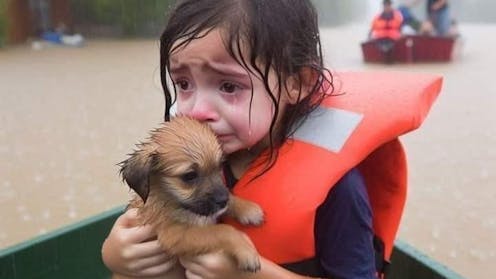
This AI-generated image spread far and wide in the wake of Hurricane Helene in 2024. AI-generated image circulated on social media

You’ve probably encountered images in your social media feeds that look like a cross between photographs and computer-generated graphics. Some are fantastical – think Shrimp Jesus – and some are believable at a quick glance – remember the little girl clutching a puppy in a boat during a flood?

These are examples of AI slop, low- to mid-quality content – video, images, audio, text or a mix – created with AI tools, often with little regard for accuracy. It’s fast, easy and inexpensive to make this content. AI slop producers typically place it on social media to exploit the economics of attention on the internet, displacing higher-quality material that could be more helpful.

AI slop has been increasing over the past few years. As the term “slop” indicates, that’s generally not good for people using the internet.

AI slop’s many forms

The Guardian published an analysis in July 2025 examining how AI slop is taking over YouTube’s fastest-growing channels. The journalists found that nine out of the top 100 fastest-growing channels feature AI-generated content like zombie football and cat soap operas.

This song, allegedly recorded by a band called The Velvet Sundown, was AI-generated.

Listening to Spotify? Be skeptical of that new band, The Velvet Sundown, that appeared on the streaming service with a creative backstory and derivative tracks. It’s AI-generated.

In many cases, people submit AI slop that’s just good enough to attract and keep users’ attention, allowing the submitter to profit from platforms that monetize streaming and view-based content.

The ease of generating content with AI enables people to submit low-quality articles to publications. Clarkesworld, an online science fiction magazine that accepts user submissions and pays contributors, stopped taking new submissions in 2024 because of the flood of AI-generated writing it was getting.

These aren’t the only places where this happens — even Wikipedia is dealing with AI-generated low-quality content that strains its entire community moderation system. If the organization is not successful in removing it, a key information resource people depend on is at risk.

This episode of ‘Last Week Tonight with John Oliver’ delves into AI slop. (NSFW)

Harms of AI slop

AI-driven slop is making its way upstream into people’s media diets as well. During Hurricane Helene, opponents of President Joe Biden cited AI-generated images of a displaced child clutching a puppy as evidence of the administration’s purported mishandling of the disaster response. Even when it’s apparent that content is AI-generated, it can still be used to spread misinformation by fooling some people who briefly glance at it.

AI slop also harms artists by causing job and financial losses and crowding out content made by real creators. The placement of this lower-quality AI-generated content is often not distinguished by the algorithms that drive social media consumption, and it displace entire classes of creators who previously made their livelihood from online content.

Wherever it’s enabled, you can flag content that’s harmful or problematic. On some platforms, you can add community notes to the content to provide context. For harmful content, you can try to report it.

Along with forcing us to be on guard for deepfakes and “inauthentic” social media accounts, AI is now leading to piles of dreck degrading our media environment. At least there’s a catchy name for it.

The Conversation

Adam Nemeroff does not work for, consult, own shares in or receive funding from any company or organization that would benefit from this article, and has disclosed no relevant affiliations beyond their academic appointment.

ref. What is AI slop? A technologist explains this new and largely unwelcome form of online content – https://theconversation.com/what-is-ai-slop-a-technologist-explains-this-new-and-largely-unwelcome-form-of-online-content-256554

‘What you feel is valid’: Social media is a lifeline for many abused and neglected young people

Source: The Conversation – USA – By Morgan E. PettyJohn, Assistant Professor of Social Work, University of Texas at Arlington

Seeking support online can help young people recognize abusive situations. MementoJpeg via Getty images

As a teen growing up in an abusive household, Morgan coped daily with physical and emotional harm from her mother. However, she felt safe and supported when she posted about her experiences on a fake Instagram account – widely referred to as a Finsta – which disguised her true identity.

Morgan (no relation to the co-author of this article) used her Finsta to tell peers what she was going through, and to send and receive encouraging words. Without that lifeline, she told us in an interview at age 21, “I probably would not have made it out.”

We are social work and public health researchers who study how people use digital technologies to seek help after they experience violence. We’ve found that social media has become a crucial outlet for young people to disclose abuse, connect with peers who’ve had similar experiences, and learn about safety strategies.

Every year in the United States, it’s estimated that more than 1 in 7 children face violence or neglect in their home. These experiences often go unreported. Some children don’t recognize their experiences as abuse. Others are ashamed. Many fear what will happen next if they speak out.

Child abuse and neglect can include acts of commission, such as physical violence, or omission, such as neglecting a child’s safety or health.

When young people reveal neglect or abuse, they are more likely to turn to informal support systems, such as friends, rather than authorities. In today’s digital world, those disclosures are increasingly happening online. In the midst of growing concerns about social media harming young people, its platforms offer important benefits for some vulnerable youth.

Sharing difficult stories

To understand how and why young people talk about maltreatment online, we began by analyzing posts about “family issues” made on a peer-to-peer support website called TalkLife. We found many examples of young people describing maltreatment.

They wrote about people in their households withholding food from them, sexually abusing them or physically harming them, leaving them with bruises or dislocated limbs. Usually these harms were inflicted by a caregiver – a parent, stepparent, grandparent or other guardian. The young people who shared these experiences typically were venting their feelings, asking questions or seeking support.

We also analyzed over 1,000 responses to these posts. Peers were overwhelmingly sympathetic, offering emotional support and advice, or commiserating about their own abuse or neglect. Responses that joked about and minimized the posters’ experiences, or were unsupportive in other ways, were comparatively rare.

To understand these dynamics more deeply, we next surveyed 18– to 21-year-olds across the U.S. Among 641 respondents, about one-third reported experiencing abuse or neglect during their childhoods. Of this group, more than half – 56% – had talked about their maltreatment on social media.

We interviewed a subsample of these participants to learn what motivated them to share their experiences on social media, and how these interactions affected them. Eva, age 21, said:

“…(it’s) a place where other people like me, who wanted attention and wanted to feel validated and wanted to talk about it in sort of a low stake situation, they’d come to that place. So, all of us together, we’re sort of supporting each other and saying like, hey, what you feel is valid.”

Why seek help online?

Most young people use social media to interact, express themselves and learn new things. Some users are exposed to new information that helps them identify their experiences as abuse or neglect.

One 20-year-old participant who posted about their experiences in a Reddit forum dedicated to support for mental health issues said: “I was born into (the abuse), right? So this was my normal, this was my everyday … the more that I started to get older, the more that I started to hear other people’s experiences. I went ‘ohh, something about this that I grew up with, I don’t think that’s normal.’”

Maltreated young people also turn to social media because they lack other options. Minors don’t typically have the legal or financial power to move out of an abusive home or start seeing a therapist without parental involvement.

“When you’re a kid, you don’t really have a lot of agency over things in your life … if all you have access to is social media and people online to talk to, that’s really the only way you can vent and express that you’re fed up and that you need help,” Kara, age 20, told us.

Even when resources such as school counselors are available, many young people avoid them because those people or agencies are subject to mandatory reporting requirements. Posting on social media allows youth to talk about their experiences, often anonymously, without fearing that the situation will escalate out of their control.

“It’s a very dangerous position to ask children to put themselves in to report their abuse, especially knowing the flaws in our (child protective services) system,” Dos, age 21, told us.

Participants in our study described supportive online relationships between individual users, as well as within broader social media communities. Eva, age 21, found that when she posted about her experiences, people online were “more willing to discuss it and have empathy for you than you would see in the average person on the street.”

But turning to social media also can have serious downsides for young people struggling with abuse or neglect. Lacking offline support systems, these users are highly vulnerable to online harm. Social media can expose them to misinformation, traumatic content or predatory behavior disguised as support.

Without safe adults to help them navigate these spaces, young abuse victims face a paradox: The internet may be their only option for connection, but it is not always safe or reliable.

The role of adults

Drawing from our interviews, we see three key takeaways for educators, policymakers and technology platforms:

– Young people need better access to safe, reliable information and resources about dealing with abuse and neglect that offer anonymity and do not trigger mandatory reporting. While reporting laws are designed to protect children, they can discourage disclosure if young people fear that seeking help will trigger an immediate and unwanted intervention.

In our view, creating resources that balance safety with autonomy is critical. Confidential hotlines, like the National Child Abuse Hotline, are among the only places where children can talk with an adult anonymously.

– Policies that ban social media or require parental permission for minors may unintentionally increase risks for maltreated youth. Creating safer pathways for internet use is a more effective way to protect young people online.

– Since caregivers and other adults aren’t always available or willing to protect children online, we believe that platforms should be held accountable for design features, such as algorithms, privacy controls and moderation strategies, that can make sites unsafe for vulnerable youth seeking support.

Social media can’t replace offline resources for children who are being maltreated. But for many young people, these platforms have become a first step toward recognition, connection and survival. By learning how and why abused youth share their experiences digitally, adults can better understand their needs and build systems that meet them where they are.

Editor’s note: All names quoted in this article are pseudonyms that were chosen by the research participants.

The Conversation

Morgan E. PettyJohn receives funding from the Kalman & Ida Wolens Foundation. She is a member of the Society for Social Work and Research, the American Association for Marriage and Family Therapy, and the Society for the Scientific Study of Sexuality. She also serves on the editorial board for the American Psychological Association journal, Psychology of Men and Masculinities.

Laura Schwab Reese receives funding from the Centers for Disease Control and Prevention, Eunice Kennedy Shriver National Institute of Child Health and Human Development, North Central Health Services, Childhelp Inc, Administration on Children, Youth and Families, and Robert Wood Johnson Foundation. She is a member of the American Public Health Association, Society for Advancement of Violence and Injury Research, International Society for the Prevention of Child Abuse & Neglect, Association for Computing Machinery, Association of Internet Researchers, and American Communication Association. She serves as Associate Editor for Journal of Family Violence and Journal of Multidisciplinary Healthcare, and on the editorial boards of Child Abuse & Neglect and the American Journal of Public Health.

ref. ‘What you feel is valid’: Social media is a lifeline for many abused and neglected young people – https://theconversation.com/what-you-feel-is-valid-social-media-is-a-lifeline-for-many-abused-and-neglected-young-people-263174

How Europe’s deforestation law could change the global coffee trade

Source: The Conversation – USA (2) – By Paul Mwebaze, Research Economist at the Institute for Sustainability, Energy and Environment, University of Illinois at Urbana-Champaign

The beans that created this cup of coffee had a long journey. Guido Mieth/Moment via Getty Images

If your morning can’t begin without coffee, you’re in good company. The world drinks about 2 billion cups of coffee a day. However, a European Union law might soon affect your favorite coffee beans – and the farmers who grow them.

Starting in 2026, companies selling coffee on the European Union market will have to prove that their product is “deforestation-free.” That means every bag of beans, every jar of ground coffee and every espresso capsule must trace back to coffee plants on land that hasn’t been cleared of forest since Dec. 31, 2020.

The new rules, found in what’s known as the EU Deforestation Regulation, are part of a wider effort to ensure European consumption doesn’t drive global deforestation.

However, on the ground – from the coffee hills of Ethiopia to the plantations of Brazil – the rule change could transform how coffee is grown, traded and sold.

Why the EU is targeting deforestation

Deforestation is a major driver of biodiversity loss and accounts for about 10% of global greenhouse gas emissions. And coffee plantations, along with cocoa, soy and palm oil production, which are also covered by the new regulations, are known sources of forest loss in some countries.

Under the new EU Deforestation Regulation, companies will be required to trace their coffee to its exact origin – down to the farm plot where the beans were grown – and provide geolocation data and documentation of supply chain custody to EU authorities.

They will also have to show proof, often through satellite imagery, that any open land where coffee is grown was forest-free before the 2020 cutoff date.

The rules were initially set to go into effect in early 2025 but were pushed back after complaints from many countries. Governments and industry groups in Latin America, Africa and Southeast Asia warned of trade friction for small farms, and the World Trade Organization has received complaints about the regulations.

Most companies must now comply by Dec. 30, 2025. Small enterprises get until June 30, 2026.

Potential winners and losers

The coffee supply chain is complex. Beans are grown by millions of farmers, sold to collectors, then move through processors, exporters, importers and roasters before reaching grocery shelves. Adding the EU rules means more checkpoints, more paperwork and possibly new strategies for sourcing coffee beans.

Small farms in particular could be vulnerable to losing business when the new rules go into effect. They could lose contracts or market access if they can’t provide the plot-level GPS coordinates and nondeforestation documentation buyers will require. That could prompt buyers to shift toward larger estates or organized co-ops that can provide the documentation.

If a farm can’t provide precise plot coordinates or pay for mapping services, it could end up being excluded from the world’s largest coffee market.

Larger coffee growers already using systems that can trace beans back to specific farm plots could gain a competitive edge.

Map showing tropical forests mostly in Africa, South America, Southeast Asia and Indonesia, and boreal and temperate forests across Canada, Russia and parts of Europe.
Global forest area by type and distribution in 2020, according to a U.N. Food and Agriculture Organization assessment.
FAO

The new regulations also include stricter oversight for countries considered most likely to allow deforestation, which could slow trade from those regions. As a result, buyers may shift to regions with lower deforestation risk.

Even outside Europe, big buyers are likely to prioritize beans they can trace to nondeforested plots, potentially dropping small farms that can’t provide plot-level proof. That could reduce availability and raise the price of some coffee types and put farms out of business. In some cases, the EU regulations could reroute undocumented coffee beans into markets such as the U.S.

Helping small farms succeed

For small farms, succeeding under the new EU rules will depend on access to technical support and low-cost tools for tracing their crop’s origin. Some countries are developing national systems to track deforestation, and they are pushing the EU to invest more in helping them.

Those small farms that can comply with the rules, often through co-ops, could become attractive low-risk suppliers for large buyers seeking compliant crops.

The change could also boost demand for sustainability certifications, such as Rainforest Alliance, 4C Common Code or Fairtrade, which certify only products that don’t contribute to deforestation. But even certified farms will still need to provide precise location data.

Agroforestry’s potential

Arabica coffee, the most common variety sold globally, naturally evolved as an understory shrub, performing best in cooler tropical uplands with good drainage and often partial shade. That points to a way farmers can reduce deforestation risk while still growing coffee: agroforestry.

Two women examine beans on a coffee plant.
Farmers check on coffee beans at a small agroforestry operation in Kenya. The coffee bushes were planted among trees that provide shade.
World Agroforestry Centre/Joseph Gachoka via Flickr, CC BY-NC-SA

Agroforestry involves planting or conserving shade trees in and around coffee plots to maintain the tree canopy.

In agroforestry systems, shade trees can buffer heat and drought, often reducing evaporation from soil and moderating plants’ water stress. Several field studies show lower evaporative losses and complementary water use between coffee and shade trees. In some contexts, this can lower irrigation needs and reduce fertilizer demand. Practical tools such as World Coffee Research’s Shade Catalog help farmers choose the right tree species for their location and goals.

Agroforestry is common in Ethiopia, where Arabica originated, and in parts of Central America, thanks to long traditions of growing coffee in shade and specialty demand for the products.

Under the new EU rules, however, even these farms must prove that no forest was cleared after 2020.

Why this matters to coffee drinkers

For European coffee drinkers, the new EU rules promise more sustainable coffee. But they may also mean higher prices if compliance costs are passed down the supply chain to consumers.

For coffee lovers elsewhere, changes in global trade flows could shift where beans are sold and at what price. As EU buyers bid up beans that can be traced to nondeforested plots, more of those “fully verified” coffees will flow to Europe. U.S. roasters may then face higher prices or tighter supply for traceable lots, while unverified beans are discounted or simply avoided by brands that choose to follow EU standards.

The Conversation

Paul Mwebaze does not work for, consult, own shares in or receive funding from any company or organization that would benefit from this article, and has disclosed no relevant affiliations beyond their academic appointment.

ref. How Europe’s deforestation law could change the global coffee trade – https://theconversation.com/how-europes-deforestation-law-could-change-the-global-coffee-trade-264011

Personal power v. socialized power: What Machiavelli and St. Francis can tell us about modern CEOs

Source: The Conversation – USA (3) – By William D. Spangler, Associate Professor Emeritus of Management, Binghamton University, State University of New York

Power can be a motivator – but not everyone wants the same kind of power. Klaus Vedfelt/DigitalVision via Getty Images

Niccolò Machiavelli, the infamous author of “The Prince,” wrote in the 1500s that the ideal leader makes and breaks solemn agreements. He creates alliances with weak allies to defeat a powerful enemy and then eliminates them one by one. He blames his next-in-charge for his own mistakes, and he executes opponents in public.

St. Francis of Assisi was the antithesis of a Machiavellian leader. Born in 1181, the future saint renounced his father’s wealth, then spent the remainder of his life wandering around northern Italy as a beggar and preacher. Francis gained a reputation for extreme humility – but certainly he was not weak. He dealt with popes, nobles and even an Egyptian sultan. He founded a religious order, the Franciscans, that survives today.

In modern times, Machiavellian leaders abound in the corporate world. Perhaps more surprisingly, many other business leaders resemble Francis: humble and self-effacing, but by no means weak. In our research, we argue that two types of motivation help to explain these vast and enduring differences in leadership.

‘Two faces of power’

Psychologists have long been fascinated by people’s nonconscious motives – and how to measure them. One influential assessment, developed in the 1930s, is the Thematic Apperception Test, or TAT. People write short stories about ambiguous pictures, and researchers then analyze the stories to see which themes emerge: what the writer cares or worries about, and how they see the world.

In 1970, psychologist David McClelland coined the phrase “the two faces of power” to describe two different types of power that motivate people, based on his TAT analyses: personal power and socialized power. Personal power is the motivation to dominate others. McClelland noted that people with a desire for personal power tend to use imagery that evokes “the ‘law of the jungle’ in which the strongest survive by destroying their adversaries.” Socialized power, on the other hand, aims to benefit others.

McClelland noted that personal power was associated with behavior like heavy drinking, gambling, aggressive impulses and collecting “prestige supplies,” like convertibles. People concerned with the more socialized aspect of power, meanwhile, join more organizations and are more apt to become officers in them, including sports teams.

A few years later, McClelland and consultant David Burnham published an article titled “Power is the Great Motivator,” elaborating on this basic link between power motivation and leader effectiveness. Through a series of biographical vignettes and an analysis of a large company, they showed that managers exhibiting a high degree of socialized power were more effective than managers motivated by personal power.

Measuring motivation

It seemed to us that personal power, the “law of the jungle,” motivates the kinds of behavior approvingly described by Machiavelli. Likewise, socialized power seemed to underlie the forceful but altruistic behavior of St. Francis and modern so-called humble leaders.

But we faced a problem: how to measure motivation. Powerful people such as world-class CEOs have little inclination to take TATs or answer questionnaires for admittedly humble scholars.

In the 1990s, psychologist David Winter showed that speeches, interviews and diplomatic texts reveal nonconscious motivation in the same way as the Thematic Apperception Test – demonstrating a way to study leaders’ views of power. For example, someone driven by a desire for personal power often tries to control or regulate people around them; attempts to persuade and convince; and is concerned with fame, status and reputation.

A brunette woman in a blue button-up shirt gestures as she speaks to a room of people.
Language can give insight into what’s driving a leader.
PeopleImages/iStock via Getty Images Plus

However, Winters’ procedures for analyzing texts are manual and complex; it is difficult to process a large number of documents. Also, he focused on personal power; socialized power was not included in his coding procedures.

Words and action

In order to overcome these limitations, we used computer-aided text analysis to analyze the language of CEOs in interviews and conference calls.

In a series of 2019 studies, which were peer-reviewed and summarized in the Academy of Management Proceedings, our team identified 40 Machiavellian and 40 humble CEOs. First, we took a close look at the types of words and phrases that distinguished the two groups, shedding light on the kind of power that motivates each one.

Using these patterns, we created two “dictionaries” of words and phrases that expressed personal power and socialized power. Language about strong, forceful actions, control, managing impressions, punishment and fear of failure, to name a few themes, constituted the personal power dictionary. “Defeat,” “overrun” and “strafe,” for example, appeared among the words on the personal power list. Themes such as rewards, mentoring and positive relationships characterized the socialized power dictionary.

Then, we used a computer program to scan hundreds of interviews and quarterly conference calls. The computer program calculated personal and socialized power scores for each of the CEOs.

Our team also developed indexes of Machiavellian and humble leader behavior – such as smearing competitors and backing out of agreements, or making significant donations to charity, respectively – and measured all 80 CEOs.

We found very high correlations between power motivation and CEO behavior. CEOs with high personal power scores, based on our analysis of their interviews and conference calls, also tended to show Machiavellian behavior. CEO humble behavior was positively related to socialized power.

A man with white hair and brown glasses, dressed in a suit and tie, smiles as he sits on a blue chair.
Berkshire Hathaway CEO Warren Buffet, shown here at the White House in 2011, is known for his frugality and philanthropy.
AP Photo/Pablo Martinez Monsivais

People and profits

Do these abstract statistical results really mean anything? Evidently.

Numerous CEOs from our list of humble executives have founded or managed exceptionally successful and people-oriented companies, including Warren Buffet of Berkshire Hathaway, Danny Wegman of Wegmans, and James Goodnight of the SAS Institute. Several of the “humble” CEOs have appeared multiple times on Fortune’s annual Best Companies to Work For list.

The Machiavellian CEO list included Kenneth Lay of Enron fame and John Rigas, one of the founders of Adelphia Communications Corporation, who was convicted of fraud. Mark Hurd, one-time CEO of Hewlett Packard, appeared on Complex’s list of the worst chief executive officers in tech history. In general, criticisms of “profits over people,” poor treatment of employees, scandals, lavish spending, lawsuits and accusations or convictions of fraud characterize many of our Machiavellian CEOs.

McClelland and Burnham were right. Power really is the “great motivator,” but it’s the type of power that makes the difference.

The Conversation

The authors do not work for, consult, own shares in or receive funding from any company or organization that would benefit from this article, and have disclosed no relevant affiliations beyond their academic appointment.

ref. Personal power v. socialized power: What Machiavelli and St. Francis can tell us about modern CEOs – https://theconversation.com/personal-power-v-socialized-power-what-machiavelli-and-st-francis-can-tell-us-about-modern-ceos-258016