Tragedy has struck Lisbon’s funicular railway. A transport expert explains how these old-fashioned trains work

Source: The Conversation – Global Perspectives – By Peter Newman, Professor of Sustainability, Curtin University

Some 15 people have died after the Gloria funicular railway car in Lisbon, Portugal, derailed and crashed on Wednesday local time.

Emergency services have also confirmed that more than 18 people were also injured, five of them seriously, in the tragedy, which occurred at the start of the evening rush hour.

It follows another accident on the same line in May 2018, when one of the cars derailed due to flaws in the maintenance of its wheels. No one was killed in that incident.

The exact cause of the most recent accident is not yet known. Witnesses have reported that the yellow-and-white tram appeared out of control as it sped downhill, before derailing as it rounded a bend and crashing into a building. Photos of the aftermath show a crumpled heap of cables and steel.

These cable car–like transport systems are rare relics of the 19th century, found in only a few very hilly places around the world. So how do they work? And why are they still in use?

How do funicular railways work?

Trains and trams typically only work on flat terrain. That’s because their steel wheels can’t get enough traction on steel rails on steep hills. As a workaround, railway engineers often build tunnels through steep mountainsides.

Funicular railways, however, can go up very steep hills.

They usually feature two counterbalanced cars that are attached via a haulage cable.

As one car descends, it helps pull the ascending car up the hillside. The weight of the ascending car also prevents the descending one from careening out of control. Some now have electric motors to help power them and some are able to engage a one-way mechanical drive just for steep hills.

Even though funicular systems are typically quite slow and clunky, they are still popular with both tourists and residents in the places where they’re found.

Where are they found?

The Gloria funicular railway line in Lisbon opened in 1885. One of three funicular lines in Lisbon, it connects the city’s downtown area with the Bairro Alto (Upper Quarter).

But there are other examples of these transport relics around the world.

Switzerland has several funicular railways. The most notable is the Stoosbahn – the steepest funicular in the world. It covers a total ascent of around 744 metres, reaching a gradient of 47 degrees. It is a very popular tourist trip.

In Hong Kong, the Peak Tram is a funicular railway that has operated since 1888 and takes people to near the top of Hong Kong Island.

Last year, there was also some discussion about installing a new funicular railway system in the Blue Mountains in New South Wales, Australia, that would travel 14 metres every second.

A yellow and black railway car travels along a track, with mountains in the background.
The Stoosbahn in Switzerland is the steepest funicular in the world.
Stéphane Gottraux/Wikipedia, CC BY

The rise of trackless trams

Funicular railways still serve a purpose for people living in – or visiting – steep areas where they’re found. However, newer technology means more conventional forms of rail transport are now far less limited in travelling up and down hills.

For example, trackless trams are kind of a combination between a tram and a bus. They use GPS and digital sensors to move precisely along an invisible track and have rubber wheels, enabling them to ascend gradients of up to 15%. However, these have not yet been built for steeper hills.

I have enjoyed riding such funicular trams in a range of hilly cities, but this crash is likely to take the shine off the tourist experience. It’s about time we had a 21st-century option that is clearly safer.

The Conversation

Peter Newman receives funding from the CRC RACE.

ref. Tragedy has struck Lisbon’s funicular railway. A transport expert explains how these old-fashioned trains work – https://theconversation.com/tragedy-has-struck-lisbons-funicular-railway-a-transport-expert-explains-how-these-old-fashioned-trains-work-264574


Google just dodged a major penalty in the courts – here’s what happens next

Source: The Conversation – Global Perspectives – By Rob Nicholls, Senior Research Associate in Media and Communications, University of Sydney

Google will not have to sell its Chrome web browser in order to fix its illegal monopoly in the online search business, a United States federal judge has ruled. It will, however, need to do a few other things, such as sharing data with rival companies, in order to improve competition.

The remedies ruling was handed down by DC District Court Judge Amit Mehta, who last year found Google had violated antitrust laws in relation to its online search business.

This was not the worst-case scenario for Google, and the share price of its parent Alphabet rose 8% after the news. But the ruling could still have a significant impact on the tech giant – and the entire internet.

What was the case actually about?

The US Department of Justice (DOJ) filed its antitrust suit against Google in 2020, arguing the tech giant had used exclusive agreements with device makers such as Apple and Samsung to unfairly box out competitors from the search engine market.

For years, Google accounted for reportedly 90% of all search queries in the US, using what the DOJ called “anticompetitive tactics” to maintain and extend its monopolies in search and search advertising.

In August 2024, Judge Mehta ruled in the DOJ’s favour, finding Google had maintained an illegal monopoly.

The case centred on Google’s practice of entering into exclusionary agreements that collectively locked up the primary avenues through which users access online search, making Google the pre-set default general search engine on billions of mobile devices and computers – and particularly on Apple devices.

The remedies – proposed and actual

The DOJ urged the sell-off of the Chrome browser and possibly its Android operating system, and the sharing of search data. It said these remedies would limit Google’s ability to monopolise the search market and prevent it from gaining an unfair advantage in other markets, notably artificial intelligence (AI).

The DOJ also demanded an end to its multibillion-dollar agreements with Apple and other partners.

Judge Mehta’s remedies ruling fell significantly short of the DOJ’s harshest demands.

Under the remedies ordered, Google will be barred from entering or maintaining exclusive contracts relating to the distribution of Google Search, Chrome, Google Assistant, and the AI-powered Gemini app.

Google cannot enter agreements that condition the licensing of any Google application on the distribution or placement of these products, or condition revenue share payments on maintaining these products on any device for more than one year.

Google must also provide competitors with access to its search results and advertising services at standard rates. This will help them to deliver quality search results to their own users while building their own technology.

However, Google will not be barred from paying device makers to preload its products, including Google Search and generative AI products.

A technical committee will be established to help enforce the final judgment, which will last six years and go into effect 60 days after entry. Judge Mehta ordered the parties to meet by September 10 for the final judgment.

Shortly after the judge’s ruling, Google released a statement reiterating its opposition to the initial ruling in August 2024, which it still plans to appeal.

Today’s decision recognises how much the industry has changed through the advent of AI, which is giving people so many more ways to find information. This underlines what we’ve been saying since this case was filed in 2020: competition is intense and people can easily choose the services they want.

More cases to come

This decision opens up competition in the search market while allowing Google to maintain its core business structure. The data-sharing requirements could particularly benefit AI competitors who need large datasets to train their models.

Google faces additional antitrust pressure beyond this search case. In April 2025, US District Judge Leonie Brinkema found Google illegally monopolised advertising technology markets. The remedies trial for that case is scheduled for later this month.

As William Kovacic, a global competition law professor at George Washington University and former Federal Trade Commission commissioner, told TechCrunch:

We’ve never had a circumstance in which the Department of Justice has had two largely parallel cases involving major elements of alleged misconduct against the same dominant firm with two parallel remedy processes going ahead.

Google’s competitors, however, believe the remedies should have been more severe in this case.

In a statement, Gabriel Weinberg, the chief executive of search engine competitor DuckDuckGo, claimed Google “will still be allowed to continue to use its monopoly to hold back competitors, including in AI search”. He also called on the US congress to step in “to swiftly make Google do the thing it fears the most: compete on a level playing field”.

It seems likely the DOJ will need to demonstrate abuse of dominance in the AI search field in order to get a remedy that will satisfy DuckDuckGo.

The full resolution of these cases likely won’t occur until late 2027 or early 2028, as Google has indicated it will appeal both the liability and remedy decisions.

The Conversation

Rob Nicholls receives funding from the Australian Research Council.

ref. Google just dodged a major penalty in the courts – here’s what happens next – https://theconversation.com/google-just-dodged-a-major-penalty-in-the-courts-heres-what-happens-next-264473

Scrolling on the toilet increases your risk of haemorrhoids, new study shows

Source: The Conversation – Global Perspectives – By Vincent Ho, Associate Professor and Clinical Academic Gastroenterologist, Western Sydney University

Arisara_Tongdonnoi/Getty

Many of us are guilty of scrolling our smartphones on the toilet. But a new study from the United States, published today, has found this habit may increase your risk of developing haemorrhoids by up to 46%.

So, what’s the link? How can time on your phone lead to these painful lumps in and around your anus? Here’s what we know.

What are haemorrhoids?

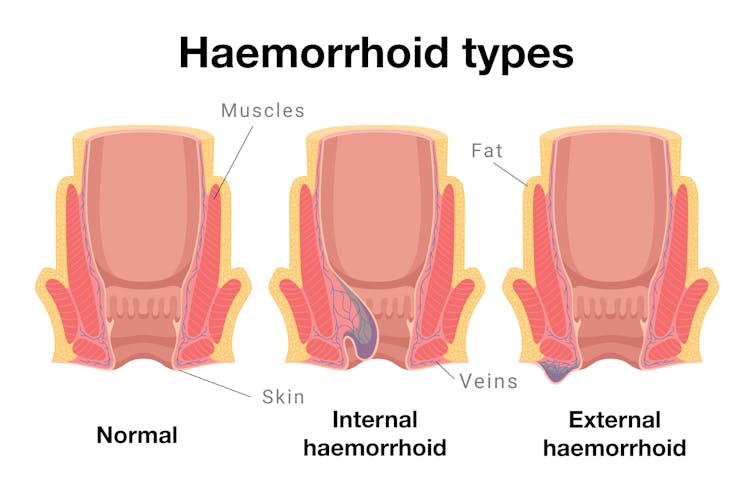
Every healthy person has haemorrhoids, sometimes called piles. They are columns of cushioned tissue and blood vessels found close to the opening of the anus.

Diagram showing haemorrhoid types: normal, internal and external.
We don’t notice haemorrhoids until they’re symptomatic.
Aleksandr Kharitonov/Getty

Haemorrhoids have a really important role in maintaining bowel continence or, to put it simply, keeping your poo in.

When all is well, we don’t notice them. But haemorrhoids can get swollen and this can lead to symptoms such as pain, bleeding or feeling a lump just inside your anus (internal haemorrhoids) or protruding outside (external haemorrhoids).

So when someone “has haemorrhoids”, it means they have become inflamed or symptomatic.

This is extremely common: more than one in two of us will experience symptomatic haemorrhoids at some point in our lives.

You are more likely to get haemorrhoids if you:

  • are older (over 45)
  • are pregnant
  • are overweight
  • have persistent constipation or diarrhoea
  • regularly lift heavy objects
  • spend a lot of time on the toilet.

The link between toilet time and haemorrhoids

Prolonged sitting in general has not been linked to developing haemorrhoids.

However, a standard toilet seat – unlike a chair or couch – has a large internal opening that provides no support for the pelvic floor (the group of muscles and ligaments that support the bladder, bowel and uterus).

Prolonged sitting on a toilet seat is believed to increase pressure inside the pelvic floor and lead to blood pooling in the vascular cushions of the anus. This makes haemorrhoids more likely to develop.

What the new study looked at

The new US study recruited 125 adults, aged 45 and older, who were undergoing a colonoscopy at Beth Israel Deaconess Medical centre.

Researchers surveyed them about their smartphone habits while using the toilet, including how often they checked their phone and for how long. Participants also reported on other behaviours such as straining, their fibre intake, and how much physical activity they did.

The researchers recorded whether they had haemorrhoids. Since the participants were all having a colonoscopy, the presence of internal haemorrhoids could be directly confirmed visually.

What did the study show?

Two-thirds (66%) of all participants used smartphones while on the toilet. The most common activity was reading news (54.3%), followed by social media (44.4%).

Those who used their smartphones spent longer on the toilet than those who didn’t. More than one in three (37.3%) toilet smartphone users spent over five minutes on the toilet, compared to just over one in 20 (7%) of those who didn’t use their smartphones.

The smartphone users had a 46% higher risk of haemorrhoids, compared to those who didn’t use their smartphone. To calculate this, researchers took into account other known risk factors for haemorrhoids such as gender, age, body mass index, exercise activity, straining and fibre intake.

However, unlike some other research, this study did not find a link between straining and haemorrhoids.

As a result, the researchers concluded that time spent on the toilet poses a more significant risk for haemorrhoids than straining. However, we can’t rule out straining as a risk factor, based on one study.

Some other limitations to consider

The study relied on participants remembering whether or not they strained, and how long they spent on the toilet.

This kind of recall is subjective, and may also be influenced by taking part in the study. For example, if the participants thought they had haemorrhoids, they may be more likely to report straining.

The study’s small sample size and the participants’ age (all over 45) also mean it is unlikely to be representative of the broader population.

Toilet sitting time

The new study is not the first to study the link between time spent on the toilet and developing haemorrhoids. In 2020, a Turkish study found spending more than five minutes on the toilet was associated with haemorrhoids.

Another 2020 study from Italy of 52 people with diagnosed internal or external haemorrhoids noted the longer they spent on the toilet, the more severe their haemorrhoids.


Read more:
Do men really take longer to poo?


So, what are we doing on the toilet?

Defaecation itself usually doesn’t take long. One study found it took healthy adults an average two minutes when sitting, but only 51 seconds when squatting.

The majority of “toilet sitting time” usually means just that – sitting on the toilet, doing other activities aside from pooing (or weeing).

One 2008 study from Israel surveyed 500 adults and found more than half (52.7%) read books or newspapers while on the toilet. It also found toilet readers spent significantly more time on the toilet.

How to avoid haemorrhoids

The usual advice is to increase the amount of fibre in your diet (eating more fruit, vegetables and wholegrains) and ensure you drink enough water. This makes it easier to pass a stool and reduces straining – which you should also try to avoid.

However, the new research confirms previous evidence that cutting down toilet sitting time may also help. So, avoiding distractions by leaving your smartphone outside the bathroom is a good idea (and as a bonus, will expose your device to fewer germs).


Read more:
Your phone is covered in germs: a tech expert explains how to clean it without doing damage


If you have any concerning symptoms, such as blood in your stool, a new lump in the anal region, or pain when passing a bowel motion then you should see your local doctor for further investigations and treatment.

The Conversation

Vincent Ho does not work for, consult, own shares in or receive funding from any company or organisation that would benefit from this article, and has disclosed no relevant affiliations beyond their academic appointment.

ref. Scrolling on the toilet increases your risk of haemorrhoids, new study shows – https://theconversation.com/scrolling-on-the-toilet-increases-your-risk-of-haemorrhoids-new-study-shows-264107

The science behind a freediver’s 29-minute breath hold world record

Source: The Conversation – Global Perspectives – By Theresa Larkin, Associate Professor of Medical Sciences, University of Wollongong

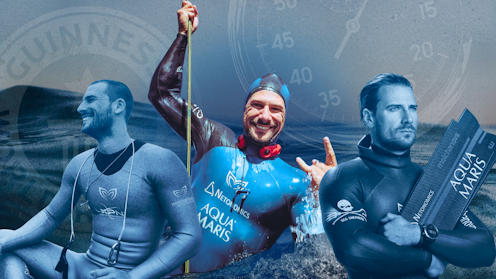
Croatian freediver Vitomir Maričić. Facebook.com @molchanovs, Instagram.com @maverick2go, Facebook.com @Vitomir Maričić, CC BY

Most of us can hold our breath for between 30 and 90 seconds.

A few minutes without oxygen can be fatal, so we have an involuntary reflex to breathe.

But freediver Vitomir Maričić recently held his breath for a new world record of 29 minutes and three seconds, lying on the bottom of a 3-metre-deep pool in Croatia.

Vitomir Maričić set a new Guinness World Record for “the longest breath held voluntarily under water using oxygen”.

This is about five minutes longer than the previous world record set in 2021 by another Croatian freediver, Budimir Šobat.

Interestingly, all world records for breath holds are by freedivers, who are essentially professional breath-holders.
They do extensive physical and mental training to hold their breath under water for long periods of time.

So how do freedivers delay a basic human survival response and how was Maričić able to hold his breath about 60 times longer than most people?

Increased lung volumes and oxygen storage

Freedivers do cardiovascular training – physical activity that increases your heart rate, breathing and overall blood flow for a sustained period – and breathwork to increase how much air (and therefore oxygen) they can store in their lungs.

This includes exercise such as swimming, jogging or cycling, and training their diaphragm, the main muscle of breathing.

Diaphragmatic breathing and cardiovascular exercise train the lungs to expand to a larger volume and hold more air.

This means the lungs can store more oxygen and sustain a longer breath hold.

Freedivers can also control their diaphragm and throat muscles to move the stored oxygen from their lungs to their airways. This maximises oxygen uptake into the blood to travel to other parts of the body.

To increase the oxygen in his lungs even more before his world record breath-hold, Maričić inhaled pure (100%) oxygen for ten minutes.

This gave Maričić a larger store of oxygen than if he breathed normal air, which is only about 21% oxygen.

This is classified as an oxygen-assisted breath-hold in the Guiness Book of World Records.

Even without extra pure oxygen, Maričić can hold his breath for 10 minutes and 8 seconds.

Resisting the reflex to take another breath

Oxygen is essential for all our cells to function and survive. But it is high carbon dioxide, not low oxygen that causes the involuntary reflex to breathe.

When cells use oxygen, they produce carbon dioxide, a damaging waste product.

Carbon dioxide can only be removed from our body by breathing it out.

When we hold our breath, the brain senses the build-up in carbon dioxide and triggers us to breathe again.

Freedivers practice holding their breath to desensitise their brains to high carbon dioxide and eventually low oxygen. This delays the involuntary reflex to breathe again.

When someone holds their breath beyond this, they reach a “physiological break-point”. This is when their diaphragm involuntarily contracts to force a breath.

This is physically challenging and only elite freedivers who have learnt to control their diaphragm can continue to hold their breath past this point.

Indeed, Maričić said that holding his breath longer:

got worse and worse physically, especially for my diaphragm, because of the contractions. But mentally I knew I wasn’t going to give up.

Mental focus and control is essential

Those who freedive believe it is not only physical but also a mental discipline.

Freedivers train to manage fear and anxiety and maintain a calm mental state. They practice relaxation techniques such as meditation, breath awareness and mindfulness.

Interestingly, Maričić said:

after the 20-minute mark, everything became easier, at least mentally.

Reduced mental and physical activity, reflected in a very low heart rate, reduces how much oxygen is needed. This makes the stored oxygen last longer.

That is why Maričić achieved this record lying still on the bottom of a pool.

Don’t try this at home

Beyond competitive breath-hold sports, many other people train to hold their breath for recreational hunting and gathering.

For example, ama divers who collect pearls in Japan, and Haenyeo divers from South Korea who harvest seafood.

But there are risks of breath holding.

Maričić described his world record as:

a very advanced stunt done after years of professional training and should not be attempted without proper guidance and safety.

Indeed, both high carbon dioxide and a lack of oxygen can quickly lead to loss of consciousness.

Breathing in pure oxygen can cause acute oxygen toxicity due to free radicals, which are highly reactive chemicals that can damage cells.

Unless you’re trained in breath holding, it’s best to leave this to the professionals.

The Conversation

The authors do not work for, consult, own shares in or receive funding from any company or organisation that would benefit from this article, and have disclosed no relevant affiliations beyond their academic appointment.

ref. The science behind a freediver’s 29-minute breath hold world record – https://theconversation.com/the-science-behind-a-freedivers-29-minute-breath-hold-world-record-264020

How RFK Jr.’s misguided science on mRNA vaccines is shaping policy − a vaccine expert examines the false claims

Source: The Conversation – USA (3) – By Deborah Fuller, Professor of Microbiology, School of Medicine, University of Washington

RFK Jr. canceled $500 million of funding for research on mRNA vaccine technology. Anadolu/Getty Images

On Sept. 4, 2025, Health and Human Services Secretary Robert F. Kennedy Jr. is scheduled to testify before the Senate Finance Committee, where he is expected to face questions about his vaccine policies.

A few days prior, on Sept. 1, 2025, President Donald Trump demanded pharmaceutical companies to prove that COVID-19 mRNA vaccines work, saying that the CDC was “being ripped apart over this question.” It was his first public acknowledgment of the chaos roiling the Centers for Disease Control and Prevention amid the firing of CDC Director Susan Monarez and subsequent resignations of four high-level agency officials.

Meanwhile, public health experts and HHS staffers are calling for Kennedy to be fired.

The turmoil comes about a month after HHS announced US$500 million in funding cuts for 22 research contracts on mRNA vaccine technology. The agency said it will instead pour these funds into research on a traditional approach to designing vaccines that was first used more than 200 years ago. With such vaccines, called whole-virus vaccines, a person’s immune system is presented with the whole virus, often in weakened or inactivated form. This switcheroo has puzzled many scientists.

As a vaccinologist who has studied and developed vaccines for over 35 years, I see that the science behind mRNA vaccine technology is being widely misstated. This incorrect information is shaping long-term health policy in the U.S. – which makes it urgent to correct the record.

Are mRNA vaccines less safe than whole-virus vaccines?

HHS defended its cancellation of mRNA vaccine research based, in part, on a nonpeer-reviewed compilation of selected publications called the COVID-19 mRNA “vaccine” harms research collection. This document lists about 750 articles claimed to describe harms caused by mRNA vaccines against COVID-19. However, the vast majority of these articles aren’t about vaccines but about the harms of getting infected with SARS-CoV-2, the virus that causes COVID-19. And notably absent from it is the huge body of data showing mRNA vaccines actually prevent these harms.

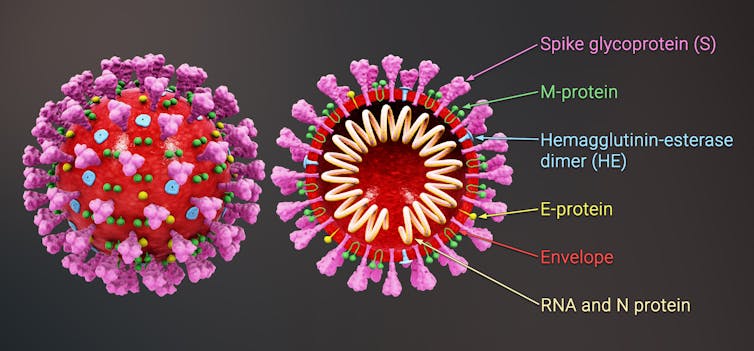
a SARS-CoV-2 particle whole and in cross-section.
Spike proteins on SARS-COV-2 can cause tissue damage – and although mRNA vaccines produce them in small amounts, they prevent the virus from replicating to produce them in large amounts.
https://www.scientificanimations.com/wiki-images/, CC BY-SA

For example, the document being used to justify RFK Jr.’s claims about mRNA vaccines highlights 375 studies reporting that the virus’s spike protein alone, which is produced when the virus replicates, can cause excessive inflammation and tissue damage. This is true. But the document marshals this evidence to support the claim that mRNA vaccines, which are designed to produce spike proteins, cause the same harm – which is not accurate.

While viral replication results in uncontrolled production of a large amounts of the protein, the way it’s produced by the mRNA vaccine is very different. The vaccine produces a small, controlled amount of spike protein inside a few cells – just enough to induce an immune response without causing damage. And by blocking the virus’s replication, it reduces the amount of spike protein in circulation, actually having the opposite effect.

What about side effects like myocarditis?

Early reports flagged a type of heart swelling called myocarditis as a rare side effect of the mRNA vaccine, particularly for young men ages 18 to 25 after a booster dose. A 2024 review identified about 20 cases out of 1 million people who received the vaccine. However, that same study found that unvaccinated people had an elevenfold higher risk of getting myocarditis after a COVID-19 infection than vaccinated people.

What’s more, another 2024 study showed that people who developed myocarditis after vaccination had fewer complications than those who developed the condition after getting infected with COVID-19.

Do mRNA vaccines make the SARS-CoV-2 virus resistant?

Another claim from the compilation of supposed mRNA vaccine harms that was cited as a reason for cutting funding for mRNA technology is that mRNA vaccines cause mutations in the SARS-CoV-2 virus that make them resistant or less susceptible to the vaccine.

When a virus replicates in its host, it produces millions of copies of its genetic material. Mutations are copying errors that occur naturally during the replication process. These acquired mutations produce new variants, which is why both the COVID-19 mRNA and the whole-virus flu vaccine get updated annually – to keep up with natural changes in the virus.

Slowing down viral replication decreases the rate at which a virus can acquire new mutations. Since both mRNA and whole-virus vaccines stop or slow the virus from replicating, both types of vaccines help reduce the emergence of resistant viruses.

Viruses can mutate to escape from antibodies, but the mRNA vaccines are not causing the emergence of more virulent strains, likely for at least two reasons. First, mRNA vaccines induce immune responses that can attack the virus at multiple spots, so it would have to come up with many mutations at once to escape the vaccine’s defenses. Second, even if the virus could acquire all these mutations, they would likely weaken it, making it unable to cause or even transmit disease.

mRNA vaccines versus new SARS-CoV-2 variants

Kennedy, in announcing cuts to mRNA vaccine research on Aug. 5, 2025, claimed that mRNA vaccines don’t work against respiratory viruses and that HHS was moving toward “safer, broader vaccine platforms that remain effective even as viruses mutate.”

Both whole-virus vaccines and mRNA vaccines protected against COVID-19 and prevented hospitalization and death for millions of people worldwide between 2020 and 2024, but there’s clear evidence that the mRNA-based vaccines provided significantly better protection than whole-virus vaccines. And for COVID-19, mRNA vaccines are more effective against new variants, which emerge as viruses mutate, than whole-virus vaccines.

mRNA vaccines’ superpower is that they can be updated and manufactured very quickly, unlike traditional whole-virus vaccines.

The COVID-19 mRNA vaccines started with exceptionally high efficacy, exceeding 94%. When the SARS-CoV-2 delta and omicron variants emerged in the spring and fall of 2021, mRNA vaccines became less effective in preventing infections. However, they remained highly effective in preventing severe illness, whereas in unvaccinated people the rates of severe illness and hospitalization remained high.

This is because mRNA vaccines induce the immune system to make both antibodies and specialized immune cells called T cells. These elements can recognize multiple parts of the virus, including ones that don’t change, enabling significant protection against new variants.

What’s more, the mRNA vaccines have a superpower that no other type of vaccine can currently match: They can be quickly updated and manufactured within two to three months. To develop a whole-virus vaccine, researchers must first spend months isolating and propagating the virus. Conversely, making an mRNA vaccine requires just sequencing the virus’s genetic code – a process that today takes just hours.

If a new pandemic began today, mRNA vaccines are currently the only type of vaccine that could be developed quickly enough to disrupt its spread.

The future of mRNA vaccine technologies

Thirty years ago, when scientists first started developing mRNA vaccine technology, they recognized its potential to overcome major limitations of whole-virus vaccines – namely, slow production time and more limited ability to protect from new viral variants. Today, mRNA vaccines are also being developed to prevent or treat diseases including HIV and cancer, as well as autoimmune and genetic diseases.

Of course, this technology can be further improved. New mRNA vaccine technologies are aimed, among other things, at making mRNA vaccines easier to store to allow for faster distribution and reduce their short-term side effects, eliminate the rare risk of myocarditis and more quickly block a respiratory infection.

The National Institutes of Health is funneling money away from new mRNA technologies toward a single project developing universal vaccines based on traditional whole-virus vaccine technology. Universal vaccines are urgently needed to provide broader protection against ever-changing respiratory viruses, such as influenza, that are major pandemic threats.

A 2022 study in mice and ferrets showed that a universal flu vaccine NIH plans to support has promise. However, multiple studies of potential universal flu vaccines based on mRNA technology show even more potential. Such vaccines could induce broader immunity than whole-virus vaccines by eliciting antibody and T-cell responses that target an even wider range of flu viruses.

It’s hard to square those benefits with the fact that HHS and NIH have named the planned new universal vaccine platform “Generation Gold Standard,” insisting that it represents a new standard in science and transparency. The effort seems more akin to eliminating all e-bike technology and telling everyone who seeks one to get by with a single brand of a 10-speed bike: Getting to the intended destination may still be possible, but it will be slower and harder.

And in the case of abandoning mRNA vaccine research, it may lead to lives needlessly lost, whether due to potential medicines untapped or to pandemic unpreparedness.

The Conversation

Deborah Fuller receives funding from the National Institutes of Health. She is co-founder and a scientific advisor for two biotech companies developing nucleic acid vaccine technologies that are not based on mRNA.

ref. How RFK Jr.’s misguided science on mRNA vaccines is shaping policy − a vaccine expert examines the false claims – https://theconversation.com/how-rfk-jr-s-misguided-science-on-mrna-vaccines-is-shaping-policy-a-vaccine-expert-examines-the-false-claims-263027

What are the key purposes of human writing? How we name AI-generated text confuses things

Source: The Conversation – Canada – By Taylor Morphett, Assistant Professor, English, University of Northern British Columbia

As another school year returns, large language models (LLMs) present difficult questions around learning, thinking, plagiarism and authorship for educators.

New approaches to assignments and assessment are required. Student papers that use LLM technology require additional labour on many fronts. Professors have expressed frustration, worry and anxiety.

As an assistant professor of English whose research has focused on the histories of writing and how it’s taught, I have been involved in many discussions at institutions of higher learning about this topic.

The immediate issue of LLMs in the classroom points to a larger reality. For too long, instructors and universities have been treating students’ writing difficulties as a deficiency in the mind — instead of confronting the truth that writing, as a technology for thinking, is cognitively demanding.

Writing is a technology that helps us understand our own ideas better. Where people are involved in thinking and invention — including at universities — it needs to be taught in that spirit.

Why consider AI output ‘writing?’

Given what LLM technology actually does and does not do, why do we even consider it writing — as in, “they used an LLM to write their assignment?”

LLM technology creates — at best — a facsimile of a textual object, meaning that based on its training on existing texts, it can create output that resembles a “text.”

When generated for the purpose of a university assignment, it resembles the standard academic English that has ruled the academy (historical and present-day institutions of higher learning including colleges, technical schools and universities) and has been endowed with a special relationship to truth.

I’ve seen anger and frustration expressed towards the student who uses LLM output in their writing process or submitted work. The reason seems to be that it undermines that special relationship to truth that academic writing has long held.

The artificial output reveals that academic writing is not an “absolute.” Rather, the LLM shows us how academic writing is a social construction. But academia at large has long resisted acknowledging this.

Historical and social concerns

Using standard academic writing is a choice. It is a style of writing that has been invisible within academia, thought to be the default and “correct.”

Many of the problems and questions that arise with LLM technology in relation to writing are really historical and social concerns that get to the very heart of what we understand writing to be.

As I continue to discover in my research, writing in the context of the English-speaking academy since the 19th century has been taught within two distinct streams: literary and technical communication. Both of these streams flourished within the larger context of the British Empire because both are adept strategies for maintaining the status quo.

The combination of the veneration of canonical British literature and the instruction of a utilitarian language that acts as a “neutral” communication tool (one that is not at all neutral), and a standard one, serves to create an understanding of writing that over-prioritizes the finished text.


Read more:
‘It don’t be like that now’ — the English history of African American English


Writing and context

Still today, what is technically “correct” is seen as “good” writing, while “good” writing has come to be represented as the product of a strong mind. This, of course, implies “bad writing” is the product of a mind not as able, or even suited for post-secondary study. Scholars in writing studies have pointed to academia’s focus on correctness and how ways of teaching academic writing can perpetuate inequities, including those related to colonialism and racism.

“Correctness” in writing is, as writing scholars have long discussed, subjective and contextual. For example, “ill c u l8r” would work as a perfectly fine text message in 2008. In another setting — including texting today with QWERTY-keyboard equipped phones — it would seem “off” or even incomprehensible.

When a student’s ability to write academically is taken to represent their intelligence, we should not be surprised when some use LLMs.


Read more:
Students cheating with generative AI reflects a revenue-driven post-secondary sector


Revisiting the final product

Because LLM technology can mimic standard academic writing, it becomes the perfect context through which to address how we think about the final product of writing. The truth is, if university instructors are only interested in a “correct” piece of writing, it sort of makes sense for a computer to do it.

However, if we are interested in a way of teaching that supports students’ inquiry and thought as they interrogate the often oppressive systems they find themselves in, we need to broaden our understanding of writing beyond the confines of a “correct” standard academic English.

It is important that educators begin to see our students’ writing as part of a social situation which requires clarity on their end, yes, but also our listening.

Without reconsidering how western institutions have positioned writing, instructors risk educating a generation of students who are alienated from their own ability to think and create new knowledge, perspectives and understandings because of an over-reliance on LLMs. Western institutions will create students alienated from themselves and the potentialities of their ideas.


Read more:
How a first-year university writing course for Indigenous students fostered skills and belonging


Re-think what writing is

Part of re-thinking what writing is means allowing students to submit work in process, providing for feedback from instructors on ungraded drafts of assignments and developing scaffolding assignments that reveal the process behind writing.

It also means teaching students a new approach to writing that draws attention to the power structures implicated in the instruction of writing and embraces invention — a rhetorical concept under-utilized within the western academy. “Invention” implies many considerations, including around audience, relationships and circumstances.

Writing experts need to be brought into AI-policy creation and the implications of this field’s research must be considered by a wider audience. If LLMs are implemented in universities without careful consultation with writing experts, I fear we will soon find that all that can be written is the status quo of received ideas.

It’s time for us to reconsider writing in universities or risk our students losing access to their own writing. The study of writing is uniquely situated to help our institutions navigate these urgent questions.

The Conversation

Taylor Morphett does not work for, consult, own shares in or receive funding from any company or organisation that would benefit from this article, and has disclosed no relevant affiliations beyond their academic appointment.

ref. What are the key purposes of human writing? How we name AI-generated text confuses things – https://theconversation.com/what-are-the-key-purposes-of-human-writing-how-we-name-ai-generated-text-confuses-things-261899

The B.C. Supreme Court’s recognition of Cowichan title is an invitation to enact transformative change

Source: The Conversation – Canada – By Sarah Morales, Associate Dean Indigenous & Associate Professor, Faculty of Law, University of Victoria

The British Columbia Supreme Court’s recent decision in Cowichan Tribes v. Canada has attracted a lot of headlines, with some suggesting it signals the end of private property.

The Quw’utsun Nation sought Declarations of Aboriginal title to Tl’uqtinus, their traditional village on the south arm of the Fraser River and surrounding lands, and of their right to fish for food in the south arm of the Fraser.

The judgment certainly deserves careful consideration, but not because it puts individual homes and businesses at risk. That isn’t what the court found, nor was it asked to.

It deserves attention because it calls on governments — and all of us — to honestly confront the unlawful foundations of B.C.’s land system and turn our minds to meaningful remedies.

In her ruling, Justice Barbara Young held that the Crown lacked lawful authority to grant fee simple titles over Cowichan lands in what is today part of the city of Richmond. In her words:

“The Crown grants of fee simple interest in the Cowichan Title Lands, and the Crown vesting of the soil and freehold interest in certain highway lands in the Cowichan Title Lands, unjustifiably infringe the Cowichan’s Aboriginal title.”

The plaintiffs did not ask the court to invalidate the title deeds of homeowners and businesses, and the ruling does not do that. Instead, the Quw’utsun Nation sought accountability from the Crown: the return of provincially and municipally held lands and long-term solutions about all the wrongfully granted titles.

This distinction matters if we are interested in finding solutions about how to live well together, and not just in stirring up controversy.

We tend to view private property as a sacrosanct, never-changing principle. But property rights are legal constructs — never absolute and always evolving. Just as property law has been reshaped to reflect human rights and environmental protections, it must also evolve to address colonial injustices and dispossession.

An unresolved history of land theft

For the Quw’utsun Nation, the court’s decision fits into a broader context of land dispossession. While this case concerns part of its territory along the Fraser River, most Quw’utsun territory is on southern Vancouver Island, where the infamous E&N Railway grants transferred vast areas into private hands without consent, treaty or compensation.

That land grab remains the central obstacle in more than 30 years of ongoing negotiations between the Hul’quimi’num Treaty Group, which represents three of the plaintiff First Nations, as well as the Lyackson and Ts’uubaa-asatx Nations, and the Crown.

In fact, initial colonial incursions into Quw’utsun territory on Vancouver Island were timed such that many members were at Tl’uqtinus when the first governor of British Columbia, James Douglas, arrived with settlers. His promises of compensation were never honoured.

B.C. led Canada in incorporating the United Nations Declaration on the Rights of Indigenous Peoples into law in 2019. Yet now the province has chosen to adopt an adversarial approach, viewing the case as a threat to private property, and will appeal the B.C. Supreme Court decision.

Appeals will only prolong an already painful process. Instead, the government could choose to focus on legal creativity and innovative solutions over endless court battles. On Haida Gwaii, shared governance agreements preserve the respective authorities of the Haida Nation and the Crown and reflect both legal traditions.

In 2021, the B.C. Supreme Court concluded the Blueberry River First Nation’s treaty rights had been infringed upon by the impacts of industrial developments in its traditional territory. The province chose not to appeal, instead pledging to work with Blueberry River First Nation to collaboratively address the impacts of resource development.

In New Zealand, the landmark Treaty of Waitangi settlements likewise embed Māori authority into land-use governance while respecting shared interests in lands and resources.

While not perfect, these examples all demonstrate how a serious engagement with Indigenous law and authority can lead to better and more equitable solutions for everyone.

Quw’utsun law offers tools for shared governance, managing overlapping rights in ways that respect both Indigenous and Crown institutions. For Quw’utsun Mustimuhw (Cowichan Peoples), territoriality is not marked by rigid boundaries but by relationships of reciprocity, kinship and shared use.

This flexible, place-based orientation provides a foundation for governance that can accommodate overlapping interests while maintaining respect and accountability inter-societally and across legal systems.

An invitation to restore good relations

As Chief Cindy Daniels of Cowichan Tribes stated:

“The court’s declaration is important to reconciliation and to correct the historical injustice that was done to us. We will not pursue this with malice and we will conduct ourselves with one mind, one head and one spirit for our culture and community, and for the generations to come.”

Drawing on this principle could replace adversarial conflict with constructive nation-to-nation dialogue. But truth must come first.

Society cannot look away, even when past wrongs are difficult to repair — such as with homes and businesses on unlawfully granted land.

Acknowledging harm does not mean ignoring the interests of current owners, but it does require honesty about the history of how that land was acquired and creativity in finding remedies. Shying away from truth because it is uncomfortable only fuels greater uncertainty and conflict for all parties in the long run.

The Cowichan decision reminds us that reconciliation demands confronting the colonial foundations of Canada’s property system. Governments must accept responsibility rather than hide behind litigation.

Commentators and the public should resist alarmist rhetoric and instead engage with the deeper questions this ruling raises: how to repair relationships, return what can be returned and reshape institutions to reflect renewed relations.

The way we own and manage property and land in Canada is not working: housing inequality is rising, forest fires rage across the country and biodiversity loss has reached emergency levels.

The court’s decision is a chance for a new beginning grounded in an honest reckoning about how property rights were created, and how they can be reshaped to justly and honestly improve how we live together on these lands.

In our view, it is an invitation to imagine and enact transformative change for generations to come.

The Conversation

Sarah Morales is Coast Salish and a member of Cowichan Tribes. Over the past 20 years she has worked with Cowichan Tribes, and other Quw’utsun Nations, on projects related to child and family services, governance and law revitalization. She receives funding from the Social Sciences and Humanities Research Council or Canada.

Estair Van Wagner receives funding from the Social Sciences and Humanities Research Council of Canada.

ref. The B.C. Supreme Court’s recognition of Cowichan title is an invitation to enact transformative change – https://theconversation.com/the-b-c-supreme-courts-recognition-of-cowichan-title-is-an-invitation-to-enact-transformative-change-263596

The gospel according to Lady Gaga: why pop’s Mother Monster is also a theologian

Source: The Conversation – UK – By Stephen Roberts, Honorary Lecturer in Theology, Cardiff University

Lady Gaga is leading the nominations for this year’s MTV Video Music Awards – merely her latest accolade.

Since she burst onto the scene with The Fame album in 2008, Gaga has become one of the world’s most recognisable pop stars. Her hit Born This Way even topped Billboard’s list of the 100 greatest LGBTQIA+ anthems of all time. The track defines her commitment to celebrating diversity in all its forms.

While she is known for filling dance floors and dominating pop culture, she has also sparked serious academic interest. Scholars have explored her influence on music, fashion, gender and sexuality. Yet her use of religious imagery remains relatively under-examined. As a theologian, I have studied Gaga’s music and its rich religious symbolism.

Gaga’s most overtly political and theological album was Born This Way, released in 2011. It also inspired the Born This Way Foundation, which she founded with her mother to “empower and inspire young people to build a kinder, braver world that supports their mental health”.

I argue Gaga’s work makes her a kind of “musical public theologian”. In other words, an artist who brings theological arguments into public debate, particularly around LGBTQIA+ inclusion, often in tension with religious communities.

Born This Way

Take the title track. Here she tackles the theological opposition to LGBTQIA+ inclusion head on, in what might seem a fairly obvious and unsophisticated way: “No matter gay, straight, or bi, lesbian, transgender life, I’m on the right track, baby, I was born to survive … I’m beautiful in my way ’cause God makes no mistakes, I’m on the right track, baby, I was born this way.”

In a world where some claim that God’s design allows only for heterosexuality, Gaga turns this argument upside down. If God makes no mistakes, she insists, then diversity itself is divinely intended.

So far, so simple. But there is a more complicated story to be told about Gaga’s theological affirmation of difference. Some queer theorists are uneasy with the idea of being “born this way”, and the notion that identity is fixed by biology alone.

This is where deeper analysis of Born This Way pays dividends. The video offers a more fluid understanding of identity as something that can be performed.

Lady Gaga – Born This Way

It opens with a surreal sci-fi creation myth, scored with the theme from Alfred Hitchcock’s Vertigo (1958), a film in which identity is not straightforwardly “given”. The dancers adopt multiple postures resembling ovaries and wombs – a visual metaphor for the possibility of new births – suggestive of our ability to take on fresh identities for ourselves.

Gaga doesn’t do the work of connecting the lyrics and the visuals. That goes on in the world of queer theology, which is an approach that places LGBTQIA+ people at the centre of faith. But Gaga makes a significant public theological statement by holding them together in this song and its accompanying video.

Central to Gaga’s creative vision and resistance to dominant narratives telling people who and how they should be, is the theme of monstrosity. She calls herself “Mother Monster” and her fans “little monsters”, reclaiming a word often used to exclude or belittle those who are different.

The “Manifesto of Mother Monster”, at the beginning of the Born This Way video, presents a mythic creation story where freedom and difference are celebrated. It builds on the ambiguous place of monsters in religion.

Garden of Eden

Although her later albums are less overtly theological, Gaga has continued to weave religious themes into her music, including those of monstrosity. On her latest album Mayhem, for example, which was released earlier this year, the song Garden of Eden plays with the biblical story of the fall of Adam and Eve.

Lady Gaga – Garden Of Eden.

At one level, the theological motif of taking a bite from the apple in Eden can be seen simply as a metaphor for indulging in a short-lived relationship that, for that very reason, disobeys more conservative expectations of sexual relationships. But here, too, Gaga’s lyrics can be read at a deeper level. The story of Adam and Eve is fundamental to Christian theology, and it can be used to enforce certain ways of being.

Instead, Gaga’s reinterpretation of Eden offers a liberating vision. There’s an invitation to rethink a story that has been used to divide the world neatly into good and evil. Instead of using scripture to police behaviour, she reimagines it as a story that opens up possibilities. This reflects the experiences of many of her fans, who may have felt excluded by dominant religious narratives.


Read more:
How Lady Gaga acts as a custodian of hope


Through her music and imagery, Gaga invites us to embrace difference and to question stories that oppress. She queers tradition, offering an alternative theology rooted in inclusivity and creativity. Her work demonstrates that theology does not belong only in churches or seminaries. It can be found in music videos, stadium tours and dance anthems.

In studying Gaga’s work, I have come to see her as a theologian in her own right. She transforms pop music into a space where faith, identity and power are re-imagined. That, to me, is why she is worth celebrating, not just as a pop icon, but as someone who has turned theology into art for a wider audience.

The Conversation

Stephen Roberts does not work for, consult, own shares in or receive funding from any company or organisation that would benefit from this article, and has disclosed no relevant affiliations beyond their academic appointment.

ref. The gospel according to Lady Gaga: why pop’s Mother Monster is also a theologian – https://theconversation.com/the-gospel-according-to-lady-gaga-why-pops-mother-monster-is-also-a-theologian-264151

How the curves in your spine could be causing you pain

Source: The Conversation – UK – By Dan Baumgardt, Senior Lecturer, School of Psychology and Neuroscience, University of Bristol

Although the spine is naturally slightly curved, certain health conditions can make these curves more extreme. RomarioIen/ Shutterstock

Over 60% of us will suffer from lower back pain at some point in our lives. Without question, it’s the leading cause of disability across the globe.

Your spine is comprised of 33 bones known as vertebrae, which are stacked one on top of the other. The resulting column is divided into five segments: cervical (in the neck), thoracic (at the same level as the chest), lumbar (at the level of the abdomen) and sacral (connecting with the pelvis). The fifth, the coccyx, is located at the very bottom of the spine (the tailbone) – and is very painful when injured.

The vertebrae are connected by multiple joints, including discs which allow the spine to move in multiple directions. Though we might think the spine should appear straight, it naturally curves forward and backwards so it can perform all of its important functions.

But many conditions can cause the spine to curve more than it should. This can not only lead to pain, but potentially a whole host of other health troubles too.

Dowager’s hump

The spine also supports the weight of the body, protects the spinal cord and helps the body to bend, flex and twist. The thoracic region attaches to the ribs and naturally curves backwards – this curve is known as the thoracic kyphosis.

But sometimes, the curve of the thoracic kyphosis becomes more accentuated and visible – often as a result of osteoporosis (where bones become weaker), age-related changes to the back muscles and vertebrae, or long-term poor posture.

A picture depicting a man's spine which is curved due to kyphosis.
Dowager’s hump tends to be more common in women.
CLIPAREA l Custom media/ Shutterstock

The medical name for this condition is hyperkyphosis, though it’s sometimes referred to as “dowagers hump” as it’s around two to four times more common in women.

A stooped posture with rounded shoulders (or “hunchback” appearance) is typically a sign of hyperkyphosis. In some cases, it may become so extreme as to impact breathing since the chest can’t inflate properly. It can also affect swallowing since the neck becomes more horizontal and the gullet potentially narrowed.

And of course pain and stiffness typically arise. This is a common theme for most patients with abnormal curvature of the spine, as the vertebrae lose their ability to move, and nerves arising from the spinal cord can become compressed.

Scoliosis

Another type of deformity that can occur in the spinal column affects not only how it bends forward and backwards, but also side-to-side.

Scoliosis occurs when the vertebrae either curve sideways, rotate in relation to each other, or collapse. This produces a variety of different deformities, ranging in size and severity.

The underlying causes of scoliosis are widespread. Sometimes bones can become deformed as a result of trauma, cancer or an infection (such as tuberculosis). Scoliosis can also be present from birth, or arise from neurological disorders in early years – such as cerebral palsy.

As well as back pain, patients may also notice postural signs as scoliosis evolves. Their shoulder blades or ribcage can stick out more, and clothes may fit differently on their body.

Slipped and fused spines

Individual vertebrae in any part of the spine can sometimes also become displaced as a result of trauma, wear and tear, or certain health conditions (such as osteoporosis). This means that instead of standing in a regular stack, a vertebra slips forward, and out of line. This condition is given the long and practically unpronounceable name, spondylolisthesis.

An x-ray depicting ankylosing spondylitis in the lower spine.
Spondylolisthesis can be very painful.
Suttha Burawonk/ Shutterstock

In doing so, this displacement can trigger nerve compression. If the sciatic nerve – the largest in the human body – gets compressed, it can lead to symptoms of sciatica. These are namely pain, pins and needles, or numbness in the back of the leg or buttock.

The vertebrae in the lower back can sometimes also fuse abnormally together. A condition called ankylosing spondylitis can trigger inflammation in the spinal joints and discs, which then harden over time. Another name for the condition is bamboo spine, since the now rigid and inflexible column resembles a tough stalk of bamboo.

Managing back pain

Managing these conditions – and the pain they cause – will depend largely on the size of the deformity and what has caused it in the first place. Even a small spinal deformity can be significant.

For scoliosis for instance, braces to correct the spine as it grows may work to manage small defects in younger patients. But corrective surgery is often required to fix larger deformities and those which don’t respond to bracing.

Taking account of posture and bone health can also help prevent developing a spinal problem later in life. Using exercise to build a strong back and shoulders and avoiding slouching are solid measures, too. Managing associated conditions such osteoporosis with diet, medication and resistance training can also help.

Surgical intervention may be required in other situations – for instance, to decompress nerves that have become trapped or squashed.

Your spine is truly an architectural wonder. It’s far from a straight and rigid column – and capable of more than you’d ever expect. But this unique structure can lend itself to problems, especially when natural curves become deformities. The age-old adage “strengthen your back, strengthen your life” is a motto we should all be regularly reminded of, and to seek medical advice accordingly should back pain arise.

The Conversation

Dan Baumgardt does not work for, consult, own shares in or receive funding from any company or organisation that would benefit from this article, and has disclosed no relevant affiliations beyond their academic appointment.

ref. How the curves in your spine could be causing you pain – https://theconversation.com/how-the-curves-in-your-spine-could-be-causing-you-pain-262815

Physical education is important for academic success – here’s how it benefits kids’ cognition

Source: The Conversation – UK – By Simon Cooper, Professor in Physical Activity and Health, Nottingham Trent University

Physical education has many academic benefits. Drazen Zigic/ Shutterstock

There were 45,000 fewer hours of physical education (PE) delivered in UK schools during the last academic year compared to 15 years ago. This is concerning, given how important PE and physical activity are not only for children’s physical health, but their cognitive health too. As the new school year begins, it’s essential that PE hours in UK schools aren’t further cut given its importance for academic success.

A large body of evidence shows that physical education has many benefits for kids’ brains – including for their concentration and learning in the classroom.

For instance, research conducted by me and my colleagues has shown that in year seven and eight pupils, PE lessons are more beneficial for cognitive performance than an academic, classroom-based lesson is. We specifically compared the effects of a games-based PE lesson (where the students played football) with a normal classroom lesson that covered a subjects including maths and geography.

Cognitive performance was assessed via a test called the Sternberg paradigm. This tests short-term memory by asking participants to remember up to five random letters (called “target” letters), and then indicate whether letters they are presented with are one of their target letters or not. Cognitive performance was tested 30 minutes before the lesson, immediately after the lesson and then 45 minutes post-lesson.

Cognitive performance was better following the PE lesson compared to the normal classroom lesson on both of the post-lesson tests. This shows that PE is particularly beneficial for working memory, an aspect of cognition important for reasoning, learning and problem solving.

However, the important factor here was the intensity of the physical activity. The cognitive benefits of PE were far more pronounced in the children who did more moderate-to-vigorous physical activity during the lesson than in those who did low-intensity physical activity.

Moderate-to-vigorous physical activity was defined as time spent with a heart rate greater than 64% of the child’s maximum. So in 11-12 year olds, a heart rate of greater than around 135 beats per minute. These effects were once again most pronounced for working memory.

Similarly, research has shown that when more intense physical activity is encouraged in PE lessons, children see greater cognitive benefits than they do during standard PE lessons.

A group of boys plays football outdoors.
The more intense the physical activity, the better it was for cognitive performance.
Master1305/ Shutterstock

These findings suggest that not only is PE important, but the intensity of that activity is important too.

Further evidence also suggests that when students are encouraged to participate more often during PE, it positively benefits both cognition and academic performance. These benefits were particularly seen in their maths-related skills.

Where physical education takes place is also important. Research by me and my colleagues compared an identical 60-minute basketball session performed indoors and outdoors in secondary school children. Cognitive performance was again tested before the lesson, just after the lesson and 45 minutes post-lesson.

The outdoor physical activity produced greater effects on cognition compared to indoor activity. This was true for a number of aspects of cognition, including attention, working memory and executive function (higher level, complex thinking which is positively associated with academic outcomes). This suggest that, where possible, PE should be conducted outdoors to maximise cognitive benefits.


Read more:
Physical activity is good for your concentration – here’s why


Numerous studies have also shown that a bout of physical activity has an immediate, positive effect on cognitive performance. And, this effect even translates to better academic performance in maths.

Long-term effects

When we consider the longer-term effects of physical activity, our research has also shown that children who are fitter display better cognitive performance compared to children who are less fit. This is true across all aspects of cognition.

Children who are more physically active daily also have better cognitive performance. Kids who completed a daily mile (15 minutes of outdoor walking, jogging or running) everyday for five weeks not only got fitter, but they also saw improved executive function. This daily mile was done on top of their regular PE classes, while the control group continued with their usual daily activities. This suggests that additional physical activity can enhance cognitive performance.

Despite the clear benefits that physical activity has on academic success, the number of PE hours delivered in schools has reportedly been falling since 2012. Physical education in schools ultimately helps children learn. Its place and importance in the curriculum must be valued – and further cuts must be avoided.

The Conversation

Simon Cooper receives funding from the Waterloo Foundation, Rosetrees Trust, Stoneygate Trust and Education Endowment Foundation.

ref. Physical education is important for academic success – here’s how it benefits kids’ cognition – https://theconversation.com/physical-education-is-important-for-academic-success-heres-how-it-benefits-kids-cognition-260872