Hidden treasures of America’s national parks are closer than you might think

Source: The Conversation – USA (2) – By Jeffrey C. Hallo, Professor of Parks, Recreation and Tourism Management, Clemson University

When people think about national parks, they often think about the most famous ones – places like Yellowstone, Yosemite, Denali, Acadia, Glacier, Everglades and the Great Smoky Mountains. These are among the nation’s most sought-after destinations, with awe-inspiring scenery, abundant wildlife and places for adventure and recreation.

Admission is free at most of them, and at the rest, it’s competitive with the cost of a family meal deal at a fast-food joint.

But there is much more to the nation’s park system than just the 63 places formally designated as national parks. The National Park Service also manages nearly 400 other areas designated for their national significance as battlefields, military or historic sites, lakeshores, seashores, monuments, parkways, recreation areas, trails, rivers and preserves.

As a scholar of parks, recreation and tourism who has also published a children’s book about the wonders of the National Park System, I have seen how important these places are to Americans. And when the nation grapples with political divisions, civil unrest, social change or pandemics, these public lands – whether technically national parks or other elements in the wider system – are debated and fought over, protested in and used as an example. But they also provide places to find peace and restoration.

These sites of national significance are in every state in the U.S. – and hold surprising treasures no less wondrous than the big-name destinations, potentially right around the corner from your home.

Cliffs with hollowed-out sections rise above blue water. Trees grow on the clifftops.
Sea caves on Lake Superior provide stunning natural beauty at a national park that’s less well-known than some others.
Royalbroil via Wikimedia Commons, CC BY-SA

Enjoyment at the waterfront

America’s coastlines, shorelines, lakes and rivers are often prime destinations for vacationers, but access to them can be limited by private development, and parking and admission fees can be costly.

National parks help protect wide swaths of public access to these popular destinations and the affordability of visiting them for generations to come. Almost all of these water-focused parks allow swimming, beach or shore access, boating and fishing.

For example, Cumberland Island National Seashore in Georgia is an idyllic island with wild horses, historic mansions, uncrowded beaches and a maritime forest where you can hunt for fossilized shark teeth and camp among the Spanish moss-covered oak trees.

Point Reyes National Seashore in California has tule elk and elephant seal herds, a picturesque red-roofed lighthouse and fog-swept cliffs along the Pacific Ocean. Apostle Islands National Lakeshore in Wisconsin has sea caves to explore on kayaks.

Backcountry exploration

When people seek a break from the pace of modern life and the demands of being digitally connected, national parks contain expanses of backcountry, where signs of civilization are sparse, and where profound natural beauty, adventure and solitude are still available.

In Michigan’s Isle Royale National Park, you can see moose and hear wolves howl in the island’s wilderness. In South Carolina’s Congaree National Park, you can canoe or kayak on backwater creeks among some of the largest and tallest trees in eastern North America.

In Idaho, Craters of the Moon National Monument & Preserve allows visitors to explore an otherworldly volcanic landscape of lava flows, cinder cones and lava tubes. Primitive roads there allow people to drive into the backcountry to experience solitude without hiking.

National parks also offer a break from looking at this world entirely: 44 properties in the National Park Service system are certified as International Dark Sky Parks, where the nighttime environment is protected from invasive light pollution by laws and local regulations.

People walk across a stone bridge toward a wooded area.
At Hot Springs National Park in Arkansas, visitors can walk right from a city center into the park.
Ron Buskirk/UCG/Universal Images Group via Getty Images

A break from urban life

In America’s suburbs, and even in the heart of major cities, national park lands bring history, nature, leisure and urban life together. These parks reinforce the idea that national parks aren’t just for long-distance vacations but rather for daily life, enjoyment and reflection not far from home.

For example, the Mississippi National River & Recreation Area in Minnesota offers roughly 4 million residents of the Minneapolis-St. Paul metropolitan area mostly free access to over 70 miles of the river for all manner of waterborne and shoreline recreation. And just outside of New York City, off Long Island’s south shore, Fire Island National Seashore provides an easy escape to a rare coastal wilderness for undisturbed hikes through dunes and salt marshes.

Hot Springs National Park in Arkansas is one of the only national parks fully integrated into a small city. An area first preserved by Congress for public recreation in 1832 – 40 years before Yellowstone became the first official national park – it offers miles of trails that feel wild, despite their proximity to the downtown area. Its historic Bathhouse Row provides opportunities for bathing in thermal waters, and the park encourages visitors to drink the natural waters at the numerous spring-fed fountains in the town.

If a stronger drink is needed, Hot Springs is the only national park that has a brewery within its boundaries, using the park’s thermal spring water in its beers.

A sign reads 'Stonewall National Monument' next to a fence adorned with rainbow flags.
The Stonewall National Monument in New York City is one of many locations that recognize efforts to improve equality and social justice throughout U.S. history.
AP Photo/Pamela Smith

Lessons from history and culture

The National Park System also preserves America’s history and culture – and reminds people of the country’s collective mistakes and triumphs. The parks help Americans apply the many lessons of history to current issues. Americans can learn what we as a nation and as a collective of people have done – and what we have always yearned to do.

Independence National Historical Park in Philadelphia showcases the birthplace of American democracy, where the Declaration of Independence and Constitution were debated and signed, establishing a new democracy with sweeping goals of equality and opportunity for everyone.

Manzanar National Historic Site in California and Kalaupapa National Historical Park in Hawaii keep alive the stories of forced internments of people who were deemed dangerous or undesirable, reminding Americans that there have been times the nation did not live up to its ideals.

Minuteman Missile National Historic Site in South Dakota and Manhattan Project National Historical Park, with sites in Tennessee, New Mexico and Washington, shed light on the technology and politics of warfare.

And Belmont-Paul Women’s Equality National Monument in Washington, D.C., César E. Chávez National Monument in California and Stonewall National Monument in the heart of New York City – along with many other similar national parks – teach Americans about the generations-long ongoing struggles for civil rights and social justice.

U.S. national parks are more numerous, complex and full of wonder and opportunities for discovery than any one person could fully grasp – whether a self-proclaimed superfan or a credentialed expert. There is always more to discover, with more stories to hear and more places to see and explore.

There are likely lesser-known gems very close by for you to visit. Take a friend, a child or someone who has never been there before. People who use parks love them, and parks supported by love are protected – by all of us.

The Conversation

Jeffrey C. Hallo receives funding from the National Park Service.

ref. Hidden treasures of America’s national parks are closer than you might think – https://theconversation.com/hidden-treasures-of-americas-national-parks-are-closer-than-you-might-think-262585

A first connection can make a big difference when it comes to sticking with a career

Source: The Conversation – USA (2) – By Soon Hyeok Choi, Assistant Professor of Real Estate Finance, Rochester Institute of Technology

People often say that a single spark can light a fire.

In careers, that spark is often a person. It might be someone early in life who cracks open a door, offers encouragement, or quietly shows what success can look like. What’s less obvious is how profoundly that very first connection can shape everything that comes afterward.

Consider 23-time Grand Slam tennis champion Serena Williams. Williams has often spoken about the crucial role played by her first coach – and father – Richard Williams. His belief in her abilities and his willingness to expose her to competitive tennis from an early age ensured she gained experience long before most of her peers. In this, she’s not alone – in sports, a first coach can recognize potential before anyone else does.

Or consider Misty Copeland, the first Black female principal dancer at American Ballet Theatre. At 13, a Boys & Girls Club teacher, Cynthia Bradley, recognized her potential and brought her into formal ballet training; within four years Copeland earned a spot in ABT’s Studio Company. In 2015, she became ABT’s first Black female principal, a milestone built on that early mentorship. Those first advocates opened doors to elite training, scholarships and professional networks that sustained a long, barrier-breaking career.

Anecdotes like these are powerful, but they also raise questions. Do early connections cause long-term success, or do they simply come more easily to people already positioned to succeed? After all, a young athlete with supportive and affluent parents might have access to better training and competition regardless of who their first coach is. This chicken-and-egg problem is hard to untangle – unless you look at a setting where chance plays a role. That’s where my research comes in.

Real estate as a natural laboratory

I’m a professor of real estate finance, and I noticed that the residential real estate brokerage industry can mimic a random experimental setting. Since only a small number of people are active in housing markets at any given time, agents can’t choose exactly who they work with. That means a new agent’s first counterparty broker – that is, the agent on the other side of the deal – depends on who happens to be representing clients at the same time and place. In many cases, that first connection is essentially a matter of luck.

So my colleagues and I analyzed more than 20 years of home sales data from Charlotte, North Carolina, covering more than 40,000 unique real estate agents and 417,000 home sales between 2001 and 2023. We found that new agents who land their first deal with a well-connected power broker are about 25% more likely to still be in the business a year later. Since many agents struggle to close a second deal within a year of their first, this significantly boosts their chances of building a lasting career.

The first handshake and lasting spark

What makes these first encounters so powerful is not only the transfer of skills but also the shaping of confidence and identity. A young musician invited to join an orchestra by a respected conductor begins to see himself as part of that world. A student encouraged by a scientist to enter a national competition begins to imagine a place for herself in research. An athlete who trains with an Olympic medalist begins to visualize competing at the highest levels. In each case, the first connection changes the sense of what is possible.

Our study also found that new agents at the greatest risk of leaving the field – those with fewer early sales – benefit the most from starting out with a well-connected partner. The same dynamic appears in sports, where struggling athletes often flourish under coaches with deep relationships and credibility, and in education, where students on the verge of disengaging can be reenergized by respected teachers who open doors to programs, competitions and networks. These mentors do more than teach. They change trajectories.

The lesson for those just beginning their careers: Seek out people who are respected and generous with their experience. Observing how they work, think and solve problems can shape your own professional identity.

For those who are more established, the takeaway is equally important: Offering a hand to someone new, making an introduction or simply offering encouragement can set in motion a sequence of events that shape a life.

The Conversation

Soon Hyeok Choi does not work for, consult, own shares in or receive funding from any company or organization that would benefit from this article, and has disclosed no relevant affiliations beyond their academic appointment.

ref. A first connection can make a big difference when it comes to sticking with a career – https://theconversation.com/a-first-connection-can-make-a-big-difference-when-it-comes-to-sticking-with-a-career-263892

Scientific objectivity is a myth – cultural values and beliefs always influence science and the people who do it

Source: The Conversation – USA – By Sara Giordano, Associate Professor of Interdisciplinary Studies, Kennesaw State University

People are at the heart of the scientific enterprise. Matteo Farinella, CC BY-NC

Even if you don’t recall many facts from high school biology, you likely remember the cells required for making babies: egg and sperm. Maybe you can picture a swarm of sperm cells battling each other in a race to be the first to penetrate the egg.

For decades, scientific literature described human conception this way, with the cells mirroring the perceived roles of women and men in society. The egg was thought to be passive while the sperm was active.

The opening credits of the 1989 movie ‘Look Who’s Talking’ animated this popular narrative, with speaking sperm rushing toward the nonverbal egg to be the first to fertilize it.

Over time, scientists realized that sperm are too weak to penetrate the egg and that the union is more mutual, with the two cells working together. It’s no coincidence that these findings were made in the same era when new cultural ideas of more egalitarian gender roles were taking hold.

Scientist Ludwik Fleck is credited with first describing science as a cultural practice in the 1930s. Since then, understanding has continued to build that scientific knowledge is always consistent with the cultural norms of its time.

Despite these insights, across political differences, people strive for and continue to demand scientific objectivity: the idea that science should be unbiased, rational and separable from cultural values and beliefs.

When I entered my Ph.D. program in neuroscience in 2001, I felt the same way. But reading a book by biologist Anne Fausto-Sterling called “Sexing the Body” set me down a different path. It systematically debunked the idea of scientific objectivity, showing how cultural ideas about sex, gender and sexuality were inseparable from the scientific findings. By the time I earned my Ph.D., I began to look more holistically at my research, integrating the social, historical and political context.

From the questions scientists begin with, to the beliefs of the people who conduct the research, to choices in research design, to interpretation of the final results, cultural ideas constantly inform “the science.” What if an unbiased science is impossible?

Emergence of idea of scientific objectivity

Science grew to be synonymous with objectivity in the Western university system only over the past few hundred years.

In the 15th and 16th centuries, some Europeans gained traction in challenging the religiously ordained royal order. Consolidation of the university system led to shifts from trust in religious leaders interpreting the word of “god,” to trust in “man” making one’s own rational decisions, to trust in scientists interpreting “nature.” The university system became an important site for legitimizing claims through theories and studies.

Previously, people created knowledge about their world, but there were not strict boundaries between what are now called the humanities, such as history, English and philosophy, and the sciences, including biology, chemistry and physics. Over time, as questions arose about how to trust political decisions, people split the disciplines into categories: subjective versus objective. The splitting came with the creation of other binary oppositions, including the closely related emotionality/rationality divide. These categories were not simply seen as opposite, but in a hierarchy with objectivity and rationality as superior.

A closer look shows that these binary systems are arbitrary and self-reinforcing.

Science is a human endeavor

The sciences are fields of study conducted by humans. These people, called scientists, are part of cultural systems just like everyone else. We scientists are part of families and have political viewpoints. We watch the same movies and TV shows and listen to the same music as nonscientists. We read the same newspapers, cheer for the same sports teams and enjoy the same hobbies as others.

All of these obviously “cultural” parts of our lives are going to affect how scientists approach our jobs and what we consider “common sense” that does not get questioned when we do our experiments.

Beyond individual scientists, the kinds of studies that get conducted are based on what questions are deemed relevant or not by dominant societal norms.

For example, in my Ph.D. work in neuroscience, I saw how different assumptions about hierarchy could influence specific experiments and even the entire field. Neuroscience focuses on what is called the central nervous system. The name itself describes a hierarchical model, with one part of the body “in charge” of the rest. Even within the central nervous system, there was a conceptual hierarchy with the brain controlling the spinal cord.

My research looked more at what happened peripherally in muscles, but the predominant model had the brain at the top. The taken-for-granted idea that a system needs a boss mirrors cultural assumptions. But I realized we could have analyzed the system differently and asked different questions. Instead of the brain being at the top, a different model could focus on how the entire system communicates and works together at coordination.

Every experiment also has assumptions baked in – things that are taken for granted, including definitions. Scientific experiments can become self-fulfilling prophecies.

For example, billions of dollars have been spent on trying to delineate sex differences. However, the definition of male and female is almost never stated in these research papers. At the same time, evidence mounts that these binary categories are a modern invention not based on clear physical differences.

But the categories are tested so many times that eventually some differences are discovered without putting these results into a statistical model together. Oftentimes, so-called negative findings that don’t identify a significant difference are not even reported. Sometimes, meta-analyses based on multiple studies that investigated the same question reveal these statistical errors, as in the search for sex-related brain differences. Similar patterns of slippery definitions that end up reinforcing taken-for-granted assumptions happen with race, sexuality and other socially created categories of difference.

Finally, the end results of experiments can be interpreted in many different ways, adding another point where cultural values are injected into the final scientific conclusions.

Settling on science when there’s no objectivity

Vaccines. Abortion. Climate change. Sex categories. Science is at the center of most of today’s hottest political debates. While there is much disagreement, the desire to separate politics and science seems to be shared. On both sides of the political divide, there are accusations that the other side’s scientists cannot be trusted because of political bias.

RFK Jr, Donald Trump and Dr. Oz seated at a table with flags behind them
It can be easier to spot built-in bias in scientific perspectives that conflict with your own values.
Jim Watson/AFP via Getty Images

Consider the recent controversy over the U.S. Centers for Disease Control and Prevention’s vaccine advisory panel. Secretary of Health and Human Services Robert F. Kennedy Jr. fired all members of the Advisory Committee on Immunization Practices, saying they were biased, while some Democratic lawmakers argued back that his move put in place those who would be biased in pushing his vaccine-skeptical agenda.

If removing all bias is impossible, then, how do people create knowledge that can be trusted?

The understanding that all knowledge is created through cultural processes does allow for two or more differing truths to coexist. You see this reality in action around many of today’s most controversial subjects. However, this does not mean you must believe all truths equally – that’s called total cultural relativism. This perspective ignores the need for people to come to decisions together about truth and reality.

Instead, critical scholars offer democratic processes for people to determine which values are important and for what purposes knowledge should be developed. For example, some of my work has focused on expanding a 1970s Dutch model of the science shop, where community groups come to university settings to share their concerns and needs to help determine research agendas. Other researchers have documented other collaborative practices between scientists and marginalized communities or policy changes, including processes for more interdisciplinary or democratic input, or both.

I argue a more accurate view of science is that pure objectivity is impossible. Once you leave the myth of objectivity behind, though, the way forward is not simple. Instead of a belief in an all-knowing science, we are faced with the reality that humans are responsible for what is researched, how it is researched and what conclusions are drawn from such research.

With this knowledge, we have the opportunity to intentionally set societal values that inform scientific investigations. This requires decisions about how people come to agreements about these values. These agreements need not always be universal but instead can be dependent on the context of who and what a given study might affect. While not simple, using these insights, gained over decades of studying science from both within and outside, may force a more honest conversation between political positions.

The Conversation

Sara Giordano does not work for, consult, own shares in or receive funding from any company or organization that would benefit from this article, and has disclosed no relevant affiliations beyond their academic appointment.

ref. Scientific objectivity is a myth – cultural values and beliefs always influence science and the people who do it – https://theconversation.com/scientific-objectivity-is-a-myth-cultural-values-and-beliefs-always-influence-science-and-the-people-who-do-it-259137

What I’ve learned from photographing (almost) every British wildflower

Source: The Conversation – UK – By Richard Milne, Senior Lecturer in Plant Evolutionary Biology, University of Edinburgh

The author’s project took him all over Britain. Montage images: Pajor Pawel/Shutterstock (background); Richard Milne (flowers)

The wildflowers of Britain include all manner of treasures – yet many people are only aware of a few, such as bluebells and foxgloves. A lot of its other flora are rare because of Britain’s location at the northern, western or even southern edges of their natural geographic – and hence climatic – ranges.

In fact, Britain has over 1,000 native species of wildflower, including 50 kinds of orchid, a few species like sundew that use sticky tentacles to eat insects, and others such as toothwort that live as parasites, plugging their roots into other plants to suck on their sap like botanical mosquitoes. There are even a few species, such as the ghost and bird’s-nest orchids, that extort all their food from soil fungi.


Many people think of plants as nice-looking greens. Essential for clean air, yes, but simple organisms. A step change in research is shaking up the way scientists think about plants: they are far more complex and more like us than you might imagine. This blossoming field of science is too delightful to do it justice in one or two stories.

This story is part of a series, Plant Curious, exploring scientific studies that challenge the way you view plantlife.


I’ve been an obsessive plant hunter since I was seven years old. Wishing to

ref. What I’ve learned from photographing (almost) every British wildflower – https://theconversation.com/what-ive-learned-from-photographing-almost-every-british-wildflower-263656

Pets on skinny jabs? Here’s how to help them lose weight naturally

Source: The Conversation – UK – By Jacqueline Boyd, Senior Lecturer in Animal Science, Nottingham Trent University

Olya m/Shutterstock.com

Losing weight is hard. Anyone who has tried to lose weight and keep it off will describe how difficult it can be. If your pet is a little more rotund than is healthy, then helping them regain and retain their waistline can be even trickier.

Drugs such as Ozempic (the brand name for the drug semaglutide) and Mounjaro (brand name for tirzepatide), both originally intended for treating type 2 diabetes in humans, have become increasingly used to support human weight loss. Given that estimates suggest that at least 50% of dogs and cats weighed at the vets are overweight, it’s unsurprising that the future potential to use drugs to support pet weight loss is now being explored.

It’s important to note that these weight management drugs are not currently in use for our pets, but it’s undeniable that pet obesity is a growing concern, and pharmaceutical companies are looking for solutions.

Just like us, carrying excess weight is associated with several health conditions for our pets, including osteoarthritis, inflammatory conditions, metabolic disorders and even shorter lives. This means that excess body weight is a significant health and welfare concern for our pets and might even be linked to our own expanding waistlines.

Unfortunately, our pets have a number of lifestyle challenges that can make weight gain more likely. Food that is tasty, freely available, highly digestible and high in calories means it is easy for our pets to eat more than they need. Combined with the use of frequent food training rewards and even accidental or guilt-based overfeeding, pets can quickly gain weight, which is then often difficult to lose.

Spaying and neutering have been very effective at reducing pet overpopulation and lowering the risk of some health problems like mammary tumours. However, these procedures can also make pets more likely to become overweight. To help prevent this, owners usually need to adjust their pets’ diets after surgery – most often by slightly reducing food portions and keeping track of their pets’ weight and body condition.

Some animals are more likely to gain weight because of their genetics, and this tendency has been unintentionally reinforced during domestication. Labrador retrievers, often called “foodies”, are a good example. Research shows that many Labs carry a gene mutation that affects an appetite-regulating molecule called pro-opiomelanocortin. Dogs with the mutation are more food-driven and more likely to gain weight than dogs without it.

Limited exercise is another big risk factor for weight gain. Many pets spend most of their time indoors or in the garden, which reduces their activity and energy use. Regular walking is good for dogs and their owners.

However, exercise alone won’t necessarily keep your pet lean. So, what can you do without the use of weight-loss drugs to help your pet?

Helping your pet keep a healthy weight naturally

Knowing what a healthy weight looks like for your pet is essential. One of the easiest tools for this is body condition scoring. Instead of just looking at the number on the scales, body condition scoring involves feeling your pet’s ribs, waist and tummy to check whether they’re too thin, too heavy or just right.

When used alongside regular weigh-ins, it gives you a clear picture of your pet’s overall health and helps you spot small changes early. Acting quickly on slight weight gain or loss – through diet, exercise, or a vet check – can make a big difference in keeping your pet fit and well.

Keeping active with your pet can help you both stay at a healthy weight. Playing games, adding fun activities, or just making sure your pet moves more each day are simple ways to support weight loss and keep it off in the long run.

What your pet eats is just as important as exercise when it comes to a healthy weight. A diet lower in calories to support steady weight loss is helpful for otherwise healthy pets. This can be done with foods that have less fat, moderate protein and more fibre. Some nutrients, like carnitine, which is often included in weight management diets, may also help the body use energy more effectively.

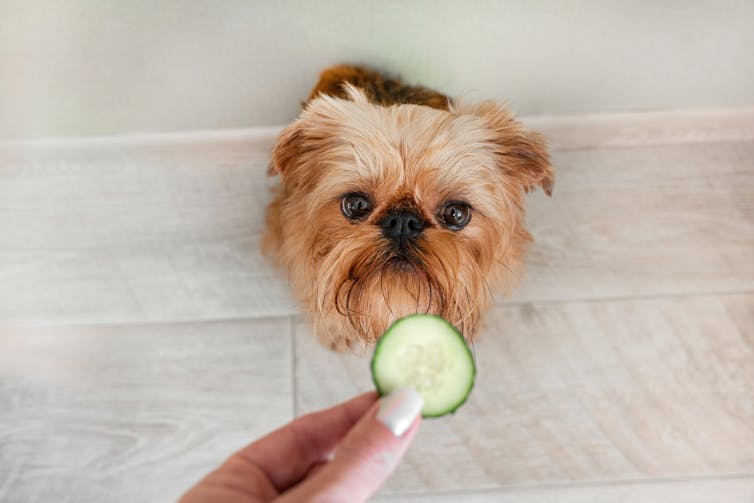
You can also look for low-calorie swaps that your pet enjoys. For example, many dogs love carrots and cucumbers as healthier treats.

A small dog being offered a slice of cucumber.
Many pets enjoy healthy treats, like cucumber.
Vera Shcher/Shutterstock.com

If you are concerned about your pet’s weight, do seek veterinary advice and support. Keep records of their body weight, body condition, overall health, activity and even food intake. This can help you see where there might be easy wins for improving their health, wellbeing and even lifespan.

The choice is clear: rather than waiting for pharmaceutical solutions, we already have the tools we need to help our pets live their healthiest, happiest lives. The question isn’t whether we can help our pets maintain a healthy weight naturally – it’s whether we’re willing to make the commitment to do so.

The Conversation

In addition to her academic affiliation at Nottingham Trent University (NTU) and support from the Institute for Knowledge Exchange Practice (IKEP) at NTU, Jacqueline Boyd is affiliated with The Kennel Club (UK) through membership and as advisor to the Health Advisory Group and member of the Activities Committee. Jacqueline is a full member of the Association of Pet Dog Trainers (APDT #01583). She also writes, consults and coaches on canine matters on an independent basis.

ref. Pets on skinny jabs? Here’s how to help them lose weight naturally – https://theconversation.com/pets-on-skinny-jabs-heres-how-to-help-them-lose-weight-naturally-263481

Surzhyk: why Ukrainians are increasingly speaking a hybrid language that used to be a marker of rural backwardness

Source: The Conversation – UK – By Oleksandra Osypenko, PhD Candidate in Linguistics, Lancaster University

A Windows translator gives the option of Surzhyk. kpi.ua/surzhik

In Ukrainian dictionaries, the word “surzhyk” originally referred to a mix of grains – rye, wheat, barley and oats – or to flour made from a blend of these that was considered of lower quality. But its meaning morphed to mean a mixed or “impure” language – and today it refers to a blend of Ukrainian and Russian used by millions in Ukraine.

Often stigmatised in the past as a marker of rural backwardness, poor education or simply ignorance of Ukraine’s literary norms, the status of the Surzhyk language is now being reconsidered in wartime – not as a threat to Ukrainian identity, but as a way for native Russian speakers to communicate in a way that is more socially acceptable in a country at war with Russia.

Since the full-scale invasion of 2022, people in some central and eastern areas of Ukraine who might have primarily spoken Russian have been switching to Ukrainian, particularly in public. These are people who would have understood and occasionally used Surzhyk, but would have seen it as a form of Ukrainian “pidgin” – not to be used in formal situations. But now, it’s increasingly being used and any stigma that might have attached to it is slowly disappearing.

There has been debate about whether it’s a language in its own right, or a dialect or even slang. Most Ukrainian linguists tend to refer to it in English as an “idiom”. But it’s important to note that Surzhyk varies by region and is constantly evolving.

In the 1930s, it was heavily Russianised, reflecting Soviet language policies. More recently, after decades of Ukrainian revival, it has tilted in the other direction towards Ukrainian. And other influences are creeping in, especially from English. Words like “булінг” (buling, like the English “bullying”) and “донатити” (donatyty, meaning “to donate”) are slipping into everyday speech, showing how Surzhyk mirrors society’s shifting horizons.

But it is also a product of trauma and necessity. As Ukrainian writer Larissa Nitsoy notes, Ukrainians survived genocide – and they also survived linguicide. During the Soviet era, Russia made strenuous efforts to eradicate the Ukrainian language, punishing – often executing – those who spoke, wrote and taught in Ukrainian. To survive, they adapted.

Later, Surzhyk continued as a practical tool of social mobility. As Ukrainian-speaking villagers moved to Russian-dominated big cities in Ukraine for work or education, they adopted a hybrid idiom to “pass” as local. Laada Bilaniuk, a US-based anthropologist, calls this “urbanised-peasant Surzhyk” – a way of mimicking Russian without abandoning one’s Ukrainian linguistic roots.

In this sense, Surzhyk was both a survival strategy under Russian colonial rule, and an adaptation to urbanisation.

How widespread is Surzhyk?

In 2003, the Kyiv International Institute of Sociology (KIIS) estimated between 11% and 18% of Ukrainians spoke or wrote in Surzhyk – roughly one in seven people at the time. A more recent study of 104 students of the National Transport University in Kyiv in 2024 found that more than half of respondents (51%) admitted using some form of Surzhyk at home, and nearly one in five used it in messages with friends. Admittedly, the 2024 study was done on a much smaller scale, but the contrast is striking.

The question is: has the proportion of Surzhyk speakers really increased significantly – or simply the willingness to admit using it? Could it be that shame is giving way to recognition of Surzhyk as an acceptable tool for communication?

For decades, Surzhyk was a source of embarrassment. Nitsoy was voicing widespread Ukrainian nationalist views when she described it in 2021 as “a rape of the Ukrainian language by Russian”. Pavlo Hrytsenko, director of the Institute of the Ukrainian Language, argued that speaking Surzhyk signalled personal “underdevelopment”, a refusal to master the country’s literary language. Others were even more blunt, suggesting that: “By speaking Surzhyk, we humiliate ourselves.”

The assumption was that Surzhyk speakers leaned lazily toward Russian rather than making the effort to learn proper Ukrainian. These attitudes produced active campaigns to “correct” it, like the 2020 chatbot StopSurzhyk, which suggested literary alternatives for “improper” words.

This stigma was reinforced by the proportion of Ukrainian-Russian words and phrases that make up Surzhyk. Throughout the 20th century, Surzhyk was heavily Russianised, reflecting the dominance of Russian in public life. But more recently, and especially in the wake of Russia’s full-scale invasion of Ukraine in 2022, the balance has shifted. Surzhyk now carries more Ukrainian elements and has been increasingly viewed not as a regression, but a reversal.

A bridge for Russian speakers to Ukrainian

Today, Surzhyk is generally seen by Ukrainian scholars, writers and the wider public as transitional, even useful, and is often used by Russian speakers switching to Ukrainian.

Ukrainian linguistics experts argue that mocking or judging those speaking Surzhyk is misguided, because every language learner passes through such a stage, and that any Surzhyk is better than Russian.

Philologist Svitlana Kovtiukh likens the language to “slippers at home” – meaning that one might wear formal shoes in public but slip into something more comfortable in private. Ukrainians should be encouraged, according to Kovtiukh, to speak literary Ukrainian in official settings – as required by the Language Law – but be free to use Surzhyk in their personal life. What Soviet authorities once dismissed as “weeds” in the national language may actually be the streams that nourish it.

This reversal of perspective reflects a new hierarchy. Once a way for Ukrainian speakers to survive in a Russian-dominated world, Surzhyk is now a way back to Ukrainian for Russian speakers to Ukraine’s national language.

Once abominated by Ukrainians, it is increasingly seen as a tool of linguistic decolonisation. It’s both a practical way for Russian speakers to understand and be understood in Ukraine, and an alternative to what most Ukrainians see as the language of their oppressors.

The Conversation

Oleksandra Osypenko does not work for, consult, own shares in or receive funding from any company or organisation that would benefit from this article, and has disclosed no relevant affiliations beyond their academic appointment.

ref. Surzhyk: why Ukrainians are increasingly speaking a hybrid language that used to be a marker of rural backwardness – https://theconversation.com/surzhyk-why-ukrainians-are-increasingly-speaking-a-hybrid-language-that-used-to-be-a-marker-of-rural-backwardness-264280

OpenAI looks to online advertising deal – AI-driven ads will be hard for consumers to spot

Source: The Conversation – UK – By Stuart Mills, Assistant Professor of Economics, University of Leeds

AI says buy. SWKStock/Shutterstock

Making AI quicker, smarter and better is proving to be a very expensive business. Companies like OpenAI are investing billions of dollars in hardware, and the likes of Meta are offering top (human) talent huge salaries for their expertise.

So perhaps it’s no surprise that these businesses have started exploring new ways of making money as well as spending it.

OpenAI, for example, is exploring a partnership with Shopify, one of the world’s largest e-commerce platforms, which helps businesses manage online selling.

The reported deal between the two companies would see OpenAI receive a cut of any Shopify sales that result from recommendations provided by ChatGPT, creating a new revenue stream for OpenAI and more online traffic for Shopify.

But this relationship could be risky for consumers if OpenAI became incentivised to push people towards products, rather than offering genuinely objective recommendations. It might even push recommendations when users of ChatGPT are not looking to buy anything at all.

This situation reminds me of the early days of online advertising when Google was under pressure from shareholders to increase revenues, following the dot-com bubble. Google was (and still is) the world’s leading search engine, in part because it had the best algorithm. But the obvious path to generating revenue – advertising – posed a big dilemma.

Loading search results with adverts would put off users and weaken Google’s position. The company’s solution was to develop targeted advertising, matching ads to search queries to maintain relevance and quality.

Similarly, OpenAI will surely not just flood ChatGPT with links to products. If it did, the quality of its own product would decline, and users would quickly go elsewhere.

So, like Google, it needs to find a subtle way to influence people to shop.

Luckily for OpenAI, the sociable, text-based interface of a chatbot creates ample opportunities to use persuasive techniques to try to influence people’s behaviour.

Processing power of persuasion

One way of thinking about online persuasion is in terms of “metacognition”, the ability to think about thinking, which is very important in the world of sales.

Research suggests that when a customer has high metacognition skills, they are more likely to be sceptical of a salesperson’s tactics, and harder to persuade. When a salesperson has high metacognition, they are good at getting into a customer’s head and making a sale.

One theory of metacognition argues that high levels are influenced by how much sellers and customers know about a product, how much they know about persuasion, and how much they know about each other.

In all three cases, AI may have an advantage.

On any given topic, ChatGPT will “know” more about it than an average person. A particularly knowledgeable person might not get caught out. But nobody is an expert on everything, while ChatGPT can at least pretend to be (like any good salesperson).

AI large language models (known as LLMs) are also up to speed on the latest research on rhetoric, marketing and psychology. They can even identify deceptive sales techniques.

AI can also be tweaked to be persuasive. For instance, research has found that people are more likely to buy something when a salesperson or advert mirrors their personality. One study found that ChatGPT can accurately predict a person’s personality from relatively little information. Over time then, ChatGPT could be programmed to make predictions about us, and then start acting like us.

When it comes to knowledge about each other, most people probably know little about how AI language tools actually work. And if people are also unaware of the incentive AI companies may soon have to recommend products, these recommendations may be met with less scepticism, because an AI chatbot would seemingly have no motive to manipulate.

Phone screen with text which reads 'Help ChatGPT discover your products'.
Chatting about products.
Koshiro K/Shutterstock

Meanwhile, like Google, companies such as OpenAI are gathering huge amounts of data about the people who use their software. Initially, this was to train future AI models. But these same data could be used to learn more about people, what makes them tick, and what makes them click “buy”.

Product recommendations from ChatGPT, Google or any other company are not inherently sinister. If data is used to suggest products people genuinely love, this can be helpful.

But being helpful is not the primary motivation here. Just as Google introduced ads because of financial pressure, deals like those between OpenAI and Shopify are a response to the economic pressures the AI industry is facing.

It is great if these systems recommend products a person wants to buy. But what might matter most to AI, regardless of the product, is that they buy it.

The Conversation

Stuart Mills does not work for, consult, own shares in or receive funding from any company or organisation that would benefit from this article, and has disclosed no relevant affiliations beyond their academic appointment.

ref. OpenAI looks to online advertising deal – AI-driven ads will be hard for consumers to spot – https://theconversation.com/openai-looks-to-online-advertising-deal-ai-driven-ads-will-be-hard-for-consumers-to-spot-264377

KPop Demon Hunters gives a glimpse into K-pop culture in South Korea

Source: The Conversation – UK – By Cholong Sung, Lecturer in Korean, SOAS, University of London

Thanks to the runaway global popularity of Netflix’s new animated film, KPop Demon Hunters, cinemas around the world have picked it up and are now screening a sing-along edition.

Huntr/x, the musical girl group featured in the story, has topped charts worldwide with their track Golden.

As the film smashes records and captures audiences everywhere, one question lingers: what makes this animation stand out from the rest? An answer lies in how relatable the main characters are.

The film follows three K-pop girl group members who use their music and voices to protect the world from demonic forces. While the storyline centres on the fantastical notion of “demon hunters”, grounding the protagonists in the guise of K-pop idols adds on-trend authenticity. As co-director Chris Appelhans explained, the aim was “making girls act like real girls, and not just pristine superheroes”.

Rather than dwelling solely on their heroics, the film portrays the characters’ everyday moments and ordinary behaviour. Food, clothes and familiar locations in South Korea are rendered with surprising precision, to the extent that even Korean audiences are astonished at their accuracy, despite the production being based overseas.

But how closely does the film’s version of K-pop reflect the real thing?

Take the first appearance of Huntr/x members Rumi, Mira and Zoey: with only minutes to go before a performance, they are shown devouring kimbap, ramen, fish cakes and snacks – fuel for the stage. In reality, idols may often end up grabbing a quick bite of kimbap or ramen in the car between packed schedules. More commonly, however, strict diets are the norm. There are reports that sometimes trainees – aspiring K-pop idols who are part of an entertainment company’s training programme – are even forced to shed weight by agencies: one of the industry’s darker aspects.

Yet, as idols mature, many develop their own healthier routines, not simply for looks but to ensure longevity in their careers.

Meanwhile, in the case of boy group Saja Boys, the film highlights the fans’ fascination with their sculpted abs. In reality, male idols often put themselves through intense workouts to build impressive physiques, showing off toned bodies and six-packs on stage for their fans.

Then there is the question of accommodation. In the film, Huntr/x members share a luxurious penthouse overlooking Seoul’s skyline. In reality, agencies often provide dorm accommodation to facilitate scheduling and teamwork, usually near the company, and often managers live with artists. The quality varies greatly, with newcomers typically placed in modest housing.

After debut, successful idols may upgrade their accommodation as the money starts to roll in, but a penthouse, as shown in the film, is more fantasy than fact. BTS being a notable exception, progressing from sharing a converted office (not even a proper house) to one of Seoul’s most prestigious apartments. Most idols tend to strike out on their own some years after debut, balancing solo activities with personal life. By then, their choice of home usually reflects their individual earnings.

The film mirrors K-pop reality in other respects. One Huntr/x member, Zoey, is Korean-American – reflecting the industry’s trend since the 2000s towards multinational line-ups designed to create a global audience. Blackpink, for instance, includes two Korean members with overseas backgrounds and one foreign national, which has bolstered their international reach.

The right music

The film also shows Zoey writing and composing songs: many idols are now singer-songwriters. With the industry demanding constant renewal, the shelf life of an “idol” is very short. Writing and producing music has become both a way to extend careers and secure additional income streams. BTS are all credited songwriters, while figures such as BigBang’s G-Dragon, Block B’s Zico, and i-dle’s Soyeon have all built reputations – and royalties – through their creative work.

Increasingly, even K-pop trainees now learn songwriting and production before their debut. Beyond these points, the film captures a wide slice of K-pop culture as it really exists – from fan sign events to the sea of light sticks waving at concerts.

More than any other element, it’s the music that gives the film its sharpest sense of realism.

Executive music producer Ian Eisendrath teamed up with record label THEBLACKLABEL to produce K-pop tracks that sound right at home in the current charts. Blending trendy and catchy hooks with the story itself has drawn in not only animation fans but also audiences lured by the music alone.

Co-director Maggie Kang put it plainly in an interview: “We really wanted to immerse the world in K-pop.” At the same time, she noted that the film deliberately heightens certain aspects of the genre. That kind of exaggeration is only natural in animation, where drama is part of the appeal. What matters is that every flourish is still grounded in reality.

For viewers familiar with Korean culture and K-pop, that means spotting a wealth of details that might otherwise go unnoticed – and it’s this layer of discovery that may well be among the key factors driving the popularity of KPop Demon Hunters.

The Conversation

Cholong Sung does not work for, consult, own shares in or receive funding from any company or organisation that would benefit from this article, and has disclosed no relevant affiliations beyond their academic appointment.

ref. KPop Demon Hunters gives a glimpse into K-pop culture in South Korea – https://theconversation.com/kpop-demon-hunters-gives-a-glimpse-into-k-pop-culture-in-south-korea-264141

How to help trigger positive tipping points – and speed up climate action

Source: The Conversation – UK – By Tim Lenton, Director, Global Systems Institute, University of Exeter

The rapid transition from horse-drawn carts to cars is an example of a positive tipping point. K.E.V/Shutterstock

The collapse of a major system of ocean currents, the meltdown of major ice sheets or the dieback of the Amazon rainforest are all examples of negative climate tipping points. These are the big risks associated with a changing climate, where harmful change becomes self-propelling. Each could cause environmental disasters affecting hundreds of millions of people.

The prospect of such irreversible and massively damaging outcomes is looming ever closer, as we are set to exceed 1.5°C global warming. Every year and every 0.1°C above this threshold increases the risk of crossing negative climate tipping points. To avert them, climate action must accelerate spectacularly. We need to decarbonise the global economy five times faster than the current rate to have reasonable odds of limiting warming well below 2°C.

This sounds both frightening and daunting. We are facing existential risks and to avoid them requires extraordinary rates and scales of social and technological change. It is understandable to feel climate despair or doomism – particularly with the current spate of backsliding on climate commitments.

But there are credible grounds for conditional optimism. They lie in the evidence of positive tipping points – where changes to zero-emission behaviour and technologies become self-propelling. This is now the only plausible way we can accelerate out of trouble, because we have left it way too late for incremental change to rescue us.

Tipping points happen when amplifying feedback within a system gets strong enough to support self-propelling change. Like putting the proverbial microphone too close to the speaker. They can happen in a range of systems, and history shows us they have happened repeatedly in social systems. Think of political revolutions, abrupt shifts in social norms – like the abandonment of smoking in public, or the rapid transition from horse-drawn carriages to cars.

Happily, almost everything that contributes to human-induced greenhouse gas emissions could be positively tipped towards zero emissions. It can take a lot of work to bring a system to a tipping point, but some key sectors have already positively tipped, at least in some countries.


Read more:
Climate ‘tipping points’ can be positive too – our report sets out how to engineer a domino effect of rapid changes


Norway has tipped from buying petrol and diesel cars to EVs in the space of a decade. The UK abruptly shut down coal burning. While gas temporarily replaced some of coal’s role in electricity generation, rapidly growing renewable power has now replaced coal burning and is starting to displace gas. Neither transition happened by chance. Tipping our societies to zero emissions requires deliberate, intentional action from us all.

In Norway, change was started by social activists in the late 1980s, including members of the pop band A-ha, pushing the government to adopt a package of policies to incentivise EVs. In the UK, tipping was triggered by a rising floor price on carbon in the power sector, a policy that can be traced to the Climate Change Act, which started life as a private member’s bill, in turn born out of decades of environmental activism.

The beauty of tipping points

In my new book, Positive tipping points: How to fix the climate crisis, I highlight how just a small change can make a big difference. A minority can ultimately tip the majority. That minority activates amplifying feedback loops that get stronger with the more people who join in the change. This means we can all play a part in triggering positive tipping points.

We all make decisions about what we consume. Just by adopting a lower emission technology or behaviour (like eating less meat) we encourage others to join us. This is because people imitate one another, and the more people who adopt something the more people they can influence to adopt it too – a phenomenon known as “social contagion”.

With technologies, there are extra amplifiers of “increasing returns”: the more of us who adopt a new technology, the better it will get (through learning by doing), the cheaper it will get (due to economies of scale), and the more other technologies will emerge that make it more useful. This is how solar PV panels, wind turbines and batteries that power EVs have got ever cheaper, better and more accessible.

Policy usually also plays a crucial role in stimulating positive tipping points. Mandates to phase in clean technologies and phase out fossil fuelled ones are particularly effective. But despite polling evidence that roughly 80% of people worldwide support more decisive action on the climate crisis, governments can dither or be captured by vested interests. Sometimes they need to see what we support.

This may inspire us to get involved with social activism, which has its own tipping points. Each person joining a protest movement makes it incrementally easier for the next person to join. This can reach a critical mass – as it did for Fridays for Future and Extinction Rebellion in 2019. Or if, like me, you are not so comfortable on the march, there are other forms of social activism, like divesting from fossil fuels, or bringing civil cases against companies causing the climate crisis and governments failing to adequately respond to it.

Together a fraction of us can trigger positive tipping points to avoid otherwise devastating negative climate tipping points.


This article features references to books that have been included for editorial reasons, and may contain links to bookshop.org. If you click on one of the links and go on to buy something from bookshop.org The Conversation UK may earn a commission.


Don’t have time to read about climate change as much as you’d like?

Get a weekly roundup in your inbox instead. Every Wednesday, The Conversation’s environment editor writes Imagine, a short email that goes a little deeper into just one climate issue. Join the 45,000+ readers who’ve subscribed so far.

The Conversation

Tim Lenton is a shareholder in Transition Risk Exeter (TREX) Ltd., receives funding from the Advanced Research and Invention Agency (ARIA), and previously received funding from the Bezos Earth Fund.

ref. How to help trigger positive tipping points – and speed up climate action – https://theconversation.com/how-to-help-trigger-positive-tipping-points-and-speed-up-climate-action-261407

Mars has a solid inner core, resolving a longstanding planetary mystery — new study

Source: The Conversation – UK – By Kevin Olsen, UKSA Mars Science Fellow, Department of Physics, University of Oxford

NASA

Scientists have discovered that Mars has an interior structure similar to Earth’s. Results from Nasa’s Insight mission suggest that the red planet has a solid inner core surrounded by a liquid outer core, potentially resolving a longstanding mystery.

The findings, which are published in Nature, have important implications for our understanding of how Mars evolved. Billions of years ago, the planet may have had a thicker atmosphere that allowed liquid water to flow on the surface.

This thicker atmosphere may have been kept in place by a protective magnetic field, like the one Earth has. However, Mars lacks such a field today. Scientists have wondered whether the loss of this magnetic field led to the red planet losing its atmosphere to space over time and becoming the cold, dry desert it is today.

A key property of the Earth is that its core has a solid centre and liquid outer core. Convection within the liquid layer creates a dynamo, producing the magnetic field. The field deflects charged particles ejected by the Sun, preventing them from stripping the Earth’s atmosphere away over time and leading to the habitable conditions we know and enjoy.

From residual magnetisation in the crust, we think that Mars did once have a magnetic field, possibly from a core structure similar to that of Earth. However, scientists think that the core must have cooled and stopped moving at some point in its history.

On the surface of Mars there is a tremendous amount of evidence that liquid water once flowed, suggesting more hospitable conditions in the past. The evidence comes in many forms, including dry lake beds with minerals that formed under water, or the dramatic valley networks carved by rivers and streams. However, the Martian atmosphere is thin today and the necessary amount of water is nowhere to be found.

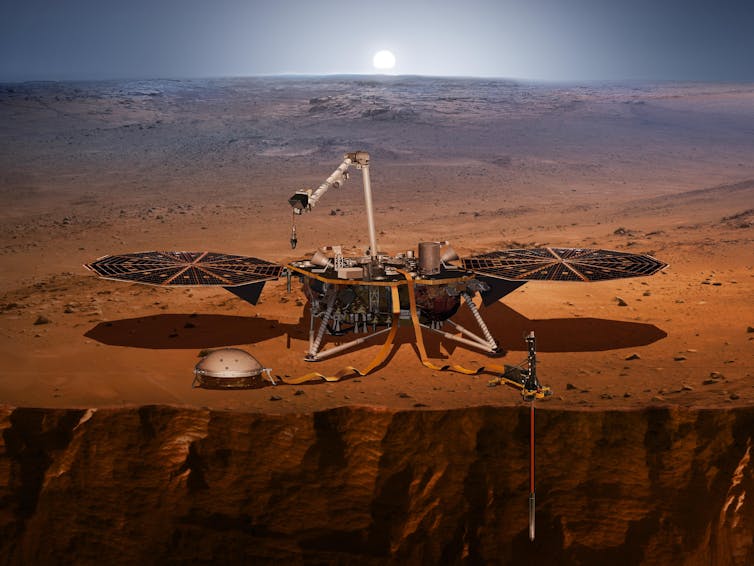
Teams working with the seismometers on Nasa’s InSight Mars lander first identified the Martian core and determined that it was actually still liquid. Now, the new results from Huixing Bi, at the University of Science and Technology of China in Hefei and colleagues, show that there may also be a solid layer inside the liquid core.

The nature of the interior structure of Mars has been an intriguing mystery. Was it ever like Earth’s, with a dynamic liquid layer around a solid centre? Or did Mars’ smaller size prevent such a formation? How big must a planet be to gain the protection of a magnetic field, like Earth’s, and support a habitable climate?

To understand what happened, how Mars evolved, we need to understand Mars today. These questions about Mars’ atmosphere, water, and core have motivated several high profile Mars missions. While the Nasa Mars rovers, Spirit, Opportunity, Curiosity, and Perseverance have studied the surface mineralogy, the European Space Agency’s ExoMars Trace Gas Orbiter is studying the water cycle, Nasa’s Maven spacecraft is studying atmospheric loss to space, and Nasa’s InSight lander was sent to study seismic activity.

Insight
The Insight mission landed on Mars in 2018.
JPL-Caltech

In 2021, Simon Stähler, from ETH Zurich in Switzerland, and colleagues, published a seminal paper from the InSight mission. In it, they presented an analysis of the way that seismic waves pass through Mars from Mars quakes in the vicinity of InSight, through the mantle, through the core, and then reflecting off the other side of the planet and reaching InSight.

They detected evidence of the core for the first time and were able to constrain its size and density. They modelled a core with a single liquid layer that was both larger and less dense than expected and without a solid inner core. The size was huge, about half of Mars’ radius of 1,800 km, and the low density implied that it was full of lighter elements. The light elements, such as carbon, sulphur, and hydrogen, change the core’s melt temperature and affect how it could crystallise over time, making it more likely to remain liquid.

The solid inner core (610 km radius) found by Huxing Bi and colleagues is hugely significant. The very presence of a solid inner core shows that crystallisation and solidification is taking place as the planet cools over time.

The core structure is more like Earth’s and therefore more likely to have produced a dynamo at some point. On Earth, it is the thermal (heat) changes between the solid inner core, the liquid layer, and the mantle that drive convection in the liquid layer and create the dynamo that leads to a magnetic field. This result makes it more likely that a dynamo on Mars was possible in the past.

With Simon Stähler and co-authors reporting a fully liquid core and Huxing Bi and colleagues reporting a solid inner core, it might seem as if there will be some controversy. But that is not the case. This is an excellent example of progress in scientific data collection and analysis.

The findings will help guide scientists towards a better understanding of Mars’ evolution as a planet.
JPL-Caltech

Competing models of Mars

InSight landed in November 2018 and its last contact with Earth occurred in December 2022. With Stähler publishing in 2021, there is some new data from InSight to look at. Stähler’s model was revised in 2023 by Henri Samuel, from the Université Paris Cité, and colleagues. A revised core size and density helped reconcile the InSight results with some other pieces of evidence.

In Stähler’s paper, a solid inner core is specifically not ruled out. The authors state that the signal strength of the analysed data was not strong enough to be used to identify seismic waves crossing an inner core boundary. This was an excellent first measurement of the core of Mars, but it left the question of additional layers and structure open.

For the latest study in Nature, the scientists achieved their result through a careful selection of specific seismic event types, at a certain distance from InSight. They also employ some novel data analysis techniques to get a weak signal out of the instrument noise.

This result is sure to have an impact within the community, and it will be very interesting to see whether additional re-analyses of the InSight data support or reject their model. A thorough discussion of the broader geological context and whether the model fits other available data that constrain the core size and density fit will also follow.

Understanding the interior structure of planets in our Solar System is critical to developing ideas about how they form, grow, and evolve. Prior to InSight, models for Mars that were similar to Earth were investigated, but were certainly not favoured.

The Conversation

The authors do not work for, consult, own shares in or receive funding from any company or organisation that would benefit from this article, and have disclosed no relevant affiliations beyond their academic appointment.

ref. Mars has a solid inner core, resolving a longstanding planetary mystery — new study – https://theconversation.com/mars-has-a-solid-inner-core-resolving-a-longstanding-planetary-mystery-new-study-264325