Will Japan build nuclear weapons? Why China’s concerns are unfounded, for now

Source: The Conversation – UK – By Lewis Eves, Lecturer in the School of Politics and International Relations, University of Nottingham

Tensions are growing in east Asia. The threat of a Chinese attack on Taiwan persists and, in recent weeks, North Korea has been testing its long-range missile capabilities. Russia’s reorientation of ties from Europe towards Asia is also accelerating and the America First rhetoric of Donald Trump is raising questions about the commitment of the US president to his country’s east Asian allies.

In navigating this context, Japan has returned to one of its recurring national debates: whether it should possess nuclear weapons. This debate was reignited in December following comments from an unnamed government security adviser that they believe Japan should have nuclear weapons given the severity of the surrounding security environment.

The Japanese government swiftly reaffirmed its commitment to nuclear non-proliferation. This response was probably, at least in part, intended to prevent relations with China from deteriorating further. China had already condemned any talk of a Japanese nuclear weapons programme, labelling Japan a “troublemaker” that was ignorant of its militaristic history.

Japan doesn’t seem likely to develop nuclear weapons in the short-term. However, the tensions that triggered this episode are not likely to end soon. This raises questions about the feasibility of a Japanese nuclear programme and the sustainability of Japan’s non-nuclear position.

Japan’s nuclear programme

The development of nuclear weapons is a lengthy process that requires years of research and infrastructure development. However, Japan’s extensive nuclear energy programme would shorten the timeline of nuclear weapons development significantly. This is because the infrastructure and expertise required to produce energy-grade nuclear material contributes to the development of more refined weapons-grade material.

In fact, Japan’s energy programme is already producing weapons-grade uranium and plutonium (the primary materials used in nuclear weapons) in its fuel production cycles. It is producing so much that, in 2014, Japan agreed to ship excess material to the US over fears that its storage sites would be targeted by terrorist groups seeking nuclear weapon capabilities.

So a Japanese nuclear arsenal is certainly feasible, with analysts in China predicting that such an arsenal could be developed within just three years.

The Mihama nuclear power station situated next to the sea.
The Mihama nuclear power station in Fukui, central Japan.
Mkaz328 / Shutterstock

However, there are several reasons why Japan is unlikely to develop its own nuclear weapons. First, developing nuclear weapons does not serve Japan’s immediate interests. Maintaining a nuclear weapons programme is expensive, with even the UK’s relatively small nuclear deterrent costing tens of billions of pounds annually. Given Japan’s vast public debt and its other economic challenges, this is money that could be put to use elsewhere.

Second, Japan’s current approach to foreign and security policy is well established and generally effective. This includes a so-called human security approach, through which Japan provides aid to address the underlying humanitarian causes of crises before they can escalate. The approach includes funding global healthcare initiatives to prevent the spread of diseases like malaria and tuberculosis, while fostering positive relations with developing countries.

Meanwhile, Japan has long managed relations with major international powers through economic and diplomatic dialogue and engagement. For its relationship with China, this takes the form of what some researchers have called “hot economics, cold politics”. This approach, which involves using intensive economic cooperation to avoid confrontation over contentious political issues, has been in place for decades and would almost certainly end should Japan pursue a nuclear weapon.

Third, there are constitutional barriers to a Japanese nuclear weapons programme. The “pacifist clause” of Japan’s constitution, Article 9, renounces aggression as a tool of foreign policy.

This does not strictly outlaw a defensive nuclear deterrent. But the act of launching a nuclear weapon, even in retaliation, is itself an offensive action incompatible with international law and human rights. Thus, even if Article 9 is interpreted in such a way that technically allows for nuclear weapons, their use would probably be restricted to a point of redundancy.

Japan’s parliament also passed a national policy known as the three non-nuclear principles in the 1970s. These commit Japan to not possessing, producing or permitting the presence of nuclear weapons in its territory. These principles would need to be overturned by parliament to allow for a nuclear weapons programme. However, this is unlikely given that recent polling indicates around 70% of the Japanese public oppose nuclear weapons.

And fourth, Japan’s nuclear programme would face international legal barriers. In 1970, Japan signed the Nuclear Non-Proliferation Treaty alongside 190 other countries. In signing, Japan agreed to prevent the spread of nuclear weapons and work towards nuclear disarmament. Failing to comply with this treaty could result in significant economic and diplomatic sanctions that would probably offset any security gain from a weapons programme.
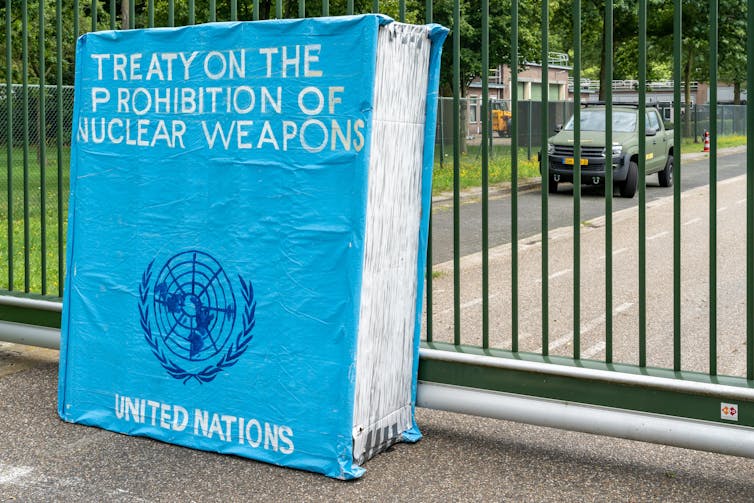
A big, book-shaped dummy titled 'Treaty on the prohibition of nuclear weapons' left by peace activists outside a dutch military air base.
A total of 191 countries are party to the Nuclear Non-Proliferation Treaty.
Milos Ruzicka / Shutterstock

These factors make imminent Japanese nuclear weapons very unlikely. But the longer-term prospects are different. Japanese pacifism is slowly eroding, with repeated reinterpretations of Article 9 in recent years to permit more military autonomy.

In 2022, Japan adopted counterstrike capabilities into its defence policy, giving Japanese forces the capacity to launch offensive acts as part of a larger defensive strategy. This could, for example, involve launching missiles at an enemy port that is supplying a hostile fleet. These capabilities set a precedent that might eventually permit nuclear counterstrikes as part of a defensive deterrence programme.

This would still require legal change. However, young Japanese people are less opposed to nuclear weapons than their older counterparts. A 2025 survey found that around a third of Japanese teenagers support the development of a nuclear deterrent, coinciding with an increase in far-right and nationalistic views domestically. This opens the door for the eventual revocation of the non-nuclear principles.

Meanwhile, the Non-Proliferation Treaty is increasingly struggling to control the global spread of nuclear weapons, raising questions of whether it could deter states like Japan from pursuing nuclear weapons in the future. Should attitudes in Japan continue to shift and nuclear non-proliferation continue to struggle, a nuclear-armed Japan is a serious possibility over coming decades.

The Conversation

Lewis Eves does not work for, consult, own shares in or receive funding from any company or organisation that would benefit from this article, and has disclosed no relevant affiliations beyond their academic appointment.

ref. Will Japan build nuclear weapons? Why China’s concerns are unfounded, for now – https://theconversation.com/will-japan-build-nuclear-weapons-why-chinas-concerns-are-unfounded-for-now-272849


The academic study of politics is failing disabled people – with real-world consequences

Source: The Conversation – UK – By David Alexander, Affiliate Researcher, Political & International Studies, University of Glasgow

AnnaStills/Shutterstock

Diversity among students and researchers is a common goal across academia. This has been driven by a desire to increase opportunities for the historically marginalised in higher education – moving away from the straight, white and male personification of academia.

It also comes from a recognition that diversity brings innovation. It enhances the quality of research and teaching. It improves how higher education institutions engage with a diverse student body. Increased representation has affected how academia operates.

This is true in my discipline of political science. As we have worked to expand representation in the profession, we have broadened our understanding of the diversity of politics.

Growing representation in the field has increased our awareness of how different groups engage with politics. These are people often historically discounted in societies and ignored by political science: women, the LGBTQ+ community, people from ethnic minority backgrounds. Increased diversity gives academia invaluable general insight into the organisation of politics.

But disability in politics is in its infancy, as is the representation of the disabled scholar. Underrepresentation will affect any field. In political science, though, this is a particularly hazardous situation. Many of the issues disabled people encounter in society will result from political decision making.

In the UK, 25% of the population is considered to potentially have a disability. This not only includes physical or sensory impairment and neurodiversity, but long-term illness such as HIV, and mental health conditions such as depression.

Disabled students in higher education, from a position of underrepresentation, are also now an expanding group as the sector has made efforts to increase accessibility. Around 18% of UK students report having a disability. Yet only 7% of academics declare a disability in higher education.

Students in lecture theatre
Around one-fifth of UK students report having a disability.
VisualBricks/Shutterstock

Politics can deeply affect the lives of the disabled person. A change in policy may leave them unable to work or contribute to society, creating more barriers in life.

The unease in the disabled community about being represented in the assisted dying debate and the prospective fallout is one key example. Debate has also focused on what cars disabled people should be allowed to drive.

But because political science rarely recognises disability, politics and politicians are provided with little information on the impact of policy. We need more disabled political scientists to increase awareness, and this awareness will help better interrogate political issues around disability. More lived experiences of disability should provide insight, but also help create acknowledgement that the issues exist, from those who may never experience disability. But barriers exist.

Changing research

In my research, I argue that this lack of diversity has been entrenched by the marginalisation of disabled political scientists. We are not present or visible in research positions. At best, we are considered a novelty (as has been said to me on more than one occasion).

We – disabled scholars – are trying to highlight the disabling barriers that prevent career progress. These are usually hidden from non-disabled colleagues, who I believe are unaware of the issues, rather than looking to maintain exclusion.

One such barrier is hidden labour. A disabled scholar must make greater sacrifices to “make it” compared to non-disabled colleagues. This includes, for example, the energy required to access inaccessible teaching spaces, fieldwork travel and overcoming sensory overload or burnout. This effort must be put in to not have aspersions placed on a disabled scholar’s academic capacity. But there is often little or no acknowledgement from universities and other scholars of the barriers that mean this extra work is required.

We may be slowly approaching a turning point in the research of disability in politics. Several scholars are showing disability can provide understanding on how politics operates. Researchers are focusing on issues such as the political representation of the disabled person, and disability’s place within political theory. Others are exploring how disability affects support for political parties.

Research like this on disability is providing understanding of how far assumptions based on the non-disabled person are influential in politics. For instance, it is developing our knowledge about who gets to be represented in politics, and the barriers that exist for disabled people to actively engage in political participation.

There is a small but growing awareness that disability potentially offers a new perspective to frame our understanding of politics. Currently, this understanding is built on the image of the non-disabled person and what they believe politics should look like. The disabled person is an important part of society, but one that has often suffered from political decision making.

Once the disabled political scientist becomes a norm rather than exception, the importance of disability will be more undeniable. We will be better able to address and understand the impact politics has upon disabled people.

The Conversation

David Alexander does not work for, consult, own shares in or receive funding from any company or organisation that would benefit from this article, and has disclosed no relevant affiliations beyond their academic appointment.

ref. The academic study of politics is failing disabled people – with real-world consequences – https://theconversation.com/the-academic-study-of-politics-is-failing-disabled-people-with-real-world-consequences-259222

How realistic is Mattel’s new autistic Barbie?

Source: The Conversation – UK – By Aimee Grant, Associate Professor in Public Health and Wellcome Trust Career Development Fellow, Swansea University

Autistic people are so rarely depicted in media and entertainment, it’s no wonder most people don’t really understand much about the neurotype.

So we were pleased to see the launch of autistic Barbie.

Autism is a life-long neurodevelopmental difference, meaning autistic children grow into autistic adults. As autistic researchers, who advocate for the increased meaningful representation of our community, it was a good sign that multinational toy company Mattel worked with an autistic-led advocacy organisation based in the US, the Autistic Self Advocacy Network, in creating this new toy.

We have seen mixed reviews from autistic people since the launch, with some praising representation while others have been more critical of the doll.

Here are some considerations about her features to help you make up your own mind.

The tablet

Autistic Barbie is shown with a tablet with an augmented and alternative communication (AAC) application, which speaks aloud when buttons are pressed.

Some autistic people find communicating extremely challenging, and around a third cannot communicate reliably by speaking. This leads to needs going unmet, feeling misunderstood and often significant distress.

That is, unless an alternative mode of communication is available. Applications available on tablets, such as Proloquo2Go and Coughdrop, are helpful for some autistic people to communicate their needs and preferences.

Although some non-speaking autistic people find it easier to communicate with non-digital options such as printed cards, or using a low-tech signboard with letter tiles alongside a skilled communication partner, we think it’s great that this Barbie comes with a tablet.

The headphones

Sensory sensitivities are a core element of autistic lived experience. Autistic people are commonly sensitive to noise, light, smells, textures and taste. To represent this, autistic Barbie comes with noise-cancelling headphones which can be vital for some autistic people with noise sensitivities. However, other autistic people may find them too uncomfortable to wear and prefer in-ear options. For this reason, autistic people should be allowed to wear ear protection any time it is safe.

Eye contact

The development team reportedly gave Barbie a sideways glance, which aimed to show that eye contact may be uncomfortable and thus avoided in autistic people. An additional way to strengthen autistic Barbie could be to show the potential of visual distress, and to provide her with a coloured glasses accessory. Coloured lenses are a helpful tool to reduce the pain some autistic people feel in response to light, movement and colours. In reality, a specialist test can be used to help autistic people figure out what colour is best for them.

The outfit

Mattel seem to have invested thought in making Barbie’s outfit comfortable from a sensory point of view. Her outfit does not come with labels sewn in – a common cause of irritation to autistic people.

Her dress is loose and flowing, which may appeal to those with tactile hypersensitivity. We didn’t have an autistic Barbie to hand, so we aren’t sure what the fabric is like, but soft and comfortable fabric is a must for many autistic people.

It is worth noting that autistic people often have individual clothing preferences, and some may prefer tight – or even restrictive – clothing as it provides proprioceptive feedback, which can be comforting. It can also support hypermobile joints, which are at least three times as common in autistic people compared to non-autistic people. Furthermore, many autistic people are gender non-conforming, so may not see themselves represented in this outfit.

Autistic Barbie is wearing Mary Jane-style flat shoes, rather than Barbie’s typical high heels. Many autistic people struggle with shoes and rigid slim shoes may be uncomfortable for some. Almost half of autistic young people also walk on their tiptoes as a way of stimming, so allowing a movable ankle would have allowed this to be visible.

The stim tool

Stimming is an important way for autistic people to stay comfortable and regulated. It can undo some of the pain and discomfort of an unsuitable sensory environment. For this reason, we were really pleased to see that Barbie has two opportunities to stim. First, she has bendable elbows and wrists – many autistic people do some form of repetitive movement of their arms and hands as part of stimming. Also, Barbie holds a fidget spinner. This is a small toy that creates an interesting tactile and visual response.

Although not all autistic people will like fidget spinners, most engage in stims with their hands, so this is a good representation of one object that autistic people use to stim.

So how did Mattel do?

Social science researchers have claimed that Barbie – regardless of neurotype – has historically been reductive and problematic. Barbie is unachievably thin, extremely feminine and all too often white. It is important not to ignore these criticisms, however, Barbies are very popular toys and have a reach beyond other brands, and their range of disabled Barbies feels important to raise awareness.

There is no single “look” to being autistic, so the Barbie Mattel created can’t represent everyone, especially as her design is limited to visual elements. Despite these issues, we think, in general, that Mattel and the Autistic Self Advocacy Network have done a great job of creating the autistic Barbie doll.

Her existence is an overall positive. Her inclusion creates a much-needed opportunity for representation, education and normalises the use of disability accommodations.

The Conversation

Aimee Grant receives funding from The Wellcome Trust and UKRI.

Rebecca Ellis does not work for, consult, own shares in or receive funding from any company or organisation that would benefit from this article, and has disclosed no relevant affiliations beyond their academic appointment.

ref. How realistic is Mattel’s new autistic Barbie? – https://theconversation.com/how-realistic-is-mattels-new-autistic-barbie-273277

English lessons shouldn’t be an immigration test – why the UK’s new policy risks deepening exclusion

Source: The Conversation – UK – By Declan Flanagan, Lecturer in Applied Languages and Intercultural Studies, Dublin City University

shutterstock Media_Photos/Shutterstock

What happens when learning English stops being a bridge into society and starts to feel like a test of belonging you can fail?

That is the question raised by the the UK government’s proposed new immigration policy, which would raise English-language requirements for most visa routes, with the aim of improving integration and workforce readiness.

This represents an increase in emphasis on language proficiency. Applicants would have to demonstrate higher proficiency in speaking, reading, writing and listening. There would be stricter testing standards and fewer exemptions, aligning immigration with strong communication skills for employment and community participation.

Ministers say the proposed policies will promote “integration” and “opportunity”. But it risks doing the opposite, by turning English for speakers of other languages (Esol) into a tool of surveillance rather than inclusion.

We are part of the Coalition for Language Education, a network of academics, teachers and organisations. The group argues that the proposed policy treats the ability to speak English less as a means of empowerment and more as a mechanism of immigration control.

By tying long-term residence and citizenship to staged progress in learning English, the policy reframes language not as a shared public good, but as a condition of acceptance. In effect, English becomes a kind of border.

Language shapes how we live together. It’s how people build relationships, find work, take part in communities and participate in democracy. But it can also be used to divide and exclude.

For non-native speakers, learning English has long been about helping people navigate everyday life, express themselves and feel at home. The government’s proposals, however, position English proficiency as a test of belonging – something to be proved, measured and monitored.

A decade-long test of worthiness

Under the plan, migrants seeking settlement or citizenship would be required to show staged progress in English, moving from basic to upper-intermediate levels over a ten-year period. Language attainment would be linked to a points-based system that also tracks employment and civic participation.

Language acquisition, however, is not linear. Progress is shaped by trauma, health, caring responsibilities, work patterns and previous education. For refugees and others who have experienced displacement or interrupted schooling, the expectation of steady, testable improvement can be unrealistic and punitive.

Reducing these complex learning journeys to tick-box benchmarks turns learning English into a compliance exercise. Linguistic ability becomes confused with effort, morality and even loyalty. Passing tests is seen as proof of trying hard, so failure implies laziness. Fluency becomes linked to being a “good” or “deserving” migrant. High proficiency signals commitment to national identity, while lower ability is framed as resistance.


Read more:
English classes are being targeted by anti-immigration protesters – but they’ve been politicised for years


This is not just a UK issue either. Around the world, language education has increasingly been tied to immigration control. What is new with this proposal is how openly English is framed as something to be audited.

In the UK, attendance, test results and progression targets risk becoming data points used to monitor behaviour, rather than tools to support learning. Teachers are pushed to prioritise performance indicators over dialogue, confidence-building and community connection.

When language becomes a tool of control, it reshapes citizenship itself, testing people against a narrow linguistic ideal and eroding democratic values. Equality, fairness, inclusion and participation erode when language becomes a gatekeeping tool. Narrow linguistic standards exclude diverse speakers, denying equal access to citizenship and civic rights.

A policy detached from reality

Beyond its ideology, the proposed policy also fails on practical grounds. Esol provision across the UK is already underfunded and uneven. Community and voluntary providers, who support many of the most marginalised learners, are expected to deliver high-stakes outcomes with limited resources.

But there are no commitments to teacher training, pay, or access for women, refugees, or rural learners. There is little recognition of the barriers many learners face, including trauma, caring responsibilities or lack of access to childcare and transport. Nor is there any serious engagement with trauma-informed or learner-centred teaching approaches. Instead, the policy doubles down on a technocratic model that values what can be measured over what actually matters in the classroom.

Language should help people connect, not police their right to stay. Integration cannot be engineered through fear of failure or threat of exclusion. It grows when education is welcoming, well resourced and rooted in respect.

Linguistic diversity is not a problem to be solved. It is a public resource that enriches communities and strengthens democracy. Teaching English works best when it builds on what learners already know, rather than treating their languages as obstacles to overcome.

A teacher gives an English lesson using a chalkboard.
shutterstock.
Alone Pik/Shutterstock

Instead of tethering language learning to immigration enforcement, the government should invest in trauma-informed, learner-centred provision that meets learners’ needs. Assessment, too, needs rethinking. It should prioritise real-world communication and participation, not abstract benchmarks that silence voices.

Most importantly, integration must be understood as a two-way process. Host communities have as much to learn as newcomers.

If the government believes in empowerment, then education should amplify voices, not diminish them. Language policy should open doors, not lock them.

By replacing the language of rights and participation – teaching English not just for jobs, but to empower migrants to understand, claim and exercise their rights and engage in civic life – with conditional belonging, the proposed policy risks reinforcing inequality rather than reducing it. Presenting linguistic mastery as proof of national worth corrodes the democratic values language education should uphold.

Language should unite, not divide. When the English language is turned into an instrument of control, the very medium through which democracy operates is weakened. The task ahead is not to “restore control” over language, but to restore trust – in learners, in teachers and in the power of linguistic diversity to bring people together.

The Conversation

Declan Flanagan is affiliated with NATECLA.

Mike Chick is affiliated with the Welsh Refugee Council.

ref. English lessons shouldn’t be an immigration test – why the UK’s new policy risks deepening exclusion – https://theconversation.com/english-lessons-shouldnt-be-an-immigration-test-why-the-uks-new-policy-risks-deepening-exclusion-268158

Jair Bolsonaro had surgery for his hiccups. How to know when hiccups need medical intervention

Source: The Conversation – UK – By Adam Taylor, Professor of Anatomy, Lancaster University

Jair Bolsonaro. Focus Pics/Shutterstock.com

Brazil’s jailed former president Jair Bolsonaro was recently reported to have undergone three medical treatments to stop a bout of persistent hiccups. While hiccups are usually harmless and short-lived, his case highlights a condition that can, in rare circumstances, become medically significant.

Hiccups are one of the few bodily functions named after the sound they make. The sound is caused by a sudden, involuntary spasm of the diaphragm – a large, dome-shaped muscle that separates the chest from the abdomen and plays an essential role in breathing.

When the diaphragm contracts unexpectedly, air is drawn rapidly into the lungs. At the same time, the vocal cords snap shut, producing the characteristic “hic” sound.

Most people hiccup between two and 60 times per minute. Episodes typically last a few minutes, sometimes a few hours, before resolving on their own. They are usually only a minor irritation.

Doctors become more concerned when hiccups persist. Those lasting longer than 48 hours are classified as “persistent”. If they continue for more than a month, they are described as “intractable hiccups” – a rare and often debilitating condition.

The causes of common, short-term hiccups are usually straightforward. They can be triggered by an overfull stomach, alcoholic or fizzy drinks, very hot or very cold drinks, or emotional states such as anxiety and excitement or stress. These factors irritate or stimulate the nerves involved in the hiccup reflex, briefly disrupting the normal control of breathing.

Given how common hiccups are, it is not surprising that there are countless suggested cures. Some are supported by scientific evidence, while others rely on anecdote and personal experience.

Many of the techniques that appear to work best have one thing in common: they affect how the diaphragm functions. By altering breathing patterns or briefly increasing carbon dioxide levels in the blood, they may help reset the nerves that control the muscle.

Several small studies have examined structured breathing techniques. One approach, called “hiccup-relief using prolonged active inspiration” – slowly breathing in very deeply and holding it to stop diaphragm spasms – showed success in 21 patients. Another technique, called supra-supramaximal inspiration (breathing in even more after you already feel completely full of air) relieved hiccups in six people in a separate study.

A device based on similar principles, using controlled sucking and swallowing to regulate diaphragm activity, demonstrated a nearly 92% success rate in over 200 people.

There are also many commonly cited home remedies, although these often have little or no evidence to support them. They include breathing into a bag, drinking or gargling iced water, pulling the tongue, biting a lemon, eating peanut butter, applying pressure to the eyeballs, rectal massage (yes, really), performing the Valsalva manoeuvre (trying to breathe out against a closed nose and mouth), or attempting to induce a sudden fright. However, for most people, a brief change in breathing or swallowing is enough to interrupt the hiccup reflex.

Woman biting into a lemon.
Most home remedies for hiccups lack evidence.
VikaNorm/Shutterstock.com

One reason hiccups are difficult to study is that they usually resolve quickly. Short episodes are hard to capture in controlled research settings, which limits large-scale studies. As a result, most published studies focus on persistent and intractable cases.

Intractable hiccups are rare, affecting about one in 100,000 people. They occur far more often in men, who account for more than 90% of cases, particularly those over the age of 50. In these people, hiccups can be exhausting and distressing, interfering with eating, sleeping and breathing.

In Bolsonaro’s case, the cause of his latest episode has not been made clear. In June 2021, however, he attributed a previous bout of persistent hiccups to medication prescribed after dental surgery. Although the specific drugs were not disclosed, several medications are known to trigger prolonged hiccups.

Corticosteroids, such as dexamethasone and methylprednisolone, particularly at high doses, are well-recognised triggers.

Unlike food or fizzy drinks, which irritate nerves directly, these drugs affect chemical messengers within the nerve pathways that control the diaphragm. Hiccups have even been reported following corticosteroid injections into the knee or shoulder, which are often given to relieve pain from arthritis.

Benzodiazepines (drugs to treat anxiety and insomnia) can also cause hiccups, sometimes even at low doses. Studies of procedures involving benzodiazepine sedation, such as endoscopy, show that around one in five patients given midazolam develop hiccups, compared with about one in 20 who are not given the drug. The effect is again more common in men.

Some antipsychotic medications, including aripiprazole, have also been linked to hiccups, which often resolve when the drug is stopped. These medications influence the same neurotransmitter systems involved in the hiccup reflex.

Not always benign

Treatment for persistent hiccups usually takes one of two forms: medication or physical procedures. The drugs doctors most often prescribe are baclofen and metoclopramide, which have been tested in small studies comparing them against placebos (dummy pills). If the medication doesn’t work or causes too many side-effects, doctors may consider more invasive treatments.

Bolsonaro underwent a phrenic nerve block, a procedure that temporarily reduces or paralyses the function of the phrenic nerve, which controls the diaphragm. The effect can last for hours, days or up to a few weeks.

Because the phrenic nerve plays a critical role in breathing, the nerves on both sides of the body are rarely blocked at the same time. When used appropriately, the procedure is highly effective.

In more severe cases, or when doctors find out what’s causing the problem, permanent treatments might be needed. These could include destroying the nerve that’s causing the hiccups using heat or freezing, or surgically cutting and sealing off the nerve to stop the signals.

Persistent hiccups after stomach surgery are common. Since Bolsonaro was previously stabbed in the abdomen, this could be playing a role in his hiccup problem.

Damage to the area of the brain responsible for regulating hiccups can also play a role. One well-known example is Charles Osborne who holds the record for the longest continuous bout of hiccups – lasting 68 years from 1922 to 1990.

Research shows they can sometimes be an early symptom of cancers of the oesophagus, colon, kidneys, or conditions affecting the brainstem. Studies have also found that men diagnosed with persistent hiccups have higher rates of certain cancers in the following 12 months.

Thankfully for most people, hiccups remain a harmless inconvenience. However, hiccups that persist for several days without an obvious trigger should be assessed by a doctor.

The Conversation

Adam Taylor does not work for, consult, own shares in or receive funding from any company or organisation that would benefit from this article, and has disclosed no relevant affiliations beyond their academic appointment.

ref. Jair Bolsonaro had surgery for his hiccups. How to know when hiccups need medical intervention – https://theconversation.com/jair-bolsonaro-had-surgery-for-his-hiccups-how-to-know-when-hiccups-need-medical-intervention-272749

How Ukraine is fighting environmental damage and building its resilience amid war

Source: The Conversation – UK – By Ievgeniia Kopytsia, Research Associate in the Law Faculty, University of Oxford

A Ukrainian soldier holds the national flag in a sunflower field. Pavlovska Yevheniia / Shutterstock

Russia’s war in my home country Ukraine has caused environmental damage on a vast scale. Roughly 2.4 million hectares of agricultural land – an area almost the size of Wales – are now littered with unexploded ordnance. Thousands of oil, chemical and ammunition facilities have also been damaged, releasing toxic substances into rivers, wetlands and the Black Sea.

The 2023 destruction of the Kakhovka dam on the Dnipro River alone flooded 600 sq km of land, destroying entire ecosystems. And total war-related emissions are now estimated to stand at the equivalent of around 230 million tonnes of CO₂. This is comparable to the annual emissions of Austria, Hungary, the Czech Republic and Slovakia combined.

Yet even under this pressure, Ukraine remains able to build a sustainable future. As outlined in a policy brief presented at Cop30 in Brazil by my colleagues from Oxford Net Zero and I, Ukraine has an opportunity to build a carbon market that can support its postwar recovery and strengthen its ability to withstand future conflict.


Wars and climate change are inextricably linked. Climate change can increase the likelihood of violent conflict by intensifying resource scarcity and displacement, while conflict itself accelerates environmental damage. This article is part of a series, War on climate, which explores the relationship between climate issues and global conflicts.


A carbon market allows companies to trade “carbon credits”, each of which represent one tonne of CO₂ reduced or removed from the atmosphere. These credits are generated by projects like reforestation or renewable energy and can be bought by companies to compensate for their own greenhouse gas emissions.

There are two main types of carbon market: a compliance market and a voluntary market. In a compliance market, a government controls the supply of carbon credits. They cap emissions at certain levels and issue tradable permits to companies, with a company that does not use all of its carbon credits able to sell them to one that expects to exceed its limits.

In a voluntary market, companies purchase carbon credits from project developers voluntarily to offset their own emissions. They often do so to enhance their own reputation or to meet demands from investors, with purchasing carbon credits usually a faster way to show climate action than cutting emissions directly.

The global compliance market is far larger than the voluntary market, valued at US$851 billion (£634 billion) in 2021. The voluntary market was valued at only US$2 billion that year. But a functioning voluntary carbon market could still be vital for Ukraine.

According to Morgan Stanley, a global financial services firm, the global voluntary carbon market is expected to grow to about US$100 billion in 2030 and US$250 billion by 2050. A well-designed national market could open access to private capital to support Ukraine’s recovery at a time when the public budget is stretched to breaking point.

Revenue from carbon credits could, for example, help finance more projects to reforest Ukraine’s war-damaged land and restore its degraded agricultural soil. It could also support the development of more decentralised renewable energy in the country.

Various assessments, including one by the World Bank, suggest these are all areas that will require billions of dollars in investment over the coming years. Carbon finance will not replace public funding, but it could complement it at a moment of acute fiscal pressure.

The technology and projects that are commonly financed through voluntary carbon markets, particularly renewable energy, could also make Ukraine better able to withstand the effects of conflict in the future.

Fossil fuel-based infrastructure is extremely vulnerable during war because it depends on centralised facilities, long supply chains and the continuous delivery of fuel. Refineries, pipelines and substations are immobile targets, while fuel convoys are exposed to attack.

Decentralised renewable energy systems reduce these risks. For example, localised solar power systems that operate independently from the national grid can keep hospitals, shelters and communication centres running even when the main electricity network is attacked.

Designing a market

The foundations for Ukraine to design its own national carbon market are already in place. Ukraine’s parliament adopted a law in 2024 that formally mandated the creation of an emissions trading system. The system is set to start in 2026 with a pilot phase, with the aim of establishing a framework for trading carbon credits.

There are also several voluntary nature restoration initiatives emerging in the country. A project called Rewilding Ukraine, for example, has begun restoring around 13,500 hectares of wetlands and grassland in southern Ukraine – an area comparable to the size of the Isle of Wight’s inland forests and farmland combined.

These projects are currently operated independently, while remaining fragmented and generally small in scale. But many are being developed with the expectation that they will eventually be integrated into a carbon market, which would allow them to generate verified carbon credits.

Rolling grasslands in Ukraine.
The Tarutino Steppe is a rolling area of grassland in the Danube delta that supports a diverse range of plants.
Max Yakovlev / Rewilding Ukraine

If Ukraine can begin building a credible carbon market under fire, then any country facing instability or crisis can do the same. But countries currently enjoying relative peace and stability should recognise the privilege they hold.

They can restore nature, strengthen resilience to climate change, and cut emissions without living under the constant threat of missiles and blackouts. I hope they choose to act now, before a crisis forces them to.

The Conversation

Ievgeniia Kopytsia does not work for, consult, own shares in or receive funding from any company or organisation that would benefit from this article, and has disclosed no relevant affiliations beyond their academic appointment.

ref. How Ukraine is fighting environmental damage and building its resilience amid war – https://theconversation.com/how-ukraine-is-fighting-environmental-damage-and-building-its-resilience-amid-war-271889

Trump’s attacks on the Federal Reserve risk fuelling US inflation and ending dollar dominance

Source: The Conversation – UK – By Emre Tarim, Lecturer in Behavioural Sciences, Lancaster University

Natali-Natali love/Shutterstock

US president Donald Trump’s attacks on the chairman of the Federal Reserve, Jerome Powell, are yet another signal of a new era of economic policymaking and governance.

After repeatedly calling Powell “stupid” for not lowering interest rates quickly enough, Trump has now directed government prosecutors to launch a criminal investigation into Powell for allegedly misleading the Senate about the costs of renovations at the central bank’s buildings, allegations he denies.

While the immediate risk of forcing an interest rate cut too quickly would be higher inflation in the US, Trump’s unprecedented attacks on Powell cannot be seen merely as a domestic matter.

This is not just because of the US economy being the largest in the world, but also due to how businesses, consumers and governments use the US dollar in their economic affairs.

Since the 1980s when Trump was a celebrity businessman, he has been making his vision of economics clear. Now, as the most powerful man in the world, he is trying to put that vision into practice.

In this vision, there are clear winners and losers in any economic transaction. And instead of mutual benefits, the US must always be the winner.

While the fairness of trade relations is always open to academic and political scrutiny, the global economic order after the second world war has had a way of resolving disputes through bodies like the World Trade Organisation.

A rule-based international trade regime helped to generate spectacular economic growth in the second half of the 20th century. Yet, the start of the 21st century hasn’t been great for the world economy, with two major financial crises in the early 2000s (the dotcom bubble and global financial crisis).

Added to these are the rise of populist and authoritarian politics and the COVID pandemic. These have shifted the ground on which the rule-based global economy had been thriving since the 1950s. Threats to that world economic order also threaten the pre-eminent place of the dollar within it.

Trump is gunning for Powell, supposedly over building costs at the Fed.

The US dollar was the official reserve currency of the world economy between 1944 and 1976 through international agreements backed by gold reserves. International trade imbalances, which initially favoured the US but then benefited the fast-recovering European and Asian economies, put an end to this gold standard.

Yet, because of what some scholars call path dependence (where society tends to stick to familiar processes), the dollar has continued to act like the world’s reserve currency.

Advances in finance theory and practice, such as new valuation models and increased computing power, have also helped businesses and governments manage their affairs in this deregulated yet highly integrated economic environment.

The autonomy question

Another important factor in the dollar’s dominance has been the strength of institutions, including the rule of law in the US. A pinnacle of this is the Fed, and its autonomy over monetary policy to ensure maximum employment and price stability in the US economy.

This autonomy is enshrined in the US constitution and many developed and developing countries followed suit and gave policy autonomy to their central banks. This was often after turmoil caused or exacerbated by politicians. Since the 1980s, the Fed has been the most important source of economic information for business, investors and governments around the world.


Read more:
The 1970s inflation crisis shaped modern central bank independence. Now it’s under populist threat – podcast


But now Trump is threatening to reverse this autonomy and replace it with his own vision of economics involving lower interest rates to boost economic activity and decrease government debt payments.

It’s possible that Trump may be following the lead of Turkish president Recep Tayyip Erdoğan, who put his country’s economy in negative interest rate territory in 2019. This was followed by soaring annual inflation, which some commentators calculated to be in triple digits.

Any politically driven cut in interest rates in the US, ushered in with a new Fed chairman (Powell’s term ends in May) will almost certainly lead to inflationary pressures. This is because it will trigger consumer borrowing and consumption, especially if people realise how the value of their dollars is deteriorating compared to goods, services and other currencies.

This can become a vicious cycle, where inflation gets out of control and US consumers avoid holding dollars. They may seek alternatives like gold and cryptocurrencies until a more orthodox monetary policy is adopted again. Of course, Trump is now a champion of cryptocurrencies, after once likening bitcoin to a “scam”.

None of this fits well with Trump’s election promise to bring down consumer prices.

fruit and vegetables with price labels in a us supermarket
Trump’s dream of lower interest rates could fuel inflation for American consumers.
Kenishirotie/Shutterstock

Global trust and interest in US assets are already declining, as many investors are openly or anonymously (for fear of retaliation by the Trump administration) discussing their growing aversion to the US economy. This does not help the dollar. A depreciated and politically controlled dollar would likely herald the beginning of the end of dollar hegemony.

Over the years, commentators wrongly announced the beginning of this decline after events such as the introduction of the euro and moves by China to foster a new global monetary system. But these ignored how path dependence and inertia in economic affairs reduce uncertainty and can underpin a currency’s status as a reserve currency.

Yet, if Trump and his successors realise their economic vision, the world might finally see a real reversal in the dollar’s fortunes. This could come alongside increased economic regionalisation determined by the “us against them” mentality.

History teaches how such episodes led to open conflict – and how the world once managed to prevent them with a rule-based international order.

The Conversation

Emre Tarim does not work for, consult, own shares in or receive funding from any company or organisation that would benefit from this article, and has disclosed no relevant affiliations beyond their academic appointment.

ref. Trump’s attacks on the Federal Reserve risk fuelling US inflation and ending dollar dominance – https://theconversation.com/trumps-attacks-on-the-federal-reserve-risk-fuelling-us-inflation-and-ending-dollar-dominance-273396

What our love of ‘Heated Rivalry’ tells us about the state of queer sports in Canada

Source: The Conversation – Canada – By Kyle Rich, Associate Professor of Sport Management, Brock University

The Canadian TV show Heated Rivalry recently went viral and garnered a worldwide audience far beyond its domestic market. Based on the popular novel by Rachel Reid, the series follows the secret romance between two professional hockey players, Shane Hollander and Ilya Rozanov, in a fictitious league.

The queer hockey romance was reported as the most watched original series on Crave and one of the top-rated non-animated series on HBO Max.

The show captivated audiences with steamy sex scenes, but similar to predecessors like Schitt’s Creek, it’s being touted as a Canadian cultural export and has people talking about the intersection of culture, sports and Canadian identity.

Queer people in sports

Queer inclusion in sport has become a political flashpoint. Heated Rivalry offers a timely opportunity to reflect on queer sports in the media, our communities and our national identity. It also illuminates how sports teams may lag behind other parts of society in their thinking about inclusion.

In recent years, there have been increased efforts to exclude and restrict the participation of 2SLGBTIQA+ people in sport. Governments in the United States and Alberta have introduced controversial policies targeting trans athletes specifically.

At the same time, professional sports leagues in many countries have taken steps, such as the introduction of Pride-themed events, intended to welcome queer people. But many have been criticized for tokenism and lack of authenticity — a phenomenon dubbed “rainbow washing.”

Hockey and inclusion initiatives

The NHL, and hockey more broadly, is experiencing a time of change. The league was an early partner in inclusive sport movements like the You Can Play Project and launched campaigns such as Hockey is for Everyone in attempts to reach wider audiences and “celebrate diversity and inclusion in hockey.”

However, in 2023, the league introduced a controversial policy that was widely interpreted as a ban on Pride Tape and likened to a “don’t say gay” policy in sports. Then, in early 2024, NHL Commissioner Gary Bettman showed up at a Pride Event during All-Star Weekend in Toronto to make a donation to a local gay hockey league.

Globally, Canada is often recognized as a leader in relation to sports inclusion. A long history of celebrated queer Canadian athletes — including Mark Tewksbury and Marnie McBean — as well as hockey players like Angela James, Brock McGillis and Harrison Browne have been outspoken advocates for inclusive sport. Browne, notably, also appears in Heated Rivalry as one of Rozanov’s teammates.

Harrison Browne talks about his journey from hockey player to actor with Janet McMordie.

This reputation is reflected by Canadian sport governance. The government of Canada and the Canadian Olympic Committee have clear positions and resources listed on their websites.

Sport Integrity Canada has commissioned research and taken a clear position on trans inclusion in sport. These initiatives are being implemented within national sport organizations such as Skate Canada.

However, professional sport leagues like the NHL operate outside of the sport governance system. As such, they are free to do their own thing. While they get much of the media attention, this doesn’t mean they are in touch with how Canadians feel about inclusion.

Are sport organizations out of touch?

In many ways, Heated Rivalry and the online response to it highlights how some professional sport organizations lag behind societal attitudes toward queer inclusion, and of gay men in particular. Our own research on Australian sporting organizations has shown how sporting institutions often trail broader social change.

While some teams try to leverage support for 2SLGBTIQA+ causes or interests to gain cultural capital and kudos, they often largely fail to advance genuine inclusion efforts towards queer athletes and staff in their own organizations.

There have been some important community-level efforts to make sport organizations more inclusive, and some national, provincial and community sport organizations in Canada are progressive in pursuing change.

However, organizational cultures are experienced differently across contexts, meaning inclusion is experienced unevenly and change remains slow.

While professional teams like the Professional Women’s Hockey League are champions of queer inclusion, men’s hockey seems to be lagging behind. In this context, gay hockey leagues provide important sport opportunities and act as advocates in their communities and the sport system.

For players in these leagues, Heated Rivalry invokes the fantasy to tell a story that we don’t yet have in real life.

Can ‘Heated Rivalry’ influence sport culture?

There has been a lot of online commentary focused on whether Heated Rivalry can lead to actual culture change in the NHL, ice hockey and sport more broadly.

The show draws attention to openly queer professional athletes. Athletes often hide who they are or moderate their behaviour in order to conform to dominant norms in sport.

This remains a persistent issue for many queer people in sport. A recent study shows that young athletes still choose not to come out to teammates for fear of being treated differently.

Hudson Williams, who plays Shane Hollander, has even spoken publicly about being contacted by closeted athletes who saw their own experiences mirrored in the show.

This is where where queer sport organizations play a critical role. Across the country, community-based queer sport groups have been working to offer safe and inclusive places to play.

What comes next?

We know that discrimination remains a key barrier for queer people in sport. In all contexts, addressing homophobia and broader 2SLGBTIQA+ discrimination must be a top priority. Homophobia in men’s sports is also a tool used to police masculinity and cause harm to straight men, meaning everyone stands to benefit from safer, more inclusive sporting environments.

The cultural relevance and global success of Heated Rivalry provides sports organizations, especially in Canada, an opportunity to step up efforts to make sport more inclusive for queer athletes.

It’s also a call for sports to listen to their fans and audiences. The show is a unique opportunity for queer athletes to imagine inclusion as a reality that could be realized beyond fantasy or utopia in a book.

The show has been renewed for a second season, with international releases now underway. Team Canada has even quipped that the fleece jacket featured in Episode 2 may be in the running as official team Canada merchandise. As such, this important and timely conversation is likely far from over.

The Conversation

Kyle Rich receives funding from the Social Sciences and Humanities Research Council of Canada.

Ryan Storr consults to The Diversity Storr and Proud2Play. He has received funding from VicHealth and the Australian Sport Comission. He is affiliated with Proud2Play and the Diversity Storr.

ref. What our love of ‘Heated Rivalry’ tells us about the state of queer sports in Canada – https://theconversation.com/what-our-love-of-heated-rivalry-tells-us-about-the-state-of-queer-sports-in-canada-272979

Damn the torpedoes! Trump ditches a crucial climate treaty in latest move to dismantle America’s climate protections

Source: The Conversation – Global Perspectives – By Gary W. Yohe, Professor of Economics and Environmental Studies, Wesleyan University

Severe storms triggered flooding across the central and eastern U.S. in April 2025, including in Kentucky’s capital, Frankfort. Leandro Lozada/AFP via Getty Images

On Jan. 7, 2026, President Donald Trump declared that he would officially pull the United States out of the world’s most important global treaty for combating climate change. He said it was because the treaty ran “contrary to the interests of the United States.”

His order didn’t say which U.S. interests he had in mind.

Americans had just seen a year of widespread flooding from extreme weather across the U.S. Deadly wildfires had burned thousands of homes in the nation’s second-largest metro area, and 2025 had been the second- or third-hottest year globally on record. Insurers are no longer willing to insure homes in many areas of the country because of the rising risks, and they are raising prices in many others.

For decades, evidence has shown that increasing levels of greenhouse gases in the atmosphere, largely from burning fossil fuels, are raising global temperatures and influencing sea level rise, storms and wildfires.

The climate treaty – the United Nations Framework Convention on Climate Change – was created to bring the world together to find ways to lower those risks.

Trump’s order to now pull the U.S. out of that treaty adds to a growing list of moves by the admnistration to dismantle U.S. efforts to combat climate change, despite the risks. Many of those moves, and there have been dozens, have flown under the public radar.

Why this climate treaty matters

A year into the second Trump administration, you might wonder: What’s the big deal with the U.S. leaving the United Nations Framework Convention on Climate Change now?

After all, the Trump administration has been ignoring the UNFCCC since taking office in January. The administration moved to stop collecting and reporting corporate greenhouse gas emissions data required under the treaty. It canceled U.S. scientists’ involvement in international research. One of Trump’s first acts of his second term was to start the process of pulling the U.S. out of the Paris climate agreement. Trump made similar moves in his first term, but the U.S. returned to the Paris agreement after he left office.

This action is different. It vacates an actual treaty that was ratified by the U.S. Senate in October 1992 and signed by President George H.W. Bush.

People stand near a bridge and searchers look through debris that has washed up.
Volunteers and law enforcement officers searched for weeks for victims who had been swept away when an extreme downpour triggered flash flooding in Texas Hill Country on July 4, 2025. More than 130 people died, including children attending a youth camp.
Ronaldo Schemidt/AFP via Getty Images

America’s ratification that year broke a logjam of inaction by nations that had signed the agreement but were wary about actually ratifying it as a legal document. Once the U.S. ratified it, other countries followed, and the treaty entered into force on March 21, 1994.

The U.S. was a global leader on climate change for years. Not anymore.

Chipping away at climate policy

With the flurry of headlines about the U.S. intervention in Venezuela, renewed threats to seize Greenland, persistent high prices, immigration arrests, ICE and Border Patrol shootings, the Epstein files and the fight over ending health care subsidies, important news from other critical areas that affect public welfare has been overlooked for months.

Two climate-related decisions did dominate a few news cycles in 2025. The Environmental Protection Agency announced its intention to rescind its 2009 Endangerment Finding, a legal determination that certain greenhouse gas emissions endanger the public health and welfare that became the foundation of federal climate laws. There are indications that the move to rescind the finding could be finalized soon – the EPA sent its final draft rule to the White House for review in early January 2026. And the Department of Energy released a misinformed climate assessment authored by five handpicked climate skeptics.

Both moves drew condemnation from scientists, but that news was quickly overwhelmed by concern about a government shutdown and continuing science funding cuts and layoffs.

A man holds a fire hose to try to safe a property as a row of homes behind him burn
Thousands of people lost their homes as wildfires burned through dry canyons in the Los Angeles area and into neighborhoods in January 2025.
AP Photo/Ethan Swope

This chipping away at climate policy continued to accelerate at the end of 2025 with six more significant actions that went largely unnoticed.

Three could harm efforts to slow climate change:

Three other moves by the administration shot arrows at the heart of climate science:

Fossil fuels at any cost

In early January 2025, the United States had reestablished itself as a world leader in climate science and was still working domestically and internationally to combat climate risks.

A year later, the U.S. government has abdicated both roles and is taking actions that will increase the likelihood of catastrophic climate-driven disasters and magnify their consequences by dismantling certain forecasting and warning systems and tearing apart programs that helped Americans recover from disasters, including targeting the Federal Emergency Management Agency.

To my mind, as a scholar of both environmental studies and economics, the administration’s moves enunciated clearly its strategy to discredit concerns about climate change, at the same time it promotes greater production of fossil fuels. It’s “damn the torpedoes, full speed ahead!” with little consideration for what’s at risk.

Trump’s repudiation of the UNFCCC could give countries around the world cover to pull back their own efforts to fight a global problem if they decide it is not in their myopic “best interest.” So far, the other countries have stayed in both that treaty and the Paris climate agreement. However, many countries’ promises to protect the planet for future generations were weaker in 2025 than hoped.

The U.S. pullout may also leave the Trump administration at a disadvantage: The U.S. will no longer have a formal voice in the global forum where climate policies are debated, one where China has been gaining influence since Trump returned to the presidency.

The Conversation

Gary W. Yohe does not work for, consult, own shares in or receive funding from any company or organization that would benefit from this article, and has disclosed no relevant affiliations beyond their academic appointment.

ref. Damn the torpedoes! Trump ditches a crucial climate treaty in latest move to dismantle America’s climate protections – https://theconversation.com/damn-the-torpedoes-trump-ditches-a-crucial-climate-treaty-in-latest-move-to-dismantle-americas-climate-protections-273148

How hands-on textile work inspires creativity and growth

Source: The Conversation – Canada – By Tanya White, Associate professor, Fashion, Toronto Metropolitan University

Seated on the stone floor of a medieval fortress in Italy’s Tuscan hills, students rip thin, one-inch strips of fabric. They then knot the strips together to create extra chunky yarns. With these chunky yarns, they use oversized, thick crochet hooks, knitting needles and six foot-by-six foot tapestry looms.

This is in the Fortezza del Girifalco, in Cortona, in the Tuscany region of Italy, affectionately known to our group as “the castle.”

As a fashion and textile designer and professor at Toronto Metropolitan University (TMU), I am here with students who are participating in the The Creative School’s Global Learning program.

I create with different yarns and software, developing art-to-wear, objects, sculptures and installations. Creating with textiles is how I express and process my ideas. Yet the purpose of this creative textile work with the students in this program goes far beyond exposing them to textiles. It’s about exploring processes through which we can unearth radical new forms, concepts and esthetics.

Students are from diverse programs at the Creative School at Toronto Metropolitan University (fashion, interior design, graphic communication management, journalism, professional communication, media production, performance and sports media). Over three weeks, we’ll create a substantial textile exhibition for peers, visitors and the Cortona residents.

Site of creative life

The Fortezza del Girifalco is a site of creative life. It has been repurposed and renovated for new visitors, artists and audiences. Most notably, it is the centre of the international photography festival Cortona on The Move.

Yearly, the Fortezza is reimagined, with new interior work, additional and updated partitions, floors and surfaces to facilitate the design of this world-class exhibition. It has a bistro, with coffee, drinks and food.

Planning such an educational-immersive experience involved a great deal of collaboration: discussions with the university dean’s office and professor Kathleen Pirrie Adams from the School of Media, and our Cortona operations lead, Tommaso Rossi. After this, the Fortezza Atelier course was planned and piloted in June 2025.

The aims were simple: show up, contribute, be creative and collaborate with your peers.

In three weeks, there was near-perfect attendance. Students gained skills and knowledge, culminating in the creation of a textile exhibition.

Creativity and craft

In the 2021 article, “Build to think, build to learn: What can fabrication and creativity bring to rethink (higher) education?”, authors Jean-Henry Morin and Laurent Moccozet combine their respective expertise in information systems and the representation of and visualization of knowledge to examine the inherent benefits of hands-on education.
They consider how this enriches and deepens theoretical understanding.

It is this common tacit knowledge that can’t be taught in the metaverse because it requires a shared embodied experience.

The course introduced students to making textiles, weaving, crochet, knitting and draping with a common raw material to start with, which was a roll of unbleached cotton calico or muslin. It was a purposely humble material that relied on the students’ creativity and resourcefulness.

The frayed yarns and rudimentary studio environment simplified the output, but this limitation became a benefit; they began to pick their exhibition spaces and discuss concepts, narratives and fabrication.

The Fortezza Atelier gave students the chance to unplug, disconnect and use their hands to create a textile project inspired by the Tuscan setting and their personal impressions of international travel and learning.

The classroom: the Fortezza del Girifalco

The journey to the Fortezza was a large part of the experience, set on top of the Tuscan hills.

Its steep incline provided a panoramic view of the surrounding Basilica of Santa Margherita, towns and valley.

It was accessed by a challenging but hikeable path or a small shuttle van that took the students up to the site in groups of eight. Some students would hike and some would ride.

For me, this daily commute was a near-spiritual set-up for the day, providing separation, concentration and a peaceful attitude toward work in the Fortezza — a pathway for other but related embodied creative practices.

Work began and ended with the journey up the mountain, which took presence and commitment every session.

Our Italian team member, Rossi, who manages the Fortezza, brought his two- year-old dachshund named Rustyn.

Rustyn became an honoured part of the Fortezza Atelier course, playing with the students, providing a mascot/emotional support animal role and even serving as a special guest at their final exhibition.

Communal practice

Not even a full day into the process, and without being asked, students were assisting each other, sharing knowledge and skills, forming teams organically and celebrating each other’s accomplishments. I helped and contributed to the communal learning environment.

After setting the expectations and aims on the first day, we, as a class of 32 plus one dog, worked productively, set our schedule and fulfilled our commitment to the course and each other.

Through interviews, informal conversation and a final reflective assignment, students shared their insights on the course: that with hard work, investment, care and collaboration, you can envision and create something with lasting impact.

For most, these projects seemed unattainable, even unimaginable, before time in Cortona.

The educational and social benefits of this opportunity for faculty, students and higher learning institutions also point to significant potential for other iterations of site-specific studio practice experiential learning programs tailored to specific locations and contexts.

The Conversation

Tanya White works for/consults for Toronto Metropolitan University, teaches in the Creative School Department.

ref. How hands-on textile work inspires creativity and growth – https://theconversation.com/how-hands-on-textile-work-inspires-creativity-and-growth-270914