Want more protein for less money? Don’t be fooled by the slick black packaging

Source: The Conversation – Global Perspectives – By Emma Beckett, Adjunct Senior Lecturer, Nutrition, Dietetics & Food Innovation – School of Health Sciences, UNSW Sydney

The Conversation, CC BY-SA

If you’ve been supermarket shopping lately, you might have noticed more foods with big, bold protein claims on black packaging – from powders and bars to yoghurt, bread and even coffee.

International surveys show people are shopping for more protein because they think it’ll help their fitness and health. But clever marketing can sway our judgement too.

Before your next shop, here’s what you should know about how protein is allowed to be sold to us. And as a food and nutrition scientist, I’ll offer some tips for choosing the best value meat or plant-based protein for every $1 you spend – and no, protein bars aren’t the winner.

‘Protein’ vs ‘increased protein’ claims

Let’s start with those “high protein” or “increased protein” claims we’re seeing more of on the shelves.

In Australia and New Zealand, there are actually rules and nuances about how and when companies can use those phrases.

Under those rules, labelling a product as a “protein” product implies it’s a “source” of protein. That means it has at least 5 grams of protein per serving.

“High protein” doesn’t have a specific meaning in the food regulations, but is taken to mean “good source”. Under the rules, a “good source” should have at least 10 grams of protein per serving.

Then there is the “increased protein” claim, which means it has at least 25% more protein than the standard version of the same food.

If you see a product labelled as a “protein” version, you might assume it has significantly more protein than the standard version. But this might not be the case.

Take, for example, a “protein”-branded, black-wrapped cheese: Mini Babybel Protein. It meets the Australian and New Zealand rules of being labelled as a “source” of protein, because it has 5 grams of protein per serving (in this case, in a 20 gram serve of cheese).

But what about the original red-wrapped Mini Babybel cheese? That has 4.6g of protein per 20 gram serving.

The difference between the original vs “protein” cheese is not even a 10% bump in protein content.

Black packaging by design

Food marketers use colours to give us signals about what’s in a package.

Green signals natural and environmentally friendly, reds and yellows are often linked to energy, and blue goes with coolness and hydration.

These days, black is often used as a visual shorthand for products containing protein.

But it’s more than that. Research also suggests black conveys high-quality or “premium” products. This makes it the perfect match for foods marketed as “functional” or “performance-boosting”.

The ‘health halo’ effect

When one attribute of a food is seen as positive, it can make us assume the whole product is health-promoting, even if that’s not the case. This is called a “health halo”.

For protein, the glow of the protein halo can make us blind to the other attributes of the food, such as added fats or sugars. We might be willing to pay more too.

It’s important to know protein deficiency is rare in countries like Australia. You can even have too much protein.

How to spend less to get more protein

If you do have good reason to think you need more protein, here’s how to get better value for your money.

Animal-based core foods are nutritionally dense and high-quality protein foods. Meats, fish, poultry, eggs, fish, and cheese will have between 11 to 32 grams of protein per 100 grams.

That could give you 60g in a chicken breast, 22g in a can of tuna, 17g in a 170g tub of Greek yoghurt, or 12g in 2 eggs.

In the animal foods, chicken is economical, delivering more than 30g of protein for each $1 spent.

But you don’t need to eat animal products to get enough protein.

In fact, once you factor in costs – and I made the following calculations based on recent supermarket prices – plant-based protein sources become even more attractive.

Legumes (such as beans, lentils and soybeans) have about 9g of protein per 100g, which is about half a cup. Legumes are in the range of 20g of protein per dollar spent, which is a similar cost ratio to a protein powder.

5 bowls of different nuts, including unshelled peanuts.
Nuts, seeds, legumes and oats are all good plant-based options.
Towfiqu Barbhuiya/Unsplash, CC BY

Nuts and seeds like sunflower seeds can have 7g in one 30g handful. Even one cup of simple frozen peas will provide about 7g of protein.

Peanuts at $6 per kilogram supply 42g of protein for each $1 spent.

Dry oats, at $3/kg have 13g of protein per 100g (or 5g in a half cup serve), that’s 33g of protein per dollar spent.

In contrast, processed protein bars are typically poor value, coming in at between 6-8g of protein per $1 spent, depending on if you buy them in a single serve, or in a box of five bars.

Fresh often beats processed on price and protein

Packaged products offer convenience and certainty. But if you rely on convenience, colours and keywords alone, you might not get the best deals or the most nutritious choices.

Choosing a variety of fresh and whole foods for your protein will provide a diversity of vitamins and minerals, while reducing risks associated with consuming too much of any one thing. And it can be done without breaking the bank.

The Conversation

Emma Beckett has received funding for research or consulting from Mars Foods, Nutrition Research Australia, NHMRC, ARC, AMP Foundation, Kellogg and the University of Newcastle. She works for FOODiQ Global and is the author of ‘You Are More Than What You Eat’. She is a member of committees/working groups related to nutrition and food, including the Australian Academy of Science, the National Health and Medical Research Council, and is a member of the Nutrition Society of Australia and the Australian Institute of Food Science and Technology.

ref. Want more protein for less money? Don’t be fooled by the slick black packaging – https://theconversation.com/want-more-protein-for-less-money-dont-be-fooled-by-the-slick-black-packaging-264039

Deadly Nepal protests reflect a wider pattern of Gen Z political activism across Asia

Source: The Conversation – Global Perspectives – By DB Subedi, Lecturer, The University of Queensland

Earlier this week, thousands of mainly young people in Nepal took to the streets in mass protests triggered by the government’s decision to ban 26 social media platforms.

Some 22 people died and hundreds were injured within in a few hours in the clashes between protesters and police.

Prime Minister KP Sharma Oli and his cabinet ministers resigned in the face of growing public outrage and widespread criticism, both domestically and internationally, over the protesters’ deaths.

What happened?

Provoked by the deaths of the protesters on September 8, angry, young demonstrators burned down several government buildings across the country, including the parliament and supreme court.

Several politicians’ residences were also set on fire, while leaders of major political parties went into hiding.

The Nepal Army is currently mobilising troops on the streets to take control of the situation, but power has not yet been officially transferred to a new government.

Unrest leads to protests

Political protests and public uprisings are not new in Nepal. The country’s first mass uprising in 1990 (labelled “Jana Andolan I”) and the second in 2006 (“Jana Andolan II”) both called for major changes in the political system.

The governments that followed failed to meet the public’s hopes for real reforms.

For the first time in the country’s history, a protest of this size has been entirely led by young people from Generation Z (born roughly between 1997 and 2012). Out of nearly 30 million people in Nepal, about 40% belong to this generation.

Growing up in a digital culture shaped by internet and social media platforms, this generation has lived through Nepal’s worst years of political instability and frequent government changes. There have been 14 governments in the past 15 years.

In 2008, Nepal declared a shift from its constitutional monarchical system to a federal republic system, but the new federal constitution was only passed in 2015. But this massive change has delivered few improvements for everyday people. Despite some improvements in roads, electricity and the internet, inequality, political corruption, elitism and nepotism continue.

Making the situation even worse is an unemployment rate that exceeds 10% overall – and more than 20% for young people.

The social media ban that sparked action

In a country where more than 73% of households own a mobile phone and about 55% of the population uses the internet, social media platforms are not only a source of entertainment and networking, but also a way of amplifying political voices – especially when traditional media is perceived as being biased towards political interests.

Nepal’s Gen Z is using social media both as a social and political space. #Nepobaby is often trending on TikTok, while Instagram posts detail the lavish lifestyle that politicians and their children enjoy compared to the hard reality of many young people, who work low-wage jobs or have to leave the country just to survive.

On September 3, the government banned these social media platforms, citing a directive requiring companies to register in Nepal. The government justified the move as necessary to control fake news, misinformation and disinformation.

But Gen Z saw the ban as censorship. The frustration spreading on social media quickly turned into a nationwide uprising.

The government lifted the ban on September 8, but it could not save the coalition government.

Similarities in other countries

The protests in Nepal mirror similar movements led recently by young people elsewhere in Asia, especially Bangladesh, Sri Lanka and Indonesia.

Like Bangladesh in 2024, the young protesters in Nepal were frustrated with corruption and joblessness.

Similar to Sri Lanka’s “Aragalaya” movement in 2022, Nepal’s protesters fought against inequality and nepotism, resulting in the collapse of the government.

And like Indonesia’s student protests in recent weeks, the Nepali protesters relied on memes, hashtags and digital networks, rather than party machines to organise.

Where to from here?

What comes next for Nepal is unclear. The army chief is now coordinating with Gen Z activists to set up an interim civilian government that will prepare for fresh elections.

This is a remarkable shift: the youth who shook the streets are being asked to help shape the country’s political future.

Yet, challenges remain.

The young protesters are still a loose, leaderless network lacking the experience to run a state system. After an online meeting September 10, the protesters reportedly agreed to propose former Chief Justice Sushila Karki, now in her 70s, as a leader of the interim civilian government.

Nepal’s key institutions, such such as the courts, bureaucracy and security forces, are still largely dominated by older elites, as well. Any attempt to shift power may face resistance.

Perhaps Nepal can take a lesson from Bangladesh’s recent experience, where young protesters stepped in to help form an interim government, under the leadership of Nobel Peace Prize winner Muhammad Yunus.

Despite the challenges ahead, the uprising has provided a historic opportunity to fix Nepal’s broken government system. But real change depends on how power shifts from the old guard to new leaders, and whether they can address the structural and systemic issues that drove young people to the streets.

The Conversation

DB Subedi does not work for, consult, own shares in or receive funding from any company or organisation that would benefit from this article, and has disclosed no relevant affiliations beyond their academic appointment.

ref. Deadly Nepal protests reflect a wider pattern of Gen Z political activism across Asia – https://theconversation.com/deadly-nepal-protests-reflect-a-wider-pattern-of-gen-z-political-activism-across-asia-264968

Poland responds to Russian drones incursion by invoking Article 4 of the NATO treaty − what happens next?

Source: The Conversation – Global Perspectives – By John Deni, Research Professor of Joint, Interagency, Intergovernmental, and Multinational Security Studies, US Army War College

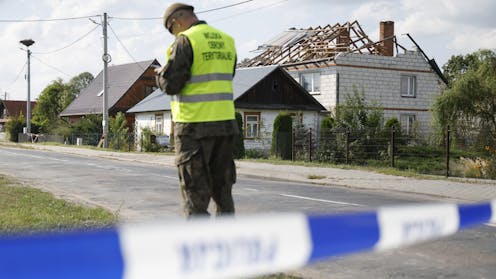
Authorities inspect a house damaged by debris from a Russian drone shot down in eastern Poland. Wojtek Radwanski/AFP via Getty Images

NATO fighter jets shot down multiple Russian drones in Polish airspace on Sept. 10, 2025, sparking fears of an expanding Russia-Ukraine war.

The incident represented the first such incursion by unmanned Russian aircraft into the territory of a NATO member since the invasion of Ukraine in February 2022. Moscow said it did not target Poland, raising the possibility of the drones unintentionally straying off course. But several European leaders indicated that they believed the incursion to be intentional.

Poland responded with a rare move, invoking Article 4 of the NATO treaty. The Conversation turned to John R. Deni, a nonresident Senior fellow at the Atlantic Council and author of “NATO and Article 5: The Transatlantic Alliance and the Twenty-First-Century Challenges of Collective Defense,” to explain what invoking these articles means – and what might happen next.

What is Article 4 of the NATO Treaty?

Article 4 can be invoked by any NATO member that feels threatened. Under its terms, a member state can request a consultation of the North Atlantic Council, or NAC – the highest political decision-making body in the NATO alliance.

A NAC meeting in itself isn’t unusual. Every NATO summit is a NAC meeting at the level of heads of states. And a NAC meeting takes place every Wednesday at ambassadorial level in Brussels.

But what Article 4 does is open the way for a special meeting of the NAC to consult over the next steps that the alliance should take.

While invoking Article 4 is a big deal, it doesn’t carry the same weight as invoking Article 5.

What is Article 5?

Article 5 really is the heart and soul of the NATO alliance. It is the part of the treaty that says that if one member is attacked, then all of the other members will treat it as an attack on them all. In effect, it calls for a collective response once requested by any of the current 32 members of NATO.

The NATO treaty was signed in April 1949, and Article 5 is central to it. In the immediate aftermath of World War II, Western European countries sought a way to defend themselves in the event Germany again arose as a security challenge. By the late 1940s, concerns shifted toward the threat posed by the Soviet Union, which stationed large military forces across Eastern Europe, staged a coup in Czechoslovakia and blockaded Berlin.

Initially, the United States was skeptical of joining any kind of postwar alliance in Europe, but Soviet actions convinced American leaders to sign on as a way of maintaining Western Europe as free and open.

Article 5 doesn’t automatically get triggered once a NATO member is attacked; the country attacked needs to request that the alliance invoke it. In this case, that would mean Poland, should Polish officials conclude that Russian missiles were sent deliberately.

What does triggering either require of the US?

Under Article 4, all NATO members, including the U.S., are required to join discussions at the North Atlantic Council, the alliance’s main decision-making body. That could be followed by a joint declaration or plan of action.

Invoking Article 5, however, has more serious consequences. It means that the United States would be called upon to help defend any European ally, or Canada, if attacked.

But there is an important caveat. Article 5 was written in such a way that it allows each ally to decide for itself the best course of action to take – there is no prescribed response once the article is invoked.

In the case of the U.S., the executive branch – that is, the president – would need to consider the views and responsibilities of Congress. If the president were to decide on direct military action, then Congress would likely be involved in some capacity – and, of course, only Congress has the power to declare war.

But Article 5 doesn’t necessarily require a military response. In fact, there is enough flexibility in the language of the treaty for a more nuanced response.

This is vital. Each member of NATO remains a sovereign state and can’t be compelled into military action. Decision-making over the use of force remains at the national level; such choices are not simply handed over to a supranational organization.

When have articles 4 and 5 been triggered in the past?

Article 4 has been invoked several times over NATO’s lifetime. It was invoked by Turkey amid concerns over cross-border terrorism as a result of the Syrian War. More recently, it was invoked by eight NATO members in Eastern Europe after the Feb. 24 Russian invasion of Ukraine.

Article 5 has been triggered only once before in the seven decades of NATO’s existence. That was on Sept. 12, 2001 – the day after the 9/11 terrorist attacks on the United States.

The European allies came to the U.S.’s defense on that occasion. They did this by deploying patrol aircraft in U.S. airspace. Additionally, when the decision was made to invade Afghanistan, several NATO countries in which American troops are based – especially Germany – provided guards for U.S. military bases overseas so that American soldiers could deploy.

What does Poland hope to achieve in invoking Article 4?

Article 4 allows any member country that perceives a serious security threat to bring it to the attention of all the allies. Taking this step allows Poland to make its case to all NATO members and get across its concerns and the level of threat from Russia it perceives.

I would expect Poland to use an Article 4 meeting to highlight the many times Russian military forces have violated the airspace of allies all along the eastern frontier and especially in northeastern Europe.

In some instances, these violations can be chalked up to pilot or operator error, but in recent years the regularity of violations has led many observers in the West to conclude Russia is purposefully violating allied airspace.

The intent of these violations is varied. Sometimes, as in the case of these drones over Poland, it may be to take a circuitous route to the intended target – likely Ukrainian civilians and military facilities in Western Ukraine – so as to avoid Ukrainian air defenses. In other cases, Russia is likely trying to intimidate smaller NATO allies or probing Western defenses to test reaction times and means of response.

Regardless, Poland, like many allies in Eastern Europe, has justifiably lost patience with Moscow’s repeated violations. By invoking Article 4 and bringing this to NATO’s table, Warsaw likely hopes to secure the unequivocal backing of its allies in responding more aggressively, as it did, in coordination with the Dutch, in shooting down these Russian drones.

How might we expect the US to respond?

The United States is likely to stand firmly behind Poland’s efforts to defend itself in the wake of this egregious violation of Polish airspace.

Two men in suits walk down a sunlit corridor.
President Donald Trump and Polish President Karol Nawrocki walk down the colonnade on the way to the Oval Office on Sept. 3, 2025.
Saul Loeb/AFP via Getty Images

Polish President Karol Nawrocki had what was regarded as a highly successful meeting at the White House in early September, during which President Donald Trump said the U.S. commitment to Poland – both political as well as the military presence – would remain and could in fact grow. The U.S. sees Poland as a staunch ally in a special category of particularly close partners. Beyond that, it’s at least theoretically possible that U.S. air defense assets based in Germany, including Patriot air defense battalions, might be deployed to Poland to beef up defenses there, but it’s unclear whether such a request has been made.

The views expressed are those of the author and do not necessarily reflect those of any organization he may be affiliated with.
_
_Sections of this article were originally included in a story published by The Conversation on Nov. 16, 2022.

The Conversation

John Deni does not work for, consult, own shares in or receive funding from any company or organization that would benefit from this article, and has disclosed no relevant affiliations beyond their academic appointment.

ref. Poland responds to Russian drones incursion by invoking Article 4 of the NATO treaty − what happens next? – https://theconversation.com/poland-responds-to-russian-drones-incursion-by-invoking-article-4-of-the-nato-treaty-what-happens-next-265051

How Israel’s attack on Qatar erodes peace — and American influence — in the Middle East

Source: The Conversation – Canada – By Spyros A. Sofos, Assistant Professor in Global Humanities, Simon Fraser University

The bombing of a Hamas office on Qatari soil by Israeli jets was more than a strike against a militant group. It was a bold and deeply consequential act against a state that has long positioned itself as a mediator in Middle Eastern conflicts and hosts 11,000 American troops on its territory.

For decades, Qatar has balanced its role as an American ally with its open lines of communication to groups that include Hamas and the Taliban. It has provided an indispensable channel for negotiations that the United States itself cannot conduct.

By targeting Qatar directly, Israel has crossed into uncharted territory. The strike is not just a military move — it is an unmistakably revisionist act, challenging the norms, alliances and security architecture of the region.


Read more:
Israel’s attack on Syria: Protecting the Druze minority or a regional power play?


Defining revisionism

In international relations, “revisionism” refers to attempts by states to revise the existing order of rules, institutions or the distribution of power.

Revisionist states seek to undermine the constraints imposed by the international system, reshaping it in ways that benefit them. They often do this not only by rejecting particular norms, but also by bending them to suit their own purposes.

Israel’s strike on Qatar demonstrates this pattern clearly.

By attacking a U.S. ally, Israel is not just pursuing Hamas operatives, it’s asserting that its own security imperatives override the norms of sovereignty, alliance management and the delicate balance that underpins regional diplomacy.

Qatar’s unique position

Qatar, unlike other Gulf states, has built a reputation as a broker of peace processes, hosting talks between Israel and Hamas, the U.S. and the Taliban and even among rival Palestinian factions.

Its role has often been tolerated, and even encouraged, by the U.S., which benefits from having a close ally act as a mediator of last resort.

The strike, therefore, is likely not just about Hamas. It is an apparent attempt to discredit Qatar’s mediating role, portraying it instead as a protector of terrorists and therefore unfit to serve as a diplomatic arbitrator. But more importantly, it seems an attempt to undermine diplomacy in the region as it eliminates a crucial venue for negotiation, leaving military action as the primary currency in Israeli–Palestinian relations.

With the massive U.S. Al Udeid airbase located in Qatar, Israel’s actions place American officials in an uncomfortable position: tolerate Israeli overreach and risk undermining their own ally, or confront Israel and fracture an already tense relationship. Either outcome serves Israel’s interests and loosens U.S. influence in the Middle East.

Hijacking U.S. foreign policy

Successive U.S. administrations have increasingly outsourced mediation to partners like Qatar. This reflects a recognition of American limits: its deep alliance with Israel makes it an unconvincing neutral broker, while states such as Qatar can talk to countries and organizations the U.S. designates as adversaries.

Yet Israel has repeatedly undercut such efforts. The 2015 Joint Comprehensive Plan of Action agreement on the Iranian nuclear program was relentlessly opposed by Israel, whose intelligence leaks and lobbying helped derail American efforts at forging a new deal in 2018.


Read more:
US-Iran tensions: no route for de-escalation in sight


In June 2025, just days before an Iranian delegation was scheduled to meet the American envoy for renewed discussions on the nuclear program, Israel initiated its 12-day war with Iran, collapsing the conditions for diplomacy before talks could even begin.

More recently, Gaza ceasefire talks in Doha were repeatedly disrupted by Israeli escalations on the ground or by making new demands, ensuring that negotiations never moved beyond crisis management.

The strike on Qatari soil takes this interference to a new level. It is not only a rejection of particular negotiations, but an attack on the infrastructure of American-led diplomacy.

Israel is seemingly aiming to hijack American foreign policy, narrowing U.S. options and entrenching Israel’s role as the sole gatekeeper of “acceptable” peace processes in the region.

Weaponizing peace processes?

Revisionist Israeli governments have tended to use negotiations not as pathways to a permanent peace, but as tools for managing conflict on their own terms.

By selectively engaging in negotiations while simultaneously engaging in settlement expansion in the West Bank, Israeli actions mean talks rarely translate into substantive concessions. The peace process becomes a means of buying time, dividing opponents and presenting Israel as a willing but frustrated partner.

Targeting Qatar continues this pattern. By undermining the one Gulf state that consistently invests in dialogue, Israel shrinks the diplomatic horizon. If no credible mediator is left standing, peace negotiations become a hollow exercise — something Israel could invoke to deflect criticism while pursuing its own security goals via military action.

This seems like peace as spectacle, weaponized to perpetuate the very state of war it claims to want to overcome.

A state of permanent war

One of the striking features of Israel’s regional stance is its reliance on a “permanent war” condition. Periodic escalations with Gaza, Lebanon, Syria, or Iran are not anomalies, but seem to be part of a strategy to normalize insecurity.

This strategy enables Israel to consolidate domestic political support, sustain high levels of military aid and investment and maintain control over the Palestinian Territories under the guise of an omnipresent existential threat.

That threat isn’t unfounded — and was underscored by the Hamas attacks of Oct. 7, 2023 — but Israel has used it to entrench a permanent-war posture that extends well beyond immediate security needs instead of pursuing peace.

The strike on Qatar extends this logic outward as Israel signals that there is no neutral space left and that even mediators can be attacked. The result is not the resolution of conflict but its apparent institutionalization: an endless cycle of violence where war is the baseline, not the exception.


Read more:
Can Israel still claim self-defence to justify its Gaza war?


What does Israeli revisionism achieve?

Israel’s strategy achieves several goals. By striking a U.S.-allied state, Israel challenges the principle that allied territory is off-limits.

At the same time, undercutting Qatar’s mediating role undermines the American ability to engage in diplomacy in the region, and leaves fewer avenues for talks, which means military action sets the agenda. Finally, expanding the geography of conflict turns instability into the Middle East’s default condition.

Such strategies may achieve short-term gains, but they come at enormous cost. The strike risks fracturing Israel’s quiet alignment with Gulf monarchies, alienating the U.S.

If the U.S. cannot or will not restrain strikes against its key allies, what meaning do American security guarantees truly carry? U.S. allies in the Middle East will point to the Qatar strikes as evidence that American protection is conditional, eroding confidence in the very alliance system that underpins U.S. power.

For the U.S., the attack underscores a deeper dilemma: the more it outsources its regional diplomacy to Israel, the more vulnerable it becomes. Israel’s repeated strikes in the midst of sensitive negotiations — from the Iran nuclear talks to Gaza ceasefires — show how effectively it can hijack American policy and systematically undermine the prospect of peace in the Middle East.

The Conversation

Spyros A. Sofos does not work for, consult, own shares in or receive funding from any company or organisation that would benefit from this article, and has disclosed no relevant affiliations beyond their academic appointment.

ref. How Israel’s attack on Qatar erodes peace — and American influence — in the Middle East – https://theconversation.com/how-israels-attack-on-qatar-erodes-peace-and-american-influence-in-the-middle-east-265017

Israeli strike in Doha crosses a new line from which relations with Gulf may not recover

Source: The Conversation – Global Perspectives – By Kristian Coates Ulrichsen, Fellow for the Middle East at the Baker Institute, Rice University

The dust settles in Doha after the latest Israeli attack in the region. Photo by Jacqueline Penney / AFPTV /AFP via Getty Images

The Israeli airstrike targeting senior Hamas political leaders in Qatar on Sept. 9, 2025, represents the crossing of a number of lines.

Resulting in the deaths of six people but seemingly failing to kill any members of Hamas’ leadership, the strike was the first serious attack on the sovereignty of any of the six Gulf Arab states by Israel to date.

The bombing, which destroyed a building in a busy residential area of the Qatari capital, Doha, was also an act of international aggression under Article 2, paragraph 4 of the United Nations Charter. And it marks a major escalation in the post-Oct. 7, 2023, Israeli-involved conflicts across the Middle East.

But it isn’t the first time Israel has targeted individuals being hosted by one of the Gulf States. In 2010, Israeli operatives were successful in killing a senior Hamas operative in the United Arab Emirates.

That operation in Dubai set back Gulf-Israel relations for years. Similarly, the impact of the Doha strike will be consequential for what remains of Israeli ties in the Gulf now, as well as for the web of U.S.-Arab Gulf state defense partnerships that have underpinned regional security for decades.

Indeed, as an expert on Gulf Arab politics, I believe the latest development represents the gravest crisis for Israel’s budding relations in the Gulf.

The tangled history of Israel-Gulf ties

Aside from a Saudi contingent that fought in the 1948 war, the Arab Gulf countries have not been direct military participants in the Arab-Israeli conflict. Rather, they have deployed resources in other ways, such as providing financial support to states actively involved in fighting Israel and participating in the 1973-74 Arab oil embargo.

In addition, the Gulf states maintained the Arab League boycott of Israel until the 1990s, when the secondary and tertiary aspects of the boycott – which targeted outside companies and third countries that did business with Israel – were gradually diluted. Formal ties also emerged in the 1990s, with Qatar and Oman leading the way in hosting Israeli trade offices and the latter receiving visits by two Israeli prime ministers: Yitzhak Rabin in 1994 and Shimon Peres in 1996. Gulf Arab countries also hosted multilateral meetings as part of the Oslo peace process that launched in 1993 between Israeli and Palestinian leaders.

And yet, Israeli outreach to the Gulf states has always been vulnerable to upswings of violence in the occupied Palestinian territories, which led to the closure of the trade missions in Muscat, the capital of Oman, and Doha in the 2000s. Ties reached their lowest ebb in January 2010 after the Israeli security service Mossad dispatched a 27-strong death squad to Dubai to assassinate Mahmoud al-Mabhouh, a senior weapons procurer for Hamas.

With Israeli operatives traveling into and out of the UAE using forged European and Australian passports, the killing infuriated the Emirati leadership and sent the discreet effort of building bilateral relations into a deep freeze for several years.

Ties only began to thaw in the turbulent aftermath of the Arab uprisings when Israel authorized the sale of sophisticated Pegasus spyware in 2013 as an “olive branch” to the UAE.

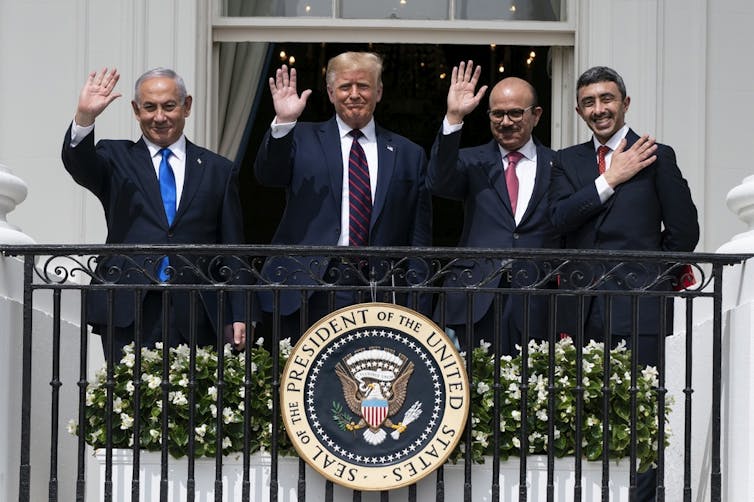
The subsequent upward trajectory of relations, which culminated in the signing of the Abraham Accords in 2020, illustrated how shared interests in regional geopolitics could act as a salve for bilateral antagonism. The accords, initially signed by Bahrain and the UAE, represented the first recognition of Israel by an Arab state since Jordan back in 1994.

Four men wave from a balcony.
A lot has changed in the Middle East since the 2020 signing of the Abraham Accords at the White House.
AP Photo/Alex Brandon

The gloomy diplomatic outlook after Doha

But it will be harder to repair ties this time around – not least because the strike on Doha comes after months of Gulf states’ mounting concern at the extensive and open-ended scope of Israeli attacks across the Middle East and the ongoing war in Gaza, which most Arab Gulf leaders have described in genocidal terms.

Over the past year, Israel has hit targets in Lebanon, Syria, Iraq, Iran and Yemen. In the process, Israel has destroyed large areas of southern Lebanon; bombed the ministry of defense in Syria; killed Ismail Haniyeh, a former head of the Hamas political office in Doha; killed the prime minister of the Houthi-controlled government in Yemen and multiple members of his cabinet; and launched the 12-day war against Iran.

That pattern of behavior caused deep alarm among Gulf officials who have strenuously sought to “de-risk” the region as they focus on large-scale development projects such as Vision 2030 in Saudi Arabia.

The war with Iran was particularly emblematic of these regional fears. Indeed, it ended with an Iranian missile strike on Qatar that targeted Al Udeid, the largest U.S. air base in the Middle East and the location of the forward headquarters of U.S. Central Command. The June 23 strike appeared to be a choreographed face-saving measure of limited retaliation after President Donald Trump had ordered U.S. airstrikes against three nuclear facilities in Iran the previous day. But the sight of the Qatari night sky lighting up with interceptor fire and missile debris falling in Doha nevertheless caused shock waves in the Gulf.

It was the first time a Gulf capital had came under attack by a state, rather than a militant nonstate group, since Iraq launched Scud missiles during the Gulf War in 1991 following its invasion of Kuwait.

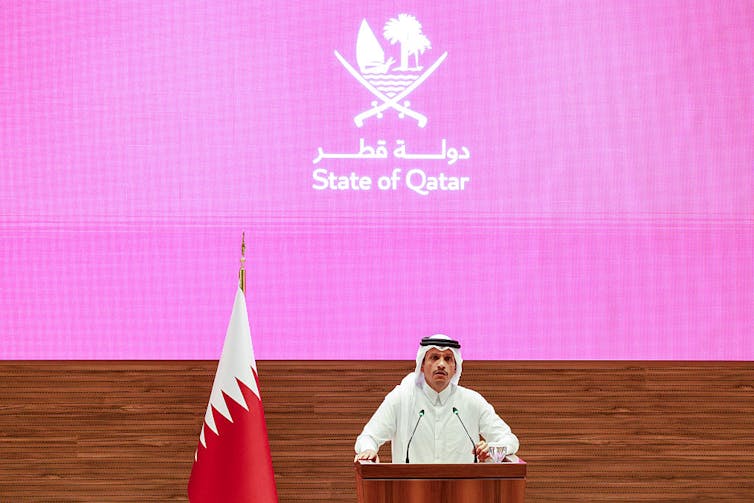
A man speaks at a lectern.
Qatar’s Prime Minister and Foreign Minister Mohammed bin Abdulrahman al-Thani addresses a press conference following Israeli strikes in Doha on Sept. 9, 2025.
Photo by Karim Jaafar/AFP via Getty Images

Talk of diplomatic red lines

Iran’s attack on the U.S. air base in Qatar in June generated statements of solidarity with Doha from all other members of the Gulf Cooperation Council, reflecting the degree to which the six Gulf Arab countries have come back together after the political rifts that divided them in the 2010s. The GCC has been most cohesive at times that its members perceive a common external threat, such as during the Iran-Iraq War in the 1980s. That has also been evident after Israel’s military engagements since the Oct. 7, 2023, Hamas attacks.

Over the summer, alarm at Israel’s regional wars led prominent Saudi commentators to describe Israel as a chief spoiler, a routine violator of international norms and a contributor to instability. Such language had previously been reserved primarily for Iranian actions.

Anwar Gargash, a foreign policy advisor to UAE President Sheikh Mohammed bin Zayed Al Nahyan whose name adorns the Diplomatic Academy in Abu Dhabi, described the Sept. 9 Israeli strike on Qatar as “treacherous.” It remains to be seen whether this is a red line which leads the UAE, or Bahrain, to suspend the Abraham Accords or break diplomatic ties with Israel.

Going forward, officials in Doha and other GCC capitals will be urgently assessing the implications of a strike by one U.S. partner and in the vicinity of a U.S. base meant to deter and detect regional aerial threats in the first place. And while the Trump administration has officially denied foreknowledge or involvement in the Israeli attack, even being caught in the dark will invite commentary about the apparent ineffectiveness of American deterrence and further damage Gulf states’ confidence in the U.S. defense and security support.

When Israeli forces killed Haniyeh, another Hamas political leader, in July 2024, they waited until he left Doha to attend the presidential inauguration in Iran before they struck in Tehran. Until now, the assumption had been that Israel would hit targets in states adversarial to the U.S. rather than allies or partners.

That line has been crossed, and across the Gulf there will be concern about what else may happen – for example, to Houthi delegates being hosted in Oman.

The Conversation

Kristian Coates Ulrichsen does not work for, consult, own shares in or receive funding from any company or organization that would benefit from this article, and has disclosed no relevant affiliations beyond their academic appointment.

ref. Israeli strike in Doha crosses a new line from which relations with Gulf may not recover – https://theconversation.com/israeli-strike-in-doha-crosses-a-new-line-from-which-relations-with-gulf-may-not-recover-264954

The discovery of a gravitational wave 10 years ago shook astrophysics – these ripples in spacetime continue to reveal dark objects in the cosmos

Source: The Conversation – USA – By Chad Hanna, Professor of Physics, Penn State

When two massive objects – like black holes or neutron stars – merge, they warp space and time. Mark Garlick/Science Photo Library

Scientists first detected ripples in space known as gravitational waves from the merger of two black holes in September 2015. This discovery marked the culmination of a 100-year quest to prove one of Einstein’s predictions.

Two years after this watershed moment in physics came a second late-summer breakthrough in August 2017: the first detection of gravitational waves accompanied by electromagnetic waves from the merger of two neutron stars.

Gravitational waves are exciting to scientists because they provide a completely new view of the universe. Conventional astronomy relies on electromagnetic waves – like light – but gravitational waves are an independent messenger that can emanate from objects that don’t emit light. Gravitational wave detection has unlocked the universe’s dark side, giving scientists access to phenomena never observed before.

As a gravitational wave physicist with over 20 years of research experience in the LIGO Scientific Collaboration, I have seen firsthand how these discoveries have transformed scientists’ knowledge of the universe.

This summer, in 2025, scientists with the LIGO, Virgo and KAGRA collaboration also marked a new milestone. After a long hiatus to upgrade its equipment, this collaboration just released an updated list of gravitational wave discoveries. The discoveries on this list provide researchers with an unprecedented view of the universe featuring, among other things, the clearest gravitational wave detection yet.

A map showing five yellow points indicating operational gravitational wave observatories: two in the US, two in Europe and one in Japan, and one orange point in India indicating a planned observatory.
The more operational gravitational-wave observatories there are around the globe, the easier it is to pin down the locations and sources of gravitational waves coming from space.
Caltech/MIT/LIGO Lab

What are gravitational waves?

Albert Einstein first predicted the existence of gravitational waves in 1916. According to Einstein’s theory of gravity, known as general relativity, massive, dense celestial objects bend space and time.

When these massive objects, like black holes and neutron stars – the end product of a supernova – orbit around each other, they form a binary system. The motion from this system dynamically stretches and squeezes the space around these objects, sending gravitational waves across the universe. These waves ever so slightly change the distance between other objects in the universe as they pass.

Detecting gravitational waves requires measuring distances very carefully. The LIGO, Virgo and KAGRA collaboration operates four gravitational wave observatories: two LIGO observatories in the U.S., the Virgo observatory in Italy and the KAGRA observatory in Japan.

Each detector has L-shaped arms that span over two miles. Each arm contains a cavity full of reflected laser light that precisely measures the distance between two mirrors.

As a gravitational wave passes, it changes the distance between the mirrors by 10-18 meters — just 0.1% of the diameter of a proton. Astronomers can measure how the mirrors oscillate to track the orbit of black holes.

These tiny changes in distance encode a tremendous amount of information about their source. They can tell us the masses of each black hole or neutron star, their location and whether they are spinning on their own axis.

An L-shaped facility with two long arms extending out from a central building.
The LIGO detector in Hanford, Wash., uses lasers to measure the minuscule stretching of space caused by a gravitational wave.
LIGO Laboratory

A neutron star-black hole merger

As mentioned previously, the LIGO, Virgo and KAGRA collaboration recently reported 128 new binary mergers from data taken between May 24, 2023, and Jan. 16, 2024 – which more than doubles the previous count.

Among these new discoveries is a neutron star–black hole merger. This merger consists of a relatively light black hole with mass between 2.5 and 4.5 times the mass of our Sun paired with a neutron star that is 1.4 times the mass of our Sun.

In this kind of system, scientists theorize that the black hole tears the neutron star apart before swallowing it, which releases electromagnetic waves. Sadly, the collaboration didn’t manage to detect any such electromagnetic waves for this particular system.

Detecting an electromagnetic counterpart to a black hole tearing apart a neutron star is among the holy grails of astronomy and astrophysics. These electromagnetic waves will provide the rich datasets required for understanding both the extreme conditions present in matter, and extreme gravity. Scientists hope for better fortune the next time the detectors spot such a system.

A massive binary and clear gravitational waves

In July 2025, the LIGO, Virgo and KAGRA collaboration also announced they’d found the most massive binary black hole merger ever detected. The combined mass of this system is more than 200 times the mass of our Sun. And, one of the two black holes in this system likely has a mass that scientists previously assumed could not be produced from the collapse of a single star.

When two astrophysical objects – like black holes – merge, they send out gravitational waves.

The most recent discovery announced by the LIGO, Virgo and KAGRA collaboration, in September 2025, is the clearest gravitational wave observation to date. This event is a near clone of the first gravitational wave observation from 10 years ago, but because LIGO’s detectors have improved over the last decade, it stands out above the noise three times as much as the first discovery.

Because the observed gravitational wave signal is so clear, scientists could confirm that the final black hole that formed from the merger emitted gravitational waves exactly as it should according to general relativity.

They also showed that the surface area of the final black hole was greater than the surface area of the initial black holes combined, which implies that the merger increased the entropy, according to foundational work from Stephen Hawking and Jacob Bekenstein. Entropy measures how disordered a system is. All physical interactions are expected to increase the disorder of the universe, according to thermodynamics. This recent discovery showed that black holes obey their own laws similar to thermodynamics.

The beginning of a longer legacy

The LIGO, Virgo and KAGRA collaboration’s fourth observing run is ongoing and will last through November. My colleagues and I anticipate more than 100 additional discoveries within the coming year.

New observations starting in 2028 may bring the tally of binary mergers to as many as 1,000 by around 2030, if the collaboration keeps its funding.

Gravitational wave observation is still in its infancy. A proposed upgrade to LIGO called A# may increase the gravitational wave detection rate by another factor of 10. Proposed new observatories called Cosmic Explorer and the Einstein Telescope that may be built in 10 to 20 years would increase the rate of gravitational wave detection by 1,000, relative to the current rate, by further reducing noise in the detector.

The Conversation

Chad Hanna receives funding from the National Science Foundation.

ref. The discovery of a gravitational wave 10 years ago shook astrophysics – these ripples in spacetime continue to reveal dark objects in the cosmos – https://theconversation.com/the-discovery-of-a-gravitational-wave-10-years-ago-shook-astrophysics-these-ripples-in-spacetime-continue-to-reveal-dark-objects-in-the-cosmos-264554

Nepal’s social media ban sparks deadly protests, but deeper grievances fuel the fire

Source: The Conversation – UK – By Leanne McCarthy-Cotter, Programme Director for Politics and International Relations, Cardiff Metropolitan University

Nepal’s prime minister, KP Sharma Oli, resigned on September 9 as his country reeled from some of its worst unrest in decades. A government ban on 26 social media apps, including Facebook, WhatsApp, YouTube and X, triggered widespread protests. The police responded violently, 19 people were killed and hundreds more injured.

Demonstrations have escalated since then in the capital, Kathmandu, and some other cities. The homes of various politicians have been vandalised, the parliament building in Kathmandu was set on fire and the death toll has risen to 22.

Nepal’s army has announced it will take control of the situation. It has imposed a countrywide curfew and is warning of punishment for anyone involved in violence or vandalism. The gen Z groups leading the protests say the movement has been hijacked by “opportunist” infiltrators.

The forces that led to Oli’s exit run far deeper than anger at the government’s social media ban. This was merely the final straw. Anger at political instability, elite corruption and economic stagnation have built up over many years.

Nepal’s democratic era began in 2008 after a decade-long Maoist insurgency culminated in the abolition of its monarchy. Several years later, in 2015, a constitution came into effect that introduced federalism and proportional representation to address ethnic tensions and prevent authoritarian rule.

But it has instead produced a highly fragmented party system. None of the 14 governments that have ruled since 2008 have completed a full term. This revolving-door politics, underpinned by patronage-driven coalitions, has fuelled public cynicism.

Nepal also consistently ranks poorly on corruption indices. It was ranked 107 out of 180 countries in Transparency International’s 2024 Corruption Perceptions Index. Two major scandals have become symbols of elite impunity in Nepal.

The first concerns the Giri Bandhu Tea Estate. The estate’s owners – allegedly in collusion with politicians – have for decades attempted to convert land protected under law into commercial real estate for profit. Nepal’s supreme court struck down the latest attempt in February 2025.

The second is known as the Lalita Niwas land grab scam. Beginning in the 1990s, it involved the illegal transfer of government-owned land to influential businessmen, politicians and government officials. Several senior Nepalese officials have been arrested and subsequently convicted over their involvement.

Most recently, the so-called “Nepo kid” campaign has seen the luxury lifestyles of politicians’ family members showcased on social media. Among the most frequently shared images was a photo claiming to show a son of a minister posing with boxes labelled Louis Vuitton and Cartier, arranged into a Christmas tree.

The images have only crystallised public anger. Wealth inequality remains stark in Nepal, where the top 10% of earners receive three times more income than the bottom 40% of earners combined. And younger Nepalis feel excluded from opportunity.

With limited career prospects at home, many young people in Nepal see emigration as the only option. Roughly 839,000 Nepalis had to leave the country in 2024 to work abroad. For young Nepalis, these realities have bred deep disillusionment. Their demands are clear: they want systemic reforms that challenge the political elite.

What happens next?

What happens next is unclear. The Nepalese army played a decisive role in Oli’s resignation. Reports indicate that the army chief, General Ashok Raj Sigdel, privately urged Oli to step down and ensured a safe exit for him and key ministers.

Troops have also been deployed to protect government buildings and maintain order. But, while the army has committed to taking control of the situation, it has at no point attempted to seize power or suspend constitutional processes.

Unlike the overtly interventionist militaries of some states in the region, such as Pakistan, Nepal’s army has traditionally avoided direct involvement in government. It has instead acted as a stabiliser during political crises and has occasionally influenced leadership transitions behind the scenes.

In this sense, its facilitation of Oli’s exit was not entirely unprecedented. But what was striking was the public visibility and speed of the army’s intervention. Its leadership effectively communicated that the prime minister’s political survival depended on their acquiescence, while carefully framing itself as a neutral arbiter rather than a ruler.

Nepal will now enter a period of caretaker government. The country’s fractured coalition politics means forming a stable administration may prove difficult. However, figures such as Kathmandu’s mayor, Balendra Shah, are gaining popularity as symbols of generational change.

Shah, 35, has garnered significant support from young Nepalese people, who view him as a break from the country’s traditional political elites. His background as a rapper and civil engineer, coupled with his anti-corruption stance, resonates with young voters seeking authenticity and reform.

His active engagement on social media, which has included expressing solidarity with protesters, has further solidified his position as a leader aligned with the aspirations of the younger generations. And his independent status, free from the influence of traditional political parties, has allowed him to present himself as an outsider capable of enacting genuine change.

Yet on its own, a turnover of leadership – while addressing a symbolic grievance – is unlikely to satisfy all of the protesters. The slow roll-out of federalism and a lack of effective decentralisation have alienated rural populations. This has fed widespread perceptions of a Kathmandu-centric elite.

Nepalese youth are demanding change. For the country’s politicians, addressing this moment will require not only new leadership, but a genuine commitment to reform and a political system credible to a generation no longer willing to accept business as usual.

Without this, Nepal risks remaining trapped in a cycle of protest and paralysis.

The Conversation

Leanne McCarthy-Cotter does not work for, consult, own shares in or receive funding from any company or organisation that would benefit from this article, and has disclosed no relevant affiliations beyond their academic appointment.

ref. Nepal’s social media ban sparks deadly protests, but deeper grievances fuel the fire – https://theconversation.com/nepals-social-media-ban-sparks-deadly-protests-but-deeper-grievances-fuel-the-fire-264923

Trading human remains: why bones should not become a commodity

Source: The Conversation – UK – By Michelle Spear, Professor of Anatomy, University of Bristol

Bokeh Stock/Shutterstock.com

In recent years, skulls, bones, and even modified human remains have appeared with increasing frequency on online marketplaces and social media platforms. What might once have been confined to specialist collectors has become a global, online trade.

The market is fuelled by diverse groups of buyers. Some are traditional collectors of curiosities, others are ritual practitioners. And a smaller number of contemporary artists and designers buy human remains to incorporate into sculptures or installations, raising concerns about the use of the body as raw material. There are also medical and dental students, some of whom still seek real skulls for their own study, unaware of the legal and ethical pitfalls.

Perhaps the most striking development is the rise of casual consumers inspired by social media. The aesthetic known as “dark academia” has helped to drive this surge. Blending gothic literature, candlelit libraries, vintage tailoring and scholarly mystique, it presents bones as fashionable props. On Instagram (#SkullDecor) and TikTok (#OdditiesTok), users pose with skeletons in the same way they might with antique books or candlelight, transforming skulls into lifestyle decor.

This trend is troubling because it normalises ownership of human remains and blurs the line between objects of study and human individuals. By aestheticising death, it risks eroding the ethical safeguards that once protected the dead from exploitation. The surge has prompted alarm among archaeologists, anthropologists and anatomists. The British Association for Biological Anthropology and Osteoarchaeology has spearheaded a campaign to curb the trade, warning that it not only exploits the dead but also risks commodifying them. Yet the legal framework is equally complex, leaving many sellers operating in a grey area.

In the UK, the law is fragmented. The Human Tissue Act 2004 regulates the use of bodies donated for anatomical education, teaching and research, but only applies to remains less than 100 years old. Anything older falls outside its scope.

This century cut-off creates a loophole: a skull described as “Victorian” can be sold, even if its provenance is doubtful. Sellers may exploit this grey area, and buyers rarely question such claims.

Sidestepping jurisdictions

Elsewhere, laws are inconsistent. In the US, Native American remains are protected under federal legislation, yet state laws vary widely and online sales often slip through the net. The global nature of the trade makes enforcement harder still: a skull listed in the UK can be shipped abroad with little difficulty, sidestepping different national jurisdictions.

The question of origin is central. The Anatomy Act of 1832 was intended to end grave robbing in Britain by providing a legal supply of bodies – those unclaimed in hospitals, prisons and workhouses – while also making body donation legal. But demand soon outstripped supply, as evidenced by the work of the resurrectionists, and by the late 19th-century Britain looked abroad for bones.

India became the world’s largest exporter, sending an estimated 60,000 skeletons overseas in 1984 alone. Many came from impoverished communities who could not afford cremation or burial, while others were stolen from cemeteries.

Grave robbing was common, and the trade remained deeply tied to colonial structures. Even after independence in 1947, India remained Britain’s main supplier until a scandal in 1985 revealed the export of 1,500 child skeletons, raising fears of kidnapping and murder. The Indian government swiftly banned the trade. China then became the leading exporter until it too banned exports in 2008.

This history shows that many of the bones circulating today in collections, and sometimes resurfacing on the open market, were acquired in ways that were profoundly exploitative.

Provenance is everything, yet often absent. While many bones circulating today are former anatomical specimens, the scale of demand has clearly encouraged more nefarious means of procurement, and grave robbing has seen a resurgence.

An empty grave.
Grave robbing is seeing a resurgence.
David Leshem/Shutterstock.com

Museums and teaching collections usually keep detailed acquisition records, so bones offered without documentation raise immediate red flags. Anatomical specimens also tend to show signs of preparation, such as drilled holes, varnish or metal fittings.

By contrast, remains taken from graves often display soil staining, root etching, or microfractures caused by long-term burial. Fragments of coffin wood, nails or textiles may still cling to them. These differences are not always conclusive, but together they suggest whether a skeleton was prepared for study or exhumed illicitly.

Beyond legality lies a more fundamental question: should human remains ever be sold at all? Human remains are not ornaments or lifestyle accessories – they are the material traces of people’s lives.

The commodification of human remains sits at the uneasy intersection of law, science and ethics. The trade thrives because of loopholes and because platforms profit from traffic even when listings violate their own policies. At its heart, this is not a legal issue so much as one of respect.

Human remains, whether ancient or recent, represent lives once lived. They carry stories of identity, community and mortality. Treating them as commodities diminishes both the individuals they once were and the societies we live in today. As calls for reform continue, the challenge is to shift attitudes away from possession and decorative display toward recognition of the dignity owed to the dead.

The Conversation

Michelle Spear does not work for, consult, own shares in or receive funding from any company or organisation that would benefit from this article, and has disclosed no relevant affiliations beyond their academic appointment.

ref. Trading human remains: why bones should not become a commodity – https://theconversation.com/trading-human-remains-why-bones-should-not-become-a-commodity-264208

Seven health conditions that show why using your phone on the toilet is a bad idea

Source: The Conversation – UK – By Adam Taylor, Professor of Anatomy, Lancaster University

This is why you shouldn’t bring your phone with you into the toilet. Alex Goncharov/ Shutterstock

It might seem like a harmless habit to linger on the loo with your phone while “taking care of business”, but research shows that prolonged toilet time can increase the risk of several health problems. Here are the main ones.

1. Haemorrhoids

A recent study found that smartphone use while doing a number two is linked to a 46% increased risk of developing haemorrhoids. A healthy toilet trip should only last two to three minutes, yet the study found that 37% of participants who used their phones while on the can spent more than five minutes there.

Haemorrhoids are enlarged blood vessels occurring in or around the anal opening. They develop due to increased pressure in the anal cushions – a part of the spongy tissue that surrounds your anus. These cushions allow the anus to expand as faeces is expelled.

Sitting too long on the toilet places extra pressure on these cushions, leading to haemorrhoids, as does straining to force faeces out.

It’s estimated that between 50-85% of people worldwide suffer from haemorrhoids. Symptoms include painless bleeding, irritation, itching and discomfort. However, haemorrhoids aren’t always symptomatic. Some people have them without knowing.

Haemorrhoids can also lead to complications such as anaemia from prolonged bleeding, and strangulation or clotting within the haemorrhoid – both of which cause severe pain.

2. Anal fissures or tears

Sitting on the toilet too long can cause anal fissures or tears. They are small cuts in the anal lining. Anal fissures are often accompanied by significant pain – likened to passing broken glass when having a bowel movement, alongside bright red blood.

The anal lining is thin and sitting on the toilet for too long causes pooling of the blood, which stretches the lining, making it more prone to damage as faeces passes out.

3. Prolapse

Faeces may not be the only thing that passes out the body after sitting on the toilet. Extended loo time can increase your risk of having your rectum fall out of your body – a condition known as a rectal prolapse.

This uncommon condition occurred in one man who would often spend up to 30 minutes on the toilet playing smartphone games. One day, he found nearly 14cm of his rectum protruding out of his body while attempting a bowel movement.

Prolonged sitting on the toilet increases pressure in the abdomen, which subsequently increases pressure on the pelvic floor muscles. These muscles help hold our internal organs, including our rectum, inside. But prolonged pressure can weaken these muscles.

In women, this could also result in other pelvic organs – such as a uterus – prolapsing out of the body.

Rectal prolapse is often painful, and you’ll need to visit the hospital if you have one so it can be re-inserted. If it happens repeatedly or if the case is particularly extreme, it will require surgery.

4. Pressure sores and ulcers

Prolonged sitting on the loo, particularly in the elderly, may increase the risk of pressure sores occurring on the skin that comes in contact with the toilet seat.

Prolonged sitting compresses the tissues, reducing blood flow to them. This then results in toxic substances building up in the blood which damage the tissues and cause them to breakdown. Pressure sores are painful.

5. Hiatal hernia

Prolonged sitting on the toilet and straining to defecate may contribute to hiatal hernia, particularly in susceptible people (including those who are obese or over the age of 50).

This is where part of the stomach and other abdominal organs slide through the opening in your diaphragm (a dome-shaped muscle that helps us breathe), ending up in the chest cavity.

A young woman sits on the toilet looking at her phone. She is frowning.
Excess toilet time combined with straining can lead to a hernia.
Raushan_films/ Shutterstock

Hiatal hernias are common, affecting 20% of people. They typically result in indigestion, stomach pains and discomfort around the ribs and chest. They can be treated with medication to reduce the amount of acid produced by the stomach or in more severe cases require surgery.

6. Toilet seat neuropathy

Sitting too long on the toilet compresses the major nerves and blood vessels, reducing blood supply to the legs. This can cause your legs to go numb as a result – a phenomenon known as toilet seat or toilet bowl neuropathy. It usually goes away after a few minutes.

But there have been some case studies where patients who passed out on the toilet after a night of drinking – subsequently spending the night there – found themselves entirely numb and unable to move. In one extreme case, a man developed gangrene, sepsis and sadly died after falling asleep on the toilet.

7. Fainting

Prolonged toilet time combined with straining may also result in fainting.

This condition, called vasovagal syncope, occurs when prolonged straining on the toilet irritates the vagus nerves. These nerves control many of the body’s automatic functions – including heart rate and blood pressure.

In the case of defecation syncope, blood pressure can drop suddenly when we stand up from the toilet. Heart rate also drops causing dizziness, light-headedness and fainting.

The healthy way to poo

To reduce your risk of suffering any of these conditions, spend as short a time seated on the loo as possible.

You could also potentially modify your position when using the loo. Some evidence suggests squatting is better for defecation, as it reduces the stress and straining needed to poo. However, other studies have shown this position could potentially increase risk of other health problems – such as risk of stroke and damage to the achilles tendon.

Other advice includes eating more fibre and drinking water if you’re someone who regularly takes longer than five minutes to do your business as both can help you have healthier poos. They will also prevent straining while having your bowel movement.

The Conversation

Adam Taylor does not work for, consult, own shares in or receive funding from any company or organisation that would benefit from this article, and has disclosed no relevant affiliations beyond their academic appointment.

ref. Seven health conditions that show why using your phone on the toilet is a bad idea – https://theconversation.com/seven-health-conditions-that-show-why-using-your-phone-on-the-toilet-is-a-bad-idea-264808

How America helped create the Palestinian Authority – only to undermine it ever since

Source: The Conversation – UK – By Anne Irfan, Lecturer in Interdisciplinary Race, Gender and Postcolonial Studies, UCL

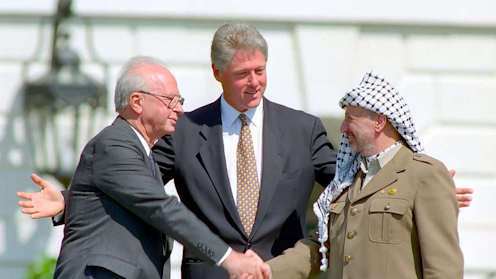
US president Bill Clinton with Israeli prime minister Yitzhak Rabin and Palestinian leader Yasser Arafat at the Oslo Accords signing ceremony on 13 September 1993. Vince Musi/The White House

At the end of August, the Trump administration blocked Palestinian president, Mahmoud Abbas, and 80 other Palestinian officials from attending the UN general assembly meeting in New York, which runs between September 9 and 23. The US president’s decision to revoke the Palestinian officials’ US visas comes as various European governments prepare to formally recognise the state of Palestine at the general assembly. Supporters of Palestinian statehood are proposing a central role for Abbas’ Palestinian Authority (PA) in Gaza’s future government.

Historically, the US has also supported the PA. The Oslo accords, which created the PA in the first place, were signed at the White House in 1993. US president Bill Clinton famously hosted Israeli prime minister Yitzhak Rabin and the chair of the Palestine Liberation Organisation (PLO), Yasser Arafat.

In discourse that has since become standard US policy, Clinton spoke of a so-called “two-state solution”, with security for Israel and democratic self-rule for the Palestinians. The US provided significant financial support for the PA after its establishment, with particular funding for its ample security forces.

Yet behind the scenes, the US stance on Palestinian statehood has always been murkier. A deeper look shows that the Trump administration’s recent moves blocking the PA are less of a departure from long-term US policy than they may seem. As I explain in my new book A Short History of the Gaza Strip, the US has long paired its ostensible support for the PA with policies that cripple its ability to function and undermine prospects of real Palestinian independence.

From the start, the Oslo accords were skewed in favour of Israeli interests. Under the agreement’s terms, the PA had limited autonomy over around three-quarters of the Gaza Strip and less than one-fifth of the West Bank. The Israeli military retained ultimate control and continued to seize more land for illegal settlements.

At the end of the 1990s, Clinton aligned himself closely with the new Israeli prime minister, Ehud Barak. Barak’s declared “red lines” included no Palestinian state along the 1967 borders, no Palestinian national army, no Palestinian sovereignty over any part of Jerusalem and the retention of most illegal Israeli settlements in the West Bank.

Further negotiations were structured to constrain the Palestinians, culminating in the “failure” of the 2000 Camp David summit. Familiar to anyone who has followed Israeli-Palestinian affairs, Arafat has been blamed for refusing Barak’s “unprecedented” proposal. The reality is somewhat different.

As Robert Malley and Hussein Agha wrote in their 2001 book, Camp David: a tragedy of errors, “what so many viewed as a generous Israeli offer, the Palestinians viewed as neither generous, nor Israeli, nor, indeed, as an offer”. Malley served as adviser to Clinton on Arab-Israeli affairs while Agha, a senior associate member of Oxford University’s St Antony’s College has been associated with Israeli-Palestinian affairs for more than half a century – meaning they know whereof they speak.

The US’ disingenuous approach did not end when Clinton left office. During the second intifada (Palestinian uprising) from 2000-2005, the administration of George W. Bush backed Israel’s full invasion of PA-administered areas in the West Bank and Gaza. This completely undermined any chance of a two-state solution – the very “solution” that the US ostensibly supported.

Israeli security forces shelter behind armoured vehicles when confronted by crowds of Palestinian civilians.
Second intifada, October 2000: Palestinian protesters confronting Israeli security forces near Ramallah.
Nadav Ganot (נדב גנות) / IDF Spokesperson’s Unit, CC BY-NC

In 2003, the US demanded a full restructuring of the PA’s set-up to curtail Arafat, whom Palestinians had elected president in 1996. When he died in 2004, he had spent two years under Israeli siege in Ramallah – another policy supported by the US.

Two years later, US moves to undermine the PA reached a crescendo when the 2006 Palestinian parliamentary elections returned Hamas as the largest party with 44% of the vote. While the elections were deemed free and fair by international observers, the Bush adminstration responded by plotting, arming and funding a coup to overthrow the new PA government.

In the end, the coup backfired, resulting in a lasting split from 2007 when Hamas seized control of Gaza and Abbas’ forces purged it from the PA in the West Bank. Since then, Palestinians in the two territories have been largely cut off from one another under two separate regimes. Abbas’ PA has been based in the West Bank while Hamas governs Gaza – where Israel has imposed a full blockade from 2007, supported by the US and Egypt.

No authority

In the two decades since, successive US administrations have effectively facilitated the Palestinian divide. In 2014, the Obama administration backed Israeli opposition to a short-lived Palestinian unity government. And when Abbas cancelled long-awaited Palestinian elections in 2021, the Biden administration stayed silent, with reports of tacit US support for the move behind the scenes.

While many western and Arab states are calling for the PA to take over Gaza’s future governance, critics point out that it has long been toothless and illegitimate.

Elected in 2005, Abbas is now 20 years into a four-year term. What’s more, his regime has delivered little for West Bank Palestinians in the nearly two decades since the split from Gaza.

He has been entirely ineffectual in countering the Israeli war on Gaza, launched after the Hamas-led attacks of October 7 2023 and widely recognised as genocide. As ministers call to resettle Gaza, Israel has continued to expand its illegal settlements in the West Bank and is openly planning ethnic cleansing.

It is important to remember that the PA was only ever created as an interim body, designed to serve for five years in the 1990s ahead of final negotiations. Its continued existence decades later is a serious indictment of the US-led so-called peace process. The reality of US treatment of the PA since the 1990s calls into question whether Trump’s recent moves are really a turning point in US policy – or simply the culmination of a long-term trend.

The Conversation

Anne Irfan does not work for, consult, own shares in or receive funding from any company or organisation that would benefit from this article, and has disclosed no relevant affiliations beyond their academic appointment.

ref. How America helped create the Palestinian Authority – only to undermine it ever since – https://theconversation.com/how-america-helped-create-the-palestinian-authority-only-to-undermine-it-ever-since-264759