Thailand’s politically influential Shinawatra family is fading from centre stage – for now

Source: The Conversation – UK – By Petra Alderman, Manager of the Saw Swee Hock Southeast Asia Centre, London School of Economics and Political Science

In the space of just three weeks, the Shinawatra family has suffered a succession of blows that threaten to undo its more than two decades at the top of Thai politics. The first blow came in late August when the constitutional court removed Paetongtarn Shinawatra from premiership for ethical misconduct.

The Pheu Thai party, whose de facto leader is Paetongtarn’s father and former Thai prime minister, Thaksin Shinawatra, lost its bid to lead the next government one week later. Then, on September 9, the supreme court sentenced Thaksin to one year in prison for past convictions of corruption and abuse of power.

All of this comes just two years after Pheu Thai struck a deal with the country’s conservative royalist-military establishment that paved the way for Thaksin to return to Thailand after more than 15 years in exile. The reformist Move Forward party had won the 2023 general election that year, but was blocked from taking office and dissolved by the constitutional court.

The deal allowed Thaksin, who had been ousted from power by a military coup in 2006 and subsequently fled the country, to return on preferential terms. It also enabled Pheu Thai’s prime ministerial nominee, Srettha Thavisin, to lead a coalition government.

For a family that has survived two military – and countless judicial – coups, the speed and scale of the recent blows are remarkable. Could this be the end of the Shinawatra family’s influence over Thai politics?


Read more:
Thailand has another new prime minister and an opening for progress. But will anything change?


The Shinawatra family’s position at the top of Thai politics has always been precarious. While parties aligned with Thaksin continued to win elections after the 2006 coup, their terms were always cut short by judicial interventions.

Thaksin’s sister, Yingluck, was ousted from power by another military coup in 2014. And after winning the 2019 election, Pheu Thai’s then-leader Sudarat Keyuraphan was prevented from taking power as the military sought to retain control after five years of rule.

The 2023 deal did not improve the Shinawatras’ political fortunes for long. The constitutional court removed Srettha Thavisin from his post in August 2024 in an ethics case for appointing a cabinet minister who was once jailed.

Paetongtarn subsequently took office. But less than a year later, a flare-up in a historical border conflict with Cambodia escalated into a full-blown political crisis on the Thai side.


Read more:
Thailand and Cambodia’s escalating conflict has roots in century-old border dispute


A private phone call with former Cambodian prime minister Hun Sen, in which Paetongtarn criticised the Thai military general overseeing the border region, was leaked. At a time of heightened nationalism and the military’s increased popularity, Paetongtarn was painted as unpatriotic and weak.

While Paetongtarn weathered the initial fallout, legal challenges began to mount and on July 1 she was suspended from premiership pending an ethical misconduct investigation. Paetongtarn’s duties were handed over to the deputy prime minister, Phumtham Wechayachai, in a caretaker capacity.


Read more:
A border conflict may cost the Thai prime minister her job


The timing of Paetongtarn’s suspension could not have come at a worse time for the Shinawatras. A historical legal case against Thaksin over accusations that he insulted the monarchy was scheduled to resume after a year-long adjournment. And the supreme court’s investigation into Thaksin’s hospital stay that helped him avoid serving time in prison upon his return to Thailand in August 2023 was also ongoing.

Loss of power

Paetongtarn’s removal from office was widely anticipated, but Pheu Thai’s subsequent loss of government was not. The Pheu Thai prime ministerial candidate, Chaikasem Nitisiri, was by no means an ideal nominee due to his low public profile and fragile health. But many political observers still saw him as a plausible replacement for Paetongtarn in the weeks leading to her dismissal.

However, the momentum shifted away from Pheu Thai and the Shinawatras following the constitutional court’s ruling in early September. The conservative Bhumjaithai party swiftly proposed an alternative governing coalition and struck an agreement with the progressive People’s party – the direct successor of Move Forward – to form a government.

Pheu Thai’s loss of power is more than a short-term setback. It indicates a shift in conservative support away from Thaksin and the Shinawatras.

Thaksin’s 2023 deal rested on two premises: his continuous ability to win elections and revive Thailand’s economy. Pheu Thai has failed to deliver on both. Given the party’s declining popularity, the country’s conservative establishment may no longer see it as a useful ally in its fight against the rising progressive challenge.

In the aftermath of the 2014 coup, younger generations of Thais became more politically engaged. Disillusioned with the “old” pattern of politics that pitted the Shinawatras against the establishment, they supported newly created reformist parties. This support has continued to grow, culminating in protests between 2020 and 2022 that challenged the previously sacrosanct monarchy.

The supreme court’s decision to send Thaksin to prison presents another clear blow to the Shinawatras. However, it does not represent a complete political annihilation. There are ways in which Thaksin’s time in jail could be cut short, including by applying for a royal pardon.

Days before the supreme court ruling, Thaksin abruptly left Thailand. He was thought to be attending a medical check-up in Singapore but instead landed in Dubai, his long-term home in exile. This raised suspicions that he was fleeing Thailand ahead of an unfavourable verdict.

But, to the surprise of many, he returned in time for the ruling and displayed an uncharacteristic degree of deference. He accepted the ruling without defiance or vindictiveness and promised to devote the rest of his life to serving the monarchy, the nation and the Thai people.

Thaksin’s return suggests that, despite all the challenges, he calculates that there is still some space for him and his family in Thai politics. As a seasoned political operator, he will do anything to stage a comeback.

Yet if Bhumjaithai, now leading a minority government, proves itself a more reliable partner for the conservative establishment, the Shinawatras could find themselves permanently sidelined.

With or without them, Thailand’s prospects for true democracy remain limited. The Bhumjaithai-led government does not represent a change in political direction, but more of a conservative elite pivot.

The Conversation

Petra Alderman does not work for, consult, own shares in or receive funding from any company or organisation that would benefit from this article, and has disclosed no relevant affiliations beyond their academic appointment.

ref. Thailand’s politically influential Shinawatra family is fading from centre stage – for now – https://theconversation.com/thailands-politically-influential-shinawatra-family-is-fading-from-centre-stage-for-now-265217

Weight loss drug semaglutide shown to be safe and potentialy more effective at higher dose – new findings

Source: The Conversation – UK – By Martin Whyte, Associate Professor of Metabolic Medicine, University of Surrey

These were the first trials to examine the effects of a 7.2mg dose of semaglutide on body weight. Caroline Ruda/ Shutterstock

A higher dose of the weight loss drug semaglutide (better known by its brand name Wegovy) may help people lose up to 25% of their body weight – without the risk of severe side-effects. These findings are based on the results of two recently published clinical trials.

Semaglutide has proven to be effective in helping people lose weight. But weight loss tends to plateau after about one year of use – even when taking the highest approved dose of the drug. This means patients may not reach their weight loss goals.

So researchers set out to understand whether a higher dose can be effective without the risk of severe side-effects.

In the first trial, researchers studied the effect of a 7.2mg dose of semaglutide in adults with obesity. This is three times the currently approved 2.4mg dose found in Wegovy. Participants were randomly assigned to either receive the higher dose, the standard dose or a placebo drug once a week for a period of 72 weeks.


Read more:
Semaglutide: beware of buying the weight-loss drug online


Participants were also told to reduce their daily calorie intake by around 500 calories per day and increase the amount of physical activity they did each week (aiming for around 150 minutes).

The participants who received the 7.2mg dose lost an average of nearly 21% of their body weight – compared with 17.5% for those on the standard dose. Participants who took the placebo only lost 2.4% of their body weight. These figures are based on those who fully adhered to the treatment regimen.

Around 33% of the participants on the higher dose also experienced very high levels of weight loss – losing 25% or more of their total body weight. This is roughly double the proportion seen in the standard-dose group, where just under 17% achieved this degree of weight loss.

The participants who used semaglutide also saw greater improvements in their cardiometabolic health compared to those who only received the placebo.

As might be anticipated, side-effects were more common in people taking the higher dose of semaglutide than those taking the lower dose. The most common side-effects were gastrointestinal issues, such as nausea or diarrhoea. Around 3% of participants using the higher dose and 2% of participants using the standard dose stopped using the drug because of these gastrointestinal issues.

A second trial then investigated what effect a higher dose of semaglutide would have in people with type 2 diabetes.

It’s well established that people with type 2 diabetes tend to lose less weight on semaglutide compared to those without diabetes. It’s not currently known why this is. So the second trial sought to understand whether a higher dose of semaglutide would also have a significant effect on weight loss in people with type 2 diabetes.

Two vials of semaglutide, with a blue measuring tape wrapped around them.
The higher dose of semaglutide also helped people with type 2 diabetes lose more weight.
Edugrafo/ Shutterstock

This time they recruited 512 participants with obesity who also had type 2 diabetes. They used the exact same study design as they did in the previous study.

Those treated with 7.2mg of semaglutide lost just over 13% of their body weight. The standard dose group lost around 10% of their body weight, while the placebo group lost just under 4% of their total body weight.

Beyond weight loss, the 7.2mg dose of semaglutide brought measurable improvements in metabolic health. On average, waist circumference decreased by 6.5cm compared to the placebo group. Blood glucose levels (HbA1c, a measure of diabetes control) also fell by nearly 2% in those taking the higher dose.

Gastroinstestinal problems were again the most commonly experienced side-effects in those taking semaglutide – with around 6% of the study’s participants stopping the trial because of these side-effects.

Patient benefit

Semaglutide promotes weight loss by mimicking the body’s natural GLP-1 hormone, which helps regulate blood sugar and appetite. These drugs act on brain pathways that control energy balance and food intake, leading to reduced hunger and an earlier sense of fullness (satiety) after eating. This can help people to eat less, leading to weight loss.


Read more:
Eight conditions weight-loss jabs might be beneficial for


Higher doses of semaglutide lead to greater weight loss by more strongly activating the brain regions that control appetite, resulting in reduced hunger and increased feelings of fullness. They also slow stomach emptying more effectively, helping to decrease overall food intake.

The results from these two trials show that a higher dose of semaglutide is both safe to use and very effective. Being able to use a higher dose of semaglutide offers more options for patients when it comes to managing their weight and controlling their blood sugar. It also gives an option to people who may not respond to the standard 2.4mg dose or whose weight loss may plateau.

These findings also show that semaglutide can compete against other weight loss drugs, such as tirzepatide (Mounjaro). In an earlier head-to-head trial, a 10gm-15mg dose of tirzepatide resulted in a 20% loss of body weight in participants – while a standard dose of semaglutide only resulted in an approximately 14% loss in body weight. But these recent studies now show that a higher dose of semaglutide can lead to comparable levels of weight loss.

These results may also raise questions about whether dose escalation may become a future standard of care in obesity treatment.

The Conversation

Martin Whyte does not work for, consult, own shares in or receive funding from any company or organisation that would benefit from this article, and has disclosed no relevant affiliations beyond their academic appointment.

ref. Weight loss drug semaglutide shown to be safe and potentialy more effective at higher dose – new findings – https://theconversation.com/weight-loss-drug-semaglutide-shown-to-be-safe-and-potentialy-more-effective-at-higher-dose-new-findings-265312

There’s a new outbreak of Ebola in Africa. Here’s what you need to know

Source: The Conversation – Global Perspectives – By C Raina MacIntyre, Professor of Global Biosecurity, NHMRC L3 Research Fellow, Head, Biosecurity Program, Kirby Institute, UNSW Sydney

The Democratic Republic of the Congo (DRC) has declared a new Ebola outbreak in Kasai Province. It’s caused by the most severe strain: Zaire Ebola virus.

This outbreak began with a 34-year-old pregnant woman who was admitted to hospital on August 20 and died five days later. Two health workers who treated her also became infected and died.

By September 15, there were 81 confirmed cases and 28 deaths, including four health workers.

The DRC has had 15 prior Ebola epidemics, with the largest in 2019 and the most recent in 2022.

But genetic analysis shows the outbreak likely began after a spillover from an animal to a human, rather than a continuation of earlier outbreaks.

How does it spread and what are the symptoms?

Ebola virus disease was first identified in 1976 in a village near the Ebola River in Zaire (now the Democratic Republic of the Congo) and Sudan (now South Sudan).

Fruit bats are the natural host of the virus. Humans may become infected after contact with animals such as bats, chimpanzees, antelope or porcupines.

Ebola mainly spreads through direct contact with blood or other body fluids. It can take between two to 21 days for symptoms to appear.

Symptoms can be sudden: fever, fatigue, muscle pain, headaches and sore throat start first, then progress to vomiting, diarrhoea, abdominal pain, rash, bleeding and shock.

Without early treatment, the death rate can reach 50–90%, and depends on the availability of high-quality health care.

Ebola can spread rapidly within families, health-care facilities and during funerals, where many people gather and the bodies are washed or touched. During the largest recorded epidemic in 2014, more than 800 health workers were infected and two-thirds died.

Nurses and other front-line staff can become infected through close contact with infected patients, needle stick injuries or due to inadequate protective gear.


Read more:
How are nurses becoming infected with Ebola?


Survivors can also carry the virus in certain parts of the body that are sheltered from the immune system – such as the brain, eyes or semen – for months or years.

In rare instances, Ebola can “reactivate” in a survivor and trigger new transmission chains.

Why are health authorities worried?

The largest Ebola epidemic on record began in Guinea in 2013 and spread into Liberia and Sierra Leone. It infected more than 28,000 people and killed more than 11,000.

A number of factors contributed to this high death toll: delayed detection, slow international response, weak health systems, rumours and distrust of authorities, and traditional funeral practices.

The latest outbreak is in the Democratic Republic of Congo, where Ebola was first detected almost 50 years ago. The 2013-16 outbreak occured in West Africa.
Google Maps, CC BY

The DRC is currently managing multiple outbreaks at once, including a large mpox epidemic, cholera and measles, which also require staff, supplies and attention.

At the same time, armed conflict is disrupting transport and limiting access to certain communities.

Although Kasai Province is fairly remote, the risk of further spread is increased by the proximity to the provincial capital, Tshikapa city, and the neighbouring country of Angola, where people travel for trade and work.


Read more:
Why the DRC Ebola outbreak was declared a global emergency and why it matters


But a vaccine adds to the defence this time

This outbreak can be prevented by the Ervebo vaccine (rVSV-ZEBOV), which showed 100% effectiveness in a clinical trial against Zaire Ebola when given immediately after exposure.

The vaccine was 95% effective if given 12 of more days after exposure.

Real-world effectiveness was 84% during the last Ebola outbreak in DRC.

The World Health Organization (WHO) is supporting vaccination efforts, sending 400 doses, with more to follow.

“Ring vaccination” of contacts of known cases has started, as well as vaccination of front-line workers.

In addition to vaccination, Ebola outbreaks can be controlled by early isolation of suspected cases, tracing contacts and quarantining them.

Adequate hospital capacity for infected people is critical. Setting up field hospitals to increase capacity was key to controlling the 2014 West African epidemic.

Additionally, practising safer funeral rituals by avoiding traditional practices, such as washing or touching bodies, helps prevent transmission.

Early supportive care, including re-hydration, electrolyte replacement and monoclonal antibody drugs, can save lives.

Yet challenges remain. Vaccination campaigns need cold storage and safe transport to remote areas. Contact-tracing is difficult in insecure settings. And infection prevention, particularly through protective gear for staff, demands a constant supply.

Early detection is important

Open-source intelligence from news, social media and online reports of unusual disease activity can provide early warnings of disease outbreaks, such as this Ebola outbreak.

EPIWATCH, an AI-driven platform, detected a sharp rise in outbreak reports from DRC in early September, coinciding with the case report to the WHO.

EPIWATCH reports (Ebola, febrile syndromes and haemorrhagic fever) gathered between July 1, 2025 to September 12, 2025.

There were also reports of symptoms in the month leading up to the official confirmation in Kasai. These signals don’t replace lab testing but can give authorities early warning, especially when diagnostic capacity is low.

If contained quickly, this outbreak may remain localised, with limited regional or international impact. The WHO currently assesses the risk as high for DRC, moderate for the region, and low globally.

The Conversation

C Raina MacIntyre is the founder of EPIWATCH Global Pty Ltd which tracks global epidemics. She receives funding from NHMRC Investigator Grant 2016907 and NHMRC Centre for Research Excellence GNT2006595.

Ashley Quigley, Mohana Priya Kunasekaran, and Noor Jahan Begum Bari do not work for, consult, own shares in or receive funding from any company or organisation that would benefit from this article, and have disclosed no relevant affiliations beyond their academic appointment.

ref. There’s a new outbreak of Ebola in Africa. Here’s what you need to know – https://theconversation.com/theres-a-new-outbreak-of-ebola-in-africa-heres-what-you-need-to-know-264896

12,000-year-old smoked mummies reveal world’s earliest evidence of human mummification

Source: The Conversation – Global Perspectives – By Hsiao-chun Hung, Senior Research Fellow, School of Culture, History & Language, Australian National University

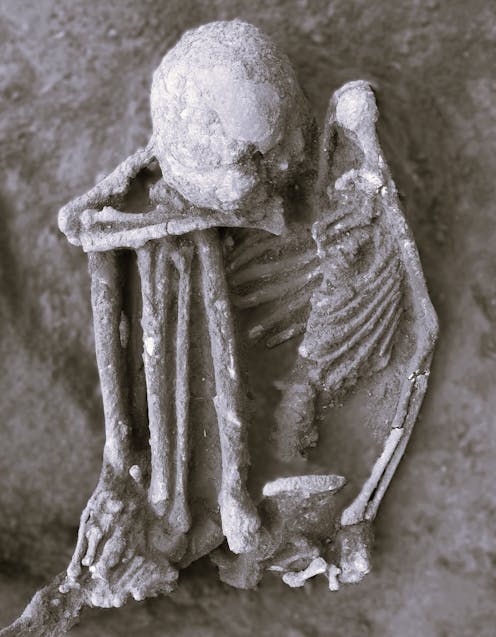
A middle-aged woman, discovered in a tightly flexed position at the Liyupo site in
southern China, preserved through smoked mummification.
Hsiao-chun Hung

Smoke-drying mummification of human remains was practised by hunter-gatherers across southern China, southeast Asia and beyond as far back as 12,000 years ago, my colleagues and I report in new research published today in the Proceedings of the National Academy of Sciences.

This is the earliest known evidence of mummification anywhere in the world, far older than better-known examples from ancient Egypt and South America.

We studied remains from sites dated to between 12,000 and 4,000 years ago, but the tradition never vanished completely. It persisted into modern times in parts of the New Guinea Highlands and Australia.

Hunter-gatherer burials in southern China and Southeast Asia

In southern China and Southeast Asia, tightly crouched or squatting burials are a hallmark of the hunter-gatherers who inhabited the region between roughly 20,000 and 4,000 years ago.

Archaeologists working across the region for a long time have classified these graves as straightforward “primary burials”. This means the body was laid to rest intact in a single ceremony.

Map of southern China and southeast Asia with 95 locations marked.
Hunter-gatherer burials in a crouched or squatting posture have been found across southern China and southeast Asia.
Hung et al. / PNAS

However, our colleague Hirofumi Matsumura, an experienced physical anthropologist and anatomist, noticed some skeletons were arranged in ways that defied anatomical sense.

Combined with this observation, we often saw some bones in these bodies were partly burnt. The signs of burning, such as charring, were visible mainly in the points of the body with less muscle mass and thinner soft tissue coverage.

We began to wonder if perhaps the deceased were treated through a more complicated process than simple burial.

A casual conversation in the field

A turning point came in September 2017, during a short break from our excavation at the Bau Du site in central Vietnam.

The late Kim Dung Nguyen highlighted the difficulties of interpreting the situation where skeletons were found, likely intentionally placed and seated against large rocks. Matsumura noted problems with their bone positions.

People digging at an archaeological site.
The team excavating an ancient hunter-gatherer cemetery in Guangxi, southern China.
Hsiao-chun Hung

I remember blurting out – half joking but genuinely curious – “Could these burials be similar to the smoked mummies of Papua New Guinea?”

Matsumura thought about this idea seriously. Thanks to generous support and cooperation from many colleagues, that moment marked the real beginning of our research into this mystery.

How we identified the ancient smoked mummies

With our new curiosity, we began looking at photographs of modern smoked-dried mummification practices in the New Guinea Highlands in books and on the internet.

In January 2019, we went to Wamena in Papua (Indonesia) to observe several modern smoked mummies kept in private households. The similarity to our ancient remains was striking. But most of the skeletons in our excavation showed no outwardly obvious signs of burning.

A dressed and mummified body in a crouching posture.
A modern smoke-dried mummy kept in Pumo Village, Papua (Indonesia).
Hsiao-chun Hung

We realised we needed a scientific test to prove our hypothesis. If a body was smoked by low-temperature fire – while still protected by skin, muscle and tissue – the bones would not be obviously blackened. But they could still retain subtle signs or microscopic traces of past firing or smoking.

Then came the COVID pandemic, which led to travel restrictions, preventing us from travelling anywhere. My colleagues and I were spread across different regions, but we sought various ways to continue the project.

Eventually, we tested bones from 54 burials across 11 sites using two independent laboratory techniques called X-ray diffraction and Fourier-transform infrared spectroscopy. These methods can detect microscopic changes in the structure of bone material caused by high temperatures.

The results confirmed the remains had been exposed to low heat. In other words, almost all of them had been smoked.

More than 10,000 years of ritual

The samples, discovered in southern China, Vietnam and Indonesia, represent the oldest known examples of mummification. They are far older than the well-known practices of the Chinchorro culture in northern Chile (about 7,000 years ago) and even ancient Egypt’s Old Kingdom (about 4,500 years ago).

Remarkably, this burial practice was common across East Asia, and likely also in Japan. It may date back more than 20,000 years in Southeast Asia.

It continued until around 4,000 years ago, when new ways of life began to take hold. Our research reveals a unique blend of technique, tradition and belief. This cultural practice has endured for thousands of years and spread across a very broad region.

A visible form bridging time and memory

Ethnographic records show this tradition survived in southern Australia well into the late 19th and early 20th centuries.

In the New Guinea Highlands, some communities have even kept the practice alive into recent times. Significantly, the hunter-gatherer groups of southern China and Southeast Asia were closely connected to Indigenous peoples of New Guinea and Australia, both in some physical attributes and in their genetic ancestry.

In both southern Australia and Papua New Guinea, ethnographic records show that preparing a single smoked mummy could take as long as three months of continuous care. Such extraordinary devotion was possible only through deep love and powerful spiritual belief.

This tradition echoes a truth as old as humanity itself: the timeless longing that families and loved ones might remain bound together forever – carried across the ages, in whatever form that togetherness may endure.

The Conversation

Hsiao-chun Hung receives funding from the Australian Research Council (DP140100384, DP190101839).

ref. 12,000-year-old smoked mummies reveal world’s earliest evidence of human mummification – https://theconversation.com/12-000-year-old-smoked-mummies-reveal-worlds-earliest-evidence-of-human-mummification-265261

Volcanoes can help us untangle the evolution of humans – here’s how

Source: The Conversation – Global Perspectives – By Saini Samim, PhD Candidate, School of Geography, Earth and Atmospheric Sciences, The University of Melbourne

NASA’s Earth Observatory

How did humans become human? Understanding when, where and in what environmental conditions our early ancestors lived is central to solving the puzzle of human evolution.

Unfortunately, pinning down a timeline of early human evolution has long been difficult – but ancient volcanic eruptions in East Africa may hold the key.

Our new study, published in Proceedings of National Academy of Sciences, refines what we know about volcanic ash layers in Turkana Basin, Kenya. This place has yielded many early human fossils.

We have provided high-precision age estimates, taking a small step closer to establishing a more refined timeframe of human evolution.

Millions of years of volcanic eruptions

The Great Rift Valley in East Africa is home to several world-renowned fossil sites. Of these, the Turkana Basin is arguably the most important region for early human origins research.

This region is also within an active tectonic plate boundary – a continental rift – that has triggered volcanic eruptions over millions of years.

As early humans and their hominin ancestors walked these Rift Valley landscapes, volcanic eruptions frequently blanketed the land in ash particles, burying their remains.

Over time, many fossil layers have become sandwiched between volcanic ash layers. For archaeologists today, these layers are invaluable as geological time stamps, sometimes across vast regions.

Excellent timekeepers

Volcanic eruptions are excellent timekeepers because they happen very quickly, geologically speaking. As hot magma erupts, it cools and solidifies into volcanic ash particles and pumice rocks.

Pumice often contains crystals (minerals called feldspars) which act as natural “stopwatches”. These crystals can be directly dated using radiometric dating.

By dating the ash layers that lie directly above and below fossil finds, we can establish the age of the fossils themselves.

Volcanic ash layer (Lower Nariokotome tuff) with an embedded pumice in the famous palaeonthropological site where the most complete Homo erectus skeleton, the Nariokotome Boy, was found in West Turkana.
Saini Samim

Even when such minerals are absent, volcanic ash layers can still help in dating archaeological sites. That’s because ash particles from different eruptions have unique chemical signatures.

This distinct geochemical “fingerprint” means we can trace a particular eruption across large distances. We can then assign an age to the ash layer even without datable crystals.

For instance, an ash layer found in Ethiopia, or even on the ocean floor, can be matched to one in Kenya. As long as their chemical compositions match, we know they came from the same eruption at the same geological point in time. This approach has been applied in the region for many decades.

Previous landmark studies have already established the geology of the Turkana Basin.

However, the region’s frequent eruptions are often separated by just a few thousands of years. This makes many ash layers essentially indistinguishable in time. Furthermore, some ash layers have very similar “fingerprints”, making it difficult to confidently tell them apart.

These challenges have made it tricky to date the Nariokotome tuffs, three volcanic ash layers in the Turkana Basin. While it’s clear from the rock record these are three separate ash layers, their age estimates and chemical signatures are very similar. We set out to narrow them down.

The Nariokotome Tuff Complex, showing several ash layers in the Nariokotome Boy paleonthropological site, West Turkana.
Hayden Dalton

What did we find?

Compared to previous methods, modern dating tools can achieve an order-of-magnitude improvement in precision.

In other words, we can now confidently distinguish volcanic ash layers that erupted within just 1,000 to 2,000 years of each other. Applying this high-precision method to the Nariokotome tuffs, we resolved them as three distinct volcanic events, each with a precise eruption date.

However, determining the ages is not enough to fully distinguish these volcanic layers. Because the ash layers landed so close together in time – and potentially from very similar volcanoes – they also have remarkably similar major element geochemical “fingerprints”. Major elements are the most abundant elements in rocks, but they can’t always tell us much about the age and source of the rock material.

That’s where trace elements prove especially useful. These are elements that occur in very small amounts in rocks but provide much more distinctive chemical signatures.

Using laser-based mass spectrometry, we analysed the trace element composition of both the ash particles and their associated pumices. This provided us with unique trace-element fingerprints for each layer – still similar, but distinct.

Retracing human history

Once we had both precise age estimates and distinct geochemical profiles, we traced these ash layers in key archaeological sites.

For instance, the Nadung’a site in West Turkana, believed to be a prehistoric butchering site, has yielded some 7,000 stone tools. Our updated age estimates now makes this site approximately 30,000 years older than previously thought.

More importantly, we showed these refined methods can be applied beyond Kenya. We traced the ash layers of equivalent ages from Kenya to the Konso Formation in Ethiopia, indicating they came from three individual eruptions, in which material was spread across large distances.

The Nariokotome tuffs are an important case study that shows the powerful combination of high-precision dating with detailed geochemical fingerprinting. As we apply these techniques to more ash layers, both within the Turkana Basin and potentially beyond Kenya, we’ll have a better understanding of key questions in human evolution.

Did new tool technologies and species emerge gradually or suddenly? Did more than one hominin species exist simultaneously? How did shifting environments, climate and frequent volcanism affect early human evolution?

Now that we have precise geological timelines for the places where these artefacts were found, we’re a step closer to answering these long-standing questions about early humankind.


The authors would like to acknowledge the contributions of David Phillips and Janet Hergt to this article.

The Conversation

Saini Samim receives funding from the Melbourne Research Schorship provided by the University of Melbourne. She has also received funding from the Australian Research Council and the Turkana Basin Institute for this project.

Hayden Dalton receives funding from The Turkana Basin Institute via a Proof of Concept Research Grant (TBI030)

ref. Volcanoes can help us untangle the evolution of humans – here’s how – https://theconversation.com/volcanoes-can-help-us-untangle-the-evolution-of-humans-heres-how-255013

Lavender marriages: What queer unions and relationships can teach us about love and safety

Source: The Conversation – Canada – By Gio Dolcecore, Assistant Professor, Social Work, Mount Royal University

Lavender marriages, traditionally entered into by LGBT+ individuals to conceal their sexual orientation, are on the rise, according to several news sources, with some even calling them a “trend.”

Historically, lavender marriages refer to unions — often between two consenting LGBT+ individuals — formed as a way of concealing same-sex attraction in a society where being openly queer could mean social ostracism, career ruin or even criminalization.

Crucially, they were not loveless. On the contrary, they were bonds of protection and safety between two people navigating the reality of bias, prejudice and discrimination of society and politics.

Lavender marriages can be confused with mixed orientation marriages, but there is a difference: in mixed-orientation marriages, partners have different sexual orientations from one another. That doesn’t mean these relationships don’t make sense — plenty of couples do well without sharing the same orientation.

But are lavender marriages actually making a comeback? The answer is complicated. While social progress has made queer lives more visible, many still fear coming out because of social, religious, cultural and political pressures.


Dating today can feel like a mix of endless swipes, red flags and shifting expectations. From decoding mixed signals to balancing independence with intimacy, relationships in your 20s and 30s come with unique challenges. Love IRL is the latest series from Quarter Life that explores it all.

These research-backed articles break down the complexities of modern love to help you build meaningful connections, no matter your relationship status.


The roots of lavender marriages

Nowhere were lavender marriages more visible than during Hollywood’s Golden Age (1930-60s), when the Motion Picture Production Code — known as the Hays Code after the president of the Motion Picture Producers and Distributors of America from 1922 to 1945 — imposed restrictions on “immorality” and demanded that stars maintain a carefully constructed image.

For example, the 1933 film Queen Christina portrayed an androgynous queen who shared a kiss with another woman. If the film were released a year later than it was, the androgynous image and kiss would have had to be removed to comply with Hays Code.

Notable examples in Hollywood include actor Rock Hudson, whose studio reportedly orchestrated a marriage to shield his private life from public scrutiny, and stage actress Katharine Cornell, whose marriage to director Guthrie McClintic was widely regarded as a partnership of convenience that allowed both to live more authentically in private.

Earlier still, silent film idol Rudolph Valentino faced speculation about his sexuality, and was rumoured to have entered into marriages that offered him protection amid tabloid attacks.

For these celebrities, lavender marriages were not only about survival in a hostile era, but also a way of retaining access to their careers, audiences and cultural influence.

Queer censorship today

It is unsurprising that lavender marriages have returned to public discussion, given that similar concerns of queer censorship are currently happening.

Inside Out 2 (2024) was rumoured to remove a transgender character to avoid international backlash, while Elio (2025) was also rumoured to erase queer subtext from the movie’s final cut.

Censorship of queer culture is on the rise as political and social movements directly attack the LGBTQ+ community. Examples include book censorship policies, exclusion of queer art and rising violence against drag performances.


Read more:
We must all speak out to stop anti-LGBTQ legislation


These realities were poignantly illustrated in the 2022 Pakistani film Joyland, which captures the grief and danger of living inauthentically when family bonds, social safety and political punishment are at stake.

Trailer for the 2022 film ‘Joyland.’

Similar stories are surfacing in real life. In 2024, People profiled a 90-year-old grandmother who came out as bisexual after her husband’s death, revealing their 63-year union had been a lavender marriage of mutual protection.

Another People story followed a woman raised in a conservative Mormon community who married a man to conform, only to come out at 35 and reconnect with her first love.

Even today, couples negotiate these dynamics in new ways — Business Insider recently highlighted a gay man and straight woman who married not to hide but to redefine love on their own terms, while rejecting the label of “lavender marriage.”

The pressure to pass as heterosexual — whether by marrying, dating or travelling with opposite-sex friends — remains a strategy of safety for many queer people around the world.

Lavender and lesbians

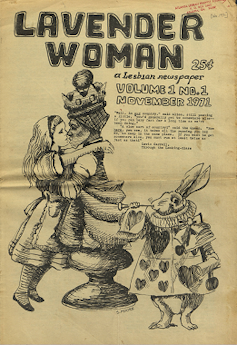
Cover image of a magazine titled 'Lavender woman' with an image of Alice from Alice in Wonderland kissing a chess piece with the head of a woman
November 1971 issue of Lavender Woman, a lesbian periodical produced in Chicago, Illinois, from 1971 to 1976. The title comes from lavender’s association with lesbianism dating back to the 1950s and 60s.
(Women’s Caucus of Chicago Gay Alliance)

The symbolism of lavender itself has particular resonance in lesbian culture. Throughout the 20th century, the colour became a coded reference to women who loved women, at once stigmatizing and unifying.

During the “Lavender Scare” of the 1950s, the U.S. government dismissed and persecuted lesbians and gay men in federal employment under the guise of “security risks.”

Yet lavender was also reclaimed as a badge of solidarity and resistance. Early lesbian feminists incorporated lavender into marches, protest sashes and art, using it as a way of asserting presence and pride in a culture that demanded invisibility.

The impact of concealment

Academic research consistently shows that concealment of sexual orientation remains widespread. A 2019 global public health study from estimated that 83 per cent of lesbian, gay and bisexual people worldwide hide their orientation from most people in their lives.

Research in Hong Kong found that concealment increases loneliness and diminishes feelings of authenticity, directly impacting well-being.

In Canada, a 2022 study of LGBTQ+ health professionals revealed how concealing one’s identity shapes daily decisions about disclosure, often producing stress and internal conflict in professional settings. Bisexual individuals frequently report concealing their orientation to avoid stigma from both heterosexual and queer communities.


Read more:
Queerphobic hate is on the rise, and LGBTQ+ communities in Canada need more support


“Passing” as straight is often a survival strategy shaped by stigma, with lasting consequences for identity, relationships and health. Lavender marriages remind us that queer lives have always been shaped by the tension between resistance and survival. Visibility itself can be an act of defiance, whether on a movie screen, in a march or in daily life.

However, visibility carries real risks: estrangement from family, discrimination or social backlash, political punishment or threats to personal safety. At the same time, concealment has often been a pragmatic choice to preserve dignity, livelihood and community.

Redefining marriage and partnership

These histories and contemporary examples reveal that marriage and partnership have never been one-size-fits-all.

For queer people, unions can be built around protection, friendship, parenting, finances or chosen kinship, just as much as romance or desire. To call them all “lavender marriages” risks oversimplifying the complex ways people craft love and survival.

Modern marriage is not bound by tradition alone; it is defined by the people who build it and by the choices they make to balance safety, authenticity and resistance in a world still learning to accept them.

This dual significance — lavender as both concealment and resistance — helps explain why the term continues to resonate today, as scholars, activists and communities revisit these marriages not simply as personal compromises, but as reflections of broader homophobia and gendered policing that continue to share queer history.

The Conversation

Gio Dolcecore does not work for, consult, own shares in or receive funding from any company or organisation that would benefit from this article, and has disclosed no relevant affiliations beyond their academic appointment.

ref. Lavender marriages: What queer unions and relationships can teach us about love and safety – https://theconversation.com/lavender-marriages-what-queer-unions-and-relationships-can-teach-us-about-love-and-safety-264179

2 shootings, 2 states, minutes apart − a trauma psychiatrist explains how exposure to shootings changes all of us

Source: The Conversation – USA (3) – By Arash Javanbakht, Professor of Psychiatry, Wayne State University

Greater numbers of people are being exposed to horrific violence than in the past, in large part through the amplification on social media. Michael Ciaglo/Getty Images News via Getty Images

On Sept. 10, 2025, the nation’s attention was riveted by the fatal shooting of the conservative activist Charlie Kirk on a college campus in Utah. At nearly the exact same time, a state away − in Colorado − an active shooting was underway on a high school campus in a sleepy mountain town, leaving two teens in critical condition and the shooter, a fellow student, dead from a self-inflicted gunshot.

While differing in context, these events share devastating commonalities that will haunt many Americans for decades and possibly generations to come. And they are only the latest of a very long string of violent acts, some politically motivated and some motivated simply by the intention to harm as many people as possible.

I am a trauma psychiatrist and researcher, and I know that the direct and indirect effects of such violence reach millions. While those in the immediate surroundings are most affected, the rest of society suffers, too.

First, the immediate survivors

No two people experience exposure to public violence in the same way. The extent of the trauma, stress and fear can vary, depending on variables ranging from someone’s genetic makeup to where they were during the incident, and what they saw and heard. A hallmark of exposure to such life-threatening experiences is post-traumatic stress disorder.

PTSD is a debilitating condition that develops after exposure to serious traumatic experiences such as war, natural disasters, rape, assault, robbery and gun violence. Nearly 8% of the U.S. population deals with PTSD. Symptoms include high anxiety, avoidance of reminders of the trauma, emotional numbness, hypervigilance, frequent intrusive memories of trauma, nightmares and flashbacks. The brain switches to fight-or-flight and survival mode, and the person is always waiting for something terrible to happen. Survivors of a shooting may avoid the neighborhood where the shooting occurred or the contexts related to the shooting.

When the trauma is caused by people, as in a public shooting, the impact can be profound. The rate of PTSD in people directly exposed to mass shootings may be as high as 36% among survivors. Depression, another debilitating psychiatric condition, occurs in as many as 80% of people with PTSD. Because of the human nature of such events, avoidance often extends to all public situations. In my work as a psychiatrist, I often see people with PTSD socially debilitated to the point they cannot leave home even for grocery shopping.

People may also experience survivor’s guilt, the feeling that they failed others who died or did not do enough to help them, or just guilt at having survived.

PTSD can improve by itself, but many people need treatment. The more chronic PTSD is, the more negative the impact on the brain. Hence, it is important for those who are exposed to receive proper screening, prevention and care when needed.

Psychotherapy and medications offer effective treatments. And new advances in artificial intelligence and mixed reality technologies are allowing me and other clinicians to help people feel safe again in public situations through simulations in the clinic.

Children and adolescents, who are developing their worldview and learning how safe it is to live in this society, may suffer even more. Exposure to horrific experiences such as school shootings or related news can fundamentally affect the way children and youth perceive the world as a safe or unsafe place.

They can carry such a worldview for the rest of their lives and transfer it to their children. Research is also abundant on the long-term detrimental impact of childhood trauma on a person’s mental and physical health through their adult life.

High school age children embrace in the foreground, with other bystanders in the background.
For children and adolescents, exposure to violence can have long-term effects on their sense of safety and their worldview.
RJ Sangosti/MediaNews Group & The Denver Post via Getty Images

The effect on those close by or arriving later

PTSD can also develop via indirect exposure to others’ severe trauma. People in the vicinity of a shooting may see exposed, disfigured or dead bodies. They may also see injured people in agony, hear extremely loud noises and experience chaos and terror after the shooting.

A group whose chronic exposure to horrific trauma is often overlooked is the first responders. While survivors try to run away from an active shooter, the police, firefighters and paramedics rush into the danger zone. In addition, dispatchers hear firsthand the highly disturbing details of the event as it is underway but may not receive the support needed to process the events.

Many first responders might have their own children in that school or nearby. They frequently face uncertainty; threats to themselves, their colleagues and others; and terribly upsetting post-shooting scenes. This type of exposure happens to them too frequently. As a result, PTSD has been reported in up to 20% of first responders to mass violence.

Widespread panic and pain

People who were not directly exposed to the disaster but who were exposed to the news also experience distress, anxiety or symptoms of PTSD. Every time there is a mass shooting in a new location or setting, such as a synagogue, a concert or a day care center, people may begin to believe that this type of place is no longer safe. People worry not only about themselves but also about the safety of their children and other loved ones.

Repeated media exposure to the circumstances surrounding a tragic event, including images of the aftermath of a shooting, can be highly stressful to survivors, those who lost loved ones and first responders. In my clinic, I hear from affected people that repeatedly seeing the event on the news, and others asking them about their experiences, can bring painful memories to the surface. Some first responders I’ve worked with try to hide their occupation from others to prevent being asked about such events.

However, as the graphic assassination of Kirk shows – videos of it ran unedited on many social media platforms for hours before they were taken down – exposure to violent images now reach a far wider population.

Brightly colored flowers, flags and balloons lying on the grass in front of a building.
Thousands of college-age students witnessed the public assassination of Charlie Kirk in person, while millions of other people saw it on social media.
Michael Ciaglo/Getty Images News via Getty Images

Is there any good to come of such tragedy?

In my book “Afraid: Understanding the Purpose of Fear and Harnessing the Power of Anxiety,” I explain that the combination of toxic politics, a media economy built on fear and outrage, and social media algorithms have brought Americans to a place where half of the population believes the other half is either stupid or evil.

Demonizing or attempting to eliminate those who think differently – literally or symbolically – has become a dangerous norm, which is all too evident in the wake of the Kirk shooting. This violence plays out not only in political rhetoric on the debate stage but also on the streets.

I believe events like these should be a wake-up call before it is too late, a stark agreement that as Americans we still share far more than we differ.

Americans can channel the collective agony and frustration to encourage meaningful change, cooling down the division, making gun laws safer, opening genuinely constructive discussions, informing the public about the risks and calling on lawmakers to take real action. In times of hardship, humans often can raise the sense of community, support one another and advocate for their rights, including the right to be safe at schools, concerts, churches and movie theaters.

Negative emotions carry energy. If left unchecked, they will consume us. But sadness, anxiety, anger and frustration can be channeled into actions such as becoming involved in activism and volunteering to help the survivors and society at large.

Finally, exposure to media coverage for several hours daily following a collective trauma can lead to high stress. Check the news a couple of times a day to be informed, but don’t continue seeking out coverage and exposure to graphic images and news. The news cycle tends to report the same stories without much additional information.

This is an updated version of an article originally published on March 26, 2021 and republished Jan. 23, 2023.

The Conversation

Arash Javanbakht does not work for, consult, own shares in or receive funding from any company or organization that would benefit from this article, and has disclosed no relevant affiliations beyond their academic appointment.

ref. 2 shootings, 2 states, minutes apart − a trauma psychiatrist explains how exposure to shootings changes all of us – https://theconversation.com/2-shootings-2-states-minutes-apart-a-trauma-psychiatrist-explains-how-exposure-to-shootings-changes-all-of-us-265160

Racism isn’t innate – here are five psychological stages that may lead to it

Source: The Conversation – UK – By Steve Taylor, Senior Lecturer in Psychology, Leeds Beckett University

Sadly, there are signs that racism is increasing across the world.

Research from Europe and Australia in recent years has found a rise in the number of people experiencing racism. Reports from the US and UK have indicated that most ethnic minority participants felt racism was getting worse. And a global study has found rising incidents of discrimination.

Animosity to those who appear different to us seems easy to arouse, especially in times of hardship and upheaval. Throughout history, human groups have scapegoated minorities, such as Jews, the Roma and immigrants.

Some scientists have suggested that racism is an innate human trait that evolved in the distant past. According to the evolutionary psychologist Pascal Boyer, racism is “a consequence of highly efficient economic strategies” that enables us to “keep members of other groups in a lower-status position, with distinctly worse benefits”.

In other words, why would our ancestors decrease their own chances of survival by sharing resources with other groups?

Another theory from evolutionary psychology is that racism may have evolved as an “energy-saving” strategy. To interact or mate with ethnically different groups would have involved a lot of time and energy, through coordinating with different social norms. Therefore, we developed a tendency to view different groups as different species to avoid, saving ourselves “costly interaction with outgroup members”.

However, I argue the above theories are dubious. First of all, evidence suggests that, due to tiny populations, there was an abundance of resources for early human beings, and so no need to actively deny others from accessing food and water. Second, the above theories don’t fit with what anthropology tells us about the behaviour of early human groups.

There is a great deal of anthropological and archaeological evidence showing that prehistoric groups didn’t avoid each other. They often intermarried, frequently mixed and changed membership. The same pattern is shown by an absence of territorial behaviour and a strikingly low level of warfare.

Alternative explanations

Maybe other areas of psychology can provide a better explanation. Research shows a link between prejudice and poor psychological functioning, including poor relationships with insecurity and aggression. This can often be traced back to a disturbed and insecure childhood. Other research has shown a link between racism and anxiety, demonstrating that people become more prejudiced during challenging times.

More generally, studies demontrate that when people are made to feel insecure or anxious, they are more likely to identify with their national or ethnic groups. This enhances their self-esteem and their sense of identity, as a defence against insecurity and anxiety.

There are clearly social and economic factors that encourage racism, such as hierarchy and inequality. But the above research suggests that racism is largely a psychological defence mechanism against anxiety and insecurity.

Five stages to racism

From this psychological perspective, it’s possible to identify different stages in the development of racism. According to the theory I propose in my book DisConnected, the process begins when a person lacks a sense of security and identity, which generates a desire to affiliate themselves with a group. This affiliation strengthens their identity and provides a sense of belonging.

What’s wrong with this? Why shouldn’t we take pride in our national or religious identity, and feel a sense of brotherhood or sisterhood with others who share our identity?

Milwaukee, WI., USA - July 15, 2024: Demonstrators with the Coalition to March on the RNC protest the nomination of Donald Trump for president on the first day of the Republican National Convention
Tensions have been rising in the US for many years.
Vic Hinterlang/Shuttestock

Because group identity often leads to a second, more dangerous stage. In order to further strengthen their sense of identity, members of a group may develop antagonism towards other groups. Such hostility may make the group feel more defined and cohesive, as if they can see themselves more clearly in opposition to others.

A third stage of the process is when members of a group withdraw empathy from members of other groups, limiting their concern and compassion to their peers. They may act benevolently towards members of their own group but be indifferent or callous to anyone outside it. As I show in DisConnected, the withdrawal of empathy turns other human beings into objects, and enables cruelty and violence.

Fourth is the homogenisation of individuals belonging to other groups. People are no longer perceived in terms of their individual personalities or behaviour, but in terms of prejudices about the group as a whole. Any member of the group is a legitimate target and can be punished for the alleged transgressions of other individuals from the group. In contemporary terms, any asylum seeker can be punished for the alleged crime of an individual asylum seeker.

Finally, people may project their own psychological flaws and personal failings onto another group, as a strategy of avoiding responsibility. Other groups become scapegoats, and consequently are liable to attacked or even murdered. People with strong narcissistic and paranoid personality traits are especially prone to such projection, since they struggle to accept their personal faults, instead searching for others to take the blame.

In other words, racism is a symptom of psychological ill-health, a sign of anxiety and of a lack of identity and inner security. Psychologically healthy people with a stable sense of identity and security are very rarely (if ever) racist. They ultimately have no need to strengthen their sense of self through group identity.

In my view, racism is an aberration, not an innate human trait. It’s also worth remembering that the very concept of race is baseless. There is no genetic or biological basis for dividing the human race into distinct “races”.

There are just groups of human beings — all of whom came from Africa originally — who developed slightly different physical characteristics over time as they travelled to, and adapted to, different climates and environments.

The Conversation

Steve Taylor does not work for, consult, own shares in or receive funding from any company or organisation that would benefit from this article, and has disclosed no relevant affiliations beyond their academic appointment.

ref. Racism isn’t innate – here are five psychological stages that may lead to it – https://theconversation.com/racism-isnt-innate-here-are-five-psychological-stages-that-may-lead-to-it-264391

Climate change is fast shrinking the world’s largest inland sea

Source: The Conversation – UK – By Simon Goodman, Lecturer in Evolutionary Biology, University of Leeds

The Caspian Sea is roughly the size of Germany or Japan, but is shrinking fast. Nasa

Once a haven for flamingos, sturgeon and thousands of seals, fast-receding waters are turning the northern coast of the Caspian Sea into barren stretches of dry sand. In some places, the sea has retreated more than 50km. Wetlands are becoming deserts, fishing ports are being left high and dry, and oil companies are dredging ever-longer channels to reach their offshore installations.

Climate change is driving this dramatic decline in the world’s largest landlocked sea. Found at the boundary between Europe and central Asia, the Caspian Sea is surrounded by Azerbaijan, Iran, Kazakhstan, Russia, and Turkmenistan, and sustains around 15 million people.

The Caspian is a hub for fishing, shipping, and oil and gas production, and is of rising geopolitical importance as it sits where the interests of global superpowers meet. As the sea shallows, governments face the critical challenge of maintaining industries and livelihoods, while also protecting the unique ecosystems that sustains them.

I’ve been visiting the Caspian for more than 20 years, working with local researchers to study the unique and endangered Caspian seal, and support its conservation. Back in the 2000s, the far north-eastern corner of the sea was a mosaic of reed beds, mudflats and shallow channels that teemed with life, providing habitats for spawning fish, migrating birds, and tens of thousands of seals that gathered there to moult in the spring.

Now these remote wild places we visited to catch seals for satellite tracking studies are dry land, transitioning to desert as the sea retreats, and the same story is playing out for other wetlands around the sea. This experience parallels that of coastal communities, who year by year are seeing the water recede away from their towns, fishing wharves and ports, leaving infrastructure stranded on newly-dry land, and the people fearful for the future.

Seals and satellite maps
Top: Caspian seals among reed beds in Komsomol Bay (shaded orange in satellite images), April 2011. Bottom: The extent of coastal recession in the north east Caspian Sea 2001-2024, satellite imagery from Nasa Worldview.
(Seal photo: © Simon Goodman, University of Leeds; satellite imagery from NASA Worldview

A sea in retreat

The level of Caspian Sea has always fluctuated, but the scale of recent change is unprecedented. Since the turn of the current century, water levels have declined by around 6cm per year, with drops of up to 30cm per year since 2020. In July 2025, Russian scientists announced the sea had dropped below the previous minimum level recorded during the era of instrumental measurements.

During the 20th century, variations were due to a combination of natural factors and humans diverting water to use for agriculture and industry, but now global warming is the main driver of decline. It might seem inconceivable that a body of water as large as the Caspian could be at risk, but in the hotter climate the rate of water entering the sea from rivers and rainfall is reducing, and is now being outstripped by increased evaporation from the sea surface.

Even if global warming is limited to the Paris agreement target of 2°C, water levels are predicted to fall up to ten metres compared to the 2010 coastline. With the current global trajectory of greenhouse gas emissions, the decline could reach 18 metres, which is about the height of a six-storey building.

Because the northern Caspian is shallow – much of it only around five metres deep – small decreases in depth mean huge losses of area. In recent research, colleagues and I showed that even an optimistic ten-metre decline would uncover 112,000 square kilometres of seabed – an area larger than Iceland.

What’s at stake

The ecological consequences would be dramatic. Four out of ten ecosystem types unique to the Caspian Sea would disappear completely. The endangered Caspian seal could lose up to 81% of its current breeding habitat, and Caspian sturgeon would lose access to critical spawning habitat.

Cute babe seal + maps
Top: Caspian seal pup sheltering by ice ridge; Bottom: Potential reduction in Caspian seal breeding habitat under different water level decline scenarios. Under a five-metre decline, the loss could as much as 81%.
Seal: © Central-Asian Institute of Environmental Research; Maps: Court et al. 2025

As in the Aral Sea disaster, where another massive lake in central Asia almost entirely disappeared, toxic dust from exposed seabed would be released, with serious health risks.

Millions of people are at risk of displacement as the sea recedes, or face highly degraded living conditions. The sea’s only link to the global shipping network is through the delta of the Volga River (which flows into the Caspian) and then via an upstream canal to the Don River for connections to the Black Sea, Mediterranean and other river systems. But the Volga is already struggling with reduced water depth.

Ports like Aktau in Kazakhstan and Baku in Azerbaijan need dredging just to keep operating. Similarly oil and gas companies are having to dredge long channels to their offshore facilities in the north Caspian.

Already the costs of protecting human interests are in the billions of dollars and are only set to grow further. The Caspian is central to the “middle corridor”, a trade route linking China to Europe. As water levels fall, shipping loads must be reduced, costs rise, and settlements and infrastructure risk being stranded tens or even hundreds of kilometres from the sea.

A race against time

Countries around the Caspian are having to adapt, relocating ports, and dredging new shipping lanes. But these measures risk conflicting with conservation goals.

For instance, there are plans to dredge a major new shipping channel across the “Ural saddle” of the north Caspian. But this is an important area for seal breeding, migration and feeding, and will be a vital area for the adaptation of ecosystems as the sea recedes.

Since the rate of change is so rapid, traditional fixed boundary protected areas risk becoming obsolete. What’s needed is an integrated, forward-looking approach to planning across the whole region. If the areas ecosystems will need to adapt to climate change are mapped and protected now, planners and policy makers will be better able to ensure future infrastructure projects avoid or minimise further damage.

To do this Caspian countries will have to invest in biodiversity monitoring and planning expertise, all while coordinating action across five different countries with different priorities.

Caspian countries are already recognising the existential risks, and have begun to form intergovernmental agreements to address the crisis. But the rate of decline may outstrip the pace of political cooperation.

The ecological, climatic and geopolitical importance of the Caspian Sea means its fate ultimately matters far beyond its receding shores. It provides a key case study in how climate change is transforming major inland water bodies across the world, from Lake Titicaca to Lake Chad. The question is whether governments can act fast enough to protect both the people and nature of this rapidly changing sea.

The Conversation

Simon Goodman has provided advice to the United Nations Environment Programme (UNEP) on Caspian seal conservation, and in the past has conducted research and advised oil and gas companies in the Caspian on how to minimise their impact on seals. His recent work was not funded by or linked to industry. He is co-chair of the International Union for Conservation of Nature (IUCN) pinniped specialist group.

ref. Climate change is fast shrinking the world’s largest inland sea – https://theconversation.com/climate-change-is-fast-shrinking-the-worlds-largest-inland-sea-265239

Big-spending Premier League needs to spread more of its wealth to poorer clubs or everyone loses

Source: The Conversation – UK – By Robert Simmons, Professor of Economics, Lancaster University

The 2025 summer football transfer window was a record for the English Premier League with teams spending £3.9 billion on transfer fees for new players. That’s more than the top divisions of France, Germany, Italy and Spain combined.

The most expensive transfer was Alexander Isak’s drawn out switch from Newcastle United to Liverpool, who forked out £125 million for the forward and will also pay him a salary of around £13 million a year (plus bonuses).

So there is plenty of money being spent at the top end of English football. But it’s a very different story in the tiers below, where the likes of Morecambe FC and Sheffield Wednesday have spent the summer in crisis over financial issues.

In fact, all three divisions below the Premier League (Championship, League One and League Two) make a financial loss every year. The economic chasm between the teams at the top and those at the bottom is only getting wider and there is an ever-increasing chance that some clubs will soon become insolvent.

And though the economic strife affecting teams in the lower leagues might not seem like such a big problem for the Premier League giants and their fans – any fans of any team, in fact – it should be.

The four divisions (92 clubs) of English league football are linked every season by promotion and relegation. Such is the fluidity of this system that Brighton and Hove Albion and Bournemouth are now enjoying life in the Premier League having gradually clawed their way up from the fourth tier.

In the other direction, Luton Town has been relegated twice in the past two years from the Premier League to League One. The jeopardy attached to the hope and dread of going up or going down is part of what makes English football so captivating – and attractive to broadcasters and sponsors.

If clubs are weak financially, and unable to afford to develop or bring in fresh talent, the whole system risks becoming static. In recent years, even promoted sides struggle (all the teams promoted to the Premier League in the last two seasons have been immediately relegated again), often resulting in unappealing fixtures where weaker teams are thrashed by stronger ones. This kind of competitive imbalance could undermine the value of future broadcast rights fees.

Those fees are important part of the football economy, although again, it is the teams at the top of the tree which benefit the most.

Championship, League One and League Two clubs received negligible fee income from broadcast rights until recently, after a new broadcast deal with Sky TV started in 2024 which is worth £935 million over five years. (The current domestic Premier League deal is worth £6.7 billion over four years.)

Sharing is caring

So lower division clubs now have games accessible to viewers and a new income stream that should help offset financial losses. But the real financial win comes from getting as far up the football pyramid as possible

For the lower leagues then, promotion is always the biggest goal. The new celebrity-backed owners of Birmingham City and Wrexham have the explicit ambition of reaching the Premier League. The end of season playoff final between two Championship teams fighting for promotion to the Premier Leagues is estimated to be worth around £200 million, given the increased broadcast incomes that would follow.

For its part, the Premier League has often restated a commitment to keeping the 92-team hierarchical structure of English football intact, and currently supports teams in the lower leagues through a mechanism of “solidarity payments”.

As of the 2024-25 season, these payments were £5.5 million per club for Championship teams (apart from those relegated from EPL which receive much larger “parachute payments” instead), £1 million per club for League One and £0.75 million per club for League Two.

Nevertheless, many EFL clubs still rely on loans and capital injections, often by their owners, to get by. And the gap in economic power remains vast.

In 2023-24, Liverpool’s total revenue was £614 million while Morecambe’s was £4.57 million.

If the EPL is serious about sustaining the 92-team hierarchical structure in England then there is scope for dramatically increasing these solidarity payments – which could be made conditional on sound financial practices by receiving clubs. Like a wealth tax for football, more generous payments would essentially help to reduce economic inequality across English football as a whole, and make for a financially much healthier sport.

The Conversation

Robert Simmons does not work for, consult, own shares in or receive funding from any company or organisation that would benefit from this article, and has disclosed no relevant affiliations beyond their academic appointment.

ref. Big-spending Premier League needs to spread more of its wealth to poorer clubs or everyone loses – https://theconversation.com/big-spending-premier-league-needs-to-spread-more-of-its-wealth-to-poorer-clubs-or-everyone-loses-263750