Middle Eastern countries are among the most exposed to climate change – so why is media coverage so low there?

Source: The Conversation – UK – By Marianna Poberezhskaya, Associate Professor in Politics and International Relations, Nottingham Trent University

A worker looking out to sea as a sandstorm hits Kuwait. Sebastian Castelier / Shutterstock

The Middle East is experiencing a period of intense political and economic turbulence, with several countries in the region embroiled in conflict. These conflicts are taking place against the backdrop of an escalating climate crisis.

In 2023, global thinktank the Carnegie Endowment for International Peace concluded that Middle Eastern countries “are among the world’s most exposed states to the accelerating impacts of human-caused climate change – including soaring heatwaves, declining precipitation, extended droughts, more intense sandstorms and floods, and rising sea levels”.

The capacity of a society to receive, process and act upon climate-related information is at the heart of an effective climate change response. Media plays an important role: it is central to advancing public understanding of climate change and its connection to individual, communal and national security.

Yet over the past two decades or so, media coverage of climate change in the Middle East has been among the lowest in the world. According to the University of Colorado Boulder’s Media and Climate Change Observatory, media organisations in the Middle East each produced an average of around one article about climate change in August 2025 – compared with 66 articles for North American media in the same month.


Wars and climate change are inextricably linked. Climate change can increase the likelihood of violent conflict by intensifying resource scarcity and displacement, while conflict itself accelerates environmental damage. This article is part of a series, War on climate, which explores the relationship between climate issues and global conflicts.


The lack of climate coverage in the Middle East is because media outlets there face a number of structural problems. How does one talk about climate change when armed conflicts are spiralling out of control, or when public discourse is monopolised by what are perceived to be more pressing issues?

Jordan presents a useful example to help us understand these challenges and how to overcome them.

Media in Jordan

Jordan has long played a stabilising role in the Middle East. It has accepted large numbers of refugees from neighbouring conflicts and has acted as a mediator and peace broker between Middle Eastern rivals. However, climate change is threatening Jordan’s stability.

Raed Abu Soud, Jordan’s minister of water and irrigation, said in May 2025: “Jordan is grappling with one of the most severe water crises in the world, with per-capita water availability dropping to just 60 cubic metres per year.”

A host of other factors are worsening the situation. Economic underdevelopment in Jordan is leading to persistent unemployment and public unrest, while regional conflicts are undermining social cohesion.


Read more:
Jordan joins regional push to sideline Islamist opposition


How Jordan responds to the risks presented by climate change, and preserves its stability, is extremely important for the Middle East and beyond. Public understanding of this challenge is going to be pivotal to an effective response. And here enters the role of media.

Our research on climate change in Jordan has involved analysing more than 2,500 news articles in the country’s major print media and carrying out extensive interviews with local people. We have found that, while climate change is becoming a more important topic in the country, there are still many barriers preventing a coherent climate change discussion there.

It is common in Jordan, as in many other countries affected by conflict, for conversations related to climate change to be pushed to the background when other crises emerge. Since 2023, when the war in Gaza began, Jordanian media outlets have understandably been drawn to covering the humanitarian crisis there at the expense of climate change.

This has been exacerbated by the fact there are very few journalists in Jordan who work consistently on climate-related issues and can offer accurate and timely coverage. The shortage of climate journalists is a common problem across the Middle East.

When climate change is covered by Jordanian media, it is often discussed as a secondary consideration relative to geopolitical threats – not as a challenge in its own right. Due to the country’s policy of hosting refugees, Jordanian media outlets have often portrayed their country as a “second victim” of the civil war in Syria and the intractable Israel-Palestine conflict. Refugees are depicted as another strain on scarce resources.

People and cars on a road running through a refugee camp in Jordan.
The Zaatari refugee camp near the border with Syria in northern Jordan.
Richard Juilliart / Shutterstock

Eroding trust

Climate change discourse in Jordan tends to be heavily influenced by international partners including foreign governments, charities and funding bodies.

There are numerous externally funded educational and vocational courses focused on climate change available in Jordan for various audiences, including media professionals. While this facilitates the advancement of climate change discussions, it can distance climate coverage from the local context and knowledge. This is particularly true if external partners merely “teach” Jordanians what they believe is necessary, without fully understanding the specific challenges Jordan faces.

It can also erode trust between Jordanians and these foreign partners. In some of the cases we studied, journalists in Jordan saw climate change as part of a western-imposed agenda aimed at controlling developing countries.

Jordan is highly important for the Middle East, Europe and beyond. Without effective climate adaptation, it risks losing its role as a refugee haven and regional stabiliser.

Media can play a vital role in advancing climate change discourse in the Middle East, both by holding governments to account and raising awareness of climate issues. Some studies suggest that public concern correlates with the volume of media coverage, and attention can fade when other issues dominate the media space.

Sustained, inclusive coverage is essential to ensure long-term engagement and informed public participation in climate action, even during times of political and economic turbulence.

The Conversation

Marianna Poberezhskaya received funding for the associated research project from the Climate Social Science Network.

Imad El-Anis receives funding from the Council for British Research in the Levant and the Climate Social Science Network.

Marwa Mustafa received funding from Climate Social Science Network.

ref. Middle Eastern countries are among the most exposed to climate change – so why is media coverage so low there? – https://theconversation.com/middle-eastern-countries-are-among-the-most-exposed-to-climate-change-so-why-is-media-coverage-so-low-there-262757

The world on the brink: Why governments must invest in peace, not just arms

Source: The Conversation – Canada – By Jenna Sapiano, Research Fellow, Peace Studies, L’Université d’Ottawa/University of Ottawa

Global security indicators suggest a significant deterioration in peace and stability. By most accounts, the world is now more violent and more dangerous than at any point in recent history.

In 2024, the number of state-based conflicts worldwide reached its highest level since 1946. Military expenditures have risen for 10 consecutive years, surpassing $2.7 trillion annually.

A record number of children have been victims of armed conflict, and gains in women’s rights hang in the balance around the world amid record levels of conflict.

The world is confronting converging crises. In September 2024, the United Nations convened the Summit for the Future, an initiative by the UN secretary-general aimed at addressing the collapse of the post-Cold War multilateral system, as well as the increasing number of conflicts and humanitarian emergencies. All of this is occurring in the climate change era.

These crises are interlinked, as violence becomes more likely as a consequence of rising temperatures and drought conditions. Militaries are also responsible for high levels of greenhouse gas emissions and environmental destruction from war amounting, in some cases, to the crime of ecocide.

Increased military spending

The overwhelming response to rising global violence and insecurity has been to boost military funding.

In Europe, this is partly driven by a justified fear of Russian aggression following its invasion of Ukraine in 2022. The risk of Russia dragging NATO into a conflict remains a constant concern, which was evident when Russia recently sent drones over Polish and Romanian airspace.

At the 2025 NATO summit, under pressure from the Americans, members pledged to allocate five per cent of their GDP annually to core defence needs and defence and security-related expenses by 2035. Most European countries had already increased their military budgets in 2024; so has Russia.

China’s military spending has consistently increased over the past 30 years. The United States, the world’s largest military spender, also boosted spending in 2024 as it continues to send vast amounts of military aid to Israel amid allegations it’s committing genocide against the Palestinians.


Read more:
Is Israel committing genocide in Gaza? International court will take years to decide, but states have a duty to act now


The cost of neglect

Meanwhile, organizations invested in peacemaking and peacebuilding continue to face funding shortages. The sector has been described as “being stripped and downsized.”

This was on display when Donald Trump’s administration defunded and shut down the United States Institute of Peace, a congressionally established institution, within months of taking office.

Nevertheless, peace organizations have struggled with funding cuts for some time, experiencing reduced support for core costs and a shift towards more project-based funding, which has increased competition and pressure from donors.


Read more:
Kenya’s peacebuilding efforts hold valuable lessons for the rest of the world, but gaps remain


The consequences of underfunding peace are not abstract.

American funding cuts and a global backlash against women’s rights have pushed gender equality off the agenda. Women-led peace initiatives, in particular, face a lack of funding, even as this year marking the 25th anniversary of the United Nations’ Women, Peace, and Security agenda, which highlights the important role of women in the prevention and resolution of conflicts.

Nonetheless, violence against women and girls remains severe in places like Afghanistan, where the Taliban has created a system of gender apartheid, and Palestine, where the Reem Alsalem, UN Special Rapporteur on Violence Against Women and Girls, has called Israel’s deliberate killings of Palestinian women and girls a femi-genocide.

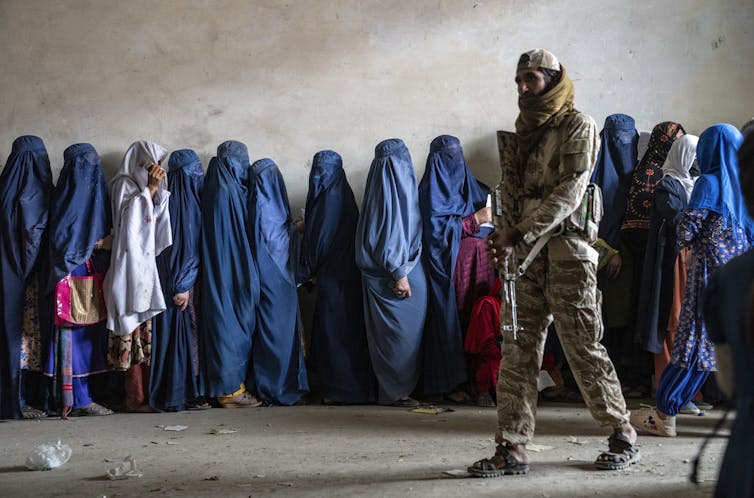
A heavily armed soldier stands guard over a row of women in blue niqabs
A Taliban fighter stands guard as women wait to receive food rations distributed by a humanitarian aid group in Kabul, Afghanistan, in May 2023.
(AP Photo/Ebrahim Noroozi, File)

A global crisis of violence

In this more globally fragmented world, international peace architecture is crumbling amid growing tensions between powerful states, and humanitarian needs continue to rise largely due to violent conflicts. So why do governments persist in spending more on their militaries and arms, while investing very little in peacebuilding and peacemaking?

This trend is only making the world more dangerous for everyone. As Chris Coulter, executive director of the Berlin-based Berghof Foundation, a non-governmental and non-profit organization supporting people in conflict,
reminds us: “A truly secure world needs dialogue and peacebuilding, not just defence budgets.”

Many others in the peace community have made similar appeals.

The world is still learning how to build sustainable peace. Many of the peace agreements signed over the past few decades have fallen apart, and parties have resumed fighting. Even in places where agreements have held, structural and everyday violence remains widespread, especially for women.

Deal-making rather than solutions

We are also witnessing a concerning shift from peacemaking to deal-making, along with the abandonment of liberal peacemaking norms, such as inclusivity and impartiality.

Further evidence of the failure of peacemaking is the move towards short “tactical pauses” in fighting rather than the negotiation of more sustainable solutions to conflicts.

Unless states rebalance their investments towards peacebuilding, the current trajectory points to escalating insecurity, further undermining international norms, human rights and security. Disproportionately relying on military spending for security purposes fails to prevent conflict and has a detrimental impact on gender equality, human rights and peacemaking.

States must resist the urge to continually increase their military budgets to the excessive levels they are now approaching; instead, they must also invest in peace research, mediation efforts and peacebuilding organizations.

The Conversation

Jenna Sapiano does not work for, consult, own shares in or receive funding from any company or organisation that would benefit from this article, and has disclosed no relevant affiliations beyond their academic appointment.

ref. The world on the brink: Why governments must invest in peace, not just arms – https://theconversation.com/the-world-on-the-brink-why-governments-must-invest-in-peace-not-just-arms-264543

Canadian cities can prepare for climate change by building with nature

Source: The Conversation – Canada – By Adam Skoyles, PhD Candidate, School of Planning, University of Waterloo

A tree-lined street in downtown Vancouver providing shade to pedestrians. (Adam Skoyles), CC BY

The housing affordability crisis is top of mind for many around the world, including Canadians. Between 2019 and 2024, house prices in Toronto and Montréal had an average annual increase of 6.7 per cent and 10.2 per cent, respectively.

Prices throughout the country are expected to continue increasing over the next decade and as a result, the pressure is intense to rapidly increase residential development.

Yet, municipal governments must balance this pressure with other tasks, like preparing for the effects of climate change. Some of the most pressing challenges for cities include meeting their housing and climate change goals without massive changes in land use to maintain green spaces and the benefits they provide to people.

Natural spaces like parks and woodlands provides many diverse benefits to city residents, from helping to cool off surrounding neighbourhoods to providing recreational areas.

The advantage these spaces have over grey infrastructure is that they can simultaneously help combat multiple challenges faced by cities, including poor air quality, heatwaves and flooding. When nature is intentionally used to combat these types of challenges, it is referred to as nature-based solutions.

Nonetheless, nature-based solutions are still rarely implemented in developments. Therefore, it’s important to identify and use key opportunities that can help communities balance their competing goals by increasing the use of nature-based solutions.

By highlighting these opportunities, we can inform municipal governments, developers and residents about how communities can be built to successfully combat climate change and other challenges.

In our recent study, we interviewed planners and developers throughout Ontario to identify these opportunities.

Nature in development

A high-rise building with trees on the roof
A green roof at the Woodward’s 43 building in downtown Vancouver. The trees provide habitat for birds, store carbon, absorb rainwater and cool surrounding areas.
(Adam Skoyles), CC BY

Municipal planners and private land developers across Ontario are obliged by provincial policy to consider nature in their decisions about the planning and development of neighbourhoods.

However, this largely happens because they are required by law to protect municipal natural heritage systems (large woodlots or wetlands, for example), and not because they understand or support the benefits from nature, such as flood prevention.

Natural features that fall outside the natural heritage system, such as smaller woodlots or individual trees, are not protected by provincial policy. Instead, they can be protected by municipal policy or bylaws. However, these policies and bylaws vary, and some municipalities do a better job than others in protecting nature for their residents.

Developers often see protected nature as a barrier to development, but some of them also understand that it provides benefits to residents. Some try to make use of nature in innovative ways, like building natural pathways or naturalized creeks through a subdivision.

Unfortunately, municipalities sometimes push back against these innovations because of concerns over maintenance costs and worries about possible interference with infrastructure.


Read more:
Bringing forests to the city: 10 ways planting trees improves health in urban centres


Nature and climate change

Overall, the planners and developers we interviewed recognized that nature can help communities fight the effects of climate change.

They stated that planning policies and bylaws are also starting to change in ways that can address these concerns. For example, many municipalities have established tree canopy targets or introduced more restrictive stormwater management requirements.

But climate change is rarely stated as the reason for a change to policy and bylaws. For example, a city might recognize tree cover is important for the city environment and introduce a tree protection bylaw, but that does not mean the bylaw addresses climate change.

Similarly, developers might plant trees to beautify a neighbourhood and make it more desirable for home buyers, but they might not do this to reduce climate change impacts. Addressing climate change only implicitly or as a side effect makes it much harder to co-ordinate different actions and can limit their overall effectiveness.

A main reason why the climate change benefits of nature are considered only implicitly is that planners and developers are uncertain about how reliable the information is for quantifying these benefits.

Another problem is that municipalities differ in how they address these issues, which creates highly variable regulatory conditions. Having province- or nation-wide standards would help fix this issue.

Though they are not yet widely implemented across Canada, some municipalities use green development standards as a key mechanism for introducing benefits of nature in developments. These standards work, for example, by mandating a minimum percentage of green landscaping on a development site. Unfortunately, Ontario’s recently passed Bill-17 has created uncertainty around these standards.

Ways to support nature-based solutions

There are key opportunities to support building more sustainable and climate-ready communities through increased use of nature-based solutions in developments. These opportunities largely come through policy, tools and people:

  1. Provincial and municipal policy changes that consider the climate change benefits of nature-based solutions could help increase its use in development. This could be done by strengthening and expanding green development standards, like those currently implemented in some cities.

  2. Developing and using tools that can rigorously quantify the climate change benefits of nature-based solutions could also have substantial impact. These tools could clarify the benefits of nature-based solutions and provide a solid argument for their increased use.

  3. Collaboration between the public and private sectors is crucial to encourage increased use of nature-based solutions. Whether it is working together to craft realistic policy goals or to incorporate new tools, both sectors are key to ensuring changes are effective and efficient.

The Conversation

Adam Skoyles has received funding from Environment and Climate Change Canada.

Michael Drescher receives or has received funding from the Social Sciences and Humanities Research Council of Canada, Environment and Climate Change Canada, the Ontario Ministry of Agriculture, Food and Agribusiness, and the Natural Assets Initiative. Michael Drescher has had a volunteer position for Carolinian Canada and has worked with the Ontario Land Trust Association.

ref. Canadian cities can prepare for climate change by building with nature – https://theconversation.com/canadian-cities-can-prepare-for-climate-change-by-building-with-nature-263608

Council tax is an unfair mess – here’s a system that could work better

Source: The Conversation – UK – By Paul Cheshire, Professor Emeritus of Economic Geography, London School of Economics and Political Science

r.nagy/Shutterstock

Economists have argued for years that council tax in the UK was rushed in and badly thought out. After the poll tax fiasco of the early 1990s, a substitute was urgent. The answer was council tax, but this was almost as unfit for purpose as the poll tax it replaced.

So if the experts know council tax is an unfair mess, why has there been no reform? There seem to be three main reasons. First, while everyone can think of big improvements, there is no consensus on what exactly should replace it. So although almost any sensible reform would be better, nothing changes.

The second reason is politicians’ and policymakers’ fear of rocking the boat. There would certainly be losers as well as winners from any decent reform – and those losers would complain vociferously.

Finally, council tax is cheap to collect and yields a lot of revenue. Perhaps there is also the fear that if the stone is lifted, we would also need to address the problem of paying for local government.

Historically “domestic rates” were the main source of local government income in the UK, but their contribution to local spending had fallen to a low of about 10% by 2010.

Since then, local governments have increasingly borne the burden of austerity, however, with the result that council tax now covers 30% of their spending. But the system is creaking. The Thatcher government’s deeply unpopular flat-rate “community charge” (poll tax) was a per-person levy supposed to pay for local services. Council tax was a hybrid – part property tax and partly a charge levied by local government.

These days, the house values providing the tax-base for council tax are still fixed at hypothetical 1991 values, even for new houses. But in the real world, UK house prices have increased, more than fivefold since 1991. And in London they have increased by a factor of eight compared to only 3.5 in the north, creating another problem of perceived fairness.

To make matters worse, the house values themselves were not used to calculate the tax, but rather eight value bands. These have not been updated, still stopping at £320,000 – reflecting the prices of a forgotten world. The result is the single occupant of a house worth £2.5 million may pay less than their married neighbours with a child in a one-bedroom flat.

The poll tax was supposed to represent a payment by residents for local services, so is levied on people not property. To retain an echo of this per-person charge, council tax has a 25% discount for single people. Paying is the liability of the occupier, not the owner.

So how could it be improved?

The most obvious reform for property taxes is to revalue all houses at current prices and wrap up stamp duty (another bad and unpopular tax) and council tax in a single payment. This could be charged as a percentage of a home’s value – a “proportional property tax” (PPT). Then all houses would be revalued every year.

There are objections and complications to such an obvious reform. It would be impossible to remove the government’s stamp duty revenues without replacing them. So a proportion of the total revenue from any PPT would go to the Treasury, with the rest helping to fund local government. The total revenues would still have to be divided between the two.

A second complication is older people who bought houses in the 1980s, for example, and who are now retired. For them, paying the same proportion of current values as those in work might be a stretch. One suggestion is that housing-rich, income-poor people could roll up their tax liability, so it was only paid when they sold the house or after they died.

However, some oppose such a delay since it removes the incentive to downsize (a move that would cost less if stamp duty had been abolished as part of the reform).

But could people suddenly find their liability leap fivefold if their house was revalued?. This fear is unfounded, since the tax would not be the assessed value of the house but some very small proportion – maybe 0.5%. Still, it might need strong and articulate political leadership to convince people of this.

laptop and phone showing branding for rightmove
Getting an up-to-date value for a UK home is quick and easy.
T. Schneider/Shutterstock

As for the task of revaluing houses every year, these days AI can give accurate and almost instantaneous valuations. But homeowners should have a right to appeal the valuation. This would be free if experts judged the AI value was more than 5% out. If not however, the homeowner would be stuck with that valuation and would also have to pay the costs of the appeal.

To solve the problem of dividing the revenues of a PPT, there should be both nationally and locally set rates of tax on the value of houses. A recent calculation concluded that a rate of 0.11% of house values would offset the Treasury’s lost stamp duty revenue. On a £1 million house, that works out as £1,100 a year.

Councils would then set their own rates, with the receipts paying for local services. This would provide some incentive to permit new house building, as tax receipts would rise to cover the extra costs rather than disappearing into national coffers.

This would also resolve the problem of how to divide PPT revenues between local and national government and avoid imposing a sudden, massive jump in property tax liability for people in southeast England. This is where the majority of £1 million-plus houses are located.

Setting the local rate at a uniform national 0.51% – yielding the same national total as council tax – would mean the owner of the £1 million house suddenly being hit with an annual bill not of £1,100, but £6,200. This would create serious opposition. So where house prices were higher, the local rate could be lower and still yield the same revenue.

An advantage of the PPT is that it could also be an effective and collectable wealth tax. Houses are the biggest element in personal wealth so the national rate of PPT could even be set higher than the 0.11% rate, increasing Treasury revenues and addressing appeals for a wealth tax.

This article was co-published with LSE Blogs at the London School of Economics

The Conversation

Paul Cheshire receives funding from ESRC. He is affiliated with the Centre for Economic Performance.

ref. Council tax is an unfair mess – here’s a system that could work better – https://theconversation.com/council-tax-is-an-unfair-mess-heres-a-system-that-could-work-better-264843

Who’s got the power? Studies of male and female primates show it’s not simple

Source: The Conversation – Africa (2) – By Nikos Smit, Postdoc in evolutionary/behavioural ecology, University of Turku

Our understanding of female-male power relationships in animals has changed over time. Evolutionary biologists once thought that male mammals held clear-cut power over females. Later, species with pronounced female power over males were presented as exceptions in a landscape of strict male power. Spotted hyenas and certain primates, including bonobos and most lemurs, were examples of female dominance.

These views were reinforced by the assumption that males and females competed over different resources: males over females, and females over food.

But it’s not that simple, as the research of our colleagues and our own work on various primates has shown.

We reviewed studies of primate species and found that power relationships between the sexes varied significantly. In our sample, only 25 species exhibited clear male power, 16 exhibited clear female power, and the remaining species (about 70%) exhibited moderate or no sex biases in power. Most primate females can compete directly with males and often overpower them.

Size and strength differences between males and females

Males don’t always have all the power even when they are much larger and stronger than females.

In an earlier study, we showed that female mandrills in Gabon sometimes outrank males that are more than three times heavier than them.

Gorillas are an interesting case too. Apart from the big difference between males and females in body and canine tooth size, they are also typically presented (by scientists and non-scientists) as the species with the strictest male-biased power over females among great apes. They’ve become the “male power archetype” among animals.

We drew on 25 years of data about mountain gorillas in Uganda, to test if males strictly overpower females. Our findings suggest that females may leverage support from the most powerful males to gain power over other males. Or they may leverage access to themselves, and some males yield to females to acquire such access.

Our findings in mandrills and gorillas contribute a new perspective on the ecology and evolution of female-male power relationships in great apes and other primates that is not solely based on size and strength. They call for future work to investigate similar long-standing assumptions regarding the evolutionary origins of intersexual relationships across species.

Factors influencing power across primates

Our comparative analysis showed that intersexual power is influenced by different factors. Generally, females rely less than males on physical force and coercion in order to gain power. Female power is more likely to prevail in species that are monogamous, have little or no body size difference between adult females and males, and/or forage primarily in trees. These are conditions that give females greater control over reproduction.

By contrast, male power is more likely to prevail in species where males mate with multiple females, are primarily terrestrial, and have larger bodies or greater weapons than females.

Even when these conditions are met, however, there isn’t always a clear-cut bias in intersexual power of a social group or species.

Male mandrills and gorillas mate with multiple females and are terrestrial. In these species males generally have more power than females, and the highest ranking individual in a group’s social hierarchy is always a male. Yet power is not clear-cut and females can overpower other males.

What males and females compete for

Finally, our studies suggest that females and males often compete directly over access to resources.

In the comparative study across primates, we found that contests between females and males represented on average almost half of all contests in a social primate group.

In the study on mountain gorillas, we found that power relationships between females and males determined priority of access to a precious food resource, and when a female overpowered a male, she always had priority over him.

Altogether, these new findings suggest that:

  • most primate societies do not have clear-cut sex-biases in power

  • even in species with extreme male-biases in size and strength, females can overpower males

  • females and males compete directly over similar resources.

These findings refine our interpretation of intersexual relationships across animals. They caution against oversimplified views based solely on physical strength while neglecting the complexity of their social landscape.

Finally, this work shows that the human profile does not really resemble other primates where there is clear male dominance or clear female dominance. Instead, humans are closer to those “intermediate” species with moderate and flexible dominance relationships. This can inform attempts to reconstruct power relationships between men and women in early humans.

The Conversation

Elise Huchard receives funding from CNRS and the French Agence Nationale pour la Recherche (ANR).

Nikos Smit does not work for, consult, own shares in or receive funding from any company or organisation that would benefit from this article, and has disclosed no relevant affiliations beyond their academic appointment.

ref. Who’s got the power? Studies of male and female primates show it’s not simple – https://theconversation.com/whos-got-the-power-studies-of-male-and-female-primates-show-its-not-simple-263292

Refugee protection in Egypt: what’s behind the return train to Sudan

Source: The Conversation – Africa (2) – By Dina Wahba, Senior Researcher, Arnold Bergstraesser Institute, University of Freiburg

A special train left the Egyptian capital of Cairo for Aswan, a town close to the border with southern neighbour Sudan, in July 2025. The train, publicised by the Egyptian government as shiny, air-conditioned and free of charge, runs a weekly service. It is transporting Sudanese refugees who are willing to go back home. Sudan, however, has been in the midst of civil war since April 2023.

The train arrives in Aswan after around 12 hours. Travellers then continue via bus or ferry into Sudan. Little is known about what happens when travellers arrive in the country.

As at mid-2025, more than 190,000 Sudanese refugees had gone back home from Egypt. This is a five-fold increase in returns from 2024. Egypt hosts the largest number of Sudanese who have fled the war. More than 1.2 million Sudanese have crossed into Egypt since April 2023, making them the largest refugee community there.

The army-led Sudanese government – which regained control of Khartoum in March 2025 after losing the capital two years earlier – promotes return as part of its alleged efforts for post-conflict stabilisation and reconstruction.

However, camouflaged behind Egypt’s voluntary return programme is a far more complex political reality, with refugees in the centre.

Initially, Egypt kept its borders relatively open, allowing women, children and older men to enter visa-free under a long-standing deal with Sudan.

As refugee numbers rose, however, new restrictions were imposed and brutally enforced from June 2023. These restrictions were codified in a new law adopted in 2024.

We have studied socio-political dynamics in Egypt and African refugee politics. In our view, while the voluntary return initiative is widely promoted by Egyptian and Sudanese authorities as a sign of solidarity and reconstruction, it masks a policy environment aimed at reducing the Sudanese population in Egypt.

Egypt has a contentious history of refugee protection. In recent years, refugees have faced hostile sentiments from host communities and rising xenophobia. Sudanese refugees in particular have been denied access to public spaces or rental property, and have faced physical violence.

The government’s response has focused on appeasing domestic audiences in the face of economic decline by providing external scapegoats. This does not bode well for the future of refugee protection in Egypt.

Countries often scapegoat refugees and other migrants to retain legitimacy with their own citizens, especially when there are pervasive inequalities that states cannot or will not bridge. This is the case in Egypt.

Egypt and Sudan’s shifting relations

Refugee hosting is never just a question of humanitarian or ethical protection measures. It is deeply embedded in domestic and external policy interests, as well as the global geopolitical context.

Egypt changed its open-border agreement with Sudan on 10 June 2023. It required all Sudanese to obtain visas before entry. Wait times stretched to two to three months, and an illicit market of visa “facilitators” sprang up, charging between US$1,500 and US$2,500 per person.

Egypt’s reception of displaced Sudanese took a more restrictive and controlling approach, including deportations. Its asylum law, passed in December 2024, formalises these harsh measures. Vague national security clauses enable status revocations and penalise the “illegal” entry of refugees.

Politically, Egypt has backed the Sudanese army as the cornerstone of stability. It backed Sudan’s October 2021 military coup and has aligned with the army in the ongoing civil war against the paramilitary Rapid Support Forces.

While the civil war continues to rage in many regions of Sudan, army-led forces have control of the centre and east of Sudan, supporting the push for the special train programme.

Additionally, Egypt has been a core beneficiary of European Union (EU) efforts to stop onward migration from Africa and the Middle East to Europe. Though Egypt is no longer one of the most significant routes to Europe – this has shifted to Libya – Egyptians make up one of the largest national groups of irregular migrants arriving in Europe. With rising numbers of refugees in Egypt, the EU fears the situation could spiral.

To address this, Egypt signed a 7.4 billion euro (US$8.7 billion) deal with the EU in March 2024 to increase control of its (sea) borders and cooperate on returns from Europe. Thus, Egypt’s return of refugees to Sudan is in the EU’s interests.

Under such complicated settings, refugees become pawns. Egypt’s train, therefore, serves domestic policy interests of reducing Sudanese refugees, addresses the general hostile environment these refugees face and supports Cairo’s external policy interests.

What about the refugees?

When it comes to Sudan, the big question is whether states are violating a core tenet of refugee protection: the principle of non-refoulement. This states that countries cannot return refugees to a country where they would face torture, cruel, inhuman or degrading treatment or punishment and other irreparable harm.

Many Sudanese may choose to return not because they’re hopeful but as a result of economic hardship in Egypt, uncertainty with regard to their legal status, and fear.

The UN Refugee Agency advances three “durable solutions” for the return of refugees:

  • local integration, which is difficult in Egypt

  • resettlement to a third country, which has become increasingly difficult in the current global environment. The US, for instance, suspended all its resettlement programmes in January 2025.

  • returning voluntarily to the country of origin.

Where possible, states aim to return people – both refugees and other migrants – voluntarily. This is often done with the assistance of the International Organisation for Migration. However noble this process may be, migrants may still feel coerced.

Though army-controlled areas in Sudan like Khartoum, Sennar and El Gezira have seen relative calm, key conflict zones like Darfur and Kordofan are still actively contested. Humanitarian agencies caution that the ongoing violence undermines the voluntary nature of return.

What can be done

Usually after a conflict ends, the UN Refugee Agency draws up tripartite agreements with the countries of origin and asylum, and itself. This establishes the conditions for refugees to return and establishes proper reintegration programmes.

In the Egypt and Sudan case, however, it’s not clear who is financing the return train. Where is the tripartite agreement between Sudan, Egypt and the UN Refugee Agency? Is this even on the table given the continuing conflict in Sudan?

The trickiest part is what happens in the long run for those returning to conflict. This can amount to what scholars call “slow deportation”, where return, even when allegedly voluntary, undermines a serious commitment to refugee protection.

What Sudanese refugees need is not air-conditioned trains. Rather, they need protection of their full political, social and legal rights, as the world promised in the aftermath of the atrocities of the second world war in 1951.

The Conversation

Franzisca Zanker receives funding from the European Research Council for the project “The Political Lives of Migrants: Perspectives from Africa” (Grant no: 101161856).

Dina Wahba does not work for, consult, own shares in or receive funding from any company or organisation that would benefit from this article, and has disclosed no relevant affiliations beyond their academic appointment.

ref. Refugee protection in Egypt: what’s behind the return train to Sudan – https://theconversation.com/refugee-protection-in-egypt-whats-behind-the-return-train-to-sudan-264917

Beta blockers: why are celebrities name-checking this drug?

Source: The Conversation – UK – By Dipa Kamdar, Senior Lecturer in Pharmacy Practice, Kingston University

A little blue pill is creating a stir in Hollywood – and no, it’s not Viagra. It’s propranolol, a beta blocker originally designed for heart conditions, that’s now making its way into dressing rooms, award ceremonies and even first dates.

At red carpet events this year, actors Kristen Bell, Rachel Sennott and Natasha Rothwell all mentioned taking beta blockers. But they weren’t the first.

In 2022, Khloé Kardashian admitted she borrows her mother’s pills to calm her nerves. And last year, at the Golden Globe awards, Robert Downey Jr. quipped: “I took a beta blocker, so this will be a breeze.” What’s behind this unlikely trend – and how did a drug for heart disease become a Hollywood anxiety fix?

To understand why A-listers are reaching for heart medication, we need to look at how these drugs actually work.

Beta blockers, such as propranolol and atenolol, were first developed in the 1960s to treat heart conditions such as high blood pressure, arrhythmias (irregular heart rate) and angina. Doctors soon discovered they also worked for other conditions, including migraines and an overactive thyroid.

The use of beta blockers for anxiety was first identified in 1965, when they demonstrated calming effects during clinical trials aimed at treating rapid heart rate associated with hyperthyroidism. Although licensed to treat anxiety in the UK, propranolol is increasingly prescribed off-label (prescribing a drug for a condition it’s not officially approved to treat, based on clinical judgment and available evidence) in the US as it remains unlicensed by the Food and Drug Administration.

So how do beta blockers help with anxiety? Adrenaline is a hormone that activates the body’s fight-or-flight response, often causing symptoms such as rapid heartbeat, sweating and trembling. Beta blockers work by blocking adrenaline’s effects on specific sites in the body called beta receptors.

When beta blockers attach to the beta receptors in the heart, they prevent adrenaline from exerting its usual effects. This leads to a slower heart rate and weaker heart contractions. This, in turn, lowers blood pressure by reducing the heart’s demand for oxygen. By blocking adrenaline, beta blockers help to reduce the physical symptoms of anxiety – racing heart, trembling hands and sweating.

But how well does it actually work for anxiety? The research paints a complex picture. In one study, patients who took propranolol had significantly lower anxiety and depression compared with those who received a placebo.

Another study looked at two different doses of propranolol (20mg and 40mg) and found that both doses led to noticeable improvements in anxiety levels compared with participants who didn’t take any anxiety medication.

However, a recent review of the evidence concluded that while propranolol may help with physical symptoms of anxiety, the evidence that it helps in comparison to other anxiety medication is limited – a lot of the clinical trials have few participants and are of low quality.

Khloé Kardashian with her sister Kim.
Khloé Kardashian (left) admits to borrowing her mother’s beta blockers.
Asatur Yesayants/Shutterstock.com

Unlike Valium (diazepam), the benzodiazepine known in the 60s as “mother’s little helper”, propranolol is not addictive. It doesn’t produce sedation or euphoria, and its risk of dependence is low. However, it’s not without risks or side-effects.

Common side-effects include dizziness, fatigue, cold hands and feet, and vivid dreams. More serious risks – though rare – include heart failure, breathing difficulties and allergic reactions.

People with asthma, diabetes or certain heart conditions need to consult a doctor or pharmacist as beta blockers are often unsuitable for them.

There have also been increasing cases of propranolol being used in overdose. It may cause your heart to slow down too much, lead to dizziness, shaking or seizures and make breathing difficult.

The prescription reality

Despite not appearing in national guidelines, doctors are increasingly prescribing propranolol for anxiety. Research shows doctors view it as a pragmatic, low-risk option – especially for patients on long waiting lists for counselling or reluctant to take antidepressants.

Propranolol targets the body’s response to anxiety, not the underlying psychological causes. It may help someone deliver a speech without shaking or take an exam without sweating, but it won’t address persistent worry or panic attacks. As such, it’s best seen as a short-term aid rather than a long-term solution.

For ongoing anxiety, evidence-based treatments like cognitive behavioural therapy, mindfulness and antidepressants are more appropriate. UK guidelines recommend these approaches as initial treatments.

Before you start raiding your mum’s medicine cabinet for a dose of red-carpet calm, remember it’s a beta blocker, not a bravery booster. It won’t fix your fear of public speaking or make you smoother on a first date – though it might stop your hands from shaking while you try.

The Conversation

Dipa Kamdar does not work for, consult, own shares in or receive funding from any company or organisation that would benefit from this article, and has disclosed no relevant affiliations beyond their academic appointment.

ref. Beta blockers: why are celebrities name-checking this drug? – https://theconversation.com/beta-blockers-why-are-celebrities-name-checking-this-drug-265132

For medieval people, the Moon was both a riddle and a blessing

Source: The Conversation – UK – By Ayoush Lazikani, Lecturer in Medieval English, University of Oxford

God creates the Moon and Sun in Guyart des Moulins’s Bible historiale (c.1420). British Library, Additional 18856, f. 5v.
British Library Catalogue of Illuminated Manuscripts

Each night, the Moon glistens in the night sky, replete with all sorts of meanings depending on the person viewing it. Poets and artists have contemplated it for thousands of years.

The Moon meant a great deal to medieval people around the world. It was believed to have an enormous impact on Earth, affecting the tides, the trees, animals and human minds and bodies. But it also had many symbolic associations, whether in the realms of love, illusion or religion – as I explore in my new book, The Medieval Moon: A History of Haunting and Blessing.

In fact, I suggest we can talk about medieval moons in the plural, because the Moon was seen in such a wide variety of contexts and guises. The book travels across multiple regions and cultures to seek these medieval moons, taking in Arabic, Chinese, English, French, German, Indian, Italian, Japanese, Korean, Latin, Mayan, Norse, Persian, Polynesian and Welsh traditions, among others.

I use “medieval” as a shorthand for the years AD700AD to AD1600 around the world, but the term is an imperfect one developed to describe European history – so should be applied to other regions and cultures with care. What constitutes a medieval period varies from language to language and from culture to culture.

A moon with a face in a celestial map
An image of the Moon from Johannes von Gmunden’s calendar (1496).
Wiki Commons

In many ways, the Moon was like a riddle for medieval people. As a symbol, it did not have an easily decipherable meaning, which encouraged viewers to read it in playful ways. Consequently, many Old English and Old Norse riddles appropriately have the solution “Moon”.

The Moon was also seen as place of travel and adventure. Japanese, Italian, English, German and Dutch sources all testify to stories of travel to and from the Moon, long before the age of real space travel.

The Moon was also involved in many kinds of prophetic activity. In the literature of the period, sorcerers and kings studied the Moon to find out about the future. The legendary sorcerer Merlin, for example, made prophecies involving the Moon in Geoffrey of Monmouth’s History of the Kings of Britain (circa 1155)

The Moon was also a rich symbol in religious contexts. In medieval Christian and Islamic sources, the Moon could represent everything from the Islamic Prophet Muhammad to the Christian Church as an institution.

Artwork showing the sun, moon and planets
Sun, Moon and Planets from Astronomia by Joachinus de Gigantibus (1470–1480).
John Rylands Research Institute and Library

The Moon was also involved in all kinds of prognoses and regimes related to ill-health and healing. It was believed by people like Geoffrey of Meaux, a French author and scientist (active 1310-1348), that a lunar eclipse in Libra, alongside a conjunction of Mars, Jupiter and Saturn in the sign Aquarius, was the cause of the terrible pandemic known as the Black Death.

Medieval people frequently consulted “moonbooks” – manuscripts that offered guidance about what to do depending on the position of the Moon – to find out about the prognosis of various illnesses, as well as ascertaining the right time to undertake healing practices like bloodletting or surgery.

Despite its perceived usefulness to medicine, the Moon was also associated with inconstancy and illusion. Poets including Geoffrey Chaucer (1343-1400) and Robert Henryson (1460–1500), and authors of stories such as the animal fable Kalīla and Dimna, wrote about the Moon as an illusory force, tricking those human beings who read it incorrectly.

Christian poems and prose such as The English Pearl (a dream vision) and Guide for Anchoresses (a guidebook for religious recluses) also asked readers to think about the Moon as a marker of changeability, mirroring life in the Earth below it.


Read more:
Three medieval tales about adventures to the Moon from around the world


Despite this freight of negative meanings, the Moon was also associated with love. Medieval Sufis – commonly known as Islamic mystics – wrote of “moon beauties”. For these poets, the moon beauty was not an earthly lover but the divine – Allah. Poets like Aṭṭār of Nishapur, Jalāl al-Dīn Muhammad Rūmī, Abu Ḥasan al-Shushtarī and Muḥyiddin Ibn ‘Arabī imagined the divine as the ultimate “moon beauty”.

As it shimmered for medieval audiences, the Moon grasped at deep emotions and complex thoughts, pervading people’s lives in moments of harshness and moments of tenderness.


Looking for something good? Cut through the noise with a carefully curated selection of the latest releases, live events and exhibitions, straight to your inbox every fortnight, on Fridays. Sign up here.


The Conversation

Ayoush Lazikani does not work for, consult, own shares in or receive funding from any company or organisation that would benefit from this article, and has disclosed no relevant affiliations beyond their academic appointment.

ref. For medieval people, the Moon was both a riddle and a blessing – https://theconversation.com/for-medieval-people-the-moon-was-both-a-riddle-and-a-blessing-261795

How a corpse plant makes its terrible smell − it has a strategy, and its female flowers do most of the work

Source: The Conversation – USA (2) – By Delphine Farmer, Professor of Chemistry, Colorado State University

The corpse plant’s bloom appears huge, but its flowers are actually tiny and found in rows inside its floral chamber. John Eisele/Colorado State University

Sometimes, doing research stinks. Quite literally.

Corpse plants are rare, and seeing one bloom is even rarer. They open once every seven to 10 years, and the blooms last just two nights. But those blooms – red, gorgeous and massive at over 10 feet (3 meters) tall – stink. Think rotting flesh or decaying fish.

Corpse plants definitely earn their nickname. Their pungent odors attract not only the carrion insects – beetles and flies normally drawn to decomposing meat – that pollinate the plants, but also crowds of onlookers curious about the rare, elaborate display and that putrid scent.

Plant biologists have studied corpse flowers for years, but as atmospheric chemists we were curious about something specific: the mixes of chemicals that create that smell and how they change during the flower’s short bloom.

While previous studies had identified dozens of volatile organic and sulfur compounds that contribute to corpse flower scents, no one had yet quantified those emission rates or looked at how the rates changed throughout a single evening. We recently got that opportunity. What we found opened a new window into the complexity and strategic behavior of a very unusual flower.

Time-lapse video of a corpse plant’s bloom in 2024 at Colorado State University. More than 8,600 visitors saw the bloom.

Meet Cosmo the corpse plant

Corpse plants are native to the Indonesian island of Sumatra but are considered endangered, even there. Several years ago, Colorado State University was given a corpse plant, or Titan arum (Amorphophallus titanum), to study. Its name is Cosmo – Titan arums are rare enough that they get names.

Cosmo sat dormant in the CSU plant growth facility for several years before showing signs that it was about to flower in spring 2024. When news came that Cosmo was going to bloom, we jumped at the opportunity to bring our atmospheric chemistry expertise into the greenhouse.

A woman reaches inside a giant open flower with a tall stalk.
During Cosmo’s bloom, Colorado State University Plant Growth Facilities Manager Tammy Brenner points toward the inside of the spathe, the large outer sheath that opens. Just below her hand is the floral chamber, where rows of tiny female and male flowers were blooming. They aren’t easy to see from outside, but the smell is impossible to miss.
John Eisele/Colorado State University

We deployed a series of devices for collecting air samples before, during and after the bloom. Then we measured chemicals in the air samples using a gas chromatography mass spectrometer, an instrument that is mentioned frequently on crime TV shows. Colleagues also brought a time-of-flight mass spectrometer that we placed downwind of Cosmo to measure volatile organic compounds every second.

To make each rare bloom count, corpse plants put vast amounts of energy into the show, producing large flowers that can weigh more than 100 pounds. The plants heat themselves up using a biochemical process known as thermogenesis that enhances emissions of organic compounds that attract insects.

Corpse plant emissions are notorious. While some local communities revered the plants, others would try to destroy them. In the 19th century, European explorers actively collected Titan arum plants and distributed them throughout botanical gardens and conservatories around the world.

Corpse plants are dichogamous: Each has both male and female flowers. Inside the giant petal-like leaf called a spathe, each plant has a central spike called a spadix that is ringed with many rows of tiny female and male flowers near its base. These female and male flowers bloom at separate times to avoid self-pollination, and they are the source of the smell.

A close up picture of the tiny flowers of the corpse plant.
Each corpse plant has both male (yellow) and female (red) flowers. The female flowers bloom first to attract pollinators coming from other corpse flowers. The next day, the male flowers bloom, providing pollen for flies and beetles to carry away to the next plant. The thin, yellow strands are pollen.
John Eisele/Colorado State University

On the first night of a corpse plant bloom, the female flowers bloom to attract pollinators that, if they’re lucky, are carrying pollen from another corpse plant.

Then, on the second night, the male flowers bloom, allowing pollinating insects to carry pollen off to another corpse plant.

The rare blooms and avoidance of self-pollination highlight not only why these plants are listed as endangered but also their need for efficient pollination strategies – exactly the chemistry we wanted to investigate.

Female flowers work harder

We found that the female flowers do most of the work attracting pollinators, as previous studies noted. They emit vast amounts of organic sulfur, plus some other compounds that mimic rotting smells to attract beetles and flies that normally feed on animal carcasses.

It’s this organic sulfur that really stinks from the female bloom: Methanethiol, a molecule in the same chemical family of compounds as the odors emitted by skunks, was the single most-emitted compound during Cosmo’s bloom.

An illustration of a corpse flower and some key aspects
Some of the keys to a corpse flower’s successful bloom. Floral biogenic volatile organic compounds (fBVOCs), are those released by flowers.
Mj Riches and Rose Rossell/Colorado State University

We also measured many other organic sulfur compounds, including dimethyl disulfide, which has a garlic smell; dimethyl sulfide, known for an unpleasant scent; and dimethyl trisulfide, which smells like rotting cabbage or onions. We also measured dozens of other compounds: sweet-smelling benzyl alcohol, asphalt-scented phenol and fragrant benzaldehyde.

While previous studies found some of the same compounds with different instruments, we were able to measure the methanethiol and quantify the concentrations quickly enough to track the progress of the bloom overnight.

As Cosmo bloomed, we combined our instrument data with measurements of the air change rate in the greenhouse – meaning how fast it takes for air to move through the space – and were able to calculate the emission rates.

The volatile emissions added up to about 0.4% of the plant’s average biomass, meaning the plant, which we estimated to weigh about 100 pounds, lost a measurable amount of weight while producing those chemicals. That’s a lot of stench.

Floral trapping

The female flowers bloomed all night, but early the next morning the emissions rapidly stopped. We wondered whether this cutoff point just might be evidence of floral trapping: a pollination strategy employed by other members of Titan arum’s family.

Four images sow the outside, cutaway, and the interior of the plant.
A cutaway of another species of Amorphophallus, Amorphophallus declinatus, shows how the male and female flowers surround the spadix inside the spathe.
Cyrille Claudel, The Plant Journal, 2023, CC BY-NC-ND

During floral trapping, the floral chamber can physically close through movement of hairs or expansion of parts of the plant, such as the surrounding spathe. A physical closure of the floral chamber would not be easily visible to bystanders, but it could rapidly cut off the emissions the way we observed.

An Australian arum lily that smells like dung uses this technique. The carrion insects that come for the female flowers are forced to stay for the male flowers that bloom the next night, so they can carry off that pollen to find another female corpse bloom. Our evidence suggests that the corpse flower probably does too.

The second night, the emissions started back up – at much lower levels. The male flowers emit a sweeter set of aromatic compounds and far less sulfur than the females.

A chart tracks four chemicals rising quickly and powerful during the female bloom, then rising much more subtly during the male bloom.
How four of the main chemicals released from the corpse flower rose, fell and rose again during its two-day bloom. The numbers on the left measure methanethiol; those on the right measure the three sulfides. Arrows on the left show comparison levels of methanethiol measured over landfills, waste sites and a paper mill to showcase just how stinky the bloom was.
Rose Rossell/Colorado State University

We hypothesize that the male flowers don’t need to work as hard to smell pungent in order to attract as many insects because insects are already there due to floral trapping. A 2023 study found that thermogenesis was also weaker during the male bloom: the spadix reached 96.8 degrees Fahrenheit (36 C) during the female bloom, but only 92 F (33.2 C) during the male bloom.

Stinkier than a landfill

We found that the corpse plant’s powerful emission rates can be an order of magnitude stronger than landfills – albeit only for two nights. These strong emissions are well designed to move far through the Sumatran jungle to attract carrion flies.

The odors are also resilient to atmospheric oxidation – the way organic compounds degrade in the atmosphere by reacting with oxidants in pollution such as ozone or nitrate radicals. Different compounds degrade at different rates – an important factor for attracting pollinators.

Many insects are attracted to not just one volatile compound, but by specific ratios of different volatile compounds. When atmospheric pollution degrades floral emissions and these ratios change, pollinators have a harder time finding flowers.

The female floral plume maintained a reasonably constant ratio of the major sulfur chemicals. The male plume, however, was far more susceptible to degrading in pollution and changing floral ratios in nighttime air.

These enigmatic plants put a lot of energy into clever pollination strategies. Cosmo taught us about their far-reaching scents of rotting meat, thermogenesis to increase emissions and floral entrapment, offering new insight into the corpse plant’s spectacular bloom.

The Conversation

Delphine Farmer receives funding from the Alfred P. Sloan Foundation, the National Science Foundation, the National Oceanic and Atmospheric Administration, the Department of Energy, and the W.M. Keck Foundation.

Mj Riches receives funding from the National Science Foundation.

Rose Rossell does not work for, consult, own shares in or receive funding from any company or organization that would benefit from this article, and has disclosed no relevant affiliations beyond their academic appointment.

ref. How a corpse plant makes its terrible smell − it has a strategy, and its female flowers do most of the work – https://theconversation.com/how-a-corpse-plant-makes-its-terrible-smell-it-has-a-strategy-and-its-female-flowers-do-most-of-the-work-263409

Emergency alerts may not reach those who need them most in Colorado

Source: The Conversation – USA (2) – By Carson MacPherson-Krutsky, Research Associate, Natural Hazards Center, University of Colorado Boulder

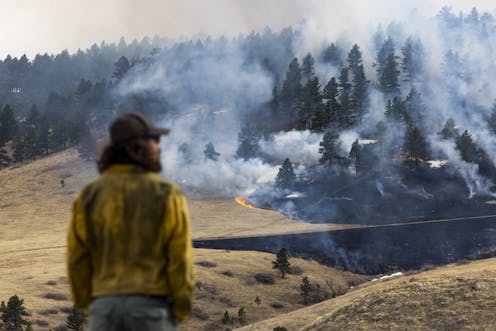
A firefighter watches as the NCAR Fire burns on March 26, 2022, in Boulder, Colo. Michael Ciaglo via Getty Images

Many Coloradans may never get an alert that could save their life during a disaster.

And the alerts that go out may not easily be understood by the people who do get them.

We are social scientists who study emergency alerts and warnings, the challenges that exist in getting emergency information to the public, and ways to fix these issues.

Research two of us – Carson MacPherson-Krutsky and Mary Painter – did with researcher Melissa Villarreal shows only 4 in 10 Colorado residents have opted in to receive local emergency alerts. And many alerts may not be written with complete information, translated into the languages residents speak, or put into formats accessible to people with vision or hearing loss. This means some of our most vulnerable neighbors could miss crucial information during a crisis.

A decentralized alert system

Alerts are complex. They can come from a variety of official sources, including 911 centers, weather forecast centers and others. Alerts can also come in many forms, ranging from emails and texts to sirens and radio broadcasts.

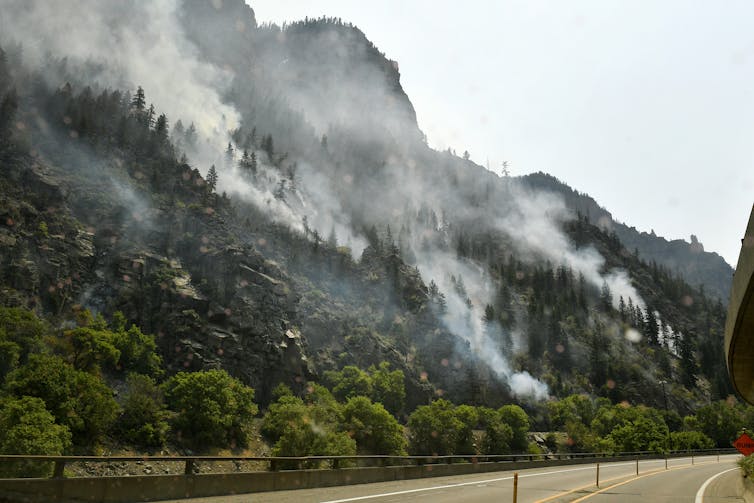
Our study, mandated and funded by Colorado House Bill 23-1237, focused on understanding alert systems in Colorado after the Grizzly Creek Fire in 2020 and the Marshall Fire in 2021.

Smoke billows from a rocky and mountainous forest near an empty highway.
The Grizzly Creek Fire burns down hillsides along I-70 in Glenwood Canyon on Aug. 17, 2020, near Glenwood Springs, Colo.
Helen H. Richardson/MediaNews Group/The Denver Post via Getty Images

These fires were destructive and highlighted issues related to emergency alerting. Alerts about the fires and calls to evacuate were delayed and inconsistently received. Most were only available in English despite census data that shows 1 in 10 residents of Eagle and Garfield counties speak Spanish at home and only “speak English less than ‘very well.’”

The resulting legislation focused on how to make emergency alerts in Colorado accessible to all, but especially those with disabilities and with limited-English proficiency.

As social scientists who study disasters, we know that hazards, like earthquakes and wildfires, reveal inequities and that certain groups fare worse and take longer to recover. People with disabilities have higher rates of death from disasters. This is not because these populations are inherently less able to respond, but because emergency planning and systems may not account for their specific needs.

Our Colorado study used interviews and a statewide survey of 222 officials that send alerts to better understand the challenges of providing alerts across the state and reaching at-risk populations.

A patchwork system

The state of Colorado does not have a uniform alert system. Local areas determine the alert systems they will use.

Some alerts get sent through systems that require people to opt in. This means that people sign up and choose to receive notifications. Neighboring counties often use different opt-in alert systems, meaning individuals who travel to different counties for work or recreation may need to register for multiple systems. Examples of these systems include Everbridge, used by Boulder County, and CodeRed, used by Adams and Park counties.

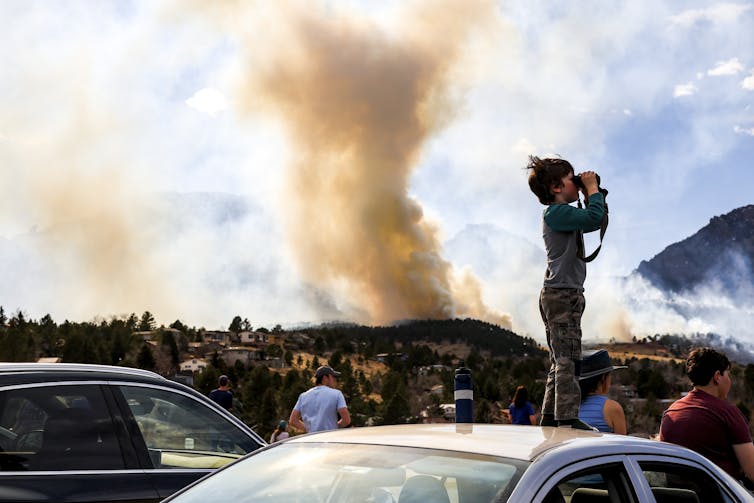
A boy stands on top of a car, peering through binoculars, as orange smoke billows in the background.
Amitai Beh, 6, watches the NCAR Fire on March 26, 2022 in Boulder, Colo..
Michael Ciaglo/Stringer via Getty Images

The success of these systems in an emergency relies on the community signing up for alerts.

We found that registering for alert systems was a barrier for everyone, but especially those with limited-English proficiency and with disabilities. This is because they may not be aware of the systems that are accessible to them or they are wary of providing personal information, and depending on their location, alerts may only be offered in English.

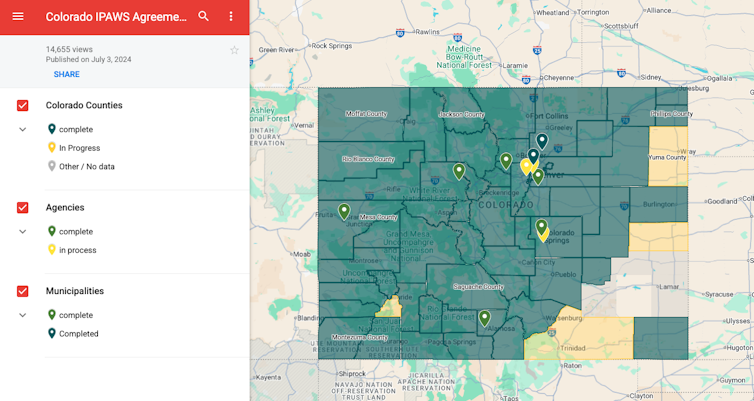
Most of the Colorado counties either have Integrated Public Alert and Warning System (IPAWS) approval or are in the process of getting approval. Some counties on the Eastern Plains, like Otero and Kiowa counties, have not started the process.
The current status of Integrated Public Alert and Warning System alerting entities across Colorado. Green means there’s an approved alerting authority, yellow indicates the region is in the process of becoming an alerting authority, and gray means the area has not begun the process.
Colorado Division of Homeland Security & Emergency Management, CC BY-ND

Another system is “opt out,” meaning people will receive alerts by default unless they turn them off. These include Wireless Emergency Alerts, or WEAs. These messages get broadcast through cellphone towers to phones in a specific geographic area. So if you have a cellphone in a WEA alert boundary, you will get an alert. WEAs are used in Colorado to target specific regions in danger, such as an area that needs to evacuate or for an Amber Alert.

There is no national standard or guidance for opt-in or opt-out systems, which can lead to inconsistencies in how people get alerts.

Lack of resources limits alerting authorities

We found that though authorities often want to provide alerts in other languages and accessible formats, they have significant resource constraints. Time, staff, money or training can all limit the level of accessibility they can provide.

Sixty-four percent of the authorities we surveyed said they lacked funding to make alerts more inclusive.

More than a third of our respondents didn’t know if their systems could provide alerts in languages other than English or for people with disabilities. This speaks to a need for better training on how these systems work and how to use them effectively.

An alert is complete if it includes information about the source, hazard, location and time. Recently, researchers found that fewer than 10% of all Nationwide Wireless Emergency Alerts issued from 2012 to 2022 were complete.

One of us – Micki Olson – worked with the federal government to develop the Message Design Dashboard to help alerting authorities craft clear and comprehensive emergency messages.

Fifty-six out of 64 counties in Colorado are an Integrated Public Alert and Warning System authority, which means they can send alerts across multiple platforms at once. This can improve alert access since it broadens who alerts reach.

Not all counties have this option, and even the ones who do, don’t always use it. In our study, authorities noted limited staff capacity, funds and lack of time prevents them from getting or using the IPAWS system.

“We simply do not have the resources, both financial and people, to deploy all of these systems,” a survey respondent from Gunnison County said.

Alert systems were not built to be accessible

The final issue we identified is that alert systems were not developed with accessible options and functionality like video or image options. For example, people who are blind or have low vision won’t have access to a message unless they enable text-speech features on their phone in advance.

The WEA system only allows alerts to be sent in English or Spanish. Characters like accents and tildes cannot be included. Expansion of language options was planned but is now on hold for unclear reasons. Some counties have the resources to make alerts available in additional languages, but most do not.

Almost 900,000 Coloradans speak a language other than English. According to the Migration Policy Institute, more than 230,000 Coloradans have difficulty comprehending and communicating in English.

Where do we go from here?

Recent events, including the Palisades and Eaton fires in California and the devastating floods in Kerr County, Texas, demonstrate how critical it is that timely and accessible emergency alerts reach everyone, but especially the most vulnerable individuals.

However, these systems are complex, and everyone from individuals to local government can play a part in improving them.

  • Federal and local governments can allocate funds to update and standardize systems. They can also implement training and procedures to ensure alerts are effective and inclusive.

  • Authorities that send alerts can partner more closely with trusted community organizations and networks to reach diverse audiences.

  • Researchers can identify how to better tailor systems to meet community needs.

  • Individuals can learn about and sign up for alerts. To do so, visit local government websites or enter “emergency alerts” and the name of your county or city in an online search.

The Conversation

Carson MacPherson-Krutsky works for the Natural Hazards Center at the University of Colorado Boulder. Through the Center, she receives funding from the State of Colorado, NSF, USACE, USGS and others.

Mary Angelica Painter works for the Natural Hazards Center at the University of Colorado Boulder. Through the Center, she receives funding from agencies including NSF, USACE, USGS and others.

Micki Olson has received funding from FEMA and NOAA.

ref. Emergency alerts may not reach those who need them most in Colorado – https://theconversation.com/emergency-alerts-may-not-reach-those-who-need-them-most-in-colorado-262308