Western nations recognize Palestinian state ahead of UN meetings – but symbolic action won’t make statehood happen

Source: The Conversation – Global Perspectives – By Maha Nassar, Associate Professor in the School of Middle Eastern and North African Studies, University of Arizona

Pro-Palestinian Americans gather in New York at a march to the U.N. on Sept. 18, 2025. Selcuk Acar/Anadolu via Getty Images

Recognition of a Palestinian state is likely to dominate proceedings at the U.N. beginning Sept 23, 2025, when world leaders will gather for the annual general assembly.

Of the 193 existing U.N member states, some 152 now recognize a Palestinian state. Ahead of the U.N. gathering in New York, Australia, France, Canada and the United Kingdom became the latest to add their names. That number is expected to increase in the coming days, with several more countries expected to officially announce similar recognition.

That a host of Western nations are adding their names to the near-universal list of Global South countries that already recognize a Palestinian state is a major diplomatic win for the cause of an independent, sovereign and self-governed nation for Palestinians. Conversely, it is a massive diplomatic loss for Israel – especially coming just two years after the West stood shoulder to shoulder with Israel following the Oct. 7 attack by Palestinian militant group Hamas.

As a scholar of modern Palestinian history, I know that this diplomatic moment is decades in the making. But I am also aware that symbolic diplomatic breakthroughs on the issue of Palestinian statehood have occurred before, only to prove meaningless in the face of events that make statehood less likely.
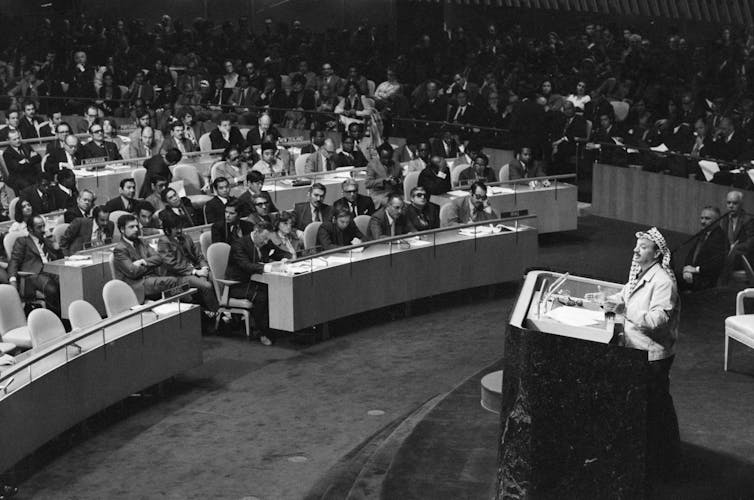
A man gives a speech before a crowd.
‘I have come bearing an olive branch and a freedom fighter’s gun,’ PLO leader Yasser Arafat said before the United Nations General Assembly in 1974.
Bettmann / Contributor

The non-state reality

The fight for Palestinian statehood can be traced back to at least 1967. Over the course of a six-day war against a coalition of Arab states, Israel conquered and expanded its military control over the remainder of what was historic Palestine – a stretch of land that extends from the Jordan River in the east to the Mediterranean Sea in the west.

At the war’s conclusion, Israel had taken control of the West Bank, East Jerusalem and the Gaza Strip.

Unlike after the 1948 war that led to its independence, Israel opted not to extend Israeli citizenship to Palestinians living in the newly conquered areas. Instead, the Israeli government began to rule over Palestinians in these occupied territories through a series of military orders.

These orders controlled nearly every aspect of Palestinian life – and many remain in effect today. For example, if a Palestinian farmer wants to harvest his olive trees near a Jewish settlement in the West Bank, they need a permit. Or
if a Gazan worker wants to work inside Israel, they need Israeli permission. Even praying in a mosque or church in East Jerusalem is dependent on obtaining a permit.

This permit system served as a constant reminder to Palestinians living in the occupied territories that they lacked control over their own daily lives. Meanwhile, Israeli authorities tried to squash the idea of Palestinian nationhood through policies such as outlawing public displays of the Palestinian flag. That, and other expressions of Palestinian national identity in the occupied territories, could result in up to 10 years in prison.

Such policies fit a belief, expressed in 1969 by then Israeli Prime Minister Golda Meir, that there was “no such thing in this area as Palestinians.”

The rise of Palestinian nationalism

Around the same time that Meir made that comment, Palestinians started organizing around the idea of statehood.

Although the idea had been floated before, statehood was codified into official doctrine in a resolution in February 1969 in Egypt. It occurred during a session of the Palestine National Council, the legislative body of the Palestine Liberation Organization, which formed in 1964 as the official representative of Palestinians in the occupied territories.

That resolution called for a free, secular democratic state in Palestine – including all of the State of Israel – in which Muslims, Christians and Jews would all have equal rights.

From that moment on, the Palestinian struggle against Israeli occupation took twin paths: diplomatic pressure and armed resistance.

But events on the ground undermined the idea of a single state for all along the lines envisioned by the Cairo resolution.

The 1973 Arab-Israeli War’s inconclusive ending opened the door to greater diplomacy between Israel and the Arab states. Egypt and Israel decided that diplomacy would help them achieve their aims, culminating in the Egyptian-Israeli peace treaty of 1979. But the treaty also left the Palestinians without unified Arab support.

Meanwhile, throughout the 1970s, the Israeli occupation deepened and entrenched with the building of Israeli settlements, especially in the West Bank.

A man throws out his arms to make a point while he stands at a lectern.
Yasser Arafat addresses the United Nations General Assembly in 1974.
Bettmann / Contributor

The PLO responded in 1974 by issuing what became known as the 10-Point Plan, where they pivoted to seeking the establishment of a national authority in any part of historic Palestine that could be liberated.

It was, in effect, a way of threading the needle: It signaled to moderates that the PLO was adopting a more gradualist position, while also telling the group’s rejectionist front – which opposed peace negotiations with Israel – that they were not giving up completely on the idea of liberating all of Palestine.

Then in 1988 – a year into the first Palestinian intifada, or uprising – the PLO unilaterally declared Palestinian independence on the territories occupied in 1967.

The move was largely symbolic – the West Bank, Gaza and East Jerusalem were still under occupation, and the PLO was then in exile in Tunisia.

But it was nonetheless significant. It represented the bringing together of Palestinians in exile – most of whom were from towns and villages that were now part of the State of Israel – with Palestinians in the occupied territories.

The declaration itself was written by Palestinian poet Mahmoud Darwish, who grew up inside Israel, and declared by Yasser Arafat, the PLO leader in exile.

It was also a moment of tremendous hope and possibility for Palestinians. What most Palestinians wanted was for the international community to recognize them as a national body, deserving of a seat at the table with other nation-states.

Compromise and rejection

Yet at the same time, many Palestinians saw the declaration as a huge compromise. The West Bank, Gaza Strip and East Jerusalem comprise about 22% of historic Palestine. So the declaration effectively meant that Palestinians were giving up on the other 78% of what they saw as their land.

Reaction from the international community to the PLO’s declaration was split. Many formerly colonized countries of the Global South recognized Palestinian independence right away. By the end of the year, some 78 countries had issued statements recognizing Palestine as a state.

Israel rejected it outright, as did United States and most Western nations.

Such was Washington’s opposition that the U.S. denied Arafat a visa ahead of his planned address to the United Nations at its New York City headquarters. As a result, the December 1988 meeting had to be moved to Geneva.

While refusing to accept Palestinian statehood, the U.S. and Israel did begin to recognize the PLO as a representative body of the Palestinian people. This was part of the Oslo Accords – a diplomatic process that many believed would outline a road map for an eventual two-state solution.

While some Palestinians saw the Oslo Accords as a diplomatic breakthrough, others were more skeptical. Prominent Palestinians, including Darwish and Palestinian-American professor Edward Said, believed that Oslo was a poison pill: While framed as a step toward a two-state solution, the agreement said nothing about a Palestinian state in the interim. It only said that Israel would recognize the PLO as a representative of the Palestinian people.

In reality, the Oslo Accords have not lead to statehood. Rather, they created a system of fragmented autonomy under the newly created Palestinian Authority that, though meant to be interim, has in effect become permanent.

The Palestinian Authority was allowed only limited powers and deprived of real independence. While it had some say over schooling, health care and municipal services, Israel maintained control of Palestinian land, resources, borders and the economy. That remains true today.

Renewed push for statehood recognition

Disillusionment over the Oslo Accords contributed to the second, far more violent, intifada from 2000 to 2005.

Mahmoud Abbas, the leader of the Palestinian Authority after Arafat, responded by pushing again for international recognition for statehood.

And in 2012, the U.N. General Assembly voted to upgrade Palestine’s status, elevating it from a “nonmember observer” to a “nonmember observer state.”
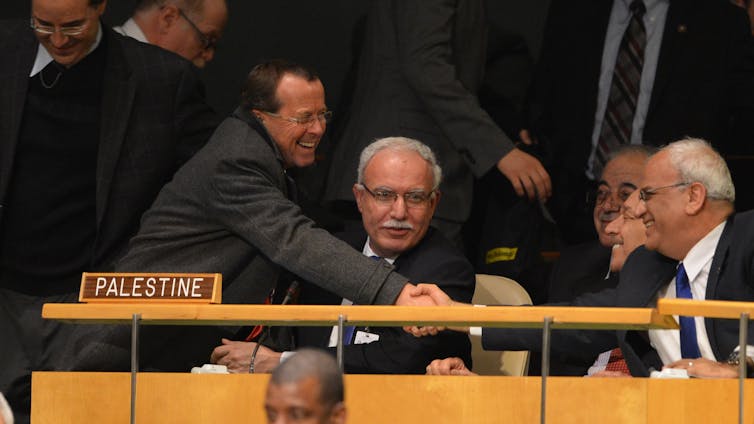
Two men shake hands.
The Palestinian delegation at the U.N. General Assembly before the vote to upgrade Palestinian status to a nonmember observer state in 2012.
Stan Honda/AFP via Getty Images

In theory, this meant Palestinians now had access to international bodies, like the International Criminal Court and the International Court of Justice.

But any meaningful change in the status of Palestinian sovereignty would need to come through the U.N. Security Council, not the U.N. General Assembly.

The U.S. remains opposed to Palestinians gaining statehood independent of the Oslo process. So long as the U.S. has a veto on the Security Council, achieving a truly sovereign Palestinian state will likewise be off the table. And that remains the case, regardless of what individual members – even fellow Security Council members like France and the U.K – do.

In fact, many Palestinians and other critics of the status quo say Western nations are using the issue of Palestinian statehood to absolve them from the far more challenging diplomatic task of holding Israel accountable for what a U.N. body just described as a genocide in Gaza.

This article is based on a conversation between Maha Nassar and Gemma Ware for The Conversation Weekly podcast.

The Conversation

Maha Nassar does not work for, consult, own shares in or receive funding from any company or organization that would benefit from this article, and has disclosed no relevant affiliations beyond their academic appointment.

ref. Western nations recognize Palestinian state ahead of UN meetings – but symbolic action won’t make statehood happen – https://theconversation.com/western-nations-recognize-palestinian-state-ahead-of-un-meetings-but-symbolic-action-wont-make-statehood-happen-265534

A Paramount–Warner Bros. Discovery merger could give Trump even more influence over US media – shaping the news and culture Americans watch and stream

Source: The Conversation – USA – By Pawel Popiel, Assistant Professor of Journalism, Washington State University

A fundamental restructuring of U.S. media is underway, with potentially huge consequences. Giuliano Benzin, iStock/Getty Images Plus

Following unprecedented threats from Federal Communications Commission Chairman Brendan Carr, major affiliate station owners Nexstar and Sinclair Broadcasting pressured Disney’s ABC to pull Jimmy Kimmel’s show off the air over his comments related to Charlie Kirk’s killing.

The cancellation is a harbinger of what could happen under a fundamental restructuring of U.S. media that will take place if the proposed Paramount Skydance and Warner Bros. Discovery merger is approved by the Trump administration.

The deal, first revealed on September 11, 2025, would erase one of the five remaining movie studios and concentrate oversight of two of the country’s most prominent newsrooms – CNN and CBS, both targets of the Trump administration’s ire – under one owner with strong ties to Donald Trump.

Based on research from the Global Media & Internet Concentration Project, our analysis shows that Paramount Skydance-Warner Bros. Discovery would gain control of more than a quarter of the US$223 billion U.S. media market, along with influence over film, television, streaming and the cloud infrastructure upon which digital media increasingly depends.

The combined entity would acquire nearly half of the cable television market, including HBO and CNN. The merger would nearly double Paramount’s share of the video streaming market, uniting HBO Max, Paramount+ and Discovery.

By combining two major Hollywood film studios, it would also capture nearly one-third of the film production market.

This is exactly the type of merger that U.S. antitrust agencies have historically scrutinized because of concerns that excessive market concentration gives too much power to a few companies.

In media markets, such concerns are pronounced: Concentration threatens media diversity and increases the risk of media bias and ideological manipulation.

A mega-conglomerate like Paramount-Warner Bros. Discovery would control a vast share of U.S. viewership. Subject to pressure from or, worse, alignment with the Trump administration, the merged company could promote and protect the administration’s interests.

A social media post by Donald Trump saying 'Great News for America' that Jimmy Kimmel's show was 'cancelled,' which is not correct; it was suspended.
Donald Trump has made no secret of his distaste for Jimmy Kimmel.
Donald Trump account, Truth Social

Cloud control

By combining media production and valuable brands such as Harry Potter, DC Comics and Barbie, the merged giant would gain great negotiating power with competing streaming companies, advertisers and distributors. The merged companies could also secure more lucrative streaming deals, better licensing windows and higher per subscriber and ad rates with cable providers.

The 2023 Hollywood writers and actors strikes opposed the exploitative impact of streaming and AI on creative workers’ compensation. The new media giant would wield significant bargaining power over those media workers.

The merger’s potential detrimental impact extends beyond film and television industries.

Paramount is helmed by David Ellison, and the merger is backed by his father, Larry Ellison. Ellison senior owns the world’s fifth-largest cloud provider, Oracle.

Cloud providers are the critical infrastructure for streaming platforms, ferrying digital content from streamers to viewers. As streaming becomes the dominant mode of media consumption, the Ellison family’s control over this infrastructure could give Paramount-Warner Bros. Discovery another lever of power over its competitors.

Diversity denied

With potential size and reach to rival Disney and Comcast’s NBC Universal, Paramount-Warner Bros. Discovery could become another massive media outlet with right-wing ties.

The proposed deal follows the Trump administration’s $1.1 billion cuts in public media funding. These cuts – affecting PBS, NPR and more than 1,500 affiliated local news stations across the country, all accused by Trump of “partisan bias” – effectively accelerate the ongoing demise of local, independent news.

Concurrently, Rupert Murdoch’s Fox Corp. has settled its dynastic succession, ensuring Fox remains a core channel for the American right.

If the merger is approved, Fox Corporation, the conservative Sinclair Broadcasting and Paramount-Warner Bros. Discovery would control one-third of all U.S. media.

This consolidation would further cement the partisan media model driving deepening political polarization in the U.S., as public and local news media lose funding. The deal also would undermine already declining media independence, fundamental to holding the powerful – whether corporations or politicians – to account.

Wielding regulation

The Trump administration has not shied away from using antitrust law and communications regulation to exercise political control over media.

Before initiating its merger with Warner Bros. Discovery, Paramount was acquired by David Ellison’s Skydance Media. Ahead of the government’s merger review, amid regulatory signals it could affect the review process, Paramount-owned CBS paid $16.5 million dollars to Donald Trump to settle a lawsuit Trump filed based on allegations of “deceptive” editing of an interview with his political opponent Kamala Harris. Editing of interviews is a standard editorial practice.

Shortly after, the merger was approved by the FCC with strict political conditions: hiring an ombudsman to oversee CBS’s reporting and eliminating all of the network’s diversity, equity and inclusion initiatives.

David Ellison accepted these conditions, promising to eliminate all of Paramount’s U.S.-based DEI programs. For the ombudsman role, he hired Kenneth Weinstein, former CEO of the conservative Hudson Institute and ambassador to Japan under the first Trump administration.

Since then, the Paramount CEO also has pursued Bari Weiss, a prominent conservative voice, to guide “the editorial direction” of the CBS news division. Ellison’s moves signal that editorial independence at CBS, and soon perhaps CNN, may be subject to ideological oversight.

Two men, one with his arm around the shoulder of the other.
Oracle’s Larry Ellison and son David Ellison, head of Skydance, attend a Los Angeles film premiere on May 14, 2013.
Eric Charbonneau/Invision/AP

Meanwhile, Ellison’s father, Larry Ellison, has ties to Donald Trump going back to the first Trump administration. The New York Times in an April 2025 profile said that Ellison “may be closer to Mr. Trump than any mogul this side of” Elon Musk.

The senior Ellison has been playing a key role in negotiations over the future ownership of TikTok. His ties to Trump run deep enough to likely make him one of the main beneficiaries of the TikTok deal currently in negotiation between the United States and China.

Trump has shown an appetite for coercing media companies. For instance, ABC settled a Trump lawsuit in late 2024 with a $15 million donation to the as-yet-unbuilt Trump Library.

By placing two major news outlets in the hands of a family with ties to Trump, the Paramount-Warner Bros. Discovery merger would facilitate such control.


Read more:
ABC’s and CBS’s settlements with Trump are a dangerous step toward the commander in chief becoming the editor-in-chief


What Orbán did – but faster

This is the “Hungarian model” on speed.

Viktor Orbán, Hungary’s authoritarian leader, spent a decade asserting increasing control over that nation’s media.

The Trump administration is poised to accomplish the same in less than a year – and at greater scale.

In addition to helping allies buy a growing share of U.S. media, in his first eight months Trump also has managed to score conciliatory overtures from the nation’s tech billionaires, who fired fact-checkers at major social media platforms, curbed moderation of hateful content and asserted rigid editorial control over the op-ed pages at The Washington Post, one of the country’s most prominent newspapers.

If the Paramount-Warner Bros. Discovery merger is approved and Larry Ellison joins Andreessen Horowitz as part of the impending TikTok deal, a movie studio, CBS, CNN, Fox, 185 Sinclair-owned TV stations and a major social media platform will have owners with strong ties to Trump.

We believe the promised benefits of a Paramount-Warner Bros. Disovery merger, including lower streaming prices, pale next to the damage it would do to media diversity and pluralism.

By acquiring greater control over film production, TV and streaming, the merger would dramatically reconfigure the very media institutions that shape U.S. culture and politics.

The Trump administration’s review of this merger may further cement the administration’s political control over the U.S. media.

The Conversation

Pawel Popiel receives funding from funding from the Social Sciences and Humanities Research Council of Canada and the Department of Canadian Heritage.

Dwayne Winseck receives funding from the Social Sciences and Humanities Research Council of Canada and the Department of Canadian Heritage.

Hendrik Theine receives funding from the Social Sciences and Humanities Research Council of Canada and the Department of Canadian Heritage.

Sydney Forde receives funding from the Social Sciences and Humanities Research Council of Canada and the Department of Canadian Heritage.

ref. A Paramount–Warner Bros. Discovery merger could give Trump even more influence over US media – shaping the news and culture Americans watch and stream – https://theconversation.com/a-paramount-warner-bros-discovery-merger-could-give-trump-even-more-influence-over-us-media-shaping-the-news-and-culture-americans-watch-and-stream-265699

Gestational diabetes linked to autism and ADHD in new study

Source: The Conversation – UK – By Adaikala Antonysunil, Senior Lecturer in Biochemistry, School of Science and Technology, Nottingham Trent University

Nadiia Lapshynska/Shutterstock.com

A major new analysis is drawing fresh attention to the possible links between gestational diabetes and long-term brain health in both mothers and their children. The review, which combined data from 48 studies conducted over nearly 50 years, suggests that diabetes during pregnancy may have effects that extend well beyond childbirth, influencing memory, learning and mental health.

Gestational diabetes occurs when blood sugar rises during pregnancy, usually in the second or third trimester. Unlike type 1 or type 2 diabetes, it usually disappears after the child has been born. However, women who experience it are at greater risk of developing type 2 diabetes later in life.

The condition is also becoming more common worldwide, partly because more women begin pregnancy overweight and are having children at an older age. Current estimates suggest it now affects one in seven pregnancies.

The new research, which is yet to be peer reviewed, found notable differences in outcomes for children exposed to gestational diabetes in the womb.

On average, they were 36% more likely to be diagnosed with attention deficit hyperactivity disorder (ADHD), 56% more likely to develop autism and 45% more likely to have developmental delays compared with those whose mothers had normal blood sugar during pregnancy. They also scored lower on IQ tests – nearly four points less on average – with particular difficulties in verbal skills and accumulated knowledge.

For mothers, the differences were less striking but still measurable. Those who had gestational diabetes scored about 2.5 points lower on the Montreal Cognitive Assessment, a widely used test of memory, attention and problem-solving. While this is only a modest drop, it suggests that even temporary changes in blood sugar during pregnancy could have subtle long-term effects on brain function.

Researchers also identified biological markers that may help explain these outcomes. Children born to mothers with gestational diabetes had lower levels of a protein called brain-derived neurotrophic factor, or BDNF.

This protein supports the growth and repair of brain cells and is vital for learning and memory. Reduced levels could point to slower or less resilient brain development, though the precise effect is still uncertain.

Why these links exist remains an open question. Scientists believe that high blood sugar during pregnancy may lead to inflammation and increased oxidative stress, both of which can damage cells. Changes in how the placenta works may also alter the supply of oxygen and nutrients to the developing baby. In addition, the high insulin levels often seen with gestational diabetes could influence how brain connections are formed.

Another area of focus is epigenetics – the chemical modifications that affect how genes are switched on or off. Diet during pregnancy can trigger such changes, potentially influencing how the baby’s metabolism and brain develop.

Studies suggest that vitamin B12, which plays an epigenetic role in DNA repair and gene regulation, may be especially important. Low levels of B12, often linked to diets high in ultra-processed food, have been associated with poorer outcomes in foetal development, though the evidence is not yet conclusive.

It is important to stress the limits of the research. All of the studies included in the analysis were observational, meaning they can show associations but cannot prove cause and effect. Many other factors – including genetics, family environment and wider health inequalities – also shape outcomes for both mothers and children.

The fact that no major structural brain differences were detected between exposed and non-exposed children suggests that any effects are subtle, perhaps confined to language, attention or memory.

Even so, the findings carry important implications for healthcare. They underline the value of careful glucose monitoring during pregnancy and of lifestyle approaches such as healthy diet and regular physical activity, which are proven ways of managing gestational diabetes. Medical treatment, where required, also plays a crucial role in reducing risks.

For mothers, the research suggests that support should continue after birth, not only to monitor blood sugar but also to keep an eye on cognitive health. For children, early developmental checks could help identify those who might benefit from extra support in learning or behaviour.

Gestational diabetes explained.

Not about blame

Researchers emphasise that these findings are not about blame. Gestational diabetes arises from a complex mix of biological, genetic and environmental factors, many of which are outside individual control. Rather, the analysis points to the need for broader public health strategies and improved support systems during and after pregnancy.

As one of the most comprehensive reviews of its kind, the study adds weight to the idea that gestational diabetes may have lasting consequences that extend beyond pregnancy itself. With prevalence rising worldwide, better understanding of these links is vital for protecting the wellbeing of both mothers and their children.

Future studies may help refine dietary and lifestyle recommendations, exploring how nutrients such as vitamin B12 interact with gestational diabetes. By deepening our understanding of these processes, researchers hope to develop more targeted ways to safeguard brain health across generations.

The findings suggest that gestational diabetes is not only a temporary disruption of blood sugar but may also be linked to subtle, lasting changes in cognitive outcomes. As awareness grows, so too does the importance of early care and sustained support for families affected by this increasingly common condition.

The Conversation

Adaikala Antonysunil receives funding from Diabetes Research Wellness Foundation, BBSRC, Rosetrees Trust and Society of Endocrinology.

ref. Gestational diabetes linked to autism and ADHD in new study – https://theconversation.com/gestational-diabetes-linked-to-autism-and-adhd-in-new-study-265525

AI use by UK justice system risks papering over the cracks caused by years of underfunding

Source: The Conversation – UK – By Morgan Currie, Lecturer in Data & Society, University of Edinburgh

SuPatMaN / Shutterstock

More than a decade of underfunding by successive governments has left the UK’s justice system in crisis. There is now a significant backlog in cases and court dates are being cancelled due to logistical problems.

Powerful voices in UK politics, including the Tony Blair Institute and Policy Exchange think tanks, have put their weight behind artificial intelligence (AI) as a potential solution to problems being experienced across the public sector. Some of those voices believe that AI could liberate staff from bureaucratic workloads and give them more time to concentrate on the human aspects of justice, such as face-to-face engagement with clients.

In January, the Labour government announced a plan to “unleash” AI across the UK in a bid to “turbocharge” growth, boost living standards and revolutionise public services.

So how might AI affect the UK’s justice system?

The current focus on AI has been largely driven by developments in large language models (LLMs). This is the technology behind AI chatbots such as ChatGPT. But automation, machine learning, and other AI tools are not novel features of the justice system.

Older tools such as Technology Assisted Review used a form of AI to help lawyers predict the probable relevance of documents to a particular case or matter. More controversially, risk-scoring algorithms have been used in probation and immigration cases.

Critics of the last example have warned that these systems entrench inequalities and affect people in life altering ways without their knowledge.

However, these automated risk scoring systems are substantially different in nature to the productivity tools based on LLMs that are aimed at streamlining administrative processes. The latter can draft statements as well as scheduling and transcribing meetings.

They can also retrieve and summarise sources for document reviews and case law. Apparent success stories include the Old Bailey saving £50,000 by using AI to process evidence overviews for court cases.

How and why these tools are implemented – the institutional context – matters enormously. When digital tools are used not to provide more space for the human aspects of justice, but instead to cut costs, the harms fall especially heavily on vulnerable clients.

This is because even these seemingly routine administrative uses of AI require human reviewers to catch plausible, but wrong, information produced by these tools and to exercise expert judgment.

Evidence from a small scale Home Office pilot scheme shows why this is important. The pilot scheme used LLMs to summarise asylum case documents and transcripts to support asylum decisions.

Some 9% of the results were found to be inaccurate and missing interview references. Another 23% of users testing the scheme did not feel fully confident in the summaries, despite significant time savings.

Justice and digitisation

In July 2025, the Ministry of Justice published its AI Action Plan for Justice. While Microsoft’s Copilot Chat is already available for judicial office holders, the strategy document promised to roll out AI tools to 95,000 justice staff by December.

The plan acknowledges the many limitations of AI. It also establishes a chief AI officer, creates AI guidelines and emphasises that AI should “support, not substitute” human judgment.

It emphasises a cautious method towards roll-out, including an effort to gather feedback from trade unions and the public. It also stresses transparency through a new website and ethics framework.

The plan continues to promote more controversial uses of the technology, including assessing a person’s risk of violence in custody. Nevertheless, it focuses more heavily on LLMs for time saving tasks in administration.

However, could the new strategy lead to the adoption of LLM tools by the justice system before there is a mature understanding of how they are best applied? Decisions based in part on AI generated evidence are likely to offer new grounds for complaints and challenges. This could add to, rather than reduce, the backlog in cases.

In June 2025, a senior UK judge warned lawyers against the use of LLM tools because of the potential for those tools to “hallucinate” – generate fictitious information. There have been a number of cases elsewhere in the world where fictitious AI-generated material has apparently been filed in court cases.

Given their limitations, any benefits of these tools will generally be seen in those parts of the system where resources and time for human oversight are at their highest. The risks will hit hardest where human time and resources are low and where clients have less money and time to challenge decisions.

This unequal access to justice is not solely an AI issue. Previous waves of digitisation used to reduce the bureaucratic load included allowing some guilty pleas to be lodged online and automatic online convictions for some crimes, which would otherwise have required a court hearing.

As Gemma Birkett, lecturer in criminal justice at City St Georges University, argues, these automated systems particularly affect marginalised women, who are far more likely to plead guilty to crimes they did not commit.

Papering over the cracks

There are powerful arguments to be made in favour of using bespoke, carefully developed technology to remove the administrative burden on justice system staff, so that they can concentrate on the aspects of their work best delivered by people.

But when the current system is struggling, adopting LLMs (or other forms of rapid digitisation) will not fix the deep underlying problems caused by years of austerity. Rather than reducing bureaucracy, they risk papering over the cracks in a dysfunctional system.

The Conversation

Ben Collier receives funding from the Scottish Institute for Policing Research and is the Chair of the Foundation for Information Policy Research.

Alexandra Ba-Tin and Morgan Currie do not work for, consult, own shares in or receive funding from any company or organisation that would benefit from this article, and have disclosed no relevant affiliations beyond their academic appointment.

ref. AI use by UK justice system risks papering over the cracks caused by years of underfunding – https://theconversation.com/ai-use-by-uk-justice-system-risks-papering-over-the-cracks-caused-by-years-of-underfunding-264749

Running out of wardrobe space? Maybe you should follow the growing trend for clothes you can’t actually wear

Source: The Conversation – UK – By Kokho Jason Sit, Senior Lecturer in Marketing; Associate Head (Global), University of Portsmouth

Gorodenkoff/Shutterstock

Virtual reality has been fashionable for a while now. So perhaps it was only a matter of time before fashion became virtual.

Instead of spending your money on actual clothes to wear on your actual body, you can now buy garments (and accessories) that you will never touch. Also known as digital fashion, this is a world where clothes are “worn” only in virtual spaces, such as online games or in the metaverse.

Like virtual travel where you never leave your sofa, or a virtual bungee jump without risk of injury, virtual fashion is convenient and accessible. It is also getting more popular, with some sources forecasting that this particular side of the fashion industry could soon be worth tens of billions of dollars every year.

The growth potential predominantly comes from fashion brands using virtual products to advertise and innovate, and ultimately generate more sales. They can use digital clothes to experiment, gauge interest and explore new markets.

Vans, for example, created a virtual skatepark in collaboration with the game developer Roblox where users could practice their online skating skills, and buy exclusive clothing, shoes and other gear. A backpack here would cost 400 Roblox units of online currency, equivalent to around £5.

Meanwhile, the luxury brand Gucci created a virtual gallery (also with Roblox) where visitors could view, “try on” and buy digital items using blank, genderless, humanoid mannequin avatars.

The gallery had different themed rooms from which the avatars would absorb certain visual elements. Users could then screenshots to share on social media.

Zara has collaborated with Zepeto, a South Korean metaverse platform, to do something similar.

All these companies have seen how e-fashion can serve as a useful strategy to engage with consumers and promote imaginative products – and ultimately drive brand awareness and sales.


Read more:
3D printing in fashion promises to be huge – so what’s holding us back?


Elsewhere, some have previously argued that e-fashion could actually help to make the fashion industry more sustainable by eliminating some of the environmental issues associated with the industry like waste and carbon footprints.

The theory was that if people spent most of their working day in the virtual world, then digital fashion could be a more sustainable alternative to real-world fashion. You could effectively wear the same old jeans and hoodie day after day, while dressing in the latest trends online.

But ideas of a fully immersive digital world have so far not materialised, and fashion’s issues with sustainability remain, driven by the widespread impulse to keep up with the latest fashion, dress cheaply and dispose of items quickly.

Huge pile of discarded clothing and fabrics.
Out of fashion.
Sasha Ostapiuk/Shutterstock

The real-world presents digital fashion with further hurdles in its bid to become mainstream.

Some critics would argue that e-fashion lacks “touch authenticity” – the chance to feel and try a design before buying. Others, more simply, would point out that the biggest problem with digital clothes is that you can’t actually wear them.

And our research suggests that the market for e-fashion remains relatively niche. So far, it appeals mostly to hardcore enthusiasts who enjoy exploring new shopping experiences.

These consumers, often passionate about fashion, expression and technology, are the ones most likely to pay for and use e-fashion. They see it as a fun and effective way to combine their interests.

With a few clicks, they can “try on” e-fashion items, personalise them, and then capture and share the results, enjoying a creative outlet for their desire to try new clothes, styles and colours. And it provides brands and designers a way of trying out new ideas, some of which may be impossible to produce in the real world.

The Conversation

Kokho Jason Sit is affiliated with the Chartered Institute of Marketing (UK).

Giovanni Pino and Marco Pichierri do not work for, consult, own shares in or receive funding from any company or organisation that would benefit from this article, and have disclosed no relevant affiliations beyond their academic appointment.

ref. Running out of wardrobe space? Maybe you should follow the growing trend for clothes you can’t actually wear – https://theconversation.com/running-out-of-wardrobe-space-maybe-you-should-follow-the-growing-trend-for-clothes-you-cant-actually-wear-255338

Animals on ice: how conservationists use freezers to ‘biobank’ wildlife

Source: The Conversation – UK – By James Edward Brereton, PhD student, Nottingham Trent University

An Indian gaur or wild buffalo: one of the many species that has genetic material frozen for conservation purposes. alby kunnath/Shutterstock

What’s lurking in your freezer: a lasagne or deep-frozen pizza? Conservationists rely on freezers too – but they run much cooler than your model, with the thermostat set to a frosty -196°C, the temperature of liquid nitrogen. You won’t find any burgers in there.

Conservationists use these freezers, known as “biobanks”, to store animal cells including oocytes (egg cells), sperm and somatic cells (for example, skin cells). In the future, lost genetic diversity could be safeguarded in this way. This could be vital for the preservation of endangered species – and species that are not yet endangered, but soon could be.

Over the last 50 years, tissues of many animals have been frozen, including tigers, pandas and rhinos. But many other species have never been archived in this way, including some of the most threatened species on the planet, such as mountain gorillas. The consequences of not banking key species could well be their extinction.

A recent collaboration between researchers at Chester, Dublin and Toronto zoos and Nottingham Trent and York St Johns Universities has investigated the priorities for biobanking wildlife species. My supervisors and I worked with colleagues at these zoos to address the long-held assumption that wildlife organisations prioritise endangered species as the most important species for biobanking.

We found that several prioritisation methods are used for selecting cell types and species. The local availability of cell samples was a key factor, as was the extent of reproductive science knowledge about a species.


Read more:
‘Return’ of the dire wolf is an impressive feat of genetic engineering, not a reversal of extinction


In the 20th century, the most common priorisation method was to select endangered species. But conservationists would also prioritise the sampling of species that were local to them (for example, in a zoo), as well as sampling opportunistically – for instance, when an animal was undergoing veterinary care.

We tend to think of biobanking as a futuristic, science fiction concept, but these techniques have been developed over many decades. The earliest paper we found was from 1975 on wildlife cryopreservation.

In terms of species and material, cells from mammals were the most frequently biobanked throughout the study period, mirroring the pervasive taxonomic biases in conservation efforts globally.

It’s also more straightforward to bank samples from, say, a gaur (a wild buffalo) because they are physiologically similar to domesticated cattle, which we know a lot about. A rare insect would be a different story.

Historically, biobanking efforts concentrated on saving sperm samples, which made sense as scientists could draw on generations of livestock husbandry methods to use the samples for artificial insemination. But that only captures part of the genetic picture, even for well-represented species.

Today, other cell types, such as somatic cells (body cells, such as skin cells or fibroblast cells that form connective tissue), are becoming increasingly valuable, as they capture a lot more genetic information.

close up of branched orange coral in sea
Acropora coral.
Darwish Studio/Shutterstock

From agoutis to acropora coral

There is a diverse array of species featuring in the biobanking literature. Previous studies cover species ranging from agoutis (a small rodent native to the rainforests of Central and South America) to acropora corals, harpy eagles to hellbender salamanders. For these species, tissue is therefore effectively saved for use in future conservation work.

The International Union for Conservation of Nature, an organisation dedicated to assessing wildlife threat status, established its Animal Biobanking for Conservation specialist group in 2022. This network aims to foster cooperation a broader approach to biobanking, which has until now been carried out on an individual, organisational basis.

Enabling scientists to coordinate their efforts internationally could help cryobanking organisations be more strategic about acquiring genetic material, avoiding duplicating samples and identifying species at risk of being left out.

Researchers also need to think about species that aren’t critically endangered right now but might become so, such as partula snails (tropical tree snails native to Polynesia). By the time a species becomes endangered, the genetic diversity of the population has already significantly reduced.

Even if we do save their gametes and somatic cells, there will still be a genetic bottleneck among the remaining live animals. This can lead to reproductive and health issues in already small populations, further reducing the likelihood of the species’ survival.

If we take samples from animals that are not yet critically endangered, those samples are likely to become valuable in the future. Ultimately, we need a unified plan so we don’t let bias and a lack of strategy shape which species we see in the future – and which we lose.


Don’t have time to read about climate change as much as you’d like?

Get a weekly roundup in your inbox instead. Every Wednesday, The Conversation’s environment editor writes Imagine, a short email that goes a little deeper into just one climate issue. Join the 45,000+ readers who’ve subscribed so far.


The Conversation

James Edward Brereton does not work for, consult, own shares in or receive funding from any company or organisation that would benefit from this article, and has disclosed no relevant affiliations beyond their academic appointment.

ref. Animals on ice: how conservationists use freezers to ‘biobank’ wildlife – https://theconversation.com/animals-on-ice-how-conservationists-use-freezers-to-biobank-wildlife-263363

The UK, Canada and Australia have recognised Palestine – what does that mean? Expert Q+A

Source: The Conversation – UK – By George Kyris, Associate Professor in International Politics, University of Birmingham

The UK, Canada and Australia are among a group of nations that are moving to formally recognise the state of Palestine like most other states have done over the years. This move is a major diplomatic shift and turning point in one of the world’s most intractable conflicts. Here’s what it means.

What does it mean to recognise Palestine?

Recognising Palestine means acknowledging the existence of a state that represents the Palestinian people. Following from that, it also means that the recogniser can develop full diplomatic relations with representatives of this state – which would include exchanging embassies or negotiating government-level agreements.

Why have these countries moved together – and why now?

Diplomatic recognition, when done in concert, carries more heft than isolated gestures – and governments know this. A year or so ago, Spain tried to get European Union members to recognise Palestine together and when this was not possible opted to coordinate its recognition with Norway and Ireland only. Further away, a cluster of Caribbean countries (Barbados, Jamaica, Trinidad and Tobago, the Bahamas) also recognised Palestine around the same time.

By acting together, countries amplify the message that Palestinian statehood is not a fringe idea, but a legitimate aspiration backed by a growing international consensus. This collective recognition also serves to shield individual governments from accusations of unilateralism or political opportunism.

This wave of recognition comes now because of concern that Palestinian statehood is under threat, perhaps more than ever before. In their recognition statements, the UK and Canada cited Israel’s settlements in the West Bank in their reasoning.

The Israeli government has also revealed plans that amount to annexing Gaza, the other area that ought to belong to Palestinians. This is after months of assault on its people, which the UN commission of inquiry on the occupied Palestinian Territories and Israel found amounts to genocide. Public sentiment has also shifted dramatically in support of Palestine, adding to the pressure on governments.

Why do some say recognition isn’t legal?

Israel and some of its allies argue that the recognition is illegal because Palestine lacks the attributes of a functioning state, such as full control of its territory or a centralised government. Legal opinion on whether Palestine meets the criteria of statehood is divided. But, regardless, these criteria are not consistently used to recognise states.

In fact, many states have been recognised well before they had complete control over their borders or institutions. Ironically, the US recognised Israel in 1948, refuting critics that this was premature due to the lack of clear borders. Recognition has, therefore, always been political.

But even if we take a more legal perspective, the international community, through numerous UN and other texts has long recognised the right of Palestinians to have a state of their own.

Does recognition ‘reward Hamas’, as Israel claims?

Recognising a state does not mean you recognise those who govern it. At the moment, for example, many states do not recognise Taliban rule, but this doesn’t mean they have stopped recognising the existence of Afghanistan as a state.

Similarly, the fact that Netanyahu is under arrest warrant of the International Criminal Court for war crimes and crimes against humanity has not resulted in states withdrawing their recognition of the state of Israel and its people. Recognising a state is not the same as endorsing a specific government.

Not only that but all of the states that recently recognised Palestine have explicitly said that Hamas must play no role in a future government. France said that although it recognises the state of Palestine it won’t open an embassy until Hamas releases the hostages.

Will recognition make a difference?

The past few years have laid bare the limits of diplomacy in stopping the horrific human catastrophe unfolding in Gaza. This doesn’t leave much room for optimism. And, in a way, states taking brave diplomatic steps are, at the same time, exposing their reluctance to take more concrete action, such as sanctions, to press the government of Israel to end its war.

Still, the recognition brings the potential for snowball effects that would enhance the Palestinians’ international standing. They will be able to work more substantively with those governments who now recognise their state. More states may now also recognise Palestine, motivated by the fact others did the same.

Keir Starmer walking towards a microphone.
Starmer preparing to announce UK recognition of Palestine.
Number 10/Flickr, CC BY-NC-ND

And more recognition means better access to international forums, aid and legal instruments. For example, the UN’s recognition of Palestine as an observer state in 2011 allowed the International Court of Justice to hear South Africa’s case accusing Israel of genocide and the International Criminal Court to issue an arrest warrant for Netanyahu.

The implications for the Israeli government and some of its allies could also be significant. The US will now be isolated as the only permanent member of the UN Security Council not recognising Palestine. States that do not recognise Palestine will be in a dissenting minority and more exposed to critiques in international forums and public opinion.

This growing isolation may not force immediate changes and may not bother the current US administration, which often does not follow the logic of traditional diplomacy. Still, over time, the pressure on Israel and its allies to engage with a peace process may grow.

In the end, recognition from some of the world’s biggest players breaks their longstanding alignment with consecutive Israeli governments. It shows how strongly their public and governments feel about Israel’s threat to Palestinian statehood through annexation and occupation. For Palestinians, recognition strengthens their political and moral standing. For the government of Israel, it does the opposite.

But recognition alone is not enough. It must be accompanied by sustained efforts to end the war in Gaza, hold perpetrators of violence accountable and revive peace efforts towards ending the occupation and allow Palestinians their rightful sovereignty alongside Israel.

The Conversation

George Kyris does not work for, consult, own shares in or receive funding from any company or organisation that would benefit from this article, and has disclosed no relevant affiliations beyond their academic appointment.

ref. The UK, Canada and Australia have recognised Palestine – what does that mean? Expert Q+A – https://theconversation.com/the-uk-canada-and-australia-have-recognised-palestine-what-does-that-mean-expert-q-a-265790

Twilight at 20: how Stephenie Meyer’s vampire saga changed young adult fiction forever

Source: The Conversation – UK – By Amy Burge, Associate Professor in Popular Fiction, University of Birmingham

A young fan enjoying Twilight. Ben Molyneux/Shutterstock

Stephenie Meyer’s debut novel, Twilight, was published in 2005 – the first in a series that went on to sell over 100 million copies worldwide. Twenty years, six novels and five movie adaptations later, it is clear that Twilight has permanently changed the shape of young adult (YA) fiction.

In the 1990s and early 2000s, most of the successful YA titles tended to be coming-of-age stories, such as The Perks of Being a Wallflower by Stephen Chbosky (1999), that focused on regular teenagers learning how to become independent. However, the popularity of J.K. Rowling’s Harry Potter series (1997-2007) and Philip Pullman’s His Dark Materials trilogy (1995-2000) primed a generation of readers for YA stories that embraced fantasy as a genre.

The stage was set for Twilight to emerge, combining YA romance and coming-of-age narratives with supernatural characters. Whereas Rowling and Pullman subordinated romance for adventure stories, Meyer made romance central to her plot, winning a vast readership among adolescent girls – and not a few adult women.

Following Twilight’s success, similar books flooded the market, leading to a decade-long YA paranormal romance boom. Among many examples were L.J. Smith’s Vampire Diaries series, originally published in the early 1990s but re-imagined in 2009 with new novels and a TV adaptation. And there was Richelle Mead’s Vampire Academy series (2007-2010), which was subsequently adapted into a film (2014) and television series (2022).

Suddenly, sexy vampires were everywhere – to the joy of many YA readers, and the alarm of many critics.


This article is part of a mini-series marking 20 years since the publication of Stephenie Meyer’s first Twilight novel.


During the years of its greatest popularity, from 2008-12, everyone seemed to have an opinion on the Twilight series, including journalists and academics.

While Twilight clearly struck a chord with its fans, it was widely critiqued in the media for what were perceived to be its regressive depictions of race and gender. Such critiques often combined feminist concerns over dangerous messages the series might convey to its readers with a reflexive scorn for romance media that lent into traditional gender roles – and for the women who enjoyed it.

Despite (or because of) its vast popularity, Twilight was dismissed by some as “bad literature”. Fans of the series became the butt of a joke, caricatured as impressionable illiterates who needed to be saved from their own bad taste – and their assumed inability to distinguish between fantasy and reality.

Consequently, many readers who devoured the books in their early teens distanced themselves from the franchise as they got older. They appeared keen to disavow any association with a series condemned as both aesthetically and ideologically worthless.

Twilight’s impact on YA fiction

Not everyone liked Twilight, but its impact was such that no author writing YA fiction could afford to ignore it. Indeed, much 2010s YA fiction can be understood as a mass of Twilight rewritings.

In these books, the same elements repeatedly appear – supernatural boyfriends, love triangles, seemingly-normal-but-actually-special heroines – but rearranged by each author to provide whatever they felt Twilight didn’t offer.

Even Meyer published two response novels to her original trilogy that addressed criticisms about their gender roles. Life and Death (2015) is a gender-swapped retelling of Twilight, featuring new characters, and Midnight Sun (2020) recounts the events of Twilight from vampire Edward Cullen’s point of view. Meyer was, in essence, writing fan fiction of her own works.

Fans of the books at the premiere of the first Twilight film.

Much of the reader-response to Twilight emerged through fan fiction. Twilight is consistently one of the most popular fandoms: in August 2025, there were 13,067 fan fiction works based on the Twilight book series on Archive of Our Own, an open-source fan fiction archive. Some 1,814 of these works have been written or updated in 2025.

Famously, one such Twilight fan fictionFifty Shades of Grey by E.L. James – went on to become the fastest-selling novel in history on its release in 2011.

While the 2010s saw a reaction against Twilight, in the 2020s it has experienced a revival, as the books and (especially) films are being discovered by a new generation who interpret them as camp classics. As one modern Twilight fan on Reddit writes:

Twilight has dialogues that hold the power of making each and every one of us cringe – it’s amazing. We laugh because it’s so cringey. We love it because it so cringey. It’s iconic.

The YA publishing industry has also changed enormously. In 2005, the fact that Twilight openly courted an adolescent female readership made it a target for mockery. Today, that same demographic is the most coveted audience in publishing, and YA and “new adult” romances dominate the bestseller charts.

Modern YA fiction is far more diverse than it was in 2005, but there is still a clear line of descent from Twilight to the viral sensation A Court of Thorns and Roses by Sarah J. Maas (2015), and to the modern romantasy genre.

A sign saying 'welcome Twilight fans'
Forks, the Washington town the books are set in, has become a site of pilgrimage for fans.
Chris Haden/Shutterstock

Adult concerns over adolescent reading habits persist, and the critiques of 2020s romantasy as “fairy porn” closely mirror the attacks made on paranormal romance 20 years ago. But despite such criticism, modern YA fiction is to a great extent still the industry that Twilight created – one in which romance plots are foregrounded, female protagonists are the norm, and supernatural elements taken from the traditionally male-dominated genres of science fiction and fantasy are repurposed to tell stories by, for and about women.

Any comparison of the genre before and after Twilight makes clear how huge its influence has been. You might legitimately criticise Twilight’s prose style, its gender politics or its handling of race, but after 20 years, there is no doubt as to the extent of its legacy.


Looking for something good? Cut through the noise with a carefully curated selection of the latest releases, live events and exhibitions, straight to your inbox every fortnight, on Fridays. Sign up here.


This article features references to books that have been included for editorial reasons, and may contain links to bookshop.org. If you click on one of the links and go on to buy something from bookshop.org, The Conversation UK may earn a commission.

The Conversation

The authors do not work for, consult, own shares in or receive funding from any company or organisation that would benefit from this article, and have disclosed no relevant affiliations beyond their academic appointment.

ref. Twilight at 20: how Stephenie Meyer’s vampire saga changed young adult fiction forever – https://theconversation.com/twilight-at-20-how-stephenie-meyers-vampire-saga-changed-young-adult-fiction-forever-263459

The near-extinction of rhinos is at risk of being normalised

Source: The Conversation – UK – By Jason Gilchrist, Lecturer in the School of Applied Sciences, Edinburgh Napier University

Even the most stable rhino populations are isolated and at risk from inbreeding. Vaclav Sebek / shutterstock

A century ago, half a million rhinos roamed Africa and Asia. Today, just 27,000 remain.

The latest annual State Of The Rhino report, released this week by the International Rhino Foundation, shows no dramatic declines in population numbers in the past year. On the surface, this might seem like good news: after decades of poaching, habitat loss and trafficking, rhino numbers are holding steady.

But that stability masks something darker. We may be falling victim to what conservation scientists call “shifting baseline syndrome”, where our expectations deteriorate over time as conditions get worse. Accepting 27,000 as a new normal – something to be celebrated, even – could spell disaster for the long-term future of the rhino.

The report tracks population estimates, threats and conservation progress for all five rhino species:

In Africa, black rhinos numbers have risen slightly to 6,788 (from 6,195), a welcome recovery from the 1990s when they plummeted to just 2,300. But as recently as 1960 there were more than 100,000. White rhinos, the most numerous species, fell to 15,752 (from 17,464). This continues a long-term decline, despite continued efforts to reduce poaching.

In Asia, greater one-horned rhino edged up to 4,075 (from 4,014), but the number of Sumataran rhinos remains perilously low at between 34 and 47, while Javan rhinos have crashed to 50 down from 76 due to illegal hunting.

The report also highlights concerns that rhinos in South Africa – home to most of the world’s rhinos – face long-term genetic risks from inbreeding and will struggle to adapt to change. South Africa’s rhino now survive only in fenced reserves, unable to roam naturally, and therefore live mostly in isolated small populations.

Radioactive rhino horn

The lack of encouraging increases in rhino populations is concerning, as governments and conservationists have made serious efforts to tackle poaching. In South Africa in particular, rhino have been translocated (sometimes by helicopter) to somewhere safer, they’ve had their horns removed, or laced with poison, and/or microchipped, or fitted with GPS trackers. Some are even under guard from dedicated military-grade anti-poaching teams.

A saw being used on a sedated rhino
Removing a rhino’s horn makes it a less valuable target for poachers.
Jason Gilchrist

Arguably, these actions have had some effect in stemming the loss of African rhino to poachers. But rhino horn is worth so much on the illegal market (between about US$11,000 and US$22,000, or £8,000 to £16,000, per kilogram) that the illegal killing continues.

So, what next? The latest application of tech is injecting harmless radioactive isotopes into rhino horn to help customs officials detect trafficked horns at borders. This won’t stop poachers killing rhino. But it should make life more difficult for illegal trafficking syndicates.

The case of John Hume

The report is published amid a fresh scandal in South Africa, the epicentre of both rhino conservation and rhino crime.

John Hume, a South African businessman, was the world’s largest private rhino owner with 2,000 animals. He was controversial, as he publicly advocated for an end to the national and international bans on the sale of rhino horn.

Helicopter, rhino, people
A rhino awaits its ride to its new home.
Jason Gilchrist

Financial difficulties led to Hume selling his herd to NGO African Parks in 2023. Now, he and other alleged syndicate members face charges of fraud and theft over the illegal trafficking of nearly 1,000 rhino horns. Cases like this highlight the scale of the alleged organised crime networks driving the trade – and why it is so hard to police across borders.

What next for rhino?

To save the rhino, we’ll need to disrupt all parts of the illegal rhino horn chain, prevent and catch poachers and traffickers, and put the kingpins behind transnational syndicates out of commission. However, the most impactful long-term action remains comparatively under-resourced: reducing demand.

Large-scale, long-term, well-backed “demand reduction” campaigns to deter ownership and use of rhino horn are needed, especially in Asia where demand is highest. It may take years to shift attitudes. But demand reduction is much safer. Rangers, anti-poaching team members and poachers themselves have all been killed in the protection and pursuit of rhino in the African savanna.

Most importantly, we must not give up. Recovery is possible. For instance, white rhinos bounced back from under 200 animals to over 20,000 before a poaching resurgence this century. With enough resources and effort, rhinos could thrive again.

For the sake of the rhino, their ecosystems and us, we need to reverse habitat loss, bring rhino together into larger healthier populations, and undermine poaching and trafficking of rhino horn. Ultimately, the goal is to bring rhino back from the brink of extinction and toward historical baseline population sizes.

If we accept today’s numbers as “normal”, we risk condemning rhinos to at best permanent near-extinction, with populations only ever a bad government or anarchic war, or a poaching spike or natural disaster, away from being wiped out. And if we can’t save such a huge, charismatic and ecologically important animal, what hope for other species?

The Conversation

Jason Gilchrist does not work for, consult, own shares in or receive funding from any company or organisation that would benefit from this article, and has disclosed no relevant affiliations beyond their academic appointment.

ref. The near-extinction of rhinos is at risk of being normalised – https://theconversation.com/the-near-extinction-of-rhinos-is-at-risk-of-being-normalised-265792

Going after ‘antifa’: Donald Trump’s plans to crush his political foes

Source: The Conversation – UK – By Dafydd Townley, Teaching Fellow in US politics and international security, University of Portsmouth

Following the shooting of his political ally, the far-right activist and commentator Charlie Kirk, on September 10, Donald Trump has signalled his intention to pursue his political enemies – what he refers to as the “radical left”. In the days following Kirk’s assassination, the US president took to social media to announce he was planning on designating the antifa movement a terrorist organisation.

Trump TruthSocial post condemining antifa.
Trump announces his plan to designate ‘antifa’ as a terrorist organisation.
TruthSocial

Calling antifa a “SICK, DANGEROUS, RADICAL LEFT DISASTER”, Trump also threatened to investigate any organisations funding antifa. And when Kirk’s widow, Erika, said she forgave the person who has been arrested for the murder, Trump said he did not. “I hate my opponent,” he told people at a memorial event for Kirk at the weekend.

But Trump’s decision to target his ideological opponents faces significant legal and constitutional issues.

It’s not the first time that Trump has threatened such action. In 2020, he threatened the same thing on social media in response to the widespread protests following the death of George Floyd. But just as is the case in the present day, there was no legal process to designate any domestic group as a terrorist organisation.

Trump also appears to have misunderstood what antifa is. He represents it as a defined organisation, when it is more like a broad ideology. Mark Bray, a historian at Rutgers University, New Jersey, described the movement as similar to feminism. “There are feminist groups, but feminism itself is not a group. There are antifa groups, but antifa itself is not a group,” he said.

Antifa is shorthand for “anti-fascist”. It has no centralised leadership or defined structure. Despite being able to mobilise to oppose far-right groups with protests and counter-demonstrations, the movement’s dispersed character hampers efforts to classify it as an organisation of any formal kind.

Plans to use Rico laws

One of the laws Trump has suggested that US attorney-general Pam Bondi could use against antifa is the Racketeer Influenced and Corrupt Organizations (Rico) Act of 1970. This was passed by Richard Nixon to tackle organised crime, but its application has since been extended to investigate various other organisations and individuals. This has included Donald Trump himself, over alleged irregularities in Georgia during the 2020 presidential election.

Although it would be challenging, the Trump administration might try to use Rico laws to break up antifa’s network if the movement is classified as a terrorist organisation. Authorities could argue that specific individuals are engaged in a series of racketeering activities, including any acts of violence or other criminal behaviour linked to the movement. But this method would undoubtedly face considerable legal challenges.

If the US government finds a way to define antifa as a group and identify people as members – it’s not clear at the moment whether this might be possible – it would then be possible to seek out and attempt to prosecute anyone who facilitates their activities or gives them funds. But as David Schanzer, director of the Triangle Center on Terrorism and Homeland Security at Duke University, North Carolina, told the BBC this week: “Under the First Amendment, no one can be punished for joining a group or giving money to a group.”

Nevertheless, antifa activists may be subject to increased surveillance if the movement is proscribed. Such actions would mirror the FBI’s extra-legal counterintelligence programme (Cointelpro) that targeted the new left in America during the 1960s. Civil rights groups and Democrats would inevitably raise serious questions concerning executive overreach and possible violations of civil liberties.

Power grab

Labelling antifa as a terrorist group would allow the federal government to circumvent state-controlled law enforcement. It may seek to do so especially in Democrat states and cities where authorities might be hesitant to act against liberal or left-wing demonstrators. Federal agencies such as the FBI and Department of Homeland Security might be drafted in to lead investigations and prosecutions, superseding state authorities.

This consolidation of power would create further legal and political difficulties. While the Posse Comitatus Act is supposed to bar the use of federal military personnel for domestic law enforcement, there are exceptions. If the president invokes the Insurrection Act of 1807 it would give him the power to deploy troops to restore order.

Antifa’s classification as a terrorist organisation could have profound effects on the first amendment rights of large numbers of law-abiding US citizens. It would be a serious danger to American democracy if US citizens were unable to voice their protest and exercise their right to free speech because of this classification.

A decision to vilify anti-establishment rhetoric would set a dangerous precedent for silencing dissent and infringing fundamental constitutional rights in the US during the 21st century.

The administration’s position on domestic extremism has changed significantly with Trump’s plan to label antifa as a terrorist organisation. The political consequences are far-reaching, potentially setting important precedents for the balance between civil liberties and US national security. This could shift the focus more toward security and potentially harm individual freedoms.

But it’s unlikely that the Trump administration will be deterred by any constitutional considerations. This is an executive branch that has acted first and sought justification through the courts. There will be a lengthy legal process if Trump follows through on this. But by the time courts make their final decision, the damage will already have been done to the US political system.

The Conversation

Dafydd Townley does not work for, consult, own shares in or receive funding from any company or organisation that would benefit from this article, and has disclosed no relevant affiliations beyond their academic appointment.

ref. Going after ‘antifa’: Donald Trump’s plans to crush his political foes – https://theconversation.com/going-after-antifa-donald-trumps-plans-to-crush-his-political-foes-265686