Russian incursions into Nato airspace show Ukraine’s allied coalition needs to be ready as well as willing

Source: The Conversation – UK – By Stefan Wolff, Professor of International Security, University of Birmingham

While the air and ground war in Ukraine grinds on, Moscow is increasing pressure on Kyiv’s western allies. Russian drone incursions into Poland in the early hours of September 10, and Romania a few days later, were followed by three Russian fighter jets breaching Estonian airspace on September 19.

And there has been speculation that drones which forced the temporary closure of Copenhagen and Oslo airports overnight are connected to the Kremlin as well.

While this might suggest a deliberate strategy of escalation on the part of the Russian president, Vladimir Putin, it is more likely an attempt to disguise the fact that the Kremlin’s narrative of inevitable victory is beginning to look shakier than ever.

A failed summer offensive that has been extremely costly in human lives is hardly something to cheer about. Estimates of Russian combat deaths now stand at just under 220,000. What’s more, this loss of life has produced little in territorial advances.

Since the start of the full-scale invasion in February 2022, Russia has gained some 70,000 sq km. This means that Moscow has nearly tripled the amount of territory it illegally occupies. But during its most recent summer offensive, it gained fewer than 2,000 sq km. On September 1, 2022, Russia controlled just over 20% of Ukrainian territory, three years later it was 19% (up from 18.5% at the beginning of 2025).

Perhaps most telling that the Russian narrative of inevitable victory is hollow is the fact that Russian forces were unable to convert a supposed breakthrough around Pokrovsk in the Donbas area of Ukraine in August into any solid gains after a successful Ukrainian counterattack.

That Russia is not winning, however, is hardly of comfort to Ukraine. Moscow still has the ability to attack night after night, exposing weaknesses in Ukraine’s air defence system and targeting critical infrastructure.

The western response, too, has been slow so far and has yet to send a clear signal to the Kremlin what Nato’s and the EU’s red lines are. While Nato swiftly launched Eastern Sentry in response to the Russian drone incursion into Poland, the operation’s deterrent effect appears rather limited given subsequent Russian incursions into Estonia and undeclared flights in neutral airspace near Poland and Germany.

ISW map showing the status of the war in Ukraine, September 22, 2025.
The status of the war in Ukraine, September 22, 2025.
ISW

Subsequent comments by Donald Tusk, the Polish prime minister, threatened to “shoot down flying objects when they violate our territory and fly over Poland”. He also cautioned that it was important “to think twice before deciding on actions that could trigger a very acute phase of conflict.”

On the other side of the Atlantic, Donald Trump, the US president, has said little about Russia ratcheting up pressure on Nato’s eastern flank. Regarding the Russian drone incursion into Poland, he mused that it could have been a mistake, before pledging to defend Nato allies in the event of a Russian attack.

This is certainly an improvement on his earlier threats to Nato solidarity, but it is at best a backstop against a full-blown Russian escalation. What it is not is a decisive step to ending the war against Ukraine. In fact, any such US steps seem ever farther off the agenda. The deadline that Trump gave Putin after their Alaska summit to start direct peace talks with Ukraine came and went without anything happening.

Europe scrambles to replace US guarantees

As for Trump’s phase-two sanctions on Russia and its enablers, these have now been made conditional by Trump on all Nato and G7 countries, imposing such sanctions first.

Meanwhile, US arms sales to Europe, meant to be channelled to strengthen Ukraine’s defences, have been scaled down by the Pentagon to replenish its own arsenals.

At the same time, a longstanding US support programme for the Baltic states – the Baltic security initiative – is under threat from cuts. There are justified worries that it could be discontinued as of next year.

As has been clear for some time, support for Ukraine – and ultimately the defence of Europe – is no longer a primary concern for the US under Trump. Yet European efforts to step into the gaping hole in the continent’s security left by US retrenchment are painfully slow. The defence budgets of the EU’s five biggest military spenders – France, Germany, Poland, Italy and the Netherlands – combined are less than one-quarter of what the US spends annually.

Even if money were not the issue, Europe has serious problems with its defence-industrial base. The EU’s flagship Security Action for Europe programme has faced months of delays over the participation of non-EU members – including the UK and Canada, two countries which have significant defence-industrial capacity.

European defence cooperation, including the flagship Future Combat Air System, is threatened by national quarrels, including between the EU’s two largest defence players, France and Germany.

Thus far, muddling through has worked for Ukraine’s western allies. This is mostly because Kyiv has held the line against the Russian onslaught. It has done so by making do with whatever the west provided while rapidly innovating its own defence sector.

It has also worked because Trump has not (yet) completely abandoned his European allies. There is enough life – or perhaps just enough ambiguity – left in the idea of Nato as a collective defence alliance to give Putin pause for thought. For now, he is merely testing boundaries. But if unchallenged, he might keep pushing further into uncharted territory – with unpredictable consequences.

Western stop-gap measures may be fine for now. But the west’s responses to Putin’s challenges – which are likely to become more frequent and more severe in the future – will require the European coalition of the willing to focus on the here and now and raise its level of preparedness.

The Conversation

Stefan Wolff is a past recipient of grant funding from the Natural Environment Research Council of the UK, the United States Institute of Peace, the Economic and Social Research Council of the UK, the British Academy, the NATO Science for Peace Programme, the EU Framework Programmes 6 and 7 and Horizon 2020, as well as the EU’s Jean Monnet Programme. He is a Trustee and Honorary Treasurer of the Political Studies Association of the UK and a Senior Research Fellow at the Foreign Policy Centre in London.

ref. Russian incursions into Nato airspace show Ukraine’s allied coalition needs to be ready as well as willing – https://theconversation.com/russian-incursions-into-nato-airspace-show-ukraines-allied-coalition-needs-to-be-ready-as-well-as-willing-265776

Your age shouldn’t put you off learning a new language – what the research says

Source: The Conversation – UK – By Karen Roehr-Brackin, Reader, Department of Language and Linguistics, University of Essex

If you’ve always wanted to learn a new language, don’t let age put you off. People aged over 60 can be independent and flexible in how they learn a language – and successful, too.

There is ample evidence from decades of research that, as we age, some of our perceptual and cognitive abilities gradually decline. Our hearing and vision are not as sharp as they used to be, we process information less speedily, and our memory may not be as good as it was when we were younger. These are all known corollaries of healthy ageing which do not normally have a major adverse impact on daily life.

What is noted less frequently is the possibility that these effects need not be deficits in themselves, but may arise from a lifetime of accumulated knowledge and experience. The older we get, the more information we have to sort through, and this may slow us down. In this context, it is also important to highlight the fact that general and especially verbal knowledge can actually grow with increasing age.

In line with this, researchers have investigated language learning in late adulthood and shown that there is no age limit to our ability to learn a new language – we can do it at any point in our lives. However, it is less clear which approach to language learning and teaching works best later in life.

Research with younger adults indicates that an explicit approach which includes explanations of the target language and spells out grammar rules, for instance, is most effective.

At first glance, we may assume that this should apply to older adults too, or indeed that it should be even more true for them, given that it reflects a traditional approach to language instruction. Older adults may well have experienced exactly such an approach during their schooling and may therefore favour it.

To date, there is surprisingly little research that has put this assumption to the test. A recent study in the Netherlands found no evidence that late-life language learners would do better with an explicit approach.

Indeed, it did not matter whether instruction was explicit or implicit, that is, with or without any grammatical explanations. The senior volunteers did equally well, regardless of how they were taught.

Comparing approaches

In my new study with colleague Renato Pavlekovic, we compared an explicit with an incidental approach to language learning. In a small set of online lessons, 80 English-speaking volunteers aged between 60 and 83 learned the beginnings of Croatian – a language they were completely unfamiliar with.

In the explicit approach, a full explanation of the grammatical structure we targeted was given. In the incidental approach, there was no explanation, but additional practice exercises were available instead.

Woman with headphones and laptop taking notes
Older learners were successful with different learning methods.
fizkes/Shutterstock

We found that learners did equally well regardless of the instructional approach they experienced. They first learned a set of vocabulary items and subsequently the targeted grammatical structure to a high level of success, achieving average scores of around 80% accuracy. This suggests that the teaching approach did not matter to these late-life learners – they could find their own way independently of how the learning materials were presented.

In this new study, we also explored the role of cognitive and perceptual factors as well as our volunteers’ self-concepts: that is, how they felt about their own health, happiness and abilities. In addition, we asked questions about their (former) occupations and prior language learning experience. Interestingly, we found a connection between the ability to learn implicitly (that is, picking things up from context without being aware of it), occupational status (whether someone was retired or still working) and self-concepts.

Specifically, people who reported a more positive self-concept showed better implicit learning abilities. Moreover, people who were still working at the time of the study showed better implicit learning abilities than individuals who were retired – something we had observed in a previous study too. Importantly, this effect was independent of age.

Superficially, a link between employment status, implicit learning ability and self-concept may not make much sense. There is arguably a common denominator, though: confidence could be at the centre of a self-reinforcing cycle. A person with strong implicit learning ability remains in the workforce for longer. This boosts their self-concept, which in turn makes them continue with their occupation for longer.

While in work, they need to take the rough with the smooth; they cannot only engage in activities they enjoy. This means that they continue drawing on their implicit learning ability, and so forth.

Taken together, the results of our study show that late-life language learners can be very successful. They seem to be sufficiently independent to choose the path that works best for them, so it does not matter so much which teaching approach is used. In addition, confidence is important; it appears to arise from a combination of ability and social status.

The Conversation

Karen Roehr-Brackin received funding from the British Academy/Leverhulme Trust (grant reference SRG23230787) which supported the research project reported here.

ref. Your age shouldn’t put you off learning a new language – what the research says – https://theconversation.com/your-age-shouldnt-put-you-off-learning-a-new-language-what-the-research-says-263581

Deadly drug-resistant fungus spreading rapidly through European hospitals

Source: The Conversation – UK – By Joni Wildman, PhD Candidate in Mycology, University of Bath

TommyStockProject/Shutterstock.com

A new European health survey shows that Candidozyma auris – a dangerous drug-resistant fungus – is spreading rapidly in hospitals across the continent. Cases and outbreaks are increasing, with some countries now seeing ongoing local transmission.

Here’s what you need to know about this deadly fungus.

What is C auris?

Scientists first isolated C auris from the ear of a Japanese patient in 2009. It has since spread to hospitals in over 40 countries.

C auris is a yeast species – single-celled microorganisms from the fungi kingdom. While yeasts contribute to a healthy microbiome and many people experience only mild yeast infections when microbial balance becomes disrupted, C auris is far more dangerous. The fungus usually causes only mild infections in healthy people, but in patients with weakened immune systems, it can prove deadly, particularly when it enters the bloodstream and vital organs.

The fungus primarily affects severely ill patients, spreading from the skin into the bloodstream and organs.

Why is it dangerous?

C auris causes severe organ infections when it breaches the body’s natural defences. Between 30% and 60% of patients with invasive C auris infections die. And patients who carry the fungus risk developing infections themselves and spreading it to others.

The fungus can be very difficult to treat because some strains are resistant to nearly all available drugs. C auris appears to evolve rapidly, with new drug-resistant strains emerging regularly.

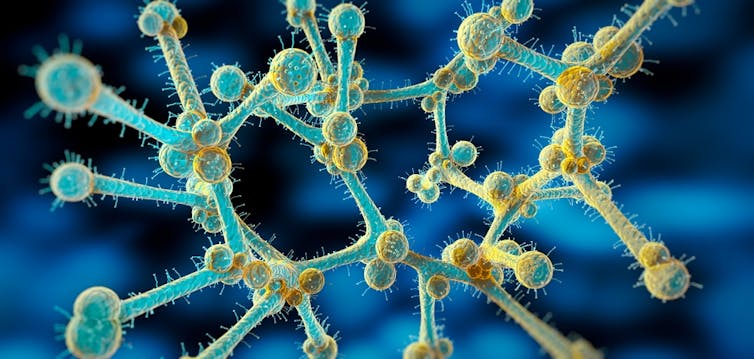
An illustration of C auris.
C auris was first discovered in 2009. It is now on every continent bar Antarctica.
peterschreiber.media/Shutterstock.com

How does it spread?

C auris spreads mainly in hospitals through direct contact with infected people or contaminated surfaces. The fungus produces proteins called adhesins that help it stick to surfaces, making it very hard to remove.

Why is it spreading so quickly?

C auris spreads quickly because hospitals struggle to detect and eliminate the fungus. People can carry it on their skin without symptoms, unknowingly bringing it into hospitals. And diagnosis is difficult. Standard laboratory tests misidentify C auris as more common yeasts. Hospitals need specialised methods to correctly identify it, so early cases go unidentified without access to these tools.

The fungus grows well at higher temperatures (optimally at 37-40°C), thriving on warm bodies. It also withstands routine disinfection. C auris forms biofilms – layers of microbial growth that prove extremely difficult to eliminate.

How common is it in Europe?

C auris has spread fast across Europe. Once limited to isolated cases, it now causes sustained hospital outbreaks. Between 2013 and 2023, there were over 4,000 cases, including 1,300 in 2023 alone.

The UK recorded 134 cases between November 2024 and April 2025 – a 23% increase compared with the previous six months.

In some European countries, the fungus has become endemic in hospitals, and true numbers may be higher because of limited testing.

Globally, C auris has reached every continent except Antarctica.

Scientists have identified distinct genetic groups that dominate in different regions, each varying in how easily they spread and how resistant they are to treatment, making control more difficult.

What are health authorities doing about it?

Health authorities recognise that they need to contain C auris and are taking action. The European Centre for Disease Prevention and Control has called for stronger surveillance, and the World Health Organization has placed C auris on its list of priority fungal pathogens.

In the UK, new guidance sets out practical steps for hospitals, highlighting the careful and responsible use of antifungal drugs as crucial for controlling the disease.

Can it be stopped?

Hospitals can stop or at least control C auris. Those acting quickly have successfully contained outbreaks. Experts stress that a critical window exists when rigorous measures can stamp out a single case or small outbreak. However, once C auris spreads widely in a hospital or region, it becomes extremely difficult to stop.

What’s being done about it?

Hospitals and governments need to act swiftly. Hospitals must strengthen their infection-control practices, while governments should mandate that every case of C auris is reported to health agencies so its spread can be tracked. Public health authorities can help by issuing clear guidance and expanding access to reliable tests, and specialised response teams should be ready to support hospitals during outbreaks.

What happens if it’s not contained?

If authorities allow C auris to spread unchecked, it could become a permanent healthcare menace, causing frequent outbreaks that mean higher costs, strained hospital capacity, and more illness and deaths.

We might also see C auris evolve even greater drug resistance through continued circulation. Scientists have already found some strains that resist all major antifungal drugs. This is why health authorities stress the need for immediate action while containing and limiting C auris remains possible. Without urgent action, this fungus could become a permanent fixture in hospitals, driving up infections,costs and deaths.

The Conversation

The authors do not work for, consult, own shares in or receive funding from any company or organisation that would benefit from this article, and have disclosed no relevant affiliations beyond their academic appointment.

ref. Deadly drug-resistant fungus spreading rapidly through European hospitals – https://theconversation.com/deadly-drug-resistant-fungus-spreading-rapidly-through-european-hospitals-265328

The UK, France, Canada and Australia have recognised Palestine – what does that mean? Expert Q+A

Source: The Conversation – UK – By George Kyris, Associate Professor in International Politics, University of Birmingham

The UK, France, Canada and Australia are among a group of nations that are moving to formally recognise the state of Palestine like most other states have done over the years. This move is a major diplomatic shift and turning point in one of the world’s most intractable conflicts. Here’s what it means.

What does it mean to recognise Palestine?

Recognising Palestine means acknowledging the existence of a state that represents the Palestinian people. Following from that, it also means that the recogniser can develop full diplomatic relations with representatives of this state – which would include exchanging embassies or negotiating government-level agreements.

Why have these countries moved together – and why now?

Diplomatic recognition, when done in concert, carries more heft than isolated gestures – and governments know this. A year or so ago, Spain tried to get European Union members to recognise Palestine together and when this was not possible opted to coordinate its recognition with Norway and Ireland only. Further away, a cluster of Caribbean countries (Barbados, Jamaica, Trinidad and Tobago, the Bahamas) also recognised Palestine around the same time.

By acting together, countries amplify the message that Palestinian statehood is not a fringe idea, but a legitimate aspiration backed by a growing international consensus. This collective recognition also serves to shield individual governments from accusations of unilateralism or political opportunism.

This wave of recognition comes now because of concern that Palestinian statehood is under threat, perhaps more than ever before. In their recognition statements, the UK and Canada cited Israel’s settlements in the West Bank in their reasoning.

The Israeli government has also revealed plans that amount to annexing Gaza, the other area that ought to belong to Palestinians. This is after months of assault on its people, which the UN commission of inquiry on the occupied Palestinian Territories and Israel found amounts to genocide. Public sentiment has also shifted dramatically in support of Palestine, adding to the pressure on governments.

Why do some say recognition isn’t legal?

Israel and some of its allies argue that the recognition is illegal because Palestine lacks the attributes of a functioning state, such as full control of its territory or a centralised government. Legal opinion on whether Palestine meets the criteria of statehood is divided. But, regardless, these criteria are not consistently used to recognise states.

In fact, many states have been recognised well before they had complete control over their borders or institutions. Ironically, the US recognised Israel in 1948, refuting critics that this was premature due to the lack of clear borders. Recognition has, therefore, always been political.

But even if we take a more legal perspective, the international community, through numerous UN and other texts has long recognised the right of Palestinians to have a state of their own.

Does recognition ‘reward Hamas’, as Israel claims?

Recognising a state does not mean you recognise those who govern it. At the moment, for example, many states do not recognise Taliban rule, but this doesn’t mean they have stopped recognising the existence of Afghanistan as a state.

Similarly, the fact that Netanyahu is under arrest warrant of the International Criminal Court for war crimes and crimes against humanity has not resulted in states withdrawing their recognition of the state of Israel and its people. Recognising a state is not the same as endorsing a specific government.

Not only that but all of the states that recently recognised Palestine have explicitly said that Hamas must play no role in a future government. France said that although it recognises the state of Palestine it won’t open an embassy until Hamas releases the hostages.

Will recognition make a difference?

The past few years have laid bare the limits of diplomacy in stopping the horrific human catastrophe unfolding in Gaza. This doesn’t leave much room for optimism. And, in a way, states taking brave diplomatic steps are, at the same time, exposing their reluctance to take more concrete action, such as sanctions, to press the government of Israel to end its war.

Still, the recognition brings the potential for snowball effects that would enhance the Palestinians’ international standing. They will be able to work more substantively with those governments who now recognise their state. More states may now also recognise Palestine, motivated by the fact others did the same.

Keir Starmer walking towards a microphone.
Starmer preparing to announce UK recognition of Palestine.
Number 10/Flickr, CC BY-NC-ND

And more recognition means better access to international forums, aid and legal instruments. For example, the UN’s recognition of Palestine as an observer state in 2011 allowed the International Court of Justice to hear South Africa’s case accusing Israel of genocide and the International Criminal Court to issue an arrest warrant for Netanyahu.

The implications for the Israeli government and some of its allies could also be significant. The US will now be isolated as the only permanent member of the UN Security Council not recognising Palestine. States that do not recognise Palestine will be in a dissenting minority and more exposed to critiques in international forums and public opinion.

This growing isolation may not force immediate changes and may not bother the current US administration, which often does not follow the logic of traditional diplomacy. Still, over time, the pressure on Israel and its allies to engage with a peace process may grow.

In the end, recognition from some of the world’s biggest players breaks their longstanding alignment with consecutive Israeli governments. It shows how strongly their public and governments feel about Israel’s threat to Palestinian statehood through annexation and occupation. For Palestinians, recognition strengthens their political and moral standing. For the government of Israel, it does the opposite.

But recognition alone is not enough. It must be accompanied by sustained efforts to end the war in Gaza, hold perpetrators of violence accountable and revive peace efforts towards ending the occupation and allow Palestinians their rightful sovereignty alongside Israel.

The Conversation

George Kyris does not work for, consult, own shares in or receive funding from any company or organisation that would benefit from this article, and has disclosed no relevant affiliations beyond their academic appointment.

ref. The UK, France, Canada and Australia have recognised Palestine – what does that mean? Expert Q+A – https://theconversation.com/the-uk-france-canada-and-australia-have-recognised-palestine-what-does-that-mean-expert-q-a-265790

It’s OK to use paracetamol in pregnancy. Here’s what the science says about the link with autism

Source: The Conversation – Global Perspectives – By Nicholas Wood, Professor, The Children’s Hospital at Westmead Clinical School, University of Sydney

United States President Donald Trump has urged pregnant women to avoid paracetamol except in cases of extremely high fever, because of a possible link to autism.

Paracetamol – known as acetaminophen or by the brand name Tylenol in the US – is commonly used to relieve pain, such as back pain and headaches, and to reduce fever during pregnancy.

Australia’s Therapeutic Goods Administration today re-affirmed existing medical guidelines that it’s safe for pregnant women to take paracetamol at any stage of pregnancy.

Paracetamol is classified as a Category A drug. This means many pregnant women and women of childbearing age have long used it without increases in birth defects or harmful effects on the fetus.

It’s important to treat fevers in pregnancy. Untreated high fever in early pregnancy is linked to miscarriage, neural tube defects, cleft lip and palate, and heart defects. Infections in pregnancy have also been linked to greater risks of autism.

How has the research evolved in recent years?

In 2021 an international panel of experts looked at evidence from human and animal studies of paracetamol use in pregnancy. Their consensus statement warned that paracetamol use during pregnancy may alter fetal development, with negative effects on child health.


Read more:
Take care with paracetamol when pregnant — but don’t let pain or fever go unchecked


Last month a a group of researchers from Harvard University examined the association between paracetamol and neurodevelopmental disorders including autism and attention-deficit hyperactivity disorder (ADHD) in existing research.

They identified 46 studies and found 27 studies reported links between taking paracetamol in pregnancy and neurodevelopmental disorders in the offspring, nine showed no significant link, and four indicated it was associated with a lower risk.

The most notable study in their review, due to its sophisticated statistical analysis, covered almost 2.5 million children born in Sweden between 1995 and 2019, and was published in 2024.

The authors found there was a marginally increased risk of autism and ADHD associated with paracetamol use during pregnancy. However, when the researchers analysed matched-full sibling pairs, to account for genetic and environmental influences the siblings shared, the researchers found no evidence of an increased risk of autism, ADHD, or intellectual disability associated with paracetamol use.

Siblings of autistic children have a 20% chance of also being autistic. Environmental factors within a home can also affect the risk of autism. To account for these influences, the researchers compared the outcomes of siblings where one child was exposed to paracetamol in utero and the other wasn’t, or when the siblings had different levels of exposure.

The authors of the 2024 study concluded that associations found in other studies may be attributable to “confounding” factors: influences that can distort research findings.

A further review published in February examined the strengths and limitations of the published literature on the effect of paracetamol use in pregnancy on the child’s risk of developing ADHD and autism. The authors noted most studies were difficult to interpret because they had biases, including in selecting participants, and they didn’t for confounding factors.

When confounding factors among siblings were accounted for, they found any associations weakened substantially. This suggests shared genetic and environmental factors may have caused bias in the original observations.

Working out what causes or increases the risk of autism

A key piece to consider when assessing the risk of paracetamol and any link to neurodevelopmental disorders is how best to account for many other potentially relevant factors that may be important.

We still don’t know all the causes of autism, but several genetic and non-genetic factors have been implicated: the mother’s medication use, illnesses, body mass index, alcohol consumption, smoking status, pregnancy complications including pre-eclampsia and fetal growth restriction, the mother and father’s ages, whether the child is an older or younger sibling, the newborn’s Apgar scores to determine their state of health, breastfeeding, genetics, socioeconomic status, and societal characteristics.

It’s particularly hard to measure the last three characteristics, so they are often not appropriately taken into account in studies.

Other times, it may not be the use of paracetamol that is important but rather the mother’s underlying illness or reason paracetamol is being taken, such as the fever associated with an infection, that influences child development.


Read more:
Autism is not a scare story: What parents need to know about medications in pregnancy, genetic risk and misleading headlines


I’m pregnant, what does this mean for me?

There is no clear evidence that paracetamol has any harmful effects on an unborn baby.

But as with any medicine taken during pregnancy, paracetamol should be used at the lowest effective dose for the shortest possible time.

If you’re pregnant and develop a fever, it’s important to treat this fever, including with paracetamol.

If the recommended dose of paracetamol doesn’t control your symptoms or you’re in pain, contact your doctor, midwife or maternity hospital for further medical advice.

Remember, the advice for taking ibuprofen and other NSAIDS when you’re pregnant is different. Ibuprofen (sold under the brand name Nurofen) should not be taken during pregnancy.

The Conversation

Nicholas Wood previously received funding from the NHMRC and has held a Churchill fellowship.

Debra Kennedy does not work for, consult, own shares in or receive funding from any company or organisation that would benefit from this article, and has disclosed no relevant affiliations beyond their academic appointment.

ref. It’s OK to use paracetamol in pregnancy. Here’s what the science says about the link with autism – https://theconversation.com/its-ok-to-use-paracetamol-in-pregnancy-heres-what-the-science-says-about-the-link-with-autism-265768

The thousand-year story of how the fork crossed Europe, and onto your plate today

Source: The Conversation – Global Perspectives – By Darius von Guttner Sporzynski, Historian, Australian Catholic University

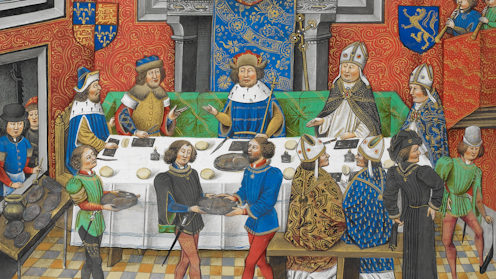
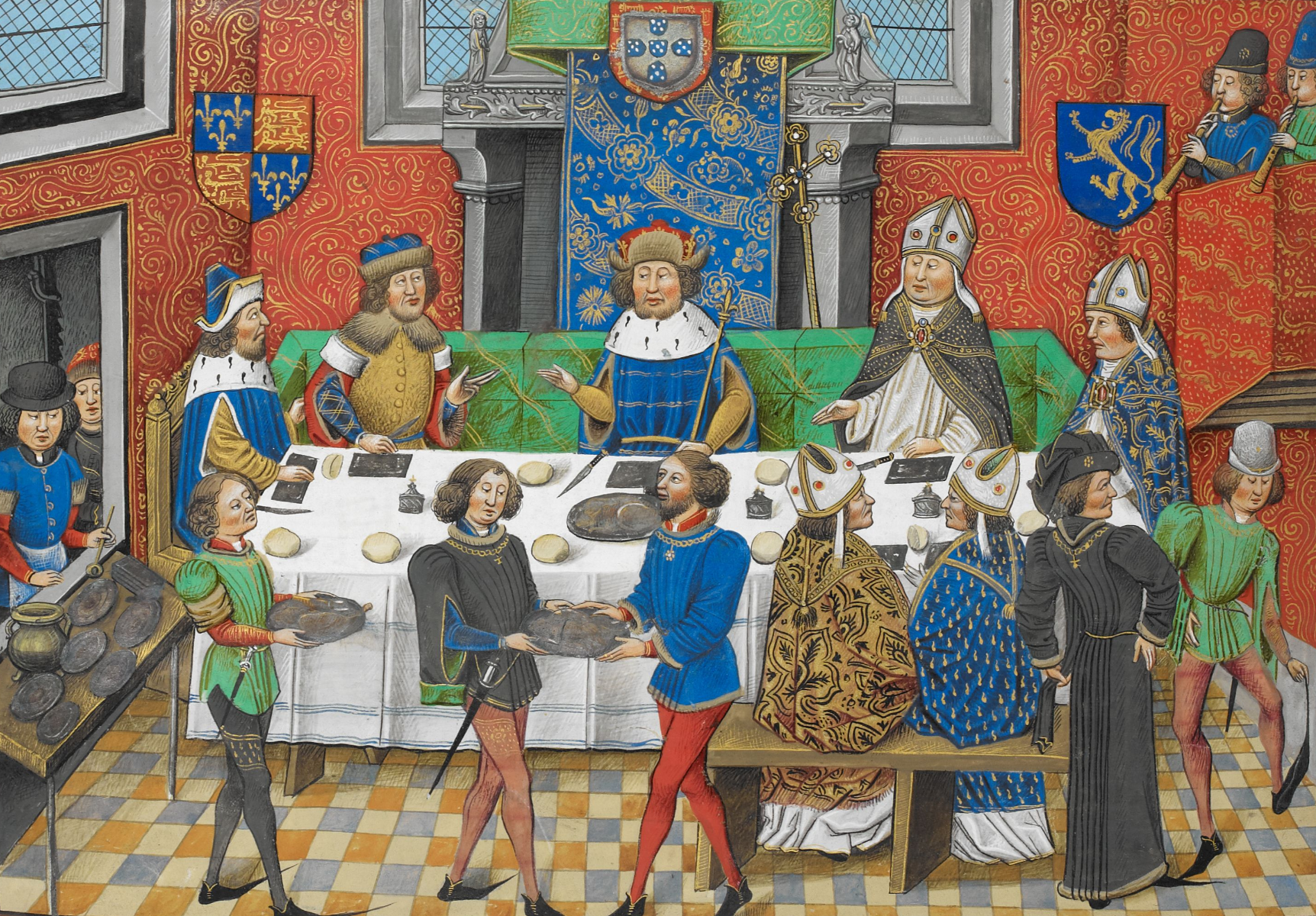
John of Gaunt dining with the King of Portugal, Chronique d’Angleterre, vol 3, late 14 century. Wikimedia Commons

In today’s world, we barely think about picking up a fork. It is part of a standard cutlery set, as essential as the plate itself. But not that long ago, this now-ordinary utensil was viewed with suspicion, derision and even moral outrage.

It took centuries, royal marriages and a bit of cultural rebellion to get the fork from the kitchens of Constantinople (today’s Istanbul) onto the dining tables of Europe.

A scandalous utensil

Early versions of forks have been found in Bronze Age China and Ancient Egypt, though they were likely used for cooking and serving.

The Romans had elegant forks made of bronze and silver, but again, mainly for food preparation.

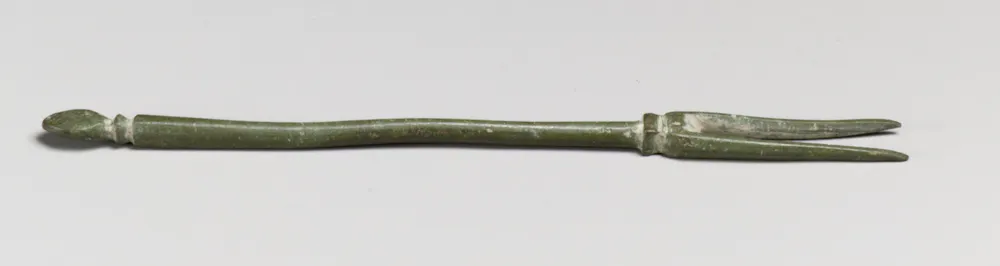
A green fork with two tines.
Bronze serving fork from Ancient Rome, c 2nd–3rd century CE.
Metropolitan Museum of Art

Eating with a fork – especially a small, personal one – was rare.

By the 10th century, Byzantine elites used them freely, shocking guests from western Europe. And by around the 11th century, the table fork began to make regular appearances at mealtimes across the Byzantine empire.

Bronze forks made in Persia during the 8th or 9th century.
Wikimedia Commons

In 1004, the Byzantine Maria Argyropoulina (985–1007), sister of Emperor Romanos III Argyros, married the son of the Doge of Venice and scandalised the city by refusing to eat with her fingers. She used a golden fork instead.

Later, the theologian Peter Damian (1007–72) declared Maria’s vanity in eating with “artificial metal forks” instead of using the fingers God had given her was what brought about divine punishment in the form of her premature death in her 20s.

Yet by the 14th century, forks had become common in Italy, thanks in part to the rise of pasta.

It was far easier to eat slippery strands with a pronged instrument than with a spoon or knife. Italian etiquette soon embraced the fork, especially among the wealthy merchant classes.

And it was through this wealthy class that the fork would be introduced to the rest of Europe in the 16th century by two women.

Enter Bona Sforza

Born in into the powerful families Sforza of Milan and Aragon of Naples, Bona Sforza (1494–1557) grew up in a world where forks were in use; more, they were in fashion.

Her family was used to the refinements of Renaissance Italy: court etiquette, art patronage, ostentatious dress for women and men, and elegant dining.

When she married Sigismund I, king of Poland and grand duke of Lithuania in 1518, becoming queen, she arrived in a region where dining customs were different. The use of forks was largely unknown.

Bowls, forks and a spoon made in Venice in the 16th century.
© The Trustees of the British Museum, CC BY-NC-SA

At courts in Lithuania and Poland, cutlery use was practical and limited. Spoons and knives were common for eating soups and stews, and the cutting of meat, but most food was eaten with the hands, using bread or trenchers – thick slices of stale bread that soaked up the juices from the food – for assistance.

This method was not only economical but also deeply embedded in courtly and noble dining traditions, reflecting a social etiquette in which communal dishes and shared eating were the norm.

Bona’s court brought Italian manners to the region, introducing more vegetables, Italian wine and, most unusually, the table fork.

Though her use of it was likely restricted at first to formal or court settings, it made an impression. Over time, especially from the 17th century onwards, forks became more common among the nobility of Lithuania and Poland.

Catherine de’ Medici comes to France

Catherine de’ Medici (1519–89) was born into the powerful Florentine Medici family, niece of Pope Clement VII. In 1533, aged 14, she married the future King Henry II of France as part of a political alliance between France and the Papacy, bringing her from Italy to France.

Catherine de’ Medici, introduced silver forks and Italian dining customs to the French court.

Like in the case of Bona Sforza, these arrived in Catherine’s trousseau. Her retinue also included chefs, pastry cooks, and perfumers, along with artichokes, truffles and elegant tableware.

Her culinary flair helped turn court meals into theatre.

While legends exaggerate her influence, many dishes now claimed as French, trace their roots to her Italian table: onion soup, duck à l’orange and even sorbet.

An Italian 15th century fork.
The Met

The ‘right’ way to eat

Like many travellers, the curious Englishman Thomas Coryat (1577–1617) in the early 1600s brought tales of fork-using Italians back home, where the idea still seemed laughably affected.

In England, using a fork in the early 1600s was a sign of pretension. Even into the 18th century, it was considered more masculine and more honest to eat with a knife and fingers.

But across Europe, change was underway. Forks began to be seen not just as tools of convenience, but symbols of cleanliness and refinement.

In France, they came to reflect courtly civility. In Germany, specialised forks multiplied in the 18th and 19th centuries: for bread, pickles, ice cream and fish.

And in England, the fork’s use eventually became a class marker: the “right” way to hold it distinguished the polite from the uncouth.

An etching of an old man and a fork from 1888.
Rijksmuseum

As mass production took off in the 19th century, stainless steel made cutlery affordable, and the fork became ubiquitous. By then, the battle had shifted from whether to use a fork to how to use it properly.

Table manners manuals now offered guidance on fork etiquette. No scooping, no stabbing, and always hold it tines down.

It took scandal, royal taste, and centuries of resistance for the fork to win its place at the table. Now it’s hard to imagine eating without it.

The Conversation

Darius von Guttner Sporzynski receives funding from the National Science Centre, Poland as a partner investigator in the grant “Polish queen consorts in the 15th and 16th centuries as wives and mothers” (2021/43/B/HS3/01490).

ref. The thousand-year story of how the fork crossed Europe, and onto your plate today – https://theconversation.com/the-thousand-year-story-of-how-the-fork-crossed-europe-and-onto-your-plate-today-260704

Do TikTok ‘anti-inflammatory diets’ really work?

Source: The Conversation – Global Perspectives – By Lauren Ball, Professor of Community Health and Wellbeing, The University of Queensland

Abraham Gonzalez Fernandez/Getty Images

“Cut out all dairy. Ditch gluten. Never touch sugar again.” More than 20 million people have watched TikTok videos listing these kinds of rules under the banner of “anti-inflammatory diets.”

The promise is simple: avoid entire food groups and you’ll lose weight, banish bloating and transform your health.

But while the idea of eating to reduce inflammation has a scientific foundation, the social media version strips out nuance and risks becoming unnecessarily restrictive.

Let’s check what’s going on.

What is inflammation?

People often think of inflammation as something to avoid at all costs, but it’s actually a healthy and normal process that helps the body heal and defend itself against infections, injuries, or diseases. Without it, we wouldn’t recover from even small injuries.

Inflammation and the immune system work together: when the body notices injury or infection, the immune system starts to trigger inflammation, which brings immune cells, nutrients and oxygen to the affected area. This helps with healing.

Inflammation can be short-term (acute) or long-term (chronic). Acute inflammation is helpful and part of normal healing. For example, a scraped knee becomes red, swollen and warm as the skin repairs, or a sore throat swells while fighting infection.

Chronic inflammation, on the other hand, can be harmful. It occurs at a low level over time and is often unnoticed, but is linked with many chronic diseases including heart disease, type 2 diabetes and cancer.

What causes chronic inflammation?

Factors such as age, smoking, sedentary behaviour, obesity, hormonal changes, stress and irregular sleep patterns have all been linked with chronic inflammation.

Diet also plays a key role. A typical Western diet, which is high in ultra-processed foods such as packaged baked goods, soft drinks, fast food, processed meats and confectionery, and low in fresh fruits and vegetables, has been strongly linked with higher levels of inflammation.

Can anti-inflammatory diets help?

Yes. What we eat can influence inflammation in the body. Diets rich in fruits, vegetables, wholegrains, legumes and healthy fats – and low in highly processed foods and added sugars – are associated with lower levels of inflammation.

The Mediterranean-style diet is the most researched example. It’s packed with vegetables, fruits, wholegrains, nuts, seeds and olive oil, with moderate amounts of fish, chicken, eggs and dairy, and minimal red or processed meat and added sugars.

In 2022, researchers reviewed the best available evidence and found people following a Mediterranean-type diet had lower levels of inflammatory markers in their blood, suggesting it can help reduce chronic inflammation.

Growing research also suggests diets high in processed foods and low in fibre can change the balance of bacteria in the gut, which may contribute to low-level, chronic inflammation.

Where TikTok gets it right… and wrong

Right: probiotics may help

Many TikTok videos recommend probiotic supplements to lower inflammation, and there is emerging science to support this. A 2020 review of randomised controlled trials (the strongest form of evidence) found probiotics may reduce some inflammatory blood markers in both healthy people and those living with a health condition.

But while promising, researchers caution more studies are needed to determine which strains and doses are most effective.

Wrong: ‘avoid lists’ (gluten, dairy) without a medical reason

TikTok advice to avoid dairy or gluten to reduce inflammation isn’t backed by strong science for most people.

Inflammation from dairy or gluten typically only occurs in those with allergies or coeliac disease, in which case, medical dietary restriction is necessary. Cutting them out without cause risks unnecessary nutrient gaps.

For the general population, systematic reviews show dairy products often have neutral or even protective effects on inflammation.

Plus, foods such as yogurt, kefir and certain cheeses are rich in probiotics, which are helpful in reducing inflammation.

Many people believe cutting out gluten will lower chronic inflammation and avoid it to help with gut issues or fatigue.

But there’s little scientific evidence to back this up. In fact, wholegrain consumption has been shown to positively affect health status by improving inflammation.

A Mediterranean-style diet already avoids most processed, gluten-heavy foods such as cakes, pastries, white bread, fast food and packaged snacks. If you feel sensitive to gluten, this way of eating naturally keeps your intake low, without the need to cut out nutritious wholegrains that can benefit your health.

Who might benefit from an anti-inflammatory diet?

For people with certain medical conditions, an anti-inflammatory eating pattern can play a useful role alongside conventional care.

Research suggests potential benefits for conditions such as polycystic ovary syndrome (PCOS), endometriosis, autoimmune conditions and arthritis, where chronic inflammation contributes to symptoms or disease progression.


Read more:
Could changing your diet improve endometriosis pain? A recent study suggests it’s possible


In these cases, dietary approaches should be guided by an accredited practising dietitian to ensure that changes are safe, balanced and tailored to individual needs.

The bottom line for healthy people

If you’re otherwise healthy, you don’t need to cut out entire food groups to reduce inflammation.

Instead, focus on balance, variety and minimally processed foods: essentially a Mediterranean-style eating pattern. Support your body’s natural defences with a colourful plate full of vegetables and fruit, enough fibre, healthy fats such as olive oil and nuts. No TikTok “avoid list” required.

Alongside a balanced diet, being physically active, getting good-quality sleep, drinking only minimal alcohol and not smoking all help the body keep inflammation in check. These healthy habits work together to strengthen the immune system and lower the risk of chronic disease.

The Conversation

Lauren Ball receives funding from the National Health and Medical Research Council, Health and Wellbeing Queensland, Heart Foundation, Gallipoli Medical Research and Mater Health, Springfield City Group. She is a Director of Dietitians Australia, a Director of the Darling Downs and West Moreton Primary Health Network and an Associate Member of the Australian Academy of Health and Medical Sciences.

Emily Burch does not work for, consult, own shares in or receive funding from any company or organisation that would benefit from this article, and has disclosed no relevant affiliations beyond their academic appointment.

ref. Do TikTok ‘anti-inflammatory diets’ really work? – https://theconversation.com/do-tiktok-anti-inflammatory-diets-really-work-265089

Fish ‘fingerprints’ in the ocean reveal which species are moving homes due to climate change

Source: The Conversation – Global Perspectives – By Chloe Hayes, Postdoctoral Researcher in Marine Ecology, University of Adelaide

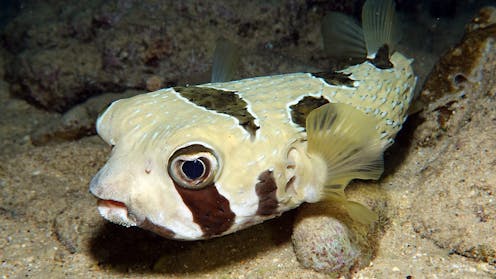
Blackblotched porcupinefish (_Diodon liturosus_). Glen Whisson/iNaturalist, CC BY-ND

Species across the planet are on the move. Climate change has already caused more than 12,000 species to shift their homes across land, freshwater and the sea. They move to escape unfavourable conditions or to explore ecosystems that were previously inaccessible.

In the ocean, some tropical fish are “packing their bags” and moving into temperate reefs to seek cooler waters. These migrations are already happening along the east coast of Australia, which is considered one of the fastest-warming marine regions on Earth. New coral and fish species are regularly arriving in Sydney’s oceans, and this is expected to increase with future climate change.

These newcomers are traditionally monitored through visual surveys by researchers or citizen scientists. But many of these early arrivals are small, rare, nocturnal or live in caves, which means they can be easily missed. As a result, we may be underestimating the true rate of species on the move.

That is where our new research, published in Diversity and Distributions, comes in. We took off our marine ecologist hats and became forensic scientists, searching the water for clues about species on the move. By analysing fragments of DNA drifting in the ocean, we set out to discover the hidden shifts in fish communities that traditional visual surveys can overlook.

Genetic fingerprints floating in the ocean

Every organism leaves behind traces of itself in the environment. Fish shed mucus, scales and waste – all of which contain DNA. By collecting and filtering samples of seawater, we can extract this environmental DNA – or eDNA, as it’s more commonly known – and identify the species that are there.

The technique works much like forensic science. Just as detectives solve crimes by analysing fingerprints or hair left at a scene, ecologists can build a picture of marine life from the genetic fingerprints floating invisibly in the ocean.

Small vials of water in a grey holder.
Samples of eDNA can hold invisible genetic fingerprints of hundreds of species.
Chloe Hayes

The idea of eDNA began in the 1980s when scientists discovered they could collect DNA directly from soil or water samples. At first it was used to study microbes. But by the early 2000s researchers realised it could also reveal larger animals and plants.

Today, eDNA is being used everywhere – from soil to rivers and oceans – to discover hidden or threatened species, track biodiversity, and even study ancient ecosystems preserved in sediments.

Surveying 2,000km of coastline

To test how well eDNA can reveal species on the move, we surveyed fish communities along 2,000 kilometres of Australia’s east coast. Our sites ranged from the tropical reefs of the Great Barrier Reef, through to subtropical waters, and down to the temperate kelp forests of New South Wales.

At each site, we conducted traditional visual surveys, swimming along defined rectangular areas known as transect belts and recording every fish we saw. These surveys remain the standard for monitoring marine biodiversity and have built decades of valuable data.

A diver swimming along a path through kelp.
Visual surveys remain the standard for monitoring marine biodiversity.
Angus Mitchell

Alongside these surveys, we collected bottles of seawater for DNA analysis. A few litres of water might not look like much, but it holds invisible genetic fingerprints of hundreds of species.

Back in the lab, we filtered the samples to capture the DNA, then sequenced them to reveal a snapshot of which species were in the area.

Detecting tropical species in temperate ecosystems

When we compared traditional visual surveys with eDNA water samples, the results were interesting. Each method revealed a somewhat different fish community, but together they gave us a far more complete picture than either method could on its own.

The eDNA detected tropical species in temperate ecosystems that had never been recorded there before. These included herbivores such as the lined surgeonfish (Acanthurus lineatus), the striated surgeonfish (Ctenochaetus striatus), and the common parrotfish (Scarus psittacus), and cryptic species such as the black-blotched porcupinefish (Diodon liturosus), the silver sweeper (Pempheris schwenkii), and the speckled squirrelfish (Sargocentron punctatissimum) that hide in caves or only emerge at night.

These are exactly the kinds of fish divers are most likely to miss.

A red fish swimming near rocks.
The speckled squirrelfish (Sargocentron punctatissimum) is a cryptic tropical species that had never been recorded in temperate ecosystems before.
kueda/iNaturalist, CC BY-NC-SA

For temperate species, this pattern flipped. Divers were often better at detecting them than eDNA was. This showed us eDNA is not a replacement for traditional visual surveys, but a powerful complement. By combining the two, we can better track species on the move, giving us the clearest view yet of how climate change is reshaping our reefs.

These migrations are not unique to Australia. Around the world, species are shifting their ranges as climate change alters temperatures, ocean currents and habitats. While some species may thrive in their new homes, others may struggle to adapt, or be pushed out.

Tracking these shifts is crucial for understanding how climate change is transforming our oceans, and it means we need better ways to detect which species are on the move.

The Conversation

Ivan Nagelkerken receives funding from the Australian Research Council.

Angus Mitchell, Chloe Hayes, and David Booth do not work for, consult, own shares in or receive funding from any company or organisation that would benefit from this article, and have disclosed no relevant affiliations beyond their academic appointment.

ref. Fish ‘fingerprints’ in the ocean reveal which species are moving homes due to climate change – https://theconversation.com/fish-fingerprints-in-the-ocean-reveal-which-species-are-moving-homes-due-to-climate-change-264683

Even as Jimmy Kimmel returns to the airwaves, TV networks remain more vulnerable to political pressure than ever before

Source: The Conversation – USA (2) – By Sage Meredith Goodwin, Postdoctoral Fellow at the Center for American Political History and Technology, Purdue University

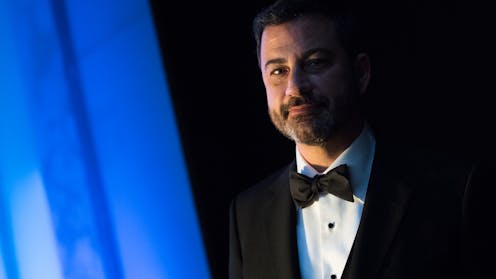
ABC briefly suspended ‘Jimmy Kimmel Live!’ after the host made controversial remarks about the shooting of conservative activist Charlie Kirk. Emma McIntyre/Getty Images for Turner

“Is there any way we can screw him?” asked President Richard M. Nixon.

“We’ve been trying to,” an aide replied, alluding to the White House’s efforts to remove from the airwaves an ABC talk show host whose critiques of the administration had placed that “son of a b—h” on the chief executive’s enemies list.

Over 50 years ago, Nixon and his team sought to use the full weight of the federal government – with calls to network executives, Federal Communications Commission complaints, IRS audits and FBI investigations – to silence “The Dick Cavett Show.”

Cavett, who seemed to personify the liberalism that Nixon despised, had drawn the president’s ire by platforming anti-war activists like John Kerry and Jane Fonda, along with left-wing radicals such as Stokely Carmichael.

Nixon ultimately failed in his attempt to silence Cavett. ABC executives were committed to independent media, while the broadcasting industry as a whole had garnered the attention and trust of an enormous audience, which insulated them from political pressure.

It’s a sharp contrast to President Donald Trump’s second term, during which he has loudly announced his desire to rid the nation’s televisions of his critics, and is making headway in doing so. In July 2025, CBS announced the cancellation of Stephen Colbert’s late night show. While the network maintained this was “purely a financial decision” based on ratings, it came in the wake of Colbert mocking both the president and the network.

I hear Kimmel is next,” Trump crowed in the days after. Lo and behold, ABC briefly suspended Jimmy Kimmel on Sept. 17 over comments the comedian made about the response to the murder of right-wing activist Charlie Kirk. The suspension was lifted five days later, after it generated widespread backlash and became a flash point for free speech debates in the U.S.

But why has Trump been able to shake up late-night TV in ways Nixon never could?

It’s tempting to think of the network era – those decades in the 20th century when CBS, NBC and ABC dominated television – as a golden age of independent broadcasting and free expression.

However, as political historians of media, we know from our research that TV has always been a battleground of politics, business interests and broadcasting ideals.

The apparent appeasement of Trump by network executives shows just how much has changed in both the media and regulatory landscape since Nixon’s time.

Television’s decline

Direct pressure from the White House was the immediate catalyst for ABC’s decision to briefly pull the plug on Kimmel.

Brendan Carr, the chair of the FCC, threatened ABC and its affiliates while speaking on the podcast of right-wing commentator Benny Johnson.

“These companies can find ways to change conduct to take action on Kimmel,” he said, “or, you know, there’s going to be additional work for the FCC ahead.” Soon, Nexstar and Sinclair, which own dozens of ABC affiliates, announced that they would pull the show, forcing ABC to act.

That said, network television’s fading place in the American media ecosystem probably made the call a whole lot easier.

When Nixon was trying to nix “The Dick Cavett Show,” the program averaged 5 million viewers a night. The rival “Tonight Show Starring Johnny Carson” regularly pulled in 11 million viewers.

Yet even Cavett’s relatively smaller audience is more than double what Kimmel and his colleagues in late night television can count on today.

The rise of cable loosened the networks’ chokehold on TV news and entertainment in the late 20th century. The internet – followed by the advent of podcasts, streaming and social media – merely accelerated this trend.

By the 2010s, more viewers were watching clips of late night talk shows on their phones and computers than on television. Today, over 40% of people under 30 say they don’t watch broadcast or cable TV.

Kimmel does have over 20 million subscribers on YouTube and millions more on social media, but ABC has struggled to monetize this following.

In short, late night is no longer the TV crown jewel it once was. As a result, it’s far easier for executives to decide to cut the cord on a Kimmel or a Colbert.

Deregulation and consolidation

Broadcasting has always been a business where those at the top are swayed by the bottom line.

But back in Cavett’s day, top decision-makers at the networks were still dyed-in-the-wool broadcasting executives. Leonard Goldenson, the president of ABC whom Nixon’s aides hounded, had created the network from scratch and was invested in the ideals of independent media. Over at CBS, founder William S. Paley had spent decades building the network’s brand and reputation and held similar beliefs. They wanted to shield the respectability of their networks, which made them more resolute when confronted with political attacks.

Now, however, the ultimate decisions about what happens at ABC and CBS are made by executives at the megacorporations that own them.

Decades of deregulation – in particular, the Telecommunications Act of 1996, which spurred a wave of media mergers and consolidation – have allowed broadcasting today to be dominated by a handful of massive conglomerates. They own not only the networks, but also studios, cable channels and internet services.

These media giants need government approval to further expand their empires. This includes the US$8 billion merger that made Paramount Skydance the owner of CBS in summer 2025 – a deal that was approved just a week after CBS announced the cancellation of “The Late Show with Stephen Colbert.” Disney, which owns ABC, also has major deals pending that require the government’s go-ahead.

If the ultimate goal is ever-increasing profits for shareholders, getting rid of a late night show may seem like a small price to pay – especially if a particular program threatens the government’s sign-off on a massive deal.

Charging ‘liberal bias’

The decline of ratings and media consolidation has left television more vulnerable to attempts at political intimidation than ever before.

Trump is far from the first conservative to use the television networks as a political punching bag. His strategy of tarring national broadcasters with the brush of “liberal media bias” can be traced back to right-wing media activists who, as early as the 1940s, argued that the mainstream media shut out conservative ideas and voices.

Elderly female holds sign reading 'Disney/ABC bows to Trump extortion.'
People protest in New York City against ABC’s decision to suspend Jimmy Kimmel from his late night show.
Stephanie Keith/Getty Images

Nixon, convinced that the nation’s television industry was against him, brought those tactics to the White House. In public, he relied on his vice president, Spiro Agnew, to slam the networks as part of an irresponsibly hostile liberal “unelected elite” with “vast power.” In private, Nixon abused the office of the presidency to harass and intimidate broadcasting reporters, directors and executives.

These tactics largely failed. But in Nixon’s wake, partisan media activists like former Fox News executive Roger Ailes and radio host Rush Limbaugh continued to popularize the idea of “liberal media bias” within the conservative movement.

Today, Trump’s charges of “liberal bias” or “fake news” galvanize his supporters – and make media executives sweat – because they’re a key part of modern right-wing identity.

But the president’s no-holds-barred approach is unprecedented. By threatening broadcasting licenses, instigating investigations and filing lawsuits – all while declaring the mainstream media “the enemy of the people” – Trump has turned the dial up to 11.

His administration’s success in temporarily getting Kimmel off the air is obviously one more chapter in an ongoing crisis for free speech. Unfortunately, given the trends in the relationship between American media and politics over the past half-century, it likely won’t be the last.

The Conversation

The authors do not work for, consult, own shares in or receive funding from any company or organization that would benefit from this article, and have disclosed no relevant affiliations beyond their academic appointment.

ref. Even as Jimmy Kimmel returns to the airwaves, TV networks remain more vulnerable to political pressure than ever before – https://theconversation.com/even-as-jimmy-kimmel-returns-to-the-airwaves-tv-networks-remain-more-vulnerable-to-political-pressure-than-ever-before-265653

UK, France and other Western nations recognize Palestinian state ahead of UN meetings – but symbolic action won’t make statehood happen

Source: The Conversation – Global Perspectives – By Maha Nassar, Associate Professor in the School of Middle Eastern and North African Studies, University of Arizona

Pro-Palestinian Americans gather in New York at a march to the U.N. on Sept. 18, 2025. Selcuk Acar/Anadolu via Getty Images

Recognition of a Palestinian state is likely to dominate proceedings at the U.N. beginning Sept 23, 2025, when world leaders will gather for the annual general assembly.

Of the 193 existing U.N member states, some 152 now recognize a Palestinian state. Ahead of the U.N. gathering in New York, Australia, France, Canada and the United Kingdom became the latest to add their names. That number is expected to increase in the coming days, with several more countries expected to officially announce similar recognition.

That a host of Western nations are adding their names to the near-universal list of Global South countries that already recognize a Palestinian state is a major diplomatic win for the cause of an independent, sovereign and self-governed nation for Palestinians. Conversely, it is a massive diplomatic loss for Israel – especially coming just two years after the West stood shoulder to shoulder with Israel following the Oct. 7 attack by Palestinian militant group Hamas.

As a scholar of modern Palestinian history, I know that this diplomatic moment is decades in the making. But I am also aware that symbolic diplomatic breakthroughs on the issue of Palestinian statehood have occurred before, only to prove meaningless in the face of events that make statehood less likely.

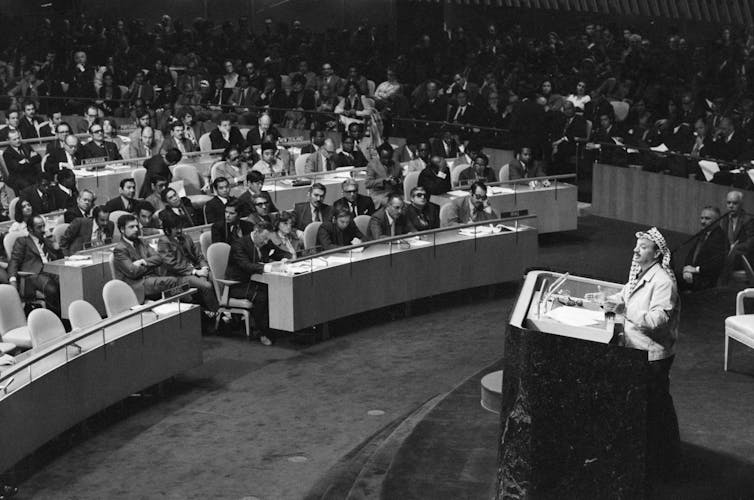
A man gives a speech before a crowd.
‘I have come bearing an olive branch and a freedom fighter’s gun,’ PLO leader Yasser Arafat said before the United Nations General Assembly in 1974.
Bettmann / Contributor

The non-state reality

The fight for Palestinian statehood can be traced back to at least 1967. Over the course of a six-day war against a coalition of Arab states, Israel conquered and expanded its military control over the remainder of what was historic Palestine – a stretch of land that extends from the Jordan River in the east to the Mediterranean Sea in the west.

At the war’s conclusion, Israel had taken control of the West Bank, East Jerusalem and the Gaza Strip.

Unlike after the 1948 war that led to its independence, Israel opted not to extend Israeli citizenship to Palestinians living in the newly conquered areas. Instead, the Israeli government began to rule over Palestinians in these occupied territories through a series of military orders.

These orders controlled nearly every aspect of Palestinian life – and many remain in effect today. For example, if a Palestinian farmer wants to harvest his olive trees near a Jewish settlement in the West Bank, they need a permit. Or
if a Gazan worker wants to work inside Israel, they need Israeli permission. Even praying in a mosque or church in East Jerusalem is dependent on obtaining a permit.

This permit system served as a constant reminder to Palestinians living in the occupied territories that they lacked control over their own daily lives. Meanwhile, Israeli authorities tried to squash the idea of Palestinian nationhood through policies such as outlawing public displays of the Palestinian flag. That, and other expressions of Palestinian national identity in the occupied territories, could result in up to 10 years in prison.

Such policies fit a belief, expressed in 1969 by then Israeli Prime Minister Golda Meir, that there was “no such thing in this area as Palestinians.”

The rise of Palestinian nationalism

Around the same time that Meir made that comment, Palestinians started organizing around the idea of statehood.

Although the idea had been floated before, statehood was codified into official doctrine in a resolution in February 1969 in Egypt. It occurred during a session of the Palestine National Council, the legislative body of the Palestine Liberation Organization, which formed in 1964 as the official representative of Palestinians in the occupied territories.

That resolution called for a free, secular democratic state in Palestine – including all of the State of Israel – in which Muslims, Christians and Jews would all have equal rights.

From that moment on, the Palestinian struggle against Israeli occupation took twin paths: diplomatic pressure and armed resistance.

But events on the ground undermined the idea of a single state for all along the lines envisioned by the Cairo resolution.

The 1973 Arab-Israeli War’s inconclusive ending opened the door to greater diplomacy between Israel and the Arab states. Egypt and Israel decided that diplomacy would help them achieve their aims, culminating in the Egyptian-Israeli peace treaty of 1979. But the treaty also left the Palestinians without unified Arab support.

Meanwhile, throughout the 1970s, the Israeli occupation deepened and entrenched with the building of Israeli settlements, especially in the West Bank.

A man throws out his arms to make a point while he stands at a lectern.
Yasser Arafat addresses the United Nations General Assembly in 1974.
Bettmann / Contributor

The PLO responded in 1974 by issuing what became known as the 10-Point Plan, where they pivoted to seeking the establishment of a national authority in any part of historic Palestine that could be liberated.

It was, in effect, a way of threading the needle: It signaled to moderates that the PLO was adopting a more gradualist position, while also telling the group’s rejectionist front – which opposed peace negotiations with Israel – that they were not giving up completely on the idea of liberating all of Palestine.

Then in 1988 – a year into the first Palestinian intifada, or uprising – the PLO unilaterally declared Palestinian independence on the territories occupied in 1967.

The move was largely symbolic – the West Bank, Gaza and East Jerusalem were still under occupation, and the PLO was then in exile in Tunisia.

But it was nonetheless significant. It represented the bringing together of Palestinians in exile – most of whom were from towns and villages that were now part of the State of Israel – with Palestinians in the occupied territories.

The declaration itself was written by Palestinian poet Mahmoud Darwish, who grew up inside Israel, and declared by Yasser Arafat, the PLO leader in exile.

It was also a moment of tremendous hope and possibility for Palestinians. What most Palestinians wanted was for the international community to recognize them as a national body, deserving of a seat at the table with other nation-states.

Compromise and rejection

Yet at the same time, many Palestinians saw the declaration as a huge compromise. The West Bank, Gaza Strip and East Jerusalem comprise about 22% of historic Palestine. So the declaration effectively meant that Palestinians were giving up on the other 78% of what they saw as their land.

Reaction from the international community to the PLO’s declaration was split. Many formerly colonized countries of the Global South recognized Palestinian independence right away. By the end of the year, some 78 countries had issued statements recognizing Palestine as a state.

Israel rejected it outright, as did United States and most Western nations.

Such was Washington’s opposition that the U.S. denied Arafat a visa ahead of his planned address to the United Nations at its New York City headquarters. As a result, the December 1988 meeting had to be moved to Geneva.

While refusing to accept Palestinian statehood, the U.S. and Israel did begin to recognize the PLO as a representative body of the Palestinian people. This was part of the Oslo Accords – a diplomatic process that many believed would outline a road map for an eventual two-state solution.

While some Palestinians saw the Oslo Accords as a diplomatic breakthrough, others were more skeptical. Prominent Palestinians, including Darwish and Palestinian-American professor Edward Said, believed that Oslo was a poison pill: While framed as a step toward a two-state solution, the agreement said nothing about a Palestinian state in the interim. It only said that Israel would recognize the PLO as a representative of the Palestinian people.

In reality, the Oslo Accords have not lead to statehood. Rather, they created a system of fragmented autonomy under the newly created Palestinian Authority that, though meant to be interim, has in effect become permanent.

The Palestinian Authority was allowed only limited powers and deprived of real independence. While it had some say over schooling, health care and municipal services, Israel maintained control of Palestinian land, resources, borders and the economy. That remains true today.

Renewed push for statehood recognition

Disillusionment over the Oslo Accords contributed to the second, far more violent, intifada from 2000 to 2005.

Mahmoud Abbas, the leader of the Palestinian Authority after Arafat, responded by pushing again for international recognition for statehood.

And in 2012, the U.N. General Assembly voted to upgrade Palestine’s status, elevating it from a “nonmember observer” to a “nonmember observer state.”

Two men shake hands.
The Palestinian delegation at the U.N. General Assembly before the vote to upgrade Palestinian status to a nonmember observer state in 2012.
Stan Honda/AFP via Getty Images

In theory, this meant Palestinians now had access to international bodies, like the International Criminal Court and the International Court of Justice.

But any meaningful change in the status of Palestinian sovereignty would need to come through the U.N. Security Council, not the U.N. General Assembly.

The U.S. remains opposed to Palestinians gaining statehood independent of the Oslo process. So long as the U.S. has a veto on the Security Council, achieving a truly sovereign Palestinian state will likewise be off the table. And that remains the case, regardless of what individual members – even fellow Security Council members like France and the U.K – do.

In fact, many Palestinians and other critics of the status quo say Western nations are using the issue of Palestinian statehood to absolve them from the far more challenging diplomatic task of holding Israel accountable for what a U.N. body just described as a genocide in Gaza.

This article is based on a conversation between Maha Nassar and Gemma Ware for The Conversation Weekly podcast.

The Conversation

Maha Nassar does not work for, consult, own shares in or receive funding from any company or organization that would benefit from this article, and has disclosed no relevant affiliations beyond their academic appointment.

ref. UK, France and other Western nations recognize Palestinian state ahead of UN meetings – but symbolic action won’t make statehood happen – https://theconversation.com/uk-france-and-other-western-nations-recognize-palestinian-state-ahead-of-un-meetings-but-symbolic-action-wont-make-statehood-happen-265534