Russia’s full-scale invasion of Ukraine outlasts the Soviet fight with the Nazis – here’s what history tells us about Kyiv’s prospects

Source: The Conversation – UK – By Stefan Wolff, Professor of International Security, University of Birmingham

Russia’s so-called “special military operation” in Ukraine passed a significant milestone on January 13. It has now outlasted the 1,418 days it took Vladimir Putin’s notorious predecessor, the Soviet dictator Joseph Stalin, to bring his war against Nazi Germany to a successful conclusion.

The two wars are hard to compare in any reasonable way. But there are nonetheless some important parallels worth pointing out. Perhaps the most wishful parallel is that aggression never pays.

After some initial setbacks, Stalin’s Soviet Union turned things around on the battlefield and drove the German aggressors and their allies out of the country. This was possible because of the heroism of many ordinary Soviet citizens and because of the massive support the US gave to the Soviet war effort.

Ukrainian heroism is unquestionably key to understanding why Russia has not prevailed in its aggression against Ukraine. Support from western allies is, of course, also part of this explanation. But the inconsistent, often hesitant and at times lacklustre nature of this support also explains why Kyiv is increasingly on the back foot.

It would be easy to put most of the blame for recent Ukrainian setbacks on the US president, Donald Trump, and his approach to ending the war. Back in the second world war, there were several German attempts to cut a deal with the western allies in order to be able to focus the entire war effort against the Soviet Union. Such efforts were consistently rebuffed and the anti-Nazi coalition remained intact until Germany’s surrender.

Now, by contrast, a deal is more likely than not to be made between Trump and Putin. Emboldening rather than weakening Russia, such a deal would come at the steep price of Ukrainian territorial concessions and the continuing threat of further Russian adventurism in Europe.

But it is also important to remember that Trump has only been back in the White House for a year, and that Russia’s full-scale invasion of Ukraine started almost four years ago. During the first three of these years, the western coalition supporting Ukraine firmly stood its ground against any concessions to Russia in the same way as the allies of the second world war rejected a deal with Germany.

What they did not do, however, is offer the unconditional and unlimited support that would have put Ukraine in a position to defeat the aggressor. Endless debates over what weapons systems should be delivered, in which quantities, how fast and with what conditions attached have rightly frustrated Ukrainians and their war effort. This may have become worse under Trump, but it did not start with him.

Nor can all the blame for the dire situation in which Ukraine now finds itself be attributed only to the imperfections of the support it received. Lest we forget, Russia committed the unprovoked crime of aggression against its neighbour and is violating key norms of international humanitarian law on a daily basis with its relentless campaign against Ukraine’s critical infrastructure.

Yet several major corruption scandals in Ukraine, including one that left key energy installations insufficiently protected against Russian air raids, have hampered Kyiv’s overall war effort as well. They have undermined the country’s resilience, weakened public and military morale and have made it easier for Ukraine’s detractors in the west to question whether defending the country is worth taxpayers’ money.

The parallel to the second world war is again interesting here. There is now much hand wringing in the west over corruption in Ukraine – a problem as old as the country has been independent – and the democratic legitimacy of its president, government and parliament.

Volodymyr Zelensky, the democratically elected and still widely supported leader of a country defending itself against an existential threat, also has to justify constantly why he will not violate his country’s constitution and sign over territory to its aggressive neighbour.

But back in the 1940s, western allies had few qualms to support Stalin. They supported Stalin despite him being a murderous dictator who had used starvation as a tactic to commit acts of genocide against Ukrainian farmers, executed almost the entire officer corps of the Polish army and was about to carry out brutal mass deportations of tens of millions of people.

On the fence

The choices the western allies made in the 1940s when they threw their support behind Stalin may have been morally questionable. But they were driven by a keen sense of priorities and a singular focus on defeating what was at the time the gravest threat.

That too is missing today, especially in Trump’s White House. Not only does Trump seem to find it hard to make up his mind whether it is Putin or Zelensky who is to blame for the war and the lack of a peace deal, he also lacks the sense of urgency to give this war his undivided attention.

Worse than that, some of the distractions Trump is pursuing are actively undermining efforts to achieve peace. Threatening to take over Greenland, an autonomous part of staunch US and Nato ally Denmark, hardly sends the message of western unity that Putin needs to hear to bring him to the negotiating table.

Other distractions, like the military operation against Venezuela and the threats of renewed strikes against Iran, create yet more uncertainty and instability in an already volatile world. They stretch American resources and highlight the hypocrisy and double standards that underpin Trump’s America-first approach to foreign policy.

Putin is neither Hitler nor Stalin. But Trump is not comparable to American wartime leaders Roosevelt or Truman either, and there is no strong leader like Churchill in sight in Europe. The war in Ukraine, therefore, is likely to mark a few more milestones of questionable achievement before there might be another opportunity to prove again that aggression never pays.

The Conversation

Stefan Wolff is a past recipient of grant funding from the Natural Environment Research Council of the UK, the United States Institute of Peace, the Economic and Social Research Council of the UK, the British Academy, the NATO Science for Peace Programme, the EU Framework Programmes 6 and 7 and Horizon 2020, as well as the EU’s Jean Monnet Programme. He is a Trustee and Honorary Treasurer of the Political Studies Association of the UK and a Senior Research Fellow at the Foreign Policy Centre in London.

ref. Russia’s full-scale invasion of Ukraine outlasts the Soviet fight with the Nazis – here’s what history tells us about Kyiv’s prospects – https://theconversation.com/russias-full-scale-invasion-of-ukraine-outlasts-the-soviet-fight-with-the-nazis-heres-what-history-tells-us-about-kyivs-prospects-273383
Most of the world just agreed on something: a new treaty to protect our oceans

Source: The Conversation – UK – By Gemma Ware, Host, The Conversation Weekly Podcast, The Conversation

gabrielvieiracosta/Shutterstock

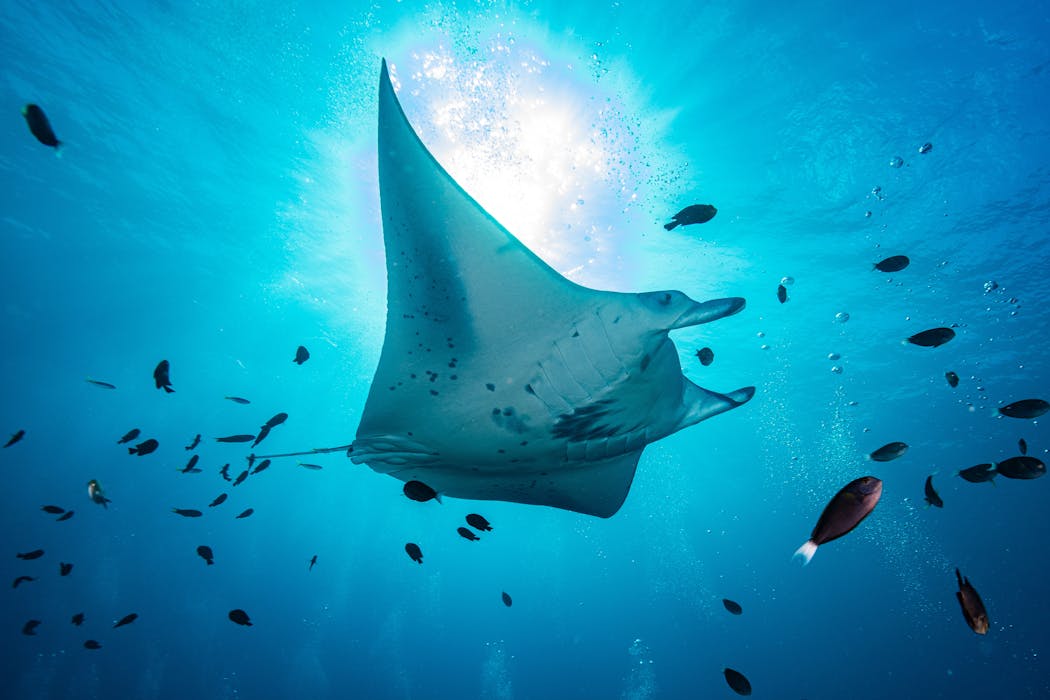
In a moment being celebrated by global marine conservationists, a new UN high seas treaty comes into force on January 17 providing a new way to govern the world’s oceans.

Formally known as the Biodiversity Beyond National Jurisdiction agreement, it will allow for the creation of protected areas in international waters, like national parks. It will also set out ways of sharing genetic materials from the high seas – and any future profits derived from them.

Agreed in June 2023, the treaty enters into force after Morocco became the 60th country to ratify it in September. Since then it has been ratified by a further 21 countries, and signed by another 64 who are committed to doing so. There are some notable absences. Russia has not signed the treaty. The US signed it in 2023 under the Biden administration, but has not ratified it.

The treaty has some grey areas – notably its powers to regulating fishing in international waters. It also won’t be able to regulate mining on the seabed, something already covered by the International Seabed Authority.

Yet, at a time of heightened geopolitical tensions, this is a rare moment when most of the world has come together in agreement to try and protect our oceans. In this episode of The Conversation Weekly podcast, we speak to Callum Roberts, professor of marine conservation at the University of Exeter in the UK, about how the treaty came to be and the challenges now facing its implementation.

“I think that the high seas treaty will be breaking new ground for international regulation because at the moment what we have doesn’t do the job effectively,” says Roberts, adding that “this will be a test of our ability to move in a cooperative direction.”

Listen to the interview with Callum Roberts on The Conversation Weekly podcast. You can also read more about the high seas treaty on The Conversation.

This episode of The Conversation Weekly was written and produced by Mend Mariwany and Gemma Ware. Mixing by Michelle Macklem and theme music by Neeta Sarl. Gemma Ware is the executive producer.

Newsclips in this episode from France 24 English.

Listen to The Conversation Weekly via any of the apps listed above, download it directly via our RSS feedor find out how else to listen here. A transcript of this episode is available via the Apple Podcasts or Spotify apps.

The Conversation

Callum Roberts receives funding from Convex Insurance Group and EU Synergy, and UK Natural Environment Research Council. He is a board member of Nekton and Maldives Coral Institute. He was awarded a Pew Fellowship in Marine Conservation in 2000.

ref. Most of the world just agreed on something: a new treaty to protect our oceans – https://theconversation.com/most-of-the-world-just-agreed-on-something-a-new-treaty-to-protect-our-oceans-273500

As US and Denmark fight, Greenland’s voices are being excluded once again

Source: The Conversation – UK – By Anna Katila, Presidential Fellow, School of Policy & Global Affairs, City St George’s, University of London

Danish foreign minister, Lars Løkke Rasmussen, has said there is still a “fundamental disagreement” over the future of Greenland following talks at the White House.

The US president, Donald Trump, has repeatedly stated that he wants Greenland to become part of the US, warning that only America can protect Greenland from Russia and China. As Vice-President J.D. Vance and Secretary of State Marco Rubio were meeting the Danish and Greenlandic foreign ministers, the White House posted an image on X portraying Greenland at crossroads between the sunny US and the doom of Russia and China.

The meeting was held amid announcements that Denmark and Greenland are strengthening military presence in the Arctic with European Nato allies.

Denmark’s leaders have reacted strongly in rejecting the push by Trump to acquire Greenland, saying that the island, as a territory of the Kingdom of Denmark, must not be either sold or taken by force. But Greenlandic politicians were dissatisfied with the early exclusion of their voices in Copenhagen’s action.

Representatives of Greenland were angered following a fractious online meeting on January 6 between Danish and Greenlandic politicians. Pipaluk Lynge, the co-chair of Greenland’s foreign affairs committee, criticised the failure to invite Greenlanders to participate in an important meeting about the unfolding situation.

Lynge stated that the exclusion was “neo-colonialist”. With around 90% of Greenlanders being Indigenous Inuit, the Danish failed to respect the Indigenous rights and follow the principle: nothing about Greenland without Greenlanders.

Leaders of Greenland’s five political parties recently released a statement, underlining their right to self-determination: “We don’t want to be Americans, we don’t want to be Danish, we want to be Greenlanders. The future of Greenland must be decided by Greenlanders.”

The US threats to acquire Greenland – if necessary by force – and the Danish government’s firm response revealed the issues of who has authority in Greenland’s foreign affairs, and whether Indigenous voices are being listened to.

Some Greenlanders feel that the Danish government should let Greenland lead its foreign policy. Greenland’s foreign minister, Vivian Motzfeldt, suggested they meet with the US alone..

Under the Danish constitution, Denmark controls foreign affairs for the kingdom as a whole, including Greenland. But the 2009 Self-Government Act mandates cooperation with Greenland.

Also Greenland’s government, the Naalakkersuisut, has powers to act on its own in limited foreign policy matters that exclusively concern Greenland. The Greenlandic government and parliament extensively decide about the domestic affairs.

Denmark recognises Greenland’s right to seek independence. If the people of Greenland are in favour of independence, they can initiate a process of negotiations between the Danish government and Naalakkersuisut. The agreement would be put to a referendum in Greenland, and it would need the consent of the Danish parliament.

Relationship between Denmark and Greenland

Over centuries, the relationship between Denmark and Greenland has been chequered by a number of issues. The legacy of the colonial period, underdevelopment, and the way in which historic and ongoing human rights violations have been addressed remain significant points of contention.

In the 1960s and 1970s, Indigenous women faced forced birth control measures by Danish doctors. The Danish prime minister, Mette Frederiksen, made a formal apology on behalf of Denmark last September after the conclusion of a three-year long investigation into the scandal.

Danish social services only stopped using parental competency tests, which failed to account for cultural and language differences, on Greenlandic families last May. The tests had been used to justify the removal of Indigenous children from their families. Greenlandic parents were nearly six times more likely to have their children taken by social services, with the Danish government now looking to review 300 cases of forced removal.

In 2014, Denmark rejected the invitation to participate in the Greenland Reconciliation Commission established by the Greenland’s parliament, Inatsisartut, indicating there was no need for reconciliation. Things have improved since and, in 2022, Denmark and Greenland agreed to collaborate on a research project to examine the colonial past. But this project only began last year.

Road to self-determination

Greenland’s independence appears unlikely in the near future, despite the burdened relationship with Denmark and strong popular support.

A poll conducted in January 2025 indicated that 56% of Greenlanders were in favour of independence. This figure was 68% as recently as 2019. Crucially, in 2025 85% of Greenlanders were against joining the US.

The poll also showed 45% were opposed to independence if it meant a decrease in living standards. The economic future of Greenland is a key issue in the independence debate with approximately a half of the government’s revenue coming from an annual grant from Denmark.

In the 2025 general election, in which independence and Trump’s earlier statements were key issues, five of the six main parties supported Greenland becoming fully autonomous. However, they disagreed on how fast this should happen.

The Democratic party won, arguing for a gradual approach and entered into a coalition with three other parties. The second largest party, Naleraq, campaigned on having a referendum in the next few years but became the sole opposition.

The question of Greenland’s future is about the next generations of its Indigenous people. With the Danish commitment to allow progress towards independence, becoming part of the US represents a more uncertain future with possibly reduced rights and self-determination. Listening to the Indigenous leaders and decision-makers would allow a more nuanced understanding of the current security crisis and its human consequences.

The Conversation

Anna Katila does not work for, consult, own shares in or receive funding from any company or organisation that would benefit from this article, and has disclosed no relevant affiliations beyond their academic appointment.

ref. As US and Denmark fight, Greenland’s voices are being excluded once again – https://theconversation.com/as-us-and-denmark-fight-greenlands-voices-are-being-excluded-once-again-273131

Student teachers in South Africa choose comfort over challenge in practical placements: but there’s a hidden cost

Source: The Conversation – Africa – By Clive Jimmy William Brown, Teaching Practice Coordinator, Lecturer & Faculty of Education Transformation Chairperson , Cape Peninsula University of Technology

South Africa’s schools still carry the imprint of apartheid, where resources, language and geography were deliberately divided according to “race”. Many communities today remain deeply unequal in terms of school infrastructure and resources.

For student teachers, this means that placement for practical experience in one school can feel worlds apart from a placement just a few kilometres away.

One school may offer smaller classes and well-resourced classrooms with access to textbooks and digital tools. Another contends with overcrowded classes, limited teaching materials and little to no digital infrastructure.

These disparities are not abstract. They shape daily teaching decisions, classroom management strategies and professional confidence. This makes one placement feel like a supported apprenticeship, and another an exercise in endurance and improvisation.

My doctoral research in education studies shows that many final-year student teachers actively avoid schools that differ from their own schooling backgrounds. Instead, they select placements that feel comfortable and familiar, even if this limits their professional growth and reinforces historical divides in education.

My research, drawing on in-depth interviews and institutional documents, reveals why this happens, and why it matters for equity, learning and justice in education.

Understanding student teachers’ choices matters for any country grappling with inequality and diversity in teacher preparation. Countries need teachers who can work confidently across different school contexts.


Read more:
Elite schools in South Africa: how quiet gatekeeping keeps racial patterns in place


The quiet pull of comfort

In the programmes I oversee as a teacher educator, student teachers are placed in schools twice a year for teaching practice blocks of four weeks at a time. This amounts to about 32 weeks over a four-year degree. Placements are formally coordinated by universities. However, operational pressures and the growing number of student teachers mean that, in practice, many students find the placements themselves. The options are often shaped, too, by whether schools are willing to host students from particular universities.

A policy framework that took effect in 2016 sought to standardise teacher qualifications nationally and provide learning across diverse schooling contexts. But when student teachers select schools for their compulsory teaching practice, they are able to fine-tune the placement programme to suit their own needs rather than its broader transformative purpose.

Their choice appears simple: go where you feel you will “fit in”, be supported and pass.

The students I followed over several years consistently chose schools that:

  • resembled their former schools

  • matched their language and cultural norms

  • felt socially “safe”, meaning that these environments aligned closely with their own ethnic, class and racial backgrounds, and offered predictability, familiarity and reduced emotional risk during an already demanding practicum period

  • promised minimum disruption to completing the four-year degree quickly.

Many framed their decisions in terms of pragmatism:

I just want to finish and qualify.

Others spoke honestly about their fears, including fear of failing, not belonging or being judged in communities unlike their own. As one student confessed,

Teaching is already stressful. Why add discomfort?

A sense of comfort reduced anxiety and helped them “get through” their degrees. But it also meant that many avoided the kinds of classrooms where they might have learned how to work across differences, the very classrooms they might encounter later in their careers.

My future research aims to examine how early teaching practice placements shape graduates’ later career choices.

Expedience over authenticity

Many students themselves came from historically marginalised and economically impoverished communities. But they still worried that more challenging placements might expose them to failure, conflict or unsupportive mentors. Some feared that schools with limited resources would make it harder for them to demonstrate their teaching competence, manage classrooms effectively and access the kinds of support needed to learn how to teach well.

Only two chose placements in unfamiliar contexts. For most others, the comfort of familiarity mattered more than challenge.

In effect, the practicum became a credential-seeking exercise rather than a transformative professional learning experience.

This is not a moral failing on the part of the students. It reflects:

  • pressure to complete degrees quickly

  • fears about employability

  • uneven support systems across schools

  • deeply embedded memories of their own unequal schooling experiences.


Read more:
Why do South African teachers still threaten children with a beating? A psychologist explains


Why this matters beyond the university

If teaching practice reinforces comfort rather than courage, it might narrow, rather than widen, what education can do.

My research and that of others suggests there could be three consequences.

  1. Persistent inequity in teacher confidence: in “unfamiliar” kinds of schools, teachers may feel unprepared, anxious and sometimes resistant.

  2. Reproduction of historical divides: placements could signal that some teachers “belong” in certain communities and not in others.

  3. Lost opportunities for professional growth: discomfort can encourage reflective learning.


Read more:
What student teachers learn when putting theory into classroom practice


But discomfort must not become harm

My findings also caution against romanticising discomfort.

A small minority of students chose unfamiliar placements in poorer, more diverse or conflict-affected school contexts. This was driven by personal convictions and a desire to challenge themselves. In interviews, reflective journals and post-placement discussions, they reported feeling more confident and adaptable as teachers and classroom managers. They had a deeper sense of professional purpose.

These positive outcomes were closely tied to strong mentoring and consistent university support. Without that, they reported feelings of panic, isolation and emotional exhaustion.

Exposure to diversity must be intentional, scaffolded and humane. When unsupported student teachers are faced with large class sizes, multilingual classrooms, limited resources, long and costly commutes, or concerns about personal safety, it could be a risk rather than a growth opportunity.

What universities and policymakers can change

The research suggests several levers for re-designing teaching practice.

  1. Structured placement pathways: ensure that every student rotates through at least one context that differs meaningfully from their own, with a clear rationale and adequate preparation.

  2. Mentor development: invest in mentor-teachers who understand how to support novices across cultural and socioeconomic divides.

  3. Shared responsibility for placements: universities, schools and education departments must collaborate to distribute opportunities equitably.

  4. Reflective supervision: create guided reflective spaces where students make sense of discomfort rather than flee from it.

  5. Transparent expectations: frame teaching practice not as a hurdle to clear, but as an ethical apprenticeship into public-serving professionalism.

South Africa’s education system still reflects deep structural inequality. If future teachers primarily work in schools that resemble their own histories, those divides could be cemented into the next generation.

The Conversation

Clive Jimmy William Brown does not work for, consult, own shares in or receive funding from any company or organisation that would benefit from this article, and has disclosed no relevant affiliations beyond their academic appointment.

ref. Student teachers in South Africa choose comfort over challenge in practical placements: but there’s a hidden cost – https://theconversation.com/student-teachers-in-south-africa-choose-comfort-over-challenge-in-practical-placements-but-theres-a-hidden-cost-272938

Israel’s recognition of Somaliland is about political alliances, not legal principles

Source: The Conversation – Africa (2) – By Alemayehu Weldemariam, Ph.D. Fellow, Center for Constitutional Democracy, Indiana University

Israel’s decision to recognise Somaliland as an independent nation has been described as historic by Somaliland’s president, Abdirahman Mohamed Abdullahi. He framed the December 2025 declaration as the first decisive breach in the wall of diplomatic isolation that has surrounded Somaliland for more than three decades.

Somaliland has operated as a fully functional de facto state with defined territory, population and government since declaring independence from Somalia in 1991. But it lacks international recognition. This would allow it full participation in the global community, such as membership in the United Nations, as well as boosting its economic opportunities.

I am a scholar of peace and conflict resolution, constitutional design and constitutional law, with a regional focus on the Horn of Africa. My work includes examining regional peace and security.

Based on this deep knowledge of the region, I would argue that Tel Aviv’s decision is indeed consequential. But not because it resolves anything.

Its significance lies in the fact that it has elevated a question of legal status into a strategic contest unfolding within the world’s most volatile geopolitical corridor.

Over the last decade the Red Sea – which links the Mediterranean to the Indian Ocean – has become the frontline of a new multipolar order. The region has been transformed into a dense arena of overlapping crises. These include state collapses in Sudan, Yemen and Somalia, and Ethiopia’s destabilising quest for maritime access. There is also the intensification of Gulf rivalry and great power competition, which includes China’s consolidation of a coastal arc of influence.

The Red Sea region now hosts the highest concentration of foreign military bases on earth. It also sits astride critical global trade routes.


Read more:
Ethiopia’s deal with Somaliland upends regional dynamics, risking strife across the Horn of Africa


Against this backdrop, Israel’s recognition unsettles an already fragile equilibrium. While the decision alters the board, it doesn’t end the game. It increases Somaliland’s strategic value while increasing its geopolitical toxicity in a region already under strain.

The African Union and the fear of precedent

The African Union viewed the Somaliland question as a dangerous exception that must not be entertained. Its position rests on a single overriding fear: that recognition would weaken the postcolonial settlement built on inherited borders.

Somaliland’s claim is that it merely reasserts the boundaries of the former British protectorate. But the AU’s doctrine is rigid by design. It does not distinguish between border revisionism and constitutional secession within colonial lines. For the AU, the precedent is intolerable.

If African politics were governed by doctrine alone, the matter would end there. But it doesn’t.

For Ethiopia, the Somaliland question is inseparable from the Red Sea itself. Landlocked, populous and strategically exposed, Ethiopia treats maritime access as a condition of state survival. Recognising Somaliland would not automatically grant Ethiopia access to the sea. But it would fundamentally change the bargaining structure through which such access could be secured. Recognition would convert what is currently an informal, reversible commercial arrangement into a sovereignty-linked exchange.

With nearly all its trade flowing through Djibouti at enormous cost, Addis Ababa’s anxiety is real – and destabilising.

Here the wider Red Sea crisis intrudes directly. Ethiopia’s quest for access unfolds amid collapsing neighbours, proliferating militias, drone warfare supplied by Gulf states and external powers, and an increasingly militarised coastline.

It is not yet clear which direction Ethiopia has decided to take in its relations with Somaliland. Last year, prime minister Abiy Ahmed quietly retreated from the memorandum of understanding signed in 2024 with Somaliland. This was after it became clear that the move would provoke severe African Union repercussions.


Read more:
Somaliland-Ethiopia port deal: international opposition flags complex Red Sea politics


For the present, therefore, any meaningful external support for Somaliland recognition comes only from Israel and the United Arab Emirates (UAE).

What is emerging in the region is an increasingly polarised alignment. On one side are Egypt, the Sudanese Armed Forces, Turkey, Qatar, Saudi Arabia, Eritrea, Djibouti and Somalia. On the other are the UAE, the Rapid Support Forces in Sudan, Libya, Somaliland, Israel – and Ethiopia, despite its efforts to conceal the extent of its involvement.

Some states continue to hedge. South Sudan, Uganda and Kenya have sought to avoid choosing sides.

Israel, the United Arab Emirates and Saudi Arabia

In Israel’s recognition announcement, the country’s prime minister, Benjamin Netanyahu, explicitly situated Somaliland within the logic of the Abraham Accords. Signed in 2020, the accords are a set of US-brokered agreements that normalised relations between Israel and several Arab states. They link diplomatic recognition to security cooperation, economic integration and regional realignment.

By invoking the accords, Netanyahu is seeking to pull Somaliland into the gravitational field of the Gulf. And, above all, to signal the influence of the United Arab Emirates. The UAE’s imprint in the Horn of Africa in recent years is evident in ports, bases, logistics corridors, and paramilitary finance across the region.

Israel’s recognition of Somaliland, therefore, is a strategic move that aligns it with the UAE’s economic and security architecture in the Red Sea. It is not that Israel has suddenly developed an interest in Somaliland’s legal merits, nor that it is simply acting at the UAE’s behest. Rather, recognition makes sense because Israel is choosing to embed itself within an Emirati-centred political economy of the Red Sea.

Saudi Arabia, on the other hand, condemned Israel’s decision on the grounds that it entrenched unilateral secession and violates international law. In doing so, it aligned itself with the African Union’s position while asserting independent leadership in the Red Sea arena.

China

Beijing’s resistance to Somaliland’s recognition is not about Africa alone. It is about precedent in a maritime corridor central to China’s global strategy to develop an unbroken arc of influence from the Horn to the Suez. It already has a military base in Djibouti and is expanding naval diplomacy along the African coast.

Recognition of Somaliland by major powers would validate a dangerous idea from Beijing’s perspective: that durable quasi-states can eventually overcome diplomatic isolation through persistence.

The outcome is ambiguity, but not necessarily failure

Seen whole, the Somaliland question is not a recognition cascade but a coordination failure unfolding in the world’s most dangerous maritime corridor. Multiple enforcers – the African Union, China, Saudi Arabia and others in the Middle East – raise the cost of recognition. Multiple bargainers – Ethiopia above all – demand compensation commensurate with those costs.

As a consequence, recognition has developed into a scarce and risky currency, spent only when the return justifies the danger.

History suggests that unresolved questions of sovereignty rarely disappear. They linger, reshaped by power and circumstance, until either violence settles them or institutions adapt. In the Red Sea today, institutions lag behind reality. What emerges is not resolution, but managed contradiction.

This may disappoint advocates of clarity. It should not surprise students of history. International order has never been sustained by justice alone. It endures through arrangements that most actors find tolerable and none find ideal. In the Red Sea – now the frontline of a new global order – ambiguity is not failure. It is the price paid for avoiding something worse.

In the absence of a power willing to bear the full costs of finality, ambiguity will persist – not as a failure of will, but as the international system’s preferred substitute for resolution.

The Conversation

Alemayehu Weldemariam does not work for, consult, own shares in or receive funding from any company or organisation that would benefit from this article, and has disclosed no relevant affiliations beyond their academic appointment.

ref. Israel’s recognition of Somaliland is about political alliances, not legal principles – https://theconversation.com/israels-recognition-of-somaliland-is-about-political-alliances-not-legal-principles-273488

Canada at war with Russia? Why the debate has shifted from ‘if’ to ‘when’

Source: The Conversation – Canada – By Brian McQuinn, Co-Director of the Centre for Artificial Intelligence, Data, and Conflict and Associate Professor, International Studies, University of Regina

In the fog-softened half light of the morning of Oct. 14, 2023, security cameras along Finland’s eastern border with Russia captured dozens of figures crossing the frontier.

After being detained, migrants told Finnish authorities they had been lured to Russia and later bused to Finland’s border by people they described as Russian border guards. By November, the number of crossings had risen to 500, prompting the Finnish government to close its border with Russia.

Weaponizing migration is just one tactic Russia is using in its expanding hybrid war — a form of conflict that seeks to undermine societies through chaos, coercion and disinformation without formally declaring war.

Over the past year, we’ve spent considerable time in the region and have been struck by a shift: leaders no longer talk about whether there will be war in the Baltics, but how to prepare for it.

This was echoed recently in a speech by NATO Secretary General Mark Rutte at the Munich Security Conference:

“I fear that too many are quietly complacent, and too many don’t feel the urgency…We must all accept that we must act to defend our way of life, now. Russia has become even more brazen, reckless, and ruthless towards NATO, and towards Ukraine.”

More than irritants

In 2024, more than 600 weather balloons and 200 drones were flown into Lithuania’s airspace from Belarus, Russia’s ally, forcing repeated temporary closures of Lithuania’s two major airports and causing millions of dollars in disruption.

In another incident two months ago, Russian fighter jets violated Estonian airspace, triggering an immediate NATO response.

Often dismissed as irritants, these actions represent an escalating challenge to the sovereignty of Lithuania, Finland, Latvia and Estonia — all NATO members. But these tactics are also co-ordinated with information warfare targeting Western European and Canadian societies.


Read more:
What NATO could learn from Ukraine as it navigates Russian threats to European security


The goal is to fracture societies from within by amplifying existing social divisions to erode trust in our governments and in one another. These campaigns are also designed to encourage Canadians to question alliances with the European Union and NATO while strengthening pro-Russian political parties.

This undermines Europe’s defences and shifts political power toward Russia. This strategy has shown results, with pro-Russian parties elected this year in Georgia and the Czech Republic.

Disinformation campaigns

Russian disinformation has long sought to deny Ukraine’s right to exist as a sovereign state. In preparation for war with Europe, Russia is increasingly questioning the independence and legitimacy of Latvia, Lithuania and Estonia.

But it doesn’t stop there. Last November, Russia’s Ministry of Foreign Affairs claimed that Russia had “granted” the Netherlands its independence. Framed as historical commentary, the statement was a deliberate act of rhetorical provocation, echoing the Kremlin’s broader effort to portray democratic states as failing and their sovereignty as conditional and revocable.

Perhaps most crucially, Russia’s economy and society are being restructured to wage war. This shift cannot be easily undone, meaning that even the end of Vladimir Putin’s rule would not necessarily mean the end of Russia’s policy of expansion by war.

Canada on the front line

The war in Ukraine and the attacks on NATO partners might seem distant, but Canada is on the front lines. As part of NATO’s enhanced Forward Presence in Latvia, Canada has more than 2,000 troops deployed under Operation Reassurance.

If Baltic leaders are right, and it’s only a matter time until there’s an open war with Russia, Canadians will be on the front lines from the beginning.

Canada’s NATO commitments also mean that an attack on any of these countries will be treated as an attack on Canada.

Historically, Canada and Europe have relied on American military guarantees, but it seems highly unlikely U.S. President Donald Trump would come to the aid of Latvia and declare war on Putin. Canada and its European allies are likely on their own.

Baltic leaders are demonstrating that preparedness is not provocation but the surest path to deterrence and reassurance. We asked Estonian Prime Minister Kristen Michal what this means in practice.

He told us:

“Estonia is prepared for different threats. We know that the pressure from Russia goes beyond the military. It also includes vandalism, sabotage, airspace violations, balloons threatening aviation, cyberattacks and ongoing information campaigns — not only against Estonia, but against all allies, no matter how near or distant, including Canada.

“That’s why our approach is broad. As a NATO ally, we invest in shared defence and deterrence — five per cent of GDP starting next year. We also focus on building a strong economy and attracting investment, like the Canadian Neo Performance Materials plant in eastern Estonia. We protect our information space and work to make sure our society is resilient and ready to deal with any kind of crisis — whether it comes from aggressor states, from nature or from climate change. We are not afraid; we are prepared.”

A worker wearing a mask handles magnets.
A worker handles magnets during pre-assembly at the Neo Performance Materials plant in Estonia in 2025.
(Neo Performance Materials, Inc.)

Preparing for war

Baltic societies offer Canada a clear blueprint for countering Russian coercion, preparing for crisis and building resilience without surrendering democratic values.

We believe that the urgency declared by the NATO secretary general needs to be better understood in Canada, so it can, like its Baltic allies, prepare the Canadian economy, society and military for what is looking increasingly like an inevitability: war with Russia.

The Conversation

Brian McQuinn is the co-Director of the Centre for Artificial Intelligence, Data, and Conflict. The centre has received funding from SSHRC, CIFAR, DND, and Facebook (now Meta).

Marcus Kolga is the founder of DisinfoWatch and a Senior Fellow at the Raoul Wallenberg Centre for Human Rights, Macdonald-Laurier Institute and the CDA Institute.

ref. Canada at war with Russia? Why the debate has shifted from ‘if’ to ‘when’ – https://theconversation.com/canada-at-war-with-russia-why-the-debate-has-shifted-from-if-to-when-272326

Reports of ‘AI psychosis’ are emerging — here’s what a psychiatric clinician has to say

Source: The Conversation – Canada – By Alexandre Hudon, Medical psychiatrist, clinician-researcher and clinical assistant professor in the department of psychiatry and addictology, Université de Montréal

Artificial intelligence is increasingly woven into everyday life, from chatbots that offer companionship to algorithms that shape what we see online. But as generative AI (genAI) becomes more conversational, immersive and emotionally responsive, clinicians are beginning to ask a difficult question: can genAI exacerbate or even trigger psychosis in vulnerable people?

Large language models and chatbots are widely accessible, and often framed as supportive, empathic or even therapeutic. For most users, these systems are helpful or, at worst, benign.

But as of late, a number of media reports have described people experiencing psychotic symptoms in which ChatGPT features prominently.

For a small but significant group — people with psychotic disorders or those at high risk — their interactions with genAI may be far more complicated and dangerous, which raises urgent questions for clinicians.

How AI becomes part of delusional belief systems

“AI psychosis” is not a formal psychiatric diagnosis. Rather, it’s an emerging shorthand used by clinicians and researchers to describe psychotic symptoms that are shaped, intensified or structured around interactions with AI systems.

Psychosis involves a loss of contact with shared reality. Hallucinations, delusions and disorganized thinking are core features. The delusions of psychosis often draw on cultural material — religion, technology or political power structures — to make sense of internal experiences.

Historically, delusions have referenced several things, such as God, radio waves or government surveillance. Today, AI provides a new narrative scaffold.

Some patients report beliefs that genAI is sentient, communicating secret truths, controlling their thoughts or collaborating with them on a special mission. These themes are consistent with longstanding patterns in psychosis, but AI adds interactivity and reinforcement that previous technologies did not.

The risk of validation without reality checks

Psychosis is strongly associated with aberrant salience, which is the tendency to assign excessive meaning to neutral events. Conversational AI systems, by design, generate responsive, coherent and context-aware language. For someone experiencing emerging psychosis, this can feel uncannily validating.

Research on psychosis shows that confirmation and personalization can intensify delusional belief systems. GenAI is optimized to continue conversations, reflect user language and adapt to perceived intent.

While this is harmless for most users, it can unintentionally reinforce distorted interpretations in people with impaired reality testing — the process of telling the difference between internal thoughts and imagination and objective, external reality.

There is also evidence that social isolation and loneliness increase psychosis risk. GenAI companions may reduce loneliness in the short term, but they can also displace human relationships.

This is particularly the case for individuals already withdrawing from social contact. This dynamic has parallels with earlier concerns about excessive internet use and mental health, but the conversational depth of modern genAI is qualitatively different.

What research tells us, and what remains unclear

At present, there is no evidence that AI causes psychosis outright.

Psychotic disorders are multi-factorial, and can involve genetic vulnerability, neuro-developmental factors, trauma and substance use. However, there is some clinical concern that AI may act as a precipitating or maintaining factor in susceptible individuals.

Case reports and qualitative studies on digital media and psychosis show that technological themes often become embedded in delusions, particularly during first-episode psychosis.

Research on social media algorithms has already demonstrated how automated systems can amplify extreme beliefs through reinforcement loops. AI chat systems may pose similar risks if guardrails are insufficient.

It’s important to note that most AI developers do not design systems with severe mental illness in mind. Safety mechanisms tend to focus on self-harm or violence, not psychosis. This leaves a gap between mental health knowledge and AI deployment.

The ethical questions and clinical implications

From a mental health perspective, the challenge is not to demonize AI, but to recognize differential vulnerability.

Just as certain medications or substances are riskier for people with psychotic disorders, certain forms of AI interaction may require caution.

Clinicians are beginning to encounter AI-related content in delusions, but few clinical guidelines address how to assess or manage this. Should therapists ask about genAI use the same way they ask about substance use? Should AI systems detect and de-escalate psychotic ideation rather than engaging it?

There are also ethical questions for developers. If an AI system appears empathic and authoritative, does it carry a duty of care? And who is responsible when a system unintentionally reinforces a delusion?

Bridging AI design and mental health care

AI is not going away. The task now is to integrate mental health expertise into AI design, develop clinical literacy around AI-related experiences and ensure that vulnerable users are not unintentionally harmed.

This will require collaboration between clinicians, researchers, ethicists and technologists. It will also require resisting hype (both utopian and dystopian) in favour of evidence-based discussion.

As AI becomes more human-like, the question that follows is how can we protect those most vulnerable to its influence?

Psychosis has always adapted to the cultural tools of its time. AI is simply the newest mirror with which the mind tries to make sense of itself. Our responsibility as a society is to ensure that this mirror does not distort reality for those least able to correct it.

The Conversation

Alexandre Hudon does not work for, consult, own shares in or receive funding from any company or organisation that would benefit from this article, and has disclosed no relevant affiliations beyond their academic appointment.

ref. Reports of ‘AI psychosis’ are emerging — here’s what a psychiatric clinician has to say – https://theconversation.com/reports-of-ai-psychosis-are-emerging-heres-what-a-psychiatric-clinician-has-to-say-273091

Wormholes may not exist – we’ve found they reveal something deeper about time and the universe

Source: The Conversation – UK – By Enrique Gaztanaga, Professor of Astrophysics at Institute of Cosmology and Gravitation, University of Portsmouth

remotevfx.com/Shutterstock

Wormholes are often imagined as tunnels through space or time — shortcuts across the universe. But this image rests on a misunderstanding of work by physicists Albert Einstein and Nathan Rosen.

In 1935, while studying the behaviour of particles in regions of extreme gravity, Einstein and Rosen introduced what they called a “bridge”: a mathematical link between two perfectly symmetrical copies of spacetime. It was not intended as a passage for travel, but as a way to maintain consistency between gravity and quantum physics. Only later did Einstein–Rosen bridges become associated with wormholes, despite having little to do with the original idea.

But in new research, my colleagues and I show that the original Einstein–Rosen bridge points to something far stranger — and more fundamental — than a wormhole.

The puzzle Einstein and Rosen were addressing was never about space travel, but about how quantum fields behave in curved spacetime. Interpreted this way, the Einstein–Rosen bridge acts as a mirror in spacetime: a connection between two microscopic arrows of time.

Quantum mechanics governs nature at the smallest scales such as particles, while Einstein’s theory of general relativity applies to gravity and spacetime. Reconciling the two remains one of physics’ deepest challenges. And excitingly, our reinterpretation may offer a path to doing this.

A misunderstood legacy

The “wormhole” interpretation emerged decades after Einstein and Rosen’s work, when physicists speculated about crossing from one side of spacetime to the other, most notably in the late-1980s research.

But those same analyses also made clear how speculative the idea was: within general relativity, such a journey is forbidden. The bridge pinches off faster than light could traverse it, rendering it non-traversable. Einstein–Rosen bridges are therefore unstable and unobservable — mathematical structures, not portals.

Nevertheless, the wormhole metaphor flourished in popular culture and speculative theoretical physics. The idea that black holes might connect distant regions of the cosmos — or even act as time machines — inspired countless papers, books and films.

Yet there is no observational evidence for macroscopic wormholes, nor any compelling theoretical reason to expect them within Einstein’s theory. While speculative extensions of physics — such as exotic forms of matter or modifications of general relativity — have been proposed to support such structures, they remain untested and highly conjectural.

Two arrows of time

Our recent work revisits the Einstein–Rosen bridge puzzle using a modern quantum interpretation of time, building on ideas developed by Sravan Kumar and João Marto.

Most fundamental laws of physics do not distinguish between past and future, or between left and right. If time or space is reversed in their equations, the laws remain valid. Taking these symmetries seriously leads to a different interpretation of the Einstein–Rosen bridge.

Rather than a tunnel through space, it can be understood as two complementary components of a quantum state. In one, time flows forward; in the other, it flows backward from its mirror-reflected position.

This symmetry is not a philosophical preference. Once infinities are excluded, quantum evolution must remain complete and reversible at the microscopic level — even in the presence of gravity.

The “bridge” expresses the fact that both time components are needed to describe a complete physical system. In ordinary situations, physicists ignore the time-reversed component by choosing a single arrow of time.

But near black holes, or in expanding and collapsing universes, both directions must be included for a consistent quantum description. It is here that Einstein–Rosen bridges naturally arise.

Solving the information paradox

At the microscopic level, the bridge allows information to pass across what appears to us as an event horizon – a point of no return. Information does not vanish; it continues evolving, but along the opposite, mirror temporal direction.

This framework offers a natural resolution to the famous black hole information paradox. In 1974, Stephen Hawking showed that black holes radiate heat and can eventually evaporate, apparently erasing all information about what fell into them — contradicting the quantum principle that evolution must preserve information.

The paradox arises only if we insist on describing horizons using a single, one-sided arrow of time extrapolated to infinity — an assumption quantum mechanics itself does not require.

If the full quantum description includes both time directions, nothing is truly lost. Information leaves our time direction and re-emerges along the reversed one. Completeness and causality are preserved, without invoking exotic new physics.

These ideas are difficult to grasp because we are macroscopic beings who experience only one direction of time. On everyday scales, disorder — or entropy — tends to increase. A highly ordered state naturally evolves into a disordered one, never the reverse. This gives us an arrow of time.

But quantum mechanics allows more subtle behaviour. Intriguingly, evidence for this hidden structure may already exist. The cosmic microwave background — the afterglow of the Big Bang — shows a small but persistent asymmetry: a preference for one spatial orientation over its mirror image.

This anomaly has puzzled cosmologists for two decades. Standard models assign it extremely low probability — unless mirror quantum components are included.

Echoes of a prior universe?

This picture connects naturally to a deeper possibility. What we call the “Big Bang” may not have been the absolute beginning, but a bounce — a quantum transition between two time-reversed phases of cosmic evolution.

Space explosion.
Was the big bang really the beginning?
Triff/Shutterstock

In such a scenario, black holes could act as bridges not just between time directions, but between different cosmological epochs. Our universe might be the interior of a black hole formed in another, parent cosmos. This could have formed as a closed region of spacetime collapsed, bounced back and began expanding as the universe we observe today.

If this picture is correct, it also offers a way for observations to decide. Relics from the pre-bounce phase — such as smaller black holes — could survive the transition and reappear in our expanding universe. Some of the unseen matter we attribute to dark matter could, in fact, be made of such relics.

In this view, the Big Bang evolved from conditions in a preceding contraction. Wormholes aren’t necessary: the bridge is temporal, not spatial — and the Big Bang becomes a gateway, not a beginning.

This reinterpretation of Einstein–Rosen bridges offers no shortcuts across galaxies, no time travel and no science-fiction wormholes or hyperspace. What it offers is far deeper. It offers a consistent quantum picture of gravity in which spacetime embodies a balance between opposite directions of time — and where our universe may have had a history before the Big Bang.

It does not overthrow Einstein’s relativity or quantum physics — it completes them. The next revolution in physics may not take us faster than light — but it could reveal that time, deep down in the microscopic world and in a bouncing universe, flows both ways.

The Conversation

Enrique Gaztanaga receives funding from the Spanish Plan Nacional (PGC2018-102021-B-100) and Maria de Maeztu (CEX2020-001058-M) grants. Enrique Gaztanaga is also a Professor at the Institute of Space Sciences (CSIC/IEEC) in Barcelona and publishes a science blog called DarkCosmos.com.

ref. Wormholes may not exist – we’ve found they reveal something deeper about time and the universe – https://theconversation.com/wormholes-may-not-exist-weve-found-they-reveal-something-deeper-about-time-and-the-universe-272832

Iran protests: Trump stalls on US intervention leaving an uncertain future for a bitterly divided nation – expert Q&A

Source: The Conversation – UK – By Scott Lucas, Professor of International Politics, Clinton Institute, University College Dublin

A US intervention in Iran appeared imminent this week. US and UK troops were pulled out of several bases around the Middle East, US military assets had been moved into position and the US president, Donald Trump, had reassured protesters on the streets of Iran that “help is on its way”.

But then the US president told reporters on the afternoon of January 14 that he had received information from “very good sources” that “the killing has stopped” and that planned executions of protesters would not now proceed.

So where does this leave the protest movement in Iran? In two and a half weeks of protests across the country, more than 2,500 people are reported to have been killed and more than 18,000 people arrested. The theocratic regime which has ruled the country since the 1979 revolution has been shaken to its core, but – like on several occasions in the past 25 years – appears to have survived yet another nationwide wave of protest and dissent from a population that overwhelmingly rejects its oppressive governance.

We speak to Scott Lucas, an expert in Middle East politics at University College Dublin, who addresses several key issues.

Do you think a US intervention in Iran is now off the cards?

I hate to make this a story about Donald Trump. It should focus on the important people – the Iranians who are risking their lives to pursue rights and reforms – but here goes.

The logical approach for any US administration considering intervening in a situation like this is to consider both the situation inside Iran as well as the regional dynamics. But the US president does not act logically. He’s a mess of contradictions, wanting to be a bully and a “president of peace” at the same time.

So he blusters for days that he will unleash the US military on Iran’s regime. But he’s also seduced by signals from Tehran that it is willing to enter negotiations with him.

On Wednesday, Trump officials let European and Israeli counterparts know that US strikes are imminent. But Iran’s leaders send another signal: we have stopped killing protesters and we will not execute them. So Trump goes back into his “maybe they will speak to me as the president of peace” mode. So the strikes have been suspended.

Avoiding what could have been a disastrous confrontation between the US and Iran is a relief for the region – and the wider world. But the Iranians risking their lives on the streets will feel abandoned and discouraged.

There have been several waves of protest this century. Are things any different this time?

I think of these nationwide protests, going back more than 25 years, as waves hitting the Iranian shore. There was a first wave in 1999, which began in the universities, for political and social freedoms. Ten years later, there was a far larger wave – the largest since the 1979 Islamic Revolution – after the regime manipulated the 2009 presidential election.

In 2019, the protests were over economic conditions, particularly the prices of petrol, food and essential goods. It was only three years until the next wave, the 2022 marches which lasted for months for “women, life, freedom”.

On each occasion, through the combination of deadly force, detentions, cut-off communication and decapitation of the opposition’s leadership, the regime has quelled the public displays. But both the discontent and the desire for freedoms are below the surface, waiting to propel another wave.

That in December 2025 came the catalyst of the collapsing currency, which fed an inflation threatening both households and vendors. However, the wider aspirations of many Iranians soon expanded this into a renewed challenge to the regime’s legitimacy.

Ali Khamenei is already reportedly planning his retirement. How does the Islamic Republic adapt if it wants to survive?

Personally, I don’t think the supreme leader will quit until he is too ill to carry on. So while less prominent on a daily basis, he is still head of the regime for the foreseeable future.

The other question is even easier to answer because the regime has given its response. It does not adapt: it refers to the same political playbook which it has used since the first big wave of student protests in 1999. Intimidate the opposition and the protesters. Detain them. Abuse them. Force them to “confess”. Kill them if necessary. Restrict communications.

And then call out your supporters to the streets. Use state media and your spokespeople – one of them, the main unofficial English-language talking head, is a former colleague from the University of Birmingham, Seyed Mohammad Marandi – to insist that genuine Iranians back the regime and that the protesters are puppets of the US and Israel.

Israel and the Arab states advised Trump against a US intervention. Why?

While Israel, Saudi Arabia, the UAE and the other Gulf States benefit from a weakened Iranian regime, they do not want one which collapses without an obvious successor.

Paradoxically, they also know that US military intervention could strengthen the Iranian leadership. Since 1999, the regime has relied on portrayal of its opponents as American and Israeli agents. An American attack strengthens that narrative.

But the fundamental calculation is likely that a US assault will result in instability throughout the region. Iran might retaliate against American positions or those of the Gulf States. It could threaten the Strait of Hormuz, through which about 20% of seaborne LNG (liquefied natural gas) and 25% of oil passes. While its allies in the Middle East have been weakened, from Hezbollah to the Houthis, there still could be consequences in Lebanon, Yemen, and other countries.

Could Reza Pahlavi unify the country or provide an interim solution?

I’m sceptical about parachuting the late Shah’s son into Iran as its “leader”, whether on the throne or another seat of power. He left the country at age 18 in 1979. Since then, having declared himself Shah and leader of a government-in-exile, he has forged ties with monarchist groups, but has been rejected by others in the opposition.

Some Iranian diaspora groups and their overseas supporters are fervent proponents of Pahlavi, and some inside Iran no doubt would favour him as an option. But from talking to my personal contacts, and all the evidence you see reported in the media, and in surveys such as the one published in The Conversation on January 12, most Iranians are not looking for a return to the monarchy.

People also know from the experience of neighbouring Iraq in 2003, that imposing a leader from outside may not work out well. The US-supervised administration under Ahmad Chalabi, who – like Pahlavi – had spent more than 40 years outside the country, soon collapsed. Iraq went through an insurgency and civil war in which hundreds of thousands were killed.

That raises a wider, more important issue in which Pahlavi should be set aside. For all the scale and potential of the protests, the opposition does not have the organisation for its political, social and economic ambitions. The regime has seen to that with its decapitation strategy, imprisoning prominent activists from all spheres of Iranian society. How can protesters and the opposition be supported in developing that organisation?

The regime has imprisoned a number of popular democracy figures – could any of them be a credible leader?

I don’t think of this in terms of a “leader” but in terms of the organisation to which I just referred.

Long-time political prisoners include politicians such as Mostafa Tajzadeh, the former interior minister who has been behind bars for most of the past 16 years. Then there are human rights activists such as Nobel peace laureate Narges Mohammadi and Majid Tavakoli. There are also lawyers such as Nasrin Sotoudeh, as well as unionists, students and journalists.

Mir Hossein Mousavi was prime minister between 1981 and 1989 (when the regime abolished the role) and the man who reportedly led the first round of the 2009 presidential election, before the regime’s intervention. Mousavi has been under strict house arrest with his wife the artist, academic and activist Zahra Rahnavard, since February 2011.

Mousavi’s release would be important symbolically. Freedom for others would be a practical boost to the opposition: they could provide the makings of an organised movement which could engage the regime for the changes needed for political, economic and social space.

That is why, rather than headlining Donald Trump’s bluster about military action, I wish people would focus on releasing these prisoners as well as opening up communications within Iran, and between Iran and the outside world.

The Conversation

Scott Lucas does not work for, consult, own shares in or receive funding from any company or organisation that would benefit from this article, and has disclosed no relevant affiliations beyond their academic appointment.

ref. Iran protests: Trump stalls on US intervention leaving an uncertain future for a bitterly divided nation – expert Q&A – https://theconversation.com/iran-protests-trump-stalls-on-us-intervention-leaving-an-uncertain-future-for-a-bitterly-divided-nation-expert-qanda-273501

How AI-generated sexual images cause real harm, even though we know they are ‘fake’

Source: The Conversation – UK – By Alex Fisher, Society for Applied Philosophy Postdoctoral Fellow, University of Leeds

CandyRetriever/Shutterstock

Many women have experienced severe distress as Grok, the AI chatbot on social media site X, removed clothing from their images to show them in bikinis, in sexual positions or covered in blood and bruises. Grok, like other AI tools, has also reportedly been used to generate child sexual abuse material.

In response, the UK government has announced it will bring forward the implementation of a law, passed in June 2025, banning the creation of non-consensual AI-generated intimate images. Following bans in Malaysia and Indonesia, Grok has now been updated to no longer create sexualised images of real people in places where it is illegal, which will include the UK.


Read more:
What can technology do to stop AI-generated sexualised images?


X’s owner, Elon Musk, has claimed the UK government wants “any excuse for censorship”. The media regulator, Ofcom, is also conducting an investigation into whether X’s activities broke UK law.

Some X users have minimised the harm these “undressed” and “nudified” images cause, describing them as “fake”, “fictional”, “very realistic art at most” and “no more real than a Tom & Jerry cartoon”.

You might think that AI-generated and edited images only cause harm through deception – fake images mislead us about real events. But how can images that everyone knows aren’t real cause harm?

The sexualised content of undressed images is not real, even if they are based on genuine photos. But these images are highly realistic. This, along with the misogyny motivating their creation, is sufficient to cause significant psychological distress to victims.

How ‘undressed’ images harm

MP Jess Asato and other victims report an uncanny feeling at seeing undressed images of themselves: “While of course I know it’s AI, viscerally inside it’s very, very realistic and so it’s really difficult to see pictures of me like that,” Asato told the BBC.

Research in philosophy and psychology can help explain this experience. Think about looking down from a tall building. You know you are completely safe, but might still feel terrified of the drop. Or you watch a horror film, then feel on edge all night. Here, your emotions are “recalcitrant”: you feel strong emotions that clash with what you believe to be true.

Seeing oneself digitally undressed generates powerful recalcitrant emotions. People strongly identify with their digital appearance. And a “nudifed” image really looks like the subject’s body, given it is based on a real picture of them.

So, while knowing these images are fake, their realism manipulates the victim’s emotions. They can feel alienated, dehumanised, humiliated and violated – as if they were real intimate images shared. This effect may worsen as AI-generated videos provide ever more realistic sexual content of users.

Research shows that the nonconsensual sharing of nude or sexual images is “associated with significant psychological consequences, often comparable to those experienced by victims of sexual violence”.

Besides the psychological impact of undressed images, users also feel horrified at the very real motivations behind them. Someone felt entitled to sexualise your photo, directing Grok to strip away clothing and reduce you to a body without consent. Publicly bombarding women with these images exerts control over how they present themselves online.

Sexual deepfake videos and undressed images – whether of celebrities, politicians or members of the public – target women for humiliation. The misogynistic mindset behind these images is real and familiar, even if their content is not.


Read more:
Taylor Swift deepfakes: new technologies have long been weaponised against women. The solution involves us all


Virtual harms

The distress caused by “undressed” images resembles another prevalent form of digital misogyny: the assault and harassment of women in virtual worlds. Many women in online virtual reality environments report their avatars being assaulted by other users – a common issue in video games that is worsened as virtual reality (VR) headsets present an immersive experience of being assaulted.

Whistleblowers have claimed Meta has suppressed the lack of child safety on its VR platform, with girls as young as nine frequently harassed and propositioned by adult men. Meta denies these allegations. A company spokesperson told the Washington Post that Meta’s VR platform has safety features to protect young people, including default settings that allow teen users to communicate only with people they know.

Metaverse: Why it’s already unsafe for women | CNN.

Virtual assault is also often dismissed as “not real”, even though it can cause similar trauma to physical assault. The realistic appearance of virtual reality, strong identification with one’s avatar and the misogynistic motivations behind virtual assault enable it to cause serious psychological harm, even though there is no physical contact.

These cases show how misogyny has evolved with technology. Users can now create and participate in realistic representations of harm: undressed images, deepfake videos, virtual assault and the abuse of chatbots and sex dolls based on real people.

These forms of media cause significant distress, but are slow to be regulated as they don’t physically harm victims. Banning social media like X isn’t the solution. We need proactive regulation that anticipates and prohibits these digital harms, rather than enacting laws only once the damage is done.

Victims undressed by Grok or assaulted in virtual worlds are not being “too sensitive”. It is a mistake to dismiss the real psychological impact of this media just because the images themselves are fake.

The Conversation

Alex Fisher has received research funding from The Society for Applied Philosophy, the Leverhulme Trust, the Aristotelian Society, and the Royal Institute of Philosophy.

ref. How AI-generated sexual images cause real harm, even though we know they are ‘fake’ – https://theconversation.com/how-ai-generated-sexual-images-cause-real-harm-even-though-we-know-they-are-fake-273427