Why higher tariffs on Canadian lumber may not be enough to stimulate long-term investments in US forestry

Source: The Conversation – USA (2) – By Andrew Muhammad, Professor of Agriculture and Resource Economics, University of Tennessee
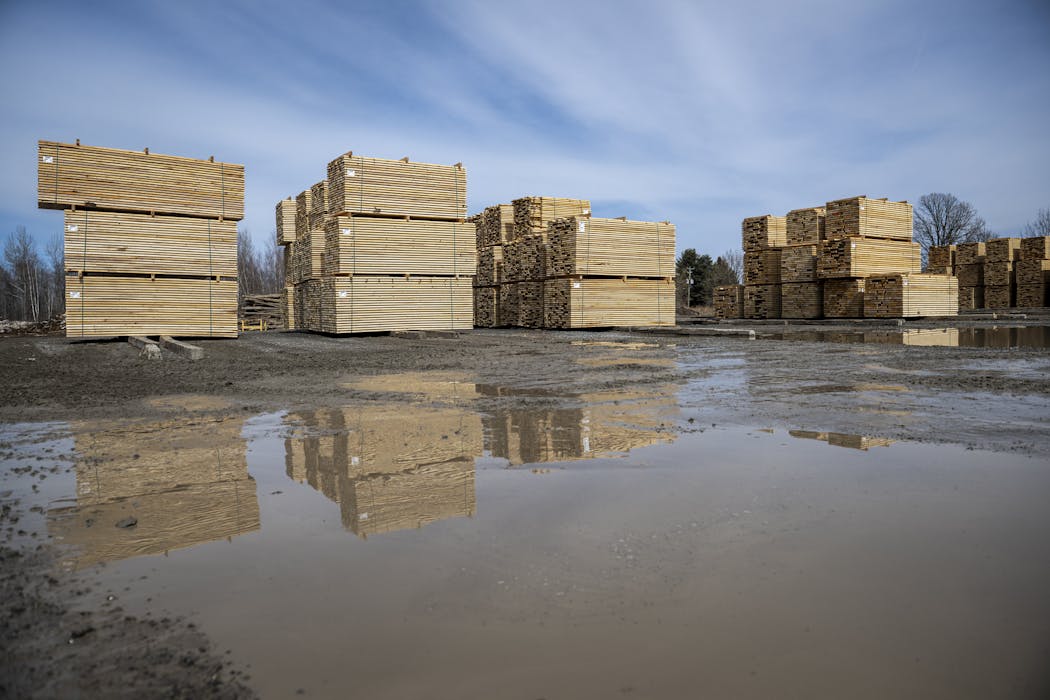
Canadian lumber waits for shipment in a sawmill’s yard. Andrej Ivanov/Getty Images

Lumber, especially softwood lumber like pine and spruce, is critical to U.S. home construction. Its availability and price directly affect housing costs and broader economic activity in the building sector. The U.S. imports about 40% of the softwood lumber the nation uses each year, more than 80% of that from Canada.

President Donald Trump says that the U.S. has the capacity to meet 95% of softwood lumber demand and directed federal officials to update policies and regulatory guidelines to expand domestic timber harvesting and curb the arrival of foreign lumber.

On Sept. 29, 2025, he announced new tariffs on imported timber and wood products, including an additional 10% tariff on Canadian lumber. Those were added to 35% tariffs imposed on Canadian lumber in August. It was the latest phase in a long-standing dispute over the supply of lumber to builders in the U.S., which dates back to the 1980s, when U.S. producers began arguing that Canadian companies were benefiting from unfair subsidies from their government. Starting on Oct. 15, Canadian softwood lumber imports could face tariffs exceeding 45%.

As researchers studying the forestry sector and international trade, we recognize that the U.S. has ample forest resources. But replacing imports with domestic lumber isn’t as simple as it sounds.

There are differences in tree species and quality, and U.S. lumber often comes at a higher cost, even with tariffs on imports. Challenges like limited labor and manufacturing capacity require long-term investments, which temporary tariffs and uncertain trade policies often fail to encourage. In addition, the amount of lumber imported tends to mirror the boom-and-bust cycles of housing construction, a dynamic that tariffs alone are unlikely to change.

Trump’s moves

To boost U.S. logging, in March, Trump issued an executive order telling the departments of Interior and Agriculture to ease what he called “heavy-handed” regulations on timber harvesting. The executive order and a follow-up memo from Agriculture Secretary Brooke Rollins do not spell out specifics, but officials say more details are in the works that will simplify the timber harvesting process, with the goal of boosting domestic timber production by 25%.

That same month, Trump ordered the Commerce Department to assess how imports of timber, lumber and related wood products affect U.S. national security.

While that assessment was underway, in July, the Commerce Department published findings from a trade review of 2023 Canadian lumber imports. That inquiry alleged that Canadian companies were selling lumber to the U.S. at unfairly low prices, potentially leaving U.S. producers with lower sales or depressed prices. That finding was cited as the basis for the 35% August tariff announcement.

In its national security investigation initiated in March, the Commerce Department concluded that an overreliance on imported wood products means “the United States may be unable to meet demands for wood products that are crucial to the national defense and critical infrastructure.” The September tariff announcement is based on those findings.

Large piles of cut logs are stacked, with homes visible in the distance.
Canadian timber harvesting continues, despite uncertainty about trade with the U.S.
Artur Widak/NurPhoto via Getty Images

Canadian lumber in the US market

In 1991, the U.S. imported 11.5 billion board feet (27 million cubic meters) of Canadian lumber. Those imports rose to a high of 22 billion board feet (52 million cubic meters) by 2005.

But as housing construction declined – especially during the Great Recession from 2007 to 2009 – imports dropped sharply, to less than 8.4 billion board feet (20 million cubic meters) in 2009. The current volume has not recovered to prerecession levels, rising only to 12 billion board feet (28 million cubic meters) in 2024.

The value of Canadian lumber has also fluctuated. Historically, prices for Canadian lumber have averaged about US$330 per thousand board feet ($140 per cubic meter). During and after the COVID-19 pandemic, import prices soared to almost $800 per thousand board feet ($340 per cubic meter). But since peaking in 2021 and 2022, prices have dropped significantly to $436 per thousand board feet ($185 per cubic meter) by 2024.

In total, in 2024, the U.S. imported more than $11 billion in forest and wood products from Canada. Softwood lumber accounted for almost half of that.

Lumber and housing

As personal income rises and populations grow, people seek to build new homes. As new home construction – called “housing starts” in economic data – increases, so does demand for softwood lumber to build those homes. And when housing starts slow, so does lumber demand.

For instance, housing starts fell during the Great Recession. They declined from a January 2006 peak of 2.3 million to less than 500,000 in January 2009 – a decrease of nearly 80%. In that same period, imports of Canadian lumber fell by more than 60%. Domestic softwood lumber production fell by more than 40%.

Both domestic and imported lumber prices can directly influence the overall cost of building homes, which in turn affects housing affordability. That said, lumber used for framing usually accounts for less than 10% of the total cost to build a new home. The effects of tariffs on new home construction may be significantly less than other factors, such as rising labor costs.

There are different kinds of wood commonly used in building lumber.

A matter of choice

The U.S. has a lot of potential lumber available. Especially in the South, the inventory of harvestable lumber has grown significantly over many years.

However, the types of wood available in the U.S. are not always the same as what’s available from Canadian imports. For framing, contractors may prefer spruce, northern pines and fir, naturally abundant in Canada, because they are lighter and less likely to warp than southern yellow pine, which is abundant in the southern U.S. Southern yellow pine is more commonly used to make utility poles and preservative-treated lumber for outdoor construction projects, such as decks.

Lumber from Idaho, eastern Oregon and eastern Washington, however, does share characteristics with Canadian species and could take the place of at least some Canadian lumber.

As the Trump administration seeks to boost domestic lumber, buyers will be looking not only at where their lumber came from, but what it costs and what type of lumber is best for what they need to accomplish.

The Conversation

Andrew Muhammad received funding from the U.S. Department of Agriculture to research timber demand in Vietnam.

Adam Taylor does not work for, consult, own shares in or receive funding from any company or organization that would benefit from this article, and has disclosed no relevant affiliations beyond their academic appointment.

ref. Why higher tariffs on Canadian lumber may not be enough to stimulate long-term investments in US forestry – https://theconversation.com/why-higher-tariffs-on-canadian-lumber-may-not-be-enough-to-stimulate-long-term-investments-in-us-forestry-265713

Erie Canal’s 200th anniversary: How a technological marvel for trade changed the environment forever

Source: The Conversation – USA (2) – By Christine Keiner, Chair, Department of Science, Technology, and Society, Rochester Institute of Technology

A scene on the Erie Canal painted in 1842, two decades after the canal opened. Bettmann/Getty Images

If you visit the Erie Canal today, you’ll find a tranquil waterway and trail that pass through charming towns and forests, a place where hikers, cyclists, kayakers, bird-watchers and other visitors seek to enjoy nature and escape the pressures of modern life.

However, relaxation and scenic beauty had nothing to do with the origins of this waterway.

When the Erie Canal opened 200 years ago, on Oct. 26, 1825, the route was dotted with decaying trees left by construction that had cut through more than 360 miles of forests and fields, and life quickly sped up.

Mules on the towpath along the canal could pull a heavy barge at a clip of 4 miles per hour – far faster than the job of dragging wagons over primitive roads. Boats rushed goods and people between the Great Lakes heartland and the port of New York City in days rather than weeks. Freight costs fell by 90%.

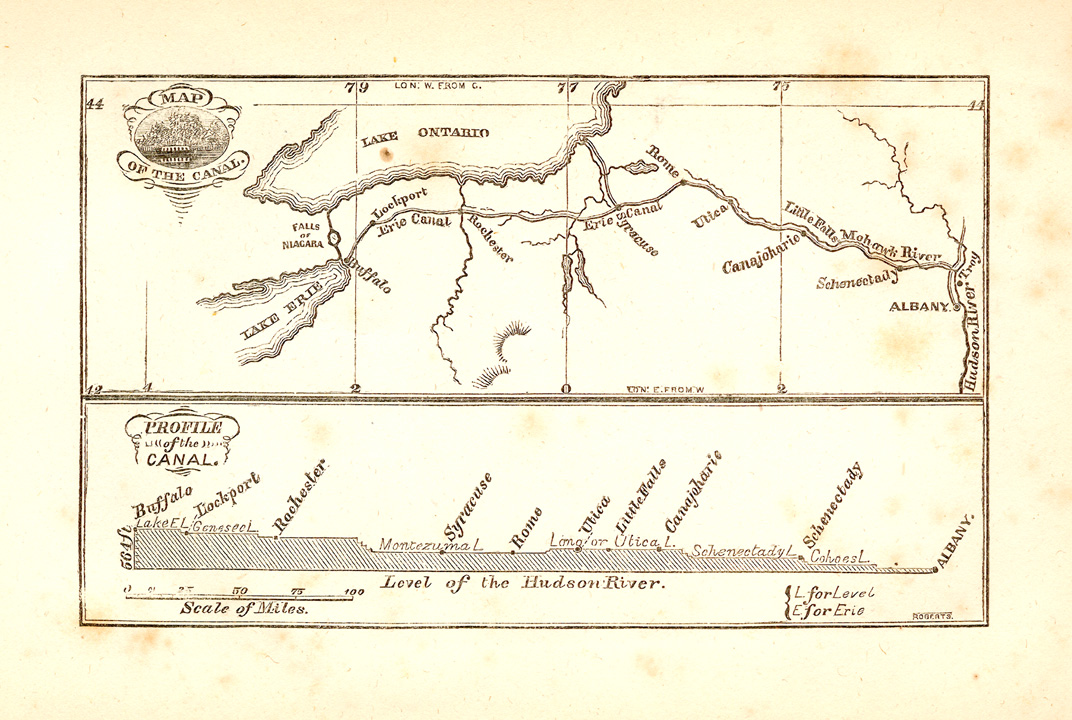
A map shows the canal's route through New York, from Albany to Buffalo.
An 1840 map of the Erie Canal.
New York State/Wikimedia

As many books have proclaimed, the Erie Canal’s opening in 1825 solidified New York’s reputation as the Empire State. It also transformed the surrounding environment and forever changed the ecology of the Hudson River and the lower Great Lakes.

For environmental historians like me, the canal’s bicentennial provides an opportunity to reflect upon its complex legacies, including the evolution of U.S. efforts to balance economic progress and ecological costs.

Human and natural communities ruptured

The Haudenosaunee Confederacy, the Indigenous nations that the French called the Iroquois, engaged in canoe-based trade throughout the Great Lakes and Hudson River valley for centuries. In the 1700s, that began to change as American colonists took the land through brutal warfare, inequitable treaties and exploitative policies.

That Haudenosaunee dispossession made the Erie Canal possible.

Haiwhagai’i Jake Edwards of the Onondaga Nation describes the Erie Canal’s impact on the people of the Haudenosaunee Confederacy. WMHT.

After the Revolutionary War, commercial enthusiasm for a direct waterborne route to the West intensified. Canal supporters identified the break in the Appalachian Mountains at the junction of the Mohawk River and the Hudson as a propitious place to dig a channel to Lake Erie.

Yet cutting a 363-mile-long waterway through New York’s uneven terrain posed formidable challenges. Because the landscape rises 571 feet between Albany and Buffalo, a canal would require multiple locks to raise and lower boats.

Men work on a wooden structure over a narrow canal.
An 1839 view looking eastward from the top lock at Lockport, N.Y., where a series of five locks raised the Erie Canal about 60 feet.
Hulton Archive/Getty Images

Federal officials refused to finance such “internal improvements.” But New York politician DeWitt Clinton was determined to complete the project, even if it meant using only state funds. Critics mocked the $7 million megaproject, worth around US$170 million today, calling it “DeWitt’s Ditch” and “Clinton’s Folly.” In 1817, however, thousands of men began digging the 4-foot-deep channel using hand shovels and pickaxes.

The construction work produced engineering breakthroughs, such as hydraulic cement made from local materials and locks that lifted the canal’s water level about 60 feet at Lockport, yet it obliterated acres of wetlands and forests.

After riding a canal boat between Utica and Syracuse, the writer Nathaniel Hawthorne described the surroundings in 1835 as “now decayed and death-struck.”

However, most canalgoers viewed the waterway as a beacon of progress. As a trade artery, it made New York City the nation’s financial center. As a people mover, it fueled religious revivals, social reform movements and the growth of Great Lakes cities.

A person in a horse-drawn buggy rides over a bridge crossing the Erie Canal in downtown Syracuse. Barges are moored along the edge.
Barges on the Erie Canal in Syracuse around 1900, before the canal’s commerce through the city was rerouted and stretches of it through downtown were filled in and paved. Its path is now Erie Boulevard.
Detroit Publishing Company/Library of Congress

The Erie Canal’s socioeconomic benefits came with more environmental costs: The passageway enabled organisms from faraway places to reach lakes and rivers that had been isolated since the end of the last ice age.

An invasive species expressway

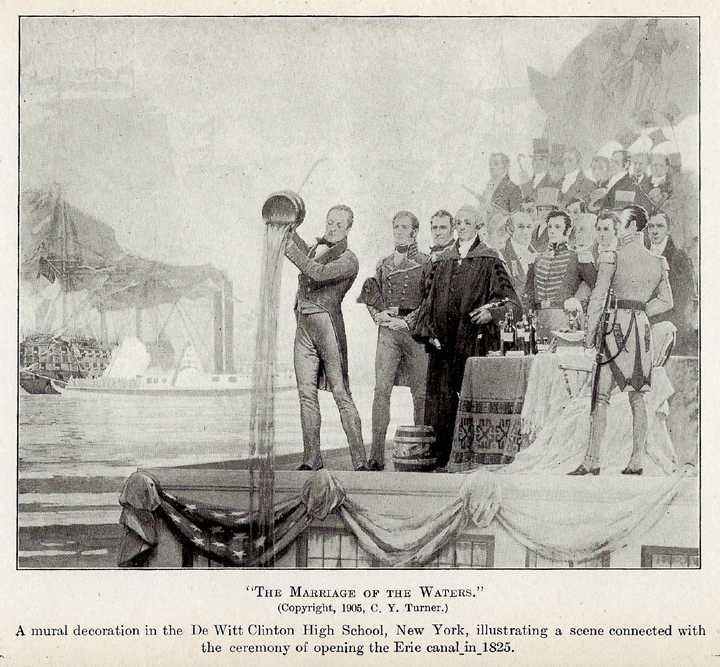
On Oct. 26, 1825, Gov. Clinton led a flotilla aboard the Seneca Chief from Buffalo to New York City that culminated in a grandiose ceremony.

To symbolize the global connections made possible by the new canal, participants poured water from Lake Erie and rivers around the world into the Atlantic at Sandy Hook, a sand spit off New Jersey at the entrance to New York Harbor. Observers at the time described the ritual of “commingling the waters of the Lakes with the Ocean” in matrimonial terms.

Animae
An artist’s image of DeWitt Clinton mingling the waters of Lake Erie with the Atlantic after officially opening the canal in 1825.
Philip Meeder, wood-engraver, 1826, New York Public Library via Wikimedia Commons

Clinton was an accomplished naturalist who had researched the canal route’s geology, birds and fish. He even predicted that the waterway would “bring the western fishes into the eastern waters.”

Biologists today would consider the “Wedding of the Waters” event a biosecurity risk.

The Erie Canal and its adjacent feeder rivers and reservoirs likely enabled two voracious nonnative species, the Atlantic sea lamprey and alewife, to enter the Great Lakes ecosystem. By preying on lake trout and other highly valued native fish, these invaders devastated the lakes’ commercial fisheries. The harvest dropped by a stunning 98% from the previous average by the early 1960s.

The mouth of a sea lamprey
Sea lampreys – eel-like creatures with mouths like suction cups – cut the lake trout population by 98%, and most of the fish that survived had lamprey marks on them. These invasive species began appearing in the Great Lakes after the Erie Canal opened.
T. Lawrence/NOAA Great Lakes, CC BY-SA

Tracing their origins is tricky, but historical, ecological and genetic data suggest that sea lampreys and alewives entered Lake Ontario via the Erie Canal during the 1860s. Later improvements to the Welland Canal in Canada enabled them to reach the upper Great Lakes by the 1930s.

Protecting the $5 billion Great Lakes fishery from these invasive organisms requires constant work and consistent funding. In particular, applying pesticides and other techniques to control lamprey populations costs around $20 million per year.

The invasive species that has inflicted the most environmental and economic harm on the Great Lakes is the zebra mussel. Zebra mussels traveled from Eurasia via the ballast water of transoceanic ships using the St. Lawrence Seaway during the 1980s. The Erie Canal then became a “mussel expressway” to the Hudson River.

The hungry invading mussels caused a nearly tenfold reduction of phytoplankton, the primary food of many species of the Hudson River ecosystem. This competition for food, along with pollution and habitat degradation, led to the disappearance of two common species of the Hudson’s native pearly mussels.

A section of canal covered in green plants
Dense mats of water chestnut infesting the western end of the Erie Canal in 2010. The weeds cut off sunlight for aquatic plants and impede fish movement, and they must be mechanically removed.
U.S. Fish and Wildlife Service

Today, the Erie Canal remains vulnerable to invasive plants, such as water chestnut and hydrilla, and invasive animals such as round goby. Boaters, kayakers and anglers can help reduce bioinvasions by cleaning, draining and drying their equipment after each use to avoid carrying invasive species to new locations.

A recreational treasure

During the Gilded Age in the late 1800s, the Erie Canal sparked a utilitarian sense of environmental concern. Timber cutting in the Adirondack Mountains was causing so much erosion that the eastern canal’s feeder rivers were filling up with silt.

To protect these waterways, New York created Adirondack Park in 1892. Covering 6 million acres, the park balances forest preservation, recreation and commercial use on a unique mix of public and private lands.

Erie Canal shipping declined during the 20th century with the opening of the deeper and wider St. Lawrence Seaway and competition from rail and highways. The canal still supports commerce, but the Erie Canalway National Heritage Corridor now provides an additional economic engine.

A kayak tour shows how locks operate on the Erie Canal. WMHT Public Media.
Erie Canal
The Erie Canal began with 83 locks, but improvements over time reduced the number to 35 locks today.
NYS Department of Transportation via National Park Service

In 2024, 3.84 million people used the Erie Canalway Trail for cycling, hiking, kayaking, sightseeing and other adventures. The tourists and day-trippers who enjoy the historic landscape generate over $300 million annually.

Over the past 200 years, the Erie Canal has both shaped, and been shaped by, ecological forces and changing socioeconomic priorities. As New York reimagines the canal for its third century, the artificial river’s environmental history provides important insights for designing technological systems that respect human communities and work with nature rather than against it.

The Conversation

Christine Keiner does not work for, consult, own shares in or receive funding from any company or organization that would benefit from this article, and has disclosed no relevant affiliations beyond their academic appointment.

ref. Erie Canal’s 200th anniversary: How a technological marvel for trade changed the environment forever – https://theconversation.com/erie-canals-200th-anniversary-how-a-technological-marvel-for-trade-changed-the-environment-forever-263320

Yes, ADHD diagnoses are rising, but that doesn’t mean it’s overdiagnosed

Source: The Conversation – USA (3) – By Carol Mathews, Professor of Psychiatry, University of Florida

Differences in how ADHD is defined explain why the condition is sometimes perceived as overdiagnosed. Catherine Falls Commercial/Moment via Getty Images

Many news outlets have reported an increase – or surge – in attention-deficit/hyperactivity disorder, or ADHD, diagnoses in both children and adults. At the same time, health care providers, teachers and school systems have reported an uptick in requests for ADHD assessments.

These reports have led some experts and parents to wonder whether ADHD is being overdiagnosed and overtreated.

As researchers who have spent our careers studying neurodevelopmental disorders like ADHD, we are concerned that fears about widespread overdiagnosis are misplaced, perhaps based on a fundamental misunderstanding of the condition.

Understanding ADHD as one end of a spectrum

Discussions about overdiagnosis of ADHD imply that you either have it or you don’t.

However, when epidemiologists ask people in the general population about their symptoms of ADHD, some have a few symptoms, some have a moderate level, and a few have lots of symptoms. But there is no clear dividing line between those who are diagnosed with ADHD and those who are not, since ADHD – much like blood pressure – occurs on a spectrum.

Treating mild ADHD is similar to treating mild high blood pressure – it depends on the situation. Care can be helpful when a doctor considers the details of a person’s daily life and how much the symptoms are affecting them.

Not only can ADHD symptoms be very different from person to person, but research shows that ADHD symptoms can change within an individual. For example, symptoms become more severe when the challenges of life increase.

ADHD symptoms fluctuate depending on many factors, including whether the person is at school or home, whether they have had enough sleep, if they are under a great deal of stress or if they are taking medications or other substances. Someone who has mild ADHD may not experience many symptoms while they are on vacation and well rested, for example, but they may have impairing symptoms if they have a demanding job or school schedule and have not gotten enough sleep. These people may need treatment for ADHD in certain situations but may do just fine without treatment in other situations.

This is similar to what is seen in conditions like high blood pressure, which can change from day to day or from month to month, depending on a person’s diet, stress level and many other factors.

Can ADHD symptoms change over time?

ADHD symptoms start in early childhood and typically are at their worst in mid-to late childhood. Thus, the average age of diagnosis is between 9 and 12 years old. This age is also the time when children are transitioning from elementary school to middle school and may also be experiencing changes in their environment that make their symptoms worse.

Classes can be more challenging beginning around fifth grade than in earlier grades. In addition, the transition to middle school typically means that children move from having all their subjects taught by one teacher in a single classroom to having to change classrooms with a different teacher for each class. These changes can exacerbate symptoms that were previously well-controlled.

Symptoms can also wax and wane throughout life. For most people, symptoms improve – but may not completely disappear – after age 25, which is also the time when the brain has typically finished developing.

Psychiatric problems that often co-occur with ADHD, such as anxiety or depression, can worsen ADHD symptoms that are already present. These conditions can also mimic ADHD symptoms, making it difficult to know which to treat. High levels of stress leading to poorer sleep, and increased demands at work or school, can also exacerbate or cause ADHD-like symptoms.

Finally, the use of some substances, such as marijuana or sedatives, can worsen, or even cause, ADHD symptoms. In addition to making symptoms worse in someone who already has an ADHD diagnosis, these factors can also push someone who has mild symptoms into full-blown ADHD, at least for a short time.

The reverse is also true: Symptoms of ADHD can be minimized or reversed in people who do not meet full diagnostic criteria once the external cause is removed.

Kids with ADHD often have overlapping symptoms with anxiety, depression, dyslexia and more.

How prevalence is determined

Clinicians diagnose ADHD based on symptoms of inattention, hyperactivity and impulsivity. To make an ADHD diagnosis in children, six or more symptoms in at least one of these three categories must be present. For adults, five or more symptoms are required, but they must begin in childhood. For all ages, the symptoms must cause serious problems in at least two areas of life, such as home, school or work.

Current estimates show that the strict prevalence of ADHD is about 5% in children. In young adults, the figure drops to 3%, and it is less than 1% after age 60. Researchers use the term “strict prevalence” to mean the percentage of people who meet all of the criteria for ADHD based on epidemiological studies. It is an important number because it provides clinicians and scientists with an estimate on how many people are expected to have ADHD in a given group of people.

In contrast, the “diagnosed prevalence” is the percentage of people who have been diagnosed with ADHD based on real-world assessments by health care professionals. The diagnosed prevalence in the U.S. and Canada ranges from 7.5% to 11.1% in children under age 18. These rates are quite a bit higher than the strict prevalence of 5%.

Some researchers claim that the difference between the diagnosed prevalence and the strict prevalence means that ADHD is overdiagnosed.

We disagree. In clinical practice, the diagnostic rules allow a patient to be diagnosed with ADHD if they have most of the symptoms that cause distress, impairment or both, even when they don’t meet the full criteria. And much evidence shows that increases in the diagnostic prevalence can be attributed to diagnosing milder cases that may have been missed previously. The validity of these mild diagnoses is well-documented.

Consider children who have five inattentive symptoms and five hyperactive-impulsive symptoms. These children would not meet strict diagnostic criteria for ADHD even though they clearly have a lot of ADHD symptoms. But in clinical practice, these children would be diagnosed with ADHD if they had marked distress, disability or both because of their symptoms – in other words, if the symptoms were interfering substantially with their everyday lives.

So it makes sense that the diagnosed prevalence of ADHD is substantially higher than the strict prevalence.

Middle-aged woman sitting at a table and giving a pill to an adolescent girl, who is sipping a glass of water.
A robust body of literature shows the negative outcomes associated with underdiagnosis and undertreatment of ADHD.
SolStock/E+ via Getty Images

Implications for patients, parents and clinicians

People who are concerned about overdiagnosis commonly worry that people are taking medications they don’t need or that they are diverting resources away from those who need it more. Other concerns are that people may experience side effects from the medications, or that they may be stigmatized by a diagnosis.

Those concerns are important. However, there is strong evidence that underdiagnosis and undertreatment of ADHD lead to serious negative outcomes in school, work, mental health and quality of life.

In other words, the risks of not treating ADHD are well-established. In contrast, the potential harms of overdiagnosis remain largely unproven.

It is important to consider how to manage the growing number of milder cases, however. Research suggests that children and adults with less severe ADHD symptoms may benefit less from medication than those with more severe symptoms.

This raises an important question: How much benefit is enough to justify treatment? These are decisions best made in conversations between clinicians, patients and caregivers.

Because ADHD symptoms can shift with age, stress, environment and other life circumstances, treatment needs to be flexible. For some, simple adjustments like classroom seating changes, better sleep or reduced stress may be enough. For others, medication, behavior therapy or a combination of these interventions may be necessary. The key is a personalized approach that adapts as patients’ needs evolve over time.

The Conversation

Carol Mathews receives funding from the National Institutes of Health and the International OCD Foundation. She is affiliated with the International OCD Foundation, and the Family Foundation for OCD Research. She acts as a consultant for the Office of Mental Health for the State of New York.

Stephen V. Faraone receives research funding from the National Institutes of Health, the European Union, the Upstate Foundation and Supernus Pharmaceuticals. With his institution, he holds US patent US20130217707 A1 for the use of sodium-hydrogen exchange inhibitors in the treatment of ADHD. His continuing medical education programs are supported by The Upstate Foundation, Corium Pharmaceuticals, Tris Pharmaceuticals and Supernus Pharmaceuticals. He acts as a consultant to multiple pharmaceutical companies.

ref. Yes, ADHD diagnoses are rising, but that doesn’t mean it’s overdiagnosed – https://theconversation.com/yes-adhd-diagnoses-are-rising-but-that-doesnt-mean-its-overdiagnosed-257108

Focused sound energy holds promise for treating cancer, Alzheimer’s and other diseases

Source: The Conversation – USA (3) – By Richard J. Price, Professor of Biomedical Engineering, University of Virginia

Focused ultrasound directs powerful beams of energy to specific disease targets in the body. Andriy Onufriyenko/Moment via Getty Images

Sound waves at frequencies above the threshold for human hearing are routinely used in medical care. Also known as ultrasound, these sound waves can help clinicians diagnose and monitor disease, and can also provide first glimpses of your newest family members.

And now, patients with conditions ranging from cancer to neurodegenerative diseases like Alzheimer’s may soon benefit from recent advances in this technology.

I am a biomedical engineer who studies how focused ultrasound – the concentration of sound energy into a specific volume – can be fine-tuned to treat various conditions. Over the past few years, this technology has seen significant growth and use in the clinic. And researchers continue to discover new ways to use focused ultrasound to treat disease.

A brief history of focused ultrasound

Ultrasound is generated with a probe containing a material that converts electrical current into vibrations, and vice versa. As ultrasound waves pass through the body, they reflect off the boundaries of different types of tissue. The probe detects these reflections and converts them back into electrical signals that computers can use to create images of those tissues.

Over 80 years ago, scientists found that focusing these ultrasonic waves into a volume about the size of a grain of rice can heat up and destroy brain tissue. This effect is analogous to concentrating sunlight with a magnifying glass to ignite a dry leaf. Early investigators began testing how focused ultrasound could treat neurological disorders, pain and even cancer.

Frontal brain MRI
MRI of a patient treated for essential tremor using focused ultrasound, with the targeted part of the brain circled in red.
Jmarchn/Wikimedia Commons, CC BY-SA

Yet, despite these early findings, technical hurdles stood in the way of applying focused ultrasound in the clinic. For example, because the skull absorbs ultrasound energy, sending focusing beams with high enough energy to reach damaged brain tissue proved difficult. Researchers eventually overcame this problem by integrating large arrays of ultrasound transducers – the probes that convert between electrical signals and vibrations – with image-based information about skull shape and density. This change allowed researchers to better fine-tune the beams to their targets.

It is only after scientists made key advances in imaging technology and acoustic physics in recent years that the promise of ultrasound is being realized in the clinic. Hundreds of clinical trials aimed at treating dozens of conditions have been completed or are ongoing. Researchers have found notable success on a condition called essential tremor, which leads to uncontrolled shaking, usually of the hands. Focused ultrasound treatments for essential tremor are now performed routinely at many locations around the world.

I believe some of the most exciting applications for focused ultrasound include improving drug delivery to the brain, stimulating immune responses against cancer, and treating rare diseases of the central nervous system.

Delivering drugs to the brain

The blood-brain barrier is evolution’s exquisite solution to keeping noxious substances away from this most critical organ. The blood-brain barrier is comprised of very tightly connected cells lining the inside of blood vessels. It only allows certain types of molecules to enter the brain, protecting against pathogens and toxins. However, the blood-brain barrier is problematic when it comes to treating disease because it blocks therapies from reaching their intended target.

More than 20 years ago, pioneering studies determined that sending low-intensity pulses of focused ultrasound could temporarily open the blood-brain barrier by causing microbubbles in blood vessels to oscillate. This oscillation pushes and pulls on the surrounding vessel walls, briefly opening tiny pores that allow drugs in the bloodstream to penetrate into the brain. Critically, the blood-brain barrier opens only where the focused ultrasound is applied.

Focused ultrasound can allow drugs to reach targeted areas of the brain.

After many years of testing the safety of this technique and improving control of ultrasound energy, researchers have developed several devices using focused ultrasound to open the blood-brain barrier for treatment. Clinical trials testing the ability of these devices to deliver drugs to the brain to treat conditions like glioblastoma, brain metastases and Alzheimer’s disease are underway.

In parallel, there has been significant progress in developing gene therapies for numerous brain diseases. Gene therapy involves fixing or replacing faulty genetic material to treat a specific disease. Applying gene therapy to the brain is especially challenging because such therapies typically do not cross the blood-brain barrier.

Animal studies have shown that using focused ultrasound to open the blood-brain barrier can facilitate the delivery of gene therapies to their intended targets in the brain, opening doors to testing this technique in people.

Stimulating immune responses against cancer

Cancer immunotherapy instructs the patient’s own immune system to fight the disease. However, many patients – especially those afflicted with breast cancer, pancreatic cancer and glioblastoma – have tumors that are immunologically “cold,” meaning they are unresponsive to traditional immunotherapies.

Researchers have learned that focused ultrasound can destroy solid tumors in ways that allow the immune system to better recognize and destroy cancer cells. One way focused ultrasound does this is by turning tumors into debris that then literally flows to the lymph nodes. Once immune cells in the lymph nodes encounter this debris, they can initiate an immune response specifically against the cancer.

Inspired by these breakthroughs, the University of Virginia started the world’s first focused ultrasound immuno-oncology center in 2022 to support research in this area and push the most promising approaches to the clinic. For example, my colleagues are running a clinical trial at the center to test the use of focused ultrasound and immunotherapy to treat patients with advanced melanoma.

Treating rare diseases with focused ultrasound

Research on focused ultrasound has primarily focused on the most devastating and prevalent diseases, such as cancer and Alzheimer’s disease. However, I believe that further developments in, and increased use of, focused ultrasound in the clinic will eventually benefit patients with rare diseases.

One rare disease of particular interest for my lab is cerebral cavernous malformation, or CCM. CCMs are lesions in the brain that occur when the cells that make up blood vessels undergo uncontrolled growth. While uncommon, when these lesions grow and hemorrhage, they can cause debilitating neurological symptoms. The most common treatment for CCM is surgical removal of the brain lesions; however, some CCMs are located in brain areas that are difficult to access, creating a risk of side effects. Radiation is another treatment option, but it, too, can lead to serious adverse effects.

We found that using focused ultrasound to open the blood-brain barrier can improve drug delivery to CCMs. Additionally, we also observed that focused ultrasound treatment itself could stop CCMs from growing in mice, even without administering a drug. While we don’t yet understand how focused ultrasound is stabilizing CCMs, abundant research on the safety of using this technique in patients treated for other conditions has allowed neurosurgeons to begin designing clinical trials testing the use of this technique on people with CCM.

With further research and advancements, I am hopeful that focused ultrasound can become a viable treatment option for many devastating rare diseases.

The Conversation

Richard J. Price receives funding from the National Institutes of Health and the UVA Focused Ultrasound Cancer Immunotherapy Center.

ref. Focused sound energy holds promise for treating cancer, Alzheimer’s and other diseases – https://theconversation.com/focused-sound-energy-holds-promise-for-treating-cancer-alzheimers-and-other-diseases-262622

We created an ‘unsexy’ moth that could be the key to greener pest control

Source: The Conversation – UK – By Marie Inger Dam, Researcher, Biotechnology, Lund University

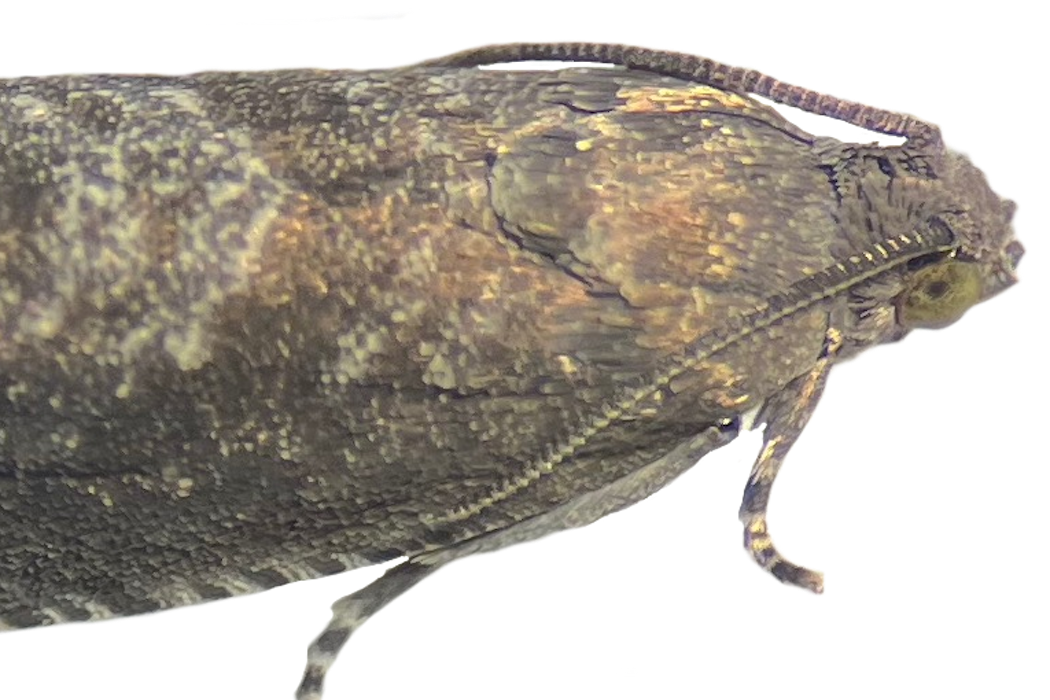
This moth was genetically engineered to be unable to attract a mate. Kristina Brauburger

A single “sexy” gene could help us combat one of the world’s most destructive fruit pests. By deleting the gene that lets female moths produce their mating scent, colleagues and I created an “unsexy” moth – and showed one way to turn insect attraction into a powerful pest control tool.

You’ve probably seen moths flittering around a bright lamppost on a balmy summer night. Those same insects, in their larval form, are the worms that burrow into your apples and peaches, making them serious pests in agriculture.

Moths are usually controlled with chemical pesticides, but pests evolve resistance and these sprays also harm bees and other pollinators. We need new and more sustainable methods to protect important crops targeted by moth larvae, like apples, maize, tomatoes and rice.

In a new study published in the Journal of Chemical Ecology, colleagues and I have demonstrated a way to unravel sexual communication in insects and provide a more sustainable alternative to pesticides. It seems we can stop moths by using their natural instincts against them.

Moths find their mates through chemical communication. Female moths release a species-specific pheromone, which males can detect and follow over long distances.

Farmers have long used synthetic versions of these pheromones to lure male moths away from females so that they don’t reproduce. But the problem is, every species has its own unique blend of pheromones, and replicating the exact recipe in a factory can be costly.

To achieve pheromone-based control on a large-scale, we need to understand how insects make them in the first place – and find the genes responsible.

How we found the sexy gene

Our study focused on the oriental fruit moth (Grapholita molesta), a serious pest on peaches, apples and other fruit. We wanted to identify the gene responsible for making its pheromone.

Pheromones are made from fatty acids by a specific enzyme. To find the genetic material responsible for that enzyme, we needed to identify the fatty acid, the enzyme and eventually the gene.

The fatty acids from which moth pheromones are derived are the same ones that all organisms make in abundance – like the fats in cooking oils and butter.

We first found the small fatty acid that served as the raw material for the moths’ scent, using a technique called gas chromatography, which separates fatty acids based on their size. When we placed this particular fatty acid onto the moth’s pheromone gland, it was converted into the pheromone, confirming we had the right starting point.

Next, we needed to find the exact enzyme that turned that specific fatty acid into that specific pheromone. The key was a double bond between two carbon atoms – that’s a job done by enzymes called desaturases. Searching the moth’s DNA we found many desaturase genes, but only one that was active in females but not in males. This looked like the right gene.

Creating an unsexy moth

Woman using lab equipment
A lab moth being ‘Crispr-ed’ by the author.
Kristina Brauburger

To test the gene’s function, we used Crispr – a precise gene-editing tool sometimes described as “genetic scissors” – to delete the suspected desaturase gene in moth eggs. When the moths grew into adults, females without the gene could no longer produce their pheromone, confirming it as the crucial link in their sexual communication.

Silencing this single gene meant we’d effectively created an “unsexy” moth – one that couldn’t hope to attract a mate. Our method can also be applied to different species, including other pest moths that make similar pheromones.

Pest control with insect genes

Chemical pesticides remain the main defence against crop pests, but resistance is spreading fast and pesticides are linked to soil contamination, pollinator declines and more.

Pheromone-based pest control avoids these problems. When synthetic pheromones are spread in a field or orchard, males become confused because they follow the synthetic trails instead of those made by the female moth, reducing their breeding success.

Our “unsexy” moths helped us identify the exact gene behind this mating signal. Knowing which gene produces the pheromone means we can now reproduce the pheromone outside the insect – for example, by inserting the gene into yeast or plants that act as “biofactories”.

These engineered organisms can then produce the pheromone naturally and cheaply, the same way we use genetically modified yeast to make medicines like insulin.

Our discovery connects lab research to real-world pest management: by decoding the moth’s love signal, we’ve taken a step towards greener, gene-based production of pheromones that could one day replace chemical pesticides.

The Conversation

Marie Inger Dam is a co-inventor on several patent applications relating to pheromone production.

ref. We created an ‘unsexy’ moth that could be the key to greener pest control – https://theconversation.com/we-created-an-unsexy-moth-that-could-be-the-key-to-greener-pest-control-266312

Three ways to make the UK’s food system more resilient – according to new report by 150 experts

Source: The Conversation – UK – By Neil Ward, Professor of Rural and Regional Development at the Tyndall Centre for Climate Change Research, University of East Anglia

BearFotos/Shutterstock

In 2022, six days before Russian tanks rolled into Ukraine and destabilised energy and food supplies, my colleagues and I started building a network of researchers, practitioners and policymakers to identify ways to create a more sustainable future for the UK food system. Three years later and this network has more than 3,000 members.

The UK’s food system is facing mounting pressures from the effects of climate change, increasing geopolitical instability and concerns about its impact on economic productivity and the environment. So how can we strengthen the resilience of our system when the future looks so uncertain?

Sticking with the status quo is not an option. Large-scale change is inevitable over the next two decades, especially as the effects of climate change continue to unfold.

We have developed four plausible scenarios for what the UK food system might look like in a net zero 2050, each with different socio-economic conditions.

What if Trump returned to power or not? What if geopolitics became more, or less, unstable? What would happen if the rule-based system of international trade broke down or was strengthened? We used these scenarios to stretch thinking beyond business-as-usual assumptions, and analysed the implications for food production, consumption and land use.


Read more:
By changing our diets now, we can avoid the food chaos that climate change is bringing


The food system accounts for about a quarter of the emissions produced within the UK. This proportion will grow in the coming decades as energy, transport and buildings steadily decarbonise.

Our modelling yielded some inescapable home truths. We will need to change not just how we farm, but what farming produces and what we eat. And land use will need to change to strengthen carbon sequestration along with our ability to adapt to climate change. Three types of transformation are required.

First, strengthening the resilience of UK farming will require that farmers have a clear direction of travel, as they did after the second world war. Then, a technological revolution supported by guaranteed prices helped raised productivity. Now, adopting low-carbon technologies will only get us so far, and we will need to manage what is produced and consumed in a more joined up way, if we are to become less reliant on imports while freeing up some land for other vital uses.

Farm livestock production takes up 85% of agricultural land when growing animal feed is factored in. That limits the scope to strengthen the resilience of the system. Radically expanding horticultural production, for example, by growing more vegetables and salad crops could significantly improve our food self-sufficiency.

tractor in field, blue skies
The way we farm needs to change as do our diets.
Juice Flair/Shutterstock

Second, farmers and landowners will be in the vanguard of sequestering carbon and helping the UK adapt to climate change through land use change – by planting trees and managing land to absorb carbon dioxide from the atmosphere. The UK is much less wooded than the rest of Europe, but growing more native trees will bring benefits for farming, including shelter for animals and less soil erosion, and for rural economies through green jobs.

We need to more actively plan land-use change to better balance food production with other valuable environmental services from the land. For example, a more mixed and wooded farm landscape can reduce flood risk and water pollution. Smarter, more integrated land use means managing land for multiple benefits rather than narrow goals.

Third, encouraging dietary change can bring opportunities for growing and marketing new foodstuffs and help reduce the negative economic consequences of unhealthy diets. More fruit, vegetables and legumes are a win-win for people’s health and planetary sustainability, as the recent report from the EAT Lancet Commission demonstrated.

At a junction

Our network has produced a roadmap with phased measures through the 2020s, 2030s and 2040s.

In the two decades after the second world war, the UK food system transformed. Today, system-wide changes are happening in the energy and transport sectors. Now, it’s time to plan the transformation of our food system.

That starts with strengthening the resilience of our farming in the face of climate change and geopolitical uncertainties. Our three core transformations would bring social and economic benefits, improved public health and environmental quality – as well as a more diverse and attractive countryside.


Don’t have time to read about climate change as much as you’d like?

Get a weekly roundup in your inbox instead. Every Wednesday, The Conversation’s environment editor writes Imagine, a short email that goes a little deeper into just one climate issue. Join the 45,000+ readers who’ve subscribed so far.


The Conversation

Neil Ward receives funding from UK Research and Innovation.

He is a member of the Labour Party and the National Trust.

ref. Three ways to make the UK’s food system more resilient – according to new report by 150 experts – https://theconversation.com/three-ways-to-make-the-uks-food-system-more-resilient-according-to-new-report-by-150-experts-265603

Worried about turning 60? Science says that’s when many of us actually peak

Source: The Conversation – Global Perspectives – By Gilles E. Gignac, Associate Professor of Psychology, The University of Western Australia

As your youth fades further into the past, you may start to fear growing older.

But research my colleague and I have recently published in the journal Intelligence shows there’s also very good reason to be excited: for many of us, overall psychological functioning actually peaks between ages 55 and 60.

And knowing this highlights why people in this age range may be at their best for complex problem-solving and leadership in the workforce.

Different types of peaks

There’s plenty of research showing humans reach their physical peak in their mid-twenties to early thirties.

A large body of research also shows that people’s raw intellectual abilities – that is, their capacity to reason, remember and process information quickly – typically starts to decline from the mid-twenties onwards.

This pattern is reflected in the real world. Athletes tend to reach their career peak before 30. Mathematicians often make their most significant contributions by their mid-thirties. Chess champions are rarely at the top of their game after 40.

Yet when we look beyond raw processing power, a different picture emerges.

From reasoning to emotional stability

In our study, we focused on well-established psychological traits beyond reasoning ability that can be measured accurately, represent enduring characteristics rather than temporary states, have well-documented age trajectories, and are known to predict real-world performance.

Our search identified 16 psychological dimensions that met these criteria.

These included core cognitive abilities such as reasoning, memory span, processing speed, knowledge and emotional intelligence. They also included the so-called “big five” personality traits – extraversion, emotional stability, conscientiousness, openness to experience, and agreeableness.

We compiled existing large-scale studies examining the 16 dimensions we identified. By standardising these studies to a common scale, we were able to make direct comparisons and map how each trait evolves across the lifespan.

Peaking later in life

Several of the traits we measured reach their peak much later in life. For example, conscientiousness peaked around age 65. Emotional stability peaked around age 75.

Less commonly discussed dimensions, such as moral reasoning, also appear to peak in older adulthood. And the capacity to resist cognitive biases – mental shortcuts that can lead us to make irrational or less accurate decisions – may continue improving well into the 70s and even 80s.

When we combined the age-related trajectories of all 16 dimensions into a theoretically and empirically informed weighted index, a striking pattern emerged.

Overall mental functioning peaked between ages 55 and 60, before beginning to decline from around 65. That decline became more pronounced after age 75, suggesting that later-life reductions in functioning can accelerate once they begin.

Getting rid of age-based assumptions

Our findings may help explain why many of the most demanding leadership roles in business, politics, and public life are often held by people in their fifties and early sixties. So while several abilities decline with age, they’re balanced by growth in other important traits. Combined, these strengths support better judgement and more measured decision-making – qualities that are crucial at the top.

Despite our findings, older workers face greater challenges re-entering the workforce after job losses. To some degree, structural factors may shape hiring decisions. For example, employers may see hiring someone in their mid-fifties as a short-term investment if retirement at 60 is likely.

In other cases, some roles have mandatory retirement ages. For example, International Civil Aviation Organisation sets a global retirement age of 65 for international airline pilots. Many countries also require air traffic controllers to retire between 56 and 60. Because these jobs demand high levels of memory and attention, such age limits are often considered justifiable.

However, people’s experiences vary.

Research has found that while some adults show declines in reasoning speed and memory, others also maintain these abilities well into later life.

Age alone, then, doesn’t determine overall cognitive functioning. So evaluations and assessments should focus on individuals’ actual abilities and traits rather than age-based assumptions.

A peak, not a countdown

Taken together, these findings highlight the need for more age-inclusive hiring and retention practices, recognising that many people bring valuable strengths to their work in midlife.

Charles Darwin published On the Origin of Species at 50. Ludwig van Beethoven, at 53 and profoundly deaf, premiered his Ninth Symphony. In more recent times, Lisa Su, now 55, led computer company Advanced Micro Devices through one of the most dramatic technical turnarounds in the industry.

History is full of people who reached their greatest breakthroughs well past what society often labels as “peak age”. Perhaps it’s time we stopped treating midlife as a countdown and started recognising it as a peak.

The Conversation

Gilles E. Gignac does not work for, consult, own shares in or receive funding from any company or organisation that would benefit from this article, and has disclosed no relevant affiliations beyond their academic appointment.

ref. Worried about turning 60? Science says that’s when many of us actually peak – https://theconversation.com/worried-about-turning-60-science-says-thats-when-many-of-us-actually-peak-267215

Your body can be a portable gym: how to ditch membership fees and expensive equipment

Source: The Conversation – Global Perspectives – By Dan van den Hoek, Senior Lecturer, Clinical Exercise Physiology, University of the Sunshine Coast

monika kabise JeCVBSpS xU unsplash Monika Kabise/Unsplash

You don’t need a gym membership, dumbbells, or expensive equipment to get stronger.

Since the beginning of time, we’ve had access to the one piece of equipment that is essential for strength training – our own bodies.

Strength training without the use of external forces and equipment is called “bodyweight training”.

From push-ups and squats to planks and chin-ups, bodyweight training has become one of the most popular ways to exercise because it can be done anywhere – and it’s free.

So, what is it, why does it work and how do you get started?

A man attempts a chin-up on a metal bar in a park outside

Lawrence Crayton/Unsplash

What is bodyweight training?

Bodyweight training simply means you use your own body weight as resistance, instead of external weights such as barbells and dumbbells.

Common exercises include push-ups, squats, lunges and sit-ups.

But bodyweight training can also use static holds that challenge your body without moving, like planks or yoga poses.

Bodyweight training can be used for any muscle group. Typically, we can break down the exercises by movement type and/or body region:

  • upper body: push-ups, pull-ups, handstands
  • lower body: squats, lunges, step-ups, glute bridges
  • core: sit-ups, planks, mountain climbers
  • whole body: burpees, bear crawls, jump squats.

Bodyweight training can also be done with equipment: calisthenics is a style of bodyweight training that uses bars, rings and outdoor gyms.

What are the main forms?

Types of bodyweight training include:

  • calisthenics: often circuit-based (one exercise after another with minimal rest), dynamic and whole-body focused. Calisthenics is safe and effective for improving functional strength, power and speed, especially for older adults
  • yoga: more static or flowing poses with an emphasis on flexibility and balance. Yoga is typically safe and effective for managing and preventing musculoskeletal injuries and supporting mental health
  • Tai Chi: slower, more controlled movements, often with an emphasis on balance, posture and mindful movement
  • suspension training: using straps or rings so your body can be supported in different positions while using gravity and your own bodyweight for resistance. This type or training is suitable for older adults through to competitive athletes
  • resistance bands: although not strictly bodyweight only, resistance bands are a portable, low-cost alternative to traditional weights. They are safe and effective for improving strength, balance, speed and physical function.

What are the pros and cons?

There are various pros and cons to bodyweight exercises.

Pros:

  • builds strength: a 2025 meta-analysis of 102 studies in 4,754 older adults (aged 70 on average) found bodyweight training led to substantial strength gains – which were no different from those with free weights or machines. These benefits aren’t just for older adults, though. Using resistance bands with your bodyweight workout can be as effective as traditional training methods across diverse populations
  • boosts aerobic fitness: a 2021 study showed as little as 11 minutes of bodyweight exercises three times per week was effective for improving aerobic fitness
  • accessible and free: bodyweight training avoids common barriers to exercise such as access to equipment and facilities, which means it can be done anywhere, without a gym membership
  • promotes functional movement: exercises like squats and push-ups mimic everyday actions like rising from a chair or getting up from the floor.

Cons:

  • difficulty progressing over time: typically, we can add weight to an exercise to increase difficulty. For bodyweight training, you need to be creative, such as slowing your tempo or progressing to unilateral (one-sided or single-limb) movements
  • plateau risk: heavy external loads are more effective than bodyweight training for increasing maximal strength. This means if you stick to bodyweight training alone, your strength gains are more likely to plateau than if you use machines or free weights.

Tips for getting started (safely)

As with any form of exercise, it’s always best to speak to a medical professional before starting.

If you are ready to get going, here’s some tips:

  • start small: pick simple moves to begin and progress them as you gain strength, confidence and experience
  • focus on form: think quality over quantity. Completing movements with good control and body position is more important than how many you can do with poor control
  • progress gradually: vary the number of sets or repetitions to make your exercise more challenging. You can progress the movements from easier (push-ups on your knees) to harder (decline push-ups) as you get stronger and need more of a challenge
  • mix it up: use a variety of types of bodyweight training as well as targeting different muscle groups and movements
  • seek guidance: reach out to your local exercise professionals or use apps like the Nike Training Club to help guide your planning and progress.

Bodyweight training means you don’t need expensive equipment to improve your health. Whether it’s squats in the park, push-ups at your children’s football game, or yoga at home, your body is a portable gym.

With consistency, creativity and time, bodyweight exercises can help you build strength and fitness.

The Conversation

Dan van den Hoek received research funding from Aus Active (2024) and is a member of Exercise and Sports Science Australia.

Jackson Fyfe does not work for, consult, own shares in or receive funding from any company or organisation that would benefit from this article, and has disclosed no relevant affiliations beyond their academic appointment.

ref. Your body can be a portable gym: how to ditch membership fees and expensive equipment – https://theconversation.com/your-body-can-be-a-portable-gym-how-to-ditch-membership-fees-and-expensive-equipment-264036

AI systems and humans ‘see’ the world differently – and that’s why AI images look so garish

Source: The Conversation – Global Perspectives – By T.J. Thomson, Senior Lecturer in Visual Communication & Digital Media, RMIT University

Andres Aleman/Unsplash

How do computers see the world? It’s not quite the same way humans do.

Recent advances in generative artificial intelligence (AI) make it possible to do more things with computer image processing. You might ask an AI tool to describe an image, for example, or to create an image from a description you provide.

As generative AI tools and services become more embedded in day-to-day life, knowing more about how computer vision compares to human vision is becoming essential.

My latest research, published in Visual Communication, uses AI-generated descriptions and images to get a sense of how AI models “see” – and discovered a bright, sensational world of generic images quite different from the human visual realm.

This image features a pixelated selfie featuring an individual with long brown hair and a fringe. The person has their tongue out and is smiling too. Most of the parts of the image are pixelated with red and yellow squares focusing on certain parts of the
Algorithms see in a very different way to humans.
Elise Racine / Better Images of AI / Emotion: Joy, CC BY

Comparing human and computer vision

Humans see when light waves enter our eyes through the iris, cornea and lens. Light is converted into electrical signals by a light-sensitive surface called the retina inside the eyeball, and then our brains interpret these signals into images we see.

Our vision focuses on key aspects such as colour, shape, movement and depth. Our eyes let us detect changes in the environment and identify potential threats and hazards.

Computers work very differently. They process images by standardising them, inferring the context of an image through metadata (such as time and location information in an image file), and comparing images to other images they have previously learned about. Computers focus on things such as edges, corners or textures present in the image. They also look for patterns and try to classify objects.

A screenshot of a CAPTCHA test asking a user to select all images with a bus.
Solving CAPTCHAs helps prove you’re human and also helps computers learn how to ‘see’.
CAPTCHA

You’ve likely helped computers learn how to “see” by completing online CAPTCHA tests.

These are typically used to help computers differentiate between humans and bots. But they’re also used to train and improve machine learning algorithms.

So, when you’re asked to “select all the images with a bus”, you’re helping software learn the difference between different types of vehicles as well as proving you’re human.

Exploring how computers ‘see’ differently

In my new research, I asked a large language model to describe two visually distinct sets of human-created images.

One set contained hand-drawn illustrations while the other was made up of camera-produced photographs.

I fed the descriptions back into an AI tool and asked it to visualise what it had described. I then compared the original human-made images to the computer-generated ones.

The resulting descriptions noted the hand-drawn images were illustrations but didn’t mention the other images as being photographs or having a high level of realism. This suggests AI tools see photorealism as the default visual style, unless specifically prompted otherwise.

Cultural context was largely devoid from the descriptions. The AI tool either couldn’t or wouldn’t infer cultural context by the presence of, for example, Arabic or Hebrew writing in the images. This underscores the dominance of some languages, like English, in AI tools’ training data.

While colour is vital to human vision, it too was largely ignored in the AI tools’ image descriptions. Visual depth and perspective were also largely ignored.

The AI images were more boxy than the hand-drawn illustrations, which used more organic shapes.

Two similar but different black and white illustrations of a bookshelf on wheels.
The AI-generated images were much more boxy than the hand-drawn illustrations, which used more organic shapes and had a different relationship between positive and negative space.
Left: Medar de la Cruz; right: ChatGPT

The AI images were also much more saturated than the source images: they contained brighter, more vivid colours. This reveals the prevalence of stock photos, which tend to be more “contrasty”, in AI tools’ training data.

The AI images were also more sensationalist. A single car in the original image became one of a long column of cars in the AI version. AI seems to exaggerate details not just in text but also in visual form.

A photo of people with guns driving through a desert and a generated photorealistic image of several cars containing peopl with guns driving through a desert.
The AI-generated images were more sensationalist and contrasty than the human-created photographs.
Left: Ahmed Zakot; right: ChatGPT

The generic nature of the AI images means they can be used in many contexts and across countries. But the lack of specificity also means audiences might perceive them as less authentic and engaging.

Deciding when to use human or computer vision

This research supports the notion that humans and computers “see” differently. Knowing when to rely on computer or human vision to describe or create images can be a competitive advantage.

While AI-generated images can be eye-catching, they can also come across as hollow upon closer inspection. This can limit their value.

Images are adept at sparking an emotional reaction and audiences might find human-created images that authentically reflect specific conditions as more engaging than computer-generated attempts.

However, the capabilities of AI can make it an attractive option for quickly labelling large data sets and helping humans categorise them.

Ultimately, there’s a role for both human and AI vision. Knowing more about the opportunities and limits of each can help keep you safer, more productive, and better equipped to communicate in the digital age.

The Conversation

T.J. Thomson receives funding from the Australian Research Council. He is an affiliate with the ARC Centre of Excellence for Automated Decision Making & Society.

ref. AI systems and humans ‘see’ the world differently – and that’s why AI images look so garish – https://theconversation.com/ai-systems-and-humans-see-the-world-differently-and-thats-why-ai-images-look-so-garish-260178

Flamingos are making a home in Florida again after 100 years – an ecologist explains why they may be returning for good

Source: The Conversation – USA – By Jerome Lorenz, Biology Researcher, Florida International University

Peaches, who was blown into Florida by Hurricane Idalia in 2023, was sighted in Mexico in June 2025. Kara Durda/Audubon Florida

Hurricane Idalia blew a flamboyance, or flock, of 300-400 flamingos that was likely migrating between the Yucatan Peninsula and Cuba off course in August 2023 and unceremoniously deposited the birds across a wide swath of the eastern United States, from Florida’s Gulf Coast all the way up to Wisconsin and east to Pennsylvania.

After Hurricane Idalia, more than 300 credible sightings of flamingos across the eastern U.S. were reported.
Audubon Florida

I’m an estuarine scientist. That means I study ecosystems where fresh water flows into the ocean. I’ve spent 35 years with Audubon Florida studying the ecology of American flamingos and other wading birds in Florida Bay, Everglades National Park. So naturally, I was thrilled and intrigued by the sudden arrival of these flamingos.

One of the birds was rescued in the Tampa area after nearly drowning in the Gulf of Mexico. His rescuers named him Peaches.

A colleague and I were able to place a GPS tracking device and a bright blue band around his spindly leg, with the code “US02” engraved in white letters.

A woman holds a flamingo while two men are trying to put a band on its leg.
Melissa Edwards, Avian Hospital Director at Seaside Seabird Sanctuary, holds Peaches still while Dr. Frank Ridgley of Zoo Miami and the author, Dr. Jerome Lorenz, place a band and GPS tracker on his leg. Dr. Lorenz has banded or supervised the banding of nearly 3,000 roseate spoonbills, but Peaches was his first and only flamingo to date.
Linda Lorenz

We were hoping to track his movements and see whether he ended up settling in Florida. Unfortunately, a few days after Peaches was released back into the wilds of Tampa Bay, the tracking device failed. His last reported sighting was on a beach near Marco Island on Oct. 5, 2023.

Then, in June 2025, I received an email from colleagues at the Rio Lagartos Biosphere Reserve in Yucatan, Mexico, who had photographed Peaches, blue band still in place, nesting in the reserve.

Peaches’ story is the latest piece in the historical puzzle of flamingos in Florida. Though the native population disappeared more than 100 years ago, recent events lead me to believe that flamingos may be coming back to the Sunshine State, and that their return has been facilitated by the concerted effort to restore the Everglades and coastal ecosystems.

Decimation of a population

In 1956, ornithologist and founder of the National Audubon’s Everglades Science Center Robert Porter Allen wrote “The Flamingos: Their Life History and Survival,” which is still considered a seminal document on the history of flamingos in Florida.

In his book, Allen cites several historical and scientific manuscripts from the 1800s that indicate flamboyances of hundreds to thousands were seen in the Everglades, Florida Bay and the Florida Keys.

Allen documents the demise of flamingos in the late 1800s, in Florida and throughout their Caribbean and Bahamian range. Like all wading birds in Florida, they fell victim to the women’s fashion trend of adorning hats with bird feathers. Wading bird feathers were literally worth their weight in gold.

Led by the National Association of Audubon Societies’ vocal opposition, the grassroots environmental movement that followed brought about laws prohibiting the hunting and sale of bird feathers. But enforcement of those laws in sparsely populated Florida was difficult, and on two occasions deputized Audubon wardens were murdered protecting wading bird nesting colonies.

Fortunately, within a few years, societal pressure turned the tide against the practice of wearing feathers. The passage of the Migratory Bird Treaty Act in 1918 officially ended the feather trade.

Given legal protection, most species managed to reestablish huge nesting populations in the Everglades by the 1930s-1940s, presumably migrating from remote populations in Central America and the Caribbean.

Flamingos, however, did not.

A long road to recovery

In 1956, 40 years after hunting had ended, Allen estimated flamingo populations were only about 25% of what they had been in the previous century, with numbers plummeting from 168,000 to 43,000 breeding adults. They nested in significant numbers at only four locations, compared to 29 historically.

Flamingos’ unique breeding behaviors and their longevity – they can live up to 50 years in the wild – may account for their struggle to bounce back. Other Florida wading birds can nest multiple times a year at different locations, laying three to five eggs at a time.

Flamingos, on the other hand, nest only once a year, generally returning to the same location year after year, and lay only one egg. Furthermore, they prefer forming huge nesting colonies, with thousands of nests, in part due to their elaborate group courtship rituals.

Reason to hope

As a result of their rarity from the 1950s to 1980s, scientists – including myself – believed that any flamingos sighted intermittently around Florida were not wild birds but rather escapees from captive populations.

The largest flock observed in the state between 1930 and 1976 was 14 birds spotted in Biscayne Bay in 1934, on the day after Hialeah Race Track in Miami imported a group of about 30 flamingos. The track’s owners had failed to pinion the birds, and they simply flew away upon release.

But my opinion began to change in 2002, when a flamingo that was banded as a chick at Rio Lagartos was photographed in Florida Bay. In 2012, a second bird from Rio Lagartos was photographed.

By that time, I had observed flamingos in Florida Bay on several occasions, including larger flamboyances of 24 and 64 individuals. Although I still thought the majority of these flocks were escapees, the banded birds provided some evidence that at least a few wild flamingos were starting to spend time in Florida.

Then in 2015, my colleagues put a tracking device on a flamingo they had captured at the Key West Naval Air Station. Conchy, as we called him, was given the blue band US01 and released in Florida Bay in December 2015.

He lived in Florida Bay for two years, and the fact that he stayed for that long was proof to me that it was possible for flamingos to make a more permanent home in Florida.

Conchy was banded and given a GPS tracker by Dr. Frank Ridgley of Zoo Miami before being re-released into Florida Bay in 2015.

In 2018, several colleagues and I published a paper laying out both evidence from historical accounts and also previously overlooked evidence from museums that flamingos were native to Florida. We also presented new data from researchers and citizen science portals that strongly indicated that wild flamingo numbers were increasing in Florida. This suggested that the population might be finally recovering.

Call it a comeback

Fast-forward to today, and it appears that this slow comeback may finally have legs. Six months after Hurricane Idalia, my colleagues at Audubon Florida and I conducted a weeklong online survey of flamingo sightings in Florida.

We received more than 50 reputable observations. After sorting through these observations to remove duplicates, we concluded that at least 100 flamingos were left in the state.

Then in July 2025, a flock of 125 individuals was photographed in Florida Bay. Based on our observations, my colleagues and I believe that the flamingos that arrived with Idalia may be reestablishing a home in Florida.

Progress toward restoration

The question is, why now? The 24 flamingos I saw in 1992 and the 64 I saw in 2004 didn’t take up permanent residence in the state. So what’s changed?

To me, the answer is clear: Efforts to restore the Everglades and Florida’s coastal ecosystems are beginning to show progress.

When I arrived in the Keys in 1989, Florida Bay was undergoing an ecological collapse. A 1993 interagency report by the federal government found that a hundred years of draining, diking and rerouting the flows of the Everglades to create urban and agricultural lands had raised the salt content of the water, making it uninhabitable for many estuarine animals.

The report noted that the bay’s famous seagrass beds were undergoing a massive die-off, accompanied by algal blooms that depleted oxygen levels, thereby killing fish in large numbers. Mangrove trees were dying on its myriad islands, and birds that for decades had nested in them had disappeared.

These events kick-started Everglades restoration efforts, and in 2000 the U.S. Congress passed the Comprehensive Everglades Restoration Plan with nearly unanimous bipartisan support. With a cost in the tens of billions of dollars, it was to be the largest and most expensive ecological restoration project the world has ever seen.

Today, the bay’s health is vastly improved from the condition I observe in the 1980s. Water flow has gotten better, and the salinity is back to appropriate levels to support wildlife.

In 2018 and 2021, more than 100,000 pairs of wading birds such as white ibis, wood storks and roseate spoonbills nested in the Everglades. These numbers hadn’t been seen since the 1940s. In the 1980s and 1990s, 20,000 nesting pairs was thought to be a banner year.

While the Everglades and Florida Bay are still a long way from full restoration, I believe that the return of flamingos such as Conchy and Peaches is evidence that these efforts are on the right track.

The Conversation

Jerome Lorenz has received funding from The Lynn and Louis Wolfson II Family Foundation, the Batchelor Foundation and the Ron Magill Conservation Endowment. He is retired from the National Audubon Society but still does some volunteer work for the Everglades Science Center.

ref. Flamingos are making a home in Florida again after 100 years – an ecologist explains why they may be returning for good – https://theconversation.com/flamingos-are-making-a-home-in-florida-again-after-100-years-an-ecologist-explains-why-they-may-be-returning-for-good-258658