‘Jaws’ and the two musical notes that changed Hollywood forever

Source: – By Jared Bahir Browsh, Assistant Teaching Professor of Critical Sports Studies, University of Colorado Boulder
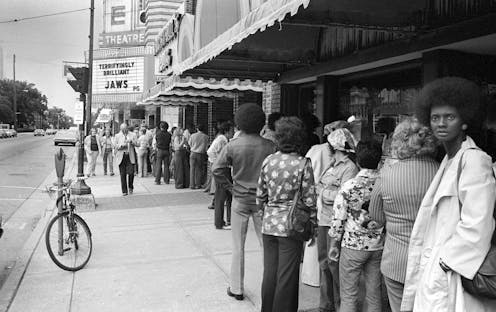
Many film historians see ‘Jaws’ as the first true summer blockbuster. Steve Kagan/Getty Images

“Da, duh.”

Two simple notes – E and F – have become synonymous with tension, fear and sharks, representing the primal dread of being stalked by a predator.

And they largely have “Jaws” to thank.

Fifty years ago, Steven Spielberg’s blockbuster film – along with its spooky score composed by John Williams – convinced generations of swimmers to think twice before going in the water.

As a scholar of media history and popular culture, I decided to take a deeper dive into the staying power of these two notes and learned about how they’re influenced by 19th-century classical music, Mickey Mouse and Alfred Hitchcock.

When John Williams proposed the two-note theme for ‘Jaws,’ Steven Spielberg initially thought it was a joke.

The first summer blockbuster

In 1964, fisherman Frank Mundus killed a 4,500-pound great white shark off Long Island.

After hearing the story, freelance journalist Peter Benchley began pitching a novel based on three men’s attempt to capture a man-eating shark, basing the character of Quint off of Mundus. Doubleday commissioned Benchley to write the novel, and in 1973, Universal Studios producers Richard D. Zanuck and David Brown purchased the film rights to the novel before it was published. The 26-year-old Spielberg was signed on to be the director.

Tapping into both mythical and real fears regarding great white sharks – including an infamous set of shark attacks along the Jersey Shore in 1916 – Benchley’s 1974 novel became a bestseller. The book was a key part of Universal’s marketing campaign, which began several months before the film’s release.

Starting in the fall of 1974, Zanuck, Brown and Benchley appeared on a number of radio and television programs to simultaneously promote the release of the paperback edition of the novel and the upcoming film. The marketing also included a national television advertising campaign that featured emerging composer Williams’ two-note theme. The plan was for a summer release, which, at the time, was reserved for films with less than stellar reviews.

TV ads promoting the film featured John Williams’ two-note theme.

Films at the time typically were released market by market, preceded by local reviews. However, Universal’s decision to release the film in hundreds of theaters across the country on June 20, 1975, led to huge up-front profits, sparking a 14-week run as the No. 1 film in the U.S.

Many consider “Jaws” the first true summer blockbuster. It catapulted Spielberg to fame and kicked off the director’s long collaboration with Williams, who would go on to earn the second-highest number of Academy Award nominations in history – 54 – behind only Walt Disney’s 59.

The film’s beating heart

Though it’s now considered one of the greatest scores in film history, when Williams proposed the two-note theme, Spielberg initially thought it was a joke.

But Williams had been inspired by 19th and 20th century composers, including Claude Debussy, Igor Stravinsky and especially Antonin Dvorak’s Symphony No. 9, “From the New World.” In the “Jaws” theme, you can hear echoes of the end of Dvorak’s symphony, as well as the sounds of another character-driven musical piece, Sergei Prokofiev’s “Peter and the Wolf.”

“Peter and the Wolf” and the score from “Jaws” are both prime examples of leitmotifs, or a musical piece that represents a place or character.

The varying pace of the ostinato – a musical motif that repeats itself – elicits intensifying degrees of emotion and fear. This became more integral as Spielberg and the technical team struggled with the malfunctioning pneumatic sharks that they’d nicknamed “Bruce,” after Spielberg’s lawyer.

As a result, the shark does not appear until the 81-minute mark of the 124-minute film. But its presence is felt through Williams’ theme, which some music scholars have theorized evoke the shark’s heartbeat.

A fake shark emerging and attacking an actor on the deck of a fishing boat.
During filming, issues with ‘Bruce’ the mechanical shark forced Steven Spielberg to rely more on mood and atmosphere.
Screen Archives/Moviepix via Getty Images

Sounds to manipulate emotions

Williams also has Disney to thank for revolutionizing character-driven music in film.

The two don’t just share a brimming trophy case. They also understood how music can heighten emotion and magnify action for audiences.

Although his career started in the silent film era, Disney became a titan of film, and later media, by leveraging sound to establish one of the greatest stars in media history, Mickey Mouse.

When Disney saw “The Jazz Singer” in 1927, he knew that sound would be the future of film.

On Nov. 18, 1928, “Steamboat Willie” premiered at Universal’s Colony Theater in New York City as Disney’s first animated film to incorporate synchronized sound.

Unlike previous attempts to bring sound to film by having record players concurrently play or deploying live musicians to perform in the theater, Disney used technology that recorded sound directly on the film reel.

It wasn’t the first animated film with synchronized sound, but it was a technical improvement to previous attempts at it, and “Steamboat Willie” became an international hit, launching Mickey’s – and Disney’s – career.

The use of music or sound to match the rhythm of the characters on screen became known as “Mickey Mousing.”

“King Kong” in 1933 would deftly deploy Mickey Mousing in a live action film, with music mimicking the giant gorilla’s movements. For example, in one scene, Kong carries away Ann Darrow, who’s played by actress Fay Wray. Composer Max Steiner uses lighter tones to convey Kong’s curiosity as he holds Ann, followed by ominous, faster, tones as Ann escapes and Kong chases after her. In doing so, Steiner encourages viewers to both fear and connect with the beast throughout the film, helping them suspend disbelief and enter a world of fantasy.

Mickey Mousing declined in popularity after World War II. Many filmmakers saw it as juvenile and too simplistic for the evolving and advancing film industry.

When less is more

In spite of this criticism, the technique was still used to score some iconic scenes, like the playing of violins in the shower as Marion Crane is stabbed in Alfred Hitchcock’s “Psycho.”

Spielberg idolized Hitchcock. A young Spielberg was even kicked off the Universal lot after sneaking on to watch the production of Hitchcock’s 1966 film “Torn Curtain.”

Although Hitchcock and Spielberg never met, “Jaws” clearly exhibits the influence of Hitchcock, the “Master of Suspense.” And maybe that’s why Spielberg initially overcame his doubts about using something so simple to represent tension in the thriller.
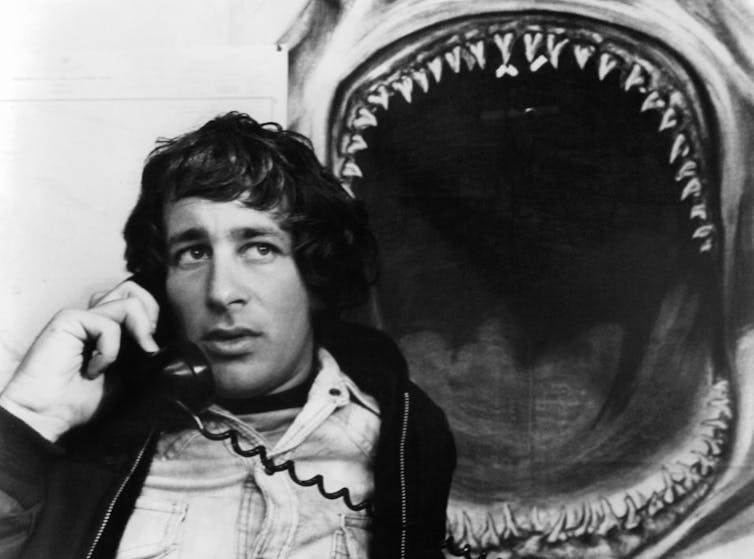
Young man with shoulder-length hair speaks on the phone in front of an image of a shark with its mouth open.
Steven Spielberg was just 26 years old when he signed on to direct ‘Jaws.’
Universal/Getty Images

The use of the two-note motif helped overcome the production issues Spielberg faced directing the first feature length movie to be filmed on the ocean. The malfunctioning animatronic shark forced Spielberg to leverage Williams’ minimalist theme to represent the shark’s ominous presence in spite of the limited appearances by the eponymous predatory star.

As Williams continued his legendary career, he would deploy a similar sonic motif for certain “Star Wars” characters. Each time Darth Vader appeared, the “Imperial March” was played to set the tone for the leader of the dark side.

As movie budgets creep closer to a half-billion dollars, the “Jaws” theme – and the way those two notes manipulate tension – is a reminder that in film, sometimes less can be more.

The Conversation

Jared Bahir Browsh does not work for, consult, own shares in or receive funding from any company or organization that would benefit from this article, and has disclosed no relevant affiliations beyond their academic appointment.

ref. ‘Jaws’ and the two musical notes that changed Hollywood forever – https://theconversation.com/jaws-and-the-two-musical-notes-that-changed-hollywood-forever-255379

Family homesteads with tangled titles are contributing to rural America’s housing crisis

Source: – By Jennifer Pindyck, Assistant Professor of Architecture, Auburn University

Rural Studio helps families build new housing on land with tangled titles, meaning there’s no clear owner. Auburn University Rural Studio. Photo by Timothy Hursley, CC BY-SA

Imagine your parents leave you and your siblings a share of land that’s been in your family for generations. Several of your relatives already live on the land, and you’d like to do the same; but you can’t get a loan to build or renovate a home without permission from all the relatives who also share ownership. And at any moment, another heir could sell their share, triggering a court-ordered sale that could force you off the land – and lose everything you’ve invested in.

This is the reality of what’s known as heirs’ property: land passed down informally, without clear wills or deeds, which results in a “tangled” or “clouded” title.

It’s more common than you might think in the U.S., especially in rural areas, and it presents significant challenges to long-term housing stability.

Research shows that within 44 states and the District of Columbia, there are an estimated 508,371
heirs’ properties, with an assessed value of US$32 billion. (There wasn’t reliable enough data in six states.)

It’s more of an issue in some states, such as Alabama. But it’s also a problem in cities such as New York City and Philadelphia.

Because it’s so difficult to finance home construction on this land, sell it or leverage it, heirs’ property can leave families vulnerable to exploitation and perpetuate cycles of poverty. Despite these challenges, many families have nonetheless lived together and supported one another on shared land for generations.

As faculty and collaborators with Auburn University’s Rural Studio, we study heirs’ property and its role in shaping housing access. Based in Hale County, Alabama, Rural Studio has completed over 200 projects – many of them homes built on heirs’ property – providing critical housing for families facing complex land ownership challenges.

Land with no clear owner

The lack of a clear will or deed often happens due to inadequate access to – and distrust of – the legal system.

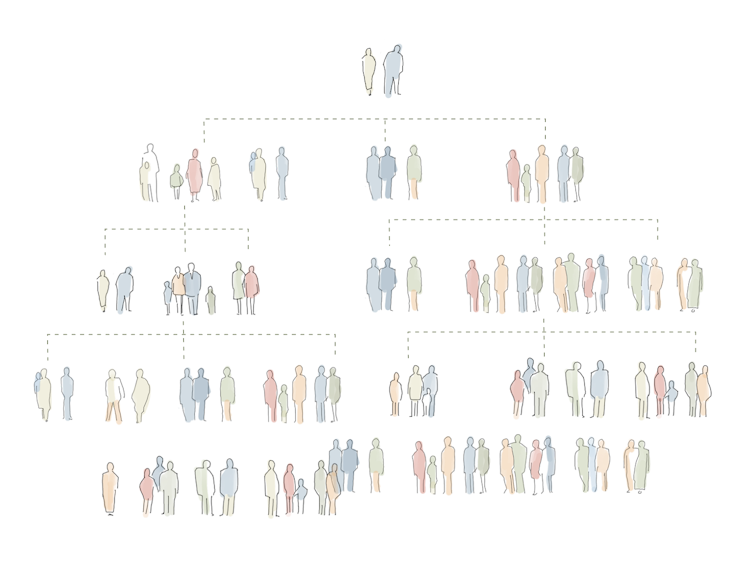
Once the land is passed down to the next generation, the heirs are known as “tenants in common,” meaning they own an undivided interest in the entire property. As the property continues to pass down from generation to generation, the number of tenants in common increases exponentially.

A graphic of a family tree.
When a couple passes down land to their children – and then those kids pass it down to their kids – the number of heirs dramatically increases.
Auburn University Rural Studio, CC BY-SA

Without clear title, no single person or group can make decisions about the property. Every heir must legally sign off on any action, which makes it nearly impossible to secure traditional forms of financing, obtain insurance, access disaster relief, or use the land as collateral.

Those living on the land often pay their share of property taxes, but distant or unaware heirs might not, which puts the entire property at risk of being lost through a tax lien sale. This leaves families with property in “tangled” status exposed to predatory land acquisition practices that often lead to land loss.

Any tenant in common can sell their share to an outside party. These outside parties – either individuals or companies – can then request a court to order what’s called a partition by sale, which can push every other owner off the land.

Imagine three siblings inherit a piece of land from their parents and are now tenants in common. One sibling sells their share to a real estate investor. That investor then goes to court and requests a partition by sale. The court then orders the entire property sold and the proceeds split among the owners, effectively forcing the other two siblings off the land, even if they wanted to keep it.

Such tactics are especially common in the Black Belt region of the U.S., which covers Mississippi, Alabama, Georgia and South Carolina; as such, they disproportionately affect Black Americans.

Why family-owned land matters

Our research in Hale County, Alabama, finds that Black families in particular have supported one another for generations while living on heirs’ property.

These multigenerational kinship networks rely on one another for child care, elder care, food, transportation and shared utility costs. But the value of this sort of living situation goes beyond social and economic benefits. The land can be woven into family lore or be steeped in the history of the surrounding area.

So, despite the legal and financial challenges, many extended families will do whatever they can to continue living together on their land. Even a small stake in heirs’ property offers connection to the past and a place to return home in the future.

A bird's eye image of a piece of property with multiple homes
Family members often live in different homes spread across heirs’ property, which often exists in a legal gray area.
Auburn University Rural Studio, CC BY-SA

These informal kinship networks can provide support and resilience in ways that traditional forms of land and homeownership do not. Putting all of the people who own the land on the title – what’s known as “clearing title” – is not only costly and time-consuming, but it also often requires dividing up the property into smaller parcels, which can prevent some family members from living on the land altogether.

Meanwhile, traditional legal and financial products – think mortgages and land-use agreements with farmers – tend to be structured with sole ownership in mind. Most banks and institutions simply won’t lend to heirs’ property with tangled titles.

There have been recent efforts to protect these informal arrangements. The Uniform Partition of Heirs Property Act, which has been enacted in 25 states, ensures due process and sets up safeguards against immediate partition by sale actions.

For example, if a suit is brought by a co-owner, a fair market value appraisal – or an agreed-upon value by all parties – must be conducted. The other shareholders of the land also have the option to buy out the shareholder bringing the suit. Under the statute, additional partition methods may be considered. And if a sale is required, it’s done on the open market.

Many organizations are working to address issues related to heirs’ property and tangled titles. Most of the work centers on clearing title, establishing shared land agreements and teaching landowners how to avoid having their property fall into a tangled title situation. For example, the Florida Housing Coalition, Housing Assistance Council and the Alabama Heirs Property Alliance are actively engaged in community education, legal support, data mapping and policy advocacy.

Build first, ask permission later

Many rural families on heirs’ property have limited pathways to homeownership. Financial constraints, limited access to quality housing options and lot restrictions have often forced residents to settle for older, substandard, manufactured homes. Small utility sheds have even begun to replace broken-down trailer homes in many rural areas.

A group of portable sheds for sale on the side of a road.
Utility sheds are increasingly being used as homes across the U.S. South.
Auburn University Rural Studio, CC BY-SA

There’s clearly a need for safe, durable housing that enables these families to build generational wealth. And that’s where Rural Studio comes in.

Building new housing or renovating existing structures means dealing with a web of zoning laws, building codes and land development ordinances, which are all tied to financing and lending systems. While many efforts to address heirs’ property aim to change legal policies, we approach this issue through housing.

We use what we call a “build first” strategy. Using funds from research grants and donations, we simply start building on heirs’ properties with the permission of families. In the process, we show that if tangled titles were no longer an obstacle, much more housing could be built.

One of our recent Rural Studio projects is the 18×18 House, a compact, multistory home built for a young man living on heirs’ property in Alabama.

A newly built two-story home with an older small home and a utility shed in the foreground.
The 18×18 House is a multistory home that was on heirs’ property in Alabama.
Auburn University Rural Studio. Photo by Timothy Hursley, CC BY-SA

The home is nestled between several other family members’ homes. We had to work around existing electrical lines, a septic field, roads and steep topography. Despite these site constraints, the house is an ideal starter home: big enough for the young man and a future partner to live comfortably on the family plot. If he ever decides to leave, other family members can move in.

Rather than focusing on one-off products, our goal with the 18×18 House is to develop replicable housing prototypes that respond to the realities of intergenerational living on family land. We also hope that tangible housing will help policymakers understand the value of reform.

The question isn’t whether design can respond to these challenges, but how it can lead by pushing antiquated regulatory and legal frameworks to evolve.

This article is part of a series centered on envisioning ways to deal with the housing crisis.

The Conversation

Jennifer Pindyck receives funding from Fannie Mae, Wells Fargo and the Center for Architecture, in partnership with AIA New York. She is affiliated with the Association of Collegiate Schools of Architecture and is a registered architect in the state of Georgia.

Christian Ayala Lopez work is funded through a diverse range of organizations such as Fannie Mae, USDA, and Center for Architecture NY. He is affiliated to Association of Collegiate Schools of Architecture, National Council of Architectural Registration Boards, and member of Florida Housing Coalition.

Rusty Smith receives funding from Fannie Mae, USDA, Wells Fargo and Regions Bank. He is affiliated with the Housing Assistance Council, the American Institute of Architects, the Association of Collegiate Schools of Architecture, the National Renewable Energy Laboratory Innovation Incubator, the EPA Collegiate/Underserved Community Partnership and the Bipartisan Policy Center.

ref. Family homesteads with tangled titles are contributing to rural America’s housing crisis – https://theconversation.com/family-homesteads-with-tangled-titles-are-contributing-to-rural-americas-housing-crisis-254679

A portrait taken in North Philly in the 1980s reconnects poet with cherished memories of her own beloved father

Source: – By Kimmika Williams-Witherspoon, Professor of Theater, Temple University

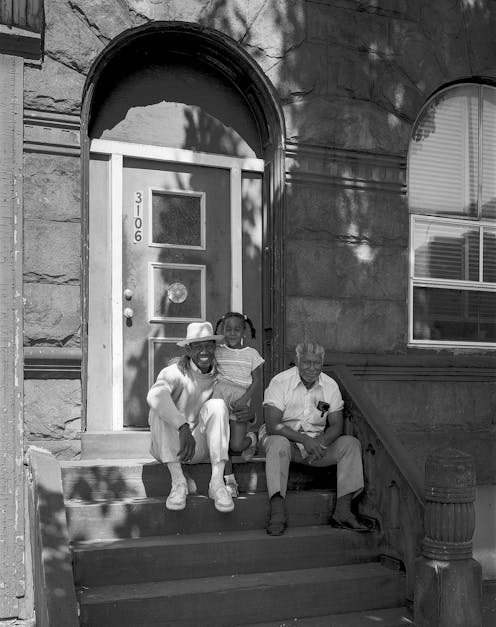
Local residents sitting on the steps in the shade at 3106 N. Broad St. in North Philadelphia in 1986.
Joseph V. Labolito/Philadelphia Collections

To celebrate Father’s Day, The Conversation U.S. asked Philadelphia anthropologist, playwright and poetic ethnographer Kimmika Williams-Witherspoon to reflect on a poem she recently performed to accompany a 1986 photograph by Philadelphia photographer Joseph V. Labolito.

Williams-Witherspoon, who also serves as senior associate dean of the Center for the Performing and Cinematic Arts at Temple University, shares how the collaboration came about, and why one of Labolito’s photos in particular brought back a rush of cherished memories of being a little girl hanging out with her dad.

Portrait of young, smiling girl in pigtails with arm wrapped around smiling man, and an older gentleman sitting next to them
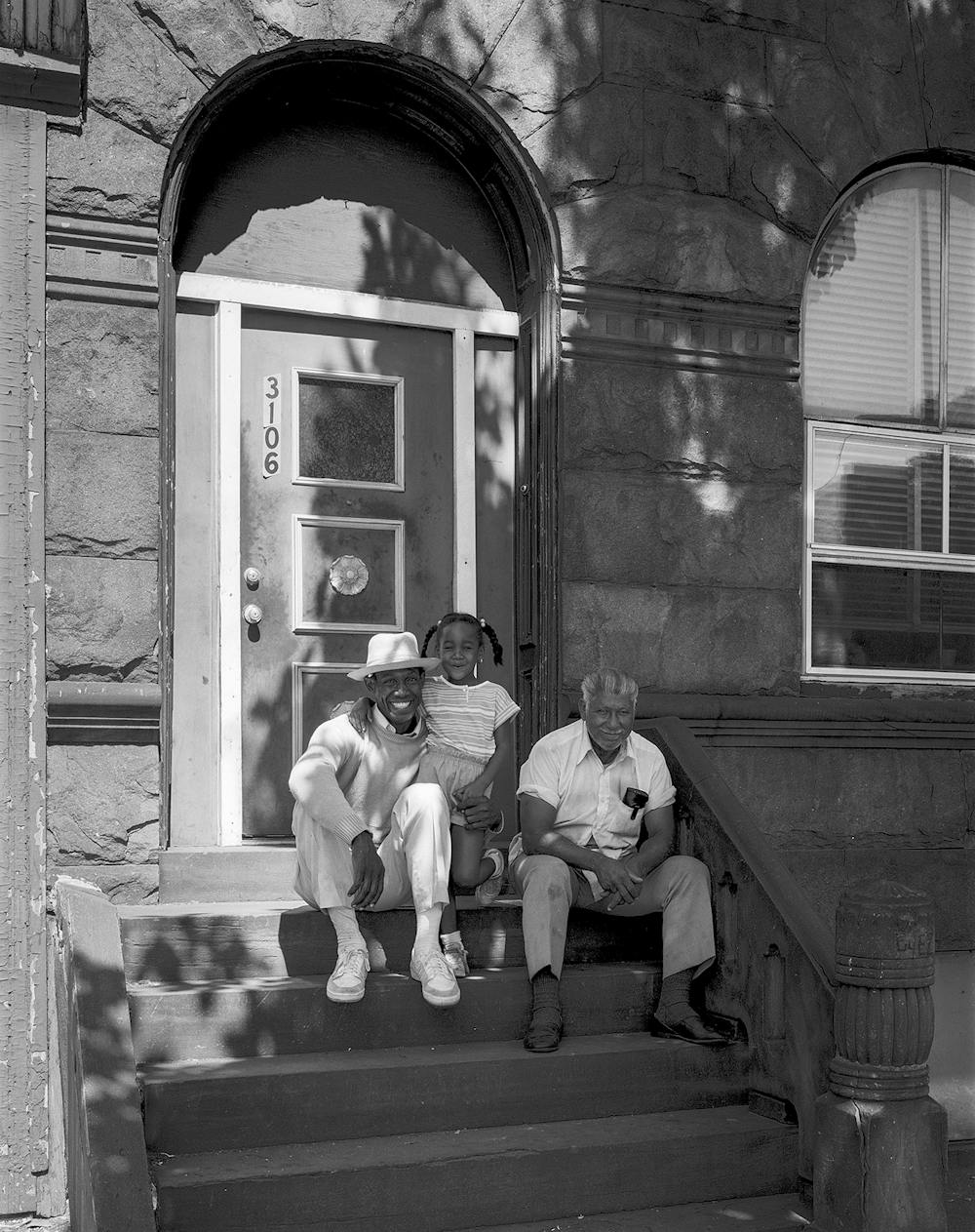
Local residents sitting on the steps in the shade at 3106 N. Broad St. in North Philadelphia in 1986.
Joseph V. Labolito/Philadelphia Collections

    There Are Black Fathers 
    To Daddy, Father’s Day, June 19, 1983

    I’ve known men 
    Who rise at dawn 
    To run a sort of race; 
    Working through sleep 
    Stopping long enough to yawn
    Providing for their families Just a little      
    place. 
    Black men going, going, going 
    (sometimes, till their gone.) 

    I’ve known men 
    Who trudge home after long hours 
    And an even longer pain, 
    And still manage to smile, 
    Warmed by the voice of a child. 
    "Hi, Daddy!" 
    "How was your day?" 

    I’ve known men Who take care 
    Even when Mommy can’t. 
    And, even though they can only 
    Cook hamburgers really good, 
    They put band-aids on awfully well. 

    I’ve known men 
    Who loving replace lost teeth 
    With shiny new dimes; 
    Remember birthdays and Christmas’. 
    Dutifully repair 
    Old, broken toys And, even, sometimes, 
    Wipe away salty tears. 

    I’ve known men 
    Who reprimand, 
    Teach us values 
    And, if we’re lucky, 
    Along with Mom, 
    Help us take a stand. 
    Who calm us when we’re frightened; 
    Scare us when we’re bad — Hold our hands. 

    I’ve known men, 
    Not just as Fathers; 
    But, more so, as "Dads" — 
    Who give us what we get 
    And gave us what we had. 
    Loving and kind; 
    Stern, yet strong, 
    I’ve known men 
    Who’ve guided generations along 
    As provider, supporter, parent — Pop, Dad! 

    There are Black fathers 
    Who would gladly do it again 
    Parenting future generations. 
    Yes, I have known These men. 

    © 2025 Kimmika L. H. Williams-Witherspoon

What do you want people to take away from the poem?

The whole poem is a tribute to my father, Samuel Hawes Jr., who lived from 1920 to 1989, and the many men like him who were always present and participatory in the parenting of their children and the providing for their families.

Because of stereotypes and popular culture – media, movies, news stories – that tend to demonize and pathologize Black men, there’s a myth that men in our communities are all cut from the same cloth.

For me, the poem discounts that stereotypical narrative and celebrates the African American men that I knew growing up – Daddy, my uncles, the deacons in our church, the neighborhood dads on my block.

The men in this photograph represent men like Daddy, who at one point worked two jobs to provide for his family. He drove a yellow cab and worked the graveyard shift as a presser at the U.S. Mint. He took me to school every morning when I was in high school. He made it to every school function or occasion, drove me to and from parties so I could hang out with friends, took me to church every Sunday morning and on those special road trips to Cleveland, Akron, Ohio, and Fort Lauderdale, Florida, throughout my life.

Tell us about your collaborator for this piece

Joe Labolito is a Philadelphia photographer whose work, I believe, is visual ethnography at its best. Throughout the ‘80s, ’90s and 2000s, he documented the people, streets and neighborhoods of Philadelphia. His photographs are housed in several public and private collections, including the Special Collections Research Center at Temple University and the Free Library of Philadelphia’s Print and Picture Collection.

About a year ago, I saw an exhibit of Joe’s work at Temple. Since that time, I have been using some of his photographs as a visual prompt for my students, while he and I talked about doing something together down the road.

When I was asked to participate in Temple University President John Fry’s investiture events in March 2025, I asked Joe if he wanted to do something with me. Right away he said “Yes … whatever it is.” I asked him to send me maybe 25 of his favorite photos, and instead, he sent me about a hundred. When I got a minute to sift through them, there were 11 that, as soon as I looked at them, immediately prompted lines of poetry.

This photograph of the two men and the little girl, however, made me remember an old poem, “There Are Black Fathers,” I had written a long time ago – on Father’s Day on June 19, 1983 – for my father before he passed away from prostate and bone cancer. I went digging through my old journals until I found the poem that I had written for Daddy, and I performed that poem to this photograph at the event.

What stood out to you about this photograph?

The juxtaposition between the men and the little girl – their beautiful, bright smiles, the joy they seemed to radiate – it all made me think about and remember how much I loved Daddy my entire life but especially as a little girl.

That’s the power in these kinds of artistic, material and visual artifacts. This photograph transported me right back to my childhood, filled with the warmth of a summer’s day, hanging out with my dad, and the promise of a banana Popsicle later in the afternoon.

What is your process for writing a poem to accompany a photograph?

Whatever the prompt – a photograph, a landscape, a person I’ve passed on the street, a word or phrase – the first draft is a free-write sensory download dump. I ruminate and then write down everything that comes to me in whatever order it comes.

And then with each subsequent draft or pass at it, I start reading the poem out loud and tweaking it, making edits, moving and changing things while crafting lines that frame and build the story. I read the piece aloud over and over and over again until the poem tells me when I’ve got it right. I don’t know how, but my ear will tell me when it’s done and right with my spirit.

What is poetic ethnography?

Ethnography is an area of anthropology. From the Greek word “ethnos,” ethno simply means people or culture, and graphy, from the Greek word “graphia,” is the writing about said people or culture.

Traditional ethnographies are usually written in a diarylike journal form. You end up jotting things down – thoughts, feelings, expressions, verbatim texts from interview participants – alongside bits and pieces of theory that correlate. Field notes are a combination of prose and scientific inquiry. I am a proponent of compiling poetic ethnographies – turning my observation and investigation of cultures, communities, and my field notes, into poetic form.

Growing up in Philadelphia and a product of Philadelphia public schools, my primary language is mainstream U.S. English, but I tell people that my actual language is poetry. I see the world through poetry, and through the medium of poetry, I think I am better able to articulate the world I see.

Read more of our stories about Philadelphia.

The Conversation

Kimmika Williams-Witherspoon has received funding from Lumena Foundation’s Fund for Racial Justice and Equity (2018-19) and PEW Charitable Trusts Arts Grant (2020).

Joseph V. Labolito owns the copyright to Philadelphia Collections. Philadelphia Collections research and operations is supported and partially funded by the Bridge award; an internal grant provided by the Office of the Vice President for Research (OVPR) at Temple University for the 2024 – 2025 year.

ref. A portrait taken in North Philly in the 1980s reconnects poet with cherished memories of her own beloved father – https://theconversation.com/a-portrait-taken-in-north-philly-in-the-1980s-reconnects-poet-with-cherished-memories-of-her-own-beloved-father-255810

Ticks carry decades of history in each troublesome bite

Source: – By Sean Lawrence, Assistant Professor of History, West Virginia University

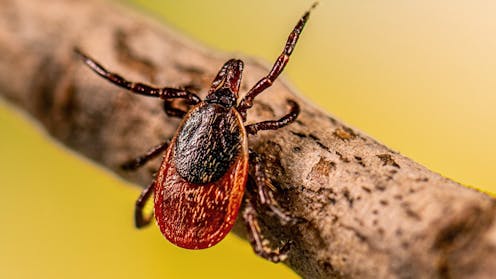
The black-legged tick, or deer tick, _Ixodes scapularis_, can transmit Lyme disease and other health hazards. U.S. Centers for Disease Control and Prevention

When you think about ticks, you might picture nightmarish little parasites, stalking you on weekend hikes or afternoons in the park.

Your fear is well-founded. Tick-borne diseases are the most prevalent vector-borne diseases – those transmitted by living organisms – in the United States. Each tick feeds on multiple animals throughout its life, absorbing viruses and bacteria along the way and passing them on with its next bite. Some of those viruses and bacteria are harmful to humans, causing diseases that can be debilitating and sometimes lethal without treatment, such as Lyme, babesiosis and Rocky Mountain spotted fever.

But contained in every bite of this infuriating, insatiable pest is also a trove of social, environmental and epidemiological history.

In many cases, human actions long ago are the reason ticks carry these diseases so widely today. And that’s what makes ticks fascinating for environmental historians like me.

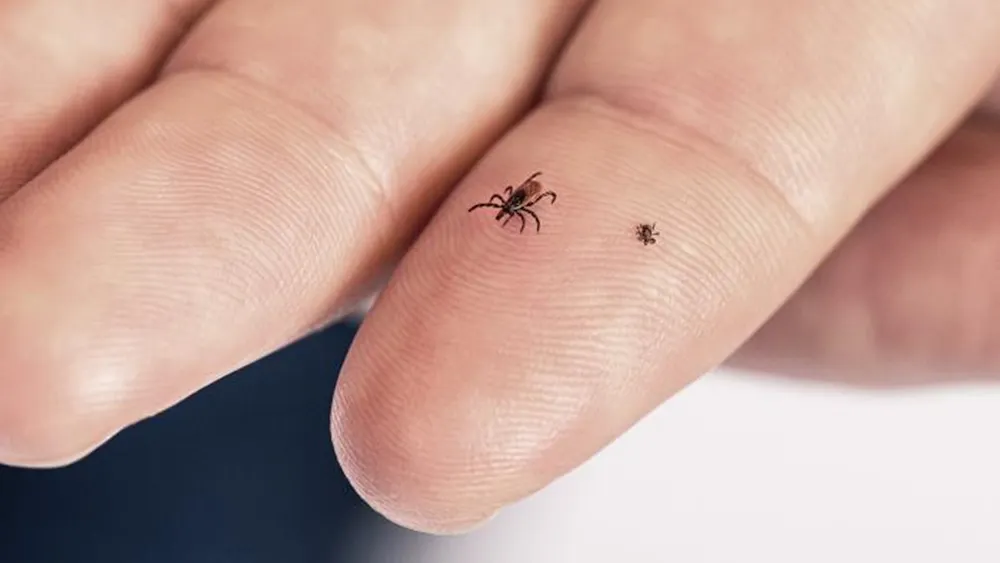
Two small ticks on a person' index finger. The nymph could pass for a freckle.
Ticks can be tiny and hard to spot. This is an adult and nymph Ixodes scapularis on an adult’s index finger.
CDC

Changing forests fueled tick risks

During the 18th and 19th centuries, settlers cleared more than half the forested land across the northeastern U.S., cutting down forests for timber and to make way for farms, towns and mining operations. With large-scale land clearing came a sharp decline in wildlife of all kinds. Predators such as bears and wolves were driven out, as were deer.

As farming moved westward, Northeasterners began to recognize the ecological and economic value of trees, and they returned millions of acres to forest.

The woods regrew. Plant-eaters such as deer returned, but the apex predators that once kept their populations in check did not.

As a result, deer populations grew rapidly. With the deer came deer ticks (Ixodes scapularis) carrying borrelia burgdorferi, the bacterium that causes Lyme disease. When a tick feeds on an infected animal, it can take up the bacteria. The tick can pass the bacteria to its next victim. In humans, Lyme disease can cause fever and fatigue, and if left untreated it can affect the nervous system.

The eastern U.S. became a global hot spot for tick-borne Lyme disease starting around the 1970s. Lyme disease affected over 89,000 Americans in 2023, and possibly many more.

Californians move into tick territory

For centuries, changing patterns of human settlements and the politics of land use have shaped the role of ticks and tick-borne illnesses within their environments.

In short, humans have made it easier for ticks to thrive and spread disease in our midst.

In California, the Northern Inner Coast and Santa Cruz mountain ranges that converge on San Francisco from the north and south were never clear-cut, and predators such as mountain lions and coyotes still exist there. But competition for housing has pushed human settlement deeper into wildland areas to the north, south and east of the city, reshaping tick ecology there.

A range map for the western black-legged tick.
National Center for Emerging and Zoonotic Infectious Diseases

While western black-legged ticks (Ixodes pacificus) tend to swarm in large forest preserves, the Lyme-causing bacterium is actually more prevalent in small, isolated patches of greenery. In these isolated patches, rodents and other tick hosts can thrive, safe from large predators, which need more habitat to move freely. But isolation and lower diversity also means infections are spread more easily within the tick’s host populations.

People tend to build isolated houses in the hills, rather than large, connected developments. As the Silicon Valley area south of San Francisco sprawls outward, this checkerboard pattern of settlement has fragmented the natural landscape, creating a hard-to-manage public health threat.

Fewer hosts, more tightly packed, often means more infected hosts, proportionally, and thus more dangerous ticks.

A magnified view of a tick's mouth.
A tick’s mouth is barbed so it can hold on as it draws blood over hours.
National Institute of Allergy and Infectious Diseases

Six counties across these ranges, all surrounding and including San Francisco, account for 44% of recorded tick-borne illnesses in California.

A lesson from Texas cattle ranches

Domesticated livestock have also shaped the disease threat posed by ticks.

In 1892, at a meeting of cattle ranchers at the Stock Raiser’s Convention in Austin, Texas, Dr. B.A. Rogers introduced a novel theory that ticks were behind recent devastating plagues of Texas cattle fever. The disease had arrived with cattle imported from the West Indies and Mexico in the 1600s, and it was taking huge tolls on cattle herds. But how the disease spread to new victims had been a mystery.

A detailed illustration of a tick, drawn at the time people were debating the tick's role in cattle fever.
A 1905 illustration of Rhipicephalus annulatus, a hard tick that causes cattle fever.
Nathan Banks, A treatise on the Acarina, or mites. Proceedings of the United States National Museum

Editors of Daniel’s Texas Medical Journal found the idea of ticks spreading disease laughable and lampooned the hypothesis, publishing a satire of what they described as an “early copy” of a forthcoming report on the subject.

The tick’s “fluid secretion, it is believed, is the poison which causes the fever … [and the tick] having been known to chew tobacco, as all other Texans do, the secretion is most probably tobacco juice,” they wrote.

Fortunately for the ranchers, not to mention the cows, the U.S. Department of Agriculture sided with Rogers. Its cattle fever tick program, started in 1906, curbed cattle fever outbreaks by limiting where and when cattle should cross tick-dense areas.

A person holds open a calf's ear to show several engorged ticks.
Engorged ticks feed on a calf’s ear.
Alan R Walker, CC BY-NC-SA

By 1938, the government had established a quarantine zone that extended 580 miles by 10 miles along the U.S.-Mexico border in South Texas Brush Country, a region favored by the cattle tick.

This innovative use of natural space as a public health tool helped to functionally eradicate cattle fever from 14 Southern states by 1943.

Ticks are products of their environment

When it comes to tick-borne diseases the world over, location matters.

Take the hunter tick (Hyalomma spp.) of the Mediterranean and Asia. As a juvenile, or nymph, these ticks feed on small forest animals such as mice, hares and voles, but as an adult they prefer domesticated livestock.

For centuries, this tick was an occasional nuisance to nomadic shepherds of the Middle East. But in the 1850s, the Ottoman Empire passed laws to force nomadic tribes to become settled farmers instead. Unclaimed lands, especially on the forested edges of the steppe, were offered to settlers, creating ideal conditions for hunter ticks.

As a result, farmers in what today is Turkey saw spikes in tick-borne diseases, including a virus that causes Crimean-Congo hemorrhagic fever, a potentially fatal condition.

Where to check for ticks and how to remove them.

It’s probably too much to ask for sympathy for any ticks you meet this summer. They are bloodsucking parasites, after all.

Still, it’s worth remembering that the tick’s malevolence isn’t its own fault. Ticks are products of their environment, and humans have played many roles in turning them into the harmful parasites that seek us out today.

This article has been updated to clarify that ticks spread alongside the deer population.

The Conversation

Sean Lawrence has nothing to disclose.

ref. Ticks carry decades of history in each troublesome bite – https://theconversation.com/ticks-carry-decades-of-history-in-each-troublesome-bite-257110

How to stay safe during heat waves – and heat stroke warning signs to watch for

Source: – By Brian Bossak, Professor of Public Health, College of Charleston

Extreme heat can become lethal quickly. A young man cools off at Washington, D.C.’s Yards Park during a heat wave in 2021. Olivier Douliery/AFP via Getty Images

Summer is just getting started, and millions of people are under heat advisories as a major heat wave spreads across large parts of the central and eastern U.S. in June 2025.

For many people, summer is their favorite season, a time for cookouts, beach trips and other outdoor activities. However, summer also brings the risk of dangerously high temperatures and humidity.

In the U.S., hundreds of people working or playing outside – even those who seem healthy – succumb to heat-related illnesses each year. Older adults and people in areas that historically haven’t needed air conditioning tend to see the highest rates of illnesses during heat waves, as Chicago saw in 1995 when at least 700 people died in a heat wave.

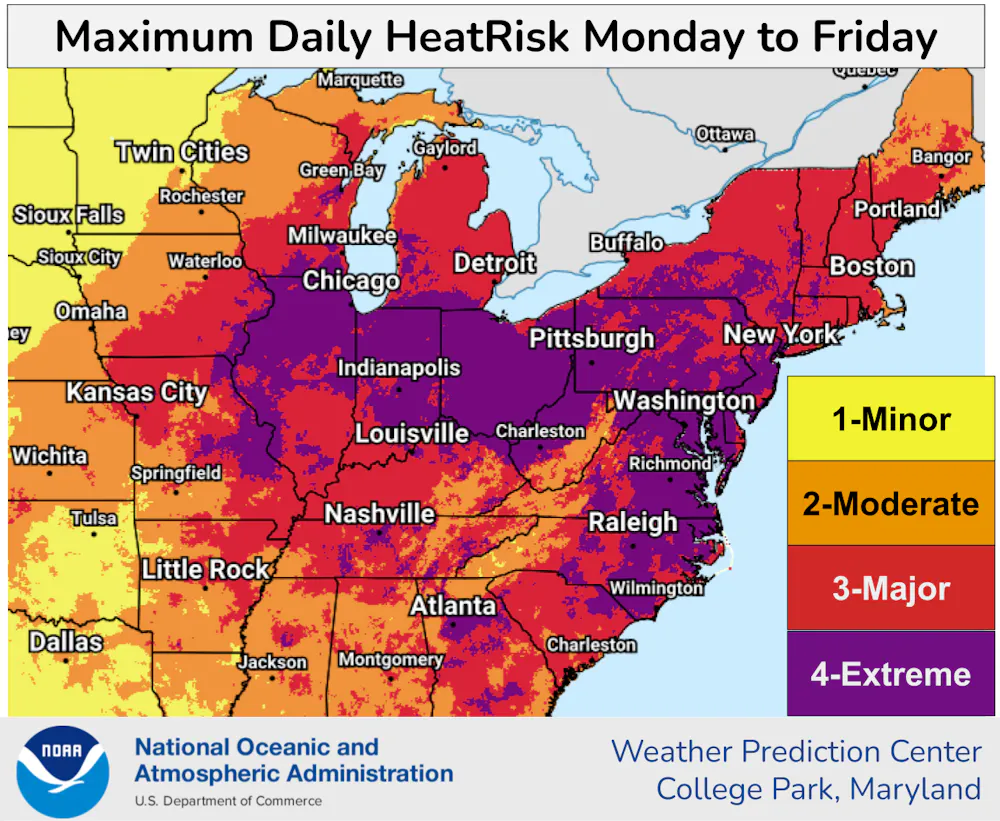
A map shows maximum daily temperatures for the week in the extreme heat category across Illinois, Indiana, Ohio, Pennsylvania, Maryland, Virginia and North Carolina, and high heat for much of the rest of the Midwest and Eastern U.S.
The Weather Prediction Center’s heat forecast, released June 22, shows the maximum heat risks states can expect to see at some point during the week of June 23-27, 2025.
NOAA Weather Prediction Center

Even in places where heat is recognized as a dangerous health threat, people can be caught off guard as the thermometer creeps higher, on average, each year. In some cases, dangerous heat can arise quickly. In 2021, a young family died of heat stroke on a California trail after setting out for a hike when temperatures were still in the 70s Fahrenheit (low to mid 20s Celsius).

I study health risks in a warming climate as a professor of public health, and I’ve seen heat become a growing concern. Here are some of the key warning signs to watch for when temperatures rise – and ways to keep cool when the heat and humidity get too high.

Signs of heat-related illness to watch for

Heat-related illnesses occur across a spectrum, and mild heat stress can quickly progress to life-threatening heat stroke if a person is exposed to dangerous conditions for too long.

Mild forms of heat-related illness include heat cramps and heat rash, both of which can be caused by extensive sweating during hot conditions. Cooling the body and drinking cool fluids can help.

When heat-related illnesses progress into heat exhaustion, the situation is more serious. Heat exhaustion includes symptoms such as dizziness, nausea, excessive sweating, feeling weak, thirst and getting a headache.

A construction worker sits and puts his head down, still in the hot sun.
Construction workers are often out in the heat for long periods of time, including during this heat wave in Los Angeles in July 2024.
Etienne Laurent/AFP via Getty Images

Heat exhaustion is a signal that the body is losing its ability to maintain a stable core temperature. Immediate action such as moving to a cool, ideally air-conditioned space, drinking liquids, loosening clothes and applying wet cloths are some of the recommended steps that can help keep heat exhaustion from progressing to the most dangerous form of heat-related illness, heat stroke.

Heat stroke is a medical emergency. At this point, the body can no longer maintain a stable core temperature. A body with heat stroke can reach 106 degrees Fahrenheit or higher rapidly, and that heat can quickly damage the brain, heart and kidneys.

An illustration showing symptoms associated with heat exhaustion, such as dizziness, heavy sweating, nausea and weakness; and with heat stroke, including confusion, dizziness and passing out.
Signs of heat exhaustion and heat stroke, from the National Weather Service and Centers for Disease Control and Prevention.
NOAA/CDC

Typically, someone suffering heat stroke has exhausted their reserves of sweat and salt to stay cool, so sweating eventually stops during heat stroke. Their cognitive ability fails, and they cannot remove themselves from danger. Heat stroke can cause seizures or put someone into a coma as their core temperature rises. If the condition is not treated immediately, and the core temperature continues to rise, heat stroke becomes fatal.

Because heat exhaustion can lead to heat stroke, addressing heat-related illnesses before they progress is vital.

How to tell when the heat is too high

Heat risk isn’t just about temperature – humidity also increases the risk of heat-related illnesses because it affects how well sweating will cool the human body when it gets hot.

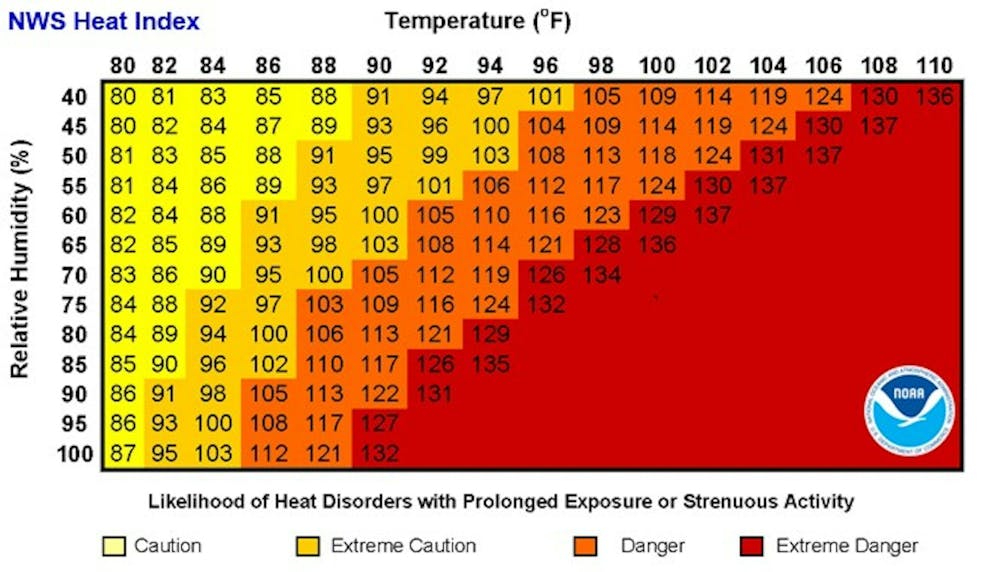
Instead of just looking at temperature when planning outdoor activities, check the heat index, which accounts for heat illness risk associated with temperature and relative humidity.

It doesn’t take very high temperatures or very high humidity for the heat index to enter dangerous territory.

A chart shows how humidity and temperature combine for dangerous conditions. For example, 86 degrees F at 80% humidity is a heat index of 100. 94 degrees at 45% humidity is also a heat index of 100.
A heat index chart shows how heat and humidity combine for dangerous conditions.
NOAA

However, the heat index is still a conservative measure of the impact of heat on humans, particularly for outdoor workers and athletes at summer practices. This is because temperature measurements used in weather forecasting are taken in the shade and are not exposed to direct sunlight. If someone is outside and exposed to the direct sun, the actual heat index can be as much as 15 F higher than the heat index chart indicates.

A more sophisticated measurement of heat effects on human health is what’s known as the wet-bulb globe temperature, which takes into account other variables, such as wind speed and cloud cover. Neither takes into account a person’s physical exertion, which also raises their body temperature, whether working at a construction site or playing soccer.

Tips for staying safe in a heat wave

How can you stay cool when heat waves set in? The answer depends in part on where you are, but the main points are the same:

  • Avoid strenuous outdoor activities in high temperatures if possible. If you start to feel symptoms of heat-related illnesses, drink fluids that will hydrate you. Find shade, rest, and use cool, damp cloths to lower your body temperature. If you see signs of heat stroke in someone else, call for medical help.

  • Be careful with fans. Fans can be useful if the temperature isn’t too high because they wick sweat away from the body and induce evaporative cooling. But at very high temperatures, they can accelerate heat buildup in the body and lead to dangerous conditions. If indoor temperatures reaches 95 degrees or higher, using fans can actually be dangerous and raise the risk of heat-related illnesses.

  • Find a cooling center, library or community center where you can get inside and rest in an air-conditioned space in the hottest hours. In places such as Phoenix, where high temperatures are a regular hazard, cooling centers are typically opened in summer. Northern cities are also opening cooling centers as heat waves occur there more frequently than they did in the past. Urban areas with a lot of pavement and buildings – known as heat islands – can have temperatures well above the city’s average.

  • Hydrate, hydrate, hydrate! Drink plenty of fluids, and don’t forget about the importance of electrolytes. Heat-related dehydration can occur when people sweat excessively, losing water and necessary salts from the body. Some sports drinks or rehydration fluids restore electrolytes and hydration levels.

Older adults and people with disabilities often face higher risks from heat waves, particularly if they can’t easily move to a cooler environment. Communities and neighbors can help protect vulnerable populations by providing cooling centers and bottled water and making regular wellness checks during high heat.

Summer can be a season of fun. Just remember the risks, keep an eye on your friends and neighbors when temperatures rise, and plan ahead so you can beat the heat.

This article, originally published June 19, 2025, has been updated with new heat advisories and forecasts.

The Conversation

Brian Bossak is not currently receiving relevant external funding for heat-related illness research. In 2017-2019, he served as a consultant on a heat-related research award from the Southeastern Coastal Center for Agricultural Health and
Safety at the University of Florida.

ref. How to stay safe during heat waves – and heat stroke warning signs to watch for – https://theconversation.com/how-to-stay-safe-during-heat-waves-and-heat-stroke-warning-signs-to-watch-for-257708

I’m an expert in crafting public health messages: Here are 3 marketing strategies I use to make Philadelphia healthier

Source: – By Sarah Bauerle Bass, Professor of Social and Behavioral Sciences, Temple University

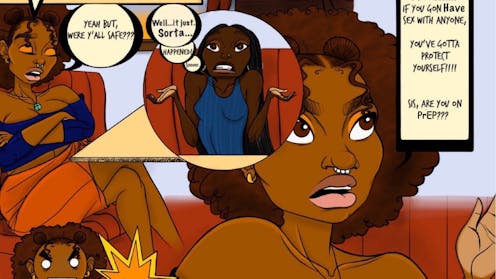
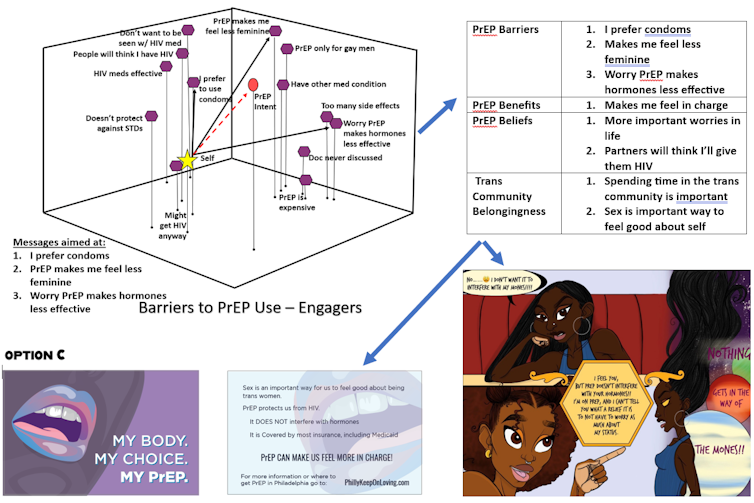
A comic book produced for Black transgender women in Philadelphia explains the benefits of using PrEP to prevent HIV infection. Wriply Bennet for the Risk Communication Laboratory, Temple University

In Philadelphia, the leading causes of death are heart disease, cancer and unintentional drug overdose. While some of these deaths are caused by things out of our control – like genetics – many are largely preventable.

Preventable deaths are the result of a series of decisions. Whether a person decides to smoke, eat lots of fried foods or be a couch potato, their decisions – sometimes unconsciously – can affect their health.

I’m a health communication expert and public health researcher at Temple University in North Philadelphia. I began working in public health in the late 1980s at the beginning of the HIV/AIDS epidemic, and before that I worked in marketing and public relations. I have spent my career thinking about how health decisions are like many of the decisions consumers make each day around which products to buy.

One key difference with health decisions is the inherent risks involved. There isn’t much risk in trying a new brand of cereal, but there is risk in riding a motorcycle without a helmet.

Many people have a “that won’t happen to me” attitude when making a decision that involves risk. This element of “risk perception” has guided my interest in health decisions and how to use commercial marketing techniques – the same ones companies use to sell products – to encourage people to get vaccinated, get a colonoscopy or get treated for a medical condition.

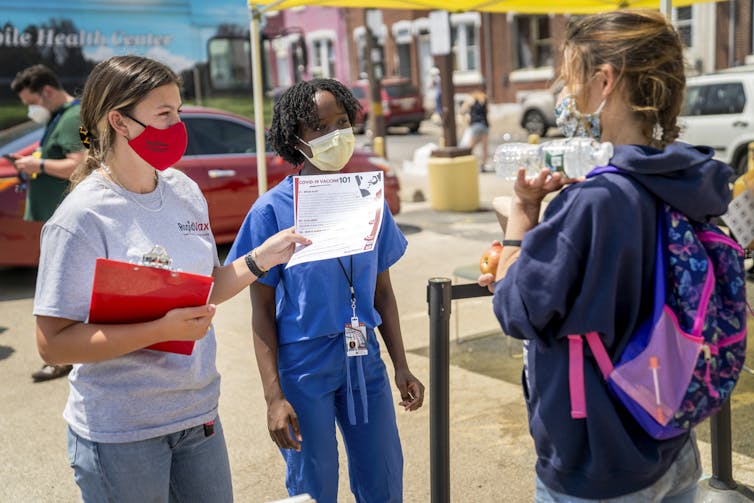
Three women wearing face masks, with one dressed in blue medical scrubs, talk together on a sidewalk lined with row homes
Temple students involved in the RapidVax project talk to Kensington residents about COVID-19 vaccinations during the pandemic.
Temple University College of Public Health

Breaking demographics into psychographics

One strategy I use is segmentation analysis.

Segmentation analysis is the process of looking at groups of people who may look like they are all similar on the surface – such as Black women from North Philadelphia – and then breaking them into smaller groups based on differences in their attitudes, beliefs or behaviors.

Looking at these “psychographics” instead of demographics like age or sex can help public health communication researchers better understand how to communicate effectively.

For example, I led a study in 2021 that looked at how connected transgender women living in Philadelphia and the San Francisco Bay Area felt to other members of the trans community. We wanted to see if messaging about PrEP, or pre-exposure prophylaxis, the medication used to prevent HIV infection, would need to be different depending on how connected they felt.

We found that participants who were more engaged with the trans community were not only more knowledgeable about PrEP, but they were also more likely to see the benefits of using it compared with those who were less engaged.

This indicates that strategies to reach those not as connected may need to include, for example, providing more basic information about what PrEP is and how it works.

A slide with a cube with different colored points mapped inside it
An example of perceptual mapping that shows different attitudes and beliefs around the HIV prevention medication PrEP.
Temple University College of Public Health

Mathematical models and 3D maps

Another powerful marketing tool that I use is a process known as perceptual mapping and vector message modeling.

Using simple survey answers, we can mathematically model how people are thinking about a health decision and present it in a three-dimensional map.

Similar to how someone might think about the relationship between where cities or countries are in relation to each other – such as where Philadelphia is in relation to New York or Chicago – we can take answers from a survey and convert them into distances. We ask people to agree or disagree to statements about the benefits or barriers to a decision and enter their responses into a computer program to create the map.

We can then do vector message modeling, which shows how to move the group toward the desired decision.

Think back to high school physics when you may have learned about the amount of force, or pushing and pulling, needed to move one object toward another. Vector message modeling helps us figure out which beliefs to push or pull against to get the group to move toward a particular decision, and it helps us create the most persuasive messages for that group.

When we use vector modeling along with segmentation analysis, we can also compare how messaging may need to be similar or different for different groups.

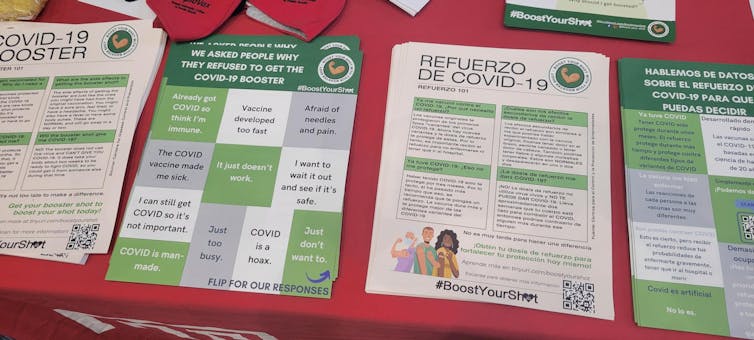
For example, I used segmentation analysis and then perceptual mapping and vector message modeling to understand how medical mistrust might affect the decision to get vaccinated for COVID-19 among a group of Philadelphians who had not yet been vaccinated.

Green, white and gray educational materials in small stacks on a table
Education materials created after using commercial marketing techniques to identify persuasive messages about COVID-19 booster shots.
Temple University College of Public Health

Our team then looked at perceptual maps and vector message modeling by levels of mistrust. The vectors showed that those with high levels of medical mistrust would be more likely to respond to messages that addressed concerns about the pandemic being a hoax, or the worry that minorities wouldn’t get the same treatment as others.

This allowed us to think about how to build in messages around those issues in public media campaigns or other communication strategies that encourage vaccination.

Decision-making tools

I have used these methods to create and test a number of different communication strategies to influence health decisions.

For example, I’ve developed web-based tools that have been used in hospitals and clinics in Philadelphia to encourage methadone patients with hepatitis C to receive antiviral treatment for their infection, Black cancer patients to take part in a clinical trial or to get genetic testing, and patients with low literacy and higher risk of colorectal cancer to have a colonoscopy.

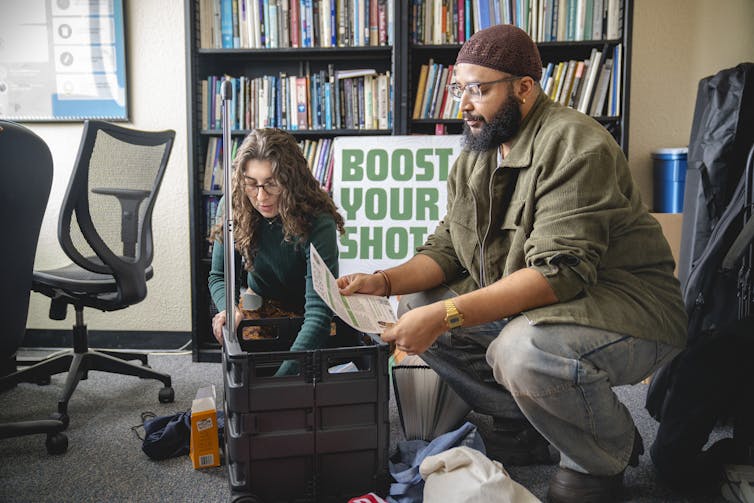
A man and woman pull papers from a collapsible cart while a poster behind them reads 'Boost Your Shot'
Staff members from the Risk Communication Laboratory organize materials to educate North Philadelphia residents about COVID-19 booster shots.
Temple University College of Public Health

My colleagues and I have also developed posters, booklets and social media posts that encourage low-income and vaccine-hesitant Philadelphians in Kensington to get COVID-19 booster shots; educational slides for low-literacy Philadelphia adults on dirty bombs and how the radioactive weapons might be used in a terror attack; and a comic book for trans women to learn about the benefits of PrEP use.

Getting people to make better decisions about their health can be an uphill battle. We all have our reasons for not doing things that are good for us. For example, what did you eat for lunch today? Was it healthy? If not, why did you eat it?

My job is to figure out what makes people do what they do, and then help them make decisions that keep them healthy.

Read more of our stories about Philadelphia.

The Conversation

Sarah Bauerle Bass has received funding from a number of organizations, including the National Institutes of Health, the American Cancer Society, Pennsylvania and Philadelphia Departments of Health, and independent pharma research grants from Gilead and Merck.

ref. I’m an expert in crafting public health messages: Here are 3 marketing strategies I use to make Philadelphia healthier – https://theconversation.com/im-an-expert-in-crafting-public-health-messages-here-are-3-marketing-strategies-i-use-to-make-philadelphia-healthier-254905

3 years after abortion rights were overturned, contraception access is at risk

Source: – By Cynthia H. Chuang, Professor of Medicine and Public Health Sciences, Penn State

Women living in states that ban or severely restrict abortion may be especially motivated to avoid unintended pregnancy. Viktoriya Skorikova/Moment via Getty Images

On June 24, 2022, the U.S. Supreme Court decision in Dobbs v. Jackson Women’s Health Organization eliminated a nearly 50-year constitutional right to abortion and returned the authority to regulate abortion to the states.

The Dobbs ruling, which overturned Roe v. Wade, has vastly reshaped the national abortion landscape. Three years on, many states have severely restricted access to abortion care. But the decision has also had a less well-recognized outcome: It is increasingly jeopardizing access to contraception.

We are a physician scientist and a sociologist and health services researcher studying women’s health care and policy, including access to contraception. We see a worrisome situation emerging.

Even while the growing limits on abortion in the U.S. heighten the need for effective contraception, family planning providers are less available in many states, and health insurance coverage of some of the most effective types of contraception is at risk.

A growing demand for contraception

Abortion restrictions have proliferated around the country since the Dobbs decision. As of June 2025, 12 states have near-total abortion bans and 10 states ban abortion before 23 or 24 weeks of gestation, which is when a fetus is generally deemed viable. Of the remaining states, 19 restrict abortion after viability and nine states and Washington have no gestational limits.

It’s no surprise that women living in states that ban or severely restrict abortion may be especially motivated to avoid unintended pregnancy. Even planned pregnancies have grown riskier, with health care providers fearing legal repercussions for treating pregnancy-related medical emergencies such as miscarriages. Such concerns may in part explain emerging research that suggests the use of long-acting contraception such as intrauterine devices, or IUDs, and permanent contraception – namely, sterilization – are on the rise.

A national survey conducted in 2024 asked women ages 18 to 49 if they have changed their contraception practices “as a result of the Supreme Court overturning Roe v. Wade.” It found that close to 1 in 5 women began using contraception for the first time, switched to a more effective contraceptive method, received a sterilization procedure or purchased emergency contraception to keep on hand.

The Supreme Court’s decision in Dobbs reshaped the landscape of abortion access across the U.S.

A study in Ohio hospitals found a nearly 16% increase in women choosing long-acting contraception methods or sterilization in the six months after the Dobbs decision, and a 33% jump in men receiving vasectomies. Another study, which looked at both female and male sterilization in academic medical centers across the country, also reported an uptick in sterilization procedures for young adults ages 18 to 30 after the Dobbs decision, through 2023.

A loss of contraception providers

Ironically, banning or severely restricting abortion statewide may also diminish capacity to provide contraception.

To date, there is no compelling evidence that OB-GYN doctors are leaving states with strict abortion laws in significant numbers. One study found that states with severe abortion restrictions saw a 4.2% decrease in such practitioners compared with states without abortion restrictions.

However, the Association of American Medical Colleges reports declining applications to residency training programs located in states that have abortion bans – not just for OB-GYN training programs, but for residency training of all specialties. This drop suggests that doctors may be overall less likely to train in states that restrict medical practice. And given that physicians often stay on to practice in the states where they do their training, it may point to a long-term decline in physicians in those states.

But the most significant drop in contraceptive services likely comes from the closure of abortion clinics in states with the most restrictive abortion policies. That’s because such clinics generally provide a wide range of reproductive services, including contraception. The 12 states with near-total abortion bans had 57 abortion clinics in 2020, all of which were closed as of March 2024. One study reported a 4.1% decline in oral contraceptives dispensed in those states.

Contraception under threat

The Dobbs decision has also encouraged ongoing efforts to incorrectly redefine some of the most effective contraceptives as medications that cause abortion. These efforts target emergency contraceptive pills, known as Plan B over-the-counter and Ella by prescription, as well as certain IUDs. Emergency contraceptive pills are up to 98% effective at preventing pregnancy after unprotected sex, and IUDs are 99% effective.

Neither method terminates a pregnancy, which by definition begins when a fertilized egg implants in the uterus. Instead, emergency contraceptive pills prevent an egg from being released from the ovaries, while IUDs, depending on the type, prevent sperm from fertilizing an egg or prevent an egg from implanting in the uterus.

Conflating contraception and abortion spreads misinformation and causes confusion. People who believe that certain types of contraception cause abortions may be dissuaded from using those methods and rely on less effective methods. What’s more, it may affect health insurance coverage.

Medicaid, which provides health insurance for low-income children and adults, has been required to cover family planning services at no cost to patients since 1972. Since 2012, the Affordable Care Act has required private health insurers to cover certain women’s health preventive services at no cost to patients, including the full-range of contraceptives approved by the Food and Drug Administration.

According to our research, the insurance coverage required by the Affordable Care Act has increased use of IUDs, which can be prohibitively expensive when paid out of pocket. But if IUDs and emergency contraceptive pills were reclassified as interventions that induce abortion, they likely would not be covered by Medicaid or the Affordable Care Act, since neither type of health insurance requires coverage for abortion care. Thus, access to some of the most effective contraceptive methods could be jeopardized at a time when the right to terminate an unintended or nonviable pregnancy has been rolled back in much of the country.

Indeed, Project 2025, the conservative policy agenda that the Trump administration appears to be following, specifically calls for removing Ella from the Affordable Care Act contraception coverage mandate because it is a “potential abortifacient.” And politicians in multiple states have expressed support for the idea of restricting these contraceptive methods, as well as contraception more broadly.

On the third anniversary of the Dobbs decision, it is clear that its ripple effects include threats to contraception. Considering that contraception use is almost universal among women in their reproductive years, in our view these threats should be taken seriously.

The Conversation

Cynthia H. Chuang receives funding from the Agency for Healthcare Research and Quality.

Carol S. Weisman does not work for, consult, own shares in or receive funding from any company or organization that would benefit from this article, and has disclosed no relevant affiliations beyond their academic appointment.

ref. 3 years after abortion rights were overturned, contraception access is at risk – https://theconversation.com/3-years-after-abortion-rights-were-overturned-contraception-access-is-at-risk-258458

More than half of US teens have had at least one cavity, but fluoride programs in schools help prevent them – new research

Source: – By Christina Scherrer, Professor of Industrial and Systems Engineering, Kennesaw State University

The research looked at the results of 31 studies and a total sample of more than 60,000 students. monkeybusinessimages/iStock via Getty Images Plus

Programs delivering fluoride varnish in schools significantly reduce cavities in children. That is a key finding of our recently published study in the American Journal of Preventive Medicine.

Fluoride varnish is a liquid that is applied to the teeth by a trained provider to reduce cavities. It does not require special dental devices and can be applied quickly in various settings.

Our research team found that school fluoride varnish programs, implemented primarily in communities with lower incomes and high cavity risk among children, achieve meaningful rates of student participation and reduced new cavities by 32% in permanent teeth and by 25% in primary – or “baby” – teeth.

We also found that school fluoride varnish programs reduced the progression of small cavities to more severe cavities by 10%. This positive impact held true among school children of various ages in preschool through high school, in rural or urban areas and in communities with and without fluoridated tap water. Fluoride varnish remained effective when delivered by various providers, including dentists, hygienists or trained lay workers.

This research was a large team collaboration on a systematic review, led by researchers from the Centers for Disease Control and Prevention and from our universities. A systematic review is when researchers carefully collect and study all the best available research on a specific topic to figure out what the overall evidence shows.

Ultimately, our conclusions were based on 31 published studies that were reported in 43 peer-reviewed articles involving 60,780 students.

Diets high in sugar promote cavities.

Why is this important?

Although preventable, dental cavities are very common, with well over half of teenagers affected.

Untreated tooth decay can diminish a child’s ability to eat, speak, learn and play, and can negatively affect school attendance and grades.

Reducing tooth decay in youths is a national health objective.

In addition, we believe that since there is a growing movement in the U.S. to remove water fluoridation, other ways of protecting teeth with fluoride, such as toothpaste and varnish, will become more important. About three-quarters of the U.S. population using public water systems has been receiving fluoridated water at levels designed to strengthen enamel and prevent cavities. They will be at higher risk for cavities if fluoride is removed from their drinking water.

Fluoride varnish is recommended by the American Dental Association, the American Academy of Pediatrics, the U.S. Preventive Services Task Force and others. However, many children don’t receive recommended preventive dental services, including fluoride varnish, at dental visits, with some estimates as low as 18% for children from families in low-income households.

This makes schools an important setting for delivery of fluoride varnish to increase access. Students typically receive a dental exam, oral health education and supplies, and referrals for dental care. Depending on state regulations, the varnish can be applied by dental and medical professionals or trained lay workers.

Our work led to the recommendation of school fluoride varnish by the Community Preventive Services Task Force, an independent panel of nationally recognized public health experts that provides evidence-based recommendations on programs and services to protect and improve health in the United States.

What still isn’t known

Limited funds are a barrier. We believe that further understanding the ways to reduce the cost of these programs would help to expand them and reach more students.

One key opportunity is relaxing the restrictions on application by health professionals such as medical assistants and registered nurses, which is allowed in some states but not others.

Programs also sometimes struggle to get schools and families fully engaged. More research could help us determine the best ways to increase the percentage of families that return their consent forms and make school fluoride programs easier to run.

Another barrier is that many states only provide insurance reimbursement for these programs through age 6. Thus, increasing the eligibility age served by medical providers can serve more children, increase the number of these programs and protect more children’s teeth from decay – supporting oral and overall health.

The Research Brief is a short take on interesting academic work.

The Conversation

Christina Scherrer receives funding related to this research from the National Institutes of Health (NIH) and the Centers for Disease Control and Prevention (CDC).

Shillpa Naavaal received funding from the National Institutes of Health (NIH) and the Centers for Disease Control and Prevention (CDC) related to this research. She is an executive board member and treasurer of the American Association of Public Health Dentistry.

ref. More than half of US teens have had at least one cavity, but fluoride programs in schools help prevent them – new research – https://theconversation.com/more-than-half-of-us-teens-have-had-at-least-one-cavity-but-fluoride-programs-in-schools-help-prevent-them-new-research-259124

AI ‘reanimations’: Making facsimiles of the dead raises ethical quandaries

Source: – By Nir Eisikovits, Professor of Philosophy and Director, Applied Ethics Center, UMass Boston

This screenshot of an AI-generated video depicts Christopher Pelkey, who was killed in 2021. Screenshot: Stacey Wales/YouTube

Christopher Pelkey was shot and killed in a road range incident in 2021. On May 8, 2025, at the sentencing hearing for his killer, an AI video reconstruction of Pelkey delivered a victim impact statement. The trial judge reported being deeply moved by this performance and issued the maximum sentence for manslaughter.

As part of the ceremonies to mark Israel’s 77th year of independence on April 30, 2025, officials had planned to host a concert featuring four iconic Israeli singers. All four had died years earlier. The plan was to conjure them using AI-generated sound and video. The dead performers were supposed to sing alongside Yardena Arazi, a famous and still very much alive artist. In the end Arazi pulled out, citing the political atmosphere, and the event didn’t happen.

In April, the BBC created a deep-fake version of the famous mystery writer Agatha Christie to teach a “maestro course on writing.” Fake Agatha would instruct aspiring murder mystery authors and “inspire” their “writing journey.”

The use of artificial intelligence to “reanimate” the dead for a variety of purposes is quickly gaining traction. Over the past few years, we’ve been studying the moral implications of AI at the Center for Applied Ethics at the University of Massachusetts, Boston, and we find these AI reanimations to be morally problematic.

Before we address the moral challenges the technology raises, it’s important to distinguish AI reanimations, or deepfakes, from so-called griefbots. Griefbots are chatbots trained on large swaths of data the dead leave behind – social media posts, texts, emails, videos. These chatbots mimic how the departed used to communicate and are meant to make life easier for surviving relations. The deepfakes we are discussing here have other aims; they are meant to promote legal, political and educational causes.

Chris Pelkey was shot and killed in 2021. This AI ‘reanimation’ of him was presented in court as a victim impact statement.

Moral quandaries

The first moral quandary the technology raises has to do with consent: Would the deceased have agreed to do what their likeness is doing? Would the dead Israeli singers have wanted to sing at an Independence ceremony organized by the nation’s current government? Would Pelkey, the road-rage victim, be comfortable with the script his family wrote for his avatar to recite? What would Christie think about her AI double teaching that class?

The answers to these questions can only be deduced circumstantially – from examining the kinds of things the dead did and the views they expressed when alive. And one could ask if the answers even matter. If those in charge of the estates agree to the reanimations, isn’t the question settled? After all, such trustees are the legal representatives of the departed.

But putting aside the question of consent, a more fundamental question remains.

What do these reanimations do to the legacy and reputation of the dead? Doesn’t their reputation depend, to some extent, on the scarcity of appearance, on the fact that the dead can’t show up anymore? Dying can have a salutary effect on the reputation of prominent people; it was good for John F. Kennedy, and it was good for Israeli Prime Minister Yitzhak Rabin.

The fifth-century B.C. Athenian leader Pericles understood this well. In his famous Funeral Oration, delivered at the end of the first year of the Peloponnesian War, he asserts that a noble death can elevate one’s reputation and wash away their petty misdeeds. That is because the dead are beyond reach and their mystique grows postmortem. “Even extreme virtue will scarcely win you a reputation equal to” that of the dead, he insists.

Do AI reanimations devalue the currency of the dead by forcing them to keep popping up? Do they cheapen and destabilize their reputation by having them comment on events that happened long after their demise?

In addition, these AI representations can be a powerful tool to influence audiences for political or legal purposes. Bringing back a popular dead singer to legitimize a political event and reanimating a dead victim to offer testimony are acts intended to sway an audience’s judgment.

It’s one thing to channel a Churchill or a Roosevelt during a political speech by quoting them or even trying to sound like them. It’s another thing to have “them” speak alongside you. The potential of harnessing nostalgia is supercharged by this technology. Imagine, for example, what the Soviets, who literally worshipped Lenin’s dead body, would have done with a deep fake of their old icon.

Good intentions

You could argue that because these reanimations are uniquely engaging, they can be used for virtuous purposes. Consider a reanimated Martin Luther King Jr., speaking to our currently polarized and divided nation, urging moderation and unity. Wouldn’t that be grand? Or what about a reanimated Mordechai Anielewicz, the commander of the Warsaw Ghetto uprising, speaking at the trial of a Holocaust denier like David Irving?

But do we know what MLK would have thought about our current political divisions? Do we know what Anielewicz would have thought about restrictions on pernicious speech? Does bravely campaigning for civil rights mean we should call upon the digital ghost of King to comment on the impact of populism? Does fearlessly fighting the Nazis mean we should dredge up the AI shadow of an old hero to comment on free speech in the digital age?

a man in a suit and tie stands in front of a microphone
No one can know with certainty what Martin Luther King Jr. would say about today’s society.
AP Photo/Chick Harrity

Even if the political projects these AI avatars served were consistent with the deceased’s views, the problem of manipulation – of using the psychological power of deepfakes to appeal to emotions – remains.

But what about enlisting AI Agatha Christie to teach a writing class? Deep fakes may indeed have salutary uses in educational settings. The likeness of Christie could make students more enthusiastic about writing. Fake Aristotle could improve the chances that students engage with his austere Nicomachean Ethics. AI Einstein could help those who want to study physics get their heads around general relativity.

But producing these fakes comes with a great deal of responsibility. After all, given how engaging they can be, it’s possible that the interactions with these representations will be all that students pay attention to, rather than serving as a gateway to exploring the subject further.

Living on in the living

In a poem written in memory of W.B. Yeats, W.H. Auden tells us that, after the poet’s death, Yeats “became his admirers.” His memory was now “scattered among a hundred cities,” and his work subject to endless interpretation: “the words of a dead man are modified in the guts of the living.”

The dead live on in the many ways we reinterpret their words and works. Auden did that to Yeats, and we’re doing it to Auden right here. That’s how people stay in touch with those who are gone. In the end, we believe that using technological prowess to concretely bring them back disrespects them and, perhaps more importantly, is an act of disrespect to ourselves – to our capacity to abstract, think and imagine.

The Conversation

Nir Eisikovits directs UMass Boston’s Applied Ethics Center, which receives funding from the Institute for Ethics and Emerging Technologies. He’s also a data ethics advisor to mindguard.com

Daniel J. Feldman does not work for, consult, own shares in or receive funding from any company or organization that would benefit from this article, and has disclosed no relevant affiliations beyond their academic appointment.

ref. AI ‘reanimations’: Making facsimiles of the dead raises ethical quandaries – https://theconversation.com/ai-reanimations-making-facsimiles-of-the-dead-raises-ethical-quandaries-256771

Germany’s young Jewish and Muslim writers are speaking for themselves – exploring immigrant identity beyond stereotypes

Source: – By Agnes Mueller, Carol Kahn Strauss Fellow in Jewish Studies at the American Academy in Berlin, Professor of German and American Literature, University of South Carolina

A Muslim guest sits next to a Jewish one during an ordination ceremony at the Rykestrasse Synagogue in Berlin in September 2024. Omer Messinger/Getty Images

The consequences of Hamas’ Oct. 7, 2023, attack and Israel’s war in Gaza have reverberated far beyond the zones of conflict.

In the United States, for example, a growing number of people, including some Jewish groups, assert that political leaders are exploiting concerns about antisemitism for their own political goals, from cracking down on academic freedom to deporting pro-Palestinian activists.

Debate about the war in Gaza feels fraught in Germany, too, where concerns about rising antisemitism have been used to criticize some Muslim communities. The Holocaust looms over discussions about Israel, with many claiming the country’s sense of historical guilt has made it, until recently, reluctant to criticize Israeli politics.

In the wake of the country’s reunification in the early 1990s, about 200,000 Jews from Eastern Europe and the former Soviet Union came to Germany. In more recent years, waves of predominantly Muslim refugees from the Middle East have entered a space that already had a large population of Turkish immigrants and their descendants. However, many Germans oppose these more open immigration policies, with widespread backlash against Muslim migrants.

In recent decades, some of Germany’s migrants and their children – some Jewish, and some Muslim – have used fiction to explore their identity and these contested issues in new ways, challenging simple narratives. As a scholar of German literature and Jewish studies, I have studied how literature creates new spaces for readers to explore the similarities between their experiences, building solidarity beyond stereotypes.

‘The Prodigal Son’

Many of today’s young Jewish writers were born in the former Soviet Union and arrived in Germany with their parents as part of the “quota refugee” program. Initiated in the early 1990s, this program invited Jewish migrants into a newly unified Germany – intended to show that the country was taking responsibility for the atrocities of the past. The newcomers were flippantly called “Wiedergutmachungsjuden,” “make-good-again Jews,” referring to Germans’ desire to atone.

One of them was Olga Grjasnowa. Born in 1984, Grjasnowa came from Azerbaijan to Germany at age 11. She has written about Holocaust memory, as in her 2012 novel “All Russians Love Birch Trees,” and said in a 2018 interview that all her books are “Jewish books.”

A blonde woman in a black sweater and dark jeans stands in front of a vibrant blue backdrop.
Olga Grjasnowa during the Edinburgh International Book Festival on Aug. 22, 2019, in Scotland.
Roberto Ricciuti/Getty Images

Her 2021 book “Der verlorene Sohn,” “The Prodigal Son,” echoes Holocaust memory, but in a historical novel set in 19th-century Russia.

The protagonist Jamaluddin – the name derives from the Arabic word for “beauty of the faith” – is born in the Caucasian region of Dagestan, as the son of a powerful Muslim imam. To negotiate a peace deal, the boy is given as a hostage to Russia, where he grows up in the Orthodox Christian court of the czar. Though initially treated as an outsider, Jamaluddin assimilates and becomes a high-ranking officer, a life that ends when he must return to Dagestan. But there, too, he now feels homeless, regarded with suspicion as a stranger.

“The Prodigal Son” deals with abduction, deportation, exile and constant wandering. Jamaluddin’s fate is shaped by authoritarianism, repression, war and discrimination – themes that are familiar in Holocaust literature, though here they befall a Muslim boy in another time and place.

Repeatedly, the novel makes mention of Jewish communities and their own suffering under the czar. As Jewish boys are being forced to march from remote villages to Saint Petersburg, Jamaluddin is “furious and ashamed” of his fellow officers. But he also begins to feel self-pity, flooded with memories of his own departure from home.

This scene depicts a historical reality under Czar Nicholas I, who ruled from 1825-1855: Russian Jewish boys were conscripted, sometimes kidnapped, to serve in the army. For contemporary audiences, the description can also evoke the death marches of Jewish prisoners during the Shoah, the Hebrew term for the Holocaust. Several additional moments in the book connect Jamaluddin’s experiences with images of Jewish flight and expulsion.

New conversations

Jamaluddin’s fate as an outsider between cultures can also bring to mind migrants’ experiences and emotions today. In 2022, one-quarter of Germans were either migrants themselves or had a parent who was not born in Germany. The largest minority group are Muslim-born Germans of Turkish descent, who are still routinely discriminated against.

Antisemitism, meanwhile, is pervasive but less obvious. The Germans’ relationship with Jews was long dominated by silence and guilt – and Jews themselves were mostly invisible until the end of the Cold War, when Jewish migration from the former Soviet states picked up. My 2015 book “The Inability to Love” describes how mainstream German authors, fueled by guilt and shame over the Nazi past, fell into a philosemitic antisemitism: Outward displays of repentance for the Holocaust and public policies that ostensibly embraced Jews clashed with privately held prejudice.

Many examples of new German literature show contemporary Jewish and Muslim characters with complex identities – protagonists who are not seen as simply Jewish, Muslim or belonging to only one culture, pushing back on reductive stereotypes.

For example, Kat Kaufmann’s 2015 novel “Superposition” tells the story of the young, popular and charismatic Izy, a Russian Jew who lives in Berlin as a jazz pianist. Her love interest is Timur, an Eastern European man with a typically Muslim name. When Izy thinks of her and Timur’s future son, she imagines him growing up with the luxury to conceal where he is from – to define his identity as he wishes, unlike previous generations.

A close-up photograph of a softly smiling brunette woman in a tan blazer, sitting in front of a blue curtain.
Writer Fatma Aydemir speaks at a reading in Cologne, Germany, on March 21, 2022.
Oliver Berg/picture alliance via Getty Images

Stories by novelists such as Dmitrij Kapitelman, Lena Gorelik, Marina Frenk and Dana Vowinckel also depict moments of connection between Jews and other Germans, or between Jews and Muslims.

Turkish and/or Muslim writers such as Fatma Aydemir and Nazlı Koca – who now lives in America, writing in English – tell similar stories of young characters navigating German culture as marginalized individuals. They often depict young women who struggle to reconcile their culture of origin with German social expectations and xenophobia today.

“I wanted to question the idea that we all have one single identity and that’s it,” Aydemir told the literary site K24 about her novel “Ellbogen,” whose protagonist finds herself fleeing to Turkey, her family’s original home, after a personal crisis. “I think things are way more complex, more fluid than most of us want to believe.”

This younger generation of German Jewish and Muslim writers is recasting entrenched debates, showing characters whose identities are multidimensional and more open than the burdened past or fraught present politics would suggest. Today’s young writers are creating new, brave spaces for conversation and empathy.

The Conversation

Agnes Mueller does not work for, consult, own shares in or receive funding from any company or organization that would benefit from this article, and has disclosed no relevant affiliations beyond their academic appointment.

ref. Germany’s young Jewish and Muslim writers are speaking for themselves – exploring immigrant identity beyond stereotypes – https://theconversation.com/germanys-young-jewish-and-muslim-writers-are-speaking-for-themselves-exploring-immigrant-identity-beyond-stereotypes-252968