Gender is not an ideology – but conservative groups know learning about it empowers people to think for themselves

Source: The Conversation – USA (2) – By Victoria Pitts-Taylor, Professor of Feminist, Gender, and Sexuality Studies; Sociology; Science and Technology Studies, Wesleyan University

Who is afraid of gender and why? AP Photo/Alastair Grant

Political attacks on teaching about gender in colleges and universities are about more than just gender: They are part of a grander project of eroding civil and human rights, limiting personal freedoms and undermining democracy in the name of “traditional” values.

On the first day of his second term, President Donald Trump issued an executive order declaring there are two sexes determined solely by the kind of reproductive cells the body makes, and that the federal government would recognize nothing else. The order claims to protect the “freedom to express the binary nature of sex” and bans the use of federal funds to “promote gender ideology.” Legal experts have criticized the directive as unconstitutional and are challenging it in the courts.

Yet the order has provided fuel for conservatives, right-wing politicians and activists trying to remove so-called gender ideology from many places in American society, including classrooms. Right-wing activists are pushing for censorship of educational curricula in K-12 schools and in colleges and universities, and they have succeeded in Texas, Florida and other red states.

Why are conservative politicians so determined to control how Americans define sex and understand gender?

As sociologists who research and teach about gender, we know that gender across disciplines is understood to be a complex topic of study, not an ideology. The study of gender represents the kind of free inquiry that allows people to decide for themselves how to live, free of coercion or government control.

What is ‘gender ideology’?

“Gender ideology” is a catch-all term conservative Catholics initially promoted in the 1990s in response to the United Nations’ promotion of women’s equality.

In 2004, pushing back on the global women’s and gay rights movements, the Vatican declared in a letter to bishops that men and women are different by nature “not only on the physical level, but also on the psychological and spiritual.” The letter stated that the idea of gender “inspired ideologies” that sanction alternatives to the traditional two-parent family headed by men and treated homosexuality on par with heterosexuality.

Over the following decades, evangelical groups and far-right parties across the globe – from Hungary and Russia to Peru, Brazil and Ghana – have used the language of combating “gender ideology” to counter a host of social policies, including sex education in schools, the legalization of gay marriage and same-sex adoption, reproductive rights and transgender rights.

Crowd of people, center of which is a sign depicting silhouette figures of a man and a woman holding an umbrella shielding two children from a rainbow
Anti-gender protestors during a 2018 Equality March in Kraków, Poland.
Silar/Wikimedia Commons, CC BY-SA

The anti-gender movement is no longer fringe but rather well funded, organized and transnational. For example, 40 countries have signed the Geneva Consensus Declaration, an international pact proposed by the first Trump administration and supported by anti-gender campaigners as a way to deny abortion rights internationally.

In the U.S., where the majority of Americans support gay marriage and abortion rights, targeting trans rights has become one of the conservative movement’s galvanizing issues. A flood of state bills not only ban books and discussions of gender, sexuality and race in schools but also criminalize abortion, ban gender-affirming health care and legalize discrimination in housing and employment on religious grounds.

What we talk about when we talk about gender

How gender is researched and taught in universities has become a key target of anti-gender campaigns across the globe, in part because the study of gender raises questions about the universality of traditional social roles and the inequalities that can result from them.

Gender is a focus of inquiry not only in gender studies classes but in literature, sociology, law, government, history, anthropology and cultural geography, among many other fields.

Anti-gender campaigners argue there is nothing to understand about it because gender is given by nature or God. For them, gender is equivalent to sex, which is taken to be straightforward and without exception male or female.

Scientific evidence suggests, however, that sex is not always binary. In biology, sex refers to genes, reproductive organs, hormone systems and observable physical characteristics; different combinations of these lead to variations in sex. Far from straightforward, then, sex is complicated.

And a person’s assigned sex at birth does not always align with their deeply held sense of self – their gender identity.

Gender is both a feature of individual people and a mode of organizing social life. At the individual level, people have a subjective sense of and embody their gender by dressing and behaving in ways that encourage other people to see them as they want to be seen. A man might wear a tie at the office to convey masculinity. People will interact differently with a woman when she is wearing high heels and makeup than when she goes barefaced or dons a swimsuit. Someone who is gender fluid may appear more masculine or feminine at different times and experience prejudice and discrimination.

Gender roles shape society and culture in both subtle and glaring ways.

Gender shapes societies through norms and rules on everything from what you wear to how families operate, whom you are allowed to partner with and what jobs you are likely to hold. Whether in the spheres of culture, family, economic or civic life, gender roles and norms intersect with class, race and other social differences and shift across cultures and historical eras. Indigenous societies across the globe have long recognized more than two gender categories, and historical and contemporary examples of gender diversity abound.

A ban on learning about gender would sweep aside all this variation in favor of a homogeneous worldview that deliberately ignores biology, history and lived experience. Denying the diversity of gender makes it easier to impose a conservative worldview and roll back rights.

Education as a political target

Anti-gender campaigners view education as a major battleground in the fight over societal values. In the U.S., conservative efforts to ban the study of gender and sexuality initially centered on K-12 education, exemplified in bills such as Florida’s 2022 “Don’t Say Gay” law. But the movement has also affected colleges and universities.

Texas A&M’s president fired a professor in September 2025 after a student recorded her confrontation with her for discussing gender diversity in a literature course. The student alleged the course was “not legal” because it contradicted “our president’s laws” and her own religious beliefs. The university president also later resigned under pressure.

The same month, the chancellor of the Texas Tech University system, citing Trump’s executive order on “gender ideology,” banned all faculty members across its five universities from recognizing “more than two sexes” in any course or classroom.

Crowd of protestors holding signs inside a capitol building
Controlling thought is a means of repressing social movements.
AP Photo/Charlie Neibergall

As the Texas chapter of the American Association of University Professors reminds its members, faculty have a constitutional right to teach and discuss “all matters related to the subject matter of a class” without interference from administrators, politicians or government officials. Despite this, states led by conservative lawmakers have used a range of tactics to eliminate gender studies programs or curriculum from colleges.

These attacks on universities are attempts to control thought, subdue social movements advocating for change and promote an orthodoxy that upholds those in power.

Person reading the book 'Genderqueer' atop a stack of other challenged books
Books on gender are among those conservatives are purging from libraries and classrooms.
AP Photo/Rick Bowmer

Restricting rights, eroding democracy

These attacks on education are not only academic matters. They disempower women and marginalized groups that have achieved some legal protection or rights in recent decades. And they contribute to the erosion of democracy.

Authoritarian approaches to governing rely on scapegoating people, policing thought and speech, and punishing dissent. This is true whether it’s Viktor Orban’s Hungary, Vladimir Putin’s Russia or Donald Trump’s United States. By prohibiting questions and challenges, autocrats gain the power to limit how people think and control their bodies.

The Conversation

Victoria Pitts-Taylor is a member of the American Association of University Professors and the National Women’s Studies Association.

Elizabeth Anne Wood a senior strategist with the Woodhull Freedom Foundation. This is a volunteer position.

ref. Gender is not an ideology – but conservative groups know learning about it empowers people to think for themselves – https://theconversation.com/gender-is-not-an-ideology-but-conservative-groups-know-learning-about-it-empowers-people-to-think-for-themselves-265549

Does the full moon make us sleepless? A neurologist explains the science behind sleep, mood and lunar myths

Source: The Conversation – USA (3) – By Joanna Fong-Isariyawongse, Associate Professor of Neurology, University of Pittsburgh

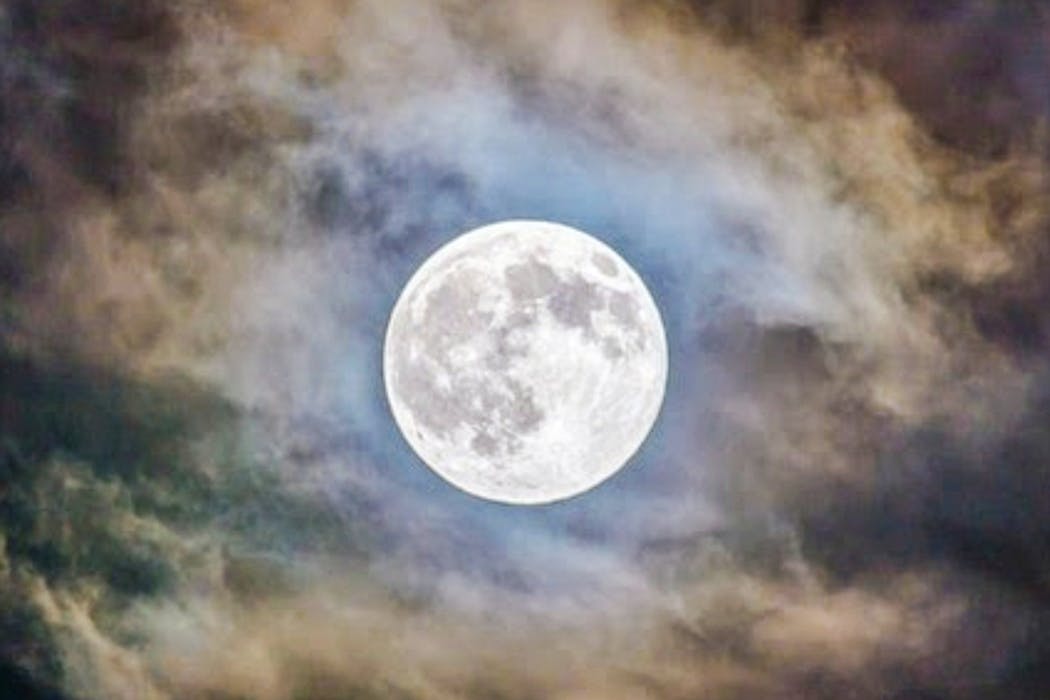
How much does the moon cycle affect sleep? Probably less than your screen time at night. Muhammad Khazin Alhusni/iStock via Getty Images Plus

Have you ever tossed and turned under a full moon and wondered if its glow was keeping you awake? For generations, people have believed that the Moon has the power to stir up sleepless nights and strange behavior – even madness itself. The word “lunacy” comes directly from luna, Latin for Moon.

Police officers, hospital staff and emergency workers often swear that their nights get busier under a full moon. But does science back that up?

The answer is, of course, more nuanced than folklore suggests. Research shows a full moon can modestly affect sleep, but its influence on mental health is much less certain.

I’m a neurologist specializing in sleep medicine who studies how sleep affects brain health. I find it captivating that an ancient myth about moonlight and madness might trace back to something far more ordinary: our restless, moonlit sleep.

What the full moon really does to sleep

Several studies show that people really do sleep differently in the days leading up to the full moon, when moonlight shines brightest in the evening sky. During this period, people sleep about 20 minutes less, take longer to fall asleep and spend less time in deep, restorative sleep. Large population studies confirm the pattern, finding that people across different cultures tend to go to bed later and sleep for shorter periods in the nights before a full moon.

The most likely reason is light. A bright moon in the evening can delay the body’s internal clock, reduce melatonin – the hormone that signals bedtime – and keep the brain more alert.

The changes are modest. Most people lose only 15 to 30 minutes of sleep, but the effect is measurable. It is strongest in places without artificial light, such as rural areas or while camping. Some research also suggests that men and women may be affected differently. For instance, men seem to lose more sleep during the waxing phase, while women experience slightly less deep and restful sleep around the full moon.

Young adult woman lying in bed wide awake, staring out the window toward a bright light.
Sleep loss from a bright moon is modest but measurable.
Yuliia Kaveshnikova/iStock via Getty Images Plus

The link with mental health

For centuries, people have blamed the full moon for stirring up madness. Folklore suggested that its glow could spark mania in bipolar disorder, provoke seizures in people with epilepsy or trigger psychosis in those with schizophrenia. The theory was simple: lose sleep under a bright moon and vulnerable minds might unravel.

Modern science adds an important twist. Research is clear that sleep loss itself is a powerful driver of mental health problems. Even one rough night can heighten anxiety and drag down mood. Ongoing sleep disruption raises the risk of depression, suicidal thoughts and flare-ups of conditions like bipolar disorder and schizophrenia.

That means even the modest sleep loss seen around a full moon could matter more for people who are already at risk. Someone with bipolar disorder, for example, may be far more sensitive to shortened or fragmented sleep than the average person.

But here’s the catch: When researchers step back and look at large groups of people, the evidence that lunar phases trigger psychiatric crises is weak. No reliable pattern has been found between the Moon and hospital admissions, discharges or lengths of stay.

But a few other studies suggest there may be small effects. In India, psychiatric hospitals recorded more use of restraints during full moons, based on data collected between 2016 and 2017. In China, researchers noted a slight rise in schizophrenia admissions around the full moon, using hospital records from 2012 to 2017. Still, these findings are not consistent worldwide and may reflect cultural factors or local hospital practices as much as biology.

In the end, the Moon may shave a little time off our sleep, and sleep loss can certainly influence mental health, especially for people who are more vulnerable. That includes those with conditions like depression, bipolar disorder, schizophrenia or epilepsy, and teenagers who are especially sensitive to sleep disruption. But the idea that the full moon directly drives waves of psychiatric illness remains more myth than reality.

The sleep/wake cycle is synchronized with lunar phases.

Other theories fall short

Over the years, scientists have explored other explanations for supposed lunar effects, from gravitational “tidal” pulls on the body to subtle geomagnetic changes and shifts in barometric pressure. Yet, none of these mechanisms hold up under scrutiny.

The gravitational forces that move oceans are far too weak to affect human physiology, and studies of geomagnetic and atmospheric changes during lunar phases have yielded inconsistent or negligible results. This makes sleep disruption from nighttime light exposure the most plausible link between the Moon and human behavior.

Why the myth lingers

If the science is so inconclusive, why do so many people believe in the “full moon effect”? Psychologists point to a concept called illusory correlation. We notice and remember the unusual nights that coincide with a full moon but forget the many nights when nothing happened.

The Moon is also highly visible. Unlike hidden sleep disruptors such as stress, caffeine or scrolling on a phone, the Moon is right there in the sky, easy to blame.

A woman staring at her cellphone while lying in the dark.
Screen-time habits are far more likely to have detrimental effects on sleep than a full moon.
FanPro/Moment via Getty Images

Lessons from the Moon for modern sleep

Even if the Moon does not drive us “mad,” its small influence on sleep highlights something important: Light at night matters.

Our bodies are designed to follow the natural cycle of light and dark. Extra light in the evening, whether from moonlight, streetlights or phone screens, can delay circadian rhythms, reduce melatonin and lead to lighter, more fragmented sleep.

This same biology helps explain the health risks of daylight saving time. When clocks “spring forward,” evenings stay artificially brighter. That shift delays sleep and disrupts circadian timing on a much larger scale than the Moon, contributing to increased accidents and cardiovascular risks, as well as reduced workplace safety.

In our modern world, artificial light has a much bigger impact on sleep than the Moon ever will. That is why many sleep experts argue for permanent standard time, which better matches our biological rhythms.

So if you find yourself restless on a full moon night, you may not be imagining things – the Moon can tug at your sleep. But if sleeplessness happens often, look closer to home. It is likely a culprit of the light in your hand rather than the one in the sky.

The Conversation

Joanna Fong-Isariyawongse does not work for, consult, own shares in or receive funding from any company or organization that would benefit from this article, and has disclosed no relevant affiliations beyond their academic appointment.

ref. Does the full moon make us sleepless? A neurologist explains the science behind sleep, mood and lunar myths – https://theconversation.com/does-the-full-moon-make-us-sleepless-a-neurologist-explains-the-science-behind-sleep-mood-and-lunar-myths-267528

AI and online shopping: how Shein, Temu and others get you hooked

Source: The Conversation – France – By Ghassan Paul Yacoub, Associate Professor of Innovation and Strategy, EDHEC Business School

In recent years, several websites selling ultra-low-cost goods have appeared on the French market. Shein, Temu and Aliexpress, to name but a few, are shaking up the online retail landscape. According to a study conducted by BPCE Digital & Payments, the number of payment cards recording at least one monthly transaction on a discount site increased by 20% between the first quarters of 2022 and 2023.

This is hardly surprising given that Temu’s website has millions of French visitors every month, according to data from the Federation of E-commerce and Distance-Selling (FEVAD). In mid-July 2025, low-cost platforms accounted for 22% of parcels handled by the French postal service, compared with 5% five years ago. This increase is set to continue, with the sector expected to grow by a total of 6.5% in 2025.

Of course, the rampant inflation in France in recent years partly explains this craze. But this is not the only explanation for these developments. The use of artificial intelligence (AI), which is at the heart of the business model of these platforms, helps to build consumer loyalty.


À lire aussi :
The secret behind Temu’s rock-bottom prices


Behavioural profiling

In our latest articles on Shein and Temu, we analysed how these platforms operate behind the scenes. By analysing user behaviour data, the AI tools used by the platforms can identify the customers most likely to make a purchase and tailor the advertising messages they receive.

Predictive algorithms also analyse user behaviour to offer personalised recommendations. This approach aims to create a need before it even arises, by playing on feelings of scarcity and urgency. This is the famous Fomo, or fear of missing out.

These predictive algorithms have been around for many years, but their new capabilities, “augmented” by AI tools, are ushering in a new era, adapting even more finely and quickly to each Internet user. At the bottom of each page, there is a list of “items also viewed” by other users, which are similar to the product being searched for. This classic marketing technique is taken a step further: algorithms constantly submit new content to the customer to study their reaction. Every reaction (such as a click to add an item to a basket) is analysed in real time. The algorithm, supported by AI, then uses this data to encourage the user to buy other products that they did not initially come to look for.

Using play to sell

Gamification refers to the use of game mechanics for marketing purposes to capture customers’ attention.

On the Temu app, the interfaces are inspired by gambling games, which are known to be particularly addictive: wheels of fortune, countdowns highlighting limited-time offers, gifts and promotional codes to unlock, etc. These constant stimuli create a sense of urgency in the user, while disrupting the biochemical mechanism of the reward circuit. AI allows for greater precision and diversification of the “games” offered, to the detriment of buyers (and without their full awareness).

On Temu, mini-games integrated into the mobile app (such as Farmland and Fishland) promise free items and discount coupons. Points and voucher systems are used to encourage users to return to the site as often as possible, and personalised notifications are also sent at opportune moments, based on data collected about the user.

In addition, dynamic pricing algorithms (which adjust prices according to variations in demand) display discounts that can have a powerful effect on consumers. Here too, AI proves to be a tool that multiplies this power.

Personalised online stores

The hyper-personalisation of platforms is another lever. Thanks to AI, which collects vast amounts of data on user profiles, each customer has a different online store, personalised according to their history, tastes, preferences and aversions. This increases the likelihood of one or more impulse purchases.

AI’s most significant contribution to Shein’s success goes much further, and precedes the arrival of customers on the platform. Shein has developed its own AI tools and algorithms to collect and analyse data. Using these tools to track customer behaviour on the Internet (on and beyond its website), Shein also relies on them to analyse online search results, social media posts, and competitors’ websites.

These tools are central to Shein’s success. They enable it to identify trends (colours, prices, designs) in real time or near real time, and to adjust the design and production of its products very quickly. That’s because all this data is shared with suppliers who produce the items Shein sells. The process is facilitated by a strategy that favours small-volume production (100 items or less) for all new products.

Significant ethical issues

All of these factors raise ethical issues, given the opacity of the algorithms and the lack of transparency regarding the use of the data collected.

In 2022, Shein was fined by the state of New York for failing to inform nearly 40 million users of a data breach that occurred in 2018. As mentioned above, the company is also being investigated by the European Commission, which accuses it of at least six deceptive or abusive practices toward consumers (such as “fake discounts”, “misleading information”, “hidden contact details”, and others).


À lire aussi :
How Europe is using taxes to slow down fast fashion


So, to what extent should AI be regulated in online sales and marketing? What limits should be set? How far should consumer protection go? According to a 2024 Statista report, AI-based recommendation systems influence nearly 35% of online purchases, demonstrating their considerable impact.

The EU’s Digital Services Act (DSA) and its AI Act both strengthen consumer protection by improving transparency, accountability and safety in the digital sphere. The DSA aims to ensure that users are protected from illegal or harmful online content, manipulative designs and opaque algorithms. The AI Act prevents the use of high-risk or deceptive AI systems, requires clear disclosure when AI is involved, and enforces safeguards against bias, discrimination and abuse. But there are questions about scope and impact: how do these regulations specifically address the risk of opaque or questionable recommendation algorithms? What mechanisms will be put in place to ensure compliance and enforcement of digital actors? Ultimately, how can we measure the regulations’ effect on consumers and their protection?


A weekly e-mail in English featuring expertise from scholars and researchers. It provides an introduction to the diversity of research coming out of the continent and considers some of the key issues facing European countries. Get the newsletter!


The Conversation

Les auteurs ne travaillent pas, ne conseillent pas, ne possèdent pas de parts, ne reçoivent pas de fonds d’une organisation qui pourrait tirer profit de cet article, et n’ont déclaré aucune autre affiliation que leur organisme de recherche.

ref. AI and online shopping: how Shein, Temu and others get you hooked – https://theconversation.com/ai-and-online-shopping-how-shein-temu-and-others-get-you-hooked-268028

When coal smoke choked St. Louis, residents fought back − but it took time and money

Source: The Conversation – USA (2) – By Robert Wyss, Professor Emeritus of Journalism, University of Connecticut

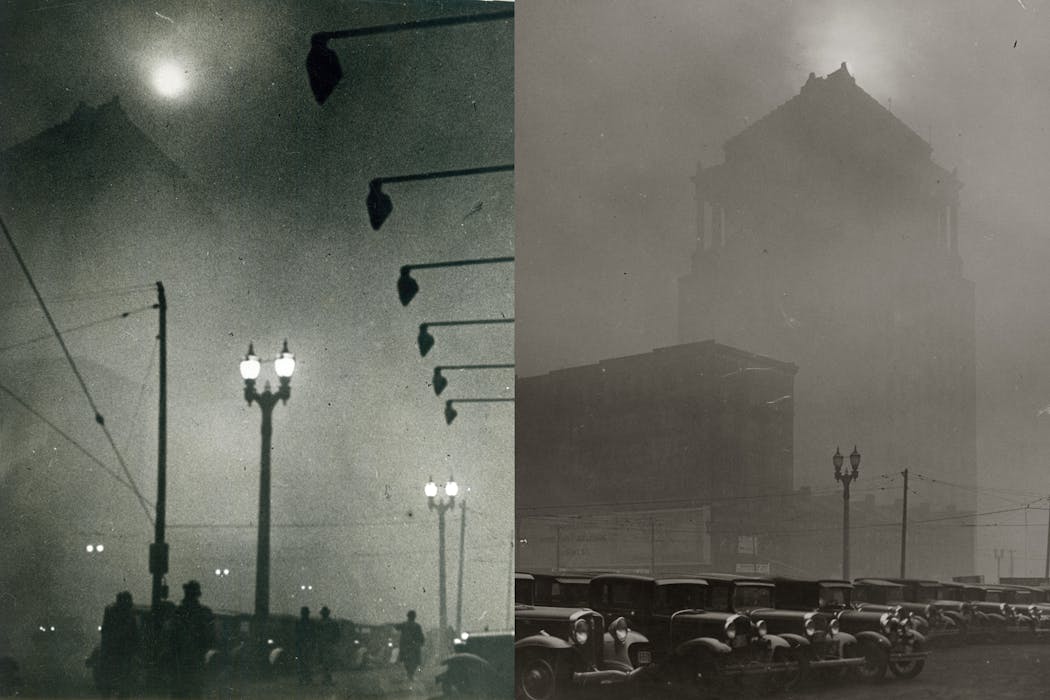
Scenes from downtown St. Louis on ‘Black Tuesday,’ Nov. 28, 1939, show how thick the smoke was even in the middle of the day. Missouri Historical Society

It was a morning unlike anything St. Louis had ever seen. Automobile traffic crawled as drivers struggled to peer through murky air. Buses, streetcars and trains ran an hour behind schedule. Downtown parking attendants used flashlights to guide vehicles into their lots. Streetlamps were ignited, and storefront windows blazed with light.

Residents called Nov. 28, 1939, “Black Tuesday.” Day turned to night as thick, acrid clouds blackened the sky. Even at street level, visibility was just a few feet. The air pollution was caused by homes, businesses and factories, which burned soft, sulfur-rich coal for heat and power. The soft coal was cheap and burned easily but produced vast amounts of smoke.

The murky morning was an extreme version of a problem St. Louis and dozens of other American cities had been experiencing for decades. Strict federal air pollution regulations were still 30 years away, and state and local efforts to limit coal smoke had failed miserably.

Today, as the Trump administration works to roll back air pollution limits on coal, the events in St. Louis more than 80 years ago serve as a reminder of how bad a situation can become before people’s objections finally force the government to act. And as I discuss in my book “Black Gold: The Rise, Reign and Fall of American Coal,” those events also highlight how successful that action can be.

The fight for cleaner air is a key part of St. Louis history.

A widespread civic effort

Days after Black Tuesday, St. Louis Mayor Bernard Dickmann responded to the crisis by creating a commission to investigate and recommend a solution to the continuing air pollution.

Just before Black Tuesday, Joseph Pulitzer II, publisher of the St. Louis Post-Dispatch, had launched his own anti-smoke newspaper campaign seeking fundamental change. In my research I found the first editorial, on Nov. 13, 1939, which declared “something must be done, or else.” A crack reporter, Sam J. Shelton, was assigned full time to what became the smoke beat. Post-Dispatch news stories, editorials and political cartoons championed the values of cleaner air and the dangers of toxic pollution.

Dickmann’s Smoke Elimination Committee met 13 times over a winter that seemed unrelenting in darkness. News and weather reports record that smoke blotted out the Sun on one out of every three days, and sometimes sunlight never pierced the darkness. Advice poured in, including from a Hollywood-style stuntman and flagpole sitter, Alvin “Shipwreck” Kelly, who offered to perch in the sky searching for dirty chimneys.

In late February 1940, the commission issued a report recommending restrictions on smoke emissions. The report said residents and industry should either pay more to buy coal with less sulfur or other fuel, or pay for and install new equipment to burn the sulfur-rich coal more cleanly. On April 5, the city’s Board of Aldermen convened to consider the changes in law that would enact the recommendations.

Newspapers reported that more than 300 protesters, including coal dealers, operators and miners, parked their trucks outside City Hall, waving banners. Black smoke spewed upward from coal stoves mounted atop one, newspaper reports said. The boisterous throng marched into City Hall, shouting and often drowning out city representatives. Amid catcalls and boos, the aldermen passed the ordinance 28-1.

St. Louis did a lot of work to control air pollution from burning coal.

Immediately, Raymond Tucker, the mayor’s deputy, began arranging for suppliers of more expensive low-sulfur coal for the city’s residents and businesses. He launched a slick public relations campaign urging residents to comply with the new law. He also hired a team of inspectors to block bootleg shipments of unauthorized sulfur-rich coal and to cite anyone whose chimney’s smoke ran too black.

Coal operators in Illinois, who sold the cheaper sulfur-rich coal, urged their state’s residents to boycott St. Louis goods and filed lawsuits challenging the legality of the new ordinance. Those actions appeared menacing but made little headway.

The true test of the ordinance would arrive with the winter chill.

A group of men in suits stand around a seated man, who is handing a pen to one of the standing men.
St. Louis Mayor Raymond Tucker, right, receives a pen from President Lyndon B. Johnson, who has just signed the Clean Air Act of 1963 into law.
Bettmann Archive/Getty Images

A winter of change

As winter arrived, legal coal was 10% to 30% more expensive than the high-sulfur coal had been, and some families struggled, especially in poorer areas of the city. Bootleg coal shipments arrived. More than once, Tucker’s armed inspectors fired at a suspect truck that ignored orders to stop, according to newspaper reports from the time.

While hopes were already high that the new, tough measures would clean the skies, the winter of 1940-41 defied even those rosy expectations. By mid-January, the city’s skies were so much cleaner than the year before that they were the talk of the town. They were clear blue, and even on days when there was smoke, it was far less than had been common before the city ordinance passed.

The national press picked up the news, and arriving visitors wrote letters to the editors of their hometown newspapers reporting being astounded by what St. Louis had accomplished that winter. Tucker compiled notes on how many communities in the U.S. and Canada sought details on the transformation. In that document, now held among his archives at Washington University in St. Louis, he listed 83.

A great city has washed its face,” Sam Shelton wrote for the Post-Dispatch. “St. Louis is no longer the grimy old man of American municipalities.” The “plague of smoke and soot” had been wiped away after a century in “a dramatic story of intelligent, courageous and co-operative effort.” No longer did residents have to endure “burning throats, hacking coughs, smarting eyes, sooty faces and soiled clothing.”

The newspaper was awarded a Pulitzer Prize for public service in 1941 for its campaign, the first time that a major award was conferred for an environmental story.

For years afterward, the coal industry argued that the St. Louis campaign was a fraud that needlessly forced residents to buy more expensive fuel and equipment. But even during World War II, when industrial restrictions meant pollution was worse in the name of driving the war economy, the city’s skies were never as blackened as they had been before.

Tucker, the mayor’s deputy, later used the fame he had achieved from the smoke campaign as a springboard to being elected mayor. He served 12 years. His former boss, Dickmann, was less fortunate, losing his reelection bid in 1941. He blamed it on having forced residents to pay more, even though it meant cleaner fuel for their homes and clearer skies for their community.

The Conversation

Robert Wyss does not work for, consult, own shares in or receive funding from any company or organization that would benefit from this article, and has disclosed no relevant affiliations beyond their academic appointment.

ref. When coal smoke choked St. Louis, residents fought back − but it took time and money – https://theconversation.com/when-coal-smoke-choked-st-louis-residents-fought-back-but-it-took-time-and-money-265934

Trump’s words aren’t stopping China, Brazil and many other countries from setting higher climate goals, but progress is slow

Source: The Conversation – USA (2) – By Shannon Gibson, Professor of Environmental Studies, Political Science and International Relations, USC Dornsife College of Letters, Arts and Sciences

Sea walls now ring much of the Marshall Islands’ capital, Majuro, as the ocean rises. Lt. Anna Maria Vaccaro/U.S. Coast Guard

In the Marshall Islands, where the land averages only 7 feet (2 meters) above sea level, people are acutely aware of climate change.

Their ancestors have lived on this string of Pacific islands for thousands of years. But as sea level rises, storms more easily flood communities and farmland with saltwater. Warming ocean water has triggered mass coral-bleaching events, harming habitats that are important for both tourism and fish that the islands’ economy relies on.

If the world fails to rein in the greenhouse gas emissions driving climate change, studies suggest low-lying islands like these could be uninhabitable within decades.

Marshall Islands President Hilda Heine talks about climate risks to her homeland while in New York for the United Nations General Assembly in September 2025.

Climate change isn’t just a problem for islands. Countries worldwide are experiencing intensifying storms, dangerous heat waves and rising seas as global temperatures rise.

Yet, after 30 years of international climate talks, 10 years of a global treaty promising to keep temperatures in check, and trillions of dollars in damage, the world is still not on track to stop rising global temperatures. Greenhouse gas emissions were at record highs in 2024, and it was Earth’s hottest year on record.

I study the dynamics of global environmental politics, including the United Nations climate negotiations. And I and my lab have been tracking countries’ latest climate pledges – known as nationally determined contributions, or NDCs – to see which countries have stepped up their efforts, which have slid back and who has ideas that can deliver a safer world for everyone.

While the Trump administration has been pressuring countries to back away from their climate commitments – and succeeded in delaying an International Maritime Organization vote on a global plan to tax greenhouse gas emissions from shipping after threatening other counties with sanctions, visa restrictions and port fees if they supported it – many countries are still pressing ahead.

Trump agitates, but many countries are steadfast

U.S. President Donald Trump, whose administration came into office vowing to eliminate climate regulations and boost the fossil fuel industry, derided concerns about climate change in his Sept. 23, 2025, speech to the U.N. General Assembly. He called climate change the “greatest con job ever perpetuated” and ridiculed green energy and climate science.

Trump’s language no longer surprises world leaders, though. More than 100 other countries announced new climate commitments during a high-level summit a few days later.

China, currently the world’s largest greenhouse gas emitter, was lauded for hitting its green energy targets five years early. Its rapid expansion of low-cost renewable energy and electric vehicle manufacturing has reduced pollution in Chinese cities while also boosting its economy and expanding the government’s influence around the world.

Chinese President Xi Jinping announced the country’s first absolute emissions reduction goal at the summit, committing to cut its net greenhouse gas emissions by 7% to 10% from peak levels by 2035. China also committed to nearly triple its solar and wind power capacity and expand reforestation efforts.

While advocates and other governments had hoped for a stronger announcement from China, the new goals mark an important shift from the country’s earlier carbon intensity targets, which aimed to decrease the amount of greenhouse gas emissions per unit of economic output but still allowed emissions to grow over time.

The European Union has yet to submit its new commitments, but the group of 27 European countries delivered a letter of intent, saying it would commit to a 66% to 72% collective decrease in net greenhouse gas emissions by 2035 compared with 1990 levels. Europe has seen a swift rise in renewable energy, up sharply since Russia’s invasion of Ukraine put the continent’s natural gas supplies in jeopardy.

The EU has also made waves by extending its carbon pricing rules beyond its borders.

The EU’s Carbon Border Adjustment Mechanism, scheduled to begin in January 2026, will be the first system to charge for the climate impact of imported goods coming into Europe from countries that don’t have carbon prices similar to the EU’s. The measure, meant to even the playing field for EU industries, sets a global precedent for linking carbon emissions to trade.

However, the EU’s climate plans are also facing some headwinds. Its parliament is moving toward softening new corporate sustainability requirements after pressure from companies. And it may face calls from some member countries to delay a new carbon market meant to cut emissions from road transportation and buildings, Politico reported.

The EU has pledged to mobilize up to 300 billion Euros (about US$350 billion) to support the global clean energy transition in developing countries.

The United Kingdom, Japan and Australia submitted their most ambitious targets to date. All three put them on track to reach net-zero emissions by 2050, meaning any greenhouse gases they emit will be offset by projects that avoid carbon emissions or remove carbon from the atmosphere.

In Australia, Queensland’s recent announcement that it would extend existing coal power plant use to the 2030s and 2040s may slow national progress. But Queensland also supports scaling up renewable energy and is still aiming for net-zero emissions by 2050.

Norway committed to reduce its greenhouse gas emissions by at least 70% by 2035 compared with 1990 levels, which would align with the Paris Agreement goal to keep global emissions below 1.5 degrees Celsius (2.7 degrees Fahrenheit). However, it plans to remain a major oil and gas exporter.

Notably, many developing countries also stepped up their commitments.

Brazil pledged a net emissions reduction of 59% to 67% by 2035 and is maintaining its 2050 net-zero target.

Free riding and taking cover behind the US

However, while some new climate commitments signal important momentum in the fight against climate change, the tug-of-war between global ambition to slow climate change and strategic self-interests was palpable at the New York summit. The responses to Trump’s remarks revealed both veiled critiques and deceleration of climate action by some governments.

China criticized backsliding by some countries, without naming names.

Brazil used the summit to call out countries that were late in submitting their updated climate commitments. Only about a third had submitted their updated pledges at that point.

Lula da Silva stands in a group talking, including heads of the UN and EU.
Brazilian President Luiz Inácio Lula da Silva, who will host the 30th annual U.N. climate conference, COP 30, in November 2025, talks with other world leaders at the U.N. in September 2025.
AP Photo/Peter Dejong

While it is difficult to parse out individual country motivations – economic stress, wars and political influence can all play a role – many scholars worry that U.S. backsliding will lead other countries to reduce their climate commitments, and some recent pledges appear to back this up.

Many petroleum-producing countries missed the U.N. pledge deadline. Qatar, which recently gifted the U.S. a jet plane for Trump’s use and has an economy largely bolstered by the oil and gas industry, has not updated its pledge since 2021. The six-member Gulf Cooperation Council’s average emissions reduction target is even lower than Qatar’s, at around 21.6% by 2030.

Similarly, Argentina, among the world’s top holders of shale oil and gas reserves, has not released its updated commitments. Progress on its previous commitment has been undermined by political shifts since President Javier Milei’s election in 2023.

Milei and Trump seated on a stage. Milei is holding a piece of paper up.
Argentine President Javier Milei meets with U.S. President Donald Trump during the United Nations General Assembly on Sept. 23, 2025, in New York. Trump offered Argentina a $20 billion currency swap to help Milei stabilize his struggling economy.
AP Photo/Evan Vucci

Milei initially vowed to abandon the 2030 agenda entirely and withdraw from the Paris Agreement, though his administration later backtracked. His dismissal of climate change as a “socialist lie” has aligned Argentina closely with Trump, culminating in a recently planned US$20 billion aid package from the U.S. to Argentina and raising questions about whether Argentina’s climate stance reflects genuine policy or geopolitical strategy.

Also noticeably absent are commitments from India, Mexico, South Africa and Saudi Arabia. Angola weakened its climate pledge, citing lack of international funding.

A new way to make climate commitments?

While many countries are promising progress to reduce greenhouse gas emissions, the commitments formally submitted as of Oct. 20 were still far below the level needed to keep global temperatures from rising by 2 C (3.6 F), let alone 1.5 C.

Chart shows slow progress
Countries’ new climate pledges – known as nationally determined contributions, or NDCs – as of Oct. 20, 2025, compiled by ClimateWatch, were still far from keeping global warming under 2 C (3.6 F), let alone 1.5 C (2.7 F). The total includes 62 countries that had submitted pledges, including a U.S. pledge submitted before the Trump administration took office. It does not include China’s announced pledge or the European Union’s expected pledge.
ClimateWatch, CC BY

To help boost national efforts and accountability, Brazil has proposed a new approach it calls a globally determined contribution. Unlike the 1997 Kyoto Protocol framework, which set fixed, country-specific emission reduction targets based on historical baselines, or the 2015 Paris Agreement’s pledge-as-you-can system, it would establish global targets aligned with the Paris Agreement’s temperature goals.

So, a globally determined contribution might state, for example, that the world will triple its renewable energy production and reverse deforestation by 2030. A target like that gives countries a clearer path of action. The new format would also allow city and state actions to be counted separately, increasing incentives for them to act.

As the host of the COP30 climate talks Nov. 10-21, 2025, Brazil is uniquely positioned to champion this concept. In the absence of U.S. leadership, the proposal could offer a rare opportunity for countries to collectively strengthen commitments and reshape treaty language in a way never seen before – leaving open the possibility for progress.

Wila Mannella, a research assistant and graduate student in environmental studies at USC, contributed to this article.

The Conversation

Shannon Gibson does not work for, consult, own shares in or receive funding from any company or organization that would benefit from this article, and has disclosed no relevant affiliations beyond their academic appointment.

ref. Trump’s words aren’t stopping China, Brazil and many other countries from setting higher climate goals, but progress is slow – https://theconversation.com/trumps-words-arent-stopping-china-brazil-and-many-other-countries-from-setting-higher-climate-goals-but-progress-is-slow-267194

Many Colorado homeowners are underinsured − here’s what to do before the next fire

Source: The Conversation – USA (2) – By Tony Cookson, Associate Professor of Finance, University of Colorado Boulder

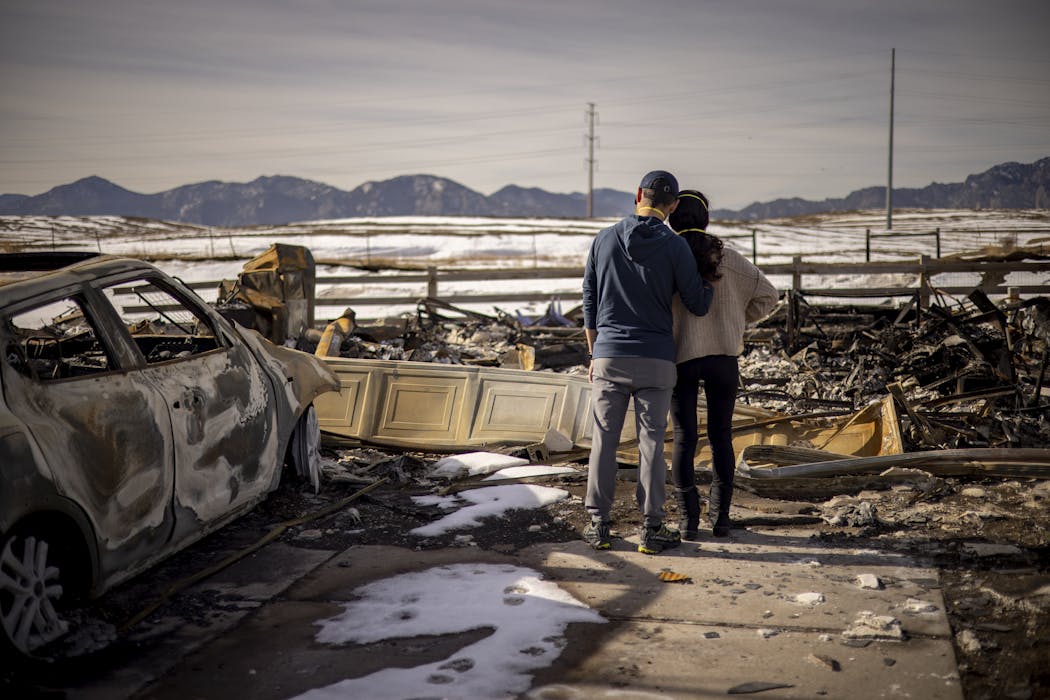
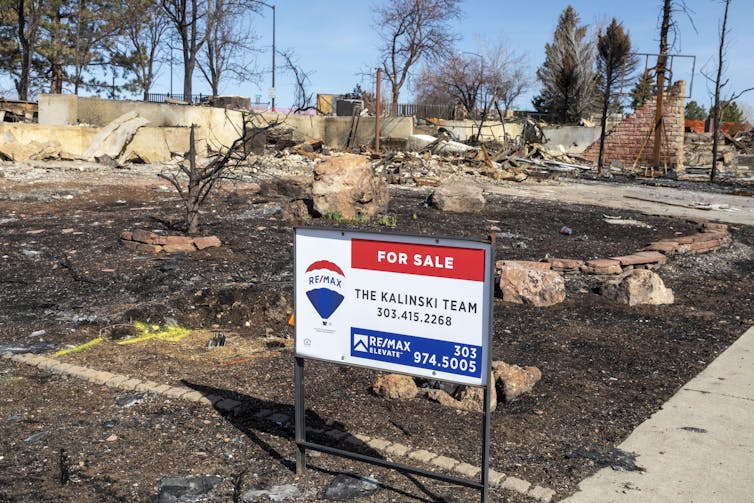
Many people who lost their homes in the Marshall Fire were underinsured. The Washington Post/GettyImages

Most Colorado homeowners do not have enough insurance coverage to rebuild their house after a total loss. That’s according to our new research examining whether homes destroyed in Colorado’s Marshall Fire — which burned more than 1,000 houses in suburban Boulder County — have been rebuilt.

We are economists who study the financial resources available to households to cope with disasters, including insurance, crowdfunding and federal disaster aid.

Over the past five years, insurance premiums in Colorado rose nearly 60%, driven by mounting losses from wildfire, hail and other disasters. These patterns are not unique to Colorado. They reflect a broader national reassessment of risks.

Our new research sheds light on this issue by linking confidential, contract-level data to real rebuilding outcomes.

Our study analyzes 3,089 policies from 14 major insurers held by people affected by the Marshall Fire. The findings offer concrete steps homeowners can take now to reduce the risk of holding insufficient coverage.

How common is underinsurance?

Underinsurance is determined by comparing the amount of coverage a homeowner carries to rebuild the physical structure of their home to the actual cost of rebuilding after a disaster.

To estimate each unique home’s rebuilding cost, the study used construction-cost software and adjusted the estimates to align with a sample of real-world construction quotes received by homeowners after the Marshall Fire.

We found that 74% of homeowners affected by the Marshall Fire were underinsured, and 36% were so severely underinsured that their policy covered less than 75% of the rebuild cost.

According to our research, underinsurance was not just a problem for poorer households. Even for households with incomes above US$180,000, 72% held policies that did not cover the cost of a complete rebuild.

Credit scores and mortgage debt amounts were unrelated to how underinsured people were.

Dozens of homes are in various stages of being built.
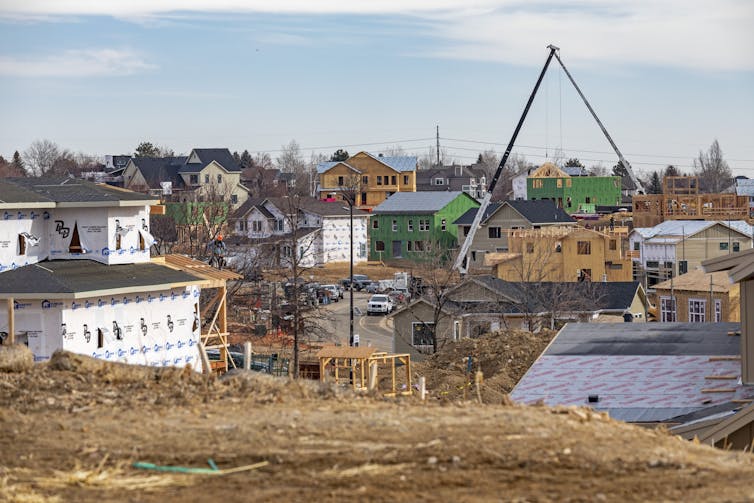
After the Marshall Fire, hundreds of homes were being rebuilt at once, which drove the costs of rebuilding up.
UCG/GettyImages

After major fires, construction costs typically spike as hundreds of survivors rebuild at once. To help manage this risk, many homeowners purchase an Extended Replacement Cost policy, which boosts coverage by a set percentage of the existing coverage limit if rebuilding costs end up higher than the coverage limit.

Eighty-seven percent of the Marshall Fire policies we studied included extended coverage. But nearly three-quarters of them still fell short of covering the full cost to rebuild. Our study found that while extended coverage policies cushion the impact of postfire construction cost inflation, they do not solve the deeper problem of underinsurance.

In other words, even without the surge in costs, most households had bought too little coverage from the outset.

Price shopping vs. the coverage you actually need

Our research finds that the insurance company a household chooses strongly predicts how much coverage the household has. That’s even after accounting for income, mortgage status, credit score, home value and property characteristics. In other words, insurers differ systematically in the coverage levels they tend to provide.

When shopping, homeowners attend to the headline premium, or the total cost of insurance, but not to how much coverage that premium actually buys. Indeed, if shoppers compared insurer quotes for the same coverage amount, they would gain about $290 per year in value, roughly 10% of the average annual homeowners insurance premium.

Why underinsurance slows recovery

Underinsurance isn’t an abstract problem offset by savings, loans and federal aid. It leaves real gaps in rebuilding.

The study found that when a household’s insurance coverage falls short of the home’s replacement cost, the household is significantly less likely to rebuild after a total loss. Instead, some families end up selling and moving away.

A
A home lot for sale after the Marshall Fire.
UCG/GettyImages

In fact, the research shows that if all underinsured households in the sample had been fully insured, 25.4% of homeowners would have filed for reconstruction permits within a year of the fire, instead of the 18.8% that filed. In addition, only approximately 5.4% of homeowners would have sold their destroyed properties that year, as opposed to the 9.7% that did sell. Overall, this means more families could have rebuilt and stayed in their communities.

What Colorado homeowners can do now

Here are some practical steps Colorado homeowners can take to make sure their coverage keeps pace with rising risks and rebuilding costs:

  • When getting quotes or renewing, request a side-by-side comparison where coverage limits and any extended coverages are held constant across insurers. Shopping this way helps avoid underinsuring in pursuit of a lower premium.

  • Revisit limits after renovations and big economic changes. Construction costs in the region rose steeply in the lead-up to the Marshall Fire due to the pandemic and related inflation. If you haven’t updated your coverage recently, revisit it annually — especially if you remodeled or added square footage.

A good explainer of how to make a home inventory from the Minnesota Department of Commerce.

Consider insurer reputation and local presence. Different insurance companies will suggest different coverage limits for the exact same property. The study finds that companies with deeper roots in the community are less likely to underinsure, likely due to concerns about their reputation — something worth weighing alongside price.

The Front Range will continue to face wildfire seasons where wind, drought and human ignition interact in populated areas, and premiums are unlikely to snap back quickly. For households, the most practical step is to shop for insurance and renew policies as if a total loss could happen tomorrow.

The Conversation

Tony Cookson received funding from the National Bureau of Economic Research Household Finance Small Grants Program.

Emily Gallagher is affiliated with the Federal Reserve Bank of Philadelphia. The views expressed are solely hers and do not necessarily reflect the views of the Federal Reserve Bank of Philadelphia, the Federal Reserve Board of Governors, or the Federal Reserve System. No statements should be treated as legal advice or as an endorsement by the Federal Reserve System of a specific product or service.

ref. Many Colorado homeowners are underinsured − here’s what to do before the next fire – https://theconversation.com/many-colorado-homeowners-are-underinsured-heres-what-to-do-before-the-next-fire-263702

Bubble tea’s dark side: from lead contamination to kidney stones

Source: The Conversation – UK – By Adam Taylor, Professor of Anatomy, Lancaster University

norikko/Shutterstock.com

They’ve become as ubiquitous on British high streets as coffee shops – bubble tea outlets offering their Instagram-worthy drinks in countless flavour combinations. The Taiwanese beverage, a blend of black tea, milk, sugar and chewy tapioca pearls, has gained global popularity since its origins in the 1980s. But recent findings suggest this trendy drink may warrant closer scrutiny.

A Consumer Reports investigation revealed high lead levels in some bubble tea products in the US, echoing previous concerns about cassava-based foods. (No equivalent UK testing has been published.) The tapioca pearls – those signature “bubbles” – are made from cassava starch, and the root vegetable readily absorbs lead and other heavy metals from soil as it grows.

The tapioca pearls also pose other risks beyond contamination. Their starchy composition means that consuming large quantities can slow stomach emptying – a condition called gastroparesis – or, in some cases, lead to complete blockages.

Both can cause nausea, vomiting and abdominal pain, and symptoms can be particularly severe in people who already have slow-moving digestion. Even guar gum — a thickener often added to bubble tea and harmless in small amounts – can lead to constipation if you drink it often.

The drink’s composition also affects kidney health. In 2023, Taiwanese doctors removed over 300 kidney stones from a 20-year-old woman who’d been drinking bubble tea instead of water. Certain components, including oxalate and elevated phosphate levels, can contribute to stone formation. However, this extreme case probably reflects exceptionally high consumption.

For children, the risks are more immediate. The pearls can be a choking hazard – a risk that is well documented by paediatricians. Adults are not immune to this risk. According to media reports in Singapore, a 19-year-old woman died after inhaling three pearls when sucking harder on a partially blocked straw, while another woman narrowly avoided the same fate thanks to fast-acting bystanders.

Woman sitting on a toilet, holding her stomach in agony.
High consumption of bubble tea may contribute to constipation.
goffkein.pro/Shutterstock.com

The sugar problem

The sugar content raises longer-term health concerns. Most bubble teas contain 20–50g of sugar, comparable to or exceeding a can of Coca-Cola (35g). Research in Taiwan found that by age nine, children who regularly consumed bubble tea were 1.7 times more likely to have cavities in their permanent teeth.

In California, the drink is considered a contributing factor to the youth obesity epidemic, yet many young adults remain unaware of these risks. The high sugar and fat content increases the likelihood of developing type 2 diabetes, obesity and metabolic disease, while prolonged consumption may contribute to fatty liver disease – outcomes associated with any high-sugar product that spikes blood glucose and promotes fat storage in the liver.

Perhaps most surprisingly, emerging research suggests potential mental health implications. Studies of Chinese children who frequently consume bubble tea show an association with increased rates of anxiety and depression. Similar patterns appear in adults: research on Chinese nurses found that regular bubble tea consumption was associated with anxiety, depression, fatigue, job burnout and reduced wellbeing, even after controlling for other factors. The same study linked lower consumption to reduced thoughts of suicide, though establishing causation remains complex.

Strange scans

There’s even a curious medical phenomenon associated with consuming bubble tea: tapioca pearls appearing on scans of patients admitted for unrelated emergencies.

Doctors treating people after car accidents or with appendicitis have found dozens of pearls visible in stomachs and digestive tracts. These can occasionally cause diagnostic confusion, as they appear denser than the surrounding tissues and have stone-like properties similar to those seen with kidney- or gallstones.

This doesn’t mean bubble tea should be banned, but it does suggest we treat it as an occasional indulgence instead of a daily habit. And if you do indulge, consider skipping a straw. Drinking directly from the cup gives you better control, and allows your mouth’s sensory receptors to properly prepare for what’s coming.

The Conversation

Adam Taylor does not work for, consult, own shares in or receive funding from any company or organisation that would benefit from this article, and has disclosed no relevant affiliations beyond their academic appointment.

ref. Bubble tea’s dark side: from lead contamination to kidney stones – https://theconversation.com/bubble-teas-dark-side-from-lead-contamination-to-kidney-stones-266299

How higher states of consciousness can forever change your perception of reality

Source: The Conversation – UK – By Steve Taylor, Senior Lecturer in Psychology, Leeds Beckett University

Prostock-studio/Shutterstock

A few years ago I climbed over a gate and found myself gazing down at a valley. After I’d been walking for a few minutes, looking at the fields and the sky, there was a shift in my perception. Everything around me became intensely real. The fields and the bushes and trees and the clouds seemed more vivid, more intricate and beautiful.

I felt connected with my surroundings. What was inside me, as my own consciousness, was also “out there”. Within me, there was a glow of intense wellbeing.

This is an example of a higher state of consciousness – or, in my preferred term, an awakening experience. Awakening experiences are a temporary expansion and intensification of awareness that transforms our perception of the world.

As a psychologist, I have been studying such experiences for more than 15 years. Awakening experiences are sometimes viewed as mysterious and random, but I have found that, to a large degree, they can be explained.

My research has found that they have three main triggers.

The most common trigger may seem counter-intuitive. Around one-third of awakening experiences are linked to psychological distress, such as stress, depression and loss. For example, a man described to me, as part of my research, how he went through inner turmoil due to confusion about his sexuality, which led to the breakdown of his marriage.

But amid this turbulence, he experienced an awakening experiences in which, he said: “Everything just ceased to be. I lost all sense of time. I lost myself. I had a feeling of being totally at one with nature, with a massive sense of peace. I was a part of the scene. There was no ‘me’ anymore.”

Second, around one-quarter of the experiences are induced by the beauty and stillness of nature. A woman reported an awakening experience to me that occurred when she was swimming in a lake.

She said she “felt completely alone, but part of everything. I felt at peace… All my troubles disappeared and I felt in harmony with nature.” These types of experiences were often described by poets such as Wordsworth and Shelley.

The third most significant trigger (with a similar proportion to contact with nature) is spiritual practice. This primarily means meditation but also includes prayer and psycho-physical practices such as yoga or tai chi.

Perhaps surprisingly, I haven’t found that psychedelics are a major trigger of higher states. It may be that this is because my samples have been drawn from the general population, and not so many people have tried psychedelics. And psychedelics by no means always induce awakening experiences. They may simply induce perceptual distortions, or a state of dissociation.

Causes of awakening experiences

Some neuroscientists have suggested that awakening experiences are the result of stimulation of the temporal lobes (one of the most important parts of the brain, associated with memory, language comprehension and emotion). This is partly because some reports of higher states of consciousness come from people who suffer from temporal lobe epilepsy.

Illustration of scuba diver shining a torch on an iceberg.
There’s more going on in our minds than we know.
fran_kie/Shutterstock

Another theory is that experiences of oneness arise when the part of our brain responsible for our awareness of boundaries (the superior posterior parietal cortex) is less active than normal.

However, such theories have been criticised by other reseachers for a lack of control groups and successful replication. While some people who suffer from temporal lobe epilepsy may have awakening-type experiences, they are more likely to experience anxiety and disorientation.

In fact, other studies show no connection between seizures and higher states of consciousness. Other neuroscientists dispute the claim that spatial awareness is associated with the posterior parietal cortex.

Perhaps it makes more sense to explain awakening experiences in psychological rather than neurological terms.

Many awakening experiences are related to relaxation and mental quietness, induced by meditation or contact with nature. Normally, our awareness switches off to familiar objects and surroundings, as a way of saving energy.

But in moments of inner quietness, we expend less mental energy than normal. As a result, mental energy may intensify, generating more vivid awareness.

But how can we explain awakening experiences linked to psychological turmoil? A sense of shock and loss may bring a deconstruction of normal psychological processes.

In most states of turmoil, this may only cause further distress. But occasionally this may cause a transcendence of familiar modes of perception, and even a dissolution of our normal sense of ego, causing a sense of oneness.

Awakening experiences really are “higher states.” We tend to assume that our normal way of seeing the world is reliable and objective, offering a “true” vision of reality. But higher states teach the opposite: that our typical consciousness is limited and filtered.

We are normally trapped in a familiarised automatic perception of the world. This is why higher states carry a strong sense of revelation – because they reveal a wider reality to us.

As a result, even though awakening experiences typically only last from a few moments to a few hours, they often have a life-changing effect. Many people in my research described an awakening experience as the most significant moment of their lives.

In a study of 90 awakening experiences, my colleague Krisztina Egeto-Szabo and I found that the most significant after-effect was a positive shift, with increased trust in life, confidence and optimism. For example, one person reported that: “To know that it’s there (or here, I should say) is a great liberation.”

It would be a stretch to say that we can induce higher states of consciousness. However, we can create the conditions that make them more likely to occur. We do know that many are linked to relaxation and inner quietness. So we can create try to try to cultivate a still and relaxed state of mind – for example, through meditation and contact with nature. In doing so, we might find ourselves awakening to a wider and deeper reality.

The Conversation

Steve Taylor does not work for, consult, own shares in or receive funding from any company or organisation that would benefit from this article, and has disclosed no relevant affiliations beyond their academic appointment.

ref. How higher states of consciousness can forever change your perception of reality – https://theconversation.com/how-higher-states-of-consciousness-can-forever-change-your-perception-of-reality-265151

Louvre heist: the turbulent history of the stolen royal jewels

Source: The Conversation – UK – By Laura O’Brien, Associate Professor in Modern European History, Northumbria University, Newcastle

It sounds like the plot of a heist movie. On October 19, priceless items of jewellery and royal regalia were stolen, in broad daylight and in a matter of minutes, from the Louvre’s gilded Gallery of Apollo in Paris. The theft of these items from one of the world’s most famous museums, however, is merely the latest instalment in the chequered history of the crown jewels of France.

In many other countries, the term “crown jewels” is commonly understood as referring to regalia – in particular, the items used as part of the coronation ceremony for a monarch. In France, however, the crown jewels – or, to give them their French title, les joyaux de la Couronne de la France – is a more expansive term. It includes royal regalia, items of jewellery and precious stones.

The collection originated in the 16th century, when Francis I decreed that a set of jewels in his possession would become part of the inheritance of his successors. Eight items were stolen, including the reliquary brooch, diadem and large corsage-bow broach, and the 1855 crown of the Empress Eugénie, wife of Emperor Napoleon III.

The thieves also took an emerald necklace and earrings made for Empress Marie Louise, second wife of Napoleon I, and a sapphire diadem, necklace and single earring from a matching set linked to Queen Marie Amélie, wife of King Louis-Philippe.

Few items of royal jewellery and regalia survived the French Revolution in 1789. For centuries, the chapter of the Abbey of Saint-Denis, just outside Paris, had been the custodians of the coronation regalia as well as overseeing the preferred burial place of most French monarchs.

Most of the various crowns made for French kings since the Middle Ages were lost or destroyed in revolutionary attacks on the abbey, such as the Crown of Charlemagne and the 13th-century crown of Saint Louis. Both were melted down between 1793 and 1794.

The crown of Louis XV, created in 1722 and on permanent display in the Louvre since the late 19th century, is the only crown from the pre-revolutionary period to survive to this day. This crown was left untouched during the heist, suggesting that the thieves had done their research – the precious jewels that once adorned Louis XV’s crown were removed and replaced with glass replicas in the 1880s.

The history of the jewels

Napoleon I enhanced and expanded the French collection of crown jewels as part of the preparations for his coronation as emperor in 1804, commissioning a new crown and a replica of the medieval Hand of Justice sceptre.

As a nod to the ancient regalia – and, undoubtedly, as a way of cementing Napoleon’s own legitimacy as ruler – this new version of the sceptre included cameos and other jewels from the collection once held at Saint-Denis. This created a sense of continuity between the ancient French monarchies and the emperor born of the French Revolution.

Painting of Empress Marie Louise
Empress Marie Louise’s jewels were among the stolen haul.
Wiki Commons

The revolutionary upheavals of the 19th century raised questions about the future of the joyaux de la couronne and their place in post-revolutionary France. In 1848, following the creation of the French Second Republic, some republican politicians suggested that the jewels might be sold off. By 1852, however, the republic had fallen and a new emperor – Napoleon III, nephew of Napoleon I and erstwhile president of the republic – had come to power via a coup d’état.

Napoleon III and his wife, Eugénie, significantly expanded the crown jewels during the Second Empire (1852-1870). Yet this period also saw some of the collection go on public display for the first time.

Surviving items of coronation regalia were displayed alongside personal items belonging to previous French rulers as part of the Musée des Souverains (Museum of Sovereigns), which opened at the Louvre in 1852 and traced the history of France through displays devoted to the country’s various ruling dynasties. Here, the crown jewels were presented as an integral part of France’s national heritage, one that included both monarchical tradition and revolutionary transformation.

The fate of the jewels in the latter decades of the 19th century reflected broader debates about the meaning of this national heritage and how to preserve it. In 1878 a selection of the jewels – described in guidebooks as the “Diamonds of the Crown” – generated considerable public interest when they were displayed at the Paris Universal Exhibition.

Increased awareness of the collection prompted renewed calls for the jewels to be sold. Advocates of a sale argued that the Third Republic, founded after the fall of the Second Empire in 1870, should rid itself of these monarchical trappings once and for all and reinvest funds raised in social welfare schemes.

Their opponents pointed to the value of the joyaux de la couronne not just in monetary terms, but as examples of French craftsmanship worth preserving, and symbols of the complex history and heritage of modern France. Eventually, a compromise saw the most historically and aesthetically important items retained by the French Republic, and the rest auctioned off in 1887. Many of the items deemed worthy of preservation found a permanent home in the display cases of the Louvre’s Gallery of Apollo.

Responses to the recent heist suggest that in 21st-century republican France, the place of royal relics in the national heritage is no longer up for debate. Interior minister Laurent Nuñez has described the stolen jewels as having an “inestimable heritage value”. President Emmanuel Macron, meanwhile, commented on social media that the theft was “an attack on a heritage that we cherish because it is our history”.

Much of the immediate reaction to the audacious theft has concentrated on the Louvre’s security problems, rather than on the jewels themselves. The absence of these particular items from the museum’s collections is unlikely to bother most tourists.

Indeed, the Galerie d’Apollon and the crown jewels do not even feature on the Louvre’s suggested “masterpieces” visitor trail. However, the likelihood of increased security at the museum, particularly as it undergoes a major programme of renovation works, will affect every visitor to the Louvre – and potentially museums worldwide, as they tighten security measures in response to this extraordinary theft.


Looking for something good? Cut through the noise with a carefully curated selection of the latest releases, live events and exhibitions, straight to your inbox every fortnight, on Fridays. Sign up here.


The Conversation

Laura O’Brien does not work for, consult, own shares in or receive funding from any company or organisation that would benefit from this article, and has disclosed no relevant affiliations beyond their academic appointment.

ref. Louvre heist: the turbulent history of the stolen royal jewels – https://theconversation.com/louvre-heist-the-turbulent-history-of-the-stolen-royal-jewels-267994

Record-breaking CO₂ rise shows the Amazon is faltering — yet the satellite that spotted this may soon be shut down

Source: The Conversation – UK – By Paul Palmer, Professor of Quantitative Earth Observation, University of Edinburgh

titoOnz / shutterstock

Atmospheric carbon dioxide (CO₂) rose faster in 2024 than in any year since records began – far faster than scientists expected.

Our new satellite analysis shows that the Amazon rainforest, which has long been a huge absorber of carbon, is struggling to keep up. And worryingly, the satellite that made this discovery could soon be switched off.

Systematic measurements of CO₂ in the atmosphere began in the late 1950s, when the Mauna Loa observatory in Hawaii (chosen for its remoteness and untainted air) registered about 315 parts per million (ppm). Today, it’s more than 420ppm.

But just as important is the rate of change. The annual rise in global CO₂ has gone from below 1ppm in the 1960s to more than 2ppm a year in the 2010s. Every extra ppm represents about 2 billion tonnes of carbon – roughly four times the combined mass of every human alive today.

Across six decades of measurements, atmospheric CO₂ has gradually increased. There have been some large but temporary departures, typically associated with unusual weather caused by an El Niño in the Pacific. But the long-term trend is clear.

In 2023, CO₂ in the atmosphere grew by about 2.70ppm. That’s a large step up, but not too unusual. Yet in 2024, it was an unprecedented 3.73ppm.

How satellites observe atmospheric CO₂

Until recently, we could only monitor CO₂ through stations on the ground like the one in Hawaii. That changed with satellites such as Nasa’s Orbiting Carbon Observatory (OCO-2), launched in 2014.

The OCO-2 satellite analyses sunlight reflected from Earth. Carbon dioxide acts like a filter, absorbing specific wavelengths of light. By observing how much of that specific light is missing or dimmed when it reaches the satellite, scientists can accurately calculate how much CO₂ is in the atmosphere.

But air is always on the move. The CO₂ above any one point can come from many sources – local emissions, nearby forests, or air carried from far away. To untangle this mix, scientists use computer models that simulate how winds move CO₂ around the globe.

They then adjust these models until they match what the satellite sees. This gives us the most accurate estimate possible of where carbon is being released and where it’s being absorbed.

The decade-long data record from OCO-2 allows us to put 2023 and 2024 into historical context.

The result

From the satellite data, we infer that the largest changes in CO₂ emissions and absorption during 2023 and 2024, compared with the baseline year of 2022, were over tropical land.

shaded map of tropics
Data from 2023 and 2024 shows the areas where more carbon was emitted (in red) and withdrawn (blue) compared with the ‘normal’ year of 2022. The Amazon stands out in both years.
Feng et al

The largest change was over the Amazon, where much less CO₂ is being absorbed. Similar slowdowns also appeared over southern Africa and southeast Asia, parts of Australia, the eastern US, Alaska and western Russia.

Conversely, we detected more carbon being absorbed over western Europe, the US and central Canada.

Other data backs this up. For instance, plants emit a faint glow as they photosynthesise – remarkably, we can see this glow from space. Measurements of this glow along with vegetation greenness both show that tropical ecosystems were less active in 2023 and 2024.

Our analysis suggests that warmer temperatures explain most of the Amazon’s reduced capability to absorb carbon. Elsewhere in the tropics, changes in rainfall and soil moisture were more important.

Why 2023 and 2024 were special

In many ways, these years resembled previous El Niño years such as 2015-16, when drought and heat led to less carbon absorption and more wildfires. But what’s interesting about 2023-24 is that the responsible El Niño event was comparatively weak.

Something else must be amplifying the effect. The most likely culprit is the extensive, record-breaking drought that has gripped much of the Amazon basin. When plants are already stressed by a lack of water, even modest warming can push them beyond their tolerance, reducing their ability to absorb carbon.

Small boats in shallow water
Small boats left stranded as the Tapajós river (a major Amazon tributary) dries up in late 2023.
Tarcisio Schnaider / shutterstock

Roughly half of the CO₂ emitted by humans stays in the atmosphere. The other half is absorbed, more or less equally, by the land and the oceans. If drought or heat means plants are less able to absorb carbon, even temporarily, more of our emissions will remain in the air.

Our ability to meet climate targets relies on nature continuing to provide this vital carbon storage.

Satellite shutdown

It’s not yet clear whether 2023-24 is a short-term blip or an early sign of a long-term shift. But evidence points to an increasingly fragile situation, as tropical forests are stressed by hot and dry conditions.

Understanding exactly how and where these ecosystems are changing is essential if we want to know their future role in the climate, and whether drought will delay their recovery. One step is to urgently send scientists to tropical ecosystems to document recent changes in person.

That’s also where satellites like OCO-2 come in. They offer global and almost real-time coverage of how carbon dioxide is moving between the land, oceans and atmosphere, helping us separate temporary effects like El Niño from deeper changes.

Yet, despite being fit and healthy and having enough fuel to keep it going until 2040, OCO-2 is at risk of being shut down due to proposed Nasa budget cuts.

We wouldn’t be blind without it – but we’d be seeing far less clearly. Losing OCO-2 would mean losing our best tool for monitoring changes in the carbon cycle, and we will all be scientifically poorer for it.

The Amazon is sending us a warning. We must keep watching – while we still can.


Don’t have time to read about climate change as much as you’d like?

Get a weekly roundup in your inbox instead. Every Wednesday, The Conversation’s environment editor writes Imagine, a short email that goes a little deeper into just one climate issue. Join the 45,000+ readers who’ve subscribed so far.


The Conversation

The authors do not work for, consult, own shares in or receive funding from any company or organisation that would benefit from this article, and have disclosed no relevant affiliations beyond their academic appointment.

ref. Record-breaking CO₂ rise shows the Amazon is faltering — yet the satellite that spotted this may soon be shut down – https://theconversation.com/record-breaking-co-rise-shows-the-amazon-is-faltering-yet-the-satellite-that-spotted-this-may-soon-be-shut-down-264908