The Arctic in Guillermo del Toro’s Frankenstein reveals more about empire than about monsters

Source: The Conversation – UK – By Monica Germanà, Reader in Gothic and Contemporary Studies, University of Westminster

Warning: this article contains spoilers for the novel and film Frankenstein.

Watching Guillermo del Toro’s Frankenstein after my return from the 2025 Arctic Circle Assembly (ACA) in Reykjavik, I was intrigued by his adaptation of the Arctic setting of Mary Shelley’s novel.

The novel follows Dr Victor Frankenstein (played by Oscar Isaac in the film), a scientist who creates a living being from dead body parts, only to abandon him after the consequences of his experiment horrify him.

Rejected and lonely, the Creature (played by Jacob Elordi) seeks revenge on Victor by destroying everything he loves. The story is framed by letters from an explorer, Robert Walton (played as Danish Captain Anderson by Lars Mikkelsen in the film), who encounters Victor in the Arctic as he pursues the Creature.

Del Toro’s film presents the Arctic of the 1800s as a barren wasteland. While at the ACA, I asked Janne Oula Näkkäläjärvi, development manager at the Sámi Education Institute about this depiction. He said: “It feels sad and absurd. The Arctic is not empty – it is the home of many Indigenous peoples, including the Sámi, who have thrived here in harmony with nature for thousands of years.”

His position reflects the ongoing project to rewrite Arctic history through the perspective of Indigenous Arctic peoples. In this sense, Del Toro’s film, while faithful to the novel in many other ways, arguably misses an opportunity to deliver the anti-colonial political message embedded in Shelley’s work.

Shelley’s story implicitly draws attention to the overlaps between Frankenstein’s unethical experiments with human life and Walton’s “ardent curiosity” and desire to “tread a land never before imprinted by the foot of man”.

Although no Inuit characters feature in her novel, Shelley’s anti-imperial stance emerges throughout, and exposes Walton’s colonial us-versus-them mindset: “He was not, as the other traveller seemed to be, a savage inhabitant of some undiscovered island, but an European,” he says, when he sees the sledge carrying Frankenstein and the Creature.

The trailer for Frankenstein.

Frankenstein was first published in 1818 and again with revisions in 1831. This was a time of growing British interest in exploring and claiming Arctic regions. This surge in exploration began in the early 1800s, when Sir John Barrow was appointed Second Secretary to the Admiralty. Under his leadership, Britain launched more Arctic expeditions than ever before, driven by both scientific curiosity and colonial ambition.

In 1818 Barrow’s first book on his Arctic explorations, A Chronological History of Voyages into the Arctic, was published by John Murray. That same year, the Admiralty increased its investment in Arctic exploration. In particular, the search for the North-West Passage (a sea route connecting the Atlantic and Pacific Oceans through the Arctic) intensified.

Mary Shelley read many of the Arctic travel accounts published by John Murray, and they likely inspired the Arctic sections of Frankenstein. Shelley even sent her manuscript to John Murray, who rejected it.

Del Toro’s Arctic

Shelley’s novel is set in the 18th century, but Del Toro’s film is set in 1857, when British imperialist confidence was beginning to suffer significant blows. This was the year, for instance, of the Indian mutiny against British rule, while, in 1856, tension between Britain and China led to the second opium war.

The decline of the British Empire was also dramatically reflected in Arctic exploration disasters. Many vessels failed to deliver their missions and returned home having suffered considerable losses.

The doomed 1845-46 expedition of Sir John Franklyn’s HMS Erebus and HMS Terror was the most notable of such Arctic disasters. The ships never returned (the wrecks were only found in 2014 and 2016) and evidence from Inuit accounts of the mission suggested the crew had turned to cannibalism.

The controversial claim, shared initially by Orcadian explorer John Rae, and dismissed because of “the very loose and unreliable nature of the Esquimaux [sic] representations” by Charles Dickens, firmly put the Inuit in the European map of the Arctic, and, simultaneously, exposed the persistent racist bias of Imperial ideology.

In line with these Victorian views of the Arctic, Del Toro’s Frankenstein depicts the Arctic’s elusive barrenness simultaneously as a force hostile to the explorers from the south and a blank canvas for them to chart, control and ultimately, exploit.

His vision of the Arctic owes more to the sublime wilderness of 19th-century paintings such as Edwin Landseer’s Man Proposes, God Disposes (1864), than more recent representations including the 1973 Marvel comic adaptation of The Monster of Frankenstein, or the first television series of The Terror (2018).

The Terror retold the story of the Franklyn disaster based on the eponymous 2009 novel by Dan Simmons. While it was not filmed in the Arctic, the series was praised by critics for its inclusive script and casting, which included Inuuk actor Nive Nielsen.

Painting of two polar bears tearing at flesh in the Arctic
Man Proposes, God Disposes by Edwin Landseer (1864).
Royal Holloway, University of London

At the end of Frankenstein, the Creature spectacularly sets the Danish boat free to sail on a much-awaited southbound journey. His own lonely figure, significantly, is left to wander the Arctic barrenness in perpetuity.

Perhaps this apparently conservative emphasis on Arctic blankness is intentionally critical of the multiple forms of colonial oppression exposed by Shelley’s novel. There is, after all, an interesting parallel between Del Toro’s Arctic, with its limitless white expanse marked only by the traces of European blood, and the body of the Creature, his pale skin crudely scarred by the scientist’s stitches.

Both the Arctic and the Creature are exceptionally “undead” – simultaneously lifeless and supernaturally alive. Both are slates wiped blank, so that new master-slave stories can be written upon them.


Looking for something good? Cut through the noise with a carefully curated selection of the latest releases, live events and exhibitions, straight to your inbox every fortnight, on Fridays. Sign up here.


The Conversation

Monica Germanà does not work for, consult, own shares in or receive funding from any company or organisation that would benefit from this article, and has disclosed no relevant affiliations beyond their academic appointment.

ref. The Arctic in Guillermo del Toro’s Frankenstein reveals more about empire than about monsters – https://theconversation.com/the-arctic-in-guillermo-del-toros-frankenstein-reveals-more-about-empire-than-about-monsters-268032

Trump assault on US justice department independence revisits a Nixon-era problem

Source: The Conversation – UK – By Vince Pescod, Senior lecturer, The University of Law

The Trump administration is coming under fire for politicising the Department of Justice (DoJ) and undermining the US government’s enshrined separation of powers, which relies on an independent system of justice. This is a central principle of the US constitution, without which a president could govern virtually unchecked.

Critics point to recent indictments of people perceived to be Donald Trump’s political enemies, alleging the DoJ has acted on instructions or percived pressure from the president.

Former FBI director James Comey was indicted at the end of September on one count of making a false statement to Congress and one count of obstructing a congressional proceeding.

Letitia James, the attorney general of New York, has been charged with bank fraud and making false statements to a financial institution, relating to a property she purchased in Virginia in 2023. James led a civil prosecution of Trump on fraud charges the same year.

And most recently, John Bolton, the national security adviser during Trump’s first term and now an outspoken critic of the president, has been indicted on federal charges pertaining to the alleged mishandling of classified information.

All these indictments followed messages posted by the president on his TruthSocial platform, urging for them to be charged. In an often angry four-hour session in the senate judiciary committee on October 7, Democrat lawmakers accused the US attorney general, Pam Bondi, of “brazenly political” decision-making.

Democrat senators raised multiple areas of concern. These included the firing of hundreds of senior DoJ officials and their replacement with Trump loyalists, the dropping of investigations into some Trump loyalists, and the initiation of investigations, apparently at the behest of the president, into his political enemies.

Senator Dick Durbin of Illinois said Bondi had “systematically weaponised our nation’s leading law enforcement agency to protect President Trump and his allies and attack his opponents and, sadly, the American people … What has taken place since January 20 2025 would make even Richard Nixon recoil.”

Trump’s critics say his recent actions, appearing to put pressure on the US attorney general and DoJ to pursue certain investigations, are an abuse of power.

As US legal scholars Bruce Green and Rebecca Roiphe wrote in the the New York Law School’s journal in 2018, the attorney general must refuse a “president’s direction to indict a political opponent or to dismiss charges against a political ally because the president’s motivations are partisan”. They must also refuse, according to Green and Roiphe, when professional conduct rules require no action to be taken, such as where there is insufficient evidence to proceed.

Pam Bondi at the judiciary committee hearing.

But there are competing perspectives on the scope of the president’s power. During Trump’s first term, he and his lawyers – along with supportive legal scholars – argued that the president has absolute control over all decisions to prosecute. In a 2017 interview with the New York Times, Trump claimed to have an “absolute right to do what I want to do with the justice department”.

An independent system of justice?

The DoJ was set up in 1870 by an Act of Congress – headed by the attorney general, who is appointed by the president. The DoJ’s functions included prosecuting violations of federal law and protecting the country from subversive activities.

But when the DoJ was established, there was little federal criminal law in place. Most criminal activity was dealt with by each state, independently of the president.

This changed in 1908 with the creation of the Federal Bureau of Investigation (FBI), which was aimed at professionalising law enforcement (largely undertaken by locally trained state police) and rooting out government corruption. FBI investigations, particularly in relation to organised crime, highlighted the need for the creation of laws recognising a range of federal offences, which Congress duly passed.

The Hatch Act of 1939 then sought to limit the political activities of federal employees, establishing precedents for regulating executive branch behaviour. This significantly expanded the scope for misuse of the attorney general’s powers.

A year later, then-attorney general Robert H. Jackson warned: “With the law books filled with a great assortment of crimes, a prosecutor stands a fair chance of finding at least a technical violation of some sort on the part of almost anyone.” He added that: “It is here that law enforcement becomes personal, and the real crime becomes that of being unpopular with the predominant or governing group.”

The danger highlighted by Jackson became clear during the Nixon presidency. Most egregiously, at the height of the Watergate scandal in 1973, the president ordered the attorney general, Elliot Richardson, and his deputy, William Ruckelshaus, to fire Archibald Cox, the special prosecutor appointed by the Senate to investigate the growing scandal.

Both Richardson and Ruckelshaus refused and resigned. Nixon then ordered the solicitor general, Robert Bork, to carry out the firing. Bork complied.

Cut out of a New York Times story from the Nixon era.
How the New York Times reported the sacking of special counsel Archibald Cox in October 1973.
New York Times

Ensuring independence

The administrations of Gerald Ford and Jimmy Carter that followed set out to reestablish public confidence in both presidential integrity and the independence of the DoJ. The Independent Counsel Act of 1978 (part of the Ethics in Government Act) attempted to remedy some of the conflict of interest concerns highlighted by Watergate, and ensure impartial investigations in situations where the attorney general could face a conflict of interest.

While there is no formal separation, there has been a clear policy since the 1980s to limit communications between the White House and the DoJ to situations necessary for the discharge of the president’s constitutional duties. This would not include instructing or bringing any form of pressure on the DoJ to investigate or prosecute a perceived opponent, to prosecute someone at the request of the president, nor to drop an investigation for partisan reasons.

Commenting on the Comey indictment, Democrat senator Mark Warner severely criticised the charges, stating: “Donald Trump has made clear that he intends to turn our justice system into a weapon for punishing and silencing his critics.”

Warner added that this was “a dangerous abuse of power. Our system depends on prosecutors making decisions based on evidence and the law, not on the personal grudges of a politician determined to settle scores.”

It remains to be seen whether the US justice system is robust enough to hold, in the face of intense political pressure from the Trump administration.

The Conversation

Vince Pescod does not work for, consult, own shares in or receive funding from any company or organisation that would benefit from this article, and has disclosed no relevant affiliations beyond their academic appointment.

ref. Trump assault on US justice department independence revisits a Nixon-era problem – https://theconversation.com/trump-assault-on-us-justice-department-independence-revisits-a-nixon-era-problem-266379

Slow Horses season five: there’s comedy but also real spycraft – according to espionage expert

Source: The Conversation – UK – By Robert Dover, Professor of Intelligence and National Security & Dean of Faculty, University of Hull

The fifth season of Slow Horses, Apple TV’s gripping spy drama based on Mick Herron’s novel London Rules, shines a light on opportunist politicians, media manipulation, radicalisation and moral panics. In doing so, Herron taps into the zeitgeist of Britain in 2025.

It is, perhaps, because it is so on point that the writers and producers have opted for a lighter tone, including more direct humour about the characters and amusing moments. This is, however, in keeping with Herron’s book, which includes such incidences as an accidental death through dropping a pot of paint. This humourous tone persists even though the action is set around a series of terrorist attacks, which includes a mass shooting outside a shopping centre.

Jackson Lamb, the head of Slough House – an offsite MI5 office for semi-outcast spies – remains the key protagonist. He is just as smelly (I assume) and obnoxious as he has been in the previous series. He ultimately wants to protect Slough House, and his team, even if he plays at being permanently disappointed and dismayed by them.

In this series, the Libyan terrorists at the story’s centre are dangerous and violent adversaries the team battle against. Interestingly, they use a succession of unrelated groups, and a compromised former home secretary to disorient the British spies. The main terrorist group are seeking revenge on the UK’s conduct during the Arab Spring and Libyan conflicts of 2011. But there are adversaries at home too.

The opening episode begins with a mass shooting outside a block of flats by a supporter of a populist MP running to be London mayor. The shooter has been radicalised online in incel forums. One of the victims of this shooter is a campaigner for the incumbent mayor. Further attacks take place, in what amounts to a picture of deliberate confusion by the Libyan attackers.

The choice to add comedy into this serious plot has had a mildly polarising effect on critics and fans alike. Some preferred the previous tradecraft-driven plots, while others like the more humorous turns of this season.

Contrary to some of the early reviews, I found this series to be nuanced and I think it would only improve with a repeat viewing. It makes a mosaic of many disconnected real-world events but also tells us much about how the political world and intelligence agencies operate too. The potential violent toxicity of previous foreign policy adventures, online radicalisation and populist politics has enough truth in it to make this series compelling and believable enough.

What this series shows well – as the comedy about four wannabee jihadis Four Lions did in 2010 – is that terrorists are not universally motivated by their cause. Those seeking to inflict terror can pull in disconnected groups and individuals motivated by money, opportunity or desire for violence. Discerning what is signal and what is noise among the carnage is as much a function of intelligence as it is for the viewer embarking on this series.

As an expert in covert human intelligence) (aka “agents”), I found the take on a honeytrap odd. This deceptive practice involves a spy using sexual attraction on a target. In this series, Slough House’s tech officer, Roddy Ho, is the unwitting mark for such a tactic.

Ho is presented as completely (albeit arrogantly) naive, when in reality MI5 officers are trained in this area. Human frailties will always be a risk, but Ho’s behaviour is negligent.

Similarly, the cyber intrusion storyline is heavily reliant on MI5’s systems being vulnerable and linked, which allows them to be taken down. Again, all capable intelligence agencies have very carefully isolated and protected computer systems – the vast majority of which cannot be accessed from outside agency buildings.

These stories do have some echoes in real world incidents, however. One of the most famous honeytrap cases, from 2010, involved the Russian sleeper agent, Anna Chapman.

Chapman was arrested in an operation that broke a Russian sleeper cell in 2010 and later formed part of a spy exchange with Russia. Chapman had networked at parties for high net-worth individuals to produce usable intelligence for the Russian agencies.

This year, China claimed to have foiled honeytrap operations against its officials. These operations were run by westerners seeking to use “their seductive beauty”, claimed Chinese intelligence.

Emerging in the last few days and in the cyber realm, the Chinese Ministry of State Security has accused American intelligence of a highly sophisticated cyber attack on a core piece of national infrastructure.

Consumers and private industry have also experienced similar kinds of cyber attack: first there was the disruption in April to the high-profile British retailer Marks and Spencer whose site was taken off the web. A few months later, Indian owned carmaker Jaguar Land Rover had to close its factories for a month following a cyber attack. Both events underscore the enduring attempts at disrupting large organisations.

The crescendo of the final episode of this series will satisfy fans. The messy morality of some intelligence operations is captured beautifully in the novels and the TV drama. While George Smiley remains the purist’s choice, Jackson Lamb is the Smiley of Britain today.


Looking for something good? Cut through the noise with a carefully curated selection of the latest releases, live events and exhibitions, straight to your inbox every fortnight, on Fridays. Sign up here.


The Conversation

Robert Dover does not work for, consult, own shares in or receive funding from any company or organisation that would benefit from this article, and has disclosed no relevant affiliations beyond their academic appointment.

ref. Slow Horses season five: there’s comedy but also real spycraft – according to espionage expert – https://theconversation.com/slow-horses-season-five-theres-comedy-but-also-real-spycraft-according-to-espionage-expert-267792

How gastronomy tourism evolved into international identity and cultural diplomacy

Source: The Conversation – Canada – By Julien Bousquet, Full Marketing Professor, Department of Economic and Administrative Sciences, Université du Québec à Chicoutimi (UQAC)

When people travel, they aren’t just looking for historic sights — they’re also looking for new flavours that captivate and connect them to the place they’re visiting.

In Québec, for example, it’s poutine. The comfort food mix of crispy fries, squeaky cheese curds and rich brown gravy was first served in 1950s-era rural snack bars before becoming a national symbol.

In Spain, paella — a saffron-infused rice dish brimming with seafood, chicken and vegetables and born in Valencia’s farmlands as a shared workers’ meal — is a must-have.

In Japan, ramen — steaming bowls of wheat noodles in a fragrant broth layered with soy, miso or pork bones — tells the story of post-Second World War solace and culinary innovation.

But beyond the flavours of food, can gastronomy become a language of identity and cultural diplomacy? That question is at the heart of Canada’s growing culinary movement.

Gastronomy as a form of diplomacy

Across Canada, food is fast becoming a marker of identity and regional pride. From the Okanagan Valley vineyards to Québec’s sugar shacks, cuisine is emerging as a language that defines who Canadians are — and how the world perceives them.

This movement is gaining traction as Kelowna, British Columbia recently accepted the invitation to apply for the designation of UNESCO City of Gastronomy
— a title that celebrates places where food culture drives creativity, sustainability and community.

Created in 2004, UNESCO’s Creative Cities Network recognizes and honours cities where food culture drives innovation and community well-being. Today, 57 cities hold the designation, from Parma, Italy and Chengdu, China, to Tucson, Arizona, in the United States.

Canada has yet to join their ranks, which is why Kelowna’s candidacy matters: it would be the country’s first City of Gastronomy, reflecting its mix of Indigenous heritage, wine culture and farm-to-table creativity.

As tourism continues to recover and regions compete for distinctiveness, gastronomy has become a form of soft power — a country’s ability to influence others through culture, values and attraction rather than force, shaping how nations are perceived and how travellers connect emotionally with a place.

Studies show that food tourism has become a key driver of regional development and destination appeal. The signature dish — an emblematic creation tied to a chef, region or tradition — offers a concrete way to translate culinary creativity into cultural identity.

How food turns travel into brand

Some dishes function like culinary logos, expressing the personality of a place or a chef while creating lasting memories. Research reveals that for travellers, food becomes participation rather than consumption — a way to experience a place rather than just observe it.

A memorable meal merges creativity, heritage and place. In Canada, such dishes also act as experiential anchors that link ingredients, landscapes and emotion — from a buttery Halifax lobster roll that tastes of the Atlantic coast to a sweet, purple Saskatoon berry pie that evokes the Prairie harvest.

Yet some critics warn that the growing wave of gastronomic branding risks slipping into what they call culinary gentrification — when local traditions are polished and packaged for tourists, sometimes at the expense of the communities that created them.

The challenge for cities like Kelowna will be to celebrate their culinary identity without turning authenticity into a marketing slogan.

Canada’s regions tell their stories through food

Research on food, culture and sustainability shows how such connections help regions build distinctive, resilient identities.

In Québec, for example, food is deeply woven with cultural pride. From sugar shacks in the Laurentians and Beauce countryside to Montréal’s multicultural fine dining scene, tradition and innovation intermingle — but Québec is far from the only province where culinary identity thrives.

On Prince Edward Island, the Fall Flavours Food and Drink Festival — running from early September to mid-October — brings together chefs, farmers and fishers to celebrate the island’s harvest. Events take place in small towns and coastal villages, turning the island into one big dining room. The festival strengthens local pride, supports producers and extends the tourist season beyond summer.

In Alberta, Alberta Food Tours invite travellers to discover rural producers, Indigenous culinary traditions and farmers markets across the province, from Calgary to Jasper. These guided experiences highlight the province’s agricultural roots while promoting sustainability and community connection.

In B.C., the Okanagan Valley, where Kelowna is located, has become a leading example of farm-to-table and wine tourism in Canada. Stretching from Vernon to Osoyoos, its vineyards and orchards supply local chefs who turn seasonal produce into creative menus. Culinary trails and wine festivals connect visitors with growers and winemakers, while Kelowna’s bid to become a UNESCO City of Gastronomy reflects the region’s growing reputation for sustainable, community-driven gastronomy.

As food tourism continues to grow, however, authentic experiences become harder to find. In 2024, it was valued at roughly US$1.8 billion globally. By 2033, that figure is expected to reach almost US$8 billion, growing at an average rate of about 18 per cent a year.

Tourists crave “the real deal,” yet their expectations often reshape what’s served. For example, traditional dishes may be simplified, sweetened or made less spicy to suit visitors’ palates. Authenticity, it appears, is less a fixed ideal than a dialogue between chefs, consumers and the media.

Why does the heritage of gastronomy matter?

Signature dishes remind us that identity isn’t inherited — it’s created and shared. Local cuisine connects people to place, turns ingredients into stories and makes culture tangible.

When cities launch food festivals, culinary routes or UNESCO designation bids, they’re not just promoting restaurants, they’re defining who they are as a country.

In a world often divided, food remains a universal language. Local gastronomy reminds us that what’s on our plate is never just about flavour, it’s about belonging.

The Conversation

Julien Bousquet does not work for, consult, own shares in or receive funding from any company or organisation that would benefit from this article, and has disclosed no relevant affiliations beyond their academic appointment.

ref. How gastronomy tourism evolved into international identity and cultural diplomacy – https://theconversation.com/how-gastronomy-tourism-evolved-into-international-identity-and-cultural-diplomacy-267188

Creepy cicadas, ticking clocks and jump scares: How frightful films conjure terror out of quiet

Source: The Conversation – Canada – By James Deaville, Professor of Music, Carleton University

Julia Garner as teacher Justine Gandy in ‘Weapons.’ (Still from ‘Weapons’ Trailer/Warner Bros./YouTube)

This story contains spoilers about the movie ‘Weapons.’

As we approach the scariest time of year, we need to make sure our home screens are in good working order for horror films, in particular the volume control.

It’s true that some effects of the horror genre are based on sounds that are popularly linked to danger — but let’s not forget the contrasting silences that are necessary for jump scares to have their full impact.

It’s not just in feature films where the sonic device of “un-sound” works: horror trailers are filled with unexpected crashes out of stillness and all-too-brief fragments that beg questions.

Skilled directors and sound designers can frighten us in myriad ways, and sometimes through less in this all-too-noisy world.

Space and emptiness

In this year’s contender for best horror picture, Weapons, director Zach Cregger wanted the sound team to adopt an understated approach to express a “sense of space and emptiness” for the movie’s locations.

He nevertheless deploys jump scares of varying intensity in diverse contexts, several of them involving the sudden appearance of the head of the witch Aunt Gladys (Amy Madigan).

New York Times video profiling Zach Cregger discussing a ‘chorus of insects’ in a scene from Weapons.

Most deliver quick, unexpected frights, but one represents the classic horror slow burn, as teacher Justine Gandy (Julia Garner) walks around a seemingly deserted house to the accompaniment of cicadas.

In the words of Cregger, the cicadas “become the score,” their constant droning calming and unsettling us as we look through the window with Justine. We share her shock when we realize that there are two immobile figures sitting inside. Terror is conjured out of stillness.

‘A Quiet Place’

Weapons and other releases this past year continued the practice of crafting horror scenarios out of silence.

The A Quiet Place franchise, starting with the 2018 film which invoked the terror of alien invasion, helped to put horror silence on the map.

The 2018 film, with little verbal dialogue and a central Deaf character, also challenged the long eugenicist association of disability with monstrosity — often fashioned with what my scholarship has called “the moaning of unlife.”


Read more:
The uneasy history of horror films and disability


‘A Quiet Place’ trailer.

Horror silences were similarly essential to conjure the strangeness and weirdness of grief and hauntings in another 2018 film, Hereditary. The film’s sound designer, Asbjoern Andersen, has remarked “it’s the quiet ones you have to look out for,” a dictum that he brought to life through long pauses in dialogue, low and brooding music and threatening atmospheres of indistinct sounds.

The same holds true for the sonic environment of the Netflix series The Haunting of Hill House (also 2018), where sound editor Trevor Gates was able to create atmospheres to convey isolation and discover novel ways to “hold a silence.”

In such contexts, absolute silence is not necessary — any kind of low-end drone or soft, repetitive sound like a ticking clock or a babbling brook could lull audiences into a false sense of security.

Crashes out of stillness

Prior to these recent productions, masterful directors and sound designers crafted dread and psychological depth and viscerality partly through silence.

According to film specialists, the first classic jump scare occurred in the 1942 movie Cat People when producer Val Lewton, director Jacques Tourneur and film editor Mark Robson created a scene that involved a woman walking alone to a bus stop, her rising dread of being followed giving way to a sudden, explosive bus entrance.

This type of scene became known as the Lewton Bus: a gradual buildup followed by a sudden shock through misdirection and a sharp sonic jolt. The practice would become a commonplace in the producer’s later work.

Lulled into complicity

This sharp sonic jolt soundtrack device just needed the touch of director Alfred Hitchcock to become iconic in the famous shower scene of Psycho(1960).

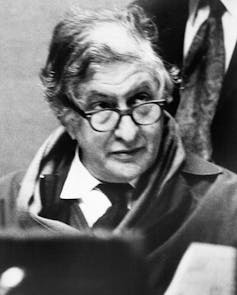
Commentators — both academic and popular — frequently reference composer and film scorer Bernard Herrmann’s screeching string sound as the brilliant sonic representation of the stabbing knife.

a black-and-white photo of a grey-haired man with glasses
Composer and film scorer Bernard Herrmann created the screeching string sound representing the knife in Hitchcock’s ‘Psycho.’

Yet they typically pass over what makes the scene’s explosive violence so unexpected and visceral: the constant sound of the shower water that — like silence — lulls the audience (and victim) into complacency.

Hitchcock knew how to strategically mobilize stillness to make threats more tangible, like in the drawn out and famous crop-duster scene of North by Northwest (1959).

In Hitchcock’s wake, notable examples occur in Steven Spielberg’s Jaws from 1975 (especially the shark’s first closeup), at key moments in John Carpenter’s Halloween (1978), and — much later — in the notorious diner scene from David Lynch’s Mulholland Drive (2001).

The psychology of fear

These and other directors have understood how to exploit the psychology of fear to evoke startled responses of terror among audiences.

The jump scare and related fright-inducing sonic scenarios would become parodied in Scream and the Scary Movie series (2000-13), for example, where false (“cat”) scares subvert horror/slasher traditions.

This Halloween season, if you watch horror and suspenseful films, I encourage you to pay attention to the silence of the frames.

The Conversation

James Deaville does not work for, consult, own shares in or receive funding from any company or organisation that would benefit from this article, and has disclosed no relevant affiliations beyond their academic appointment.

ref. Creepy cicadas, ticking clocks and jump scares: How frightful films conjure terror out of quiet – https://theconversation.com/creepy-cicadas-ticking-clocks-and-jump-scares-how-frightful-films-conjure-terror-out-of-quiet-266750

Building a stable ‘abode of thought’: Kant’s rules for virtuous thinking

Source: The Conversation – USA (3) – By Alexander T. Englert, Assistant Professor of Philosophy, University of Richmond

Virtuous thinking, Kant wrote, is like good carpentry: It builds strong ideas in harmony with one another. Jackyenjoyphotography/Moment via Getty Images

What makes a life virtuous? The answer might seem simple: virtuous actions – actions that align with morality.

But life is more than doing. Frequently, we just think. We observe and spectate; meditate and contemplate. Life often unfolds in our heads.

As a philosopher, I specialize in the Enlightenment thinker Immanuel Kant, who had volumes – literally – to say about virtuous actions. What I find fascinating, however, is that Kant also believed people can think virtuously, and should.

To do so, he identified three simple rules, listed and explained in his 1790 book, “Critique of the Power of Judgment,” namely: Think for yourself. Think in the position of everyone else. And, finally, think in harmony with yourself.

If followed, he thought a “sensus communis,” or “communal sense,” could result, improving mutual understanding by helping people appreciate how their ideas relate to others’ ideas.

Given our current world, with its “post-truth” culture and isolated echo chambers, I believe Kant’s lessons in virtuous thinking offer important tools today.

Rule 1: Think for yourself

Thinking can be both active and passive. We can choose where to direct our attention and use reason to solve problems or consider why things happen. Still, we cannot completely control our stream of thought; feelings and ideas bubble up from influences outside our control.

One kind of passive thinking is letting others think for us. Such passive thinking, Kant thought, was not good for anybody. When we accept someone else’s argument without a second thought, it is like handing them the wheel to think for us. But thoughts lie at the foundation of who we are and what we do, thus we should beware of abdicating control.

A formal painting of a man with a gray powdered wig, looking down and wearing a dark suit jacket.
A late 18th-century portrait of Immanuel Kant, possibly by Elisabeth von Stägemann.
Norwegian Digital Learning Arena via Wikimedia Commons

Kant had a word for handing over the wheel: “heteronomy,” or surrendering freedom to another authority.

For him, virtue depended on the opposite: “autonomy,” or the ability to determine our own principles of action.

The same principle holds true for thinking, Kant wrote. We have an obligation to take responsibility for our own thinking and to check its overarching validity and soundness.

In Kant’s day, he was especially concerned about superstition, since it provides consoling, oversimplified answers to life’s problems.

Today, superstition is still widespread. But many new, pernicious forms of trying to control thought now proliferate, thanks to generative artificial intelligence and the amount of time we spend online. The rise of deepfakes, the use of ChatGPT for creative tasks, and information ecosystems that block out opposing views are but a few examples.

Kant’s Rule 1 tells us to approach content and opinions cautiously. Healthy skepticism provides a buffer and leaves room for reflection. In short, active or autonomous thinking protects people from those who seek to think for them.

Rule 2: Think in the position of everyone else

Pride often tempts us to believe that we have everything figured out.

Rule 2 checks this pride. Kant recommends what philosophers call “epistemic humility,” or humility about our own knowledge.

Stepping outside our own beliefs isn’t just about opening up new perspectives. It’s also the bedrock of science, which seeks shared agreement about what is and is not true.

Suppose you’re in a meeting and a consensus is taking shape. Strong personalities and a quorum support it, but you remain unsure.

At this point, Rule 2 does not recommend that you adopt the view of the others. Quite the opposite, in fact. If you simply accept the group’s conclusion without further thought, you’d be breaking Rule 1: Think for yourself.

Instead, Rule 2 prescribes temporarily detaching yourself from even your own way of thinking, especially your own biases. It’s an opportunity to “think in the position of everyone else.” What would a fair and discerning thinker make of this situation?

Kant believed that, while difficult, a standpoint can be achieved in which biases all but vanish. We might notice things that we missed before. But this requires appreciating our own limitations and seeking a wider, more universal view.

Again, Kant’s idea of virtue depends on autonomy, so Rule 2 isn’t about letting others think for us. To be responsible for how we shape the world, we must take responsibility for our own thinking, since everything flows from that point outward.

But it emphasizes the “communal” part of the “sensus communis,” reminding us that it must be possible to share what is true.

Rule 3: Think in harmony with yourself

The final rule, Kant maintained, is both the most difficult and profound. He said that it was the task of becoming “einstimmig,” literally “of one voice” with ourselves. He also uses a related term, “konsequent” – coherent – to express the same idea.

Blue neon lights illuminate a courtyard outside a large stone building, seen at night.
Immanuel Kant’s tomb at the Konigsberg Cathedral in Kaliningrad, Russia.
Denis Gavrilov/iStock via Getty Images Plus

To clarify, a metaphor that Kant employed can help – namely, carpentry.

Constructing a building is complex. The blueprint must be sound, the building materials must be high quality, and craftsmanship matters. If the nails are hammered sloppily or steps performed out of order, then the edifice might collapse.

Rule 3 tells us to construct our abode of thought with the same care as when constructing a house, such that stability between the parts results. Each thought, belief and intention is a building block. To be “einstimmig” or “bündig” – to be in “harmony” – these building blocks should fit well together and support each other.

Imagine a colleague who you believe has impeccable taste. You trust his opinions. But one day, he shares his secret obsession with death metal music – a genre you dislike.

A disharmony in thought might result. Your reaction to his love of death metal reveals a further belief: Your belief that only people with disturbed taste could love something you perceive to be so grating to the spirit. But he seems, otherwise, like such a thoughtful and pleasant person!

Rather than immediately change your belief about him, Kant’s third rule commands you to investigate the world and your own thoughts further. Perhaps you have never listened to death metal with a discerning spirit. Maybe your original beliefs about your colleague were inaccurate. Or could it be that having good taste is more complex than you originally thought?

Rule 3 leads us to do a system check of our mental architecture, whether we’re considering music, politics, morality or religion. And if that architecture is stable, Kant thinks that rewards will follow.

Sure, harmony is satisfying; but that’s not all. A sturdy system of thought might equip us better for integrated, creative thinking. When I understand how things connect, my own control over them can improve. For example, insight about human psychology will open up new ways to think about morality, and vice versa.

But ultimately, Kant found harmony important because it supports the construction of a coherent “worldview.” The English language gained that term through the translation of a German word, “Weltanschauung,” which Kant coined and which has been a focus of my own work. At its most basic, a harmonious worldview allows us to feel more at home in the world: We gain a sense of how it hangs together, and see it as imbued with meaning.

How we think ultimately determines how we live. If we have a stable abode of thought, we take that stability into everything we do and have some shelter from life’s storms.

The Conversation

Alexander T. Englert does not work for, consult, own shares in or receive funding from any company or organization that would benefit from this article, and has disclosed no relevant affiliations beyond their academic appointment.

ref. Building a stable ‘abode of thought’: Kant’s rules for virtuous thinking – https://theconversation.com/building-a-stable-abode-of-thought-kants-rules-for-virtuous-thinking-263597

James Comey’s lawyers face an uphill battle to prove selective or vindictive prosecution in his high-profile case

Source: The Conversation – USA – By Peter A. Joy, Professor of law, Washington University in St. Louis

Patrice Failor, wife of former FBI Director James Comey, departs the courthouse following Comey’s arraignment hearing in Alexandria, Va., on Oct. 8, 2025. Andrew Caballero-Reynold/AFP via Getty Images

Soon after President Donald Trump demanded in a social media post that the Department of Justice prosecute his perceived enemy, former FBI director James Comey, Comey was indicted on Sept. 25, 2025, for lying to a Congressional committee in 2020.

Comey’s lawyers have responded, filing a motion on Oct. 20, 2025, to dismiss the charges against him with prejudice – the “prejudice” being legal jargon for barring a refiling of the charges. Comey’s lawyers allege that the Justice Department’s prosecution is both selective and vindictive.

Despite the existence of a long string of Trump attacks specifically urging that Comey be prosecuted, getting the case dismissed as a prosecution that is selective, vindictive or both will require Comey to overcome a very strong presumption that the charging decision was lawful.

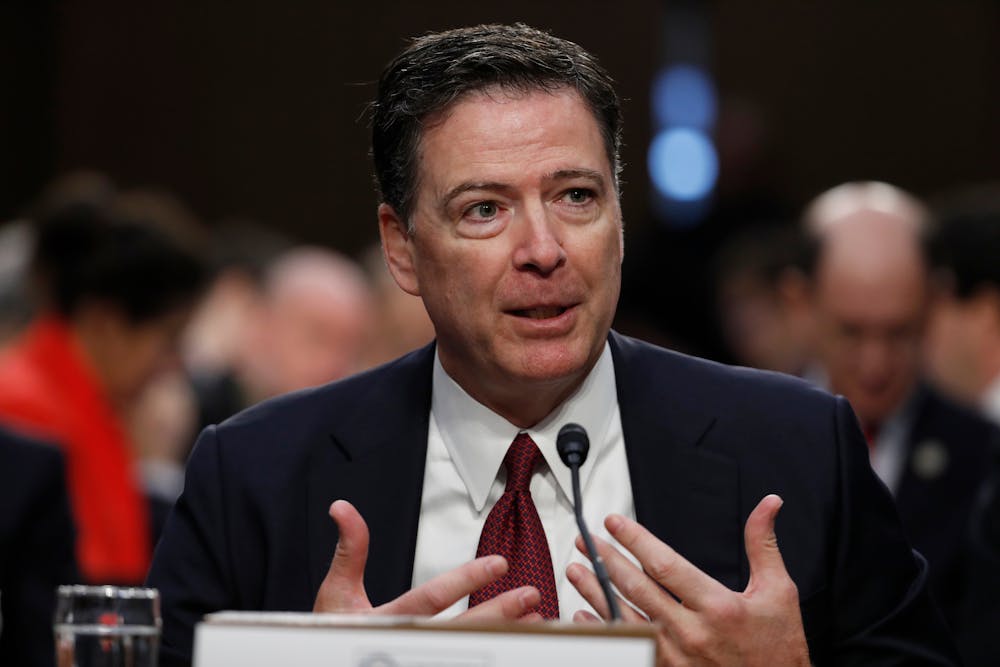
A man in a dark blue blazer, white shirt and red ties speaks in front of a microphone while moving his hands.
Former FBI Director James Comey speaks during a Senate Intelligence Committee hearing on Capitol Hill in Washington on June 8, 2017.
AP Photo/Andrew Harnik

Selective prosecution

For a court to find that there is a selective prosecution, Comey has two hurdles.

First, he has to demonstrate that he was singled out for prosecution for something others have done without being prosecuted.

Second, Comey will have to prove that the government discriminated against him for his constitutionally protected speech of criticizing Trump.

Clearing both of these hurdles seems unlikely. Others, including former Trump fixer Michael Cohen and former Reagan administration Defense Secretary Caspar Weinberger, have been prosecuted for the same type of crimes – allegedly making false statements to Congress or unlawfully seeking to influence or obstruct a Senate investigation.

Vindictive prosecution

Due to Trump’s repeated statements and social media posts that Comey should be charged, proving a vindictive prosecution may be easier.

Indeed, the motion to dismiss starts by laying out the argument for a vindictive prosecution, signaling that Comey’s lawyers think this is the stronger argument by leading with it.

Still, if Comey’s lawyers are to convince the judge, they will have to overcome a heavy burden that the prosecution has exceeded the broad discretion of the prosecutor.

The legal standard requires a court to first find that the prosecutor had animus, hostility, toward Comey, and second, that the charges would not have been brought if there was no animus.

The motion to dismiss based on vindictive prosecution makes a very strong showing of animus, relying on Trump’s several statements and social media posts that Comey should be prosecuted and that Comey was a “Dirty Cop” and “a total SLIMEBALL!

Further evidence involves the fact that no other prosecutor other than Trump’s former personal lawyer, Lindsey Halligan, would seek charges against Comey.

Still, the grand jury found probable cause for the two charges against Comey and issued the indictment. The government will likely argue that demonstrates that the charges could have been brought even if there was animus.

A social media post in which the president urges prosecution of James Comey and others.
A social media post by President Donald Trump urging Attorney General Pam Bondi to prosecute his perceived enemies, including James Comey.
Truth Social Donald Trump account

Fallback position

Comey’s lawyers are leaning heavily on arguments for a dismissal of the charges with prejudice, but they also have a fallback position.

If the judge determines that they have not proved a selective or vindictive prosecution, they are asking for the opportunity to obtain discovery – the record – of the government’s decision to seek charges from the grand jury, and a hearing on their motion to dismiss the indictment.

Given Trump’s public statements and social media posts, and the legal authority on this issue, as a longtime practitioner and teacher of criminal law, I believe the judge is very likely to choose this course of action.

No matter how the trial judge rules on the motion to dismiss, the losing side is certain to appeal. No matter how the federal appeals court rules, the losing side is likely to seek Supreme Court review. Whether the court would take such a case is impossible to predict with any certainty.

The Conversation

Peter A. Joy does not work for, consult, own shares in or receive funding from any company or organization that would benefit from this article, and has disclosed no relevant affiliations beyond their academic appointment.

ref. James Comey’s lawyers face an uphill battle to prove selective or vindictive prosecution in his high-profile case – https://theconversation.com/james-comeys-lawyers-face-an-uphill-battle-to-prove-selective-or-vindictive-prosecution-in-his-high-profile-case-267956

Coal plants emitted more pollution during the last government shutdown, while regulators were furloughed

Source: The Conversation – USA (2) – By Ruohao Zhang, Assistant Professor of Agricultural Economics, Penn State

Coal-fired power plants emit both smoke and steam. Paul Souders/Stone via Getty Images

When the U.S. government shut down in late 2018, it furloughed nearly 600 Environmental Protection Agency pollution inspectors for more than a month. Those workers had to stop their work of monitoring and inspecting industrial sites for pollution, and stopped enforcing environmental-protection laws, including the Clean Air Act.

My colleagues and I analyzed six years’ worth of air quality levels, emissions measurements, power production data and weather reports for more than 200 coal-fired power plants around the country. We found that the coal plants’ operators appeared to take advantage of the lapse in enforcement of environmental regulations.

As soon as the shutdown began, coal-fired power plants started producing about 15% to 20% more particle pollution. And as soon as the government reopened and inspections resumed, pollution levels dropped.

Particulate matter is dangerous

The longest federal government shutdown in U.S. history up until that time began on Dec. 22, 2018, and lasted until Jan. 25, 2019. During that period, about 95% of EPA employees were furloughed, including nearly all the agency’s pollution inspectors, who keep track of whether industrial sites like coal-fired power plants follow rules meant to limit air pollution.

Among those rules are strict limits on a type of pollution called particulate matter, which is sometimes called PM2.5 and PM10. These microscopic particles are smaller than the width of a human hair. When inhaled, they can travel deep into the lungs and even get into the bloodstream. Even short-term exposure to particulates increases the risk of asthma, heart disease and premature death.

An illustration shows a human hair and a grain of beach sand to compare with the size of particulate matter.
Particulate matter pollution is much smaller than a human hair or even a fine grain of sand.
U.S. Environmental Protection Agency

To determine whether coal-fired power plants continued to obey the rules even when environmental inspectors were furloughed and not watching, we examined data on emissions of more than 200 coal-fired power plants across the country. We looked at satellite data from NASA that provides a reliable indicator of particulate pollution in the atmosphere. We also looked at the amounts of several types of chemicals recorded directly from smokestacks and sent to the EPA.

We looked at each plant’s daily emissions before, during and after the 2018-2019 shutdown, and compared them with the plants’ emissions on the same calendar days in the five previous years, when EPA inspectors were not furloughed.

Pollution rose and fell with the shutdown

We found that as soon as the EPA furlough began in 2018, particulate emissions within 1.8 miles (3 kilometers) around the coal-fired power plants rose, according to the NASA data.

The data indicated that, on average, particulate matter during the 2018 and 2019 shutdown was 15% to 20% higher than it had been during the same period in the preceding five years.

And once the EPA inspectors returned to work, the plants’ average particulate pollution dropped back to its pre-shutdown level.

We also found that two other common air pollutants from coal-fired power plants, sulfur dioxide and nitrogen oxides, did not increase during the furlough period. Those gases, unlike particulate matter, are continuously monitored by sensors inside coal plants’ smokestacks, even when the federal government is not operating. Particulate emissions, however, are not continuously monitored: Enforcement of those emissions standards relies on the manual collection of samples from monitors and on-site inspections, both of which halted during the shutdown.

The pattern was clear: When the EPA stopped watching, coal plants increased pollution. And once inspections resumed, emissions dropped back to normal.

Considering various explanations

To confirm that the increase in particulate pollution during the shutdown was due to the lack of inspections and not because of some other factors such as weather fluctuations, we tested a range of alternative explanations and found that they did not fit the data we had collected.

For example, weather records showed that wind, humidity and temperature at and around the coal plants during the shutdown were all within the same ranges as they had been over the previous five years. So the increased particulate pollution during the shutdown was not due to different weather conditions.

Electricity demand – how much power the plants were generating – was also typical, and did not increase significantly during the shutdown. That means the coal plants weren’t polluting more just because they were being asked to produce more electricity.

Our analysis also revealed that the coal plants didn’t shift which particular boilers were operating to less efficient ones that would have produced more particulates. So the increase in pollution during the shutdown wasn’t due to just using different equipment to generate electricity.

The emissions data we collected also included carbon dioxide emissions, which gave us insight into what the coal plants were burning. With similar weather conditions and amounts of electricity generated, different types of coal emit different amounts of carbon dioxide. So if we had found carbon dioxide emissions changed, it could have signaled that the plants had changed to burning another type of coal, which could emit more particulate matter – but we did not. This showed us that the increase in particulate emissions was not from changing the specific types of coal being burned to generate electricity.

All of these tests helped us determine that the spike in particulate matter pollution was unique to the 2018–2019 EPA furlough.

Spewing particulate matter

All of this analysis led us to one final question: Was it, in fact, possible for coal-fired power plants to quickly increase – and then decrease – the amount of particulate matter they emit? The answer is yes. Emissions-control technology does indeed allow that to happen.

Power plants control their particulate emissions with a device called an electrostatic precipitator, which uses static electricity to collect particles from smoke and exhaust before it exits the smokestack. Those devices use electricity to run, which costs money, even for a power plant. Turning them off when the plants are being monitored risks incurring heavy fines. But when oversight disappeared, the power plants could save money by turning those devices off or reducing their operation, with less risk of being caught and fined.

Our findings indicate that air pollution regulations are only as effective as their enforcement, which had already been decreasing before the 2018 shutdown. Between 2007 and 2018, EPA’s enforcement staff declined by more than 20%, and the number of inspections dropped by one-third.

Since the new administration took office in January 2025, EPA staffing has been reduced significantly. We found that without strong and continuous monitoring and enforcement, environmental laws risk becoming hollow promises.

The Conversation

The authors do not work for, consult, own shares in or receive funding from any company or organization that would benefit from this article, and have disclosed no relevant affiliations beyond their academic appointment.

ref. Coal plants emitted more pollution during the last government shutdown, while regulators were furloughed – https://theconversation.com/coal-plants-emitted-more-pollution-during-the-last-government-shutdown-while-regulators-were-furloughed-267696

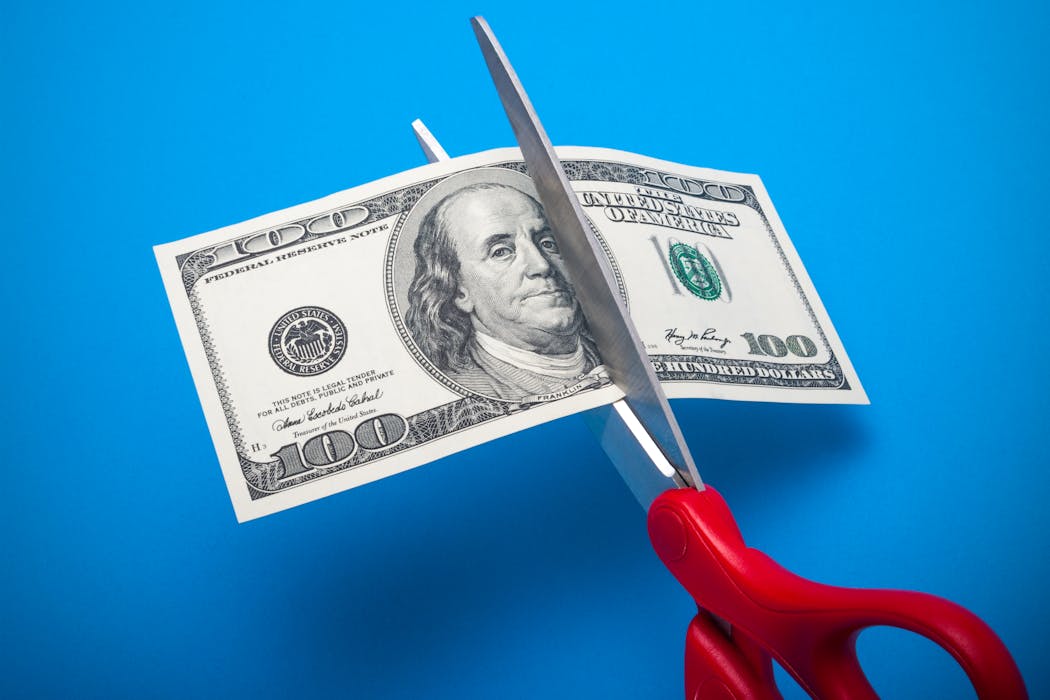
1 in 3 US nonprofits that serve communities lost government funding in early 2025

Source: The Conversation – USA (2) – By Lewis Faulk, Associate Professor of Public Administration and Policy, American University

The Trump administration’s spending cuts have hit many nonprofits hard. michaelquirk/iStock via Getty Images Plus

About one-third of U.S. nonprofit service providers experienced a disruption in their government funding in the first half of 2025.

That’s what we found when we teamed up with Urban Institute researchers to collect nationally representative survey data from 2,737 nonprofits across the country.

These organizations run food pantries, deliver job training and offer mental health services. They provide independent living assistance, disaster relief and emergency shelter, among other services.

Our team found that 21% lost a grant or contract, 27% faced delays or funding freezes and 6% were hit with stop-work orders. Some of the nonprofits had experienced more than one of these funding problems, which affected nonprofits of all kinds. But they were especially disruptive to larger ones that employ more people and provide key services, such as large social service agencies, food banks and organizations serving people enrolled in Medicaid.

These findings came from the most recent Nonprofit Trends and Impacts survey, which we conducted from April to June 2025 with colleagues at the Urban Institute, including Laura Tomasko, Hannah Martin, Katie Fallon and Elizabeth T. Boris. They follow findings from a prior survey that the project fielded between October 2024 and January 2025.

When funding dries up, nonprofits tend to shrink and scale back their services. About 21% of those hit by funding cuts in the first half of 2025 were already serving fewer people by the time they completed the survey in April, May and June 2025, and 29% had reduced their staff. Many of these nonprofit leaders also told us they expect to have to lay off more of their employees by the end of 2025.

Nonprofits had already been facing financial pressure.

In the prior round of the survey that our team conducted in the fall of 2024, more than half of nonprofit leaders said they were worried about their organization’s finances. Many of them said they had received less money through donations and were facing tougher competition when they applied for grants, largely due to a tougher economic climate and the end of federal funding that had been disbursed during the COVID-19 pandemic.

Why it matters

Nonprofits often partner with the government to deliver essential services. This government support is vital – it makes up about 20% of the revenue that most nonprofits rely on. What’s more, government funding provided more than half of total revenue for about 1 in 5 service-oriented nonprofits in 2023, which is the most recent data available.

That same year, about 2 in 3 nonprofits received at least one federal, state or local government grant or contract.

Government funding made up 42% of total revenue for service-providing nonprofits that experienced government funding disruptions in our 2025 survey. The rest of their funding came from donations, foundation grants and service fees.

Nonprofits get less than half of their total revenue from foundations and individual donations, and total government funding for nonprofits amounts to around three times total foundation funding. That makes it unlikely that philanthropy will replace the government funding that’s being lost.

What still isn’t known

Nonprofits from California to Florida are seeing their funding withheld, and the government shutdown that began Oct. 1, 2025, is compounding the effects of the Trump administration’s longer-term spending cuts. The full extent of the impacts of these federal disruptions on nonprofits’ budgets won’t be known until 2026 or later.

In addition, our survey doesn’t include the leaders of very small nonprofits, or several kinds of nonprofits – including hospitals, colleges, universities, churches and foundations.

What’s next

Our upcoming Nonprofit Trends and Impacts surveys in early 2026 will convey more of the effects of government funding cuts on nonprofits’ budgets and programs.

A more complete picture will not be possible until the Internal Revenue Service publishes data that it collects from the 990 form that most charitable nonprofits must file on an annual basis. Historically, The IRS has taken years to release comprehensive nonprofit financial data, requiring additional research beyond the 990 form.

The Conversation

Lewis Faulk is a Non-Resident Fellow of the Urban Institute. He received funding from the Fidelity Charitable Catalyst Fund and the Barr Foundation to support the research discussed in this article.

Mirae Kim is a Non-Resident Fellow of the Urban Institute. She received funding from the Fidelity Charitable Catalyst Fund and the Barr Foundation to support the research discussed in this article. She is affiliated with the Association for Research on Nonprofit Organizations and Voluntary Action (ARNOVA) as a non-paid, at-large board member.

ref. 1 in 3 US nonprofits that serve communities lost government funding in early 2025 – https://theconversation.com/1-in-3-us-nonprofits-that-serve-communities-lost-government-funding-in-early-2025-267795

Surrealism is better known for its strangeness than the radical politics and revolutionary ambitions of its creators

Source: The Conversation – USA (2) – By Tom McDonough, Professor of Art History, Binghamton University, State University of New York

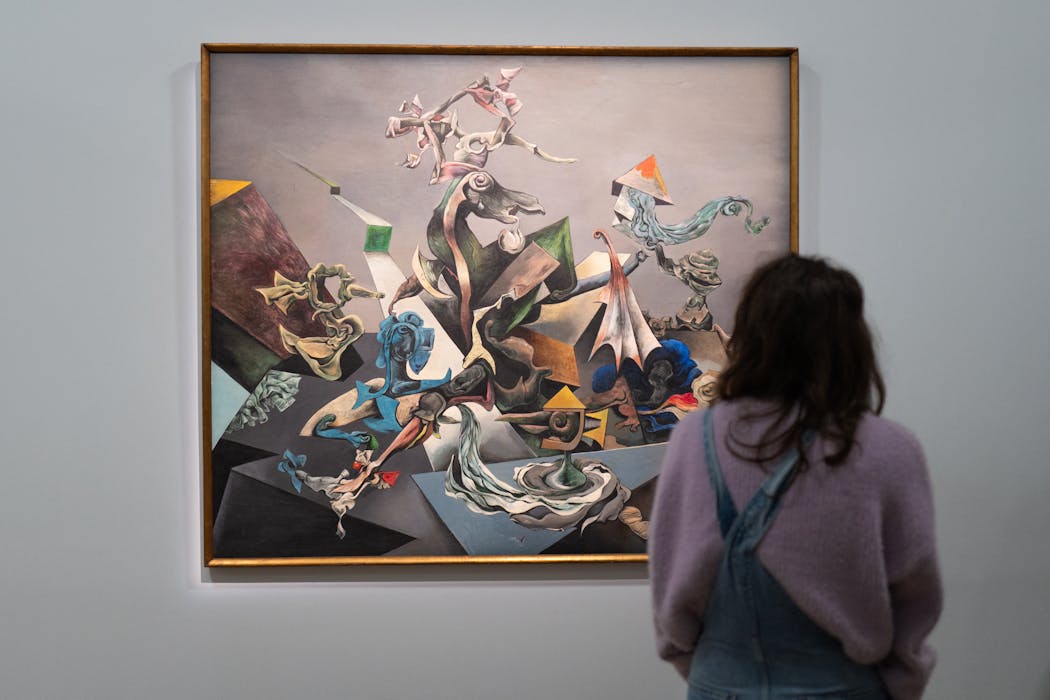
A visitor looks at ‘Magnetic Mountain’ by Kurt Seligmann at the Centre Pompidou in Paris. Sandrine Marty/Hans Lucas/AFP via Getty Images

A large-scale exhibition of surrealism that first opened in Paris in 2024 will have its sole American iteration, “Dreamworld: Surrealism at 100,” at the Philadelphia Art Museum from Nov. 8, 2025, through Feb. 16, 2026.

In everyday speech, people use “surreal” to refer to anything unbelievable, fantastic, bizarre.

“I found myself in the surreal position of explaining who I am …”

“In the middle of the story, things turned surreal.”

“It was a completely surreal situation!”

As an art historian and critic who has closely studied 20th-century avant-garde movements, I find it remarkable that a word that originated in the arcane jargon of Paris’ modern art circles a century ago has become so familiar. From the cafes and studios of the 1920s, the term has traveled into common parlance – touching a shared nerve for the strangeness and absurdity of modern life.

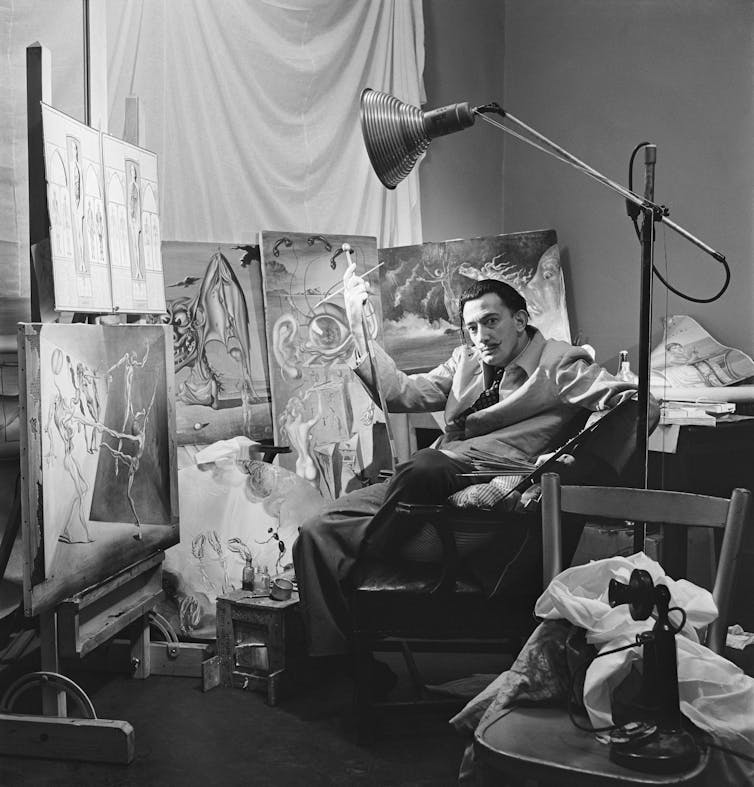
But surrealism, the movement that coined the term and took it up as its moniker, was about more than ostentatious strangeness. If you think only of Salvador Dalí’s limp watches swarming with ants, or his extravagant moustaches and even more extravagant (mis)behavior, you are missing the better part of what continues to make surrealism one of the most compelling art movements of the 20th century – and the lessons it still holds today.

Black and white photo of man in suit sitting in chair in front of paintings on canvases
Surrealist artist Salvador Dalí poses with his oil paintings at his New York City studio in 1943.
Michael Ochs Archives via Getty Images

Melding dream and reality

Surrealism was founded by a group of young Parisian artists, mostly writers, who gathered around the charismatic figure of poet André Breton.

During World War I, Breton had treated front-line soldiers suffering from what was then termed “shell shock” and today we understand as PTSD. This experience opened him to altered mental states and introduced him to new ideas from the Viennese psychoanalyst Sigmund Freud about the structure of the human mind.

In states of psychosis, but also in daily occurrences such as dreams and slips of the tongue, Freud saw glimpses of an uncharted region of the psyche, the unconscious. Why, Breton asked, shouldn’t life, and art, take these aspects of human experience into account? Shouldn’t the portion of existence spent dreaming also be recognized as having value?

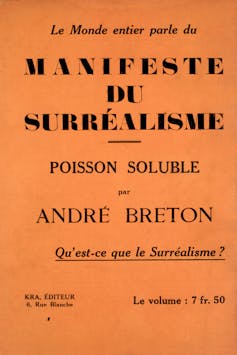
Orange paper with text printed in French and titled 'Manifeste du Surréalisme'
The publication of André Breton’s ‘Manifesto of Surrealism’ in 1924 is considered the birth of the surrealist movement.
Photo12/Universal Images Group via Getty Images

In a manifesto published in 1924, Breton called for “the future resolution of these two states, dream and reality, which are seemingly so contradictory, into a kind of absolute reality, a surreality, if one may so speak.”

Politics of revolution

Freud had coined the term “dreamwork” to describe the activity that transformed residues of the day’s memories into vehicles for the expression of our unconscious desires.

For the surrealists, too, dreaming was no simple realm of idle fantasy. They understood the synthesis of sleeping and waking life as promising a liberation no less sweeping than that of the revolutionary workers’ movement of their time.

Overcoming the contradiction between dream and reality, they believed, would complement the class struggle between the global proletariat and its bourgeois oppressors. Surrealism was much more than a merely artistic project – it was also a means toward a larger political end.

From a century’s distance, these may appear grandiose, even delusional claims. But 1924, the year of surrealism’s founding, was only seven years after the Russian Revolution. The surrealists wagered on the power of both the revolution of modern art and poetry and the political transformation of society.

“‘Transform the world,’ Marx said; ‘change life,’ [French poet Arthur] Rimbaud said. These two watchwords are one for us,” Breton said, speaking to a group of writers in Paris. In other words, the uncompromising project of remaking social existence would not be complete without the artistic reimagining of the human psyche, and vice versa.

But by 1935, when Breton pronounced this succinct formulation, the surrealists’ gamble on revolution had already effectively been lost. With Joseph Stalin’s purges underway in Moscow and Adolf Hitler consolidating power in Germany, the window for radical change that had seemed to open in the years after World War I was definitively closing.

Soon, the surrealists would find themselves dispersed into exile by a new global conflict. All that remained was for the museums and libraries to collect the relics of that heady ideal and to preserve the artworks and ephemera that registered surrealism’s brief quest to unleash the forces of the unconscious in the name of a new, freer world.

Surrealism’s unfinished business

The surrealists aimed to seduce their audiences. That seduction was not undertaken to sell their paintings, or even to provide their audiences a moment’s respite from harried lives. It was done in the name of subversion. They wished – through artworks, films and books – to shatter people’s complacency and move them to change their lives, and the world.

Woman in foreground, blurred, shown passing a colorful painting of tree with human face
A visitor to the Paris exhibition walks past René Magritte’s surrealist ‘Alice in Wonderland,’ painted in 1946.
AP Photo/Christophe Ena

The artwork wasn’t a mere window through which to look onto a distant “dreamworld.” It was more like a revolving door one was invited to walk through. Breton and his colleagues desired a world in which individuals could live poetry, not just read it.

Surrealist works of art, even as they hang peaceably on the museum’s walls or sit quietly on library shelves, retain at least residues of that power.

In my view, the best recent writing on the movement manages to recapture that urgency, that allure, for our own time. These include translator and author Mark Polizzotti’s 2024 book “Why Surrealism Matters” and art historian Abigail Susik’s 2021 volume “Surrealist Sabotage.”

The centenary of surrealism is a reminder of the movement’s unfinished business of revolutionary seduction. After all, as Breton reminded his readers at the close of his 1924 manifesto, life is not bound to the realities of the world as currently given.

“Existence,” he insisted, “is elsewhere.”

Read more of our stories about Philadelphia and Pennsylvania, or sign up for our Philadelphia newsletter on Substack.

The Conversation

Tom McDonough does not work for, consult, own shares in or receive funding from any company or organization that would benefit from this article, and has disclosed no relevant affiliations beyond their academic appointment.

ref. Surrealism is better known for its strangeness than the radical politics and revolutionary ambitions of its creators – https://theconversation.com/surrealism-is-better-known-for-its-strangeness-than-the-radical-politics-and-revolutionary-ambitions-of-its-creators-264961