Russia turns to an old ally in its war against Ukrainian drones: the weather

Source: The Conversation – UK – By Peter Lee, Professor of Applied Ethics and Director, Security and Risk Research, University of Portsmouth

Russia has long used harsh weather as a defensive ally. During Napoleon’s 1812 invasion, his Grand Army was defeated as winter closed in – the ground became impassable and logistical support to his army collapsed. Similarly, Hitler’s Operation Barbarossa in 1941-42 was halted by heavy rains and deep mud followed by freezing temperatures.

Today, in a different kind of war, Russia is again turning to its old ally, harsh weather – but this time to help in its offensive against Ukraine.

Ukraine’s extensive use of small, low-cost drones has transformed attack and defence strategies across the front lines. The Modern War Institute reports that drones are responsible for around 70% of Russia’s battlefield casualties, although it is unclear which kind of drones are killing in greater numbers: loitering one-way attack drones (known as “kamikaze drones”) or quadcopter first-person view (FPV) drones, armed with small explosives.


Read more:
How drone attacks are changing the rules and the costs of the Ukraine war


Beyond direct strikes, small drones play a vital role in intelligence gathering, surveillance and reconnaissance. They allow Ukrainian units to identify targets and coordinate ground operations with far greater precision. Real-time aerial imagery enables artillery crews to rapidly adjust fire, making bombardments more accurate – and more lethal.

Drones have become the eyes and, increasingly, the hands of Ukraine’s ground forces, increasing their defensive effectiveness against the larger and often better-equipped Russian ground forces. Mass Ukrainian use of FPV and one-way-attack drones has significantly improved defensive effectiveness, blunting larger Russian ground force assaults by using real-time targeting data and precise strikes.

Both sides in the war also regularly deploy electronic jamming, rendering radio-controlled FPV drones inoperable. Russia has, of necessity, become a global leader in this area.

The jamming disrupts the radio links and video feeds that pilots rely on for navigation and targeting. This places Ukraine’s forces, which rely heavily on drones to offset Russia’s advantages, at a considerable disadvantage.

Bad weather and drones

When bad weather combines with electronic interference, the effect is even more damaging. Snow, fog, wind and cold already limit drone endurance and visibility – sharply reducing Ukraine’s technological edge in aerial reconnaissance and precision battlefield drone strikes.

Russia, in contrast, gains relative advantage in such conditions. Its older, heavier ground-based systems – tanks, artillery and armoured vehicles – are more resilient against poor weather. The battlefield becomes a place where Russia’s attritional approach to war grinds out bloody advances.

Small quadcopter drones are light, have limited endurance and are easily influenced by weather. Take the DJI Mavic 3 series, used by many Ukrainian units for frontline reconnaissance. It is only effective in temperatures between –10°C and +40 °C and winds below about 12 metres per second. Strong gusts or freezing weather can quickly push this small drone off course.

More advanced Ukrainian systems, such as the winged Shark uncrewed aerial system, can operate from –15 °C to +45 °C and withstand winds up to 20 metres per second. Yet even these are restricted to dry conditions: rain or snow can ground them.

In cold conditions, batteries drain more quickly, cutting both flight time and operational range. Icing can ground large numbers of drones if it changes the characteristics of the quadcopter propellers – ice makes propeller blades thicker, heavier and less aerodynamic, reducing performance.

Winged drones can suffer from wing-tip icing, which changes their flight characteristics – reducing lift, increasing drag and the danger of stalling, and degrading control. Fog and snow also reduce visibility, limiting the ability to identify or track targets.

Russian offensive

In October 2025, Russia timed several large ground assaults to coincide with poor weather. This approach exploited conditions that significantly reduced Ukraine’s ability to defend itself with drones. Fog, rain and cloud cover made small reconnaissance drones unreliable or even unflyable. Visibility dropped so low that attacks on individual soldiers become far less effective.

In theory, Ukraine’s allies can offset some of this loss through satellite intelligence. US reconnaissance satellites can still gather valuable information on cloudy days by using synthetic aperture radar to detect ground movements. Yet even these advanced systems cannot see visually through thick cloud banks or heavy rainstorms.

Historically, Russia’s severe weather served a defensive purpose, turning back invading armies from Napoleon to Hitler. In the present war, however, Russia is using the same harsh climate offensively, turning natural concealment into a tactical advantage as it advances across Ukrainian ground.

Winter has not yet arrived, but Ukrainian and Russian military planners will be watching the weather. Ukraine’s vaunted ability to innovate and respond to Russian tactics will be tested even further in the months ahead.

The Conversation

Peter Lee does not work for, consult, own shares in or receive funding from any company or organisation that would benefit from this article, and has disclosed no relevant affiliations beyond their academic appointment.

ref. Russia turns to an old ally in its war against Ukrainian drones: the weather – https://theconversation.com/russia-turns-to-an-old-ally-in-its-war-against-ukrainian-drones-the-weather-268019

Companies now own more than $100 billion in bitcoin – but the shine may be wearing off crypto treasury companies

Source: The Conversation – UK – By Gemma Ware, Host, The Conversation Weekly Podcast, The Conversation

Mehaniq/Shutterstock

One American company called Strategy owns more than 3% of all bitcoin in existence. Its executive chairman, Michael Saylor, is the pioneer of a new business model where publicly listed companies buy cryptocurrency assets to hold on their balance sheet.

Strategy, formerly called MicroStrategy, first bought US$250 million (£187 million) worth of bitcoin in mid-2020 during the depths of the COVID economic slump. As it continued to buy bitcoin, its share price soared, and it kept buying. As of October 2025, Strategy held 640,418 bitcoin, worth around $70 billion.

In the years since, more than 100 other public companies have followed Saylor’s lead and become bitcoin treasury companies, together holding more than $114 billion of bitcoin. There’s been a new rush into crypto treasury assets in 2025 following the general crypto enthusiasm of the new Trump administration.

But holding bitcoin assets also comes with some big risks, particularly given the volatility of cryptocurrency prices, and the share prices of some of these companies are now coming under pressure.

In this episode of The Conversation Weekly podcast, we speak to Larisa Yarovaya, director of the centre for digital finance at the University of Southampton, about whether bitcoin treasury companies are the future of corporate finance, or another speculative bubble waiting to burst.

This episode of The Conversation Weekly was written and produced by Katie Flood, Mend Mariwany and Gemma Ware. Mixing and sound design by Michelle Macklem and theme music by Neeta Sarl.

Newsclips in this episode from CBC News, Bloomberg Television, Yahoo Finance, Altcoin Daily, Strategy and CNBC Television.

Listen to The Conversation Weekly via any of the apps listed above, download it directly via our RSS feed or find out how else to listen here. A transcript of this episode is available on Apple Podcasts or Spotify.

The Conversation

Larisa Yarovaya is affiliated with the British Blockchain Association.

ref. Companies now own more than $100 billion in bitcoin – but the shine may be wearing off crypto treasury companies – https://theconversation.com/companies-now-own-more-than-100-billion-in-bitcoin-but-the-shine-may-be-wearing-off-crypto-treasury-companies-268127

Sanctions on Russia have failed to stop the war so far – will Trump’s latest package be any different?

Source: The Conversation – UK – By Sergey V. Popov, Senior Lecturer in Economics, Cardiff University

Donald Trump has finally decided to hit Russia with sanctions – the first package he has imposed since he came back to the White House in January.

The sanctions target Rosneft and Lukoil, Russia’s two largest oil companies, as a retaliation for Vladimir Putin’s refusal to agree to a ceasefire in Ukraine. The announcement came in the wake of the decision to call off a planned summit between the two leaders in Budapest next month.

The US treasury secretary, Scott Bessent, said in a statement: “We encourage our allies to join us in and adhere to these sanctions.” In fact the EU has imposed 19 rounds of sanctions against Russia since the full-scale invasion in 2022.

The UK government has passed sanctions which it estimates have cost Russia more than £28 billion since the start of the war. And the Biden administration also repeatedly imposed sanctions on Russia after the invasion.

In March 2022, I wrote a piece for The Conversation explaining why I thought the sanctions imposed on Russia in the aftermath of the full-scale invasion of Ukraine wouldn’t topple Putin. Sanctions often fail to achieve their goals the Russian economy has specifically been set up to resist western sanctions.

Three years on, Russia’s land grab continues to ravage Ukraine, albeit clearly with much less success than expected by Russia’s generals. A lot of this resistance is due to Ukrainian military heroism and creativity, and a lot of it due to humanitarian and military assistance from EU, the US and other allies. But how much of it was due to sanctions is open to debate.

Russia’s economy is now focused on waging war. And even in these days of drone combat, to wage war you needs soldiers. The amounts paid to people joining up in Russia are unprecedented. Not only is their enlistment pay about the price of a decent apartment in a regional capital, but any debt they hold up to 10 million rubles (£76,500) is wiped out.

Their salary is not a large amount by western standards – a policeman in New York earns a comparable amount in a year. But when the alternative in Russia is being a security guard for £400 per month, it is clear why many people who see no future – especially convicts who are also given pardons – enlist in the Russian armed forces.

Reservists and volunteers mean that Russia is able to maintain its fighting force. While the sanctions clearly hurt Russia’s economy, having sufficient soldiers is priority number one – and this is still largely unaffected.

Russia is managing to pay for the war, sanctions or no sanctions, by passing on the cost to the public. VAT is forecast to rise from 20% to 22% in 2026 and the revenue threshold under which businesses will be required to pay will come down. This will lower investment into things like barber shops, but investment in military production will not be affected.

The sanctions do hurt the Russian economy – lifting sanctions is always the most important demand anytime Russia is consulted about a ceasefire – but not so much that the war economy is slowing down.

Finding loopholes

Thus far, Russia has managed to circumvent sanctions. Europe still buys large quantities of oil and gas from Russia (more than it has given Ukraine in aid, in fact). Moscow has also exported massive amounts to India and China, but the quantities are expected to fall sharply as a result of the US sanctions.

Earlier this year, the US president also announced a massive tariff hike on Indian exports in retaliation for India buying Russian energy supplies.

All of this will make the war more expensive – but it will not stop it. For a start, Russia controls a big “shadow fleet” of ships that have been transporting its oil and other banned goods such as military equipment and stolen Ukrainian grain. The EU has imposed port bans on 117 ships believed to be part of this shadow fleet. But experience suggests that this is by no means a foolproof way of preventing them from operating.

Death by 1,000 cuts

It’s tempting to imagine sanctions as trying to cause death by 1,000 cuts. The EU has made 19 cuts, so we are still 981 away – 980 with Trump’s latest move.

The west could have done more and it could have done it sooner. It could have acted as early as 2008 when Russia signalled its aggressive intent by invading Georgia. It could have imposed more effective sanctions after Russia annexed Crimea and parts of eastern Ukraine in 2014.

In any case, these sanctions are designed against a western democracy, if they were imposed against the US or the UK, they would have changed governments. In western democracies governments have power at the discretion of the voters who can take these mandates back. Sanctions against autocracies, where power is not in the hands of the people, need to be different.

The good news is that the Trump administration is finally doing something besides putting out the red carpet for Putin. There is hope.

The Conversation

Sergey V. Popov does not work for, consult, own shares in or receive funding from any company or organisation that would benefit from this article, and has disclosed no relevant affiliations beyond their academic appointment.

ref. Sanctions on Russia have failed to stop the war so far – will Trump’s latest package be any different? – https://theconversation.com/sanctions-on-russia-have-failed-to-stop-the-war-so-far-will-trumps-latest-package-be-any-different-268228

Ancient antelope teeth offer surprise insights into how early humans lived

Source: The Conversation – Africa (2) – By Megan Malherbe, Research Assistant Scientific Collection Institute of Evolutionary Medicine Faculty of Science, University of Zurich

Understanding what the environment looked like millions of years ago is essential for piecing together how our earliest ancestors lived and survived. Habitat shapes everything, from what food was available, to where water could be found, to how predators and prey interacted.

For decades, scientists studying South Africa’s Cradle of Humankind have tried to reconstruct the landscape in which species like Australopithecus sediba, Paranthropus robustus and Homo naledi once lived. These were hominins that inhabited the region between roughly 2.5 million and 0.25 million years ago. The Cradle of Humankind is a Unesco world heritage site that has remained the single richest source of early human fossils for over 90 years.

A long-standing idea has been that the Cradle experienced a dramatic environmental change around 1.7 million years ago: a shift from woodlands to open grasslands. This shift likely happened as global climates became cooler and drier, with stronger seasonal patterns. These broader changes, linked to the expansion of polar ice sheets and shifts in atmospheric circulation, reduced the availability of year-round rainfall in southern Africa.

Trees and shrubs, which depend on consistent moisture, gave way to hardy grasses better suited to long dry seasons and intense sunlight. In the woodlands, dense trees and shrubs had once provided leafy vegetation for browsing animals. As the landscape opened up, short grasses became dominant, supporting grazing animals.

This supposed sudden transformation was thought to have reshaped the setting in which early humans evolved, possibly influencing their diets, mobility and survival strategies.

But was there really such a sudden switch?

I’m a palaeoecologist who’s part of a team that specialises in reconstructing ancient environments by studying fossil animals. We set out to test the “sudden switch” idea, using a large dataset of fossil antelope teeth. Antelopes (bovids) are particularly useful for reconstructing past environments in Africa: they are abundant in the fossil record, they occupy a wide range of habitats today as well as in the past, and their teeth preserve clear signals of what they ate.

We examined more than 600 fossil teeth from seven well-dated sites in the Cradle, covering a broad time span from 3.2 million to 1.3 million years ago.

The results of our study were striking. Across all seven sites, spanning nearly two million years, the antelopes show consistently strong grazing signals. Grass-eating was dominant throughout the period, challenging the old model of a sudden woodland-to-grassland shift 1.7 million years ago. Instead, the evidence points to a more stable but varied landscape: a mosaic environment. Some fossil species even showed different feeding strategies from their modern relatives, highlighting that ancient antelopes adapted to past conditions in distinct ways.

This tells us more about the world early humans evolved in – but it also reminds us to be cautious. Fossil animals didn’t always behave like their modern relatives, so drawing direct parallels risks oversimplifying the past.

Dating the sites

To interpret the fossils in context, we needed to be sure of when each site formed. Previous work often relied on broad age estimates based on the types of animals found in each sediment layer – a method called biochronology – which could only give a rough idea of when different species lived. This made it difficult to line up fossils from the many cave sites in the Cradle on a reliable timeline. Thanks to recent improvements in radiometric dating, a method that finds the precise age of rocks by measuring how radioactive elements change into other elements over time, the chronology of the Cradle has been refined.

The layers of calcite deposited in caves (known as flowstones) were recently shown by geochronologists to have formed at the same time across multiple sites, providing a regional framework for the whole area. This means researchers can now compare fossils from different caves knowing they represent the same windows of time. It’s a huge step forward in testing whether environmental shifts were truly regional events.

Reading diets from teeth

The method used in this study is called dental mesowear analysis. It records the long-term impact of diet on the tooth surfaces of herbivores throughout their life. In simple terms, different diets wear teeth in different ways:

  • browsers (like kudu or giraffes), which eat leaves and twigs, usually have sharper cusps, because their food causes less wear on the teeth

  • grazers (like wildebeest or zebra), which feed mostly on grasses rich in silica and often covered in grit, develop blunter cusps from heavy tooth grinding

  • mixed feeders show intermediate wear, reflecting generalist behaviour and a diet that shifts with seasons or local vegetation.

By scoring cusp shape and relief on each fossil tooth, we assessed whether past populations leaned more towards browsing or grazing.

The results showed there was a mix of different habitats in this environment at that time: open grassy areas mixed with patches of trees and shrubs. This would have created a patchwork of ecological niches, offering early humans a diverse range of resources.

Some sites – including the famous Sterkfontein Caves, home to one of the most complete early hominin skulls ever found, “Mrs Ples” – showed a bimodal pattern in tooth wear, meaning that even within the same community, some antelopes were grazing while others were browsing. This suggests that vegetation structure shifted locally or seasonally, and that animals adapted their diets accordingly. They switched between food sources as conditions changed.


Read more:
Elephant teeth: how they evolved to cope with climate change-driven dietary shifts


Lessons from antelope diets

One of the most important findings is that some fossil antelopes fed very differently than their modern relatives. For example, certain groups that today are almost exclusively browsers were much more grass-focused in the Cradle fossil record. Others showed unexpected flexibility, with individuals of the same tribe in the same site adopting different strategies.

This has two key implications.

We cannot always rely on modern analogies. Assuming extinct animals behaved like their living relatives can be misleading, since the fossil record shows surprising shifts in diet. This means reconstructions based only on which species were present may give the wrong impression or oversimplify the reality.

Flexibility was crucial. The fact that antelopes could switch between grazing and browsing indicates that the Cradle’s environment was dynamic, and that survival often depended on adaptability. This echoes what we know about early humans, who also seem to have thrived by exploiting a wide range of resources.

The Conversation

Megan Malherbe is affiliated with the Institute of Evolutionary Medicine at the University of Zurich, and the Human Evolution Research Institute at the University of Cape Town.

ref. Ancient antelope teeth offer surprise insights into how early humans lived – https://theconversation.com/ancient-antelope-teeth-offer-surprise-insights-into-how-early-humans-lived-267169

Japan’s sumo association turns 100 – but the sport’s rituals have a much older role shaping ideas about the country

Source: The Conversation – USA (3) – By Jessamyn R. Abel, Professor of Asian Studies and History, Penn State

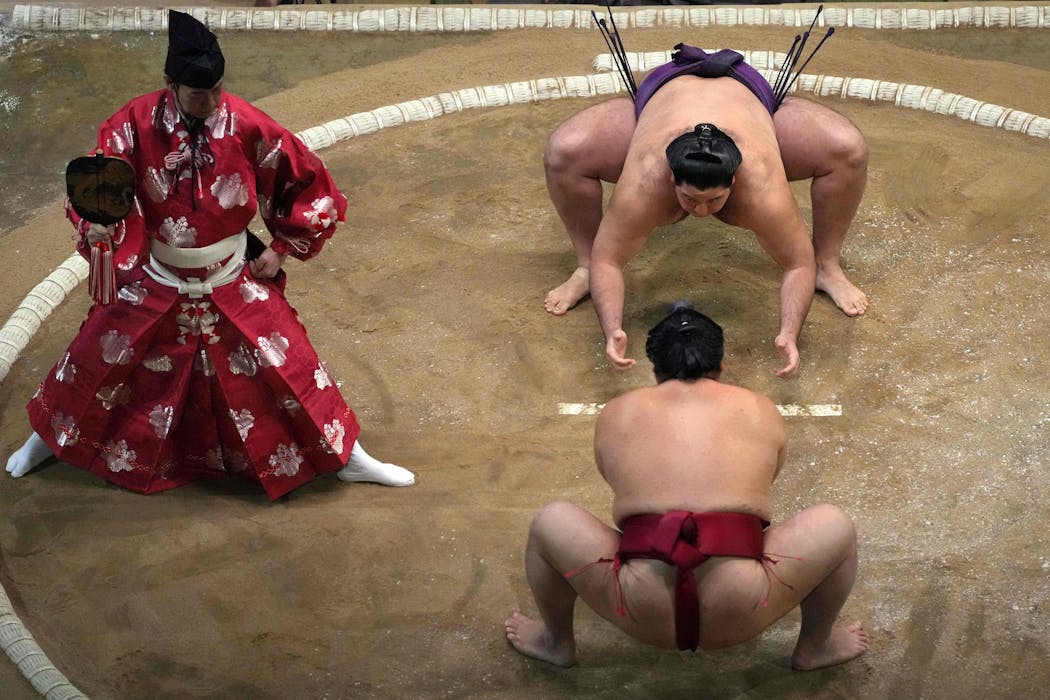
Sumo wrestlers Daieisho and Roga compete in a Grand Sumo Tournament bout at the Royal Albert Hall in London on Oct. 19, 2025. AP Photo/Frank Augstein

A visitor to Japan who wanders into a sumo tournament might be forgiven for thinking they had intruded upon a religious ceremony.

Tournaments begin with a line of burly men wearing little more than elaborately decorated aprons walking in a line onto a raised earthen stage. Their names are called as they circle around a ring made of partially buried bales of rice straw. Turning toward the center, they clap, lift their aprons, raise their arms upward, and then exit without a word.

Then two of those men face each other, crouching, clapping their hands together and stomping on the ground. They pause repeatedly to rinse their mouths with water and toss salt into the ring.

Overseeing their movements is a man outfitted in a colorful kimono and a black hat resembling that of a Shinto priest and holding a tasseled fan. After a subtle gesture with his fan, they finally grapple – and only then would the uninformed observer realize that the performance was an athletic event.

Every sport has its rituals, from the All Blacks rugby team’s pregame haka to the polite handshake between victor and vanquished over the tennis court net. Some, like many sumo rituals, have roots in religious practices. A few hundred years ago, competitions were frequently held at temples and shrines as part of festivals.

Two men in white robes bow, standing on the side of a dirt ring, as another man in white robes sits between them.
Sumo referees perform the Shinto ritual to purify and bless the ring ahead of a tournament at the Royal Albert Hall in London on Oct. 15, 2025.
AP Photo/Frank Augstein

Today, sumo is a modern sport with records, rules and a governing institution that celebrated its 100th anniversary in October 2025. But those religious roots are still visible. The salt the wrestlers throw, for example, is a purifying element. The clapping is a way of drawing the attention of the gods.

As a historian of modern Japan and a scholar of sports and diplomacy, I have seen many ways in which sports are much more than “just a game.” Sport rituals are an important part of those wider meanings. In fact, sumo and its rituals have helped shape foreign perceptions of Japan for at least 170 years.

First impressions

The first sumo tournament known to have been observed by American spectators was held in March 1854, in honor of a treaty establishing diplomatic relations between the United States and Japan. Described in the personal journal kept by Commodore Matthew Perry, the leader of the mission to Japan, the exhibition before gawking American sailors seemed designed to impress.

Before the matches began, the athletes put on a performance of strength, loading the American ships with a gift of some 200 bales of rice from the Japanese government. Perry describes how two dozen huge men, “naked with the exception of a narrow girdle around the loins,” paraded before the American crew before getting to work, each shouldering two 135-pound bales.

If the actual sumo competition was intended to inspire appreciation of Japanese culture, it backfired. Perry’s descriptions of the wrestlers were full of unflattering animal metaphors. He wrote that they resembled “stall-fed bulls” more than human beings and made noises like “dogs in combat.”

At the time, sports as we know them today were just emerging in England and the United States. Some of the earliest rules of soccer were recorded in the 1840s, and baseball’s growing popularity led to the development of professional leagues after the U.S. Civil War.

With this American idea of sports in Perry’s mind, the sumo tournament did not impress him. He called the bouts a “farce” and judged the wrestlers’ physique as one that “to our ideas of athletic qualities would seem to incapacitate him from any violent exercise.”

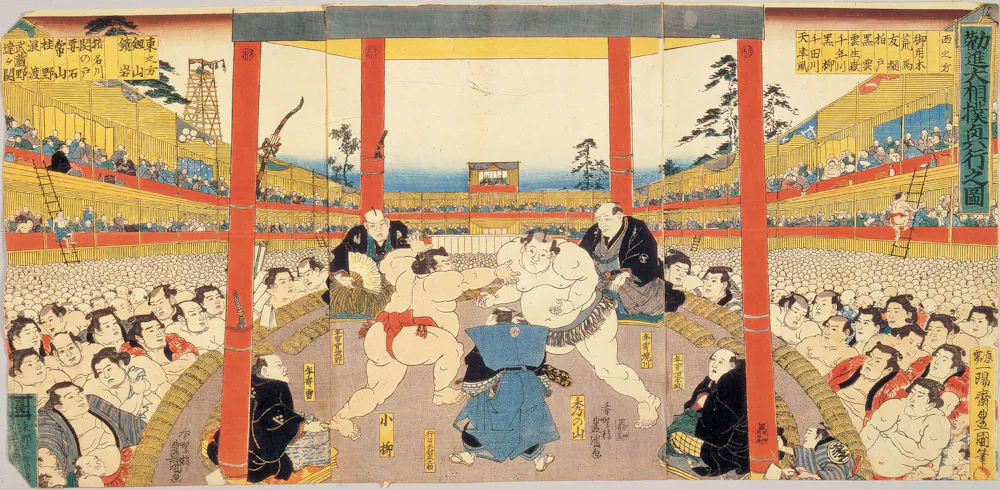
An illustration in muted colors shows two large men wrestling on a platform between red posts, as a large audience watches.
An illustration of an 1846 sumo tournament by Utagawa Kunisada.
Chunichi.co.jp/Wikimedia Commons

In the mid-19th century, Japan was relatively isolated from the Western world. Most Americans knew almost nothing about the country and considered it backward, even barbaric. The two cultures’ differing ideas of sports meant that sumo only added to American views of Japan as strange and uncivilized.

A competing sport

Sports diplomacy had a more positive impact on American views of Japan in the early 20th century, thanks to a different game: baseball.

After the fall of the shogunate in 1868, the new Japanese government – made up of oligarchs ruling in the name of the Meiji Emperor – employed Americans to help implement reforms. Some of them brought along America’s pastime, which became very popular within a few decades.

By the 1910s and ‘20s, Japanese college teams were regularly traveling to the U.S., where newspapers praised their skills and their sportsmanship.

A black and white photo shows two rows of men in suits posing outside a large white building.
The Osaka Mairuchi baseball team from Japan visits the U.S. White House in 1925.
National Photo Company Collection/Library of Congress/Wikimedia Commons

Some of the rituals in a Japanese baseball game, like a ceremonial first pitch, were familiar to American observers. Others, like a team bow toward the umpire, were quite a contrast, but struck them as superior to the rowdiness of American players and fans.

At the time, Japan’s Westernizing reforms and recent military victories over China and Russia had already improved Americans’ impressions of the country. Former baseball player Harry Kingman, writing about a game he watched during a 1927 stint coaching a Tokyo college team, explained the Japanese turn toward baseball as part of the nation’s modernization.

Sumo, however, continued to be the most popular sport in Japan until the 1990s, when baseball took that title. But the initial popularity of this American import caused some anxiety within the sumo world: A foreign game seemed to be taking over and stealing sumo’s fans.

Amid these changes, professional sumo’s governing institutions, which were divided into competing associations based in Tokyo and Osaka, joined forces. They officially unified in 1925 as the organization that would become today’s Japan Sumo Association.

Can sumo be cool?

Japanese popular culture now captivates people around the world. In 2002, journalist Douglas McGray wrote about the soft power conferred by what he called the nation’s “gross national cool.” But he noted sumo as an exception, blaming its leadership’s insular attitudes.

Perhaps sumo’s biggest hurdle to building an international fan base is its attitude toward foreigners. Immigration is controversial in Japan. The population is relatively homogeneous, and barriers to naturalization are high.

A man in a blue suit shakes hands with a much larger man in a gray suit.
Thomas Foley, then the U.S. ambassador to Japan, presents sumo grand champion Akebono with a letter of appreciation from Secretary of State Colin Powell in 2001.
AP Photo/Tsugufumi Matsumoto

In contrast to sports like baseball, soccer and rugby, where “imported” players abound, there are few foreign sumo wrestlers, and their success seems to rankle. In 1993, a Hawaiian named Akebono became the first foreigner to reach the top rank of “yokozuna,” sparking a temporary hold on recruiting sumo wrestlers from outside Japan.

Constraints were gradually softened, and the number of non-Japanese professional wrestlers has been rising. They still represent a small minority, but their success often sparks discussions about the place of foreigners in the sport.

Though sumo has gained some traction outside of Japan, its rituals still occasionally create negative impressions of Japanese culture. At a tournament in 2018, for example, a local official collapsed while giving a speech. Female medics who rushed to help him were told to leave the sumo ring, considered a sacred space polluted by a woman’s presence. The chairman of the Japan Sumo Association later apologized, but the incident brought criticism that the sumo world was clinging to anachronistic traditions.

Sumo continues to change. A 1926 Tokyo government ban on women’s sumo is no longer in force, and there are now some female wrestlers in amateur clubs. But women are still barred from professional competition.

Tournaments are certainly popular with tourists, but they generally go for a one-time experience. One might ask if sumo can change enough to play an effective role in Japan’s sports diplomacy. The answer depends on whether sumo leaders are more interested in maintaining the sport’s Japanese identity or building global connections.

The Conversation

Jessamyn R. Abel has received funding from the National Endowment for the Humanities, the Japan Foundation, the Northeast Asian Council of the Association for Asian Studies, and the McCourtney Institute for Democracy at Penn State University. She is currently a member of the Board of Directors of the Association for Asian Studies.

ref. Japan’s sumo association turns 100 – but the sport’s rituals have a much older role shaping ideas about the country – https://theconversation.com/japans-sumo-association-turns-100-but-the-sports-rituals-have-a-much-older-role-shaping-ideas-about-the-country-263093

Rift Valley fever: what it is, how it spreads and how to stop it

Source: The Conversation – Africa (2) – By Marc Souris, chercheur, Institut de recherche pour le développement (IRD)

Rift Valley Fever (RVF) is a viral disease transmitted by mosquitoes that mainly affects livestock. It can also infect humans. While most human cases remain mild, it can cause death. The disease causes heavy economic and health losses for livestock farmers.

As a researcher, I have contributed to several studies on this mosquito-borne virus.

So, what exactly is Rift Valley fever, how it is treated, and how it can be controlled?

What is Rift Valley fever?

Rift Valley fever is a zoonosis (a disease affecting animals that can be transmitted to humans). It is caused by the RVF virus, a phlebovirus from the Phenuiviridae family (order Bunyavirales). The disease primarily affects domestic animals, mainly cattle, sheep and goats, but also camelids and other small ruminants. It can occasionally infect humans.

In animals, the disease causes high morbidity: reduced milk production, high newborn mortality, mass abortions in pregnant females, and death in 10% to 20% of cases. This leads to serious economic losses for farmers.

Most people who get Rift Valley fever have no symptoms or just flu-like syndrome. But in a few people, it can become very serious, causing complications such as eye disorders, meningoencephalitis (inflammation of the brain), or hemorrhagic fever. The fatality rate among infected people is around 1%.

How it’s transmitted

In animals, the disease is mainly spread through bites from infected mosquitoes. At least 50 mosquito species can transmit the Rift Valley fever virus, including Aedes, Culex, Anopheles and Mansonia species. Mosquitoes become infected when they feed on animals carrying the virus in their blood, then transmit it to other animals through their bites. In Aedes mosquitoes, vertical transmission – from infected females to their eggs – is also possible, allowing the virus to survive in the environment.

For humans, the most common way to get infected is through direct contact with the blood or organs of an infected animal. This often happens during veterinary work, slaughtering, or butchering.

While it is also possible for human to get the virus from a mosquito bite, this is not common. No human-to-human transmission has been observed to date.

The origins and spread

A serious outbreak of Rift Valley fever began to be reported in Senegal in late September 2025. The west African country has been battling to control it.

The disease was first discovered in 1931 in the Rift Valley in Kenya in east Africa, during a human epidemic of 200 cases. The virus itself was isolated and identified in 1944 in neighbouring Uganda.

Since then, numerous outbreaks of the disease have been reported in Africa: in Egypt (1977), Madagascar (1990, 2021), Kenya (1997, 1998), in Somalia (1998), in Tanzania (1998), the Comoros (2007-2008) and Mayotte (2018-2019).

In west Africa, the main epidemics affected Mauritania (1987, 1993, 1998, 2003, 2010, 2012), Senegal (1987, 2013-2014) and Niger (2016).

Its spread into the Sahel and west African regions has been largely driven by the movement of livestock, and by environmental factors.

To date, around 30 countries have reported animal and/or human cases in the form of outbreaks or epidemics.

Why and how outbreaks occur

Rift Valley fever reemerges in cyclical patterns, with major outbreaks occurring in Africa every five to 15 years. The trigger for these outbreaks is closely linked to specific environmental conditions, like periods of heavy rainfall that create ideal breeding conditions for mosquitoes.

In east Africa, epidemics typically follow periods of exceptionally heavy rainfall or flooding in normally dry regions. For instance, the severe outbreaks of 1998-1999 were directly linked to intense rains caused by the El Niño climate phenomenon.


Read more:
West Africa’s trade monitoring system has collapsed – why this is dangerous for food security


In the Sahel region, the relationship with rainfall is less predictable. Outbreaks can appear in unexpected, poorly monitored areas, and genetic analysis of viruses in Mauritania suggests that new strains can be introduced directly from other regions.

A key mystery is how the virus persists in the environment between these major outbreaks. It is believed to survive in the environment within a “wild reservoir” of animals – such as certain antelopes, deer, and possibly even reptiles – though this reservoir has not yet been fully identified.

Once an initial outbreak occurs, the virus can spread to new areas. This happens through the movement of infected livestock, the accidental transport of infected mosquitoes (for example, in vehicles or cargo), and when environmental conditions are conducive.

Clinical symptoms and treatments

Adult cattle and sheep may show nasal discharge, excessive salivation, loss of appetite, weakness, diarrhoea.

In humans, after an incubation period of two to six days, most infections are asymptomatic or mild, with flu-like symptoms lasting four to seven days. People who recover from the infection typically gain natural immunity.


Read more:
Preventing the next pandemic: One Health researcher calls for urgent action


However, in a small percentage of individuals, the disease can take a severe turn:

  • Eye lesions affect up to 10% of symptomatic cases. They appear one to three weeks after initial symptoms and can heal on their own or lead to permanent blindness.

  • Meningoencephalitis (inflammation of the brain and meninges) occurs in 2%-4% of symptomatic cases, one to four weeks after symptom onset. Mortality is low, but neurological after-effects are common.

  • Hemorrhagic fever (diseases that cause fever and bleeding due to damage to the blood vessels) occurs in less than 1% of symptomatic cases, usually two to four days after symptoms begin. About half of these patients die within three to six days.

There is no specific treatment for severe cases of Rift Valley fever in humans.

Surveillance, prevention and control

Veterinary surveillance with immediate reporting and monitoring of infection in animals is essential to control the disease. During outbreaks, controlled culling of infected animals and strict restrictions on the movement of livestock are the most effective ways to slow virus spread.


Read more:
How does Marburg virus spread between species? Young Ugandan scientist’s photos give important clues


As with all mosquito-borne viral diseases, controlling vector populations is an effective preventive measure, though it is challenging, especially in rural areas.

To prevent new outbreaks, animals in endemic regions can be vaccinated in advance. A modified live virus vaccine provides long-term immunity after a single dose, but it is not recommended for pregnant females because it can cause abortions. An inactivated virus vaccine is also available, it avoids these side effects, but it requires several doses to provide adequate protection.

Threat, vulnerabilities and health risks

People at highest risk of infection include livestock farmers, abattoir workers and veterinarians. An inactivated vaccine for human has been developed. But it is not licensed yet and has only been used experimentally.

Raising awareness of risk factors is the only effective way to reduce human infections during outbreaks. Key risk factors include:

  • handling sick animals or their tissues during farming and slaughter

  • consuming fresh blood, raw milk, or meat

  • mosquito bites.

It is important to follow basic health precautions when Rift Valley fever appears. Wash your hands regularly. Wear protective gear when handling animals or during slaughter. Always cook animal products such as blood, meat and milk thoroughly. Use mosquito nets or repellents consistently.

The Conversation

Marc Souris receives funding from ANR (Agence Nationale de la Recherche, France) and IRD (Institut de Recherche pour le développement).

ref. Rift Valley fever: what it is, how it spreads and how to stop it – https://theconversation.com/rift-valley-fever-what-it-is-how-it-spreads-and-how-to-stop-it-267309


HIV prevention jab approved for use in England and Wales – here’s how it works

Source: The Conversation – UK – By Rosalie Hayes, Research Assistant, Centre for Public Health & Policy, Queen Mary University of London

Cabotegravir is a form of pre-exposure prophylaxis (Prep). Svitlana Hulko/ Shutterstock

The first ever injectable drug that can prevent HIV has been approved for use in England and Wales.

The drug, cabotegravir, would benefit an estimated 1,000 people at risk of HIV in England and Wales. It offers a long-acting alternative to other existing preventive HIV drugs, which are only available as pills and usually must be taken on a daily basis.

The jab belongs to a group of drugs called antiretrovirals, which were originally developed to treat HIV. It’s now well established that antiretrovirals can also be used by HIV-negative people to dramatically reduce their risk of acquiring HIV.

The jab stops HIV from replicating within a person’s cells, meaning infection cannot take hold. This approach is called pre-exposure prophylaxis, or Prep.

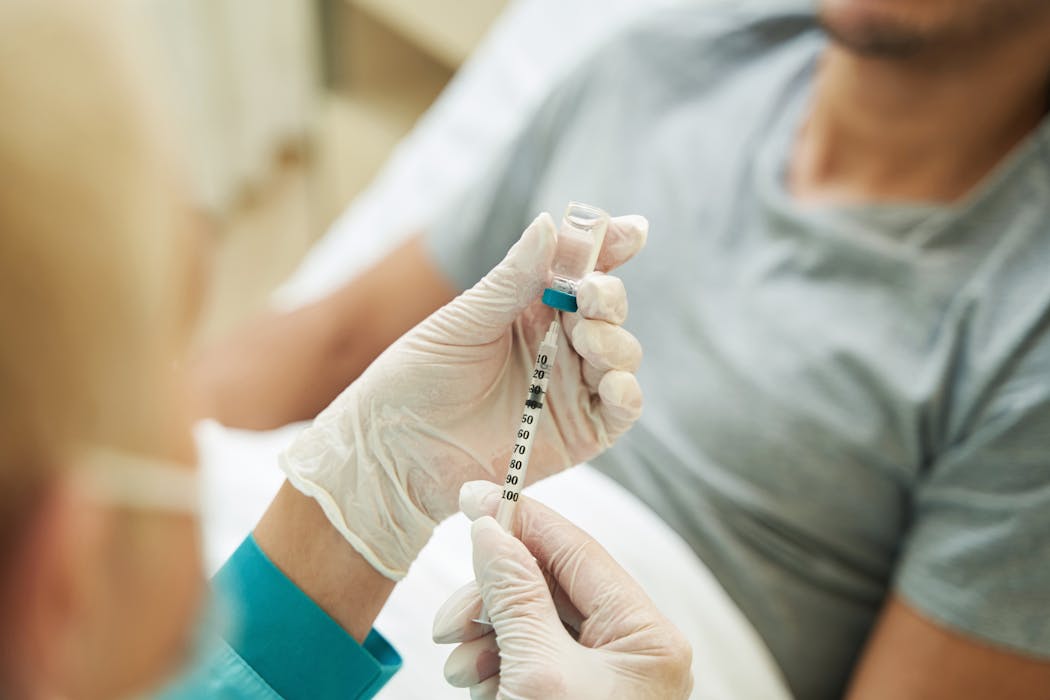
Injectable cabotegravir for Prep is administered by a single, intramuscular injection into the buttocks every two months. It must be administered by a trained health professional to ensure that the drug is delivered correctly into the muscle.

It is important to understand that cabotegravir is not a vaccine. Vaccines work by training the immune system to fight infections – whereas cabotegravir works by ensuring there are adequate levels of the antiretroviral drug in the bloodstream to prevent the HIV virus from replicating.

That’s why people using cabotegravir as Prep need to make sure they get their injections every two months for as long as they’re at risk of HIV.

Oral vs injectable Prep

Oral Prep is around 99% effective at preventing HIV when taken as prescribed – but this is reliant on people adhering to their pill regimen. Real-world effectiveness declines depending on adherence.

In contrast, injectable cabotegravir requires only six injections per year. Largely because it is easier to adhere to, cabotegravir has been found to reduce the risk of acquiring HIV by 66% in gay men, bisexual men and transgender women, and by 88% in cisgender women, compared to daily oral Prep.

There are other differences between injectable Prep and oral Prep beyond effectiveness.

People using cabotegravir for Prep will need to attend the clinic every two months to receive their injections. In comparison, people taking oral Prep will only need to get their prescription filled every three to six months.

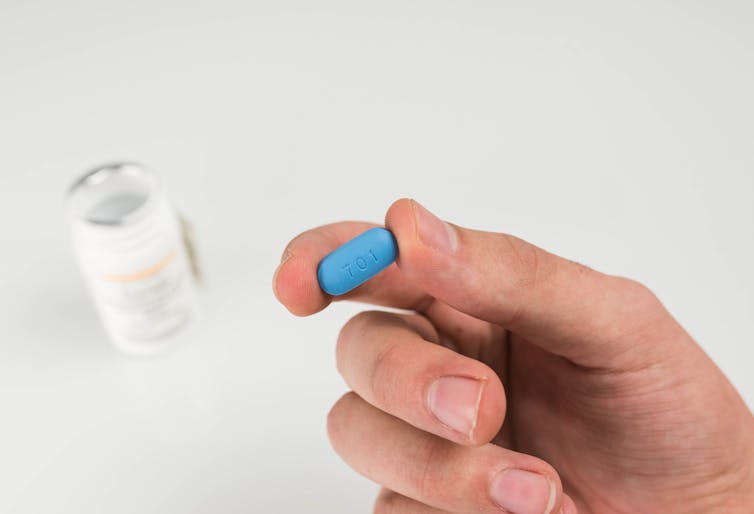
A person holds a blue Prep pill in their hand.
The jab offers an alternative to oral Prep pills.
Michael Moloney/ Shutterstock

Both injectable and oral Prep are very safe and well-tolerated medications, but possible side-effects differ between the two types. The most common side-effect of cabotegravir is swelling or tenderness around the injection site. Oral Prep’s possible side-effects can include nausea, vomiting and headaches.

At the moment, current guidelines recommend cabotegravir is offered to people in need of Prep but who cannot use oral Prep effectively. This includes the small number of people with health conditions (such as severe liver or kidney problems) which may make oral Prep unsuitable for them and those with difficulty swallowing tablets.

It also includes those who are unable to adhere to oral Prep for social or personal reasons. For example, people who are homeless or in unstable housing who may easily lose medication or have it stolen, people experiencing intimate partner violence who may worry about their partner finding their pills and people who use drugs and find regular pill-taking challenging.

A significant milestone

Cabotegravir was already approved for use in England and Wales as part of a combination treatment for people living with HIV. Now, the drug will be available to those who are HIV-negative and looking to protect themselves from acquiring HIV. This is the first time an alternative to oral Prep has been made available on the NHS.

It offers access to highly effective HIV prevention for those who previously could not use Prep. Research shows that there is a strong preference for injectable Prep among people at risk of HIV, due to its convenience and the reduced pill burden.

This approval may also pave the way for other forms of injectable Prep that have an even longer duration. For instance, lenacapavir, which is already available in the United States, only needs to be administered every six months.

Currently, there are issues around inequitable access to Prep. For example, women make up only 3% of current Prep users but 35% of new HIV diagnoses. Recent research indicates that current Prep provision does not align with women’s needs.

Giving patients more choice in the type of Prep they can access is an important step forward in addressing this inequality. But it will be crucial that sexual health services are adequately funded so they can deliver injectable Prep services.

Ongoing research also shows that delivering Prep outside of traditional sexual health settings, such as in community pharmacies and GP practices, could also make an important contribution to equitable access. Considering how injectables could be incorporated into these services will be a vital next step.

By increasing the numbers of people who can use Prep, injectables offer a critical new tool for achieving the government’s goal of eliminating new HIV infections by 2030.

The Conversation

Sara Paparini has received funding from ViiV Healthcare and Gilead Sciences.

Sophie Strachan receives funding from ViiV and Gilead and MSD she is affiliated with Sophia Forum

Rosalie Hayes does not work for, consult, own shares in or receive funding from any company or organisation that would benefit from this article, and has disclosed no relevant affiliations beyond their academic appointment.

ref. HIV prevention jab approved for use in England and Wales – here’s how it works – https://theconversation.com/hiv-prevention-jab-approved-for-use-in-england-and-wales-heres-how-it-works-268037

‘No kings’: America’s oldest political slogan is drawing millions out onto the streets

Source: The Conversation – UK – By Tom F. Wright, Reader in Rhetoric, University of Sussex

Every few decades, Americans rediscover that their republic was built on a rejection – the rejection of being ruled by a monarch. Now, in one of the largest protest movements in many years, the phrase “No kings” is everywhere: on placards, online memes, and in chants aimed at a president who seems to want to rule rather than serve.

Yet the words are hardly new. They are the first note in the American political scale, the country’s founding slogan before it even had a flag.

Long before it echoed through the colonies, the slogan “No king but Jesus” rang out in the English civil war, where it was used to declare that divine authority, not royal prerogative, should rule the conscience.


Read more:
In 1776, Thomas Paine made the best case for fighting kings − and for being skeptical


When it crossed the Atlantic, colonial Americans inherited a phrase, a stance and an image that could turn theology into politics and rebellion into virtue.

As Thomas Paine put it in his 1776 pamphlet, Common Sense: “Of more worth is one honest man than all the crowned ruffians that ever lived.” Republican speech was invented by rejecting monarchy.

When independence was achieved, America’s experiment rested on a paradox: it needed strong leadership but feared the aura of command. “No kings” was a self-diagnosis of a nervous republic. A way of keeping the charisma of a leader on a leash.

That allergy to grandeur shaped the early republic. In the 1790s when John Adams proposed that the president be addressed as “His Highness”, he was swiftly mocked as “His Rotundity”. The laughter mattered. It expressed the conviction that democracy could not survive reverence.

By the 1830s, this suspicion of pomp had become visual. Critics of the seventh president, Andrew Jackson, issued a famous broadside “King Andrew the First” showing him crowned and trampling the constitution. It wasn’t just partisan art – it was an act of democratic hygiene.

Image from cover of 1864 pamphlet depicting Abraham Lincoln as a king.
Abraham LIncoln depicted as a king in 1864.
Lincoln Financial Foundation Collection

A generation later, Abraham Lincoln faced the same charge. During the American civil war, a notorious 1864 pamphlet Abraham Africanus I accused him of seeking to become a “hereditary ruler of the United States”. His sweeping wartime powers fed old fears that emergency rule would harden into monarchy.

Sometimes, the charge is justified. When Puck magazine in 1904 depicted Theodore Roosevelt crowning himself Louis XIV (or perhaps Napoleon), it captured the public’s mixture of thrill and alarm at his trust-busting, canal-building, imperial swagger. Citizens wanted vitality in office, but not vanity.

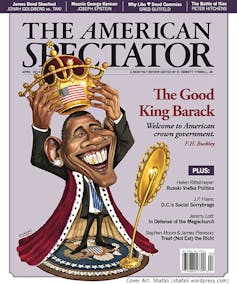
Image from cocver of American Spectgator 2014 showing a caricature of Barack Obama crowning himself king.
How the American Spectator depicted Barack Obama in 2014.
American Spectator

Other times, the imagery seemed to speak more to American paternal longings. Take images of Dwight Eisenhower as “King Ike” in the 1950s, a genial ruler among smiling courtiers, soothing cold war nerves.

In our own century, the crown returns in sharper form. The American Spectator’s 2014 cover, “The Good King Barack” showed Obama beaming beneath a red velvet crown.

When Donald Trump triumphed in 2016, crown memes returned as America’s simplest moral shorthand for power that has gone too far.

It fell to his successor Joe Biden to officially declare, in response to the July 2024 Supreme Court ruling that Trump was not immune from prosecution: “This nation was founded on the principle that there are no kings in America.”

Why the crown keeps returning

The crown is both insult and safety valve at once. It’s an instantly legible piece of political folk art reminding citizens that authority is temporary, fallible and – like its wearer – mortal.

When protesters revive “No kings”, they aren’t just quoting the revolution. They’re translating an older language of civic republican virtue into an accent everyone can understand. No person above the law, no office above criticism, no citizen beneath respect.

The slogan reawakens the moral reflex that freedom depends on vigilance, and that dignity belongs to the governed as much as the governors.

And here’s the irony: both parties were founded on that same cry. Democrats and Republicans trace their roots to the anti-monarchical Democratic-Republicans of Thomas Jefferson and James Madison, who defined their movement against the spectre of kingly power. That party later fractured, giving rise to both modern traditions.

In that sense, “No kings” was the nation’s first party platform, the point of agreement from which every later disagreement grew.

Can it still work?

In today’s fractured America, “No kings” offers something rare: a language of protest that feels constitutional rather than ideological. It has the potential to speak to conservatives alarmed by executive overreach, to progressives wary of authoritarian drift, and to independents nostalgic for civic balance.

That gives it unusual rhetorical strength. Unlike most modern slogans – “Drill baby, drill”, “Make America great again” (Maga), or “Defund the police” – it doesn’t divide, it recalls a principle. “No kings” reminds Americans that what unites them is the rejection of tyranny.

The phrase also appeals to exhaustion as much as outrage. After years of political spectacle, “No kings” gestures toward humility, order and self-restraint: the virtues both parties claim to miss.

The movement may go nowhere. But if this moment does turn out to be an inflection point, it is a fitting way to frame it.

To chant “No kings” now is not nostalgia but muscle memory. That is how a republic tests its pulse: by mocking grandeur, refusing awe and rediscovering equality in the act of saying no.

The Conversation

Tom F. Wright does not work for, consult, own shares in or receive funding from any company or organisation that would benefit from this article, and has disclosed no relevant affiliations beyond their academic appointment.

ref. ‘No kings’: America’s oldest political slogan is drawing millions out onto the streets – https://theconversation.com/no-kings-americas-oldest-political-slogan-is-drawing-millions-out-onto-the-streets-268174

The Celebrity Traitors: psychologist explains how to defend yourself when you’re accused of lying

Source: The Conversation – UK – By Lara Warmelink, Lecturer, Department of Psychology, Lancaster University

The Traitors is a game built on lies and deceit. Contestants live together in a Scottish castle. Those secretly chosen as Traitors are tasked with “murdering” their fellow players while avoiding suspicion. The rest are Faithfuls, trying to banish the Traitors.

Of course, the Traitors must tell lies all the time to avoid getting caught – but many Faithfuls tell lies as well: to throw the traitors off their scent, build alliances or manage how other players think of them.

This means all players “take heat” at the nightly roundtable, when they are accused of being Traitors and telling lies. But what does psychology tell us about how best to defend yourself from accusations that you are lying?

Outside of TV shows, when you lie you have one big advantage: the people you are trying to deceive might not be looking out for any signs that you are lying. According to communication expert Timothy Levine’s Truth Default Theory, people normally assume that anything they are told is true – in other words, truth is the default.

This makes sense: people hear and read so much information in a day, and normally this information is true. Doubting everything we experience would be exhausting, possibly dangerous, and very bad for our social relationships.

If you are crossing the road and suddenly you hear someone yell “Stop!”, your first instinct should be to stop – not keep going, thinking: “I wonder whether they are lying to me.” And your friends would probably not stay your friends for long if you responded to everything they said with suspicion that they are lying.

This is something you can rely on when you’re telling a quick white lie. Whoever you are lying to is unlikely to submit you to a third degree in response to you saying: “We’d have loved to be at your party this weekend, but we just couldn’t make it.”

Strategies to use

However, on The Traitors, neither Traitors nor Faithfuls have that luxury. All other players are on the lookout for the slightest sign – a sly smile, a head turned at the wrong moment, an above-average vocabulary. Anything can lead to you being put under the spotlight. So, what options do you have then? Here are a few strategies to consider.

1. Think about the evidence.

What does the person who is accusing you know and what can they prove? Denying something vehemently only to have a third player say “You did say that, I heard it too” is likely to land you in hot water.

And don’t just think about evidence they have already confronted you with: consider whether your accuser might be holding other evidence back, to lure you into a lie and then confront you. This “strategic use of evidence” can be very effective for an interrogator, so guard against it.

Celebrity Traitors
All players ‘take heat’ at The Traitors’ roundtable.
BBC

2. Don’t protest too much.

When trying to look like you’re telling the truth, don’t overdo it. Your first instinct might be to do everything to look Faithful, but that’s not how normal truth-telling people behave. Doing too much can be as harmful as doing too little.

For example, research shows that many liars make too much eye contact. Because people think liars avoid eye contact, they try to prove they are telling the truth by staring into people’s eyes and end up giving themselves away.

3. Tell the truth.

Sometimes it might be better to just come out and admit you lied. The cover-up can be worse than the crime.

For example, in series 3 of The Traitors, when Lisa Coupland started being put under pressure over her lies, she decided she was best off coming clean and admitting she was an Anglican priest. This worked out beautifully: everyone believed her and the other Faithfuls stopped suspecting her of being a traitor (although the truth was almost certainly a factor in her “murder” four episodes later).

Strategies might not keep you safe for long though. The Traitors is a game designed to keep you on your toes. The rules of banishment mean all players benefit from you being the one who is accused. Once you have been named as a possible Traitor, any reprieve may well be temporary.

Faithfuls have long memories and can haunt you with the tiniest mistake, roundtable after roundtable. And even if they believe what they tell you, that might only make you a more juicy target for “murder”.

The Conversation

Lara Warmelink does not work for, consult, own shares in or receive funding from any company or organisation that would benefit from this article, and has disclosed no relevant affiliations beyond their academic appointment.

ref. The Celebrity Traitors: psychologist explains how to defend yourself when you’re accused of lying – https://theconversation.com/the-celebrity-traitors-psychologist-explains-how-to-defend-yourself-when-youre-accused-of-lying-268027

Trump assault on US justice department independence revisits a Nixon-era problem

Source: The Conversation – UK – By Vince Pescod, Senior lecturer, The University of Law

The Trump administration is coming under fire for politicising the Department of Justice (DoJ) and undermining the US government’s enshrined separation of powers, which relies on an independent system of justice. This is a central principle of the US constitution, without which a president could govern virtually unchecked.

Critics point to recent indictments of people perceived to be Donald Trump’s political enemies, alleging the DoJ has acted on instructions or percived pressure from the president.

Former FBI director James Comey was indicted at the end of September on one count of making a false statement to Congress and one count of obstructing a congressional proceeding.

Letitia James, the attorney general of New York, has been charged with bank fraud and making false statements to a financial institution, relating to a property she purchased in Virginia in 2023. James led a civil prosecution of Trump on fraud charges the same year.

And most recently, John Bolton, the national security adviser during Trump’s first term and now an outspoken critic of the president, has been indicted on federal charges pertaining to the alleged mishandling of classified information.

All these indictments followed messages posted by the president on his TruthSocial platform, urging for them to be charged. In an often angry four-hour session in the senate judiciary committee on October 7, Democrat lawmakers accused the US attorney general, Pam Bondi, of “brazenly political” decision-making.

Democrat senators raised multiple areas of concern. These included the firing of hundreds of senior DoJ officials and their replacement with Trump loyalists, the dropping of investigations into some Trump loyalists, and the initiation of investigations, apparently at the behest of the president, into his political enemies.

Senator Dick Durbin of Illinois said Bondi had “systematically weaponised our nation’s leading law enforcement agency to protect President Trump and his allies and attack his opponents and, sadly, the American people … What has taken place since January 20 2025 would make even Richard Nixon recoil.”

Trump’s critics say his recent actions, appearing to put pressure on the US attorney general and DoJ to pursue certain investigations, are an abuse of power.

As US legal scholars Bruce Green and Rebecca Roiphe wrote in the the New York Law School’s journal in 2018, the attorney general must refuse a “president’s direction to indict a political opponent or to dismiss charges against a political ally because the president’s motivations are partisan”. They must also refuse, according to Green and Roiphe, when professional conduct rules require no action to be taken, such as where there is insufficient evidence to proceed.

Pam Bondi at the judiciary committee hearing.

But there are competing perspectives on the scope of the president’s power. During Trump’s first term, he and his lawyers – along with supportive legal scholars – argued that the president has absolute control over all decisions to prosecute. In a 2017 interview with the New York Times, Trump claimed to have an “absolute right to do what I want to do with the justice department”.

An independent system of justice?

The DoJ was set up in 1870 by an Act of Congress – headed by the attorney general, who is appointed by the president. The DoJ’s functions included prosecuting violations of federal law and protecting the country from subversive activities.

But when the DoJ was established, there was little federal criminal law in place. Most criminal activity was dealt with by each state, independently of the president.

This changed in 1908 with the creation of the Federal Bureau of Investigation (FBI), which was aimed at professionalising law enforcement (largely undertaken by locally trained state police) and rooting out government corruption. FBI investigations, particularly in relation to organised crime, highlighted the need for the creation of laws recognising a range of federal offences, which Congress duly passed.

The Hatch Act of 1939 then sought to limit the political activities of federal employees, establishing precedents for regulating executive branch behaviour. This significantly expanded the scope for misuse of the attorney general’s powers.

A year later, then-attorney general Robert H. Jackson warned: “With the law books filled with a great assortment of crimes, a prosecutor stands a fair chance of finding at least a technical violation of some sort on the part of almost anyone.” He added that: “It is here that law enforcement becomes personal, and the real crime becomes that of being unpopular with the predominant or governing group.”

The danger highlighted by Jackson became clear during the Nixon presidency. Most egregiously, at the height of the Watergate scandal in 1973, the president ordered the attorney general, Elliot Richardson, and his deputy, William Ruckelshaus, to fire Archibald Cox, the special prosecutor appointed by the Senate to investigate the growing scandal.

Both Richardson and Ruckelshaus refused and resigned. Nixon then ordered the solicitor general, Robert Bork, to carry out the firing. Bork complied.

Cut out of a New York Times story from the Nixon era.
How the New York Times reported the sacking of special counsel Archibald Cox in October 1973.
New York Times

Ensuring independence

The administrations of Gerald Ford and Jimmy Carter that followed set out to reestablish public confidence in both presidential integrity and the independence of the DoJ. The Independent Counsel Act of 1978 (part of the Ethics in Government Act) attempted to remedy some of the conflict of interest concerns highlighted by Watergate, and ensure impartial investigations in situations where the attorney general could face a conflict of interest.

While there is no formal separation, there has been a clear policy since the 1980s to limit communications between the White House and the DoJ to situations necessary for the discharge of the president’s constitutional duties. This would not include instructing or bringing any form of pressure on the DoJ to investigate or prosecute a perceived opponent, to prosecute someone at the request of the president, nor to drop an investigation for partisan reasons.

Commenting on the Comey indictment, Democrat senator Mark Warner severely criticised the charges, stating: “Donald Trump has made clear that he intends to turn our justice system into a weapon for punishing and silencing his critics.”

Warner added that this was “a dangerous abuse of power. Our system depends on prosecutors making decisions based on evidence and the law, not on the personal grudges of a politician determined to settle scores.”

It remains to be seen whether the US justice system is robust enough to hold, in the face of intense political pressure from the Trump administration.

The Conversation

Vince Pescod does not work for, consult, own shares in or receive funding from any company or organisation that would benefit from this article, and has disclosed no relevant affiliations beyond their academic appointment.

ref. Trump assault on US justice department independence revisits a Nixon-era problem – https://theconversation.com/trump-assault-on-us-justice-department-independence-revisits-a-nixon-era-problem-266379