Humans returned to British Isles earlier than previously thought at the end of the last ice age

Source: The Conversation – UK – By Adrian Palmer, Senior Lecturer, Geography, Royal Holloway, University of London

The return of humans to the British Isles after the end of the last ice sheet, which covered much of the northern hemisphere, happened around 15,200 years ago – nearly 500 years earlier than previous estimates.

This movement of people coincided with a sharp rise in summer temperatures in southern Britain, research by our group shows.

These environmental conditions allowed humans to migrate back up into Britain – then still connected to the European mainland. They were hunting herds of reindeer and horses, which were migrating northwards into ecosystems that supported their preferred food for grazing.

After the end of the last ice age, the climate in north-west Europe shifted from cold to warm conditions on at least two occasions, with changes in temperature thought to have occurred over decades.

Our latest research addresses the first of these transitions in the Late Upper Palaeolithic period (14,000 to 11,000 years ago). In areas such as north-west Europe, including where the British Isles are today, humans successively abandoned and then returned to areas at the abrupt transitions between cold and warm periods.

Broadly, evidence of humans from fossil records showed them migrating to where the environmental conditions supported their survival.

Reasons for repopulation

The repopulation of the British Isles after the last ice age is an excellent period to explore the relationships between climate and environment, and the reappearance of humans in this region.

In previous studies, the evidence has been somewhat difficult to read due to uncertainty of the dating methods and incomplete records of environmental and climate conditions. The traditional view had been that the north-west European climate warmed from ice-age temperatures around 14,700 years ago, and humans reoccupied Britain at that time.

However, revised preparation techniques in the early 2000s for the dating of human remains and associated artefacts showed the earliest appearance of humans occurred prior to the warming of 14,700 years ago.

This finding was difficult to understand, as it coincided with what were then considered cold glacial climates that would have been unlikely to support the resources people needed to survive in Britain.

Summer climate record from Llangorse Lake, Wales

A graphic showing showing summer temperatures in the British Isles after the last Ice Age.
Graph shows the timing of returns to British Isles of reindeer and humans after the last ice age, and related temperatures in Llangrose Lake.
Author’s own illustration

Our study used new calibrations of radiocarbon ages that confirmed the age of those human remains to between 15,200 and 15,000 years ago. So, if humans really were present in the British Isles, could they have survived in cold climates – or was our picture of past environments at this time incorrect?

Clearer insight came from Llangorse Lake (Lake Syffadan) in south Wales, where the lake sediments spanning the last 19,000 years record the abrupt climate change in detail. In addition, the lake’s location lies close to the cave in the Wye Valley where the earliest British evidence for human remains after the ice age were found.

By extracting fossil pollen, chironomids (non-biting midges) and chemical analysis of the lake sediments, an unexpected picture of the climate emerged – one that showed previous climate reconstructions for the region were incorrect.

The chironomids were used to reconstruct summer temperature, and this showed the climate warmed in a different pattern than has been identified in other parts of north-west Europe and Greenland. An abrupt temperature shift from 5–7°C to 10–14°C occurred at 15,200 years in Britain – 500 years earlier than previous evidence had suggested.

Just prior to this climate warming, the presence of human prey, such as reindeer and horses, is more consistently detected in southern Britain around 15,500 years ago. These animals were exploiting the newly available grazing grounds, with people tracking the herds northwards and enduring the moderately warmer summer climatic conditions.

Examining archaeological records along with environmental and climatic archives allows more precise reconstructions of when humans were able to repopulate previously inhospitable regions. This is helped by re-evaluating old radiocarbon dates of human evidence in the landscape, and by generating more precise environmental records from the time – including more precise timings of the transitions from cold to warm periods.

This provided us with a fuller picture of human responses to changes in temperature (and their impact on the environment) in the Late Upper Palaeolithic period. Human survival was the driver of these movements, and following prey into new areas was important. But only a relatively small change in summer temperatures was required to enable this migration.

Our research provides better understanding of human behaviour and resilience to climate change after the last ice age around 15,000 years ago. But understanding these environmental triggers from the past helps create new perspectives on human responses to them even now.

These basic factors have not gone away. The response observed in this study might provide clues on future human behaviour as our polar regions warm and glaciers melt, showing how the potential for human migration could be increased.

The Conversation

Adrian Palmer receives funding from Natural Environment Research Council. He is affiliated with Royal Holloway, University of London and Quaternary Research Association.

ref. Humans returned to British Isles earlier than previously thought at the end of the last ice age – https://theconversation.com/humans-returned-to-british-isles-earlier-than-previously-thought-at-the-end-of-the-last-ice-age-271242


Can you really lose weight by cutting gluten from your diet, as Matt Damon claims?

Source: The Conversation – UK – By Guy Guppy, Lecturer in Performance Nutrition and Exercise Physiology, Kingston University

When Matt Damon recently credited his weight loss to going gluten-free, it reignited a familiar debate about this divisive dietary approach. But while The Odyssey star’s claims have sparked discussion, the science behind weight loss tells a far more nuanced story than simply cutting out a single protein.

Gluten is a naturally occurring protein found in grains such as wheat, barley and rye, which means it’s commonly consumed in everyday foods like bread, pasta and cereal. For most people, gluten doesn’t cause any health problems.

But for those with coeliac disease – which affects about 1% of people – avoiding it is essential. This autoimmune condition triggers an immune response to gluten, damaging the small intestine’s lining, impairing nutrient absorption.

Then there’s gluten intolerance, or non-coeliac gluten sensitivity, a condition associated with symptoms like bloating and reflux. People with this condition also commonly experience problems beyond the digestive system, including headaches and skin rashes.

Despite growing numbers of people reporting such symptoms, gluten intolerance remains hotly debated in terms of its causes and management. Currently, the only recommended approach is to adopt a gluten-free diet.

For everyone else – those without coeliac disease or gluten intolerance – avoiding gluten-rich foods may be unnecessary and potentially problematic.

Foods high in gluten, such as bread, pasta and cereal, don’t just provide carbohydrates, they’re also excellent sources of fibre and B vitamins.

Removing these foods may inadvertently contribute towards nutrient deficiencies. Yet the market for gluten-free products continues to surge, with projections suggesting it will reach US$13.7 billion (£10.2 billion) by 2030.

Given that Damon didn’t disclose any medical condition when discussing his weight loss goals, the likely explanation for his results lies in his overall diet and behaviour rather than gluten itself. Research published in Nutrients found no significant differences between gluten-free and gluten-rich diets in body fat or body weight among healthy adults.

Mechanics, not magic

The weight loss many people experience on gluten-free diets often comes down to mechanics rather than magic. Because gluten is in many energy-dense, carbohydrate-based foods, people eliminating it typically cut out items like pizza, fast food and pasta.

This carbohydrate restriction leads to a reduction in glycogen – the stored form of carbohydrate in the human body. When glycogen is stored, water is stored alongside it.

So when glycogen levels drop, water weight follows, creating the illusion of rapid fat loss. This phenomenon explains why people often see dramatic results in the first week or two of any new diet or exercise programme.

Beyond reduced carbohydrate intake, people following gluten-free diets often shift towards consuming more naturally gluten-free whole foods. This dietary restructuring often results in fewer calories being consumed overall.

A small preliminary study, published in Frontiers of Sports and Active Living, found that adhering to a gluten-free diet for six weeks led to significant reductions in body weight compared to a control diet. But these changes were probably the result of a calorie deficit and fluid loss, rather than any metabolic advantage from removing gluten.

There’s another factor at play. Wheat-based carbohydrates contain fermentable sugars called fructans, which are broken down by bacteria in the large intestine. This fermentation produces gas that can cause bloating, pain and changes in bowel movements. When these foods are removed, symptoms subside and the stomach can appear flatter – an aesthetic change that people may mistake for fat loss.

Gluten may have health benefits

Adopting a gluten-free diet that isn’t medically necessary could actually increase health risks. A large study published in the BMJ found an association between higher gluten intake and reduced heart disease risk.

Similarly, research has revealed a link between low gluten intake and increased type 2 diabetes risk.

The culprit behind these concerning links may well be the gluten-free products lining supermarket shelves. When gluten is removed from a product, it changes the texture and palatability of the food. To compensate, manufacturers add other ingredients to improve taste and consistency.

The result? Gluten-free products have been shown to contain significantly less protein, higher saturated fat, lower fibre and higher sugar than their conventional counterparts. Over time, this nutritional profile may lead to poor diets and hence poor health.

So while people may believe that going gluten-free causes weight loss, the reality is usually different. Subtle changes in diet structure and composition, alongside behavioural modifications, are typically the real reason.

The Conversation

Guy Guppy does not work for, consult, own shares in or receive funding from any company or organisation that would benefit from this article, and has disclosed no relevant affiliations beyond their academic appointment.

ref. Can you really lose weight by cutting gluten from your diet, as Matt Damon claims? – https://theconversation.com/can-you-really-lose-weight-by-cutting-gluten-from-your-diet-as-matt-damon-claims-273392

The Ukraine war has given rise to an ‘exorcism economy’ in Russia

Source: The Conversation – UK – By Santa Kravcenko, Lecturer in Management, University of Lancashire

“Please tell me where to go? A 14-year-old teenager has been possessed by a demon … we tried healers, but they couldn’t help … has anyone encountered this? Moscow region.” This is one of many similar pleas that have been circulating in Russia’s online communities in recent years.

According to reports in Russian media outlets such as Gazeta.ru, thousands of people in Russia are actively discussing exorcisms on social media. This is a spiritual ritual performed by a handful of Russian priests to expel spirits or demons from a person who is believed to be possessed.

Some people are travelling to well-known “exorcism destinations” such as Oryol Oblast about 400km south of Moscow. A priest there called Father Igor, the official exorcist of the local diocese, performs a ritual called otchitka. The ritual involves the priest reciting a set of prayers to help those deemed to be under the influence of spirits.

Other people are turning to the informal “exorcism economy”, which is offered by local mediums. Some have reported paying between 10,000 rubles (£98) and 20,000 rubles (£196) just for an initial consultation to determine whether they are truly possessed. Russia’s Orthodox Church warns that exorcism attempts should be left to members of the clergy.

An elderly woman prays in a Russian Orthodox church.
A woman prays in a Russian Orthodox church in Sochi, a city on Russia’s Black Sea coast, in May 2024.
fortton / Shutterstock

Exorcism is embedded in the Orthodox tradition, with exorcism prayers first brought into Russian religious practice in the 17th century by Archbishop Peter Mogila. However, exorcisms remained rare until the late Soviet period.

The most influential modern exorcist in Russia was Father German, a priest who began practising near Moscow in the 1980s. His reputation spread through word of mouth. Igumen Philaret, a man who knew Father German, described witnessing the following scene at one of his exorcisms:

One little boy was screaming terribly. He ripped away all his clothes and was rolling naked on the floor … ‘Mama, mama! Pull the tail out of my mouth!’ … Father sprinkled him with holy water … Then it became clear – as is often the cause of demonic possession in children – his mother had not repented of her abortions.

But what happened in the 1980s to spur the interest in exorcisms in Russia? According to some researchers, such as Pavel Nosachev of HSE University in Moscow, the emotional strain caused by the gradual collapse of the Soviet Union led people to “search for spirituality”.

As communist ideology waned, underground religious groups flourished and the Orthodox Church revived after decades of repression. Hypnotists and self-proclaimed psychic healers, such as Anatoly Kashpirovsky, also became prominent on television. A crisis in shared meaning produced a boom both in religious ritual and occult experimentation. This included exorcism.

Media reporting suggests that the business of “banishing demons” seen in present-day Russia is also reflective of a society under strain – but, in this case, one grappling with the effects of the war in Ukraine.

According to research on how humans cope with awareness of their death, religion works as a shield against existential anxieties. This can intensify during times of crisis, such as war. Following the 9/11 terrorist attacks in New York, for example, church attendance increased worldwide and Bible sales soared.

The Russian Orthodox Church’s appointment of Vladimir Putin as “chief exorcist” in 2022 could also help explain why some Russians have been drawn into a fight with their inner demons. The Russian president’s appointment came after the Kremlin called for Ukraine to be “desatanised”.

‘Exorcism tourism’

The renewed interest in exorcism within Russia may represent a broader cultural response to political and personal instability – echoing the turbulence of the 1980s. But the country has also long nurtured an appetite for the paranormal.

Russian audiences have spent nearly two decades watching the popular television show, Battle of the Psychics. This show showcases the supposed paranormal abilities of self-proclaimed healers, witches and mediums in various competitive challenges. A recent episode even featured a live exorcism.

Just as Battle of Psychics spawned a multimillion-ruble industry of celebrity healers, Russia’s wartime exorcism surge reveals a similar monetisation of fear and uncertainty. What was once a localised ritual appears to be evolving into a structured commercial service – a phenomenon I call “exorcism tourism”.

As Nosachev observed in 2023: “Largely due to the connection with business – tours for otchitkas or donations for an exorcism session – this practice is now perceived as a commodity in a spiritual supermarket, which is characteristic of the consumer culture that has become a basis of the New Age.”

This commercialisation is visible in organised trips. Among the many adverts I have seen in recent years, a tour encouraging people “facing difficult life circumstances or physical and spiritual illnesses” to travel from Belarus to Russia “for exorcism” stands out.

The itinerary includes a consultation and private conversation with well-known “media exorcist” Father Gusev, as well as an application for an exorcism. Father Gusev fronts a rock band called “The Exorcist”, with the tour’s website claiming he has performed more than 15,000 exorcisms in 26 years.

In a country unsettled by war, uncertainty and spiritual volatility, Russia’s exorcism economy looks to be advancing. For some Russians, it seems that exorcisms offer not just a ritual but a sense of control amid everyday chaos.

The Conversation

Santa Kravcenko does not work for, consult, own shares in or receive funding from any company or organisation that would benefit from this article, and has disclosed no relevant affiliations beyond their academic appointment.

ref. The Ukraine war has given rise to an ‘exorcism economy’ in Russia – https://theconversation.com/the-ukraine-war-has-given-rise-to-an-exorcism-economy-in-russia-271037

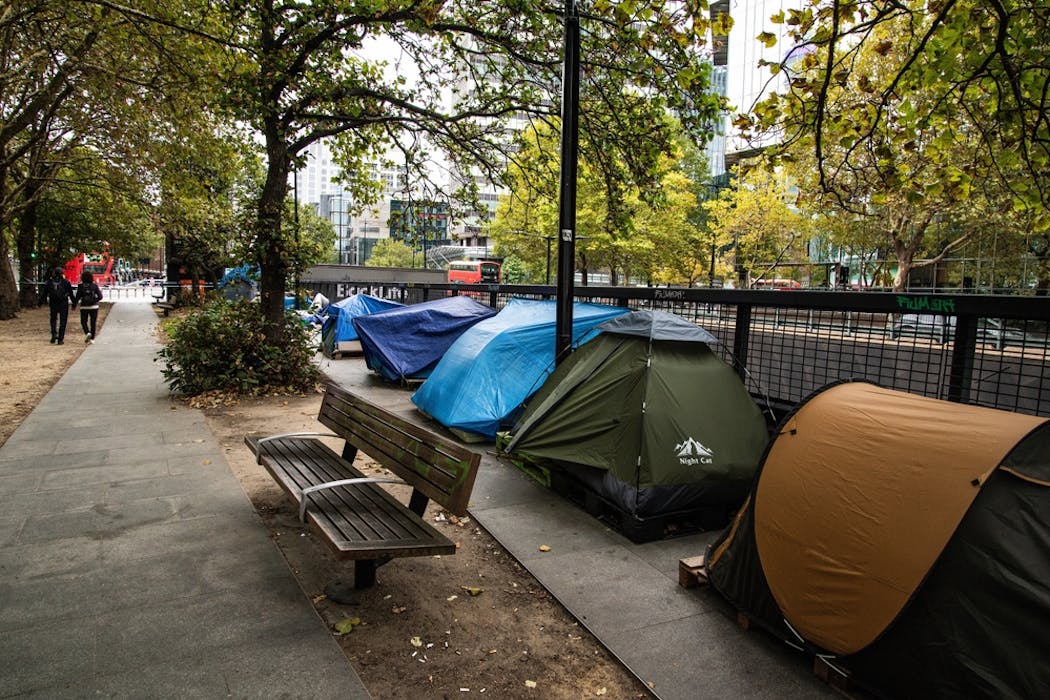
The UK spends millions on services for people experiencing homelessness. Housing them could make more economic sense

Source: The Conversation – UK – By Anton Roberts, Sociologist and Social Policy Researcher at the Policy Evaluation and Researcher Unit at Manchester Metropolitan University, Manchester Metropolitan University

Jon C 303/Shutterstock

The government’s recently announced grand plan to end homelessness in England is the latest instalment in a long line of promises (and failures) by governments across the UK. This latest strategy, published in December, promises billions in investment in rough sleeping services, alongside a previous commitment to build 1.5 million new homes by the end of this parliament.

It’s an attempt to address the UK’s acute housing crisis. On the surface, there is plenty to praise in the plan, and these proposals are already receiving support from the wider sector.

For example, the scrapping of the two-child benefit limit will lift many vulnerable children out of poverty. And the strategy hints at more preventative approaches to the problem of homelessness.

But there’s a problem. Can the government achieve this objective within the narrow political window that this parliament offers? If not, perhaps it should consider whether this is the most effective use of public money.

One striking omission in the strategy is the absence of a commitment to the “housing first” model which, as the name suggests, would provide immediate access to housing for a homeless person. This omission is surprising, given the report’s repeated emphasis on housing as a solution.

Housing first combines an unconditional home with range of wraparound services for things like mental health problems or addiction. It’s distinct in being a genuinely long-term housing intervention, catering to those with multiple and complex needs. It is one of the most robustly evidenced homelessness interventions.

There are some isolated case studies of housing first mentioned in the report, but responsibility once again falls to the third sector. Charitable organisations are already forced to compete for insufficent funding pots, while also working alongside cash-strapped local authorities.

The average cost of housing first support per person is highly economical, according to the government’s own cost-and-benefit analysis data. The expected benefits to society have been calculated at £15,880 per person, which is more than double the £7,737 average cost.

According to a recent report from the charity Crisis evaluating housing first trials, a national roll out would cost £226 million per year. But this would be offset by reductions in provision burdens, equivalent to £280 million per year. This equates to total cost of £17,068 per individual per year, with a related saving surplus of £3,313.

The false economy of ‘business as usual’

Moral and human costs aside, homelessness is astoundingly expensive. Temporary accommodation alone costs billions each year. Although exact data on this is sparse, people experiencing rough sleeping are often referred to as “frequent flyers” through public services such as A&E departments, police and the courts.

The most recent calculation from Crisis, which goes back to 2015, estimated the annual cost of rough sleeping to be around £20,000 per person (or £27,872 when adjusted for inflation). This is due to things like use of NHS services, policing and the courts system. As seen with the government’s own rough sleeping snapshot, it continues to rise in the UK.

Arguably, business as usual isn’t working. There is little point in diverting funding to services that don’t work, or funding housing programmes for people with complex needs who may not be ready for a tenancy. If the aim is to reduce or end homelessness sustainably, the answer is not more short-term funding, but significant structural reform.

mobile phone screen showing universal credit login page alongside some pound coins and notes.
Benefit sanctions can hit people who are already at rock-bottom.
AndrewMcKenna/Shutterstock

In my research with my colleague, Joanne Massey, we explored some of these wider structural constraints facing people in poverty. We framed these constraints as forms of intentional and unintentional harms by the state. They include a welfare system where, despite annual rises, the range of benefits remains out of touch with living costs, alongside things like universal credit sanctions that make already difficult lives even more challenging.

Without confronting these, homelessness cannot be prevented or reduced. As such, the report falls short. For this to be a pragmatic and cost-effective strategy, the system must change from one of economically wasteful short-termism. There is no shortage of impactful and evidence-based examples – including housing first.

However, merely increasing funding will not achieve the necessary changes. The government must also commit to a public health approach. This means prioritising prevention through early intervention, as well as tackling the causes of homelessness at their structural root. Homelessness is a problem for all of society to address.

And merely listing poverty as a cause of homelessness does nothing to address it permanently, nor replace what has been lost from hundreds of billions of pounds of cuts to public services. A public health approach to homelessness would address challenges like these at the individual, community and societal levels simultaneously. It would also be a better use of taxpayer funds.

As an example, efforts in Wales to improve health with a prevention strategy produced a £14 return for every £1 invested using a public health approach. There was an annual saving of £9,266 per person when using preventative homelessness programmes. This approach combines the third sector, council services, education, health and the criminal justice system into one coherent strategy.

The government’s homelessness strategy is a positive start, but it will not replace what has been lost. Nor, as it stands, will it address the complex reasons why homelessness persists.

The Conversation

Anton Roberts does not work for, consult, own shares in or receive funding from any company or organisation that would benefit from this article, and has disclosed no relevant affiliations beyond their academic appointment.

ref. The UK spends millions on services for people experiencing homelessness. Housing them could make more economic sense – https://theconversation.com/the-uk-spends-millions-on-services-for-people-experiencing-homelessness-housing-them-could-make-more-economic-sense-272569

When science discourages correction: How publishers profit from mistakes

Source: The Conversation – Indonesia – By Douglas Sheil, Professor, Faculty of Environmental Sciences and Natural Resource Management, Wageningen University

Flawed scientific articles don’t just clutter journals — they misguide policies, waste taxpayer funds, and endanger lives. Errors in top-tier research persist due to a broken correction system. Consider our own recent experiences.

In March 2025, Communications Earth & Environment published a paper claiming oil palm certification reduces yields and drives land expansion. But the study misread satellite data – interpreting temporary declines during replanting as a loss of production area. When corrected, the data show no decline in efficiency.

The paper’s conclusion, that certification increases land demand, is therefore unsupported. Despite this, our request for retraction was declined, and we were asked to submit a rebuttal text, but our rebuttal remains under review nearly a year later.

Another example is a 2023 Nature paper estimating deforestation due to rubber plantations. The study’s sampling errors overstated rubber’s deforestation footprint. Our correction finally appeared almost two years later – behind a paywall – by which time the flawed study had been cited 98 times and shaped multiple policy reports.

Both papers passed peer review in leading journals, showing that even top-tier systems promote errors as easily as insights.

Why errors are hard to fix

These cases, and too many more, show that academia’s “correction machinery” is faltering. Few journals prioritise retractions or errata, and researchers who expose errors receive little encouragement.

The academic economy rewards novelty over accuracy. Careers hinge on new papers, not careful corrections. Post-publication critique counts for little. Admitting error risks reputation. Pointing out others’ mistakes risks backlash.

In this context, it is unsurprising that errors – even those that are flagged – accumulate. Retractions are rare, slow, and often buried. One Nature paper was retracted 22 years later – after nearly 4,500 citations.

These delays carry costs. In medicine, flawed data have led to harmful clinical decisions – as seen in the now-retracted 2020 Lancet hydroxychloroquine study that briefly halted global COVID-19 trials.

In conservation, satellite-based deforestation estimates often vary widely, confusing policymakers and undermining trust in the evidence. Different studies have produced very different pictures of forest loss, leading to contested claims and uncertain priorities.


Baca juga:
‘Publish or perish’ evolutionary pressures shape scientific publishing, for better and worse


How we got here

The reasons are structural and self-reinforcing – driven by profit and pressure.

  • Commercialisation of academic publishing

Many others have highlighted the problems of a system where the norm is that scientists, often funded by public money, conduct research, review papers for free, and then their institutions pay exorbitant fees to access the results while private companies pocket the profits.

The roots of this dysfunction trace back to Robert Maxwell, who in the 1960s turned Pergamon Press into a “perpetual financing machine”. Maxwell pioneered a model that commodified academic prestige and researcher vanity, creating the commercial empires that dominate the landscape today.

Maxwell’s model remains successful. Springer Nature reported profit margins of around 28% on nearly €2 billion (US$2.3 billion) in annual revenue. Elsevier and Wiley post even higher profit margins.

Academic publishing is now one of the most lucrative industries per unit of input, but profitability rests on extensive unpaid academic labour – peer review alone totals more than 100 million hours annually – and on restricted public access to the outputs.


Baca juga:
Academic publishing is a multibillion-dollar industry. It’s not always good for science


  • Peer review and inequality of access

Peer review, the gatekeeper of scientific integrity, is buckling under an insatiable demand. The number of submissions is growing as many nations accelerate their scientific outputs, and AI tools facilitate the production of increasingly credible looking submissions. Nature itself recently described a “peer-review crisis”.

Retractions exceeded 10,000 in 2023 and continue to rise. Arguably, not a sign of self-correction working, but of quality control in crisis.

Meanwhile, paywalls and charges for open access publishing (APCs) exclude many of the researchers able to catch flaws. Nature’s APCs now reach €10,690 (US$12,690). These costs are effectively barring many from low-income countries from publishing, accessing or correcting published work.

Double income for the publishers: Researchers pay to publish. Readers pay to read.

Science, at least in theory, is self-correcting. But a system prioritising profit and prestige corrects only when it must – and slowly.

It’s time to reform

Science advances not by being right, but by discovering where it’s wrong – and fixing it. Systemic reform must reframe prompt correction as a hallmark of integrity, not a badge of failure.

Open correction platforms, shared data, and AI-assisted review tools already make rapid, collective scrutiny possible. What’s missing are the incentives and the courage to make that the new norm.

If publishers can profit from paywalled errors, they can afford open corrections. If institutions and funders can count our papers and citations, they can also count our corrections.

Journals should make corrections visible, prestigious, and citable, and expand “Diamond Open Access” models. Wider access means more scrutiny and faster fixes.

Institutions should reward transparency over output, funders should back post-publication verification, and researchers should favour publishers that value rigour over hype.

You can encourage your university to join cOAlition S to advance fairer, faster correction. Readers, too, can help – by checking Retraction Watch before citing.

The tools for faster, fairer correction already exist – what’s missing is the will to use them. Errors are inevitable – but resigned silence isn’t. Science’s strength lies not in never being wrong, but in how effectively and openly it corrects itself.

The Conversation

Para penulis tidak bekerja, menjadi konsultan, memiliki saham atau menerima dana dari perusahaan atau organisasi mana pun yang akan mengambil untung dari artikel ini, dan telah mengungkapkan bahwa ia tidak memiliki afiliasi di luar afiliasi akademis yang telah disebut di atas.

ref. When science discourages correction: How publishers profit from mistakes – https://theconversation.com/when-science-discourages-correction-how-publishers-profit-from-mistakes-272657

Microsoft’s AI deal promises Canada digital sovereignty, but is that a pledge it can keep?

Source: The Conversation – Canada – By Blayne Haggart, Associate Professor of Political Science, Brock University

Over the past year, few words have been abused as much as “sovereignty,” particularly in relation to Canadian digital policy and artificial intelligence. In early December, Microsoft promised to invest more than $7.5 billion over the next two years to build “new digital and AI infrastructure” in Canada. This investment is backed by a pledge that it will “stand up to defend” Canadian digital sovereignty.

Framing the investment in terms of protecting Canadian sovereignty isn’t incidental. Politically, countries are increasingly worried that tech companies based in the United States are vulnerable to pressure from the increasingly authoritarian government of President Donald Trump to turn over foreign citizens’ data, trade secrets, emails and any activity or metadata produced on their systems to the U.S. government.

If you’re wondering how investments in essential digital infrastructure from a U.S. company can help protect Canadian sovereignty, you’re not alone. It can’t and it won’t, for the simple reason that Microsoft — and other tech companies based in or that do business in the United States — are promising something that’s beyond their control to deliver.

Data sovereignty

Sovereignty, in its simplest terms, refers to the ability of a state to control what happens within its borders and what crosses those borders. It has other aspects, such as whether a state is recognized by other states, but at heart it’s about control.

In June 2025 testimony before a French Senate committee examining the issue of government procurement and digital sovereignty, Microsoft France’s director of public and legal affairs, Anton Carniaux, was asked if he could guarantee under oath that data could not be transmitted to the U.S. government without the French government’s approval. He replied: “No, I cannot guarantee that, but, again, it has never happened before.”

Carniaux’s response reminds us that the U.S., through its 2018 CLOUD Act, has claimed the right to exercise control over data collected by U.S. companies, even if it’s stored outside the country. In other words, American law explicitly requires that U.S. law takes precedence over other countries’ laws.

This is a clear infringement of any definition of sovereignty in terms of control. In response, Microsoft has promised to write “into contracts that Microsoft will challenge any government demand for Canadian data where it has legal grounds to.”

While meant to sound reassuring, Microsoft’s promise is less than it appears. Not only does their commitment leave it up to Microsoft and U.S. courts to determine the validity of any demand, but the law itself is only half of the problem.

Mass surveillance

The mass illegal surveillance of global communications by U.S. intelligence agencies, revealed by whistleblower Edward Snowden in 2013, was abetted by American tech companies. The U.S. National Security Agency collected vast amounts of data on people around the world, including non-American citizens, by tapping into internet firm servers.

American companies are uniquely beholden to pressure from the U.S. government. They depend on the government to negotiate favourable international agreements, and also as a major purchaser of their goods and services.

As research by York University criminology professor Natasha Tusikov has shown, the U.S. also engages in “shadow regulation,” putting pressure on private companies to fulfil government objectives that go beyond what’s required by law — even, as Tusikov discusses, pursuing policies that have been explicitly rejected by democratically elected legislatures.

All that happened before the Trump era. And given his clear contempt for the principle of sovereignty and American tech companies’ close ties with the government, U.S. abuse of the non-American data held by its tech companies is certainly a possibility.

Carney government vague about sovereignty

As misleading as Microsoft’s promises may be, it’s the Canadian government that’s playing the loosest with digital sovereignty talk. Prime Minister Mark Carney arguably won the federal election on his promise to protect Canadian sovereignty against a rapacious United States.

While the prime minister has promised a “Canadian sovereign cloud,” it is unclear what exactly this means. Evan Solomon, Canada’s minister in charge of promoting AI, has expressed openness to including U.S. companies like OpenAI (a Microsoft partner) in Canada’s sovereign cloud, indicating that it could include “hybrid models” with “multiple players.”

Solomon has also argued that “sovereignty does not mean solitude … we can’t look at AI as a walled-off garden. Like, ‛Oh, we cannot ever take money from X or Y.’”

It’s true that sovereignty is never absolute. The real world is much messier than a world divided into neat, discrete packages that the principle of territorial sovereignty implies. No community or state is fully self-sufficient.

We live in a global world of economic and social connections. Global governance involves a mix of domestic laws, international agreements and formal and informal cross-border working relationships. Countries benefit when they can draw on expertise and resources they lack at home.

But Microsoft’s and Solomon’s comments elide the deeper issue that come from focusing too much on abstract notions like “sovereignty.” Canada’s problem isn’t a loss of Canadian sovereignty in the abstract. It’s a U.S. that has violated Venezuela’s sovereignty, threatened others (including Canada) with annexation and is led by a president who has declared himself above international law.

Reasserting control

Sovereignty is about control. In the digital era, power lies with those who control the software and the data. Canada’s problem is that American companies control enormous swaths of Canada’s essential digital infrastructure, including emerging AI technologies and cloud services, but also email and the increasingly networked office software that underpin our entire society.

There’s a reason why France and Germany are collaborating on an alternative to Google Docs.

So long as the U.S cannot be trusted to respect domestic and international laws, companies based or working in the U.S are vulnerable to political pressure. This could potentially include capturing Canadians’ data for political and economic reasons, and cutting off our access to their products or limiting their functionality.

These hard facts about control, rather than abstract musings about sovereignty, should be our starting points for discussions about Canadian digital policy.

The Conversation

Blayne Haggart has received funding from the Social Sciences and Humanities Research Council of Canada.

ref. Microsoft’s AI deal promises Canada digital sovereignty, but is that a pledge it can keep? – https://theconversation.com/microsofts-ai-deal-promises-canada-digital-sovereignty-but-is-that-a-pledge-it-can-keep-272890

Microsoft’s AI deal promises Canada digital sovereignty, but is that a pledge they can keep?

Source: The Conversation – Canada – By Blayne Haggart, Associate Professor of Political Science, Brock University

Over the past year, few words have been abused as much as “sovereignty,” particularly in relation to Canadian digital policy and artificial intelligence. In early December, Microsoft promised to invest more than $7.5 billion over the next two years to build “new digital and AI infrastructure” in Canada. This investment is backed by a pledge that it will “stand up to defend” Canadian digital sovereignty.

Framing the investment in terms of protecting Canadian sovereignty isn’t incidental. Politically, countries are increasingly worried that tech companies based in the United States are vulnerable to pressure from the increasingly authoritarian government of President Donald Trump to turn over foreign citizens’ data, trade secrets, emails and any activity or metadata produced on their systems to the U.S. government.

If you’re wondering how investments in essential digital infrastructure from a U.S. company can help protect Canadian sovereignty, you’re not alone. It can’t and it won’t, for the simple reason that Microsoft — and other tech companies based in or that do business in the United States — are promising something that’s beyond their control to deliver.

Data sovereignty

Sovereignty, in its simplest terms, refers to the ability of a state to control what happens within its borders and what crosses those borders. It has other aspects, such as whether a state is recognized by other states, but at heart it’s about control.

In June 2025 testimony before a French Senate committee examining the issue of government procurement and digital sovereignty, Microsoft France’s director of public and legal affairs, Anton Carniaux, was asked if he could guarantee under oath that data could not be transmitted to the U.S. government without the French government’s approval. He replied: “No, I cannot guarantee that, but, again, it has never happened before.”

Carniaux’s response reminds us that the U.S., through its 2018 CLOUD Act, has claimed the right to exercise control over data collected by U.S. companies, even if it’s stored outside the country. In other words, American law explicitly requires that U.S. law takes precedence over other countries’ laws.

This is a clear infringement of any definition of sovereignty in terms of control. In response, Microsoft has promised to write “into contracts that Microsoft will challenge any government demand for Canadian data where it has legal grounds to.”

While meant to sound reassuring, Microsoft’s promise is less than it appears. Not only does their commitment leave it up to Microsoft and U.S. courts to determine the validity of any demand, but the law itself is only half of the problem.

Mass surveillance

The mass illegal surveillance of global communications by U.S. intelligence agencies, revealed by whistleblower Edward Snowden in 2013, was abetted by American tech companies. The U.S. National Security Agency collected vast amounts of data on people around the world, including non-American citizens, by tapping into internet firm servers.

American companies are uniquely beholden to pressure from the U.S. government. They depend on the government to negotiate favourable international agreements, and also as a major purchaser of their goods and services.

As research by York University criminology professor Natasha Tusikov has shown, the U.S. also engages in “shadow regulation,” putting pressure on private companies to fulfil government objectives that go beyond what’s required by law — even, as Tusikov discusses, pursuing policies that have been explicitly rejected by democratically elected legislatures.

All that happened before the Trump era. And given his clear contempt for the principle of sovereignty and American tech companies’ close ties with the government, U.S. abuse of the non-American data held by its tech companies is certainly a possibility.

Carney government vague about sovereignty

As misleading as Microsoft’s promises may be, it’s the Canadian government that’s playing the loosest with digital sovereignty talk. Prime Minister Mark Carney arguably won the federal election on his promise to protect Canadian sovereignty against a rapacious United States.

While the prime minister has promised a “Canadian sovereign cloud,” it is unclear what exactly this means. Evan Solomon, Canada’s minister in charge of promoting AI, has expressed openness to including U.S. companies like OpenAI (a Microsoft partner) in Canada’s sovereign cloud, indicating that it could include “hybrid models” with “multiple players.”

Solomon has also argued that “sovereignty does not mean solitude … we can’t look at AI as a walled-off garden. Like, ‛Oh, we cannot ever take money from X or Y.’”

It’s true that sovereignty is never absolute. The real world is much messier than a world divided into neat, discrete packages that the principle of territorial sovereignty implies. No community or state is fully self-sufficient.

We live in a global world of economic and social connections. Global governance involves a mix of domestic laws, international agreements and formal and informal cross-border working relationships. Countries benefit when they can draw on expertise and resources they lack at home.

But Microsoft’s and Solomon’s comments elide the deeper issue that come from focusing too much on abstract notions like “sovereignty.” Canada’s problem isn’t a loss of Canadian sovereignty in the abstract. It’s a U.S. that has violated Venezuela’s sovereignty, threatened others (including Canada) with annexation and is led by a president who has declared himself above international law.

Reasserting control

Sovereignty is about control. In the digital era, power lies with those who control the software and the data. Canada’s problem is that American companies control enormous swaths of Canada’s essential digital infrastructure, including emerging AI technologies and cloud services, but also email and the increasingly networked office software that underpin our entire society.

There’s a reason why France and Germany are collaborating on an alternative to Google Docs.

So long as the U.S cannot be trusted to respect domestic and international laws, companies based or working in the U.S are vulnerable to political pressure. This could potentially include capturing Canadians’ data for political and economic reasons, and cutting off our access to their products or limiting their functionality.

These hard facts about control, rather than abstract musings about sovereignty, should be our starting points for discussions about Canadian digital policy.

The Conversation

Blayne Haggart has received funding from the Social Sciences and Humanities Research Council of Canada.

ref. Microsoft’s AI deal promises Canada digital sovereignty, but is that a pledge they can keep? – https://theconversation.com/microsofts-ai-deal-promises-canada-digital-sovereignty-but-is-that-a-pledge-they-can-keep-272890

Nowhere to stay: Canada needs a rights and responsibility approach to international student housing

Source: The Conversation – Canada – By Zhixi Zhuang, Associate Professor, School of Urban and Regional Planning, Toronto Metropolitan University

International students in Canada are vulnerable to housing insecurity and exploitation in the rental market.

Across Canada, students are grappling with record-high rents, low vacancy rates and widespread housing shortages. International students, however, experience these pressures in uniquely severe and unequal ways.

Many of them are unfamiliar with local rental markets and have small social networks. As well, they often have limited knowledge of their rights and often face uncertain immigration and financial situations.

As a result, international students are especially vulnerable to rental discrimination, housing insecurity, financial exploitation and even homelessness.

Ongoing research I’m conducting with colleagues highlights the responsibilities of governments and institutions who are obligated to uphold the housing rights of international students. Researchers have included Rupa Banerjee, Mariam (Mo) El Toukhy, Jack Krywulak and Rushde Akbar from Toronto Metropolitan University, and Sandeep Agrawal and Pradeep Sangapala from the University of Alberta.

This research examines the accountability measures and actions governments and institutions must take to ensure students’ rights are preserved using the Rights and Responsibility framework developed by researcher Kathryn Sikkink.

Based on our preliminary findings, grounded partly in interviews with
students as well as research dialogue at a housing symposium, we offer urgent recommendations.

Housing is human right

Housing is widely recognized as a basic human right. Yet, international students often lack protection when securing safe and affordable housing.

They are also unfairly blamed for worsening Canada’s housing crisis.

Across the Global North, the lack of accessible and affordable housing has put international students at risk of housing insecurity. While financial instability is one main cause, many students also experience exploitation.

This includes overcrowded housing, rent hikes, forced evictions, illegal upfront rent payments, rental scams and harassment from landlords.

These negative housing experiences are linked to growing mental distress. Many students struggle to meet basic daily needs, such as food and shelter, and they face barriers to social integration. These vulnerabilities put international students at risk of psychological, academic and financial stress.

Limited support regarding tenant rights

International students also frequently report discrimination based on their status, race, ethnicity, gender and sexual orientation. These challenges are worsened by the limited support higher education institutions provide regarding tenant rights or finding safe, stable long-term housing.

Canada formally acknowledges housing as a basic human right under the National Housing Strategy Act of 2019. Through this legislation, the federal government has committed to ensuring that everyone in Canada has access to adequate housing. For international students, this means the right to live in safe, secure, affordable and adequate conditions.

But many international students are denied this right. Unfairly high rent, unsafe living conditions and discrimination often leave them living in severely inadequate conditions, all while being scapegoated for Canada’s growing housing pressures.

Root causes

In January 2024, the federal government capped international student visas to approximately 360,000. The 2025 budget also proposes cutting study permits by over half within three years.

Rather than addressing the longstanding housing crisis, this approach wrongly shifts blame onto international students, further marginalizing them and risking lasting harm to their health, academic success and future careers.

Current housing policies are outdated and lack intergovernmental co-ordination. This has worsened the country’s housing crisis by creating regulatory bottlenecks, misaligned incentives, inadequate development of affordable housing and insufficient co-ordination among stakeholders across sectors.

Government policies affecting student housing are complex and fragmented. They involve overlapping jurisdictions, including federal immigration decisions (like visa caps), provincial education mandates (such as student recruitment goals) and municipal zoning rules that regulate student housing development.

Not addressing housing needs

Canada’s National International Education Strategy (2019–24) incentivized universities and colleges to boost international student enrolment through grants tied to tuition revenue.

Institutional dependence on these fees grew, but the strategy was not accompanied by housing funding. Similarly, provinces regulate only domestic tuition, allowing institutions to maximize their reliance on international fees without addressing housing needs.

At the municipal level, zoning bylaws have also acted as barriers to student housing.


Read more:
International students’ housing challenges call for policy action


All levels of government should create formal avenues for collaboration on housing issues, while higher education institutions should play a key role in leading student housing development.

There is a clear need for co-ordinated action to address the policy, infrastructure and human rights dimensions of these challenges. Existing research rarely examines the role of multisectoral partnerships — or how key stakeholders, such as governments, higher education institutions, housing developers and community organizations should collaborate.

Research with students, stakeholders

We conducted semi-structured interviews with 24 international students from 14 countries, representing 10 higher education institutions from across southern Ontario — as well as with two private and non-profit housing developers, two student housing providers and one higher education representative.

Drawing on interview insights, we conducted an online survey with nearly 1,800 Ontario and Alberta international and domestic students.

Our findings echo recent studies showing that limited institutional services and resources, combined with poor governmental policy co-ordination, have left international students disproportionately vulnerable to exploitation and discrimination in housing markets.

Many turn to digital platforms, such as Facebook Marketplace, Kijiji and other rental agencies, in addition to social media, for housing information and resources. However, as several students from Nigeria, China and Cambodia reported, many online housing options are scams, including listings with false information and demands for six to 12 months of rent paid upfront. There is clearly an urgent need for safer and more reliable digital student housing infrastructure.

In the survey, international students reported greater stress during their housing search, heightened financial anxiety and more negative housing experiences compared to their domestic counterparts.

Key takeaways

  1. International students’ lived experiences must be central to multi-level interventions. Their perspectives should be prioritized in shaping future housing policies and services.

  2. Higher education institutions are in the best position to provide pre-/post-arrival online resources and guides to support international students in navigating safe and appropriate housing and protecting their housing rights.

  3. Social integration and connections with the wider community help shape students’ well-being. Universities and colleges should facilitate opportunities for civic participation and community building through both on-campus and off-campus housing arrangements. This requires engaging community organizations and non-governmental organizations in building long-term partnerships focused on shared housing, digital infrastructure, legal protection and rights advocacy.

  4. The fragmentation between immigration, education and housing policies requires special co-ordination. This project calls for an intergovernmental student housing task force as a platform for federal, provincial and municipal governments to work in tandem with universities and colleges.

  5. Student housing developments should be incentivized, as current housing approval processes are often lengthy, complex and inconsistent. Fast-track reviews and standardized guidelines are needed. Current zoning regulations in many jurisdictions primarily recognize higher education institutions as legitimate student housing developers, requiring other private or non-profit developers to seek zoning amendments or institutional partnerships.

These rules should be expanded to allow private and non-profit developers, multi-tenant buildings and the reuse of commercial or office spaces. Student housing should also be developed near campuses with shared space designs to help students connect socially.

International students contribute significantly to Canada’s culture, prosperity and global standing. Urgent action is needed to protect these students’ rights and well-being while fostering community cohesion and long-term sustainability.

The Conversation

Zhixi Zhuang receives funding from Migrant Integration in the Mid-21st Century: Bridging Divides, a research program funded by the Government of Canada through the Canada First Research Excellence Fund (CFREF).

ref. Nowhere to stay: Canada needs a rights and responsibility approach to international student housing – https://theconversation.com/nowhere-to-stay-canada-needs-a-rights-and-responsibility-approach-to-international-student-housing-267080

What Iran’s latest protests tell us about power, memory and resistance

Source: The Conversation – Canada – By Shirin Khayambashi, Assistant Professor, Sociology, Toronto Metropolitan University

For Iranians, the past year has meant contending with everyday necessities slipping further and further out of reach. The cost of living has surged beyond what many households can manage, and what felt like economic strain became an economic freefall.

On Dec. 28, 2025, the Iranian rial plummeted to a historic low of 1.4 million rials per American dollar. The unprecedented inflation ignited nationwide protests demanding economic stability.

The movement began with a peaceful sit-in at Tehran’s Grand Bazaar but was immediately met with violent response by the Iranian Revolutionary Guard Corps (IRGC).

The grassroots initiative — made up of merchants, shopkeepers, university students and anti-regime members of the general public — expanded rapidly to other major cities, drawing protesters from across Iran to the streets. The call for economic stability quickly evolved into a political demand for emancipation and freedom.

Iranians have been expressing their dissatisfaction with the current regime for decades. And although the recent protests were initiated in response to the dire economic crisis, the country’s future will depend more on whether authoritarian repression and political fragmentation — both inside its borders and across the diaspora — can be overcome.

Violence, fear and the tools of repression

Political upheaval in Iran often follows a predictable cycle: the public participates in peaceful protests in response to corruption, which are then silenced by IRGC forces through the threat or use of violence, including arrests, indefinite prison sentences and mass executions.

In the recent political unrest, the IRGC used force to control, intimidate and silence protesters. Hospitals have reportedly been instructed to reject injured protesters or face consequences, and a new law has been introduced to classify any civil disobedience as a capital crime punishable by death.

Iranian President Masoud Pezeshkian responded to the new citizen-driven movement with a similarly callous dismissal, referring to protesters as victims of western influence. This claim has been used to justify the nationwide digital blackout.

Iranians who relied on various social media platforms to raise awareness about government violence now encounter censorship. This digital silence also affects reporters inside Iran, limiting transparency and preventing unfiltered news from being distributed out of the country.

Monarchist narratives divide the movement

The grassroots movement, however, has been hijacked by a small faction of monarchists demanding the return of Reza Pahlavi, the exiled son of the former shah, as the Shah of Iran. This suggestion has been met with criticism as many question both the dismissal of the real concerns of the movement inside Iran and the credibility of Pahlavi as the leader of a country in crisis.

Various groups in Iran have shown leadership and organization as they demand recognition and cultural autonomy from the government. Elevating an outside figure diminishes Iranians’ own role in driving change.

While the national protest movement requires direction and leadership, Pahlavi is seen as creating division rather than cohesion. Many argue that a return to monarchy would leave Iran in a weakened political state vulnerable to outside influences.

These concerns are tied to the 1953 coup d’état, orchestrated by the CIA and MI5, against Iran’s first democratically elected prime minister, Mohammad Mossadegh. The shah, relying on support from the United States, removed Mossadegh from power, which strengthened the Shah’s unilateral authority.

Many political activists are wary of the dangers of a monarchy and the potential of imperialist influence over Iranian politics.

This is heightened by the fact that Pahlavi has openly requested support from U.S. President Donald Trump and Israel’s Benjamin Netanyahu to reinstate him as the Shah of Iran. He held a news conference in Washington ⁠D.C. on Jan. 16 to call for political, economic and military ⁠pressure on Tehran.

Disapora politics and the cost of exclusion

Shared grief and solidarity have pushed the Iranian diaspora to raise awareness and speak out for their homeland.

During the digital blackout, they used various social media platforms to amplify information about the ongoing protests. Simultaneously, Iranians abroad physically joined the global movement by participating in rallies and marches across the world.

However, the movement within the diaspora has seen some challenges.

The domination of the monarchist movement as the primary opposition to the Islamic Republic has created a divide among the communities in the diaspora. The overall friction presented as a form of in-group Islamophobia and patriarchal attitudes that stem from classism within the community.

Divisive rhetoric has also resurfaced as criticism of Pahlavi, Trump or Israel is often met with hostility and name-calling.

During the Woman, Life, Freedom uprising, the Iranian diaspora was more cohesive and welcoming to different perspectives.


Read more:
Iran on fire: Once again, women are on the vanguard of transformative change


But the current movement has become divided. An us-versus-them tension has developed in the diasporic community, as many perceive the movement as an expression of support for the monarchy. This divisive atmosphere has left many members of Iranian diasporas in a state of despair.

History suggests that moments of liberation in Iran do not fail for lack of courage, but for lack of political cohesion. The question now is whether the grassroots movement can sustain its momentum and legitimacy, and whether its demands won’t be overshadowed by external political frictions and agendas.

The Conversation

Shirin Khayambashi does not work for, consult, own shares in or receive funding from any company or organisation that would benefit from this article, and has disclosed no relevant affiliations beyond their academic appointment.

ref. What Iran’s latest protests tell us about power, memory and resistance – https://theconversation.com/what-irans-latest-protests-tell-us-about-power-memory-and-resistance-273432

Africa’s human rights institutions are electing leaders. Why this matters

Source: The Conversation – Africa (2) – By Chidi Anselm Odinkalu, Professor of Practice, International Human Rights Law, Tufts University

Member states of the African Union (AU) will hold their most consequential election of the year in February 2026, to fill ten vacancies in continental human rights institutions.

They will elect three experts to the African Commission on Human and Peoples’ Rights and seven to the African Committee of Experts on the Rights and Welfare of the Child.

These individuals will serve on the committee for five years and on the commission for six, alongside 23 peers with unexpired terms.

The elections are important because these institutions exist primarily to ensure that the continent’s governments take African lives seriously. They are entrusted with ensuring that Africans live in dignity and equality. This is a difficult task in a continent where human rights often sound hollow or precarious.

As a scholar who studies Africa’s regional institutions, I find that they are deeply underestimated. Yet, these institutions have considerable powers to undertake investigations and issue decisions against African governments. Their decisions can attract serious sanctions if disregarded.

Recent events show why these institutions continue to matter. Several AU treaties, particularly the African Charter on Human and Peoples’ Rights and the African Charter on Democracy, Elections and Governance, protect the right to vote and mandate independent and impartial courts as arbiters of election disputes.

However, most of Africa’s elections are now more poorly managed than ever before. In 2025 alone – in Cameroon, Côte d‘Ivoire and Tanzania, among others – thousands of Africans were killed in state-sponsored election violence.

In many African countries, the judiciary and other independent institutions face attacks or are captured by politicians, depriving people of legal recourse.

This has contributed to deepening civic apathy, a creeping return of military and authoritarian rule, and further erosion of democratic governance.

Of course, treaty institutions do not organise or supervise national elections. But they can counter authoritarianism by mobilising responses to the underlying causes of rigged elections.

This is why Africans everywhere should show an interest in the process and outcome of the African Union’s February 2026 elections for continental human rights institutions. They protect the continent’s citizens and communities.

Good intentions, poor outcomes

When the Organisation of African Unity (OAU) elected the pioneer experts to the African Commission in 1987, most were senior ministers from dictatorships.

Today, the AU no longer elects obvious politicians to these bodies. Still, the candidates are mostly aligned with ruling African governments.

This was not the intention. The continental institutions were created to respond when, for instance, governments attacked protesters, shut down the internet, displaced communities without compensation, or hijacked elections.

The institutions are Africa’s official human rights enforcers. They should ensure that governments uphold the principles and values they have undertaken under continental treaties. Those include “respect for democratic principles, human rights, the rule of law and good governance” and “respect for the sanctity of human life”.

For this reason, the treaties only allow to be elected to these roles “African personalities of the highest reputation, known for their high morality, integrity, impartiality, and competence in matters of human and peoples’ rights.” Such individuals work in their personal capacities and not as stooges of any government.

In practice, these criteria are not always met.

Regrettably, most Africans are unaware that these mechanisms exist. That affects the credibility of the selection process.

The AU doesn’t give the selection much publicity. Although it nominally encourages member states to adopt transparent nomination processes, most states prefer to keep their nominations ad hoc and opaque.

A 2020 report by Amnesty International described the selection as characterised by “secrecy and largely merit-less national nomination processes”. Three years earlier, the Open Society Justice Initiative and the International Commission of Jurists similarly criticised it as “largely unknown and shrouded in secrecy”.

In 2023, African citizens and civil society instituted the Arusha Initiative to improve citizen awareness, the quality of nominations and the outcomes.

What should happen

These institutions, especially the African Commission and the African Court on Human and Peoples’ Rights, exist to foster shared values. They are committed to the rule of law and due process. And they are supposed to create an enabling environment for entrepreneurs and investors, who in turn can help develop the continent.

By protecting labour and land rights, these mechanisms guide states in implementing socio-economic rights in Africa and support innovation. By addressing all forms of discrimination, including xenophobia, they can also encourage mobility across the continent.

By advancing jurisprudence on free movement as a human right and promoting associated treaties that complement regional integration, these mechanisms could help achieve free movement across Africa.

The institutions could also address environmental degradation, livelihoods and forced displacement. In doing so they would centre the interests of Africa’s indigenous peoples.

Africa’s citizens and communities fund these institutions through their taxes. That alone is reason enough to care about them.

Human rights bodies should not be disembodied entities ministering from distant lands to unrepresented people. Instead, citizens should choose capable, independent experts to protect their livelihoods and futures.

Ikechukwu Uzoma, human rights lawyer and researcher at the Robert & Ethel Kennedy Human Rights Center in the US, is co-author of this article.

The Conversation

Chidi Anselm Odinkalu does not work for, consult, own shares in or receive funding from any company or organisation that would benefit from this article, and has disclosed no relevant affiliations beyond their academic appointment.

ref. Africa’s human rights institutions are electing leaders. Why this matters – https://theconversation.com/africas-human-rights-institutions-are-electing-leaders-why-this-matters-273495