People pray before Republican vice presidential nominee J.D. Vance at a town hall hosted by Lance Wallnau on Sept. 28, 2024, in Monroeville, Pa.AP Photo/Rebecca Droke
The NAR is a loosely organized but influential charismatic Christian movement that shares similarities with Pentecostalism, especially in its belief that God actively communicates with believers through the Holy Spirit. Unlike traditional Pentecostalism, however, the organization emphasizes modern-day apostles and prophets as authoritative leaders tasked with transforming society and ushering in God’s kingdom on Earth. Prayer, prophecy and worship are defined not only as acts of devotion but as strategic tools for advancing believers’ vision of government and society.
After the shooting, the Christ for the Nations Institute issued a statement “unequivocally” denouncing “any and all forms of violence and extremism.” It stated: “Our organization’s mission is to educate and equip students to spread the Gospel of Jesus Christ through compassion, love, prayer, service, worship, and value for human life.”
But the shooting has drawn attention to the school and the larger Christian movement it belongs to. One of the most important aspects of NAR teachings today is what is called “the Seven Mountain Mandate.”
The Seven Mountain Mandate calls on Christians to gain influence, or “take dominion,” over seven key areas of culture: religion, family, education, government, media, business and the arts.
The Seven Mountains concept was originally proposed in 1975 by evangelical leader Bill Bright, the founder of Campus Crusade for Christ. Now known as “Cru,” the Campus Crusade for Christ was founded as a global ministry in 1951 to promote Christian evangelism, especially on college campuses.
Since 1996, Bill Johnson, a senior leader of Bethel Church, and Johnny Enlow, a self-described prophet and Seven Mountains advocate, among others, have taken the original idea of the Seven Mountains Mandate and reshaped it into a more aggressive, political and spiritually militant approach. Spiritual militancy reflects an aggressive, us-vs.-them mindset that blurs the line between faith and authoritarianism, promoting dominion over society in the name of spiritual warfare.
Their version doesn’t just aim to influence culture; it frames the effort as a spiritual battle to reclaim and reshape the nation according to their vision of God’s will.
Lance Wallnau, another Christian evangelical preacher, televangelist, speaker and author, has promoted dominion theology since the early 2000s. During the 2020 U.S. presidential election, Wallnau, along with several prominent NAR figures, described Donald Trump as anointed by God to reclaim the “mountain” of government from demonic control.
In their book “Invading Babylon: The 7 Mountains Mandate,” Wallnau and Johnson explicitly call for Christian leadership as the only antidote to perceived moral decay and spiritual darkness.
NAR-aligned leaders have framed electoral contests as struggles between “godly” candidates and those under the sway of “satanic” influence.
Similarly, NAR prophet Cindy Jacobs has repeatedly emphasized the need for “spiritual warfare” in schools to combat what she characterizes as “demonic ideologies” such as sex education, LGBTQ+ inclusion or discussions of systemic racism.
In the NAR worldview, cultural change is not merely political or social but considered a supernatural mission; opponents are not simply wrong but possibly under the sway of demonic influence. Elections become spiritual battles.
This belief system views pluralism as weakness, compromise as betrayal, and coexistence as capitulation. Frederick Clarkson, a senior research analyst at Political Research Associates, a progressive think tank based in Somerville, Massachusetts, defines the Seven Mountains Mandate as “the theocratic idea that Christians are called by God to exercise dominion over every aspect of society by taking control of political and cultural institutions.”
The call to “take back” the culture is not metaphorical but literal, and believers are encouraged to see themselves as soldiers in a holy war to dominate society. Some critics argue that NAR’s call to “take back” culture is about literal domination, but this interpretation is contested.
Many within the movement see the language of warfare as spiritually focused on prayer, evangelism and influencing hearts and minds. Still, the line between metaphor and mandate can blur, especially when rhetoric about “dominion” intersects with political and cultural action. That tension is part of an ongoing debate both within and outside the movement.
At the same time, the Seven Mountains Mandate doesn’t depend on centralized leadership or formal institutions. It spreads organically through social networks, social media – notably podcasts and livestreams – and revivalist meetings and workshops.
André Gagné, a theologian and author of “American Evangelicals for Trump: Dominion, Spiritual Warfare, and the End Times,” writes about the ways in which the mandate spreads by empowering local leaders and believers. Individuals are authorized – often through teachings on spiritual warfare, prophetic gifting, and apostolic leadership – to see themselves as agents of divine transformation in society, called to reclaim the “mountains,” such as government, media and education, for God’s kingdom.
This approach, Gagné explains, allows different communities to adapt the action mandate to their unique cultural, political and social contexts. It encourages individuals to see themselves as spiritual warriors and leaders in their domains – whether in business, education, government, media or the arts.
The framing of the Seven Mountains Mandate as a divinely inspired mission, combined with the movement’s emphasis on direct spiritual experiences and a specific interpretation of scripture, can create an environment where questioning the mandate is perceived as challenging God’s authority.
Slippery slope
These beliefs have increasingly fused with nationalist rhetoric and conspiracy theories.
The ‘Appeal to Heaven’ flags symbolize the belief that people have the right to appeal directly to God’s authority when they think the government has failed. Paul Becker/Becker1999 via Flickr, CC BY
A powerful example of NAR political rhetoric in action is the rise and influence of the “Appeal to Heaven” flags. For those in the New Apostolic Reformation, these flags symbolize the belief that when all earthly authority fails, people have the right to appeal directly to God’s authority to justify resistance.
To be clear, its leaders are not calling for violence but rather for direct political engagement and protest. For some believers, however, the calls for “spiritual warfare” may become a slippery slope into justification for violence, as in the case of the alleged Minnesota shooter.
Understanding the Seven Mountains Mandate is essential for grasping the dynamics of contemporary efforts to align government and culture with a particular vision of Christian authority and influence.
Art Jipson does not work for, consult, own shares in or receive funding from any company or organization that would benefit from this article, and has disclosed no relevant affiliations beyond their academic appointment.
“In the real world, I’m a coward. When I’m online, I’m a hero.”
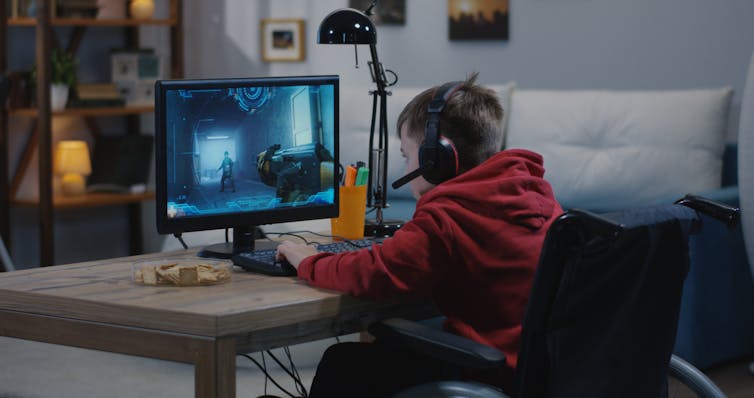
These words, paraphrased from a conversation with a young man with autism, have stayed with us throughout the years of research that underpin our recently published book exploring the relationship between children with special educational needs and disabilities and digital technology.
We’re constantly bombarded with warnings about the potential dangers of digital technology, especially for children. But this quote captures something we might miss. The digital world can be a vital space of empowerment and connection.
In our work, we’ve found that digital technology offers more than just access to learning for young people with special educational needs and disabilities. It opens doors to social lives, creative outlets and even employment opportunities that might be closed to them in the offline world. And yet, this potential is too often overshadowed by fears about the risks and harms they might encounter online.
Get your news from actual experts, straight to your inbox.Sign up to our daily newsletter to receive all The Conversation UK’s latest coverage of news and research, from politics and business to the arts and sciences.
Adolescence, the Netflix drama that delves into the hidden dangers of growing up in a digital world, has taken up a lot of the national conversation around social media, cyberbullying and online exploitation. But there is another show on Netflix that has received far less attention.
The Remarkable Life of Ibelin is a powerful documentary that tells the story of Mats Steen, a young Norwegian man with a severe disability who found freedom, friendship and purpose in the online world of gaming. Though physically limited by Duchenne muscular dystrophy, Mats, known as “Ibelin” in World of Warcraft, built a rich life online.
After his passing at 25, his gaming friends revealed just how much he had meant to them. Some travelled to his funeral. The film challenges stereotypes about online gaming. It shows it as a source of connection, compassion, and real human bonds.
We’ve spoken to many young people with special educational needs and disabilities who echo the same themes. Online spaces offer a sense of identity and capability they don’t always feel offline.
We found that the benefits of digital engagement for children with special educational needs and disabilities are extensive. It enhances communication: tools such as voice interfaces and text-to-speech software help those with speech or language difficulties express themselves confidently. Online platforms create spaces for friendships, especially for those who find face-to-face interaction challenging.
Digital tools can also foster independence. Calendar apps can be useful for those with ADHD, or assistive technology for learners with dyslexia. And for education, tailored online content can bridge the gap between mainstream and specialist learning environments.
But the digital world isn’t an equal playing field. Children with special educational needs and disabilities face disproportionate levels of online harm, including grooming, cyberbullying and exposure to inappropriate content. Crucially, they often lack the tools or support to report harm or seek help.
This, of course, raises concerns for the parents, carers and teachers of young people with special educational needs and disabilities. We’ve found that parents, carers and teachers we’ve spoken to often reach for a “prohibition first” approach – feeling young people will be safer if they do not have the access to the internet and social media that a young person without their needs might enjoy.
Safeguarding and empowerment
We’ve been asked questions such as “What apps should I ban?” or “How do I stop my child going on the dark web?” These questions reflect a risk-averse mindset that fails to appreciate the value of digital engagement. Risk cannot be eliminated, but it can be managed. And, more importantly, opportunity must be protected.
Too often, safeguarding strategies are done to children, not with them. It’s a good idea for parents and teachers of all children to talk to them about their digital life: what brings them joy, what worries them, where they feel confident or confused. Children are more likely to talk about fears or bad experiences if they feel believed, respected and understood. Make yourself a safe adult to talk to: one who listens without panic.
While banning apps or limiting access might be useful in some cases, it should not be the starting point for safeguarding. It’s worth considering whether there are skills that a child could learn that would allow them to use technology safely.
What’s more, online safety lessons are best when adapted to the communication style, cognitive ability and emotional maturity of an individual child. Visual aids, social stories, or interactive games may work better than text-heavy advice.
Fear can limit what technology can offer the children who may need it most. For young people with special educational needs and disabilities, digital spaces are not simply entertainment, they are platforms for agency, creativity, relationships and voice.
The role of adults here is to ensure these spaces are not only safe, but welcoming and empowering. That means moving past automatic restrictions and toward thoughtful, inclusive strategies that support children who might gain the most from using these technologies. We don’t need more bans. We need more belief.
The authors do not work for, consult, own shares in or receive funding from any company or organisation that would benefit from this article, and have disclosed no relevant affiliations beyond their academic appointment.
Source: The Conversation – UK – By Dante McGrath, Postdoctoral Researcher, Centre for Climate Repair, Department of Engineering, University of Cambridge
Since 2019, the UK has been committed to the target of net zero greenhouse gas emissions by 2050. Legally binding net zero targets form the basis for national efforts to meet the international goals of limiting global warming to “well below 2°C above pre-industrial levels” and ideally to 1.5°C.
These goals, launched in 2015 as part of the UN’s Paris agreement, set the stage for climate action in a warming world. Much like the “reduce-reuse-recycle” sustainability initiative, various climate actions fit within three Rs — reduce, remove and reflect. These actions were the subject of a recent debate in the UK parliament.
My colleagues and I have reviewed how these three Rs differ in scope, scale and state of knowledge. Our analysis reveals that a range of climate interventions may complement intensified mitigation efforts (to reduce greenhouse gas emissions), but more research is urgently needed.
Reducing greenhouse gas emissions is at centre stage. This is non-negotiable. Emissions reduction must be deep, rapid and sustained if we are to limit global warming to less than 2°C. These drastic cuts demand an ensemble cast, players from all sectors, from energy to agriculture. The energy to power modern society accounts for almost 75% of our greenhouse gas emissions.
We need a prop change at centre stage: an energy transition from fossil fuels to renewables. This requires electrification and energy efficiency measures — both are central to managing the growth in energy demand sustainably.
At stage right, greenhouse gas removal offers a supporting role by removing historical emissions and offsetting residual emissions from sectors lagging behind in the energy transition (such as shipping and aviation). A number of academics have stressed that a range of removal methods is required to achieve net zero emissions and halt the rise in global temperature.
Conventional carbon removal methods, such as forestation or the restoration of peatlands and wetlands, are vital. However, due to resource constraints (such as land and water security) and ecosystem impacts of global warming, we need to scale new methods rapidly to meet Paris agreement targets. These include ways to capture and store carbon on land and at sea.
Novel methods have many challenges, however, related to their effectiveness (including storage durability and permanence), unintended environmental consequences, economic costs and demands on natural resources. The challenges constraining the scale-up of novel removal methods must be addressed if we are to achieve net zero and halt global warming.
The consequences of climate change are outpacing efforts to abate it. With each year, the likelihood of exceeding 1.5 and 2°C warming increases, posing major risks to society and Earth’s ecosystems. That’s why the third R — reflect — needs to be assessed.
Sunlight reflection methods have been in the wings on stage left. In the context of limiting global warming to 1.5°C, they have been considered feasible in theory, but fraught with challenges in practice. As the chance of exceeding 1.5°C in the coming years increases, this form of climate intervention needs further consideration. Experts brought together by the UN Environment Programme have concluded that, although this intervention is “not a substitute for mitigation”, it is “the only option that could cool the planet within years”.
The most studied methods to reflect sunlight are called stratospheric aerosol injection and marine cloud brightening. These methods mimic natural processes that cool the earth by reflecting sunlight, be it through the release of reflective aerosols into the upper atmosphere, or the addition of droplet-forming salt crystals into marine clouds in the lower atmosphere.
Sunlight reflection methods pose immense challenges with respect to research, ethics and governance. There are many scientific uncertainties about how these interventions will influence the climate. There is also no global regulatory framework in place. Any legislation needs to be based on scientific evidence and informed decisions.
Shining the spotlight
Meeting climate goals requires an ensemble cast performing actions across the warming world stage. Emissions reduction is indispensable and should remain centre stage in climate policy. Climate interventions at stage right and left — in the form of greenhouse gas removal and sunlight reflection — need responsible and responsive direction. Their risks and benefits need to be assessed.
Before curtains are drawn, let’s make sure every climate action — reduce, remove and reflect — gets a fair hearing.
Don’t have time to read about climate change as much as you’d like?
Dante McGrath does not work for, consult, own shares in or receive funding from any company or organisation that would benefit from this article, and has disclosed no relevant affiliations beyond their academic appointment.
During his recent public spat with Donald Trump, Elon Musk tweeted a poll asking if a new political party would better represent the 80% of voters in the middle. Hundreds of thousands of people responded and more than 80% answered “yes”.
Many think that polarisation is fuelled by echo chambers created on social media platforms. These only expose people to beliefs similar to their own.
However, I study how narratives emerge on social media, and ways to investigate them. My work has two aims: first, to identify political issues that are likely to cross party lines, and a wider goal of exploring the role of social media in mitigating, rather than exacerbating, levels of polarisation.
Get your news from actual experts, straight to your inbox.Sign up to our daily newsletter to receive all The Conversation UK’s latest coverage of news and research, from politics and business to the arts and sciences.
Earlier this year, for example, I sorted through 12,000 posts from Republican and Democrat voters on subreddits (online forums discussing specific topics). Using a technique I developed in my PhD research, I analysed attitudes to contested political issues around the time of Trump’s inauguration. Like other researchers, I am finding that there are things both sides often agree on, and that not every issue splits neatly across party lines.
Pew Research shows what Democrats and Republicans agree on.
People on both sides of the political divide can be distrustful of tech companies and big businesses, where billionaires have power regardless of who’s in charge. Divisions of “up v down” could be alternatives to seeing divisions as “left v right”.
Both Republicans and Democrats want “the best” leaders who could get things done fast and efficiently. But it would appear that people on both sides are concerned about the “slash-and-burn” way that Doge (the Department for Government Efficiency, the new agency tasked with cutting federal spending) is working.
Emma Connolly does not work for, consult, own shares in or receive funding from any company or organisation that would benefit from this article, and has disclosed no relevant affiliations beyond their academic appointment.
When COVID arrived early in 2020, pandemic restrictions made in-person mental health care difficult or impossible. Both therapists and patients had to adapt almost overnight. For many in the field, it felt like a gamble: could this screen-based format offer the same level of support for people struggling with depression, anxiety or trauma?
Evidence has been growing, but until now few studies have compared treatment outcomes before and during the pandemic. Research my colleagues and I conducted offers new insights into this period.
We followed 2,300 patients treated in Sweden’s public mental health system over six years – three years before and three years during the pandemic – and tracked outcomes for common conditions including depression, anxiety, post-traumatic stress disorder (PTSD) and obsessive-compulsive disorder (OCD).
We found that nearly half of visits shifted online during the pandemic (up from just 4% pre-COVID), yet treatment outcomes did not decline – they remained stable, despite the rapid transition.
Get your news from actual experts, straight to your inbox.Sign up to our daily newsletter to receive all The Conversation UK’s latest coverage of news and research, from politics and business to the arts and sciences.
Patients filled out regular questionnaires during treatment to track their progress, using standard mental health assessments that measured depression and anxiety symptoms. We examined the degree of symptom improvement and the number of patients who transitioned from severe to manageable symptoms.
Fully 38% of depressed patients recovered, along with 56% of those with generalised anxiety disorder, 46% with OCD and 59% with PTSD. These recovery rates were almost identical before and during the pandemic.
We aren’t certain why remote care works, but one reason might be that the most important aspects of good therapy – things like building trust between patient and therapist, using evidence-based treatments and regular follow-up – can still occur online. In fact, for some people, meeting by video can make it easier to show up and feel comfortable. Our study suggests that, when care is done well, whether it’s in person or online doesn’t make much difference.
Online care also helps with everyday difficulties. It’s often easier for people who live far away, have trouble getting around or have busy schedules to get help from home. And during a health crisis like the pandemic, being able to keep up with treatment probably helped many people stay on track instead of falling behind.
Still, the findings come with limits. The study did not include children, people in acute psychiatric crisis or those with severe psychotic disorders — groups for whom in-person care may still be essential. And while online therapy offers flexibility, it also requires access to a private space, stable internet and the ability to engage through a screen — conditions that aren’t guaranteed for all patients.
Just turning on a webcam isn’t enough. The clinics in this study followed proven treatment methods and kept a close eye on how patients were doing. These steps probably made a big difference and are important for making remote care work.
Rather than being a temporary fix, online mental health care has become a core part of the system. Our study offers strong evidence that remote care, when well implemented, can match in-person treatment in effectiveness, even during something as challenging as a pandemic.
There is no one-size-fits-all model – and not all patients will benefit equally from internet-based treatments. But giving people the choice – and maintaining high standards of care regardless of delivery method – appears to be a key to success.
Because in the end, what matters most isn’t where care happens. It’s that it happens and that it works.
Fabian Lenhard works as the Head of Data & Analytics for WeMind Psychiatry and is affiliated as a researcher at Karolinska Institutet, Stockholm, Sweden.
Source: The Conversation – UK – By Christian van Nieuwerburgh, Professor of Coaching and Positive Psychology, RCSI University of Medicine and Health Sciences
Want to remember things better as you get older? The secret might be surprisingly simple: focus on feeling good.
Recent research involving over 10,000 people aged 50 and above has found that people with higher wellbeing perform better on memory tests as they age. The study, which followed participants for 16 years, checked their wellbeing and memory every two years.
The researchers expected that good memory might improve wellbeing, but found no evidence for that. Instead, it was wellbeing that predicted better memory performance over time.
The study also found that the link between wellbeing and memory stayed strong even after taking things like depression into account. This means wellbeing may affect memory on its own, not just through effects on mood.
Get your news from actual experts, straight to your inbox.Sign up to our daily newsletter to receive all The Conversation UK’s latest coverage of news and research, from politics and business to the arts and sciences.
However, the study’s authors acknowledge some limitations that should be taken into account when considering the real-life application of their findings.
The study relied on people reporting their own wellbeing, which can be biased – some people might overestimate how good they feel. The research also can’t prove that wellbeing directly causes better memory – other factors like income or life experiences might play a role.
Also, the memory tests used were relatively simple and might not capture the full complexities of how memory works in real life.
Despite these limitations, the study offers a compelling reason to invest in your wellbeing now. Here are five evidence-based strategies to increase the positive emotions in your day-to-day experiences.
Being kind can boost the wellbeing of both initiators and receivers of kindness.
3. Nurture your most important relationships
Positive relationships are important for our wellbeing. These should be nurtured and maintained.
4. Be more present.
In a distracted world, being present in the moment can be difficult. Being present is the opposite of multitasking. This takes intentional practice and you can develop it through meditation or mindfulness practices.
5. Do things that lead to a “flow” state.
Being in a flow state means that we are fully engaged in an activity. It is a mental state where a person feels fully involved and enjoys a process or activity that provides just the right balance of challenge and reward. People often talk about this as “being in the zone”. Finding an engaging hobby or sport is a good way of increasing flow moments.
Ensuring that you and the people around you experience positive emotions regularly is not just about feeling good in the moment. It is also an important investment for the future, ensuring better mental health and wellbeing for yourself and others. What will you do?
Christian van Nieuwerburgh does not work for, consult, own shares in or receive funding from any company or organisation that would benefit from this article, and has disclosed no relevant affiliations beyond their academic appointment.
It should come as no surprise that United States President Donald Trump’s tariff threats have renewed interest in building pipelines that don’t rely on access to the American market. Almost four million barrels of crude oil cross the Canada-U.S. border each day, generating revenue of more than $100 billion per year — a quarter of Alberta’s GDP.
A February survey by the Angus Reid Institute found that half of Canadians believe the federal government isn’t doing enough to expand pipeline capacity. Meanwhile, two-thirds said they would back reviving the Energy East project — a cancelled pipeline that would have transported oil from western Canada to New Brunswick and Québec.
But would new pipelines truly insulate Canada from the threat of U.S. tariffs? And how much new pipeline capacity is necessary? Despite the apparent urgency of approving new infrastructure projects, these questions remain surprisingly unexplored.
In a recent paper I co-authored with researcher Jotham Peters, which is currently under revision, we applied formal economic modelling techniques to parse through the costs and benefits of new pipelines, and in particular to understand the role of American tariffs in shaping these costs and benefits.
How tariffs could hit Canadian oil producers
In a worst-case scenario where the U.S. follows through on its threat of a 10 per cent tariff on Canadian oil exports, Canadian producers could lose as much as $14 billion in annual revenue — roughly a 10 per cent decrease.
Simply put, Canada’s existing pipeline network severely limits access to markets other than the U.S., and as a consequence oil producers bear the full brunt of American tariffs.
But what if Northern Gateway and Energy East — two previously cancelled pipelines that would have brought Canadian oil to tidewater — had been built?
If Northern Gateway and Energy East were operational in 2025, Canada would be more resilient, but not completely immune, to U.S. tariffs. Instead of a $14 billion loss, tariffs would reduce annual revenue by $9 billion.
Ultimately, the combined capacity of Northern Gateway and Energy East, which would be 1.625 million barrels per day, pales in comparison to the four million barrels per day of existing pipeline capacity connecting Canadian producers with American refineries.
Closing this gap would require an expansion of east-west pipeline capacity far beyond the cancelled pipelines of the last decade.
The economic case for pipelines
So have the recent shifts in U.S. trade policy fundamentally altered the economic case in favour of new east-west pipelines? As with most economic analyses, the answer is complicated.
On the one hand, any progress that mitigates the significant cost of U.S. tariffs are likely dollars well spent. Building new pipelines strengthens the bargaining power of Canadian producers, which carries an additional benefit of potentially increasing the return on each barrel sold to our southern neighbour.
There’s also a long-term capacity issue. Existing pipelines may reach their limit by 2035. In the absence of new pipelines, any new production after 2035 would either need to be transported by rail at a higher cost, or left in the ground.
On the other hand, if the U.S. never follows through on tariffs on energy exports — or if future administrations do not share Trump’s affinity for chaotic trade policy — Canada could end up right back where it started when these projects were cancelled.
All pipelines carry some economic benefit, but such benefits were not enough in 2016 and 2017 to warrant the construction of the Northern Gateway and Energy East pipelines.
Inflated construction costs threaten benefits
The elephant in the room is whether a significant expansion in pipeline capacity could realistically be achieved at reasonable cost. Recent evidence suggests it could be a challenge.
While some of these costs were circumstantial — a major flood affected Trans Mountain, for example — increased efficiency in pipeline construction is necessary for the economic benefits of new pipelines to be realized, regardless of U.S. trade policy.
Beyond economics costs
While our research explores the economic impact of new pipelines in the face of U.S. tariffs, we acknowledge there are other issues that need to be considered.
Chief among them is ensuring Canada meets its constitutional obligation to consult First Nations on decisions, like natural resources projects, that affect their communities and territories. Although this lies beyond our area of expertise, it will inevitably be an important element of consideration for any new pipeline developments.
The environmental impacts of new pipelines are another key concern. These impacts range from local exposure to oil spills to upstream greenhouse gas emissions associated with oil production. While these varying and complex impacts are also beyond the scope of our current work, future research should focus on quantifying the potential environmental impacts of new pipelines.
Our research cannot say whether any new pipeline project is good, bad or in Canada’s national interest. But we can help Canadians reach an informed decision about how changes in U.S. trade policy may or may not alter the economic case for new pipelines in this country.
While Canada would undoubtedly be in a stronger position to respond to U.S. tariffs were Northern Gateway and Energy East operational in 2025, it would still find itself significantly exposed to Trump’s tariff threats.
Fully removing this exposure would require not one but seven pipelines equivalent to Northern Gateway. Whether that’s a goal worth pursuing is a broader question — one we hope our research can help Canadians and policymakers reach on their own.
Torsten Jaccard receives funding from the Social Sciences and Humanities Research Council of Canada.
Across much of Europe, the engines of economic growth are sputtering. In its latest global outlook, the International Monetary Fund (IMF) sharply downgraded its forecasts for the UK and Europe, warning that the continent faces persistent economic bumps in the road.
Globally, the World Bank recently said this decade is likely to be the weakest for growth since the 1960s. “Outside of Asia, the developing world is becoming a development-free zone,” the bank’s chief economist warned.
The UK economy went into reverse in April 2025, shrinking by 0.3%. The announcement came a day after the UK chancellor, Rachel Reeves, delivered her spending review to the House of Commons with a speech that mentioned the word “growth” nine times – including promising “a Growth Mission Fund to expedite local projects that are important for growth”:
I said that we wanted growth in all parts of Britain – and, Mr Speaker, I meant it.
Across Europe, a long-term economic forecast to 2040 predicted annual growth of just 0.9% over the next 15 years – down from 1.3% in the decade before COVID. And this forecast was in December 2024, before Donald Trump’s aggressive tariff policies had reignited trade tensions between the US and Europe (and pretty much everywhere else in the world).
Even before Trump’s tariffs, the reality was clear to many economic experts. “Europe’s tragedy”, as one columnist put it, is that it is “deeply uncompetitive, with poor productivity, lagging in technology and AI, and suffering from regulatory overload”. In his 2024 report on European (un)competitiveness, Mario Draghi – former president of the European Central Bank (and then, briefly, Italy’s prime minister) – warned that without radical policy overhauls and investment, Europe faces “a slow agony” of relative decline.
To date, the typical response of electorates has been to blame the policymakers and replace their governments at the first opportunity. Meanwhile, politicians of all shades whisper sweet nothings about how they alone know how to find new sources of growth – most commonly, from the magic AI tree. Because growth, with its widely accepted power to deliver greater productivity and prosperity, remains a key pillar in European politics, upheld by all parties as the benchmark of credibility, progress and control.
But what if the sobering truth is that growth is no longer reliably attainable – across Europe at least? Not just this year or this decade but, in any meaningful sense, ever?
The Insights section is committed to high-quality longform journalism. Our editors work with academics from many different backgrounds who are tackling a wide range of societal and scientific challenges.
For a continent like Europe – with limited land and no more empires to exploit, ageing populations, major climate concerns and electorates demanding ever-stricter barriers to immigration – the conditions that once underpinned steady economic expansion may no longer exist. And in the UK more than most European countries, these issues are compounded by high levels of long-term sickness, early retirement and economic inactivity among working-age adults.
As the European Parliament suggested back in 2023, the time may be coming when we are forced to look “beyond growth” – not because we want to, but because there is no other realistic option for many European nations.
But will the public ever accept this new reality? As an expert in how public policy can be used to transform economies and societies, my question is not whether a world without growth is morally superior or more sustainable (though it may be both). Rather, I’m exploring if it’s ever possible for political parties to be honest about a “post-growth world” and still get elected – or will voters simply turn to the next leader who promises they know the secret of perpetual growth, however sketchy the evidence?
To understand why Europe in particular is having such a hard time generating economic growth, first we need to understand what drives it – and why some countries are better placed than others in terms of productivity (the ability to keep their economy growing).
Economists have a relatively straightforward answer. At its core, growth comes from two factors: labour and capital (machinery, technology and the like). So, for your economy to grow, you either need more people working (to make more stuff), or the same amount of workers need to become more productive – by using better machines, tools and technologies.
Historically, population growth has gone hand-in-hand with economic expansion. In the postwar years, countries such as France, Germany and the UK experienced booming birth rates and major waves of immigration. That expanding labour force fuelled industrial production, consumer demand and economic growth.
Why does economic growth matter? Video: Bank of England.
Ageing populations not only reduce the size of the active labour force, they place more pressure on health and other public services, as well as pension systems. Some regions have attempted to compensate with more liberal migration policies, but public resistance to immigration is strong – reflected in increased support for rightwing and populist parties that advocate for stricter immigration controls.
While the UK’s median age is now over 40, it has a birthrate advantage over countries such as Germany and Italy, thanks largely to the influx of immigrants from its former colonies in the second half of the 20th century. But whether this translates into meaningful and sustainable growth depends heavily on labour market participation and the quality of investment – particularly in productivity-enhancing sectors like green technology, infrastructure and education – all of which remain uncertain.
If Europe can’t rely on more workers, then to achieve growth, its existing workers must become more productive. And here, we arrive at the second half of the equation: capital. The usual hope is that investments in new technologies – particularly AI as it drives a new wave of automation – will make up the difference.
In January, the UK’s prime minister, Keir Starmer, called AI “the defining opportunity of our generation” while announcing he had agreed to take forward all 50 recommendations set out in an independent AI action plan. Not to be outdone, the European Commission unveiled its AI continent action plan in April.
Keir Starmer announces the UK’s AI action plan. Video: BBC.
Despite the EU’s concerted efforts to enhance its digital competitiveness, a 2024 McKinsey report found that US corporations invested around €700 billion more in capital expenditure and R&D, in 2022 alone than their European counterparts, underscoring the continent’s investment gap. And where AI is adopted, it tends to concentrate gains in a few superstar companies or cities.
In fact, this disconnect between firm-level innovation and national growth is one of the defining features of the current era. Tech clusters in cities like Paris, Amsterdam and Stockholm may generate unicorn startups and record-breaking valuations, but they’re not enough to move the needle on GDP growth across Europe as a whole. The gains are often too narrow, the spillovers too weak and the social returns too uneven.
Yet admitting this publicly remains politically taboo. Can any European leader look their citizens in the eye and say: “We’re living in a post-growth world”? Or rather, can they say it and still hope to win another election?
The human need for growth
To be human is to grow – physically, psychologically, financially; in the richness of our relationships, imagination and ambitions. Few people would be happy with the prospect of being consigned to do the same job for the same money for the rest of their lives – as the collapse of the Soviet Union demonstrated. Which makes the prospect of selling a post-growth future to people sound almost inhuman.
Even those who care little about money and success usually strive to create better futures for themselves, their families and communities. When that sense of opportunity and forward motion is absent or frustrated, it can lead to malaise, disillusionment and in extreme cases, despair.
The health consequences of long-term economic decline are increasingly described as “diseases of despair” – rising rates of suicide, substance abuse and alcohol-related deaths concentrated in struggling communities. Recessions reliably fuel psychological distress and demand for mental healthcare, as seen during the eurozone crisis when Greece experienced surging levels of depression and declining self-rated health, particularly among the unemployed – with job loss, insecurity and austerity all contributing to emotional suffering and social fragmentation.
These trends don’t just affect the vulnerable; even those who appear relatively secure often experience “anticipatory anxiety” – a persistent fear of losing their foothold and slipping into instability. In communities, both rural and urban, that are wrestling with long-term decline, “left-behind” residents often describe a deep sense of abandonment by governments and society more generally – prompting calls for recovery strategies that address despair not merely as a mental health issue, but as a wider economic and social condition.
The belief in opportunity and upward mobility – long embodied in US culture by “the American dream” – has historically served as a powerful psychological buffer, fostering resilience and purpose even amid systemic barriers. However, as inequality widens and while career opportunities for many appear to narrow, research shows the gap between aspiration and reality can lead to disillusionment, chronic stress and increased psychological distress – particularly among marginalised groups. These feelings are only intensified in the age of social media, where constant exposure to curated success stories fuels social comparison and deepens the sense of falling behind.
For younger people in the UK and many parts of Europe, the fact that so much capital is tied up in housing means opportunity depends less on effort or merit and more on whether their parents own property – meaning they could pass some of its value down to their children.
‘Deaths of Despair and the Future of Capitalism’, a discussion hosted by LSE Online.
Stagnation also manifests in more subtle but no less damaging ways. Take infrastructure. In many countries, the true cost of flatlining growth has been absorbed not through dramatic collapse but quiet decay.
Across the UK, more than 1.5 million children are learning in crumbling school buildings, with some forced into makeshift classrooms for years after being evacuated due to safety concerns. In healthcare, the total NHS repair backlog has reached £13.8 billion, leading to hundreds of critical incidents – from leaking roofs to collapsing ceilings – and the loss of vital clinical time.
Meanwhile, neglected government buildings across the country are affecting everything from prison safety to courtroom access, with thousands of cases disrupted due to structural failures and fire safety risks. These are not headlines but lived realities – the hidden toll of underinvestment, quietly hollowing out the state behind a veneer of functionality.
Without economic growth, governments face a stark dilemma: to raise revenues through higher taxes, or make further rounds of spending cuts. Either path has deep social and political implications – especially for inequality. The question becomes not just how to balance the books but how to do so fairly – and whether the public might support a post-growth agenda framed explicitly around reducing inequality, even if it also means paying more taxes.
In fact, public attitudes suggest there is already widespread support for reducing inequality. According to the Equality Trust, 76% of UK adults agree that large wealth gaps give some people too much political power.
Research by the Sutton Trust finds younger people especially attuned to these disparities: only 21% of 18 to 24-year-olds believe everyone has the same chance to succeed and 57% say it’s harder for their generation to get ahead. Most believe that coming from a wealthy family (75%) and knowing the right people (84%) are key to getting on in life.
In a post-growth world, higher taxes would not only mean wealthier individuals and corporations contributing a relatively greater share, but the wider public shifting consumption patterns, spending less on private goods and more collectively through the state. But the recent example of France shows how challenging this tightope is to walk.
In September 2024, its former prime minister, Michel Barnier, signalled plans for targeted tax increases on the wealthy, arguing these were essential to stabilise the country’s strained public finances. While politically sensitive, his proposals for tax increases on wealthy individuals and large firms initially passed without widespread public unrest or protests.
However, his broader austerity package – encompassing €40 billion (£34.5 billion) in spending cuts alongside €20 billion in tax hikes – drew vocal opposition from both left‑wing lawmakers and the far right, and contributed to parliament toppling his minority government in December 2024.
Such measures surely mark the early signs of a deeper financial reckoning that post-growth realities will force into the open: how to sustain public services when traditional assumptions about economic expansion can no longer be relied upon.
For the traditional parties, the political heat is on. Regions most left behind by structural economic shifts are increasingly drawn to populist and anti-establishment movements. Electoral outcomes have shown a significant shift, with far-right parties such as France’s National Rally and Germany’s Alternative for Germany (AfD) making substantial gains in the 2024 European parliament elections, reflecting a broader trend of rising support for populist and anti-establishment parties across the continent.
Voters are expressing growing dissatisfaction not only with the economy, but democracy itself. This sentiment has manifested through declining trust in political institutions, as evidenced by a Forsa survey in Germany where only 16% of respondents expressed confidence in their government and 54% indicated they didn’t trust any party to solve the country’s problems.
This brings us to the central dilemma: can any European politician successfully lead a national conversation which admits the economic assumptions of the past no longer hold? Or is attempting such honesty in politics inevitably a path to self-destruction, no matter how urgently the conversation is needed?
Facing up to a new economic reality
For much of the postwar era, economic life in advanced democracies has rested on a set of familiar expectations: that hard work would translate into rising incomes, that home ownership would be broadly attainable and that each generation would surpass the prosperity of the one before it.
However, a growing body of evidence suggests these pillars of economic life are eroding. Younger generations are already struggling to match their parents’ earnings, with lower rates of home ownership and greater financial precarity becoming the norm in many parts of Europe.
Incomes for millennials and generation Z have largely stagnated relative to previous cohorts, even as their living costs – particularly for housing, education and healthcare – have risen sharply. Rates of intergenerational income mobility have slowed significantly across much of Europe and North America since the 1970s. Many young people now face the prospect not just of static living standards, but of downward mobility.
Effectively communicating the realities of a post-growth economy – including the need to account for future generations’ growing sense of alienation and declining faith in democracy – requires more than just sound policy. It demands a serious political effort to reframe expectations and rebuild trust.
History shows this is sometimes possible. When the National Health Service was founded in 1948, the UK government faced fierce resistance from parts of the medical profession and concerns among the public about cost and state control. Yet Clement Attlee’s Labour government persisted, linking the creation of the NHS to the shared sacrifices of the war and a compelling moral vision of universal care.
While taxes did rise to fund the service, the promise of a fairer, healthier society helped secure enduring public support – but admittedly, in the wake of the massive shock to the system that was the second world war.
In 1946, Prime Minister Clement Attlee asked the UK public to help ‘renew Britain’. Video: British Pathé.
Psychological research offers further insight into how such messages can be received. People are more receptive to change when it is framed not as loss but as contribution – to fairness, to community, to shared resilience. This underlines why the immediate postwar period was such a politically fruitful time to launch the NHS. The COVID pandemic briefly offered a sense of unifying purpose and the chance to rethink the status quo – but that window quickly closed, leaving most of the old structures intact and largely unquestioned.
A society’s ability to flourish without meaningful national growth – and its citizens’ capacity to remain content or even hopeful in the absence of economic expansion – ultimately depends on whether any political party can credibly redefine success without relying on promises of ever-increasing wealth and prosperity. And instead, offer a plausible narrative about ways to satisfy our very human needs for personal development and social enrichment in this new economic reality.
The challenge will be not only to find new economic models, but to build new sources of collective meaning. This moment demands not just economic adaptation but a political and cultural reckoning.
If the idea of building this new consensus seems overly optimistic, studies of the “spiral of silence” suggest that people often underestimate how widely their views are shared. A recent report on climate action found that while most people supported stronger green policies, they wrongly assumed they were in the minority. Making shared values visible – and naming them – can be key to unlocking political momentum.
So far, no mainstream European party has dared articulate a vision of prosperity that doesn’t rely on reviving growth. But with democratic trust eroding, authoritarian populism on the rise and the climate crisis accelerating, now may be the moment to begin that long-overdue conversation – if anyone is willing to listen.
Welcome to Europe’s first ‘post-growth’ nation
I’m imagining a European country in a decade’s time. One that no longer positions itself as a global tech powerhouse or financial centre, but the first major country to declare itself a “post-growth nation”.
This shift didn’t come from idealism or ecological fervour, but from the hard reality that after years of economic stagnation, demographic change and mounting environmental stress, the pursuit of economic growth no longer offered a credible path forward.
What followed wasn’t a revolution, but a reckoning – a response to political chaos, collapsing public services and widening inequality that sparked a broad coalition of younger voters, climate activists, disillusioned centrists and exhausted frontline workers to rally around a new, pragmatic vision for the future.
At the heart of this movement was a shift in language and priorities, as the government moved away from promises of endless economic expansion and instead committed to wellbeing, resilience and equality – aligning itself with a growing international conversation about moving beyond GDP, already gaining traction in European policy circles and initiatives such as the EU-funded “post-growth deal”.
But this transformation was also the result of years of political drift and public disillusionment, ultimately catalysed by electoral reform that broke the two-party hold and enabled a new alliance, shaped by grassroots organisers, policy innovators and a generation ready to reimagine what national success could mean.
Taxes were higher, particularly on land, wealth and carbon. But in return, public services were transformed. Healthcare, education, transport, broadband and energy were guaranteed as universal rights, not privatised commodities. Work changed: the standard week was shortened to 30 hours and the state incentivised jobs in care, education, maintenance and ecological restoration. People had less disposable income – but fewer costs, too.
Consumption patterns shifted. Hyper-consumption declined. Repair shops and sharing platforms flourished. The housing market was restructured around long-term security rather than speculative returns. A large-scale public housing programme replaced buy-to-let investment as the dominant model. Wealth inequality narrowed and cities began to densify as car use fell and public space was reclaimed.
For the younger generation, post-growth life was less about climbing the income ladder and more about stability, time and relationships. For older generations, there were guarantees: pensions remained, care systems were rebuilt and housing protections were strengthened. A new sense of intergenerational reciprocity emerged – not perfectly, but more visibly than before.
Politically, the transition had its risks. There was backlash – some of the wealthy left. But many stayed. And over time, the narrative shifted. This European country began to be seen not as a laggard but as a laboratory for 21st-century governance – a place where ecological realism and social solidarity shaped policy, not just quarterly targets.
The transition was uneven and not without pain. Jobs were lost in sectors no longer considered sustainable. Supply chains were restructured. International competitiveness suffered in some areas. But the political narrative – carefully crafted and widely debated – made the case that resilience and equity were more important than temporary growth.
While some countries mocked it, others quietly began to study it. Some cities – especially in the Nordics, Iberia and Benelux – followed suit, drawing from the growing body of research on post-growth urban planning and non-GDP-based prosperity metrics.
This was not a retreat from ambition but a redefinition of it. The shift was rooted in a growing body of academic and policy work arguing that a planned, democratic transition away from growth-centric models is not only compatible with social progress but essential to preventing environmental and societal collapse.
The country’s post-growth transition helped it sidestep deeper political fragmentation by replacing austerity with heavy investment in community resilience, care infrastructure and participatory democracy – from local budgeting to citizen-led planning. A new civic culture took root: slower and more deliberative but less polarised, as politics shifted from abstract promises of growth to open debates about real-world trade-offs.
Internationally, the country traded some geopolitical power for moral authority, focusing less on economic competition and more on global cooperation around climate, tax justice and digital governance – earning new relevance among smaller nations pursuing their own post-growth paths.
So is this all just a social and economic fantasy? Arguably, the real fantasy is believing that countries in Europe – and the parties that compete to run them – can continue with their current insistence on “growth at all costs” (whether or not they actually believe it).
The alternative – embracing a post-growth reality – would offer the world something we haven’t seen in a long time: honesty in politics, a commitment to reducing inequality and a belief that a fairer, more sustainable future is still possible. Not because it was easy, but because it was the only option left.
To hear about new Insights articles, join the hundreds of thousands of people who value The Conversation’s evidence-based news. Subscribe to our newsletter.
Peter Bloom does not work for, consult, own shares in or receive funding from any company or organisation that would benefit from this article, and has disclosed no relevant affiliations beyond their academic appointment. His latest book is Capitalism Reloaded: The Rise of the Authoritarian-Financial Complex (Bristol University Press).
“Are we stopping again already?” It’s a familiar complaint on family road trips and one that’s often aimed at women. From sitcoms to stand-up routines, the idea that women have smaller bladders has become a cultural punchline. But is it anatomically accurate?
The short answer? Not really. The full picture reveals a more complex – and far more interesting – interplay between anatomy, physiology and social conditioning. Women might feel like they need to go more often, but their actual bladder size isn’t significantly different.
The detrusor is a layer of smooth muscle that forms the bladder wall. Its unusual elasticity – a quality known as compliance – allows it to stretch without triggering constant “full” signals. When nature calls, it contracts forcefully to empty the bladder.
An inner lining, the transitional epithelium, behaves like biological origami, it stretches and flattens to accommodate expanding volume, all while shielding underlying tissues from the toxic contents of stored urine.
Thanks to this clever design, your bladder can expand and contract throughout a lifetime without tearing, losing tone, or sounding false alarms – most of the time.
So where does sex come into it?
In structural terms, male and female bladders are more alike than different. Both comfortably hold around 400–600 millilitres of urine. What surrounds the bladder can influence sensation and urgency, and this is where the differences begin.
In men, the bladder nestles above the prostate and in front of the rectum. In women, it sits in a more crowded pelvic compartment, sharing space with the uterus and vagina. During pregnancy, the growing uterus can compress the bladder – hence the dash to the loo every 20 minutes in the third trimester.
Even outside pregnancy, spatial constraints may mean the bladder triggers a sense of urgency earlier. Some studies suggest women are more likely to feel bladder fullness at lower volumes – possibly due to hormonal influences, increased sensory input or the dynamic relationship between pelvic floor support and bladder stretch.
The pelvic floor – a sling of muscles supporting the bladder, uterus and bowel – is crucial. In women, it can be weakened by childbirth, hormonal shifts or simply time, altering the coordination between holding on and letting go.
Much of that control hinges on the external urethral sphincter – a ring of voluntary muscle that acts as the bladder’s gatekeeper, helping you wait for a socially convenient time to void.
A part of the pelvic floor complex, and like any muscle, it can lose tone or be retrained. Meanwhile, urinary tract infections (more common in women due to a shorter urethra) can leave the bladder hypersensitive, upping the frequency of urination even after the infection has passed.
Toileting habits can vary across cultures. But from a young age, many girls are often taught to “go, just in case” or avoid public toilets. These habits can train the bladder to empty prematurely, reducing its capacity to stretch.
Meanwhile, boys are often given more leeway – or encouraged to wait. Anyone who has ever “hovered” over a toilet seat will also recognise that hygiene concerns will influence behaviour. Over time, the bladder learns. You can’t change its size, but you can train its tolerance.
Bladder training, a technique championed by the NHS and the British Association of Urological Surgeons, involves gradually increasing the time between toilet trips. This helps reset the feedback loop between bladder and brain, restoring capacity and reducing the sensation of urgency.
Often combined with pelvic floor exercises, it’s an effective, non-invasive way to take back control – especially for those with overactive bladder syndrome or stress incontinence.
So women may not have smaller bladders, but they may have less room to manoeuvre, both anatomically and socially. The next time someone rolls their eyes at a toilet stop, remind them: it’s not about weak willpower or tiny tanks. It’s about anatomy, habit and hormones.
Michelle Spear does not work for, consult, own shares in or receive funding from any company or organisation that would benefit from this article, and has disclosed no relevant affiliations beyond their academic appointment.
Professional athletes from around the world spend years training to compete in some of the UK’s biggest summer sporting tournaments: Wimbledon and the British Open. But not all tournament hopefuls will make it to the finals — and some may even be forced to drop out due to a variety of sporting injuries, from torn anterior cruciates to strained shoulders.
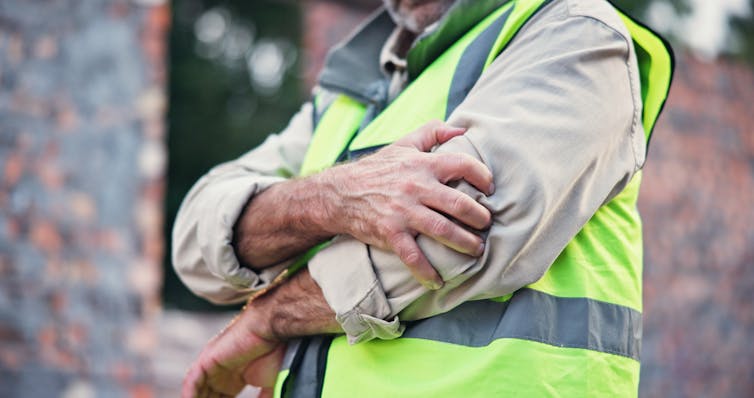
Their elbows are at risk too. In fact, two of the most common reasons for elbow pain relate to sporting injuries — the aptly named (and dreaded) tennis and golfer’s elbow.
But it isn’t just professional athletes who are at risk of developing these common elbow injuries. Even those of us sitting on the sidelines or watching from our couches can find ourselves struck down by them – even if we don’t participate in either of these sports.
In general practice, we see patients with elbow conditions fairly frequently. Elbows can become swollen as a result of repetitive strain, gout and can be fractured by a fall.
Get your news from actual experts, straight to your inbox.Sign up to our daily newsletter to receive all The Conversation UK’s latest coverage of news and research, from politics and business to the arts and sciences.
Tennis and golfer’s elbow are also common reasons people visit their GP. Both share root causes, arising from inflammation and degeneration of the forearm tendons, which attach either side of the elbow. These typically cause pain on the sides of the joint, which can radiate down the affected side toward the wrist. Establishing which side is injured is crucial to diagnosis.
The reason these conditions are associated with sports is because of the actions that are typical when playing them – the same actions which can result in injury.
Take tennis and one of its killer moves: a lethal backhand stroke, which was part of the tournament-winning arsenal of champions such as Roger Federer, Justine Henin and Stan Wawrinka. Tennis elbow seems to be more strongly associated with the one-handed backhand, affecting the outer side of the elbow.
The cause of tennis elbow can be pinpointed to a poor technique in the backhand stroke or grip. Problems with equipment, such as an incorrectly strung or a too-heavy racquet, might also exacerbate the problem.
Notably, this problem is actually observed less frequently in professional players compared to recreational players. This is probably because of their expertise, form and access to the best equipment and physiotherapy.
Golfer’s elbow refers to pain on the inner side, closest to the body. One action that can cause it is the golfer’s swing, where the player contracts their arm muscles to control the trajectory of the club. Doing so with poor technique or incorrect grip can irritate and damage the tendons. The golfer’s swing uses different muscles to a backhand stroke, so the injury occurs on the opposite side of the elbow.
Both conditions have some overlapping symptoms despite affecting different tendons. For instance, some patients may note pain when using their wrist – such as turning a doorknob or shaking someone’s hand. It can be also be present at rest too – affecting other simple functions, such as using a keyboard.
Tennis elbow is around five to ten times more common than golfer’s elbow, since these tendons are used more frequently in sport and daily life.
Confusingly, the conditions are actually not exclusive to these sports. Some golfers can develop tennis elbow, while some tennis players can develop golfer’s elbow. This is because both games feature a combination of techniques that can affect the tendons on either side.
Other sports that might also lead to a similar type of elbow injury include throwing sports (such as javelin), and batting or other racket sports – including baseball, cricket or squash. Weightlifting moves such as deadlifts, rows and overhead presses can also put considerable strain on the elbows too.
You can even develop golfer’s or tennis elbow without taking part in either of these sports. Certain hobbies and occupations which strain or damage the tendons come into play here. Workers who are heavy lifters or use vibrating machinery, such as carpenters, sheet metal workers or pneumatic drill operators, are prime candidates.
Treating a sore elbow
If you develop golfer’s or tennis elbow, standard protocol is to “rice” – rest, ice, compress and elevate. Painkillers such as paracetamol and ibuprofen can also help. In many cases, symptoms resolve themselves within a few weeks.
Depending on the severity of the injury, you may also be sent to physiotherapy or given an elbow support or splint. For really severe cases that aren’t getting better with the usual remedies, more invasive treatment is needed.
Steroid injections into the affected area can act to reduce inflammation – but have variable effects, working better for some patients than for others.
Autologous blood injection is a therapy where blood is taken from the patient and then re-injected into the space around the elbow. The thought behind this rather odd-sounding treatment is that the blood induces healing within the damaged tendon. The method is now undergoing a renaissance – and a variation of it, which uses platelet-rich plasma derived from the blood sample.
Surgery is possible, too – but is generally reserved for severe, non-responsive cases or those where a clear anatomical problem (such as damaged tendons or tissue) are causing the symptoms.
Whether or not you’re a tennis or golf pro, persistent elbow pain isn’t normal. It’s best to speak to your doctor to figure out the cause so you can get back to the court or putting green.
Dan Baumgardt does not work for, consult, own shares in or receive funding from any company or organisation that would benefit from this article, and has disclosed no relevant affiliations beyond their academic appointment.