Nobel laureate Shimon Sakaguchi on his immune system breakthrough – and the treatments he hopes it will unlock

Source: The Conversation – Global Perspectives – By Gemma Ware, Host, The Conversation Weekly Podcast, The Conversation

Back in the 1980s, when Shimon Sakaguchi was a young researcher in immunology, he found it difficult to get his research funded. Now, his pioneering work which explains how our immune system knows when and what to attack, has won him a Nobel prize.

Sakaguchi, along with American researchers Mary Brunkow and Fred Ramsdell, were jointly awarded the 2025 Nobel prize in physiology or medicine for their work on regulatory T-cells, known as T-regs for short, a special class of immune cells which prevent our immune system from attacking our own body.

In this episode of The Conversation Weekly podcast, Sakaguchi tells us about his journey of discovery and the potential treatments it could unlock.

Sakaguchi was inspired by an experiment involving newborn mice conducted by his colleagues at the Aichi Cancer Center Research Institute in Nagoya.  They’d removed the thymus from mice three days after they were born. It was already known that the thymus is important in the development of immune self-tolerance: it’s where T-cells, a type of lymphocyte or white blood cell, that could attack the body are isolated and destroyed. Sakaguchi was intrigued by what happened. He said that if you remove the thymus in a normal mouse in the neonatal period, you would expect immune deficiency because the lymphocytes are gone.

But what happened is just the opposite: they developed autoimmune diseases.  This disease is very similar to what we see in humans … but of course, human patients are not removed of the thymus, so there must a common mechanism, which can explain spontaneous autoimmune diseases in humans.

Sakaguchi  decided to try a new experiment to stop the mice’s immune system going into overdrive. When he took some T-cells from genetically identical mice and injected them back into the mice who’d had their thymus removed, he found that autoimmune disease can be prevented. “ This suggests that there must be a T-cell population which can prevent disease development,” he said.

In the 1980s, Sakaguchi said it was not easy to get research funding “because the immunology community were very sceptical about the existence of such cells”. He spent time in the US and he says he was “very fortunate” to be supported by a grant from a private foundation.

After ten years of looking, he published a paper in 1995 setting out his discovery of regulatory T-cells, which act as the body’s security guard, controlling any adverse reactions and keeping the immune system in balance in a process called peripheral tolerance. When these T-regs don’t work properly, this can cause autoimmune diseases. Later work by Sakaguchi, and his fellow laureates Brankow and Ramsdell, discovered the specific gene, called Foxp3 that controlled T-regs.

Cancer, auto-immune treatments and more

When Sakaguchi started out, his interest was in autoimmune diseases and how they occur. “But in the course of my research we have gradually understood that T-regs are more important,” he says. These cells are now implicated in the way cancer attacks the body, as well as the acceptance of organ donations. Sakaguchi is also working on new ways to harness T-regs for treatment, and also on converting other, attacking types of T-cells, into T-regs to target specific autoimmune diseases.

His immediate hope is that some of the clinical trials for cancer immunotherapy can become a reality for treating patients. But he’s also fascinated by recent research which shows the importance of T-regs in diseases which cause inflammation – and what this could mean for potential to repair damaged tissue.

Neuro-degenerative diseases such as Alzheimer’s disease or Parkinson’s disease, all involve inflammation. By just targeting that kind of inflammation, we maybe [could] stop the disease progressions, or delay the disease progression. We hope that it is very true and then it really works for such diseases.

Listen to the interview with Shimon Sakaguchi on The Conversation Weekly podcast.

This episode of The Conversation Weekly was produced by Mend Mariwany and Katie Flood and is hosted by Gemma Ware. Mixing and sound design by Michelle Macklem and theme music by Neeta Sarl.

Listen to The Conversation Weekly via any of the apps listed above, download it directly via our RSS feed or find out how else to listen here. A transcript of this episode is available on Apple Podcasts or Spotify.

The Conversation

Shimon Sakaguchi is the scientific founder and a director of RegCell, a Japanese start-up working on treatments based on regulatory T-cells. He is also a scientific advisor for biotechnology company Coya Therapeutics.

ref. Nobel laureate Shimon Sakaguchi on his immune system breakthrough – and the treatments he hopes it will unlock – https://theconversation.com/nobel-laureate-shimon-sakaguchi-on-his-immune-system-breakthrough-and-the-treatments-he-hopes-it-will-unlock-267054

Gauteng’s ‘Coloured’ community feels unsafe: who they are and why they’re discouraged

Source: The Conversation – Africa (2) – By Rashid Seedat, Executive Director, Gauteng City-Region Observatory

The “Coloured” community in Gauteng, South Africa’s economic heartland, continues to face barriers to full economic and social inclusion. Despite progress in post-apartheid South Africa, this historically oppressed community continues to experience significant socio-economic challenges.

The term “Coloured” is initially placed in quotation marks to acknowledge its contested nature. Historically, the formation of Coloured identity in South Africa emerged from a complex colonial encounter involving Dutch and British settlers, slaves from south and east Asia and east Africa, and the indigenous Khoi and San peoples. This produced a distinct, mixed group that did not neatly fit into colonial racial categories. During apartheid, Coloured people were legally defined by the 1950 Population Registration Act as those who were neither white nor Black African.

Today, it remains an official racial classification in South Africa. It is also used in everyday discourse. But it is not a universally accepted label.

Quotation marks signal critical distance and sensitivity to the complex debates surrounding the term.

The Coloured population is concentrated mainly in the Western Cape (42.1%) and the Northern Cape (41.6%). There are smaller proportions in the Eastern Cape (7.6%), Gauteng (2.9%), Free-State (2.6%), North-West (1.6%), KwaZulu-Natal (1.5%), Mpumalanga (0.6%) and Limpopo (0.3%).

Current, albeit limited, research on the Coloured community is usually focused on the Western Cape province. This means that there is no new substantial scholarship providing a deeper and more nuanced understanding of this community in Gauteng.

In a bid to fill this gap, the Gauteng City-Region Observatory (GCRO) initiated a research project that delves into the issues in greater detail. This follows findings from a GCRO Quality of Life Survey released in 2024 which revealed concerning data on the Coloured community in Gauteng. This included the fact that a larger proportion of Coloured people within Gauteng felt unsafe, discouraged, apathetic and dissatisfied compared to the provincial average.

The concerns highlighted in the survey are not separate from questions of Coloured identity. There is a link between an enduring perception of marginalisation within Coloured communities and real material struggles.

Biggest concerns

Safety: The survey indicated that safety remains a concern for the Coloured community in Gauteng. When asked about the main problems in their community, 2.3% indicated gangs as a problem. This compared with 0.2% of the general Gauteng population.

Additionally, 61% of Coloured people believed that the crime situation had worsened in their neighbourhoods over the past year. The provincial average was 48%.

South Africa is often regarded as “the protest capital of the world”. Over 680 protests were recorded in the country from August 2024 to August 2025, an average of nearly two a day. In September 2025, Johannesburg’s majority-Coloured suburbs, Westbury, Coronationville, Newclare and Claremont, erupted in violent protests following prolonged water shortages. These protests reflected broader frustrations over basic service delivery failures.

When Coloured respondents were asked about reasons for protests in the neighbourhood in the survey, 17% indicated that it was a result of crime and safety issues, compared to the provincial average of 4%.

Joblessness and financial stresses: The survey highlighted that 5% of Coloured residents are discouraged work seekers. This is double the average in Gauteng. A total of 26% of Coloured people felt that saving money was impossible, compared to 17% of the general population.

The highest proportion of households experiencing severe food insecurity in Gauteng belong to the Coloured (12%) and Black African (13%) population groups.

Food insecurity refers to individuals who do not have access to sufficient food to lead an active, healthy life. The GCRO developed a food security index based on four indicators: whether households could afford enough groceries, whether there was a place nearby to buy food, and whether adults or children had skipped a meal due to financial constraints.

Political apathy: Among Coloured people who stated that they intended not to vote or were unsure if they would vote, 40% indicated that they do not like politics, broken promises or believed that voting is a waste of time. This is nearly double the provincial average of 26%.

The Coloured community had the highest proportion of people who were dissatisfied with their local municipalities. This dissatisfaction extended to provincial and national government:

  • 72% of Coloured people expressed dissatisfaction with provincial government, compared to 63% across Gauteng, and

  • 78% were dissatisfied with the national government, compared to 67% for the province.

Over a quarter of Coloured people believed that politics was a waste of time (26%) and that South Africa was a failed state (29%). This was much higher than the provincial average.

The survey also shed light on the ongoing racial tensions within Gauteng. Eighteen percent of Coloured residents reported experiencing racial discrimination either always or often. This compares with 13% of the general population.

Unpacking Coloured identity

A range of South African scholars and authors are engaged in debates on the Coloured identity. In developing our own understanding of Coloured identity, we draw on a three-part framework for thinking about its formation developed by professor of anthropology Zimitri Erasmus and set out in the introduction of the book Coloured by history, shaped by place: New perspectives on Coloured identity in Cape Town.

First, Coloured identity cannot be reduced to a “race mixture”. It is a cultural formation shaped by the conditions of appropriation and dispossession under slavery, colonialism and apartheid.

Second, Coloured identity was developed through creolisation, the blending of subaltern and ruling cultures, and is continually, and creatively, remade by Coloured people across time and space in ways that help them make sense of their lives.

Third, the apartheid racial hierarchy placed Coloured between Black African and White. This gave rise to the common refrain, “not black enough to be Black and not white enough to be White”. This position is twofold. On the one hand researchers must recognise the intra-Black racism of Coloured people under apartheid. On the other hand, they need to recognise the community’s enduring sense of marginalisation.

Next steps

The GRCO‘s project, “The Coloured community in post-apartheid Gauteng” aims to understand and explore dimensions of the Coloured experience in Gauteng.

The research initiative includes these areas of focus: a political and historical overview; a demographic and geographic profile; an examination of social and economic conditions; subjective well-being; political attitudes; and the role of religion.

Shamsunisaa Miles-Timotheus and Shannon Whitaker, junior researchers at the GCRO, are co-authors of this article.

The Conversation

Rashid Seedat receives funding from Gauteng Provincial Government for the Gauteng City-Region Observatory. He is affiliated with the Ahmed Kathrada Foundation as a member of the Board of Trustees.

ref. Gauteng’s ‘Coloured’ community feels unsafe: who they are and why they’re discouraged – https://theconversation.com/gautengs-coloured-community-feels-unsafe-who-they-are-and-why-theyre-discouraged-264716

Southern right whales are having fewer calves: what this says about ocean health

Source: The Conversation – Africa (2) – By Matthew Germishuizen, Postdoctoral research fellow, Mammal Research Institute Whale Unit, Department of Zoology and Entomology, University of Pretoria

Most people are lucky to simply get a glimpse of some fragment of a whale. A subtle puff of mist over the horizon, the curve of a dark smooth back sliding beneath the surface, or for the fortunate, the flash of a tail or the explosive splash of 40 tons of flesh pounding the surface of the water when they breach. The immense satisfaction experienced during these brief appearances is a testimony to the whales’ elusiveness, and the immense difficulty of studying them.

For scientists, the challenge is even greater: whales spend most of their lives far offshore, hidden beneath the waves, or even well within the ice pack in some of the most remote and inhospitable oceans on Earth.

This difficulty has driven researchers to creative extremes – like using crossbows to gather skin samples, flying helicopters to count them, and sticking cameras with suction cups on their backs. I faced the challenge myself during my doctoral research at the University of Pretoria, which set out to unravel how southern right whales are responding to the combined pressures of climate change and shifting ocean ecosystems.

Southern rights are the species that draws thousands of visitors to Hermanus, a town on South Africa’s southern Cape coast, each spring when they reach peak numbers at their calving grounds. They generally start arriving here in June after feeding for a couple of years in the Antarctic, and generally all leave by November back into the Southern Ocean.

Southern right whales are one of the three species of right whales worldwide. All belong to the baleen whale group – the filter-feeding giants that include the blue, humpback and fin whales. Reaching up to 17 metres in length, they are among the larger whale species. The southern right is the only right whale found in the southern hemisphere, with populations off South America, South Africa, Australia and New Zealand.

My research shows that the South African population of southern right whales is being squeezed by climate change in the Southern Ocean. Their reproductive slowdown is a clear biological signal of environmental disruption: fewer calves in Hermanus most likely means there is less food under the ice thousands of kilometres away.

This has two important implications. First, it highlights the vulnerability of whale populations. These animals face an uncertain future in a warming ocean. Second, it demonstrates the remarkable role whales can play as sentinels. By monitoring their health and behaviour, we gain insight into vast, remote ecosystems that are otherwise costly and difficult to study.

Why southern right whales matter

Southern right whales were named by whalers who considered them the “right” whales to hunt: slow, predictable, and buoyant when killed. Those same traits almost drove them to extinction. Today, with international protection, many populations are recovering. But recovery is no guarantee of security. The very qualities that made them easy targets now make them excellent sentinels of environmental change.

These whales are what biologists call capital breeders. Mothers must accumulate enormous energy reserves during their foraging season in the Southern Ocean, then draw down on these stores through pregnancy, birth and nursing. If food is scarce, reproduction falters. This tight link between feeding and breeding makes them a living barometer of ocean health.

What I set out to investigate

For decades, South Africa has been at the forefront of southern right whale research. Since 1969, annual aerial surveys along the Cape coast have tracked mothers and calves, building one of the world’s most detailed datasets on any whale species.

In recent years, however, worrying trends have emerged. After 2009, calving intervals, the time between births, lengthened dramatically. Instead of a calf every three years, many mothers were only giving birth every four or five years. Female body condition declined, and stable isotope studies, which analyse molecules in the skin to indicate what whales have been feeding on, suggested whales were feeding further north than before. This indicates that mothers are potentially taking longer to meet the energy requirements of reproduction.

These red flags raised an urgent question: was climate change disrupting the whales’ food supply in their distant Southern Ocean feeding grounds?

Peering into the whales’ world

To answer this, I combined multiple approaches. I analysed 40 years of environmental data: sea ice cover, chlorophyll (a measure of ocean productivity), and historical whaling records. I deployed satellite tags on living whales to follow their migrations offshore. And I worked with international colleagues to use instruments attached directly to whales, tags that measure conductivity, temperature and depth, to understand the physical and biological features of their foraging habitats.


Read more:
How microscopic ocean organisms and the earth’s temperature are linked


Together, these methods painted a clear picture. The traditional high-latitude feeding grounds, once rich in one of their preferred prey, Antarctic krill, have experienced dramatic environmental shifts driven by changes in the Earth’s climate. Sea ice, critical for krill survival and reproduction, has declined by 15%-30% in key regions. The marginal ice zone, once a reliable nursery for krill, has retreated southward. In parallel, whale mothers showed signs of poorer body condition, consistent with struggling to find sufficient food.

At mid-latitudes, meanwhile, whales were often found foraging near ocean fronts, dynamic boundaries where warm and cold waters meet, concentrating nutrients and prey. This suggests that when their polar larder fails, whales are forced to adapt by exploiting less predictable feeding zones further north.

Why it matters to all of us

Southern right whales are more than just a tourist attraction. They are indicators of the health of the Southern Ocean, a region that regulates Earth’s climate by absorbing heat and carbon dioxide. Changes in this system ripple far beyond Antarctica, shaping weather, fisheries, and biodiversity across the globe.

When fewer whale calves appear along South Africa’s coast, it is not only a local conservation concern. It is a message carried on the backs of these giants: our oceans are changing faster than they can adapt.

As we celebrate their return each spring, we should also reflect on the bigger story they tell. Protecting whales, and the oceans they depend on, is inseparable from protecting our own future.

The Conversation

Matthew Germishuizen does not work for, consult, own shares in or receive funding from any company or organisation that would benefit from this article, and has disclosed no relevant affiliations beyond their academic appointment.

ref. Southern right whales are having fewer calves: what this says about ocean health – https://theconversation.com/southern-right-whales-are-having-fewer-calves-what-this-says-about-ocean-health-266375

What do Nigerian children think about computers? Our study found out

Source: The Conversation – Africa (2) – By Ismaila Sanusi, Postdoctoral Researcher, School of Computing, Faculty of Science, Forestry and Technology, University of Eastern Finland

Digital literacy is the ability to use digital tools and technologies effectively, safely and responsibly. This includes the use of smartphones and devices, navigating the internet and exploring coding basics.

In an era where digital literacy is more important than ever, it’s essential to understand how young children perceive computing concepts.

As a computer science education researcher, I led a team of researchers to study young children’s ideas about computing in an African setting. Our recent study sheds light on how children aged five to eight in Nigeria think about computing, including computers, the internet, coding and artificial intelligence (AI).

While most children were familiar with computers and had some idea of the internet, coding and AI were largely unfamiliar or misunderstood. The children’s understanding was shaped by what they observed at home, school and through the media.

This kind of research matters because early digital literacy prepares children for future learning and careers. In African countries, studies like this highlight the urgent need to bridge the digital divide – the wide variation in access and exposure to technology. Without early and inclusive computing education, many children risk being left behind in a world where digital skills are essential. They are crucial not just for the jobs of tomorrow, but for full participation in society.

The study approach

The study took place in two socio-economically distinct communities in Ibadan, Nigeria. It offers valuable insights into how concepts and ideas are formed in relation to understanding technology.

This research chose a small group of children for an in-depth study, rather than a huge sample. Using a “draw-and-talk” method, the researchers asked 12 children to draw what they believed computers, the internet, code and AI looked like.

Artificial intelligence is when machines act smart, like answering questions or recognising faces. Coding is writing instructions that tell computers what to do. The internet is a global network that lets people connect, share and learn online.

These drawings were followed by interviews to explore the children’s thoughts and experiences. This method revealed not only what the children knew but how they formed their ideas.

What children know and don’t know about computing

The study found that most children were familiar with computers, often describing them as resembling televisions or typewriters. This comparison highlights how children relate new concepts to familiar objects in their environment. But their understanding was largely limited to what computers looked like. They had little awareness of internal components or functions beyond “pressing” keys.

When it came to the internet, children’s conceptions were more abstract. Many associated the internet with actions like watching videos or sending messages. This was often based on observing their parents using smartphones. Few could say what the internet actually was or how it worked. This suggests that children’s understanding is shaped more by observed behaviours than formal instruction.

Coding and AI were even less understood. Most of the children had never heard of coding. Those who had offered vague or incorrect definitions, such as associating “code” with television programmes or numbers. Similarly, AI was a foreign concept to nearly all participants. Only two children offered rudimentary explanations based on media exposure, such as robots or voice assistants like Google.

Children’s misconceptions about computers, coding and AI reflect limited exposure and are consistent across different cultural contexts in Nigeria and outside Nigeria. They highlight the need for hands-on programming education and tailored learning models.

This study was based on a prior study conducted in Finland, and the results also have similarities with other studies.

The role of language and environment

A key finding of the study is the influence of socio-economic status and language on children’s understanding. Children from the higher-income community generally had more exposure to digital devices and could express slightly more informed views, especially about the internet.

In contrast, children from the lower-income community had limited access. They struggled to express their ideas, particularly when computing terms lacked equivalents in their native language, Yoruba.

This language barrier underscores a broader challenge in computing education in Africa. There are few culturally and linguistically appropriate teaching materials. Without localised terminology or relatable examples, children may struggle to grasp abstract computing concepts.

Implications for education and policy

The study’s findings have implications for educators, curriculum developers and policymakers. First, they highlight the need to introduce computing concepts like coding and AI at earlier stages of education.

While many African countries, including Nigeria, Ghana and South Africa, have begun integrating computing into school curricula, the focus remains on basic computer literacy. There’s little emphasis on programming or emerging technologies.

Second, the research emphasises the importance of informal learning environments. Children’s conceptions were largely shaped by interactions at home and in their communities. It seems parents, guardians and media play a big role in early digital education.

Initiatives like after-school coding clubs, community tech hubs and parent-focused digital literacy programmes could help bridge the gap.

Finally, the study calls for a more inclusive and equitable approach to computing education. Children from lower socio-economic backgrounds must be given equal opportunities to use technology. This includes not only access to devices but also exposure to meaningful learning experiences that foster curiosity and understanding.

Building a digitally inclusive future

As the digital divide continues to shape educational outcomes globally, studies like this one provide a roadmap for more inclusive computing education. Educators and policymakers can design interventions that are developmentally appropriate, culturally relevant and socially equitable.

The future of computing in Africa depends not just on infrastructure and policy but on nurturing the next generation’s curiosity and creativity. And that journey begins with listening to how children see the digital world around them.

The Conversation

Ismaila Sanusi does not work for, consult, own shares in or receive funding from any company or organisation that would benefit from this article, and has disclosed no relevant affiliations beyond their academic appointment.

ref. What do Nigerian children think about computers? Our study found out – https://theconversation.com/what-do-nigerian-children-think-about-computers-our-study-found-out-260602

How vaping primes the lungs for COVID damage

Source: The Conversation – UK – By Keith Rochfort, Assistant Professor, School of Biotechnology, Life Sciences Institute, Dublin City University

Vitaliy Abbasov/Shutterstock

As colder months set in, respiratory infections begin to climb: everything from the common cold and flu to COVID. It’s a time when healthy lungs matter more than ever. Yet the very tissue that lets oxygen pass from air to blood is remarkably delicate, and habits such as vaping can weaken it just when protection is most needed.

The lungs are often pictured as two simple balloons, but their work is far more intricate. They act as a finely tuned exchange system, moving oxygen from inhaled air into the bloodstream while releasing carbon dioxide produced by the body’s cells.

At the centre of this process lies the blood–air barrier: a paper-thin layer where tiny air sacs called alveoli meet a dense network of hair-thin pulmonary capillaries. This barrier must remain both strong and flexible for efficient breathing, yet it is constantly exposed to stress from air pollution, microscopic particles and infectious microbes.

Vaping can add another layer of strain, and growing evidence shows that this extra pressure can damage the surface that makes every breath possible.


Read more:
Want to quit vaping this year? Here’s what the evidence shows so far about effective strategies


The cloud from an e-cigarette carries solvents such as propylene glycol, flavouring chemicals, nicotine (in most products) and even trace metals from the device itself. When this cocktail reaches the lungs it doesn’t stay on the surface. It seeps deeper, irritating the endothelium – the thin layer of cells lining the blood vessels that mesh with the air sacs.


Read more:
What’s in vapes? Toxins, heavy metals, maybe radioactive polonium


Healthy endothelium keeps blood flowing smoothly, discourages unnecessary clotting and acts as a selective gatekeeper for the bloodstream – controlling which substances, such as nutrients, hormones and immune cells, can pass in or out of the blood vessels while blocking harmful or unnecessary ones.

Studies show vaping can disrupt these defences, causing endothelial dysfunction even in young, otherwise healthy people. Controlled human exposure experiments reveal rises in endothelial microparticles – tiny cell fragments released when vessel linings are under stress.

My own research group has linked these changes to surges in inflammatory signals and stress markers in the blood after exposure to vaping aerosols. Together these findings indicate that the endothelium is struggling to maintain its protective role.

Laboratory work shows that vaping aerosols (even without nicotine) can loosen the tight seal of pulmonary endothelial cells. When the barrier leaks, fluid and inflammatory molecules seep into the alveoli. The result: blood–gas exchange is disrupted and respiratory infections become harder to fight.

COVID is usually thought of as an infection of the airways, but the SARS-CoV-2 virus also injures blood vessels. Doctors now describe the condition as causing endotheliopathies – diseases of the blood-vessel lining. In severe cases, capillaries become inflamed, leaky and prone to clotting. That helps explain why some patients develop dangerously low oxygen levels even when their lungs are not full of fluid: the blood side of the barrier is failing.


Read more:
How COVID-19 damages lungs: The virus attacks mitochondria, continuing an ancient battle that began in the primordial soup


The virus exploits a key protein called ACE2, normally a “thermostat” that helps regulate blood pressure and vessel health. SARS-CoV-2 uses ACE2 as its doorway into cells; once the virus binds, the receptor’s protective role is disrupted and vessels become inflamed and unstable.

Vaping and COVID: a dangerous combination

My team is using computer models to investigate how vaping may affect COVID infections. Evidence already shows vaping can increase the number of ACE2 receptors in the airways and lung tissue. More ACE2 means more potential entry points for the virus – and more disruption exactly where the blood–air barrier needs to be strongest.

Both vaping and COVID drive inflammation. Vaping irritates and inflames the blood-vessel lining while COVID floods the lungs with pro-inflammatory molecules. Together they create a “perfect storm”: capillaries become leaky, fluid seeps into the air sacs and oxygen struggles to cross the blood–air barrier. COVID also raises the risk of blood clots in the lung’s vessels, while vaping has been linked to the same, compounding the danger.


Read more:
Is lung inflammation worse in e-cigarette users than smokers, as a new study suggests?


Vaping can also hinder recovery after a bout of COVID. Healing the fragile exchange surface requires every bit of support the lungs can get. Vaping adds extra stress to tissues the virus has already damaged, even if the vaper feels no immediate symptoms. The result can be prolonged breathlessness, persistent fatigue and a slower return to pre-illness activity levels.

The blood–air barrier is like a piece of delicate fabric: it holds together under normal wear but can tear when pushed too hard. Vaping weakens that weave before illness strikes, making an infection such as COVID harder to overcome. The science is still evolving, but the message is clear: vaping undermines vascular health. Quitting, even temporarily, gives the lungs and blood vessels the cleaner environment they need to heal and to keep every breath effortless.

The Conversation

Keith Rochfort receives funding from Research Ireland.

ref. How vaping primes the lungs for COVID damage – https://theconversation.com/how-vaping-primes-the-lungs-for-covid-damage-266162

Europe is allowing itself to be dominated by the US. It just isn’t admitting as much

Source: The Conversation – France – By Sylvain Kahn, Professeur agrégé d’histoire, docteur en géographie, européaniste au Centre d’histoire de Sciences Po, Sciences Po

For 80 years, Europe maintained an asymmetric yet cooperative relationship with the United States. This imbalance, long accepted as the price of stability and protection, has shifted dramatically under US President Donald Trump. What was once a strategically uneven interdependence has become an unbreakable grip, which is used to exert pressure while being denied by its victims.

In my book, l’Atlantisme est mort ? Vive l’Europe ! (Is Atlanticism Dead? Long Live Europe!), I describe this shift by introducing the concept of “emprisme”: a permitted grip in which Europeans, believing themselves to be partners, become dependent on a power that dominates them without their full awareness.

Emprisme does not merely refer to influence or soft power, but an internalised strategic subordination. Europeans justify this dependence in the name of realism, security, or economic stability, without recognising that it structurally weakens them.

In Trump’s worldview, Europeans are no longer allies but freeloaders. The common market enabled them to become the world’s largest consumer zone and strengthen their companies’ competitiveness, including in the US market. Meanwhile, through NATO, they let Washington bear the costs of collective defence.

The result? According to Trump, the US – because it is strong, generous, and noble – is being “taken advantage of” by its allies. This narrative justifies a shift: allies become resources to exploit. It is no longer cooperation, but extraction.

Ukraine as a pressure lever

The war in Ukraine perfectly illustrates this logic. While the EU mobilized to support Kyiv, this solidarity became a vulnerability exploited by Washington. When the Trump administration temporarily suspended Ukrainian access to US intelligence, the Ukrainian army became blind. Europeans, also dependent on this data, were left half-blind.

The administration’s move was not a mere tactical adjustment, but a strategic signal: European autonomy is conditional.

In July 2025, the EU accepted a deeply unbalanced trade agreement imposing 15% tariffs on its products, without reciprocity. The Turnberry agreement was negotiated at Trump’s private estate in Scotland – a strong symbol of the personalization and brutalization of international relations.

At the same time, the US stopped delivering weapons directly to Ukraine. Europeans now buy American-made arms and deliver them themselves to Kyiv. This is no longer partnership, but forced delegation.

From partners to tributaries

In the logic of the MAGA movement, which is dominant within the Republican Party, Europe is no longer a partner. At best, it is a client; at worst, a tributary.

In this situation, Europeans accept their subordination without naming it. This consent rests on two illusions: the idea that this dependence is the least bad option, and the belief that it is temporary.

Yet many European actors – political leaders, entrepreneurs, and industrialists – supported the Turnberry agreement and the intensification of US arms purchases. In 2025, Europe accepted a perverse deal: paying for its political, commercial and budgetary alignment in exchange for uncertain protection.

It is a quasi-mafia logic of international relations, based on intimidation, brutalization and the subordination of “partners”. Like Don Corleone in Frances Ford Coppola’s The Godfather, Trump seeks to impose an unpredictable American protection in exchange for an arbitrary price set unilaterally by the US.

Emprisme and imperialism: two logics of domination

It is essential to distinguish emprisme from other forms of domination. Unlike President Vladimir Putin’s Russia, whose imperialism relies on military violence, Trump’s US does not use direct force. When Trump threatens to annex Greenland, he exerts pressure but does not mobilize troops. He acts through economic coercion, trade blackmail, and political pressure.

Because Europeans are partially aware of this and debate the acceptable degree of pressure, this grip is all the more insidious. It is systemic, normalized, and thus hard to contest.

Putin’s regime, by contrast, relies on violence as a principle of government – against its own society and its neighbours. The invasion of Ukraine is its culmination. Both systems exercise domination, but through different logics: Russian imperialism is brutal and direct; US emprisme is accepted, constraining, and denied.

Breaking the denial

What makes emprisme particularly dangerous is the denial that accompanies it. Europeans continue to speak of the transatlantic partnership, shared values, and strategic alignment. But the reality is one of accepted coercion.

This denial is not only rhetorical: it shapes policies. European leaders justify trade concessions, arms purchases, and diplomatic alignments as reasonable compromises. They hope Trump will pass, that the old balance will return.

But emprisme is not a minor development. It is a structural transformation of the transatlantic relationship. And as long as Europe does not name it, it will keep weakening – strategically, economically and politically.

Naming emprisme to resist it

Europe must open its eyes. The transatlantic link, once protective, has become an instrument of domination. The concept of emprisme allows us to name this reality – and naming is already resisting.

The question is now clear: does Europe want to remain a passive subject of US strategy, or become a strategic actor again? The answer will determine its place in tomorrow’s world.


A weekly e-mail in English featuring expertise from scholars and researchers. It provides an introduction to the diversity of research coming out of the continent and considers some of the key issues facing European countries. Get the newsletter!


The Conversation

Sylvain Kahn ne travaille pas, ne conseille pas, ne possède pas de parts, ne reçoit pas de fonds d’une organisation qui pourrait tirer profit de cet article, et n’a déclaré aucune autre affiliation que son organisme de recherche.

ref. Europe is allowing itself to be dominated by the US. It just isn’t admitting as much – https://theconversation.com/europe-is-allowing-itself-to-be-dominated-by-the-us-it-just-isnt-admitting-as-much-267060

Environmental defenders are being killed for protecting our future – the law needs to catch up

Source: The Conversation – UK – By Damien Short, Director of the Human Rights Consortium and Reader in Human Rights, School of Advanced Study, University of London

Three environmental defenders – people who take action against the exploitation of natural resources – are murdered or disappeared somewhere in the world every week. The latest report by Global Witness, an NGO that investigates environmental and human rights abuses, has recorded more than 2,250 such cases since 2012.

The vast majority of the 146 land and environmental defenders killed in 2024, according to the report, were murdered in Latin America. Many were opposing large-scale mining, logging or agribusiness projects.

Colombia recorded the highest number of deaths, with 48 defenders killed across the country. But Guatemala proved the most dangerous country per capita, with 20 killings that year. Indigenous people and small-scale farmers in Latin America are particularly exposed. Their lives and livelihoods place them in direct conflict with extractive and criminal interests.

Afro-descendant communities there face the same elevated risk. Many, including Brazil’s Quilombola communities, hold collective ancestral territories and have safeguarded forests and rivers for generations. This custodianship makes them targets.

Women accounted for approximately 10% of victims in 2024, with cases concentrated in Mexico. And multiple attacks killed entire families, including children, suggesting systematic intimidation rather than isolated violence.


Wars and climate change are inextricably linked. Climate change can increase the likelihood of violent conflict by intensifying resource scarcity and displacement, while conflict itself accelerates environmental damage. This article is part of a series, War on climate, which explores the relationship between climate issues and global conflicts.


In a conflict-affected context, or a situation where information is tightly controlled, killings and disappearances are hard to document. Families and witnesses also often stay silent for fear of reprisals. Impunity compounds the problem.

The Global Witness report notes that in Colombia, where environmental defenders have been at risk for decades, only 5% of killings since 2002 have resulted in convictions. Without justice, deterrence is absent, and cycles of violence continue.

Violence against environmental defenders also persists because it works. Removing a community leader, for example, can disrupt resistance for months or years. For corporations, defending against a lawsuit that arises due to violence against environmental defenders costs less than losing a mining concession. And for governments dependent on resource revenues, silencing critics preserves foreign investment.

According to the Global Witness report, nearly one-third of the murders in 2024 were linked to criminal networks. State security forces were directly implicated in others. This dual threat of criminal violence and official complicity is enabled in part by a shrinking ability for people to participate freely in public life.

Civicus, an alliance of civil society organisations that works to strengthen citizen action and civil rights globally, rates more than half of the countries where defenders were killed as “repressed” or “closed”. This means the authorities actively restrict freedoms of association, assembly and expression.

Violence is predictable in such environments. Defenders face not only physical attacks but also criminalisation, harassment and strategic lawsuits designed to exhaust resources and silence dissent. Ecuador demonstrates how quickly this repression can escalate.

In September 2025, the government charged people protesting fuel subsidy cuts and mining expansion with terrorism and froze the bank accounts of dozens of environmental activists without warning. Efraín Fueres, an Indigenous land defender, was shot and killed by security forces during the protests.

The Ecuadorian government is also moving to rewrite the country’s constitution, the world’s only charter recognising nature’s intrinsic rights, ostensibly to combat drug trafficking. But defenders say the real aim is to eliminate legal barriers to extractive industries.

Regional protection

Regional protection mechanisms do exist. But they remain incomplete. The Escazú agreement, a binding treaty signed in 2018 covering Latin America and the Caribbean, requires that states guarantee public access to environmental information, ensure meaningful participation in decisions and actively protect defenders.

Eighteen of the region’s 33 states have ratified the agreement. In April 2024, parties also adopted an action plan that includes free legal aid for defenders, legal training and monitoring through to 2030.

Whether Escazú can reduce killings depends on implementation. Brazil and Guatemala, both high-risk countries where defenders face lethal threats, have not ratified the treaty. Without participation from the deadliest jurisdictions, regional frameworks offer limited protection.

Protection mechanisms frequently fail, not because they are poorly designed but because they operate within systems that structurally favour extractive industries. Police assigned to protect defenders may be drawn from the same units that secure mining sites or suppress protests.

Prosecutors tasked with investigating attacks often depend on governments whose economic prospects rely on the very projects defenders oppose. Judges hearing cases against corporations, for example, may face political pressure when ruling against major investors. Around half of judges in Latin America are political appointees.

Mining and logging companies also fund local employment, infrastructure and sometimes entire regional economies. This creates dependencies that make meaningful accountability nearly impossible. Even well-intentioned protection schemes cannot compensate for the fact that defending land often means obstructing projects that generate revenue for underfunded state institutions.

There is also a critical legal gap at the international level. When severe environmental destruction occurs during peacetime, existing law struggles to hold individuals accountable.

The International Court of Justice addresses state responsibility but cannot prosecute individuals. And while the International Criminal Court prosecutes genocide, crimes against humanity, war crimes and aggression, environmental harm outside armed conflict falls beyond its reach.

A growing coalition led by Vanuatu, Fiji and Samoa is urging recognition of ecocide as a fifth international crime under the Rome Statute. The proposed definition, developed by an independent expert panel in 2021, would criminalise “unlawful or wanton acts committed with knowledge of a substantial likelihood of severe and either widespread or long-term damage to the environment”.

This would create personal criminal liability for individuals in positions of authority whose decisions lead to mass environmental harm. The theory is that when individual decision-makers face prosecution risk, projects relying on violence and intimidation become personally dangerous to authorise.

Ecocide law would not replace existing regulation or regional treaties but would serve as a backstop when harm reaches catastrophic scale. For defenders, the promise is accountability that reaches beyond hired security to the individuals who profit from or politically enable destruction.

People will always stand up for the places that sustain them. If environmental defenders can operate without fear, everyone benefits. Protecting environmental defenders is not idealism, it is the most pragmatic investment a civilisation can make.

The Conversation

Damien Short is a member of the Green party in the UK.

ref. Environmental defenders are being killed for protecting our future – the law needs to catch up – https://theconversation.com/environmental-defenders-are-being-killed-for-protecting-our-future-the-law-needs-to-catch-up-266396

Do British people want to leave the ECHR? What a decade of polls reveals

Source: The Conversation – UK – By Jacques Hartmann, Professor of International Law and Human Rights, University of Dundee

Withdrawing the UK from the European Convention on Human Rights (ECHR), once a fringe idea, has become a defining issue for political parties. Conservative leader Kemi Badenoch, who previously opposed leaving, has now said the Conservatives will take the UK out of the convention if they win an election.

Nigel Farage’s Reform UK has arguably made an ECHR exit central to its political identity. Even the Labour government has said it could reform the convention, or change how UK courts interpret the law.

The case for leaving is often framed as one of “sovereignty”, particularly in relation to immigration laws and deportation powers.

Politicians argue that the Strasbourg-based European Court of Human Rights, which enforces the ECHR, overrides “the will of the British people” and that democratic legitimacy demands withdrawal.

But evidence shows that “the people” don’t actually want to leave.

We examined more than a dozen opinion polls conducted by polling agencies, such as YouGov, since 2013. The first, that year, found 48% in favour of withdrawal and 35% in favour of remaining in the ECHR. A year later, the public was evenly split (41% leave, 38% stay), and by 2016, following the Brexit referendum, 42% said Britain should stay in the ECHR while 35% wanted to leave. Since then, the balance has shifted steadily towards remain.

By 2023, half of respondents said the UK should remain a member, while only around a quarter favoured leaving the ECHR. A poll from June 2025 produced similar results: 51% in favour of staying, 27% for leaving and 22% unsure.

The most recent YouGov data, published October 8, found that 46% of the public are opposed to leaving the ECHR, and 29% say the UK should withdraw.

Even when polls tie the ECHR to issues such as deportations to Rwanda, support for withdrawal among the general public has not exceeded 38% since 2014.

Conversely, when respondents were given more nuanced options, support for withdrawal fell. In a 2024 survey, outright support for leaving was just 16% when respondents were offered alternatives such as “always abide by the ECHR even if that frustrates Parliament” or “remain committed to the ECHR but give Parliament the final word”. With such options, 66% supported some form of continued engagement with the ECHR.

What is also clear from the polling is that Conservative and Reform voters are much more in favour of leaving the ECHR than Labour and Liberal Democrats voters. In the June YouGov poll on this issue, 54% of Conservative voters and 72% of Reform voters were in favour of leaving the ECHR while 75% of Labour and Liberal Democrats voters were against leaving.

The general results from polling are reinforced by parliamentary petitions. Since 2023, at least seven petitions have called for withdrawal from the ECHR or a referendum on membership. None has come close to the 100,000 signatures required for debate.

The most recent, which remains open until January 2026, had fewer than 19,000 signatures at the time of writing. By contrast, a petition against digital ID cards quickly amassed 2.8 million signatures.

The evidence is clear: withdrawal commands neither majority support nor political urgency.

The paradox of popular democracy

For its critics, the ECHR embodies foreign interference. Strasbourg judges are cast as overriding Westminster’s authority and undermining sovereignty. That framing is powerful in political campaigns, particularly when attached to emotive issues like asylum or terrorism.

But if democracy means following “the will of the people”, the evidence does not support the claim. At most, over the past decade, only a quarter of the electorate has supported leaving the ECHR.

And even if public opinion did shift, there is a deeper question: should such constitutional decisions rest on fluctuating majorities at all?

The ECHR was created after the second world war precisely to prevent democracy from collapsing into unchecked majority rule. Britain played a leading role in drafting it, ensuring that popular sovereignty would be balanced by entrenched rights.


Read more:
Treaties like the ECHR protect everyone in the UK, not just migrants


That is why human rights protections are deliberately counter-majoritarian, safeguarding individuals and minorities from the excesses of majority impulses.

Yet today’s political rhetoric often inverts that logic. By invoking the language of popular sovereignty to justify withdrawing from the ECHR – despite evidence that the public does not support it – politicians risk undermining the very stability those rights were designed to protect. This is an especially serious concern for the UK, which lacks the constitutional safeguards found in many other democracies.

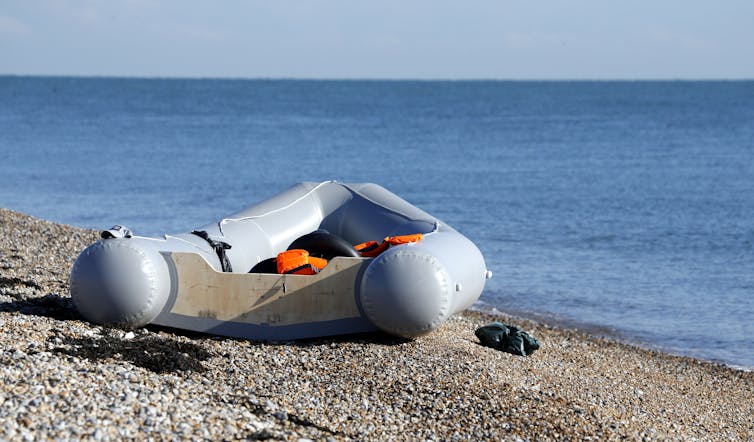
An empty dinghy sits on a beach in Kent
The ECHR is often discussed in relation to the government’s ability to deport people who arrive in the UK illegally.
Sean Aidan Calderbank/Shutterstock

A large share of respondents to the polls examined were “unsure” about withdrawal – ranging from 15 to 25% across the surveys. It’s therefore possible that true support for remaining in the ECHR may be higher than headline polls imply.

The latest YouGov survey asked respondents how much they know about the ECHR, and found just 5% of respondents claimed to know “a great deal” about the convention, while 49% said they do not know very much, and 15% said they know nothing at all.

Research shows that attitudes towards human rights grow more positive as knowledge of human rights increases. A Scottish Human Rights Commission study in 2018 found that indifference often masks confusion rather than hostility.

The Independent Review of the Human Rights Act in 2021 reached a similar conclusion, stressing that greater public understanding of human rights institutions strengthens support.

This is why it is important for people and politicians to understand that conventions like the ECHR are not just about migrants and asylum seekers. They protect the rights of everyone in matters that affect us all – from privacy at home and fair treatment in court, to freedom of speech, protection from discrimination and dignity in care.

The growing political momentum for withdrawal from the ECHR is not matched by popular demand. Instead, politicians are proposing to amend Britain’s constitutional order in the name of “the people” while ignoring what a majority of people actually want, undoing constitutional safeguards and democratic institutions in the process.

The lesson of postwar Europe is clear: constitutional safeguards against majority rule are not an obstacle to democracy, but one of its foundations. To abandon them would not only place the UK alongside Russia and Belarus – the only European states outside the ECHR – but also risk repeating the very errors the convention was created to prevent.

The Conversation

Jacques Hartmann has received external research funding from a range of government and charitable sources, including the European Commission (Horizon 2020), NordForsk, the British Academy, and private foundations such as Dreyer’s Trust and the Max Sørensen Foundation. None of these funders had any role in the conception, research, or writing of this article, which was undertaken independently and without specific project funding.

Dr Edzia Carvalho has received funding from the British Academy, the Scottish Government, the Carnegie Foundation, and FIDH. None of these funders had any role in the conception, research, or writing of this article, which was undertaken independently and without specific project funding.

Dr Samuel White has previously received funding from the Carnegie Trust for the Universities of Scotland and the Royal Society of Edinburgh. He represents the Law Society of Scotland on the Scottish Government’s Human Rights Incorporation and Implementation Oversight Board; this article is written in a personal capacity.

ref. Do British people want to leave the ECHR? What a decade of polls reveals – https://theconversation.com/do-british-people-want-to-leave-the-echr-what-a-decade-of-polls-reveals-266682

Without proper support, a diagnosis of dyslexia risks being just a label

Source: The Conversation – UK – By Penelope Hannant, Assistant Professor in Educational Inclusion, University of Birmingham

PeopleImages/Shutterstock

Whether and when to use the label “dyslexia” has been a perennial debate in education.

Some experts and academics argue that there is too much focus on the diagnosis of dyslexia, rather than on providing support for all children who struggle to learn to read. Others argue that children with the most significant difficulties have to fight to get the recognition they need.

Public figures, including celebrity chef Jamie Oliver, have called for all children to receive early screening for dyslexia.

We work together as researchers in psychology and education, with expertise in how children learn to read, dyslexia, neurodiversity, and how children with special educational needs should be supported. While calls for universal dyslexia screening are well intentioned, we believe this approach could lead to more problems than solutions.

One concern is the lack of accuracy in many screening tools, which can result in unclear or misleading outcomes.

Literacy difficulties are complex. Dyslexia is just one of many possible reasons a child might struggle with reading and writing. Focusing too narrowly on dyslexia risks missing other important learning needs.

Screening also has other limitations. A dyslexia screener is a tool used to flag potential indicators of dyslexia, which may involve one or more approaches such as teacher observations, structured audits, questionnaires or digital assessments. It offers only a brief snapshot of a child’s abilities, rather than a full picture of how they learn.

Small children raising hands in class
A range of factors influence how children learn.
PeopleImages/Shutterstock

Another crucial issue is what happens after screening. Without enough resources to follow up on screening results, teachers, parents and children may be left feeling frustrated and unsupported.

If there’s no clear plan for what happens next, it can raise expectations without delivering real help. This can leave families and educators disillusioned and children without the support they need to succeed.

We both strongly believe in the value of a dyslexia diagnosis in the right context. One of us (Julia Carroll) recently led a project to gain consensus about the most appropriate definition of dyslexia and the best approach to assessment.

On the basis of this research, we believe a multi-phase process should be used. For younger children, the focus should be on needs rather than diagnosis. Extra help should be available for any children starting to fall behind. Some of these children will progress well. Others will continue to struggle, and an assessment for dyslexia may be warranted.

This approach relies on a thorough understanding of a child’s needs, rather than prematurely categorising young children.

Holistic approaches

One of us (Penny Hannant) has developed a broad-based questionnaire to measure and aid development in early schooling. By gathering information about a child’s development, such as how they respond to sounds, move their body, react to sensory input and process what they see, we can build a clearer picture of what kind of support they might need.

This approach allows for teachers to intervene before educational gaps emerge, offering a more refined and responsive foundation for learning.

A full profiling of strengths and weaknesses is also crucial to diagnostic assessment. Recent research indicates that developmental disorders such as dyslexia tend to have multiple causes, and that there is a great deal of overlap between different disorders.

Research suggests that a significant proportion of children with dyslexia also meet criteria for developmental language disorder or attention deficit hyperactivity disorder, which can significantly influence how dyslexia develops.

This means that any diagnostic process must take into account the whole child rather than relying on narrow or isolated criteria. To ensure this, schools need in-house specialists who are equipped to conduct holistic assessments and guide tailored support. A well-informed diagnosis not only helps children do better at school, but means they can continue to get the right support as they transition into adulthood.

The Conversation

Penelope Hannant is on the board of trustees with PATOSS, the dyslexia charity.

Julia M. Carroll receives funding from the Education Endowment Foundation and from the Economic and Social Research Council. She is on the board of trustees with PATOSS, the dyslexia charity.

ref. Without proper support, a diagnosis of dyslexia risks being just a label – https://theconversation.com/without-proper-support-a-diagnosis-of-dyslexia-risks-being-just-a-label-264153

Research suggests rich people tend to be more selfish – but why is that?

Source: The Conversation – UK – By Steve Taylor, Senior Lecturer in Psychology, Leeds Beckett University

North Monaco/Shutterstock

From Disney’s Scrooge McDuck and Cruella de Vil to DC Comics’ Lex Luthor to and Mr Burns in the Simpsons, there are plenty of examples of wealthy people using their money and power in evil ways. But is there any truth to the stereotype that rich people are mean?

There are many rich people who act benevolently, including philanthropists who give a lot of their money away. However, research in psychology has found a clear link between wealth and unethical behaviour, including an increased tendency to cheat and steal.

One study found that wealthy upper class people were more likely to have a selfish focus on their interests. Conversely, another study found that people from lower social classes were more likely to feel compassion for other people’s suffering.

Researchers have also established that drivers of expensive cars are less likely to behave altruistically than other drivers. They are less likely to slow down to let pedestrians cross or to let other drivers join the road.

They are also more likely to drive aggressively and disobey traffic rules. One study found that the likelihood of the drivers slowing down to let pedestrians cross the road decreased by 3% for every US$1,000 (£738.50) that their car was worth.

But it’s not just that these people are bad drivers. A study by Finnish psychologists found that owners of luxury cars had a higher prevalence of negative personality traits such as being disagreeable, stubborn and lacking in empathy.

In simple terms, it seems that rich people are less likely to be altruistic.

What could explain this link? Perhaps wealth turns people bad, isolating them from others and making them more selfish. Or is it that people who are already ruthless and selfish are more likely to become extremely wealthy?

One way of clarifying this is to think in terms of what psychologists refer as dark triad personalities. These are people who have combined traits of psychopathy, narcissism and machiavellianism (acting immorally to get power). These traits – which all involve selfishness and low empathy – almost always overlap and can be difficult to distinguish from one another. They exist on a continuum in the population as a whole.

Research shows that dark triad personalities tend to possess higher levels of status and wealth. A study following participants for 15 years found that people with dark triad traits gravitated towards the top of the organisational hierarchy and were wealthier.

Man portrait with evil look isolated on black background.
Research suggests financially successful people are more likely to have dark traits.
CebotariN/Shutterstock

In line with those findings, according to some estimates, the base rate for clinical levels of psychopathy is three times higher among corporate boards than in the overall population. Research also indicates that young people with dark triad traits are more highly represented on business courses at university or college.

Why do mean people seek wealth?

In my view, the correlation between wealth and nastiness is quite easy to explain. In my book The Fall, I suggest that some people experience a state of intense psychological separation. Their psychological boundaries are so strong that they feel disconnected from other people and the world, which can come with a lack of empathy or emotional connection.

One effect of this state of disconnection is a sense of psychological lack. People feel incomplete, as if something is missing. In turn, this generates an impulse to accumulate wealth, status and power, as a way of compensating.

On the flip side, people who feel a sense of connection others and to the world don’t feel a sense of incompleteness and so don’t tend to have a strong desire for power or wealth.

At the same time, a lack of empathy can make it easier to attain success. It means you can be ruthless in your pursuit of wealth and status, manipulating and exploiting others. If other people suffer as the result of your actions – and lose their livelihood or reputation – it doesn’t concern you as much. Without empathy, you can’t sense the suffering you cause.

So psychological disconnection has two disastrous effects: it generates a strong desire for wealth and status, together with the ruthlessness that makes wealth and success easily attainable.

Wealth and wellbeing

Of course, I’m not claiming that all wealthy people are mean. Some people become wealthy by accident, or because they have brilliant ideas, or even because they want to use their wealth to benefit others. But given the factors described above, it is not surprising that there is a high incidence of meanness among the wealthy.

The studies cited above imply that the link seems to be proportional, in that the more wealthy a person is, the more likely they are to possess dark triad traits. And we know that most dark traits, such as psychopathy are linked to similar or lower levels of happiness to others. An exception is a certain type of narcissism, called grandiose narcissism, which is linked to higher happiness.

A great deal of research in psychology has shown only a weak correlation between wealth and wellbeing. A 2010 study by Nobel laureate Daniel Kahneman and Angus Deaton found that happiness increased in line with income up to around US$75,000 (£54,9612) a year (equivalent to US$110,000 in 2025). However, this is where the correlation ended. According to the study, after US$110,000 a year, it doesn’t matter how rich you become; it won’t make you any happier.

Newer research, however, has found slightly different results. A recent study by Kahneman and colleagues indicated that happiness continues to increase with income for a proportion of rich people – but not for an unhappy minority. A 2022 study also found that the threshold at which happiness plateaus depends on the country – in societies with greater inequality, there was a higher threshold.

What’s more, another study by Kahneman and other colleagues found that, for people who were preoccupied with striving for financial success, life satisfaction actually decreased as income increased.

Overall though, evidence suggests that wealthy people are unlikely to attain the contentment they seek through money alone. Their wealth and status don’t take away their sense of incompleteness.

This might be another reason why extremely rich people tend to act unethically – as their sense of disconnection grows stronger. In contrast, research shows a strong link between altruism and wellbeing. So perhaps that is where we should focus our attention – not on becoming rich, but becoming kind.

The Conversation

Steve Taylor does not work for, consult, own shares in or receive funding from any company or organisation that would benefit from this article, and has disclosed no relevant affiliations beyond their academic appointment.

ref. Research suggests rich people tend to be more selfish – but why is that? – https://theconversation.com/research-suggests-rich-people-tend-to-be-more-selfish-but-why-is-that-265794