Sharia law isn’t taking over Britain – it’s an inevitable legacy of its colonial legal history

Source: The Conversation – UK – By Femi Owolade, Research Associate, Sheffield Hallam University

Kam Hus/shutterstock

Every few years, a familiar anxiety resurfaces in British public discourse: that sharia law is establishing a parallel legal system and threatening the sovereignty of English law. Those fears were reignited following Donald Trump’s recent speech to the UN, where he claimed that London wants “to go to sharia law”.

Such claims ignore two realities. First, that the English legal system is adaptive and capable of accommodating diversity. And second, that having multiple legal systems is – far from undermining British law – an inevitable legacy of Britain’s colonial history. Looking to that history, it should be no surprise that it is a feature of modern, multicultural Britain.

My research shows how British colonial administrators deliberately designed plural legal systems to sustain imperial rule. The colonial state recognised that it could not rule diverse populations by imposing English law on multicultural societies.

In northern Nigeria, this approach became a defining feature of colonial governance. English law operated alongside Islamic courts, which handled family disputes and aspects of land tenure. Allowing limited autonomy for Africans under sharia was both a pragmatic and political strategy. It maintained local legitimacy while ensuring that English law remained supreme in cases of conflict.

A similar arrangement existed in British India. This legacy continues to shape how law functions in postcolonial, multicultural Britain today.

How sharia operates in Britain today

There is no separate sharia legal system in the UK. What exist are sharia councils and the Muslim Arbitration Tribunal. The sharia councils have no statutory authority under English law. They may be used to resolve personal disputes such as marriage, divorce and inheritance.

The Muslim Arbitration Tribunal, in existence since the early 2000s, operates under the Arbitration Act 1996. This law allows private arbitration between consenting adults in civil disputes. But such tribunals must operate within the boundaries of English law.

Sharia councils have a slightly longer history, dating back to the 1980s. Their number and activities are difficult to track: in 2009, rightwing thinktank Civitas approximated at least 85, while a 2012 study by a researcher at the University of Reading identified 30.

No comprehensive survey has been conducted since, leaving the exact number uncertain. This lack of official oversight fuels the perception that the councils pose a challenge to Britain’s legal sovereignty.

But, as a 2018 Home Office review confirmed, sharia councils hold no legal jurisdiction in England and Wales.

The review did acknowledge concerns raised by women’s rights groups about gender inequality and lack of representation of women in some councils. It concluded that these issues called for better regulation and oversight, and that the “state would be justified in intervening” in bad practices by sharia councils that disadvantage women.

It also found that public fears are fuelled by misleading terms, used in both the media and sometimes by councils themselves. For example, referring to the councils as “courts” and their members as “judges” reinforces misconceptions about the existence of a parallel legal system.

Multifaith Britain and the law

English law is capable of accommodating and regulating diverse legal practices without losing its sovereignty. Besides sharia councils, other faith-based arbitration bodies exist in Britain.

The Beth Din courts, for example, serve the Jewish community, offering guidance on issues of marriage and divorce. While they cannot compel a divorce, they can encourage or persuade a husband to grant a religious divorce certificate.

The Roman Catholic Church, which complies with the Marriage Act 1949, operates its own tribunals to consider annulments under canon law. None of these institutions undermine the authority of English courts.

The same applies to sharia councils. Participation is voluntary: individuals choose to use these forums, often to resolve family or inheritance matters in line with their faith. English civil courts remain fully available to them.

Following concerns about the protection of women’s rights in the councils, the 2018 Home Office review recommended stronger safeguards. These include requiring civil registration of marriages, greater transparency in decision-making, and education about legal rights.

The review found that nearly all users of the sharia councils were women, with over 90% seeking an Islamic divorce. Many were unable to obtain a civil divorce because their marriages had never been registered under English law, leaving them without legal recourse in the civil legal system.

The review stressed that its proposed safeguards were designed to protect vulnerable women, rather than suppress or prohibit sharia councils from operating. This recognises that the demand for religious divorce will continue regardless of sharia prohibition.

The UK government accepted the review’s findings but has not established a regulatory body. This suggests that most safeguards are currently dependent on voluntary good practice within the councils.

Postcolonial legal pluralism

In a postcolonial, multifaith society like Britain, legal pluralism is not a sign of a fragmented legal sovereignty – it’s an acknowledgement of social reality. The persistence of sharia in modern Britain reflects a society still negotiating how to govern cultural and religious difference through law, as the empire once did.

Other postcolonial societies have accepted this. In India, different personal law systems for Hindus, Muslims and Christians coexist under one constitution. There is an ongoing debate in the country about how to balance faith-based identity with the rights guaranteed by the secular state.

The same question now faces Britain. The challenge is not whether to recognise the arbitrating powers of sharia councils, but how to regulate them fairly – ensuring that every citizen, regardless of faith, can exercise their rights within the boundaries of English law.

The Conversation

Femi Owolade does not work for, consult, own shares in or receive funding from any company or organisation that would benefit from this article, and has disclosed no relevant affiliations beyond their academic appointment.

ref. Sharia law isn’t taking over Britain – it’s an inevitable legacy of its colonial legal history – https://theconversation.com/sharia-law-isnt-taking-over-britain-its-an-inevitable-legacy-of-its-colonial-legal-history-267262

New ‘miniature T rex’ rewrites the history of the world’s largest predator

Source: The Conversation – UK – By Abi Crane, Postgraduate Researcher in Palaeontology, University of Southampton

A pack of Nanotyrannus attacks a juvenile T. rex Anthony Hutchings, CC BY-NC-ND

A new specimen of one of the most controversial species of dinosaur has the
potential to overturn decades of research on the T rex.

Nanotyrannus, the “miniature T rex”, has been the centre of one of the fiercest debates in palaeontology. Scientists have long argued over whether the Nanotyrannus is a separate species or just a young T rex.

The controversy was ignited in 1999 when the only known fossil of a Nanotyrannus was found to belong to a juvenile. More complete fossils have since failed to produce any conclusive answers because they were all also found to be juvenile.


Read more:
Five things you probably have wrong about the T rex


But the debate surrounding the identity of Nanotyrannus may finally be settled. A new fossil specimen, described in the journal Nature, is the smoking gun researchers have been looking for: an adult Nanotyrannus.

Woman sitting on large dinosaur fossil
Lindsay Zanno, associate research professor at North Carolina State University, with the dueling dinosaurs fossil.
N.C. State University, CC BY-NC-ND

Known as the duelling dinosaurs, this fossil preserves an almost-complete
Nanotyrannus and Triceratops entombed together. They seem frozen in combat (whether they were actually fighting when they became buried in the Earth’s sediment remains to be tested). Although the fossil was discovered in Montana, US back in 2006, it was under private ownership until the North Carolina Museum of Natural Sciences purchased it in 2020. Now accessible to scientists, the true nature of this remarkable fossil can be revealed for the first time.

The researchers have confirmed that Nanotyrannus is a separate miniature type of tyrannosaur by demonstrating this specimen belonged to a near fully-grown adult. The age and maturity of dinosaurs can be assessed by looking at the inside of their bones. Dinosaurs grew in cycles of faster and slower growth which produced distinct layers of bone. When cut open and examined under a microscope, these marks can be counted like rings in a tree.

Using this method, the researchers could determine that the Nanotyrannus in the duelling dinosaurs was at least 14 years old when it died. The researchers also found its rate of growth had slowed significantly in its final years, indicating that this individual was nearly at full body size.

So just how small was this miniature T rex? Nanotyrannus is only around one tenth of the size of a fully grown T rex. Being one of the largest predators to ever walk the Earth, however, T rex would make most animals look small. The duelling dinosaurs Nanotyrannus is over four metres long and estimated to have weighed over 700kg – that’s as heavy as some of the very largest polar bears.

Other specimens of Nanotyrannus are even bigger. The almost complete skeleton known as Jane, discovered in 2001 also in Montana, is estimated at over a ton, larger than any land predator alive today.

Fossil dinosaur skull
Nanotyrannus lancensis skull shows its teeth are not serrated.
N.C. Museum of Natural Sciences, CC BY-NC-ND

The researchers have found enough differences in the shape of bones in the skulls of the duelling dinosaurs fossil and the larger Jane to separate them into two different species; Nanotyrannus lancensis and the newly-named Nanotyrannus lethaeus.

Other than small size, another feature that the researchers have used to distinguish Nanotyrannus from T rex is the number of teeth. Despite its much smaller mouth, Nanotyrannus could no doubt pack a powerful bite with its over 60 teeth. T rex had 40-50 teeth in its jaws.

The teeth themselves are also different. Nicknamed “lethal bananas”, the teeth of T rex are curved and serrated like steak knives. These unique teeth are perfect for slicing into flesh and could crush bone. By contrast, some of the teeth of Nanotyrannus are straight, chisel-like and without serrations, more closely resembling those of other types of carnivorous dinosaur.

T rex had famously tiny arms, the source of many jokes and dinosaur impressions. Nanotyrannus does not

ref. New ‘miniature T rex’ rewrites the history of the world’s largest predator – https://theconversation.com/new-miniature-t-rex-rewrites-the-history-of-the-worlds-largest-predator-268678

Latin America is reviving the ‘iron fist’ approach to law enforcement

Source: The Conversation – UK – By Adriana Marin, Lecturer in International Relations, Coventry University

A massive anti-drug raid in Rio de Janeiro left 132 people dead in the early hours of October 28 as Brazil’s security forces confronted one of the country’s biggest crime gangs. It was one of the deadliest security operations in modern Brazilian history.

Around 2,500 officers descended on the favelas of Complexo do Alemão and Complexo da Penha, strongholds of Brazil’s oldest criminal group, Comando Vermelho. There were more than 80 arrests.

Authorities described the operation as the country’s “biggest gang raid in history”. Human Rights Watch in Brazil called the episode “a huge tragedy”.

Beyond the immediate shock, the operation raises deeper questions about the resurgence of militarised policing models across Latin America. These are often labelled under the banner of mano dura – the “iron-fist” approach.

Mano dura policies prioritise forceful state intervention, military-style policing and mass incarceration as mechanisms to reassert territorial control and deter organised crime. These strategies have a long history in Latin America, particularly in central America during the early 2000s, when governments in El Salvador, Honduras and Guatemala adopted militarised responses in the face of rising gang violence.

What distinguishes the current wave is its intensity and the geopolitical narratives that accompany it. Rather than being seen as exceptional, mano dura is increasingly treated as a legitimate and even necessary model of governance in the face of criminal insurgency and institutional fragility.

The Rio raid appears to be part of this broader shift. Brazil has long grappled with powerful criminal factions. The gangs control territory, levy taxes and provide informal governance in the favelas and prison systems of Rio.

As fears of gang power have risen, so has support for militarised intervention. Many see a hardline approach as the only viable means of restoring order. The electoral success of Jair Bolsonaro in 2018, built on promises of aggressive policing and the expansion of military influence in civilian affairs, reflected this sentiment.

The current president, Luiz Inácio “Lula” da Silva, has positioned himself as a moderate alternative. But this week’s raid suggests that the structural pressures driving mano dura politics persist across administrations, regardless of their ideology.

International political dynamics have played a significant role in the resurgence of militarised security strategies. The rhetoric of “law and order” popularised globally by figures such as Donald Trump has reframed domestic security – not as a social or economic challenge, but as a war requiring overwhelming force.

Trump’s statements praising extrajudicial killings of drug traffickers and his advocacy for deploying the military to “take back” American cities have resonated beyond the US.

It would be inaccurate to claim that US politics directly cause security crackdowns in Latin America. But it contributes to a widely accepted narrative which frames displays of state violence as decisive leadership rather than as democratic backsliding.

Militarised policing

This phenomenon aligns with a broader global trend in which states use militarised policing as a tool of political legitimacy. In Latin America, leaders across the political spectrum have capitalised on public fear of crime to justify extraordinary security measures.

Nayib Bukele, El Salvador’s strongman leader, has achieved record approval ratings after implementing mass detentions and militarised crackdowns on gangs. In Brazil, the Rio raid may be interpreted in this light. It was a demonstration of state authority designed to reassure voters that the government is willing to use force to restore order.

But there are significant risks to this approach. Historical evidence from Latin America indicates that mano dura policies often deliver only temporary reductions in violence. Meanwhile they tend to undermine institutional legitimacy in the long term.

Mass raids and lethal confrontations can fragment criminal organisations, leading to splinter groups that generate further instability. Militarised policing can deepen mistrust between communities and the state.

This is particularly the case in marginalised areas where residents already feel excluded from formal institutions. Excessive use of force without due process risks normalising extrajudicial killings and diminishing accountability, eroding democratic norms.

The Rio raid also reflects a changing power dynamic in the region. Criminal organisations such as Comando Vermelho have evolved beyond their drug-trafficking origins. They now operate as parallel governance systems.

They control territory and the provision of welfare. Many of these gangs wield considerable political influence.

In this context, mano dura is not only a security policy. It’s become more of a response to perceived challenges to the state’s power.

The use of large-scale force can be understood as a performative attempt to reassert territorial dominance. This aligns with what some scholars describe as the “punitive turn” in Latin America. Countries like Brazil increasingly use coercive power to demonstrate authority rather than to resolve underlying drivers of violence.

Cycles of violence

There is a broader question. Will this approach achieve lasting security or will it merely reproduce cycles of violence? In countries where judicial systems are weak and prisons are overcrowded, militarised operations often funnel recruits into criminal networks rather than dismantling them. Brazil’s own experience illustrates this.

Many of the country’s most powerful criminal factions, including Comando Vermelho itself, originated within the prison system during periods of mass incarceration.

It is also important to recognise that mano dura policies are often implemented in the absence of viable alternatives. Policymakers face immense pressure from citizens to deal with this security crisis. In some cases, communities themselves may call for military intervention, viewing it as the only way to dislodge criminal control.

This creates a security paradox. While forceful interventions may be politically popular, they can inadvertently reinforce the very conditions that allow criminal organisations to thrive.

The Rio raid therefore presents a critical moment for reassessing security governance in Latin America. It highlights the challenges governments face in balancing public demands for safety with the need to preserve democratic institutions and human rights. It also raises questions about the role of international influence in shaping security policy.

The global resurgence of punitive approaches, legitimised by leaders like Trump, has helped reshape the boundaries of what is considered acceptable in state responses to crime. As governments face growing security challenges, the appeal of mano dura will continue to grow.

Yet the question remains whether these tactics represent a solution to violence or a symptom of deeper institutional crisis.

The Conversation

Adriana Marin does not work for, consult, own shares in or receive funding from any company or organisation that would benefit from this article, and has disclosed no relevant affiliations beyond their academic appointment.

ref. Latin America is reviving the ‘iron fist’ approach to law enforcement – https://theconversation.com/latin-america-is-reviving-the-iron-fist-approach-to-law-enforcement-268596

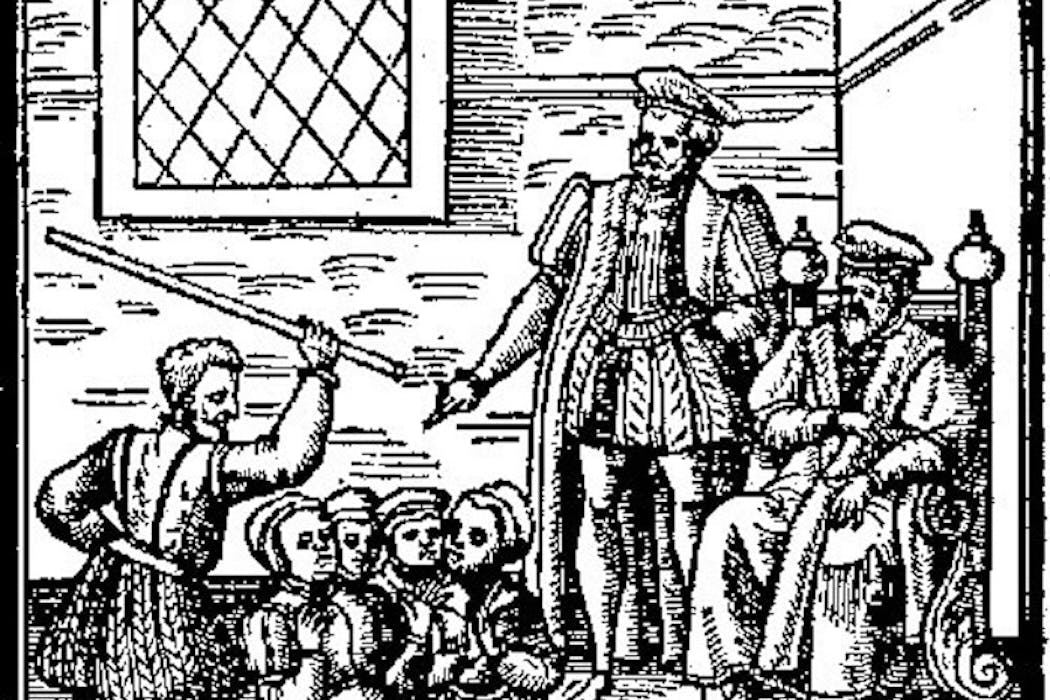
The Scottish king who wrote a treatise on demonology and obsessed over witches

Source: The Conversation – UK – By Gemma Ware, Host, The Conversation Weekly Podcast, The Conversation

Suspected witches kneeling before James VI in Daemonologie, his 1597 treatise on witches. Wikimedia Commons

In the 16th century, witches and demons weren’t just for Halloween. People were terrified and preoccupied with them – even kings.

In 1590, James VI of Scotland – who was later also crowned James I of England – travelled by sea to Denmark to wed a Danish princess, Anne. On the return journey, the fleet was hit by a terrible storm and one of the ships was lost.

James, a pious Protestant who would go on to sponsor the translation of the King James bible, was convinced he’d been the target of witchcraft. On his return, he set in motion the brutal North Berwick witch trials.

A few years later, James decided to write a treatise called Daemonologie, setting out his views on the relationship between witches and their master, the devil.

Meanwhile, another firm Halloween favourite – ghosts – had fallen out of favour in the wake of the Protestant Reformation because they were seen as a hangover from Catholicism.

In this episode of The Conversation Weekly podcast, Penelope Geng, an associate professor of English at Macalester College in the US who teaches a class on demonology, takes us back to a time when beliefs around witches, ghosts and demons were closely tied to religious politics. She explains how these beliefs  have come to influence the way witches and ghouls have been portrayed in popular culture ever since:

It seemed that at a very grassroots level, people believed in the existence of witches and devils. At a very high theological level, writers were talking about it. So I think, compared to today, the early modern period really was a moment in which people were somewhat obsessed with thinking about this eternal struggle between good and evil and their own place in this warfare.

You can also read an article Penelope Geng wrote on the difference between ghosts and demons, and the way they were portrayed in literature, as part of The Conversation’s Curious Kids series.

This episode of The Conversation Weekly was written and produced by Katie Flood, Mend Mariwany and Gemma Ware. Mixing by Eleanor Brezzi and theme music by Neeta Sarl.

Listen to The Conversation Weekly via any of the apps listed above, download it directly via our RSS feed or find out how else to listen here. A transcript of this episode is available on Apple Podcasts or Spotify.

The Conversation

Penelope Geng does not work for, consult, own shares in or receive funding from any company or organisation that would benefit from this article, and has disclosed no relevant affiliations beyond their academic appointment.

ref. The Scottish king who wrote a treatise on demonology and obsessed over witches – https://theconversation.com/the-scottish-king-who-wrote-a-treatise-on-demonology-and-obsessed-over-witches-268595

The Scottish king who wrote a treatise on demonology and obssessed over witches

Source: The Conversation – UK – By Gemma Ware, Host, The Conversation Weekly Podcast, The Conversation

Suspected witches kneeling before James VI in Daemonologie, his 1597 treatise on witches. Wikimedia Commons

In the 16th century, witches and demons weren’t just for Halloween. People were terrified and preoccupied with them – even kings.

In 1590, James VI of Scotland – who was later also crowned James I of England – travelled by sea to Denmark to wed a Danish princess, Anne. On the return journey, the fleet was hit by a terrible storm and one of the ships was lost.

James, a pious Protestant who would go on to sponsor the translation of the King James bible, was convinced he’d been the target of witchcraft. On his return, he set in motion the brutal North Berwick witch trials.

A few years later, James decide to write a treatise called Daemonologie, setting out his views on the relationship between witches and their master, the devil.

Meanwhile, another firm Halloween favourite – ghosts – had fallen out of favour in the wake of the Protestant Reformation because they were seen as a hangover from Catholicism.

In this episode of The Conversation Weekly podcast, Penelope Geng, an associate professor of English at Macalester College in the US who teaches a class on demonology, takes us back to a time when beliefs around witches, ghosts and demons were closely tied to religious politics. She explains how these beliefs  have come to influence the way witches and ghouls have been portrayed in popular culture ever since:

It seemed that at a very grassroots level, people believed in the existence of witches and devils. At a very high theological level, writers were talking about it. So I think, compared to today, the early modern period really was a moment in which people were somewhat obsessed with thinking about this eternal struggle between good and evil and their own place in this warfare.

You can also read an article Penelope Geng wrote on the difference between ghosts and demons, and the way they were portrayed in literature, as part of The Conversation’s Curious Kids series.

This episode of The Conversation Weekly was written and produced by Katie Flood, Mend Mariwany and Gemma Ware. Mixing by Eleanor Brezzi and theme music by Neeta Sarl.

Listen to The Conversation Weekly via any of the apps listed above, download it directly via our RSS feed or find out how else to listen here. A transcript of this episode is available on Apple Podcasts or Spotify.

The Conversation

Penelope Geng does not work for, consult, own shares in or receive funding from any company or organisation that would benefit from this article, and has disclosed no relevant affiliations beyond their academic appointment.

ref. The Scottish king who wrote a treatise on demonology and obssessed over witches – https://theconversation.com/the-scottish-king-who-wrote-a-treatise-on-demonology-and-obssessed-over-witches-268595

Plastic packaging could be a greater sin than food waste

Source: The Conversation – UK – By James Cronin, Professor in Marketing and Consumer Culture Studies, Lancaster University

Miljan Zivkovic/Shutterstock

Food waste has long been reviled as an immoral, largely preventable feature of our consumer society.

An estimated 4.7 million tonnes of edible food is thrown away by households each year in the UK, according to the Waste and Resources Action Programme, an environmental charity that runs the Love Food Hate Waste campaign. This wastage seems especially wrong at a time when escalating food prices have driven many British households to become reliant on food banks.

Meanwhile, the single-use plastic packaging used to reduce food wastage poses a more insidious problem. Once discarded, the single-use plastics that cushion, seal, protect and extend the shelf life of our groceries can linger in landfills, beneath the ground, in rivers and on the seabed for centuries.

This mounting plastic waste could disrupt ecosystems, negatively effect food security through declining animal health and cause health issues in people. If binning good-to-eat food has historically been reviled as consumers’ great moral failing, their over-reliance on single-use plastic food packaging could be a longer-lasting sin.


Read more:
Most food waste happens at home – new research reveals the best ways to reduce it


UK households throw away approximately 90 billion pieces of plastic packaging a year. In 2024, the UK achieved a recycling rate of approximately 51%-53.7% for plastic packaging waste.

The rest was incinerated, land-filled, or shipped abroad, typically to countries with weaker waste management systems. There it is buried, burned or haphazardly stored with the risk of leaking into rivers and seas.

Traces of plastic have been detected everywhere from Arctic ice to the hottest deserts, from the bellies of seabirds to human blood, lungs and placentas. Unlike food waste, the damage of plastic waste is cumulative, slowly imparting a toxic legacy throughout ecosystems for future generations.

The scale of the single-use plastics problem is not to diminish the problem of food waste. Throwing out a pack of mackerel fillets or a tub of smashed avocado from the fridge is not only disrespectful to the third of UK children under five living in food insecure homes. It disregards the huge amount of carbon emissions needed to produce, preserve, transport, retail and store those items from producer to consumer.


Read more:
How the pollution of today will become the ‘technofossils’ of the far future


An estimated 16 million tonnes of carbon dioxide is produced from UK households’ wasted consumable food and drink. But damaging as it is, food waste has an end point: it decomposes, breaks down, then returns to the soil.

In contrast, plastic packaging persists indefinitely, slowly fragmenting into smaller parts and disintegrating into stubborn chemical constituents that stick around. Each plastic bottle, crisp packet and meat tray that ends up in the natural environment represents a long-term alteration of the material world.

Food waste decays, plastic stays

Why then does binning plastic packaging rarely invite as fervent a reaction as scraping a plate of uneaten dinner into the bin? Our research suggests that part of the answer lies in how each act of wastage is morally framed.

Food is very visible, desirable and morally loaded – it is something held dear in most religions and communities. Several faiths explicitly denounce the wasting of food as sinful or wrong. Secular British history too is replete with memories of food shortages, rationing, rising prices and austerity periods which have led to strong moral attitudes against food waste.

According to the anti-poverty charity Trussell Trust’s research, approximately 14 million people in the UK faced hunger in the past year leading up to September 2025.

food waste in brown bin bag, white background
Binning good-to-eat food is usually considered morally unacceptable.
5PH/Shutterstock

By comparison, plastic is more abstract. Plastic food packaging is hidden in plain sight, often serving as a “passenger” rather than a driver of our consumption. After we remove the food, we toss plastic packaging into the trash – ideally the recycling bin – without a further thought.

Where food is deep-seated in moral and even sacred meanings around nourishing the body, sharing and caring, identity and celebration, plastic is devoid of such values. Throwing food away can feel like an affront to the communities we identify with, but binning plastic does not carry the same stigma. We do not view ourselves as “wasting” plastic, we merely “dispose” of it.

Among the members of 27 households we interviewed, many expressed their frustration about good-to-eat food ending up in bins or landfills. Most cited the usefulness of plastic packaging in keeping food fresh and helping to reduce waste.

For them, the consequences of binning plastics are dispersed and delayed. No great cautionary tale from our collective memory exists to warn us of the complex, longer-term challenges that will follow.

To overcome the challenges of tomorrow, we must reassess the hierarchy of things that we, as consumers, feel guilty about. Food waste certainly matters, but so too does plastic packaging. The problem is that plastics have not been a part of our moral economy for very long.

Plastics arrived as a modern convenience, not as a moral appendage to our sense of identity or community like food has been for millennia. There are no ancient and collective traumas tied to plastics’ wanton consumption, abuse or scarcity, no prayers of gratitude for plastic packaging, and no great piety or moral proverbs condemning its thoughtless disposal.

Our existing moral frameworks are coloured with images of hunger, famine, bread lines and emaciated bodies that provide us with the imagination to condemn the wasting of food.

But we require new stories and perspectives to position plastic waste as an evil that will outlive us, haunt our waterways, crowd the stomachs of wildlife, leach into our food systems, and poison our bodies long after our shopping habits have changed.


Don’t have time to read about climate change as much as you’d like?

Get a weekly roundup in your inbox instead. Every Wednesday, The Conversation’s environment editor writes Imagine, a short email that goes a little deeper into just one climate issue. Join the 45,000+ readers who’ve subscribed so far.


The Conversation

James Cronin received funding from the UKRI Natural Environment Research Council as co-investigators of the ‘Plastic Packaging in People’s Lives’ (PPiPL) project. Project Reference: NE/V010611/1. More can be read about the PPiPL project here: https://www.lancaster.ac.uk/ppipl/

Alexandros Skandalis received funding from the UKRI Natural Environment Research Council as co-investigators of the ‘Plastic Packaging in People’s Lives’ (PPiPL) project. Project Reference: NE/V010611/1. More can be read about the PPiPL project here: https://www.lancaster.ac.uk/ppipl/

Charlotte Hadley received funding from the UKRI Natural Environment Research Council as co-investigators of the ‘Plastic Packaging in People’s Lives’ (PPiPL) project. Project Reference: NE/V010611/1. More can be read about the PPiPL project here: https://www.lancaster.ac.uk/ppipl/

ref. Plastic packaging could be a greater sin than food waste – https://theconversation.com/plastic-packaging-could-be-a-greater-sin-than-food-waste-267162

Trick or treatment: Halloween health hazards hiding in plain fright

Source: The Conversation – UK – By Adam Taylor, Professor of Anatomy, Lancaster University

yurakrasil/Shutterstock.com

While Halloween offers a chance to embrace all things spooky and supernatural, the real terrors this season aren’t confined to ghost stories. From pumpkin-carved fingers to contact lens infections that can lead to life-threatening heart conditions, the festivities come with genuine medical hazards – some surprisingly severe.

In the US, 44% of Halloween-related injuries stem from pumpkin carving, ranging from minor scratches to lacerations that slice through major nerves, blood vessels and tendons. Specific pumpkin carving knives or tools have been shown to be much safer, though not risk-free.

Pumpkins pose additional dangers when candles are lit inside them. The flames can ignite property or costumes, often leaving victims with severe burns. There is a notable spike in burn-related injuries each year around Halloween, particularly among children. One high-profile case involved TV personality Claudia Winkelman’s daughter, Matilda, who suffered life-changing injuries in 2014, aged eight, when her Halloween costume caught fire.

Costumes themselves create multiple hazards beyond burns. Ill-fitting outfits can lead to broken bones from slips and trips, while masks and heavy headwear obscure vision. Latex allergies from costume materials represent another risk, causing anything from irritation and rashes through, in very rare cases, to death .

The combination of dark October evenings and dark costumes creates a particularly dangerous scenario. Data from the UK covering 27 years revealed that on Halloween, the risk of children being killed or seriously injured in traffic accidents is higher than on any other day – and 34% higher between 5pm and 6pm, probably coinciding with rush hour.

In the US, childhood pedestrian deaths are fourfold higher on Halloween than any other day. A separate study found there are four additional pedestrian deaths on Halloween compared with other days.

On Halloween, appearances can be deceiving – sometimes literally. Coloured contact lenses present significant risks to eye health and overall wellbeing. They can cause irritation and redness, eye injury when they snap and cut into the eye, or even a life-threatening heart infection.

Damage to the eye, from ill-fitting or poor quality contact lenses, can promote bacterial growth. These bacteria can migrate from the eye, often in the bloodstream, to elsewhere in the body. One location they can set up camp is in the heart, causing conditions such as infective endocarditis, which kills about one in five people with the condition. This condition is challenging to treat because medicines and immune cells struggle to reach the heart lining.

In the UK, contact lenses, including novelty or non-prescription ones, are classified as medical devices and require a prescription.

Face paints carry both short- and longer-term risks. Skin irritation and pore-blocking can be an immediate annoyance, along with corneal scratches if paint enters the eyes. Ingestion and prolonged or repeated exposure can increase the risk of absorbing potentially toxic elements such as heavy metals and arsenic, which increase cancer risk.

Plastic fangs and other teeth-modifying sets can damage teeth. Designed as one-size-fits-all products, they’re likely to loosen teeth and exacerbate existing looseness. If using adhesive to hold them in place, ensure it’s approved for dental use. Products like superglue and nail glues will damage tooth enamel – a layer that cannot regenerate – and can burn the gums and inside of the mouth.

A child wearing plastic fangs.
Watch out! You could lose your real teeth.
Menna/Shutterstock.com

Halloween diarrhoea

The obvious concern on Halloween is feeling unwell from consuming excessive sweets or chocolate. However, other consumption hazards have emerged in recent years. Hospital admissions for children who’ve ingested gummies containing THC or otherbanned substances have increased noticeably in countries that have legalised or decriminalised cannabis.

For those watching their calorie intake, sugar-free options may backfire – a phenomenon sometimes referred to as “Halloween diarrhoea”. Sorbitol, an artificial sweetener used in sugar-free products, is only about 60% as sweet as sucrose, meaning more must be added to achieve the desired taste. As little as 20g of sorbitol can have a laxative effect in 50% of healthy people. For context, a stick of sugar-free chewing gum contains roughly 1.25g.

Hard sweets present a choking risk year-round, but particularly to younger children, and the increased sweet consumption around Halloween elevates this risk further. Children with nut allergies face additional jeopardy – the incidence of nut-related anaphylaxis increases by approximately 70% on Halloween.

Beyond food, other Halloween traditions carry risks. Trauma to the eye from eggs used as projectiles is commonly seen during the festivities, with some victims losing their sight from such injuries.

Certain crimes and resulting injuries also increase around Halloween, with assaults showing a significant increase. The commercialisation of Halloween celebrations is thought to play a role, with promotional drink offers partly to blame.

Sensible precautions – wearing lights or reflective strips when out with children, moderating sweet intake, and supervising tasks like pumpkin carving – can substantially reduce the risk of becoming another Halloween hospital statistic.

The Conversation

Adam Taylor does not work for, consult, own shares in or receive funding from any company or organisation that would benefit from this article, and has disclosed no relevant affiliations beyond their academic appointment.

ref. Trick or treatment: Halloween health hazards hiding in plain fright – https://theconversation.com/trick-or-treatment-halloween-health-hazards-hiding-in-plain-fright-263698

Women folk healers were branded as witches, but their treatments may have been medically sound

Source: The Conversation – UK – By Anthony Booker, Reader in Ethnopharmacology, University of Westminster

AlexShevchenko78/Shutterstock

“Hubble bubble toil and trouble” is a quote from Shakespeare’s Macbeth that conjures images of evil witches making potions in giant cauldrons. But the truth was that women persecuted as witches were probably legitimate healers of the time.

Prior to the 14th century, women healers were generally tolerated throughout Europe, offering one of the only kinds of medicine available at the time. But from the 14th to the mid-18th century, with the rise of university education, coupled with the increasing power of the church, women healers were often demonised.

University graduates were favoured instead. Women folk healers were now commonly labelled as “witches” and subjected to torture and execution.

Valuable medicinal knowledge may have gotten lost along the way. To rediscover this ancient knowledge, researchers are looking in more detail at some of the major ingredients used in these medicines and assess their scientific worth through a modern lens.

Some of the most famous potions documented in records of medieval treatments were said to contain exotic ingredients such as eye of newt, toe of frog, wool of bat, tongue of dog and adder’s fork. But these were actually synonyms for plants and not animal parts.

Although, animal parts such as frogs and toads were indeed also used in other recipes used by the healers of the time, often for their psychoactive properties.

The majority of the plants folk healers used were native to Europe. But there were also some exotic ingredients, obtained through the spice trade, which began as early as the fifth century.

Eye of newt is mustard seed, most likely the European species Sinapis alba. Modern research has shown it has anti-cough, anti-asthma, anti-inflammatory, anti-nerve damage, anti-androgenic, cardioprotective and anti-tumour effects.

The classical formulations containing dried mustard seed, handed down from ancient medical books or ethnic medical experience, are now widely used in herbal clinics.

Wool of bat is common holly leaves, and has been shown to reduce high levels of fats in the blood, including high cholesterol. It also contains some compounds that are toxic and so self-medication isn’t recommended.

Tongue of dog is actually a plant known as hound’s tongue, attributed to the long leaf shape. It has a history of use across the world for a variety of ailments including malaria, hepatitis and tuberculosis.

The presence of group of natural compounds called pyrrolizidine alkaloids render it highly toxic to the liver. This means that any research showing medicinal promise has to be viewed with some caution.

Plant with small blue flowers.
Hound’s tongue is really a wildflower.
Giulumian/Shutterstock

Adder’s fork refers most likely to the fern, English adder’s tongue, primarily used in folk medicine for wound healing and for promoting healthy blood circulation. It has also been exploited for its skin-enhancing properties by the cosmetic industry.

Witches’ brews

Witchcraft and folk healing are two different arts. However, medieval folk healing did involve elements of superstition, astrological lore and even pagan ritual and so the line between compassionate healer and witch could easily be misrepresented by those in power.

Flight ointments, sleep potions and love potions are often mentioned both in historical records and fictional literature. Commonly containing a potent class of chemical compounds called tropane alkaloids (a class that also includes cocaine), these concoctions would have had some interesting effects.

Flight ointments were applied to a broomstick and to parts of the body with blood vessels close to the surface to aid absorption. There has been much colourful debate as to the exact parts of the body that these ointments were applied to, but the extremities are most frequently mentioned.

This could be viewed as an early form of transdermal application, now found in the delivery of some drugs such as nicotine patches.

These alkaloids, derived from plants of the Solanaceae (potato) family, including deadly nightshade and henbane have intoxicating psychoactive effects, including feelings of lightness, delirium and hallucinations. These effects could easily be experienced as feelings of flying.

Sleep potions often used extracts from foxglove and extracts from the plant Indian snakeroot, containing the drug reserpine, the world’s first drug treatment for high blood pressure. It was reportedly rediscovered after the founder of the Indian herbal medicine company, Himalaya, observed its calming effects on restless elephants during a trip to Burma in the 1930s, hundreds of years after its use in medieval times.

Foxgloves growing in forest
Foxgloves are more than a country garden flower.
backcornermedia/Shutterstock

Together these plants and their compounds produce symptoms such as reduced heartbeat, inhibition of adrenaline release and drowsiness, all things that might aid in a restful night’s sleep.

Love potion recipes called for ingredients such as the mandrake plant Mandragora officinalis. The root is a rich source of the same alkaloids found in the sleep potions.

This may appear counter-intuitive but higher doses of these compounds are known to produce increased heartbeat, palpitations and sweating rather than drowsiness. Other plants such as Ephedra sinica (containing a stimulant called ephedrine) and psychoactive Areca catechu (betel nut) have stimulant and euphoric effects linked to increases in adrenaline and serotonin.

A sleep potion can be transformed into a love potion, and should love turn to hate, a further increase in dosage would transform these plants into poisons. So it’s unsurprising that accusations associated with poisoning and witchcraft were more commonplace during the heightened witch hunts of the 16th and 17th centuries as a means to prosecute women healers under the law.

Prosecutions for witchcraft didn’t come to an end in England until the early 18th century when the 1736 witchcraft act repealed earlier legislation and made it a crime to either pretend to be a witch or to accuse someone of practising witchcraft.

Following the 1736 act, the witches (and folk healers) were left alone for a while although still encountered difficulties from the church and establishment at times. Nonetheless the act of prescribing potions continued.

The practice of prescribing herbal pills, potions and salves as a herbal medicine practitioner eventually became a legitimate occupation. It’s one still dominated by women to this day.

The Conversation

Anthony Booker is affiliated with The British Pharmacopoeia, The Medicines and Healthcare Products Regulatory Agency, The American Botanical Council, The British Herbal Medicine Association and The European Scientific Cooperative on Phytotherapy.

ref. Women folk healers were branded as witches, but their treatments may have been medically sound – https://theconversation.com/women-folk-healers-were-branded-as-witches-but-their-treatments-may-have-been-medically-sound-266406

Special educational needs reform could be a bureaucratic nightmare – here’s how to put families first

Source: The Conversation – UK – By Paty Paliokosta, Associate Professor of Special and Inclusive Education, Kingston University

PeopleImages/Shutterstock

Plans to reform support for children with special educational needs in England have been delayed after the government announced its new policy would not be unveiled until 2026, rather than autumn 2025.

However, there has already been some indication of what the government will do. The education secretary, Bridget Phillipson, recently promised to set “clear expectations for schools” on how they work together with pupils’ parents. She also outlined her intention to overhaul the process by which parents can make complaints.

In a statement, Phillipson said: “To help us deliver the most effective set of reforms we can, I have taken the decision to have a further period of co-creation, testing our proposals with the people who matter most in this reform – the families – alongside teachers and other experts.”

The additional wait for the schools white paper that will set out the policy will be disappointing to those who are keen to see change in the system. But it also creates an opportunity to ensure the government gets reform right.

As an expert in inclusive education, I argue the call for closer collaboration and the explicit mention of family involvement are excellent signs. However, the government should rethink its framing of parental engagement as a set of expectations that schools must meet.

On paper, this approach looks as if it could safeguard the support children are entitled to. But in reality it risks reducing what can be a mutually respectful and beneficial partnership to a transactional checklist and added bureaucracy.

What is needed instead is effective partnerships with families based on authentic engagement and courageous conversations, based on respect, openness and compassion.

This change in culture can be supported by improved teacher training. This should promote inclusion as a shared responsibility, rather than as sheer accountability.

For example, for children with additional needs, transitions in their educational journey are important and potentially difficult moments. These include starting school, moving between primary and secondary, between mainstream and alternative educational provision, and into adulthood.

Making family involvement happen

Parents and carers can and should play an important role in their children’s education, and their voices should have power. This is particularly vital for children with special educational needs and disabilities.

Parents know their children best. They see their strengths, struggles, and the little things that make a big difference. Irrespective of this, they are routinely excluded or sidelined from decisions about their child’s education.

A recent House of Commons committee report on special educational needs highlights that many parents feel treated as inconvenient or unreasonable. These adversarial dynamics have severely eroded trust in the system.

Findings from an all-party parliamentary group inquiry into “loss of the love of learning” reveal that parents lose confidence in formal education: it’s perceived as a source of anxiety, stress and exclusion for children whose needs may require different teaching and learning approaches.

For these reasons, parental involvement must be central to reform of special educational needs support. Joint planning, emotional support, and coordination at every stage with teachers and others involved in the child’s journey is needed. This can help children adjust and reach emotional and developmental milestones.

We need to move away from a situation where parents are seen only as receivers of expertise, not as experts themselves.

Parents’ knowledge and experiences of disability and difference can lead to real change. It’s right that they are involved in decision making, at school and community level and in national consultations on education policy.

Father helping girl with homework
Parents’ experiences and knowledge can offer real value.
Rido/Shutterstock

Without real input in decision making, the risk is that parental involvement becomes tokenistic rather than transformative, especially when deep-rooted systemic injustices remain in education for children with special educational needs.

Decent parental engagement requires other changes to the system. Children with special educational needs and disabilities often receive support from different services. These need to be coherent so that parent and carer involvement does not become fragmented. The Education Select Committee’s call for a joint workforce strategy on special educational needs and disabilities, including health and care services, must be taken seriously.

Equally, trust and respect needs to be reinstated towards teachers and Sencos: teachers who have an additional role as their school’s special educational needs coordinator. Despite often working in extremely hard conditions and with limited resources, teachers often absorb demonising attitudes and blame.

Sencos are not allocated the time and continued training required for their role. They also do not have the power to make strategic decisions on inclusion.

The Labour manifesto promised to “light the fire” of opportunity for every child. By truly bringing families into their children’s education, the upcoming white paper on schools could be that spark. Otherwise, it risks becoming another layer of bureaucracy in an already overwhelmed system.

The Conversation

Paty Paliokosta does not work for, consult, own shares in or receive funding from any company or organisation that would benefit from this article, and has disclosed no relevant affiliations beyond their academic appointment.

ref. Special educational needs reform could be a bureaucratic nightmare – here’s how to put families first – https://theconversation.com/special-educational-needs-reform-could-be-a-bureaucratic-nightmare-heres-how-to-put-families-first-264313

The Rose Field takes Philip Pullman’s ‘Dust’ to its philosophical conclusions

Source: The Conversation – UK – By Samuel Jesse Cox, Postdoctoral Fellow and Visiting Lecturer in English Literature, University of Tübingen

The Rose Field, the third and final volume in Philip Pullman’s The Book of Dust trilogy is finally in the hands of his readers.

This trilogy accompanies Pullman’s earlier series, His Dark Materials, and tells stories that happen both before and after those original books. Both trilogies follow Lyra Belacqua and her daemon, Pantalaimon – a manifestation of her soul in animal form. In The Rose Field, Lyra journeys deep into the desert for one final discovery about the mysterious substance that connects both series: Dust.

The title of Pullman’s first trilogy comes from John Milton’s 17th-century epic poem Paradise Lost, which tells the story of Satan’s rebellion against Heaven. In it, Milton wrote: “Unless th’ Almighty Maker them ordain / His dark materials to create more worlds.”

In Milton’s poem, the “dark materials” are the chaotic and primordial matter from which God could create new worlds. In Pullman’s stories, however, “dark materials” take the form of Dust – also called shadow particles, Rusakov particles, or dark matter.

Unlike Milton’s lifeless matter, Dust is alive and connected to consciousness and creativity. Through this idea, Pullman turns Milton’s vision upside down, rejecting divine authority and celebrating human imagination.

Across both trilogies, two opposing views of Dust exist. A restrictive theocratic organisation known as the Magisterium declares Dust original sin: “an emanation from the dark principle itself.” Yet due to Dust’s association with daemons and consciousness, Lyra, Pan and their allies remain convinced that Dust must be “good”.

To fully understand Pullman’s Dust we must go beyond Paradise Lost, back to the foundational story in the Judeo-Christian tradition: Genesis.

Dust thou art?

Northern Lights (1995) describes how Dust takes its name from a “curious verse” in the story of Adam and Eve’s fall in Genesis. In it, God curses Adam for eating forbidden fruit saying: “For dust thou art, and unto dust shalt thou return.”

In this moment, Adam and Eve leave behind their innocent, harmonious life with nature. Pullman pinpoints this as the moment in the Bible where a rift opens between humanity and the material world. From then on, humans move from living in unity with the material world to feeling separate from it, forced to struggle against nature instead of living alongside it.

The scholar Mary talking to Dust in the BBC adaptation of The Amber Spyglass.

In Pullman’s inversion, the Authority (God) did not simply create using Dust, but was, like all angels, formed from it. As one of the rebel angel characters explains in the final book of the original trilogy, The Amber Spyglass (2001): “Dust is only a name for what happens when matter begins to understand itself. Matter loves matter. It seeks to know more about itself and Dust is formed.”

This line reveals that Dust is not just connected to the human spirit – our thoughts, feelings, imagination and soul – but also presents a view of reality shaped by matter itself. Through Dust, ideas about the soul are linked to a sense of wonder at the material world.

This echoes the ancient Greek and Roman philosophers who first imagined the universe as made up of moving atoms. Yet throughout His Dark Materials, there is still a sense that humans are special, as human consciousness appears as the culmination of matter understanding itself.

New forms of alienation

In the Book of Dust trilogy, this shifts radically. Pullman has acknowledged that his new books are increasingly shaped by our current times, in which our detachment from our world is enabling the destruction of Earth.

For Pullman, belief in God has passed onto belief in another entity which will save us from the world and its toil: technology. If the split between humans and matter estranged us from the material world, now we face being alienated even from ourselves.

In this new context of alienation, Pullman’s concept of Dust evolves. It moves from being primarily associated with human creativity to implying that human consciousness is intrinsically linked to all matter.

As he writes in La Belle Savage (2017), the first instalment in the Book of Dust trilogy: “There is a field of consciousness that pervades the entire universe, and which makes itself apparent most fully – we believe – in human beings.”

After boldly overthrowing the figure of God (the Authority) in The Amber Spyglass, Pullman seems intent on challenging today’s dominant way of thinking by helping people rediscover a deeper, more imaginative relationship with the physical world.

If we see matter as just lifeless stuff that can only be measured or used, then humans aren’t really powerful – instead, we become spiritually and creatively impoverished.

Philip Pullman speaking about Dust.

In The Secret Commonwealth (2019), the second book in the Book of Dust trilogy, Lyra has fallen victim to this new disease, which grips the young of her world. A belief that: “Nothing is any more than what it is.” This separates her from her daemon Pan, who must set off in search for her “imagination”.

His Dark Materials offered a story of the endless battle against authoritarian and restrictive structures. Lyra and Pan’s final adventure in The Rose Field, meanwhile, is an allegorical search for those most human of qualities, in which society now holds a faltering faith: feeling and imagination.

Dust becomes a rich symbol that shows how deeply and permanently we’re connected to everything in the world – that we’re part of it, not separate from it.

The beauty of Pullman’s “Dust” is that we don’t need to inhabit Lyra’s world to see that this is true. The physical qualities of Dust tells us we are deeply connected to everything and everyone. We have the remnants of stars within us, as do even the most seemingly inert objects in our world.

The Roman poet Horace once declared: “We are but dust and shadow.” But in a world in a crisis of narration, we need storytellers like Pullman to illuminate our forgotten particles and darkest materials with light.


Looking for something good? Cut through the noise with a carefully curated selection of the latest releases, live events and exhibitions, straight to your inbox every fortnight, on Fridays. Sign up here.


This article features references to books that have been included for editorial reasons, and may contain links to bookshop.org. If you click on one of the links and go on to buy something from bookshop.org The Conversation UK may earn a commission.

The Conversation

Samuel Jesse Cox does not work for, consult, own shares in or receive funding from any company or organisation that would benefit from this article, and has disclosed no relevant affiliations beyond their academic appointment.

ref. The Rose Field takes Philip Pullman’s ‘Dust’ to its philosophical conclusions – https://theconversation.com/the-rose-field-takes-philip-pullmans-dust-to-its-philosophical-conclusions-268435