Cleaner air in east Asia may have driven recent acceleration in global warming, our new study indicates

Source: The Conversation – Global Perspectives – By Laura Wilcox, Professor, National Centre for Atmospheric Science, University of Reading
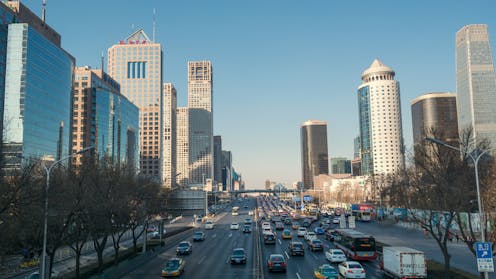
A traffic jam in Beijing in China, where air pollution has drastically reduced. Hung Chung Chih/Shutterstock

Global warming has picked up pace since around 2010, leading to the recent string of record warm years. Why this is happening is still unclear, and among the biggest questions in climate science today. Our new study reveals that reductions in air pollution – particularly in China and east Asia – are a key reason for this faster warming.

Cleanup of sulphur emissions from global shipping has been implicated in past research. But that cleanup only began in 2020, so it’s considered too weak to explain the full extent of this acceleration. Nasa researchers have suggested that changes in clouds could play a role, either through reductions in cloud cover in the tropics or over the North Pacific.

One factor that has not been well quantified, however, is the effect of monumental efforts by countries in east Asia, notably China, to combat air pollution and improve public health through strict air quality policies. There has already been a 75% reduction in east Asian sulphur dioxide emissions since around 2013, and that cleanup effort picked up pace just as global warming began accelerating.

Our study addresses the link between east Asian air quality improvements and global temperature, building on the efforts of eight teams of climate modellers across the world.

We have found that polluted air may have been masking the full effects of global warming. Cleaner air could now be revealing more of the human-induced global warming from greenhouse gases.

In addition to causing millions of premature deaths, air pollution shields the Earth from sunlight and therefore cools the surface. There has been so much air pollution that it has held human-induced warming in check by up to 0.5°C over the last century.

With the cleanup of air pollution, something that’s vital for human health, this artificial sunshade is removed. Since greenhouse gas emissions have kept on increasing, the result is that the Earth’s surface is warming faster than ever before.

Modelling the cleanup

Our team used 160 computer simulations from eight global climate models. This enabled us to better quantify the effects that east Asian air pollution has on global temperature and rainfall patterns. We simulated a cleanup of pollution similar to what has happened in the real world since 2010. We found an extra global warming of around 0.07°C.

While this is a small number compared with the full global warming of around 1.3°C since 1850, it is still enough to explain the recent acceleration in global warming when we take away year-to-year swings in temperature from natural cycles such as El Niño, a climate phenomenon in the Pacific that affects weather patterns globally.

yellow smoggy sky, yellow sun and building
Thick smog influences the effect of greenhouse gases.
Shaun Robinson/Shutterstock

Based on long-term trends, we would have expected around 0.23°C of warming since 2010. However, we actually measured around 0.33°C. While the additional 0.1°C can largely be explained by the east Asian air pollution cleanup, other factors include the change in shipping emissions and the recent accelerated increase in methane concentrations in the atmosphere.

Air pollution causes cooling by reflecting sunlight or by changing the properties of clouds so they reflect more sunlight. The cleanup in east Asian air pollution influences global temperatures because it reduces the shading effect of the pollution over east Asia itself. It also means less pollution is blown across the north Pacific, causing clouds in the east Pacific to reflect less sunlight.

The pattern of these changes across the North Pacific simulated in our models matches that seen in satellite observations. Our models and temperature observations also show relatively strong warming over the North Pacific, downwind from east Asia.

The main source of global warming is still greenhouse gas emissions, and a cleanup of air pollution was both necessary and overdue. This did not cause the additional warming but rather, removed an artificial cooling that has for a time helped shield us from some of the extreme weather and other well-established consequences of climate change.

Global warming will continue for decades. Indeed, our past and future emissions of greenhouse gases will affect the climate for centuries. However, air pollution is quickly removed from the atmosphere, and the recent acceleration in global warming from this particular unmasking may therefore be short-lived.


Don’t have time to read about climate change as much as you’d like?

Get a weekly roundup in your inbox instead. Every Wednesday, The Conversation’s environment editor writes Imagine, a short email that goes a little deeper into just one climate issue. Join the 45,000+ readers who’ve subscribed so far.


The Conversation

Laura Wilcox receives funding from the Natural Environment Research Council (NERC), the Research Council of Norway, the Clean Air Fund, and Horizon Europe.

Bjørn H. Samset receives funding from the Research Council of Norway, the Clean Air Fund, and Horizon Europe.

ref. Cleaner air in east Asia may have driven recent acceleration in global warming, our new study indicates – https://theconversation.com/cleaner-air-in-east-asia-may-have-driven-recent-acceleration-in-global-warming-our-new-study-indicates-260601


Trump’s Brazil tariffs point more to his enduring bond with far-right Bolsonaro than economic concerns

Source: The Conversation – Global Perspectives – By Rafael R. Ioris, Professor of Modern Latin America History, University of Denver

U.S. President Donald Trump and then-Brazilian President Jair Bolsonaro attend a joint news conference at the White House on March 19, 2019. Jim Lo Scalzo-Pool/Getty Images

After much back-and-forth over several months, President Donald Trump announced on July 9, 2025, that he planned to levy a 50% tariff on Brazilian exports to the United States. While Brazilian authorities, along with leaders of most other countries, have been expecting new tariffs given their centrality to Trump’s economic agenda, the announcement seemingly caught Brazilian officials off guard, as trade negotiations between the two nations were still ongoing.

Brazil President Lula da Silva was quick in reacting, stating his country could respond in kind, if tariffs indeed come into effect on Aug. 1.

There has been much speculation about the reasons behind Trump’s decision and timing, with some onlookers noting the proximity to the recent meeting of the BRICS nations, a grouping of emerging economies, including Brazil, which had already drawn Trump’s ire. Others argued that this was a protective measure to defend key U.S. industries, such as steel, which have been facing continued difficulties against cheaper products from Brazil.

The clearest answer, however, came from Trump himself.

In a letter to Lula, the U.S. president indicated that his main grievance with Brazil is in fact the trial that former Brazilian President Jair Bolsonaro faces in front of that country’s highest court. The former far-right firebrand is charged for refusing to recognize the result of the last presidential election in October 2022 and for allegedly having led an attempted coup against the democratic institutions and rule of law in January 2023. If convicted, Bolsonaro and some of his closest associates could face long prison sentences.

A history of meddling

The only economic rationale mentioned in Trump’s letter, that of a deficit that his country is said to face with Brazil, is belied by the numbers. The U.S. has sustained consistent surpluses in trade with the South American nation for close to two decades now.

And Steve Bannon, Trump’s former adviser, active cheerleader and primary conduit between the Trump camp and Bolsonaro, was even more blunt than the U.S. president. In an interview with one of Brazil’s main news site, he stated: “Stop the trial and we will reverse the tariffs.”

Two men in suits shake hands.
Bolsonaro meets with Trump during the G20 Summit in Osaka, Japan, on June 28, 2019.
Brendan Smialowski/AFP via Getty Images

As the history of U.S.-Latin American relations ably demonstrates, this is far from the first time Washington has meddled in the region in order to satisfy its own political proclivities. Indeed, particularly during the Cold War, a slew of U.S. decision-makers actively intervened to support friendly right-wing regimes or to otherwise remove from power administrations considered unacceptably independent.

This was nonetheless the first time in recent history that the official U.S. position is that a foreign nation should face harsh economic punishment unless its current government illegally circumvent the judicary’s constitutional role to stop a major investigation against someone accused of high crimes.

Trump-Bolsonaro: Mutual admiration

Of course, Trump’s overt support for Bolsonaro is not surprising, nor new. Their relationship of mutual admiration and ideological affinity hearkens back to the latter’s first presidential campaign in 2018, when he was labeled, to great reciprocal delight, the “Trump of the Tropics.”

During the subsequent two years when their terms coincided (2019-2000), both men pledged to have a mutual special relationship, though to little consequence – no consequential bilateral projects were put in place.

Both leaders also share the experience of having failed to obtain a second consecutive term and having supported the derailment of the peaceful transfer of power.

Now that Trump is back in power, Bolsonaro hopes that the U.S. president will come to his rescue.

Seeking to obtain explicit support, Bolsonaro’s third son, Eduardo, a member of Brazil’s lower house of congress and his family’s most eloquent international voice, took a leave from his legislative duties and moved to the U.S. early this year. He did so to lobby on behalf of his father based on the fallacious argument that Lula is a left-wing dictator, that Bolsonaro faces a politically motivated trial, and that the U.S. government should act against Lula’s administration.

Given Trump’s tariff notice and the explicit reasons he gave for it, it seems safe to assume that Eduardo’s actions paid dividends.

Which direction will Brazil head?

Like the U.S., Brazil is deeply fractured along left and right political lines. So it was no surprise that the local reactions to Trump’s announcement manifested along ideological camps.

Despite their leader’s legal travails, Bolsonaro’s supporters remain very influential in politics, the media and among important economic areas, such as the agribusiness sector. Whether Trump’s decision will serve to help people rally around and in support of Lula and against a case of foreign interference is unclear. Lula’s initial pronouncement that Brazil would respond in kind was seen favorably among his supporters, though the opposition and many in the media pinned the blame on Lula for not being able to forge compromise with the Trump administration.

Key industrialists in the powerful state of Sao Paulo, where Bolsonaro’s powerful ally Tarcisio de Freitas serves as governor, will be the first ones affected by the new tariffs. But the pain will likely spread into other activities, including in the countryside.

And given that the bulk of the country’s agricultural exports go to China rather than to the U.S., the important question is whether these powerful exporters will act pragmatically and work with Lula to enlarge trade with the Asian giant and other countries, or whether they will continue to act ideologically and continue to support Bolsonaro’s enduring partnership with Trump against their own economic interests.

Dialogue has been a hallmark of Brazil’s diplomacy, and even in the middle of these latest heated diplomatic exchanges, Lula reiterated his willingness to negotiate. It is unclear, though, whether the Trump adminstration’s actions in Latin America will be conducted on the basis of rationality and actual numbers, or if they will indeed bring back some old ideologically driven behaviors of picking sides in the internal political disputes of foreign nations. Should one consider at face value Trump’s latest letter, there is reason for concern.

The Conversation

Rafael R. Ioris does not work for, consult, own shares in or receive funding from any company or organization that would benefit from this article, and has disclosed no relevant affiliations beyond their academic appointment.

ref. Trump’s Brazil tariffs point more to his enduring bond with far-right Bolsonaro than economic concerns – https://theconversation.com/trumps-brazil-tariffs-point-more-to-his-enduring-bond-with-far-right-bolsonaro-than-economic-concerns-260993

University graduates in Ghana must serve society for a year – study suggests it’s good for national unity

Source: The Conversation – Africa – By Arnim Langer, Professor, KU Leuven

Almost 70 years after independence was gained across the continent, many African countries continue to face the complex task of managing ethnic diversity and building national cohesion. National cohesion is a broad and often abstract concept. It refers to the extent to which people within a country share a sense of common purpose and belonging. It is often reflected in the strength of national identities and the degree of pride individuals feel in being part of the nation.

The fact that borders in colonial Africa were drawn in the late 19th century to the early 20th century by European powers without regard for ethnic and cultural realities and histories meant that post-colonial African governments had to develop a sense of national consciousness and belonging.

To address this task, many African countries have made efforts to promote a shared national identity which could bridge ethnic and regional divides. Governments have experimented with a diverse range of policies: promoting national languages, establishing civic education, celebrating national holidays, and reforming state institutions. Other measures have included abolishing traditional kingdoms, redistributing land, renaming capital cities, compulsory military service, and national youth service programmes.

Research into the effectiveness of these African initiatives has been limited and inconclusive. In recently published research, researchers at the Centre for Research on Peace and Development at KU Leuven addressed this gap by analysing the impact of Ghana’s National Service Scheme. Our research shows that, under certain conditions, participation in this programme can meaningfully enhance feelings of national belonging.

Ghana’s experience with national service

Established in 1973, Ghana’s National Service Scheme requires university graduates to spend one year serving in diverse roles throughout the country. This sometimes takes them to regions far from their homes.

While Ghana is widely regarded as a model for the peaceful management of ethnic diversity, the establishment of the National Service Scheme in 1973 was necessary. It was partly a response to the deep regional and ethnic divisions that marked the country’s early postcolonial period. Notably, in the years leading up to the scheme’s introduction, political rivalry between Ashanti and Ewe elites played a significant role in the country’s political instability.

Initially designed to counteract such ethnic divisions, the scheme continues to engage very large numbers of graduates each year. Over 100,000 were deployed in 2025. The programme aims not only to strengthen national cohesion, but also to promote manpower development and address key social challenges. These include unemployment, illiteracy and poverty.

Participants are deployed across a range of sectors, including education, healthcare, agriculture and public administration. While the vast majority of participants are assigned to teaching roles in primary or secondary schools or to positions in healthcare institutions, others take on administrative roles within government agencies or the private sector. These deployments are meant to expose them to different communities and foster intergroup contact under conditions that promote social bonding and reduce prejudice.

But can national service also contribute towards fostering stronger feelings of national belonging?

To answer this question, we conducted a large-scale panel survey among almost 3,000 service personnel. They had participated in the scheme between August 2014 and September 2016. The participants were surveyed three times: before their deployment and again within weeks after completing their national service.

The survey was aimed at examining their feelings of national pride before, during, and after their year of national service. Our study provides compelling evidence that national service significantly boosts participants’ feelings of national pride and belonging.

We found that the mechanism behind this impact lies in intergroup contact. This is described as positive, meaningful interactions between individuals from diverse ethnic and regional backgrounds. Participants who reported frequent and meaningful interactions, including developing new friendships and gaining deeper knowledge of other cultural groups, showed the most significant increases in their sense of national pride.

Importantly, the greatest improvements were observed among participants who initially identified less strongly with the nation.

We further found that the positive effects of participation were not short-lived. It persisted well beyond the year of service.

Key takeaways for policymakers

Governments aiming to strengthen national identity through youth service programmes should consider four key lessons from Ghana’s experience.

Mandatory participation is crucial. Voluntary schemes tend to attract individuals who are already inclined towards inter-ethnic harmony. This limits their broader societal impact. Ghana’s mandatory approach ensures that a wide and diverse range of participants are included. This enhances the programme’s reach and effectiveness.

Structured interactions must be actively promoted. Simply placing people from different backgrounds together is not enough. Successful programmes, such as Ghana’s, intentionally create opportunities for meaningful engagement. These structured interactions help participants develop lasting relationships and deepen their understanding of other cultures.

Youth should be engaged during formative years. Recent graduates are at a stage in life when attitudes and identities are still forming. National service programmes that target this age group can have a lasting influence. Especially on how young people perceive national unity and their role within it.

Diverse placements are essential. National service programmes should deploy participants in settings that are diverse. The geographical location is of secondary importance. Exposure to diverse settings will challenge assumptions and broaden perspectives. It will also foster stronger national bonds across ethnic and regional lines.

Why national service pays off in the long run

National youth service programmes, when well-designed and properly managed, are a promising yet underused tool for promoting national unity in Africa’s ethnically diverse societies. These initiatives can create meaningful opportunities for young people to engage across regional and ethnic lines. This helps to build trust, civic responsibility, and a shared sense of national identity.

Yet, in recent decades, many of these programmes have been scaled back or discontinued across the continent. Examples are Botswana, Tanzania, Zimbabwe and Zambia. The main reason? Cost. Governments have often viewed the logistical and financial demands of deploying tens of thousands of graduates each year as unsustainable. But this short-term budget logic misses the bigger picture.

Ghana’s scheme shows what’s possible. In recent years, the scheme’s deployment figures have reached record highs. It is now common for around 100,000 national service personnel to be mobilised in a single service year. The positive outcomes observed in Ghana offer clear, evidence-based lessons for policymakers across the continent. Investing in national service is not just a cost – it’s a commitment to a more united future.

The Conversation

Arnim Langer receives funding from Research Foundation Flanders (FWO).

Bart Meuleman receives funding from Research Foundation Flanders (FWO)

Lucas Leopold receives funding from Research Foundation Flanders (FWO).

ref. University graduates in Ghana must serve society for a year – study suggests it’s good for national unity – https://theconversation.com/university-graduates-in-ghana-must-serve-society-for-a-year-study-suggests-its-good-for-national-unity-258743

Bullying, violence and vandalism in primary school: study explores a growing crisis in South Africa

Source: The Conversation – Africa – By Julie Shantone Rubbi Nunan, Senior Lecturer in the Department of Early Childhood Education and Development, University of South Africa

South African primary schools are facing a crisis. Every day, learners fight, bully, destroy property, and intimidate other learners and teachers, turning what should be safe spaces into places of fear and mistrust.

Research shows that learner behaviour frequently involves violence, bullying and vandalism (damage to school property) that threatens the safety of both learners and staff.

The media usually report only serious cases of violence, but schools and teachers face challenging and dangerous behaviour every day that often goes unreported. This underreporting is not unique to South Africa; it’s a challenge seen in other countries too.

Research shows that this kind of behaviour disrupts teaching and learning, leading to poor learner performance and school dropouts.

Teachers frequently face aggression and intimidation from learners, which undermines their ability to teach effectively. They feel unsafe and frustrated when learners act aggressively, and this problem worsens when parents protect their children’s bad behaviour instead of addressing it.

Violence, bullying, and damage to school property don’t just cause harm to learners and teachers. They also cost schools money to repair the damage and cause emotional trauma and suffering for victims and their families.

Given these realities, it is important to carefully explore the lived experiences of teachers, school leaders and caretakers to fully understand the severity and complexity of challenging learner behaviour. This understanding is essential for developing effective policies and interventions aimed at restoring safety and improving learning environments in South African primary schools.

As part of a wider study of challenging learner behaviour, I interviewed 21 participants from three primary schools in Durban, South Africa. It was a qualitative case study, in which the small sample size was well-suited and provided relevant and credible information on challenging learner behaviour. Thematic analysis was appropriate for identifying patterns and themes for further exploration.

The aim was to probe the participants’ perspectives to understand how learners’ challenging behaviour is experienced in primary schools. I wanted to know more about how behaviour stemming from children’s homes and environments, playing out at school, was affecting teachers and the overall school climate.

The interviews indicated that teachers were unhappy and wanting to quit the profession, learner victims faced constant fear and distress, and caretakers felt degraded. If this is a sign of how teachers, children and caretakers are feeling around South Africa, it points to the need for ways to reduce their stress.

Voices from schools

The schools in my study are located in semi-urban areas within the same district and serve learners from grade R (about age 5) to grade 7 (about age 12). The surrounding communities face high levels of unemployment, domestic violence, and various social challenges.

Fifteen teachers, three governors, and three caretakers shared their experiences through interviews, enabling open discussion and deeper insights. Consistency across school sites supported the trustworthiness of the findings. Ethical guidelines were followed throughout.

Across the three schools, participants described an environment where serious learner misconduct was a common, everyday problem.

Teachers, governors, and caretakers reported daily disruptions that affected teaching, learning and emotional wellbeing. Aggression and violence were constant. Learners engaged in physical fights – punching, kicking, and using sharp objects like pencils and knives. These were not minor scuffles but incidents that caused serious injuries. Teachers were also threatened, shouted at, and occasionally physically harmed.

Bullying was widespread, both verbal and physical. Learners harassed peers through name-calling, exclusion, extortion and intimidation, often in unsupervised spaces like toilets and tuckshops. Victims lived in fear, while teachers struggled to maintain discipline and protect vulnerable learners.

Vandalism and property damage were routine. Learners tore up textbooks, damaged desks and windows, defaced walls with vulgar graffiti, and clogged toilets with rubbish. Caretakers faced degrading tasks like cleaning and scrubbing faeces and graffiti off the walls. The costs of repairing damage strained already limited school budgets.

Adding to the tension, gang-like behaviour emerged. Small groups banded together to provoke fights, intimidate others, and sometimes fuel unrest rooted in xenophobia or local politics, creating fear, uncertainty and division among learners.

Some incidents had gendered and criminal implications, including the reporting of boys violating the privacy and rights of other boys in the school toilets, and girls being inappropriately touched and harassed. This contributed to emotional trauma and, in some cases, learner dropout – especially among girls. The United Nations Children’s Fund posits that school violence contributes to girls dropping out of school. The dropout rate is a concern in South Africa.

Stealing and lying were common. Learners stole from classmates, teachers, and school offices, often without remorse, and frequently lied or blamed others when confronted, further eroding trust and accountability.


Read more:
Dealing with unruly behaviour among schoolchildren in a tumultuous world


Many participants believed learners expressed unspoken pain or mirrored violence and instability seen at home and in their communities. According to social cognitive theory, such behaviours are learned. Children exposed to violence, neglect, or chaos often replicate these actions in school. Without consistent guidance, role models, or consequences, the cycle intensifies.

Moving forward

In short, these schools are no longer safe havens for learning – they are in crisis. Without urgent and effective intervention, the very mission of basic education – and the wellbeing of children – is at risk.

Primary schools depend on governing authorities and communities for their safety and success. Stakeholders must take collective action to reclaim schools as safe learning spaces.

Governing authorities should address the issues raised by reviewing policies and implementing support programmes, including counselling, family-school partnerships, and teacher training to handle challenging behaviour in positive and sustainable ways.

The Conversation

Julie Shantone Rubbi Nunan does not work for, consult, own shares in or receive funding from any company or organisation that would benefit from this article, and has disclosed no relevant affiliations beyond their academic appointment.

ref. Bullying, violence and vandalism in primary school: study explores a growing crisis in South Africa – https://theconversation.com/bullying-violence-and-vandalism-in-primary-school-study-explores-a-growing-crisis-in-south-africa-260111

4 things every peace agreement needs – and how the DRC-Rwanda deal measures up

Source: The Conversation – Africa (2) – By Philipp Kastner, Senior Lecturer in International Law, The University of Western Australia

The governments of the Democratic Republic of the Congo (DRC) and Rwanda concluded a peace treaty in June 2025, aimed at ending a decades-long war in eastern DRC. The United Nations welcomed the agreement as “a significant step towards de-escalation, peace and stability” in the region.

I have analysed several different peace negotiations and agreements. It’s important to distinguish between what’s needed to get warring parties to the table, and what’s eventually agreed on. In this article, I examine whether the DRC-Rwanda deal has got the four essential components that usually signal that an agreement will hold.

Two broad points about peace agreements, first – and one particular complication in the DRC-Rwanda case.

Firstly, one agreement is rarely enough to resolve a complex conflict. Most deals are part of a series of agreements, sometimes between different actors. They often mention previously concluded ones, and will be referred to by subsequent ones.

Secondly, peace is a process, and requires broad and sustained commitment. It is essential that other actors, like armed groups, are brought on board. Importantly, this also includes civil society actors. An agreement will be more legitimate and effective if different voices are heard during negotiations.

One major complication in relation to the DRC-Rwanda deal is that the United States has been the prime broker. But rather than acting as a neutral mediator trying to bring about peace, Washington seems to be pursuing its own economic interests. This does not bode well.

There is no simple recipe for a good peace agreement, but research shows that four elements are important: a serious commitment from the parties, precise wording, clear timelines and strong implementation provisions.

What underpins a good agreement

First, the parties need to be serious about the agreement and able to commit to its terms. It must not be used as a cover to buy time, re-arm or pursue fighting. Moreover, lasting peace cannot be made exclusively at the highest political level. Agreements that are the result of more inclusive processes, with input by and support from the communities concerned, have a higher success rate.

Second, the agreement must address the issues it aims to resolve, and its provisions must be drafted carefully and unambiguously. When agreements are vague or silent on key aspects, they are often short-lived. Previous experiences can guide peace negotiators and mediators in the drafting process. Peace agreement databases established by the United Nations and academic institutions are a useful tool for this.

Third, clear and realistic timelines are essential. These can concern the withdrawal of armed forces from specified territories, the return of refugees and internally displaced persons, and the establishment of mechanisms providing reparations or other forms of transitional justice.

Fourth, an agreement should include provisions on its implementation. External support is usually helpful here. Third states or international organisations, liked the United Nations and the African Union, can be mandated to oversee this phase. They can also provide security guarantees or even deploy a peacekeeping operation. What is crucial is that these actors are committed to the process and don’t pursue their own interests.


Read more:
DRC and Rwanda sign a US-brokered peace deal: what are the chances of its success?


To know what to realistically expect from a specific peace agreement, it’s important to understand that such agreements can take very different forms. These range from pre-negotiation arrangements and ceasefires to comprehensive peace accords and implementation agreements.

A lasting resolution of the conflict should not be expected when only a few conflict parties have concluded a temporary ceasefire.

The DRC-Rwanda agreement: an important step with lots of shortcomings

It’s difficult to tell at this point how serious the DRC and Rwanda are about peace, and if their commitment will be enough.

Their assertion that they will respect each other’s territory and refrain from acts of aggression is certainly important.

But Rwanda has a history of direct military activities in the DRC since the 1990s. And the treaty only includes rather vague references to the “disengagement of forces/lifting of defensive measures by Rwanda”. It doesn’t specifically mention the withdrawal of the reportedly thousands of Rwandan troops deployed to eastern DRC.

The Paul Kagame-led Rwandan government has also supported Tutsi-dominated armed groups in the DRC since the Rwandan genocide in 1994. The Mouvement du 23 Mars (M23) is the current primary military actor in eastern DRC. But the agreement between the governments of DRC and Rwanda didn’t include the M23 or other groups. The two governments only commit themselves to supporting the ongoing negotiations between the DRC and the M23 facilitated by Qatar.

The agreement also foresees the “neutralisation” of another armed group, the Hutu-dominated Forces Démocratiques pour la Libération du Rwanda (FDLR). This group claims to protect Rwandan Hutu refugees in the DRC, but is considered “genocidal” by the Rwandan government. The group has reacted to this plan by calling for a political solution and a more inclusive peace process.

What’s needed

The DRC-Rwanda agreement includes provisions that are vital to the people most affected by the conflict, such as the return of the millions of people displaced because of the fighting in eastern DRC. But it does not address other key issues.

For instance, aside from a general commitment to promote human rights and international humanitarian law, there is no reference to the widespread violations of human rights and war crimes reportedly committed by all sides. These include summary executions, and sexual and gender-based violence, including violence against children.

Some form of justice and reconciliation mechanism to deal with such large-scale violence should be considered in this situation, as for instance in the fairly successful 2016 agreement between the Colombian government and the Revolutionary Armed Forces of Colombia – People’s Army (FARC). This could contribute to preventing further violations as it sends a clear signal that committing crimes will not be rewarded. It also helps the population heal and gives peace a better chance.

There is no single model for this, and so-called transitional justice (defined as the “range of processes and mechanisms associated with a society’s attempts to come to terms with a legacy of large-scale past abuses, in order to ensure accountability, serve justice and achieve reconciliation”) remains highly controversial. For instance, insisting on war crimes trials can be seen as endangering a fragile peace process.

But peace agreements across the world, from Libya to the Central African Republic, have over past decades moved away from blanket amnesties. They have increasingly included provisions to ensure accountability, especially for serious crimes. The DRC-Rwanda deal is silent on these questions.

A twist in the tale

The DRC-Rwanda deal is complicated by Washington’s role and pursuit of economic interests.

The two states agreed to establish a joint oversight committee, with members of the African Union, Qatar and the United States. It foresees a “regional economic integration framework”, which has been criticised as opening the door for foreign influence in the DRC’s rich mineral resources. The country is the world’s largest producer of cobalt, for instance, which is essential for the renewable energy sector.

Such a neocolonial “peace for exploitation bargain” does not send a positive signal. And it will probably not contribute to ending an armed conflict that has been fuelled by the exploitation of natural resources.

The Conversation

Philipp Kastner does not work for, consult, own shares in or receive funding from any company or organisation that would benefit from this article, and has disclosed no relevant affiliations beyond their academic appointment.

ref. 4 things every peace agreement needs – and how the DRC-Rwanda deal measures up – https://theconversation.com/4-things-every-peace-agreement-needs-and-how-the-drc-rwanda-deal-measures-up-260944

Is there any hope for the internet?

Source: The Conversation – USA (2) – By Aarushi Bhandari, Assistant Professor of Sociology, Davidson College

Hate and mental illness fester online because love and healing seem to be incompatible with profits. Ihor Lukianenko/iStock via Getty Images

In 2001, social theorist bell hooks warned about the dangers of a loveless zeitgeist. In “All About Love: New Visions,” she lamented “the lack of an ongoing public discussion … about the practice of love in our culture and in our lives.”

Back then, the internet was at a crossroads. The dot-com crash had bankrupted many early internet companies, and people wondered if the technology was long for this world.

The doubts were unfounded. In only a few decades, the internet has merged with our bodies as smartphones and mined our personalities via algorithms that know us more intimately than some of our closest friends. It has even constructed a secondary social world.

Yet as the internet has become more integrated in our daily lives, few would describe it as a place of love, compassion and cooperation. Study after study describe how social media platforms promote alienation and disconnection – in part because many algorithms reward behaviors like trolling, cyberbullying and outrage.

Is the internet’s place in human history cemented as a harbinger of despair? Or is there still hope for an internet that supports collective flourishing?

Algorithms and alienation

I explore these questions in my new book, “Attention and Alienation.”

In it, I explain how social media companies’ profits depend on users investing their time, creativity and emotions. Whether it’s spending hours filming content for TikTok or a few minutes crafting a thoughtful Reddit comment, participating on these platforms takes work. And it can be exhausting.

Even passive engagement – like scrolling through feeds and “lurking” in forums – consumes time. It might feel like free entertainment – until people recognize they are the product, with their data being harvested and their emotions being manipulated.

Blogger, journalist and science fiction writer Cory Doctorow coined the term “enshittification” to describe how experiences on online platforms gradually deteriorate as companies increasingly exploit users’ data and tweak their algorithms to maximize profits.

For these reasons, much of people’s time spent online involves dealing with toxic interactions or mindlessly doomscrolling, immersed in dopamine-driven feedback loops.

This cycle is neither an accident nor a novel insight. Hate and mental illness fester in this culture because love and healing seem to be incompatible with profits.

Care hiding in plain sight

In his 2009 book “Envisioning Real Utopias,” the late sociologist Erik Olin Wright discusses places in the world that prioritize cooperation, care and egalitarianism.

Wright mainly focused on offline systems like worker-owned cooperatives. But one of his examples lived on the internet: Wikipedia. He argued that Wikipedia demonstrates the ethos “from each according to ability, to each according to need” – a utopian ideal popularized by Karl Marx.

Wikipedia still thrives as a nonprofit, volunteer-ran bureaucracy. The website is a form of media that is deeply social, in the literal sense: People voluntarily curate and share knowledge, collectively and democratically, for free. Unlike social media, the rewards are only collective.

There are no visible likes, comments or rage emojis for participants to hoard and chase. Nobody loses and everyone wins, including the vast majority of people who use Wikipedia without contributing work or money to keep it operational.

Building a new digital world

Wikipedia is evidence of care, cooperation and love hiding in plain sight.

In recent years, there have been more efforts to create nonprofit apps and websites that are committed to protecting user data. Popular examples include Signal, a free and open source instant messaging service, and Proton Mail, an encrypted email service.

These are all laudable developments. But how can the internet actively promote collective flourishing?

An open laptop resting on green grass, surrounded by yellow and pink flowers.
What if Wikipedia were less the exception, and more the norm?
Andriy Onufriyenko/Moment via Getty Images

In “Viral Justice: How We Grow the World We Want,” sociologist Ruha Benjamin points to a way forward. She tells the story of Black TikTok creators who led a successful cultural labor strike in 2021. Many viral TikTok dances had originally been created by Black artists, whose accounts, they claimed, were suppressed by a biased algorithm that favored white influencers.

TikTok responded to the viral #BlackTikTokStrike movement by formally apologizing and making commitments to better represent and compensate the work of Black creators. These creators demonstrated how social media engagement is work – and that workers have the power to demand equitable conditions and fair pay.

This landmark strike showed how anyone who uses social media companies that profit off the work, emotions and personal data of their users – whether it’s TikTok, X, Facebook, Instagram or Reddit – can become organized.

Meanwhile, there are organizations devoted to designing an internet that promotes collective flourishing. Sociologist Firuzeh Shokooh Valle provides examples of worker-owned technology cooperatives in her 2023 book, “In Defense of Solidarity and Pleasure: Feminist Technopolitics in the Global South.” She highlights the Sulá Batsú co-op in Costa Rica, which promotes policies that seek to break the stranglehold that negativity and exploitation have over internet culture.

“Digital spaces are increasingly powered by hate and discrimination,” the group writes, adding that it hopes to create an online world where “women and people of diverse sexualities and genders are able to access and enjoy a free and open internet to exercise agency and autonomy, build collective power, strengthen movements, and transform power relations.”

In Los Angeles, there’s Chani, Inc., a technology company that describes itself as “proudly” not funded by venture capitalists. The Chani app blends mindfulness practices and astrology with the goal of simply helping people. The app is not designed for compulsive user engagement, the company never sells user data, and there are no comments sections.

No comments

What would social media look like if Wikipedia were the norm instead of an exception?

To me, a big problem in internet culture is the way people’s humanity is obscured. People are free to speak their minds in text-based public discussion forums, but the words aren’t always attached to someone’s identity. Real people hide behind the anonymity of user names. It isn’t true human interaction.

In “Attention and Alienation,” I argue that the ability to meet and interact with others online as fully realized, three-dimensional human beings would go a long way toward creating a more empathetic, cooperative internet.

When I was 8 years old, my parents lived abroad for work. Sometimes we talked on the phone. Often I would cry late into the night, praying for the ability to “see them through the phone.” It felt like a miraculous possibility – like magic.

I told this story to my students in a moment of shared vulnerability. This was in 2020 during the COVID-19 pandemic, so the class was taking place over videoconferencing. In these online classes, one person talked at a time. Others listened.

It wasn’t perfect, but I think a better internet would promote this form of discussion – people getting together from across the world to share the fullness of their humanity.

Efforts like Clubhouse have tapped into this vision by creating voice-based discussion forums. The company, however, has been criticized for predatory data privacy policies.

What if the next iteration of public social media platforms could build on Clubhouse? What if they brought people together and showcased not just their voices, but also live video feeds of their faces without harvesting their data or promoting conflict and outrage?

Raised eyebrows. Grins. Frowns. They’re what make humans distinct from increasingly sophisticated large language models and artificial intelligence chatbots like ChatGPT.

After all, is anything you can’t say while looking at another human being in the eye worth saying in the first place?

The Conversation

Aarushi Bhandari does not work for, consult, own shares in or receive funding from any company or organization that would benefit from this article, and has disclosed no relevant affiliations beyond their academic appointment.

ref. Is there any hope for the internet? – https://theconversation.com/is-there-any-hope-for-the-internet-259251

Listening to nonhumans: What music can teach about humanity’s relationships with nature and the divine

Source: The Conversation – USA (3) – By Jeffers Engelhardt, Professor of Music, Amherst College

Members of the Alevi Muslim community perform a ritual semah dance during celebrations for Norooz, or the Persian New Year, in Berlin. Adam Berry/Getty Images

As someone who teaches and researches music and religion, I’ve always been curious about inspiration and how it connects humans to other beings.

Musicians can be inspired by great artists, living and dead; by technologies that expand their experience, like artist Brian House’s macrophones that capture low-frequency infrasound; by plants and animals; and by the unseen, unheard presence of the supernatural. After all, the word inspiration is rooted in the Latin for “breathing in.” Often, it was associated with spiritual or divine influence – inspiration coming from other realms.

In my research and teaching, recognizing non-human beings is ethically important and an act of intellectual humility. It ensures that I honor other people’s religious and musical experiences, and it admits that we cannot know precisely what they know. One person’s reality may not translate to our own understanding.

That’s what led me to design this course: “Music, Sound and Research with Non-Humans.”

What does the course explore?

The “with” in the course title is key: I want students to learn about how human knowledge exists in relationship with non-humans. To do this, we read and listen widely.

In research using Actor-Network Theory, for example, relationships between humans and non-humans are central: musicians, scientists and their instruments; you and your smartphone; humans and gods. In each case, humans and non-humans are both considered actors – beings that make a real difference in the world.

Music scholar Peter McMurray uses a similar lens in his work on Alevi “semah” ritual, which involves music, movement and poetry. Alevism is a mystical tradition of Islam in Turkey that has long faced discrimination. Some of the sung poetry used for semah is inspired by sacred animals, such as cranes. In semah, participants experience cranelike flight through music and dance, which are central to Alevi ritual.

Dance is an important part of Alevi semah.

Or consider traditions of chanting revealed in texts like the Quran, which means “recitation” in Arabic. Spiritually, the purpose is not only to learn the scripture, but to draw closer to its sonic essence. Recitation recalls moments of encounter between humans and the divine, most important being the Prophet Muhammad receiving the Quran through the Angel Gabriel.

We also look beyond music, to everything from medicine and biology to economics, to study relationships between humans and non-humans. One of our favorite readings, for example, is “The Mushroom at the End of the World” by anthropologist Anna Lowenhaupt Tsing. This is a rich ethnographic account of the relationships between humans and matsutake mushrooms, which are highly prized in Japanese cuisine: the piney forests where matsutake grow, the human activities that make them thrive, the foragers who collect them, and the global markets where they are traded.

My students Luana Espinoza and Sofia Ahmed Seid describe our course as exploring a kind of symbiosis: the word biologists use to describe close, often mutually beneficial, relationships between species.

What’s a critical lesson from the course?

This course readies students to confront serious, challenging forms of intellectual diversity, considering how the possibilities of different truths and paradigms might inform their research.

Both students this semester are science majors working on senior theses: Espinoza in chemistry and Seid in neuroscience. By reading and listening to others’ accounts of human and non-human relationships, they say they no longer feel required to leave an essential part of themselves at the classroom door.

Music and sound bridge the physical and metaphysical, the natural and the supernatural. Because of this, they are invaluable for encountering complex truths.

Amherst College students Sofia Ahmed Seid and Luana Espinoza contributed to the preparation of this article.

Uncommon Courses is an occasional series from The Conversation U.S. highlighting unconventional approaches to teaching.

The Conversation

Jeffers Engelhardt does not work for, consult, own shares in or receive funding from any company or organization that would benefit from this article, and has disclosed no relevant affiliations beyond their academic appointment.

ref. Listening to nonhumans: What music can teach about humanity’s relationships with nature and the divine – https://theconversation.com/listening-to-nonhumans-what-music-can-teach-about-humanitys-relationships-with-nature-and-the-divine-256840

How Eurostack could offer Canada a route to digital independence from the United States

Source: The Conversation – Canada – By Ted Palys, Professor of Criminology, Associate Member of Dept. of Indigenous Studies, Simon Fraser University

The contemporary internet has been with us since roughly 1995. Its current underlying economic model — surveillance capitalism — began in the early 2000s, when Google and then Facebook realized how much our personal information and online behaviour revealed about us and claimed it for themselves to sell to advertisers.

Perhaps because of Canada’s proximity to the United States, coupled with its positive shared history with the U.S. and their highly integrated economies, Canada went along for that consumerist ride.

The experience was different on the other side of the Atlantic. The Stasi in the former East Germany and the KGB under Josef Stalin maintained files on hundreds of thousands of citizens to identify and prosecute dissidents.

Having witnessed this invasion of privacy and its weaponization first-hand, Europe has been far ahead of North America in developing protections. These include the General Data Protection Regulation and the Law Enforcement Directive, with protection of personal data also listed in the European Union’s Charter of Fundamental Rights.

Canada clearly took too much for granted in its relationship with the U.S. Suddenly, Canada is being threatened with tariffs and President Donald Trump’s expressed desire to make Canada the 51st American state.

This has fuelled the motivation of Canada both internally and in co-operation with western European governments to seek greater independence in trade and military preparedness by diversifying its relationships.

Prime Minister Mark Carney has begun promoting “nation-building projects,” but little attention has been paid to Canada’s digital infrastructure.


Read more:
How Canadian nationalism is evolving with the times — and will continue to do so


Three areas of concern

Three recent developments suggest Canada would be well-advised to start paying close attention:

1. The current U.S. administration has raised concerns about its reliability as a partner and friend to Canada. Most of the concerns raised in Canada have been economic. However, Curtis McCord, a former national security and technology researcher for the Canadian government, has said the current situation has created vulnerabilities for national security as well:

“With Washington becoming an increasingly unreliable ally, Mr. Carney is right to look for ways to diversify away from the U.S. But if Canada wants to maintain its sovereignty and be responsible for its national security, this desire to diversify must extend to the U.S. domination of Canada’s digital infrastructure.”

2. Silicon Valley is exhibiting a newfound loyalty to Trump. The photo of the “broligarchy” at Trump’s inauguration spoke volumes, as their apparent eagerness to appease the president brings the data gathered by the internet’s surveillance-based economy under state control.

3. Trump’s recent executive order entitled “Stopping waste, fraud and abuse by eliminating information silos” is alarming. The order became operational when the Trump administration contracted with Palantir, a company known for its surveillance software and data analytics in military contexts. Its job? To combine databases from both the state and federal levels into one massive database that includes every American citizen, and potentially any user of the internet.

Combining multiple government databases is concerning. Combining them with all the personal data harvested by Silicon Valley and providing them to a government showing all the hallmarks of an authoritarian regime sounds like Big Brother has arrived.

Civil liberties groups such as the Electronic Freedom Foundation, academics and even former Palantir employees have raised alarms about the possibilities for abuse, including the launch of all the vendettas Trump and his supporters have pledged to undertake.

The appeal of Eurostack

European governments have attempted to rein in Silicon Valley’s excesses for years. Trump’s re-election and his moves toward potentially weaponizing internet data have further boosted Europe’s resolve to move away from the U.S.-led internet.

One newer effort is Eurostack. A joint initiative involving academics, policymakers, companies and governments, it envisions an independent digital ecosystem that better reflects European values — democratic, sovereign, inclusive, transparent, respectful of personal privacy and innovation-driven.

Spokesperson Francesca Bria explains the “stack” arises from the idea that a digitally sovereign internet needs to have European control from the ground up.

Bria discusses Eurostack in May 2025. (re:publica)

That includes the acquisition of raw materials and manufacture and operation of the physical components that comprise computers and servers; the cloud infrastructure that has the processing power and storage to be operational at scale; the operating systems and applications that comprise the user interface; the AI models and algorithms that drive services and its policy and governance framework.

Prospective gains to Europe are considerable. They include greater cybersecurity, promoting innovation, keeping high-end creative jobs in Europe, promoting collaboration on equitable terms and creating high-skilled employment opportunities.

Canada receives no mention in the Eurostack proposal to date, but the project is still very much in the developmental phase. Investment so far is in the tens of millions instead of the billions it will require.

Canada has a lot to offer and to gain from being part of the Eurostack initiative. With the project still taking shape, now is the perfect time to get on board.

The Conversation

Ted Palys does not work for, consult, own shares in or receive funding from any company or organisation that would benefit from this article, and has disclosed no relevant affiliations beyond their academic appointment.

ref. How Eurostack could offer Canada a route to digital independence from the United States – https://theconversation.com/how-eurostack-could-offer-canada-a-route-to-digital-independence-from-the-united-states-260663

Most Pennsylvania voters ignore judicial elections − a political scientist explains why they matter, especially in a battleground state

Source: The Conversation – USA – By Daniel J. Mallinson, Associate Professor of Public Policy and Administration, Penn State

Three of the seven judges on PA’s state supreme court are up for retention votes in November 2025. AP Photo/Matt Rourke

This November, there will be no candidate for president, governor, senator or even representative on the Pennsylvania ballot.

Pennsylvanians will vote, however, on three members of their seven-member state Supreme Court.

These are retention elections, which means that voters will decide whether to keep the current members of the court or remove them.

The three seats up for grabs are three of the five Democrats that hold the majority on the court. They are Justices Christine Donohue, Kevin Dougherty and David Wecht.

While the typical voter may not think much about judicial elections, political operatives and political scientists, like me, know they have consequences.

I think it’s important that voters understand what a retention election is and why state judicial elections are growing in political importance in the U.S.

Retention elections

Federal judges are appointed by the U.S. president, confirmed by the U.S. Senate, and can serve for the rest of their lives. State judges, however, are put in place in a variety of ways.

The most powerful state courts are the so-called “courts of last resort.” These are essentially the supreme courts of each state. The method for selecting judges in these courts has varied over time and across the states. Currently, states use either gubernatorial appointment, legislative appointment, partisan elections, nonpartisan elections, or a merit process for selecting the judges of their highest courts.

Pennsylvania has partisan elections, meaning judges run for office attached to political parties, just like a candidate would run for governor or president. However, it is only in their first race for office that a judge runs in a competitive partisan election. After they assume the bench, they participate in retention elections every 10 years. These retention elections are considered nonpartisan, since party labels do not appear on the ballot.

Essentially, a retention election is an up or down vote. If more than 50% of voters cast a vote in opposition to a sitting judge, that judge will be out of the office at the end of their term. The governor, who is currently Democrat Josh Shapiro, then makes a temporary appointment to fill the seat with a special election held in the next odd year – in this case, 2027. But any appointments would need to be confirmed by the Republican-controlled state Senate, which may not confirm his picks.

Politicization of the state courts

Judges win retention elections over 90% of the time. So why should people bother to cast their vote?

Courts, including state courts, have become highly politicized over the past several decades. A marked increase in politicization occurred for the U.S. Supreme Court after the failed nomination of Robert Bork in the 1980s.

This politicization has since trickled down to lower federal courts and the states.

State supreme courts have always made big decisions, but the nationalization of American politics – where national partisan politics drive voter behavior in local elections – has elevated the controversy over state supreme court decisions on issues such as reproductive rights, trans rights, COVID-19 restrictions, environmental protection and more.

This issue became more acute when courts in battleground states were thrust to the center of adjudicating false claims of election fraud during the 2020 U.S. presidential election. And judges have faced increasing threats, particularly when opposing actions of the Trump administration, as President Donald Trump is prone to calling out specific judges in decisions that he does not like.

The Pennsylvania Supreme Court has received additional attention, in part due to the outsized role it has played in recent redistricting. In 2018, the court threw out the congressional districts drawn by the General Assembly in 2011 and invited a new plan from the governor and General Assembly. The two came to a political loggerhead, so the Supreme Court ended up using its own map as a replacement.

In 2022, the state Supreme Court once again took control of redistricting after Pennyslvania’s then-Gov. Tom Wolf vetoed the congressional district map approved by the General Assembly.

Given the importance of state supreme courts, particularly in federal elections cases in battleground states like Pennsylvania, it is little wonder why their elections are gaining attention.

The April 2025 Wisconsin Supreme Court race was the most expensive state judicial race in U.S. history, with $100 million in spending, including significant contributions from billionaires Elon Musk and George Soros.

Woman in white blazer stands at podium and smiles as she waves at the crowd
Former prosecutor Susan Crawford won the highly politicized race for Wisconsin Supreme Court justice in 2025. It was the most expensive state supreme court race in U.S. history.
Scott Olson via Getty Images

That was one seat.

Pennsylvania has three up for grabs in November 2025, with the potential to swing the current Democratic majority.

And retention elections are politically simple for opponents. As one Republican political consultant told investigative news outlet Spotlight PA: “This is a political consultant’s dream, because your message is just one thing, and that’s ‘No.’”

This can give some advantage to Republicans in a state that Trump won in 2024 and in a low-turnout election. The question will be whether there is more energy motivating opponents to turn out against the Democratic majority or supporters seeking to maintain the status quo.

Interior of stately courtroom with dark wood furnishings and gold trim
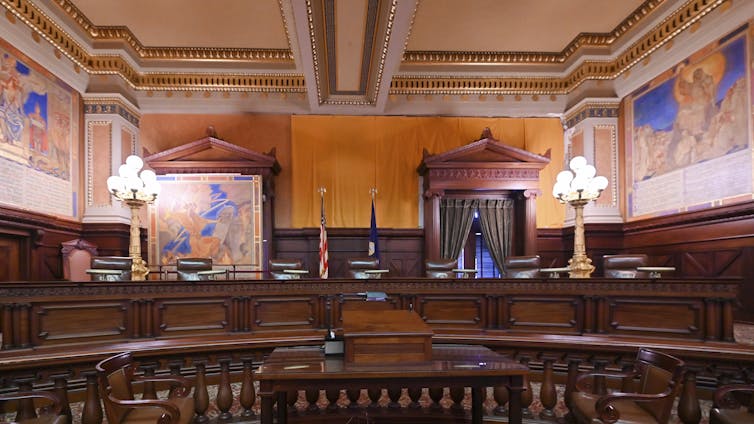
The 2025 retention elections could change the balance of power in the court.
AP Photo/Aimee Dilger

The stakes for Pennsylvania in 2025

Much is at stake for Pennsylvanians in the fall. Republicans see this as their best opportunity to break the firm 5-2 Democratic majority on the court. This would pave the way for very different judicial decisions. Many of the court’s recent election-related rulings were made on narrow 4-3 votes that could swing differently if the composition of the court changes.

Republicans have had their power in Harrisburg diminished with Shapiro in the governor’s mansion and a one-seat Democratic majority in the state House of Representatives over the past two terms.

A Republican majority on the court would significantly change the balance of power in Harrisburg.

But it is important to focus not only on the top court. The state’s two appellate-level courts – one step below the state Supreme Court – also have two important races and two retention votes in November that will decide the judiciary’s relationship with the governor and General Assembly.

The Conversation

Daniel J. Mallinson does not work for, consult, own shares in or receive funding from any company or organization that would benefit from this article, and has disclosed no relevant affiliations beyond their academic appointment.

ref. Most Pennsylvania voters ignore judicial elections − a political scientist explains why they matter, especially in a battleground state – https://theconversation.com/most-pennsylvania-voters-ignore-judicial-elections-a-political-scientist-explains-why-they-matter-especially-in-a-battleground-state-259775

2026 FIFA World Cup expansion will have a big climate footprint, with matches from Mexico to Canada – here’s what fans can do

Source: The Conversation – USA (2) – By Brian P. McCullough, Associate Professor of Sport Management, University of Michigan

Lionel Messi celebrates with fans after Argentina won the FIFA World Cup championship in 2022 in Qatar. Michael Regan-FIFA/FIFA via Getty Images

When the FIFA World Cup hits North America in June 2026, 48 teams and millions of sports fans will be traveling among venues spread across Canada, the United States and Mexico.

It’s a dramatic expansion – 16 more teams will be playing than in recent years, with a jump from 64 to 104 matches. The tournament, whether you call it soccer or football, is projected to bring in over US$10 billion in revenue. But the expansion will also mean a lot more travel and other activities that contribute to climate change.

The environmental impacts of giant sporting events like the World Cup create a complex paradox for an industry grappling with its future in a warming world.

A sustainability conundrum

Sports are undeniably experiencing the effects of climate change. Rising global temperatures are putting athletes’ health at risk during summer heat waves and shortening winter sports seasons. Many of the 2026 World Cup venues often see heat waves in June and early July, when the tournament is scheduled.

There is a divide over how sports should respond.

Some athletes are speaking out for more sustainable choices and have called on lawmakers to take steps to limit climate-warming emissions. At the same time, the sport industry is growing and facing a constant push to increase revenue. The NCAA is also considering expanding its March Madness basketball tournaments from 68 teams currently to as many as 76.

A sweating soccer player squirts water from a bottle onto his forehead during a match.
Park Yong-woo of team Al Ain from Abu Dhabi tries to cool off during a Club World Cup match on June 26, 2025, in Washington, D.C., which was in the midst of a heat wave. Some players have raised concerns about likely high temperatures during the 2026 World Cup, with matches scheduled June 11 to July 19.
AP Photo/Julia Demaree Nikhinson

Estimates for the 2026 World Cup show what large tournament expansions can mean for the climate. A report from Scientists for Global Responsibility estimates that the expanded World Cup could generate over 9 million metric tons of carbon dioxide equivalent, nearly double the average of the past four World Cups.

This massive increase – and the increase that would come if the NCAA basketball tournaments also expand – would primarily be driven by air travel as fans and players fly among event cities that are thousands of miles apart.

A lot of money is at stake, but so is the climate

Sports are big business, and adding more matches to events like the World Cup and NCAA tournaments will likely lead to larger media rights contracts and greater gate receipts from more fans attending the events, boosting revenues. These are powerful financial incentives.

In the NCAA’s case, there is another reason to consider a larger tournament: The House v. NCAA settlement opened the door for college athletic departments to share revenue with athletes, which will significantly increase costs for many college programs. More teams would mean more television revenue and, crucially, more revenue to be distributed to member NCAA institutions and their athletic conferences.

When climate promises become greenwashing

The inherent conflict between maximizing profit through growth and minimizing environmental footprint presents a dilemma for sports.

Several sport organizations have promised to reduce their impact on the climate, including signing up for initiatives like the United Nations Sports for Climate Action Framework.

However, as sports tournaments and exhibition games expand, it can become increasingly hard for sports organizations to meet their climate commitments. In some cases, groups making sustainability commitments have been accused of greenwashing, suggesting the goals are more about public relations than making genuine, measurable changes.

For example, FIFA’s early claims that it would hold a “fully carbon-neutral” World Cup in Qatar in 2022 were challenged by a group of European countries that accused soccer’s world governing body of underestimating emissions. The Swiss Fairness Commission, which monitors fairness in advertising, considered the complaints and determined that FIFA’s claims could not be substantiated.

A young man looks up as he prepares to board a plane on the tarmac in Milan, Italy, for a flight to Rome on Dec. 15, 2024.
Alessandro Bastoni, of Inter Milan and Italy’s national team, prepares to board a flight from Milan to Rome with his team.
Mattia Ozbot-Inter/Inter via Getty Images

Aviation is often the biggest driver of emissions. A study that colleagues and I conducted on the NCAA men’s basketball tournament found about 80% of its emissions were connected to travel. And that was after the NCAA began using the pod system, which is designed to keep teams closer to home for the first and second rounds.

Finding practical solutions

Some academics, observing the rising emissions trend, have called for radical solutions like the end of commercialized sports or drastically limiting who can attend sporting events, with a focus on fans from the region.

These solutions are frankly not practical, in my view, nor do they align with other positive developments. The growing popularity of women’s sports shows the challenge in limiting sports events – more games expands participation but adds to the industry’s overall footprint.

Further compounding the challenges of reducing environmental impact is the amount of fan travel, which is outside the direct control of the sports organization or event organizers.

Many fans will follow their teams long distances, especially for mega-events like the World Cup or the NCAA tournament. During the men’s World Cup in Russia in 2018, more than 840,000 fans traveled from other countries. The top countries by number of fans, after Russia, were China, the U.S., Mexico and Argentina.

There is an argument that distributed sporting events like March Madness or the World Cup can be better in some ways for local environments because they don’t overwhelm a single city. However, merely spreading the impact does not necessarily reduce it, particularly when considering the effects on climate change.

How fans can cut their environmental footprint

Sport organizations and event planners can take steps to be more sustainable and also encourage more sustainable choices among fans. Fans can reduce their environmental impact in a variety of ways. For example:

  • Avoid taking airplanes for shorter distances, such as between FIFA venues in Philadelphia, New York and Boston, and carpool or take Amtrak instead. Planes can be more efficient for long distances, but air travel is still a major contributing factor to emissions.

  • While in a host city, use mass transit or rent electric vehicles or bicycles for local travel.

  • Consider sustainable accommodations, such as short-term rentals that might have a smaller environmental footprint than a hotel. Or stay at a certified green hotel that makes an effort to be more efficient in its use of water and energy.

  • Engage in sustainable pregame and postgame activities, such as choosing local, sustainable food options, and minimize waste.

  • You can also pay to offset carbon emissions for attending different sporting events, much like concertgoers do when they attend musical festivals. While critics question offsets’ true environmental benefit, they do represent people’s growing awareness of their environmental footprint.

Through all these options, it’s clear that sports face a significant challenge in addressing their environmental impacts and encouraging fans to be more sustainable, while simultaneously trying to meet ambitious business and environmental targets.

In my view, a sustainable path forward will require strategic, yet genuine, commitment by the sports industry and its fans, and a willingness to prioritize long-term planetary health alongside economic gains – balancing the sport and sustainability.

The Conversation

Brian P. McCullough does not work for, consult, own shares in or receive funding from any company or organization that would benefit from this article, and has disclosed no relevant affiliations beyond their academic appointment.

ref. 2026 FIFA World Cup expansion will have a big climate footprint, with matches from Mexico to Canada – here’s what fans can do – https://theconversation.com/2026-fifa-world-cup-expansion-will-have-a-big-climate-footprint-with-matches-from-mexico-to-canada-heres-what-fans-can-do-259437