Alpha males are surprisingly rare among primates – new research

Source: The Conversation – UK – By Louise Gentle, Principal Lecturer in Wildlife Conservation, Nottingham Trent University

Female lemurs are often dominant. Miroslav Halama/Shutterstock

Is it true that male animals are dominant over females? Previous studies have often found male-biased power in primates and other mammals.

A new study, investigating physical encounters between members of the same species in 121 primates (around a quarter of all primate species) found that half of all aggressive contests were between males and females. But males won these contests in only 17% of primate populations, with females dominating in 13% – making it almost as likely for females to dominate males.

The remaining 70% of primate populations showed no clear-cut dominance of one sex over the other. This study may have shown different results to previous research because it assessed individual contests rather than categorising species based on their social structure and physical attributes.


Get your news from actual experts, straight to your inbox. Sign up to our daily newsletter to receive all The Conversation UK’s latest coverage of news and research, from politics and business to the arts and sciences.


The new study found male dominance, where males have a greater ability to influence the behaviour of the opposite sex, to be prevalent in primate species where the males are much larger than the females. This enables males to gain dominance through physical force or coercion. It was also widespread in species where males have weapons and mate with lots of females.

This is typical of African and Asian monkeys and the great apes, such as gorillas. Weighing in at around 200kg, a silverback male can be twice the size of the females within his troop. Male gorillas also have large canine teeth that can seriously injure or even kill other gorillas.

Male dominance often twins with weapons throughout the animal kingdom, – horns, antlers, claws or tusks. The largest antlers ever known were those of the now extinct Irish elk, spanning lengths up to 3.5m.

Model of Iirsh elk.
The Irish elk is extinct but once had huge antlers.
Fotokon/Shutterstock

Female dominance

Female power was seen in primate species that had a scarcity of females, one exclusive sexual partner, similar sized males and females but did not have bodily weapons, according to the new study. These are all factors that give females more choice over who to mate with.

Female dominance was also seen in species where fighting with a male was less risky for the dependent offspring of females. For example, some primates “park” their young on their own in nests while foraging, rather than carrying them around. If a mother is holding her baby when she’s attacked, she may submit to protect her young.

Finally, matriarchal societies were common in species that live primarily in trees, which makes it easier to flee an attacker.

Female-dominated species were more likely in lorises, galagos and lemurs. So, contrary to the film Madagascar where King Julien is the king of the lemurs, females are, in fact, in charge. In the ring-tailed lemurs, females control access to food and mates, and maintain the dominance hierarchy where males are often at the bottom.

This is also true of bonobos, the closest relatives of humans. Although male bonobos are larger, females form coalitions to overcome the physical power of the males and force them into submission. This show of solidarity has also been shown in humans.

Think of how the suffragettes campaigned for women’s rights to vote in the UK. Or more recently, how women demanded new safety measures after Sarah Everard was murdered by Metropolitan Police officer Wayne Couzens in 2021.

Bushbaby perches on tree branch.
Galagos, also known as bushbabies, tend to live in female dominant societies.
Jurgens Potgieter/Shutterstock

Although female dominance has been documented less often in the wider animal kingdom, there are some examples that defy expectations. Spotted hyenas have a matriarchal society where females dominate the clans. They even have a pseudo-penis that they erect to indicate submission to more dominant individuals.


Read more:
Sex and power in the animal kingdom: seven animals that will make you reconsider what you think you know


Naked mole rats have a queen that gives birth to all of the young while her offspring find food and defend the nest. The males are subordinate to the queen, but so too are the other females. In fact, the queen bullies the other members of her colony so much that the females are all rendered sterile through stress.

But what about the 70% of primate species that were found to show no dominant sex bias in the new study? These were largely the South American monkeys such as marmosets, tamarins and capuchins, that are generally small, live in trees, are social and omnivorous.

They also tended to have a prehensile tail that helps them grasp things. The ecology of these species fall in the middle of the male and female dominated species, with size difference and weapons being neither extreme nor absent, mating systems being neither polygamous nor monogamous, and the frequency of females being nether abundant nor rare.

The absence of a definitive sex-bias in dominance found in the majority of primate species may be a result of the rarity of contests between males and females, or because males and females were both equally likely to win. Nevertheless, dominance varied within species. For example the percentage of intersexual contests won by female patas monkeys ranged from 0% to 61%, depending on the population studied.

What does this mean for humans?

Human traits are not skewed towards those of male-dominated societies in other primates. We may not live in trees but males do not have natural weapons. Males are not always bigger than females, females do not tend to outnumber males and our sexual habits are varied.

Humans are actually more aligned to the 70% of species that show no clear distinction in sex biases, where species of either sex can become dominant. Let’s see which way evolution takes us.

The Conversation

Louise Gentle works for Nottingham Trent University.

ref. Alpha males are surprisingly rare among primates – new research – https://theconversation.com/alpha-males-are-surprisingly-rare-among-primates-new-research-260472

Small penises are still the butt of the joke in film and TV

Source: The Conversation – UK – By Neil Cocks, Associate Professor in the Department of English Literature, University of Reading

Gen V (2023-present), the recent iteration of the wildly successful superhero satire The Boys (2019), thrives on scenes of bodily outrage. One such episode concerns a young woman who is able to shrink – an ability triggered by self-induced vomiting.

Her boyfriend persuades her to use her powers during sex and we see her touching his penis, which is now taller than she is. We also understand why the boyfriend is so insistent about her transformation: relatively speaking, he has a small penis.

In Companion (2025), a film about a young man who has an abusive sexual relationship with a self-conscious robot, a small penis is also mocked. When the robot gains autonomy, and has an intelligence boost, she confronts and shames the abusive man, claiming that he is motivated in his violent and controlling behaviour by “a below average-sized penis”.

What interests me about these works, as a researcher of sexuality and film, is that they are otherwise committed to questioning reductive ideas about the body. Yes, in the universe of The Boys there is undoubted glee at all the exploding heads and superpowered, murderous buttocks, but the keynote is pathos.


Looking for something good? Cut through the noise with a carefully curated selection of the latest releases, live events and exhibitions, straight to your inbox every fortnight, on Fridays. Sign up here.


The girl who changes her shape through vomiting is arguably representing bulimic experience and there are characters whose superpowers can be understood to negotiate, for example, self-harm and dysmorphia. But when it comes to a man with a small penis, it’s a different story. His body is understood to directly influence both his actions and sense of morality.

Likewise, in Companion, which is in so many senses a meditation on the fraught relationship between mind and body, the small penis of the young man is understood to be the obvious source of his repressive actions.

In both cases, the audience is expected to laugh at the abuser because of his small penis. The small penis is framed as both a signifier and cause of abusiveness.

‘We are still so medieval about penis size’

It could be argued that in Companion and Gen V, the small penis itself is not what is being mocked. The men involved in both are young, white and heterosexual. The idea is, perhaps, that mocking those with small penises is acceptable, because in this the creators are really questioning white, heterosexual and male power structures, and that the inadequacy of that power, its mythic nature, is exposed.

One difficulty in this is that as only power held by men with small penises is mocked, the power of the well endowed, regardless of racial or sexual identity, is naturalised.

Equally, those people of colour or queer people who have small penises might implicitly be included in the mockery, with the implication that they are somehow the beneficiaries of power structures, misuse this power, and have obvious, biologically rooted motivations in so doing.

The trailer for Gen V.

Gen V qualifies the laughter – the girl , talking later to a friend, makes clear that there is nothing wrong in having a small penis, just “don’t be a dick about it”. But the only small-penised character we see is, of course, being “a dick”.

There have been a number of television shows that focus on penis size, but each explores the pathos of having a large penis: Hung (2009), The Hard Times of RJ Berger (2010), Sex Education (2019). Imagine an equivalent concerning a character with a small – or even simply not large – penis.

As journalist Caitlin Moran wrote in a 2023 Guardian article introducing her book, What About Men:

We are still so medieval about penis size that we see male genitalia as being inimical to a man’s soul. Remember when Stormy Daniels told the world that Donald Trump’s penis was ‘smaller than average – a dick like the mushroom character in Mario Kart’. And we were all like: ‘Yes, it makes sense the horrible man has a small, weird mushroom penis.’ The whole world joined in on that one.

Let us instead question the relationship between biology and destiny. And let this action be taken not to frame heterosexual white men as a disadvantaged group, but for the good of us all. Our bodies are ours to negotiate, with ourselves, and with our significant others, as well as those others that find in them indifference, or more troubling affects.

As Gen V and Companion suggest, in recent science fiction stories that otherwise reimagine the body, the small penis can only be imagined as shameful. It is taken to be an obvious motivation for abusive behaviour. Such an understanding helps no one. As the science fiction genre is especially well placed to question common-sense ideas about the human and its form, it would be a good place to begin.

The Conversation

Neil Cocks does not work for, consult, own shares in or receive funding from any company or organisation that would benefit from this article, and has disclosed no relevant affiliations beyond their academic appointment.

ref. Small penises are still the butt of the joke in film and TV – https://theconversation.com/small-penises-are-still-the-butt-of-the-joke-in-film-and-tv-256748

MethaneSat: The climate spy satellite that went quiet

Source: The Conversation – UK – By Vincent Gauci, Professorial Fellow, School of Geography, Earth and Environmental Sciences, University of Birmingham

Satellites circling the Earth have many different functions, including navigation, communications and Earth observation. About 8%-10% of all active satellites are military or “dual use” serving intelligence or reconnaissance functions as spy satellites.

But it was a climate satellite serving as both spy and “name and shame” police officer in the sky that recently caught the world’s attention when it went quiet.

MethaneSat was developed to spot emission hot spots or plumes of invisible methane pollution from space. Built by the US non-profit, the Environmental Defense Fund with Nasa’s support, it tracked methane leaks from oil and gas sites, farms and landfills across the globe.

These are among the biggest human-caused emission sources. But methane emissions are traditionally hard to spot because they come from so many relatively small point sources or plumes.


Get your news from actual experts, straight to your inbox. Sign up to our daily newsletter to receive all The Conversation UK’s latest coverage of news and research, from politics and business to the arts and sciences.


This specialist observation satellite was developed and deployed because methane acts differently to other greenhouse gas emissions. Methane is a powerful greenhouse gas that, over 20 years, is more than 80 times more powerful a greenhouse gas than carbon dioxide.

Since 1750, additional human-caused methane emissions have contributed directly and indirectly, to around 60% of the global warming of carbon dioxide over that time.

Methane also has a short lifetime. Where carbon dioxide stays in the atmosphere for in excess of 100 years, relying on plant uptake for its removal from the atmosphere and conversion into other carbon forms, methane is broken down in the atmosphere by molecules known as hydroxyl radicals. These are nicknamed “the atmosphere’s detergent”, because they effectively remove methane from the atmosphere in less than ten years.

gas refinery plume burning
A gas flare at an oil refinery – one of many pinpoint sources of methane emissions.
hkhtt hj/Shutterstock

This combination of short lifetime and high global warming potential (a measure of the climate strength of the gas relative to carbon dioxide) makes methane both a problem and an ideal target for reduction. In fact, growth in atmospheric methane is occurring at such a rate that it is placing us dangerously off track from meeting our Paris agreement obligations to stay within 1.5°C of climate warming by 2050 and 2°C by 2100.

Eyes in the sky

But how can we achieve these reductions and what was the role of MethaneSat in seeking to meet this objective?

There are two ways atmospheric methane concentrations can be reduced. A recent and more challenging proposition is that methane is actively removed from the atmosphere.

This is difficult because it relies on technological advances that are at their earliest stages (although growing more trees can go some way to achieving this). Another more realistic approach is to reduce emissions and then to let atmospheric chemistry do the work of removing excess methane in the atmosphere.

The global methane pledge was announced in 2021 at the UN climate summit, Cop26, in Glasgow. This aimed to reduce human-caused methane emissions by 30% on 2020 levels by 2030. More than 150 countries have now signed up to this pledge. If successful, it could reduce warming by up to 0.2°C by 2050. That’s why MethaneSat was so useful.

MethaneSat is fitted with a hyperspectral sensor – which can record sunlight reflected off Earth in hundreds of narrow colour bands across the spectrum, far beyond what our eyes can see. It’s capable of picking up concentrations of methane in air at minute quantities.

This sensor allowed the satellite to spot individual plumes of methane, so it had a crucial role in identifying those problem areas. Given that these are dispersed but also individual point sources, it was invaluable in intervening in the leaks, permitting identification of those responsible so they could be held to account and so address the problem.

No one instrument can cover what MethaneSat could do with freely available data. It had high precision, high spatial resolution and, critically, global coverage and it was particularly useful at identifying plumes in nations that don’t have the resources for the sort of regional surveys using aircraft mounted systems that can fill the gap in developed regions.

Now that MethaneSat is no longer operational, there are some other tools to identify small anthropogenic emissions sources, but they tend to be regionally focused like the aircraft measurements mentioned.

Other satellites gather similar data but that data sits behind commercial paywalls, whereas MethaneSat data was freely available. Collectively, these drawbacks mean that it’s just going to be that much harder to spot the emissions MethaneSat was so good at tracking.


Don’t have time to read about climate change as much as you’d like?

Get a weekly roundup in your inbox instead. Every Wednesday, The Conversation’s environment editor writes Imagine, a short email that goes a little deeper into just one climate issue. Join the 45,000+ readers who’ve subscribed so far.


The Conversation

Vincent Gauci receives funding from the NERC, Spark Climate Solutions, the JABBS Foundation and has received funding from the Royal Society, Defra and the AXA Research Fund.

ref. MethaneSat: The climate spy satellite that went quiet – https://theconversation.com/methanesat-the-climate-spy-satellite-that-went-quiet-261022

Zonal pricing is dead – here’s how the UK should change its electricity system instead

Source: The Conversation – UK – By Cassandra Etter-Wenzel, DPhil Candidate in Energy Policy, University of Oxford

Marcin Rogozinski/Shutterstock

The UK government has decided against setting different prices for electricity based on the locations of consumers.

Zonal pricing would have categorised Britain into distinct zones, each with wholesale electricity prices that reflect how much power is generated locally, and how much demand there is for it. It would have raised prices in areas with lots of demand but low generation, like London, and lowered them where supply outstrips demand, such as in the turbine-rich Scottish Highlands.

This might have caused an immediate increase in the energy bills of already vulnerable households in some high-demand, low-generation areas, such as Tower Hamlets in London and Blackpool in north-west England.

But the idea was to encourage the construction of renewable energy to meet high demand in higher-priced zones, and prompt big electricity consumers to move to where electricity is cheaper. It was also intended to ease the need for new infrastructure to transmit electricity over long distances, like pylons. Australia, Norway and several EU nations already use this method.

The ultimate goal of zonal pricing was to make the price of electricity more accurately reflect generation and transmission costs. However, one thing has significantly inflated electricity prices in recent years, which this pricing method wouldn’t have addressed on its own: gas.


Get your news from actual experts, straight to your inbox. Sign up to our daily newsletter to receive all The Conversation UK’s latest coverage of news and research, from politics and business to the arts and sciences.


Gas is expensive, even more so since Russia’s invasion of Ukraine. Britain’s electricity system operator brings power plants onto the system to meet demand in order of the lowest to highest marginal costs.

The point at which supply meets demand forms the wholesale price of electricity. Renewable sources, like wind and solar, have zero or very low marginal costs. But most of the time the wholesale price is set by gas plants, because they can readily fill a gap in supply but have high and erratic marginal costs (largely tied to what they pay for fuel).

We need another, cheaper technology to set the wholesale price of electricity. Batteries, which can store electricity over several hours, and options capable of storing energy for longer, such as compressed air and low-carbon hydrogen, could be just the thing.

The idea is simple: batteries can be charged at times when there is a lot of surplus electricity generation (on a bright, windy day, for example) and discharge it at times of peak demand (or when the sun doesn’t shine and the wind doesn’t blow). This would entail grid operators (and ultimately, consumers) not having to pay gas plants to fire up when renewable generation cannot meet the shortfall.

Unfortunately, batteries comprised just 6% of Britain’s total electricity capacity in 2024. Investment in energy storage has lagged behind what the government forecasts is necessary to meet its 2030 clean power goals, but it is at least increasing.

Research shows that the more money that is invested in batteries, the more associated costs come down. If used instead of gas to stabilise the grid, energy storage could significantly lower the wholesale cost of the UK’s energy over time, and with the right balance of policies, household bills too. This would require subsidies to cover some of the cost of making and installing batteries, and planning mandates to build new renewables alongside new batteries.

Affordable and fair

The government could also try alternatives to zonal pricing. Wholesale electricity prices could reflect the “strike” price in renewable energy contracts. This is the price at which developers have agreed to build clean electricity generation projects, like wind farms. This would mean that gas no longer sets the wholesale price, but stable, predictable prices agreed years in advance, which would help to regulate the retail costs consumers pay.

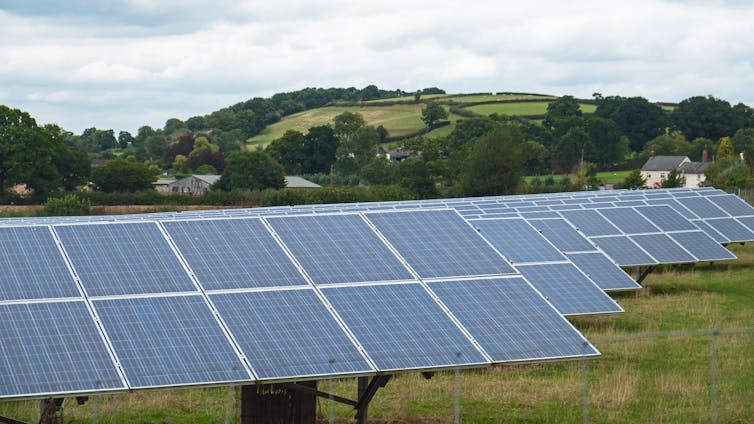
Rows of solar panels in a rural area.
Solar arrays installed on farmland in Devon, southern England.
Pjhpix/Shutterstock

These types of reforms can help set efficient energy prices, which the government usually talks about as the price needed to encourage investment in new energy technologies. But just because prices are efficient, it doesn’t mean they’re fair. Some households struggle to afford their energy bills even when markets are working efficiently. So, when prices change to encourage cleaner energy, it can hit them harder.

The government should implement new policies and expand eligibility for existing measures to take the burden off energy-poor households. These include social tariffs, which offer discounted rates to vulnerable consumers, and discounts for blocks of electricity use when renewables are generating a lot of it.

Transition funds could help poorer households meet bills, while schemes to encourage home insulation and other improvements could see more homes with rooftop solar panels and battery storage.

This support, combined with increasing investment in energy storage and renewables, will lower the wholesale price of electricity over time – and make energy more affordable (and fair) for everyone.


Don’t have time to read about climate change as much as you’d like?

Get a weekly roundup in your inbox instead. Every Wednesday, The Conversation’s environment editor writes Imagine, a short email that goes a little deeper into just one climate issue. Join the 45,000+ readers who’ve subscribed so far.


The Conversation

Anupama Sen has previously received funding from the Quadrature Climate Foundation and Children’s Investment Fund Foundation.

Cassandra Etter-Wenzel and Sam Fankhauser do not work for, consult, own shares in or receive funding from any company or organisation that would benefit from this article, and have disclosed no relevant affiliations beyond their academic appointment.

ref. Zonal pricing is dead – here’s how the UK should change its electricity system instead – https://theconversation.com/zonal-pricing-is-dead-heres-how-the-uk-should-change-its-electricity-system-instead-260985

California farmers identify a hot new cash crop: Solar power

Source: The Conversation – USA (2) – By Jacob Stid, Ph.D. student in Hydrogeology, Michigan State University

This dairy farm in California’s Central Valley has installed solar panels on a portion of its land. George Rose/Getty Images

Imagine that you own a small, 20-acre farm in California’s Central Valley. You and your family have cultivated this land for decades, but drought, increasing costs and decreasing water availability are making each year more difficult.

Now imagine that a solar-electricity developer approaches you and presents three options:

  • You can lease the developer 10 acres of otherwise productive cropland, on which the developer will build an array of solar panels and sell electricity to the local power company.
  • You can select 1 or 2 acres of your land on which to build and operate your own solar array, using some electricity for your farm and selling the rest to the utility.
  • Or you can keep going as you have been, hoping your farm can somehow survive.

Thousands of farmers across the country, including in the Central Valley, are choosing one of the first two options. A 2022 survey by the U.S. Department of Agriculture found that roughly 117,000 U.S. farm operations have some type of solar device. Our own work has identified over 6,500 solar arrays currently located on U.S. farmland.

Our study of nearly 1,000 solar arrays built on 10,000 acres of the Central Valley over the past two decades found that solar power and farming are complementing each other in farmers’ business operations. As a result, farmers are making and saving more money while using less water – helping them keep their land and livelihood.

A hotter, drier and more built-up future

Perhaps nowhere in the U.S. is farmland more valuable or more productive than California’s Central Valley. The region grows a vast array of crops, including nearly all of the nation’s production of almonds, olives and sweet rice. Using less than 1% of all farmland in the country, the Central Valley supplies a quarter of the nation’s food, including 40% of its fruits, nuts and other fresh foods.

The food, fuel and fiber that these farms produce are a bedrock of the nation’s economy, food system and way of life.

But decades of intense cultivation, urban development and climate change are squeezing farmers. Water is limited, and getting more so: A state law passed in 2014 requires farmers to further reduce their water usage by the mid-2040s.

Workers on farmland with mountains in the background.
California’s Central Valley is some of the most productive cropland in the country.
Citizen of the Planet/UCG/Universal Images Group via Getty Images

The trade-offs of installing solar on agricultural land

When the solar arrays we studied were installed, California state solar energy policy and incentives gave farm landowners new ways to diversify their income by either leasing their land for solar arrays or building their own.

There was an obvious trade-off: Turning land used for crops to land used for solar usually means losing agricultural production. We estimated that over the 25-year life of the solar arrays, this land would have produced enough food to feed 86,000 people a year, assuming they eat 2,000 calories a day.

There was an obvious benefit, too, of clean energy: These arrays produced enough renewable electricity to power 470,000 U.S. households every year.

But the result we were hoping to identify and measure was the economic effect of shifting that land from agricultural farming to solar farming. We found that farmers who installed solar were dramatically better off than those who did not.

They were better off in two ways, the first being financially. All the farmers, whether they owned their own arrays or leased their land to others, saved money on seeds, fertilizer and other costs associated with growing and harvesting crops. They also earned money from leasing the land, offsetting farm energy bills, and selling their excess electricity.

Farmers who owned their own arrays had to pay for the panels, equipment and installation, and maintenance. But even after covering those costs, their savings and earnings added up to US$50,000 per acre of profits every year, 25 times the amount they would have earned by planting that acre.

Farmers who leased their land made much less money but still avoided costs for irrigation water and operations on that part of their farm, gaining $1,100 per acre per year – with no up-front costs.

The farmers also conserved water, which in turn supported compliance with the state’s Sustainable Groundwater Management Act water use reduction requirements. Most of the solar arrays were installed on land that had previously been irrigated. We calculated that turning off irrigation on this land saved enough water every year to supply about 27 million people with drinking water or irrigate 7,500 acres of orchards. Following solar array installation, some farmers also fallowed surrounding land, perhaps enabled by the new stable income stream, which further reduced water use.

A view of farmland with irrigation sprinklers spraying widely.
Irrigation is key to cropland productivity in California’s Central Valley. Covering some land with solar panels eliminates the need for irrigation of that area, saving water for other uses elsewhere.
Citizen of the Planet/UCG/Universal Images Group via Getty Images

Changes to food and energy production

Farmers in the Central Valley and elsewhere are now cultivating both food and energy. This shift can offer long-term security for farmland owners, particularly for those who install and run their own arrays.

Recent estimates suggest that converting between 1.1% and 2.4% of the country’s farmland to solar arrays would, along with other clean energy sources, generate enough electricity to eliminate the nation’s need for fossil fuel power plants.

Though many crops are part of a global market that can adjust to changes in supply, losing this farmland could affect the availability of some crops. Fortunately, farmers and landowners are finding new ways to protect farmland and food security while supporting clean energy.

One such approach is agrivoltaics, where farmers install solar designed for grazing livestock or growing crops beneath the panels. Solar can also be sited on less productive farmland or on farmland that is used for biofuels rather than food production.

Even in these areas, arrays can be designed and managed to benefit local agriculture and natural ecosystems. With thoughtful design, siting and management, solar can give back to the land and the ecosystems it touches.

Farms are much more than the land they occupy and the goods they produce. Farms are run by people with families, whose well-being depends on essential and variable resources such as water, fertilizer, fuel, electricity and crop sales. Farmers often borrow money during the planting season in hopes of making enough at harvest time to pay off the debt and keep a little profit.

Installing solar on their land can give farmers a diversified income, help them save water, and reduce the risk of bad years. That can make solar an asset to farming, not a threat to the food supply.

The Conversation

Jacob Stid works for Michigan State University. Funding for this work came from the US Department of Agriculture’s National Institute of Food and Agriculture program and the Department of Earth and Environmental Sciences at Michigan State University. He also receives funding from the Foundation for Food and Agricultural Research.

Annick Anctil receives funding from NSF and USDA.

Anthony Kendall receives funding from the USDA, NASA, the NSF, and the Foundation for Food and Agricultural Research. He is an Assistant Professor at Michigan State University, and serves on the nonprofit board of the FLOW Water Advocates.

ref. California farmers identify a hot new cash crop: Solar power – https://theconversation.com/california-farmers-identify-a-hot-new-cash-crop-solar-power-259653

Angels, witches, crystals and black cats: How supernatural beliefs vary across different groups in the US

Source: The Conversation – USA (3) – By Christopher P. Scheitle, Associate Professor of Sociology, West Virginia University

Education, income and demographics shape our views of the unseen world, a survey found. karetoria/Collection Moment via Getty Images

Younger Americans are more likely to express belief in witchcraft and luck, as our new research shows.

As sociologists who research the social dynamics of religion in the United States, we conducted a nationally representative survey in 2021. Our survey posed dozens of questions to 2,000 Americans over the age of 18 on a wide range of beliefs in supernatural phenomena – everything from belief in the devil to belief in the magical power of crystals.

Our statistical analyses found that supernatural beliefs in the United States tend to group into four types.

The first represents what many consider “traditional religious beliefs.” These include beliefs in God, the existence of angels and demons, and belief in the soul and its journey beyond this lifetime.

A second represents belief in “spiritual and mental forces,” some of which are associated with either paranormal or new age beliefs. These include communicating with the dead, predicting the future, or believing that one’s soul can travel through space or time.

A third group represents belief in “witches and witchcraft.” This was measured on our survey with questions about the existence of “black magic” and whether it was “possible to cast spells on people.”

The fourth and final group represents beliefs in supernatural forces that shape “luck” – for instance, that “black cats bring bad luck.”

Our analysis finds that higher education and higher income are associated with lower levels of all four types of supernatural belief. Those with a bachelor’s degree or higher, for instance, score below average on all four types of belief, while those with less education score higher than average on all four.

Looking at race and ethnicity, we found that Latino or Hispanic individuals were more likely than white individuals to express belief in the “witches and witchcraft” form of supernatural belief. About 50% of Latino or Hispanic individuals in our survey, for example, strongly agreed that “witches exist.” This compares with about 37% of white individuals.

Comparing gender differences, we find that women are more likely than men to believe in the “spiritual and mental forces” forms of supernatural belief. For instance, about 31% of women in our survey agreed that “it is possible to communicate with the dead” compared with about 22% of men.

Why it matters

Our research addresses two key questions: first, whether people who hold one type of supernatural belief are also more likely to hold other types of supernatural beliefs; and second, how do different types of supernatural belief vary across key demographic groups, such as across educational levels, racial and ethnic groups, and gender?

Answering these questions can be surprisingly difficult. Most scientific surveys of the U.S. public include, at best, only one or two questions about religious beliefs; rarely do they include questions about other types of supernatural beliefs, such as belief in paranormal or superstitious forces. This could lead to an incomplete understanding of how supernatural beliefs and practices are changing in the United States.

An increasing number of Americans are leaving organized religion. However, it is not clear that supernatural beliefs have or will follow the same trajectory – especially beliefs that are not explicitly connected to those religious identities. For example, someone can identify as nonreligious but believe that the crystal they wear will provide them with supernatural benefits.

Moreover, recognizing that supernatural beliefs can include more than traditionally religious supernatural beliefs may be vital for better understanding other social issues. Research has found, for example, that belief in paranormal phenomena is associated with lower trust in science and medicine.

What’s next

Our survey provides some insight into the nature and patterns of supernatural belief in the U.S. at one point in time, but it does not tell us how such beliefs are changing over time.

We would like to see future surveys – both ours or from other social scientists – that ask more diverse questions about belief in supernatural beings and forces that will allow for an assessment of such changes.

The Research Brief is a short take on interesting academic work.

The Conversation

Christopher P. Scheitle receives funding from the National Science Foundation and the John Templeton Foundation. The research discussed in this article was supported by a grant from the Science and Religion: Identity and Belief Formation grant initiative spearheaded by the Religion and Public Life Program at Rice University and the University of California-San Diego and provided by the Templeton Religion Trust via The Issachar Fund.

Bernard DiGregorio receives funding from the National Science Foundation. The research discussed in this article was funded by a grant from the Science and Religion: Identity and Belief Formation grant initiative spearheaded by the Religion and Public Life Program at Rice University and the University of California-San Diego and provided by the Templeton Religion Trust via The Issachar Fund.

Katie E. Corcoran receives funding from the National Science Foundation, the John Templeton Foundation, and the Patient-Centered Outcomes Research Institute. The research discussed in this article was supported by a grant from the Science and Religion: Identity and Belief Formation grant initiative spearheaded by the Religion and Public Life Program at Rice University and the University of California-San Diego and provided by the Templeton Religion Trust via The Issachar Fund.

ref. Angels, witches, crystals and black cats: How supernatural beliefs vary across different groups in the US – https://theconversation.com/angels-witches-crystals-and-black-cats-how-supernatural-beliefs-vary-across-different-groups-in-the-us-258377

University students feel ‘anxious, confused and distrustful’ about AI in the classroom and among their peers

Source: The Conversation – USA (2) – By Elise Silva, Director of Policy Research at the Institute for Cyber Law, Policy, and Security, University of Pittsburgh

Artificial intelligence has taken off on campus, changing relationships between students and professors and among students themselves. Photo by Annie Spratt on Unsplash

The advent of generative AI has elicited waves of frustration and worry across academia for all the reasons one might expect: Early studies are showing that artificial intelligence tools can dilute critical thinking and undermine problem-solving skills. And there are many reports that students are using chatbots to cheat on assignments.

But how do students feel about AI? And how is it affecting their relationships with peers, instructors and their coursework?

I am part of a group of University of Pittsburgh researchers with a shared interest in AI and undergraduate education. While there is a growing body of research exploring how generative AI is affecting higher education, there is one group that we worry is underrepresented in this literature, yet perhaps uniquely qualified to talk about the issue: our students.

Our team ran a series of focus groups with 95 students across our campuses in the spring of 2025 and found that whether students and faculty are actively using AI or not, it is having significant interpersonal, emotional effects on learning and trust in the classroom. While AI products such as ChatGPT, Gemini or Claude are, of course, affecting how students learn, their emergence is also changing their relationships with their professors and with one another.

‘It’s not going to judge you’

Most of our focus group participants had used AI in the academic setting – when faced with a time crunch, when they perceive something to be “busy work,” or when they are “stuck” and worry that they can’t complete a task on their own. We found that most students don’t start a project using AI, but many are willing to turn to it at some point.

Many students described positive experiences using AI to help them study or answer questions, or give them feedback on papers. Some even described using AI instead of a professor, tutor or teaching assistant. Others found a chatbot less intimidating than attending office hours where professors might be “demeaning.” In the words of one interviewee: “With ChatGPT you can ask as many questions as you want and it’s not going to judge you.”

But by using it, you may be judged. While some were excited about using AI, many students voiced mild feelings of guilt or shame about their AI use due to environmental or ethical concerns, or just coming across as lazy. Some even expressed a feeling of helplessness, or a sense of inevitability regarding AI in their futures.

Anxiety, distrust and avoidance

While many students expressed a sense that faculty members are, as one participant put it, “very anti-ChatGPT,” they also lamented the fact that the rules around acceptable AI use were not sufficiently clear. As one urban planning major put it: “I feel uncertain of what the expectations are,” with her peer chiming in, “We’re not on the same page with students and teachers or even individually. No one really is.”

Students also described feelings of distrust and frustration toward peers they saw as overly reliant on AI. Some talked about asking classmates for help, only to find that they “just used ChatGPT” and hadn’t learned the material. Others pointed to group projects, where AI use was described as “a giant red flag” that made them “think less” of their peers.

These experiences feel unfair and uncomfortable for students. They can report their classmates for academic integrity violations – and enter yet another zone in which distrust mounts – or they can try to work with them, sometimes with resentment. “It ends up being more work for me,” a political science major said, “because it’s not only me doing my work by myself, it’s me double checking yours.”

Photos of small college classroom with teacher and students
Student-teacher relationships are a key part of a good college experience. What if students avoid professors and rely instead of always-available chatbots?
U.S. Department of Education

Distrust was a marker that we observed of both student-to-teacher relationships and student-to-student relationships. Learners shared fears of being left behind if other students in their classes used chatbots to get better grades. This resulted in emotional distance and wariness among students. Indeed, our findings reflect other reports that indicate the mere possibility that a student might have used a generative AI tool is now undercutting trust across the classroom. Students are as anxious about baseless accusations of AI use as they are about being caught using it.

Students described feeling anxious, confused and distrustful, and sometimes even avoiding peers or learning interactions. As educators, this worries us. We know that academic engagement – a key marker of student success – comes not only from studying the course material, but also from positive engagement with classmates and instructors alike.

AI is affecting relationships

Indeed, research has shown that faculty-student relationships are an important indicator of student success. Peer-to-peer relationships are essential too. If students are sidestepping important mentoring relationships with professors or meaningful learning experiences with peers due to discomfort over ambiguous or shifting norms around the use of AI technology, institutions of higher education could imagine alternative pathways for connection. Residential campuses could double down on in-person courses and connections; faculty could be incentivized to encourage students to visit during office hours. Faculty-led research, mentoring and campus events where faculty and students mix in an informal fashion could also make a difference.

We hope our research can also flip the script and disrupt tropes about students who use AI as “cheaters.” Instead, it tells a more complex story of students being thrust into a reality they didn’t ask for, with few clear guidelines and little control.

As generative AI continues to pervade everyday life, and institutions of higher education continue to search for solutions, our focus groups reflect the importance of listening to students and considering novel ways to help students feel more comfortable connecting with peers and faculty. Understanding these evolving interpersonal dynamics matters because how we relate to technology is increasingly affecting how we relate to one another. Given our experiences in dialogue with them, it is clear that students are more than ready to talk about this issue and its impact on their futures.

Acknowledgment: Thank you to the full team from the University of Pittsburgh Oakland, Greensburg, Bradford and Johnstown campuses, including Annette Vee, Patrick Manning, Jessica FitzPatrick, Jessica Ghilani, Catherine Kula, Patty Wharton-Michael, Jialei Jiang, Sean DiLeonardi, Birney Young, Mark DiMauro, Jeff Aziz, and Gayle Rogers.

The Conversation

Elise Silva does not work for, consult, own shares in or receive funding from any company or organization that would benefit from this article, and has disclosed no relevant affiliations beyond their academic appointment.

ref. University students feel ‘anxious, confused and distrustful’ about AI in the classroom and among their peers – https://theconversation.com/university-students-feel-anxious-confused-and-distrustful-about-ai-in-the-classroom-and-among-their-peers-258665

Patients who feel heard are more likely to stick with medical treatment

Source: The Conversation – France – By Diana Pérez-Arechaederra, Associate Professor of Organizational Psychology, ESCP Business School

In the 2000s, when I worked as a psychologist in long-term elderly care and primary healthcare services, many of the patients I saw were living with chronic or complex conditions. These situations required that patients trust care providers, consistently adhere to treatments and, often, receive care over an extended period of time.

But what stood out to me were the differences in how those protocols were applied. Some practitioners took time to explain something clearly, asked questions that showed genuine care, or invited patients into a conversation about their treatment. I also noticed how differently patients responded when none of that happened.

The quality of communication – the level of respect, attention and clarity – often made the difference between patients’ cooperation and resistance, between their motivation and withdrawal.

These observations led me to systematically investigate the psychological processes involved in how patients perceive fairness in healthcare.

What I found, in collaboration with colleagues, is that this “soft” dimension of care – how people perceive their treatment, how information is shared with them, and how much time and space they are given to take part in the process – has very real effects on behaviour. Patients’ perception of respect – what we call interactional fairness – often hinges on whether they are given the chance to ask questions, make sense of information, weigh different options and even participate in making decisions. For patients to follow a practitioner’s recommendations, they need to feel informed, heard, respected and involved – not just treated.

What fairness looks like in practice

In our study, we examined two forms of what psychologists call organizational justice in healthcare settings:

  • Interactional justice – the sense of being treated with dignity, attentiveness and respect

  • Informational justice – the perception that shared information is clear, complete, timely and relevant

We surveyed over 850 patients in Spain and the United States who had visited a healthcare provider in the previous six months. We asked them how they experienced their interactions with health professionals, how much they trusted those professionals, how satisfied they were with the service, whether they followed medical advice, and whether they intended to return to the same provider.

What we saw was a clear pattern. Patients who perceived fairness – being treated with respect and given clear and appropriate information – were more likely to trust their healthcare provider. That trust, in turn, shaped whether they felt able to engage with treatment and sustain their relationship with (or, in the language of our study, their “loyalty” to) the healthcare service or physician. What we call informational fairness had a particularly strong direct link to adherence to treatments or clinical advice, showing its importance for understanding patient behaviour.

In healthcare, patients are navigating uncertainty, vulnerability, and long-term relationships with systems and providers. Their ability to understand, participate in and trust that process is integral to care.

A weekly e-mail in English featuring expertise from scholars and researchers. It provides an introduction to the diversity of research coming out of the continent and considers some of the key issues facing European countries. Get the newsletter!

Insights across borders

Despite the structural and institutional differences between Spain, with its predominantly public healthcare system, and the United States, where healthcare is largely organised through the private sector, our goal was to identify common patterns in how patients interpret and engage with services. Specifically, we sought to understand whether similar cognitive and emotional processes create the patient experience, regardless of the broader healthcare system in place.

Using path analysis models, we assessed the relationships between patients’ perceptions of fairness and their resulting levels of trust and satisfaction, and then, the relationship between those perceptions and patients’ adherence and loyalty to the service. While patients in the United States exhibited slightly stronger associations between perceived fairness and both trust and satisfaction, the overall nature of the relationships was highly consistent across both countries.

These findings suggest that despite differences in how care is delivered and financed, patients in both countries respond to their healthcare interactions in fundamentally similar ways. This matters for healthcare providers and policymakers across diverse settings who are aiming to enhance patient-centred care.

Recognizing patients as agents

At the heart of this is an ethical question: Are patients treated as agents in their own care, or simply as objects of intervention?

Medicine is not a closed, flawless system. It is a developing field of research being translated into practice, and its shortcomings are shaped by social and structural biases, and by the fact that patients may not be given all of the options they should receive. In areas such as women’s health, chronic pain, mental health and rare diseases, patients often offer insights that clinical protocols miss. When their lived experience is ignored or dismissed, we lose opportunities for better diagnoses, more responsive and efficient care, and more sustainable treatment plans.


À lire aussi :
Doctors need to talk through treatment options better for black men with prostate cancer


When I was working in elderly care, I remember the testimony of a resident who was very upset because his parenteral treatment (an injection) had been changed to an enteral one (a drink). Nobody informed him about the change. When I asked him why he was so unhappy, he said: “I much preferred the injections because the clinician who came to administer them was very nice to me. We were friends. Now, I’ll never see her again.”

I’m not sure whether continuing with the parenteral administration was even possible, but what was certain is that nobody asked him what he preferred. And that had an impact on him.

Listening to patients is not merely being polite: it is recognizing that they have information that professionals lack. And that the ethical foundation of health care depends not only on what medical professionals do to patients, but on how they work with them.

What can be done

Creating fairer care involves the following concrete practices, which come from our findings:

  • Designing information systems that support timely, accessible and patient-centred communication

  • Designing procedures and allocating enough time for professionals to conduct themselves in accordance with interactional and informational fairness principles

  • Training for professionals in relational and communication skills that foster patients’ perceptions of respect and dignity

  • Educating patients about what care can reasonably provide to help set appropriate expectations

  • Reframing patient participation so that patients are not just surveyed after the fact, but listened to and given agency throughout the care process


À lire aussi :
Power to the patient: Person-centred care and how you can take your health into your own hands


None of this is separate from clinical quality. On the contrary, it is what allows clinical care to work best and for all. When patients feel that they matter – that they are respected and informed – they are more likely to collaborate, follow through and return for more care if they need it. That would benefit patients, their practitioners, healthcare systems and society.

The Conversation

The scientific article referred to in this piece was funded by the Spanish Ministry of Science and Innovation and the Instituto de Salud Carlos III (ISCIII), whose projects, RD24/0005/0018, were co-funded by the European Union and the Facility for Recovery and Resilience (MRR). The Network for Research on Chronicity, Primary Care and Health Promotion (RICAPPS) was involved in the development of RD24/0005/0018. Projects PI22/01677 and PI20/00321 were co-financed by the European Union. The government of Castilla y León also collaborated in the funding of this study through research projects BioSan 2009 and BioSan 2011. These funders played no role in the study design, data analysis, results reporting or the decision to submit the manuscript for publication.

ref. Patients who feel heard are more likely to stick with medical treatment – https://theconversation.com/patients-who-feel-heard-are-more-likely-to-stick-with-medical-treatment-260750

Bribery in South Africa: law now puts a duty on companies to act

Source: The Conversation – Africa – By Rehana Cassim, Professor in Company Law, University of South Africa

Bribery is one of the most common forms of corruption in South African companies and state institutions. This has a number of harmful outcomes.

Firstly, research shows that it weakens democracy and slows down economic growth. It also creates expensive barriers for honest businesses to succeed because it distorts fair competition. If bribery is not stopped or punished it has a demoralising effect, because it erodes trust and creates a culture where ethical conduct is undermined.

In 2024 a new law came into force in South Africa that puts a duty on companies to take proactive steps to prevent bribery. This law falls under a broader law dealing with corruption in South Africa.

The new provisions make it a crime for companies to fail to prevent bribery by an associated person. This is a major policy shift in South African anti-corruption law, and aligns with the United Kingdom’s anti-bribery legislation.

An associated person is anyone who performs services for the company. This can include suppliers, joint venture partners, distributors, consultants, and other professionals advising the company. It can even be other companies, like subsidiaries.

In my research I found that South Africa took inspiration from the United Kingdom (UK) Bribery Act 2010. The law makes it a criminal offence for commercial organisations to fail to prevent bribery by associated persons.

Despite some successes, enforcement of the UK Bribery Act has been slow and the volume of prosecutions has been low.

Based on my research into company conduct, given the current challenges in law enforcement and the low conviction rates for crimes of corruption, the new law might not work as well as hoped.

But with improved enforcement, it has potential to reduce bribery in South Africa.

What’s behind the new law?

The new addition to the law was introduced after a commission of inquiry found evidence of widespread bribery and corruption under former president Jacob Zuma.

For example, Angelo Agrizzi, former chief operating officer of African Global Operations (Pty) Ltd (formerly known as Bosasa), testified that Bosasa won about US$129 million in government tenders by paying about US$4 million in bribes to politicians and government officials. He said that every contract in which Bosasa was involved was linked to bribery and corruption.

The new law is designed to prevent this from happening.

If a person associated with a member of the private sector or an incorporated state-owned entity gives, agrees or offers to give a bribe (or gratification) to another person, the company could be held liable. This applies to companies as well as individuals, partnerships, trusts and other legal entities.

The bribe must be given by the associated person to get business for the company or to gain a business advantage for it. Importantly, a company can be found guilty even if it didn’t know about the bribe.

What counts as a bribe?

A bribe (or gratification) is not just money. It includes avoiding a loss or other disadvantage, releasing any obligation or liability, or giving any favour or advantage.

The bribe does not actually have to be given. It is enough if the associated person agrees or offers to give the bribe.

It is not clear yet if hospitality or promotional expenditures count as bribes.

Under the UK Bribery Act a hospitality payment is not regarded as a gratification unless it is disproportionate. In my view South Africa should follow the same approach.

For example, if paying for transport from the airport to a hotel for an on-site visit, taking clients to dinner, or giving them tickets to an event aligns with the norms for the industry, this probably will not be seen as a bribe.

Facilitation payments is another tricky area. These are small bribes made to minor officials to get routine administrative tasks done, such as applying for visas, clearing customs or getting licences.

The new law doesn’t say whether facilitation payments are regarded as bribes. In my view, they should be.

What companies need to do

Companies can avoid liability under the new law if they can prove that they had adequate procedures in place to prevent bribery by associated persons.

But the law doesn’t explain what “adequate procedures” are. Until the South African government provides guidance on this, it is useful to look at the guidance provided under the UK Bribery Act. It recommends the following:

  • Companies should adopt procedures that are proportionate to the bribery risks they face and the nature, scale and complexity of their activities.

So a larger company operating in a high-risk market where bribery is known to be common must do more to prevent bribery than a smaller company in a low-risk market where bribery is less common.

  • The company’s board of directors should foster a culture where bribery is never acceptable.

  • Companies should periodically assess their exposure to potential bribery risks.

  • Companies should carry out due diligence procedures on their associated persons.

  • Companies should communicate their anti-bribery polices internally and externally. They should also provide training to ensure that everyone understands their anti-bribery position.

  • Companies should monitor their procedures and improve them where necessary.

The way forward

The South African government should urgently publish official guidelines to help companies understand what they must do to comply with the new law.

The principles of South Africa’s corporate governance code, the King IV Report, can also be used to help companies comply with the new law. These principles promote ethical leadership, an ethical culture, risk management, accountability and transparency.

Guidelines are also important for small and medium enterprises. They also have a legal duty to put in place adequate procedures to prevent bribery.

Companies that have not already put in place anti-bribery procedures should act quickly. And they should check that their corporate hospitality policies are reasonable and proportionate to their businesses.

Companies should also evaluate their relationships with the people associated with them.

Setting up anti-bribery procedures may have cost implications. But not having them could cost far more. Having adequate procedures in place is the only defence under the new law.

The Conversation

Rehana Cassim does not work for, consult, own shares in or receive funding from any company or organisation that would benefit from this article, and has disclosed no relevant affiliations beyond their academic appointment.

ref. Bribery in South Africa: law now puts a duty on companies to act – https://theconversation.com/bribery-in-south-africa-law-now-puts-a-duty-on-companies-to-act-260148

Florida is fronting the $450M cost of Alligator Alcatraz – a legal scholar explains what we still don’t know about the detainees

Source: The Conversation – USA – By Mark Schlakman, Senior Program Director, The Florida State University Center for the Advancement of Human Rights, Florida State University

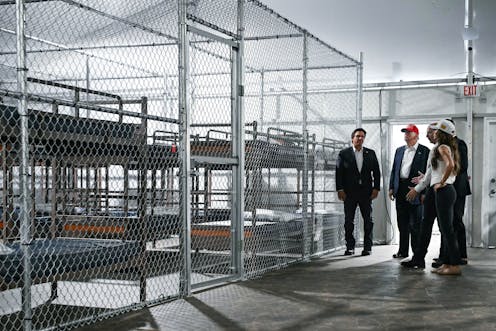
Florida Gov. Ron DeSantis leads a tour of the new Alligator Alcatraz immigration detention facility for President Donald Trump and U.S. Department of Homeland Security Secretary Kristi Noem. Andrew Cabellero-Reynolds/AFP via Getty Images

The state of Florida has opened a migrant detention center in the Everglades. Its official name is Alligator Alcatraz, a reference to the former maximum security federal penitentiary in San Francisco Bay.

While touring Alligator Alcatraz on July 1, 2025, President Donald Trump said, “This facility will house some of the menacing migrants, some of the most vicious people on the planet.” But new reporting from the Miami Herald/Tampa Bay Times reveals that of more than 700 detainees, only a third have criminal convictions.

To find out more about the state of Florida’s involvement in immigration enforcement and who can be detained at Alligator Alcatraz, The Conversation spoke with Mark Schlakman. Schlakman is a lawyer and senior program director for The Florida State University Center for the Advancement of Human Rights. He also served as special counsel to Florida Gov. Lawton Chiles, working as a liaison of sorts with the federal government during the mid-1990s when tens of thousands of Haitians and Cubans fled their island nations on makeshift boats, hoping to reach safe haven in Florida.

U.S. Department of Homeland Security Secretary Kristi Noem has characterized the migrants being detained in facilities like Alligator Alcatraz as “murderers and rapists and traffickers and drug dealers.” Do we know if the detainees at Alligator Alcatraz have been convicted of these sorts of crimes?

The Times/Herald published a list of 747 current detainees as of Sunday, July 13, 2025. Their reporters found that about a third of the detainees have criminal convictions, including attempted murder, illegal reentry to the U.S., which is a federal crime, and traffic violations. Apparently hundreds more have charges pending, though neither the federal nor state government have made public what those charges are.

There are also more than 250 detainees with no criminal history, just immigration violations.

Is it a crime for someone to be in the U.S. without legal status? In other words, is an immigration violation a crime?

No, not necessarily. It’s well established as a matter of law that physical presence in the U.S. without proper authorization is a civil violation, not a criminal offense.

However, if the federal government previously deported someone, they can be subject to federal criminal prosecution if they attempt to return without permission. That appears to be the case with some of the detainees at Alligator Alcatraz.

What usually happens if a noncitizen commits a crime in the U.S.?

Normally, if a foreign national is accused of committing a crime, they are prosecuted in a state court just like anyone else. If found guilty and sentenced to incarceration, they complete their sentence in a state prison. Once they’ve served their time, state officials can hand them over to U.S. Immigration and Customs Enforcement, or ICE. They are subject to deportation, but a federal immigration judge can hear any grounds for relief.

DHS has clarified that it “has not implemented, authorized, directed or funded” Alligator Alcatraz, but rather the state of Florida is providing startup funds and running this facility. What is Florida’s interest in this? Are these mostly migrants who have been scooped up by ICE in Florida?

It’s still unclear where most of these detainees were apprehended. But based on a list of six detainees released by Florida Attorney General James Uthmeier’s office, it is clear that at least some were apprehended outside of Florida, and others simply may have been transferred to Alligator Alcatraz from federal custody elsewhere.

This calls to mind the time in 2022 when Gov. Ron DeSantis flew approximately 50 migrants from Texas to Martha’s Vineyard in Massachusetts at Florida taxpayer expense. Those migrants also had no discernible presence in Florida.

To establish Alligator Alcatraz, DeSantis leveraged an immigration emergency declaration, which has been ongoing since Jan. 6, 2023. A state of emergency allows a governor to exercise extraordinary executive authority. This is how he avoided requirements such as environmental impact analysis in the Everglades and concerns expressed by tribal governance surrounding that area.

For now, the governor’s declaration remains unchallenged by the Florida Legislature. Environmental advocates have filed a lawsuit over Alligator Alcatraz, and the U.S. Supreme Court upheld a decision by a federal judge temporarily barring Florida from enforcing its new immigration laws, which DeSantis had championed. But no court has yet intervened to contest this prolonged state of emergency.

This presents a stark contrast to Gov. Lawton Chiles’ declaration of an immigration emergency during the mid-1990s. At that time, tens of thousands of Cubans and Haitians attempted to reach Florida shores in virtually anything that would float. Chiles’ actions as governor were informed by his experience as a U.S. senator during the Mariel boatlift in 1980, when 125,000 Cubans made landfall in Florida over the course of just six months.

Chiles sued the Clinton administration for failing to adequately enforce U.S. immigration law. But Chiles also entered into unprecedented agreements with the federal government, such as the 1996 Florida Immigration Initiative with U.S. Attorney General Janet Reno. His intent was to protect Florida taxpayers while enhancing federal enforcement capacity, without dehumanizing people fleeing desperate circumstances.

During my tenure on Chiles’ staff, the governor generally opposed state legislation involving immigration. In the U.S.’s federalist system of government, immigration falls under the purview of the federal government, not the states. Chiles’ primary concern was that Floridians wouldn’t be saddled with what ought to be federal costs and responsibilities.

Chiles was open to state and local officials supporting federal immigration enforcement. But he was mindful this required finesse to avoid undermining community policing, public health priorities and the economic health of key Florida businesses and industries. To this day, the International Association of Chiefs of Police’s position reflects Chiles’ concerns about such cooperation with the federal government.

Florida Gov. Ron DeSantis speaking into a microphone
Gov. Ron DeSantis outlines his plans for Alligator Alcatraz to the media on July 1, 2025.
Andrew Caballero-Reynolds/AFP via Getty Images

Now, in 2025, DeSantis has taken a decidedly different tack by using Florida taxpayer dollars to establish Alligator Alcatraz. The state of Florida has fronted the US$450 million to pay for this facility. DeSantis reportedly intends to seek reimbursement from FEMA’s Shelter and Services Program. Ultimately, congressional action may be necessary to obtain reimbursement. Florida is essentially lending the federal government half a billion dollars and providing other assistance to help support the Trump administration’s immigration enforcement agenda.

Florida is also establishing another migrant detention facility at Camp Blanding Joint Training Center near Jacksonville. A third apparently is being contemplated for the Panhandle.

ICE claims that the ultimate decision of whom to detain at these facilities belongs to the state of Florida, through the Florida Division of Emergency Management. Members of Congress who visited Alligator Alcatraz earlier this week have disputed ICE’s claim that Florida is in charge.

You advised Florida Division of Emergency Management leadership directly for several years during the administrations of Gov. Charlie Crist and Gov. Rick Scott. Does running a detention facility like Alligator Alcatraz fall within its typical mission?

The division is tasked with preparing for and responding to both natural and human-caused disasters. In Florida, that generally means hurricanes. While the division may engage to facilitate shelter, I don’t recall any policies or procedures contemplating anything even remotely similar to Alligator Alcatraz.

DeSantis could conceivably argue that this is consistent with a 287(g) agreement authorizing state and local support for federal immigration enforcement. But such agreements typically require federal supervision of state and local activities, not the other way around.

The Conversation

Mark Schlakman served as special counsel to Florida Gov. Lawton Chiles and as a consultant to Emilio Gonzalez at the U.S. Department of Homeland Security during his tenure as U.S. Citizenship and Immigration Services Director during the George W. Bush administration.

ref. Florida is fronting the $450M cost of Alligator Alcatraz – a legal scholar explains what we still don’t know about the detainees – https://theconversation.com/florida-is-fronting-the-450m-cost-of-alligator-alcatraz-a-legal-scholar-explains-what-we-still-dont-know-about-the-detainees-260665