Why male corporate leaders and billionaires may need financial therapy more than anyone

Source: The Conversation – USA (2) – By Prince Sarpong, Associate professor, University of the Free State

Corporate leaders and billionaires are often viewed as visionaries and wealth creators. But beneath the surface, many are trapped in an invisible financial “crisis” – one rooted not in market volatility or poor investments but in their psychological relationship with money.

As a finance professor and editor of the forthcoming book “Financial Therapy for Men,” I study this often overlooked aspect of financial psychology. Money is far more than numbers on a balance sheet – it carries emotional, psychological and social meaning. People’s relationships with money are shaped by childhood experiences, cultural beliefs and personal triumphs and failures. This emotional baggage can influence not only their sense of safety and self-worth but also how they manage power and status.

The field of financial therapy emerged in the mid-2000s to address these dynamics. Drawing from behavioral economics, financial psychology, family systems theory and clinical therapy, it aims to help people understand how their thoughts, feelings and experiences shape financial behavior. Foundational academic work began at Kansas State University, home to one of the first graduate-level programs in the field.

Since then, financial therapy has gained traction in the U.S. and globally: It’s supported by a peer-reviewed journal and is increasingly integrated into professional practice by financial advisers and licensed therapists. Studies have shown that financial therapy can improve relationships and reduce emotional distress.

Yet much of the field focuses on people who are emotionally open and reflective – neglecting executives, who are often socialized to view themselves as purely rational decision-makers. I think this is a mistake.

Research shows that people often project their unconscious anxieties onto markets, experiencing them as mirrors of competence, failure or control. This means that public valuations and capital flows may carry deeply symbolic weight for corporate leaders.

My research suggests that people at the highest levels of wealth and power have deeply complex emotional relationships with money – but the field of financial therapy has largely overlooked them. This isn’t an accident. It reflects a broader assumption that wealth insulates people from psychological distress. In reality, emotional entanglements can intensify with greater wealth and power – and research suggests that men, in particular, face distinct challenges. True inclusion in financial therapy means recognizing and responding to these needs.

When distress becomes a leadership crisis

In a 2023 study – When and why do men negotiate assertively? – Jens Mazei, whose research focuses on negotiations and conflict management, and his colleagues found that men become more aggressive in negotiations when they think their masculinity is being threatened. This was especially true in contexts viewed as “masculine,” such as salary negotiations. In “nonmasculine” contexts, such as negotiations over flexible work and child care benefits, participants weren’t significantly more aggressive when their masculinity was challenged.

On male-coded topics, many men in the study reinforced gender norms by rejecting compromise, using hardball tactics or even inflating financial demands to reassert their masculinity. These behaviors reflect an unconscious need to restore a sense of masculine identity, the researchers suggest. If this reaction occurs in salary negotiations, how might it manifest when the stakes are exponentially higher?

Emerging research in organizational psychology shows that financial stress is linked to abusive supervision, particularly among men who feel a loss of control. Further, traits such as CEO masculinity have been linked with increased risk-taking, while female CEOs tend to reduce risk. Together, these findings point to a dangerous intersection of psychological stress, masculinity and executive decision-making.

As Elon Musk memorably said, “I’ll say what I want to say, and if we lose money, so be it.”

M&A as a masculinity battleground

Financial distress doesn’t always look like bankruptcy or bad credit. Among powerful men, it can manifest as overconfidence, rigidity or aggression – and it can sometimes lead to very uneconomical outcomes.

Consider the research on M&A. Most mergers and acquisitions are value killers – in other words, they destroy more economic value than they create – and the field of M&A is deeply male. These two facts suggest that some mergers are driven more by threatened masculinity than by strategic logic. If men become more aggressive in negotiations when their masculinity is threatened, then CEOs and corporate leaders, who are overwhelmingly male, may react similarly when their companies, and by extension their leadership, are challenged.

Target companies rarely take a passive approach to acquisition attempts. Instead, they deploy defensive measures such as poison pills, golden parachutes, staggered boards and scorched-earth tactics. In addition to serving financial goals, these may also act as symbolic defenses of masculine authority.

Mergers and acquisitions, by their nature, create a contest of power between dominant figures. The very language of M&A – for example, “raiders,” “hostile takeovers,” “defenses” and “white knights” – is combative. This reinforces an environment where corporate leaders may view acquisition attempts as challenges to their authority rather than as just financial transactions.

A growing body of behavioral-strategy research confirms that boardroom decisions are often shaped by emotional undercurrents rather than purely rational analysis. While this research stops short of naming it, the dynamics it describes align closely with what Mazei and colleagues call “masculinity threat.”

This has direct implications for corporate M&A. The overwhelming majority of top CEOs are men, and the language of M&A often evokes siege, power struggles and conquest. In such a symbolic arena, acquisition attempts can trigger deep, emotionally charged responses, as the identity stakes are high. What appear to be strategic financial decisions may actually be reflexive defenses of masculine authority.

On a related note, researchers in behavioral finance have long studied the “endowment effect,” or the tendency for people to value assets more simply because they own them. While the endowment effect has been studied primarily among retail investors making ordinary financial decisions, it could be particularly important for corporate executives and billionaires, who have more to lose.

When combined with threatened masculinity, the endowment effect can produce combustible reactions to declining valuations, missed earnings or takeover bids – even for individuals who remain vastly wealthy after marginal losses. While the research at this intersection is still emerging, the underlying behavioral patterns are well established.

What does financial therapy for the ultrarich look like?

Financial therapy for high-net-worth individuals rarely looks like sitting on a couch discussing childhood trauma. Instead, it takes an interdisciplinary approach involving financial advisers, therapists and sometimes executive coaches. Sessions tend to focus on legacy planning, control issues, guilt over wealth, or strained family relationships.

Many high-net-worth men display behaviors that don’t look like like stereotypical “financial distress.” These can include compulsive deal-making, emotionally driven investment decisions, workaholism and difficulty trusting advisers. In some cases, unresolved financial trauma shows up as chronic dissatisfaction and the sense that no achievement, acquisition or net worth is ever “enough.”

While financial therapy is intended to help individuals, I think it could actually be a tool for global economic stability.

After all, when masculinity is threatened in corporate decision-making, the consequences can extend far beyond the boardroom. These actions can destabilize industries, fuel economic downturns and disrupt entire labor markets. Unchecked financial anxiety among corporate elites and billionaires isn’t just their own problem – it can cascade and become everyone’s problem.

From this perspective, financial therapy isn’t just a personal good. It’s a structural necessity that can prevent unchecked financial distress from driving destructive corporate decisions and broader economic disruptions.

If financial therapy helps people navigate financial distress and make healthier money decisions, then no group needs it more than male corporate leaders and billionaires.

The Conversation

Prince Sarpong does not work for, consult, own shares in or receive funding from any company or organization that would benefit from this article, and has disclosed no relevant affiliations beyond their academic appointment.

ref. Why male corporate leaders and billionaires may need financial therapy more than anyone – https://theconversation.com/why-male-corporate-leaders-and-billionaires-may-need-financial-therapy-more-than-anyone-252094


Elbows down? Why Mark Carney seems to keep caving to Donald Trump

Source: The Conversation – Canada – By Sam Routley, PhD Candidate, Political Science, Western University

Prime Minister Mark Carney has suggested a new trade deal with the United States is now most likely to include tariffs. There is, in his own words, “not a lot of evidence right now” that the Donald Trump administration is willing to stand down from imposing levies on Canadian imports.

In making this acknowledgement, Carney has backed down from his previous insistence that Canada would “fight to bring these tariffs to an end.”

But rather than continuing to retaliate with tariffs of its own, the government has begun to confess that such a tactic may be a losing battle.

Carney has instead announced Canada will restrict the tariff-free import of cheap, foreign steel to help domestic manufacturers reeling from American tariffs.

In the wake of the federal government’s recent concession on the Digital Services Tax levied against big American tech companies, it’s another indicator that — unlike the hawkish “elbows up” rhetoric used throughout the federal election campaign — the Canadian government has taken on a more conciliatory tone in advance of the Aug. 1 deadline for a new economic and security deal between Canada and the U.S..

Dual purposes

The timing of Carney’s comments can be interpreted two ways.

Their first and primary purpose is about message control and the need to manage expectations. In announcing this now, the government is not only better able to keep its justification for conceding to Trump at the forefront of media narratives, but it can also prepare Canadians for any further potential concessions in the course of trade negotiations.

The fact that these comments were made prior to a cabinet meeting could be seen as Carney’s attempt to isolate any cabinet ministers who may still favour a more aggressive stance.

More substantively, however, the pivot is also a reflection of the realities of both Canada’s actual position vis-à-vis the U.S. and the pragmatism needed to accomplish real trade agreements.


Read more:
U.S. tariff threat: How it will impact different products and industries


Although Trump is unpredictable, it increasingly seems that levies on imports are among his genuinely held and signature policy commitments. As Carney noted, the administration’s recent trade deals with both the United Kingdom and Vietnam included tariffs. And, despite the president’s talk of annexing Canada, Carney’s new stance suggests a more reasonable, albeit very costly, deal is possible — even amid Trump’s bluster.

Still, for all the attention they’ve received, tariffs are only part of the ongoing negotiations on the economic and security deal.

What does Trump want?

The U.S. administration, for example, continues to justify higher tariff threats not just for economic purposes, but ostensibly to counter the illegal drug trade.

The fact that the Canadian government has already allotted $1 billion to border defence makes it difficult to assess what would satisfy American negotiators.

More broadly, Trump has expressed a desire to push Canada for changes in security, supply management of the dairy industry, fresh water use and access to rare earth minerals, among others.


Read more:
Zombie water apocalypse: Is Trump’s rhetoric over Canada’s water science-fiction or reality?


Regardless of how the trade talks proceed in the coming weeks, though, the domestic consequences for Carney will be determined by how willing Canadians are to continue trusting and supporting him.

On the one hand, his comments that tariff-free trade deals with the U.S. aren’t realistic could be costly given the fact that more than two-thirds of Canadians continue to favour a hard-line stance with little to no concessions on key files.

This could result in voters viewing Carney as weak and shifting their support to other leaders. No incumbent stands to benefit from the detrimental effects on economic growth, investments and employment rate Trump’s tariffs will cause.

But support also depends on Carney’s legitimacy. He could maintain public support despite the fact that, on paper, they oppose his actions. Taking a “hard” versus “soft” line in negotiations is itself an ambiguous and fluid set of designations.

A major reason why Canadians elected Carney is because they viewed him as having sound personal judgment and the skill set to deal with Trump. This is why, rather than challenging the value of the decision to compromise on tariffs, the Conservatives and other opponents have focused on conveying him as an unreliable and dishonest leader.

What’s ahead for federal politics?

At this point, polls suggest that Canadians are generally split down the middle on Carney. While around 50 per cent of Canadians are supportive, the other half remain divided between those strongly opposed and those with a more ambiguous position.

Could Carney win over the support of those with an unambiguous view? It seems unlikely. Leaders are the usually the most impactful when they enter office. And while rally-around-the-flag effects are real, they are short-lived. That means the long-term challenge for Carney remains maintaining the support of the voters that brought him to power.


Read more:
How Canadian nationalism is evolving with the times — and will continue to do so


The Canada-U.S. relationship will continue to develop in a dynamic and unpredictable fashion, even if the economic and security deal is reached soon.

After voters dramatically consolidated around the Liberals and Conservatives in the 2025 election, the most important question for federal Canadian politics moving forward in this shifting global environment is which electoral coalition will endure.

Carney seeks to preserve trust, while the Conservatives search for a compelling alternative. Who will come out on top in the Trump 2.0 era?

The Conversation

Sam Routley does not work for, consult, own shares in or receive funding from any company or organisation that would benefit from this article, and has disclosed no relevant affiliations beyond their academic appointment.

ref. Elbows down? Why Mark Carney seems to keep caving to Donald Trump – https://theconversation.com/elbows-down-why-mark-carney-seems-to-keep-caving-to-donald-trump-261304

Polycystic ovary syndrome (PCOS) is a big threat to women’s health, but it’s still under-recognized, under-diagnosed and under-treated

Source: The Conversation – Canada – By Jamie Benham, Endocrinologist & Assistant Professor, Departments of Medicine and Community Health Sciences, Cumming School of Medicine, University of Calgary

Polycystic Ovary Syndrome (PCOS) is a hormonal imbalance that affects ovaries, periods and fertility in about one in 10 Canadian women. Different from ovarian cysts, PCOS is associated with infertility, pregnancy complications, heart disease and a general decreased quality of life, and yet fewer than half of those affected even know they have it.

This under-recognition and under-diagnosis is a significant problem, because a recent Canadian study suggests these women are 20 to 40 per cent more likely to experience negative health outcomes during their lifetime than the general population, including hypertension (high blood pressure), kidney disease, gastrointestinal disease, eating disorders, depression and anxiety.

Heart disease risk

The Canadian researchers also found obesity, dyslipidemia (abnormal levels of fat in your blood) and Type 2 diabetes to be two to three times more common for women with PCOS. And most importantly, cardiovascular disease, which causes heart failure and stroke, was not only 30 to 50 per cent more likely, but occurred three to four years earlier than average in women with PCOS.

Cardiovascular disease is the leading cause of death worldwide, so when PCOS symptoms are missed and untreated, women’s health is at risk.

A model of a uterus and ovaries in the foreground with tiles spelling PCOS, and a woman in a white coat blurred in the background
Women with PCOS are more likely to experience negative health outcomes.
(Photo: Colourbox.com)

High cost

There is undoubtedly a personal cost to individual women, both physically and mentally, and living with PCOS can be a significant financial, health-care and work-life burden for many women, too, which may disproportionately affect those in lower socioeconomic groups.

These experiences are further compounded by a system failure to properly diagnose and manage their symptoms. Women report doctors ignoring or dismissing their concerns, not believing them and struggling to make a diagnosis. In fact, a large international survey reported it can take several months, and even several years, before women are diagnosed.

Common PCOS symptoms

PCOS symptoms can vary between different women, but it is important to discuss the possibility of PCOS with your doctor, because careful management and/or treatment can help protect against developing more serious related health issues. Common symptoms include:

  • Irregular periods
  • Excess body hair, called hirsutism (usually darker hair on the face, arms, chest or abdomen)
  • Thinning or loss of hair (like excess body hair, this is caused by high levels of male hormones, or androgens)
  • Acne and/or oily skin
  • Weight gain

Managing and treating PCOS

Despite PCOS first being diagnosed almost a century ago, there is no single test to confirm whether a woman has it, and there is no cure. If your doctor suspects you may have PCOS, they may order blood work to check your hormone levels and an ultrasound to check your ovaries.

Unlike ovarian cysts, which are fluid-filled sacs that develop on or inside an ovary and can be painful, polycystic ovaries are enlarged, with multiple follicles that can be seen on ultrasound.

Two women and child seen from behind, standing on a beach
PCOS is a chronic condition that needs lifelong management.
(Photo: Colourbox.com)

If PCOS is diagnosed, further testing for cholesterol and glucose levels is likely in order to manage heart disease and diabetes risk.

Researchers also suggest ways women with PCOS can help manage their condition, which include:

PCOS research underway

Despite the current problems, improvement is possible, and there have been sustained efforts in recent years — all over the world — to advocate for women with this condition and invest in PCOS research.

In 2023, an International PCOS Guideline, led from Australia, was published. It recommends an individualized approach to PCOS treatment, including lifestyle modifications (for example, healthy eating and exercising), medical management to treat symptoms and regular checkups to provide support and screen for related complications.

In Canada, the province of Alberta recently launched a much-needed clinical pathway to recognize, treat and advocate for PCOS that could be adopted more widely.

At the University of Calgary, Dr. Jamie Benham, one of the authors of this story, leads EMBRACE (Endocrine, Metabolic and Reproductive Advancements), a new women’s health research lab where a team of clinical researchers is focusing on reproductive disorders across the whole of a woman’s life system, including PCOS and gestational diabetes.

This work, supporting patients’ PCOS care, includes a current online needs-assessment survey, and focus groups beginning later this year, to inform the development of a co-designed patient tool to support PCOS management.

Patient engagement

With such a huge demand for answers, the EMBRACE team works closely with a PCOS Patient Advisory Council, chaired by Robyn Vettese, another author of this story, to uncover complex connections between hormones and health, promote screening, find solutions and provide answers. Importantly, the lab’s research questions come directly from clinic patients, and the answers the lab finds go back to those patients and are then shared more widely.

Other recent PCOS advocacy events include Dr. Benham’s presentation at the inaugural Sex, Gender and Women’s Health Research Hub’s Women’s Health Symposium event in Calgary, and her interview with the Libin Cardiovascular Institute.

PCOS awareness

Another exciting research program in Alberta is PCOS Together. Researchers with this group are working to establish methods that will detect early disease risk in all women with PCOS, as well as clinical interventions that will help prevent disease in high-risk women.

Similar organizations exist in the United Kingdom and Australia, including Verity PCOS, a volunteer-based charity, and Ask PCOS, a researcher- and clinician-led organization. Both organizations provide a wealth of information online.

This is a critical (albeit often overlooked) area of women’s health that needs greater awareness and attention so that we can improve and save women’s lives.

The Conversation

Jamie Benham receives funding from the M.S.I. Foundation, Diabetes Canada, and the Canadian Institutes of Health Research.

Robyn Vettese receives funding from the Canadian Institutes of Health Research.

Pauline McDonagh Hull does not work for, consult, own shares in or receive funding from any company or organisation that would benefit from this article, and has disclosed no relevant affiliations beyond their academic appointment.

ref. Polycystic ovary syndrome (PCOS) is a big threat to women’s health, but it’s still under-recognized, under-diagnosed and under-treated – https://theconversation.com/polycystic-ovary-syndrome-pcos-is-a-big-threat-to-womens-health-but-its-still-under-recognized-under-diagnosed-and-under-treated-259602

Bosnia and Herzegovina in crisis as Bosnian-Serb president rallies for secession

Source: The Conversation – UK – By Birte Julia Gippert, Reader in International Relations, University of Liverpool

The country of Bosnia and Herzegovina is embroiled in a crisis that may affect its political future and the stability of the western Balkans. Recent events in the bitterly divided country read a little like a spy novel. But the tensions that threaten three decades of tenuous peace since the region was torn apart by ethnic strife in the 1990s are only too real.

On February 26, 300 armed Hungarian police officers in civilian clothes crossed into Republika Srpska without approval from the Sarajevo state government. Republika Srpska is one of the two territorial entities that make up Bosnia and Herzegovina and the Hungarian police were there, ostensibly, to train local police.

But they were reportedly sent to be ready to extract Republika Srpska president, Milorad Dodik, who had the same day been convicted by a Bosnian court for “separatist actions”. These included suspending rulings of the Bosnian constitutional court and refusing to publish decisions by the Bosnian high representative, which prevents them from becoming law in contravention of Bosnia’s constitution.

He was sentenced to 12 months in prison and handed a six-year ban from all political activities. Within days of the verdict, Dodik reacted by banning all Bosnian state prosecutorial, police and court institutions from Republika Srpska, in what the Bosnian constitutional court ruled was a move to “effectively abolish state authority over part of its territory”.

In March, Bosnia’s state court issued an arrest warrant against Dodik for ignoring a court summons over his alleged secessionist activity. In April, the Bosnian state investigation and protection agency, Sipa, attempted to arrest him in East Sarajevo, which is part of Republika Srpska.

An armed stand-off followed between Sipa officers and local police. Eventually the Sipa officers withdrew.

So it came as a surprise for many when Dodik and his lawyer attended a scheduled hearing for his case on July 4. The court duly lifted its arrest warrant pending further proceedings with a requirement that he report in on a periodical basis.

Two days later, despite only being on conditional release, Dodik restated his claim for the unification of Republika Srpska with Serbia, saying: “Bosnia and Herzegovina is not a state of Serbs but only a temporary refuge.”

The burden of history

The state of Bosnia and Herzegovina emerged from the horrors of the Yugoslav wars in the 1990s. The country’s political form was part of the 1995 Dayton peace agreement, which was both a peace deal and a state-building blueprint.

To accommodate, rather than solve, the tensions between the three main ethnic groups – Bosniak Muslims, Serbs and Croats – the state was divided into two entities: the Serb-majority Republika Srpska and the Bosniak-Croat Federation of Bosnia and Herzegovina.

Both parts of the country hold considerable autonomous powers, but are bridged by the weak federal political institutions. Like many power-sharing deals, Dayton ended the fighting but failed to build an integrated state.

The two entities guard their autonomy fiercely. Attempts by the European Union to push for constitutional changes to pave the way to closer relations with the Bosnian state, for example by reforming the country’s police force, have been rebuffed by nationalist politicians.

The Republika Srpska has been vocal in defence of its autonomous rights. And the most prominent voice among them has been Dodik, who consistently portrays Republika Srpska as a bulwark for Serbs against a hostile Bosnian-majority state imposing its will.

Serbs only account for about 30% of the total population of Bosnia, and clearly chafe at the power-sharing arrangement. Ever since the Dayton accords brought a halt to the fighting, Serb nationalist politicians have toyed with the idea of a “Greater Serbia”.

This encompasses Serbs living in Serbia, Republika Srpska and Serbia’s breakaway province in Kosovo. Dodik’s statement from July 6 has stirred up these sentiments once more, almost to the day on the anniversary of the first-ever pan-Serbian assembly held in Belgrade on June 8 2024 and co-hosted by Dodik and and the Serbian president, Aleksandar Vučić.

At a crossroads

Bosnia is at a crossroads. Internally divided in whether populations see their future in their past, retaining a semi-autocratic, ethno-nationalist government, or whether they see their future as a democratic, accountable and multiethnic state. The former, of course, would look to – and remain within the sphere of influence of – Russia. The latter prefer to look westward for their future.

Bosnia, like its neighbours, is an EU candidate country. It began accession negotiations in March 2024, but many of the reforms required to meet EU accession criteria clash with Bosnia’s constitution.

Among other things, this restricts who can join the tripartite federal presidency and the House of Peoples, the upper-chamber of the federal parliament, excluding Jews, Roma and other minorities. This would have to change for Bosnia to join.

But the Bosnian constitution is anchored in the Dayton peace agreement, so nationalist politicians threaten that constitutional reform will endanger Bosnia’s peace and integrity.

Embracing constitutional reforms to fulfil EU entry requirements is risky for nationalist politicians as it undercuts their ethnic powerbase. However, turning fully away from the EU, and possibly towards Russia, carries a hefty price-tag in foregone direct financial support and economic integration. So far, Dodik and Vučić have managed to somewhat balance these seemingly contradictory courses of action. However, they are facing increasing headwinds.

Both the ongoing Serbian protests and recent polls from Bosnia showing that 70% of Bosnians (but only 50% of Bosnian Serbs) want to join the EU, question whether this course remains viable. With increased popular calls for democracy, accountability and fair elections, the recent actions by Dodik and his allies may be a reaction to these demands, rather than a separate agenda.

An old elite desperately clinging to power? Given the political fragility of Bosnia, reform appears inevitable. But the choice is a contested one.

One way the country breaks into its constituent parts along ethnic lines. The other prospect is that Bosnia embraces reform and progresses to become a democratic multi-ethnic state with a European future. Either way may spell turbulent times ahead.

The Conversation

Birte Julia Gippert does not work for, consult, own shares in or receive funding from any company or organisation that would benefit from this article, and has disclosed no relevant affiliations beyond their academic appointment.

ref. Bosnia and Herzegovina in crisis as Bosnian-Serb president rallies for secession – https://theconversation.com/bosnia-and-herzegovina-in-crisis-as-bosnian-serb-president-rallies-for-secession-260618

Trump’s changing stance on Epstein files is testing the loyalty of his Maga base

Source: The Conversation – UK – By Robert Dover, Professor of Intelligence and National Security & Dean of Faculty, University of Hull

During his 2024 US presidential election campaign, Donald Trump repeatedly said he would declassify and release the files related to Jeffrey Epstein, the disgraced financier who died in prison in 2019 while awaiting his sex trafficking trial.

The so-called Epstein files are thought to contain contacts, communications and – perhaps most crucially – flight logs. Epstein’s private aircraft was the means by which to visit what has been later termed “paedophile island”, where he and his associates allegedly trafficked and abused children.

Conspiracy-minded Trump supporters, many of whom believe Epstein was murdered by powerful figures to cover up their roles in his child sex crimes, think the Epstein files will provide them with a who’s who of the supposed elites involved in child-sex exploitation.


Get your news from actual experts, straight to your inbox. Sign up to our daily newsletter to receive all The Conversation UK’s latest coverage of news and research, from politics and business to the arts and sciences.


During his campaign, Trump hinted that the Epstein files would compromise powerful people – suggesting he knew their identities and what they had done. It was simultaneously a warning shot to these individuals and a way to energise his “Make America Great Again” (Maga) support base. It also validated part of the so-called QAnon conspiracy theory around a “deep-state” cover-up of an elite child sex abuse network.

But the justice department recently announced that its review of these papers revealed no client list of politically important men, and also that Epstein had died by suicide. This struck down two of the most important beliefs of Trump’s base. For a large section of the Maga movement, this somewhat dull set of conclusions has felt like a betrayal.

Musk smells opportunity

Trump’s former close ally, funder and adviser, Elon Musk, has used the Epstein files imbroglio to go on the attack via social media. Musk has, without offering evidence, repeatedly insinuated that Trump’s name is in the files. Trump has responded by accusing Musk of “losing his mind” and used evidence from Epstein’s former lawyer, David Schoen, to refute Musk’s accusations.

Musk’s allegations could be toxic for Trump. A good portion of the Maga movement think the QAnon conspiracy has some truth to it. So being potentially tied to a child sex exploitation ring would damage Trump’s reputation with his base on a subject they care about strongly. Musk has caused some Maga activists to wonder if Trump is part of a cover up.

The Maga base largely remains loyal to Trump. But this loyalty has required considerable pragmatism since Trump was reelected. A key position supported by Maga voters, Trump’s opposition to foreign military adventures, was reversed by his attack on Iranian military sites in June.

Maga-aligned spokespeople justified these actions on the grounds they were limited and a response to exceptional provocation. They are portrayed as a counterpoint to the near open-ended commitment of former US president George Bush in Afghanistan and Iraq in the early 2000s.

Further Maga pragmatism has been required over the so-called Big Beautiful Bill Act, which will add trillions of US dollars to national debt, as well as the cuts to healthcare and food stamp funding. These latter actions have removed coverage and aid from a good portion of Maga-aligned voters.

Despite the personal financial pain, Maga loyalists have couched their support in terms of reducing waste and shrinking the size of the government. These loyalists have faith in Trump’s word that they will ultimately not be disadvantaged – though the implementation phase will be the test of this.

Trump has also stretched the patience and loyalty of corn farmers in mid-western states, a natural base for him. He has called for Coca-Cola to use cane sugar rather than corn syrup in the full-sugar version of its drink. Trump and his controversial health secretary, Robert F. Kennedy Jr, have argued that cane sugar is healthier – which is open to question – and will “make America healthy again”.

While the question of which sweetener is used in Coke is marginal, supporting something that damages mid-western farmers will be difficult for Maga loyalists to reconcile. In having to find a way of overcoming the tensions in the policy, they may begin to question Trump’s wisdom.

A Trump supporter sporting a red 'Keep America Great' hat.
A Trump supporter sporting a red ‘Keep America Great’ hat at a rally in Des Moines, Iowa.
Aspects and Angles / Shutterstock

The arguments surrounding the Epstein files might be uniquely dangerous for Trump and his relationship with his Maga base. The QAnon paedophile ring conspiracy is core to a great number of Maga loyalists, and Trump was their man to reveal “the truth”.

But the justice department has now effectively rejected that part of their world view. And the response of some has been to question whether Trump is also part of a cover up.

Worse still, Trump has gone on the attack. He has said the Epstein conspiracy was never real and has described some of his supporters as “gullible weaklings” for continuing to believe in it. For some supporters this has been too much, and they have aired their frustration on Trump’s Truth Social media platform as well as on right-leaning blogs and podcasts.

Trump has begun to soften his critique of those believing in the Epstein conspiracies, saying he would want to release any credible information. He has also returned to a campaigning tactic of whataboutery, pointing at what he says is the unfair treatment he receives compared to his predecessors Barack Obama and Joe Biden.

The Epstein files episode might well pass. But the question of whether Maga is now bigger than Trump will not. For a president who once joked that his support was so strong he “could stand in the middle of Fifth Avenue and shoot somebody” without losing voters, the loyalty and pragmatic flexibility of his supporters is important.

Maga is not a uniform group in belief or action. But if Trump loses either the loyalty of some or they refuse to flex their beliefs as they have done before, it will be politically dangerous for him. From beyond the grave, Epstein might have helped begin a new era in American politics.

The Conversation

Robert Dover does not work for, consult, own shares in or receive funding from any company or organisation that would benefit from this article, and has disclosed no relevant affiliations beyond their academic appointment.

ref. Trump’s changing stance on Epstein files is testing the loyalty of his Maga base – https://theconversation.com/trumps-changing-stance-on-epstein-files-is-testing-the-loyalty-of-his-maga-base-261406

Colonization devastated biodiversity, habitats and human life in the Pacific Northwest

Source: The Conversation – Canada – By Meaghan Efford, Postdoctoral Research Fellow, Institute for the Oceans and Fisheries, University of British Columbia

Burrard Inlet, known traditionally as səl̓ilwəɬ (Tsleil-Wat) in the hən̓q̓əmin̓əm̓ language, has been the heart of the traditional, ancestral and unceded territory of the səl̓ilwətaɬ (Tsleil-Waututh Nation) since time immemorial.

A satellite image of a waterway surrounded by a cityscape
An image of part of Burrard Inlet and the City of Vancouver taken from the International Space Station in April 2022.
(NASA)

The inlet is a water system that wraps through and around what we now know today as the city of Vancouver on the coast of British Columbia. The ecosystem is home to essential habitat for species like Pacific herring, Pacific salmon and harbour seals.

Burrard Inlet is also host to many commercial, industrial and urban developments and interests. This includes the Port of Vancouver, one of the largest marine ports in Canada and the terminal end of the Trans Mountain Pipeline. Today, more than 2.5 million people call the area home and it’s a popular tourism spot.

This is relatively new, however. Colonization and urbanization have caused intense change and damage since Europeans first settled in the area in around 1792, with most changes occurring since the 1880s.

Through a collaborative research project between the Tsleil-Waututh Nation, the University of British Columbia, engineering consultant firm Kerr Wood Leidal and Mitacs Canada, we assessed the impact of colonization on the Burrard Inlet ecosystem since Europeans first settled in the area.

When we look at the cumulative effects of specific events, we are adding the individual impacts of each event together to get a fuller picture of how colonialism impacted the ecosystem.

How we tracked change over time

We chose four sources of stress to the ecosystem to assess for this research:

1) The impact of smallpox on the ancestral Tsleil-Waututh population and the resulting health of the inlet.

2) The impact of settler fisheries, including Pacific salmon and Pacific herring.

3) The impact of settler hunting on land animals, including deer.

4) The impact of urbanization on the health of the ecosystem.

We used an ecosystem modelling software program called Ecopath with Ecosim, and modelled how these events impacted the inlet ecosystem between 1750-1980. We found there was a significant decrease in biomass (how much of a given organism is in an ecosystem) and available habitat.

We focused on 12 animal groups based on another collaborative project that focused on traditional Tsleil-Waututh diets.

To do this, we drew on multiple sources of data, including Tsleil-Waututh traditional ecological knowledge, archeological data, historical and archival work and ecological resources.

By combining these different sources of information, we can address gaps in each data source and weave together information to paint a fuller picture of ecological change over time.

An aerial photo of boats in a waterway with a sandy shoreline with mountains in the background
An aerial photo of the Burrard Inlet’s North Shore and the Maplewood Mudflats taken by a Tsleil-Waututh field survey team by drone during a kelp survey in August 2020.
(Tsleil-Waututh Nation)

What we found

Our research highlights how shoreline change from events like the construction of the Port of Vancouver resulted in the loss of more than half of the intertidal habitat that clams, crabs, birds and fish rely on.

Along with over-harvesting, this has resulted in a dramatic population decline for these species. Clams and other bivalves have also become unsafe to eat due to pollution.

Over-fishing has been a huge problem. Forage fish, including Pacific herring, eulachon, surf smelt and Northern anchovy, collectively experienced a 99 per cent decline in biomass.

Pacific herring was completely wiped out by dynamite fishing, and only recently returned.

Pink salmon and chum salmon both experienced more than 40 per cent losses in biomass due to over-fishing. White sturgeon were almost wiped out.

Mammals didn’t fare any better: three-quarters of the deer and elk populations and over one-quarter of the harbour seal population in the area around the inlet were lost to hunting.

Smallpox had a devastating effect on Salish communities throughout the region. The loss of lives caused dramatic change in the ecosystem because it reduced how much food was taken out of the ecosystem significantly.

The smallpox epidemics only touch the surface of how colonization impacted Indigenous lives. Other events that we didn’t include in the model — like the Residential School system and the Reserve System, for example — severely limited or criminalized stewardship activities that Tsleil-Waututh and other Nations have been using to take care of their territory for millennia.

Tsleil-Waututh stewardship and sovereignty

Tsleil-Waututh people are specialists in managing and stewarding the marine, tidal and terrestrial resources of the inlet’s ecosystem. Tsleil-Waututh salmon stewardship sustainably maintained a chum salmon fishery for almost 3,000 years.

The research questions, priorities and direction of our project were established through frequent collaborative meetings. This approach ensured Tsleil-Waututh co-authors and colleagues were involved in every step of the research.

This kind of community-driven work is complex. It is also incredibly valuable for understanding ecosystem change over time. Without the leadership and knowledge of Tsleil-Waututh knowledge-holders, this research would have had massive data and knowledge gaps and the work would have much less significance.

This is an example of transdisciplinary research: research that is interdisciplinary, that draws on multiple disciplines for data and methods and is grounded in community from the beginning.

Our research shows that colonialism has had a devastating impact on habitats and biodiversity in and around Burrard Inlet. This is not just an ecological story, but a human story that speaks to the wide-reaching impacts of colonization. It is an intertwined story that shows how harmful colonization and rapid urbanization can be, both to humans and to the ecosystems we call home.

The Conversation

Meaghan Efford received funding from Mitacs Canada through a collaborative project with Tsleil-Waututh Nation.

ref. Colonization devastated biodiversity, habitats and human life in the Pacific Northwest – https://theconversation.com/colonization-devastated-biodiversity-habitats-and-human-life-in-the-pacific-northwest-260791

Canada’s proposed Strong Borders Act further threatens the legal rights of migrants

Source: The Conversation – Canada – By Shiva S. Mohan, Research Fellow, Canada Excellence Research Chair in Migration & Integration program, Toronto Metropolitan University

Canada’s federal government recently introduced the Strong Borders Act, also known as Bill C-2, that proposes Canada tighten migration controls and modernize border enforcement between Canada and the United States.

Critics have warned the bill “could pave the way for mass deportations” as well as increase precarity for legal migrants.


Read more:
Why Canada’s Strong Borders Act is as troublesome as Donald Trump’s travel bans


Even now, under existing laws, a migrant could be “legal” and still be denied health care, lose their job or effectively be unable to leave Canada for fear of being denied re-entry.

Bill C-2’s expanded enforcement powers and increased risk of status revocation could make these precarities much worse.

This is already the quiet reality for thousands of migrants in Canada under their “maintained status”, formerly “implied status.” This status is a legal provision designed to protect continuity for temporary residents who apply to extend their permits.

Maintained status itself is not the problem. On paper, it offers legal protection.

But in practice, it often collapses because of the ecosystem in which it operates: fragmented institutions, absent co-ordination and lack of transparency.

Maintained status has been narrowed

In May 2025, Immigration, Refugees and Citizenship Canada (IRCC) quietly narrowed the scope of maintained status.

Under the new rules, if a person’s first application is refused while they are on maintained status, any second application submitted during that period is now automatically refused.

This effectively strips applicants of legal status, including protections under maintained status, to remain in Canada. The change shows how even compliant migrants can lose status abruptly, further heightening the insecurity built into the system.

This is a clear expression of complex precarity: a condition in which migrants face legal, economic and social insecurity, even when they follow all the rules.

Maintained status is just one example of this larger phenomenon of Canadian policy generating hidden forms of exclusion.

Legal, but not recognized?

Migrants on maintained status are legally allowed to stay in Canada and continue working or studying under the same conditions as their expired permit. Yet no new permit is issued to confirm this status.

Proof of this legal standing varies depending on how a person applies. Those who apply online may receive a WP-EXT letter confirming their right to continue working. However, this isn’t issued to post-graduation work-permit holders, and expires after 365 days.

Paper-based applicants are advised that no such letter will be provided. Instead, they must rely on a copy of their application, a fee payment receipt or courier tracking information to demonstrate continued legal status.

If no letter is available, or once it expires, IRCC advises applicants to direct employers to the Help Centre web page as proof of their right to remain and work.

These workarounds are legally valid but fall short of what many employers, landlords and service providers consider adequate proof of status.


Read more:
Canada’s new immigration policy favours construction workers but leaves the rest behind


The limits of informal proof

My current ongoing research points to how employers following rigid HR protocols often reject informal documentation. Some migrants even obtain letters from immigration lawyers to explain their legal right to remain and work.

IRCC does not publish public data on the number of people on maintained status or how long they remain in that condition. Some front-line organizations have adjusted their services in response to this gap.

MOSAIC, for example, a major settlement agency in British Columbia, explicitly lists “migrant workers on maintained status” as eligible for support. This signals institutional recognition of the category.

The broader situation, however, reflects a disconnect between legal recognition by the state and practical verifiability in everyday life.

The risk of travel

Travel while on maintained status is legally permitted only under narrow conditions, such as holding a valid Temporary Resident Visa, being visa-exempt or returning from the U.S. under specific circumstances.

But even in these cases, leaving Canada terminates maintained status.

Migrants may be allowed to re-enter as visitors, but they cannot resume work or study until a new permit is issued. This introduces major uncertainties for people who may need to travel for family, emergencies or professional obligations.

Disparities in provincial health access

Access to public health insurance during maintained status varies widely across provinces.

In Ontario, OHIP (Ontario Health Insurance Plan) cards are directly tied to the expiration of work permits. Unless migrants know to proactively request extended coverage and can meet specific document requirements, they risk losing health insurance entirely. Even when eligible, coverage is not automatic and may require out-of-pocket payment pending reimbursement.

In Québec, RAMQ (Régie de l’assurance maladie du Québec) treats migrants on maintained status like new arrivals. They must reregister for coverage and face a three-month waiting period from the time of renewal, regardless of continuous legal presence.

In British Columbia, by contrast, the MSP (Medical Services Plan) offers temporary coverage for up to six months (extendable) to individuals on maintained status, provided they previously held MSP and submit IRCC receipt proof.

This more inclusive approach highlights how uneven provincial co-ordination amplifies the precarity of federal policy.

Infrastructure is needed immediately

Migrants face great risks on maintained status.

Despite investments in automation and digital infrastructure, IRCC continues to experience chronic processing delays, leaving migrants in prolonged uncertainty: legally present, but practically unrecognized.

To address this, Canada needs systems and resources designed to uphold legal recognition in daily life. It needs to:

  • Create a secure centralized portal that allows migrants to control who can verify their legal status in real time. The U.K.’s share code platform and the American myE‑Verify system provide clear examples of how this can work, reducing confusion for employers, landlords, and service providers.

  • Issue co-ordinated provincial guidance, particularly regarding access to essential services such as health care, so that front-line staff have clarity on migrants’ rights under maintained status.

  • Protect continuity of status after international travel, ensuring that those who leave Canada while on maintained status do not lose the ability to return and resume work or study.

As Canada advances legislation like Bill C‑2, we must not ignore the country’s quiet erosion of its existing legal architecture for migrants.

Migrants on maintained status have followed the rules.

If we are serious about building trust in immigration systems, we must commit to infrastructure that is workable, visible and fair.

The Conversation

Shiva S. Mohan receives funding from the Canada Excellence Research Chair in Migration and Integration Program at Toronto Metropolitan University. He has no other affiliations or financial interests that would benefit from this article.

ref. Canada’s proposed Strong Borders Act further threatens the legal rights of migrants – https://theconversation.com/canadas-proposed-strong-borders-act-further-threatens-the-legal-rights-of-migrants-259349

Supreme Court news coverage has talked a lot more about politics ever since the 2016 death of Scalia and GOP blocking of Obama’s proposed nominee

Source: The Conversation – USA – By Joshua Boston, Associate Professor of Political Science, Bowling Green State University

Reporters used to treat the Supreme Court as a nonpolitical institution, but not anymore. Tetra Images/Getty

The U.S. Supreme Court has always ruled on politically controversial issues. From elections to civil rights, from abortion to free speech, the justices frequently weigh in on the country’s most debated problems.

And because of the court’s influence over national policy, political parties and interest groups battle fiercely over who gets appointed to the high court.

The public typically finds out about the court – including its significant decisions and the politics surrounding appointments – from the news media. While elected officeholders and candidates make direct appeals to their voters, the justices and Supreme Court nominees are different – they largely rely on the news to disseminate information about the court, giving the public at least a cursory understanding.

Recently, something has changed in newspaper coverage of the Supreme Court. As scholars of judicial politics, political institutions and political behavior, we set out to understand precisely how media coverage of the court has changed over the past 40 years. Specifically, we analyzed the content of every article referencing the Supreme Court in five major newspapers from 1980 to 2023.

Of course, people get their news from a variety of sources, but we have no reason to believe the trends we uncovered in our research of traditional newspapers do not apply broadly. Research indicates that alternative media sources largely follow the lead of traditional beat reporters.

What we found: Politics has a much stronger presence in articles today than in years past, with a notable increase beginning in 2016.

When public goodwill prevailed

Not many cases have been more important in the past quarter-century or, from a partisan perspective, more contentious than Bush v. Gore – the December 2000 ruling that stopped a ballot recount, resulting in then-Texas Governor George W. Bush defeating Democratic candidate Al Gore and winning the presidential election.

Bush v. Gore is particularly interesting to us because nine unelected, life-tenured justices functionally decided an election.

A New York Times front page story from Dec. 13, 2000, with banner headline 'BUSH PREVAILS.'
The New York Times story about the Supreme Court’s decision in Bush v. Gore indicated the justices’ names and votes but neither the party of the president who appointed them nor their ideological leanings.
Screenshot, The New York Times

Surprisingly, the court’s public support didn’t suffer, ostensibly because the court had built up a sufficient store of public goodwill.

One reason public support remained steady following Bush v. Gore might be newspaper coverage. Although the court’s decision reflected the justices’ ideologies, with the more conservative members effectively voting to end the recount and its more liberal members voting in favor of the recount, newspapers largely ignored the role of politics in the decision.

For example, the New York Times case coverage indicated the justices’ names and their votes but mentioned neither the party of the president who appointed them nor their ideological leanings. The words “Democrat,” “Republican,” “liberal” and “conservative” – what we call political frames – do not appear in the Dec. 13, 2000, story about the decision.

This epitomizes court-related newspaper articles from the 1980s to the early 2000s, when reporters treated the court as a nonpolitical institution. According to our research, court-related news articles in The New York Times, The Washington Post, Chicago Tribune, Los Angeles Times and The Wall Street Journal hardly used political frames during that time.

Instead, newspapers perpetuated a dominant belief among the public that Supreme Court decisions were based almost completely on legal principles rather than political preferences. This belief, in turn, bolstered support for the court.

Recent newspaper coverage reveals a starkly different pattern.

A contemporary political court

It would be nearly impossible to read contemporary articles about the Supreme Court without getting the impression that it is just as political as Congress and the presidency.

Analyzing our data from 1980 to 2023, the average number of political frames per article tripled. To be sure, politics has always played a role in the court’s decisions. Now, newspapers are making that clear. The question is when this change occurred.

Across the five major newspapers, reporting about the court has gradually become more political over time. That isn’t surprising: America has been gradually polarizing since the 1980s as well, and the changes in news media coverage reflect that polarization.

Take February of 2016, when Justice Antonin Scalia unexpectedly died. Of course, justices have died while serving on the court before. But Scalia was a conservative icon, and his death could have swung the court to the center or the left.

How the politics of naming his successor played out after Scalia’s death was unprecedented.

President Barack Obama’s nomination effort to put Merrick Garland on the court were stonewalled. The Senate majority leader, Republican Mitch McConnell of Kentucky, said the Senate would not consider any nomination until after the presidential election, nine months from Scalia’s death.

Republican candidate Donald Trump, seeing an opening, promised to fill the vacancy with a conservative justice who would overturn Roe v. Wade. The court and the 2016 election became inseparable.

People bowing their heads next to a U.S. flag-covered casket.
President Barack Obama and first lady Michelle Obama pay respects to Justice Antonin Scalia, whose 2016 death brought lasting change in newspaper coverage of the court.
Tom Williams/CQ Roll Call via Getty Images

Scalia vacancy changed everything

February 2016 brought about an abrupt and lasting change in newspaper coverage. The day before Scalia’s death, a typical article referencing the court used 3.22 political frames.

The day after, 10.48.

We see an uptick in political frames if we consider annual changes as well. In 2015, newspapers averaged 3.50 political frames per article about the Supreme Court. Then, in 2016, 5.30.

Using a variety of statistical methods to identify enduring framing shifts, we consistently find February 2016 as the moment newspapers shifted to higher levels of political framing of the court. We find the number of political frames in newspapers remained elevated through 2023.

How stories frame something shapes how people think about it.

If an article frames a court decision as “originalist” – an analytical approach that says constitutional texts should be interpreted as they were understood at the time they became law – then readers might think of the court as legalistic.

But if the newspaper were to frame the decision as “conservative,” then readers might think of the court as ideological.

We found in our study that when people read an article about a court decision using political frames, court approval declines. That’s because most people desire a legal court rather than a political one. No wonder polls today find the court with precariously low public support.

We do not necessarily hold journalists responsible for the court’s dramatic decline in public support. The bigger issue may be the court rather than reporters. If the court acts politically, and the justices behave ideologically, then reporters are doing their job: writing accurate stories.

That poses yet another problem. Before Trump’s three court appointments, the bench was known for its relative balance. Sometimes decisions were liberal; other times, conservative.

In June 2013, the court provided protections to same-sex marriages. Two days earlier, the court struck down part of the Voting Rights Act. A liberal win, a conservative win – that’s what we might expect from a legal institution.

Today the court is different. For most salient issues, the court supports conservative policies.

Given, first, the media’s willingness to emphasize the court’s politics, and second, the justices’ ideologically consistent decisions across critical issues, it is unlikely that the news media retreats from political framing anytime soon.

If that’s the case, the court may need to adjust to its low public approval.

The Conversation

The authors do not work for, consult, own shares in or receive funding from any company or organization that would benefit from this article, and have disclosed no relevant affiliations beyond their academic appointment.

ref. Supreme Court news coverage has talked a lot more about politics ever since the 2016 death of Scalia and GOP blocking of Obama’s proposed nominee – https://theconversation.com/supreme-court-news-coverage-has-talked-a-lot-more-about-politics-ever-since-the-2016-death-of-scalia-and-gop-blocking-of-obamas-proposed-nominee-259120

Starmer’s suspension of ‘rebel’ MPs risks alienating his party in a way he can’t afford

Source: The Conversation – UK – By Tony McNulty, Lecturer/Teaching Fellow, British Politics and Public Policy, Queen Mary University of London

Starmer has removed the whip from four ‘persistent rebel’ MPs. Flickr/UK Parliament , CC BY-NC-ND

Political parties with commanding parliamentary majorities are often tempted by the promise of assertive leadership and decisive action. Yet, as the events of the last few weeks reveal, a large majority is no substitute for the subtler arts of political management, party cohesion and narrative discipline.

Missteps like suspending four MPs and sacking three trade envoys are not isolated misjudgements but symptomatic of deeper issues within Labour’s approach to internal governance. These are issues that need to be addressed if this government is to make the difference needed.

At the centre of the week’s controversies sits the leader’s decision to discipline members of his own parliamentary party. On the surface, such acts might be interpreted as “factional authoritarianism” – a heavy-handed display to quell rebellion. But it is more probably rooted in clumsy party management and weakness.


Want more politics coverage from academic experts? Every week, we bring you informed analysis of developments in government and fact check the claims being made.

Sign up for our weekly politics newsletter, delivered every Friday.


This is especially true given Labour’s comfortable majority, which is currently around 160. It is reasonable to expect a majority party to exude a certain confidence and to practise tolerance for internal debate. It knows, after all, that a handful of dissenters pose no existential threat to the government’s legislative agenda. Instead, the government appears brittle, hyper-sensitive to criticism, and more interested in enforcing unity than fostering meaningful dialogue.

The consequences are not trivial. Rather than projecting an image of strength and competence, the government gives the impression of insecurity and control for its own sake. The sacking of trade envoys – posts which previously were barely known or understood by the public – appears to many as petty and vindictive. The broader public takeaway is not about Labour’s policy on trade or any other issue, but about its willingness to punish internal dissent.

Lost narrative and missed opportunities

A parallel failure lies in the government’s continuing inability to control or shape the public narrative. Just days before the prime minister decided to suspend his rebels, the government announced £500m for a “better futures fund” to support vulnerable children and families. This could have been a bold declaration of intent for the new government. It could have been a huge win. Yet, it was disconnected from any overarching narrative and proved yet another missed opportunity to champion a new direction for the party and the country.

Instead, media and public attention shifted immediately to the suspensions and sackings, drowning out any potential positive coverage of the government’s messaging. The chancellor’s Mansion House speech – an annual opportunity to set the agenda – fell similarly flat. Rachel Reeves received only insipid headlines before being entirely overshadowed.

Neil Duncan-Jordan speaking in parliament.
Neil Duncan-Jordan, one of the suspended MPs.
Flickr/UK Parliament, CC BY-NC-ND

The government’s inability to sequence and frame its positive announcements, and to anticipate how punitive actions would dominate the news cycle, requires urgent attention. It is not enough to make policy announcements; there must be a coherent story that MPs and the public alike can follow.

Rebellion, dissent and party discipline

The rebellion that sparked this drama was not led by perennial troublemakers, but a group of select committee chairs who are experienced, respected parliamentarians and not easily dismissed as the “usual subjects.” When the government gutted its own benefits bill to quell the backlash, a majority of rebels indeed relented. Only Rachel Maskell (one of the four MPs now suspended) and 46 others persisted in voting against the bill at third reading.

Rachael Maskell in parliament.
Rachael Maskell, now suspended, speaking in parliament in March.
Flickr/UK Parliament, CC BY-NC-ND

Was this really worthy of suspension, especially so early in a new parliamentary session? The government’s justification rests on the need for discipline – that rebels should “play ball” after exacting concessions. But this only works when both government and rebels understand and respect the same rules.

The claim is that the four rebels and three MPs who lost envoy status are persistent rebels, but this is an overreaction. In either case, it is clear the backbenchers felt ignored and undervalued, and that the government failed to take their concerns seriously in the first place.

There is a sense that Labour’s leadership is more interested in enforcing conformity than in building consensus. A true show of strength would be to sit down and discuss with colleagues how differing views can be accommodated, and to have some confidence in your argument and build a narrative around it.

Several warnings about internal unrest were ignored. The Whips Office flagged issues around poverty, pensions, and benefit reform, but these concerns were sidelined by Number 10. Ministers called for a broader anti-poverty strategy but again found themselves ignored. Select committee chairs, who tried for months to initiate constructive dialogue, were only heard in the final days before the bill’s debate.

External threats

Labour’s majority, while impressive, is based on fragile foundations. It won with only a 34% share of the vote. Many of the newly elected MPs are inexperienced and hold wafer thin majorities. A 5% swing against Labour would see more than 100 MPs lose their seats. External threats – an ascendant Reform UK, a possible Corbynista party, and the consolidation of the Liberal Democrats and Greens – compound the sense of fragility.

In this context, disciplining a handful of MPs as some sort of a show of strength to keep putative rebels in line, is not going to work. The government cannot afford to alienate its own MPs.

Labour’s early weeks in government provide a cautionary tale in the risks of prioritising discipline over dialogue, and of losing sight of the narrative that should bind the party and its supporters together. Most Labour MPs want the government to succeed, but early heavy-handedness breeds resentment and undermines unity just when it is most needed.

True political strength lies not in the ability to punish dissent, but in the confidence to accommodate it – building a compelling story that inspires loyalty rather than demands it.

If the government wants its MPs to sing from the same song sheet, it must first establish the melody. The significant achievements of this government – £40 billion more on public services, international trade deals, infrastructure investment, renters’ and workers’ rights, energy initiatives, advances in the living wage, and free school meals – can only resonate if they are woven into a story that MPs and the public can share.

The lesson is clear: discipline without narrative and command without consensus are recipes for internal discord and political decline.

The Conversation

Tony McNulty is a member of the Labour Party.

ref. Starmer’s suspension of ‘rebel’ MPs risks alienating his party in a way he can’t afford – https://theconversation.com/starmers-suspension-of-rebel-mps-risks-alienating-his-party-in-a-way-he-cant-afford-261339

Research replication can determine how well science is working – but how do scientists replicate studies?

Source: The Conversation – USA – By Amanda Kay Montoya, Associate Professor of Psychology, University of California, Los Angeles

Some research teams work on replicating prior studies to assess the value of a body of work. AzmanL/E+ via Getty Images

Back in high school chemistry, I remember waiting with my bench partner for crystals to form on our stick in the cup of blue solution. Other groups around us jumped with joy when their crystals formed, but my group just waited. When the bell rang, everyone left but me. My teacher came over, picked up an unopened bag on the counter and told me, “Crystals can’t grow if the salt is not in the solution.”

To me, this was how science worked: What you expect to happen is clear and concrete. And if it doesn’t happen, you’ve done something wrong.

If only it were that simple.

It took me many years to realize that science is not just some series of activities where you know what will happen at the end. Instead, science is about discovering and generating new knowledge.

Now, I’m a psychologist studying how scientists do science. How do new methods and tools get adopted? How do changes happen in scientific fields, and what hinders changes in the way we do science?

One practice that has fascinated me for many years is replication research, where a research group tries to redo a previous study. Like with the crystals, getting the same result from different teams doesn’t always happen, and when you’re on the team whose crystals don’t grow, you don’t know if the study didn’t work because the theory is wrong, or whether you forgot to put the salt in the solution.

The replication crisis

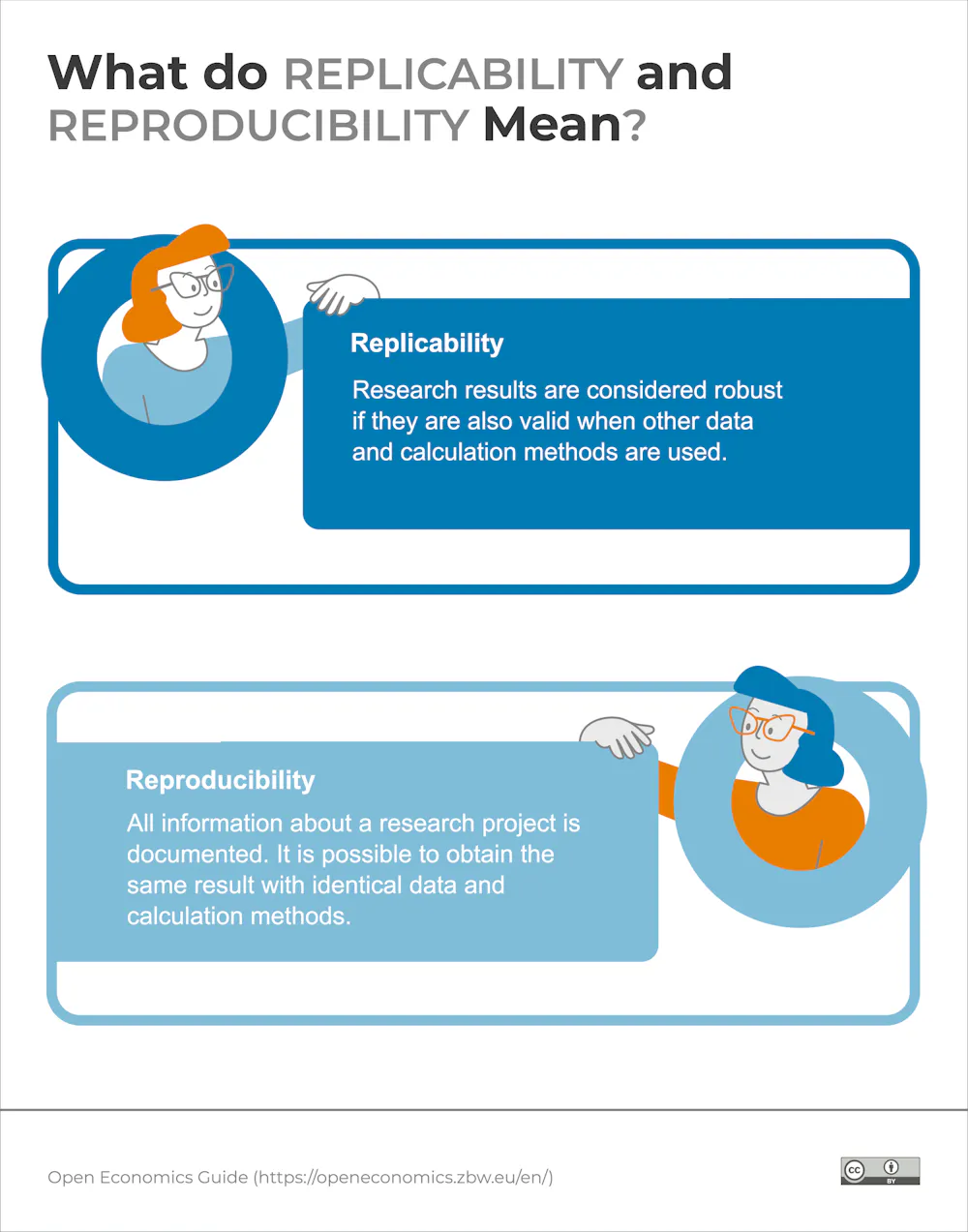
A May 2025 executive order by President Donald Trump emphasized the “reproducibility crisis” in science. While replicability and reproducibility may sound similar, they’re distinct.

Reproducibility is the ability to use the same data and methods from a study and reproduce the result. In my editorial role at the journal Psychological Science, I conduct computational reproducibility checks where we take the reported data and check that all the results in the paper can be reproduced independently.

But we’re not running the study over again, or collecting new data. While reproducibility is important, research that is incorrect, fallible and sometimes harmful can still be reproducible.

By contrast, replication is when an independent team repeats the same process, including collecting new data, to see if they get the same results. When research replicates, the team can be more confident that the results are not a fluke or an error.

A diagram with the two definitions of replicability and reproducibility
Reproducibility and replicability are both important, but have key differences.
Open Economics Guide, CC BY

The “replication crisis,” a term coined in psychology in the early 2010s, has spread to many fields, including biology, economics, medicine and computer science. Failures to replicate high-profile studies concern many scientists in these fields.

Why replicate?

Replicability is a core scientific value: Researchers want to be able to find the same result again and again. Many important findings are not published until they are independently replicated.

In research, chance findings can occur. Imagine if one person flipped a coin 10 times and got two heads, then told the world that “coins have a 20% chance of coming up heads.” Even though this is an unlikely outcome – about 4% – it’s possible.

Replications can correct these chance outcomes, as well as scientific errors, to ensure science is self-correcting.

For example, in the search for the Higgs boson, two research centers at CERN, the European Council for Nuclear Research, ATLAS and CMS, independently replicated the detection of a particle with a large unique mass, leading to the 2013 Nobel Prize in physics.

A large array of machinery arranged in a tunnel, as part of a particle detector experiment.
The ATLAS experiment at the Large Hadron Collider at CERN is one of two that led to the discovery of the Higgs boson.
CERN, CC BY

The initial measurements from the two centers actually estimated the mass of the particle as slightly different. So while the two centers didn’t find identical results, the teams evaluated them and determined they were close enough. This variability is a natural part of the scientific process. Just because results are not identical does not mean they are not reliable.

Research centers like CERN have replication built into their process, but this is not feasible for all research. For projects that are relatively low cost, the original team will often replicate their work prior to publication – but doing so does not guarantee that an independent team could get the same results.

A graph showing time on the x axis and COVID-19 cases on the y axis. A line labeled 'placebo group' goes up from zero at a 45-degree angle, while the line labeled 'vaccine group' goes up slightly and then plateaus.
Because the results on vaccine efficacy were so clear, replication wasn’t necessary and would have slowed the process of getting the vaccine to people.
XKCD, CC BY-NC

When projects are costly, urgent or time-specific, independently replicating them prior to disseminating results is often not feasible. Remember when people across the country were waiting for a COVID-19 vaccine?

The initial Pfizer-BioNTech COVID-19 vaccine took 13 months from the start of the trial to authorization from the Food and Drug Administration. The results of the initial study were so clear and convincing that a replication would have unnecessarily delayed getting the vaccine out to the public and slowing the spread of disease.

Since not every study can be replicated prior to publication, it’s important to conduct replications after studies are published. Replications help scientists understand how well research processes are working, identify errors and self-correct. So what’s the process of conducting a replication?

The replication process

Researchers could independently replicate the work of other teams, like at CERN. And that does happen. But when there are only two studies – the original and the replication – it’s hard to know what to do when they disagree. For that reason, large multigroup teams often conduct replications where they are all replicating the same study.

Alternatively, if the purpose is to estimate the replicability of a body of research – for example, cancer biology – each team might replicate a different study, and the focus is on the percentage of studies that replicate across many studies.

These large-scale replication projects have arisen around the world and include ManyLabs, ManyBabies, Psychological Accelerator and others.

Replicators start by learning as much as possible about how the original study was conducted. They can collect details about the study from reading the published paper, discussing the work with its original authors and consulting online materials.

The replicators want to know how the participants were recruited, how the data was collected and using what tools, and how the data was analyzed.

But sometimes, studies may leave out important details, like the questions participants were asked or the brand of equipment used. Replicators have to make these difficult decisions themselves, which can affect the outcome.

Replicators also often explicitly change details of the study. For example, many replication studies are conducted with larger samples – more participants – than the original study, to ensure the results are reliable.

Registration and publication

Sadly, replication research is hard to publish: Only 3% of papers in psychology, less than 1% in education and 1.2% in marketing are replications.

If the original study replicates, journals may reject the paper because there is no “new insight.” If it doesn’t replicate, journals may reject the paper because they assume the replicators made a mistake – remember the salt crystals.

Because of these issues, replicators often use registration to strengthen their claims. A preregistration is a public document describing the plan for the study. It is time-stamped to before the study is conducted.

This type of document improves transparency by making changes in the plan detectable to reviewers. Registered reports take this a step further, where the research plan is subject to peer review before conducting the study.

If the journal approves the registration, they commit to publishing the results of the study regardless of the results. Registered reports are ideal for replication research because the reviewers don’t know the results when the journal commits to publishing the paper, and whether the study replicates or not won’t affect whether it gets published.

About 58% of registered reports in psychology are replication studies.

Replication research often uses the highest standards of research practice: large samples and registration. While not all replication research is required to use these practices, those that do contribute greatly to our confidence in scientific results.

Replication research is a useful thermometer to understand if scientific processes are working as intended. Active discussion of the replicability crisis, in both scientific and political spaces, suggests to many researchers that there is room for growth. While no field would expect a replication rate of 100%, new processes among scientists aim to improve the rates from those in the past.

The Conversation

Amanda Kay Montoya is an Associate Professor at the University of California, Los Angeles. She serves on the Board of Directors for the Center for Open Science. She receives funding from the US-National Science Foundation.

ref. Research replication can determine how well science is working – but how do scientists replicate studies? – https://theconversation.com/research-replication-can-determine-how-well-science-is-working-but-how-do-scientists-replicate-studies-260771