England’s plans to get more young people working or studying don’t go far enough – employment expert

Source: The Conversation – UK – By Peter Urwin, Director, Centre for Employment Research, University of Westminster

PeopleImages/Shutterstock

The number of 16 to 24-year-olds in England who are not in education, employment or training (Neet) currently stands at nearly one million.

In a recent document of proposed policy, the government has set out a range of initiatives to help them. These include new qualifications designed for young people who achieve grade two or below in maths and English GCSEs, and guaranteed access to education, training or work. But will these initiatives be successful?

There are a multitude of contributing factors that lead to young people becoming Neet. These include if they have caring responsibilities, special educational needs or disabilities, and mental health challenges. Essentially, though, there are two cross-cutting challenges that must be addressed.

First, too many young people in England reach age 16 with poor qualifications, having become disillusioned with education. England’s further education system faces an enormous challenge to help them achieve results that will enhance their employment prospects.

Second, this leaves them unprepared for employment in a labour market with diminishing opportunities for young, low skilled workers.

Each August, when GCSE results are released, statistics set out what proportion of 16-year-olds achieved a “pass” – a grade four or above – in their exams. Far less attention is paid to the approximately 30,000 young people who do not achieve a grade 1, the lowest grade, in GCSE English and maths.

Most of these young people have complex special educational needs and disabilities or are severely absent from school. Many are not entered for GCSEs at all.

More generally, in research with colleagues, we estimate that there are up to 80,000 lower attaining young people each year aged 16, who for instance, achieve grade two or below in maths and English. Despite a raising of the compulsory age for education and training to 18, many students still do not engage with post-16 learning after their GCSE year.

A key new initiative from the government to address this – detailed further in the recently published independent review into curriculum and assessment – is a reconsideration of the post-16 policy that requires GCSE resits in English and maths for those who do not achieve at least grade four.

For the lowest attaining young people, the pass rate for these resists is currently very low. The proposed introduction of new post-16 qualifications in these subjects at level one, one level below GCSE (level two), for the lowest attaining is therefore encouraging.

Students in exam hall
Currently, students who do not pass maths and English GCSE are required to resit.
KOTOIMAGES/Shutterstock

More generally, there is a refreshing recognition that not all young people will achieve level three – A-levels, T-levels or equivalent qualifications – by the age of 19 and get a job at this level. This includes a suggestion that good quality vocational education pathways will now “prepare students to progress directly into level two occupations” – jobs that require skill levels equivalent to GCSE.

Unfortunately, the new 16 to 19 level one maths and English qualifications that these students will need to take, are envisaged to support them “progressing onto GCSE” in these subjects. Acceptance that many low attainers struggle to achieve this does not seem to fit with a continued drive for them to get GCSE maths and English. Many level two occupations, such as bricklaying and plastering, do not require level two maths and English, so this seems unnecessary.

The job market

The “supply” of approximately 80,000 low skilled young people to the labour market each year is a long-standing problem in the UK as they are much more likely to be Neet.

Many of the government’s proposed policies are relevant to this challenge. The main approach is to provide “guarantees”.

The “youth guarantee” promises young people “access to education, training and/or help to get into work”, including a guaranteed job for those unemployed for over 18 months. The proposed “pathways to work guarantee” will “provide training, work experience and a guaranteed job interview”. There will also be a “guaranteed college place in reserve for all 16-year olds”.

However, the government’s proposals contain little practical consideration of the capacity needed to meet these commitments. Much of the focus on job guarantees (for instance, “payments of up to £3,000 per apprentice” for employers) will simply offset recent national minimum wage and national insurance contribution increases that likely reduce young people’s job opportunities. Local authorities already have similar duties regarding post-16 education guarantees.

The government has set out an ambitious plan for change. However, the lack of practical detail on challenges such as capacity, as well as limitations to any new spending, may constrain the achievement of this ambition.

The government’s commitment to a data-driven approach that joins up skills and employment is very encouraging. Working with colleagues, I am trying to inform this data-driven approach. I would suggest that reversing unintended consequences of previous policies, can be achieved at low cost.

Reintroducing partnership approaches between schools and further education providers, for occupational programmes that spanned the ages of 14 to 18, would better engage those who have become disillusioned with education and provide education and training that prepares them for a variety of level two occupations. Sectors such as construction, health and social care, for instance, are struggling to fill roles.

Any concern over the narrowing of a young person’s learning early in their school career can be mitigated by the government’s commitments to lifelong learning, and the recent national curriculum recommendations that these learners can still progress to level three “if that is the right option”.

The Conversation

Peter Urwin has received funding from UKRI, ESRC, Acas and the Nuffield Foundation,

ref. England’s plans to get more young people working or studying don’t go far enough – employment expert – https://theconversation.com/englands-plans-to-get-more-young-people-working-or-studying-dont-go-far-enough-employment-expert-268606

Lack of progress on joining EU caps another bad month for Ukraine

Source: The Conversation – UK – By Stefan Wolff, Professor of International Security, University of Birmingham

Ukraine is having a tougher-than-usual time at the moment. On the frontlines, the battle of Pokrovsk is raging, and it does not look like Ukraine is winning it.

Nor do things look good for the country’s energy resilience after months of an intensive Russian air campaign targeting key infrastructure. According to the UN, this could trigger another major humanitarian crisis in the already war-ravaged country.

The geopolitical picture looks equally grim. The delivery of long-range Tomahawk missiles, sought by Kyiv for months now, has again been ruled out by the US president, Donald Trump. What’s more, after his meeting with the Chinese president, Xi Jinping, in South Korea on October 30, Trump said that the US and China would work together to end the war in Ukraine.

The possibility of a productive collaboration between Trump and Xi on peace in Ukraine, let alone its successful conclusion, is remote. And even if there was a Washington-Beijing sponsored deal, it would not be in Ukraine’s favour as became clear a few days later.

During a high-profile, two-day visit of the Russian prime minister, Mikhail Mishustin, to China on November 3 and 4, Beijing showed no signs of backing out of its partnership with Russia, which is key to sustaining the Kremlin’s war machine.

Nor does the continuing delay in approving an EU loan to Ukraine worth €60 billion (£53 billion) and backed by frozen Russian assets bode well for Kyiv.

Given all this bad news, it was therefore no surprise that Ukraine’s president, Volodymyr Zelensky, leapt at what looked, on the surface, like good news in the European commission’s latest assessment of Kyiv’s progress towards EU membership. The European commission notes in its report that Ukraine has made progress in all of the 33 different chapters of the accession negotiations. This is as remarkable as it is commendable given that the country has done so in the shadow of Russia’s aggression since February 2022.

Yet, in many areas, progress is modest at best. A more careful analysis of the 2025 commission report suggests that positive news, if any, is in the presentation, not the underlying facts.

ISW map showing the state of the conflict in Pokrovsk, Ukraine, NOvember 4 2025.
This map of the region around the townof Pokrovsk, in Ukarine’s east, shows the extent of Russian advances.
Institute for the Study of War

For example, in relation to the fight against corruption the commission reports that recent developments “cast doubts on Ukraine’s commitment to its anti-corruption agenda”. This is primarily a reference to attempts by Zelensky’s government to limit the independence of the country’s anti-corruption institutions. The issue triggered massive public protests in the summer and forced a partial government climb-down.

Worryingly, the commission also notes “political pressure on anti-corruption activists” and “harassment and intimidation of journalists”. This includes “cases of strategic lawsuits against public participation (SLAPPs) related to journalistic investigations”.

Meanwhile, in the fight against serious and organised crime, the commission report states: “The freezing and confiscation of criminal assets remain very limited.” Other shortcomings concern limited progress on decentralisation, lack of transparency in recruitment to civil service positions, the independence and impartiality of the judiciary, and the persistence of torture and ill treatment in the prison and detention system.

On the one hand, it is not surprising that these shortcomings exist. Ukraine has been fighting an existential war for almost four years. The country has only been a candidate country for EU membership since June 2022, four months after Russia launched its full-scale invasion. Accession negotiations didn’t start until December 2023.

Yet it is the persistence of these highly visible, easily exploitable problems related to fundamental values of the EU that are causing concern. Almost identical issues were raised in the European commission’s opinion on Ukraine’s membership application in 2022. It was raised again in the 2023 report and again in last year’s progress report on accession negotiations.

It may be an exaggeration to claim that Ukraine is experiencing a turn towards a more autocratic style of presidential government under Zelensky. But there clearly are signs that war-time politics in Kyiv has a darker side that does little to bolster the country’s credentials for EU membership.

Discord within

This provides easy ammunition for Ukraine’s detractors inside the EU. Chief among them is Hungary’s prime minister, Viktor Orbán, whose obstruction tactics have frustrated European commission efforts on Ukraine’s accession.

Poland and Slovakia have joined Hungary in defying the EU’s effforts to complete an updated trade deal with Ukraine. Opposition to Ukraine from within the EU has now been further strengthened by the formation of a eurosceptic, hard-right populist government coalition in the Czech republic.

The EU’s foreign affairs chief, Kaja Kallas, continues to insist that membership for Ukraine by 2030 “is a realistic goal”.

But the EU’s enlargement commissioner, Marta Kos, is more guarded. She has noted that “future accession treaties will need to contain stronger safeguards” to “reassure our citizens in the Member States that the integrity of our Union and democratic values are ensured, also after the accession”.

In an interview with the Financial Times, she said that she did not “want to go down as the commissioner bringing in the Trojan horses”.

Given the detail in Ukraine’s 2025 progress report on areas where Kyiv clearly needs to make urgent improvements, this suggests that the tough times for Ukraine are likely to continue, and not just in its war with Russia.

Though the future of the EU and Ukraine have become ever more closely entwined since February 2022, there remains a bigger question for the EU. Its dilemma is how to balance holding the line on its membership standards and enabling Ukraine to hold the line against Russia.

The Conversation

Stefan Wolff is a past recipient of grant funding from the Natural Environment Research Council of the UK, the United States Institute of Peace, the Economic and Social Research Council of the UK, the British Academy, the NATO Science for Peace Programme, the EU Framework Programmes 6 and 7 and Horizon 2020, as well as the EU’s Jean Monnet Programme. He is a Trustee and Honorary Treasurer of the Political Studies Association of the UK and a Senior Research Fellow at the Foreign Policy Centre in London.

Tetyana Malyarenko receives funding from Elliott School of International Affairs, The George Washington University.

ref. Lack of progress on joining EU caps another bad month for Ukraine – https://theconversation.com/lack-of-progress-on-joining-eu-caps-another-bad-month-for-ukraine-268921

How Zohran Mamdani’s ‘talent for listening’ spurred him to victory in the New York mayoral election

Source: The Conversation – UK – By Daniel Hutton Ferris, Lecturer in Political Theory and Philosophy, Newcastle University

Zohran Mamdani, a 34-year-old democratic socialist, has been elected as New York City’s mayor. He became the first New York mayoral candidate to win more than 1 million votes since 1969, and looks set to secure over 50% of the total vote.

With almost all of the votes counted, independent candidate Andrew Cuomo seems to have been backed by 41.6% of voters. Republican Curtis Sliwa has secured just 7%.

Mamdani, who has become New York City’s first Muslim mayor, swept to victory on what was characterised as a radical left-wing platform. He has promised to tax millionaires more in order to fund free buses and childcare for all.

He has also vowed to honour an International Criminal Court arrest warrant for the Israeli prime minister, Benjamin Netanyahu, over alleged war crimes in Gaza if he visits New York. The Israeli foreign ministry has previously called Mamdani a “mouthpiece for Hamas propaganda”.

How did a figure on the far left of American politics, who is also a staunch critic of Israel, win in a city that is full of millionaires and home to a sizeable Jewish population?

The corruption and sexual harassment scandals affecting his main rival certainly helped, as did the focus of his campaign on making life more affordable for New Yorkers. Mamdani’s presence on social media raised his profile and attracted voters, too.

He posted slick videos on TikTok and Instagram throughout his campaign, including one where he criticised the rent increases seen under outgoing mayor Eric Adams while running the New York City marathon.

But journalists and commentators have noticed something else that has helped boost Mamdani’s appeal among New Yorkers. He has what the New York Times called in July “a rare talent for listening”.

Mamdani is unusually reflective in interviews, often thinking silently for more than 20 seconds before responding to questions. And after his successful primary earlier in 2025, Mamdani contacted every business and cultural leader in the city he could get hold of to hear about why they opposed him.

The viral campaign videos that made his name also see him walking the streets of New York, asking voters questions and listening to their answers at length without interruption. Mamdani may be a radical, but he really listens.

Talking to voters

Democratic theorists are likely to celebrate Mamdani’s approach. Many philosophers embrace what is known as the “deliberative theory of democracy”, which argues that talking – as opposed to voting – is the central democratic institution.

These people suggest that politicians should talk to a diverse range of voters respectfully about their decisions. Listening to diverse perspectives improves policy because it requires leaders to consider a range of ideas and arguments, relying less on their own gut intuitions.

As a respectful and inclusive political style, it can also help citizens feel heard and challenge the idea that politicians are interested only in power and will say whatever it takes to win. A more deliberative kind of responsiveness to voters can therefore increase political legitimacy and trust.

Political scientists are likely to point out that Mamdani has an important strategic reason for his deliberative political style. New York City uses a system of ranked choice voting, or “the alternative vote”, which asks voters to rank candidates in order of their preference rather than choosing just one.

This encourages politicians to find policy proposals that are supported by large majorities, such as taxing millionaires to pay for free childcare, and to communicate respectfully with people of all political persuasions in the hope they might win their second-preference votes.

Larry Diamond, a leading American democracy expert, has called ranked choice voting the “Archimedean lever of change” for solving the deep polarisation currently affecting US politics. This is because it penalises candidates who rely on divisive rhetoric to appeal to a passionate base of supporters.

They are unlikely to win second-preference votes from people whose first preference is for one of their rivals. Conversely, ranked choice voting rewards politicians who try to bridge political divides with respectful and inclusive campaigning.

Depolarising US politics

There are many lessons that the political left in the US and beyond can learn from Mamdani’s victory. Most obviously, it shows that a socialist and pro-Palestine candidate can win in a major US electoral contest by combining a lively digital campaign with a strong focus on the cost of living.

It also suggests that candidates perceived as being radical are more likely to succeed in elections when they are visibly willing to listen to and deliberate with voters from all sorts of backgrounds.

Mamdani’s rise should also encourage a wider embrace of ranked choice voting. The system has been used to elect members of Australia’s House of Representatives for more than a century and it is now used in the US states of Maine and Alaska, as well as in the San Francisco Bay Area.

It should be adopted elsewhere too, as an antidote to political polarisation. The UK held a referendum on changing the electoral system to the alternative vote in 2011. However, UK voters unfortunately rejected the proposal.

Finally, Mamdani’s victory shows that radicalism and reflectiveness can come together, especially when the electoral system promotes it. Ranked choice voting is so good at encouraging a politics of respect and listening that it is sometimes accused of creating boring centrist candidates.

But Mamdani has reminded us that this does not have to be the case. Reforming US election systems could encourage deliberative responsiveness and depolarise American politics, without taking radical options off the menu.

The Conversation

Daniel Hutton Ferris does not work for, consult, own shares in or receive funding from any company or organisation that would benefit from this article, and has disclosed no relevant affiliations beyond their academic appointment.

ref. How Zohran Mamdani’s ‘talent for listening’ spurred him to victory in the New York mayoral election – https://theconversation.com/how-zohran-mamdanis-talent-for-listening-spurred-him-to-victory-in-the-new-york-mayoral-election-268950

Why even pro-climate action organisations may pull in different directions

Source: The Conversation – UK – By Paul Tobin, Senior Lecturer in Politics, University of Manchester

saepul_bahri/Shutterstock

This year’s UN climate summit (Cop30) in Belém, Brazil, begins with a familiar dilemma: how can we tackle a highly political, long-term problem that involves every country of the world?

Governments, experts and activists have been trying to address climate change since the early 1990s, yet global greenhouse gas emissions remain at record levels.

Emissions growth may be slowing, but even pro-climate action strategies seem to be pulling in different – or even, antagonistic – directions. Our new book presents these antagonisms as a choice between “stability” and “politicisation” in climate governance.

According to those favouring stability, governments should lock in steady, long-term policies that place us on a predictable and gradual track to much lower emissions. Creating policies that commit us to a certain path should help businesses to invest in ways that meet this predictable trajectory.

However, if it is weakened and made inadequate by pro-fossil fuel lobbyists and governments, then the stable path can still meander into climate catastrophe. This is the course we are presently on.

On the other hand, for those pursuing the politicisation of climate action, it is better to encourage political conflict and protests that constantly create pressure for more significant and rapid policy change.

Such strategies can disrupt pro-fossil fuel lobbyists’ grip and expose strategies used by some political figures to dismantle the hard-fought climate goals already in place. But by encouraging increased politicisation of these issues, we may open the door to anti-net zero populists and others seeking to slow or stop climate policy action altogether.

Both schools of thought – stability or politicisation – have their supporters and detractors. Both have benefits and downsides. However, these have rarely been discussed in conversation with one another, until now.

At Cop30, these distinct strategies will be under the spotlight.


Read more:
Why countries struggle to quit fossil fuels, despite higher costs and 30 years of climate talks and treaties


The stability or politicisation dilemma helps to explain why building a strategy that works over years and decades creates difficult questions, not only about policy design but approaches for different organisations and states. These challenges change according to which level of government, which country, and which economic sector is in play.

For instance, it is easier to push for politicisation and conflict when you’re not a member of a marginalised or racialised community already facing myriad hurdles to political participation.

Conversely, it is hard to avoid having to engage in politicisation and conflict in areas where there are deep historical power structures that need to be challenged. For example, in the UK, land ownership concentration blocks peat restoration – both because landowners want to keep peat moors dry to maximise their grouse shooting revenue, and because the land concentration means they are very powerful within the British state.

graphic on blue earth, man in suit standing on top looking through telescope
It is hard to avoid having to engage in politicisation and conflict in areas where there are deep historical power structures.
AndryDj/Shutterstock

Tension between timeframes

Our book traces these dynamics across a range of cases, from the fossil fuel industry in the US to strategies used by the insurance sector and central banks; from China’s industrial policy to environmental justice social movements in Germany; and from arguments about Norwegian oil extraction to Brazilian and South African renewable energy generation.

International relations expert Jennifer Allan explains that previous UN climate summits have been shaped by this clash in strategies, right back to the Kyoto protocol, the 1997 agreement that set emissions targets for economically developed countries.

Whereas the EU was previously the driving force behind depoliticisation of negotiations, more recently, countries such as India and China are also pursuing such strategies. As Allan warns, this may delay the implementation of climate policies as more states debate how best to progress.


Read more:
To address the environmental polycrisis, the first step is to demand more honesty


In Belém at Cop30, similar dynamics will be at play. Efforts are ongoing to implement the 2015 Paris climate agreement agenda and process. Core issues remain on how to ensure regular reporting of emissions, alongside questions around who pays for the consequences of climate change.

At the same time, there will be a continued politicising push by certain countries and social movements. States such as the US, Saudi Arabia and their allies will be trying to politicise the negotiations to stymy progress. Meanwhile, social movements will be protesting to keep the pressure on negotiators and promote climate justice for those who are hardest hit by climate change.


Don’t have time to read about climate change as much as you’d like?

Get a weekly roundup in your inbox instead. Every Wednesday, The Conversation’s environment editor writes Imagine, a short email that goes a little deeper into just one climate issue. Join the 45,000+ readers who’ve subscribed so far.


The Conversation

Paul Tobin has received funding from the Economic and Social Research Council.

Matthew Paterson receives funding from the Economic and Social Research Council (UK). He is a member of the Green Party of England and Wales.

Stacy D VanDeveer as received funding from Independent Research Fund Denmark, MISTRA (Sweden), Research Council of Norway, Uppsala University (Sweden), German Marshall Fund of the United States, US National Science Foundation

ref. Why even pro-climate action organisations may pull in different directions – https://theconversation.com/why-even-pro-climate-action-organisations-may-pull-in-different-directions-261047

Vaping might seem safer than smoking but your heart could tell a different story

Source: The Conversation – UK – By Preeti Mahato, Lecturer in Global Health, Royal Holloway, University of London

StockLab/Shutterstock

You may have heard that vaping is the “safer” choice than smoking. But what if the very thing designed to protect your health also puts your heart at risk?

Vaping does not exist in isolation. It is part of a wider story about smoking, inequality and the growing burden of heart disease in the UK. Even after years of public health campaigns, smoking remains common in England’s most deprived areas.

The reasons are complex. People living with financial strain, insecure jobs and chronic stress are more likely to smoke. Targeted marketing and limited access to stop-smoking services make it even harder to quit. At the same time, one in two UK adults have high cholesterol, and many do not know it.

Reports show that people in the poorest communities have the highest rates of smoking and other risk factors for cardiovascular disease, including raised cholesterol.

As vaping becomes more common in these same communities, a new form of nicotine use could be replacing one heart risk with another. Many people now switch from cigarettes to vapes to reduce harm, but growing evidence suggests the benefits may not be as clear-cut as once thought.


Read more:
Popcorn lung: how vaping could scar your lungs for life


Research shows that vaping can help some people quit smoking more effectively than other methods, but newer findings challenge the belief that e-cigarettes are a harmless substitute.

Several studies have now linked vaping to arterial damage in both the brain and heart, even among people who have never smoked traditional cigarettes. The cells that line our blood vessels, known as the endothelium, keep arteries supple, regulate blood pressure and stop fatty deposits from sticking to the walls. When these cells are damaged, arteries lose elasticity and blood flow becomes less efficient, raising the risk of cardiovascular problems.

One study found that regular vapers had impaired blood vessel function. Their arteries could no longer expand and contract properly. Other research on humans and animals exposed to vapour showed less flexible arteries, higher blood pressure and damaged endothelium in both the brain and heart. This arterial stiffening increases the likelihood of heart attack, stroke and dementia.


Read more:
How vaping primes the lungs for COVID damage


So what is behind this damage? When someone vapes, the vapour carries nicotine, chemicals and microscopic particles into the bloodstream. These trigger inflammation and oxidative stress, meaning the body’s defences go into overdrive and start attacking healthy tissue. Vaping also reduces nitric oxide, a molecule that helps vessels relax, while increasing harmful free radicals. Together, these effects make arteries less able to do their job and more prone to disease, increasing the risk of heart problems.

Vaping can also raise blood pressure and heart rate, even after a single session. Over time, this mix of irritation, inflammation and stress wears down the arteries, even in people who have never smoked before.

The UK’s NHS Health Check programme mainly screens people aged forty and over for heart-disease risks. Yet vaping is most common among people under 40, and routine screening is not designed to detect early vessel injury in this age group. Young vapers may therefore carry silent artery damage for years before any problem appears on standard tests. Evidence suggests that vaping can cause early artery changes similar to those caused by smoking, increasing the risk of cardiovascular disease (CVD) later in life.

That is why education and prevention are so important. Schools and public health campaigns play a vital role in showing young people that vaping carries long-term risks, including damage to the heart. Programmes that combine classroom learning with interactive activities have been shown to make a real difference. Initiatives such as Catch Your Breath and Essex’s Break the Vape aim to stop young people from vaping before they start, and to support those who want to quit, reducing their future risk of heart disease.

The wide differences in heart disease deaths across England show that prevention efforts are still not reaching everyone equally. A whole-system approach to CVD prevention is essential. Schools, councils, NHS services and local communities need to work together to tackle shared risk factors such as smoking and vaping.

Screening cannot yet detect early artery damage in younger adults, but education remains our best defence. Helping young people understand how vaping affects the heart can protect the next generation from the hidden dangers of nicotine addiction and cardiovascular harm.

The Conversation

Anusha Seneviratne previously received research funding from the British Heart Foundation.

Preeti Mahato does not work for, consult, own shares in or receive funding from any company or organisation that would benefit from this article, and has disclosed no relevant affiliations beyond their academic appointment.

ref. Vaping might seem safer than smoking but your heart could tell a different story – https://theconversation.com/vaping-might-seem-safer-than-smoking-but-your-heart-could-tell-a-different-story-268612

Three reasons why so many economists disagree with Donald Trump’s tariffs

Source: The Conversation – UK – By Luis Angeles, Professor of Economics, Adam Smith Business School, University of Glasgow

Tariffs on imports have been at the heart of Donald Trump’s economic policy since the start of his second term in the White House. And while the president believes that tariffs will be beneficial to the US economy, many eminent economists disagree. Here are three reasons why.

The first reason is that a US trade deficit should not necessarily be seen as a negative economic outcome. Trump certainly thinks it is. As he reportedly told Karin Keller-Sutter, president of Switzerland, earlier this year: “We have a US$41 billion deficit with you, madam….[and] we lose, because I view deficit as [a] loss.”

A trade deficit only means that one country buys more goods and services from another country than it sells to it. As a result, more money flows out of the country, to pay for the imports, than comes into the country, as a payment for exports.

Money flowing out of the country may sound bad, but for every dollar that the US spends abroad there is something else coming in: the goods and services it buys, which Americans get to consume. A “trade deficit” could very well be renamed a “surplus in goods and services consumed” – a positive outcome, reflecting the expressed preferences of the American public.

The second reason is that tariffs change what the economy produces – for the worse.

Tariffs are eventually passed on to consumers, making imported goods and services dearer. Trump’s hope is that making, say, Swiss watches more expensive will shift demand towards US-made watches, whose price remains the same. The US’s watchmaking industry would grow and employ more people, which sounds like a solid gain for the US economy.

Unfortunately, that is not the end of the story. Foreign countries need to sell goods and services to the US in order to obtain the dollars that pay for American exports. If foreign countries sell less because of tariffs, they are also going to buy less American products.

This means that any expansion of the US watch industry would be matched by a contraction in other American industries, such as aircraft manufacturing or financial services, which the US successfully exports. Employment may increase in one sector, but it will decrease somewhere else.

And that’s not all. The reallocation of labour across industries is costly, as people lose industry-specific skills and need to be retrained. But more important, consider why the US was importing foreign watches in the first place. Clearly, because foreign manufacturers are better at watchmaking: they produce watches of any given quality for a lower price than America can.

The same is true for American export industries, which sell abroad because they are more productive than their foreign counterparts. The reallocation of labour away from American export industries, and towards other industries such as watchmaking, is a shift away from what Americans can do best. It renders the whole country less productive, making everyone poorer in the process.

Be grateful for the dollar

The third reason, finally, is that the US gets a very good deal when it comes to paying for its trade deficit.

When country A wants to buy goods and services from country B, a difficulty arises. Country A has its own currency to pay with, but this currency has no value in country B.

If trade is perfectly balanced between the two countries (they buy and sell the same amounts to each other), an easy solution is at hand. Country B will accept country A’s currency and immediately give it back, as payment for the goods and services it buys from country A, which are of the same value.

Inner mechanisms of a watch.
Time will tell.
Maian Vivier/Shutterstock

If there is a trade deficit, where country A imports more than it exports, country B will still accept country A’s currency if there is something else which can be bought with it. That “something else” is assets, which can be financial (stocks or bonds) or real (such as property). So a country with a trade deficit must sacrifice some of its assets to foreign ownership.

In the case of the US, however, there is one important difference. If a foreign country ends up with a positive balance of dollars because it sells more to the US than it buys, it may not use all these extra dollars to buy US assets.

Instead, it often wants to keep those dollars, in the form of banknotes, within the local economy. This happens because people around the world trust and value US dollars, often more than their own currency, and may prefer to use American notes for purposes such as savings and large transactions. A vast amount of dollar banknotes – currently worth over 1 trillion dollars – are in circulation outside the US economy.

This phenomenon translates into a great bonanza for the US. It has the unique privilege of being able to run a trade deficit with the rest of world, consuming more goods and services from other countries than it provides to them, and yet does not compensate those countries entirely with American assets.

Instead, it compensates them with pieces of paper it produces at essentially no cost. Foreigners are happy to hold these American pieces of paper because they have monetary status in their countries – something that would not be true for any other currency. Trying to shut down the US’s trade deficit also means trying to cut off this substantial source of wealth for the country.

The Conversation

Luis Angeles does not work for, consult, own shares in or receive funding from any company or organisation that would benefit from this article, and has disclosed no relevant affiliations beyond their academic appointment.

ref. Three reasons why so many economists disagree with Donald Trump’s tariffs – https://theconversation.com/three-reasons-why-so-many-economists-disagree-with-donald-trumps-tariffs-267046

How to cook the perfect pasta – we used particle accelerators and reactors to discover the key

Source: The Conversation – UK – By Andrea Scotti, Senior lecturer of Physical Chemistry, Lund University

Whether you prefer your spaghetti al dente or soothingly soft, it can be difficult to achieve perfection at home. Many of us will have experienced our pasta disintegrating into a beige mush – particularly for gluten-free alternatives.

So how much water and salt do you really need, and how long do you cook it for if you want optimal results? What’s more, how should you amend your cooking process when using gluten-free pasta? A recent study my colleagues and I conducted, published in Food Hydrocolloids, has provided answers by unveiling the physics behind the cooking process.

Turning to the Diamond light source, the UK’s national synchrotron (a circular particle accelerator) facility, we studied the scattering of X-rays off pasta (at low angles) to uncover its internal structure. Then we went to Isis and to the Institute Laue Langevin, which are neutron facilities in the UK and France, and used neutrons (which make up the atomic nucleus along with protons) to shed light on the microstructure of regular and gluten-free spaghetti under different cooking conditions.

The study shows how the hidden structure of pasta changes as it cooks, and why gluten-free versions behave so differently.

The setup enabled us to investigate the structure of starches and gluten within spaghetti on small scales that spanned from tens of times the radius of an atom to thousands of times. In this way, we could compare the transformation that happens in regular and gluten-free pasta while they are cooked in different conditions, such as being cooked for too long or cooked without salt.

Our experiments allowed us to “see” different components of the pasta separately. By mixing normal and “heavy water” (which contains an isotope called deuterium), we could make either the gluten or the starch invisible to the neutron beam. In this way, we could effectively isolate each structure in turn, and understand the effects of starches and gluten during cooking.

The power of gluten and salt

Our study reveals that, in regular pasta, the gluten acts as a strong scaffold that holds starch granules in place even during boiling, giving the pasta its firmness and slow digestion rate. In gluten-free pasta, the starch granules swell and collapse more easily – explaining the mushy texture and faster breakdown experienced when this kind of pasta is cooked in non-optimal conditions.

We also probed the effect of salt in the cooking water on the pasta structure. What we found is that salt doesn’t just make pasta taste better; it also strongly affects the microstructure of the spaghetti. When regular pasta is boiled in salted water, the gluten maintains its structure, and the starch granules are less deteriorated by the cooking process.

So how much salt should you add to preserve the pasta’s microscopic structure? Our study revealed that the optimal salt level is seven grams per litre of water, with more water required for larger amounts of pasta. The pasta should be cooked ten or 11 minutes in the case of regular and gluten-free altertnative, respectively. In contrast, when the salt concentration was doubled, the internal order broke down more rapidly and the structure within the starches granules was significantly altered by the cooking process.

Spaghetti is taken out of the pan with tongs.
The ideal amount of salt is 7 grams per litre.
Kalashnikov Dmitrii/Shutterstock

In gluten-free pasta, the story was different again due to the lack of protection of gluten. Even small amounts of salt couldn’t compensate for the absence of gluten. Artificial compounds of processed starches, used by companies to substitute the gluten, degraded fast. The most extreme example of this degradation occurred when the gluten-free spaghetti was cooked too long, for instance, for 13 instead of 11 minutes, and in very salty water.

The main finding was therefore that gluten-free pasta is structurally more fragile and less tolerant of being cooked both for too long and with the wrong amount of salt.

Improving gluten-free alternatives

Understanding pasta’s structure on these very small scales, that are invisible even under a microscope, will help the design of better gluten-free foods. In particular, the hope is to obtain gluten-free alternative that are more resilient to bad cooking conditions and are more similar in texture to regular spaghetti.

Regular wheat pasta has a low glycaemic index because the gluten slows how starch granules are broken down during digestion. Gluten-free pasta, made from rice and corn flour, often lacks this structure, meaning sugars may be released faster. With neutron scattering, food scientists can now identify which ingredients and cooking conditions best recreate gluten’s structure.

This is also a story about how cutting-edge experimental tools, mainly used for fundamental research, are transforming food research. Neutron scattering played a fundamental role in advancing our understanding of magnetic materials, batteries, polymers and proteins. Now it is also helping us to explain how everyday foods behave at the microscopic level.

The Conversation

Andrea Scotti receives funding from the Knut and Alice Wallenberg Foundation, and the Swedish Research Council.

ref. How to cook the perfect pasta – we used particle accelerators and reactors to discover the key – https://theconversation.com/how-to-cook-the-perfect-pasta-we-used-particle-accelerators-and-reactors-to-discover-the-key-268416

Rural Devon cuisine has a rich history – from the origins of cream teas to squab pie

Source: The Conversation – UK – By Paul Cleave, Lecturer, Social and Political Sciences, Philosophy, and Anthropology, University of Exeter

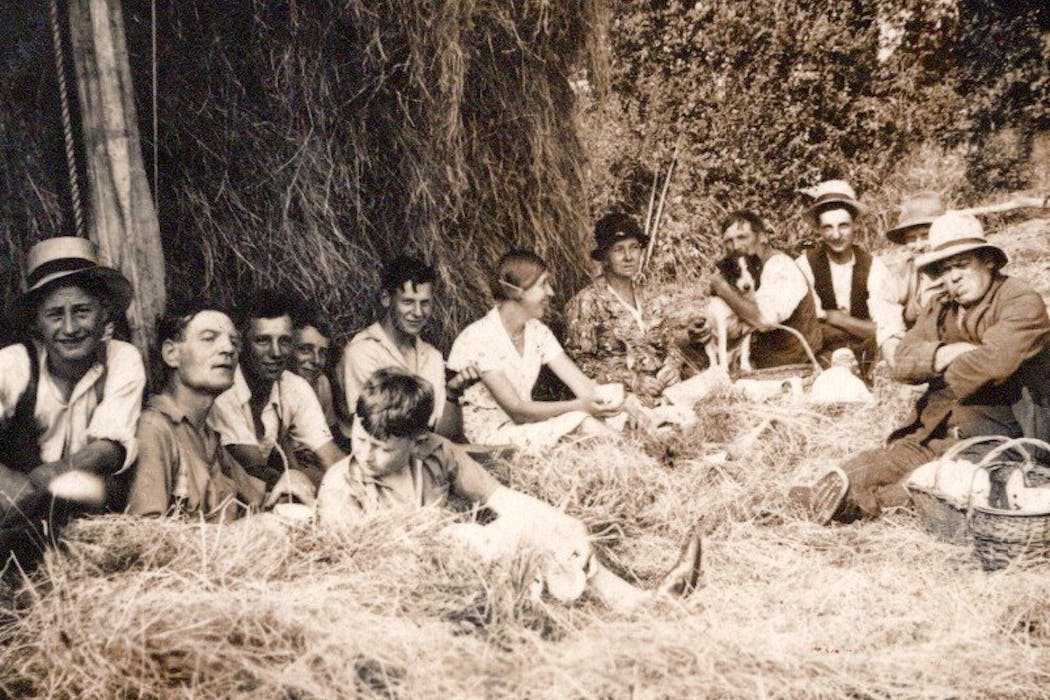
A postcard showing farm labourers gathering for a traditional harvest tea. Author’s collection

Growing up in rural Devon, I was introduced to its more remote villages, farmsteads and communities as a boy. In later life, I became interested in the food traditions of these places – finding out what was eaten, and how it was prepared and cooked. This became an important aspect of my research on the evolving relationship between food and tourism in Devon.

The food eaten in rural Devon up to the 1960s might appear frugal to us today, but it comprised of wholesome simple dishes. For example, Devonshire dumplings – apples wrapped in pastry and baked – were especially good when accompanied by a generous dollop of clotted cream.

Food was typically seasonal and sustaining, and fuelled hard work – especially through cold and often wet winters when a freshly baked “teddy cake”, prepared from mashed potatoes, flour, sugar, suet and dried fruit, made a welcome appearance at teatime.

I heard stories from family and friends of special food for Sundays – usually a roast dinner. And at teatime, perhaps something special like a “frawsy of junket” (milk set with rennet) or “thunder and lightning” – bread generously spread with clotted cream and anointed with treacle.

A black and white postcard showing Devonshire dumplings and cream.
A postcard showing Devonshire dumplings and cream.
Author’s collection

Before the introduction of coal- or wood-fired kitchen ranges and oil stoves, much cooking in Devon was done over an open hearth, with the bread oven fired up once a week for baking day.

Without refrigeration and mains water, preparing meals, baking and making clotted cream and butter was hard work. Clotted cream was a three-day process – milk was allowed to stand overnight in a cool dairy, then gently heated to form the thick crust of the cream the next day, which was carefully removed on day three.

Devonshire food and tourism

Devon’s farmhouse kitchens and food featured on postcards taken by enterprising early 20th-century photographers. With their humorous captions in Devonshire dialect, postcards were popular with visitors and now provide a visual record of what was eaten.

As transport by rail and road improved in the 19th and 20th centuries, more tourists were able to discover Devon’s resorts, moorland and countryside – as well as its food.

The John Keats poem Teignmouth, written in 1818, tells of how “you may have your cream all spread upon barley bread”. Devonshire teas evolved to become the now-ubiquitous cream tea, but its origins were the staple food stuffs of “splits”, sometimes known as Chudleighs – small buns made from a yeast dough, eaten with clotted cream and jam or honey.

Cream being heated on a fireplace
A postcard shows the making of ‘real Devonshire cream’.
Author’s collection

The British author Douglas St Leger Gordon, writing in the 1950s, lamented the decline of Devon’s harvest teas, which involved rural rituals and ceremony. Traditionally, the farmer’s wife and daughters would host a feast for all who had helped with the harvest, usually comprising ham sandwiches, homemade cake, splits spread with cream and jam, and specially baked harvest buns – “all of which appeared as if by magic”. The food and tea was carried in baskets to the hay-field, and the sharing of labour was rewarded with farmhouse hospitality.

Devon’s larder of fine food was known out of the county, too. Devonshire butter was sold in Fortnum & Mason in London from the 18th century, and during the 1920s The Devonshire Dairy on Oxford Street traded butter and cream.

The word spread through cookery and travel books, too. In Alec Adair’s recipe book Dinners Long and Short (1928), salt cod fried for breakfast, apple-in-and-out (a baked pudding made with apples, suet, sugar and flour) and Devonshire fried potatoes appear alongside classic French cuisine.

Clovelly herrings, or “silver darlings”, feature in Murray’s Handbook for Travellers in Devon and Cornwall (1859), which recommended visitors should stay in the cliffside village to “regale at breakfast on herrings which have been captured overnight”, and are at their best in autumn.

Some of the more intriguing Devon recipes, alas, were not recorded for posterity. We can only imagine the dish that in his journals, Reverend John Skinner called the “squab pie”. It was “four feet in circumference … composed of neck of mutton, apples and onions, and by no means a bad thing”.

Devon’s food tells an evolving story of tradition, and a culinary and cultural relationship with landscape, communities and seasons. It is a celebration of regional food heritage and history – a legacy I hope, through my research on Devonshire food and cookery, to share with future generations.


Looking for something good? Cut through the noise with a carefully curated selection of the latest releases, live events and exhibitions, straight to your inbox every fortnight, on Fridays. Sign up here.


The Conversation

Paul Cleave does not work for, consult, own shares in or receive funding from any company or organisation that would benefit from this article, and has disclosed no relevant affiliations beyond their academic appointment.

ref. Rural Devon cuisine has a rich history – from the origins of cream teas to squab pie – https://theconversation.com/rural-devon-cuisine-has-a-rich-history-from-the-origins-of-cream-teas-to-squab-pie-266511

What if the path to ending fossil fuels looked like the fight to end slavery?

Source: The Conversation – UK – By Rob Lawlor, Lecturer in Applied Ethics, University of Leeds

When Britain abolished slavery in its empire in 1833, it paid the equivalent of hundreds of billions today in compensation – not to the enslaved, but to the slave owners. It was an imperfect, morally uneasy compromise, but it helped achieve a historic transition that had seemed impossible.

Today, as the world struggles to phase out fossil fuels, many doubt
such a transformation is still possible. Emissions keep rising, the Paris agreement isn’t properly enforced and powerful corporations continue to mislead the public and lobby against meaningful change.

Yet slavery was once seen as immovable. It was an institution that was accepted for thousands of years – far longer than fossil fuel-powered capitalism. Slavery was a significant source of wealth for many, and the rich and powerful opposed abolition. Yet it was abolished.

As a thought experiment, let us imagine a future where effective climate action unfolds the way slavery abolition once did. What might that look like?

Leadership and ‘persuasion’

Future historians might not point to a single moment of global unity, with all nations coming together to act as one. Rather, they’ll point to one nation – or a coalition – that took the lead. These early leaders might combine diplomacy, bribery and perhaps even the threat of military force or economic sanctions to “persuade” other countries to follow suit.

That’s how Britain pushed for the end of the slave trade: with a mix of idealism and hard power, with naval patrols and trade sanctions. A global fossil fuel phase out may unfold in a similarly non-ideal way.

Bottom-up pressure, top-down resistance

In this thought experiment, change will not start with governments. Rather, the demand for action will come from the bottom up. Activists will demand change and there will be huge public support but, at the same time, the rich and the powerful will continue to defend the status quo, lobbying against the introduction of stricter legislation.

The slavery abolition movement followed that pattern, with broad public support yet fierce opposition from those with most to lose. In Britain, slave owners were even compensated with £20 million (equivalent to “40% of state expenditure in 1834”) to secure their agreement to the loss of “their” property.

Something similar could happen in the climate fight. Perhaps fossil fuel companies will one day receive financial compensation to ease the transition away from fossil fuels – not because it is deserved, but rather as a pragmatic compromise.

The law as a tool for change

Legal action would also play a pivotal role. Governments and corporations will be (and, indeed, are already being) taken to court.

Abolitionists used the law in much the same way. A good example is a famous case in which enslaved Africans revolted and seized control of the ship La Amistad. The Africans were ultimately freed after reformers highlighted the contradiction between the idea of natural rights for all humankind in the US Declaration of Independence, and laws that allowed people to be private property.

As the historian David Brion Davis noted: “It was this contradiction that helped the reformers to pass laws for very gradual slave emancipation.” The Paris agreement, often dismissed as toothless, could gain real power through litigation in a similar way.

Why this thought experiment matters

Of course, this is not a real prediction. It is a thought experiment. Imagining that climate action will mirror the history of the abolition of slavery doesn’t guarantee that this is what will happen. But the comparison is valuable for several reasons.

It shows that historical precedent matters. Looking at what worked in the past can help us imagine what might work now. Massive moral change really has happened before, even despite entrenched interests working against it. As such, the example of the abolition of slavery offers hope.

It’s also realistic. Global cooperation would be ideal, but history suggests that change will be messier, potentially with some unpalatable compromise or confrontation.

The comparison poses some hard ethical questions. Is it ever justifiable to compensate fossil fuel companies? What forms of international pressure are morally acceptable?

The thought experiment can also sharpen our strategy. If this imagined future is unpalatable – if we’re ultimately not willing to send hundreds of billions to BP, Exxon and co – then it may motivate people to work for better solutions.

Perhaps most importantly, comparing slavery with climate change shows us that individual action still matters. You may feel powerless and want to know what you can do now. The history we have looked at suggests two things: support climate action publicly and, if you can afford it, provide financial support to groups like environmental law charity ClientEarth.

Abolishing slavery was messy and the strategy taken left many uneasy. Perhaps, when the time comes, significant action to mitigate climate change will involve similar controversies. But flawed solutions may be better than none.


The Conversation

Rob Lawlor received funding from the Arts and Humanities Research Council. This funded a project and a number of events that allowed me to collaborate with researchers from other disciplines, including historians.

ref. What if the path to ending fossil fuels looked like the fight to end slavery? – https://theconversation.com/what-if-the-path-to-ending-fossil-fuels-looked-like-the-fight-to-end-slavery-268162

Hidradenitis suppurativa: the painful skin condition that can hide in plain sight

Source: The Conversation – UK – By Dan Baumgardt, Senior Lecturer, School of Psychology and Neuroscience, University of Bristol

Justyna Sobesto/Shutterstock

You may not give much thought to your armpits, apart from checking whether they need another swipe of deodorant. But this small, often overlooked patch of skin is one of the body’s busiest crossroads. Beneath those folds lies a complex network of glands, nerves and lymph nodes that keep you cool, fight infection and even influence how you smell to others.

The armpit’s design allows flexibility and free movement of the arm, while serving as a vital passageway for blood vessels and nerves that link the limb to the torso. It is also home to sweat glands that regulate temperature and release pheromones, and to clusters of lymph nodes that drain fluid and help defend the body against infection.

Yet for some people, this humble underarm becomes the site of something far more troublesome than a bit of body odour. A distressing, recurring condition called hidradenitis suppurativa (HS) can turn these hidden hollows and other areas where skin rubs together into a source of chronic pain, infection and scarring. Once thought to be rare, HS is increasingly recognised and diagnosed, though still widely misunderstood.


Read more:
Pubic hair: beyond brazilians, more than manscaping


Several conditions can develop within the tissues of the armpit (or axilla, as it is known anatomically). One of these is the rather bewilderingly named hidradenitis suppurativa.

The name translates to “inflammation of the sweat glands with pus,” and that is essentially what the condition involves. HS is a chronic condition that affects areas of the body rich in sweat glands and hair follicles, particularly where the skin folds and rubs together. This means it can appear not only in the armpits but also in the groin, around the breasts and buttocks, and in the perineal area. Friction in these regions may make the condition worse.

The inflammation appears to be driven by a process similar to autoimmunity, where the body mistakenly attacks its own tissues. It seems that blockage of the hair follicles occurs first, which then triggers involvement of the sweat glands. The condition is estimated to be nearly three times more common in women than in men and may also run in families. Other risk factors include increased levels of androgens, which are hormones such as testosterone that increase after puberty, as well as smoking and obesity.

Research also shows that people of colour are disproportionately affected. Both UK and US studies have found that HS is more common and often more severe among black and Hispanic patients. These groups are also more likely to experience delays in diagnosis or have their symptoms mistaken for other infections or boils. The reasons are complex and include differences in healthcare access, underrecognition of how HS presents on darker skin tones and broader structural inequities within medical systems. Early recognition and equitable care can help prevent advanced disease and reduce the burden of pain, scarring and stigma that HS can cause.

HS symptoms

Inflamed and blocked glands appear on the skin as hard nodules or swellings. Infection can turn these into abscesses that may grow to significant sizes. Prolonged inflammation and infection can lead to the formation of sinuses, which are tunnels beneath the skin that connect nodules, and to scarring. This can cause painful, oozing or foul-smelling skin, sometimes restricting upper limb movement if scar tissue forms.

These processes resemble those seen in acne vulgaris, which is the medical term for common acne. In fact, one of the alternative names for HS is acne inversa, referring to the inverted skin folds where it occurs. Like acne, it is not caused by poor hygiene and it is not contagious, despite common misconceptions.


Read more:
Acne: a GP’s guide to understanding and managing it


When it comes to managing HS, some treatments overlap with those used for acne. Antibiotics such as lymecycline, which have both antibacterial and anti-inflammatory properties, can help prevent flare-ups. Lifestyle changes are also recommended, such as wearing loose clothing and losing weight to reduce skin folds and friction.

In some cases, HS can cause large abscesses, sometimes five to ten centimetres across, which may require surgery to drain the pus or remove scar tissue. Because of the long-term nature and scarring associated with severe disease, new biological therapies such as adalimumab, which work by calming the immune system’s overreaction, are now being used to manage more advanced cases.

HS diagnoses are rising each year. This could reflect an actual increase in numbers or simply better recognition. It may seem surprising that such a condition could be so often missed or misdiagnosed, but it happens.

HS can mimic other skin conditions that affect the folds. It is common to experience irritation from sweating or shaving in the armpits or groin, leading to folliculitis, which is inflammation of the hair follicles. Because HS lesions tend to flare and then subside, sometimes improving with short-term antibiotics, they are often mistaken for other problems and treated incompletely, sometimes for years.

Historically, HS has been poorly recognised. Its variable symptoms and the embarrassment and stigma that often surrounds skin changes in intimate areas have contributed to delays in diagnosis. Early detection can prevent progression to severe disease, so any recurrent skin changes are worth discussing with a doctor.

The armpit may seem insignificant, but for those affected by hidradenitis suppurativa, it can shape daily life in painful and isolating ways. Too many people live with the condition for years before receiving a diagnosis or effective treatment. Recognising it as a medical condition rather than a hygiene problem is a crucial step in changing that.

The Conversation

Dan Baumgardt does not work for, consult, own shares in or receive funding from any company or organisation that would benefit from this article, and has disclosed no relevant affiliations beyond their academic appointment.

ref. Hidradenitis suppurativa: the painful skin condition that can hide in plain sight – https://theconversation.com/hidradenitis-suppurativa-the-painful-skin-condition-that-can-hide-in-plain-sight-266651