Culture as a sustainable development goal? It’s starting to become a reality

Source: The Conversation – Africa – By Ribio Nzeza Bunketi Buse, Assistant Professor, University of Kinshasa

Eight global millennium development goals were established in 2000 by member states of the United Nations (UN) and endorsed by other multilateral organisations. They ranged from eliminating hunger to empowering women, and from reducing child mortality to environmental sustainability.

The millennium development goals were not fully achieved by 2015, so 17 sustainable development goals (SDGs) were devised to be reached by 2030. The longer list responded mostly to growing climate threats and urbanisation and included aspects of wellbeing and healthy living.

The focus now is on developing the next agenda after 2030. There is a growing drive to include culture as a goal. Nowhere was the bid more pronounced than at the recent global cultural policy meeting called Mondiacult, held every three years by the United Nations Educational, Scientific and Cultural Organization (Unesco).

Ribio Nzeza Bunketi Buse is a scholar of cultural development. We asked him why a culture SDG matters.


Why should culture be an SDG in its own right?

Since 1982, several of these meetings have emphasised the link between culture and sustainable development. Now there’s a call for it to be a standalone SDG in the post-2030 development agenda.

A strong argument is made in the Unesco global report on cultural policies, released in Barcelona during Mondiacult in September 2025. According to this report, 93% of responding member states affirm that culture is a central point in their national sustainable development plans. This is an increase from 88% four years ago.

The document reports also that cultural and creative industries account for 3.39% of the global gross domestic product (a measure of the health of an economy) and 3.55% of jobs. That makes it comparable to the automotive sector. Cultural tourism generates US$741.3 billion in 250 cities each year.

Given this, there’s a broad consensus that culture is one of the keys to sustainable economic development. But it goes deeper.

Unesco defines culture as:

A set of distinctive spiritual, material, intellectual and emotional features that characterise a society or social group including not only arts and letters, but modes of life, value systems, traditions and beliefs.

From this definition, culture is a human right. The final declaration of Mondiacult 2025 recognises it as such, alongside other human rights. Indeed, many countries’ constitutions and other international conventions, like the International Covenant on Civil and Political Rights, recognise this.

If the 17 SDGs (like education, gender equality and healthy living) are related to human rights, why should culture, which is also a human right, not be an SDG?

To get there, the Mondiacult declaration reinforces that culture needs to be emphasised and endorsed in the 2030 development agenda.


Read more:
What is Mondiacult? 6 take-aways from the world’s biggest cultural policy gathering


The Culture Committee of the United Cities and Local Governments organisation campaigned for culture to be included in the post-2015 development agenda. (Since its 2004 Agenda 21 for Culture initiative, the organisation has worked to include culture in local and regional development.)

In 2022, a network of leading global cultural organisations began an advocacy campaign for culture to be a dedicated SDG. The #Culture2030Goal campaign’s draft zero has five focus areas:

  • adequate attention to culture at the highest level of government

  • recognise connections between culture and other policy areas

  • the culture sector must feel a sense of engagement in and ownership of the goal

  • mobilise power of culture for all other goals

  • achievement of all goals through a cultural lens.

The campaign formulated culture as an SDG as follows:

Ensure cultural sustainability for the wellbeing of all.

Sustainability is culture’s capacity to endure over time and also speaks to new thinking about sustainability for a healthier future for the world.

What difference would it make if it was an SDG?

A standalone SDG would recognise culture as a global public good that all countries should protect.

This would draw attention to culture as an area of intervention. Justin O’Connor, a professor of cultural economy, writes in the Cultural Policy Forum that:

A specific goal is needed to better coordinate culture’s contribution to each and every goal, and to make it mandatory for governments and agencies to pay attention to it, and hopefully direct resources to it.

So, it would also encourage governments to take culture into account in their national economic development agendas.

What are the obstacles?

There are two main constraints in the path to culture becoming an SDG: the understanding of its role for development; and the capacity of policymakers to give it the necessary space.

Mondiacult 2022 recommended including culture in the UN’s 2024 Summit of the Future and that was successful. In fact, Action 11 of the summit’s final document Pact for the Future includes culture. However, it is associated with sport, and is not considered a stand-alone issue.


Read more:
Culture can build a better world: four key issues on Africa’s G20 agenda


Against this backdrop, the ambition of having culture as an SDG still has a way to go. There is no set timeline. It all depends on how negotiations evolve among multiple UN stakeholders (international agencies and member states) in the preparation process for the post-2030 agenda.

Although South Africa is leading the 2025 G20 meetings, where culture is firmly on the agenda, Africa can still play a far stronger mobilising role among the world’s leaders, to convince them to come on board.

The Conversation

Ribio Nzeza Bunketi Buse does not work for, consult, own shares in or receive funding from any company or organisation that would benefit from this article, and has disclosed no relevant affiliations beyond their academic appointment.

ref. Culture as a sustainable development goal? It’s starting to become a reality – https://theconversation.com/culture-as-a-sustainable-development-goal-its-starting-to-become-a-reality-267996

Taylor Swift sings about ‘eldest daughter syndrome’, but is it real?

Source: Radio New Zealand

When Jess King heard the term “eldest daughter syndrome”, she immediately felt “seen”.

“I first heard about it on TikTok … I just fit that mould to a tee,” says the curve model and influencer from Melbourne/Naarm.

“I’m high-achieving, a perfectionist.

Jess King says eldest daughter syndrome has validated her experience of being the firstborn child.

Jess King says eldest daughter syndrome has validated her experience of being the firstborn child.

Jess King/ABC supplied

– Published by EveningReport.nz and AsiaPacificReport.nz, see: MIL OSI in partnership with Radio New Zealand

‘It’s just a misunderstanding’ – How the war in Gaza is crushing Jordan’s tourism economy

Source: Radio New Zealand

Two horses carry tourists over the desert landscape of Jordan

The war in Gaza has severely impacted Jordan’s tourism industry. Pietra Brettkelly

Jordan doesn’t have the oil that’s made its neighbours wealthy, and the tourism industry propping up its economy is under immense pressure

In the ancient city of Petra, in Jordan, archaeologists are measuring and moving 2000-year-old blocks of carved stone.

Towering over them are the intricate facades carved into sandstone cliffs in the once-thriving Nabatean civilisation.

The workers seem oblivious to the tourists peering at them as they toil in the blazing sun uncovering more of this UNESCO site.

The famous treasury Al-Khazneh, a is one of the most elaborate rock-cut tombs in Petra.

The famous treasury Al-Khazneh, a is one of the most elaborate rock-cut tombs in Petra. Sharon Brettkelly

It is peak tourist season here but visitor numbers are very weak, hurting everyone from Bedouin guides to the horse and donkey owners whose livelihoods are in ruins.

Today The Detail looks at how this peaceful country, that depends heavily on tourism, is struggling with the fallout from the two-year-old Gaza war, and a shaky peace deal.

“The tourist, he’s not coming to Jordan here,” says horse owner Omar Al-Hlalat. “He’s scared of Jordan, but Jordan is very safe.”

The father of four says he had three customers a day before the war. Now it’s one every two weeks.

“I only have this horse for my business,” he says.

Bedouin tour guide Hamad Hamad al Manajih serving tea.

Bedouin tour guide Hamad Hamad al Manajih serving tea. Sharon Brettkelly

Tourism took off in Petra when it was declared one of the seven new wonders of the world in 2007 but growth was strained by nearly two decades of conflicts, followed by Covid.

Just as it was finally starting to recover, the Gaza war put off visitors to the extent that at least 35 hotels in nearby Wadi Musa closed last year.

Freelance guide Hashem Nawafleh tells The Detail that 90 percent of the area’s income is from tourism and there are no other options for small operators like horse owner Al-Hlalat. They’ve taken out bank loans to get them through the downtime but now they are struggling to repay them, he says.

Many visitors came to Jordan on packaged tours that included Israel and Egypt.

“Visitors from Europe, US, all over the world cancelled their trips to Jordan thinking that Jordan is not safe because the war is right next to us.

Sharon Brettkelly (far left) interviewing horse owner Omar Al-Hlalat as his horses stand by.

Sharon Brettkelly (far left) interviewing horse owner Omar Al-Hlalat as his horses stand by. Pietra Brettkelly

“It’s just a misunderstanding that people have. When they watch the news they see people fighting in Gaza or Israel, they think that all the region is the same.”

Twenty-six year old Nawafleh proudly guides visitors through his home town of Petra. He says his country of 11 million – including up to four million refugees, mainly from Palestine and Syria – needs overseas visitors because it is not oil-rich like its neighbours.

Bedouin guide Hamad Hamad al Manajih lives a traditional nomadic life with his wife and three children, far from the conflict – but he is not untouched by it.

His flock of sheep and seven camels are his main income source and prices for livestock have plummeted as tourism-related demand for meat has dropped.

“People, hotels, shops are not buying as much as they used to,” Nawafleh says, translating for al Manajih.

“His annual income before the war used to be around 6000 Jordanian dinars a year (NZ$15,000). After the war it’s not more than 3000 JDs.

Dan Nawafleh serving up Jordanian sweets at mealtime.

Dan Nawafleh serving up Jordanian sweets at mealtime. Sharon Brettkelly

“It’s affecting everything in his life, his family. Things like clothes and equipment for school.”

Nawafleh says the government responded to an appeal for help from the tourism industry by reintroducing a subsidy launched in Covid for locals called ‘Our Jordan is Heaven’, cutting costs of tours to 20 percent of usual prices.

“Actually this won’t be enough especially for people who are mainly working in tourism but it could help a little bit,” he says.

Despite the struggle, Nawafleh is still chasing his dream of opening his own travel agency.

“A small company that offers real local experiences in Jordan. I wish to show people the beauty of my country, not only Petra but also the desert, mountains and the Bedouin culture. I want people to see the real Jordan and the way we live it ourselves.”

Check out how to listen to and follow The Detail here.

You can also stay up-to-date by liking us on Facebook

– Published by EveningReport.nz and AsiaPacificReport.nz, see: MIL OSI in partnership with Radio New Zealand

Booker Prize 2025: Six shortlisted books, reviewed by experts

Source: Radio New Zealand

Which novel will win the coveted 2025 Booker Prize?

From 150 titles to a longlist of 13, six books have been shortlisted.

Before the winner is announced on 10 November, academics review the finalists.

The Rest of Our Lives by Ben Markovits

The Rest of Our Lives by Ben Markovits - book and author photo

Faber/Kat-Green

Middle-aged Tom waits 12 years to keep his promise to leave his unfaithful wife when their youngest child starts college, then embarks on a road trip across an American landscape both vivid and commonplace.

Tom recounts the journey and his memories, his voice fluctuating between disclosure and holding back. The reader is the silent party, compelled to reflect: do you resemble the wife craving emotional impact, the son constructing amicable distance, the daughter thrust into change, the ex-partner successful but unsatisfied, or Tom himself? There is nothing really extraordinary, and yet the story is captivating.

Despite one significant obstacle, Tom never expresses regret for risks not taken. He has unanticipated glimpses of alternative paths, and learns the joys of routine, a steady career and ordinary family life. A film adaptation is inevitable; its challenge will be to capture the gentle, melancholic tension of this thoughtful novel.

Jenni Ramone is an associate professor of postcolonial and global literatures at Nottingham Trent University.

The Land in Winter by Andrew Miller

An atmospheric domestic drama set during 1963’s “Big Freeze”, The Land In Winter follows the lives of two married couples – Eric and Irene, Bill and Rita – in the south-west of England over a few bitter winter months. Due to the intensity of events taking place over a short period of time with just a few characters, the novel feels claustrophobic, almost soap opera-like.

The wives are both pregnant, and they bond, albeit tentatively, over impending motherhood. Despite being The Land In Winter’sprotagonists, Rita and Irene feel like characters who have things done to them, rather than having their own agency.

Their pregnancies compound this, presented as inescapable obligations as opposed to happy, wanted circumstances. In a novel thick with metaphor and symbolism (the women’s friendship begins when Rita gifts Irene freshly laid eggs), it is perhaps unsurprising that a third pregnancy, that of a cow on Bill and Rita’s farm, foreshadows the trauma and tragedy experienced by the novel’s end.

Stevie Marsden is a lecturer in publishing studies at Edinburgh Napier University.

Flashlight by Susan Choi

Flashlight by Susan Choi - cover and author photo

Jonathan Cape/Laura Bianchi

Susan Choi’s Flashlight opens with a disorienting event. Ten-year-old Louisa and her father Serk walk along a seaside breakwater at dusk, a flashlight in hand. By morning, Louisa is found barely alive. Serk is missing and presumed drowned. Instead of offering immediate answers, the novel follows three intertwined lives – Serk, Louisa, and Anne – across continents and decades.

What begins as a mystery expands into an intimate family drama that takes in broader historical shifts, spanning across the Pacific and from the 1970s onwards. Serk, an ethnic Korean born in Japan, emigrates to the US and navigates a life shaped by statelessness and historical upheaval. Anne, Louisa’s American mother, embodies another thread of rupture and inheritance. Together, their stories form a constellation of absence and unresolved loss.

Choi illuminates the hidden currents of identity, migration and disappearance with remarkable skill. Flashlight is an ambitious, emotionally resonant work that rewards close reading.

Sojin Lim is a reader in Asia Pacific studies at the University of Lancashire.

Book review: Flashlight by Susan Choi

Nine To Noon

Flesh by David Szalay

The Land in Winter by Andrew Miller - book and author photo

Hodder & Stoughton/Rob Macdougall

The titles of Szalay’s two Booker-nominated novels, this year’s Flesh and 2016’s All That Man Is, could be interchangeable. Both explore contemporary European masculinity, but where All That Man Is did this through nine short stories, Flesh is a novel about the eventful life of one Hungarian, István, from age 15 to mid-life.

Here is sex, infidelity, murder, war. But the novel is spare rather than voluptuous, trimmed to the bone rather than fleshy. István’s thoughts and tragedies are often absent from the writing. We don’t hear about his time in a young offenders’ institution or anything at all about his father, for example. We learn that he is physically brave and attractive to women. “Flesh” then refers to the way he is seen, as only a body, a member of the new working classes whose lives are defined by precarity.

Kept outside, overhearing only his bare responses – “Okay” – readers become complicit in this failure to consider all that man is. And it is precisely this innovatively spare narration which makes the novel so deeply affecting.

Tory Young is an associate professor of literature at Anglia Ruskin University.

The Loneliness of Sonia and Sunny by Kiran Desai

The Loneliness of Sonia and Sunny by Kiran Desai - cover and author photo.

Hamish Hamilton/ M Sharkey

At 35, Kiran Desai became the youngest female author to be awarded the Booker prize when her second novel, The Inheritance of Loss, won in 2006. The follow-up, The Loneliness of Sonia and Sunny, has been twenty years in the making.

Set between the 1990s and early 2000s, Desai’s elaborately structured novel deftly traverses the US, India, Italy and Mexico as it spins the tale of two Indian-born migrants: aspiring novelist Sonia Shah studying in Vermont and struggling journalist Sunny Bhati in New York. Their thwarted romance is instigated by their respective meddling north Indian grandparents, who reside in mouldering mansions symbolic of their declining fortunes and a decaying colonialism, making this 667-page love story an epic, multi-generational family saga.

It dramatises how nation, class, gender, race and history shape its large cast of characters, each explored in detailed vignettes. Desai shows formidable insight as she ponders the cultural values of the US and India, the nature of loneliness, ruthless liberal individualism, postcolonial disintegration and violence, but also creativity.

Ruvani Ranasinha is a professor of global literature at King’s College London.

Book review: The Loneliness of Sonia and Sunny by Kiran Desai

Nine To Noon

Audition by Katie Kitamura

Audition by Katie Kitamura - book and cover photo.

Fern Press/David Surowiecki

Katie Kitamura’s Auditionconsists of two seemingly contradictory parts. In the first, a stage and screen actress in her late 40s meets a much younger man in a Manhattan restaurant. He has asked for the meeting because he suspects he may be her secret son, given up for adoption as a baby. She reveals that this cannot be: she had an abortion.

In the second part, the young man is the woman’s son and has grown up with her and her husband, although he has, as an adult, argued with them and left home. Now he wants to return with his girlfriend.

These two seemingly contradictory scenarios are balanced, played against one another, and the tension between these “sliding doors” variant realities throws into relief the uncertainties, intermittencies and variabilities of existence. A pared-down novella, directly written and intriguingly characterised, this is a memorably ambiguous meditation on parenthood, performance, relationship and commitment.

Adam Roberts is a professor of 19th-century literature at Royal Holloway.

Book review: Audition by Katie Kitamura

Nine To Noon

– Published by EveningReport.nz and AsiaPacificReport.nz, see: MIL OSI in partnership with Radio New Zealand

Trump was already cutting low-income energy assistance – the shutdown is making things worse as cold weather arrives

Source: The Conversation – USA (2) – By Conor Harrison, Associate Professor of Economic Geography, University of South Carolina

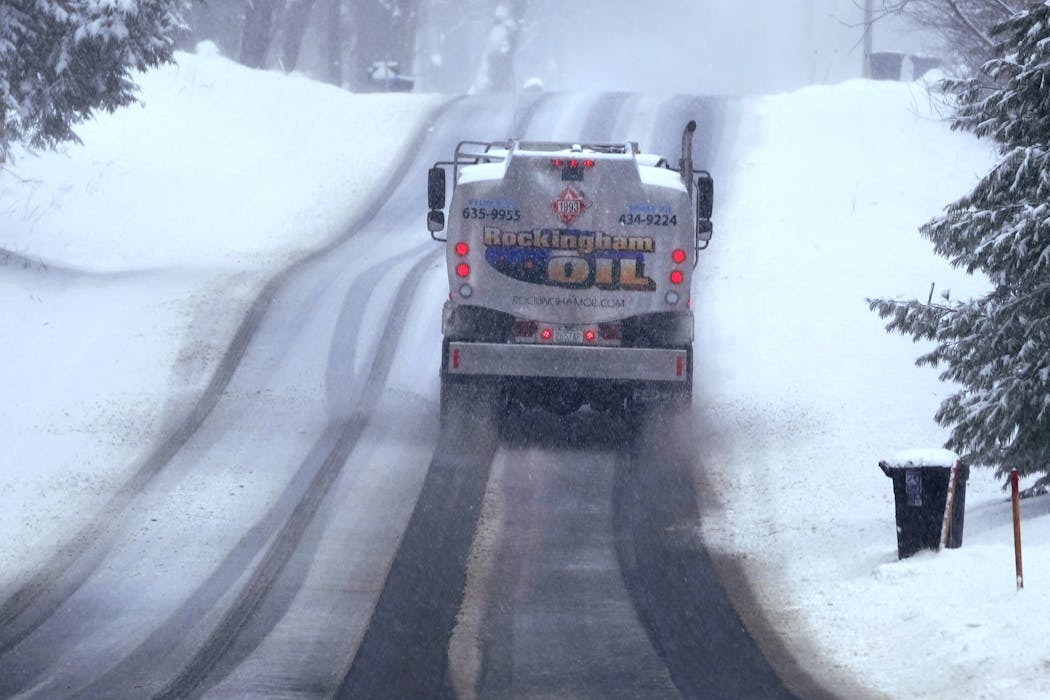
Home heating oil, used in furnaces across the Northeast, is expensive, leading some people to keep homes at unhealthy temperatures. AP Photo/Charles Krupa

As fall turns to winter and temperatures begin to drop, millions of people across the U.S. will struggle to pay their rising energy bills. The government shutdown is making matters even worse: Several states have pushed back the start of their winter energy assistance because their federally allocated funds have yet to show up.

A 2023 national survey found that nearly 1 in 4 Americans were unable to pay their full energy bill for at least one month, and nearly 1 in 4 reported that they kept their homes at unsafe temperatures to save money. By 2025, updated polling indicated nearly 3 in 4 Americans are worried about rising energy costs.

Conservative estimates suggest that utilities shut off power to over 3 million U.S. households each year because the residents cannot pay their bills.

This problem of high energy prices isn’t lost on the Trump administration.

On the first day of his second term in 2025, President Donald Trump declared a national energy emergency by executive order, saying that “high energy prices … devastate Americans, particularly those living on low- and fixed incomes.”

Secretary of Energy Christopher Wright raised concerns about utility disconnections and outlined a mission to “shrink that number, with the target of zero.”

Yet, the administration’s 2026 budget proposal zeroed out funding for the Low Income Home Energy Assistance Program, or LIHEAP, the federal program that administers funding to help low-income households pay their utility bills. While there appears to be continued bipartisan support for LIHEAP in Congress, on April 1, 2025, the administration laid off the entire staff of the LIHEAP office. These layoffs hinder the ability of the federal government to release LIHEAP funds, even when the government reopens.

An older man wearing a shawl in his kitchen.
Russ Anderson of Waldoboro, Maine, wears a shawl to help keep warm as he speaks with a reporter in 2023 about the importance of federal programs to help low-income households like his heat their homes. For someone getting by on less than $1,000 a month from Social Security, heating aid could save him the equivalent of three monthly payments, he told The Associated Press.
AP Photo/Robert F. Bukaty

Many people already struggle to cobble together enough help from various sources to pay their energy bills. As researchers who study energy insecurity, we believe gutting the federal office responsible for administering energy bill assistance will make it even harder for Americans to make ends meet.

The high stakes of energy affordability

We work with communities in South Carolina and Tennessee where many residents struggle to heat and cool their homes.

We see how high energy prices force people to make dangerous trade-offs. Low-income households often find themselves choosing whether to buy necessities, pay for child care or pay their utility bills.

One elderly person we spoke with for our research, Sarah, explained that she routinely forgoes buying medications in order to pay her utility bill.

Unfortunately, these stories are increasingly common, especially in low-income communities and communities of color.

Shrinking resources for assistance

LIHEAP, created in 1981, provides funding to states as block grants to help low-income families pay their utility bills. In fiscal year 2023, the program distributed US$6.1 billion in energy assistance, helping some 5.9 million households avoid losing power connections.

The program’s small staff played critical roles in disbursing this money, providing implementation guidelines, monitoring state-level fund management and tracking and evaluating program effectiveness.

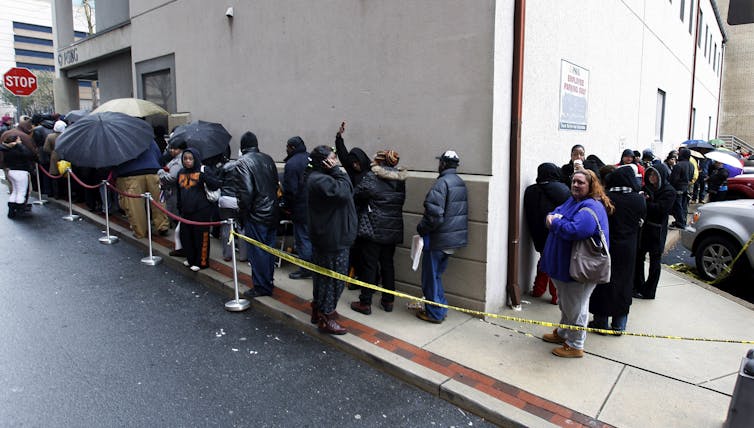
People wait in a line going around a building. Some have umbrellas.
A long line of utility customers wait to apply for help from the Low-Income Energy Assistance Program in Trenton, N.J., in 2011. In 2023, around 6 million households benefited from LIHEAP.
AP Photo/Mel Evans

It is unlikely that other sources of funding can fill in the gaps if states do not receive LIHEAP funds from the federal government. The program’s funding has never been high enough to meet the need. In 2020, LIHEAP provided assistance to just 16% of eligible households.
Our research has found that, in practice, many households rely on a range of local nonprofits, faith-based organizations and informal networks of family and friends to help them pay their bills and keep the heat on in winter.

For example, a research participant named Deborah reported that when faced with a utility shut-off, she “drove from church to church to church” in search of assistance. United Way in South Carolina received over 16,000 calls from people seeking help to pay their utility bills in 2023.

These charitable services are an important lifeline for many, especially in the communities we study in the South. However, research has shown that faith-based programs do not have the reach of public programs.

Without LIHEAP, the limited funds provided by nonprofits and the personal connections that people patch together will be stretched even thinner, especially as other charitable services, such as food banks, also face funding cuts.

What’s ahead

Although Congress has chosen to fund LIHEAP for 2026, the government shutdown threatens the program’s ability to reach families in time for the cold months ahead. While summer heat is on the rise, cold-related deaths have been trending up as well. Cold snaps in early 2024 and again in 2025 left several people dead from hypothermia. These are preventable deaths that continued LIHEAP assistance could help avoid.

These threats to LIHEAP—especially coming alongside uncertainty about federal food assistance—put the goal of energy affordability for all Americans – and Americans’ lives – in jeopardy. Until more affordable energy sources, such as solar and wind power, can be scaled up, an expansion of federal assistance programs is needed, not a contraction.

Increasing the reach and funding of LIHEAP is one option. Making home weatherization programs more effective is another.

Governments could also require utilities to forgive past-due bills, implement percent of income payment plans, and end utility shut-offs. About two dozen states currently have rules to prevent shut-offs during the worst summer heat.

For now, the cuts mean more pressure on nonprofits, faith-based organizations and informal networks. Looking ahead to another winter of freezing temperatures, we can only hope that delays to LIHEAP payments and cuts to LIHEAP staff don’t foreshadow a growing yet preventable death toll.

Etienne Toussaint, a law professor at the University of South Carolina, and Ann Eisenberg, a law professor at West Virginia University, contributed to this article.

This is an update to an article originally published May 13, 2025.

The Conversation

Conor Harrison receives funding from the National Science Foundation and the Alfred P. Sloan Foundation.

Elena Louder received funding from the Alfred P. Sloan Foundation related to this research.

Nikki Luke receives funding from the Alfred P. Sloan Foundation. She previously worked at the U.S. Department of Energy.

Shelley Welton receives funding from the Alfred P. Sloan Foundation.

ref. Trump was already cutting low-income energy assistance – the shutdown is making things worse as cold weather arrives – https://theconversation.com/trump-was-already-cutting-low-income-energy-assistance-the-shutdown-is-making-things-worse-as-cold-weather-arrives-269342

James Watson exemplified the best and worst of science – from monumental discoveries to sexism and cutthroat competition

Source: The Conversation – USA – By Andor J. Kiss, Director of the Center for Bioinformatics and Functional Genomics, Miami University

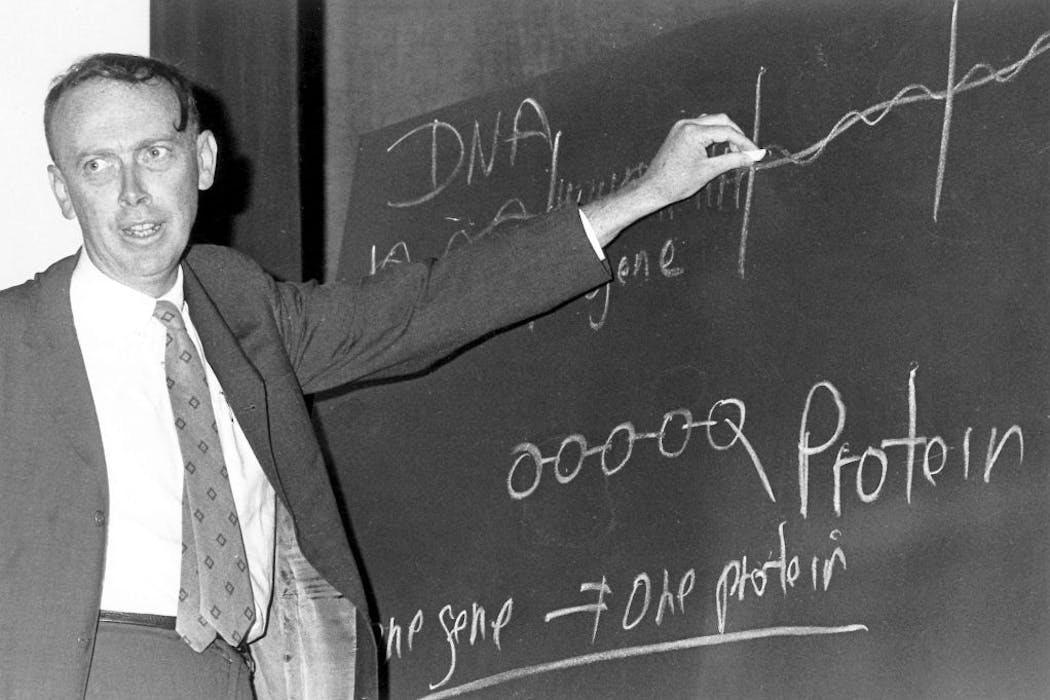
James Watson was both a towering and controversial figure in science. Gerhard Rauchwetter/picture alliance via Getty Images

James Dewey Watson was an American molecular biologist most known for co-winning the 1962 Nobel Prize in physiology or medicine for discovering the structure of DNA and its significance in transferring information in living systems. The importance of this discovery cannot be overstated. It unlocked how genes work and gave birth to the fields of molecular biology and evolutionary phylogenetics. It has inspired and influenced my career as a scientist and as director of a bioinformatics and functional genomics research center.

Watson was also an outspoken and controversial figure who transformed the way science was communicated. He was the first high-profile Nobel laureate to give the general public a shockingly personal and unfiltered glimpse into the cutthroat and competitive world of scientific research. Watson died on Nov. 6, 2025 at age 97.

Watson’s pursuit of the gene

Watson attended the University of Chicago at age 15, initially intending to become an ornithologist. After reading Erwin Schrödinger’s book of collected public lectures on the chemistry and physics of how cells operate, “What is Life?,” he became interested in finding out what genes are made of – the biggest question in biology at the time.

Chromosomes – a mixture of protein and DNA – were known to be the molecules of heredity. But most scientists were convinced that proteins, with 20 different building blocks, were the likely candidate as opposed to DNA with only four building blocks. When the 1944 Avery-MacLeod-McCarty experiment demonstrated that DNA was the carrier molecule of inheritance, the focus immediately shifted to understanding DNA.

Watson completed his doctorate in zoology at Indiana University in 1950, followed by a year in Copenhagen studying viruses. He met biophysicist Maurice Wilkins at a conference in 1951. During Wilkins’ talk on the molecular structure of DNA, Watson saw preliminary X-ray photographs of DNA. This prompted him to follow Wilkins to the Cavendish Laboratory at the University of Cambridge to pursue work into uncovering the structure of DNA. Here, Watson met physicist-turned-biologist Francis Crick and developed an immediate bond with him over their shared research interests.

Headshots of Francis Crick, James Watson and Maurice Wilkins
Watson, at center, was jointly awarded the 1962 Nobel Prize in medicine with Francis Crick, left, and Maurice Wilkins.
AP Photo

Soon, Watson and Crick published their seminal findings on the structure of DNA in the journal Nature in 1953. Two other papers were also published in the same journal issue on the structure of DNA, one co-authored by Wilkins and the other co-authored by chemist and X-ray crystallographer Rosalind Franklin.

Franklin took the X-ray photographs of DNA crystals that contained the data necessary for solving the structure of DNA. Her work, taken together with the work of the Cavendish Laboratory members, led to the 1962 Nobel Prize in physiology or medicine awarded to Watson, Crick and Wilkins.

The prize and the controversy

Although they were aware that Franklin’s essential X-ray photographs circulated in an internal Cavendish Laboratory summary report, neither Watson nor Crick acknowledged her contributions in their now famous 1953 Nature paper. In 1968, Watson published a book recounting the events surrounding the discovery of the DNA structure as he experienced them, wherein he minimizes Franklin’s contributions and refers to her in sexist language. In the book’s epilogue, he does acknowledge Franklin’s contributions but stops short of providing full credit for her role in the discovery.

Some historians have argued that part of the justification for not formally recognizing Franklin was that her work had not been published at the time and was “common knowledge” in the Cavendish Laboratory because researchers working on the DNA problem routinely shared data with one another. However, the co-opting of Franklin’s data and its incorporation in a formal publication without attribution or permission is now largely viewed as a well-known example of poor behavior both in science and in the treatment of female colleagues by their male counterparts in professional settings.

During the race to decipher DNA, science was an old boys’ club.

In the decades since the Nobel Prize was awarded to Watson, Crick and Wilkins, some have recast Rosalind Franklin as a feminist icon. Whether or not she would have endorsed this is uncertain, as it is unclear how she would have felt about being left out of a Nobel Prize and written about disparagingly in Watson’s account of events. What has become clear is that her contribution was critical and essential, and she is now widely regarded as an equal contributor to the discovery of the structure of DNA.

Future of science collaboration

How have attitudes and behaviors towards junior colleagues and collaborators changed in the years since Watson and Crick were recognized for the Nobel Prize?

In many cases, universities, research institutions, funding agencies and peer-reviewed journals have implemented formal policies to transparently identify and credit the work and contributions of all researchers involved in a project. While these policies don’t always work, the scientific environment has changed for the better to be more inclusive. This evolution may be due to recognizing that a single individual is rarely able to tackle and solve complex scientific problems by themselves. And when problems occur, there are more formal mechanisms for people to seek mitigation.

Frameworks for sorting disputes can be found in author guidelines from journals, professional associations and institutions. There is also a journal called Accountability in Research that is “devoted to the examination and critical analysis of practices and systems for promoting integrity in the conduct of research.” Guidance for scientists, institutions and grant-funding agencies on how to structure author attribution and accountability represents a significant advancement in fairness and ethical procedures and standards.

Hexagonal aluminum plates in the shape of the bases adenine, guanine, cytosine and thymine
These are the aluminum plates Watson and Crick used to represent the four bases in their model of DNA.
Science & Society Picture Library/Getty Images

I’ve had both positive and negative experiences in my own career. These range from being included on papers when I was an undergraduate to being written out of grants to having my contributions left in while I was dropped from authorship without my knowledge. It is important to note that most of my negative experiences occurred early in my career, likely because senior collaborators felt they could get away with it.

It’s also likely that these negative experiences occur less often now that I am upfront and explicit with my expectations regarding co-authorship at the outset of a collaboration. I am prepared and can afford to turn down collaborations.

I suspect this mirrors experiences that others have had, and is very likely amplified for people from groups that are underrepresented in science. Unfortunately, poor behavior, including sexual harassment, is still happening in the field. Suffice it to say, science as a community still has a long way to go – as does society at large.

After co-discovering the structure of DNA, James Watson went on to study viruses at Harvard University and helm Cold Spring Harbor Laboratory, reviving and substantially expanding its physical space, staff and worldwide reputation. When the Human Genome Project was in its infancy, Watson was an obvious choice to lead and drive it forward, later stepping aside after a protracted battle over whether the human genome and genes themselves could be patented – Watson was firmly against gene patents.

Despite all the immense good Watson did during his lifetime, his legacy is tarnished by his long history of racist and sexist public comments as well as his ongoing disparagement of Rosalind Franklin both personally and professionally. And it is regrettable that he and Crick chose not to acknowledge all those who contributed to their great discovery at the critical points.

The Conversation

Andor J. Kiss does not work for, consult, own shares in or receive funding from any company or organization that would benefit from this article, and has disclosed no relevant affiliations beyond their academic appointment.

ref. James Watson exemplified the best and worst of science – from monumental discoveries to sexism and cutthroat competition – https://theconversation.com/james-watson-exemplified-the-best-and-worst-of-science-from-monumental-discoveries-to-sexism-and-cutthroat-competition-204614

What to know as hundreds of flights are grounded across the US – an air travel expert explains

Source: The Conversation – USA (2) – By Laurie A. Garrow, Professor of Civil and Environmental Engineering, Georgia Institute of Technology

Passengers walk through the Ronald Reagan Washington National Airport on Nov. 7, 2025. Anna Moneymaker/Getty Images

Major airports across the United States were subject to a 4% reduction in flights on Nov. 7, 2025, as the government shutdown began to affect travelers.

The move by the Federal Aviation Administration is intended to ease pressure on air traffic controllers, many of whom have been working for weeks without pay after the government shut down on Oct. 1. While nonessential employees were furloughed, workers deemed essential, such as air traffic controllers, have continued to do their jobs.

But what does that mean for the many Americans who take to the skies every day? To find out, The Conversation U.S. spoke with Laurie A. Garrow, a civil aviation expert at Georgia Tech.

What do we know about the FAA’s plans so far?

The first thing to note is that things can change fast. But as of this morning, 4% of flights are being canceled across 40 “high-volume” airports. The list is publicly available, but it includes most of the big hubs across the United States, such as Atlanta, New York’s airports, Chicago O’Hare, Los Angeles International and Dallas/Fort Worth.

The plan is to ramp this up to 10% by Nov. 14 should the shutdown extend that long.

The FAA, the U.S. Department of Transportation and the airlines are working together on the details of which flights and routes are affected – and this will no doubt be monitored as the days go on.

But they are trying to make the cancellations in a way that cause the least disruption to customers.

So we are looking at cuts to domestic, not international, flights – flights across the Atlantic, Pacific and to Latin America are not, for now at least, subject to cuts.

The 4% of cancellations we are seeing are really targeting the high-frequency routes. This should help mitigate the impact. For example, typically American Airlines flies nine flights a day from Miami to Orlando, but they are planning to fly eight this weekend.

And carriers are looking at reducing regional flights. For example, my mom lives near Erie, Pennsylvania, where American Airlines flies three daily flights to their hub in Charlotte – I would expect that to go down to two, or one.

But the FAA was clear that it wasn’t going to cut flights to markets entirely, just reduce them.

What will this mean for existing flights?

For starters, you are going to see more passengers on them. It is fortunate that we are in the lull before Thanksgiving. This isn’t like the summer. There is more slack in the system – so there are extra seats available. If one flight gets canceled on a busy route, it will at this stage be fairly easy to accommodate on another flight.

And I expect customers will be asked to get to airports a little earlier than they would normally.

But people should expect more delays on existing flights. This is because of the way we maintain safety in the air transportation system. Air traffic control can only safely watch a certain number of flights. So when you have someone not at work, or a reduction in number of controllers, you will need to reduce the number of airplanes in the sky. You can’t ask a controller to watch, say, 20 flights when they usually watch 10. So what you do is put in more ground delay programs to limit the number of aircraft coming into or out of an airport. This causes delays but is necessary in peak periods.

What impact will this have on airlines?

At 4%, probably not too much of an impact. When you look at the list of airports affected, it is balanced from the point of view that many are large hubs and the pain is being shared across all U.S. carriers.

As for the impact on other types of businesses, at the moment it is mainly the industries that air transportation supports. According to the International Air Transport Association, the air transport sector in the U.S. – covering airlines, airports and tourism enabled by aviation –contributes about US$1.3 trillion, or about 4.7%, to GDP and supports about 7.6 million jobs. If these wider sectors are severely affected, it could create a longer-term impact on the economy.

And if this continues into the holiday season?

That is when it will get painful for the carriers. If we are looking at reduction of 10% going into the holiday season with additional delays, then that is when the real pain will be felt.

Will this affect how Americans choose to travel?

Air travel is what I call an emotional mode of transport – we use it for the events that are most significant in our life, such as big family meet-ups, holidays and major face-to-face business deals. So this may affect how people choose to travel going into the holiday season if it is more difficult to get people back to their families in time.

Robert Isom, CEO of American Airlines, said on Nov. 7 that they are seeing an impact on bookings, with people postponing and rescheduling travel.

I certainly think for people looking at a 500- to 600-mile trip, the option of traveling by car is looking more appealing right now.

Will passengers be compensated for canceled flights?

Typically, compensation depends on whether the delay or cancellation was within the airline’s control. The U.S. Department of Transportation has created a dashboard showing “what services U.S. airlines provide to mitigate passenger inconveniences when the cause of a cancellation or delay was due to circumstances within the airline’s control.”

However, delays and cancellations caused by ATC staffing shortages are not considered to be within the airline’s control, and it is up to each airline to decide if and how they will compensate passengers.

As of Nov. 7, many airlines had announced they were allowing customers to change their flights or request a refund without penalty, including nonrefundable fares such as basic economy.

After all, it is in their interest, too, that people continue to fly.

Typically, major carriers offer more services for delayed and canceled flights within their control than low-cost carriers.

A large building is seen behind a blue plane.
A Southwest Airlines plane taxis in front of the air traffic control tower at Los Angeles International Airport.
Mario Tama/Getty Images

Is there any precedent for this? What happened then?

There is no real precedent for what we are seeing: a 4% to 10% reduction across the board due to a government shutdown. But we have seen major disruptions, such as after the Sept. 11, 2001, terrorist attacks and during the pandemic, when COVID-19 ran through flight attendants and pilots before the holidays – that caused flight cancellations and delays.

Historically, when we have seen something like this, we have seen consumer behavior change for a short period. After 9/11, when U.S. travelers had the hassle of increased security, there was a shift to more automobile travel for those 500- to 600-mile journeys.

What advice would you give would-be flyers now?

First off, download the app for the airport and airline carrier so you get up-to-date, reliable information. And if you can book for a day earlier than you normally would for a major event, do so – it provides a buffer in case your flight is delayed or canceled.

And try to avoid connections at all costs. The fewer legs, the fewer things can go wrong.

Also, don’t check bags if you can. There is nothing worse than getting to an airport, finding your flight is canceled, and then having to wait for your luggage to get returned.

The Conversation

Laurie A. Garrow is Past President of AGIFORS, a non-profit organization dedicated to using advanced analytics to improve airline planning and operations.

ref. What to know as hundreds of flights are grounded across the US – an air travel expert explains – https://theconversation.com/what-to-know-as-hundreds-of-flights-are-grounded-across-the-us-an-air-travel-expert-explains-269265

National 211 hotline calls for food assistance quadrupled in a matter of days, a magnitude typically seen during disasters

Source: The Conversation – USA (3) – By Matthew W. Kreuter, Kahn Family Professor of Public Health, Washington University in St. Louis

Sharp spikes in calls for food assistance are rare outside of natural disasters. AP Photo/Eric Gay

Between January and mid-October 2025, calls to local 211 helplines from people seeking food pantries in their community held steady at nearly 1,000 calls per day.

But as the government shutdown entered its fourth week in late October, states began to warn residents that Supplemental Nutrition Assistance Program benefits, sometimes known as food stamps, would likely be affected. Nearly 42 million Americans receive SNAP benefits each month.

Over the next several days, calls to 211 from people seeking food pantries doubled to over 2,200 per day. Then on Oct. 26, the Trump administration announced that SNAP benefits would not be arriving as scheduled in November. The next day, food pantry calls skyrocketed to 3,324. The following day, calls reached 3,870. By Wednesday, it was 4,214.

We are public health scientists specializing in health communication and unmet social needs. We and our colleagues have been working closely with the 211 network of helplines across the U.S. for 18 years.

Excluding disasters, sudden surges of this magnitude in requests for food or any other need are rare at 211s, and can signal both public worry and need, as happened in the first weeks of the COVID-19 pandemic.

What is 211?

Like 911 for emergencies, 211 is a national three-digit dialing code, launched in 2000, that connects callers to information specialists at the nearest local 211 helpline. Those specialists listen to callers’ needs and provide them with referrals to health and social service providers near them that may be able to help.

Every call to 211 is classified by the need of the caller, such as shelter, rent, utilities or food – each of which has its own code.

Callers are disproportionately women, most of whom have children or teens living in their homes. Most don’t make enough money to make ends meet. They call 211 seeking help paying rent or utility bills, getting food to feed their family, or securing household necessities like a winter coat for a child, or a mattress.

The hotline does not solve these problems for callers, but 211 information specialists use the most current local information available to refer callers to service agencies that are most likely to have resources to help.

The 211 network is the closest thing the U.S. has to a real-time surveillance system of the needs of low-income Americans.

There are roughly 200 state and local 211s in the U.S., and on an average day they will collectively field between 35,000 and 40,000 requests for help. Each request is coded using a taxonomy of over 10,000 need types, is time- and date-stamped, and is linked to the caller’s ZIP code. In addition to phone calls received by their helplines, 211s increasingly track requests they receive online, through their websites. The national network of 211s covers all 50 states and 99% of the U.S. population.

It’s encouraging to us that with each passing year of giving talks and lectures about 211, more and more audience members raise their hands when asked if they’ve ever heard of 211. But it’s far from 100%. If you are one of those with your hand down, here’s what you need to know.

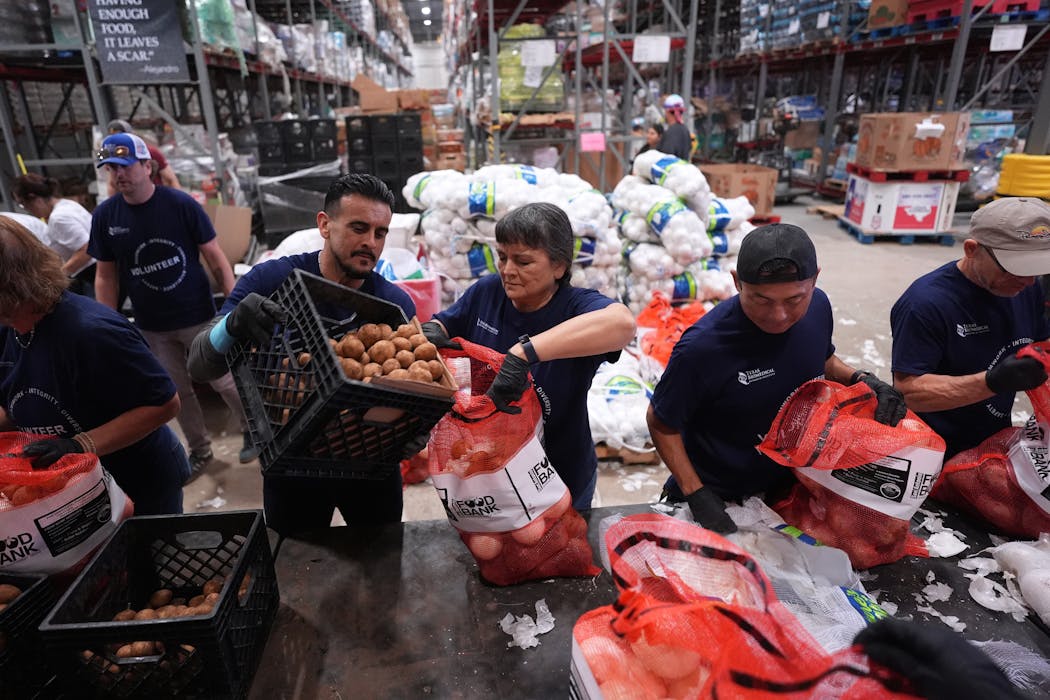
Food banks around the country are having trouble keeping their shelves stocked.

Gaining local insights

Our team aims to deploy the latest methods from data science, predictive analytics and artificial intelligence to detect trends in critical needs sooner and at a more localized level, increasing the speed and efficiency of getting needed help to local community members.

Our research has described the needs of callers who reach out to 211, community capacity to respond to callers’ needs, the ability of 211 to detect rapid changes in community needs, and the benefits of integrating health referrals into 211s.

When we saw food requests rising sharply in late October, we reached out to local leaders at 211 call centers to get insights into what they were hearing from callers.

Robin Pokojski, vice president of 211 and community partnerships at United Way of Greater St. Louis, reported that with all the uncertainty around SNAP benefits, callers were initially “anticipating” a need for food pantries. Tiffany Olson, who directs essential services at Crisis Connections and its 211 call center in Washington state, shared that even callers who rely heavily on their SNAP benefits sometimes need to use food banks as a supplement.

Those callers know that pivoting to rely solely on food banks probably won’t be enough to meet their food needs in full. They realize that food pantries and food banks will be more heavily burdened if SNAP benefits are unavailable.

Increasing the impact of 211 data

The trove of daily data on the needs of U.S. callers to 211 at the ZIP code level is unparalleled. Yet for years it was virtually invisible to anyone who didn’t work at a 211 hotline.

Even for people who work and volunteer within the 211 system, formal reporting on caller needs within a community was minimal, such as a one-page annual summary.

That changed in 2013.

Working with 211s across the country, our team created 211 Counts, a collection of user-friendly, public-facing data dashboards for local 211s across the U.S.

The dashboards allow users to explore the top needs in their community, see which neighborhoods are affected most and understand how needs are changing over time. The data can be sorted by legislative districts, school districts and counties to make the findings more relevant to different audiences.

Data on 211 requests are updated each night. Now in its 12th year, 211 Counts includes data on over 90 million requests from 211 callers in all or parts of 44 states. The local dashboards have been visited millions of times.

211 as an early-warning system

This is not the first time data collected through 211 hotlines has detected early signs of trouble for some Americans. Just weeks ago, we found that calls from people seeking assistance making car payments have been increasing steadily for five months, with daily calls peaking in October, at nearly twice the rate of May 2025.

Before that, 211s were months ahead of news reporting in seeing public distress associated with the 2022 baby formula shortage, the 2016 Flint water crisis and the 2007 subprime mortgage crisis.

When requests for major needs like food increase three- to fourfold overnight, every local 211 is likely to register this abrupt change.

But when less frequent needs, such as car payment assistance, creep up slowly, with an extra call here and there over several months, it’s unlikely that any local 211 hotline would notice.

That’s when the advantages of big data are greatest. By combining caller needs from 211s across the country, patterns emerge that would otherwise be missed. New data science tools are rapidly improving the speed and accuracy of detecting slight changes. When community and national leaders are made aware of potential rising threats, those threats can be tracked more closely and responses prepared.

It’s easy to lose sight of the fact that each data point is a hungry child or a worried parent.

Hotlines and food banks and food pantries need support in this moment to feed people. But most local safety net systems struggle to meet their community’s needs all the time. Data that documents the magnitude of need won’t fix the scarcity of local assistance, but it can help guide communities in allocating limited resources.

The Conversation

Matthew W. Kreuter receives funding from NIH.

Rachel Garg receives funding from NIH and NSF. She has previously received research support from Health Communication Impact, LLC to produce 211 data reports for United Way Worldwide.

ref. National 211 hotline calls for food assistance quadrupled in a matter of days, a magnitude typically seen during disasters – https://theconversation.com/national-211-hotline-calls-for-food-assistance-quadrupled-in-a-matter-of-days-a-magnitude-typically-seen-during-disasters-269057

Palestine 36 tells a forgotten story of revolt – and how the legacy of colonialism endures in Palestine

Source: The Conversation – UK – By Anne Irfan, Lecturer in Interdisciplinary Race, Gender and Postcolonial Studies, UCL

The great Palestinian revolt, which began in 1936 and lasted three years, was a pivotal event in the modern history of both the Middle East and the British empire.

Often considered the biggest popular uprising in Palestinian history, it had far-reaching ramifications for Palestinian nationalism, Zionism and British colonialism. Despite this significance, it is typically absent from official accounts of British history. Few Britons today are aware of it.

In her latest film, Palestinian director Annemarie Jacir powerfully shows why this episode in history is so significant. The depiction of the revolt in Palestine 36 helps illuminate events in modern-day Palestine, including Israel’s recent assault on Gaza, which a UN human rights council commission of inquiry said amounts to genocide.

By 1936, the British had occupied Palestine for 18 years. The British army had first entered the country in 1917, the same year the British government declared its support for the Zionist movement’s campaign for a Jewish state in Palestine in the Balfour Declaration.

Five years later, Britain was granted a mandate to govern Palestine by the League of Nations, precursor to the UN. The text of the mandate incorporated the Balfour declaration, making the creation of a Jewish state part of its objectives. For this purpose, the British regime empowered a Zionist organisation subsequently known as the Jewish Agency and supported large-scale Jewish immigration to Palestine.

Unsurprisingly, these policies caused rising tensions with the Palestinians, whose own nationalist movement had been growing during the later years of the Ottoman empire that had previously ruled the country. By the 1930s, Palestinians were increasingly concerned about Zionist state-building and settlements in the country.

In 1936, the newly formed Arab Higher Committee called for a general strike. It was widely observed across the country and brought much of the economy to a standstill. Palestine 36 depicts the impact of the strike and the subsequent armed uprising in rural villages, alongside political debates among Palestinian elites in Jerusalem. We also see the brutal British repression of the uprising, as the mandate regime imports ruthless counterinsurgency tactics from elsewhere in the empire, including India and Ireland.

The film, which was selected as Palestine’s entry for the Academy Awards, intersperses archival footage with dramatised scenes by an ensemble cast. Real historical figures like Charles Tegart (Liam Cunningham) and Orde Wingate (Robert Aramayo) are depicted alongside fictionalised characters.

Yusuf (Karim Daoud Anaya) is a villager who begins working in Jerusalem and becomes politicised as he witnesses colonial machinations close up. Kholoud (Yasmine Al Massri) is a journalist and nationalist who writes under the pen name Ahmed Canaani. Kholoud’s husband Amir (Dhafer L’Abidine) colludes with the Jewish Agency (called the Zionist Commission) in the film while professing outward support for the Palestinian national cause.

One of the film’s most instructive elements is its clear depiction of the British mandate’s operations. The regime laid many of the foundations for the Israeli state, but has often avoided culpability in contemporary conversations.

In Palestine 36, we see the regime’s brutality alongside its contradictions and double standards. British officers violate Palestinian property while serving an empire that otherwise venerates ideals of private ownership. The mandate regime condemns Palestinian militancy while drawing its own power from deploying violence with impunity.

Early on, a British official implores Palestinian villagers to acquiesce to a new land registration system or risk losing everything. Nearly a century on – as Palestinians face similar pressures to comply with foreign demands – the viewer knows that acquiescence will provide no real protection.

It is one of many long-term continuities shown in the film, and Jacir largely avoids heavy handedness in how she depicts them. Wingate’s typically colonial tactics, including the designation of Palestinian villages as “good” or “bad”, the endorsement of collective punishment and disproportionate retaliation, and the control of movement via transit permits, checkpoints and curfews, are all practices that the Israeli state continues to deploy today.

Scenes showing Palestinians being incarcerated behind barbed wire and denied water will inevitably remind viewers of contemporary testimonies from Gaza and the Sde Teiman detention camp.


Read more:
Israeli doctors reveal their conflicted stories of treating Palestinian prisoners held in notorious ‘black site’ Sde Teiman


At the same time, many of the Palestinian slogans and symbols from 1936 remain resonant. The film depicts protesters chanting “Palestine is not for sale” outside the office of High Commissioner Wauchope (Jeremy Irons). And later on, Kholoud discusses the British ban on the keffiyeh (the traditional headdress made from a chequered scarf, which has become a symbol of Palestinian resistence). This was a move replicated by institutions in the US, Germany and Australia in the 2020s.

At the same time, the portrayal of Palestine before the establishment of Israel is an important rejoinder to ongoing denials of Palestinian national history. Jacir’s film shows a Palestine characterised by widespread agricultural village life before what is known as the Nakba forced hundreds of thousands of Palestinians into overcrowded and urbanised refugee camps.

Palestine 36 doesn’t shy away from the internal divisions of Palestinian society. The Jerusalem elites condescend to the fellahin (farmers), represented by Yusuf. Amir happily collaborates with the Zionist leadership in the hope of becoming mayor.

The film closes with continuing Palestinian insurrection, juxtaposed with intensifying British brutality. The informed viewer will know that by the end of the revolt, mandate repression had executed, wounded, imprisoned or expelled one in ten Palestinian men.

The fallout would have fatal repercussions for the Palestinians a decade later. As such, it is incomplete to survey Palestinian history since 1948 without taking account of the pivotal events of 1936. It’s a far too common oversight that Jacir’s film goes a long way to correcting.


Looking for something good? Cut through the noise with a carefully curated selection of the latest releases, live events and exhibitions, straight to your inbox every fortnight, on Fridays. Sign up here.


The Conversation

Anne Irfan does not work for, consult, own shares in or receive funding from any company or organisation that would benefit from this article, and has disclosed no relevant affiliations beyond their academic appointment.

ref. Palestine 36 tells a forgotten story of revolt – and how the legacy of colonialism endures in Palestine – https://theconversation.com/palestine-36-tells-a-forgotten-story-of-revolt-and-how-the-legacy-of-colonialism-endures-in-palestine-269052

The psychology of generation Alpha

Source: The Conversation – UK – By Claire Hughes, Professor of Psychology, Deputy Director of the Centre For Family Research, University of Cambridge

rawpixel.com

Generation Alpha is the largest generation ever. Totalling two billion children, it encompasses anybody currently aged 0-15 years old – those born between 2010 and 2025.

This is the first fully digitally native generation, with many children already achieving unprecedented levels of digital literacy. It is predicted they will become the most educated generation in history: 90% are expected to complete secondary school worldwide, compared with 80% of gen Z.

However, gen Alpha children also inherit an increasingly precarious world, characterised by global uncertainties, housing shortages and climate change. It’s such a radical departure from what came before that this generation takes its name from the first letter of the Greek alphabet – unlike the gen Xs, Ys and Zs, whose letters come from our own (Latin) alphabet.

As developmental psychologists, we might ask what this new world means for gen Alpha’s psychological development. How might it influence their experiences, interests and values?

A good starting point is to look at their parents: the millennials (gen Y). From these 30- and 40-somethings, the gen Alphas are inheriting support for values such as inclusivity, adaptability and digital confidence, but also the tendency in some areas to boycott people whose words or actions are deemed offensive.

Millennials also report poorer mental health than previous generations, and at least in many western countries they are facing in some ways a more challenging financial situation.

Facing this adversity may mean that millennial parents are uniquely well placed to build their children’s resilience. Encouragingly, millennial fathers show unprecedented levels of commitment to being involved in parenting, challenging gender stereotypes.

On the other hand, stressed parents often struggle to cope with everyday tasks, while their children can exhibit behavioural problems such as aggression, and emotional difficulties like social withdrawal and anxiety.

Technology has also introduced challenges as millennials have widely adopted personal devices. Roughly half of parents in the UK say they are addicted to their phones, for example.

The distractions of digital devices can make parenting more difficult. This “technoference” is again associated with child behaviour problems, which could have knock-on effects later in life.

Kid trying to get his mum's attention when she's on her phone
Does this look familiar?
DimaBerlin

One additional technological challenge that gen Alphas experience is “sharenting”, where parents share photos and videos of them online, sometimes in [excessive or inappropriate ways]. We lack good data on the scale and impact of this trend, so researchers urgently need to map the risks.

Millennials’ own challenges with technology may at least put them in a better position to help their children navigate things like screentime and social media. Today’s digital world also means that gen Alpha’s parents have a huge amount of parenting information at their fingertips, as well as access to parenting forums and digital communities, which may reduce feelings of stress and isolation. Today’s psychologists and health professionals can also provide parents with rigorous evidence-based guidance.

Gen Alpha digital immersion

The digital world has amplified gen Alpha’s exposure to ideas and cultural practices from peers and other adults. So while some are likely to spend longer living at home than previous generations, they may actually be less susceptible to parental influence. This could be liberating, but also introduces new risks.

We’ve seen how social media can exacerbate peer pressure and has introduced cyber-bullying. Influencer trends risk inculcating unrealistic body image ideals, which can contribute to body dysmorphia.

Excessive use of video games can result in sleep deprivation, reduced physical activity and impaired school performance. It may be that the increasing availability of VR games makes these risks more pronounced for gen Alpha.

Gen Alpha also risk being more exposed to potentially harmful content such as pornography or sites promoting self-harm or eating disorders. While they may not be as gullible as is often assumed, young children often lack effective strategies for identifying trustworthy information, putting them at more risk than adults.

In 2010, the cognitive anthropologist Dan Sperber coined the phrase “epistemic trust” to describe the idea that we view others as trustworthy sources of information. Growing up surrounded by misinformation may instead lead gen Alpha to adopt the opposite stance – epistemic mistrust – with potential negative consequences like depression and anxiety, for instance

Two kids playing a computer game
Games are designed to be addictive.
Pixel-Shot

The digital space isn’t entirely negative for children’s psychological development. It’s much easier for gen Alpha to access information online about mental health, as well as professional psychological support, while also participating in virtual communities.

Technology also offers far greater access to educational resources and tools, something which AI may increase. There’s even emerging evidence that AI may enhance learning outcomes and increase student motivation, for instance. The big challenge will be to democratise learning without succumbing to adverse effects on human cognitive abilities from over-relying on AI for writing and thinking.

A diversity of experiences

Amid all this, it’s important to remember that gen Alpha’s psychological development is not following one monolithic trajectory.

The pandemic both highlighted and exacerbated inequality in many areas of childrens’s lives from education to home stability. For some older gen Alphas, school closures and online teaching left long-term scars – as evidenced by surging school absenteeism in many countries that appears difficult to reverse.

School closures during the pandemic meant the loss of a safe space for children who might be at risk of neglect or maltreatment at home. One consequence was a global rise in violence against children. Even younger Alphas who were not born at the time may be affected indirectly by their older brothers and sisters’ experiences.

More generally, experience will differ greatly depending on where members of gen Alpha live. For example, in east Asia ultra-low fertility has led to emptying classrooms, while children in smaller families endure more academic pressure from parents. Understanding the experiences of children in the global south is particularly important, not least because they represent the majority of gen Alpha.

Gender will also affect in new ways how this generation experience the world. For instance, boys appear more prone to gaming addiction while girls are more likely to become addicted to social media. Girls also report seeing more online content that creates appearance pressure, while boys are more likely to see misinformation – no doubt sometimes promoting potentially harmful views about masculinity and women.

What are gen Alpha’s own views of this new world? Despite adult fears about their exposure to misogyny, xenophobia and polarisation, today’s children are concerned about a wide range of progressive issues. These include resource inequality, sexuality, climate justice and animal rights.

This might be youthful idealism that will be shed in adulthood. Yet we know, for instance, that millennials commonly express values that differ from preceding generations.

Gen Alpha have also already been found to instil pro-environmental attitudes in their parents. So at least some of these progressive values are likely to endure and potentially ripple through to wider society.

The Conversation

The authors do not work for, consult, own shares in or receive funding from any company or organisation that would benefit from this article, and have disclosed no relevant affiliations beyond their academic appointment.

ref. The psychology of generation Alpha – https://theconversation.com/the-psychology-of-generation-alpha-268500