The science of weight loss – and why your brain is wired to keep you fat

Source: The Conversation – UK – By Valdemar Brimnes Ingemann Johansen, PhD Fellow in the Faculty of Health and Medical Sciences, University of Copenhagen

When you lose weight, your body reacts as if it were a threat to survival. pexels/pavel danilyuk, CC BY

For decades, we’ve been told that weight loss is a matter of willpower: eat less, move more. But modern science has proven this isn’t actually the case.

More on that in a moment. But first, let’s go back a few hundred thousand years to examine our early human ancestors. Because we can blame a lot of the difficulty we have with weight loss today on our predecessors of the past – maybe the ultimate case of blame the parents.

For our early ancestors, body fat was a lifeline: too little could mean starvation, too much could slow you down. Over time, the human body became remarkably good at guarding its energy reserves through complex biological defences wired into the brain. But in a world where food is everywhere and movement is optional, those same systems that once helped us survive uncertainty now make it difficult to lose weight.

When someone loses weight, the body reacts as if it were a threat to survival. Hunger hormones surge, food cravings intensify and energy expenditure drops. These adaptations evolved to optimise energy storage and usage in environments with fluctuating food availability. But today, with our easy access to cheap, calorie-dense junk food and sedentary routines, those same adaptations that once helped us to survive can cause us a few issues.

As we found in our recent research, our brains also have powerful mechanisms for defending body weight – and can sort of “remember” what that weight used to be. For our ancient ancestors, this meant that if weight was lost in hard times, their bodies would be able to “get back” to their usual weight during better times.

But for us modern humans, it means that our brains and bodies remember any excess weight gain as though our survival and lives depend upon it. So in effect, once the body has been heavier, the brain comes to treat that higher weight as the new normal – a level it feels compelled to defend.

The fact that our bodies have this capacity to “remember” our previous heavier weight helps to explain why so many people regain weight after dieting. But as the science shows, this weight regain is not due to a lack of discipline; rather, our biology is doing exactly what it evolved to do: defend against weight loss.

Hacking biology

This is where weight-loss medications such as Wegovy and Mounjaro have offered fresh hope. They work by mimicking gut hormones that tell the brain to curb appetite.

But not everyone responds well to such drugs. For some, the side effects can make them difficult to stick with, and for others, the drugs don’t seem to lead to weight loss at all. It’s also often the case that once treatment stops, biology reasserts itself – and the lost weight returns.

Advances in obesity and metabolism research may mean that it’s possible for future therapies to be able to turn down these signals that drive the body back to its original weight, even beyond the treatment period.

Research is also showing that good health isn’t the same thing as “a good weight”. As in, exercise, good sleep, balanced nutrition, and mental wellbeing can all improve heart and metabolic health, even if the number on the scales barely moves.

A whole society approach

Of course, obesity isn’t just an individual problem – it takes a society-wide approach to truly tackle the root causes. And research suggests that a number of preventative measures might make a difference – things such as investing in healthier school meals, reducing the marketing of junk food to children, designing neighbourhoods where walking and cycling are prioritised over cars, and restaurants having standardised food portions.

Scientists are also paying close attention to key early-life stages – from pregnancy to around the age of seven – when a child’s weight regulation system is particularly malleable.

Indeed, research has found that things like what parents eat, how infants are fed, and early lifestyle habits can all shape how the brain controls appetite and fat storage for years to come.

If you’re looking to lose weight, there are still things you can do – mainly by focusing less on crash diets and more on sustainable habits that support overall wellbeing. Prioritising sleep helps regulate appetite, for example, while regular activity – even walking – can improve your blood sugar levels and heart health.

The bottom line though is that obesity is not a personal failure, but rather a biological condition shaped by our brains, our genes, and the environments we live in. The good news is that advances in neuroscience and pharmacology are offering new opportunities in terms of treatments, while prevention strategies can shift the landscape for future generations.

So if you’ve struggled to lose weight and keep it off, know that you’re not alone, and it’s not your fault. The brain is a formidable opponent. But with science, medicine and smarter policies, we’re beginning to change the rules of the game.


This article was commissioned by Videnskab.dk as part of a partnership collaboration with The Conversation. You can read the Danish version of this article, here.

The Conversation

Valdemar Brimnes Ingemann Johansen’s PhD studies are funded by the Novo Nordisk Foundation Center for Basic Metabolic Research.

Christoffer Clemmensen is a co-founder of Ousia Pharma, a biotech company developing therapeutics for obesity. He receives funding for his University research from the Novo Nordisk Foundation, the Lundbeck Foundation, Independent Research Fund Denmark, Innovation Fund Denmark. the European Research Council, the BioInnovation Institute.

ref. The science of weight loss – and why your brain is wired to keep you fat – https://theconversation.com/the-science-of-weight-loss-and-why-your-brain-is-wired-to-keep-you-fat-266808

Darfuri diaspora – grief and hope from afar

Source: Radio New Zealand

Displaced Sudanese who fled El-Fasher after the city fell to the Rapid Support Forces (RSF), arrive in the town of Tawila in war-torn Sudan's western Darfur region on 28 October, 2025.

Displaced Sudanese who fled El-Fasher after the city fell to the Rapid Support Forces (RSF), arrive in the town of Tawila in war-torn Sudan’s western Darfur region on 28 October, 2025. Photo: AFP

Kadambari Raghukumar produces and presents Here Now, RNZ’s weekly series on people from various global backgrounds living in Aotearoa. Her work in media has taken her from Kenya, to Sudan and across Asia.

Since April 2023, Sudan has been gripped by a brutal civil war between the Sudanese Armed Forces and the paramilitary group, the Rapid Support Forces (RSF).

What began as a power struggle between two generals has devolved into a horrific humanitarian crisis.

More than 40,000 people have been killed and nearly 12 million people have been displaced.

In 2019 I spent time in Khartoum just days after President Omar Al Bashir’s 30 year authoritarian regime ended, and before the transitional government was put in place.

I distinctly recall a sense of optimism on the streets during the revolution and people saying how it felt like a “freedom festival”.

How did such a hopeful time, seemingly the start of a transition to democracy, turn into the unimaginable violence we are seeing now?

In this week’s episode of RNZ’s Here Now podcast, I speak to Darfuri Aucklanders Fathima Sanussi, Izzadine Abdallah, Hassaballah Hamid and Kaltam Hassan.

Hassaballah Hamid came to New Zealand a year ago through the UN refugee pathway. He’s from Darfur, where in the past few weeks, death and destruction is everywhere.

On Oct 26, the RSF took over Al-Fasher, the last major city of Darfur held by the Sudanese army.

The RSF have killed nearly 2000 people there, while tens of thousands are still stranded the city as the militia seize more territory from the army in the south-west and center.

“This is now beyond tribalism, this is a proxy war on Sudan,” Hamid said.

The United Arab Emirates (UAE) is widely accused of providing military support to the RSF, but UAE officials deny the allegations despite evidence presented in UN reports and international media investigations.

Famine has gripped the region, a once fertile part of the country known for growing food and pasture lands. While hospitals and schools have been destroyed across the Darfur region.

Over the weekend, Fathima Sanussi, an activist and former refugee from Sudan, organised a solidarity rally in Auckland, calling for an end to the violence.

“I’m from Darfur, it’s more of a reason why this work is so important to me,” she said.

“Right now, with everything that’s happening and being away from home, it allows us to kind of understand the functionality of the way the world works.

“My parents were forcibly displaced. More than ever now, as a Sudanese person and someone that’s particularly from Darfur, I want to be able to go back home one day.”

Darfur is a complex and diverse region where the Fur people, the Masalit and Arab Sudanese have lived for centuries – some semi-nomadic, pastoral communities, others, indigenous to those lands.

Ethnic tensions between what are called Arab and non-Arab groups have simmered for decades in these parts.

Kaltam Hassan and her son Izzadine are Masalit, from Al Genina in Darfur. It’s a region that is familiar with conflict.

In 2003, the Darfur Civil War brought extensive violence to the people of Al Genina, many of whom fled.

Sudan’s vast natural reserves – gold, copper, iron ore, while not the only reason, are said to be one of the major reasons this war has been prolonged and attracted support from external players.

Sudan is Africa’s 3rd largest gold producer and has reserves of iron, uranium ad copper across the country, particularly Darfur and Kordofan.

Fathima said: “It’s not fair that our people have to bear the burden of it all, meanwhile feeding the rest of the world and giving the world luxury goods at the expense of their death.

“The violence in Darfur is a modern-day colonial project. And I think once we start reframing the language of how we start speaking about Sudan is when we’re going to see effective conflict resolution.”

Kaltam Hassan recalls a peaceful childhood and past life in the region, until ethnic tensions spilled over and the Janjaweed militia (from whom the RSF were formed) unleashed violence.

But like others, she also sees external support to the RSF amplifiying the scale of this current conflict.

“What happened in the past, it’s already happened,” Kaltam said.

“But once those people stop funding the RSF, the Janjaweed, then we can figure out how to stop the fighting. But with other people from outside us funding them, giving them more power, it doesn’t matter how much our people are fighting, the problem won’t stop because it’s not just our problem anymore.”

Sudanese across the diaspora wait and watch for the viciousness of this war to end, continuing to wish for a return to how things used to be.

“People in Darfur are agricultural people. If the war stops, all the people even in the refugee camps, they will all go back to Darfur because there’s nowhere like home and they will start growing again.

“And that’s the one thing I want to see, our people going back home and building what’s already been broken down, growing our own food and just living the life that we used to live before all this started” Kaltam said.

Sign up for Ngā Pitopito Kōrero, a daily newsletter curated by our editors and delivered straight to your inbox every weekday.

– Published by EveningReport.nz and AsiaPacificReport.nz, see: MIL OSI in partnership with Radio New Zealand

Are young people more narcissistic than ever?

Source: Radio New Zealand

The term ‘narcissism‘ comes from the Greek myth of Narcissus, the handsome young man who falls in love with his own reflection in a pool of water.

Are we in the middle of a narcissism epidemic in which people are caring more and more about themselves at the expense of others?

If so, who or what is to blame?

– Published by EveningReport.nz and AsiaPacificReport.nz, see: MIL OSI in partnership with Radio New Zealand

How Taiwan is leading the way in the fight against disinformation

Source: Radio New Zealand

NEW YORK, NEW YORK - SEPTEMBER 24: Audrey Tang speaks onstage during the Clinton Global Initiative 2025 Annual Meeting at New York Hilton Midtown on September 24, 2025 in New York City. JP Yim/Getty Images for Clinton Global Initiative/AFP (Photo by JP Yim / GETTY IMAGES NORTH AMERICA / Getty Images via AFP)

Audrey Tang, Taiwan’s first ever digital minister, told those attending the Munich Cyber Security Conference that Taiwan is using AI to fight disinformation. Photo: JP YIM

For Taiwan, the threat of Chinese military invasion is less pressing than an invasion many see as ongoing – an onslaught of disinformation.

As the world grapples with ways to tackle waves of disinformation and fake news, one country is taking the battle to every level of society, from temples and community halls to a dedicated government ministry.

In Taiwan where there are fears that the growing online onslaught could undermine the treasured democratic system, Taiwanese citizens are taking matters into their own hands.

“Taiwan has gone through so much change,” Mark Hanson said, a Taiwan-based New Zealand journalist.

“From a country that was under martial law right into the late 1980s, Taiwan has developed into a thriving economy, a leader and innovator in technology, an open democratic society, the first place in Asia with gay marriage.

“There have just been so many improvements made here and it’s scary that all of that could be washed away.

“The information war has already started, a long time ago,” Hanson’s friend Nelly said, who is an English teacher in Taichung.

“There’s some invisible threats everywhere, like the cyber attacks and [fake] news. It happens to us everywhere.”

In the final of three reports from Taiwan, The Detail looks at the claims that mainland China uses influencers, television stars, offshore “content farms” and generative artificial intelligence to swamp the island state with disinformation, and talks to two young people about their groundbreaking projects that others want to copy.

As China pursues sovereignty claims over Taiwan under the One China Principle, the online war is seen by many Taiwanese as a much greater threat than China’s military build up and trade sanctions.

‘They don’t hide any more’

Investigative journalist and podcaster Jason Liu is now dedicated to tackling disinformation at community level.

Jason Liu is an investigative journalist.

Jason Liu is an investigative journalist. Photo: Sharon Brettkelly

He’s spent five years across eight countries, including Ukraine, looking at how disinformation affects societies and has written about the so-called “content mill empire behind online disinformation”.

He said the Chinese propaganda messages were easy to spot and blatant, and sometimes came from within Taiwan.

“You have different ways to identify if they are pro-China or coordinated with pro-China actors. If they are repeating the propaganda from state-sponsored media from mainland China then they are part of the coordinated behaviour.

“Secondly, they don’t hide any more right now, they share the same picture, they use the state press release or they are making money out of this news cycle.”

Liu said people in the “online army” or public relations companies making money from Chinese state-sponsored propaganda have told him that AI had made it easy.

“Everyone can do it, everyone can repost hundreds of messages every day. If you want to earn some money from the Chinese government you just have to have the contacts to understand who would be willing to pay for it.

“It’s now easy to buy the applications to buy bots, to buy accounts to spread information.”

Liu said he had interviewed people in Mandarin-speaking countries like Malaysia and Singapore who made money from pushing disinformation into Taiwan.

His solution was simple, a programme that went into temples, schools and community halls, getting people offline and meeting face-to-face, where he talked about his international work, showed documentaries and talked about his articles.

“We are hosting more and more in-person events with children with students.

Billion Lee and Johnson Liang, co-founders of CoFact fact-checking collaboration

Billion Lee and Johnson Liang, co-founders of CoFact fact-checking collaboration Photo: Sharon Brettkelly

“That’s what people in my generation, the activists, media literacy petitioners, we are trying to bring people offline to meet each other. Then you don’t only read [about] Taiwan from the bots, from the fake accounts, from the social media.”

‘I believe in freedom, democracy’

Billion Lee took a different approach with a programme that had gained international attention.

She is the co-founder of CoFact, an NGO that built a chatbot to fact-check and fight disinformation, where the editorial team works with volunteers in verifying news or content.

The Detail met her off the plane from Portugal where she had attended a conference on fake information, before she headed to a hackathon weekend where like-minded engineers, designers and tech experts shared new ways of recognising and tackling disinformation.

The CoFact website also runs tutorials in several languages, explaining how users can filter news topics and sift out fake stories.

“What CoFact tries to do is provide strategies, provide solutions. We don’t want to just blame government or blame China. As individuals here we need to do something ourselves, be activists, rather than just being the taker and blaming it on everyone else,” she said.

Lee said she was not daunted by the scale of the problem.

“I am doing what I can do. That is the thing I believe in, freedom, democracy… that’s the value I want to leave for the future.”

The Detail emailed the Chinese Embassy in Wellington with questions but got no response.

The trip to Taiwan was hosted and funded by its Ministry of Foreign Affairs.

Check out how to listen to and follow The Detail here.

You can also stay up-to-date by liking us on Facebook

– Published by EveningReport.nz and AsiaPacificReport.nz, see: MIL OSI in partnership with Radio New Zealand

Is it healthier to stop eating when you’re 80 percent full?

Source: Radio New Zealand

Hara hachi bu has been gaining attention recently as a strategy for weight loss.

But while the practice might emphasise eating in moderation, it shouldn’t really be seen as a method of dietary restriction.

Rather, it represents a way of eating that can help us learn to have awareness and gratitude while slowing down at mealtimes.

A bearded man in a white shirt smiles as he eats a burger.

Hara hachi bu might help you improve your relationship with eating and your body.

Unsplash+

What does the research say?

Research on hara hachi bu is limited. Previous studies have evaluated the overall dietary patterns of those living in regions where this eating philosophy is more commonplace, not the “80 percent rule” in isolation.

However, the available evidence does suggest hara hachi bu can reduce total daily calorie intake. It’s also associated with lower long-term weight gain and lower average body mass index (BMI). The practice also aligns with healthier meal-pattern choices in men, with participants choosing to eat more vegetables at mealtimes and fewer grains when following hara hachi bu.

Hara hachi bu also shares many similar principles with the concepts of mindful eating or intuitive eating. These non-diet, awareness-based approaches encourage a stronger connection with internal hunger and satiety cues. Research shows both approaches can also help reduce emotional eating and enhance overall diet quality.

Hara hachi bu may also have many advantages that go beyond losing weight.

For instance, hara hachi bu‘s focus on awareness and eating intuitively may offer a gentle and sustainable way of supporting long-term health changes.

Sustainable health changes are far easier to maintain in the long term. This may improve health and prevent weight regain, which can be a risk for those who lose weight through traditional diet approaches.

The ethos of hara hachi bu also makes perfect sense in the context of modern life and may help us develop a better relationship with the food we eat.

Evidence suggests that about 70 percent of adults and children use digital devices while eating. This behaviour has been linked to higher calorie intake, lower fruit and vegetable intake and a greater incidence of disordered eating behaviours, including restriction, binge eating and overeating.

As a dietitian, I see it all the time. We put food on a pedestal, obsess over it, talk about it, post about it – but so often, we don’t actually enjoy it. We’ve lost that sense of connection and appreciation.

Being more aware of the food we eat and taking time to taste, enjoy and truly experience it, as hara hachi bu emphasises, can allow us to reconnect with our bodies, support digestion and make more nourishing food choices.

Trying hara hachi bu

For those who might want to give hara hachi bu or take a more mindful and intuitive approach to improve their relationship with food, here are a few tips to try:

1. Check in with your body before eating

Ask yourself: Am I truly hungry? And if so, what kind of hunger is it — physical, emotional, or just habitual? If you’re physically hungry, denying yourself may only lead to stronger cravings or overeating later. But if you’re feeling bored, tired, or stressed, take a moment to pause. Giving yourself space to reflect can help prevent food from becoming a default coping mechanism.

2. Eat without distractions

Step away from screens and give your meal your full attention. Screens often serve as a distraction from our fullness cues, which can contribute to overeating.

3. Slow down and savour each bite

Eating should be a sensory and satisfying experience. Slowing down allows us to know when we’re satiated and should stop eating.

4. Aim to feel comfortably full, not stuffed

If we think of being hungry as a one and being so full you need to lie down as a ten, then eating until you’re around “80% full” means you should feel comfortably satisfied rather than stuffed. Eating slowly and being attuned to your body’s signals will help you achieve this.

5. Share meals when you can

Connection and conversation are part of what makes food meaningful. Connection at meal times is uniquely human and a key to longevity.

6. Aim for nourishment

Ensure your meals are rich in vitamins, minerals, fibre and energy.

7. Practice self-compassion

There’s no need to eat “perfectly”. The point of hara hachi bu is about being aware of your body – not about feeling guilty over what you’re eating.

Read more: People in the world’s ‘blue zones’ live longer – their diet could hold the key to why

Importantly, hara hachi bu is not meant to be a restrictive eating approach. It promotes moderation and eating in tune with your body – not “eating less”.

When viewed as a means of losing weight, it risks triggering a harmful cycle of restriction, dysregulation and overeating – the very opposite of the balanced, intuitive ethos it’s meant to embody. Focusing solely on eating less also distracts from more important aspects of nutrition – such as dietary quality and eating essential nutrients.

This practice also may not suit everyone. Athletes, children, older adults and those living with illness often have higher or more specific nutritional needs, so this eating pattern may not be suitable for these groups.

While often reduced to a simple “80 percent full” guideline, hara hachi bu reflects a much broader principle of mindful moderation. At its core, it’s about tuning into the body, honouring hunger without overindulgence and appreciating food as fuel — a timeless habit worth adopting.

Aisling Pigott is a Lecturer in Dietetics at Cardiff Metropolitan University. and a Non-Executive Director of the British Dietetic Association, the professional body and trade union representing dietitians in the UK. She receives funding from the Research Capacity Building Collaborative (RCBC) and Health and Care Research Wales.

– Published by EveningReport.nz and AsiaPacificReport.nz, see: MIL OSI in partnership with Radio New Zealand

New global research shows eye movements reveal how native languages shape reading

Source: The Conversation – Canada – By Victor Kuperman, Professor, Department of Linguistics and Languages, McMaster University

Reading is a complex cognitive skill that predicts career prospects and social mobility throughout our lifetimes. For newcomers to a country, success often depends on learning to read fluently in a new language.

In fact, language proficiency, including reading fluency, has been found to be the most important factor for successful employment and social participation.

With record numbers of immigrants settling in Canada and migrating globally, understanding how to support reading skill development in a second language is essential.

Writing systems across the world

The foundation of our scientific understanding of the reading process has been narrow, with a majority of studies focusing on reading in English.

But languages are not all written the same way. Some writing systems use letters (like English, Turkish), others use logographs (Chinese, Japanese), syllable characters (Hindi), and more. Some languages are read left to right (Russian, Spanish), and some right to left (Arabic, Hebrew).

Considering how diverse languages are, an interesting question is whether we develop strategies to understand text in our native language and transfer these strategies to additional languages. These are just two of the many research questions that the Multilingual Eye-Movement Corpus (MECO) aims to answer.

What is MECO?

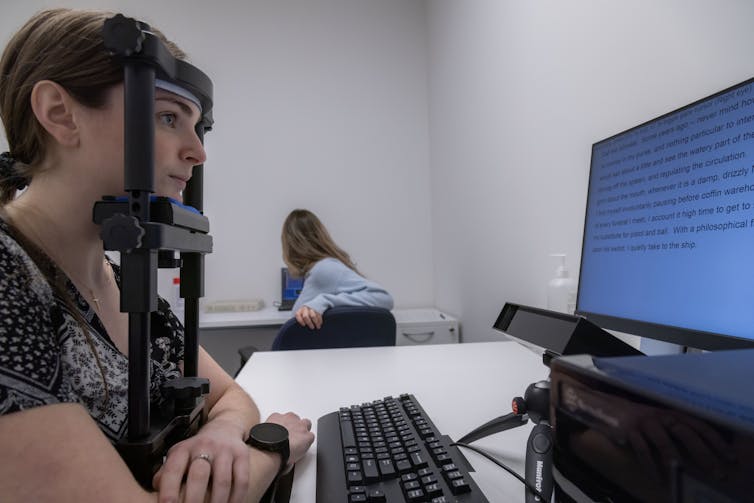
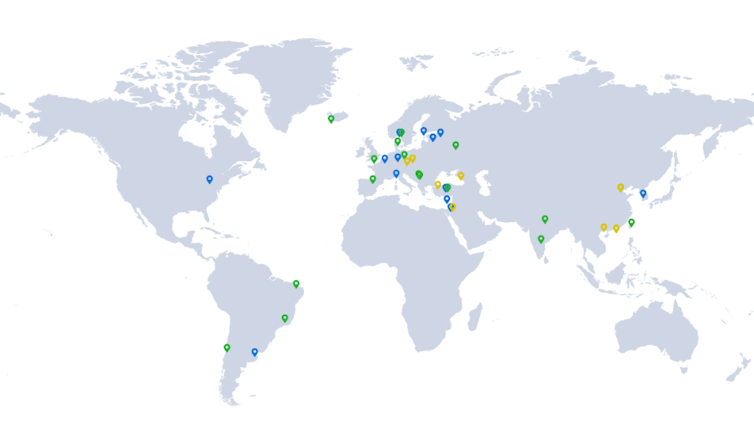
MECO connects researchers from more than 40 countries — including the three of us, the authors of this analysis — to collect eye-tracking data on reading. Eye-tracking uses a camera set-up to record eye movements during reading. It shows where the eyes are fixating, rereading or skipping words, and reveals how the brain processes text in real time.

Participating labs use an identical procedure so that results can be compared across languages. Participants read the same English texts, but each lab then also tests readers in their native language using translated texts, allowing for the data to be compared.

A woman reads text on a screen while placing her chin on a headrest, with a small camera in front of her below the screen.
An eye-tracking set-up at a participating lab at McMaster University, Canada.
(McMaster University, Humanities), CC BY

One key finding has been that the way someone reads in their first language leaves traces on their second language. In fact, the study reports that approximately half of the variance in eye movement measures in the second language is explained by respective measures in the first language.

For example, writing systems like Korean pack a lot of information into smaller units, and eye-tracking data reflect this: Korean readers skip many words and have shorter eye movements, but make a lot more of them. In a language like Finnish, where words are much longer, information is more distributed and readers tend to spend more time on words and don’t skip them often.

These are strategies that they carry over to their second language, even when the writing system is different.

Image of a world map shows green, blue and yellow markers at the locations of participating labs.
With 30 languages represented so far (including Korean, Finnish, Greek, Chinese, Dutch, Turkish and Hindi), MECO is the world’s most comprehensive dataset of cross-linguistic eye-tracking data on reading.
(MECO), CC BY

MECO has also reported a dissociation between comprehension and eye-movement behaviour. In their second language, readers often achieved similar comprehension scores to native speakers of English, but their eye movements showed more effortful reading (longer fixations, less skipping and more re-readings).

This strategy, the authors note, could be due to the benefits of understanding written materials in an educational or workplace setting outweighing the benefits of speed.

MECO, applied

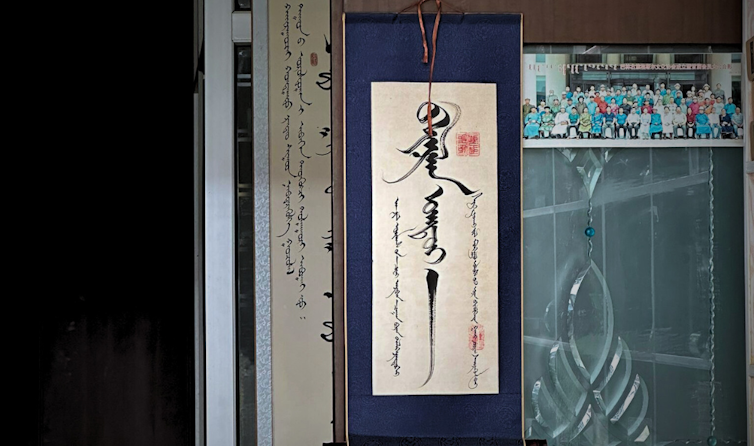
Language researcher Yaqian Borogjoon Bao joined the network of MECO researchers while studying the cognitive aspects of her native script, traditional Mongolian, at the Chinese Academy of Sciences.

She had this to report in an interview with our team:

“MECO gave me the framework and support to conduct rigorous research. I hope it will inspire others to explore understudied languages and scripts.”

A sign hung on a door written in the Traditional Mongolian script.
Traditional Mongolian is one of the only writing systems in the world that is read vertically, from top to bottom, instead of horizontally.
(Yaqian Borogjoon Bao), CC BY

At the Federal University of Minas Gerais in Brazil, Marina Leite joined MECO as a collaborator while pursuing a degree in Teaching and Education. She told us:

“I hope the MECO data can be used to enlarge the amount of available data about reading in Brazilian Portuguese. The findings could improve education strategies to boost reading comprehension and literacy skills in my country.”

In classrooms where students are balancing multiple languages, research on how native languages affect additional ones can help researchers, educators and policymakers design better strategies for teaching.

MECO aims to fill this gap. All collected data is open access, allowing other researchers to use the data pursue their own research questions about reading.

The Conversation

Victor Kuperman receives funding from NSERC, as Canada Research Chair in Psycholinguistics (Tier 2).

Nadia Lana receives funding from the Social Sciences and Humanities Research Council.

Olga Parshina does not work for, consult, own shares in or receive funding from any company or organisation that would benefit from this article, and has disclosed no relevant affiliations beyond their academic appointment.

ref. New global research shows eye movements reveal how native languages shape reading – https://theconversation.com/new-global-research-shows-eye-movements-reveal-how-native-languages-shape-reading-268698

Budget 2025 ignores the looming succession crisis facing Canada’s family businesses

Source: The Conversation – Canada – By Katrina Barclay, Executive Manager, Telfer Family Enterprise Legacy Institute (FELI), L’Université d’Ottawa/University of Ottawa

Like previous federal budgets, the recently released Budget 2025 fails to acknowledge a pressing generational shift for Canada’s economy: the succession crisis facing most Canadian family-owned businesses.

Over the next decade, 60 per cent of family enterprises will change hands — if those ownership transfers happen at all.

When ownership transfers stall or fail, jobs, investments and tax revenues are lost — not to mention the loss to the social fabric in communities across the country. Yet, despite these stakes, Budget 2025 offers little recognition of this looming challenge.

The government states that it is “ensuring Canadian workers and businesses have the tools they need to drive this transformation and thrive from it.” Yet there is no evidence of any measures to support and equip entrepreneurs and family business owners for generational transitions.

Family businesses are the backbone of the economy

In Canada’s private sector, family firms own nearly two-thirds of all businesses, from mom-and-pop shops to international and global leaders in their respective sectors. Together they employ more than half of workers and generate nearly half of our private sector GDP.

The economic pressures and uncertainties — looming tariffs, the affordability crisis, inflationary price increases, to name a few — currently facing Canada make this moment more perilous.

Without thoughtful policy support, Canada risks losing not just businesses, but the jobs and community investments they sustain.

The looming succession crisis

Succession is notoriously difficult to navigate for businesses. Two-thirds of businesses don’t have a formal succession plan.

Of those that do, most rely on accountants and lawyers for guidance. While accountants and lawyers are needed, they’re rarely equipped for the family dynamics and communication breakdowns that derail even the best financial plans.

Even more worrying, 39 per cent of business owners surveyed by the Canadian Federation of Independent Business said they relied on no one or did it themselves.

Running a business and successfully transferring ownership are two very different skill sets. Yet Ottawa continues to treat succession as a matter of tax incentives for the owners — for example, by cancelling the proposed capital gains increase — while ownership succession is also (and often foremost) a deeply human and strategic challenge.

The government must confront the most complex parts of succession: enabling solid business governance, responsible next-generation owner development and fostering healthy family dynamics to support smooth ownership transitions that ensure the continuity and growth of the firm.

This is especially important as more enterprising families begin to exit their firms to invest in family foundations or offices, or bring in outside investors and leadership for the first time.

The incumbent generation of business owners who built this country will only pass on their business once. The government need to give them the tools to do it right.

3 things the government should do

If Budget 2025 truly aims to ensure that Canadian businesses “thrive from transformation,” it must invest in succession readiness. Here’s what the government should do to accomplish this:

1. Assess the state of Canada’s family businesses

Canada lacks comprehensive, detailed and continuous national data about family firms. The government should support the collection of nuanced family business data. This should be done by Statistics Canada in partnership with universities and institutes like ours, the Family Enterprise Legacy Institute at the University of Ottawa. This would provide reliable evidence to measure the pulse of the largest part of our economy, highlight major issues and inform effective policy.

2. Scale owner empowerment

Few programs exist to help businesses navigate succession. The current offering amounts to a few paragraphs on the Government of Canada website. The government should support the creation and delivery of multilingual programs to train any potential successors in best practices on topics such as family dynamics management, succession processes, resilience in times of uncertainty and effective governance.

3. Build hubs of excellence

Canada already has world-class family business researchers, advisers and peer networks, but they are disconnected and underfunded. What’s missing is a federally supported institute bringing together associations, institutes, centres, foundations and organizations to pursue a co-ordinated strategy to connect research, training and advisory support. Along with owners and successors, the hub could help prepare advisers, accountants and lawyers.

A high-yield investment in Canada’s future

Supporting successful succession is not a subsidy. It is a high-yield investment with returns for every community and society at large. It is also a safeguard for the 6.9 million Canadians who depend on family businesses for jobs and nation-building projects.

Consider the federal Major Projects Office, which has been tasked with fast-tracking nation-building projects. As with every project in Canada, they are supported by small, medium and large family-owned construction firms, trucking companies, suppliers, tradespeople, Indigenous enterprises, manufacturers, fabricators and other service providers.

Without healthy, well-transitioned family businesses, those projects and the jobs they sustain are at risk.

Succession planning is about preserving Canadian ownership during the largest intergenerational transfer in our history. Without thriving family businesses, our economy will not prosper. Ignoring succession could end up being not just a policy oversight, but a nation-building failure.

The Conversation

Peter Jaskiewicz receives funding from the Social Sciences and Humanities Research Council (SSHRC). He has collaborated on research, teaching, and knowledge dissemination with all major associations in the national and global family enterprise ecosystem, including Family Enterprise Canada (FEC), Family Enterprise Foundation (FEF), the Family Business Network (FBN), and the Family Firm Institute (FFI).

Katrina Barclay does not work for, consult, own shares in or receive funding from any company or organisation that would benefit from this article, and has disclosed no relevant affiliations beyond their academic appointment.

ref. Budget 2025 ignores the looming succession crisis facing Canada’s family businesses – https://theconversation.com/budget-2025-ignores-the-looming-succession-crisis-facing-canadas-family-businesses-269249

How two Canadian war amputees hiked 2,000 kilometres and shaped disability rights activism

Source: The Conversation – Canada – By Eric Story, Postdoctoral researcher, Department of History, Western University

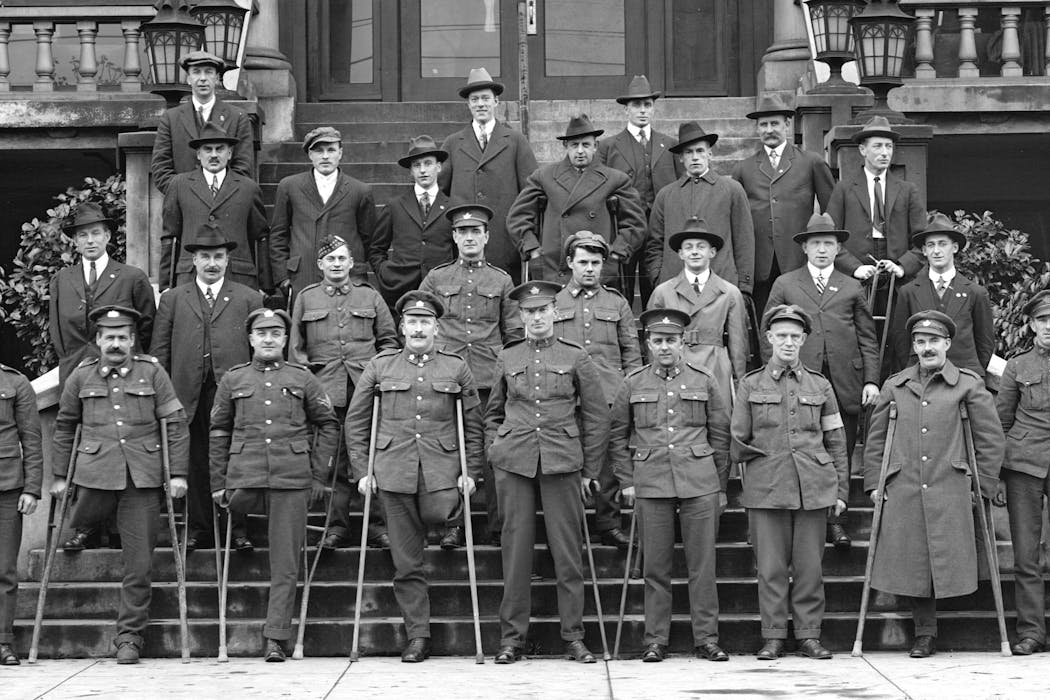
After the First World War, veterans who had lost limbs formed fraternal associations such as the Amputation Club in Vancouver, B.C., seen here in 1918, to advocate for disabled veterans. (Stuart Thomson Fonds/ City of Vancouver Archives)

Perhaps you’ve heard the name John McCrae, the famous poet who wrote “In Flanders Fields.”

But have you heard of George Hincks and Marshall McDougall?

While conducting research on disabled veterans, I came across their names in an old veterans’ magazine that briefly mentioned their plan to hike from Calgary to Ottawa in 1923. Curious, I searched the microfilmed newspapers to find out what became of their journey.

As it turned out, these two ex-servicemen of the the First World War (1914–18) hiked more than 2,000 kilometres to raise awareness of the issues facing disabled veterans after the war.

Historians have typically identified the birth of the disability rights movement in the post-1945 period.

But the forgotten hike of Hincks and McDougall and the related advocacy efforts of the Amputations Association of the Great War — a predecessor organization of today’s War Amps — speaks to an earlier generation of activism that remains largely untold.

The journey begins

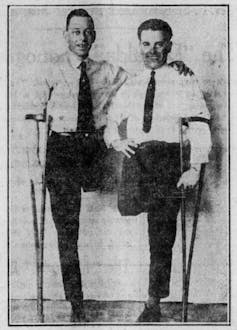
Calgary’s Daily Herald was the first to report on Hincks and McDougall. It published a striking photograph of the two men before their hike, smiling and standing shoulder to shoulder. What draws the reader’s attention, however, is the lower half of the picture. Both men are amputees, each having lost a leg on the First World War battlefields.

Two men in white shirts and ties and trousers, each having one amputated leg, holding a crutch.
Marshall McDougall and George Hincks in 1923 before their hike.
(Calgary Daily Herald)

To understand what drove these two disabled men to embark on such an arduous journey, we must turn to the 19th century, when Canada began to transition its economy away from rural agricultural production towards urban industrial capitalism.

As cities industrialized in the second half of the 19th century, the nexus of the Canadian economy shifted from the home to the factory floor. Historian Sarah Rose has examined how this shift impacted disabled peoples’ ability to work in a newly industralized economy.

Employers began to prioritize able-bodied labourers for their strength, skill and what Rose calls “interchangeable” bodies, which alienated many disabled people from the workforce.

By the eve of the First World War, Canada’s economic transformation had cast people with disabilities as inefficient workers and, ultimately, unproductive members of society.

Challenging notion of being ‘unproductive’

At a time of rigid social and identity roles, if men could not independently earn a wage and support their families, they risked being labelled as unproductive.

When a reporter asked why Hincks and McDougall were making their trek, Hincks answered: “Primarily, it is to prove that an amputation case has as much stamina as the average citizen who has not lost a faculty.”

Despite being unemployed, he saw their journey as a direct challenge to the notion that he and McDougall were somehow unproductive members of society.


Read more:
Uninformed comments on autism are resonant of dangerous ideas about eugenics


Trek after surviving Western Front

Two weeks after the men’s departure from Calgary, a Medicine Hat News reporter observed their blistered hands and feet, aching muscles and sore armpits rubbed raw from the padding of their crutches when they arrived in Medicine Hat, Alta.

But Hincks and McDougall were no strangers to pain.

Hincks lost his left leg in 1915 after a German machine gunner pumped 36 bullets into it at the Second Battle of Ypres. His bullet-riddled leg was amputated at a prisoner of war camp later that spring.


Read more:
Remembrance Day: How a Canadian painter broke boundaries on the First World War battlefields


At the Battle of Cambrai in 1918, a spinning piece of shrapnel lodged deep into McDougall’s right leg. His doctor immediately opted for surgery, amputating his leg the same day.

Despite their aches and pains at Medicine Hat, Hincks and McDougall carried on.

Camaraderie among amputees

Nearly three weeks later, the Morning Leader reported their arrival in Regina, Sask., where they were greeted by fellow veteran P.J. Brotheridge. Having lost his arm in the war, he invited Hincks and McDougall to stay with him before their departure the following day.

These interpersonal connections suggest a certain camaraderie among war amputees, finding commonality in the shared experience of living without a limb.

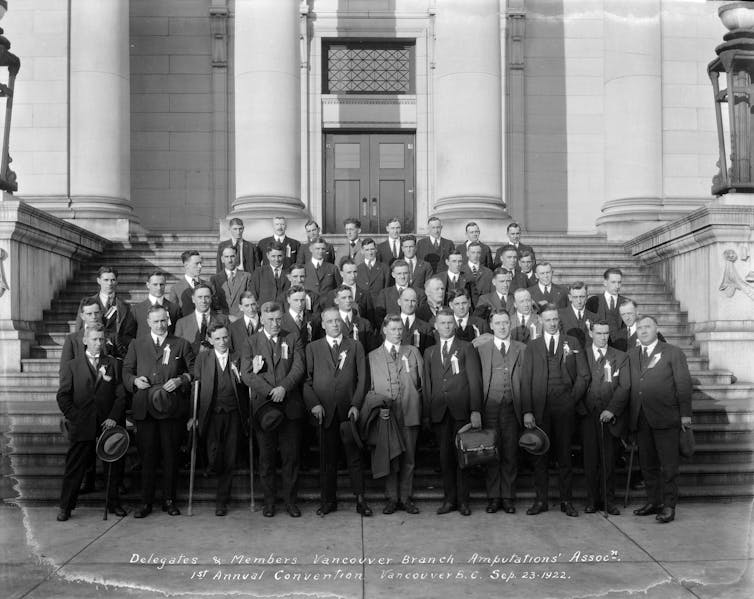
These shared experiences of disability led to the formation of the Amputations Association of the Great War in 1920. Brotheridge, Hincks and McDougall were all members when the hikers passed through Regina.

Rows of men standing in suits on steps, many holding one crutch, who have one leg.
Delegates and members of Vancouver Branch Amputations Association, Annual Convention, 1922.
(Stuart Thomson Fonds/City of Vancouver Archives)

Speech about disabled veterans

On the hottest day of the summer, the exhausted duo arrived at their final destination on the Prairies — Winnipeg.

According to a story in the Winnipeg Evening Tribune, Hincks’ gave a bold and impassioned speech about the struggles of disabled veterans to a crowd at the Fort Garry Hotel. He said:

“The veteran with an amputated limb is unable to compete in the employment market … He is under the handicap of visibility of disability.”

Instead of instructing his fellow disabled veterans to overcome the barriers they faced in Canadian society, he asked able-bodied Canadians to confront their own ableist prejudices that kept war amputees like him from attaining gainful employment in post-war Canada.

In testimony before the House of Commons in the 1920s, the Amputations Association had already voiced these concerns. They argued that the visibility of their members’ disabilities made it easier for prospective employers to discriminate against them and refuse their employment.

These prejudicial attitudes were the same ones that disability rights advocates confronted 50 years later.

The end of the road

The Globe reported that Hincks and McDougall reached the Manitoba-Ontario border in mid-June, heading east towards Kenora, Ont. for the last leg of their hike.

But Kenora would actually mark the beginning of the end of their journey across Canada.

Plagued with worsening pain in his leg, McDougall decided then that his part in the hike was finished.

But Hincks pressed on. He walked several hundred kilometres more to the western shores of Lake Superior. Nearly 60 days after he and McDougall departed from Calgary, The Globe printed a front-page story from present-day Thunder Bay headlined: “One Legged Hikers Forced to Quit.”

The 1923 protest hike was over.

Even though they never reached their desired destination, Hincks and McDougall’s journey across Canada more than 100 years ago is a testament to the determination of two war amputees to bring awareness to the challenges disabled veterans faced in post-war life.

On this Remembrance Day, let’s remember not only Hincks’ and McDougall’s wartime service, but also their early contributions to disability rights activism in Canadian history.

The Conversation

Eric Story receives funding from the Social Sciences and Humanities Research Council.

ref. How two Canadian war amputees hiked 2,000 kilometres and shaped disability rights activism – https://theconversation.com/how-two-canadian-war-amputees-hiked-2-000-kilometres-and-shaped-disability-rights-activism-269135

The Māori ward vote in New Zealand contains important lessons for Canada

Source: The Conversation – Canada – By Karen Bird, Professor of Political Science, McMaster University

Canadians have often looked to Aotearoa New Zealand as an established model for electoral inclusion of Indigenous voices.

But local elections recently held in New Zealand offer an important cautionary tale for Canada, where treaty rights remain contested terrain and Indigenous self-determination is often misunderstood or politicized.

In New Zealand’s October 2025 local elections, voters in 24 of 42 municipalities voted to remove their Māori wards — seats dedicated to Indigenous Māori voters — by 2028. The wards were designed to guarantee the representation of Māori in local government decision-making processes.


Read more:
Guaranteed Māori representation in local government is about self-determination — and it’s good for democracy


While seeming to reverse progress toward Indigenous representation at the municipal level, the larger story is that the national government forced local councils to hold these polls regardless of whether their community wanted them — and more New Zealanders nationwide voted (by 54 to 46 per cent) to keep rather than scrap their Māori wards.

Yet despite record Māori participation and some urban gains, rural majorities largely voted against the wards.

Māori representation

The first lesson for Canada is on designing electoral and governance systems that include Indigenous people in local decision-making processes. Until recently, Māori representation on local elected bodies was exceedingly low at about four per cent nationwide.

This problem gained prominence in the mid-2000s as part of a broader push for legislative reform to reflect Te Tiriti o Waitangi, considered New Zealand’s founding constitutional document.

In its 2010 report, the New Zealand Human Rights Commission identified Māori representation in local government as a top race relations priority, warning “unless positive steps are taken, Māori representation in local government will continue to languish well below the proportion of Māori in the population.”

While there have been reserved seats for Māori voters in parliamentary elections — Māori electorates — going back to 1867, until recently it was rare for local councils to implement Māori wards.

Legislation since 2002 allows councils to create Māori wards, although few were able to do so due to a unique petition and plebiscite requirement that permitted voters to often overturn them.

The Labour government in 2021 revised the Local Electoral Act to remove this requirement for polls on Māori wards since they weren’t imposed on any other types of local government wards. The local government minister at the time, Nanaia Mahuta, called the plebiscite provision “fundamentally unfair to Māori.”

This change led to a surge in Māori wards, so that today Māori representation on local bodies is much closer to the population share of around 17 per cent. But in 2024, the new right-coalition government reversed this move, framing Māori wards as an undemocratic form of race-based representation and forcing all local authorities that had enacted Māori wards since 2021 to put the issue to voters.

‘One law for all’

A referendum is generally not a good way to determine the interests of minorities. As was the government’s intent, Māori wards became another flashpoint in New Zealand’s ongoing debates over treaty rights, perceptions of societal fairness and equality and views regarding Māori culture.

Over the roughly month-long local election period through Oct. 11, the ACT Party — the coalition’s right flank — ran local candidates and campaigned alongside groups like Hobson’s Pledge using slogans such as “one law for all.”


Read more:
Māori wards: how the Hobson’s Pledge campaign relies on a ‘historical fiction’


The campaign to divide and sow doubt about Māori intentions featured on controversial billboards displaying Māori individuals without their consent. Meanwhile Labour, the Greens and several Māori and ally-led grassroots organizations advocated keeping Māori wards as consistent with the treaty and principles of democratic equity.

For their part, most mayors and councillors spoke to the practical benefits of including Māori elected representatives in local decision-making.

Rural versus urban divides

The district of New Plymouth (population 58,000) can be considered a microcosm of the recent referendums, reflecting tensions between progressive urban voters and conservative rural communities.

Although three Māori councillors were elected, voters narrowly choose (55 to 45 per cent) to abolish their Māori ward for the next election in 2028. The local campaign was especially divisive, with one mayoral candidate reportedly facing death threats over his support for keeping that council’s Māori ward.

Still, the presence of three Māori councillors, two of whom were elected by voters at large, signals grassroots support for inclusive representation.

A snow-capped mountain behind residential houses.
Mount Taranaki is seen from New Plymouth, New Zealand.
(Enjo Smith/Flickr), CC BY

Dinnie Moeahu, who has served on council in a district-wide seat since 2019, argued this was a remarkable transformation given that just 17 per cent of his community supported Māori wards in a 2015 referendum.

As New Zealand continues to navigate its treaty commitments, the challenge will be to bridge these divides.

Here as well, Aotearoa offers lessons for Canada, especially for municipal governments that may lack even a basic understanding of their obligations to Indigenous communities and where local residents and officials are often indifferent to treaty claims until in a situation of crisis.

Dialogue, not polarization

The Māori ward plebiscites indicate that while institutional reforms for Indigenous representation are vital, meaningful change cannot be sustained without broad public understanding and trust.

Only when settler communities have genuinely engaged with colonial histories, the shared significance and obligations of treaty rights and the human capacity for empathy, can we achieve the foundation for meaningful equality.

New Zealand offers evidence that this is happening on the ground, in many creative and de-centred ways. Especially vital are interventions to build understanding among Pākehā — the diverse group of people who are white European, particularly of British descent, who have been the beneficiaries of colonization — using practices based in conflict mediation, performance and listening.

The final lesson for Canada is that these efforts call on political leaders at all levels to temper divisive rhetoric, recognizing that inflammatory discourse deepens misunderstanding and hinders progress. Real change begins with education, compassion and a commitment to dialogue over polarization.

The Conversation

Karen Bird’s research on Māori wards and electoral systems designed to represent ethnic and Indigenous groups in countries worldwide is funded by the Social Sciences and Humanities Research Council of Canada (SSHRC).

ref. The Māori ward vote in New Zealand contains important lessons for Canada – https://theconversation.com/the-maori-ward-vote-in-new-zealand-contains-important-lessons-for-canada-268434

How we’re tracking avian flu’s toll on wildlife across North America

Source: The Conversation – Canada – By Damien Joly, CEO, Canadian Wildlife Health Cooperative, University of Saskatchewan

The highly pathogenic avian influenza virus has been detected in 41 at-risk species, including the snowy owl. The snowy owl was recently recommended for listing under Canada’s Species at Risk Act. (Jordi Segers/CWHC), CC BY-NC

Since first being detected in Newfoundland in 2021, a subtype of highly pathogenic avian influenza, HPAI A(H5Nx), has had a dramatic impact on North America.

The poultry industry has suffered the most, with almost 15 million birds dying or being culled to control the virus in Canada. The Supreme Court of Canada recently dismissed a British Columbia ostrich farm’s bid to stop a cull after avian flu was detected on the farm in December 2024.

The problem has been worse in the United States, with more than 180 million birds and over 1,000 dairy cattle farms being affected.

In the wild, the virus has also triggered mass die-offs of birds. In 2022 alone, at least 40,000 wild birds died of HPAI in eastern Canada, including 25,000 northern gannets and thousands of common murres and common eiders. Mortality due to HPAI has continued, with thousands of birds and many wild mammals being affected.

A(H5Nx) refers to avian influenza virus subtypes that share the H5 surface protein but differ in the N protein; current subtypes circulating in North America include H5N1 and H5N5.

As of yet there has been no evidence of sustained human-to-human transmission of the A(H5Nx) subtypes, leading the Public Health Agency of Canada to conclude that the most likely spread scenario now is occasional infection of humans from infected animals with no further spread.

That said, the World Health Organization reports that globally since 2003, almost 48 per cent of the 990 people infected have died. Closer to home, a teenager in British Columbia was infected, resulting in severe illness, but they thankfully recovered.

This is a virus that is clearly a threat to livestock and human health. Our team, a collaboration of governments and academics across the country, recently assessed the extent of HPAI A(H5Nx) in at-risk species across Canada.

In each province and territory, a NatureServe Canada Conservation Data Centre conducts status assessments of wild species and makes the data available through NatureServe Explorer. We identified species of conservation concern in each province and territory, then examined our surveillance data to determine which of these species had detections of HPAI A(H5Nx).

What we found

Tracking a fast-moving virus across a country as vast as Canada takes an extraordinary network, from field biologists collecting samples in remote wetlands to laboratory scientists decoding viral genomes.

In order to do so, we formed Canada’s Interagency Surveillance Program for Avian Influenza in Wildlife in 2005, consisting of the Canadian Wildlife Health Cooperative (CWHC), the Canadian Food Inspection Agency, Environment and Climate Change Canada, Parks Canada, the Public Health Agency of Canada, Fisheries and Oceans Canada, academic institutions as well as agricultural and environment ministries from all provinces and territories.

By capturing and testing live birds, as well as testing sick and dead wildlife, we identify cases of HPAI A(H5Nx) in wildlife and make the results publicly available through a national dashboard anyone can explore.

We’ve found that HPAI A(H5Nx) had been detected in 41 at-risk species across the 10 provinces, including four species that were assessed nationally by the Committee on the Status of Endangered Wildlife in Canada as at risk: the barn owl, horned grebe, snowy owl and western grebe.

The affected birds represent remarkable ecological diversity: from predators like the peregrine falcon to seabirds like the northern gannet and wetland species like the horned grebe and western grebe. Smaller or more elusive species, especially those living far from people, are likely underrepresented because they’re less likely to be found and tested.

The power of public reporting

A close-up of a barn owl
The barn owl is one of the species where HPAI A(H5Nx) has been detected.
(Jordi Segers/Canadian Wildlife Health Cooperative), CC BY-NC

The detection of HPAI A(H5Nx) in so many at-risk species underscores a troubling reality: emerging diseases are now part of the conservation landscape.

A 2024 study found that 16 per cent of wild bird species and 27 per cent of mammal species with H5N1 infections were listed by the International Union for Conservation of Nature as conservation concerns. These are species already facing a number of challenges, and disease adds yet another one.

For species already pushed to the brink by habitat loss, pollution and climate change, a new infectious threat can tip the balance toward extinction.

This work illustrates the importance of the public in monitoring wildlife diseases. Every time someone reports a sick or dead wild animal, it contributes to our understanding of disease in wildlife.

People across Canada can play a direct role by reporting observations to the CWHC. It’s an easy way for anyone to contribute to national wildlife health surveillance. Without these public reports, we would have far less information about how HPAI A(H5Nx) is affecting wild species, especially in remote areas.

This is citizen science at its most immediate and impactful.

A broader perspective

Our work also speaks to how science and the public can work together in the face of global health challenges. The same systems that detect avian influenza in wildlife also protect the poultry industry, our pets and, indirectly, human health.

It’s a reminder that disease surveillance is a public good that depends on investment and co-operation across disciplines, governments and communities.

Further, these collaborations illustrate the One Health approach, which recognizes that the health of humans, animals and ecosystems are interlinked.


Read more:
Without a One Health plan, Canada is vulnerable to future pandemics


The spread of avian influenza in wildlife, livestock and occasionally people underscores how closely connected our health really is. We are only going to address these challenges by working together in a One Health approach.

Lastly, it’s important to note that this work reflects the efforts of dozens of people across Canada. Folks from many federal, provincial, territorial and academic institutions all contribute to the surveillance network described here. Their collective expertise and commitment make this work possible.

The Conversation

Damien Joly is CEO of the Canadian Wildlife Health Cooperative (CWHC) which receives funding support from several Canadian federal, provincial and territorial government agencies, the Canadian Wildlife Federation and the Western College of Veterinary Medicine. CWHC also benefits from in-kind support of the five veterinary schools in Canada. The complete list can be viewed here: https://www.cwhc-rcsf.ca/reports.php

ref. How we’re tracking avian flu’s toll on wildlife across North America – https://theconversation.com/how-were-tracking-avian-flus-toll-on-wildlife-across-north-america-264857