Lower tariffs on Chinese electric vehicles could boost adoption and diversify Canada’s trade

Source: The Conversation – Canada – By Addisu Lashitew, Associate professor, Business, McMaster University

Canada has announced an agreement to reduce its 100 per cent tariff on electric vehicle (EV) imports from China to 6.1 per cent. The tariffs will be replaced by an annual import quota of 49,000 EVs in 2026, rising gradually to 70,000 by 2030.

This phased opening is designed to help Canada diversify its supply chain and accelerate EV adoption without relying on subsidies. In return, China will lower tariffs on Canadian canola to 15 per cent by March and remove tariffs on a few other Canadian goods.

The rollback of Canada’s EV tariff wall marks a significant shift in the Canadian trade relationship with China. It also represents a notable de-escalation of trade tensions during a period of intense economic uncertainty, driven largely by protectionist American policy.

It will not, however, reshape Canada’s auto market overnight.

A modest opening with outsized effects

The initial 2026 quota amounts to about 2.5 per cent of total new vehicle sales in Canada, which was just below two million vehicles in 2025. In global terms, it’s also a modest amount, equivalent to only 2.2 per cent of BYD’s estimated 2025 EV sales (2.26 million vehicles) and three per cent of Tesla’s estimated 2025 EV sales (1.65 million vehicles).

For Canada’s struggling EV market, however, the policy change could provide a meaningful boost. The end of the federal Incentives for Zero-Emission Vehicles program in 2025 increased EV prices by roughly eight to 12 per cent. Higher upfront costs slowed demand, and EVs now account for about nine per cent of new vehicle sales, down from 15 per cent in 2024.

By opening the market to innovative EVs from China, the new policy should expand access to lower-cost models and help revive demand. China’s EV market includes more than 100 EV brands, including BYD, which recently overtook Tesla as the world’s largest EV maker.

The new policy also features other major brands like Geely, SAIC Group, Nio and XPeng, with several models priced within at about $30,000. Increased price competition could narrow the affordability gap that has slowed adoption since incentives were withdrawn.

Pivoting to China for diversification

The quota system likely reflects concern within Ottawa that unrestricted access for Chinese EVs could flood the Canadian market and disrupt local manufacturing. A phased opening gives automakers time to adjust and helps consumers become familiar with new Chinese brands.

It may also encourage foreign manufacturers to expand local assembly or partnerships to cater to growing EV demand. The government expects the deal to catalyze Chinese joint-venture investment that will deepen and diversify Canada’s EV supply chain.

The agreement also signals an effort to reduce Canada’s dependence on the United States, which is the destination for about 92 per cent of Canada’s auto and auto parts exports. This shift, however, starts from a very low base.

While China is Canada’s second-largest trading partner, merchandise exports to China were only $29.9 billion in 2024, or about 7.3 per cent of exports to the U.S.

For that reason, the seemingly ambitious target of increasing merchandise exports to China by 50 per cent by 2030 will not materially change Canada’s reliance on the U.S.

It is better understood as one element of a broader strategy to reduce exposure to an increasingly inward-looking and unpredictable partner.

The deal could also complicate Canada’s position ahead of future renegotiations of the Canada–United States–Mexico Agreement. Prime Minister Mark Carney can reasonably argue that import volumes are small relative to total auto sales in Canada and the U.S. At the same time, deeper engagement with China signals alternatives and may modestly strengthen Canada’s leverage.

More EV adoption at lower government cost

The trade opening could support EV adoption at lower fiscal cost. The Incentives for Zero-Emission Vehicles program, which stalled after its funding was exhausted, cost the government $2.6 billion and supported approximately 546,000 EV purchases.

When rebates lapsed, annual EV sales declined by more than one-quarter, falling from 264,000 in 2024 to 191,000 in 2025.

As Canada contends with a growing fiscal deficit, expanding consumer choice through trade may prove more durable than relying on subsidies.

It not only reduces the need for public spending but also reduces the future cost of adoption by putting pressure on incumbents such as Tesla and GM to cut prices to compete with new entrants like BYD.

A wider set of affordable models should lift demand and, as the customer base expands, strengthen the case for faster charging network expansion. This could help Canada return to its mandate of 50 per cent EV sales by 2030 and 100 per cent by 2035, which was recently paused.

Why the quota needs a hard end date

Tariffs and quotas are often framed as temporary protections that give domestic producers breathing room amid competitive pressure. In practice, they can be difficult to unwind because beneficiaries lobby to preserve them.

Canada’s rollback of its tariff wall on Chinese EVs is unusual, precipitated by trade tensions with the U.S. and punishing reciprocal tariffs by China on its canola imports.

Absent similar pressure, the newly introduced quotas could outlive the intended five-year window. Automakers and their political allies will defend them, just as they defended the blanket EV tariffs that denied Canadians of access to affordable EVs.

Canada should explicitly commit to eliminating the quota by 2030. Moving to an open market regime will benefits consumers, strengthens competitiveness and supports environmental goals.

The Conversation

Addisu Lashitew does not work for, consult, own shares in or receive funding from any company or organisation that would benefit from this article, and has disclosed no relevant affiliations beyond their academic appointment.

ref. Lower tariffs on Chinese electric vehicles could boost adoption and diversify Canada’s trade – https://theconversation.com/lower-tariffs-on-chinese-electric-vehicles-could-boost-adoption-and-diversify-canadas-trade-273769

Air pollution may be linked to increased risk of motor neurone disease, our new study indicates

Source: The Conversation – UK – By Jing Wu, Postdoctoral Researcher, Integrative Epidemiology, Karolinska Institutet

PradeepGaurs/Shutterstock.com

The scientist Stephen Hawking lived with amyotrophic lateral sclerosis (ALS), the most common type of motor neurone disease, for 55 years. He was one of the longest-surviving people with the condition.

However, most people with motor neurone disease are not as lucky. It often progresses quickly, and many pass away within two to five years of diagnosis. There is still no cure. Genetics account for only about 10% of cases, and the rest of the causes are still largely a mystery.

A new study in the journal Jama Neurology showed one possible contributor: air pollution, both for the risk of developing motor neurone disease and for how it progresses.

In the study, my colleagues and I examined air pollution levels at each of the 10,000 participant’s home address for up to ten years before diagnosis. We focused on two common types of outdoor pollutants that are widely linked to health harms: nitrogen dioxide and particulate matter.

Particulate matter is made up of tiny airborne particles (far thinner than a human hair). It is usually grouped by size: PM2.5 (less than or equal to 2.5 micrometres), PM10 (less than or equal to 10 micrometres), and the in-between fraction PM2.5-10 (between 2.5 and 10 micrometres).

We found that being exposed to air pollution over the long term, even at the fairly low levels typically seen in Sweden, was linked to a 20–30% higher chance of developing motor neurone disease. What’s more, the pattern still held up when we compared siblings, which helps rule out a lot of shared factors like genetics and growing up in the same environment.

We also observed that people with motor neurone disease who had been exposed for years to higher levels of PM10 and nitrogen dioxide faced a greater risk of death or of needing a machine to help them breathe.

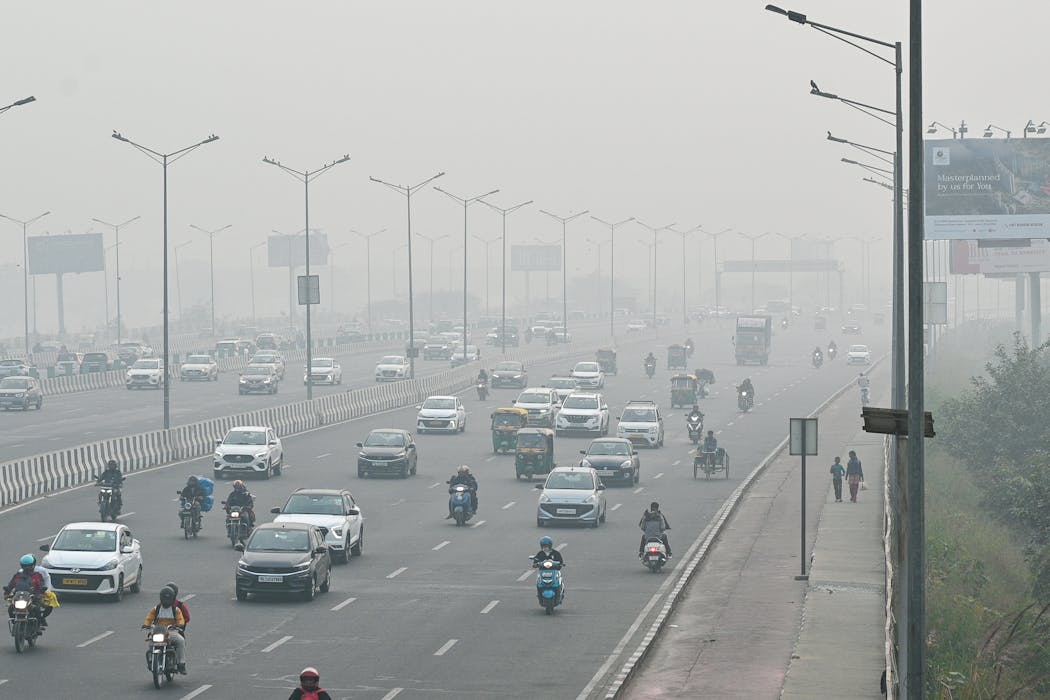
These pollutants are typically produced by nearby road traffic. Taken together, the results suggest that pollution generated close to home, especially from local vehicle emissions, may have a stronger effect than particulate matter carried in from farther away, which tends to account for much of the broader day-to-day variation in particulate matter levels.

Stephen Hawking.
Stephen Hawking survived for 55 years with ALS.
Koca Vehbi/Shutterstock.com

Doctors regularly keep tabs on how well patients are managing everyday functions across a few key areas. These include bulbar function (speech, saliva control and swallowing), fine motor function (handwriting, cutting food, dressing and personal hygiene), gross motor function (turning in bed and adjusting bedding, walking and climbing stairs) and breathing (shortness of breath, difficulty breathing when lying flat, and signs of respiratory failure).

The participants in our study were assessed about every six months after diagnosis. We then looked at how quickly the disease was getting worse overall and within each of these domains. Patients whose decline was faster than that of 75% of other patients were labelled as having faster progression.

We found that long-term exposure to air pollution was associated with higher odds of having faster progression overall, particularly affecting motor and respiratory function, but not bulbar function.

Broader implications

The reasons for these differences are not yet clear. One possibility is that different parts of the nervous system vary in their vulnerability to pollution-related injury. It could also be because air pollution has consistently been linked to chronic lung diseases, reduced lung function and infections, all of which have been associated with poorer outcomes in ALS.

We accounted for many factors that could influence both air pollution exposure and motor neurone disease risk, including personal and neighbourhood income, education, occupation and whether participants lived in urban or rural areas. Our study did not have data on smoking habits or indoor air pollution exposure. However, there is no evidence suggesting that people with and without motor neurone disease differ significantly in these factors in ways that would explain our findings.

These results bring us closer to understanding motor neurone disease and may eventually help with earlier diagnosis and better treatment. But there’s a wider message here. We’re all exposed to air pollution, and the evidence keeps mounting that it harms our health in serious ways. Cleaning up our air could do far more good than we realise.

The Conversation

Jing Wu receives funding from Karolinska Institutet’s Research Foundation.

ref. Air pollution may be linked to increased risk of motor neurone disease, our new study indicates – https://theconversation.com/air-pollution-may-be-linked-to-increased-risk-of-motor-neurone-disease-our-new-study-indicates-272457

Ahead of seismic local elections, what we know about Reform’s ability to put boots on the ground for the campaign

Source: The Conversation – UK – By Tim Bale, Professor of Politics, Queen Mary University of London

What we used to think of as Britain’s two main parties, Labour and the Conservatives, seem more than happy to postpone as many of this year’s upcoming local elections as possible.

Labour insists the delays are needed because of ongoing local authority reorganisation. Opponents allege the decision has more to do with opinion polls that show both parties losing out badly to Reform, the Lib Dems and the Greens.

Who knows which is true? But it’s all yet another reminder that the UK’s formerly cosy, two-party system seems to be falling apart in front of our eyes.

In a year that holds the potential for electoral gains in councils and in races for the Welsh Senedd and Scottish parliament, what we used to refer to as country’s “minor” parties will have to run many campaigns.

In order to take full advantage of that fragmentation, they ideally need boots on the ground – people prepared to knock on doors and push leaflets through letter boxes in order to encourage supporters to actually get out and vote. These days, it’s also useful to have people willing to create (or at least share) content online.

That raises the question: who do they have? Given that the people who do the most campaigning for parties are its members, we can start by looking at how these numbers are distributed around the country. Reform makes big splashes in the national media, but does it have people who know the ground in the Vale of Clwyd?

My colleagues and I – the party members project run out of Queen Mary University of London and the University of Sussex – have looked into this in a newly published report.

It’s one thing to have plenty of party members – and there have been huge surges in people joining both the Greens and Reform since we conducted our surveys around the time of the 2024 election – but it matters where they’re located and how much they’re prepared to do.

Obviously, it helps to have members in those areas of the country that, opinion polls suggest, are particularly fertile territory. This may well be the case for the Lib Dems and for Reform, although Reform leader Nigel Farage will surely be hoping that that he’s managed to recruit a few more members in Wales and in London since we did our field work.

At that time, just 8% of Reform members were located in Wales, compared to 30% in the south of England. Only 12% of members were in London, where every borough has a council election in 2026.

A map showing how party membership breaks down across the country for each party.
Where are party members?
T Bale, CC BY-ND

As for the Greens, they look rather thinly spread. Like Reform, there’s more of a presence in the south, where 32% of members are to be found. But in London it’s 12%, although it looks like that might be changing fast and for the better in some parts of the capital.

Certainly, irrespective of which region they’re located in, if Green party members live in those multicultural urban areas where Labour looks vulnerable, then they could still prove very useful in May.

How useful members are, of course, also depends on whether they’re willing to actually help out. At the 2024 election, from which our data is derived, around a third of all Lib Dem and Reform UK members, devoted no time at all to their party’s campaign efforts. The Tories, Greens and Labour had it even worse. Around half of their members put no time in.

Digging a bit deeper into the kind of activities members do reveals some interesting differences. In the increasingly important online world, it looks as if the Greens and Reform UK may well have something of an advantage. Their members were more likely to share social media content about their party than members of the Lib Dems and Conservatives.

A chart showing what percentage of party members across parties share content about their parties on social media.
Which party members are active on social media?
T Bale, CC BY-ND

On the doorstep, however, it’s the Lib Dems who are right up there. Some 37% of Lib Dems delivered leaflets to people’s homes in 2024 – a figure that rises to 59% if we ignore those members who told us they’d done nothing for the party during the election.

This is one of the reasons, along with continued Conservative weakness, why, in spite of them being paid far less attention than current media darlings, the Greens and Reform UK, Lib Dem leader Ed Davey’s often underrated party stands to do well in the spring.

Reform’s membership performed less impressively in 2024 – only 20% delivered leaflets, albeit a figure that rises to 34% if we take those members who did nothing at all out of the equation. The figures for canvassing (a rather more demanding activity which parties often struggle to persuade members to help with) – 12% and 21% – are much lower.

A graphic showing what percentage of party members across parties actually knock on doors to campaign.
Who is knocking on doors?
T Bale, CC BY-ND

A key question for Farage, then, will be how he can motivate the people who’ve flooded into his party (boosting its membership to over 270,000) to get out on the doorstep or at least hit the phones in order to contact voters. Zack Polanski faces a similar challenge when it comes to the 150,000 people who now belong to the Greens, most of whom have joined since he took over as leader.

Campaigning by members isn’t everything, of course. Activists who aren’t members play a part, as does top-down, national campaigning – even in local elections. Still, these figures do give some insight into the strengths and weaknesses of party organisation around the country at the start of what looks set to be a crucial set of elections this spring.


Want more politics coverage from academic experts? Every week, we bring you informed analysis of developments in government and fact check the claims being made.

Sign up for our weekly politics newsletter, delivered every Friday.


The Conversation

Tim Bale has received funding from Research England for this survey work.

ref. Ahead of seismic local elections, what we know about Reform’s ability to put boots on the ground for the campaign – https://theconversation.com/ahead-of-seismic-local-elections-what-we-know-about-reforms-ability-to-put-boots-on-the-ground-for-the-campaign-273626

Romantasy: sexy tales of women-centred fantasy fiction are boosting the publishing industry

Source: The Conversation – UK – By Athanasia Daskalopoulou, Senior Lecturer in Marketing, University of Liverpool

In certain corners of the internet recently, people have been debating why “women can’t stop reading fairy porn”.

These discussions centre around the fantasy romance genre, also known as romantasy, which has exploded in both popularity and sales. Onyx Storm, Rebecca Yarros’s third book in The Empyrean series, was the fastest-selling adult novel in 20 years when published in early 2025, according to the New York Times. It sold more than 2.7m copies in its first week.

Bloomberg reported that romantasy was estimated to bring in US$ 610m (£455m) in sales in 2024, revitalising the publishing industry. These growing sales have made us, as feminist marketing scholars, interested in understanding this genre and its readers who swoon over muscular, handsome faerie princes and dream of dragon taming.

Traditionally, male readers have dominated fantasy fiction fandoms. As such, narratives centring female characters have often been sidelined in many of the most popular fantasy fiction books. Think of J.R.R. Tolkein’s Bilbo and Frodo Baggins from The Hobbit and The Lord of the Rings, or Fitz from Robin Hobb’s The Farseer Trilogy series.

Romantasy stories counter this, offering fantasy worlds where romance is a key plot point. The protagonists are often women and they centre women’s stories and women’s romantic relationships.

Female characters in these books set off on “hero journeys”, meet handsome and caring men along the way, experience romance and sexual pleasure, and defeat evil. In some ways, romantasy follows many familiar fantasy tropes, including good vs evil, medieval settings or magical schools, fantastical creatures and magical powers. However, they also incorporate tropes from romance – a genre that has historically sustained the publishing industry – such as enemies to lovers, forbidden love and forced proximity (oh no, there’s only one bed).


No one’s 20s and 30s look the same. You might be saving for a mortgage or just struggling to pay rent. You could be swiping dating apps, or trying to understand childcare. No matter your current challenges, our Quarter Life series has articles to share in the group chat, or just to remind you that you’re not alone.

Read more from Quarter Life:


Romantasy books, however, are often mistaken for erotica or “smut” for women. Readers sometimes rank books in terms of “spicy” levels indicating how salacious their storylines are. However, sexual content is not new to fantasy. Some of the most popular fantasy books, like George Martin’s A Song of Ice and Fire series (Game of Thrones), include frequent and graphic sex scenes.

Romantasy, however, has a distinct draw. These stories feature experiences of consensual sex and female-centred sexual pleasure while also tapping into complex themes. For instance, Rebecca Yarros’s Fourth Wing deals with chronic illness and Sarah J Mass’s A Court of Thornes and Roses deals with several traumas, including grooming, sexual abuse, war and poverty.

Romantasy authors, who are often women, aim to eschew the “male gaze” typical of much media, including literature. This is where, as feminist film scholar Laura Mulvey describes, women are often presented as passive objects for male sexual pleasure and viewing, rather than as active subjects with agency. For instance, in A Song of Ice and Fire and similar fantasy books, the sex often includes a form of violence against women.

Romantasy books instead centre the “female-gaze” in which female desire, power and identity are explored from a female point of view.

In the study we are working on, women have expressed that romantasy enables them to experience romantic and sexual fantasies that they might not experience in the real world, and helps them discover and experiment with their sexuality.

Younger readers we spoke to found liberation in reading about realistic and non-taboo representations of women’s romantic and sexual fantasies. Women from conservative cultures said they were inspired by female characters who are not afraid or ashamed to seek out sexual pleasure.

Romantasy books are not without their issues, however. Despite the female-centred narratives, some of the most popular books in the genre perpetuate heterosexual norms, either ignore racial and sexual diversity, or feature problematic and limiting representations of them. For example, Rebecca Yarros proudly states that Xaden, the male love interest character in Fourth Wing, is not white, without specifying which race he is – as though all non-white racial groups are the same.

However, in our study, we continue to find that even if all women (especially older women and women of colour) cannot connect to romantasy protagonists, they resonate with how these stories prioritise female pleasure and safety, with partners that are devoted to them. It is not only “smut” or “spice” that appeals to female readers, but more importantly, the acknowledgement of women as sexual subjects, rather than objects for male pleasure or targets of sexual violence.

While sex is an important part of romantasy, it is not erotica. Where erotica is all about the sex, often, the “spicy” content in romantasy only lasts a few pages and is a part of a broader romantic arc between the protagonist and the supporting male love interests.

As the genre continues to grow, we hope that romantasy is taken seriously by the publishing industry (it’s certainly benefiting from it) as well as by the wider public. Currently, the industry popularises TikTok viral books, resulting in repetitive, white-centric and heterosexual stories. There are, however, diverse representations to be found. For instance, The Emily Wilde series by Heather Fawcett or Paladin’s Grace by T. Kingfisher both feature women in their thirties and forties.

For queer representation and cosy romance, there’s Legends and Lattes by Travis Baldree. Additionally, books by women of colour, like The Inheritance Trilogy by N.K. Jemisin, and The Adventures of Amina al-Sirafi by Shannon Chakraborty, feature racial and ethnically diverse characters in a fantasy setting with a romantic subplot.

Perhaps in time, like with other genre writing, publishers and readers will seek out, support and promote more diverse stories in romantasy that will appeal to all kinds of women.


Looking for something good? Cut through the noise with a carefully curated selection of the latest releases, live events and exhibitions, straight to your inbox every fortnight, on Fridays. Sign up here.


The Conversation

The authors do not work for, consult, own shares in or receive funding from any company or organisation that would benefit from this article, and have disclosed no relevant affiliations beyond their academic appointment.

ref. Romantasy: sexy tales of women-centred fantasy fiction are boosting the publishing industry – https://theconversation.com/romantasy-sexy-tales-of-women-centred-fantasy-fiction-are-boosting-the-publishing-industry-272737

Iran’s crackdown: why security forces are shooting demonstrators straight in the eye

Source: The Conversation – France – By Firouzeh Nahavandi, Professeure émérite, Université Libre de Bruxelles (ULB)

In Iran, protestors and especially militants are being subjected to an extremely violent crackdown with shooting aimed at their eyes. Blinding the enemy who dares to dispute the powers that be, is the latest act of repression to go down in the country’s long history.


Over the course of the Iranian dissident action in recent years, and during the nationwide Women, Life, Freedom movement in 2022 the frequency of eye injuries inflicted upon protestors has come under public scrutiny. Women, young people and students, often passers-by even, have literally lost an eye, or their – eyesight – from buckshot or close-range projectiles. A tactic by security forces that we are now witnessing again: lawyer and 2003 Peace Nobel laureate Shirin Ebadi estimated on 9 January that “at least 400 people have been admitted to hospital in Tehran with firearm-related eye injuries since protests kicked off at the start of the year.

Such brutal use of force reveals far more than just police slip-ups. These acts are part of a political rhetoric that is echoed throughout Iran’s long history, in which aiming for the eyes symbolically signifies stripping someone of their personal, political capital.


A weekly e-mail in English featuring expertise from scholars and researchers. It provides an introduction to the diversity of research coming out of the continent and considers some of the key issues facing European countries. Get the newsletter!


Power lies in the eye of the beholder

In ancient Iranian political culture, power and the eyes are inextricably linked. I see, therefore I know; I see, therefore, I judge; I see, therefore I govern. This concept runs throughout Iran’s literary and political realms. For instance, in the Shahnameh (Book of Kings) by Ferdowsi (10th Century), blindness constitutes a narrative marker of political and cosmic decline: heralding the loss of farr (divine glory), the principle of the legitimisation of power as a durable, symbolic disqualification of the exercise of sovereignty. Being blinded is synonymous with being fallen.

In the Shahnameh, the passage where Rustam blinds Esfandiar with an arrow is an edifying scene for Iran’s political realm: by targeting the eyes, the tale overtly associates the loss of vision with the disqualification of power and an end to all grounds for claiming sovereignty.

Rustam blinds Esfandiar with an arrow (opaque watercolour on paper), undated. Click to zoom.
San Diego Museum of Art/Bridgeman Images

Historically, blindness was used as a political neutralising weapon. It was a way of eliminating a rival – prince or dignitary – without spilling blood, which was considered sacrilegious where the elite was concerned. Blind people weren’t executed, they were eradicated from the political arena.

The Shah of Persia Abbas the Great (who ruled from 1588 until his death in 1629) blinded several of his sons and grandsons whom he suspected of plotting against him or opposing succession to the throne.

In 1742, Nader Shah ordered for his son, then heir to the throne Reza Qoli Mirza to be blinded, an emblematic act of political silencing practices in Persia.

From blinding rituals to blinding to maintain security: why are protestors’ eyes so frequently in the firing line of Iranian security forces?

The Islamic Republic does not lay claim to blinding as punishment, but the massive repetition of eye injuries during contemporary repression reveals a symbolic continuity.

Once rare, targeted and admitted to, the use of blinding is now widespread, denied by the authorities, carried out using weapons termed “non-lethal” and rarely sanctioned.

Yet its political role of neutralising without killing, strike the body to deter and prevent further dissent still remains comparable.

In contemporary Iran, the eyes have become a political weapon. Demonstrators film, document and diffuse what they see. Images circulate, reach the borders and weaken the government’s narrative. When the eyes are hit, you can’t see or show others, putting a stop to filming, identifying and witnessing.

The target isn’t just the individual’s point of view; it’s the broader vision that connects the streets of Iran with international public opinion.

Unlike the act of blinding in ancient times that was reserved for the male elite, nowadays eye-related violence mainly is targeted at women and young people. The female gaze, independent, freed from all ideological control, for the world to see becomes politically intolerable for a regime founded on dictating the body and what should be seen.

A continuum of visible brutality

The ongoing repression following on from mass protest action that kicked off in late December 2025, intensified after a nationwide Internet blackout, blatantly sought to reduce exposure of the acts of violence inflicted on protestors.

Independent medical reports and witness accounts described hospitals as being overwhelmed with casualties – specifically eye-related – along with a rise in crowd-control involving firearms with real bullets, documented in several Iranian provinces. These injuries confirm that the body and particularly, the ability to see and report, are still the main target of repressive rule.

Beyond the figures, women’s first-hand accounts tell a different tale of these contemporary practices. While Iranian society has witnessed women spearheading activist movements since Mahsa Jina Amini’s killing in 2022 – some of whom were deliberately blinded during protests –, such injuries symbolise both crackdown efforts to cancel out the independent female gaze posing a political threat to the establishment; and the resistance of these injured, yet defiant women bearing mutilated faces, who are living proof of Iranian repression.

History isn’t confined to a distant past of political neutralisation: it is impregnated by women of today’s personal bodily experiences, where eye trauma can be interpreted as exploitative violence and a sign of a political struggle that revolves around the field of vision.

The body becomes ‘capital’: the ultimate sovereignty

The Islamic Republic may have broken away from the monarchy’s sacredness, but the ancient principle by which the body is perceived as capital that holds personal power, is still intact. While monarchs resorted to blinding their subjects in order to protect their dynasties, security forces use mutilation to ensure its survival.

This strategy produces a paradoxical effect. In Persia, blinding was used as a weapon of political destruction in ancient times. Today, it makes the regime’s brutality visible for all to see. As mutilated faces are in circulation, victims become symbols and the eyes they have lost become a testimony to Iran’s profound crisis of democratic legitimacy.

History doesn’t repeat itself but it lives on through gestures. By shooting at the eyes, the Iranian government revives the old rule book for domination: take away an individual’s ability to see and you politically eliminate them.

The Conversation

Firouzeh Nahavandi ne travaille pas, ne conseille pas, ne possède pas de parts, ne reçoit pas de fonds d’une organisation qui pourrait tirer profit de cet article, et n’a déclaré aucune autre affiliation que son organisme de recherche.

ref. Iran’s crackdown: why security forces are shooting demonstrators straight in the eye – https://theconversation.com/irans-crackdown-why-security-forces-are-shooting-demonstrators-straight-in-the-eye-273508

Heated Rivalry: How investment in Canadian content can pay off at home and abroad

Source: The Conversation – Canada – By Daphne Rena Idiz, Postdoctoral Fellow, Department of Arts, Culture and Media, University of Toronto

Hudson Williams and Connor Storrie in an Episode 6 (‘The Cottage’) scene of ‘Heated Rivalry.’ (Bell Media)

In late December 2025, it seemed like everyone went to “the cottage.” This is a reference to the steamy Crave megahit Heated Rivalry. Even The Guggenheim Museum of New York and Ottawa Tourism has jumped on the Heated Rivalry bandwagon.

Heated Rivalry has launched the careers of Texas native Connor Storrie and Hudson Williams, from British Columbia. The actors play hockey rivals-turned-lovers Ilya Rozanov and Shane Hollander.


Read more:
_Heated Rivalry_ scores for queer visibility — but also exposes the limits of representation


The Heated Rivalry obsession is widespread, having topped Crave’s No. 1 most-watched spot for weeks and taken global audiences, TV networks and online algorithms by storm.

Storrie and Williams have appeared at the Golden Globes, on The Tonight Show Starring Jimmy Fallon and on Late Night with Seth Meyers.

In an era where data-crunching increasingly offers predictions about market-driven success, all this might make viewers wonder if Heated Rivalry has cracked the algorithmic code.

Crave trailer for ‘Heated Rivalry.’

Risk-taking gone right

Was the show a bet on #booktok fans? Heated Rivalry is based on a book that is part of the popular Game Changers series by Canadian author Rachel Reid.

However, as scholars who have examined contemporary TV production, we agree with acting coach Anna Lamadrid that Heated Rivalry would never have been made if left solely to algorithmic analysis.

The standard algorithm-driven approach designed to entice the widest possible audience — typical of U.S. streaming giants like Netflix — would argue the series had limited appeal, no star power and a niche audience.

More likely, as creator Jacob Tierney told Myles McNutt, a professor of media studies, Crave trusted him and his vision. Tierney previously made the popular and award-winning shows Shoresy and Letterkenny.

As Tierney told McNutt, Heated Rivalry was greenlit by Crave but needed additional financing. Tierney approached several studios, but received notes “that would fundamentally change the story, or fundamentally change the tone.”

In a recent CBS interview with Montréal-born actor François Arnaud, who plays older gay hockey player Scott Hunter, Arnaud said he “didn’t think the show could have been made in the U.S.” He said Heated Rivalry was “at a big streamer before” that wanted changes, including “no kissing until Episode 5.”

Two men in dressy suits leaning against a bar in a fancy environment.
François Arnaud and
Hudson Williams in an Episode 1 scene from ‘Heated Rivalry.’

(Bell Media)

Heated Rivalry is an example of risk-taking gone right at a time when there are calls to cancel international streamers in favour of investing in homegrown film and TV. Its success is also the result of a confluence of industry-level transformations in Canadian production and streaming.

A confluence of conditions

In the 1950s, only a few Canadian broadcasters made content entirely “in-house.” Production and distribution companies were operated by government-funded agencies, including the Canadian Broadcasting Corporation and the National Film Board of Canada.

Creative content consisted mostly of news and filmed theatre or dance productions. In the 1960s, pay TV emerged and appetite built for racier variety TV, game shows and talk shows.

By the 1970s, the baby boomer bubble — combined with arts funding and more affordable video and editing equipment — changed everything. Low-cost content for niche audiences proliferated on cable TV.

The Canadian media system moved toward independent production. Production companies were separated from broadcasters, owned and run by different people. But the ability to green-light Canadian-scripted TV shows still depended on acquiring distribution licences from a few major broadcasters.

This triggered funding from the Canada Media Fund and provincial or territorial tax credits, which still finance most productions. To spread financial risk, many dramas were co-productions between Canada and other countries.

By 2005, in the wake of broadband and the growth of more audacious content produced for smaller audiences, Canadian broadcasters shifted to reality (“unscripted”) TV as a relatively inexpensive genre that could draw big audiences.

Still, breakthrough dramatic programs — like Corner Gas (2004-09), Little Mosque on the Prairie (2007-12), Kim’s Convenience (2016-21) and Schitt’s Creek (2015-20) — dealt with the complexity and specificity of Canadian society.

Steamy streaming

Today, several key policy changes and corporate consolidations have brought smaller, riskier and explicitly Canadian projects to the screen.

The Online Streaming Act and the recently updated definition of Canadian content have targeted streaming services like Netflix and Crave to incentivize the production and discoverability of Canadian shows.

Shifts in policy have supported Canadian content, including funding for underrepresented voices. Heated Rivalry’s development ran parallel to recent policy and industry shifts.


Read more:
How do we define Canadian content? Debates will shape how creatives make a living


Bell Media, the largest Canadian media company, owns CTV and Crave. In March 2025, it acquired a majority stake of United Kingdom-based global distributor Sphere Abacus. This played a key role in Heated Rivalry’s development.

The Canada Media Fund contributed $3.1 million to Heated Rivalry. Culture Minister Marc Miller has also noted in addition to the federal funding, the series received tax credits. Eligible Canadian film or video productions can receive a refundable tax credit.

Bell Media committed to the show budget in March 2025, including a contribution from recently acquired Sphere Abacus.

Sean Cohan, Bell Media CEO, has said the company saw Heated Rivalry as a show that could move the conglomerate “from being seen as a legacy broadcaster to a digital-media content player with global impact.”

The series was shot in just over a month at a budget of less than CDN$5 million per episode and before long, stars Williams and Storrie were whisked away to the Golden Globes.

What’s next for Canadian productions?

Crave is already promoting Slo Pitch starring Schitt’s Creek actor Emily Hampshire and featuring Heated Rivalry’s Nadine Bhaba.

Set to premiere in 2026, this 10-episode mockumentary series follows a queer, underdog softball team. While the show is also about gay sports, it’s in a league all its own — promising “beer, lesbians and baseball.”

Is Crave a beacon of hope for Canadian content? Maybe Canadian producers and distributors can leverage the Heated Rivalry effect to galvanize Canadian and international audiences onto more Canadian-produced intellectual property (IP).

The issue of IP is now a key sticking point in multiple unresolved lawsuits by Netflix, Amazon and Spotify that have been brought to the federal government.

The looming Warner Bros Discovery (Warner Bros, HBO) acquisition by Netflix will directly impact Crave. As HBO Max’s sole Canadian distributor, there’s some worry about what could happen to this lucrative content for the Canadian streamer should Netflix gobble up all of the IP — a major issue for distribution deals and Canadian creatives.


Read more:
How do we define Canadian content? Debates will shape how creatives make a living


Not to stretch the hockey metaphor too tight, but policy sets the rules of the game. Corporate and government funding bring the players to the rink. Producers and writers aspire to be winning coaches. Audiences want to be on the edge of their seats.

They also want more choices: exploring riskier storylines, meeting new talent and seeing their own lives — and Canadian content — on screen. With Heated Rivalry’s success, they seem to have it all this season.

The Conversation

Daphne Rena Idiz receives funding from the Creative Labour and Critical Futures (CLCF) project.

Claudia Sicondolfo receives funding from SSHRC for Archives in Action and Platforming Leisure and is a Board Member for the Toronto Queer Film Festival.

MaryElizabeth Luka receives funding from University of Toronto Cluster of Scholarly Prominence program (Creative Labour Critical Futures) as well as from periodic competitive, peer-adjudicated Social Sciences and Humanities Research Council funding programs for research in their areas of expertise.

ref. Heated Rivalry: How investment in Canadian content can pay off at home and abroad – https://theconversation.com/heated-rivalry-how-investment-in-canadian-content-can-pay-off-at-home-and-abroad-272982

Fighting climate change in the Sahel is worsening conflicts – new research shows how

Source: The Conversation – Africa (2) – By Folahanmi Aina, Lecturer in Political Economy of Violence, Conflict and Development, SOAS, University of London

The Sahel, the semi-arid African region stretching from the Atlantic Ocean in the west to the Red Sea in the east, has become the epicentre of global terrorism, given the high number of attacks by armed groups and the resulting fatalities, including those suffered by civilians. This development is rooted in a complex interplay of factors. They include state fragility, illicit economies, limited presence of government in rural areas, and conflicts driven by resource scarcity due to climate shocks.

I am a political scientist with regional expertise in conflict, security and development in west Africa. In a recent policy brief for a research programme, I set out how climate change mitigation efforts in Sahelian communities have intensified pre-existing tensions.

The research involved extensive fieldwork and interviews in July and August 2025 with community members in Burkina Faso, Mali, Niger and Nigeria. The aim was to understand the interaction between various pressure points and crises playing out in their lives.

Livelihoods are under pressure as a result of climate change. Resources are scarce and unevenly allocated. Governance structures are weak and armed groups compete for control.

The findings were clear: climate action can either exacerbate or alleviate crises.

Many climate mitigation efforts are large-scale projects, like building solar farms, extensive reforestation initiatives, or bio-fuel plantations. The Great Green Wall initiative and the Agriculture Climate Resilient Value Chain Development Project in Niger are examples.

These projects are deemed vital for reducing carbon footprints. But carrying them out in fragile states poses a risk. In the Sahel, misconceived environmental security policymaking can have adverse impacts and even fuel the very insecurity it aims to prevent. Top-down approach objectives can be at odds with local social and ecological realities.

I conclude from my findings that the United Nations’ approach to climate change mitigation in the Sahel requires a re-evaluation. What’s needed are adaptation interventions that are:

  • conflict-sensitive

  • community-led and context-specific

  • designed using a transboundary process. This is because interventions are capable of shaping political economies, security arrangements and community relations across borders, not just within them.

A fragile environment

My research confirms that climate change in Sahelian communities has intensified pre-existing tensions. These include:

Insecurity: Local populations are exposed to conflicts that are made worse by climate-induced pressures. This includes farmer-herder disputes over diminishing grazing land, intercommunal clashes for access to scarce water resources, and ethno-religious tensions aggravated by competition over livelihood opportunities.

Interviews conducted with farmers, pastoralists and community heads, among others, highlighted how shifts in rainfall patterns, long droughts and unpredictable harvests are directly undermining livelihoods. People are being forced into daily coping strategies that sometimes heighten local conflicts.

State fragility: Interviews with key informants, including local vigilantes, paint a picture of governments’ inability to provide security, deliver basic services or mediate rising disputes.

As a result communities have been forced to find alternative forms of governance and protection. These include local vigilante groups, traditional community elders and informal resource management committees.

Criminal networks: Climate vulnerability and state fragility have created an environment that allows violent extremist organisations to operate and expand their influence. These groups range from armed bandits to violent extremist organisations such as Boko Haram and Jama’at Nusrat al-Islam wal-Muslimin (JNIM). They are not merely a result of ideology. They are consequences of a system in distress. They strategically exploit the insecurities and grievances that climate change and state fragility have created.

A Malian community leader put it perfectly. He warned that if a community

becomes a dry land … the armed group can use this opportunity to install themselves.

Towards a conflict-sensitive approach

Statements from people interviewed reflect simple, yet profound, solutions.

The central message is the need for local ownership and community involvement.

A traditional ruler from Burkina Faso, for instance, insisted that:

if projects come, they must include the community from the beginning, to ensure people feel respected, build trust, and ensure that solutions respond to real needs.

A respondent in Nigeria, too, said that “when the locals engage with government many solutions come aboard”. In Niger, a local actor stressed the need to “involve the population more in the decision-making process concerning them”.

These comments point to policy directives. They argue for a departure from the top-down, expert-driven model of development.

For climate change mitigation to be a force for peace, it must be integrated with peacebuilding and state-building efforts. Involving local authorities and community-level institutions in making decisions can lead to interventions that are context-sensitive, legitimate and responsive to local realities.

This translates to linking climate finance to projects that provide not only renewable energy infrastructure but also schools, health centres and sustainable livelihoods. It means transparent, community-led dialogue to resolve conflicts before they escalate across the Sahel region.

Next steps

The Sahel’s plight is a powerful lesson for the global community. The interconnectedness of climate change, state fragility and conflict is a complex adaptive system. It cannot be solved with single-sector interventions. The challenges are too intertwined, and the stakes are too high.

International development and climate policy must shift. Climate change mitigation is not a technical exercise, but an opportunity to rebuild broken social contracts, foster community resilience and promote equitable development.

Addressing root causes instead of symptoms can turn a vicious cycle of fragility into one of peace and development.

The Conversation

Folahanmi Aina does not work for, consult, own shares in or receive funding from any company or organisation that would benefit from this article, and has disclosed no relevant affiliations beyond their academic appointment.

ref. Fighting climate change in the Sahel is worsening conflicts – new research shows how – https://theconversation.com/fighting-climate-change-in-the-sahel-is-worsening-conflicts-new-research-shows-how-273673

Deep in the Amazon, I discovered this monkey’s ingenious survival tactic

Source: The Conversation – Global Perspectives – By Adrian Barnett, Senior Lecturer in Behavioural Ecology, University of Greenwich

The red-nosed cuxiu is endangered. Cavan-Images/Shutterstock

Look down at the rainforest floor. Rotting flowers shift under the assault of tiny petal-eating beetles. Vividly coloured fungi pop up everywhere like the strange sculptures of a madly productive ceramicist.

Look in front of you and heliconias and calatheas, tropical plants familiar from garden centres and greenhouses, vie for the attention of hummingbirds with scarlet and orange flowers.

Look up and the distant canopy offers a full spectrum of shades of green, along with clusters of flowers and fruits in a bewildering range of shades, shapes and sizes.

You’d be excused from thinking that life in a tropical forest is easy. A lazy arm movement being all that’s needed to secure the next mouthful of food. But it’s not like that at all.

Life in the rainforest demands extraordinary adaptations.

Which is why I found myself stepping out of a small canoe on the Tapajós
River in Brazil’s central Amazon to collect the remnants of the most recent meal of the endangered red-nosed cuxiu monkey (Chiropotes albinasus) for my recent study.

They are like no other monkey on Earth. Many species have ecological parallels on other continents, often with very similar physical and behavioural adaptations. For example, spider monkeys and gibbons, chimpanzees and capuchin monkeys. But cuxius, and their close relatives the uacaris and sakis, are a uniquely South American phenomenon.

Cuxius are cat-sized animals, with canines bigger than human teeth, even though their skull is the size of an orange. Although other primates have massive canines too (think baboons, mandrills or chimps) these are for display. Those of the cuxiu are the real deal; designed for cracking open hard, unripe fruits to get at the equally unripe and hard seeds. They eat a range of fruits that include relatives of the Brazil nut, acacia tree and oleander.

Humans would need a hammer to crack open this kind of fruit. But cuxius and their near relations bite them open. Powered by massive muscles, the jaws can deliver a bite which, if scaled for size, is equal to that of a jaguar. They eat hundreds of rock-hard fruits a week, tens of thousands over their ten-year life span.

So, I wanted to know: how do they avoid cracking their teeth along with the nuts? We know their skulls are evolved to disperse the shock of a bite. But scientists have long been mystified by how the cuxiu avoids breaking its teeth through the sheer repetitive strain.

My findings revealed that cuxius are a lot smarter and more subtle than anyone thought.

Pick up a walnut and you’ll notice a thin line running around the hard shell. This is the suture, and it’s where the shell would naturally break open to free the seed when it ripens. It’s also a lot less resistant to puncture than the rest of the fruit. Fruits with sutures dominate the diet of the red-nosed cuxiu, so I wondered if this could be the key to the cuxiu’s success.

Measurements of the force needed for a copy of a cuxiu canine to penetrate fruit outer husks showed this was the case. It took up to 70% less force to go in at the suture than elsewhere on the fruits the cuxiu ate.

Close up of black long-haired monkey with pink face
The red-faced spider monkey is an ateline monkey, with a highly athletic lifestyle.
Diego Grandi/Shutterstock

My examination of skulls held in London’s Natural History Museum showed canine breakages were no more common in cuxius than in capuchins (which use either their molars or stone tools to break hard fruits) or ateline monkeys (which eat either soft pulpy fruits or leaves). Avoiding dental damage is smart – with no dentists in the forest a split tooth is a quick path to a slow death by starvation. And it allows the cuxius and their relatives to access unripe seeds, a food source few other animals can exploit.

This mirrors tactics used by carnivores like big cats, who bite prey at vulnerable spots to avoid breaking their teeth.

Then there’s the fact that every animal in the rainforest needs to be its own doctor, physiotherapist and fitness coach. With no first aid stations for bitten, twisted or shocked bodies, it’s best to avoid things going wrong in the first place. This is also true for actions that, through sheer repetition, could cause breakage through stress.

Survival in the rainforest depends on vigilance, cunning survival strategies and Olympian levels of fitness. An animal’s survival depends not only on knowing what to eat but how to eat it. Seconds count when a bite too many can mean missing the one key glance skywards that stops you becoming someone else’s breakfast.

Living in the top of the canopy of either rainforest or flooded forest, moving huge distances and doing so very fast, makes cuxius a challenge to observe. I first became interested in cuxius and uacaris because they are hard to study and, as a result, were so little known. But, soon after I started working with them, I realised cuxius and uacaris are like extreme sports athletes, pushing the boundary of what is possible in a monkey.

And they aren’t the only ones.

Swinging and hanging between the trees, the life of a spider monkey is like a perpetual parallel bar performance, not for a few brief minutes, after months of rigourous training as in humans, but all day, every day. No gold medal and long retirement, just surviving till dusk and starting again at dawn.

Additionally, while not exactly Olympian, the energy howler monkeys use during their daily calling bouts is similar to that of a mid-aria opera singer. Except that the monkeys must perform twice a day for a lifetime.

Sadly, animals’ Olympian abilities are no match for humans, whose use of tools is the equivalent of competitors using steroids or robotic enhancements. And, since it is clear that humans are not as smart as we are skilled, rainforest loss continues at a pace that even evolution – formerly the world’s best trainer – cannot have prepared them for.

The Conversation

Adrian Barnett does not work for, consult, own shares in or receive funding from any company or organisation that would benefit from this article, and has disclosed no relevant affiliations beyond their academic appointment.

ref. Deep in the Amazon, I discovered this monkey’s ingenious survival tactic – https://theconversation.com/deep-in-the-amazon-i-discovered-this-monkeys-ingenious-survival-tactic-271995

Chavismo has adapted before – but can Venezuela’s leftist ideology become US friendly and survive?

Source: The Conversation – Global Perspectives – By Paul Webster Hare, Master Lecturer and Interim Director of Latin American Studies, Boston University

When the Trump administration sent in a team of U.S. special forces on Jan. 3, 2026, to extract Venezuelan leader Nicolás Maduro, the operation fell short of full-scale regime change.

Despite years of U.S. antagonism toward Venezuela’s government, the broader political coalition that Maduro led was allowed to remain intact under the guidance of longtime Maduro ally Delcy Rodríguez. And it now seemingly has the tacit support of President Donald Trump – who has supported a transition to Maduro’s deputy over the option of pushing for opposition leader María Corina Machado to assume control.

As such, it marks a new phase, rather than an end, to the left-wing political ideology of Chavismo.

An ever-evolving Bolivarian revolution?

Now under its third stewardship in Rodríguez, Chavismo has already undergone change since being rolled out in Venezuela by Hugo Chávez.

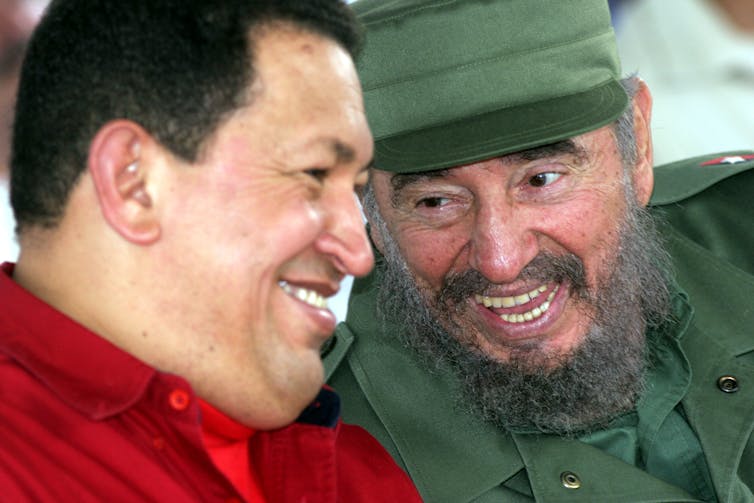
Chávez himself drew heavily on Fidel Castro’s Cuba in fomenting the ideology, which has ruled over Venezuela since Chávez came to power in a 1998 presidential election.

In particular, he borrowed from Cuba’s model of state controls and a blend of socialism, with a brand of Latin American nationalism and strident anti-imperialism. That included a wide-ranging platform of social welfare and programs to distribute land and money to the poor – financed by Venezuela’s vast oil reserves while the price of crude was high.

Two men joke and laugh with each other.
Cuban President Fidel Castro with President of Venezuela Hugo Chávez in Havana, Cuba on Feb. 3, 2006.
Sven Creutzmann/Mambo Photography via Getty Images

All of that is anathema to much of the political beliefs of the U.S Republican Party, particularly in Florida, and rubs up against both the MAGA wing and the coterie of anti-leftist foreign policy hawks that surround the president.

As such, the Trump administration’s willingness to give Chavismo a chance under Rodríguez is a startling difference from Dec. 19, 2025, when Sec. of State Marco Rubio gave a long explanation of why he thought Venezuela was “an illegitimate regime that openly cooperates with terrorist elements.”

Not just Maduro himself, note, but the “regime” itself.

As a former deputy head of the U.K. mission to Venezuela, I discussed politics with Chávez himself back in 1995. I had served in Portugal and the example of a left-wing Portuguese military ousting a right-wing dictator to promote a return to democracy was something that appealed to Chávez.

In opting to allow the Chavista former deputy to Maduro, Rodríguez, to take over the country rather than push for the immediate installation of María Corina Machado – whose proxy won the last Venezuelan election in 2024, according to international verification – Trump is betting that that a reformed Chavismo can uniquely provide the stability that is required to rebuild the Venezuelan oil industry. And that appears to be his immediate priority.

Rodríguez has succeeded, according to reports, in convincing Trump that immediate elections are not a priority, meaning that the Venezuelan people must wait further for their choices to made.

But Chavismo has gone through various iterations since the 1990s, and it might well do so now.

Chavismo’s evolution

At one point, Chavismo had been a more democratic venture. Chávez was elected in 1998 fairly, having been pardoned in 1994 for an earlier and unsuccessful illegal power grab. And at first Chávez seems committed to the idea of a democratic process. Moreover, like in Cuba after the revolution, he prioritized developing socialist programs in areas like health care and housing.

But how Chávez viewed the sustainability of his government changed markedly in 2002. That’s when the U.S. supported a coup attempt that challenged Chavez’s authority.

In surviving that coup attempt, he gained credibility with Cuba’s Fidel Castro who had at first doubted Chavez’ abilities.

Castro became his mentor in all policy decisions, particularly in helping craft his international profile.

At the time, Cuba was facing a more hawkish U.S. president on Latin American leftism in George W. Bush. So Chávez decided that Chavismo needed to become more anti-American, and the high price of oil enabled him to fund domestic and international largesse.

‘Competitive authoritarianism’

The system that the new Chávez presided over evolved gradually, and under Castro tutelage it became increasingly undemocratic.

Chávez was advised by the Cuban government on how to develop what critics have termed a system of “competitive authoritarianism.” This involved extending presidential terms, attacking the media and tweaking the constitution to further centralize power.

In a tried-and-tested authoritarian measure, Chávez packed the judiciary with loyalists, and turned the electoral commission into a rubber stamp for the incumbent government.

These measures proved the lynchpin of Maduro’s election fraud of 2024, when the courts refused to verify the QR codes of receipts produced by the opposition showing that they, not Maduro, had won.

A poster showing a man's face is next to a lectern with a flag on it.
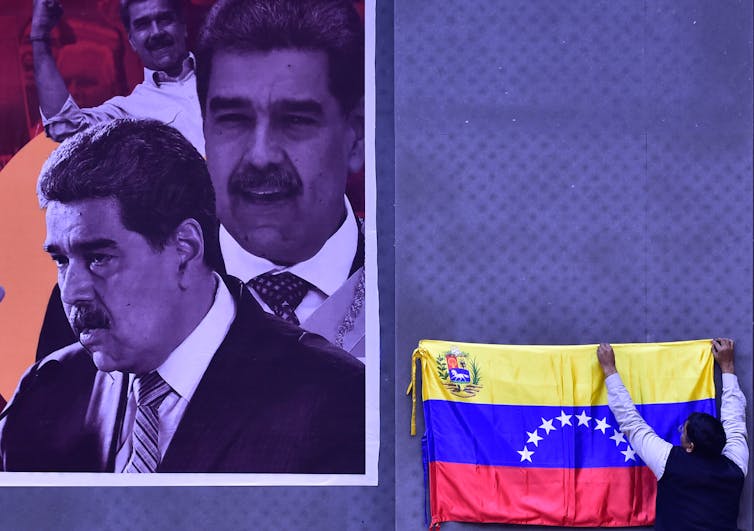
Maduro is a man gone, but not forgotten.
Ritesh Shukla/Getty Images

Under Maduro, Chavismo only got more repressive and authoritarian. Lacking the charisma of Chavez – who died in 2013 – and facing dwindling oil revenue with which to fund social and welfare programs, Maduro turned to the suppression of human and voting rights to maintain power as the country spiraled into the economic crisis and gang violence.

And to compensate for reduced oil revenues, Maduro turned to funding from drug and human trafficking, gold smuggling and, perhaps above all recently, crypto-trading.

A post-Trump makeover?

Rodríguez is no break from this Chavismo past, having served under both Chávez and Maduro.

Yet, she is apparently willing to work in cooperation with Washington. And the Trump administration has seemingly given her its blessing for now, evidenced most recently by a high-profile Jan. 15 visit to Caracas by the head of the CIA.

The basis of this apparent bargain is oil. Rodríguez has long experience of dealing with international oil companies – and her handling of oil production is reportedly a factor in her having been accepted by the U.S. administration.

The Chávez and Maduro governments advanced the state’s control of oil and other sectors, such as goldmining in Venezuela.

Under Rodriguez, it is likely to be reversed to appease Washington – opening up again to foreign companies and especially U.S. investment. Such a move would inevitably prove a wedge between Venezuela and Cuba.

Under Chávez and Maduro, Venezuela gave oil at heavily discounted prices to Cuba. In return, Cuban sent its doctors, advisers and security personnel.

This arrangement will likely be terminated under a new arrangement between Caracas and Washington. Its cessation would force Cuba to look for alternative oil supplies – probably from Mexico, Brazil and Colombia.

Yet Chavistas will likely be advising Cuba to do a similar deal with Trump. Cuba does not have oil, but it does have big nickel deposits and massive upside potential for U.S businesses in tourism. Cuba has only one 18-hole golf course, and years ago Trump, as a real estate developer, commissioned a study on building golf resorts on the island. Such deals might also save “Fidelismo.”

But where else might Chavismo go now? Will Rodríguez reverse the trend toward autocracy, and commit to future elections within a defined time period?

Will she also commit to dismantle “colectivos,” the militias of Chavismo that for years have suppressed opposition? And will she commit to returning the military to a national body, rather than the protector of one political movement?

Looking ahead, Trump’s prolonging of Chavismo is a political gamble in Florida – a state where many Latin Republican voters despise the system and any dealing with socialist governments. Trump ran in 2016 partly on a platform of opposing Obama’s deal with Cuba of 2014, claiming he would never deal with “socialist dictators.”

Can Chavismo survive?

The leaders of Chavismo have long been pragmatic negotiators, with a reputation among critics for breaking promises. In October 2023, for example, the Biden administration helped iron out the Barbados Agreement with Maduro and Venezuelan opposition groups, providing for free and fair elections in return for sanctions relief.

Yet the U.S. soon after accused Maduro of reneging on the deal by disqualifying the chosen opposition candidate, María Corina Machado. Now-acting President Rodríguez is still surrounded by all the stakeholders in Chavismo who concocted the scheme to deny the opposition’s victory – save, of course, Maduro himself.

Nonetheless, Chavismo had shown a strong instinct for survival. And Delcy Rodríguez has learned what many others leaders have: Chavismo can succeed in flattering, or at least appeasing, Trump. She has also learned that Trump appears more interested in oil than in restoring democracy.

The Conversation

Paul Webster Hare does not work for, consult, own shares in or receive funding from any company or organization that would benefit from this article, and has disclosed no relevant affiliations beyond their academic appointment.

ref. Chavismo has adapted before – but can Venezuela’s leftist ideology become US friendly and survive? – https://theconversation.com/chavismo-has-adapted-before-but-can-venezuelas-leftist-ideology-become-us-friendly-and-survive-273390

Valentino shaped the runway – and the red carpet – for 60 years

Source: The Conversation – Global Perspectives – By Jye Marshall, Lecturer, Fashion Design, School of Design and Architecture, Swinburne University of Technology

Valentino, who died on Monday at 93, leaves a lasting legacy full of celebrities, glamour and, in his words, knowing what women want: “to be beautiful”.

The Italian fashion powerhouse has secured his dream of making a lasting impact, outliving Karl Lagerfeld and Yves Saint Laurent.

Valentino was known for his unique blend between the bold and colourful Italian fashion and the elegant French haute couture – the highest level of craftsmanship in fashion, with exceptional detail and strict professional dressmaking standards.

The blending of these styles to create the signature Valentino silhouette made his style distinctive. Valentino’s style was reserved, and over his career he built upon the haute couture skills he had developed, maintaining his signature style while he led his fashion house for five decades.

But he was certainly not without his own controversial views on beauty for women.

Becoming the designer

Born in Voghera, Italy, in 1932, Valentino Clemente Ludovico began his career early, knowing from a young age he would pursue fashion.

He drew from a young age and studied fashion drawing at Santa Marta Institute of Fashion Drawing in Milan before honing his technical design skills at École de la Chambre Syndicale de la Couture Parisienne, the fashion trade association, in Paris.

He started his fashion career at two prominent Parisian haute couture houses, first at Jean Dessès before moving to Guy Laroche.

He opened his own fashion house in Italy in 1959.

His early work had a heavy French influence with simple, clean designs and complex silhouettes and construction. His early work had blocked colour and more of a minimalist approach, before his Italian culture really came through later in his collections.

He achieved early success through his connections to the Italian film industry, including dressing Elizabeth Taylor fresh off her appearance in Cleopatra (1963).

Black and white photograph.
Elizabeth Taylor wearing Valentino while dancing with Kirk Douglas at the party in Rome for the film Spartacus.
Keystone/Getty Images

Valentino joined the world stage on his first showing at the Pritti Palace in Florence in 1962.

His most notable collection during that era was in 1968 with The White Collection, a series of A-line dresses and classic suit jackets. The collection was striking: all in white, while Italy was all about colour.

He quickly grew in international popularity. He was beloved by European celebrities, and an elite group of women who were willing to spend the money – the dresses ran into the thousands of dollars.

In 1963, he travelled to the United States to attract Hollywood stars.

The Valentino woman

Valentino’s wish was to make women beautiful. He certainly attracted the A-list celebrities to do so. The Valentino woman was one who would hold themselves with confidence and a lady-like elegance.

Valentino wanted to see women attract attention with his classic silhouettes and balanced proportions. Valentino dressed women such as Jackie Kennedy, Audrey Hepburn, Julia Roberts, Gwyneth Paltrow and Anne Hathaway.

His aristocratic taste inherited ideas of beauty and old European style, rather than innovating with new trends. His signature style was formal designs that had the ability to quietly intimidate – including the insatiable Valentino red.

Red was a signature colour of his collections. The colour provided confidence and romance, while not distracting away from the beauty of the woman.

French influence

Being French-trained, Valentino was well acquainted with the rules of couture.

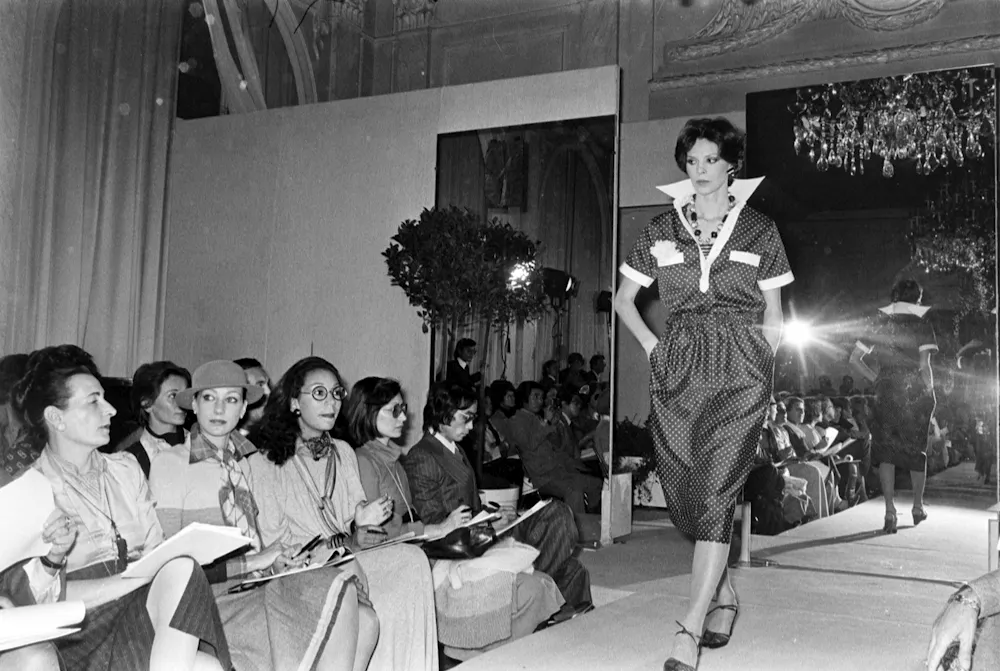
With this expertise, he was one of the first Italian designers to be successful in France as an outsider with the launch of his first Paris collection in 1975. This Paris collection showcased more relaxed silhouettes with many layers, playing towards the casual nature of fashion.

A woman in a polka-dot dress.
A model in the Valentino Spring 1976 ready to wear collection walks the runway in Paris in 1975.
Guy Marineau/WWD/Penske Media via Getty Images

While his design base was in Rome, many of his collections were shown in Paris over the next four decades. His Italian culture mixed with the technicality of Parisian haute couture made Valentino the designer he was.

Throughout his career, his designs often maintained a classic silhouette bust, matched with a bold Italian colour or texture.

Unlike some designers today, Valentino’s collections didn’t change too dramatically each season. Instead, they continued to maintain the craftsmanship and high couture standards.

Quintessentially beautiful” is often the description of Valentino’s work – however this devotion to high beauty standards has seen criticism of the industry. In 2007, Valentino defended the trend of very skinny women on runways, saying when “girls are skinny, the dresses are more attractive”.

Critics said his designs reinforce exclusion, gatekeeping fashion from those who don’t conform to traditional beauty standards.

The Valentino runways only recently have started to feature more average sized bodies and expand their definition of beauty.

The $300 million sale of Valentino

The Valentino fashion brand sold for US$300 million in 1998 to Holding di Partecipazioni Industriali, with Valentino still designing until his retirement in 2007.

Valentino sold to increase the size of his brand: he knew without the support of a larger corporation surviving alone would be impossible. Since Valentino’s retirement, the fashion house has continued under other creative directors.

Valentino will leave a lasting legacy as the Italian designer who managed to break through the noise of the French haute couture elite and make a name for himself.

The iconic Valentino red will forever be remembered for its glamour, and will live on with his legacy. A true Roman visionary with unmatched craftsmanship.

The Conversation

Jye Marshall does not work for, consult, own shares in or receive funding from any company or organisation that would benefit from this article, and has disclosed no relevant affiliations beyond their academic appointment.

ref. Valentino shaped the runway – and the red carpet – for 60 years – https://theconversation.com/valentino-shaped-the-runway-and-the-red-carpet-for-60-years-273891