Southeast Asia experts in international affairs see broad alignment with New Zealand on economic and security priorities in a survey released Thursday on their perception of the South Pacific nation’s foreign policies.
However, the 200 experts from Singapore, Malaysia, Indonesia and the Philippines included in the survey also highlighted key differences in political and governance ideals.
The Southeast Asian Perceptions of New Zealand report is the first of its kind to be produced by the Asia New Zealand Foundation.
It complements the organisation’s annual Perceptions of Asia and Asian Peoples survey, which provides insights for researchers, government officials and the public on how New Zealand views Asia and its people.
The latest findings show that New Zealand generally enjoys an excellent reputation and is seen as principled, trustworthy and genuinely independent in its approach to international affairs.
Asia New Zealand Foundation chief executive Suzannah Jessep said the new research helped New Zealand see itself through the eyes of its closest Southeast Asian neighbours.
Jessep said the research provided valuable insights at a time when New Zealanders felt increasingly connected to Southeast Asia and its engagement with the region was deepening.
“New Zealanders increasingly view Southeast Asia as a close and trusted part of our region – and it’s equally important that we understand how our neighbours perceive us,” Jessep said.
“That understanding helps us strengthen relationships, tailor engagement and have a more informed public conversation about Asia.”
Respondents in the survey described New Zealand as a friend or close friend to their countries, and as a like-minded partner in several key areas, particularly on security and economic matters.
While perceptions were generally positive, respondents expressed a desire for New Zealand to take a stronger and more visible stance on global issues such as trade, climate change and maritime security.
Respondents also indicated a strong appetite for deeper cooperation between Southeast Asia and New Zealand in areas such as education, reflecting the sense that New Zealand’s efforts in the region are valued and make a tangible impact.
“New Zealand is seen as investing wisely in the region and the appetite for partnership is there – particularly on shared global challenges, where New Zealand’s credibility and capability are recognised,” said Julia Macdonald, the foundation’s director of research and engagement.
As New Zealand’s relationships across Southeast Asia continued to strengthen, the findings helped to reinforce the country’s reputation in the region was positive and valuable but, at the same time, expectations were rising as regional challenges evolved.
“Our Southeast Asian partners value what New Zealand brings,” Jessep said.
“They see us as a constructive, values-driven country whose voice is worth listening to, which is an encouraging message as we continue to grow our engagement with the region.”
– Published by EveningReport.nz and AsiaPacificReport.nz, see: MIL OSI in partnership with Radio New Zealand
Source: The Conversation – USA (2) – By Amitrajeet A. Batabyal, Distinguished Professor, Arthur J. Gosnell Professor of Economics, & Head, Department of Sustainability, Rochester Institute of Technology
After 43 days, the U.S. government shutdown finally came to an end late on Nov. 12, 2025, when Congress voted through a long-overdue funding bill, which President Donald Trump promptly signed.
But the prolonged gap in government-as-usual has come at a cost to the economy.
The Conversation spoke with RIT economist Amitrajeet A. Batabyal on the short- and long-term impact that the shutdown may have had on consumers, on the gross domestic product and on international trust in U.S. stewardship of the global economy.
What is the short-term economic impact of the shutdown?
The effect was particularly pronounced in places like Washington D.C. – one of the most popular destination for tourists – and Hawaii. This short-term effect will likely extend to secondary businesses, such as hotels. Indeed, prior to the shutdown, the U.S. Travel Association warned that such an event would cost the total travel industry around US$1 billion a week.
And the longer-term impact?
Estimates range, but the nonpartisan Congressional Budget Office has said that the cost to America’s gross domestic product in lost productivity is in the range of $7 billion to $14 billion – and that is a cost from a self-imposed wound that will never be recovered.
The shutdown further erodes the United States’ standing as the global leader of the free market and rules-based international order. Accompanied by the economic rise of China, this shutdown further erodes international investors’ impression of the U.S. as an arbiter and purveyor of the established trade and finance system – and that can only hurt Washington’s global economic standing.
Has the economic pain been felt evenly?
Certainly not. Large numbers of Americans have been hit, but the shutdown affected regions and demographics differently.
Those on the lower end of the income distribution have been hit harder. This is in large part due to the impact the shutdown has had on the Supplemental Nutrition Assistance Program, also known as food stamps. Some 92% of SNAP benefits go to American households below the federal poverty line.
More than 42 million Americans rely on SNAP payments. And they were caught up in the political maelstrom – left not knowing if their SNAP payments will come, if they will be fully funded and when they will appear.
Geographically, too, the impact of this shutdown has been patchy.
California, Washington D.C. and Virginia have the highest proportion of federal employees, so that means a larger chunk of the workers in those regions were furloughed. Hawaii has also been disproportionately hit due to the large number of military there. One analysis found that with 5.6% of people in the state federally employed, and a further 12% in nonprofit jobs supported by federal funding, Hawaii was the second-hardest-hit state during the shutdown.
How easy is it for the US to recover from a shutdown?
Because shutdowns are always temporary, recovery depends on how long it has gone on for. Traditionally, the long-term economic trend is not badly affected by the short-term pain of shutdowns.
Also, the nature of this shutdown raises some concerns. This was the first shutdown in which a president said that backpay was not a sure thing for all furloughed federal employees. And the uncertainty over those threatened with layoffs again broke from past precedent. Both matters seemed to have been settled with the deal ending the shutdown, but even so, the ongoing uncertainly may have affected the spending patterns of many affected.
Have other economic factors exacerbated the shutdown affect?
While the shutdowns in Trump’s first administration did take place while tariffs were being used as a foreign policy and economic tool, this year is different.
Related to that is the rising grocery prices that have contributed to an upward tick in inflation.
This all makes the job of the Federal Reserve harder when it is trying to fine-tune monetary policy to meets its dual mandates of full employment and price stability. Add to that the lack of government data for over a month, and it means the Fed is grasping in the dark a little when it comes to charting the U.S. economy.
Amitrajeet A. Batabyal does not work for, consult, own shares in or receive funding from any company or organization that would benefit from this article, and has disclosed no relevant affiliations beyond their academic appointment.
Do you prefer to see friends one-on-one rather than in a group?
Are you more of an observer than an active participant?
Perhaps you prefer to stand out, rather than fit in.
Dr Rami Kaminski.
Scribe Publishing
You’re possibly an “otrovert”, according to Rami Kaminski, an American psychiatrist who coined the term after recognising the personality type in his patients — and himself.
He says otroverts are “outsiders treated like insiders”, welcomed into groups even though they don’t feel like they fit in.
“Introverts are shy and reclusive, mainly preoccupied with their inner world,” he wrote for the Australian Financial Review.
“Otroverts are acutely aware of other people and cannot find refuge inside themselves when surrounded by others. If anything, they are too attuned to the world around them.”
Carly Dober, a psychologist and policy coordinator at the Australian Association of Psychologists, says otroversion is only a hypothesis at this stage.
“There is no peer-reviewed research into it. That’s not to say it isn’t valid. We just don’t have research to back it up,” Dober says.
“And that’s how many terms are created and [later] validated … someone saying ‘I noticed something clinically and I’m calling it X.'”
Extroverts and introverts versus otroverts
Introversion and extroversion are spectrums of energy levels or responsiveness to socialising, explains Dober.
She says introverts typically describe needing more alone time and get drained from socialising. They might be considered homebodies.
Extroverts, on the other hand, can enjoy their own time but get energy from being around other people. They are often loud and exuberant, Dober says.
“Typically, the majority of people are probably ambivert, where they can enjoy both elements … and there’s a heavy overlap.”
Examples of otroversion
These are just some core qualities of otroverts, according to Dr Kaminski (extracted from his book, The Gift of Not Belonging: How Outsiders Thrive in a World of Joiners):
Are not likely to throw themselves birthday parties and generally avoid group celebrations of any kind.
Prefer sports and activities where they can compete individually.
Don’t like bringing together people from different parts of their lives, even if those people know each other.
Don’t feel an affinity with a particular sports team, an alma mater, or a company they work for.
Stand by their opinions and convictions if asked to weigh in on something at work, and aren’t swayed by the opinions their colleagues have expressed.
They are specialists rather than generalists, with interests and skills that run narrow but deep.
Despite having differing points of view, otroverts are not combative or argumentative; rather, they come across as polite, friendly, and even outgoing.
Are confrontation-averse and considerate, sometimes to a fault.
Is it worth exploring whether you are an otrovert?
Dober says from a sceptical point of view, there could be many reasons people might display the behaviours or have the feelings Kaminski has listed.
“It could be divergence, trauma, neglect, and abuse in childhood,” she says.
“It could be counterculture, wanting to identify as a free thinker, performing to that.”
If it’s a real phenomenon, she says that could be “quite exciting”.
“It means people who haven’t seen themselves in the three categories (introvert, extrovert, ambivert) might have a greater understanding of their identity and preferences,” Dober says.
Guided by Kaminski’s definition, Dober says otroverts may feel they thrive in making deep relationships with core people in their lives.
“Which is a huge strength … displaying high levels of empathy and connection and being energised by relationships.”
They may struggle in bigger groups, however.
“I’m thinking about when you start a new job, or degree, and you’re sent off to work on a project [with a group of people]. They can feel very out of step,” Dober says.
Jacqueline Baulch is a clinical psychologist in Melbourne and says otroverts sound secure and self-assured, and “don’t really need to look outside for validation and approval”.
The value of a label
“I mean this in the most generous way to humans; we are so interested in ourselves,” Dober says.
“Understanding why we are the way we are is endlessly fascinating to us.”
She says categories are helpful to the human brain.
“Categories allow us to put things into a mental schema; help us work out how the world or personal life works.”
It can also be helpful when getting to know other people. Telling someone you are an introvert can signal a few things.
But Baulch warns there is a downside to personality labels.
“If you appeal to them too much, you lose that curiosity to explore what might be going on underneath,” she says.
“I’m all for a label if someone feels it’s helpful … I would just be curious to explore what it is about that label they find helpful.”
If otroversion resonates with you, Dober suggests talking to others who may feel the same way.
Talking to a GP, counsellor or psychologist can also help you unpack it further.
“There might be things underlying what you think is otroversion, but could be something completely different,” Dober says.
“That’s what can be dangerous about self-labelling; we might land at a different conclusion,” therefore missing something important, Dober says.
– Published by EveningReport.nz and AsiaPacificReport.nz, see: MIL OSI in partnership with Radio New Zealand
A Chinese plant scientist at the University of Michigan who drew national attention in June 2025 when she was arrested and accused of smuggling a crop-damaging fungus into the U.S. pleaded guilty on Nov. 12, 2025, to charges of smuggling and making false statements to the FBI. Under her plea agreement, Yunqing Jian, 33, was sentenced to time served and expected to be deported.
Her arrest put a spotlight on Fusarium graminearum, a harmful pathogen. But while its risk to grains such as wheat, corn and rice can be alarming, Fusarium isn’t new to American farmers. The U.S. Department of Agriculture estimates it costs wheat and barley farmers more than $1 billion a year.
Tom Allen, an extension and research professor of plant pathology at Mississippi State University, explains what Fusarium graminearum is and isn’t.
What is Fusarium graminearum?
Fusarium graminearum is a common fungal plant pathogen that creates problems for farmers across the U.S.
It causes a disease in barley and wheat called Fusarium head blight, or scab. It can also damage rice and rot corn ears and stalks. In severe cases, scab could cut a farm’s yield by 45%.
Scab has been responsible for some of the greatest annual crop losses in the U.S. In 2024, estimates from extension and research plant pathologists suggested scab reduced the U.S. wheat crop by approximately 31 million bushels or roughly 2%.
When compared with other wheat diseases that harm the head and kernels, scab is by far the most concerning because it occurs across wide areas and affects the crop at advanced growth stages.
Why is Fusarium graminearum a concern?
As a plant pathogen, the fungus responsible for scab produces a mycotoxin in grain that can harm humans and livestock. In addition, when wheat grain used for seed is infested with the fungus, the seeds are less likely to germinate and produce new plants in the next growing season.
The mycotoxin is widely categorized as a vomitoxin. It can induce vomiting if ingested in high enough concentrations, but prolonged exposure can also cause gastronintestinal damage, harm the immune system and inflame the central nervous system.
In animals, repeated exposure to the mycotoxin in food can decrease their growth and weight, and livestock can develop an immune response to the toxin that can harm their ability to reproduce.
The U.S. Food and Drug Administration has issued advisory levels, basically limits for the amount of mycotoxin considered a health hazard in grain products.
Since barley and wheat are important as food for humans and livestock, harvested grain is routinely tested when farmers bring their crops to grain elevators for sale. Entire loads of grain may be rejected if they’re found to have mycotoxin concentrations above the FDA limits.
Wheat can be treated to remove scabby kernels. If mycotoxin levels aren’t too high, it could also be used for livestock feed. The advisory threshold for the mycotoxin is higher for adult cattle and chickens, at 10 parts per million, than it is for humans, at 1 ppm.
What does the law say about importing and moving plant pathogens?
These risks are why importing and even moving plant pathogens within the U.S. is regulated by the U.S. Department of Agriculture’s Animal and Plant Health Inspection Service, or USDA-APHIS, through the Plant Protection Act of 2000.
Federal law restricts the movement of plant pathogens, including bacteria, fungi and viruses, even for research purposes, as well as their release into the environment. A scientist who wants to move a plant pathogen, either within the U.S. or from outside the U.S., must go through a permitting process with USDA-APHIS that can take up to six months to complete.
The goal of these rules is to reduce the risk of introducing something new that could be even more destructive for crops.
Even with Fusarium graminearum, which has appeared on every continent but Antarctica, there is potential for introducing new genetic material into the environment that may exist in other countries but not the U.S. and could have harmful consequences for crops.
How do you manage Fusarium graminearum infections?
Fusarium graminearum infections generally occur during the plant’s flowering, rainfall and periods of high humidity during early stages of grain production.
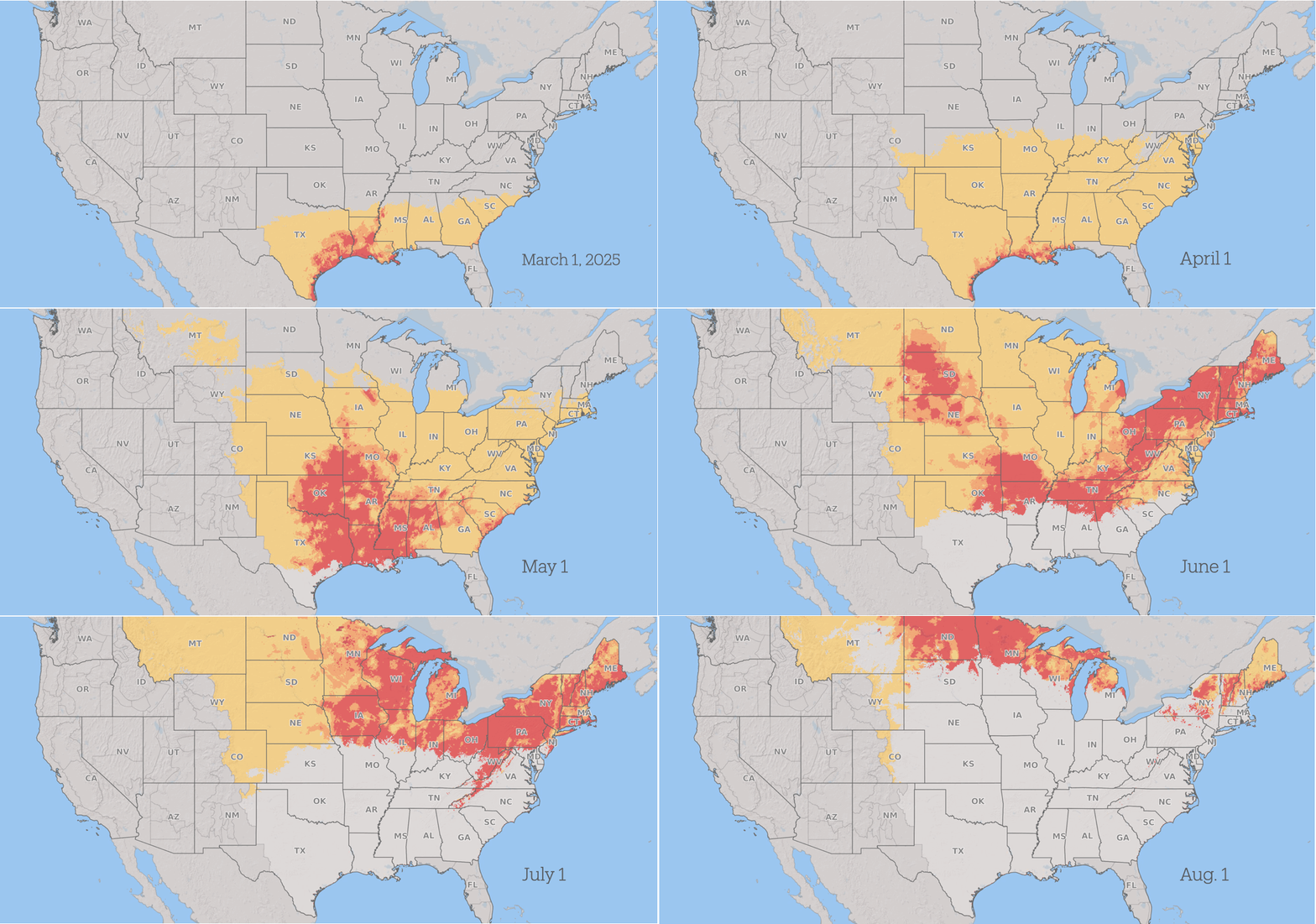
Wheat in the southern U.S. is conducive to infection during the spring. As the season progresses, the risk from scab progresses north through the U.S. and into Canada as the grain crops mature across the region, with continued periods of conducive weather throughout the summer.
How Fusarium graminearum risk progressed in 2025. Yellow is low risk, orange is medium risk, and red is high risk. Fusarium Risk Tool/Penn State
Between seasons, Fusarium graminearum survives on barley, wheat and corn plant residues that remain in the field after harvest. It reproduces by producing microscopic spores that can then travel long distances on wind currents, spreading the fungus across large geographic areas each season.
In wheat and barley, farmers can suppress the damage by spraying a fungicide onto developing wheat heads when they’re most susceptible to infection. Applying fungicide can reduce scab and its severity, improve grain weight and reduce mycotoxin contamination.
However, integrated approaches to manage plant diseases are generally ideal, including planting barley or wheat varieties that are resistant to scab and also using a carefully timed fungicide application, rotating crops, and tilling the soil after harvest to reduce residue where Fusarium graminearum can survive the winter.
Even though fungicide applications may be beneficial, fungicides offer only some protection and can’t cure scab. If the environmental conditions are extremely conducive for scab, with ample moisture and humidity during flowering, the disease will still occur albeit at reduced levels.
A discussion of Fusarium head blight in the northern Plains. Andrew Friskop/NDSU Extension.
Plant pathologists are making progress on early warning systems for farmers. A team from Kansas State University, Ohio State University and Pennsylvania State University has been developing a computer model to predict the risk of scab. Their wheat disease predictive model uses historic and current environmental data from weather stations throughout the U.S., along with current conditions, to develop a forecast.
In those areas that are most at risk, plant pathologists and commodity specialists encourage wheat growers to apply a fungicide during periods when the fungus is likely to grow to reduce the chances of damage to crops and the spread of mycotoxin.
Tom W. Allen does not work for, consult, own shares in or receive funding from any company or organization that would benefit from this article, and has disclosed no relevant affiliations beyond their academic appointment.
The BBC is the latest media organisation to be targeted by Donald Trump’s highly litigious machine. The fallout over a Panorama episode that included a misleadingly edited clip of the US president’s January 6 2021 speech led to the resignation of two BBC executives, and Trump’s threat to sue the BBC for $1 billion if they do not retract the episode.
How likely is he to succeed if he goes through with such a lawsuit? To answer this, we must look at two distinct issues. First, how defamation laws on the books apply to this situation. And second, how things might actually play out in practice.
Defamation laws enable individuals to obtain remedies (such as compensation) when another party makes false allegations that damage their reputation. The BBC has admitted that the Panorama footage was misleading in that it clipped together two parts of Trump’s speech that were actually 50 minutes apart.
However, this by no means ensures that a defamation claim by Trump would succeed. Trump must meet set requirements to prove that the footage was actually defamatory. He would face significant difficulties doing so in both England and the US.
First, Trump’s existing reputation is hardly unblemished, and includes court findings of fraudulent conduct, sexual assault (subject to ongoing litigation in the US), and impeachment for inciting an insurrection against a democratically-elected government (he was later acquitted).
Furthermore, he won the 2024 US election within a fortnight of the episode’s broadcast. It would therefore be difficult for his lawyers to prove that he suffered reputational harm from this Panorama episode.
Truth defences are also available in both jurisdictions. These protect a defendant whose allegations contain minor inaccuracies, as long as the “sting” of the libel – in this case, that Trump’s speech contributed to the storming of the Capitol – is true.
English defamation law is noted for being claimant-friendly (particularly compared to the US), so suing in this jurisdiction would arguably have been preferable for Trump. But in the UK, a defamation claim must be brought promptly within one year of publication.
This deadline has passed as the Panorama episode was broadcast in October 2024. So Trump’s defamation claim is time-barred in the UK. He has previously (but unsuccessfully) tried to use data protection law to protect his reputation in the UK due to its longer, six-year limitation period.
Because the Panorama documentary is also available in the US, Trump has instead threatened to bring a claim in the US state of Florida. US law is noted for providing strong free speech protections, particularly for media organisations sued by public figures. In defamation law, media free speech has been safeguarded by the landmark 1964 Supreme Court case New York Times v Sullivan.
L.B. Sullivan was a police commissioner in Montgomery, Alabama, who sued the Times for publishing an advert that criticised the police (but which contained some minor inaccuracies). The Supreme Court unanimously held that if a public official brings a defamation action, they must meet a higher benchmark than a civilian to succeed.
They must prove that the defendant made the statement with “actual malice” – that they knew the statement was false, or they made it in reckless disregard of whether it was true. This principle was extended to other “public figures” in later cases. Because actual malice is very hard to establish, it makes defamation actions incredibly difficult to win for politicians.
Defamation threats in practice
So the BBC might appear relatively safe if we focus solely on the legal texts. But in practice, there can be large gaps between what legal rules say and how defamation disputes operate in reality. Making legal threats – even those that are spurious or doomed to fail – can still be beneficial to claimants like Trump.
As leading US academic RonNell Andersen Jones has explained, these legal threats serve as PR for politicians, and undermine public faith in the journalists seeking to hold them to account.
These threats are a form of so-called “Slapp” suit – strategic lawsuits against public participation. Slapps are legal threats made to silence or intimidate critics or those who speak out about matters of public interest.
These cases are effective because they leverage the extremely high legal costs of litigation and exploit inequalities in power or resources between parties. Weaker parties are pressured into backing down, even if they have a good prospect of successfully defending themselves against the claim.
Many Slapps never even reach the courts because their targets choose to settle the case rather than risk the expense and stress of litigating. This playbook has served Trump well.
He has a sustained track record of seeking preposterous sums from media organisations on the basis of arguably flimsy claims, including the New York Times, the Wall Street Journal, CBS and ABC (both of which paid Trump millions to settle the cases). He is no doubt calculating that the BBC will also cave in and settle early.
Trump’s defamation threat against the BBC places the latter in a precarious position. Though the BBC has a strong legal case on the face of it, it faces the financial constraints of its diminishing publicly-funded budgets, and sustained attack from political and commercial adversaries. It will now have to make a big decision on how to respond and whether to settle, like CBS and ABC before it.
Rebecca Moosavian is co-deputy director of The SLAPPs Reseach Group, an international academic network researching SLAPPs and related laws <https://www.theslappsresearchgroup.org/>
Source: The Conversation – UK – By Laura Smith, PhD Researcher and Graduate Teaching Fellow, University of Liverpool
In her 2022 novel Trespasses, Louise Kennedy captures the emotional turmoil of an intimate relationship between Cushla, a young Catholic woman, and Michael, an older married Protestant man during the Troubles in Northern Ireland. Their love is difficult, not just because Michael is married but also because it is seen as a “mixed relationship” within Northern Irish society.
The Troubles was a period of violence stemming from a political divide over British rule, which lasted for about 30 years from the late 1960s to 1998. The fighting was between the Unionist/Loyalists who wanted Northern Ireland to remain part of the United Kingdom and the Nationalist/Republicans who sought a united Ireland. These groups were also split on religious lines with Unionist/Loyalists being mostly Protestant and Nationalist/Republicans mostly Catholic.
Channel 4’s new adaptation of Trespasses, starring Lola Petticrew, Tom Cullen and Gillian Anderson, is set in 1975, in the height of the Troubles. With the signing of the Good Friday Agreement in 1998, which brought an era of “peace” to Northern Ireland, you might assume the experiences of Cushla and Michael would no longer be common. However, my research shows that the story’s themes of forbidden love remain for women in “mixed” relationships today.
In Northern Ireland, many people still identify as either being Catholic, Nationalist and Republican or Protestant, Unionist and Loyalist, although there is an increase in people now choosing to identify as “neither”. However, key indicators of the degree of segregation in society still remain high.
The availability of integrated schools or provision of mixed-denomination social housing remains low, which means the opportunities to mix across these communities can be limited. There is also the continued presence of “peace walls”, physical barriers made of materials such as concrete, barbed wire or corrugated metal at interfaces between residential areas, which serve as a visual reminder of the violent conflict.
Endogamy, where couples marry someone from their own community, is still the single most powerful factor that bolsters the divisions between groups. Estimates suggest that approximately 20% of all relationships in Northern Ireland are mixed. Charities such as the Northern Ireland Mixed Marriage Association (NIMMA), which was founded in 1974, continues to support couples living with these undercurrents of institutionalised segregation. And for many couples, just like Cushla and Michael, crossing the religious and political divide still carries some emotional weight.
Everyday challenges
For Cushla, worrying about being seen in public with Michael is a recurring theme throughout their love story. Her inner monologue documents decisions she makes to counteract this fear of political violence, including avoiding driving through loyalist roads that border Michael’s area.
In my own research with women currently in mixed-denominational relationships in Northern Ireland, I found that echoes of Cushla’s fears persist. While none of my participants spoke about fear of physical violence, many spoke about ways they have learned to cope with subtle disapproval from neighbours and colleagues. Telling friends and family about their relationship also proved difficult for some women.
One participant spoke about how fear infiltrated into her parents’ concerns:
I knew my parents were uncomfortable with me going to a super Protestant area they’d heard bad things about. And then, I know that they were uncomfortable at the idea of me even being in a house with like a British soldier, they didn’t like that idea at all.
There was also a common thread of how women have to negotiate different expectations from families. This often emerged while organising weddings or raising children, and was a source of emotional discomfort.
While couples may feel invincible – just like Cushla and Michael did in their dangerous and passionate relationship, leading them to get complacent with their precautions – love isn’t always enough.
Everyday peace
As my ongoing research has shown, there can be a particular emotional burden that falls on these couples as they try to maintain harmony between two different identities. This burden often falls on the woman in the relationship, and is connected to other aspects of emotional and reproductive work that women may feel pressured by society to undertake.
My work focuses on how couples manage these relationships through practising what peace and conflict researchers call “everyday peace”. It refers to the ways in which ordinary people try to make their way with as much as ease as possible through in a deeply divided society. For people in mixed relationships, this can lead them to choose to stay silent, avoid contentious issues, or become ambiguous about their identity.
Ambiguity was most strongly demonstrated with reference to names. As Cushla refers to herself, Irish names become significant identifiers of being Catholic. We watch as she is tempted to give a fake name when she is stopped at a checkpoint by a Protestant soldier.
Some of my participants similarly ask their partners to refer to them by a different name while they’re at a pub in a new area. Another example given was using a nickname when getting parcels delivered to their house. These strategies emerge out of a genuine fear, or a self-acknowledged paranoia of what might happen if the wrong person finds out they are in a mixed relationship.
My research shows that being in a mixed relationship within a society trying to heal is still complicated. While it is certainly possible to have a successful mixed relationship in Northern Ireland today, some of the contentious aspects of Cushla and Michael’s relationship do still prevail.
This article features references to books that have been included for editorial reasons, and may contain links to bookshop.org. If you click on one of the links and go on to buy something from bookshop.org The Conversation UK may earn a commission.
Looking for something good? Cut through the noise with a carefully curated selection of the latest releases, live events and exhibitions, straight to your inbox every fortnight, on Fridays. Sign up here.
Laura Smith does not work for, consult, own shares in or receive funding from any company or organisation that would benefit from this article, and has disclosed no relevant affiliations beyond their academic appointment.
A particle accelerator that produces intense X-rays could be squeezed into a device that fits on a table, my colleagues and I have found in a new research project.
The way that intense X-rays are currently produced is through a facility called a synchrotron light source. These are used to study materials, drug molecules and biological tissues. Even the smallest existing synchrotrons, however, are about the size of a football stadium.
Our research, which has been accepted for publication in the journal Physical Review Letters, shows how tiny structures called carbon nanotubes and laser light could generate brilliant X-rays on a microchip. Although the device is still at the concept stage, the development has the potential to transform medicine, materials science and other disciplines.
Most people imagine particle accelerators as enormous machines, very large rings of metal and magnets stretching for kilometre beneath the ground. The Large Hadron Collider at Cern (the European Organization for Nuclear Research) in Geneva, for example, is 17 miles (27km) long.
The new research shows that it may soon be possible to build ultra-compact accelerators only a few micrometre wide – smaller than the width of a human hair. These could generate coherent, high-energy X-rays similar to those produced by billion-pound synchrotron facilities, but using devices that fit on a microchip.
Twisted light
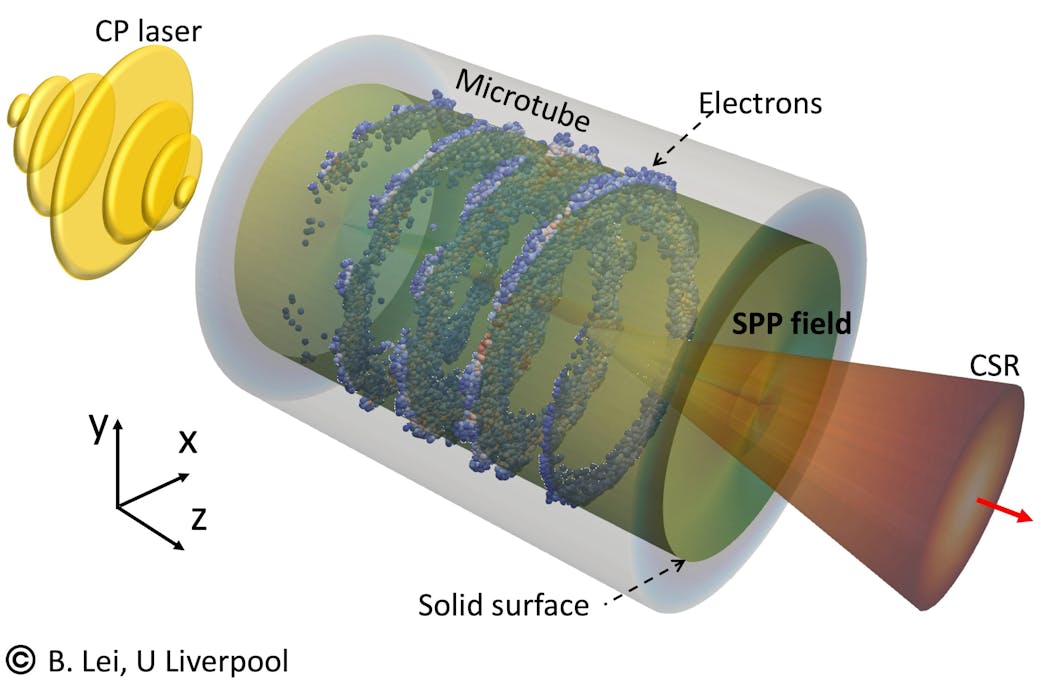
The principle relies on a particular property of light known as surface plasmon polaritons. These are waves that form when laser light clings to the surface of a material. In the simulations, a circularly polarised laser pulse was sent through a tiny hollow tube. This polarised laser pulse is light that twists as it moves, very much like a corkscrew.
The swirling field traps and accelerates electron particles inside the tube, forcing them into a spiral motion. As they move in sync, the electrons emit radiation coherently, amplifying the light’s intensity by up to two orders of magnitude.
My team and I have created a microscopic synchrotron, where the same physical principles that drive mile-scale facilities play out – but on a nanoscopic stage.
To make this concept work, carbon nanotubes were used. These are cylindrical structures made of carbon atoms arranged in hexagonal patterns. These nanotubes can withstand very high electric fields, hundreds of times stronger than those in conventional accelerators. They can also be “grown” vertically into what we call a “forest” of closely aligned hollow tubes.
This unique architecture provides an ideal environment for the corkscrewing laser light to couple with the electrons. The circularly polarised laser fits the nanotube’s internal structure – much like a key in a lock which is why we refer to a quantum lock-and-key mechanism.
The research team that I’m a part of was led by Bifeng Lei, research associate in the school of physical sciences. 3D simulations showed that this interaction can produce electric fields of several teravolts (one trillion volts) per metre. This is far beyond what current accelerator technologies can achieve.
That kind of performance could change who gets access to cutting-edge X-ray sources. At present, scientists must apply for limited time slots at large, national synchrotron facilities, or free-electron lasers, often waiting months for a few hours of beam time.
Opening up access
The tabletop accelerator approach could make this capability available in hospitals, universities and industrial labs. In fact, wherever it is needed.
In medicine, this could mean clearer mammograms and new imaging techniques that reveal soft tissues in unprecedented detail, without contrast agents. In drug development, researchers could analyse protein structures in-house, dramatically speeding up the design of new therapies. And in materials, science and semiconductor engineering, it could enable non destructive, high speed testing of delicate components.
The study was presented at the 2025 NanoAc workshop on the topic of nanotechnology in accelerator physics, which was held in Liverpool earlier this month. The research currently remains at the simulation stage. But the necessary components already exist: powerful circularly polarised lasers and precisely fabricated nanotube structures are standard tools in advanced research labs.
The next step is experimental verification. If successful, this would mark the beginning of a new generation of ultra compact radiation sources. What excites me most about this technology is not just the physics, but what it represents.
Large-scale accelerators have driven enormous scientific progress, but they remain out of reach for most institutions. A miniaturised accelerator that delivers comparable performance could democratise access to world-class research tools, bringing frontier science into the hands of many more researchers.
The future of particle acceleration might include very large machines to further push the energy, intensity and discovery boundaries, as well as smaller, smarter and more accessible accelerators.
Carsten P Welsch does not work for, consult, own shares in or receive funding from any company or organisation that would benefit from this article, and has disclosed no relevant affiliations beyond their academic appointment.
Society is fascinated with health, fitness and longevity. This obsession has spawned a multi-million pound industry centred around pushing the latest cutting-edge science, lifestyle modifications and products that claim to prevent ageing and live as long as possible.
But the secret to a long life doesn’t have to be so complicated. There are many simple things everyone can do to slow down time and feel younger.
When we talk about age, we aren’t always talking about how many candles are on your birthday cake. We actually have two different ages.
The first is of course chronological age. This is the number of years you’ve been alive.
But we also have a “biological age.” This is sometimes referred to as “true age” or “internal body age.” This refers to how well all of the body’s internal systems are functioning by looking for signs of ageing in the cells, blood and DNA.
Research indicates that a person’s biological age, rather than their chronological age, is related to how long they live. Let’s say you looked at two 60-year-old people. The person whose biological age is younger would be more likely to outlive the person who had a higher biological age.
There are now many ways to measure your biological age with epigenetic testing, which only requires a little bit of spit and can be done at home. The saliva sample is then processed in a lab where the DNA is extracted to get information about what’s happening in the body.
The everyday lifestyle choices we make affects our biological age. While some of the decisions we make can increase it (such as drinking, smoking or being inactive), other factors can actually turn back the clock. Thus, how long we live may truly be in our hands.
Here are five evidence-backed ways of reducing your biological age:
1. Run away from ageing – literally
Being more physically active and regularly exercising throughout life reduces risk of death from all causes – directly increasing longevity.
It’s also never too late to get started. One study found that sedentary people who adopted an eight-week exercise programme (60 minute workouts done three times a week) reversed their biological age by around two years.
A mixture of strength and endurance exercises done three to four times a week (with sessions as short as 23 minutes) is also shown to significantly reduce ageing.
Exercise influences something called DNA methylation, a process which controls whether certain genes are “on” or “off.” As we age it’s natural that our genes start switching off – this is why we get winkles and grey hair.
But exercise helps to slow these processes down, meaning the genes that help do important functions in the body continue doing their job for longer.
One study, which looked at nearly 2,700 women, found that adopting healthier eating patterns for 6-12 months was a key factor in staying younger for longer. This diet was also shown to slow ageing by an average of 2.4 years.
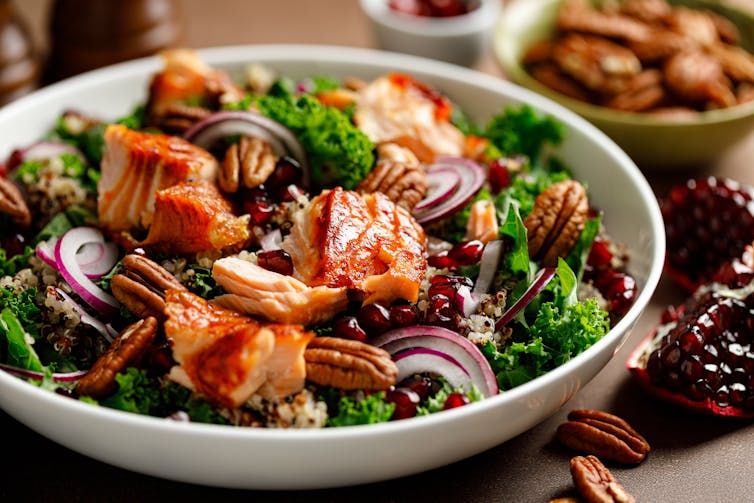
Healthier food choices included eating more fruits, vegetables, whole grains, nuts, legumes, fish, lean proteins and healthy fats (such as oil) and reducing intake of red meat, saturated fat, added sugars and sodium.
A well-balanced diet provides antioxidants, vitamins and anti-inflammatory compounds that help cells repair damage and reduce stress on our DNA. These nutrients also influence DNA methylation.
3. Improve sleep habits
Sleep is one of the strongest predictors of healthy ageing because it affects nearly every bodily system. Good quality sleep allows the body to repair DNA, restore hormonal balance, reduce inflammation and clear cellular waste – helping the immune, metabolic and nervous systems stay youthful and resilient.
One review showed that sleep quality is directly associated with how fast we age. People who sleep less than five hours per night have a significantly increased risk of age-related diseases such as diabetes, heart disease, cancer and dementia.
Additionally, a large UK study of nearly 200,000 participants found that those on shift work – and particularly night shifts – had a biological age around one year higher than their counterparts who worked at normal hours.
Smoking, for instance, is shown to rapidly age the lungs by up to 4.3 years and the airway cells by nearly five years.
Similarly, a study looking at 8,046 adults aged 30–79 years old found that consuming any amount of alcohol was associated with accelerated biological ageing. The more alcohol consumed the more age is accelerated.
These habits speed up biological ageing because they directly damage DNA, increase inflammation and overload cells with stress. This causes the body and organs to work harder – ageing them quicker.
5. Master your mind
Stress management is key. Research shows that being able to regulate emotions and manage stress levels predicts age acceleration. Another study found that working more than 40 hours a week on average increased biological age by two years, probably due to the stress.
Stress can directly accelerate biological age due to the way it affects hormonal response, damages DNA and reduces immunity. Stress can also indirectly affect other factors that may accelerate age, such as diet, sleep and whether we drink or smoke. This is why having a set of positive coping mechanisms to manage stress is so important.
A growing body of research is also showing that factors such as loneliness, exposure to extreme heat and cold, air pollution and our environment (such as living in deprived areas) can all also affect how we age.
It’s important to note that the affect of these factors on age may vary depending on the person, their genetics, how long they’ve stuck with these lifestyle habits and other factors at play.
Nevertheless, this gives insight into how changing even small habits can positively improve health and well-being and, in some cases, turn back the clock.
Dr Henry Chung receives funding from Innovate UK, the Biotechnology and Biological Sciences Research Council (BBSRC), and UK Research and Innovation (UKRI). No funding from this organisations was received for the work described in this article.
Charlotte Gowers does not work for, consult, own shares in or receive funding from any company or organisation that would benefit from this article, and has disclosed no relevant affiliations beyond their academic appointment.
Source: The Conversation – UK – By Jose L Areta, Associate Professor in Exercise Metabolism and Nutrition, Liverpool John Moores University
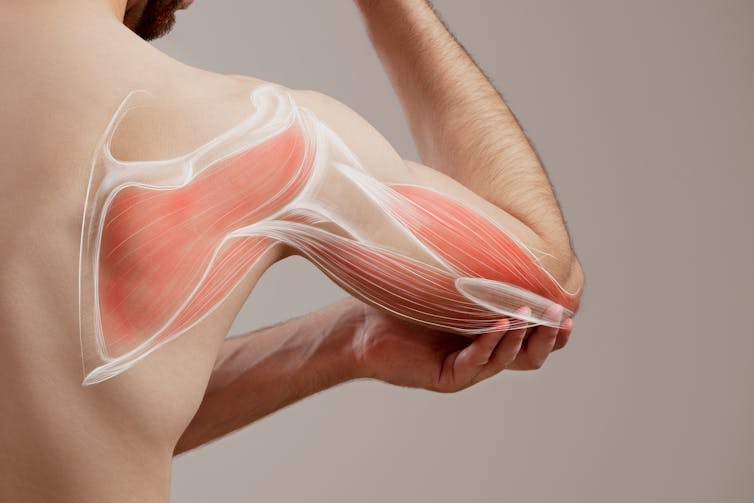
Muscle plays many important roles in our health – so preserving it while losing weight is key.PeopleImages/ Shutterstock
When we lose weight, we don’t just lose body fat – we lose muscle, too.
This can be a problem for many reasons, because skeletal muscle is far more than the tissue that helps us move. It plays a crucial role in metabolic health, regulating blood sugar and healthy ageing. Losing muscle mass is linked to a reduced mobility, increased injury risk and is thought to potentially impair long-term weight loss.
With millions of people now using weight loss drugs such as Wegovy and Ozempic, understanding what impact this muscle loss might have on their health is important.
Loss of muscle mass is also a significant challenge for athletes too, as many sports encourage them to keep body weight low while still maintaining demanding training loads and keeping their power-output high. So an energy deficit can put significant stress on an athlete’s body – but to what extent it affects their normal function, is unclear.
Yet despite these widespread implications, we still know surprisingly little about how human muscle responds at the molecular level to the combination of calorie restriction and exercise. Understanding what happens to muscle when exercising in a calorie deficit is extremely important.
Newly published research from myself and my colleagues casts light on this exact topic. We showed that weight loss accompanied by aerobic exercise might not be that bad for the muscles after all – and indeed it may have positive effects.
We recruited ten healthy, fit young men who completed two tightly controlled five-day experimental trials in our laboratory. During their first trial period, they consumed enough calories to maintain their body weight. But during the second, we reduced their daily calorie intake by 78% – a severe energy deficit.
During both trials, participants completed a tightly-controlled, 90-minute low- to moderate-intensity cycling exercise three times during each five-day period.
Throughout the trials, we measured blood markers such as glucose, ketones, fatty acids and key hormones linked to energy preservation. We did this to determine if – and to what extent – the energy deficit was affecting them.
We also collected muscle biopsies before and after each testing period. Using an advanced method called dynamic proteomic profiling, we analysed the production and abundance of hundreds of muscle proteins. This allowed us to build a detailed picture of how muscle adapts to sudden, substantial calorie restriction – even when exercise demands are maintained.
During the five days in an energy deficit, participants lost about 3kg. Hormones such as leptin, T3 and IGF-1 also dropped sharply – clear signs the body was getting into an energy preservation mode.
But inside the muscle itself, something more unexpected was happening.
Muscle tissue changes
The muscle tissue mounted a strong and surprisingly positive response to the combination of exercise and calorie restriction.
First, we saw an increase in the amount of mitochondrial proteins within the muscle – and these proteins were also being created more quickly.
Mitochondria are the power generators inside cells. They convert fat and carbohydrates into usable energy. Higher amounts of mitochondrial proteins, and faster production of them, are hallmarks of a healthier and more efficient muscle.
The positive changes we saw within the muscle tissue correlated with a more youthful muscle profile. BigBlueStudio/ Shutterstock
We also saw a clear decrease in the amount and production of collagen and collagen-related proteins.
Collagen is an abundant protein that plays a role in providing structure and strength to the muscle. However, collagen tends to accumulate in excess as we age – contributing to stiffness and impaired function.
Taken together, these changes resemble a shift toward a more metabolically youthful muscle profile.
This kind of response has also been seen in long-term calorie-restriction studies in monkeys. But this is the first time it has been demonstrated in humans.
Healthier ageing
At first glance, it seems paradoxical that the body would invest energy in maintaining or improving muscle during a time of scarcity.
Muscle tissue is demanding and costly to maintain – and movement is energetically expensive, too. Shouldn’t the body simply reduce muscle activity to save energy?
The answer to this question may lie in our evolutionary past. Humans evolved as hunter-gatherers, who often faced periods of low food availability. During those times, the ability to move efficiently – to walk and run long distances, forage or hunt – was essential for survival. A body that shut down muscle function during hunger would have been less likely to survive and reproduce.
So the protective response we observed may reflect deep evolutionary adaptations: muscles stay ready to move even when fuel is running low.
Our study involved a small number of young men who were deliberately following an extreme energy deficit for a short period of time. As such, we cannot assume identical responses in women, older adults or people who are obese or have chronic health conditions.
Future studies will need to compare weight loss with and without exercise, examine less extreme calorie deficits, include women and older adults, and measure how these molecular changes translate into actual physical performance.
Nevertheless, our findings support the idea that exercise during weight loss may protect muscle quality – and may even enhance characteristics linked to healthier ageing.
These findings also have key implications for many people. People who are taking weight loss drugs or trying to lose weight may benefit from structured exercise to help them preserve muscle quality. Older adults, who are more vulnerable to muscle loss, may especially benefit from exercising while losing weight. Athletes may approach any energy deficit with care, but know that muscle keeps adapting to exercise stimulus.
Our study shows that human muscle is remarkably resilient. Even under severe stress, when much of the body is trying to conserve energy, muscle tissue seems to respond robustly – boosting its energy-producing machinery and limiting age-related degradation.
In other words, losing weight and exercising doesn’t just help preserve muscle – it may help keep it younger.
Jose Areta received research funding from the Alliance for Potato Research and Education.
Whether it is sizzling in olive oil or crushed into a curry, garlic has long been a hero in the kitchen. But beyond its strong flavour, garlic has earned a reputation as a natural remedy with a surprising range of potential health benefits. From heart health to immune support, science increasingly supports what tradition has claimed for centuries: garlic is good for you.
The most studied of these is allicin, which forms when garlic is chopped, crushed or chewed. Allicin is unstable and quickly breaks down into other sulphur-containing compounds that are linked to several health effects. Here are some of the best supported benefits.
1. Heart health
Garlic is widely studied for its potential to support the heart and blood vessels. Garlic supplements can help reduce high blood pressure, with some studies finding effects similar to certain prescribed medications. A 2019 analysis found that garlic supplements significantly lowered blood pressure in people with hypertension. This reduction was linked to a 16%-40% lower risk of cardiovascular events, such as heart attacks and strokes.
Research suggests this may be because garlic extract improves arterial elasticity so that arteries become more flexible, helping them expand and contract more easily as blood flows through. Stiff arteries make the heart work harder and are a risk factor for heart disease.
Garlic compounds also appear to help relax blood vessels by increasing levels of hydrogen sulphide and nitric oxide. These are gases naturally produced in the body that help blood vessels widen so blood can flow more easily. Allicin may also help reduce blood pressure by blocking angiotensin II, a hormone that causes blood vessels to tighten.
Research suggests garlic may also lower total cholesterol – the overall amount of cholesterol in the blood – and LDL cholesterol, often called bad cholesterol because high levels can clog arteries. Some studies show that taking garlic for longer than two months can reduce LDL cholesterol by up to 10% in people with mildly raised levels.
Lab studies show that garlic compounds can block liver enzymes that produce fats and cholesterol. They may also prevent plaque building up in the arteries by reducing LDL and making it more resistant to oxidation, a process that contributes to heart disease.
2. Immune support
The antibacterial effects of allicin are well recognised. Garlic extract has also been shown to have antimicrobial activity against bacteria, viruses and fungi.
One study found that people who took aged garlic extract had milder cold and flu symptoms, recovered more quickly and missed fewer days of work or school.
More recent research suggests garlic may support the immune system by activating certain types of white blood cells. These include macrophages, which are immune cells that engulf and destroy bacteria and viruses; lymphocytes, which include T cells and B cells that recognise infections and produce antibodies; and natural killer cells, which target and destroy infected or abnormal cells such as virus infected or cancerous cells.
Early research suggests garlic may help reduce the risk of certain cancers, particularly those affecting the digestive system, colon, lungs and urinary tract.
A study found that garlic can affect key processes involved in cancer development. It may stop cancer cells from dividing, prevent the formation of new blood vessels that feed tumours and encourage cancer cells to die naturally. These effects appear to be linked to garlic’s influence on cell signalling pathways which control how cells grow and behave. Garlic’s antioxidant and anti-inflammatory properties may also contribute.
However, most of this evidence comes from laboratory and animal studies which do not always apply to humans. More robust clinical studies on people are needed.
Garlic has also been linked to other possible health benefits although research is still ongoing. Its antioxidant effects may help lower the risk of Alzheimer’s disease, and its anti-inflammatory properties may be useful in conditions such as osteoarthritis.
How much garlic is enough
There is no official recommended daily amount for garlic. Many studies use the equivalent of one to two cloves per day. Supplements are also widely available. Eating garlic as part of food provides fibre, vitamins and other plant compounds that supplements do not contain so food sources may offer extra benefits beyond supplements alone.
Garlic is generally safe but it can cause bloating, gas and heartburn especially when eaten raw or in large amounts. People with irritable bowel syndrome, acid reflux or those who are pregnant may be more sensitive.
Garlic is also known for causing bad breath and body odour. As allicin breaks down, it releases sulphur containing gases. Most are processed by the body but one called allyl methyl sulphide remains unmetabolised and leaves the body through breath and sweat.
Garlic can interact with certain medications if taken in large amounts. It may increase the effects of aspirin or blood-thinning medicines such as warfarin which can increase the risk of bleeding. Garlic may also lower blood pressure which could be a problem for people already taking medication for high or low blood pressure. Those who are pregnant or breastfeeding should be cautious because high-dose garlic supplements have not been well studied, so the effects on the developing baby or infant are not fully known.
Garlic is more than a flavour booster. It is a functional food with a growing body of scientific evidence behind it. While it is not a replacement for medical treatment, including garlic in your diet may offer real benefits for your heart and immune system.
Whether you roast it, crush it or take it as a supplement, garlic deserves a place in your health routine. If you take medication or have existing health conditions speak to a doctor or pharmacist before using garlic in large amounts. As with any natural remedy, moderation is important.
Dipa Kamdar does not work for, consult, own shares in or receive funding from any company or organisation that would benefit from this article, and has disclosed no relevant affiliations beyond their academic appointment.