‘Radioactive patriarchy’ documentary: Women examine the impact of Soviet nuclear testing

Source: The Conversation – Canada – By Rebecca H. Hogue, Assistant Professor, Department of English, University of Toronto

Following recent comments on nuclear testing by United States President Donald Trump and Russian leader Vladimir Putin, it’s more important than ever to remember that nuclear detonations — whether in war or apparent peace time — have long-lasting impacts.

Over a 40-year period, up to 1989, the Soviet Union detonated 456 nuclear weapons in present-day Kazakhstan (or Qazaqstan, in the decolonized spelling).

During the time of the detonations, approximately 1.5 million people lived near the sites, despite Soviet claims that the area was uninhabited.

In the ensuing decades, diagnoses of cancers, congenital anomalies and thyroid disease affected the surrounding communities at an alarming rate, particularly for women.

A new independent documentary, JARA Radioactive Patriarchy: Women of Qazaqstan, examines the impacts of nuclear weapons in Qazaqstan. Jara means “wound” in the Qazaq language.

The film is directed by Aigerim Seitenova, a nuclear disarmament activist with a post-graduate degree in international human rights law who co-founded the Qazaq Nuclear Frontline Coalition. Seitenova grew up in Semey (formerly called Semipalatinsk), Qazaqstan.

Close to Semey is the Semipalatinsk nuclear test site, also known as The Polygon, in Qazaqstan’s northeastern region. It’s an area slightly smaller than the size of Belgium — approximately 18,000 square kilometres — in the former Kazakh Soviet Socialist Republic.
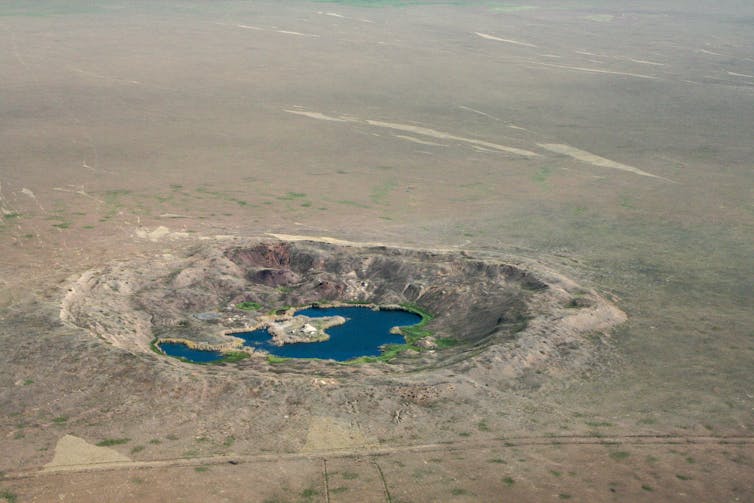
A crater in the ground filled with a murky substance and surrounded by barren land.
Craters and boreholes dot the former Soviet Union nuclear test site Semipalatinsk in what is today Kazakhstan.
(The Official CTBTO Photostream/Flickr), CC BY

Nuclear Truth Project

Seitenova introduced her film in March 2025 at the United Nations headquarters in New York, hosted by the Nuclear Truth Project. The documentary premiere was a side event at the Third Meeting of States Parties to the Treaty on the Prohibition of Nuclear Weapons.

‘What is the Treaty on the Non-Proliferation of Nuclear Weapons?’ United Nations video.

As a literary and cultural historian who examines narratives of the nuclear age, I attended the standing-room-only event alongside many delegates from civil society organizations.

Nuclear disarmament activist

Seitenova, who wrote, directed and produced JARA Radioactive Patriarchy on location in Semey, aims to bring women’s nuclear stories to Qazaqstan and international audiences.

The 30-minute documentary features intimate interviews with five Qazaq women. The film shares the women’s fears, grief and the ways they have learned to cope, as well as reflections from Seitenova filmed at the ground-zero site.

For Seitenova, it was essential that the film be in Qazaq language.

“Qazaq language, like Qazaq bodies,” she said in an interview after the premiere, “were considered ‘other’ or not valuable.” Seitenova acknowledged it was also important to show a Qazaq-language film at the UN, as Qazaq is not an official UN language like Russian.

Women consensually share experiences

One of Seitenova’s directorial choices was not just what or who would be seen, but specifically what would not be seen in her film.

“I’m really against sensationalism,” said Seitenova. “If you Google ‘Semipalatinsk’ you will see all of these terrible images of children and fetuses.”

Seitenova accordingly does not show any of these images in her film, and instead focuses on women consensually sharing their experiences.

Seitenova explained how narratives regarding the health effects in Semey are often disparaged. When others learn she is from Semey, Seitenova shared, some will make insensitive jokes like “are you luminescent at night?” — making nuclear impact into spectacle, instead of taking it as a serious health issue.

These experiences have propelled her to take back the narrative of her community by correcting misconceptions or the minimization of harms. Instead, she brings attention to the larger structural issues.

“Everything was done by me because I did not want to invite someone who would not take care of the stories of these women,” said Seitenova.

Likewise, Seitenova only interviewed participants who had already made decisions to speak out about nuclear weapons. She did this so as not to risk retraumatizing someone by asking them to discuss their illnesses, especially for the first time on camera.

Global legacy of anti-nuclear art, advocacy

Seitenova also wanted to show a genealogy of women speaking out about nuclear issues in Qazaqstan, contributing to a global legacy of anti-nuclear art and advocacy.

The film features three generations of women, including Seitenova’s great aunt, Zura Rustemova, who was 12 at the time of the first detonations.

As part of this genealogy of nuclear resistance, the film includes footage of a speech from the Qazaq singer Roza Baglanova (1922-2011), who rose to prominence singing songs of hope during the Second World War.

Effects felt into today

JARA Radioactive Patriarchy shows how the impacts of nuclear weapons are felt intergenerationally into the present.

“Many women lost their ability to experience the happiness of motherhood,” interviewee Maira Abenova says in the film. Abenova co-founded an advocacy group representing survivors of the detonations, Committee Polygon 21.

Other interviewees shared how often men left their wives and children who were affected by nuclear weapons to begin a new family with someone else.

Seitenova looks at the roles of women and mothers not just as protectors, but also as those who have launched formidable advocacy.

The film highlights the towering monument in Semey, “Stronger than Death,” dedicated to those affected by nuclear weapons.

A tall sculpture showing a mushroom cloud shape and a woman's silhouette underneath shielding a child
‘Stronger Than Death’ monument in Semey, Kazakhstan.
(Wikidata), CC BY

The Semey monument depicts a mother using her whole body to protect her child from a mushroom cloud. Just like the monument, Seitenova and the women in her documentary use the film to show how women have been doing this advocacy work in the private and public spheres, with their bodies and with their words.

“I want to show them as being leaders in the community, as changing the game,” Seitenova said.

While the film brings a much-needed attention to the gendered impact of nuclear weapons in Qazaqstan, she makes clear that this is, unfortunately, not an issue unique to her homeland or just to women.

“The next time you think about expanding the nuclear sector in any country” Seitenova said, “you can think about how it impacts people of all genders.”

The Conversation

Rebecca H. Hogue does not work for, consult, own shares in or receive funding from any company or organisation that would benefit from this article, and has disclosed no relevant affiliations beyond their academic appointment.

ref. ‘Radioactive patriarchy’ documentary: Women examine the impact of Soviet nuclear testing – https://theconversation.com/radioactive-patriarchy-documentary-women-examine-the-impact-of-soviet-nuclear-testing-256775

Africa has a debt crisis: momentum from G20 in South Africa can help find solutions

Source: The Conversation – Africa – By Danny Bradlow, Professor/Senior Research Fellow, Centre for Advancement of Scholarship, University of Pretoria

The end of South Africa’s G20 presidency does not mean the end of its ability or responsibility to promote the issues it prioritised during 2025. It can still advocate for action on some of these issues through its further participation in the G20 and in other international and regional forums.

In this article, I argue that going forward South Africa should prioritise the financial challenges confronting Africa that it championed in 2025.

South Africa established four overarching priorities for its G20 presidency. Two of them dealt with finance. One sought to “ensure debt sustainability for low-income countries”. The other was to mobilise finance for a just energy transition.

The importance of debt, development finance and climate to Africa’s future is clear. Over half of African countries are either in debt distress or at risk of being in distress. More than half of Africa’s population live in countries that are spending more on servicing their debt than on health and/or education.

In addition, 17 African countries experienced net debt outflows in 2023. This means that they were using more foreign exchange to pay their external creditors than they received in new debts that could be used to finance their development. The continent is also experiencing extreme weather events that are adversely affecting food security and human wellbeing.

In short, African countries are caught in a vicious cycle. The impacts of climate and their struggle to meet their debt obligations are interacting in ways that undermine their ability to meet their sustainable development goals.

South Africa’s priorities

South Africa’s priorities for its G20 presidency were ambitious. Success required meaningful action at three levels:

Awareness. South Africa would need to bring the international community to a better understanding of the nature of the debt and development finance challenges confronting African countries and of the consequences of failing to address them.

Process. South Africa would need to convince the G20 to correct the shortcomings in the Common Framework it had devised to deal with low-income countries seeking debt relief.

The examples of Zambia and Ghana showed that the Common Framework was cumbersome, slow and unduly favourable to creditors. For example the framework requires the debtor to engage separately with each group of its creditors in a sequential process. This means that it should not negotiate with its commercial creditors until it has successfully negotiated with its official creditors.

Commercial creditors can’t give debt relief until the official creditors are satisfied with their deal and are confident that the commercial creditors will not receive more favourable treatment from the debtor than they have received.

Another complication is the IMF’s multiple roles in debt restructurings as an advisor to and a creditor of the debtor countries. In addition, it does the debt sustainability analysis that determines the amount of debt relief that all other creditors are expected to provide to the debtor country in order for it to regain debt sustainability. The more optimistic its assessment, the smaller the contributions the various creditors, including the IMF, are expected to provide. These contributions can either be in the form of new funding or new debt terms.

Substance. The current debt restructuring process treats debt as a technical financial and legal problem rather than as the complex multifaceted problem that is experienced by debtor countries. The former perspective limits the scope of debtor-creditor negotiations to the terms of the financial contracts.

The negotiations focus on the adjustments that must be made to these terms because the debtor cannot comply with its originally accepted obligations. They treat as largely outside the scope of the discussions the adverse impact the debt situation has on the sovereign debtor’s other legal obligations and on the social, political, environmental and cultural situation in the debtor country.

This approach in effect leaves the debtor to deal with these other issues on its own. This artificial distinction between the debtors’ other legal obligations and those it owes to its creditors makes it very difficult for the debtor to escape the vicious debt, development and climate cycle in which it is trapped. It forces it to choose between its commitments to its creditors and its development obligations.

Over the course of 2025, South Africa has been very effective in raising awareness of the African debt crisis and its dire impact on African countries. South Africa persuaded the G20 finance ministers and central bank governors to issue a declaration on debt sustainability at the end of their October meeting.

The declaration is the G20’s eloquent acknowledgement of the problem and of the need for more discussion of how these debt issues are managed by both debtors and creditors. Unfortunately, it does not contain any firm G20 commitments on what it will do to remedy the situation.

There has not been substantial progress at the process and substance levels. This is unlikely to change in the remaining weeks of South Africa’s G20 presidency.

But there are three actions that South Africa can take beyond the end of its term to ensure that the African debt crisis continues receiving attention.

Three actions

First, it should ask a group like the African Expert Panel that it established to advise the president to prepare a technical report that identifies and analyses all the barriers to Africa accessing affordable, sustainable and predictable flows of external development finance.

This report should be submitted to the South African president in the first half of 2026. Next year, South Africa will still be a member of the G20 Troika, which consists of the current, immediate past and the incoming G20 presidents. Consequently, next year, it will still be able to table the report at the G20. South Africa can also use the report to promote action in other appropriate regional and global forums.

Second, South Africa and the African Union should create an African Borrower’s Club that is independent of the G20. This club should be a forum in which African sovereign debtors can share information and lessons learned about negotiating sovereign debt transactions and about responsible debt management. When appropriate, the club can work with regional African financial institutions.

The club, working with regional organisations like the African Legal Support Facility, can also sponsor workshops in which interested African sovereign debtors can share information and more critically assess their financing options. They can also work to improve their bargaining capacity in sovereign debt transactions.

The African Borrower’s Club should also be mandated to establish an African Sovereign Debt Roundtable that is modelled on the Global Sovereign Debt Roundtable. This entity should be an informal forum, based on the Chatham House Rule in which the various categories of stakeholders in African debt can meet to discuss the design of a sovereign debt restructuring process that is effective, efficient and fair and that adopts an holistic approach to a sovereign debt crisis.

Third, South Africa should capitalise on the fact that the impacts of climate, inequality, unemployment and poverty on Africa’s development prospects are now acknowledged to be macro-critical, and so within the IMF’s macro-economic and financial mandate. South Africa should call for a review of the IMF’s operating principles and practices and its governance arrangements.

This call should note that the multilateral development banks have been the object of G20 review for a number of years and that this has resulted in important enhancements in their capital frameworks and operating practices. On the other hand the IMF has not been subject to a similar review despite the fact that its operations have had to undergo possibility even more extensive revisions.

The Conversation

Danny Bradlow, in addition to his position at the University of Pretoria is a Senior Non-Resident Fellow, Global Development Policy Center, Boston University; Senior G20 Advisor, South African Institute of International Affairs and a Compliance Officer, Social and Environmental Compliance Unit, UNDP.

ref. Africa has a debt crisis: momentum from G20 in South Africa can help find solutions – https://theconversation.com/africa-has-a-debt-crisis-momentum-from-g20-in-south-africa-can-help-find-solutions-269004

US-Nigeria relations: what it means to be a ‘country of particular concern’ and why it matters

Source: The Conversation – Africa (2) – By Saheed Babajide Owonikoko, Researcher, Centre for Peace and Security Studies, Modibbo Adama University of Technology

For the second time in five years, Nigeria has been designated a “country of particular concern” by the US government, in both cases by President Donald Trump. The first time was in 2020 but the designation was removed in 2021.

The November 2025 redesignation can be traced to, among other things, a campaign by US congressman Riley Moore, who alleged that there was an “alarming and ongoing persecution of Christians” in Nigeria.

Nigeria refuted this claim. President Bola Tinubu, in a statement, argued that the US characterisation of Nigeria did not reflect the country’s reality or values.

But what does the designation mean for Nigeria? And what should Nigeria’s response be? As a scholar who has studied Nigeria’s insecurity and identity crises, I have some suggestions.

Nigeria must prevent the diplomatic row with the US from progressing further, and act decisively against insecurity for all Nigerians.

To achieve this, the Nigerian government should look beyond military capability. The country needs governance and administrative restructuring that empowers sub-national and local authorities to address local issues. This bottom-up approach will address insecurity better than the current top-down approach.

What ‘country of particular concern’ means

The classification of a country as being of particular concern is outlined in the United States International Religious Freedom Act (IRFA) of 1998. Under section 402 of the act, “country of particular concern” is a designation given to a foreign country whose government has engaged in or tolerated especially severe violations of the religious freedom of its citizens.

By this definition, a country may not be directly involved in violating its citizens’ religious freedom, but culpable for not acting decisively against those who do.

For a country to be classified as such, it is first placed on a special watch list. This allows for an assessment of whether there is a serious violation of religious freedom.

The designation is part of US foreign policy for promoting human rights globally.

Why Nigeria was given this status

Nigeria was designated a country of particular concern because of allegations of “genocide” against Christians there. Since Nigeria’s independence in 1960, identity conflicts have become a common occurrence. But there’s a new dimension with the emergence of terror groups and intensifying farmer-herder disputes.

A study I conducted in early 2025 revealed that between 2010 and 2022, a total of 230 attacks specifically targeted Christians, 82 of which were between 2019 and 2022.

Several other attacks, such as the Runji killing in Kaduna State in April 2023, the Apata and Yelwata massacres in Benue State in March and June 2025, respectively, and the Mangu killings in Plateau State, have also taken place.

This shows that there are targeted attacks against Christians in parts of Nigeria. But they are a fraction of the attacks and killings carried out by non-state armed groups in the country.

As one study argued, Christians make up roughly half of Nigeria’s population, but attacks explicitly directed against them account for about 5% of total reported violent incidents.

Therefore, framing Nigeria’s insecurity in terms of anti-Christian violence alone oversimplifies the broader dynamics of the country’s national insecurity.

How this will affect Nigeria

The International Religious Freedom Act stipulates 15 required sanctions under section 405(a). Section 407 allows the president of the US to waive these sanctions based on national interest or to further the purpose of the act. For this reason, in most cases, the designation is seldom followed by sanctions.

Several countries have been exempted from sanctions even when designated as countries of particular concern. Pakistan, Saudi Arabia, Tajikistan, Turkmenistan and Uzbekistan have been repeatedly designated but the US has never sanctioned them.

Even Nigeria’s designation in 2020 was not followed by sanctions. The US continued to provide security assistance, military cooperation and development aid to Nigeria. The US only used the period of designation to call for improved protection of religious communities and accountability for perpetrators.

For the recent designation, however, Trump has threatened to cut aid to Nigeria and take military action against terrorists in Nigeria.

The US, through the US Agency for International Development, provided development assistance worth US$7.89 billion between 2015 and 2024 to support health, education, economic and humanitarian development. But all of that has reduced since the scrapping of the agency and a drop in foreign aid.

US security aid to Nigeria remains significant. It approved sales of sophisticated precision military weapons worth US$346 million to Nigeria and has offered training support for Nigerian soldiers.

The US could end that deal, but that would undermine Nigeria’s ability to address terrorism and general security challenges. It would counter the purpose of the International Religious Freedom Act. Therefore, I believe the US may waive this.

Direct military intervention in Nigeria is becoming a possibility and Trump is most likely going to do it without respect for Nigeria’s sovereignty. He has ordered the US Department of War to draw up plans, and they have come up with options. But I do not see this solving the problem of insecurity in Nigeria. It may instead lead to the dispersal of terrorists, complicating Nigeria’s insecurity. Or terrorists might increase mass kidnappings and hostage-taking for shields.

How Nigeria should respond

Nigeria must prevent diplomatic rows with the US because they are partners in the fight against terrorism. A discussion about how the US can improve Nigeria’s capacity to address its security challenges would be a good step.

Furthermore, Nigeria’s limited capacity to safeguard lives and property points to deeper structural and governance challenges. The country’s security architecture is too centralised and works top-down. This makes it harder for sub-national and local authorities to provide security and address the drivers of violence at the local level.

Nigeria should go beyond improving its military response. To enhance security, it also needs to reform its governance and administrative structures.

The Conversation

Saheed Babajide Owonikoko does not work for, consult, own shares in or receive funding from any company or organisation that would benefit from this article, and has disclosed no relevant affiliations beyond their academic appointment.

ref. US-Nigeria relations: what it means to be a ‘country of particular concern’ and why it matters – https://theconversation.com/us-nigeria-relations-what-it-means-to-be-a-country-of-particular-concern-and-why-it-matters-269044

Guinea-Bissau’s presidential poll has already failed the credibility test

Source: The Conversation – Africa (2) – By Jonathan Powell, Visiting assistant professor, University of Kentucky

Guinea-Bissau heads into its November elections against the backdrop of a deepening crisis of electoral legitimacy across Africa. In recent months, a string of elections has reinforced the perception that incumbency, not competition, remains the standard.

In Cameroon, 92-year-old Paul Biya claimed an eighth consecutive term after officially winning 53.7% of a vote widely denounced as fraudulent and met with protests.


Read more:
Paul Biya’s life presidency in Cameroon enters a fragile final phase


In Tanzania, President Samia Suluhu Hassan was declared the victor with an implausible 98% of ballots cast in her favour following a poll marred by numerous irregularities and followed by protests and a crackdown unprecedented in the country’s history.


Read more:
Tanzania: President Samia Hassan’s grip on power has been shaken by unprecedented protests


And in Côte d’Ivoire, President Alassane Ouattara comfortably secured a fourth term with nearly 90% of the vote, extending his hold on power despite the constitution’s two-term limit.


Read more:
Côte d’Ivoire’s elections have already been decided: Ouattara will win and democracy will lose


Across the continent, including west Africa, these outcomes have fuelled public cynicism and highlighted a worrying erosion of democratic norms, as leaders manipulate constitutions, neutralise opponents, and hollow out institutions meant to safeguard accountability.

It is within this climate of regional disillusionment that Bissau-Guineans will head to the polls on 23 November.

The west African country’s upcoming election once offered the potential to demonstrate a growing electoral resilience, a deepening of institutional strength that would help the country break from past legacies of instability. Instead, the process has been repeatedly undermined by President Umar Sissoco Embaló.

As social scientists who have written extensively on political instability in Africa, we believe that such dynamics all but guarantee another entry to the roster of failed elections across the region.

At stake is more than Guinea-Bissau’s democratic credibility. Its unravelling speaks to a wider regional crisis in which incumbents erode legitimacy not by abolishing elections, but by emptying them of real competition.

A legacy of instability

In contrast to long-tenured leaders like Biya or Ouattara, or enduring parties such as Tanzania’s Chama Cha Mapinduzi (CCM), Guinea-Bissau’s voters navigate an electoral system defined by unpredictability and instability, especially during election season.

The country’s modern electoral turbulence can be traced back decades. João Bernardo “Nino” Vieira returned to power in 2005 for a second stint, nearly a quarter-century after first seizing control via a 1980 coup.

His rule was marred by conflict, including an 11-month civil war triggered by a rebellion from former army chief of staff Ansumane Mané. Vieira’s long first tenure ended in a second coup in May 1999, and his second term was cut short in 2009 when he was murdered by members of the armed forces.

Malam Bacai Sanhá emerged as Vieira’s elected successor but passed away in January 2012, leaving Raimundo Pereira as interim president. Within months, Pereira would be removed in yet another military coup.

The 2012 upheaval halted a runoff election between Carlos Domingos Gomes Júnior and Kumba Ialá.

The 2014 election brought José Mário Vaz to the presidency, defeating a candidate with close ties to the military. When Vaz completed his term in 2020, he became Guinea-Bissau’s first president to finish a constitutionally defined tenure.


Read more:
Guinea-Bissau’s political crisis: a nation on the brink of authoritarianism


Undermining the process

Questions arose even before Vaz’s exit. After Umar Sissoco Embaló was declared the winner over Pereira in the 29 December runoff, Pereira challenged the results. Ignoring the ongoing legal process, Embaló arranged an inauguration ceremony for himself in February 2020.

The African Party for Independence of Guinea and Cape Verde (PAIGC) accused Embaló of orchestrating a coup and appointed Cipriano Cassamá as an interim president.

Embaló then ordered the deployment of the military to state institutions, including the National Assembly. Cassamá stepped down on his second day, citing death threats.

The supreme court ultimately declined to rule on the dispute after its chief judge fled the country, also citing death threats. The crisis was effectively resolved by the Economic Community of West African States’ (Ecowas) recognition of the Embaló government. Uncertainty, however, would continue to plague the new government.

In May 2022, three months after an attempted coup, Embaló dissolved and suspended parliament.

The main opposition party, the PAIGC, formally regained parliamentary control in the June 2023 elections, setting the stage for continued confrontation between the presidency and the legislative majority. Embaló again pursued the dissolution of parliament in December 2023.

Although Embaló’s term officially expired in February 2025, the supreme court later ruled he could remain in office until 4 September.

Even after that date, Embaló remained in office. These manoeuvres have heightened concerns about the erosion of constitutional norms.

Concerns over the broader electoral environment have also come to the fore. Legislative elections initially scheduled for late November 2024 were indefinitely postponed due to alleged funding and logistical challenges. Earlier, Embaló had declared he would not seek reelection, only to reverse course in March 2025.

A mediation team deployed by the Economic Community of West African States, tasked with helping the sides agree to and honour an election timeline, abruptly withdrew following threats of expulsion from the Embaló government.

More recently, the PAIGC’s chosen presidential candidate, Domingos Simões Pereira, was barred from contesting the November election after the supreme court rejected his candidacy over the late submission of documents.

For the first time in Guinea-Bissau’s history, the country’s oldest and most influential party will be excluded from the presidential race.

The country has fallen in the Electoral Democracy Index, provided by the Varieties of Democracy (V-Dem). As shown in the graph below, the decline even outpaces the drop witnessed after military coups in 2003, 2012, and the assassination of Vieira in 2009.

The V-Dem data end in 2024, and thus do not yet capture the 2025 election cycle.

Performative elections, entrenched power

What is unfolding in Guinea-Bissau is not an isolated crisis. It is part of a wider regional pattern in which leaders recognise that elections can be held, even celebrated, while hollowing out nearly everything that once made them meaningful. Critically, the recent coups in the region have been linked, in part, to popular frustration with flawed electoral processes.

Embaló has not entrenched himself with the personal longevity of Cameroon’s Biya or the institutional dominance of Tanzania’s CCM, but the mechanisms he has used to tilt the field look strikingly similar.

The removal of viable opponents, the manipulation of constitutional timelines, the coercive use of the security sector, and the corrosion of judicial independence all signal a shift away from accountability.

Guinea-Bissau was for the first time in decades poised to demonstrate that democratic resilience could be strengthened. Instead, the 2025 election cycle risks becoming another example of how fragile gains can be reversed with impunity.

The Conversation

The authors do not work for, consult, own shares in or receive funding from any company or organisation that would benefit from this article, and have disclosed no relevant affiliations beyond their academic appointment.

ref. Guinea-Bissau’s presidential poll has already failed the credibility test – https://theconversation.com/guinea-bissaus-presidential-poll-has-already-failed-the-credibility-test-269461

Violence is a normal part of life for many young children: study traces the mental health impacts

Source: The Conversation – Africa (2) – By Kirsten A Donald, Professor of Paediatric Neurology and Development, University of Cape Town

By Teresa – Scan on Xerox DocuColor 2240, CC BY-SA 3.0, CC BY

Children in many countries are growing up surrounded by violence. It may happen at home, in their neighbourhoods, or both. Some children are directly harmed, while others witness violence between caregivers or in their communities. Either way, the impact can be profound.

Evidence shows that the relationship between violence exposure and poor mental health can be seen even before a child is old enough to go to school. Researchers are learning that early adversities can have lifelong consequences.

We are researchers in paediatric neuroscience and psychology who set out to understand how early experiences of violence are shaping young children’s cognitive and emotional health in low- and middle-income countries. Here we discuss our findings from a review of studies from 20 countries and new data from a large cohort of children in South Africa.

We found that violence exposure is extremely common in all the countries we looked at and that its effects on mental health are already visible in childhood.

The response will require action at all levels – families, communities, health systems and governments.

Gaps in the research

Early childhood (birth to 8 years) is a critical period for emotional, social and cognitive development. Mental health or cognitive difficulties that begin in the preschool years can shape children’s relationships, learning and wellbeing well into adolescence and adulthood. Yet, little is known about how violence affects children in the early years in low – and middle-income countries, where violence rates can be high. Most research focuses on school-age children or adolescents, missing the window when prevention may be most effective, in early childhood.

We aimed to fill that gap by collating existing knowledge and generating new evidence from South African children. This formed the basis of co-author Lucinda’s PhD thesis.

First, we reviewed 17 published studies from 20 low- and middle-income countries, examining how violence exposure affects children’s cognitive functioning. Second, we used data from almost 1,000 children in the Drakenstein Child Health Study, a long-running birth cohort in a peri-urban community outside Cape Town. We examined these children’s exposure to different types of violence by age four-and-a-half and assessed their mental health at age five.

What we found

Sadly, our findings revealed that violence exposure is extremely common.

The review found that over 70% of the studies drawing from 27,643 children from 20 countries, aged up to 11, across four continents, reported poor cognitive outcomes associated with experiencing maltreatment, intimate partner violence and war.

In our South African cohort, by age 4.5 years, 83% of children were exposed to some form of violence. This included witnessing community violence (74%), witnessing domestic violence (32%), and being direct victims in the community (13%) or at home (31%). Nearly half (45%) experienced more than one type of violence.


Read more:
Why South Africa’s children are vulnerable to violence and injuries


In many countries, early exposure to violence is not exceptional. It is a normal part of growing up for many children.

Regarding how violence affects mental health in early childhood, the South African data showed that preschool children exposed to more violence displayed more internalising symptoms, such as anxiety, fear, or sadness, and externalising symptoms, such as aggression, hyperactivity, and rule-breaking. Experiencing violence at home and witnessing violence in the community were particularly linked with these difficulties.

One of the clearest findings was that multiple exposures compounded the risk. Children who experienced both domestic and community violence were at particularly high risk of mental health difficulties, especially experiencing externalising symptoms.

Public health challenge

These results highlight a major public health challenge, which starts early. These patterns appear before school entry, suggesting that violence exposure can alter developmental pathways well before formal education begins.

Since the risks from mental health difficulties linked to violence were visible by age five, waiting to intervene until school-age misses a crucial opportunity.

Impacts to wellbeing in early childhood can cause some children to internalise distress and others to act out, but both can disrupt learning, relationships and future mental health.

It is a stark reality that in some communities, most children are affected by violence. Individual therapy alone cannot fix a problem this widespread. It is a population-level issue. Broader community and policy responses are needed, such as the INSPIRE strategies developed by the World Health Organization.

Where to from here

The reality is grim and calls for quick and informed action at all levels: families, communities, health systems, and governments. A successful response will include:

  1. Early identification: Health and community services should routinely ask about violence exposure, including witnessing violence, during early childhood visits.

  2. Support for families: Interventions that reduce domestic violence, strengthen parenting skills, and provide mental health and social support can protect both children and adults.

  3. Addressing community violence: Safer neighbourhoods, violence prevention efforts and policing reforms should be implemented and also clearly linked with child mental health strategies in policy wording.

  4. Policy that prioritises early childhood: Governments and NGOs should embed early violence prevention and child mental health promotion into national health and education strategies.

  5. Monitoring and revising strategies: Improving data collection and data quality will help track progress and inform improvements to further interventions.


Read more:
Violence against children carries a huge cost for Africa: governments need to act urgently


Violence exposure in early childhood is widespread in low- and middle-income countries and has clear impacts on young children’s mental health. These effects emerge early, grow with multiple exposures, and require early intervention at every level. Protection and support are essential to build healthier and safer communities for the future.

There is hope as some organisations in South Africa are working to prevent violence against women and children, and intervening for those affected.

The Conversation

Lucinda Tsunga received funding from the University of Bristol’s (i) Pro Vice-Chancellor (PVC)-Research and Enterprise Strategic Research Fund and (ii) The Quality-related Research Global Challenges Research Fund (QRGCRF) Strategy funded by Research England during the course of her Dctoral studies.

Kirsten A Donald does not work for, consult, own shares in or receive funding from any company or organisation that would benefit from this article, and has disclosed no relevant affiliations beyond their academic appointment.

ref. Violence is a normal part of life for many young children: study traces the mental health impacts – https://theconversation.com/violence-is-a-normal-part-of-life-for-many-young-children-study-traces-the-mental-health-impacts-268512

US drops tariffs on $2b of NZ exports

Source: Radio New Zealand

Minister for Trade and Investment Todd McClay

Trade Minister Todd McClay. Photo: RNZ / Samuel Rillstone

Tariffs have been removed from more than $2 billion worth of New Zealand’s exports to the United States, Trade Minister Todd McClay says.

US president Donald Trump on Friday (US time) signed an executive order cancelling tariffs on a wide range of food imports, including New Zealand beef and kiwifruit.

The new exemptions marked a sharp reversal, as Trump had long insisted his import duties were not fueling inflation for Americans.

But McClay said climbing prices and declining supply may have prompted the president to change tack.

“If you’re not getting as much beef coming in because of the tariff rate, there are shortages and prices will go up.”

The US buys New Zealand beef because it is high quality and the country does not produce enough of its own, said McClay.

The minister expected beef exports would return to the volume from before the tariffs were introduced.

He said about a quarter of New Zealand’s trade to the US had tariffs removed, but he wanted more products stripped of the taxes.

“I and the prime minister have consistently made the case that we don’t think it’s justified, that our trade is complementary and well-balanced.

“But in the case of the change, particularly for kiwifruit worth about $250 million a year and meat or beef exports about $2b a year for New Zealand, this is welcome news and we would hope there could be more over time.”

Meat Industry Association chief executive Nathan Guy said it was surprising but exciting news for farmers and processors.

“We’ve always thought these tariffs could indeed be inflationary for US consumers,” he said.

“This is a very important market for us, indeed it is our number one, despite the 15 percent tariffs, because the demand has been so strong in the US.”

Guy said it seemed beef would revert back to a 1 percent tariff which was “business as usual” – but lamb was still subject to 15 percent.

“We’ll keep raising that issue, we’ll work with the New Zealand Government and indeed ministers and officials and even the prime minister.”

He was pleased to see prime minister Christopher Luxon recently met with Donald Trump, and believed New Zealand’s relationship with the US was “in good heart”.

“This is a positive step forward.”

The change would restore a level playing field with key competitors like Australia, which had avoided the extra tariffs, Guy said.

Sign up for Ngā Pitopito Kōrero, a daily newsletter curated by our editors and delivered straight to your inbox every weekday.

– Published by EveningReport.nz and AsiaPacificReport.nz, see: MIL OSI in partnership with Radio New Zealand

Can you really talk to the dead using AI?

Source: Radio New Zealand

From text-based chatbots that mimic loved ones to voice avatars that let you “speak” with the deceased, artificial intelligence (AI) is increasingly being used to preserve the voices and stories of the dead.

In our research, recently published in Memory, Mind & Media, we explored what happens when remembering the dead is left to an algorithm.

We even tried talking to digital versions of ourselves to find out.

A senior man looks out the window as he talks on the phone.

AI memorial platforms encourage users to “capture their loved one’s story forever”, but they also harvest their data to keep engagement high.

Getty Images / Unsplash +

– Published by EveningReport.nz and AsiaPacificReport.nz, see: MIL OSI in partnership with Radio New Zealand

Why the chemtrail conspiracy theory lingers and grows – and why Tucker Carlson is talking about it

Source: The Conversation – USA – By Calum Lister Matheson, Associate Professor of Communication, University of Pittsburgh

Contrails have a simple explanation, but not everyone wants to believe it. AP Photo/Carolyn Kaster

Everyone has looked up at the clouds and seen faces, animals, objects. Human brains are hardwired for this kind of whimsy. But some people – perhaps a surprising number – look to the sky and see government plots and wicked deeds written there. Conspiracy theorists say that contrails – long streaks of condensation left by aircraft – are actually chemtrails, clouds of chemical or biological agents dumped on the unsuspecting public for nefarious purposes. Different motives are ascribed, from weather control to mass poisoning.

The chemtrails theory has circulated since 1996, when conspiracy theorists misinterpreted a U.S. Air Force research paper about weather modification, a valid topic of research. Social media and conservative news outlets have since magnified the conspiracy theory. One recent study notes that X, formerly Twitter, is a particularly active node of this “broad online community of conspiracy.”

I’m a communications researcher who studies conspiracy theories. The thoroughly debunked chemtrails theory provides a textbook example of how conspiracy theories work.

Boosted into the stratosphere

Conservative pundit Tucker Carlson, whose podcast averages over a million viewers per episode, recently interviewed Dane Wigington, a longtime opponent of what he calls “geoengineering.” While the interview has been extensively discredited and mocked in other media coverage, it is only one example of the spike in chemtrail belief.

Although chemtrail belief spans the political spectrum, it is particularly evident in Republican circles. U.S. Secretary of Health and Human Services Robert F. Kennedy Jr. has professed his support for the theory. U.S. Rep. Marjorie Taylor Greene of Georgia has written legislation to ban chemical weather control, and many state legislatures have done the same.

Online influencers with millions of followers have promoted what was once a fringe theory to a large audience. It finds a ready audience among climate change deniers and anti-deep state agitators who fear government mind control.

Heads I win, tails you lose

Although research on weather modification is real, the overwhelming majority of qualified experts deny that the chemtrail theory has any solid basis in fact. For example, geoengineering researcher David Keith’s lab posted a blunt statement on its website. A wealth of other resources exist online, and many of their conclusions are posted at contrailscience.com.

But even without a deep dive into the science, the chemtrail theory has glaring logical problems. Two of them are falsifiability and parsimony.

The philosopher Karl Popper explains that unless your conjecture can be proved false, it lies outside the realm of science.

According to psychologist Rob Brotherton, conspiracy theories have a classic “heads I win, tails you lose” structure. Conspiracy theorists say that chemtrails are part of a nefarious government plot, but its existence has been covered up by the same villains. If there was any evidence that weather modification was actually happening, that would support the theory, but any evidence denying chemtrails also supports the theory – specifically, the part that alleges a cover-up.

People who subscribe to the conspiracy theory consider anyone who confirms it to be a brave whistleblower and anyone who denies it to be foolish, evil or paid off. Therefore, no amount of information could even hypothetically disprove it for true believers. This denial makes the theory nonfalsifiable, meaning it’s impossible to disprove. By contrast, good theories are not false, but they must also be constructed in such a way that if they were false, evidence could show that.

Nonfalsifiable theories are inherently suspect because they exist in a closed loop of self-confirmation. In practice, theories are not usually declared “false” based on a single test but are taken more or less seriously based on the preponderance of good evidence and scientific consensus. This approach is important because conspiracy theories and disinformation often claim to falsify mainstream theories, or at least exploit a poor understanding of what certainty means in scientific methods.

Like most conspiracy theories, the chemtrail story tends not to meet the criteria of parsimony, also known as Occam’s razor, which suggests that the more suppositions a theory requires to be true, the less likely it actually is. While not perfect, this concept can be an important way to think about probability when it comes to conspiracy theories. Is it more likely that the government is covering up a massive weather program, mind-control program or both that involve thousands or millions of silent, complicit agents, from the local weather reporter to the Joint Chiefs of Staff, or that we’re seeing ice crystals from plane engines?

Of course, calling something a “conspiracy theory” does not automatically invalidate it. After all, real conspiracies do exist. But it’s important to remember scientist and science communicator Carl Sagan’s adage that “extraordinary claims require extraordinary evidence.” In the case of chemtrails, the evidence just isn’t there.

Scientists explain how humans are susceptible to believing conspiracy theories.

Psychology of conspiracy theory belief

If the evidence against it is so powerful and the logic is so weak, why do people believe the chemtrail conspiracy theory? As I have argued in my new book, “Post-Weird: Fragmentation, Community, and the Decline of the Mainstream,” conspiracy theorists create bonds with each other through shared practices of interpreting the world, seeing every detail and scrap of evidence as unshakable signs of a larger, hidden meaning.

Uncertainty, ambiguity and chaos can be overwhelming. Conspiracy theories are symptoms, ad hoc attempts to deal with the anxiety caused by feelings of powerlessness in a chaotic and complicated world where awful things like tornadoes, hurricanes and wildfires can happen seemingly at random for reasons that even well-informed people struggle to understand. When people feel overwhelmed and helpless, they create fantasies that give an illusion of mastery and control.

Although there are liberal chemtrail believers, aversion to uncertainty might explain why the theory has become so popular with Carlson’s audience: Researchers have long argued that authoritarian, right-wing beliefs have a similar underlying structure.

On some level, chemtrail theorists would rather be targets of an evil conspiracy than face the limits of their knowledge and power, even though conspiracy beliefs are not completely satisfying. Sigmund Freud described a fort-da (“gone-here”) game played by his grandson where he threw away a toy and dragged it back on a string, something Freud interpreted as a simulation of control when the child had none. Conspiracy theories may serve a similar purpose, allowing their believers to feel that the world isn’t really random and that they, the ones who see through the charade, really have some control over it. The grander the conspiracy, the more brilliant and heroic the conspiracy theorists must be.

Conspiracies are dramatic and exciting, with clear lines of good and evil, whereas real life is boring and sometimes scary. The chemtrail theory is ultimately prideful. It’s a way for theorists to feel powerful and smart when they face things beyond their comprehension and control. Conspiracy theories come and go, but responding to them in the long term means finding better ways to embrace uncertainty, ambiguity and our own limits alongside a new embrace of the tools we do have: logic, evidence and even humility.

The Conversation

Calum Lister Matheson does not work for, consult, own shares in or receive funding from any company or organization that would benefit from this article, and has disclosed no relevant affiliations beyond their academic appointment.

ref. Why the chemtrail conspiracy theory lingers and grows – and why Tucker Carlson is talking about it – https://theconversation.com/why-the-chemtrail-conspiracy-theory-lingers-and-grows-and-why-tucker-carlson-is-talking-about-it-269770

Blue Origin’s New Glenn rocket landed its booster on a barge at sea – an achievement that will broaden the commercial spaceflight market

Source: The Conversation – USA – By Wendy Whitman Cobb, Professor of Strategy and Security Studies, Air University

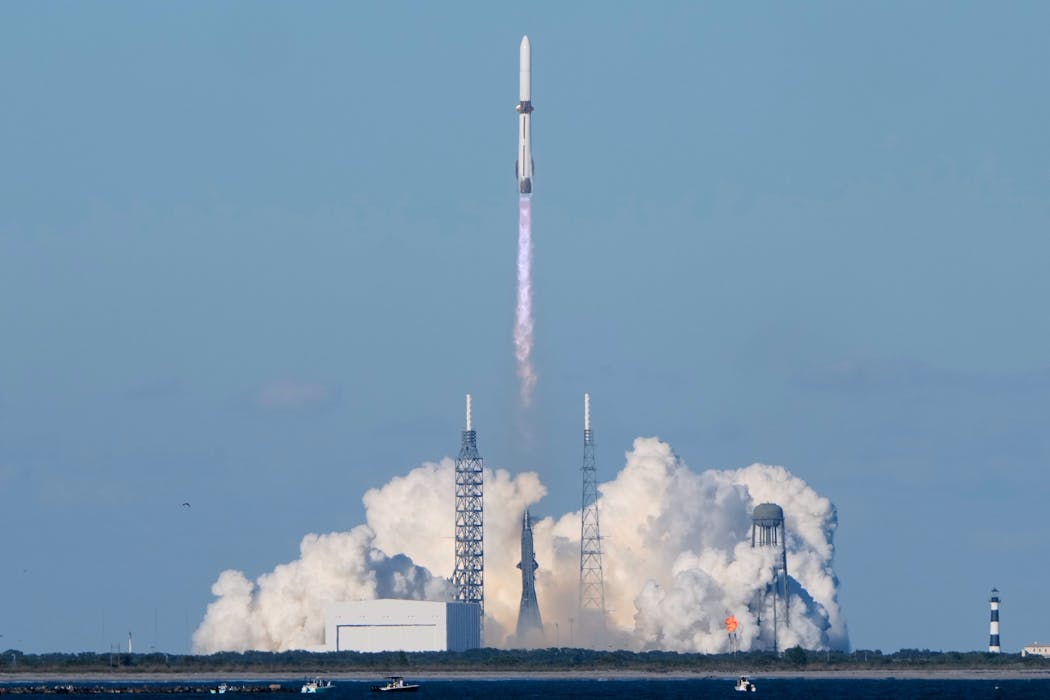
Blue Origin’s New Glenn rocket lifted off for its second orbital flight on Nov. 13, 2025. AP Photo/John Raoux

Blue Origin’s New Glenn rocket successfully made its way to orbit for the second time on Nov. 13, 2025. Although the second launch is never as flashy as the first, this mission is still significant in several ways.

For one, it launched a pair of NASA spacecraft named ESCAPADE, which are headed to Mars orbit to study that planet’s magnetic environment and atmosphere. The twin spacecraft will first travel to a Lagrange point, a place where the gravity between Earth, the Moon and the Sun balances. The ESCAPADE spacecraft will remain there until Mars is in better alignment to travel to.

And two, importantly for Blue Origin, New Glenn’s first stage booster successfully returned to Earth and landed on a barge at sea. This landing allows the booster to be reused, substantially reducing the cost to get to space.

Blue Origin launched its New Glenn rocket and landed the booster on a barge at sea on Nov. 13, 2025.

As a space policy expert, I see this launch as a positive development for the commercial space industry. Even though SpaceX has pioneered this form of launch and reuse, New Glenn’s capabilities are just as important.

New Glenn in context

Although Blue Origin would seem to be following in SpaceX’s footsteps with New Glenn, there are significant differences between the two companies and their rockets.

For most launches today, the rocket consists of several parts. The first stage helps propel the rocket and its spacecraft toward space and then drops away when its fuel is used up. A second stage then takes over, propelling the payload all the way to orbit.

While both New Glenn and Falcon Heavy, SpaceX’s most powerful rocket currently available, are partially reusable, New Glenn is taller, more powerful and can carry a greater amount of payload to orbit.

Blue Origin plans to use New Glenn for a variety of missions for customers such as NASA, Amazon and others. These will include missions to Earth’s orbit and eventually to the Moon to support Blue Origin’s own lunar and space exploration goals, as well as NASA’s.

NASA’s Artemis program, which endeavors to return humans to the Moon, is where New Glenn may become important. In the past several months, several space policy leaders, as well as NASA officials, have expressed concern that Artemis is progressing too slowly. If Artemis stagnates, China may have the opportunity to leap ahead and beat NASA and its partners to the lunar south pole.

These concerns stem from problems with two rockets that could potentially bring Americans back to the Moon: the space launch system and SpaceX’s Starship. NASA’s space launch system, which will launch astronauts on its Orion crew vehicle, has been criticized as too complex and costly. SpaceX’s Starship is important because NASA plans to use it to land humans on the Moon during the Artemis III mission. But its development has been much slower than anticipated.

In response, Blue Origin has detailed some of its lunar exploration plans. They will begin with the launch of its uncrewed lunar lander, Blue Moon, early next year. The company is also developing a crewed version of Blue Moon that it will use on the Artemis V mission, the planned third lunar landing of humans.

Blue Origin officials have said they are in discussions with NASA over how they might help accelerate the Artemis program.

New Glenn’s significance

New Glenn’s booster landing makes this most recent launch quite significant for the company. While it took SpaceX several tries to land its first booster, Blue Origin has achieved this feat on only the second try. Landing the boosters – and, more importantly, reusing them – has been key to reducing the cost to get to space for SpaceX, as well as others such as Rocket Lab.

That two commercial space companies now have orbital rockets that can be partially reused shows that SpaceX’s success was no fluke.

With this accomplishment, Blue Origin has been able to build on its previous experience and success with its suborbital rocket, New Shepard. Launching from Blue Origin facilities in Texas since 2015, New Shepard has taken people and cargo to the edge of space, before returning to its launch site under its own power.

A short, wide rocket lifts off from a launchpad.
Blue Origin’s suborbital rocket, New Shepard.
Joe Raedle/Getty Images

New Glenn is also significant for the larger commercial space industry and U.S. space capabilities. It represents real competition for SpaceX, especially its Starship rocket. It also provides more launch options for NASA, the U.S. government and other commercial customers, reducing reliance on SpaceX or any other launch company.

In the meantime, Blue Origin is looking to build on the success of New Glenn’s launch and its booster landing. New Glenn will next launch Blue Origin’s Blue Moon uncrewed lander in early 2026.

This second successful New Glenn launch will also contribute to the rocket’s certification for national security space launches. This accomplishment will allow the company to compete for contracts to launch sensitive reconnaissance and defense satellites for the U.S. government.

Blue Origin will also need to increase its number of launches and reduce the time between them to compete with SpaceX. SpaceX is on pace for between 165 and 170 launches in 2025 alone. While Blue Origin may not be able to achieve that remarkable cadence, to truly build on New Glenn’s success it will need to show it can scale up its launch operations.

The Conversation

Wendy Whitman Cobb is affiliated with the US School of Advanced Air and Space Studies. Her views are her own and do not necessarily reflect the views of the Department of Defense or any of its components. Mention of trade names, commercial products, or organizations do not imply endorsement by the U.S. Government, and the appearance of external hyperlinks does not constitute DoD endorsement of the linked websites, or the information, products or services therein.

ref. Blue Origin’s New Glenn rocket landed its booster on a barge at sea – an achievement that will broaden the commercial spaceflight market – https://theconversation.com/blue-origins-new-glenn-rocket-landed-its-booster-on-a-barge-at-sea-an-achievement-that-will-broaden-the-commercial-spaceflight-market-269786

Different ‘breeds’ of dog started emerging more than 10,000 years ago

Source: Radio New Zealand

Dogs — in their many shapes and sizes — are considered one of the most diverse species of animals on the planet.

Most of these breeds are thought to have emerged during the 19th-century Victorian era.

But a new paper, published this week in the journal Science, suggests that about half of the vast diversity in dogs we see today was evident by the middle of the Stone Age.

A young woman hugs a brown dog with its tongue out.

Dog breeding by humans has created one of the most diverse species of animal on the planet. (

Wade Austin Ellis

Your dog can read your mind – sort of

A team of researchers across Europe analysed hundreds of dog and wolf skulls spanning the past 50,000 years to track how the animals first emerged.

This evolution might be tied to the animal’s domestication, says Carly Ameen, the study’s co-lead researcher and a bioarchaeologist at the University of Exeter.

“We found that dogs were already remarkably diverse in their skull shapes and sizes more than 11,000 years ago,” Dr Ameen said.

“This means much of the physical diversity we associate with modern breeds actually has very deep roots, emerging soon after domestication.”

Evolving from wolves to dogs

While dogs have been human companions for thousands of years, untangling exactly when our furry friends went from wolves to domestic animals is difficult to do.

Timelines using different scientific techniques to determine when this evolutionary transition occurred don’t match up.

Genetic evidence shows dogs diverged from wolves about 11,000 years ago, but much older fossils suggest the first dogs roamed around as early as 35,000 years ago.

A computer drawing of four skulls.

Modern dogs (pink) and modern wolves (green), have subtle changes in their morphology.

C Brassard / VetAgro Sup / Mecadev

To examine their evolution in a different way, the researchers took 643 skulls of ancient wolves and dogs, and made 3D scans of them to analyse how their shapes changed over time and place.

These subtle shape changes provide clearer evidence of when wolves became dogs, but also of how dogs diversified into the modern era, the researchers said.

Using these 3D models, they found a distinctive dog-like skull shape emerged around 11,000 years ago, which lines up with genetic evidence.

But the models also showed a surprising amount of diversity among ancient dogs across Europe.

“While we don’t see some of the most extreme forms of skull shape that we see today — like pugs or bull terriers — the variation we see by the [middle of the Stone Age] is already half the total amount of variation we see in modern breeds,” Dr Ameen said.

“But for those features to develop, domestication must have started much earlier.”

While the research suggests a large amount of diversity existed as early as the Stone Age, many of the dogs we keep as pets today emerged during the 19th century, when intensive breeding produced speciality animals for fights and shows.

Early humans moved with dogs

Melanie Fillios, an anthropological archaeologist at the University of New England, said the study’s findings — including that almost half the variation in dogs occurred long before the Victorian era — suggested humans weren’t the sole cause of breed diversity.

“There’s all this variability 11,000 years ago, but we’re not sure why,” Professor Fillios, who was not involved in the paper, said.

“Humans have had a hand in it … but there’s also part of the story that may not have been humans.”

A long pale skull sits on a round surface.

A modern dog skull used in a study to track changes in early dogs.

C Ameen / University of Exeter

According to Dr Ameen, the environment may also have shaped the earliest varieties of dogs.

“Some [dogs] lived with mobile hunter-gatherers in cold northern environments, others with groups in temperate forests or early farming communities,” she said.

“Each context brought different demands — for hunting, guarding, or companionship — and that variation likely shaped dogs’ morphology and evolution from the very beginning.”

A brown skull with yellow teeth sits on a round surface.

An archaeological canid skull used in a study to track changes in early dogs.

C Ameen / University of Exeter

A second study, also published today in Science, pushes this idea further, suggesting that dogs likely moved with humans as they began migrating around the globe about 11,000 years ago after the last glacial period ended.

The study’s authors noted that dogs were occasionally traded among populations, which might mean they were important for culture and potentially even trading between groups.

“There’s all of these factors coming together around this time period… You’re getting this giant melting pot,” Professor Fillios said.

Dingoes don’t fit the mould

While Professor Fillios said the study brought together “a lot of information for the first time”, it left plenty of questions still unanswered.

“It’s another piece of the puzzle… but it doesn’t solve the question of dog domestication or human intervention in that process.”

She also noted that studies like this struggled to explain the emergence of species such as dingoes, which occur on an evolutionary “side branch”.

A young dingo looks at the camera.

Dingos have been in Australia for an estimated 3,500 to 8,000 years.

Alex Gisby

It’s unknown how long dingoes have been in Australia, but estimates suggest somewhere between 3,500 and 8,000 years ago.

“It would be a really nice story if all this [dog] diversity … corresponds with genetic evidence, and people moving around the world,” she said.

But when it comes to dingoes, this timeline didn’t work, she said.

“There is no relationship between dingoes and these other branches that came to be the domestic village dogs and Asian and European dogs that we see today.”

For both Dr Ameen and Professor Fillios, more research is needed to understand how dogs first became our companions.

“Dogs were the first species we ever domesticated, and they’ve been evolving with us ever since,” Dr Ameen said.

“While dogs are among the most studied domestic species… a lot remains to be discovered.”

– Published by EveningReport.nz and AsiaPacificReport.nz, see: MIL OSI in partnership with Radio New Zealand