History shows why FEMA is essential in disasters, and how losing independent agency status hurt its ability to function

Source: The Conversation – USA (2) – By Susan L. Cutter, Distinguished Professor of Geography and Director of the Hazards Vulnerability & Resilience Institute, University of South Carolina
FEMA workers help residents who lost homes in the 2025 Los Angeles wildfires apply for aid. Allen J. Schaben/Los Angeles Times via Getty Images

When the head of the Federal Emergency Management Agency’s urban search and rescue team resigned after the deadly July 4, 2025, Texas floods, he told colleagues he was frustrated with bureaucratic hurdles that had delayed the team’s response to the disaster, acccording to media reports. The move highlighted an ongoing challenge at FEMA.

Ever since the agency lost its independent status and became part of the Department of Homeland Security in the early 2000s, it has faced complaints about delays caused by layers of bureaucracy and red tape, leaders at the top with little experience in emergency response, and whiplash policy changes.

Now, the Trump administration is cutting jobs at FEMA and talking about dismantling the agency, which would push more responsibility for disaster response to the states.

Yet, federal emergency management is crucial in America.

I run the Hazards Vulnerability & Resilience Institute at the University of South Carolina and for years have worked with states and communities facing hazards and disasters. To better understand FEMA’s value, let’s take a look back at how the nation responded to disasters before the agency existed, and what history reveals about when FEMA was most effective.

Disaster response without the US government

Before 1950, disaster relief and response were not considered a federal responsibility. When a hurricane, flood or tornado hit, community members and humanitarian groups, such as the American Red Cross or Salvation Army, brought in food, shelter and medical aid and solicited charitable donations to help people rebuild.

State and local governments had primary responsibility for disaster response. But mostly people relied on family, neighbors and charity.

Three men ride on the outside of a car going through floodwater all around it.
The water stretched for miles during the Great Mississippi River Flood. This highway, between the cities of Mounds and Cairo, Ill., was flooded on March 25, 1927.
Archival Photography by Steve Nicklas, NOS, NGS.

Federal aid was approved on a case-by-case basis. War Department guidelines in 1917 stated that aid would be allowed only if a senior military officer certified that responding to the disaster would exceed local and state resources.

Then the Great Mississippi Flood of 1927 and the 1930s Dust Bowl gave new meaning to the concept of disaster in America.

In 1927, the Mississippi River broke through its levees, submerging more than 1 million acres of land across seven states. An estimated 700,000 people were displaced from their homes and workplaces.

Rows of tents with people sitting in front of them.
Thousands of people displaced by the 1927 Mississippi River flood stayed in tents set up by the federal government, like at this refugee camp on high ground in Vicksburg, Miss.
Historic NWS Collection/NOAA via Wikimedia Commons

Herbert Hoover, then U.S. commerce secretary, was given full authority to create, coordinate and carry out the federal relief effort. The Red Cross set up camps using tents provided by the War Department. Coast Guard and Navy boats rescued people stranded by flooding. But the response drew criticism for the lack of direct federal money to help flood survivors and the treatment of Black sharecroppers and laborers.

A few years later, the droughts of the Dust Bowl era began destroying crops in the Great Plains, causing widespread damage.

Federal disaster aid begins to take shape

After the flood, the federal government began to formalize its role in disaster management.

Flood control projects became a federal responsibility with the passage of the Flood Control Act of 1928. President Franklin D. Roosevelt’s New Deal provided emergency relief to farmers in the Great Plains and set up the Soil Conservation Service to help them reduce the effects of future droughts. These were among the first disaster mitigation policies at the federal level.

A farmer tends a young tree.
A farmer in Pratt, Kan., tends to trees planted as part of a Soil Conservation Service effort to help prevent soil from blowing during the Dust Bowl.
AP Photo

There was little coordination among agencies, however. Various aspects of disaster relief and recovery were handled by the departments of Defense, Agriculture, and Housing and Urban Development and the Small Business Administration. Each had its own rules and requirements.

In 1950, Congress passed the Federal Disaster Relief Act, establishing the first permanent authority for federal disaster relief.

The act gave the president the responsibility to determine how aid would be distributed and which agencies would be involved. The legislation also broadened the federal mission to include disaster preparedness and mitigation and formalized the process for issuing presidential disaster declarations.

The creation of FEMA

By the 1970s, large-scale disasters such as hurricanes Betsy (1965) and Camille (1969), and the fragmented disaster response, led the National Governors Association to call for a single comprehensive emergency management agency. Its report provided the blueprint for President Jimmy Carter’s 1979 executive order that established the Federal Emergency Management Agency, or FEMA.

The new agency became the home for emergency management within the executive branch. It was intentionally designed as an independent federal administrative agency that could work across federal agencies to support state and local governments in times of crisis.

People around a table, several with government agency logos on their clothes.
FEMA Director James Lee Witt, second from left, and other federal officials meet with New Jersey Gov. Christine Todd Whitman, Sen. Frank Lautenberg and Rep. Marge Roukema to discuss disaster recovery aid following Hurricane Floyd in 1999.
Andrea Booher/FEMA News Photo

FEMA wasn’t created to lead the disaster response. Instead it helps state and local officials by mobilizing federal resources, such as search and rescue, debris removal and funding when a disaster overwhelms the state’s capacity. FEMA could do this quickly because of established federal contracts and its ability to move equipment and responders into the region before a disaster hits.

When things began to fall apart

However, FEMA’s ability to act fast changed after the Sept. 11, 2001, terrorist attacks. The agency was restructured as a unit in the newly formed Department of Homeland Security. But the Department of Homeland Security’s focus was on terrorism and law enforcement, not natural disasters.

The loss of autonomy and direct reporting to Congress, unfunded mandates outside the scope of the 1988 Stafford Disaster Relief and Emergency Assistance Act, and major increases in the number of large and complex disasters stretched FEMA’s capabilities.

When Hurricane Katrina hit New Orleans in 2005, FEMA’s response drew widespread criticism. It was slow to deploy people and supplies and lacked enough experienced responders who knew what to do. Decision-makers were not familiar with new national response plans. Further breakdowns in communications and a lack of coordination among agencies led Congress to declare the Hurricane Katrina response a failure of initiative and agility.

A woman with a Red Cross T-shirt talks to an evacuee holding a baby and sitting on a cot in the Superdome football stadium. The floor is filled with cots and people.
A Red Cross volunteer talks with a woman whose home flooded during Hurricane Katrina in 2005. The Superdome was turned into an evacuation center and drew widespread complaints about cleanliness and safety.
AP Photo/Andrea Booher

FEMA’s reputation improved after the government brought in more experienced leadership and committed to preparedness planning and better response capabilities.

However, the first Trump administration, from 2017 to 2021, reversed those gains. Three different heads of FEMA in four years led to understaffing and conflicting directions.

FEMA had to battle misinformation during Hurricane Helene in 2024, including some amplified by then-presidential candidate Donald Trump.

As Trump took office for the second time in 2025, he and his administration talked about dismantling FEMA and pushing more disaster management to states. Job cuts and resignations at FEMA reduced the number of employees with training and experience vital in disasters. Political appointees to senior roles in the agency and in the Department of Homeland Security lacked emergency management training and experience.

A new policy that all purchases over US$100,000 be personally approved by Homeland Secretary Kristi Noem led to more resignations. For disaster response, a delay in waiting for a signature to work its way up the chain can cost lives.

What now?

Dismantling FEMA and leaving little or no federal coordination of disaster response puts states in a difficult position.

States must balance their budgets every year, and increasingly “rainy day” funds are insufficient to cover unexpected large disasters. As the federal government shifts other financial responsibilities to states, funds will diminish further.

A single disaster can cause hundreds of millions of dollars in damage and require widespread disaster response and then relief efforts. Since 1980, the cumulative cost of weather-related disasters has exceeded $2.9 trillion. With a warming atmosphere producing more intense storms, increasing human and economic harm are likely.

Members of Congress have proposed making FEMA an independent, Cabinet-level agency again. I see some distinct advantages in doing so:

  • Fewer management layers would enable faster deployment of federal supplies and personnel to assist disaster response.

  • A streamlined, more nimble agency could cut red tape for disaster survivors needing assistance, meaning delivering relief funding faster and more equitably.

  • If an independent FEMA had responsibility for recovery beyond its current 180-day reimbursement limits, that could improve long-term recovery efforts, especially if Congress provided permanent funding streams and consistent rules and regulations.

The Trump administration’s efforts to dismantle FEMA are shortsighted in my view. Instead, I believe the best move is to restore FEMA as an independent executive agency as it was originally envisioned.

The Conversation

Susan L. Cutter receives funding from the U.S. National Science Foundation.

ref. History shows why FEMA is essential in disasters, and how losing independent agency status hurt its ability to function – https://theconversation.com/history-shows-why-fema-is-essential-in-disasters-and-how-losing-independent-agency-status-hurt-its-ability-to-function-262477

Trump has promised to eliminate funding to schools that don’t nix DEI work – but half of the states are not complying

Source: The Conversation – USA (2) – By Hilary Lustick, Associate Professor of Education, UMass Lowell

While other presidential administrations have issued ‘Dear Colleague’ letters to schools, the Trump administration is the first to treat the letter like a law that mandates action. iStock/Getty Images Plus

It’s been about six months since the U.S. Department of Education sent a “Dear Colleague” letter to all schools that receive federal funding, warning them that they could risk losing this money if they promote what the department calls “pervasive and repugnant” racial preferences.

The letter, among other things, reversed previous presidents’ positions on how diversity, equity and inclusion influences schools’ disciplinary measures. It advised schools to, within two weeks, begin to eliminate all discipline protocols rooted in DEI, on the grounds that this work is discriminatory against white students.

Trump also issued an executive order, “Reinstating Commonsense School Discipline Policy,” in April 2025, doubling down on the letter.

Trump’s letter and executive order exert an unusual level of influence over how schools can decide the best way to teach and, when necessary, discipline students. It also cuts against recognized research that Black, Latino and Native American students are disciplined more frequently and harshly than white and Asian students.

I am an educational scholar who has spent the past 13 years analyzing school discipline policy. While previous administrations have issued “Dear Colleague” letters to schools, Trump’s is the first that frames itself as though it were law – setting a potential new precedent for the executive branch to issue educational mandates without the approval of the judicial or congressional branches of government.

While all but two states have responded to Trump’s letter, about half of them have said they are not going to comply with its terms – despite the administration’s threat of cutting funding if they do not follow the guidance.

An older man with white hair and a black blazer holds up a folder with paper inside it and faces an older woman wearing a light blue suit.
President Donald Trump displays an executive order on education alongside Secretary of Education Linda McMahon on March 20, 2025.
Associated Press

Understanding DEI in education

Equity-oriented education, or diversity, equity and inclusion, refers to an ideology and programming that intend to ameliorate patterns of racial inequality. In the context of discipline in schools, DEI strategies could include teachers having conversations with children about their behavior, rather than immediately suspending them.

Research shows that these techniques can help reduce racial discipline gaps in academic achievement and disciplinary outcomes.

The Obama administration in 2014 recognized this research in its own “Dear Colleague” letter to schools. The administration advised schools to either reform their discipline practices toward nonpunitive alternatives to suspension or risk being investigated for discrimination.

The first Trump administration rescinded this letter in 2018.

Then, in 2023, the Biden administration released a document along the same lines as Obama’s letter.

Trump’s February 2025 letter grouped all of these recommendations under the banner of “DEI” and argued that such practices are discriminatory, privileging students of color over white and Asian students.

In his April executive order, Trump reiterated that if schools did not eliminate DEI, they would be out of compliance with Title VI of the 1964 Civil Rights Act. This act prohibits discrimination on the basis of race, color or national origin,

Public school districts regularly have to issue a certificate of compliance to the government showing that their work is in line with Title VI.

While the Trump administration characterizes DEI as “smuggling racial stereotypes and explicit race-consciousness into everyday training, programming, and discipline,” it does not define exactly what constitutes DEI programming.

This puts school districts at risk of losing funding if they maintain any initiatives related to racial equality.

Legal concerns with Trump’s directives

The executive office and members of Congress typically issue “Dear Colleague” letters, which are not legally binding, to advise schools and others on policy.

Yet Trump’s letter was written like a mandate and reinforced by an executive order, which is legally binding.

Some scholars are calling the letter an “overreach” of legal authority.

In the spring of 2025, I analyzed states’ responses to Trump’s letter and executive order.

Two states, Iowa and Tennessee, had not yet provided public responses.

Twenty-three states complied with the administration’s directive by signing the letter as of May 30. Some, like Oklahoma, not only certified the letter but also passed state laws banning DEI policies and programs.

The remaining 25 states refused to certify the letter, asserting that they already complied with Title VI and that their policies are not discriminatory.

In addition, 19 of those 25 states sued the Trump administration over the letter in April, culminating in a court injunction later that month that temporarily released states from having to comply with its demands.

I noticed that many states that refuted Trump’s letter used the same exact words in their responses, signaling a concerted effort to resist Trump’s directives. States that did not sign on to the letter but objected to its intent generally resisted on legal grounds, ethics or both.

A legal argument

Most states that rejected it grounded their refusal to sign Trump’s letter in federal law. They cited the Civil Rights Act and the Paperwork Reduction Act, which protects states from having to file redundant paperwork. Because these states already certified compliance with Title VI, this argument goes, they should not have to do so again under Trump’s directive.

Education commissioners from a few states, including Illinois and Minnesota, also cited specific language used by Betsy DeVos, Trump’s former education secretary in his first term, who supported DEI policies.

Charlene Russell-Tucker, the education commissioner for Connecticut, also pointed out that in order for the federal government to cancel DEI programming, it would have to first legally change the definition of Title VI.

States resisting on other grounds

Some education officials also argued that their DEI work is ideologically necessary for providing supportive learning environments for all students.

Patrick Tutwiler, Massachusetts’ interim education commissioner, wrote in an April 16 letter, for example, that “Massachusetts will continue to promote diversity in our schools because we know it improves outcomes for all of our kids.”

Other officials displayed more subtle resistance. Randy Watson, Kansas’ education commissioner, for example, affirmed the state’s “commitment to comply with all Federal statutes,” including Title VI – but did not explicitly address Trump’s “Dear Colleague” letter.

Similarly, Kentucky informed the Department of Education of its compliance with federal law, while simultaneously encouraging local districts to continue diversity, equity and inclusion work.

Mississippi’s state department of education pointed out that school districts operate independently, so the state cannot force policies on them. However, Mississippi signaled compliance by citing a new state law banning DEI and confirmed that each of its individual school districts have already certified compliance with federal laws.

A middle-aged Black man wears a black blazer and white shirt and stands near a white woman with a navy blue blazer.
Massachusetts Secretary of Education Patrick Tutwiler, seen in Boston on March 7, 2025, is among the state education officials who have pushed back against Trump’s ‘Dear Colleague’ letter.
Jonathan Wiggs/The Boston Globe via Getty Images

More legal pushback

It is not yet clear what might follow the April court injunction, which largely prevented the Department of Education from cutting federal funding to schools that continued their DEI-related programs and policies.

While the Trump administration has made major cuts to the Department of Education, it has not announced that states refusing to certify the letter will lose funding.

This is the first time an administration is issuing such a direct threat to withhold K-12 funding, placing schools in an unknown place, without a clear blueprint of how to move forward.

The Conversation

Hilary Lustick does not work for, consult, own shares in or receive funding from any company or organization that would benefit from this article, and has disclosed no relevant affiliations beyond their academic appointment.

ref. Trump has promised to eliminate funding to schools that don’t nix DEI work – but half of the states are not complying – https://theconversation.com/trump-has-promised-to-eliminate-funding-to-schools-that-dont-nix-dei-work-but-half-of-the-states-are-not-complying-260479

Insurance warning signs in doctors’ offices might discourage patients from speaking openly about their health

Source: The Conversation – USA (2) – By Helen Colby, Assistant Professor of Marketing, Indiana University

Have you ever noticed a sign in a doctor’s office saying that you may have to pay extra insurance costs if you discuss additional problems with your physician?

If so, you’re not alone. As health care spending continues to rise, providers are being asked to warn patients about any potential unexpected costs – for example, insurance charges for additional services at an otherwise fully covered annual wellness visit.

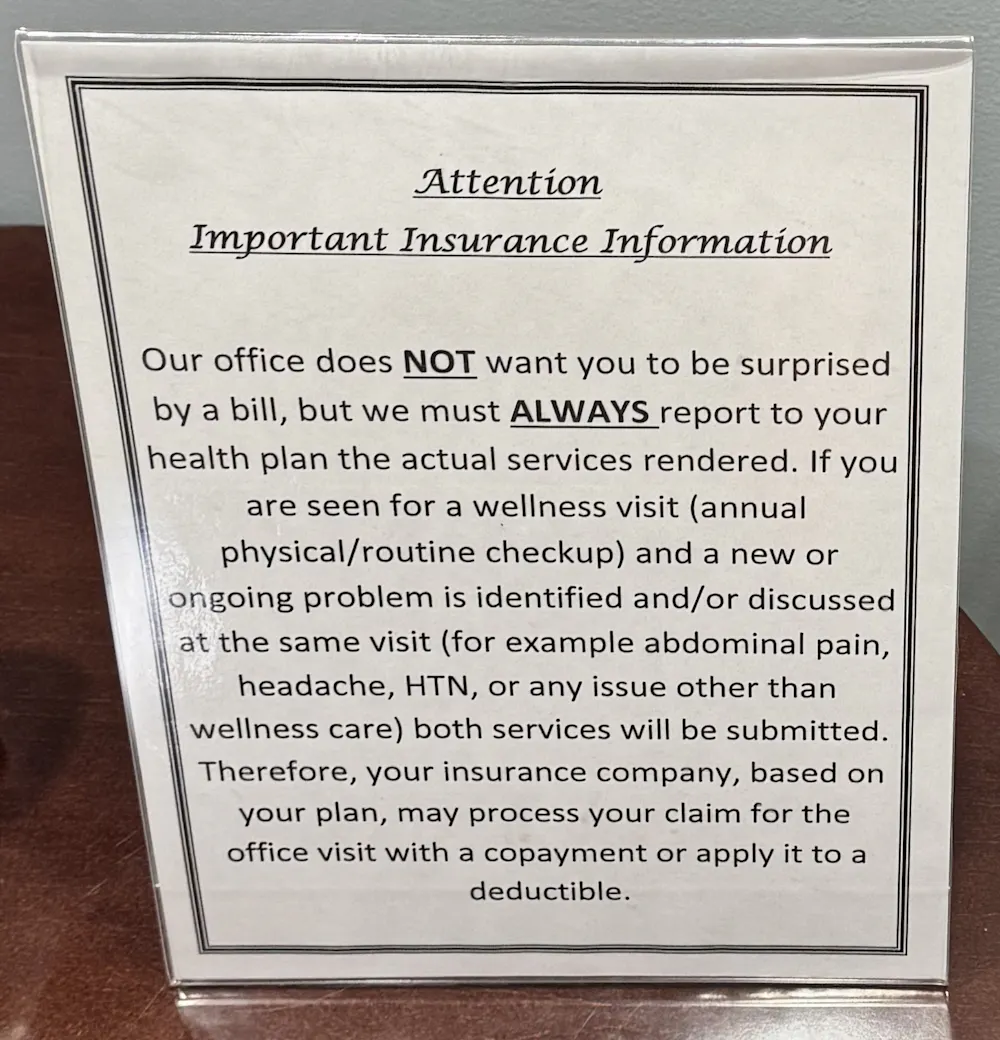
A sign labeled 'Attention: Important insurance information' reads 'Our office does NOT want you to be surprised by a bill, but we must ALWAYS report to your health plan the actual services rendered.'
The sign that inspired it all.
Helen Colby

But our research shows these warning signs could have an unintended consequence, discouraging patients from speaking openly with their doctors.

We are professors who research how people make spending decisions and were inspired to study this issue by real signs at a university-affiliated health care office. Other researchers have found many reasons why people hesitate to speak openly with their doctors, and we wondered whether these signs might be another factor. So we conducted some experiments.

In two studies, we found that when people saw an insurance warning sign, they were less willing to raise a wide variety of issues during a physical exam. These included both short-term issues such as headaches, fatigue and arthritis pain in the finger joints, and previously diagnosed, chronic conditions including high blood pressure, Type 2 diabetes and asthma.

In a third study, we tested whether it was what the sign said – or just the mere presence of a sign mentioning costs – that made people reluctant to speak up. We showed participants either no sign, an insurance warning sign, or a sign about a prescription drug discount program, which was also modeled after a real sign in the same doctor’s office. Only people who saw the insurance sign were less likely to speak up.

Why it matters

Frank conversations between patients and providers are essential for good health care. They allow providers to tailor medications, reduce side effects and find treatments that are right for each patient. What’s more, treating issues earlier rather than later generally leads to better outcomes and costs less in the long run.

We found that insurance warning signage, no matter how necessary or well intended, can discourage patients from sharing important health information. This could cause delays in important care, leading to unnecessary discomfort and stress as patients suffer with untreated issues.

Health care offices need to include certain insurance disclosures to inform patients of their rights under the No Surprises Act, which took effect in 2022. However, providers and administrators should be aware that their patients may often have cost concerns.

Doctors’ offices can try to find ways to communicate potential insurance costs while also encouraging patients to have open and honest discussions with their providers. The signage at the office that inspired this work had many words bolded and underlined, which may have made it feel especially aggressive to some patients.

It’s important for patients to know that they should never ignore symptoms. In fact, raising a concern as early as possible with a doctor or another health care provider can save more money down the road.

What still isn’t known

We weren’t able to study the long-term impacts of such signs, and it’s possible they have even more negative effects than we uncovered – for example, by making patients reluctant to have annual wellness visits.

It’s also unclear how often health care professionals actually report such conversations to insurers, especially when the issues are brought up briefly during a checkup and don’t require additional testing or treatment at that time.

But the research is clear on one point: When patients feel they can speak freely to their doctors, they get better care. That’s why doctors and other health care professionals should be aware that even well-intended warning signs may encourage patients to keep silent.

The Research Brief is a short take on interesting academic work.

The Conversation

Deidre Popovich has received grant funding from BlueCross BlueShield of Texas and Providence Health.

Helen Colby and Tony Stovall do not work for, consult, own shares in or receive funding from any company or organization that would benefit from this article, and have disclosed no relevant affiliations beyond their academic appointment.

ref. Insurance warning signs in doctors’ offices might discourage patients from speaking openly about their health – https://theconversation.com/insurance-warning-signs-in-doctors-offices-might-discourage-patients-from-speaking-openly-about-their-health-262303

Youth athletes, not just professionals, may face mental health risks from repeated traumatic brain injuries

Source: The Conversation – USA (3) – By David B. Sarwer, Professor of Social and Behavioral Sciences, Temple University

Limiting the amount of physical contact in training can reduce young players’ head injury risks, research shows. Mint Images RF via Getty Images

On July 28, 2025, a 27-year-old gunman entered a New York City office building that is home to the National Football League’s headquarters. He shot and killed four people and injured one other before killing himself.

In a note found in his wallet, he claimed he had chronic traumatic encephalopathy, or CTE, a degenerative brain condition believed to develop from repeated traumatic brain injuries. He asked experts to study his brain.

CTE has received much attention over the past two decades as multiple NFL players have been diagnosed with the condition after their deaths. The 2015 movie “Concussion,” about a forensic pathologist named Dr. Bennet Omalu who documented the first case of CTE in an NFL player, also highlighted the issue.

The gunman in the New York City shooting played high school football, but he did not play professionally. It is not known whether he had CTE.

I’m a clinical psychologist who studies mental health issues and their relationship to physical illness. Although people generally associate CTE with professional athletes, a growing body of research, including my own work, shows that adolescents and young adult athletes experience traumatic brain injuries that can have both short-term and long-term effects on mental health. In my view, young players and their families, as well as coaches, should pay attention to these emerging risks.

A 27-year-old gunman who targeted NFL headquarters in New York City on July 28, 2025, believed he had chronic traumatic encephalopathy.

From traumatic brain injuries to CTE

At least 55 million people worldwide are thought to experience a traumatic brain injury each year. The actual number may be higher, as many brain injuries are never diagnosed or treated.

Some people with a brain injury recover quickly. Others do not. Over half of people with a brain injury reported mental health symptoms one year later. These include difficulties concentrating, memory problems and irritability, as well as physical concerns such as recurrent headaches and difficulties with balance. Many people who sustain a traumatic brain injury also report difficulties with anxiety, depression and substance misuse as they are recovering. Some report thoughts about ending their lives or suicide attempts.

Although the link between traumatic brain injuries and CTE is still being studied, many experts believe that the condition is caused not by a single, severe blow to the head but by repeated trauma to the head over time.

It is not uncommon for former competitive athletes across a range of contact sports to believe they may have CTE – not only because they remember the injuries or being diagnosed with a concussion, but also because they experience many of the cognitive symptoms that affect people with traumatic brain injuries and sometimes misuse alcohol, pain medications or other substances to cope with them.

However, there’s no way for someone to get a diagnosis for the condition while they are experiencing these symptoms. There is currently no test for CTE. Doctors generally diagnose it after an autopsy.

Repeated brain injuries in youth sports

The focus on CTE has brought greater interest in the effects of traumatic brain injuries in general. Such injuries are common not only in professional athletes but also in adolescents and young adults who play sports. They are seen frequently in military veterans as well.

In a study published in March 2025, my colleagues and I assessed more than 500 varsity and club sport athletes. We found that 75% said they had experienced a head injury before starting college. Almost 40% reported being diagnosed with at least one concussion, and just over half of those athletes experienced a loss of consciousness.

We also found that student athletes who had experienced head injuries were much more likely to be diagnosed with at least one psychiatric disorder in their lifetime. They were more likely to drink alcohol excessively and have a substance use disorder in their history. Greater symptoms of an alcohol use disorder were associated with having their first head injury at an earlier age, as well as having more head injuries, diagnosed concussions and losing consciousness from those injuries.

These troubling observations highlight the often overlooked mental health effects of head injuries in adolescents and young adults. Our study aligns with others that have found a relationship between sports-related traumatic brain injuries and mental health symptoms – and it is among the first to look not only at self-reported symptoms but also at formal psychiatric diagnoses.

How exactly these cases might relate to CTE is unknown, but there are hints of a link: Researchers examining the records of 152 former contact sport athletes who died before age 30 identified signs of CTE in the brains of 40% of them. Family members described mental health symptoms in the majority of them, and alcohol and substance misuse were reported in approximately one-third.

Increasing safeguards for brain health in young athletes

While head injuries in youth sports were once met with a shrug, youth sports leagues are increasingly paying attention to the issue.

Studies suggest that limiting the amount of physical contact in preseason training or between games can reduce young players’ head injury risks. Coaches of contact sports such as football and soccer often receive training on identifying the signs and symptoms of head injuries and are given strategies to manage them.

Athletic trainers, routinely available at many high school sporting events, are involved in sporting events for younger children as well. As first responders to athletic injuries, they are trained to assess symptoms of head injuries and can provide guidance, as part of a medical team, on when an athlete can return to play. Athletic trainers also may be well positioned to observe some of the mental health symptoms commonly seen after head injuries.

Following a head injury, parents and guardians should also keep an eye on their athlete. Changes in mood or behavior after a head injury warrant a referral to a neurologist or mental health professional for additional assessment and treatment.

The Conversation

The study was supported by a multi-project grant from the FY2015 Pennsylvania Commonwealth Universal Research Enhancement Program Formula Funding (PA CURE). .

ref. Youth athletes, not just professionals, may face mental health risks from repeated traumatic brain injuries – https://theconversation.com/youth-athletes-not-just-professionals-may-face-mental-health-risks-from-repeated-traumatic-brain-injuries-262207

The Druze are a tightly knit community – and the violence in Syria is triggering fears in Lebanon

Source: The Conversation – USA (3) – By Mireille Rebeiz, Chair of Middle East Studies, Dickinson College

Walid Jumblatt, the political leader of Lebanon’s Druze minority, speaks in Beirut on July 18, 2025. AP Photo/Bilal Hussein

Violence continues several weeks after clashes started between armed Bedouin clans, Sunni jihadist groups and Druze fighters on July 14, 2025, in Sweida, a city in southern Syria.

Hundreds of Druze were killed in the clashes, and Syria’s defense minister deployed forces to contain the sectarian fighting.

The Druze are a religious minority in the Levant, the region covering roughly modern-day Syria, Lebanon, Jordan, Israel and Palestinian territories. The faith originated in Egypt as an offshoot of the Fatimid tradition, a branch of Shiite Islam. Today, there are about 1 million to 1.5 million Druze worldwide, more than half of whom live in Syria. Most others live in Lebanon, Israel, Jordan and the Israeli-occupied Golan Heights.

We are experts in Druze and Lebanese history, and we know that the conflict in Sweida is regarded by the Druze of Lebanon – and the Druze everywhere – as a deeply personal matter.

What’s more, the horror stories coming out of Sweida are reverberating in Lebanon, where many Druze also fear the risk of sectarian violence, and distrust in current leadership.

Bonds forged through a long history

Many scholars attribute the strong bond between the Druze of Syria and Lebanon to their shared faith – which is partly true – but they often overlook an equally vital element: a collective conscience shaped by a distinctive origin story.

The Druze see themselves as an ancient, blood-related tribal coalition that evolved into an extended family spread across regions. This self-perception is so deeply rooted that it gave rise to a well-known Levantine saying: “The Druze are like a copper plate – wherever you strike it, it rings.”

According to local tradition, several Druze families from Mount Lebanon migrated to the Hawran region, south of Damascus, more than three centuries ago, paving the way for thousands of others to follow. Sweida is the capital city of the Druze region in Ḥawran. The region of Ḥawran is the second-youngest Druze settlement – after Jordan – dating back to the 18th century.

A foundational event in the community’s modern history was the Druze uprising in Ḥawran against the Ottoman governor of Egypt, Muhammad Ali Pasha, in 1837.

The governor had insisted on imposing conscription and disarmament on the Druze. The community rebelled since both measures would put their security and autonomy at risk, and the governor sent the army to occupy the Levant.

During the revolt, Druze from Mount Lebanon and Wadi al-Taym – a historical Druze region encompassing the modern-day Lebanese districts of Rashayya and Hasbayya in the southeast, near the Syrian border – rose up to divert the Egyptian army and sent fighters to support their Syrian kin.

In 1838, many of these Lebanese fighters were killed, particularly in what is known as the Battle of Wadi Bakka, near the Lebanese-Syrian border; an entire Druze battalion was besieged by the Egyptian forces and nearly wiped out.

In 1860, a third civil war involving the Druze under the Ottomans broke out in Mount Lebanon between the Druze and the Maronites. The Maronites are a group of Eastern Catholic Christians predominantly in Lebanon. The conflict centered on control of the southern regions of the mountain – historically known as the Druze Country.

As violence escalated between the two communities, the Druze of Ḥawran came to the aid of their fellow Druze in Mount Lebanon, tipping the balance in their favor.

During World War I, Mount Lebanon was hit by a famine and around 200,000 people died. The Druze of Ḥawran supported the Druze in Lebanon by supplying them with essential grain, and many Lebanese Druze resettled in Ḥawran to escape starvation.

These are just a few examples from a long history of mutual support that, in the Druze collective memory, reinforces the belief that they are not merely a community – but a tightly knit extended family that spans national borders.

Shifting borders

As a religious minority in the Levant, the Druze have long defended their religious freedom and identity.

The principalities in Mount Lebanon were most successful at realizing and keeping religious autonomy from at least the 12th century to the 19th century; they ensured the Druze were ruled by one of their own emirs and could practice their religious and social customs freely. The modern state of Lebanon evolved out of these autonomous principalities.

However, the Druze never viewed their struggle for social and religious autonomy as a license to attack their neighbors – especially fellow Arab Muslims – but rather as a safeguard for their faith and security.
The Druze do not equate religious freedom and autonomy with independence. In fact, many Druze in the region oppose the idea of a Druze state.

Starting in the 1930s, Zionist leaders hoping to create a Jewish state sought to exploit this Druze desire toward autonomy by proposing the creation of a Druze state in Ḥawran. They envisioned it as a friendly buffer state bordering the future state of Israel. More importantly, they wanted to push Druze out of Galilee and Mount Carmel knowing that they lived there for many centuries.

After the Six-Day War in 1967 between Israel and Egypt, Jordan and Syria, this idea expanded into a broader Israeli plan to fragment Syria and Lebanon into five sectarian states: an Alawite state in the north, a Christian state in the west, a Druze state in the south, a Kurdish state in the east and a Sunni state at the center.

Since Oct. 7, 2023, some Druze leaders – such as Walid Jumblatt, former minister, and head of the Progressive Socialist Party – have raised concerns that Israel could be attempting to revive this plan to reshape the region into a “New Middle East” with potentially new borders in Syria, Iraq, Lebanon, and the Palestinian territories. In fact, since the fall of the Assad regime in Syria, Jumblatt has been vocal about the rise of potential new borders.

Historically, the highest Druze religious authorities rarely engage in day-to-day politics. Yet, they are still expected to offer moral and political guidance during times of crisis, as the community sees them as guardians of faith, identity and ethics.

Several men, who are wearing white round hats, seem to be in deep conversation with one another.
Druze clerics take part in a gathering of minority religious leaders in Beirut on July 18, 2025.
AP Photo/Bilal Hussein

Recently, the leading Druze spiritual authority in Lebanon, Sheikh Amin al-Sayegh – who has been at odds with Jumblatt on internal communal affairs – voiced similar concerns in a public letter of condolence and support to the Syrian Druze. He emphasized the community’s Arab Islamic identity and warned against prioritizing material security over the historical Druze identity. Al-Sayegh’s stance reflects long-standing Druze political principles rooted in centuries of tradition.

The political message was clearly hinting at a rising tendency among some Druze, including Syrians, to consider stronger ties with Israel for security purposes.

Growing fear of sectarian violence

Lebanon has a long history of sectarian violence, and the recent events in Syria are indeed alarming to Lebanon’s religious minorities, including the Druze.

In March 2025, over 1,400 Alawite civilians were massacred, mostly in coastal cities like Latakia and Baniyas, by the newly formed Syrian forces.

In June, 25 Syrian civilians were killed and over 60 injured when a Sunni extremist group attacked the Greek Orthodox Church of the Prophet Elias in Damascus. And as of mid-July, Bedouin clans and the state security forces of the Sharaa regime have been targeting and killing Druze civilians in Sweida.

With numerous Bedouin tribes present in Lebanon, and tension evolving into an open sectarian confrontation, Druze leaders there fear that the sectarian violence could spill over into their own communities due to the Syrian Bedouins’ call for general mobilization of Arab tribes in the region against the Druze. This call is based on unverified reports of Druze killing Bedouin civilians.

Druze leadership in Lebanon

Despite growing frustration over Lebanon’s deepening economic crisis – partly attributed to political leadership – most Lebanese Druze remained loyal to traditional figures like Jumblatt, who was long viewed as the most capable guardian of their security and communal interests.

But the shock of recent violence in Sweida, where militias aligned with the Syrian regime targeted Druze civilians, has unsettled that loyalty. Many Lebanese Druze had expected their leaders to use their external influence to shield their kin across the border. The perceived failure to do so – combined with Jumblatt’s continued support for the regime led by President Ahmed al-Sharaa in Syria – has sparked widespread criticism within the community. Jumblatt himself acknowledged this strong criticism in a recent interview.

For many Druze, the brutal events in Sweida were fiercely traumatic and have forced them to painfully confront their long-standing core political priorities: security and the preservation of religious and social autonomy. And in light of this, some are beginning to reassess long-held assumptions that current leadership can preserve their religious autonomy and, more importantly, keep them safe.

The Conversation

Mireille Rebeiz is affiliated with the American Red Cross.

Said Abou Zaki does not work for, consult, own shares in or receive funding from any company or organization that would benefit from this article, and has disclosed no relevant affiliations beyond their academic appointment.

ref. The Druze are a tightly knit community – and the violence in Syria is triggering fears in Lebanon – https://theconversation.com/the-druze-are-a-tightly-knit-community-and-the-violence-in-syria-is-triggering-fears-in-lebanon-261931

Five things I wish everyone knew about weight loss – by an expert in nutrition

Source: The Conversation – UK – By Rachel Woods, Senior Lecturer in Physiology, University of Lincoln

voronaman/Shutterstock

Weight loss continues to dominate public discourse – often framed as a matter of personal responsibility. But after nearly 15 years working in and around health and nutrition research, I’ve seen how weight is treated differently from almost every other health issue.

People are routinely blamed for their body size, even though robust evidence shows that weight is shaped by a complex mix of genetics, biology, environment and socioeconomic factors. Limited access to affordable healthy food, lack of safe places to exercise, long working hours and chronic stress – all more common in disadvantaged areas – can make maintaining a healthy weight significantly harder.

Here are five things I wish more people understood about weight loss.

1. It goes against our biology

Obesity has been recognised as a national health priority in England since the 1990s, with numerous policies introduced in response. Yet obesity rates have not declined. This suggests that current approaches, which tend to focus on personal responsibility, are not working.

Even when weight loss methods are successful, the results often don’t last. Research shows that most people who lose weight eventually regain it, and the chances of someone with obesity reaching and maintaining a “normal” body weight are very low.

That’s partly because our bodies fight back when we lose weight – a response rooted in our evolutionary past. This process is called metabolic adaptation: when we reduce our energy intake and lose weight, our metabolism slows, and hunger hormones like ghrelin increase, encouraging us to eat more and regain the lost weight.

This biological response made sense in our hunter-gatherer past, when feast and famine were common. But today, in a world where high-calorie, ultra-processed food is cheap and accessible, these same survival traits make it easy to gain weight – and difficult to lose it.

So if you’ve struggled to lose weight or keep it off, it’s not a personal failure – it’s a predictable physiological response.

2. It’s not about willpower

Some people seem to maintain a stable weight with relative ease, while others struggle. The difference isn’t just about willpower.

Body weight is influenced by a host of factors. Genetics play a major role – for example, affecting how quickly we burn calories, how hungry we feel, or how full we get after eating. Some people are genetically predisposed to feel hungrier or crave high-energy foods, making weight loss even more challenging.


Read more:
Obesity care: why “eat less, move more” advice is failing


Environmental and social factors also play a part. Having the time, money, or support to prepare healthy meals, be active, and prioritise sleep makes a real difference – and not everyone has those resources.

When we overlook these complexities and assume weight is purely a matter of self-control, we contribute to stigma. This stigma can make people feel judged, ashamed, or excluded, which ironically can increase stress, reduce self-esteem, and make healthy habits even harder to adopt.

3. Calories aren’t the whole story

Counting calories is often the default weight loss strategy. And while creating a calorie deficit is essential for weight loss in theory, in practice it’s far more complicated.

For starters, calorie labels on foods are just estimates, and our own energy needs vary from day to day. Even how much energy we absorb from food can differ based on how it’s cooked, how it’s digested, and the makeup of our gut bacteria.

There’s also the persistent idea that “a calorie is just a calorie” – but our bodies don’t treat all calories the same. A biscuit and a boiled egg might contain similar calories, but they affect our hunger, digestion, and energy levels very differently. A biscuit may cause a quick blood sugar spike and crash, while an egg provides longer-lasting satiety (fullness) and nutritional value.

These misunderstandings have fuelled the rise of fad diets – like only drinking shakes or cutting out entire food groups. While they can lead to short-term weight loss by creating a calorie deficit, they’re rarely sustainable and often lack essential nutrients.

A more realistic and balanced approach is to focus on long-term changes: eating more whole foods, reducing takeaway meals, cutting back on alcohol and building habits that support overall wellbeing.

4. Exercise is great for your health – but not necessarily for weight loss

Many people assume that the more they exercise, the more weight they’ll lose. But the science tells a more complex story.

Our bodies are very good at conserving energy. After a tough workout, we may unconsciously move less for the rest of the day, or feel hungrier and eat more – offsetting the calories burned.

In fact, research shows that total daily energy expenditure doesn’t keep rising with more exercise. Instead, the body adjusts by becoming more efficient and reducing energy use elsewhere, making weight loss through exercise alone more difficult than many expect.

That said, exercise still offers a huge range of benefits: it boosts cardiovascular health, improves mental wellbeing, maintains muscle mass, enhances metabolic function, strengthens bones and lowers the risk of chronic diseases.

Even if the number on the scale doesn’t change, exercise is still one of the most powerful tools we have to improve health and quality of life.

5. Health improvements don’t always require weight loss

You don’t have to lose weight to get healthier.

While intentional weight loss can reduce the risk of conditions like heart disease and some cancers, studies also show that improving your diet and being more active can significantly improve health markers – like cholesterol, blood pressure, blood sugar and insulin sensitivity – even if your weight stays the same.


Read more:
Why you can’t judge health by weight alone


So if you’re not seeing big changes on the scales, it may be more helpful to shift your focus. Instead of chasing a number, focus on behaviour: nourishing your body, moving regularly in ways you enjoy, sleeping well and managing stress.

Weight is just one piece of the puzzle – and health is about so much more.

The Conversation

Rachel Woods does not work for, consult, own shares in or receive funding from any company or organisation that would benefit from this article, and has disclosed no relevant affiliations beyond their academic appointment.

ref. Five things I wish everyone knew about weight loss – by an expert in nutrition – https://theconversation.com/five-things-i-wish-everyone-knew-about-weight-loss-by-an-expert-in-nutrition-262100

Nature’s underground engineers: how plant roots could save harvests from drought

Source: The Conversation – UK – By James Le Houx, Emerging Leader Fellow, Science and Technology Facilities Council

Zamrznuti tonovi/Shutterstock

Ever wondered how a delicate plant root can push its way through hard ground? It’s a feat of engineering happening beneath our feet.

Understanding this process is more important than ever as we face escalating droughts and grapple with compacted farmland that threatens our food security. This compaction, often caused by the weight of heavy farm machinery, makes it much harder for roots to access the water and nutrients they need.

Our recent research offers a glimpse into the powerful mechanics roots use to push through tough soils and even fracture solid chalk.

Think of it as X-ray vision, peering into the secret life of roots.


Many people think of plants as nice-looking greens. Essential for clean air, yes, but simple organisms. A step change in research is shaking up the way scientists think about plants: they are far more complex and more like us than you might imagine. This blossoming field of science is too delightful to do it justice in one or two stories.

This story is part of a series, Plant Curious, exploring scientific studies that challenge the way you view plantlife.


Root growth forges channels, known as biopores, which improve water drainage, allowing air and water to permeate deeper into the soil. Biopores also support essential microbial ecosystems, such as bacteria and fungi that interact with plants, many of which require the oxygen these air gaps provide.

To see what’s happening at this minute scale, we couldn’t just dig up a plant. We took our experiment to the Diamond Light Source in the UK.

This science facility is home to a synchrotron, a type of particle accelerator that works like a super-powered microscope. It produces X-rays 10 billion times brighter than the light of the Sun. We focused these X-rays on an artificial root model, which allowed us to make controlled measurements.

First, to see the shape of the soil, we used 3D X-ray imaging, which works like a medical CT scan, to create detailed pictures of the soil structure around the model root. This allowed us to see how the tiny grains and pores in the soil were being squeezed and shifted.

But to measure the invisible forces at play, we needed a different technique called focused X-ray diffraction. Measuring these tiny forces inside a jumble of normal soil grains is impossible.

To solve this, we created a surrogate soil from gypsum, a mineral with a perfectly orderly natural crystal structure. Each crystal in the soil acts as a tiny, measurable spring. When the model root pushes into the soil, these “springs” get compressed or stretched. X-ray diffraction can detect these minute changes.

This approach, observing the soil’s structure change and mapping the forces within it, had never been done before for this kind of problem.

Our experiment worked by holding a model root made of special, sturdy plastic, in a fixed position, while a motor-driven stage pushed the soil sample upwards into it.

As we expected, the 3D images showed a compression zone forming around the tip of our model root. The soil particles were being packed closer together, and the tiny air pockets, or pores, between them were shrinking. This compaction is actually the first step to engineer a lasting pathway through the soil.

Man in farm field touching the soil and holding a clipboard.
Understanding the forces behind root growth could help us grow food.
maxbelchenko/Shutterstock

The force maps from the X-ray diffraction measurements revealed something surprising. As the model root first pushed in, we saw signs of stress building up in the soil crystals near the tip. But as it penetrated deeper, to about 8 millimetres, the stress in the crystals closest to the tip seemed to ease, even though the overall force required to push the cone increased.

To understand why it was happening, we created a computer simulation of the experiment. The simulation confirmed our theory: the material had begun to yield and deform permanently. Essentially, the soil stopped acting like a compressed spring and started behaving like modelling clay, holding its new shape, and forging the new channel, that will hold even in hard, dry conditions.

For the first time, our method allowed us to map the boundary of this “plastic zone” in the soil. We watched it start as a small region right at the tip and then expand as the model root pushed deeper, showing how far the root’s influence reached into the surrounding soil.

In this zone, the soil particles might be breaking or rearranging themselves into new, smaller configurations. This rearrangement can lead to a relaxation of the elastic stress inside the crystals, even as the overall structure is under great pressure. This doesn’t mean the soil gets easier to push through. Our measurements showed that the overall force required to advance the model root continued to increase, even as this plastic zone grew.

Instead of simply shoving soil aside, a root manages pressure at its tip, causing the soil to yield and flow around it, a far more efficient way to penetrate hard ground.

From lab bench to farmer’s field

This new research method opens the door to studying how plant roots interact with soils in unprecedented detail. We can start to answer questions like “how do different root shapes give some plants an advantage in hard ground?”

Understanding underground engineering has real world implications. Farmers often rely on ploughing to break up the soil surface for planting. But this is energy-intensive, costly for the farmer, and can damage long-term soil health by increasing erosion and releasing stored carbon into the atmosphere.

Identifying root traits that excel in these compacted conditions could help plant breeders develop crop varieties that are more drought-resistant and require less soil preparation.

Appreciating how roots engineer their environment can aid rewilding projects to rejuvenate over-farmed areas. For instance, conservationists could use these insights to select native plants with powerful root traits to act as pioneer crops. Their roots would break up compacted earth, creating new channels for water and paving the way for a richer ecosystem to return.

Peering into the world below us can help us learn how to secure our food supply and regenerate our planet.

The Conversation

Siul Ruiz receives funding from The Royal Society.

James Le Houx does not work for, consult, own shares in or receive funding from any company or organisation that would benefit from this article, and has disclosed no relevant affiliations beyond their academic appointment.

ref. Nature’s underground engineers: how plant roots could save harvests from drought – https://theconversation.com/natures-underground-engineers-how-plant-roots-could-save-harvests-from-drought-257369

Black Grape: It’s Great When You’re Straight… Yeah at 30 – one of music’s greatest comeback stories

Source: The Conversation – UK – By Glenn Fosbraey, Associate Dean of Humanities and Social Sciences, University of Winchester

In the late 1980s and early 1990s, Shaun Ryder had the world at his feet. His band, The Happy Mondays, had been key players in the UK “Madchester scene” and had scored a platinum selling album with 1990’s Pills ‘n’ Thrills and Bellyaches. Bands everywhere had tried to imitate the new “baggy” sub-genre it had created.

Only a few years later, though, Ryder’s career looked like it was over. The fractious and drug-addled recording of 1992 album Yes Please had caused the Mondays to split up soon after its release, and its poor sales – described by critics as a “commercial car crash” – bankrupted their label, Factory.

Ryder’s addictions to heroin and crack cocaine were also now so bad that he’d quite literally resorted to selling the (Hugo Boss) shirt off his back to fuel his habit.

Never one to shy away from a fight, however, Ryder actually seemed motivated by people saying he was “finished as a creative force”, and now only under the influence of “Guinness, Es and Temazis”. He set about forming a brand new band in his living room – Black Grape.

The music video for Kelly’s Heroes.

Joining him and the ever-present Bez (official role: “vibes”) were guitarist Paul “Wags” Wagstaff and drummer Ged Lynch. Ryder’s “smack buddy” Kermit (real name Paul Leveridge) was on co-vocal and songwriting duties, having previously been one third of Hulme-based hip hop group The Ruthless Rap Assassins.

Work on their debut album It’s Great When You’re Straight…Yeah! began soon after. Ryder and Kermit collaborated face to face, bouncing ideas off each other on the soon-to-be hit singles Reverend Black Grape and Kelly’s Heroes. They sharing the microphone on both tracks to create the unforgettable and unique sound so many of us have returned to again and again during the past three decades.

A brand new sound

Some critics have since dismissed Black Grape as merely a continuation of The Happy Mondays’ “formula”. But, for me, this ignores how genuinely groundbreaking, fresh, and unique their sound was.

Under the production of Danny Saber, Stephen Lironi and Ryder himself, Black Grape somehow fused rock, hip-hop, acid house, melodic pop, dub, reggae into a dazzling psychedelic whole. The result was both immediately accessible and yet nothing like anyone had ever heard before. Ryder puts it best when he wrote in his autobiography that the album “sounds like the best house party”.

Indeed, at different house parties and indie club nights across the country, the opening bars of Kelly’s Heroes were enough to send people leaping to their feet in drunken excitement. But only three songs later, the moodily atmospheric and downbeat A Big Day in the North would cause those very same people to sit back down in brooding introspection.

Kelly’s Heroes by Black Grape.

Then there were the lyrics. During his time with The Happy Mondays, Ryder had largely satisfied himself with the humorous stream-of-unconsciousness flow of surrealist street talk. But with Black Grape, he seemed to push himself further.

His signature sprechgesang (a vocal technique that combines speaking and singing) remained intact. As did the abstract imagery and humour, with lines like “Touche, Toshack, pineapple with a smile, en coule, big apple” (A Big Day in the North) and “You used a Rolex to roll up your keks” (Shake Well Before Opening). But there was more serious work here, too, sometimes even in the same song.

Just after the “Toshack” line on A Big Day in the North, for example, Ryder tells us that “Sticks and stones may break your bones, but love will always hurt you”. In Yeah Yeah Brother, before the throwaway line “open the trunk for the pineapple chunk”, he rails against an unnamed adversary, spitting: “You sit at my table, eat and drink like you were my brother, I would never ever in this world believe you were a backstabber.”

It’s on Reverend Black Grape that Ryder really ups the ante, though, with one of the most scathing and inflammatory lyrics I’ve ever come across. Taking aim at the Catholic Church, he declares that the “Pope he got the Nazis to clean up their messes, in exchange for gold and paintings he gave them new addresses”. How this flew under the radar and didn’t lead to a lawsuit has always amazed me, but it’s perhaps indicative of how little anything Ryder said was taken seriously.

Reverend Black Grape by Black Grape.

One of music’s greatest comeback stories, It’s Great When You’re Straight… Yeah! was an immediate commercial success. It topped the UK charts and achieved platinum certification. But it was also a favourite for many critics. Reverend Black Grape was declared best track at the 1995 NME awards, and the album was shortlisted for 1996’s Mercury Prize.

Sadly, the band would go the way of The Mondays, splitting a few years later after the disappointing follow-up album Stupid Stupid Stupid (1997). This time, though, there’s a happy ending. After reuniting two decades later and releasing new albums Pop Voodoo (2017) and Orange Head (2023), Kermit and Ryder will be celebrating the 30th anniversary of their finest work with the It’s Great When You’re Straight, Yeah 30th anniversary UK tour later this year. I, for one, can’t wait.


Looking for something good? Cut through the noise with a carefully curated selection of the latest releases, live events and exhibitions, straight to your inbox every fortnight, on Fridays. Sign up here.


The Conversation

Glenn Fosbraey does not work for, consult, own shares in or receive funding from any company or organisation that would benefit from this article, and has disclosed no relevant affiliations beyond their academic appointment.

ref. Black Grape: It’s Great When You’re Straight… Yeah at 30 – one of music’s greatest comeback stories – https://theconversation.com/black-grape-its-great-when-youre-straight-yeah-at-30-one-of-musics-greatest-comeback-stories-261893

Did the Sun boycott make Liverpool more leftwing? My study indicates it may have shifted views

Source: The Conversation – UK – By Lucas Paulo da Silva, PhD Candidate, Political Science, Trinity College Dublin

Most newspapers in the UK tend to represent a political perspective. It is difficult to measure the extent to which someone’s media consumption affects their political views – but what if you take one newspaper out of the equation?

In a recent study, I sought to examine how the longstanding boycott of the rightwing tabloid the Sun in Liverpool affected people’s political attitudes up to 2004. I found that the Sun – and its removal from the media landscape in Liverpool – held considerable sway.

On April 15 1989, a tragic stadium crush at the FA Cup semi-final football match between Liverpool FC and Nottingham Forest led to 97 deaths and hundreds of injuries. The Sun inaccurately blamed Liverpool supporters for what came to be known as the Hillsborough disaster.

Many newsagents and readers in Liverpool subsequently boycotted the Sun, cutting its circulation in Merseyside to about a quarter of what it had been. Audience and newsagent surveys show that people in Liverpool who had bought the rightwing Sun, often replaced it with more neutral or leftwing newspapers (primarily the Daily Mirror).

In neighbouring parts of the country, there was no such shift in readership. A boycott remains in effect in Liverpool today, despite apologies from the paper in 2004, 2012 and 2016.


Read more:
Why The Sun newspaper will never shine in Liverpool


Now, you’ve probably heard the phrase “correlation is not causation”. There were many other changes that occurred in northern England and Liverpool during the period that I study from 1983 to 2004.

My research sought to avoid confusing the effects of those changes with the effects of the boycott. For example, the period was marked by the Thatcher governments, de-industrialisation and their aftermath. For many in Liverpool those policies of that era were to blame for extremes of poverty and deprivation in the area. Amid that, the Labour party’s Militant faction rose to prominence in Liverpool, taking control of the city council from 1983 to 1986.

These events are central to the politics and social picture of Merseyside that emerged. But to what degree did the boycott of The Sun play a part in shaping it?
My study used a statistical method called triple differences. This meant calculating how political attitudes changed among the Sun’s core audience in Liverpool (the group which was exposed to the boycott) compared to people in Liverpool who were not in the Sun’s core audience, and relative to similar parts of northern England (the control group, which was not exposed to the boycott). I also controlled for other factors that could shift between these groups over time, such as parliamentary constituencies, gender, class, ethnicity, religion, education, union membership and home ownership.

These methods helped me assess the possible effect of the boycott on ideological positions, perceptions of Labour party positions, and Labour party support. I also conducted additional studies to consider whether these shifts began before the boycott, which would suggest that they were due to other factors. The results indicate to me that these shifts in political attitudes began during the boycott (although the data did not permit this test for perceptions of party positions).

I used data from the annual British Social Attitudes surveys administered by the National Centre for Social Research to measure social and political attitudes and demographics. The sample is composed of 12,771 northern English respondents between the years 1983 to 2004, which includes several years both before and during the boycott.

The study identified three main changes in the aftermath of the boycott (and the shift to more leftwing media). First, the boycott may have caused the Sun’s previous audience in Liverpool to perceive the Labour party as less “extreme”. This was compared to other people in Liverpool (whose perceptions of Labour as extreme stayed level) and northern England. It is of course worth noting that this was a period of considerable change in the party, as Tony Blair’s leadership moved it significantly to the centre, though my statistical methods attempt to address this.

The period also saw those former Sun readers in the city adopt more opinions traditionally regarded as left wing, including being in favour of increasing the power of trade unions. “Non-audiences” in Liverpool and other people in northern England were less likely to express a change of view. (Other ideological opinions, about redistribution and European integration, did not shift as much.)

Third, support for the Labour party increased among the Sun’s former core audience in Liverpool, compared to other people in Liverpool (who actually slightly reduced their support for Labour) and people who were not exposed to the boycott. These shifts happened from the beginning of the boycott in 1989 until 1996 (before the Sun endorsed Labour) and continued until at least 2004 (when my data ends).

My study makes use of a real-world change in media consumption that spans many years. The value of the Sun boycott as a “natural experiment” (observing real-world events) was first identified by researchers who found that the boycott reduced Euroscepticism.

Media influence

The Sun famously ran the 1992 headline “It’s The Sun Wot Won It”, claiming credit for the Conservative general election victory. Clearly, newspaper publishers then felt they could influence political views.

But perhaps a more interesting finding from my study is how this may happen. My results suggest to me that media influences how people perceive party positions. This is something that governments, publishers, and critically voters should take into account if they want to address the effects of media on elections.

The Conversation

Lucas Paulo da Silva does not work for, consult, own shares in or receive funding from any company or organisation that would benefit from this article, and has disclosed no relevant affiliations beyond their academic appointment.

ref. Did the Sun boycott make Liverpool more leftwing? My study indicates it may have shifted views – https://theconversation.com/did-the-sun-boycott-make-liverpool-more-leftwing-my-study-indicates-it-may-have-shifted-views-259488

Soaring food prices prove the Gaza famine is real – and will affect generations to come

Source: The Conversation – Global Perspectives – By Ilan Noy, Chair in the Economics of Disasters and Climate Change, Te Herenga Waka — Victoria University of Wellington

Abdalhkem Abu Riash/Anadolu via Getty Images

The words and pictures documenting the famine in the Gaza strip are horrifying.

The coverage has led to acrimonious and often misguided debates about whether there is famine, and who is to blame for it – most recently exemplified by the controversy surrounding a picture published by the New York Times of an emaciated child who is also suffering from a preexisting health condition.

While pictures and words may mislead, numbers usually don’t.

The Nobel prize-winning Indian economist Amartya Sen observed some decades ago that famines are always political and economic events, and that the most direct way to analyse them is to look at food quantities and prices.

This has led to decades of research on past famines. One observation is that dramatic increases in food prices always mean there is a famine, even though not every famine is accompanied by rising food costs.

The price increases we have seen in Gaza are unprecedented.

The economic historian Yannai Spitzer observed in the Israeli newspaper Haaretz that staple food prices during the Irish Potato Famine showed a three- to five-fold increase, while there was a ten-fold rise during the Great Bengal Famine of 1943. In the North Korean famine of the 1990s, the price of rice rose by a factor of 12. At least a million people died of hunger in each of these events.

Now, the New York Times has reported the price of flour in Gaza has increased by a factor of 30 and potatoes cost 50 times more.

Israel’s food blockade

As was the case for the UK government in Ireland in the 1840s and Bengal in the 1940s, Israel is responsible for this famine because it controls almost all the Gaza strip and its borders. But Israel has also created the conditions for the famine.

Following a deliberate policy in March of stopping food from coming in, it resumed deliveries of food in May through a very limited set of “stations” it established through a new US-backed organisation (the Gaza Humanitarian Foundation), in a system that seemed designed to fail.

Before Israel’s decision in March to stop food from coming in, the price of flour in Gaza was roughly back to its prewar levels (having previously peaked in 2024 in another round of border closures). Since March, food prices have gone up by an annualised inflation rate of more than 5,000%.

The excuse the Israeli government gives for its starvation policy is that Hamas controls the population by restricting food supplies. It blames Hamas for any shortage of food.

However, if you want to disarm an enemy of its ability to wield food supplies as a weapon by rationing them, the obvious way to do so is the opposite: you would increase the food supply dramatically and hence lower its price.

Restricting supplies and increasing their value is primarily immoral and criminal, but it is also counterproductive for Israel’s stated aims. Indeed, flooding Gaza with food would have achieved much more in weakening Hamas than the starvation policy the Israeli government has chosen.

The UN’s top humanitarian aid official has described Israel’s decision to halt humanitarian assistance to put pressure on Hamas as “cruel collective punishment” – something forbidden under international humanitarian law.

The long-term aftermath of famines

Cormac Ó Gráda, the Irish economic historian of famines, quotes a Kashmiri proverb which says “famine goes, but the stains remain”.

The current famine in Gaza will leave long-lasting pain for Gazans and an enduring moral stain on Israel – for many generations. Ó Gráda points out two main ways in which the consequences of famines endure. Most obvious is the persistent memory of it; second are the direct effects on the long-term wellbeing of exposed populations and their descendants.

The Irish and the Indians have not forgotten the famines that affected them. They still resent the British government for its actions. The memory of these famines still influences relations between Ireland, India and the UK, just as Ukraine’s famine of the early 1930s is still a background to the Ukraine-Russia war.

The generational impact is also significant. Several studies in China find children conceived during China’s Great Leap Forward famine of 1959–1960 (which also killed millions) are less healthy, face more mental health challenges and have lower cognitive abilities than those conceived either before or after the famine.

Other researchers found similar evidence from famines in Ireland and the Netherlands, supporting what is known as the “foetal origins” hypothesis, which proposes that the period of gestation has significant impacts on health in adulthood. Even more worryingly, recent research shows these harmful effects can be transmitted to later generations through epigenetic channels.

Each day without available and accessible food supplies means more serious ongoing effects for the people of Gaza and the Israeli civilian hostages still held by Hamas – as well as later generations. Failure to prevent the famine will persist in collective memory as a moral stain on the international community, but primarily on Israel. Only immediate flooding of the strip with food aid can help now.

The Conversation

Ilan Noy is a dual citizen of both New Zealand and Israel.

ref. Soaring food prices prove the Gaza famine is real – and will affect generations to come – https://theconversation.com/soaring-food-prices-prove-the-gaza-famine-is-real-and-will-affect-generations-to-come-262486