South Africans who blow the whistle face retaliation and murder: their stories over five decades

Source: The Conversation – Africa (2) – By Ugljesa Radulovic, Senior Postdoctoral Research Fellow, University of Johannesburg

South Africa’s long history of wrongdoing spans from Willem Adriaan van der Stel’s days of running a corrupt trading monopoly to present-day South Africa. Van der Stel was the second Governor of the Cape Dutch Colony, from 1699 to his removal in 1707.

Whistleblowers have been at the core of exposing these instances of corruption.

Public whistleblowing was rare under apartheid (1948-1994). But with the transition to democracy, the reporting of wrongdoing increased. This can largely be attributed to a new constitution that caters for all the country’s citizens, and new laws that reinforced their rights.

One such law is the Protected Disclosures Act No. 26 of 2000, amended by way of the Protected Disclosures Amendment Act No. 5 of 2017. The law was designed to protect individuals who expose perceived wrongdoing to an authority that has the capacity to remedy the wrongdoing.

Yet, it has offered inadequate protection. South African whistleblowers have been overwhelmingly subjected to reprisals – from murder to social, work-related, and legal retaliation.

Our academic expertise is concerned with exploring the experiences of whistleblowers in South Africa, and making meaning of their plight.

In a recently published paper we give an account of the stories of a selection of whistleblowers spanning five decades. We selected a few stories that have set precedents in South Africa.

These cases offer only a glimpse into the experiences of South African whistleblowers. But what is clear is that, by fulfilling their public duty, they place themselves at great personal risk.

Adam Klein

Adam Klein was one of the rare whistleblowers who made a disclosure under apartheid rule. In 1980, Klein, a prosecutor in the Bantu Commissioner’s Court, refused to prosecute five black men under the pass regulations. These were a cornerstone of apartheid legislation, serving as an internal passport system to restrict the movement of non-whites and thus racially segregate the country.

Klein immediately faced retaliation. He was arrested under trumped-up charges, faced threats to his physical well-being and became subjected to surveillance.

He then made a public disclosure to the Sunday Times newspaper, exposing severe abuses at the Pretoria Bantu Commissioner’s Court. The disclosure revealed the inhumane nature of the pass laws, like detention of black people who failed to produce passes.

Klein faced further backlash and had to temporarily relocate to Namibia for his safety. On his return to South Africa, he continued to be subjected to surveillance and interrogation. He passed away in 2011, unacknowledged and without posthumous recognition.

Andries Jacobs

Andries Jacobs, an inspector at the Gauteng Provincial Traffic Department in the town of Benoni, would become known as the whistleblower who exposed police dogs being set on migrants. In January 1998, Jacobs recorded six policemen, who were part of the North East Rand Police dog unit, inciting their dogs to attack Mozambican migrants. Jacobs submitted the bombshell video footage to the Police Commissioner, the Minister for Safety and Security, and the South African Broadcasting Corporation.

The six police officers were eventually arrested in November 2000, nearly a full three years after the incident occurred. On the day of their arrest, the video footage was broadcast on national television. The policemen were charged and received prison sentences of four to five years.

Yet, Jacobs was suspended from work two days after the policemen were arrested. After eventually returning to work, he had to spend a year in the witness protection programme. Jacobs never returned to his original work duties, having not received a duty roster or any equipment to fulfil his role obligations.

Jacobs eventually faced dismissal for the unauthorised use of a video camera to record the “police training exercises”. By 2005, his life had been significantly strained. He received death threats, eventually leading to ongoing stress and a divorce.

Tatolo Setlai

One of the landmark cases of disclosure following the implementation of the Protected Disclosures Act in 2000 is that of Tatolo Setlai. In 2001, the Jali Commission of Inquiry revealed widespread corruption in South Africa’s prisons. Setlai, the head of Grootvlei Prison in Bloemfontein, permitted four prisoners to secretly record prison officials engaging in illegal acts – selling a loaded firearm, drugs, and alcohol; and facilitating the sexual exploitation of a juvenile.

This footage was broadcast on national television. The Department of Correctional Services did not adequately address the disclosure. Rather it subjected Setlai to victimisation and harassment. He faced trumped-up charges and was at the mercy of bogus disciplinary hearings.

Setlai was dismissed but eventually returned to his position after an arduous process with his employer at the Labour Court.

‘Stan’ and ‘John’

Under Jacob Zuma’s presidency (2009-2018), South Africa graduated from “ordinary” corruption. Private firms and individuals exploited corrupt public officials to manipulate key state structures for their personal benefit, and this would come to be understood as state capture.

Much of what was detailed during this time was the result of whistleblowers’ disclosures. Two anonymous whistleblowers, “Stan” and “John”, furnished landmark evidence to support the state capture allegations. They provided Brian Currin, a human rights lawyer, with hard drives containing hundreds of thousands of emails that detailed the nefarious relationship between the Gupta family, the Zuma family, ministers, and heads of state-owned enterprises. The Gupta family – three influential siblings and businessmen originating from India – were fingered as the key drivers behind state capture.

Stan and John’s disclosure became known as the Gupta Leaks. They were used as official evidence at the Zondo Commission of Inquiry into State Capture.

The two Gupta Leaks whistleblowers remain anonymous and have relocated abroad for their physical safety.

Paying with their lives

A number of whistleblowers have lost their lives as a consequence of disclosure.

Jimmy Mohlala, the Speaker of the Mbombela Municipality, was murdered in front of his home after he exposed tender irregularities related to the construction of the Mbombela Stadium for the 2010 FIFA World Cup. His son was injured in the attack.

Moss Phakoe, an African National Congress municipal councillor since 2002, was also shot in front of his home. He and a colleague compiled a dossier that exposed corruption in the Bojanala Platinum District Municipality. Phakoe’s report implicated the former mayor of Bojanala, who was convicted of the murder. The conviction was later overturned as several state witnesses retracted their testimonies.

The murder of Babita Deokaran, Acting Chief Financial Officer of the Gauteng Department of Health at the time of her death, attracted nationwide attention. She had uncovered extensive corruption in the Department and submitted evidence of this to the relevant authorities. She would later investigate corruption related to the procurement of personal protective equipment during the COVID pandemic.

Deokaran was on the brink of making a disclosure pertaining to the COVID-related corruption when assassins shot her after she dropped her child off at school. Six hitmen were arrested for the assassination, but the mastermind remains at large.

Lessons

The frequency and severity of retaliation against South African whistleblowers is alarming.

We conclude from our analysis that the problem resides in a failure of the government to recognise the dire situation South African whistleblowers find themselves in, compounded by lacklustre whistleblower protection legislation.

There has, however, been a signal of intent (and some action) in wanting to reinforce (or rebuild) South Africa’s whistleblower protection legislation.

But this has to be accompanied by political will to adequately implement the new legislation. There also has to be steadfast broader governmental sanctioning against those who do wrong.

The Conversation

The authors do not work for, consult, own shares in or receive funding from any company or organisation that would benefit from this article, and have disclosed no relevant affiliations beyond their academic appointment.

ref. South Africans who blow the whistle face retaliation and murder: their stories over five decades – https://theconversation.com/south-africans-who-blow-the-whistle-face-retaliation-and-murder-their-stories-over-five-decades-266499
Health insurance subsidy standoff pits affordable care for millions against federal budget constraints

Source: The Conversation – USA (3) – By Wendy Netter Epstein, Professor of Law, DePaul University

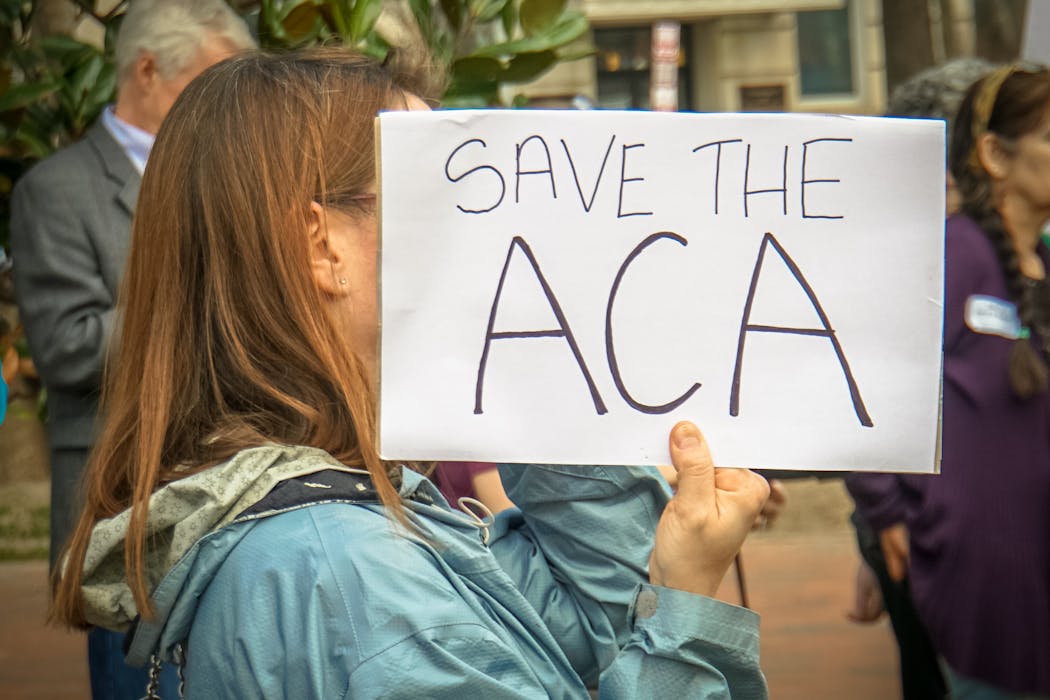
Lawmakers limited Affordable Care Act subsidies to a few years, setting the stage for a fight over them in 2025. Ted Eytan/Wikimedia Commons, CC BY-SA

As the federal government entered a shutdown on Oct. 1, 2025, competing narratives quickly emerged about the cause.

Some Republican lawmakers objected to Democrats’ push to include an extension of the expanded Affordable Care Act premium subsidies in a short-term funding bill and cited concerns about long-term spending. Democratic leaders countered that the subsidies are not a new demand but rather the continuation of a program that has helped keep record numbers of Americans insured since the pandemic – and therefore that the issue could not be delayed.

The result is a standoff that blends fiscal and policy disagreements – a hallmark of contemporary budget politics.

As experts in health law, we see this issue as simple but consequential from a legal standpoint. Congress authorized the enhanced subsidies in 2021, originally to cushion the economic fallout from COVID-19 for families, and extended them through 2025 in the Inflation Reduction Act.

Without new legislation, the subsidies revert to pre-2021 levels on Jan. 1, 2026 – which would lead to a jump in the cost of health insurance and would make coverage unaffordable for millions of Americans.

Enhanced subsidies explained

Most Americans under age 65 get insurance through their employers, which the federal government subsidizes by making it tax-free. Medicare, the program for older Americans, and Medicaid, the program that mainly serves low-income Americans, are heavily supported by subsidies too.

But as of 2025, about 1 in 6 people under age 65 do not have access to this coverage, including many small-business owners and tradespeople, as well as part-time workers and those in the gig economy. For them, unsubsidized health insurance can be prohibitively expensive.

To address this affordability problem, the ACA provided for households earning between 100% and 400% of the federal poverty level to receive subsidies for purchasing policies on the ACA marketplace, effectively lowering premiums. The original law limited subsidies only to those making under 400% of the federal poverty level, which is, for a family of four in 2025, around US$128,000 per year. A family making $129,000 a year, however, would have to pay full price.

Family in the kitchen, mom cooks dinner as daughter watches.
If the current ACA subsidies expire, almost 5 million people are likely to lose their health insurance coverage.
FG Trade/E+ via Getty Images

The American Rescue Plan temporarily made two major changes in 2021:

  • It removed the 400%-of-poverty eligibility ceiling, extending help to many middle-income families.

  • It capped the maximum household contribution at 8.5% of income for everyone, ensuring affordability regardless of income.

If these reforms expire in 2026, the Internal Revenue Service must revert to the older, less generous formula.

What the subsidies accomplished

The enhanced subsidies drove ACA marketplace participation to historic highs – more than 24 million people selected plans for 2025, up from about 11 million in 2020. The Department of Health and Human Services found disproportionate enrollment gains among Black and Latino Americans, helping to reduce racial disparities in coverage.

For many low-income enrollees, mid-level plans – called silver plans in the ACA marketplace – effectively became free. Middle-income families who previously earned just above the cutoff gained meaningful relief, sometimes saving thousands of dollars a year.

What happens if subsidies expire?

Analysts broadly agree that returning to the pre-2021 rules would mean large cost increases and coverage losses. On average, the premiums that Americans will pay for ACA marketplace plans would more than double. The Kaiser Family Foundation estimates that average annual out-of-pocket premiums for an individual would jump from about $888 in 2025 to $1,900 in 2026.

With these increases, millions of Americans will lose their health insurance coverage. The Urban Institute, a think tank, projects that 7.3 million fewer people would receive subsidized marketplace coverage and 4.8 million more would become uninsured.

This is highly consequential, as research shows that insurance coverage saves lives by ensuring access to care. Knocking nearly 5 million people off insurance may cause as many as 500 additional deaths per year.

Losses would disproportionately impact low- and middle-income families. Free premium plans would disappear. Those making below 250% of the federal poverty level could see their net premiums rise more than fourfold, while those between 250% and 400% would see their premiums double. What’s more, rural Americans, already under pressure from the state of the economy, face higher risks.

The fiscal and policy trade-offs

On the flip side, making the enhanced credits permanent would add about US$350 billion to federal deficits between 2026 and 2035, according to the Congressional Budget Office’s estimates. Proponents argue that the cost is justified by reduced medical debt, fewer uninsured, greater household stability and ultimately saving lives. Short-term savings from cutting the subsidies would also lead to higher health care costs, longer-term. But critics worry it’s a broad and expensive way to support affordability, benefiting some higher-income households that could otherwise afford coverage, even though it would cost more than 8.5% of their income.

Another concern is how the subsidies affect price competition. Under the ACA, the government pays most of the difference between what a household is expected to contribute and the actual cost of a standard benchmark plan. That means if health insurance companies raise their premiums, those who receive subsidies don’t feel the effect of the premium increases, because the federal subsidy simply grows to cover it. That means companies have fewer reasons to compete on price.

Legal and administrative constraints

Because the subsidies are written into the tax code, only Congress can extend them or make them permanent. The question of whether to renew them was already debated strenuously when Congress passed the big tax and spending package that President Donald Trump signed into law on July 4, 2025. By omitting the subsidies, the bill effectively raised health care costs for millions of middle-income Americans. States that run their own marketplaces may add some aid, but few can match the scale of federal support.

Administrative timing matters too. The IRS, health insurers and the online marketplace all need to know how the subsidy amounts will be calculated – in other words, which income limits and premium caps Congress wants to use. These figures determine how much financial help people get when they sign up for coverage. Late or temporary fixes can create confusion for both consumers and administrators.

Options before Congress

Lawmakers have several options, each with different trade-offs.

A permanent extension would provide stability for consumers and insurers – but at the cost of higher long-term federal spending. A short-term renewal of one to four years could soften the immediate jump in premiums while giving Congress time to reassess the policy, but it would continue the cycle of temporary fixes.

Alternatively, a targeted approach might preserve the larger subsidies for lower-income households but gradually reduce assistance for higher earners so that they aren’t guaranteed a cap of 8.5% of their income for insurance. This would make the policy more fiscally restrained but less universal.

Some legislators have also proposed offsetting the cost of ACA subsidies by pairing an extension with savings elsewhere in the health system. Those savings could come from trimming what the government pays insurers to lower patients’ out-of-pocket costs or by reducing Medicare payments to doctors.

Each of these options reflects a different balance among affordability, fiscal responsibility and administrative simplicity. Together, they highlight how difficult it is to design a policy that meets all three goals at once.

A structural challenge

The problem isn’t just political – it’s built into how time-limited programs like the enhanced ACA subsidies are designed. The subsidies have always reflected partisan divides, but their temporary nature makes those divides even sharper. Lawmakers limited them to a few years to keep costs down, but that choice now means Congress has to reopen the same debate every year.

When deadlines for renewing programs collide with larger funding fights, important benefits can lapse, not because lawmakers chose to end them but because the fights over broader spending leave little room for resolution.

In the end, it’s up to Congress to decide not only whether these subsidies continue, but whether big social policies like this should be settled through last-minute budget showdowns. For now, getting the government running and keeping health insurance affordable are part of the same fight.

The Conversation

Wendy Netter Epstein is a member of the Illinois Health Benefits Exchange Advisory Committee.

Christopher Robertson does not work for, consult, own shares in or receive funding from any company or organization that would benefit from this article, and has disclosed no relevant affiliations beyond their academic appointment.

ref. Health insurance subsidy standoff pits affordable care for millions against federal budget constraints – https://theconversation.com/health-insurance-subsidy-standoff-pits-affordable-care-for-millions-against-federal-budget-constraints-266851

Anti-Palestinian and anti-Arab racism is on the rise in Canada

Source: The Conversation – Canada – By Nadia Hasan, Assistant Professor, School of Gender, Sexuality and Women’s Studies, York University, Canada

In April 2024, a video circulated online showing an Oakville, Ont. high school teacher and a student having an alarming and contentious conversation about his keffiyeh.

The Iroquois Ridge High School educator says mid-way in the clip: “I didn’t call you a terrorist. I said it (the keffiyeh) reminds me of …” When the student pushes her to finish her sentence and suggests “Hamas?” she answers “yes.”

The Halton District School Board (HDSB) quickly placed the staff member on leave and launched an investigation, deeming her language “harmful and discriminatory.”

This incident, a clear example of Islamophobia and anti-Palestinian racism, is one of many detailed in our recently released Islamophobia Research Hub report, Documenting the “Palestine Exception”: An Overview of Trends in Islamophobia, Anti-Palestinian and Anti-Arab Racism in Canada in the Aftermath of October 7, 2023.

Our findings point to a pattern of unethical use of institutional power to intimidate and alienate those expressing support for Palestine or their identities — what many community organizers in Canada now call “the Palestine exception.”

What is the Palestine exception?

The expression describes how democratic freedoms and multicultural ideals historically meet their limits when it comes to Palestinian human rights, history and identity. Studies in Canada and the United States show systemic silencing and erasure of Palestinian experiences — often through unfounded accusations of antisemitism.

Race scholars have long argued that Canadian multiculturalism practises inclusion through exclusion, demanding that racialized people suppress parts of their identity to gain conditional belonging in order to uphold a normative racial order.

For Palestinians in Canada, this often means hiding their heritage for fear of stigmatization, or facing punishment for expressing pro-Palestinian views.

As Nihad Jasser of the Association of Palestinian Arab Canadians, an Ottawa-based community collective, said:

“It feels that institutions in our society will support all human rights except Palestinian human rights, celebrate all cultures except Palestinian culture, and condemn all forms of racism except anti-Palestinian racism.”

Unfair targeting, censorship and discipline of those speaking out for Palestinian rights — or merely perceived as Palestinian, Arab or Muslim — is a common theme in our report and particularly disturbing in terms of young people’s experiences.

A pattern of targeting young people

According to our research, young people in schools, universities and early careers are facing Islamophobia, anti-Palestinian racism and anti-Arab racism in the form of employment discrimination, doxing, hate-motivated violence, bullying and the suppression of their democratic rights.

The HDSB keffiyeh incident reflects a wider reality: a treatment of suspicion toward Palestinian expressions.

Another example that drew attention was a Toronto District School Board (TDSB) field trip to the Indigenous-led Grassy Narrows River Run in September 2024. During the march, some participants used chants connecting settler colonialism in Canada to the experiences of Palestinians.

This led to social media backlash from parents who claimed the trip exposed students to pro-Palestinian political activity and compromised safety. The Ontario education minister’s office demanded an investigation — an unusual move that many felt revealed a double standard compared to other incidents.

The TDSB issued an apology for the “harm” caused and pre-emptively cancelled another planned field trip for National Day for Truth and Reconciliation — ironically undermining commitments to decolonization.

Patrick Case, a former Ontario Ministry of Education chief equity officer, conducted an independent review, interviewing 146 parents, students, Indigenous leaders, staff and trustees. His report found that the Grassy Narrows event was not overshadowed by pro-Palestinian activism and that the TDSB’s reaction reflected a broader pattern of erasure and suspicion toward Palestinian identity.

Indigenous leaders also noted that media outrage diverted attention from pressing issues of environmental justice in Indigenous communities.

Despite these findings, the education ministry has not promoted the report and has rejected some of its key recommendations.

Punishment over pedagogy

Our report raises concerns about a growing political culture that punishes rather than engages young people advocating for Palestinian human rights. Instead of fostering critical thinking, institutions are choosing repression.

Another striking example is the treatment of students at the Lincoln Alexander School of Law at Toronto Metropolitan University, who were accused of antisemitism for signing an open letter in solidarity with Palestinian people and critical of Israeli state actions. Several law firms and the Ontario Ministry of the Attorney General blacklisted them from recruitment as punishment for signing the open letter.

In an external review, Justice J. Michael MacDonald condemned this response as a “rush to judgment” that unfairly targeted “young idealists motivated by immense human suffering.” He ruled that the students’ actions were a “valid exercise of freedom of speech” and criticized the administration for negatively impacting the students.

He also criticized members of the legal community for fuelling the backlash against these students. Some of these students are now suing Toronto Metropolitan University for defamation.

Many young people have shown resilience in the face of such repression, but the harm is undeniable. Being punished for expressing solidarity with Palestinians — and witnessing peers being punished — affects young people’s sense of safety, intellectual curiosity and career prospects.

Protecting Canadian multiculturalism

Two years into the brutal genocide in Gaza, there is a notable shift in public discourse and policy related to Palestine. Yet many remain deeply skeptical of the sincerity of this shift.

Earlier this fall, the federal Liberal government introduced the Combating Hate Act, proposing amendments to the Criminal Code.


Read more:
Sex-motivated violence should be treated as a hate crime


Critics warn these changes could further curtail civil liberties, particularly around expressions of Palestinian identity and solidarity.

The amendments would ban the public display of “hate symbols” and criminalize protests near places of worship, schools and community centres. The government defines hate symbols as those associated with terrorist entities such as the Nazi swastika and SS (Schutzstaffel) bolts. And so, understandably, questions abound about whether this means that Palestinian flags or the script of the shahada (Muslim declaration of faith) could be deemed hate symbols.

Given recent institutional responses to pro-Palestinian expression, there is little confidence these sorts of laws will not be weaponized to criminalize Palestinian identity, dissent and criticism of the Israeli state.

In large part, this pervasive suspicion stems from the widespread experience of Palestinian identity and pro-Palestinian positions being treated as inherently suspect, even dangerous. Such exceptional treatment exposes the profound fissures — and in fact the limits — of Canadian multiculturalism and its professed commitments to democratic freedoms.

The Conversation

Nadia Hasan receives funding from the Social Sciences and Humanities Research Council of Canada, Canadian Heritage, The Muslim Fund, the Bay Tree Foundation and The Olive Tree Foundation.

Sarah Abou-Bakr does not work for, consult, own shares in or receive funding from any company or organisation that would benefit from this article, and has disclosed no relevant affiliations beyond their academic appointment.

ref. Anti-Palestinian and anti-Arab racism is on the rise in Canada – https://theconversation.com/anti-palestinian-and-anti-arab-racism-is-on-the-rise-in-canada-266637

How does your immune system stay balanced? A Nobel Prize-winning answer

Source: The Conversation – USA – By Aimee Pugh Bernard, Associate Professor of Immunology and Microbiology, University of Colorado Anschutz Medical Campus

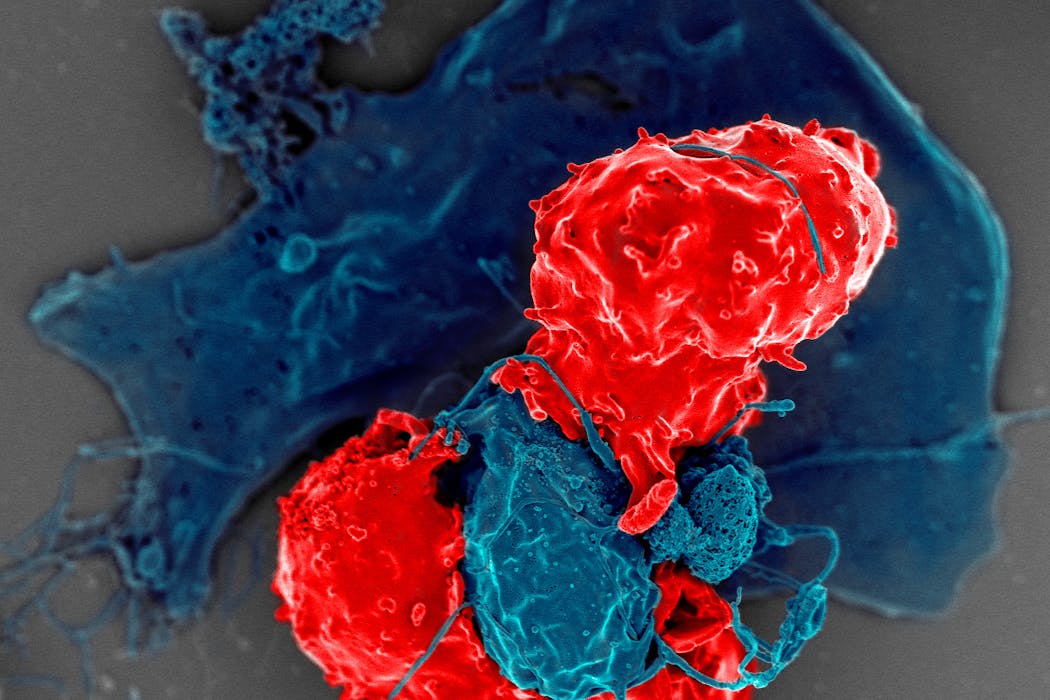
Regulatory T cells (red) interact with other immune cells (blue) and modulate immune responses. National Institute of Allergy and Infectious Diseases/NIH via Flickr

Every day, your immune system performs a delicate balancing act, defending you from thousands of pathogens that cause disease while sparing your body’s own healthy cells. This careful equilibrium is so seamless that most people don’t think about it until something goes wrong.

Autoimmune diseases such as Type 1 diabetes, lupus and rheumatoid arthritis are stark reminders of what happens when the immune system mistakes your own cells as threats it needs to attack. But how does your immune system distinguish between “self” and “nonself”?

The 2025 Nobel Prize in physiology or medicine honors three scientists – Shimon Sakaguchi, Mary Brunkow and Fred Ramsdell – whose groundbreaking discoveries revealed how your immune system maintains this delicate balance. Their work on two key components of immune tolerance – regulatory T cells and the FOXP3 gene – transformed how researchers like me understand the immune system, opening new doors for treating autoimmune diseases and cancer.

The 2025 Nobel Prize in physiology or medicine was awarded to Shimon Sakaguchi, Mary Brunkow and Fred Ramsdell.

How immune tolerance works

While the immune system is designed to recognize and eliminate foreign invaders such as viruses and bacteria, it must also avoid attacking the body’s own tissues. This concept is called self-tolerance.

For decades, scientists thought self-tolerance was primarily established in the parts of the body that make immune cells, such as the thymus for T cells and the bone marrow for B cells. There, newly created immune cells that attack “self” are eliminated during development through a process called central tolerance.

However, some of these self-reactive immune cells escape this process of elimination and are released into the rest of the body. Sakaguchi’s 1995 discovery of a new class of immune cells, called regulatory T cells, or Tregs, revealed another layer of protection: peripheral tolerance. These cells act as security guards of the immune system, patrolling the body and suppressing rogue immune responses that could lead to autoimmunity.

Diagram showing Tregs interacting with effector T cells and dendritic cells through various signaling molecules
Regulatory T cells suppress immune responses using a variety of molecular signals.
Giwlz/Wikimedia Commons, CC BY-SA

While Sakaguchi identified the cells, Brunkow and Ramsdell in 2001 uncovered the molecular key that controls them. They found that mutations in a gene called FOXP3 caused a fatal autoimmune disorder in mice. They later showed that similar mutations in humans lead to immune dysregulation and a rare and severe autoimmune disease called IPEX syndrome, short for immunodysregulation polyendocrinopathy enteropathy X-linked syndrome. This disease results from missing or malfunctioning regulatory T cells.

In 2003, Sakaguchi confirmed that FOXP3 is essential for the development of regulatory T cells. FOXP3 codes for a type of protein called a transcription factor, meaning it helps turn on the genes necessary for regulatory T cells to develop and function. Without this protein, these cells either don’t form or fail to suppress harmful immune responses.

Harnessing the immune system for medicine

Regulatory T cells can be heroes or villains, depending on the context. When regulatory T cells don’t work, it can lead to disease. A breakdown in immune tolerance can result in autoimmune diseases, where the immune system attacks healthy tissues. Conversely, in cancer, regulatory T cells can be too effective in suppressing immune responses that might otherwise destroy tumors.

Understanding how FOXP3 and regulatory T cells work launched a new era in immunotherapies that harness the immune system to treat autoimmune diseases and cancer. For autoimmune diseases such as rheumatoid arthritis and Type 1 diabetes, researchers are exploring ways to boost the function of Tregs. For cancer, the goal is to inhibit Tregs, allowing the immune system to target tumors more aggressively.

Diagram of immune activation scale in the shape of a rainbow wedge, with 'vulnerable to infection' at the smaller end, 'sweet spot' in the middle, and 'autoimmunity' at the larger end
Too much or too little immune activation can lead to illness.
Kevbonham/Wikimedia Commons, CC BY-SA

Beyond disease treatment, this research may also improve organ transplantation, where immune tolerance is crucial to prevent rejection. Scientists are exploring how to engineer or expand Tregs to help the body accept transplanted tissues over the long term.

Continuing to unlock the secrets of immune regulation can help lead to a future where the immune system can be precisely tuned like a thermostat – whether to turn it down in autoimmunity or rev it up against cancer.

The 2025 Nobel Prize reminds us that science, at its best, doesn’t just explain the world – it changes lives.

The Conversation

Aimee Pugh Bernard is affiliated with Immunize Colorado as a volunteer and unpaid board member.

ref. How does your immune system stay balanced? A Nobel Prize-winning answer – https://theconversation.com/how-does-your-immune-system-stay-balanced-a-nobel-prize-winning-answer-266842

Ontario’s colleges were founded to serve local and regional needs — have we forgotten that?

Source: The Conversation – Canada – By Emilda Thavaratnam, PhD student, Leadership and Higher Education, University of Toronto

The establishment of Ontario’s colleges of applied arts and technology 60 years ago marked a pivotal moment in the province’s educational history. The founding vision was based on principles of accessibility and community, as colleges were designed to strengthen Ontario’s growing social and economic fabric.

Today, this promise is unravelling. Students now face limited program choices with the cancellation or suspension of 600 programs over the past year, rising fees and mounting debt, while faculty and staff contend with precarious contracts and widespread layoffs.

As students settle into fall semesters, it’s essential to reflect on the history of Ontario’s colleges in order to envision a future that safeguards the public mission on which these institutions were founded.

Founding vision

Ontario redefined post-secondary education in 1965 by creating a new college system under the leadership of William G. Davis, then the province’s education minister, later its premier. This marked a turning point in Ontario’s educational history and the birth of the college system.

In response to the province’s rapid demographic and economic shifts, Davis proposed a model of affordable, accessible vocational education aimed at preparing students for the workforce.

The foundational principles emphasized that college programs should be “occupation-oriented” and “designed to meet the needs of the local community”;
Additionally, the plans highlighted there should be a “close relationship between any college program and the long-term economic development plans for a particular region” to respond to immediate labour market demands and broader societal needs, including arts, health, science and technical fields.

This approach ensured that the founding vision was connected to regional development, allowing colleges to address Ontario’s diverse social, economic and cultural needs across multiple sectors.

In a 1967 Department of Education publication, Davis cited an earlier 1964 report that named the unique role that colleges would play:

“In the present crisis .. we must turn our attention to the post-secondary level, where we must create a new kind of institution that will provide, in the interests of students for whom a university course is unsuitable, a type of training which universities are not designed to offer.”

This mandate gave colleges their distinctive purpose of filling gaps that universities were never meant to address.

Economic and social development

There are now 24 colleges with campuses in 200 communities throughout Ontario. This college system plays a vital role in the province’s education and economy.

Davis’s legacy is evident in the generations of students who have attended these institutions. Since 2018, an average of 140,000 people have graduated annually from Ontario’s colleges.

It is reported that an average of 83 per cent of Ontario college graduates are employed within six months of graduation. These outcomes highlight the pivotal role that colleges play in contributing to Ontario’s economic and social development.

Shifts in funding

The financial foundation of Ontario colleges has shifted dramatically over the past six decades. When colleges were first established most operating expenses were financed by the province, with tuition contributing to a lesser extent.

By the late 1980s, however, per-student funding had already fallen by roughly one-third. The trend accelerated in 1995 when $120 million was cut. Rather than raising tuition directly, colleges responded by introducing ancillary fees, expanding international student enrolment, postponing capital projects and turning to private funding.


Read more:
International students’ stories are vital in shaping Canada’s future


From the 1990s onward, tuition increasingly replaced public investment as the financial backbone of the college system. Data from the Higher Education Quality Council of Ontario illustrates that between 1992 and 2008, total college revenue rose from $972 million to $1.6 billion, but this growth was driven primarily by student fees. Tuition revenue more than tripled during this period, while government funding shrank as a proportion of overall revenue.

This reliance on student-paid fees deepened in the following decade. Between 2010-11 and 2022-23, provincial grants per student operating revenue (adjusted for inflation) declined by 29 per cent, while tuition revenue once again tripled.

By 2022-23, Ontario colleges received approximately $11,081 per full-time-equivalent student, compared to the national average of $19,292. This figure is just 56 per cent of the Canadian average across provinces.

A 2023 provincial report, Ensuring Financial Sustainability for Ontario’s Post-Secondary Sector, confirms the crisis surrounding underfunding.

What does this mean for students?

These funding changes have reshaped the classroom experience. For students, this means higher tuition and shifted program priorities that limit access and opportunity.

For the public, it’s the loss of an original promise of accessible vocational education. Rising tuition fees have created barriers to access, especially for low-income, first-generation Canadian students.

At the same time, the Ontario government has framed college funding heavily around immediate provincial and national economic pressures, for example in trades and construction, as well as STEM and health care.


Read more:
YouTube shapes young people’s political education, but the site simplifies complex issues


While public funding of colleges has been eroded, the Ontario Public Service Employees Union reports that Ontario has also spent significant funds cultivating “non-college training providers and projects” through a Skills Development Fund.

It also notes that while public colleges are required to disclose a great deal about their funding and outcomes:

“… very little is known about the funding levels, training quality or employment outcomes of SDF-funded projects. Instead, the province relies on campaign-style funding announcements, often showcasing private companies receiving multi-million dollar training grants.”

Move away from founding vision

Davis’s founding vision was rooted in regional development. Programs were designed to serve the long-term needs of communities, including the arts, local culture and community services. The goal was to strengthen entire regions and broaden opportunities through a balanced system that reflected both economic and social priorities.

This shift reflects the broader marketization of higher education. Education is valued less for cultivating critical thinking, civic participation and community life and more for producing workers to meet short-term market needs.

For students, this means diminishing autonomy as their choices are increasingly shaped by labour market pressures rather than broader civic needs and personal vocational interests. These funding trends raise concerns about the fate of a broader range of programs that sustain the social fabric of communities.

Ongoing college support staff strike

Finally, these policy shifts ignore the immediate impact on students, faculty and staff. The ongoing support staff strike at Ontario colleges is one expression of these pressures, and its complexity deserves discussion beyond the scope of this piece.

The question remains: where is our government in all this, and what will be done to save our colleges?

Today, Davis’s legacy is being dismantled by chronic underfunding. The future of our colleges depends on renewal. We must reclaim these values and call on our federal and provincial leaders to support a truly public system of higher education that serves the communities it was created to serve.

The Conversation

Emilda Thavaratnam does not work for, consult, own shares in or receive funding from any company or organisation that would benefit from this article, and has disclosed no relevant affiliations beyond their academic appointment.

ref. Ontario’s colleges were founded to serve local and regional needs — have we forgotten that? – https://theconversation.com/ontarios-colleges-were-founded-to-serve-local-and-regional-needs-have-we-forgotten-that-262760

Nasa’s Artemis II mission is crucial as doubts build that America can beat China back to the Moon

Source: The Conversation – UK – By Jessie Osborne, Research Assistant, RAND Europe

Nasa/Frank Michaux

For the first time in half a century, America stands on the threshold of sending astronauts back to the Moon. Slated for launch no earlier than February 2026, Artemis II will not land on the lunar surface, but it will carry four astronauts on a flyby of Earth’s only natural satellite.

The ten day mission will take the crew further from Earth than any human has travelled since the Apollo missions. It’s a crucial test of Nasa’s Orion spacecraft and Space Launch System (SLS) rocket, determining whether the United States can safely push beyond low Earth orbit once again. The stakes are immense: technical risks, billions in financial commitments and an increasingly competitive international race for lunar leadership.

Indeed, even vocal supporters of America’s effort are now expressing doubts that Nasa will be able to beat the Chinese space agency in the race to send humans back to the lunar surface. China has been making great strides in its lunar effort and is targeting a Moon landing by 2030. America’s programme, on the other hand, is beset with problems, including the lack of a working lunar landing system and lunar surface spacesuits that are behind schedule.

Further underlining the US’ now precarious hopes of returning first to the Moon, China completed a critical landing and take off test of its crewed lunar lander in August.

The astronauts aboard Artemis II will test critical systems required to perform in the harsh deep space environment. After separation from the core stage of their rocket, they will confront an extreme environment where deep space rescue is impossible.

During the uncrewed Artemis I mission in 2022, the Orion crew module sustained unexpectedly high levels of damage to its heat shield, during the return through Earth’s atmosphere. The heat shield protects the occupants of the spacecraft from the superheated gases around the spacecraft during re entry.

Nasa has been working hard to resolve this problem ahead of Orion’s first mission with humans aboard. The problem highlights the complexity of returning to lunar travel after a 50-year hiatus.

The Orion heat shield after the Artemis I mission, showing cavities from the loss of large chunks during re entry.
Nasa

Landing challenges

Even if Artemis II is successful, major uncertainties surround the next mission: Artemis III. This is intended to be the first American mission to return to the lunar surface since 1972. The landing vehicle will be based on SpaceX’s Starship vehicle and is known as the Starship Human Landing System (HLS). SpaceX has been carrying out test flights of Starship from its launch site in southern Texas. While the most recent of these was successful, several previous flights resulted in spectacular explosions.

However, Starship faces many further challenges before it can be used to carry astronauts down to the lunar surface. The vehicle must demonstrate that it can refuel in orbit, connecting to another Starship that acts solely as a tanker. The 50 metres tall spacecraft must also be able to land vertically on the Moon. Its ability to act as a lunar habitat for the astronauts creates opportunities for extended missions, but its size and complexity creates risk too.

While these hurdles remain unresolved, Nasa faces the possibility of having to reimagine Artemis III, including the possibility that the mission becomes another lunar flyby rather than the long-awaited return to the surface.

Artemis is ambitious, but also precarious. Each SLS rocket costs US $2 billion (£1.4 billion) to launch. This extraordinary cost has already raised questions in Congress about long term sustainability. As such, some US lawmakers are pushing for a transition to cheaper commercial rockets after Artemis III. For now, funding is secured through the 2025 “One Big Beautiful Bill Act”, but the political consensus may not last.

International competition adds urgency to the financial considerations. The implications of lunar leadership extend beyond national prestige. They include access to lunar resources, such as the water ice locked up at the lunar poles, which could be used to support a Moon base. Nasa’s acting administrator Sean Duffy has asserted that “we are going to beat the Chinese to the Moon” , echoing the cold war narrative 63 years on from John F Kennedy’s “we choose to go to the Moon” speech in 1962.

But Nasa must also demonstrate that Artemis delivers scientific value beyond national prestige. It must justify the massive investment through discoveries that benefit humanity’s understanding of the Moon, Earth and solar system.

Lunar space station

The intended impact of the lunar return extends far beyond individual missions. A space station around the Moon called the The Lunar Gateway represents Nasa’s commitment to a sustained presence rather than Apollo-style flags-and-footprints landings. The Gateway’s first modules, scheduled for a 2027 launch, will create a staging point for future lunar operations and deep space exploration.

The Artemis IV mission will deliver additional Gateway modules in 2028, while Artemis V in 2030 will introduce Blue Origin’s competing lunar lander, reducing dependence on SpaceX as a single contractor. The cargo version of Blue Origin’s lander could be ready long before that, as the company is hoping to launch the uncrewed vehicle on a mission to the lunar surface sometime this year.

Next year’s Artemis II mission is not just another spaceflight, it is the proving ground for America’s return to the Moon. It is the test of whether the United States can sustain its most ambitious exploration program since Apollo. It is also the foundation for future voyages to Mars. Success will reaffirm American leadership in space. Failure could cede it to others.

The Conversation

Jessie Osborne does not work for, consult, own shares in or receive funding from any company or organisation that would benefit from this article, and has disclosed no relevant affiliations beyond their academic appointment.

ref. Nasa’s Artemis II mission is crucial as doubts build that America can beat China back to the Moon – https://theconversation.com/nasas-artemis-ii-mission-is-crucial-as-doubts-build-that-america-can-beat-china-back-to-the-moon-266385

First woman archbishop of Canterbury can’t preside over communion in hundreds of churches

Source: The Conversation – UK – By Sharon Jagger, Lecturer in Religion, York St John University

As an academic specialising in gender and the church, the news that Bishop Sarah Mullally would be the next archbishop of Canterbury came as a pleasant shock to me. The announcement of a woman as leader of the Church of England and the “first among equals” in the worldwide Anglican communion came as a surprise to others too. One woman priest told me she was “stunned but pleased”.

What is not surprising, though, is the immediate condemnation from church conservatives, many outside the Church of England. Social media naysayers made their views known too – I read comments arguing that a female archbishop makes a “mockery of tradition” and that such “feminist rebellion” spells the death of the church.

This type of abusive commentary has been aimed at women priests for years. My own research explores the gendered abuse faced by women in the church.

The appointment of a woman as archbishop is a welcome show of resistance by the church against such misogyny. But it is by no means a panacea for the sexism and misogyny built into the church’s structure.

Before 1993, women were not permitted to be ordained in the Church of England. The campaign for women’s ordination has a long history, gathering pace from the 1970s. Finally, in 1992, General Synod – the church’s governing council – voted in favour of allowing women to be priests. The vote was close, and many in the church remained opposed to the move.

To accommodate those who could not accept women in the priesthood, the Act of Synod (1993) facilitating the ordination of women established a dual structure, allowing individual parishes to refuse the ministry of women priests and to have pastoral oversight from a bishop who did not ordain women (nicknamed “flying bishops”).

In 2014, legislation was passed to allow women bishops. The House of Bishops agreed on a document detailing Five Guiding Principles. This document paradoxically states the church is unequivocal in its commitment to women’s ordination, while also committing to the continuing provision for those who do not accept women can or should be priests.

The discriminatory structure, with its no-go parishes for women clergy, was maintained. The church can do this because it is exempt from UK equality legislation in matters of belief and conscience.

Today, about 5% of Church of England parishes officially object to women priests, though there are also churches where women’s ministry is unofficially curtailed. The official number of parishes avoiding women’s ministry is a minority, but they have had a disproportionate impact on the structure of the church. The open disavowal of women’s priesthood will erode the authority and status of the next archbishop of Canterbury.

There are currently nearly 600 parishes that officially bar women priests. The Church of England must now deal with an extraordinary situation: the archbishop of Canterbury will not be able to preside over communion in these churches.

In my recent book, Women Priests, Symbolic Violence and Symbolic Resistance, I detail the damage this structural discrimination does to women priests. It affects them materially, emotionally, psychologically, and undermines their status by allowing some to claim they are not priests.

To that end, the historic appointment of a woman as archbishop of Canterbury is a bold and significant move by the church. And it may, to an extent, ameliorate the damage to women’s status and bring the church’s own discriminatory practices against women clergy back onto the agenda.

Structural inequality

With guarded optimism, Martine Oborne, the chair of Women and the Church, an organisation campaigning against the Five Guiding Principles, writes about the church’s need to challenge its institutional misogyny: “Hopefully, the appointment of our first female archbishop of Canterbury will be a big step towards this.” But without the dismantling of the current structure, the misogyny that infects the church will not be tackled.

I think it is unlikely that the new archbishop will instigate the end of the dual structure. Bishop Mullally may describe herself as a feminist, but it remains to be seen whether she will create the conditions for real change that is needed to give women priests dignity and equality.

British professor of theology Linda Woodhead has praised Mullally’s emphasis on unity in the church, saying it is “exactly what the church, and nation, needs right now”.

Yet, unity may still be a tall order for the soon-to-be archbishop. Conservatives and traditionalists within the Church of England and in the worldwide Anglican communion may have trouble dealing with a woman’s authority and leadership, precluding any dramatic structural change. And women in the church may be disappointed that their circumstances will not be improved greatly.

The Conversation

Sharon Jagger has received past funding from Women and the Church.

ref. First woman archbishop of Canterbury can’t preside over communion in hundreds of churches – https://theconversation.com/first-woman-archbishop-of-canterbury-cant-preside-over-communion-in-hundreds-of-churches-266719

Will Rachael Reeves’ youth unemployment scheme force her to bend her own rules?

Source: The Conversation – UK – By Maha Rafi Atal, Adam Smith Senior Lecturer in Political Economy, School of Social and Political Sciences, University of Glasgow

Jacob Lund/Shutterstock

UK chancellor Rachel Reeves has set out a “youth guarantee” aimed at ending long-term unemployment among young people. Under the plan, a young person who has been out of work for 18 months would be offered a temporary job, apprenticeship or college place.

The UK has just under a million young people who are not in employment, education or training (Neet) – thought to be around 13% of the country’s 16- to 24-year-olds.

Under Reeves’ plans, those who refuse the offer could face benefit sanctions. The scheme is being positioned as a way to boost growth while keeping to Labour’s fiscal rules ahead of November’s budget.

The idea has some logic. Long-term youth unemployment has consequences that reach far beyond the individual. Research from the Organisation for Economic Co-operation and Development (OECD) and the Institute for Fiscal Studies shows that young people who are out of work for extended periods often face lower earnings for decades afterwards, as well as poorer health and social outcomes.

Economists sometimes describe this as “scarring” – that is, lasting negative economic effects. By contrast, job losses that come mid-career tend to have less lasting economic impact because these workers have more experience or skills that they can use to get their next job.

So the argument that tackling youth unemployment offers particularly high returns is, in theory, credible.

Long-term future

The difficulty is whether the guarantee, as outlined by Reeves, can deliver anything more than temporary relief. It is not yet clear where the promised jobs will come from.

If the government pays firms to create placements, they will have been specially created for the scheme, rather than representing real gaps that the firms need to fill to grow their business. When the government subsidy ends, the firms may have no reason to keep the young person on. And a short placement may not provide enough skills development to allow the young person to get a job elsewhere.

What’s more, the government is not proposing to pay the full cost of these placements. If the onus falls on businesses to absorb additional young workers in newly created roles at their own expense, the effect may be negligible. This is because Labour’s wider programme – from higher employer national insurance contributions to new employment rights – already imposes extra costs on employers.

That tension points to a broader issue in Reeves’ strategy. She has pledged not to increase headline tax rates. Instead she is seeking to expand the overall tax base by growing employment and productivity.

Yet that kind of growth usually requires sustained public investment in skills, infrastructure and industrial policy. A scheme that subsidises wages for 12 months may help individuals back into work, but it is unlikely to shift the productivity dial or generate lasting fiscal dividends without a wide programme of investment.

For Reeves, the challenge is that the guarantee must be large enough to create real career pathways and business growth. But to do so requires precisely the kind of government expenditure that is made difficult by her own “non-negotiable” fiscal rules.

Instead of a way to grow within the rules then, the youth guarantee may be added to the list of promises the government cannot fulfil without bending them.

The Conversation

Maha Rafi Atal does not work for, consult, own shares in or receive funding from any company or organisation that would benefit from this article, and has disclosed no relevant affiliations beyond their academic appointment.

ref. Will Rachael Reeves’ youth unemployment scheme force her to bend her own rules? – https://theconversation.com/will-rachael-reeves-youth-unemployment-scheme-force-her-to-bend-her-own-rules-266716

Haiti is enlisting the help of mercenaries in its battle against gang violence

Source: The Conversation – UK – By Nicolas Forsans, Professor of Management and Co-director of the Centre for Latin American & Caribbean Studies, University of Essex

When state institutions crumble under the weight of chaos, desperate governments sometimes turn to controversial solutions. In Haiti, where gang violence has transformed the capital, Port-au-Prince, into a war zone and left over 5,600 people dead in 2024 alone, the government has made a striking decision to hire a private army to restore order.

Haiti’s interim government signed a deal in March with Vectus Global, a firm founded by American private security contractor Erik Prince, that has seen mercenaries help battle the gangs. Vectus operatives have reportedly served as instructors to Haitian security forces, while also coordinating drone strikes against gang-controlled areas and criminal leaders.

The firm is thought to have deployed nearly 200 personnel in Haiti, from the US, Europe and El Salvador. It plans to have stabilised major roads and pushed gangs out of their territory within about a year. In an interview with the Reuters news agency in August, Prince said the measure of success for him “will be when you can drive from Port-au-Prince to [the northern city of] Cap-Haïtien” without being stopped by gangs.

The arrangement, while having done little to curb the power of the gangs so far, represents a dramatic escalation in the privatisation of state security. It raises profound questions about sovereignty, accountability and the risks of ceding control of security to private military personnel.

A map of Haiti.
Prince says he’ll declare victory when anyone can ‘drive from Port-au-Prince to Cap-Haïtien’ and not be stopped by criminal gangs.
Rainer Lesniewski / Shutterstock

Vectus Global is reportedly operating in Haiti under two parallel arrangements. The first involves a one-year contract in which Vectus staff will help Haiti restore order. Haiti’s government has not commented on the involvement of Vectus Global specifically, though it confirmed in June that it was using foreign contractors.

The second arrangement, which remains unconfirmed by the Haitian government, will supposedly see Prince’s firm play a role in restructuring Haiti’s customs and immigration services over a ten-year period. Haiti has long struggled to prevent gangs from exploiting its porous border with neighbouring Dominican Republic.

This move would represent an extraordinary transfer of sovereign functions. Reports indicate that Vectus Global will receive a performance-based commission of 20% of customs revenue increases in the first three years and 15% thereafter. It will also receive a fixed fee of 3% on import volumes regardless of performance.

Haiti’s security collapse provides context for such extreme solutions. Criminal groups now control 90% of Port-au-Prince and possess more firepower and manpower than national security forces. A Kenyan-led multinational security support mission was deployed to Haiti in 2024, but it remains understaffed and underfunded with only 1,000 of the 2,500 personnel envisioned initially.

And despite the assistance now being provided by private security personnel, the gangs have continued to expand their reach in the provinces. At least 1,520 people were killed and 600 were injured between April and the end of June across the country. The UN says more than 60% of these killings and injuries occurred during operations by security forces against the gangs.

Criminal groups united under the “Viv Ansanm” coalition continue to dictate events, maintain control over major areas of the capital and launch attacks in a bid to control more territory. There has been no significant territorial loss by gangs in recent months and essential supply chains, trade routes and public safety remain heavily disrupted.

A complex set of factors make combating gang violence in Haiti extremely difficult. Gangs have deep-rooted relationships with certain factions in local police and government, making it hard for external security personnel to dismantle their operations. At the same time, gang control of critical transport infrastructure has crippled tax collection, trade, access to medical supplies and food distribution.

Raising the alarm

Prominent NGOs and rights groups have strongly opposed Vectus Global’s involvement in Haiti. The Business and Human Rights Resource Centre flagged that Prince’s reported ten-year contract would put crucial state powers – including tax collection and deportation – under a private company’s control.

It warned of “serious concerns for human rights and government accountability”. This is because international legal guidelines for private military companies are largely non-binding, and tend to rely on voluntary codes of conduct.

Speaking to the media in August on the condition of anonymity, a senior White House official clarified that there is “no American involvement in hiring Vectus Global and no oversight” of its mission in Haiti. This has only raised further doubts as to who, if anyone, will hold private military personnel there accountable.

The dangers of privatised warfare are well documented. Prince’s own former company, Blackwater, faced numerous scandals over its conduct during the Iraq war. Blackwater provided security for US officials and military installations there.

In 2007, four Blackwater employees killed 17 Iraqi civilians and wounded 20 others in the Nisour Square massacre in Baghdad. While FBI investigations determined that at least 14 deaths were unjustified, all four convicted Blackwater contractors were pardoned by Donald Trump in 2020.

Vectus Global has communicated its plans in Haiti and operational adjustments. But fundamental criticisms relating to accountability, sustainability and lack of local institution-building remain largely unaddressed in public statements.

The deepening crisis in Haiti was on the agenda at the UN General Assembly in New York, where world leaders gathered in September for the 80th anniversary of the UN. The US pushed for a rebranding of the current multinational security support mission into a more aggressive “gang suppression force”, which has now been approved by the UN security council.

This force will have a new mandate, greater numbers and expanded autonomy from the Haitian police. Yet uncertainties remain over where the 5,500 people for the new force will come from, and who is going to pay.

As Haiti continues to struggle with rampant violence, Prince’s private army reflects governmental desperation rather than strategic wisdom. It is a model that prioritises private profit over public accountability and sustainable peace. The consequences are likely to shape how the world responds to state failure as traditional peacekeeping comes under pressure.

The Conversation

Nicolas Forsans does not work for, consult, own shares in or receive funding from any company or organisation that would benefit from this article, and has disclosed no relevant affiliations beyond their academic appointment.

ref. Haiti is enlisting the help of mercenaries in its battle against gang violence – https://theconversation.com/haiti-is-enlisting-the-help-of-mercenaries-in-its-battle-against-gang-violence-263684

How extreme temperatures strain minds and bodies: a Karachi case study

Source: The Conversation – UK – By Gulnaz Anjum, Assistant Professor of Climate Psychology, Centre for Social Issues Research, Department of Psychology, University of Limerick

Caterpillar Taqi/Shutterstock

When the daytime air feels like an oven and night brings no relief, people in Karachi, Pakistan, say the heat “goes straight to the head”. They mean more than dizziness or sweat.

It’s the creeping panic of a body that cannot cool down: restless nights, frayed tempers, a household on edge. Here, a heatwave is not simply a matter of high temperatures. It’s a public health emergency that seeps into every corner of life: physical health, sleep, mood and the invisible care work that keeps families and neighbours alive.

Our research in Pakistan and Kenya (Karachi, Lahore and Nairobi), shows how extreme heat affects local communities.

For families living on informal and unstable incomes and in fragile housing, such heat is not just uncomfortable; it can be deadly.

Heatwaves occur when temperatures push daily highs past 40 °C inland and above 35 °C on the coast. In 2015, a single heatwave killed more than 1,200 people in Karachi during just one week in June. But the quieter psychological toll which is rarely counted in official statistics builds with every wave of extreme heat.


Read more:
India and Pakistan’s heatwave is a sign of worse to come – podcast


In our research, residents describe lying awake in stagnant air, waking drenched in sweat and starting the next day already exhausted. Sleeplessness makes emotions harder to manage, fuelling conflict in homes stretched thin. Many, especially women, speak of a sense of suffocation and dread; fearing their bodies won’t cope or that a loved one will collapse. For people with asthma or anxiety the symptoms are magnified, and mothers often feel an acute worry for children and elderly relatives.

This mental strain is no overreaction, it reflects harsh realities. Outdoor workers lose wages when extreme heat makes it unsafe to stay on the job. At the same time, food and water prices climb as supply chains falter and demand spikes, just as family incomes shrink. Hospitals and clinics can be difficult to reach because high temperatures often lead to power cuts, overloaded transport systems and an increase in heat-related illness, all of which slows emergency care.


Read more:
Heatwaves don’t just give you sunburn – they can harm your mental health too


Women often shoulder the heaviest burden because in many households, especially in low- and middle-income countries, domestic and caregiving duties still fall largely to them. Social norms often expect women, not men, to stay home with children, care for older relatives and organise water or food supplies. When a heatwave strikes, those tasks become more physically demanding and more time-consuming: fanning overheated children through sleepless nights, checking constantly on elderly neighbours, and answering calls for help.

In low- and middle-income countries, women also face disproportionate health risks from climate change, particularly during extreme heat, precisely because these gendered roles and socio-cultural expectations expose them to greater stress. The unpaid labour that holds households together – caring, fetching water, preparing food – is carried mainly by women. As one Karachi resident explained, on the hottest days she and her neighbours watch over pregnant women:

Women here may be poor, but they support each other, sharing water, looking after each other’s children and cooking for each other. It’s our way of surviving…

Such neighbourly care surfaces again and again. Families pool money to buy safe drinking water when supplies run short. In some informal settlements, one of the most immediate ways people cope with rising heat is by increasing their reliance on water, often through hand pumps that serve as vital lifelines during prolonged heatwaves. Neighbours check on older people during power cuts. Women take turns cooking when kitchens become unbearable for elderly or pregnant relatives. These are not feel-good tales of “bouncing back,” but acts of collective survival: immediate, exhausting and often invisible. They reveal how vulnerability is shaped by poor housing, patchy healthcare and weak governance – factors that leave people exposed when crises strike.

Extreme heat also compounds heat related health risks and financial costs. In crowded settlements and displacement camps, food spoils quickly, appetites wane and clean water becomes harder to find and more expensive to acquire. Pregnant and breastfeeding women struggle to maintain nutrition. International research shows that heat stress can deplete micronutrients, hinder growth and increase the risk of early labour and premature childbirths. When these pressures collide with poverty and displacement, the dangers of malnutrition and long-term harm can only grow.

Residents’ requests are strikingly simple. They want electricity that stays on through the night, clean water that they can afford and clinics that remain open when symptoms worsen. These are not luxuries. They are the difference between anxiety and peace of mind, between starting the day rested or already exhausted.


Read more:
Climate change and mental health: How extreme heat can affect mental illnesses


Even small interventions help: a working fan, a shaded community space, advice on hydration and sleep. Women-led groups already organise water-sharing, neighbour check-ins and shaded play areas. Strengthening these networks, and centring polices on women’s health could save lives and protect mental health during future heatwaves.

Counting only hospital admissions or heat-stroke cases misses what people say matters most: a child kept hydrated, a safe place to sleep, the absence of panic on the hottest days and nights of the year. These everyday markers of dignity and survival are where real adaptation begins. As one resident put it: “We cannot stop the sun. But we can stop each other from being alone in the heat.”

The Conversation

Gulnaz Anjum is an Assistant Professor at the Department of Psychology, University of Limerick.

Mudassar Aziz does not work for, consult, own shares in or receive funding from any company or organisation that would benefit from this article, and has disclosed no relevant affiliations beyond their academic appointment.

ref. How extreme temperatures strain minds and bodies: a Karachi case study – https://theconversation.com/how-extreme-temperatures-strain-minds-and-bodies-a-karachi-case-study-262983