Wales is looking at a huge shake-up in the Senedd – so why are voters so disenchanted?

Source: The Conversation – UK – By Anwen Elias, Reader in Politics, Aberystwyth University

Wales is going to the polls on May 7 to elect members to the Senedd (Welsh parliament). And the results could bring big change to the country. The polls are suggesting that this election will result in the biggest shake-up to the political landscape since the creation of the National Assembly for Wales in 1999.

Labour looks likely to lose significant electoral support, with Plaid Cymru and Reform vying to replace it as the largest party in the Senedd. The Conservatives and the Liberal Democrats are hoping to retain a parliamentary presence, while other parties (such as the Greens) may well secure their first ever seats in the Senedd.

The outcome of the election is made even more uncertain by changes to how elections work for the Senedd. A proportional electoral system has been introduced, to elect a larger number of representatives (from 60 to 96 members), who will represent 16 new constituencies.

In this context of political uncertainty, the Welsh Election Study 2026 has been asking people what they think about the Senedd election, and democracy more broadly in Wales. My team surveyed more than 10,000 people across Wales, two-thirds of whom told us that they’re interested in the election.

Most felt that who wins the election will make a difference to how Wales is governed. Most voters understand that different political parties offer alternative agendas for running the country, and that they have an important choice to make on polling day.

And yet, while some are approaching this election with a sense of hope, the vast majority are much less positive. When we asked people to describe in a word how they feel about the election, sentiments such as disappointment, frustration and worry were among the main ones.

This reaction is striking in a campaign where many of the political parties are framing the election as a positive opportunity for change.

We also found that most people do not know what changes have been made to the workings of the election this time around. There is also a mixed picture in terms of the electorate’s understanding of what the role of the Senedd actually is.

Most people knew that the Welsh government is responsible for policies such as roads and housing, but almost two-thirds thought it was also in charge of policing, when this is actually the responsibility of the UK government.

There’s also a clear and consistent age dimension to this knowledge gap. Only 28% of respondents aged 16-24 knew that the Welsh government is responsible for the NHS in Wales, compared to 62.7% of those aged 65 and over.

Disillusionment with Welsh democracy

There are also signs of a broader disconnect between voters and political institutions in Wales. Most people told us that they don’t have much trust in government. While this sentiment was most strongly felt in relation to the UK government, it was also expressed in relation to Welsh and local government.

Most people do not feel that they have much influence over decisions at any level. Our data indicates that many Welsh voters feel disillusioned with democratic politics, and don’t feel that their lives are getting any better or easier as a result of the Welsh government’s policies.

We’ve seen evidence of this disconnect with politics in the number of people who have turned out to vote in previous devolved elections. This has never surpassed 50% of eligible voters, and has consistently been lower than turnout for UK general elections in Wales.

The lack of enthusiasm that our data has uncovered towards this Senedd election is one reason to expect turnout to remain low this time around. But what could help buck this trend is how close the contest appears to be and the uncertainty around the outcome. Some voters may be mobilised to cast their ballot because they feel that doing so could really make a difference to the result.

The challenge ahead

Once the next Welsh government has been formed, attention will shift to implementing the manifesto promises made during the campaign. Tackling the big policy challenges facing Wales – such as long NHS waiting lists and low educational outcomes – is critical to rebuilding people’s trust in the Senedd and the Welsh government.

There’s much more that needs be done to address the disconnect that many people in Wales feel with the democratic process. Better education and information around politics is critical – everyone in Wales must understand how the country is run, and how elections to the Senedd work.

There is plenty of international evidence that giving people a direct role in policy development and decision-making between elections – through initiatives such as participatory budgeting or citizens’ assemblies – can increase voters’ confidence in the democratic system.

Our research gives us a useful insight into how people are thinking about and experiencing electoral democracy in Wales right now. Strengthening Welsh democracy in the longer term also means thinking about how we talk about, and practise, democracy in between elections.

The Conversation

Anwen Elias receives funding from the Economic and Social Research Council.

ref. Wales is looking at a huge shake-up in the Senedd – so why are voters so disenchanted? – https://theconversation.com/wales-is-looking-at-a-huge-shake-up-in-the-senedd-so-why-are-voters-so-disenchanted-281763

Photographic memory is a myth – here’s what research really says about remembering

Source: The Conversation – USA – By Gabrielle Principe, Professor of Psychology, College of Charleston

Your memory is not a camera. F.J. Jimenez/Moment via Getty Images

Hollywood loves a superpower. Not all involve capes or cosmic rays. Some are cognitive: characters who can remember everything. In movies and on TV, viewers repeatedly encounter those with extraordinary minds who glance once at a page, a room or a face – and later recreate every detail with surgical precision.

You see it everywhere: “Suits,” “Sherlock” and “The Girl with the Dragon Tattoo.” Even in children’s literature there’s fifth grader Cam Jansen, who activates her photolike memory by saying “Click!”

Most recently, it appeared in the television series “The Pitt,” set in a hospital emergency department. When the digital patient board suddenly went offline, medical student Joy Kwon saved the day by effortlessly reciting from memory every lost detail – names, rooms, doctors, conditions, vitals. It’s a gripping moment. The stakes are high, recall is perfect, and the implication is clear: Some people have minds that function like high-resolution cameras.

The idea of photographic memory is simple and powerful: Experience is captured objectively, stored completely and retrieved perfectly. See it once, keep it forever.

There’s just one problem. There’s no scientific evidence it exists.

Your memory doesn’t record, it reconstructs

As a memory researcher, I understand that belief in photographic memory is common and the idea is compelling. But it is simply wrong.

Human memory does not work like a recording device. It’s a reconstructive process even among those with the most extraordinary skills. When you recall an event, memory doesn’t just hand you your experiences the same way every time. It’s never a matter of simply accessing, retrieving and playing back a static record of a stored slice of the past.

hands with photo negatives on a lightbox, with magnifying glass
Memory doesn’t scan through a bank of static, stored memories.
janiecbros/iStock via Getty Images Plus

Rather, you reconstruct the past by piecing together the remnants of experience available to you in the moment of recollection. It’s a process shaped by a range of factors, including the search cues you use; your present knowledge, attitudes and goals; and your current state of mind or mood.

Because each of these factors is dynamic and changing, you’ll remember the past differently today – if ever so slightly – from how you remembered it yesterday, and differently from how you’ll remember it tomorrow. What you remember is not only incomplete but also inexact.

A closer look at extraordinary memory

Some people, such as memory competition champions, do have extraordinary memories. They can memorize thousands of digits or entire decks of cards in minutes. Their feats are real, but they don’t come from a memory that takes mental snapshots.

Instead, these people rely on strategies – mental frameworks built through thousands of hours of deliberate practice to scaffold their memory in specific domains. Without these strategies and in other aspects of life, their recall looks pretty much like everyone else’s. Experts’ performance reflects better methods, not different machinery.

In the scientific literature, the ability that comes closest to photographic memory is eidetic imagery: a form of visual mental imagery in which people claim they can briefly continue to “see” pictures they carefully studied and that are then removed from view.

This ability is rare, is seen mostly in children, and usually disappears by adolescence. Even at its peak, however, it falls short of the Hollywood ideal. Eidetic images fade quickly and are not perfectly accurate. They can include distortions and even details that were not seen.

It’s exactly what you’d expect from a reconstructive memory system – and exactly what you would not expect from a literal recording.

Forgetting is a feature and not a flaw

The myth about photographic memories feeds into the idea that your memory has failed if you can’t remember – that if your memory worked right, it would operate like a camera. When you can’t retrieve information or you lose it entirely, it can feel like something has gone wrong.

In reality, forgetting is functional. Without it, we’d never get by.

For instance, people use their memories of the past to forecast the future. Perfect memory would be a liability. Forgetting washes out the details of specific episodes and retains the gist so you can apply past experiences to novel situations, not just those that exactly match what happened before.

Forgetting also guards your emotional health. The dulling of memories for negative events, like say an embarrassing episode, makes it easier for you to move on than if you reexperienced all the details in full force every time the event came to mind.

Forgetting protects your sense of self as well. Memories of your past form the foundation of your identity. To help maintain a stable self-concept, people selectively modify or even forget those memories that challenge their views of themselves.

view from above of two people looking at black and white photos in an album
Even mundane moments can be recalled by the rare people with highly superior autobiographical memory.
Slavica/iStock via Getty Images Plus

The rare individuals who come closest to having near-perfect memory often reveal the downsides. People with highly superior autobiographical memory can remember nearly every day of their lives in vivid detail. If you ask one of these people to recall what they did on Nov. 24, 1999, they likely can tell you.

Their extraordinary ability seems to come from a habitual, even compulsive, reflection on their past and a focus on anchoring memories to dates. However, this skill is limited to autobiographical events, and they are prone to various kinds of memory distortions and errors just like everyone else.

While this ability might sound like an advantage, many people with highly superior autobiographical memory describe it as exhausting. They struggle to move past negative experiences because their memories make them seem as sharp as ever.

Accurate – and empowering – view of memory

Beliefs about “perfect memory” shape how people judge students, eyewitnesses, patients and even themselves. They influence legal decisions, educational practices and unrealistic expectations about what human minds can – and should – do.

Letting go of the camera metaphor could be a step toward better understanding how memory works. The brain is not a roll of film, it’s a storyteller – one that edits, interprets and reshapes the past in light of the present.

And that’s not a limitation. It’s a superpower.

The Conversation

Gabrielle Principe does not work for, consult, own shares in or receive funding from any company or organization that would benefit from this article, and has disclosed no relevant affiliations beyond their academic appointment.

ref. Photographic memory is a myth – here’s what research really says about remembering – https://theconversation.com/photographic-memory-is-a-myth-heres-what-research-really-says-about-remembering-278160

Galaxies of life are collecting dust in museums – digitizing microscope slides can uncover billions of fossils for natural history

Source: The Conversation – USA – By Ingrid C. Romero, Postdoctoral Research Fellow in Natural History, Smithsonian Institution

This screenshot juxtaposes a fossil of stem from the plant _Archaeopitys eastmanii_ (bottom) and a close-up of its vascular system (top). The specimen was found in Kentucky and is over 350 million years old. Ingrid C. Romero, CC BY-SA

Approximately 145 million: That’s the number of specimens – including plants, animals, minerals and human artifacts – curators estimate are held in the Smithsonian National Museum of Natural History. However, these estimates do not reflect the billions of tiny individual specimens contained on microscope slides – thin pieces of glass that fix objects in place for observation – each representing a record of a species at a specific place and time.

Microscope slide collections are an underused part of natural history collections because they are small, fragile and generally not well cataloged. One slide is usually recorded as a single specimen, even though it may contain hundreds of thousands of identifiable samples. They play a significant role in documenting life both present and past, and they are also a core educational resource for training future scientists.

Our team of plant paleontologists and evolutionary biologists use microscopy techniques to extract the full potential of natural history collections. In our recently published research in the journal PLoS One, we developed a way to digitally image whole microscope slides and make the specimens they contain available to scientists and students around the world.

Unseen troves of specimens

The Denver Pollen Collection contains about 70,000 slides of fossilized pollen extracted from rocks of many geological ages. The collection, now housed at the Smithsonian National Museum of Natural History, represents over 60 years of effort by scores of geologists and paleontologists working for the U.S. Geological Survey, gathering specimens from all over the continental U.S., Alaska and many other parts of the world.

Presented with one of the most complete fossil records of plant life in existence, scientists have used this collection to understand how vegetation and climate changed over geological time.

Shelves and cabinets filled with color-ordered and labeled cases
A snapshot of the Denver Pollen Collection. Slides are contained in boxes, top left, and drawers, bottom right.
Ingrid C. Romero, CC BY-ND

For example, through studying the Denver Pollen Collection, researchers discovered that the North Slope of Alaska had a temperate to subtropical climate about 50 to 56 million years ago that allowed palm trees to grow north of the Arctic Circle.

The collection was also critical in determining how quickly vegetation recovered from the asteroid impact that caused mass extinctions 66 million years ago.

Despite its scientific value, the number of specimens in the Denver Pollen Collection had never been estimated. When the Smithsonian received the collection in 2021, our team began digitally imaging some of these slides over the course of several years.

We estimate this collection holds approximately 4.3 billion microfossils – four times more specimens than were previously estimated to exist in all the collections of the world’s 73 largest natural history museums combined.

Preserving specimens through digitization

Digitizing microscope slides is important for preserving the information they contain. Many slides are deteriorating – the mounting medium that holds the cover slips can yellow and crack with time, obscuring the specimens from view.

In our study, we show how using up-to-date microscope slide scanners can help researchers digitize and preserve microspecimens – including pollen, diatoms and radiolarians – as well as small insects and various plant and fungal tissues. These scanners can digitize full slides at high resolution. Each scan takes seconds to a few minutes, depending on the size of the specimen. They can also capture 3D images of organs and features within specimens.

This video shows the head of a small beetle from the family Ptiliidae, preserved on a microscope slide. You can see its eyes, antennae and mouth when looking within the specimen.

Traditionally, natural history studies relied on the expertise of a single specialist. An expert might spend dozens of hours manually analyzing a microscope slide and find only a fraction of the thousands of specimens present. Additionally, other researchers can verify their findings only if they have access to the same slide.

With slide scanning and digital imaging, researchers can use AI models to detect most of the specimens in a slide and record where they’re located on a slide. This makes it easier to not only relocate individual specimens but also access them remotely across the web, thus improving researchers’ ability to replicate and verify the accuracy of studies.

Digitizing specimens on microscope slides not only preserves information as the slides themselves deteriorate, but it also makes it more accessible for researchers, students and the public.

Digital slide images give students in botany, entomology, micropaleontology and other fields access to vast reference collections that may not be available in their home countries. This enlarges the talent pool in these fields by allowing students from all over the globe to participate in original research, such as on how climate change is affecting extinction and the migration of different species.

Open-access databases of digital microscopy also make scientific collaboration easier. Researchers can examine and measure images at any location at any time, without needing to handle the physical slide. This reduces barriers to sharing science as well as the risk of damaging slides during transportation or handling.

This video shows a portion of a microscope slide with 53 million-year-old fossils of pollen from Alaska. The highlighted 2.9-square-millimeter region contains 392 pollen grains, each enclosed in a red circle.

Future of microscope slide collections

Digitizing microscope slides in natural history museums and automating how microfossils are labeled opens up more opportunities for researchers to share and study hundreds of billions of specimens in collections around the globe.

However, digitization is not without cost. We estimate that fully digitizing the Denver Pollen Collection would require almost five years of continuous work and about 3.5 petabytes of storage. But we believe these efforts will return a massive dataset that captures changes in the Earth’s flora and climate over geological time.

Digital microscopy opens new horizons for fields such as micropaleontology to explore the biodiversity of the planet. There is a whole galaxy of nature waiting to be seen … and it is already stored in museums and universities around the world.

The Conversation

Ingrid C. Romero has received funding from the Smithsonian Institution Climate Change Fellowship, the National Museum of Natural History Office of the Associated Director for Science, and the Smithsonian Office of the Undersecretary for Science.
She is affiliated with The Micropaleontological Society, and currently she is the Palynology Group Chair.

Scott L. Wing receives funding from the Smithsonian Institution (Life on a Sustainable Planet Program and the Smithsonian National Museum of Natural History).

ref. Galaxies of life are collecting dust in museums – digitizing microscope slides can uncover billions of fossils for natural history – https://theconversation.com/galaxies-of-life-are-collecting-dust-in-museums-digitizing-microscope-slides-can-uncover-billions-of-fossils-for-natural-history-281304

As government privatization efforts grow, lawsuits against federal contractors get more difficult

Source: The Conversation – USA (2) – By Steph Tai, Professor of Law and Associate Dean, Nelson Institute for Environmental Studies, University of Wisconsin-Madison

Chevron’s oil production activities in coastal Louisiana are in a long-standing legal dispute. Mario Tama/Getty Images

The question of which court should hear a case isn’t always as easy as it might seem – and the answer can sometimes make a difference in the potential outcome. For instance, in 2013, the government of Plaquemines Parish, Louisiana, decided to sue several oil companies for violating a 1978 state law that required a state permit for oil production along the Louisiana coast.

Some of that oil production activity dated back even further, to World War II. The oil companies, led by Chevron, fought the lawsuit in part by saying they were under a federal contract and following federal directives to boost oil production to support the war effort.

The case made its way to the Supreme Court over a question that was not about the substance of the case – whether the companies had or had not violated the state law – but rather whether the dispute should be heard in a Louisiana state court, or whether it should be heard in federal court. On April 17, 2026, the Supreme Court issued a unanimous decision making it easier for companies to move cases from state to federal courts. The ruling is likely to make it harder for the public to seek redress from companies they believe acted wrongly.

Jurisdiction questions

The question of state versus federal jurisdiction is a technical legal one, but for a scholar who studies local challenges to quasi-federal actions, I can report that the difference can be significant.

Common wisdom among attorneys is that state courts are more friendly to plaintiffs than federal courts are, since state trial juries are drawn from local pools, which are potentially more sympathetic to their own communities. But in fact, the distinction – and the prospect for any particular outcome – is not quite so clear because federal judges exert more control over jury selection than state judges do.

Plaintiffs’ attorneys may also be more familiar with local state court rules and procedures than they are with the mechanics of how federal courts operate – and some state courts may be more welcoming to plaintiffs’ claims of having been harmed, and therefore more likely to find that they have standing to file a lawsuit. And in some state courts, it is harder for a defendant to get a case quickly dismissed by a judge than is typical in federal court.

A large white building with pillars on the front of the portico.
The Supreme Court ruled on a long-standing case between a Louisiana parish government and oil companies.
Tasos Katopodis/Getty Images

The dispute in Louisiana

In the Plaquemines Parish case against Chevron, the oil companies argued that because some of their drilling activities were conducted as federal contractors during the war, they were acting as an agent of the federal government, so the case belonged in federal court.

Plaquemines Parish said the companies had significant control themselves over how they increased production and what they did to produce oil, and therefore the dispute was about the state law’s permitting requirements and should be heard in state court.

The Supreme Court, in an opinion written by Justice Clarence Thomas, sided with Chevron, saying the company had “plausibly alleged a close relationship between its challenged conduct and the performance of its federal duties – not a tenuous, remote, or peripheral” connection.

Effect on government contractors

This opinion sets a precedent, which courts typically follow for future similar cases, that has the potential to broadly affect corporate behavior, especially in connection with government-related work.

For instance, the federal government is seeking private contractors to help with artificial intelligence services for the Department of Defense, operating Immigration and Customs Enforcement facilities and potentially privatizing the Transportation Security Administration.

Anyone alleging harm from these practices – such as if generative AI systems or airport screening practices unfairly discriminate against some people, or the construction of a new ICE detention center damages a local waterway – would likely have to take the more significant and more demanding step of suing in federal court, rather than state court, to seek compensation or redress.

The Conversation

Steph Tai does not work for, consult, own shares in or receive funding from any company or organization that would benefit from this article, and has disclosed no relevant affiliations beyond their academic appointment.

ref. As government privatization efforts grow, lawsuits against federal contractors get more difficult – https://theconversation.com/as-government-privatization-efforts-grow-lawsuits-against-federal-contractors-get-more-difficult-277447

The lasting appeal of homeschooling: What motivated families to continue after schools reopened post-pandemic

Source: The Conversation – USA (2) – By Mark E. Wildmon, Assistant Professor of School Psychology, Mississippi State University

A mother leads her 7- and 9-year-old sons in a morning lesson during homeschool in Buffalo, Minn., in September 2023. Nicole Neri for The Washington Post via Getty Images

When schools abruptly closed their doors at the onset of the COVID-19 pandemic in the spring of 2020, millions of students unexpectedly started learning at home, with or without the help of Zoom lessons.

Many observers – and perhaps some parents – assumed these kids would return to in-person classrooms once the COVID-19 risk decreased. But homeschooling numbers indicate that many families chose to keep their kids home after the pandemic.

Today, more than 6% of school-age children – or 3.4 million students – are learning at home.

This is higher than before the COVID-19 online learning period. In March 2020, 5.4% of school-age children in the U.S. were homeschooled.

Growth in homeschooling has been gradual.

About 3.4% of K-12 students in the U.S. were homeschooled during the 2022-23 academic year, according to the National Center for Education Statistics.

More than one-third of the 30 states plus Washington, D.C., that report homeschooling trends hit record enrollment as of November 2025. The growth is particularly strong in Midwestern and Southeastern states.

Homeschooling has a long history in the U.S. and is legal in all 50 states. States have varying requirements for homeschooling families, from close state regulation to none at all.

Contrary to what many people thought, the pandemic alone didn’t drive this increase. It gave families who were already inclined toward homeschooling a low-risk opportunity to try it.

Families who found benefits from homeschooling continued to teach their children at home. In essence, the forced opportunity to help their kids learn at home during the pandemic let the families experience the benefits of the experience without the permanent risk.

Two children, whose arms and shoulders are seen in this cropped photo, hold pens and lean over workbooks, one of which has photos of triangles on it.
Two elementary students work on homeschool assignments at their home in Chula Vista, Calif., in October 2020.
Nelvin C. Cepeda/The San Diego Union-Tribune via Getty Images

A jumping-off point

We are researchers at Mississippi State University who study why parents want to homeschool. As part of our forthcoming research, we conducted a survey in 2024 with 201 homeschooling parents, primarily those who live in Southern states and were part of national homeschooling networks and educational organizations.

The parents we surveyed were divided into two groups: parents who began homeschooling before the pandemic and those who started homeschooling during the pandemic. While this is a self-selected sample and not nationally representative, it allowed us to look at the differences between people who began homeschooling before and during the pandemic.

The findings tell a very different story than some narratives suggest.

Rather than saying COVID-19 prompted them to begin homeschooling, many parents said that they found during the pandemic there were certain homeschooling benefits. This encouraged them to keep their kids learning at home after schools reopened.

For example, 43% percent of the parents we surveyed said there were more benefits to homeschooling than public schooling – such as flexible work arrangements and more family time.

One parent, a former teacher, said her kids thrived during the initial months at home and that she felt equipped to continue. Another parent called homeschooling a gift that let their family slow down and be present for one another and their community. A third parent realized her children didn’t need eight hours in a classroom to get a quality education.

In other words, parents we surveyed said that homeschooling during the pandemic was an unplanned trial to homeschool. Those who said they perceived positive benefits continued to homeschool.

Similar motivations, different journeys

Researchers often refer to push or pull factors to describe how families make homeschooling decisions. Push factors explain why families leave public education for homeschooling. These include a lack of safety or bad experiences at school, or a school that cannot meet a child’s particular needs.

Pull factors are the reasons why families are drawn to homeschooling for its own sake. They include flexibility with school hours, a closer relationship with family and a customized, educational environment.

In our study, parents who were homeschooling before the pandemic began and those who began homeschooling during the pandemic had similar motivations to homeschool.

COVID-19 health concerns were largely dismissed by both groups. More than 60% of the parents from both groups indicated they did not believe that COVID-19-related health issues, such as masking requirements and vaccination mandates, affected their choice to homeschool or continue homeschooling.

A woman wearing a long-sleeve shirt holds two fingers up near a laptop, as a teenage boy looks at the laptop and sits next to her.
A mother helps her son with a homeschool history lesson at their home in Osteen, Fla., in September 2023.
Thomas Simonetti for The Washington Post via Getty Images

Time matters more than money

Our survey results demonstrated that there was a stronger relationship between flexibility in work schedule and motivation to homeschool than there was with family income and motivation to homeschool. In other words, families who had flexibility in their schedule to find the time to teach their own were especially likely to homeschool.

For example, self-employed and stay-at-home parents were more likely to continue homeschooling their kids than those working full time. Specifically, parents who worked outside the home less than 10 hours per week were far more likely than parents who work full time to want to homeschool because of their child’s specific needs.

These findings challenge the idea that homeschooling is primarily a path for wealthy families. In this sample, the families who homeschooled weren’t necessarily the ones with the highest incomes. They were the ones whose work lives gave them the time.

Why policy keeps missing the mark

To be clear, there are many reasons families homeschool, but our research indicates that the families in our study made a thoughtful and informed decision to homeschool.

If school districts are relying upon children returning to enroll in public schools when they were previously homeschooled, they may be misjudging the situation. It seems that some families intend to continue homeschooling for the long term. Our research indicates that the pandemic did not necessarily produce a surge in interest in homeschooling, as much as it revealed an existing level of demand – in some cases.

Understanding the reasons behind these demands could provide legislators and educators with a greater opportunity to develop regulations and practices that are consistent with how families are making educational choices.

The Conversation

The authors do not work for, consult, own shares in or receive funding from any company or organization that would benefit from this article, and have disclosed no relevant affiliations beyond their academic appointment.

ref. The lasting appeal of homeschooling: What motivated families to continue after schools reopened post-pandemic – https://theconversation.com/the-lasting-appeal-of-homeschooling-what-motivated-families-to-continue-after-schools-reopened-post-pandemic-280118

In rural Appalachia, abortion pill offers reproductive choice and privacy − but police may see a crime

Source: The Conversation – USA (3) – By Gretchen E. Ely, Professor of Social Welfare, Stony Brook University (The State University of New York)

A 35-year-old Kentucky woman was arrested in late 2025, accused of taking abortion pills that she ordered online.

The gestational age and status of the pregnancy is unknown. But Kentucky, like the majority of Southern states that contain Appalachian counties, has a complete abortion ban.

Mifepristone is a medication approved by the Food and Drug Administration for self-administered abortion care through 10 weeks’ gestation, and research suggests it is safe and effective up to 16 weeks. Mifepristone can still be ordered into states with abortion bans after the Supreme Court weighed in on the matter on May 4, 2026.

Abortion is illegal in Kentucky, however, and the police viewed the woman’s actions as criminal. A grand jury supported bringing charges, including fetal homicide, “abuse of a corpse” and tampering with physical evidence. Her distressed mugshot was plastered all over regional news sites.

As a social work researcher who studies access to reproductive healthcare in underserved Appalachian communities, I have worked with clients in similar circumstances. I have observed that many decisions to end pregnancies are motivated by intense barriers to accessing healthcare – not by criminal intent.

It can be extremely difficult for women in this region to get healthcare, and these access burdens affect quality of life in the region. For example, research suggests that Appalachian women are more likely to die at younger ages when compared to women living in other regions of the United States.

Here are six factors I consider when a case like this appears in the news.

1. Abortion bans do not stop abortion

Data clearly shows that outlawing abortion care does not stop abortions from happening.

According to data from the Society of Family Planning’s #WeCount project, U.S. abortion rates have actually increased since the Supreme Court overturned Roe v. Wade in 2022, ending federal abortion protections.

What state abortion bans do is change how people try to get care.

2. Abortion bans isolate patients from doctors

For people living in most of rural Appalachia, brick-and-mortar abortion facilities are currently only available in another state, often a great distance away.

The only way many people can get care, then, is to order pills and self-manage their own abortion.

When someone orders abortion pills without medical consultation, however, there is more room for error in assessing relevant medical information, such as how far along their pregnancy is. When abortion care is legal and accessible, like other forms of healthcare, such estimates are made in consultation with a health provider.

Multiple clinics, community groups and pharmacies will send abortion pills to Kentucky for self-managing abortions up to about 13 weeks into pregnancy, according to the abortion access resource Plan C. These places may offer medical support, peer support or no additional support at all.

A photo of abortion medication.
Mifepristone use is FDA-approved through 10 weeks’ gestation.
Carl Lokko/iStock via Getty Images

Patients who do involve a telehealth provider report satisfaction with that experience.

Yet patients in abortion-ban states may avoid using sites that are connected to support services because they fear being discovered and prosecuted. Abortion bans may therefore compel patients to make critical reproductive health decisions without consulting an expert.

This may have occurred in the Kentucky case, according to what the law enforcement officers reported to the Lexington Herald-Leader newspaper.

3. Ending Roe worsened healthcare deserts

Another factor to consider is how abortion bans contribute to existing healthcare deserts in rural Appalachian communities.

Even before the repeal of Roe, people living in Appalachian communities were not getting adequate healthcare. Communities in central and southern Appalachia face significant health disparities: These regions have higher illness and death rates and increased risk of cancer and diabetes compared to non-Appalachian areas of the United States.

In part, that has to do with inadequate healthcare infrastructure endemic in rural parts of the country. Geographic isolation, limited financial incentives and lack of infrastructure decrease the number of available health providers, meaning that only about 9% of U.S. physicians practice in rural areas.

Appalachia has lost regional obstetric services in recent years and seen numerous hospital closures, further discouraging providers from working there. One study found that of 53 rural hospitals that closed between 2005 and 2016, 66% of them were in Southern states, 21% in Appalachia.

This has reduced access to specialty care, including reproductive healthcare.

Abortion bans have compounded all these problems. They make it difficult, if not impossible, for providers to practice within established standards of care when treating conditions such as miscarriage, which can discourage ER physicians and OB-GYNs from remaining in red states.

The shortage of medical professionals makes it increasingly challenging to obtain reproductive healthcare in the region – except by mail.

4. Poverty influences reproductive decisions

Money is another important factor in people’s reproductive choices.

Research indicates that financial distress is a main reason that people seek abortions. Those who are denied abortion access are more likely to be in poverty four years after they give birth than those who were able to access it.

Appalachia’s history of resource extraction has left it impoverished. In Central Appalachia – in Kentucky – up to 21% of residents live in poverty.

The median household income in adjusted 2023 dollars in Wolfe County, Kentucky, where the woman was arrested, is just over US$29,000, compared to about $79,000 in the rest of the country. It costs approximately $232,000 to raise a child in Kentucky from birth to age 18, the mortgage broker LendingTree calculated in April 2026.

Facing the daunting cost of another mouth to feed, families confronting an unintended pregnancy may see abortion as a financial necessity. Appalachian residents in these circumstances are figuring out how to get the abortion care they need against steep odds.

A person holds another person's hand in a health clinic.
Research shows that financial hardship is a main reason that people seek abortions.
thianchai sitthikongsak/Getty Images

5. In rural Appalachia, abortion can carry stigma

In rural Appalachian communities where most residents know each other, abortion and reproductive health stigma – some of which, research suggests, is rooted in religiosity – can present a significant barrier to care.

My own research has found that stigma may dissuade Appalachians from seeking healthcare and discussing sexual health topics with providers due to fear of judgment. Many Appalachians have reported to me their negative reproductive health visits with regional medical providers, including attempts to coerce patients into using or not using contraception.

Because abortion is stigmatized in Appalachian communities, healthcare workers may be inclined to inform police on their patients.

One news report indicates that in cases where abortions were reported to police, 39% of reports were made by health professionals and another 6% by social workers. In 412 cases of pregnancy criminalization analyzed by the advocacy group Pregnancy Justice, 264 involved information that had been disclosed in a medical setting.

That is what happened in the Kentucky case: People working in a clinic allegedly told the police that the woman had disclosed her abortion.

Abortion medication shipped directly to one’s home, by contrast, offers privacy.

The prosecutor eventually dismissed the homicide charge, because Kentucky law exempts pregnant people from being prosecuted for getting abortion care. But other charges were added, including concealing the birth of an infant. The woman may still be facing legal consequences.

6. Sex education is important – and lacking

One final factor I consider relevant in understanding this case is sex education – or rather, the lack of it in most Appalachian states.

Kentucky requires some sexual health education in public schools, but each county can dictate much of the content. Sex education in the state is not required to be comprehensive, and it must promote abstinence.

As NPR reported in 2023, there are parts of rural Appalachia without comprehensive sex education, where contraception is unaffordable and abortion is also banned. Those trying to provide better sex education have faced harassment and threats of violence.

When people do not receive the sexual health education needed to know their bodies and how they function, they are more vulnerable to negative health outcomes such as unintended pregnancy. And they may not know their bodies well enough to know how long they’ve been pregnant when they make reproductive health choices.

Bad policies, impossible situations

All of the factors listed above could potentially affect people in any community. But rural Appalachian communities are disproportionately affected by a confluence of these factors.

In my analysis, the Kentucky case elucidates how poor health infrastructure and bad health policies – such as abortion bans – place one barrier after another in front of people who are just trying to do the best they can to cope with an unintended pregnancy.

This story was produced in collaboration with Rewire News Group, an independent newsroom dedicated to covering reproductive health in the United States.

The Conversation

Gretchen E. Ely has previously received funding for her research from the Society of Family Planning.

ref. In rural Appalachia, abortion pill offers reproductive choice and privacy − but police may see a crime – https://theconversation.com/in-rural-appalachia-abortion-pill-offers-reproductive-choice-and-privacy-but-police-may-see-a-crime-279493

Pollen allergies are brutal this year – a doctor explains why, and how to find relief

Source: The Conversation – USA (3) – By Levi Keller, Assistant Professor of Medicine, University of Colorado Anschutz Medical Campus

Sneezing, wheezing … it’s allergy season. Science Photo Library/Getty Images

Spring means beautiful flowers, fragrant lilacs – and lots of tree pollen coating cars and setting off sneezing, wheezing and headaches.

As an allergist and immunologist at the University of Colorado School of Medicine, I help patients with seasonal allergies and associated allergic diseases manage their conditions, and one question comes up year in and out: Will this season be worse than last year?

With a record warm start to spring 2026 in much of the U.S., the answer is a teary-eyed “yes.”

What are allergies?

More than 1 in 4 U.S. adults suffer from seasonal allergies. That number is expected to increase as climate change results in longer and more intense pollen seasons.

When someone talks about having allergies, they are referring to a condition called allergic rhinitis or allergic conjunctivitis – inflammation of the nose or eyes related to allergen exposure. This results in itchy, watery eyes, runny nose, sneezing, congestion and nasal passage itching. They show up when allergens are in the air, during spring, summer and fall.

The big driver of seasonal allergies is a protein in pollen. Pollen is the male reproductive material that plants release to spread their species.

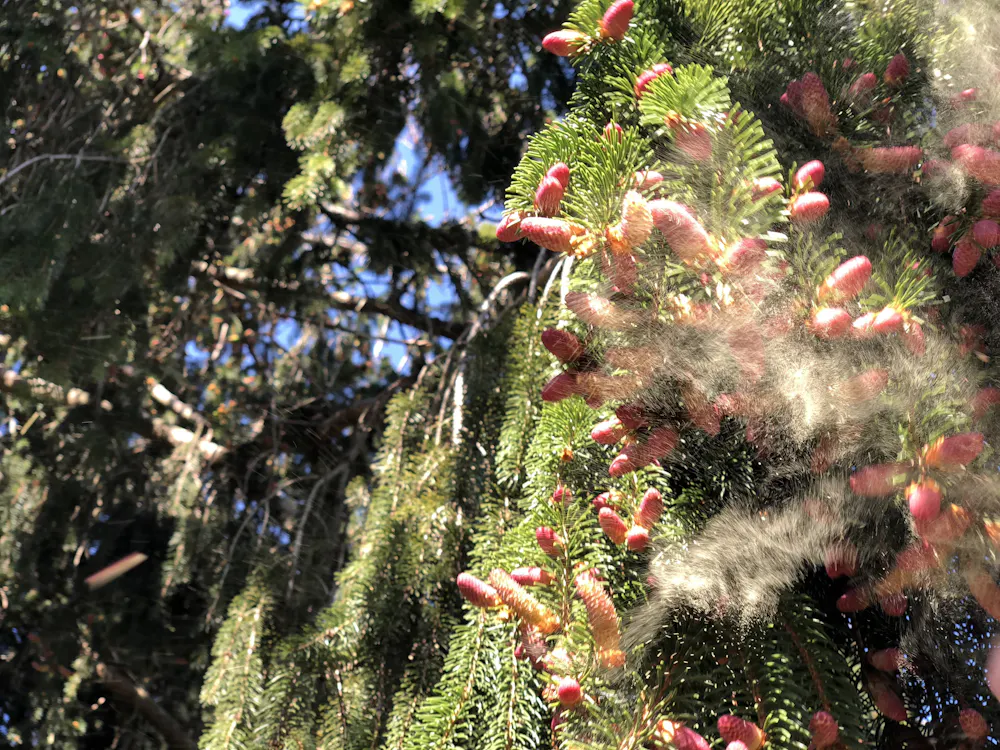
Pine cones release pollen on a windy April day in Fairfax County, Va.
Famartin/Flickr, CC BY-SA

Those pollen proteins become problems when the immune system develops an allergic antibody known as IgE to these proteins. When several IgE molecules bind to the allergen when it lands on the tissues of the eye or nasal passages, the cells release molecules such as histamine, prostaglandins and leukotrienes. These molecules interact with blood vessels and nerves to trigger the symptoms that allergy sufferers know all too well.

Which pollens cause allergy symptoms?

Pollen season starts with the trees.

In late winter and early spring, trees begin releasing pollen in many places in the United States. Not all trees follow this schedule – mountain cedars, or juniper trees, for example, can release clouds of yellow pollen from November through January in Texas, causing a condition known as cedar fever.

As the year progresses, grasses will emerge and their pollen will cause symptoms through most of the summer – typically April to July.

Then ragweed and other weeds release pollen that causes symptoms into the fall until a freeze stops their pollen production.

How pollen season progresses across the United States. Created by Yingxiao Zhang and Allison Steiner, University of Michigan.

What makes one pollen season worse than others?

Several factors can influence how bad a season can be when it comes to seasonal allergies. The two big ones are the length of the growing season and the amount of pollen in the air. Both are expanding.

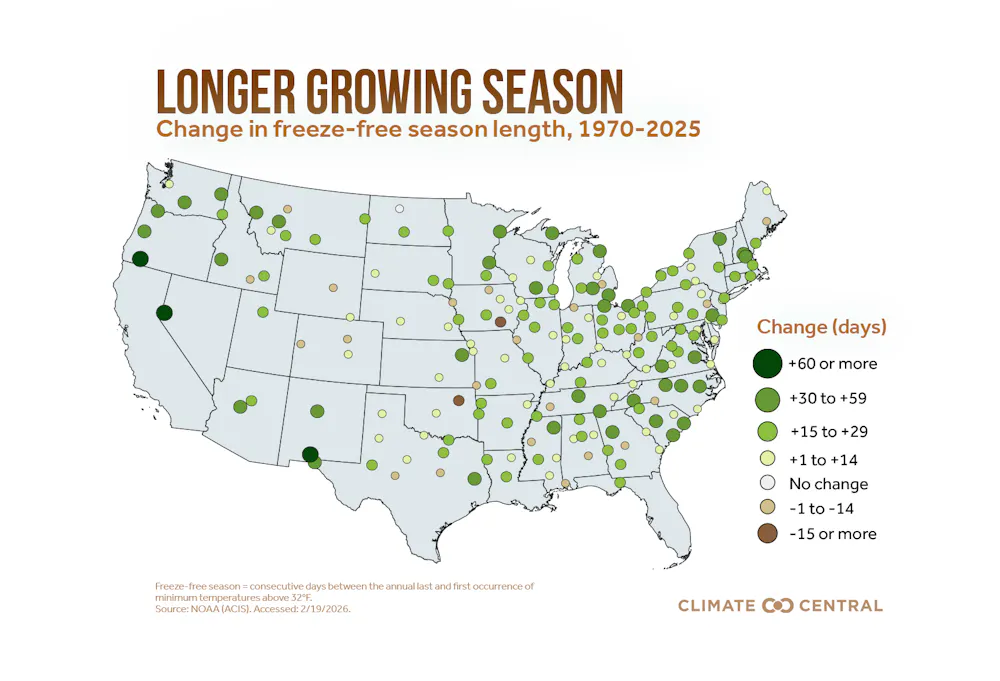
Over the past several decades, as global temperatures have risen, the growing season has lengthened in many parts of North America. Once temperatures begin to be above about 40 degrees Fahrenheit (4 Celsius), trees will begin to emerge from dormancy.

That’s what the Western U.S. saw in 2026, as an unprecedented warm spring drove the early emergence of tree pollen. In some locations, growing season is two weeks longer on average than in the 1990s and more than four weeks longer than in the 1970s.

A map shows some areas seeing growing seasons 60 days longer than in the 1970s
Growing seasons are getting longer across the United States.
Climate Central, CC BY

Another factor driving pollen production is the increase in atmospheric carbon dioxide, largely from the burning of fossil fuels. Higher carbon dioxide levels increase plant growth, leading to longer pollination periods and more pollen produced by plants. With higher pollen counts, more people can develop symptoms. Consequently, I have been seeing more patients who are experiencing allergies for the first time.

Windy days can also blow pollen into the air and spread it over a wider area.

Rain and humidity can affect pollen counts as well. Rain can temporarily scrub pollen from the air. But humidity and moisture after the rain will result in ruptured pollen granules, resulting in pollen that is easier to carry on the wind and breathe in. This is particularly the case with grass pollen.

So, how can you avoid allergy symptoms?

There are many ways to manage allergy symptoms.

The first is to try to avoid the allergen by making changes in your home to reduce exposure. Keeping windows closed during the pollen season will reduce the amount of allergen that can enter your home. Wiping down pets with a damp towel can reduce the amount of allergens they bring in. Avoiding using clotheslines can reduce pollen levels on washed items.

Changing clothes or showering after being outdoors can reduce the amount of allergens that remain on you.

Someone drew a smiley face and the word Lollen on a car hood covered in yellow pollen grains.
Pollen on a car hood offers a sense of just how much pollen can get into the air.
Scott Akerman/Flickr, CC BY

Using HEPA air purification in the home can reduce household allergen levels. Look for non-ionizing air purification; ionizing air filters can generate ozone, which worsens indoor air quality.

To know when allergens are getting worse outside, watch the pollen forecast from the National Allergy Bureau. As a general rule, pollen counts are highest in the morning. However, outdoor air pollutants can increase in the afternoon when pollution, including particulate matter (PM2.5) and ozone, reach peak levels in the midday and afternoon heat.

Do medications work?

Medications can help alleviate symptoms. A saline nasal rinse can reduce mucus and allergens inside the nasal passages. For mild symptoms, daily nonsedating, or second-generation, antihistamine can be effective.

Daily use of nasal steroids can be helpful for people with moderate to severe allergies, but they can take several weeks to reach peak effect. A nasal antihistamine spray can provide additional benefits.

Antihistamine eye drops can also be helpful. In a dry climate like Colorado’s, nasal dryness can contribute to congestion, so using nasal hydration such as saline sprays can ease symptoms.

If medications don’t help, you could speak with an allergist about the possibility of immunotherapy – allergy shots – but they require weekly and monthly shots over several years. While allergy shots are effective at reducing allergy symptoms and the need for medications, they do have side effects, such as local site reactions and asthma symptoms, and they may trigger a severe allergic reaction called anaphylaxis.

Allergies can be miserable but manageable – even in an overproductive year like much of America is seeing in 2026. Understanding what’s causing them and finding the right solutions for you can make it easier to enjoy those flowers and walks in the sunshine.

The Conversation

Levi Keller does not work for, consult, own shares in or receive funding from any company or organization that would benefit from this article, and has disclosed no relevant affiliations beyond their academic appointment.

ref. Pollen allergies are brutal this year – a doctor explains why, and how to find relief – https://theconversation.com/pollen-allergies-are-brutal-this-year-a-doctor-explains-why-and-how-to-find-relief-282011

How workplace stress hijacks the nervous system to cause headaches − and a neurologist’s guide to managing them

Source: The Conversation – USA (3) – By Danielle Wilhour, Assistant Professor of Neurology, University of Colorado Anschutz Medical Campus

Ongoing stress can send the nervous system into a state of heightened sensitivity. Sean Gladwell/Moment via Getty Images

Many people finish the workday not just tired but wired. Their mind keeps racing, their body feels tense, and even in moments that should be restful they feel a lingering sense of urgency. Conversations replay in their mind, unfinished tasks resurface, and their nervous system seems unwilling to power down.

You may recognize this experience. It has become so common that it is often accepted as the norm in modern professional life. Yet this persistent state of activation carries consequences for physical health, especially for people prone to headaches.

As a board-certified neurologist who specializes in headache medicine, I see a lot of patients whose pain increases from the high-pressure work culture prevalent today. While it might seem beyond your control, there are some steps you can take.

Stress and the nervous system

Stress is not inherently harmful. In fact, when experienced in short bursts, stress can be beneficial by increasing focus, improving performance and preparing the body to handle challenges. However, problems arise when stress becomes chronic and relentless.

The nervous system perceives and processes both stress and pain. Built to be highly adaptable, it continually responds to internal signals and external factors, constantly recalibrating to maintain balance. When the brain continuously perceives ongoing demands without adequate recovery, it keeps the body in a prolonged state of alertness.

During these periods of ongoing stress, hormones such as cortisol and adrenaline remain persistently elevated. In this sensitized state, signals that would typically be ignored or interpreted as minor can start to feel much more intense.

This state leads to an increase in heart rate and sustained muscle tension, with the nervous system transitioning into continuous fight or flight mode. In the context of headaches, this sensitization can lower the threshold for pain, making it easier for a headache to start and harder for it to stop.

Stress can both trigger and exacerbate migraines.

Over time, this constant activation can disrupt the body’s natural balance and create an environment for headache disorders to develop or worsen.

Chronic stress acts as both a trigger and an exacerbating factor for migraines. The neurological system of people who experience migraines is comparatively more responsive to environmental changes, including variations in sleep patterns, the environment, hormonal fluctuations and stress intensity.

This means that persistent exposure to stress may drive up frequency and severity of migraine episodes. In addition, muscle tension in the neck, shoulders and scalp – a frequent effect of stress – can cause tension headaches, too.

Extended periods of sitting, sustained concentration and physical tension during the workday can contribute to the development of tension headaches in the later hours of the day.

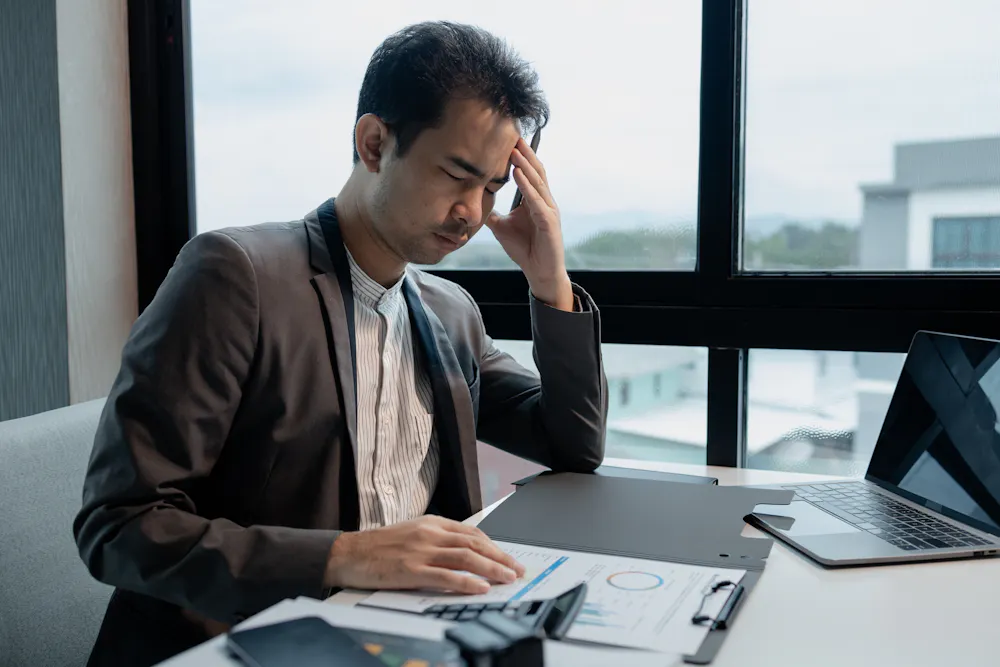
Young desk worker at a desk in an office, looking at charts, straining his eyes and holding up his head
Poor sleep, too much desk time and other factors can exacerbate the effects of stress on the nervous system, leading to headaches.
ChadaYui/iStock via Getty Images Plus

The role of sleep

Chronic stress can also have a profound impact on sleep quality. Many people who feel persistently wired at the end of the workday struggle to fall asleep or stay asleep. That fitful sleep may lack the restorative qualities necessary for recovery.

Poor sleep can, in turn, perpetuate the stress cycle, leaving the brain further sensitized and increasing the likelihood of headaches the following day. This loop can be difficult to break, as fatigue reduces resilience and amplifies the sense of being overwhelmed that comes with stress.

In addition to affecting sleep, chronic stress impairs concentration and cognitive function. When the brain remains in a state of constant vigilance, scanning for demands and threats, it becomes harder to focus, be creative and solve problems. As a result, productivity declines, errors become more frequent and frustration mounts, adding to the overall stress burden.

Headaches that occur alongside these cognitive challenges can further disrupt daily life, making even routine tasks feel difficult.

Managing work stress

Understanding the connection between stress and the nervous system points to some steps you can take to shift the nervous system out of its constantly activated state. You’ll never eliminate stress entirely – that’s neither realistic nor necessary. But it is possible to create intentional space for the body to reset:

Small, consistent strategies that address both biological and lifestyle causes of headaches can minimize the effects of chronic stress and encourage nervous system regulation. Over time, these strategies can gradually reduce headache frequency and severity, improving overall quality of life.

The Conversation

Danielle Wilhour does not work for, consult, own shares in or receive funding from any company or organization that would benefit from this article, and has disclosed no relevant affiliations beyond their academic appointment.

ref. How workplace stress hijacks the nervous system to cause headaches − and a neurologist’s guide to managing them – https://theconversation.com/how-workplace-stress-hijacks-the-nervous-system-to-cause-headaches-and-a-neurologists-guide-to-managing-them-275037

Financial strain, lockdowns and fear of infection during disease outbreaks magnify violence against women and girls − new research

Source: The Conversation – USA (3) – By Lindsay Stark, Professor of Public Health, Washington University in St. Louis

Multiple factors during an outbreak interact to raise the risk of exploitation and violence. Clovera/iStock via Getty Images

When the world shut down due to the COVID-19 pandemic in early 2020, another crisis quietly grew behind closed doors. Reports from around the globe suggested that violence against women and girls was increasing. Governments, nongovernmental organizations and advocates began referring to the phenomenon as a “shadow pandemic.”

To determine whether these headlines and informal reports reflected reality, we led the first-ever comprehensive review of studies tracking violence against women and girls during infectious disease outbreaks across low- and middle-income countries. We focused on those regions because less research on the topic has been done there, and women and girls face specific risks, such as child marriage, that are less prevalent in wealthier nations.

Our findings, published in BMJ Global Health and co-authored with UNICEF, are both clear and concerning: Violence against women and girls tends to increase during outbreaks, and the very measures used to control disease spread can lead to that rise.

Across 53 studies measuring changes in violence against women and girls in the first year of the COVID-19 pandemic, the majority found increases, with some studies showing no change and relatively few showing declines. This pattern held across different types of violence – for example, physical domestic violence, sexual domestic violence, psychological violence or online violence – particularly committed within the home.

But even more striking was how little evidence there was from other infectious disease outbreaks. Despite the growing frequency of global health emergencies, only one study examined violence against women and girls during an outbreak other than COVID-19, specifically examining violence in Sierra Leone during both Ebola and COVID-19.

How outbreaks contribute to gender-based violence

Infectious disease outbreaks do more than spread illness. They can disrupt economies, burden health systems and reshape daily life. These shifts can amplify existing inequalities and, in many cases, increase the risk of violence.

Our research identified five key pathways through which outbreaks contribute to violence against women and girls.

The United Nations dubbed the rise in violence against women and girls during the COVID-19 pandemic ‘the shadow pandemic.’

First, job loss, reduced income and financial stress were the most consistently identified contributors to violence. When households experience economic strain, tensions rise – and women and girls often bear the consequences. In some contexts, economic stress was linked not only to intimate partner violence but also to harmful practices like child marriage.

Second, movement restrictions like lockdowns and quarantines can trap women and girls with abusive partners or family members. While these outbreak response measures are designed to reduce disease transmission, they can also isolate women from social networks and limit opportunities to seek both formal and informal help.

Third, deeming certain services as nonessential reduces people’s access to support. During COVID-19, many health, social and legal services were scaled back or became harder to access. School closures also meant that girls in some contexts faced increased risks of exploitation, early pregnancy or forced marriage.

Fourth, perpetrators may use women’s and girls’ fear of infection to control or manipulate them. For example, men sometimes discouraged their partners from leaving the home or seeking care in order to avoid disease risk.

Finally, women’s and girls’ past experiences with health systems can influence their intention to seek services in the future. In settings affected by earlier outbreaks, such as the 2014 Ebola outbreak, mistrust of health services discouraged some survivors from seeking care after experiencing violence, especially if doing so might lead to quarantine or mistreatment.

These pathways are not isolated. They often interact and reinforce one another, creating conditions in which violence becomes more likely during crises.

Building better evidence

Public health emergencies are becoming more frequent, and measures like lockdowns and limiting access to schools, clinics and other services can have unintended consequences.
Our findings show that protecting women and girls needs to be part of how public health experts respond to outbreaks from the start and not something to address only after violence has already increased.

Tracking the issue in different types of outbreaks – such as cholera, influenza or Ebola – could help determine which policy responses are most protective.

But even within COVID-19 research, we uncovered important limitations. First, most studies focused on adult women, with far less attention to girls. And second, many studies relied on metrics such as the number of hotline calls or clinic visits, which can be misleading. A drop in reports does not necessarily mean a drop in violence; it may reflect reduced access to services or greater barriers to reporting.

Despite the data gaps we uncovered, our study already points to targeted strategies that can protect women and girls: reducing households’ financial stress, making services safe and easy to reach, ensuring girls’ continued access to school, and building stronger community support.

The Conversation

The authors do not work for, consult, own shares in or receive funding from any company or organization that would benefit from this article, and have disclosed no relevant affiliations beyond their academic appointment.

ref. Financial strain, lockdowns and fear of infection during disease outbreaks magnify violence against women and girls − new research – https://theconversation.com/financial-strain-lockdowns-and-fear-of-infection-during-disease-outbreaks-magnify-violence-against-women-and-girls-new-research-280210

Muslim women-led nonprofits are engaging in advocacy despite facing a surge in Islamophobia

Source: The Conversation – USA (3) – By Nausheena Hussain, Doctoral Candidate in Philanthropic Leadership, Indiana University

Two police officers wear American flag head scarfs at a World Hijab Day event on Feb. 1, 2017, in New York City. Spencer Platt/Getty Images

Nonprofits led by Muslim women remain extensively engaged in a wide range of civic activities, even though 72% say they have experienced Islamophobia in their work.

That’s one of the main findings of the study that we conducted together. It is the basis of the applied research project – a type of dissertation – that one of us (Hussain) completed for her professional doctorate in philanthropic leadership. It will be posted online in mid-2026 to Indiana University’s scholarship repository.

We surveyed 292 Muslim women who lead nonprofits across the U.S. We connected with these organizations through national networks, including the Muslim Women Leadership Circle and Islamic Schools League of America. We interviewed people who lived in 18 states; the largest numbers of respondents were in California, New York, Florida and Texas.

About 19% of the nonprofits these women lead focus on religious and cultural programming. Another 17% are centered on education, while 16% focus on direct social services, such as family support and crisis intervention.

The other most common issues the nonprofits address include gender, healthcare, mental health, civil rights, anti-racism efforts, housing and environmental protection.

We found that 93% of these organizations engage in advocacy activities – actions aimed at influencing government policy or decisions. The organizations used an average of 3.6 different advocacy approaches.

Their most common approaches focused on building relationships with government officials. About 57% discussed obtaining grants or contracts with those officials, while 35% worked in planning or advisory groups. Roughly 54% said they regularly released research reports to the media, policymakers and the public, establishing themselves as experts on issues affecting their communities.

About 34% went beyond advocacy by engaging in some lobbying for policy proposals they support, while 39% encouraged their organizations’ members to contact policymakers about issues affecting their communities, including civil rights protections, immigration reform and healthcare access.

The majority of these groups had experienced Islamophobia. We heard them describe those incidents in detail.

“Staff and volunteers have experienced anxiety, fear and trauma due to verbal harassment, microaggressions and bias incidents,” one of the Muslim women who lead nonprofits that we interviewed said.

Organizations also said their property had been damaged in acts of suspected vandalism. Another nonprofit leader said her organization had experienced “broken windows, graffiti and damaged signage.”

Two women wearing hijabs are seen in a staged altercation.
Muslim women participate in a self-defense class in 2016 in New York.
Spencer Platt/Getty Images

Why it matters

We conducted this survey from December 2024 through February 2025, a period when anti-Muslim discrimination surged to record levels, according to the Council on American-Islamic Relations, a Muslim civil rights group. It compiled a list of 8,658 complaints of anti-Muslim incidents in 2024, the most it has ever tracked.

Following the onset of the Gaza conflict in October 2023, anti-Muslim hate crimes in major U.S. cities increased 18% in 2024 – marking the fourth consecutive annual rise. This climate of heightened discrimination persists: After our survey concluded, anti-Muslim incidents have continued at elevated levels since the U.S.-Israeli conflict with Iran began in March 2026.

Research on civic engagement suggests that experiencing discrimination leads marginalized groups to become less engaged in civic life.

But these Muslim women leaders aren’t waiting to be invited into democratic processes. They’re building influence by cultivating relationships, producing research and engaging in direct advocacy.

The emphasis these leaders place on building ongoing relationships shows that they understand that lasting political influence requires sustained connection. Their work – including the research they produce and their lobbying efforts – demonstrates their resilience: They have remained civically active despite systemic discrimination.

What still isn’t known

This survey captured a snapshot of Muslim women nonprofit leaders’ civic engagement at one point in time. Future research examining these patterns over a longer period could indicate whether advocacy strategies shift as organizations mature, how leaders respond to changing political climates, and whether experiencing discrimination affects their civic engagement over the long term.

Studies covering a longer stretch of time could also track whether the relationship between Islamophobia and advocacy activity remains consistent over time, or if certain strategies become more or less effective when conditions change.

The Research Brief is a short take about interesting academic work.

The Conversation

The authors do not work for, consult, own shares in or receive funding from any company or organization that would benefit from this article, and have disclosed no relevant affiliations beyond their academic appointment.

ref. Muslim women-led nonprofits are engaging in advocacy despite facing a surge in Islamophobia – https://theconversation.com/muslim-women-led-nonprofits-are-engaging-in-advocacy-despite-facing-a-surge-in-islamophobia-278138