Dams can destroy lives and ecosystems. But it doesn’t have to be like this

Source: The Conversation – UK – By Jeremy Allouche, Professor in Development Studies, University of Sussex

Pak Mun Dam in Ubon Ratchathani, Thailand. Sabrina Kathleen/Shutterstock

Thirty years after the Pak Mun dam was built in Thailand, the traditional way of fishing in the Khong Chiam district has completely stopped as the dam blocks the seasonal migrations of a wide range of fish.

Many men have had to leave their homes to find work elsewhere because they couldn’t fish or farm locally anymore, while their wives are often left alone to look after their children. People with disabilities and the elderly have not been included in compensation and livelihood rehabilitation programmes, even though they are among the groups most affected by changes in mobility, access to water and food systems.

My team and I have been documenting the knock-on effects of this dam development by carrying out interviews with people living in these communities. My research highlights that if the environmental consequences of dam building had been better predicted and monitored, a lot of the ongoing disruption could have been avoided.

In 1982, a environmental impact assessment for the Pak Mun dam was prepared by a team of Thai engineering consultants. Environmental impact assessments are used to identify, predict and evaluate the possible consequences of a proposed project before it begins. They have been in use for many years, but some governments bypass their recommendations.

If completed more rigorously, this assessment for the Pak Mun dam could have anticipated these negative social and environmental consequences and might have influenced decisions about the building and maintenance of this dam. But according to research, this impact assessment was weak.

One study noted that the environmental impacts of the dam – mainly on fish – were either unquantified or understated. Another study noted that the site location had moved and that required a new assessment rather than replying one the first one. The limits of this assessment has led to ongoing contestation between the central and provincial government and the affected communities and activists.

This is far from the only example of a lack of consideration for the long-term knock-on effects of dams on communities and nature. In 2025, the Indian government allegedly fast-tracked the construction of the enormous Sawalkot hydropower project on the Chenab river without conducting any environmental and social impact assessment.

Large-scale projects like this affect millions of people and the environment around them. Without ample impact assessments, they proceed without establishing just what effect they will have on the surrounding landscape, nature and communities. As a result, any negative consequences are not easily avoided.

While this new political dynamic of circumventing impact assessments is worrying, social and environmental impact assessments are valuable if used appropriately. As part of my research, I have spoken to dozens of impact assessment consultants and academics to assess the status quo.

By 2033, the global market for environmental impact assessments could be worth an estimated US$5.8 billion (£4.3 billion). While the impact assessment process is seen as valuable by consultants and academics, some of our interviewees worried that costly recommendations often get lost in the process of project implementation once the document has been produced.

Ideally, impact assessments should be based on scientific knowledge and involve substantial public participation and situated community knowledge, especially by those who are at risk of adverse consequences, as well as clear accountability mechanisms.

In practice, there are problems. Impact assessment is a political process; it is not based purely on evidence and scientific facts. It is influenced by the economics of dam building. Dams are often also important symbols of nationalism, so they hold high political status.

Without ensuring systematic follow-up to an impact assessment, it can simply become a paper chase to secure a development permit. With more consideration, the “afterlife” of impact assessments can be much more effective.

Who is responsible?

Who, in terms of responsibility, should be held accountable for shortcomings in the implementation of impact assessment plans? Should it be the government that should be responsible for making sure the different regulations and norms are followed?

Should it be the commercial banks, development banks and bilateral donors (such as foreign aid provided by the UK government’s Foreign Commonwealth and Development Office) that fund projects who should monitor the requirements they had elaborated? Or should it be the private sector?

My research shows that the responsibilities lie with all of these parties.

In most countries, most of the information and data is controlled by the proponents of building the dam. Project managers and engineers may be suspicious of external impact assessor consultants, so they do not always share the relevant information.

Civil society, ranging from local campaign groups and activist to non-governmental organisations, have pushed for standards and laws that ensure rules are followed during and after any impact assessment. For this to work, impact assessments need to be dynamic so responses to possible changing consequences can change.

When environmental policy and tools like impact assessments are being questioned, it is even more important to create a policy process that ensures long-term accountability for impact assessments and prevent further losses and damages to the communities and the environment.


Don’t have time to read about climate change as much as you’d like?

Get a weekly roundup in your inbox instead. Every Wednesday, The Conversation’s environment editor writes Imagine, a short email that goes a little deeper into just one climate issue. Join the 47,000+ readers who’ve subscribed so far.


The Conversation

Jeremy Allouche receives funding from the British Academy, for the project, Anticipatory evidence and large dam impact assessment in transboundary policy settings: Political ecologies of the future in the Mekong Basin. The author would like to thank the other team members, Professor Middleton (Chulalongkorn University Thailand), Professor Kanokwan Manorom (Ubon Ratchathani University, Thailand), Ass. Professor Chantavong (National University of Laos) & Dr. Kanhalikham (National University of Laos) for their input

ref. Dams can destroy lives and ecosystems. But it doesn’t have to be like this – https://theconversation.com/dams-can-destroy-lives-and-ecosystems-but-it-doesnt-have-to-be-like-this-270910


When young adults can’t afford independence, family expectations fill the gap — from China’s ‘leftover women’ to Canada’s pressured youth

Source: The Conversation – Canada – By Qian Liu, Assistant Professor of Law and Society, University of Calgary

I met Lufang Chen, a 30-year-old bank clerk based in the Fujian province of China, in 2016, after she had married a man she initially turned down years earlier. Although she preferred to remain single, and he was not her type anyway, she gave in to avoid the label “leftover woman.”

The derogatory and stigmatizing term “leftover woman” — or Sheng nü in Chinese — is used to describe one’s social status and refers to women in their late 20s and beyond who have never married. The label suggests these women have failed to “sell” themselves on the marriage market at the “best” time and have therefore become leftover products that are depreciating rapidly.

At the time I was conducting interviews for my book on the lived experiences of these women — Leftover Women in China: Understanding Legal Consciousness through Intergenerational Relationships — released last August, Chen told me she married out of an obligation to live up to parental expectations:

“I only got married to free my parents from the pressure imposed on them by gossipy, nosy relatives, as well as to ease their worries about my future. After all, my parents have sacrificed so much and are always ready to do everything for me.”

Chen was especially grateful to her parents for buying her an apartment when she could barely cover her living expenses. Her parents were also prepared to provide child care once, not if, she had a child.

What this story reveals is not simply a cultural expectation around marriage, but how parental financial support can reshape the autonomy of young adults.

Structural forces and family dynamics in China

In recent decades, the extreme unaffordability of housing in urban China has made it almost impossible for young adults to purchase a home without financial support from their parents. Meanwhile, as inflexible work schedules and overtime have become the norm, grandparenting has become crucial to ensuring young adults can focus on their careers.

Leftover Women in China demonstrates how the downflow of family resources — from the older generation to the young, including housing and child care support — results in a sense of guilt and provides the justification for parental intervention in marital decisions.

This phenomenon ultimately reduces effective communication among family members and marginalizes the desires of young adults.

Many of these so-called “leftover women” don’t feel it’s appropriate to openly discuss or negotiate marital choices and childbearing with their parents. Instead, a sense of guilt prompts these daughters to focus on perceptions of parental expectations that prioritize their parents’ desires and often go even beyond what their parents explicitly request.

Canadian classrooms reveal family pressure

Eventually, as a university professor, I noticed this type of parent-child interaction also appears in the West, including Canadian society.

Take students’ academic performance and career decisions, for example. I observed a strong sense of guilt and desire to repay parents, especially among students of mine whose parents have endured hardship or offered unconditional support.

Students from immigrant families have frequently mentioned pressure to succeed academically. When I asked about their motivations, they often responded by saying they want to live up to parental expectations. This sense of duty seemed especially strong among students whose parents were highly qualified professionals in their home countries and now work long hours in manual or unskilled labour to provide for their families.

As Vivian Louie, professor of urban policy and planning at Hunter College, suggests, immigrant parents’ sacrifices often motivate their children to excel academically. This is also supported by a socio-legal study on responsibility, love and guilt in Latino mixed-status families.

Over the years, many students have told me their parents don’t need to explicitly ask them to pursue a lucrative career, nor have they necessarily discussed it with them. Instead, students pick up cues from societal and community perceptions of success to make their parents proud.

When parental support becomes essential

This phenomenon, however, is not limited to students with immigrant backgrounds. A sociological study on career decisions of Harvard law students reveals that students from low-income or working-class backgrounds frequently felt that failure to obtain a lucrative position would let their families down due to the financial sacrifices their family members have made for them.

The more I spoke with my students, the more I realized that Canadian young adults are facing increasing parental intervention in particular due to the persistence of inflation and housing unaffordability.

More of them than ever before are living with their parents well into their 20s to reduce costs. For many, this has become a necessity rather than a choice.

According to a 2025 Statistics Canada report, financial support from parents for down payments has become both crucial and widespread among young homeowners. In British Columbia, for example, average parental financial support for a first-home down payment exceeds $200,000.

It’s true that collectivist culture in Chinese society contributes to the desire for “leftover women” to meet parental expectations and prioritize their needs and interests. But my observations in Canadian classrooms suggest that parental financial support — combined with the sacrifices they make for their children — can also cultivate guilt among young adults in individualist cultures like Canada.

The Conversation

Qian Liu receives funding from the International Development Research Centre and the Social Sciences and Humanities Research Council.

ref. When young adults can’t afford independence, family expectations fill the gap — from China’s ‘leftover women’ to Canada’s pressured youth – https://theconversation.com/when-young-adults-cant-afford-independence-family-expectations-fill-the-gap-from-chinas-leftover-women-to-canadas-pressured-youth-270013

How the ocean’s hydrothermal systems made the first life on Earth possible

Source: The Conversation – Canada – By Long Li, Professor, Earth & Atmospheric Sciences, University of Alberta

A black smoker hydrothermal vent at a wa­ter depth of 3,300 meters in the Log­atchev Hy­dro­thermal Field on the Mid-At­lantic Ridge. (Zentrum für Marine Umweltwissenschaften, Universität Bremen), CC BY

Our planet is unique for its ability to sustain abundant life. From studies of the rock record, scientists believe life had already emerged on Earth at least 3.5 billion years ago and probably much earlier.

But how a habitable environment developed, and how the very first life emerged on the early Earth, remain puzzling. One of the big challenges for Earth to be habitable in its infancy was the weak solar energy it received.

Astrophysical models indicate that the sun had only about 70 per cent of its current luminosity when the Earth was born around 4.5 billion years ago. That would have resulted in Earth’s surface being frozen until around two billion years ago.

Nonetheless, scientific investigations indicate the Earth had warm oceans and habitable environments as early as 4.4 billion years ago. This contradiction is known as the faint young sun paradox.

Solving this paradox and the generation of the first life both involve a key chemical compound — ammonia. But the source of ammonia on the early Earth before biological nitrogen processing emerged remains unknown.

Colleagues in China and my research group at the University of Alberta recently published our study of minerals deposited from hydrothermal fluids in oceanic crusts drilled from the South China Sea basin. We discovered that mineral-catalyzed chemical reactions in underwater hydrothermal systems can produce the necessary ingredients for a habitable world and life on Earth.

Hypothesis of the origin of life

An explainer on hydrothermal vents (Woods Hole Oceanographic Institution)

Earth’s first life is hypothesized to be generated by a series of abiotic processes, also known as abiogenesis. Under this hypothesis, the building blocks of the first life were synthezised on Earth from basic inorganic compounds by abiotic reactions, or were brought to here by meteorites.

In 1953, American chemist Stanley Miller, then a graduate student working with Nobel Prize laureate Harold Urey at the University of Chicago, discovered production of amino acids in his experiments simulating lightning in an early-Earth atmosphere composed of water moisture and several gases (methane, ammonia and hydrogen molecules).

These life-building blocks could subsequently deposit into the ocean for life development. This ground-breaking discovery by Miller implied that abiogenesis of life on Earth is possible.

Gases like methane, ammonia and hydrogen were not only essential compounds for synthesis of organic matter in Miller’s experiments. They are also key ingredients to establishing a habitable environment on early Earth.

They have all been proposed as potential contributors, either directly as greenhouse gases or indirectly as amplifiers of other greenhouse gases, to warm up early Earth’s surface under the faint young sun.

Where did these gases come from?

A problem, though, is that these gases were not the primary components on early Earth’s surface in the first place. Instead, the dominant forms of carbon and nitrogen were carbon dioxide and dinitrogen.

That means the very first step toward making Earth habitable and generating the first life had to be inorganic reactions to turn carbon dioxide into methane and dinitrogen into ammonia, also known as abiotic carbon and nitrogen reduction reactions.

Where and how did these reduction reactions take place?

The world’s ocean floors contain abundant hydrothermal systems where cold seawater flows into deep oceanic crust and subsequently mixes with ascending magmatic fluids. The mixed hot fluids are emitted back through hydrothermal vents such as black smokers or white smokers.

Along this pathway, water and dissolved components can react with primary minerals in the oceanic crust to produce secondary minerals and other byproducts. Methane and dihydrogen, formed by mineral-catalyzed abiotic reduction reactions during this process, have been widely observed in the emitted hydrothermal fluids.

Therefore, underwater hydrothermal systems have been considered as the most likely incubator for habitable environment and the origin of life.

A brief overview of the role hydrothermal vents play in life started on Earth (TED-Ed)

Searching for evidence

Yet there still exists a missing piece in this picture: the abiotic reduction of dinitrogen has not been confirmed to occur in hydrothermal systems. Scientists have searched hard for evidence of this reaction, abiotic ammonia, but have had no luck so far.

The ammonia (mostly in its dissolved form, ammonium ion) that has been detected in hydrothermal fluids collected from active vent mouths turned out to be mainly biological and not abiotic in origin.

The relatively small amount of abiotic ammonium there might be can easily be concealed by the large amount of biological ammonium in seawater. It is impossible to avoid seawater contamination while collecting submarine hydrothermal fluid samples.

However, secondary minerals deposited from hydrothermal fluids can lock some ammonium into their internal structures and protect it from being contaminated by shallow seawater and mixing with biological ammonium. Therefore, studying secondary minerals in the deep oceanic crust can better unravel the ammonium source and producing mechanism in the deep hydrothermal systems.

However, such samples are not easily to collect. The International Ocean Discovery Program has made tremendous efforts to drill deep into the oceanic crust to collect samples. Luckily, a set of secondary mineral samples were discovered in a 200-metre drill core from the South China Sea.

A missing piece of the puzzle

For our study, we looked into a specific chemical feature, namely nitrogen isotopes, for the ammonium locked in the hydrothermal minerals.

Nitrogen has two isotopes with atomic mass 14 and 15, respectively. Mineral-catalyzed abiotic dinitrogen reduction strongly prefers to use the one with an atomic mass of 14. That results in a unique nitrogen isotope signature in the ammonium it produces.

Our results are consistent with this isotopic signature. This demonstrates production of ammonia or ammonium by abiotic dinitrogen reduction in underwater hydrothermal systems.

This discovery adds a missing piece of puzzle to our theories about the origins of life on Earth. These underwater hydrothermal systems at the bottom of the ocean enabled the first-step reactions of all life-constituting elements on our planet.

The Conversation

Long Li receives funding from Natural Sciences and Engineering Research Council of Canada.

ref. How the ocean’s hydrothermal systems made the first life on Earth possible – https://theconversation.com/how-the-oceans-hydrothermal-systems-made-the-first-life-on-earth-possible-271920

Trump’s insistence on personal loyalty from ambassadors could crimp US foreign policy

Source: The Conversation – USA – By David Lindsey, Professor of Political Science, Baruch College, CUNY

President Trump’s mass firing of career ambassadors was unprecedented. AP Photo/Alex Brandon

Just before Christmas, President Donald Trump fired more than two dozen career ambassadors. The action was unprecedented, providing a clear signal that when it comes to diplomacy, Trump values loyalty above all else.

All ambassadors face a persistent tension in their roles – having to represent the viewpoints of the president while also winning the trust of leaders in the countries where they serve. Presidents, unsurprisingly, often favor loyalists, in whom they have greater confidence.

Trump has pursued this to an exceptional degree, making more purely political picks than normal. Of the nearly 70 ambassadors he has appointed to date during this term, fewer than 10% have been career professionals with experience in the Foreign Service.

But as I have argued in my book “Delegated Diplomacy,” there is value in working through diplomats who disagree with you.

A diplomat who unfailingly follows the Washington line contributes little to a bilateral relationship, becoming nothing more than an expensive substitute for a secure phone line. A skilled ambassador knows when to soften a message, recognizes when pushing too hard will backfire, and sees the value in compromise.

At times, this diplomatic approach may sacrifice short-run gains available through more aggressive means. But in precisely those moments when leverage is most necessary, an ambassador who’s established trust can push harder and gain more as a result.

All the president’s men

The idea that U.S. career diplomats place too much weight on foreign interests, rather than putting American, or presidential, interests first, is a perennial suspicion.

Presidents have felt this way themselves. In 1952, President Harry Truman wrote, “The State Department is clannish and snooty and sometimes I feel like firing the whole bunch.” Two decades later, President Richard M. Nixon told Henry Kissinger, his national security adviser and soon-to-be secretary of state, that he intended “to ruin the Foreign Service. I mean ruin it.”

Neither of those presidents followed through. With his mass firing of career diplomats, Trump has come closer. His administration has made it clear that loyalty will dominate its diplomatic personnel policy, with the State Department itself asserting the “president’s right to ensure he has individuals in these countries who advance the America First agenda.”

A head shot depicting Marco Rubio, the secretary of State.
Secretary of State Marco Rubio has helped purge hundreds of career Foreign Service officers at home and abroad, seeking to align his department with ‘America First’ principles.
AP Photo/Cliff Owen

Not only has Trump weighted the diplomatic corps with political appointees, but he’s often bypassed even his own ambassadors in favor of working informally through members of his inner circle.

The administration’s most delicate tasks, such as dealing with the wars in Gaza and Ukraine, have often been delegated to Steve Witkoff, a real estate developer whose primary qualification appears to be his close friendship with the president, and Jared Kushner, Trump’s son-in-law.

Close personal ties

A preference to work diplomatically through intimates is understandable. Close personal knowledge of the president can provide credibility and weight to an envoy’s word. There is ample precedent for such selections, such as John F. Kennedy’s reliance in 1962 on his brother Robert as his crucial intermediary during the Cuban missile crisis, in which the U.S. ultimately convinced the Soviet Union to remove nuclear weapons from Cuba.

Such ties are likely to be all the more important in the current administration, where the president maintains such an openness to unconventional foreign policy choices. Career ambassadors who know no more about the president’s intentions than whatever the world can read in his latest Truth Social posts may not be able to do their jobs effectively, whether they ultimately keep them or not.

Career vs. political

American ambassadors receive their posts through two tracks. Historically, a minority of ambassadors have been political appointees selected by the president, often as the result of close ties to him. These ambassadors routinely leave their positions when a new administration takes office.

Jared Kusher and Steve Witkoff walk past the French and European Union flags outside a Paris meeting.
Trump has relied on close allies to carry out key missions, including son-in-law Jared Kushner, left, and his friend Steven Witkoff.
AP Photo/Thomas Padilla

The majority of ambassadors – including those who were recently fired – are career Foreign Service officers, most of whom have spent decades working their way up through the ranks of the diplomatic corps under presidents of both parties. Selected internally by the State Department – but subject to White House sign-off – these ambassadors serve on a nonpartisan basis and nearly always complete their tours of duty, informally set at three years, regardless of presidential turnover.

Diplomats have value to the president precisely because they have cultivated relationships, trust and expertise overseas through a willingness to understand and sympathize with foreign audiences. But this also means that they may rarely be in lockstep with the president’s view of the world. Hence, the friction ambassadors face in their in-between role.

Loss of experience

It is one thing to fire ambassadors who have impeded the president’s agenda in some way; it is quite another to clear them out preemptively as Trump did in December. Ultimately, the loss of the expertise and relationships accrued by career diplomats will likely bite.

Professional diplomats are trained and acculturated to set aside their own views. As former Under Secretary of State Stuart Eizenstat once observed, Foreign Service officers “bend over backward to follow every U.S. president’s leadership, even when they disagree with specific policies.”

This is precisely why previous administrations have not fulfilled their fantasies of dismantling the Foreign Service. Truman, despite his contempt, conceded that “it requires a tremendous amount of education to accomplish the purposes for which the State Department is set up.” During Kissinger’s time as secretary of state, the Nixon administration ended up selecting an uncommonly high number of careerists for key positions.

This has not been Trump’s approach. It’s unlikely that will change. He demands loyalty throughout his administration, but diplomats have given him particular reason to think they might flout his wishes. In 2017, a thousand U.S. diplomats signed on to a message arguing that the administration’s travel ban would be counterproductive. A similar number joined a message this year protesting the administration’s closure of the United States Agency for International Development, or USAID.

Clearly, some officers will dissent so vigorously as to be unwilling to advance certain policies. They can be expected to resign, as many of their colleagues have done already.

But the career diplomats who remain will speak with a louder voice on the international stage precisely because the world believes they are not lapdogs.

The Conversation

David Lindsey does not work for, consult, own shares in or receive funding from any company or organization that would benefit from this article, and has disclosed no relevant affiliations beyond their academic appointment.

ref. Trump’s insistence on personal loyalty from ambassadors could crimp US foreign policy – https://theconversation.com/trumps-insistence-on-personal-loyalty-from-ambassadors-could-crimp-us-foreign-policy-273087

US turns its back on global efforts for women and children terrorized by violence and conflict

Source: The Conversation – USA – By Shelley Inglis, Senior Visiting Scholar with the Center for the Study of Genocide and Human Rights, Rutgers University

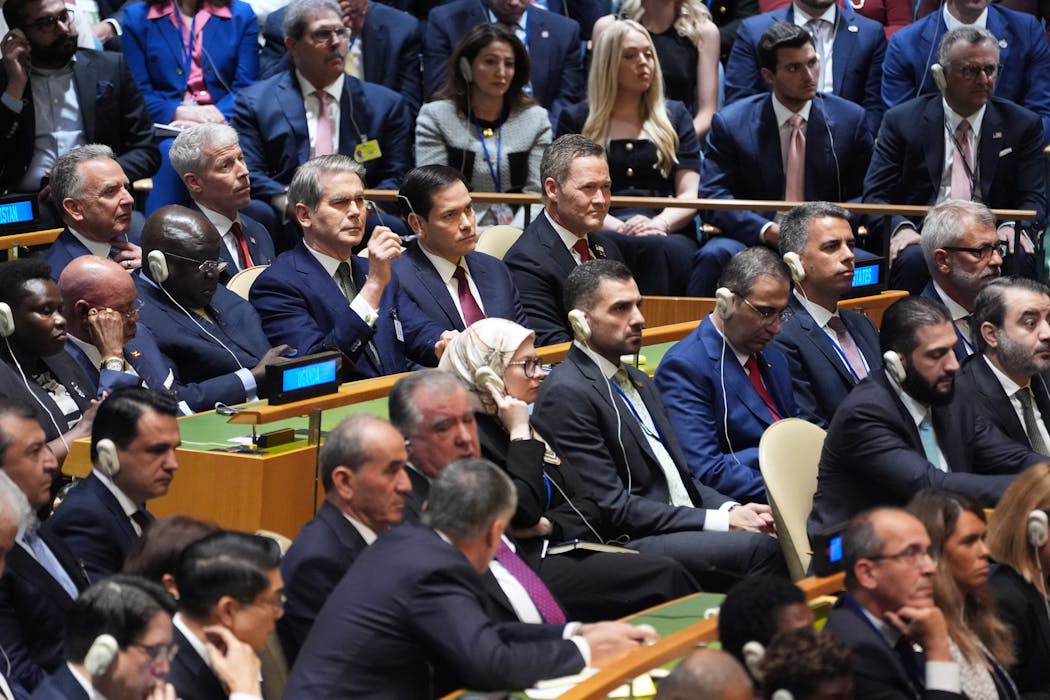
Secretary of State Marco Rubio, center, and U.S. Ambassador to the United Nations Mike Waltz listen as President Donald Trump speaks to the U.N. General Assembly on Sept. 23, 2025, in New York. AP Photo/Evan Vucci

The Trump administration’s recent announcement that it is withdrawing from 66 international organizations and treaties is another blow to the global system where all countries unite to share concerns, agree on rules of conduct and determine agendas for collective action.

Coming on the heels of the U.S. attack on Venezuela – considered a violation of international lawthe White House claims, without specific justification, that these organizations and initiatives “operate contrary to U.S. national interests, security, economic prosperity or sovereignty.”

Some experts say many of these organizations are niche and peripheral initiatives. They say the groups receive little money from the U.S., anyway.

Additionally, most of the U.N. entities on the administration’s list are part of the U.N.’s main body, the Secretariat, which gets its funding primarily from membership dues that are required by legal obligations. In fact, the U.S. can’t technically withdraw from these groups without leaving the U.N. completely. It can, however, select not to participate in meetings of these bodies or finance them through additional funds.

Moreover, with the White House already defunding the foreign assistance that supported many of these organizations and the U.N. system, regardless of congressional appropriations, this stated withdrawal is unlikely to alter much for these organizations in the short term.

The loss is likely greater to America.

Foreign policy experts assert that leaving empty the U.S. seat at the table will result in an increasingly isolated America and enable its adversaries, such as China, to fill the void.

As a democracy and peacebuilding scholar, and from my years working at the U.N., I know U.S. withdrawal from these organizations also risks undercutting lasting peace and human rights accountability, especially for women and children terrorized by violence and conflict.

Women and children die first

Peace and human rights-related groups loom large on the list of organizations the U.S. has withdrawn from.

The list includes key U.N. bodies that seek to hold states accountable for rape and use of child soldiers in conflict, among other crimes.

The U.N. offices of the Special Representative on Children in Armed Conflict and on Sexual Violence in Conflict are unique global repositories of detailed reporting used by countries, courts and advocates.

These offices can identify violations and trigger action to prevent rape and violence against women and children. This can lead to targeted sanctions against people and other restrictions, national action plans compelling reform, and even international criminal prosecutions.

Additionally, the U.S. will no longer support U.N. peacebuilding efforts. That includes the Peacebuilding Commission and its attendant Peacebuilding Fund. Yet by virtue of its permanent member status on the Security Council, the U.S. is a member of the commission.

Established in 2005 to help countries avoid a return to conflict, the Peacebuilding Commission claims among its successes formerly war-torn but now stable countries such as Sierra Leone and Liberia, which had Africa’s first democratically elected female leader. These bodies prioritize women and youth engagement in building peace.

A soldier tells people to get into a helicopter.
A U.S. soldier shouts to evacuees to hurry as they board a helicopter at the West African peacekeeping force ECOMOG compound in Monrovia, Liberia on April 12, 1996.
AP Photo/Christophe Simon, Pool

Also on the list is the United Nations group focused on gender equality and women’s empowerment, known as UN Women. Established in 2010, the agency promotes women’s rights and helps women and girls prosper. UN Women has helped improve laws and policies for women in 83 countries and leads major efforts, including the Spotlight Initiative that aims to end violence against women and girls in more than 25 countries.

More than half of UN Women’s current budget of over US$2 billion for 2026 through 2029 goes to empowering women in war-affected societies and tackling violence against women and girls.

The U.S. served multiple times on the UN Women executive board, which steers the direction of the organization, including between 2023 and 2025. It does this, in part, by approving its strategy, plans and budget.

With the U.S. leaving its seat in steering the organization, Secretary of State Marco Rubio recently said that UN Women has failed “to define what a woman even is.”

With such an adversarial approach, the absence of the Trump administration seeking to spoil human rights protections might be advantageous for these groups in the short term.

But the lack of U.S. financial and political support may weaken these organizations in the long term, eroding their legitimacy and even opening the door for other countries to further undermine their efforts. That might endanger the already politically sensitive challenge of promoting accountability for serious violations of women’s and children’s rights.

‘Adapt, shrink or die’

The specter of the U.S. further abandoning peace and human rights efforts remains.

Rubio said on Jan. 7, 2026, that the administration’s review of additional organizations continues. That reinforces a recent State Department statement to the U.N. – “adapt, shrink or die.”

Some key international and U.N. entities that promote peace and human rights were not on the list, including the Office of the High Commissioner for Human Rights, the U.N.’s chief human rights institution – a bully pulpit that has been used sparingly against the second Trump administration so far.

Several men sit in a conference hall.
U.S. Secretary of State Marco Rubio, center, listens to President Donald Trump during the World Economic Forum in Davos, Switzerland, on Jan. 21, 2026.
AP Photo/Evan Vucci

But the U.S. has recently been disrupting long-standing, U.N.-mediated agreements on human rights concerns, including for children.

In 2025, it voted against 38 resolutions in the General Assembly’s human rights committee alone. For example, for the Rights of the Child resolution, the U.S. took the unusual and divisive step of calling for a general vote, even though text had been previously agreed upon. Despite the U.S. “no” vote, the resolution passed, with over 170 states voting in favor.

The Trump administration has also selectively funded certain U.N. peace efforts. For example, of its $682 million contribution to U.N. peacekeeping, it has earmarked $85 million for Haiti – around half of what it actually owes.

It cherry-picked the conflict areas to fund – excluding Yemen, Afghanistan and Gaza – with its $2 billion in humanitarian aid, a steep decline from the U.S. contribution of around $14 billion in 2024.

And it refused to participate in the U.N’s Universal Periodic Review – the only global peer review process for all countries’ human rights efforts. The group’s recommendations, though voluntary, often trigger action to improve human rights. Failure to show up in November 2026 for a postponed review would mean that America becomes the first country ever to undermine this singular means of accountability.

For now, most other U.N. member states are not following suit.

While the U.S. has been able to force changes to language on sexual- and gender-based violence in Security Council resolutions – where it holds a veto – its efforts have gained little traction in the broader body. Losing that language erases years of progress in recognizing that men and boys are also subject to sexual violence and exploitation and deserve international protection.

Most tellingly, the Trump administration’s new Board of Peace – ostensibly for Gaza – appears designed to displace the U.N. itself without reference to the core principles, including human rights, on which the U.N. Charter stands.

The Conversation

From May 2023 until July 1, 2025, the author served in the Bureau for Democracy, Human Rights, and Governance at the United States Agency for International Development (U.S.A.I.D.).

ref. US turns its back on global efforts for women and children terrorized by violence and conflict – https://theconversation.com/us-turns-its-back-on-global-efforts-for-women-and-children-terrorized-by-violence-and-conflict-273177

A government can choose to investigate the killing of a protestor − or choose to blame the victim and pin it all on ‘domestic terrorism’

Source: The Conversation – USA – By Stephanie A. (Sam) Martin, Frank and Bethine Church Endowed Chair of Public Affairs, Boise State University

Has it become perilous to exercise free speech in the U.S.? nadia_bormotova/iStock Getty Images

The question the First Amendment keeps asking, across wars and panics and moral crusades, is whether a democracy can tolerate the possibility of persuasion.

There’s a certain school of thought that says no. Persuasion is too perilous.

I call this way of thinking “swallow-a-fly logic.” I’m referring, of course, to the popular children’s song where a woman ingests a fly and then keeps devouring bigger animals to fix it, until she dies from eating a horse.

It leads to the “old lady who swallowed a fly” theory of obedience: If we let someone with a message we don’t like speak out, people might be persuaded. If people become persuaded, they might stop supporting the war, the president, the government, itself. If support evaporates, enlistment drops or compliance weakens as the state loses leverage. If enlistment drops, the government might fall. And if there is no government, then who cares about the First Amendment?

By this way of thinking, free speech is dangerous because the public is too influence-able, and influence is too unpredictable, and security is too precious.

The constitutional tradition of free speech, when it is working at its best, says yes anyway, go ahead and speak. The alternative is a politics in which the state survives by making dissenters illegitimate as citizens.

That’s what happened to Renée Good when she was shot and killed by ICE in Minneapolis on Jan. 7, 2026. Her resistance had made her menacing.

A crowd of protesters on a city corner in the night.
People gather on Jan. 8, 2026, for a protest of the killing of Renee Nicole Good in Minneapolis, Minn.
Stephen Maturen/Getty Images

Dissent as a virus

I’m a professor of public service and vice chair of the National Communication Association’s Communication and Law Division. My research examines how news institutions shape civic life and how freedom of expression is both a fundamental human right and a fundamental part of democracy.

In modern First Amendment doctrine, the government usually cannot punish speech unless it crosses narrow lines like incitement.

But when national security is invoked, the rules for speech appear to change. Dissent is treated less as persuasion to be debated and more like a virus to be contained before it harms public morale. That containment logic, either overt or covert, has repeatedly reappeared whenever protest has become politically inconvenient and unpalatable to those in power. It’s the kind of thinking that led to Jimmy Kimmel’s suspension from “Jimmy Kimmel Live!” after poking fun at President Donald Trump.

A terror memo. A protest. A killing.

National Security Presidential Memorandum 7, issued by the Trump administration in September 2025, relies on logic from the lady and the fly. It frames “domestic terrorism” and “organized political violence” as national security crises. It tells federal agencies to work together to investigate and stop suspected threats, a framework that enlarges the set of things the state can plausibly treat as suspect, including the freedoms of association and belief.

The language in the memorandum affirms legitimate counterterrorism work while leaving room to treat political dissent as out of bounds. But the First Amendment protects protest speech.

Still, if the language of the Trump memo is somewhat abstract, Minneapolis has provided a brutally concrete example.

When an ICE agent shot and killed Good, a 37-year-old U.S. citizen, federal officials characterized the encounter as an act of self-defense by an agent afraid of being run down by Good in her car.

Local authorities have disputed that framing.

The incident was captured on video that widely circulated and intensified public scrutiny. According to Good’s wife, the couple were protesters who confronted heavily armed agents determined to scare them away. No one tried to run anyone over, she said.

Amid this controversy, the story took a sharp turn. Homeland Security Secretary Kristi Noem said Good appeared to have been committing “an act of domestic terrorism.” Trump called Good “very violent” and “very radical.”

Reports claim that Department of Justice leadership pushed federal prosecutors to investigate Good’s widow, even as the department declined to open a civil rights probe into the shooting itself.

At least six federal prosecutors in the Minneapolis U.S. attorney’s office resigned in response.

Soon after Renée Good was killed by an ICE officer, DHS Sec. Kristi Noem claimed that Good had committed “domestic terrorism.”

Turning victims into suspects

The state has two choices when a death occurs that’s politically dangerous to the government.

It can investigate the killing with transparency and center the victim’s rights alongside public accountability as organizing principles. Or it can treat the killing as an opportunity to put the victim on trial in the court of public legitimacy.

The second choice avoids holding government accountable, shifts conversation toward the target’s supposed behavior and character, and expands the blame to include the people who loved and stood with the dead.

When this happens, the government does not have to win in court. It only has to keep the stigma circulating by asserting that a particular speaker undermines respect for elected officials. Indeed, that’s one of the reasons Trump offered for Good’s shooting by the ICE officer: “At a very minimum, that woman was very, very disrespectful to law enforcement,” he told reporters.

The United States has been here before. Around EG: During? World War I, the U.S. Supreme Court issued several free speech decisions in cases mostly remembered as disputes over protest and draft resistance. But their underlying engine was the swallow-a-fly theory. Opposing the war might ruin the nation, so political dissidents had to be stopped, and the court affirmed the government’s right to silence strident speakers.

The Cold War era sharpened the same approach but made it about identity. The Smith Act, passed in 1940, curbed speech that advocated the violent overthrow of the government. In practice, Smith Act cases treated any type of communist sympathy as illegal, presumptively falling outside democratic tolerance.

The government did not have to prove a threat was real and required response. Instead, it had to show that certain ideas were too dangerous to be part of open conversation.

Finally, in Brandenburg v. Ohio from 1969, the Supreme Court went in the opposite direction, affirming free speech rights even for those advocating vile ideas.

The justices overturned the conviction of a Ku Klux Klan leader and held that the government cannot punish advocacy just because it is extreme, hateful or possibly perilous. Only speech “directed at inciting or producing imminent lawless action and is likely to incite or produce such action” may be quelched, the court wrote. The danger has to be real, and it has to be happening right now. Otherwise, citizens are free to say what they will.

New ways to chill speech

So, if the Supreme Court has settled the issue, why does it feel alive again now?

Contemporary crackdowns rarely present themselves as crackdowns. They present themselves as “coordination,” “threat assessment,” “financial disruption,” “extremism prevention” and, increasingly, as necessary defenses against “domestic terrorism.”

The Trump administration’s September 2025 national security memorandum is exactly the kind of framework that makes these routes attractive, because it invites the state to treat political conflict not as disagreement but as a security threat – something to be managed by the tools and instincts of national security.

Seen in this light, the resignations of federal government attorneys in Minneapolis are not just a bureaucratic drama. They are a window into the government’s underlying theory of the case. Investigate victims and their associates instead of scrutinizing the state’s use of force. Frame the victim’s death as the inevitable consequence of being their type. As Trump said of Good: She was a “professional agitator.”

Minneapolis is not just a tragedy. It is a test of whether the country still backs the central promise of modern free speech doctrine. Government may not suppress speech and association simply because it fears what the public might come to believe.

The Conversation

Stephanie A. (Sam) Martin does not work for, consult, own shares in or receive funding from any company or organization that would benefit from this article, and has disclosed no relevant affiliations beyond their academic appointment.

ref. A government can choose to investigate the killing of a protestor − or choose to blame the victim and pin it all on ‘domestic terrorism’ – https://theconversation.com/a-government-can-choose-to-investigate-the-killing-of-a-protestor-or-choose-to-blame-the-victim-and-pin-it-all-on-domestic-terrorism-273434

When it comes to developing policies on AI in K-12, schools are largely on their own

Source: The Conversation – USA (2) – By Janice Mak, Assistant Director and Clinical Assistant Professor, Arizona State University

Generative artificial intelligence technology is rapidly reshaping education in unprecedented ways. With its potential benefits and risks, K-12 schools are actively trying to adapt teaching and learning.

But as schools seek to navigate into the age of generative AI, there’s a challenge: Schools are operating in a policy vacuum. While a number of states offer guidance on AI, only a couple of states require local schools to form specific policies, even as teachers, students and school leaders continue to use generative AI in countless new ways. As a policymaker noted in a survey, “You have policy and what’s actually happening in the classrooms – those are two very different things.”

As part of my lab’s research on AI and education policy, I conducted a survey in late 2025 with members of the National Association of State Boards of Education, the only nonprofit dedicated solely to helping state boards advance equity and excellence in public education. The survey of the association’s members reflects how education policy is typically formed through dynamic interactions across national, state and local levels, rather than being dictated by a single source.

But even in the absence of hard-and-fast rules and guardrails on how AI can be used in schools, education policymakers identified a number of ethical concerns raised by the technology’s spread, including student safety, data privacy and negative impacts on student learning.

They also expressed concerns over industry influence and that schools will later be charged by technology providers for large language model-based tools that are currently free. Others report that administrators in their state are very concerned about deepfakes: “What happens when a student deepfakes my voice and sends it out to cancel school or bomb threat?”

At the same time, policymakers said teaching students to use AI technology to their benefit remains a priority.

Local actions dominate

Although chatbots have been widely available for more than three years, the survey revealed that states are in the early stages of addressing generative AI, with most yet to implement official policies. While many states are providing guidance or tool kits, or are starting to write state-level policies, local decisions dominate the landscape, with each school district primarily responsible for shaping its own plans.

When asked whether their state has implemented any generative AI policies, respondents said there was a high degree of local influence regardless of whether a state issued guidance or not. “We are a ‘local control’ state, so some school districts have banned (generative AI),” wrote one respondent. “Our (state) department of education has an AI tool kit, but policies are all local,” wrote another. One shared that their state has a “basic requirement that districts adopt a local policy about AI.”

Like other education policies, generative AI adoption occurs within the existing state education governance structures, with authority and accountability balanced between state and local levels. As with previous waves of technology in K-12 schools, local decision-making plays a critical role.

Yet there is generally a lack of evidence related to how AI will affect learners and teachers, which will take years to become more clear. That lag adds to the challenges in formulating policies.

States as a lighthouse

However, state policy can provide vital guidance by prioritizing ethics, equity and safety, and by being adaptable to changing needs. A coherent state policy can also answer key questions, such as acceptable student use of AI, and ensure more consistent standards of practice. Without such direction, districts are left to their own devices to identify appropriate, effective uses and construct guardrails.

As it stands, AI usage and policy development are uneven, depending on how well resourced a school is. Data from a RAND-led panel of educators showed that teachers and principals in higher-poverty schools are about half as likely to AI guidance provided. The poorest schools are also less likely to use AI tools.

When asked about foundational generative AI policies in education, policymakers focused on privacy, safety and equity. One respondent, for example, said school districts should have the same access to funding and training, including for administrators.

And rather than having the technology imposed on schools and families, many argued for grounding the discussion in human values and broad participation. As one policymaker noted, “What is the role that families play in all this? This is something that is constantly missing from the conversation and something to uplift. As we know, parents are our kids’ first teachers.”

Introducing new technology

According to a Feb. 24, 2025, Gallup Poll, 60% of teachers report using some AI for their work in a range of ways. Our survey also found there is “shadow use of AI,” as one policymaker put it, where employees implement generative AI without explicit school or district IT or security approval.

Some states, such as Indiana, offer schools the opportunity to apply for a one-time competitive grant to fund a pilot of an AI-powered platform of their choosing as long as the product vendors are approved by the state. Grant proposals that focus on supporting students or professional development for educators receive priority.

In other states, schools opt in to pilot tests that are funded by nonprofits. For example, an eighth grade language arts teacher in California participated in a pilot where she used AI-powered tools to generate feedback on her students’ writing. “Teaching 150 kids a day and providing meaningful feedback for every student is not possible; I would try anything to lessen grading and give me back my time to spend with kids. This is why I became a teacher: to spend time with the kids.” This teacher also noted the tools showed bias when analyzing the work of her students learning English, which gave her the opportunity to discuss algorithmic bias in these tools.

One initiative from the Netherlands offers a different approach than finding ways to implement products developed by technology companies. Instead, schools take the lead with questions or challenges they are facing and turn to industry to develop solutions informed by research.

Core principles

One theme that emerged from survey respondents is the need to emphasize ethical principles in providing guidance on how to use AI technology in teaching and learning. This could begin with ensuring that students and teachers learn about the limitations and opportunities of generative AI, when and how to leverage these tools effectively, critically evaluate its output and ethically disclose its use.

Often, policymakers struggle to know where to begin in formulating policies. Analyzing tensions and decision-making in organizational context – or what my colleagues and I called dilemma analysis in a recent report – is an approach schools, districts and states can take to navigate the myriad of ethical and societal impacts of generative AI.

Despite the confusion around AI and a fragmented policy landscape, policymakers said they recognize it is incumbent upon each school, district and state to engage their communities and families to co-create a path forward.

As one policymaker put it: “Knowing the horse has already left the barn (and that AI use) is already prevalent among students and faculty … (on) AI-human collaboration vs. outright ban, where on the spectrum do you want to be?”

The Conversation

Janice Mak receives funding from Google, National Science Foundation, and the Spencer Foundation. She is affiliated with the Association for Computing Machinery’s Education Advisory Committee.

ref. When it comes to developing policies on AI in K-12, schools are largely on their own – https://theconversation.com/when-it-comes-to-developing-policies-on-ai-in-k-12-schools-are-largely-on-their-own-268272

Companies are already using agentic AI to make decisions, but governance is lagging behind

Source: The Conversation – USA (2) – By Murugan Anandarajan, Professor of Decision Sciences and Management Information Systems, Drexel University

Businesses are acting fast to adopt agentic AI – artificial intelligence systems that work without human guidance – but have been much slower to put governance in place to oversee them, a new survey shows. That mismatch is a major source of risk in AI adoption. In my view, it’s also a business opportunity.

I’m a professor of management information systems at Drexel University’s LeBow College of Business, which recently surveyed more than 500 data professionals through its Center for Applied AI & Business Analytics. We found that 41% of organizations are using agentic AI in their daily operations. These aren’t just pilot projects or one-off tests. They’re part of regular workflows.

At the same time, governance is lagging. Only 27% of organizations say their governance frameworks are mature enough to monitor and manage these systems effectively.

In this context, governance is not about regulation or unnecessary rules. It means having policies and practices that let people clearly influence how autonomous systems work, including who is responsible for decisions, how behavior is checked, and when humans should get involved.

This mismatch can become a problem when autonomous systems act in real situations before anyone can intervene.

For example, during a recent power outage in San Francisco, autonomous robotaxis got stuck at intersections, blocking emergency vehicles and confusing other drivers. The situation showed that even when autonomous systems behave “as designed,” unexpected conditions can lead to undesirable outcomes.

This raises a big question: When something goes wrong with AI, who is responsible – and who can intervene?

Why governance matters

When AI systems act on their own, responsibility no longer lies where organizations expect it. Decisions still happen, but ownership is harder to trace. For instance, in financial services, fraud detection systems increasingly act in real time to block suspicious activity before a human ever reviews the case. Customers often only find out when their card is declined.

So, what if your card is mistakenly declined by an AI system? In that situation, the problem isn’t with the technology itself – it’s working as it was designed – but with accountability. Research on human-AI governance shows that problems happen when organizations don’t clearly define how people and autonomous systems should work together. This lack of clarity makes it hard to know who is responsible and when they should step in.

Without governance designed for autonomy, small issues can quietly snowball. Oversight becomes sporadic and trust weakens, not because systems fail outright, but because people struggle to explain or stand behind what the systems do.

When humans enter the loop too late

In many organizations, humans are technically “in the loop,” but only after autonomous systems have already acted. People tend to get involved once a problem becomes visible – when a price looks wrong, a transaction is flagged or a customer complains. By that point, the system has already been decided, and human review becomes corrective rather than supervisory.

Late intervention can limit the fallout from individual decisions, but it rarely clarifies who is accountable. Outcomes may be corrected, yet responsibility remains unclear.

Recent guidance shows that when authority is unclear, human oversight becomes informal and inconsistent. The problem is not human involvement, but timing. Without governance designed upfront, people act as a safety valve rather than as accountable decision-makers.

How governance determines who moves ahead

Agentic AI often brings fast, early results, especially when tasks are first automated. Our survey found that many companies see these early benefits. But as autonomous systems grow, organizations often add manual checks and approval steps to manage risk.

Over time, what was once simple slowly becomes more complicated. Decision-making slows down, work-arounds increase, and the benefits of automation fade. This happens not because the technology stops working, but because people never fully trust autonomous systems.

This slowdown doesn’t have to happen. Our survey shows a clear difference: Many organizations see early gains from autonomous AI, but those with stronger governance are much more likely to turn those gains into long-term results, such as greater efficiency and revenue growth. The key difference isn’t ambition or technical skills, but being prepared.

Good governance does not limit autonomy. It makes it workable by clarifying who owns decisions, how systems function is monitored, and when people should intervene. International guidance from the OECD – the Organization for Economic Cooperation and Development – emphasizes this point: Accountability and human oversight need to be designed into AI systems from the start, not added later.

Rather than slowing innovation, governance creates the confidence organizations need to extend autonomy instead of quietly pulling it back.

The next advantage is smarter governance

The next competitive advantage in AI will not come from faster adoption, but from smarter governance. As autonomous systems take on more responsibility, success will belong to organizations that clearly define ownership, oversight and intervention from the start.

In the era of agentic AI, confidence will accrue to the organizations that govern best, not simply those that adopt first.

The Conversation

Murugan Anandarajan does not work for, consult, own shares in or receive funding from any company or organization that would benefit from this article, and has disclosed no relevant affiliations beyond their academic appointment.

ref. Companies are already using agentic AI to make decisions, but governance is lagging behind – https://theconversation.com/companies-are-already-using-agentic-ai-to-make-decisions-but-governance-is-lagging-behind-272792

AI-induced cultural stagnation is no longer speculation − it’s already happening

Source: The Conversation – USA (2) – By Ahmed Elgammal, Professor of Computer Science and Director of the Art & AI Lab, Rutgers University

When generative AI was left to its own devices, its outputs landed on a set of generic images – what researchers called ‘visual elevator music.’ Wang Zhao/AFP via Getty Images

Generative AI was trained on centuries of art and writing produced by humans.

But scientists and critics have wondered what would happen once AI became widely adopted and started training on its outputs.

A new study points to some answers.

In January 2026, artificial intelligence researchers Arend Hintze, Frida Proschinger Åström and Jory Schossau published a study showing what happens when generative AI systems are allowed to run autonomously – generating and interpreting their own outputs without human intervention.

The researchers linked a text-to-image system with an image-to-text system and let them iterate – image, caption, image, caption – over and over and over.

Regardless of how diverse the starting prompts were – and regardless of how much randomness the systems were allowed – the outputs quickly converged onto a narrow set of generic, familiar visual themes: atmospheric cityscapes, grandiose buildings and pastoral landscapes. Even more striking, the system quickly “forgot” its starting prompt.

The researchers called the outcomes “visual elevator music” – pleasant and polished, yet devoid of any real meaning.

For example, they started with the image prompt, “The Prime Minister pored over strategy documents, trying to sell the public on a fragile peace deal while juggling the weight of his job amidst impending military action.” The resulting image was then captioned by AI. This caption was used as a prompt to generate the next image.

After repeating this loop, the researchers ended up with a bland image of a formal interior space – no people, no drama, no real sense of time and place.

A collage of AI-generated images that begins with a politician surrounded by policy papers and progresses to a room with fancy red curtains.
A prompt that begins with a prime minister under stress ends with an image of an empty room with fancy furnishings.
Arend Hintze, Frida Proschinger Åström and Jory Schossau, CC BY

As a computer scientist who studies generative models and creativity, I see the findings from this study as an important piece of the debate over whether AI will lead to cultural stagnation.

The results show that generative AI systems themselves tend toward homogenization when used autonomously and repeatedly. They even suggest that AI systems are currently operating in this way by default.

The familiar is the default

This experiment may appear beside the point: Most people don’t ask AI systems to endlessly describe and regenerate their own images. The convergence to a set of bland, stock images happened without retraining. No new data was added. Nothing was learned. The collapse emerged purely from repeated use.

But I think the setup of the experiment can be thought of as a diagnostic tool. It reveals what generative systems preserve when no one intervenes.

A rolling, green field with a tree and a clear, blue sky.
Pretty … boring.
Chris McLoughlin/Moment via Getty Images

This has broader implications, because modern culture is increasingly influenced by exactly these kinds of pipelines. Images are summarized into text. Text is turned into images. Content is ranked, filtered and regenerated as it moves between words, images and videos. New articles on the web are now more likely to be written by AI than humans. Even when humans remain in the loop, they are often choosing from AI-generated options rather than starting from scratch.

The findings of this recent study show that the default behavior of these systems is to compress meaning toward what is most familiar, recognizable and easy to regenerate.

Cultural stagnation or acceleration?

For the past few years, skeptics have warned that generative AI could lead to cultural stagnation by flooding the web with synthetic content that future AI systems then train on. Over time, the argument goes, this recursive loop would narrow diversity and innovation.

Champions of the technology have pushed back, pointing out that fears of cultural decline accompany every new technology. Humans, they argue, will always be the final arbiter of creative decisions.

What has been missing from this debate is empirical evidence showing where homogenization actually begins.

The new study does not test retraining on AI-generated data. Instead, it shows something more fundamental: Homogenization happens before retraining even enters the picture. The content that generative AI systems naturally produce – when used autonomously and repeatedly – is already compressed and generic.

This reframes the stagnation argument. The risk is not only that future models might train on AI-generated content, but that AI-mediated culture is already being filtered in ways that favor the familiar, the describable and the conventional.

Retraining would amplify this effect. But it is not its source.

This is no moral panic

Skeptics are right about one thing: Culture has always adapted to new technologies. Photography did not kill painting. Film did not kill theater. Digital tools have enabled new forms of expression.

But those earlier technologies never forced culture to be endlessly reshaped across various mediums at a global scale. They did not summarize, regenerate and rank cultural products – news stories, songs, memes, academic papers, photographs or social media posts – millions of times per day, guided by the same built-in assumptions about what is “typical.”

The study shows that when meaning is forced through such pipelines repeatedly, diversity collapses not because of bad intentions, malicious design or corporate negligence, but because only certain kinds of meaning survive the text-to-image-to-text repeated conversions.

This does not mean cultural stagnation is inevitable. Human creativity is resilient. Institutions, subcultures and artists have always found ways to resist homogenization. But in my view, the findings of the study show that stagnation is a real risk – not a speculative fear – if generative systems are left to operate in their current iteration.

They also help clarify a common misconception about AI creativity: Producing endless variations is not the same as producing innovation. A system can generate millions of images while exploring only a tiny corner of cultural space.

In my own research on creative AI, I found that novelty requires designing AI systems with incentives to deviate from the norms. Without it, systems optimize for familiarity because familiarity is what they have learned best. The study reinforces this point empirically. Autonomy alone does not guarantee exploration. In some cases, it accelerates convergence.

This pattern already emerged in the real world: One study found that AI-generated lesson plans featured the same drift toward conventional, uninspiring content, underscoring that AI systems converge toward what’s typical rather than what’s unique or creative.

A cityscape of tall buildings on a fall morning.
AI’s outputs are familiar because they revert to average displays of human creativity.
Bulgac/iStock via Getty Images

Lost in translation

Whenever you write a caption for an image, details will be lost. Likewise for generating an image from text. And this happens whether it’s being performed by a human or a machine.

In that sense, the convergence that took place is not a failure that’s unique to AI. It reflects a deeper property of bouncing from one medium to another. When meaning passes repeatedly through two different formats, only the most stable elements persist.

But by highlighting what survives during repeated translations between text and images, the authors are able to show that meaning is processed inside generative systems with a quiet pull toward the generic.

The implication is sobering: Even with human guidance – whether that means writing prompts, selecting outputs or refining results – these systems are still stripping away some details and amplifying others in ways that are oriented toward what’s “average.”

If generative AI is to enrich culture rather than flatten it, I think systems need to be designed in ways that resist convergence toward statistically average outputs. There can be rewards for deviation and support for less common and less mainstream forms of expression.

The study makes one thing clear: Absent these interventions, generative AI will continue to drift toward mediocre and uninspired content.

Cultural stagnation is no longer speculation. It’s already happening.

The Conversation

Ahmed Elgammal does not work for, consult, own shares in or receive funding from any company or organization that would benefit from this article, and has disclosed no relevant affiliations beyond their academic appointment.

ref. AI-induced cultural stagnation is no longer speculation − it’s already happening – https://theconversation.com/ai-induced-cultural-stagnation-is-no-longer-speculation-its-already-happening-272488

Paying attention to birdsong while walking in nature can boost wellbeing, my research shows

Source: The Conversation – UK – By Christoph Randler, Professor, Department of Biology, University of Tübingen

Listening to the sounds of birdsong may help to reduce stress. BalanceFormCreative/ Shutterstock

There’s no question that being in nature is good for wellbeing. Research shows that experiencing nature and listening to natural sounds can relax us.

A key reason for these benefits may be because of the appeal of birds and their pleasant songs that we hear when in nature.

Studies show that people feel better in bird-rich environments. Even life satisfaction may be related to the richness of the bird species in an area.

My colleagues and I wanted to better study the relationship between wellbeing and birdsong. We conducted an experiment in which 233 people walked through a park – specifically the University of Tübingen’s botanical garden. The walk took about half an hour.

Participants filled out questionnaires on their psychological wellbeing both before and after their walk. We also measured blood pressure, heart rate and cortisol levels (in their saliva) to get a better understanding of the physiological effects the walk had on wellbeing. Cortisol is considered an important stress hormone that can change within just a few minutes.

In order to get a good understanding of the effect birdsong had on wellbeing, we also hung loudspeakers in the trees that played the songs of rare species of birds – such as the golden oriole, tree pipit, garden warbler or mistle thrush.

To decide which additional bird songs should be played by the loudspeakers, we looked at the results of a previous study we had conducted. In that study, volunteers listened to more than 100 different bird songs and rated them based on how pleasant they found them to be.

We used the bird songs that had been most liked by participants in that experiment. However, to avoid annoying the birds living in the garden, we only chose bird songs that did not disturb the environment. We also mapped all resident species in the area and avoided broadcasting their songs.

Participants were randomly split into five distinct groups. The first and second groups went for a walk through the garden with birdsong being played on loudspeakers. The second group was also instructed to pay attention to birdsong.

The third and fourth groups also walked through the garden, but this time they only heard natural birdsong – we did not have additional speakers playing birdsong in the area. The fourth group was also instructed to pay attention to the natural birdsong.

A middle-aged woman walks through a forest alone, while looking up at the trees.
Those who focused on birdsong reported better mental wellbeing.
edchechine/ Shutterstock

The fifth group was the control group. These participants went for a walk through the garden while wearing noise-cancelling headphones.

Benefits of birdsong

In all groups (even the control group), blood pressure and heart rate dropped – indicating that physiological stress was reduced after the walk. Cortisol levels also fell by an average of nearly 33%.

Self-reported mental wellbeing, as measured by the questionnaires, was also higher after the walks.

The groups who focused their attention on the birdsong saw even greater increases in wellbeing. So while a walk in nature had clear, physiological benefits for reducing stress, paying attention to birdsong further boosted these benefits.

However, the groups who went for a walk with the loudspeakers playing birdsong did not see any greater mental and physiological wellbeing improvements compared to the other groups.

This was a surprise, given previous studies have shown birdsong enriches wellbeing. Bird species diversity has also been shown to further improve restoration and relaxation.

One possible explanation for this finding may be that participants recognised the playback sounds as being fake – whether consciously or unconsciously. Another explanation could be that there might be a threshold – and having a higher number of bird species singing in an area does not improve wellbeing any further.

Appreciating birdsong

Our results show that a walk in nature is beneficial in and of itself – but the sounds of natural birdsong can further boost these wellbeing benefits, especially if you make a concerted effort to pay attention it.

You don’t even need to know a lot about birds to get these benefits, as our study showed. The positive effect was seen in everyone from casual birdwatchers through to bird nerds.

Our study’s results are a good message for everyday life. You don’t need a visit to bird-rich environments to make you happy. It seems more important to focus on the birds that are already there, listen to them and enjoy them.

The results also have implications for park design, showing that the sound of birdsong in general – rather than the number of species living there or how rare they are – is of key importance when it comes to wellbeing.

So even just a half hour walk outside while taking the time to notice birdsong could reduce your stress and improve wellbeing.

The Conversation

Christoph Randler does not work for, consult, own shares in or receive funding from any company or organisation that would benefit from this article, and has disclosed no relevant affiliations beyond their academic appointment.

ref. Paying attention to birdsong while walking in nature can boost wellbeing, my research shows – https://theconversation.com/paying-attention-to-birdsong-while-walking-in-nature-can-boost-wellbeing-my-research-shows-273165