Questions are being raised about microplastics studies – here’s what’s solid science and what isn’t

Source: The Conversation – UK – By Michael Richardson, Professor of Animal Development, Leiden University

Over the past few years, studies have suggested that plastic particles from bottles, food packaging and waste have been detected in human blood, lungs, placentas, arteries and even the brain. But a recent investigation by the Guardian suggests that some of these claims may be less robust than they first appeared.

The idea that tiny fragments of plastic might be accumulating in human bodies is unsettling. This concern stems largely from evidence that nanoplastics – the very smallest plastic fragments – can harm animal embryos and human cells grown in the laboratory. Slightly larger particles, called microplastics, are not known to be as harmful to living things when ingested. At least, we are not aware of any studies to this effect.

The Guardian report found that some scientists think that these reports of plastics in the human body may be false alarms. They are not suggesting any scientific misconduct. Rather, they suggest that the tissue samples were unintentionally contaminated in the laboratory or, in another example, that natural body fat in the samples produced readings that looked like plastic.

For instance, in February 2025, the journal Nature Medicine published a paper in which the authors suggested “a trend of increasing MNP [microplastics and nanoplastics] concentrations in the brain and liver”. But in November 2025, the same journal published a letter from another group of scientists criticising the methods used in that original paper.

Controversies such as this raise an awkward question: are small plastic particles really present throughout the human body, or is the science still too uncertain to support such claims?

Plastic pollution in our environment is not in dispute. Small plastic particles are everywhere, and so exposure is inevitable. However, detecting these particles, especially nanoparticles, in human tissue is no easy task and typically requires advanced analytical tools.

Most studies follow a similar path. A biological sample, such as blood or tissue, is collected as a biopsy during surgery or at a postmortem. The sample is then analysed using sensitive instruments designed to identify plastics based on their chemical fingerprints.

Contamination is a major challenge. Plastic fibres and fragments are everywhere: in laboratory air, operating theatres, clothing and equipment. Most problematically, plastic particles are probably in disposable labware, such as syringes, pipettes and centrifuge tubes – the very equipment used to process the tissue samples.

Even tiny amounts of plastic contaminants can overwhelm a signal when researchers are looking for extremely small particles in equally small numbers.

Standard practice in analytics is to run blank samples alongside real ones, or use tissue samples that are less likely to contain plastics (such as chicken embryos sealed inside the egg) to show how much background contamination is in the laboratory. Critics argue that some studies did not always compare the human samples with such “controls”.

We have to remember that the studies criticised by some scientists in the Guardian article were sincere attempts to answer an urgent question in a rapidly growing field. Regardless of the particular debate over each study criticised, the issues raised highlight that the entire field of detecting microplastics inside the human body is still very new, and many teams are working hard to find the best analytical techniques.

Disagreement and correction are part of how science works, and controversies are to be expected — especially when a topic attracts such intense public attention.

Scientists may be studying the wrong type of plastic particle

As noted earlier, small plastic particles fall into two broad categories: microplastics (typically the size of pollen grains) and the much smaller nanoplastics (the size of some viruses). Microplastics are fairly easy to detect, but nanoplastics are so small that only the most advanced techniques can identify them.

Most studies reporting plastic particles in the human body have focused on microplastics because they are easier to detect. Yet nanoplastics may be far more relevant to human health. Nanoplastics can cross biological barriers, are toxic to human cells grown in petri dishes and, in studies we have conducted, have been shown to harm developing embryos in animal studies.

Nanoplastics can also be taken up by cells, causing cellular damage or cell death. By contrast, microplastics are mostly too large to be taken up into cells.
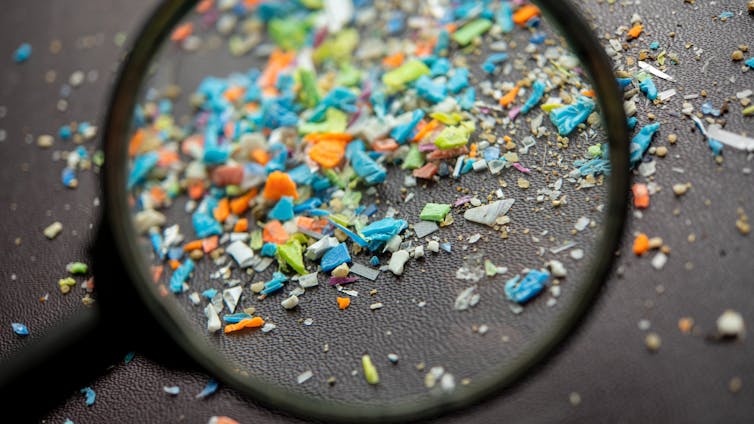
Small bits of plastic viewed under a magnifying glass.
Microplastics are too large to be absorbed by human cells.
SIVStockStudio/Shutterstock.com

This does not mean that microplastics are harmless, however. It is at least possible that they are recognised as foreign by the immune system and cause inflammation, although more research is needed to explore this possibility. Microplastics can also act like tiny sponges, soaking up toxic chemicals, such as persistent organic pollutants, from the environment and potentially carrying them into the body.

Controversies about the true risks posed by small plastic particles may create the false impression that the entire field is in question – which it is not. That is why researchers who work on measurement methods have been especially vocal about the need for higher standards. The good news is that those standards are improving quickly.

Laboratories are becoming more aware of contamination risks. Multiple analytical techniques are increasingly being used on the same samples to cross-check results. Hopefully, researchers will be able to develop standard operating procedures for analysing microplastics in human tissues and other biological samples.

If you have read alarming headlines about small plastic particles, the current state of knowledge calls for caution rather than panic. There is no clear evidence yet that large amounts of plastic are building up in human organs, or that reported increases over time reflect real biological trends rather than methodological errors.

At the same time, it may be sensible to reduce everyday exposure to plastic particles where practical. We can try to avoid food and drink that has come into contact with plastic packaging or containers, improve indoor ventilation, and use simple water filtration, such as charcoal filters, to reduce exposure.

The intense debate about these studies may feel unsettling, but it reflects an emerging scientific field finding its footing. As methods improve and human tissues are tested more rigorously, the picture will become clearer. What matters most is that claims about plastics in the human body are backed by robust evidence.

The Conversation

Michael Richardson receives funding from Nederlands Wetenschappelijk Organisatie (Duch Government Funding Agency).

Le Yang receives funding from China Scholarship Council and Nederlands Wetenschappelijke Organisatie (Dutch Government Funding Agency) .

ref. Questions are being raised about microplastics studies – here’s what’s solid science and what isn’t – https://theconversation.com/questions-are-being-raised-about-microplastics-studies-heres-whats-solid-science-and-what-isnt-273511

Blaming ‘wine moms’ for ICE protest violence is another baseless, misogynist myth

Source: The Conversation – Canada – By Darryn DiFrancesco, Assistant Professor, School of Nursing, Faculty of Human and Health Sciences, University of Northern British Columbia

Following the recent shooting of Renee Good by an agent for Immigration and Customs Enforcement (ICE) in the United States, the Donald Trump administration’s latest narrative suggests that “deluded wine moms” are to blame for the violence in ICE-related demonstrations in Minneapolis and across the country.

This mother-blaming is nothing more than an old trick with a new spin.

Organized gangs of ‘wine moms’

Earlier this week, a Fox News columnist wrote that “organized gangs of wine moms” are using “antifa tactics” to “harass and impede” ICE activity. In the opinion piece, he claimed that “confusion” over the what constitutes civil disobedience is what “got 37-year-old Renee Good killed.”

Similarly, Vice-President J.D. Vance called Good a “deranged leftist” while a new acronym, AWFUL — Affluent White Female Urban Liberal — has appeared on social media.

In framing protesters like Good, a mother of three, as confused, aggressive and “delusional,” this narrative delegitimizes and pathologizes maternal activism. This strategy aims to divert blame from the U.S. government and its heavy-handed approach to immigration while also drawing on a centuries-old strategy of blaming mothers for social problems.

What makes a ‘wine mom?’

The term “wine mom” emerged over the last two decades as a cultural symbol of the contemporary white, suburban mother who turns to a nightly glass of wine (or two) to cope with the stresses of daily life.

The archetype goes back much further, reflected in literature, film and television characters, such as the wily Lucille Bluth of Arrested Development.

A clip from ‘Arrested Development’ featuring Lucille Bluth’s fondness for boozing.

Yet, this motif is less light-hearted than assumed: a recent systematic review reveals a strong link between maternal drinking and stress, especially for working mothers.

While it would be easy to view problematic drinking as another example of maternal failure, it is important not to. Here’s why.

Mother-blame in history

Throughout history, mothers have found themselves in the midst of what American sociologist Linda Blum calls a “mother-valor/mother-blame binary.”

When behaving in accordance with socially acceptable and desirable parameters — that is with warmth, femininity and selflessness — mothers are viewed as “good.” When mothers violate these norms, whether by choice, circumstance or by virtue of their race or class position, they’re “bad mothers.”

Mother-blame ultimately reflects the belief that mothers are solely responsible for their children’s behaviour and outcomes, along with the cultural tendency to blame them when things go wrong. Yet, as Blum points out, “mother-blame also serves as a metaphor for a range of political fears.”

Perhaps the most striking example of this is the suffrage movement, which represented a direct challenge to patriarchal notions that women belonged in the domestic sphere and lacked the intelligence to engage in political discourse.

Suffragettes in the United Kingdom — many of them mothers — occasionally used extreme tactics, such as window-smashing and arson, while women in the U.S. obstructed traffic and waged hunger strikes.

These activists were framed as threatening to not only the establishment, but also to families and the moral fabric of society.

Ironically, despite the fact that women’s entry into politics led to increased spending and improved outcomes related to women, children, families and health care, scholars have found that mother-blaming was as common after the women’s movement as it was before.

Contemporary mother-blame

Beyond political matters, contemporary mother-blame is rampant in other domains.

Mothers have been blamed for a wide variety of their children’s psychological problems, including anxiety, depression and inherited trauma. In media and literature, mothers are often blamed for criminality and violence, reflecting the notion that “mothers make monsters.”
When children struggle in school, educators and administrators may blame the mother. Mothers risk being called “too passive” if they don’t advocate for their children or “too aggressive” when they do.

Similarly, the “crazy woman” or “hysterical mother” is a well-known trope in custody law, and mothers may be blamed even when their children are abused by others. Mass shootings? Mom’s failure. The list goes on.

By setting up mothering as a high-stakes endeavour, the cultural norm of mother-blame also serves to “divide and conquer.”

In my sociology research, I found that mothers on Facebook worked to align themselves with like-minded “superior” mothers, while distancing themselves from perceived “inferior” mothers. This feeds into the cultural norm of “combative mothering,” which pits mothers against each other.

An old trick with a new spin

The “wine mom” narrative builds on this historical pattern of mother-blame. It is meant to trivialize, delegitimize, divide and denigrate mothers who are, in fact, well-organized and motivated activists concerned for their communities.

While there are legitimate concerns around maternal drinking as a coping mechanism, the “wine mom” label has begun to represent something different. Mothers are reclaiming the title to expand their cause.

As @sara_wiles, promoting the activist group @redwineblueusa stated on Instagram: “They meant to scare us back into the kitchen, but our actual response is, ‘Oh, I want to join!’”

We should acknowledge that rather than causing societal problems, mothers have a long history of trying to fix them, even if imperfectly. Mothers like Renee Good are no exception.

The Conversation

Darryn DiFrancesco does not work for, consult, own shares in or receive funding from any company or organisation that would benefit from this article, and has disclosed no relevant affiliations beyond their academic appointment.

ref. Blaming ‘wine moms’ for ICE protest violence is another baseless, misogynist myth – https://theconversation.com/blaming-wine-moms-for-ice-protest-violence-is-another-baseless-misogynist-myth-273786

What a US military base lost under Greenland’s ice sheet reveals about the island’s real strategic importance

Source: The Conversation – UK – By Gemma Ware, Host, The Conversation Weekly Podcast, The Conversation

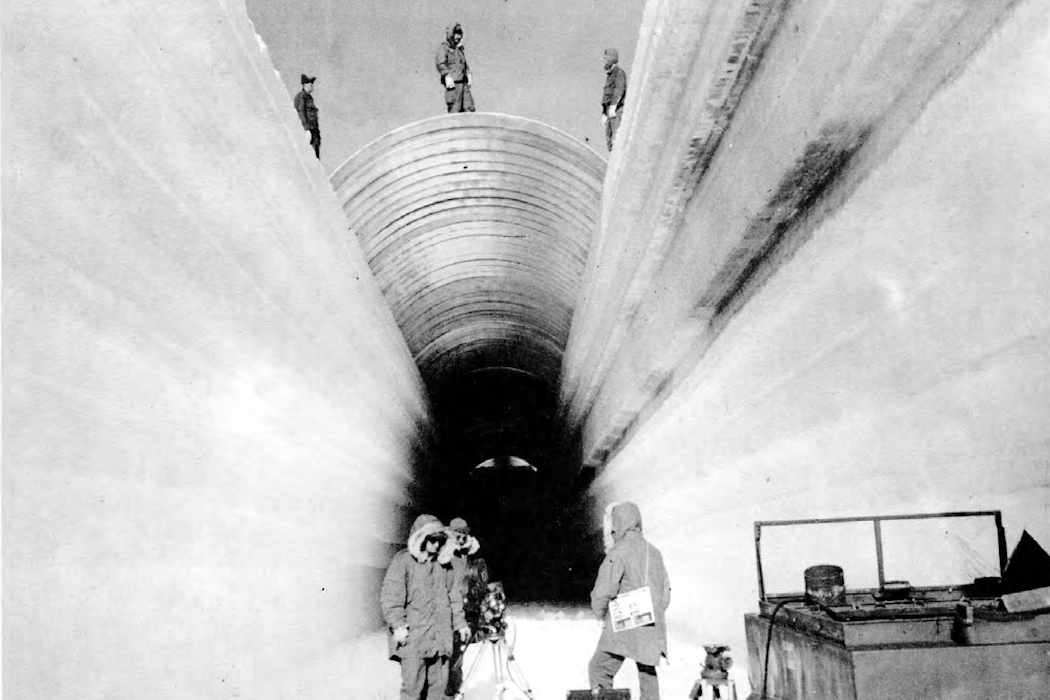
U.S. Army Corps of Engineers via Wikimedia Commons

In the summer of 1959, a group of American soldiers began carving trenches in the Greenland ice sheet. Those trenches would become the snow-covered tunnels of Camp Century, a secret Arctic research base powered by a nuclear reactor.

It was located about 150 miles inland from Thule, now Pituffik, a large American military base set up in north-western Greenland after a military agreement with Denmark during world war two.

Camp Century operated for six years, during which time the scientists based there managed to drill a mile down to collect a unique set of ice cores. But by 1966, Camp Century had been abandoned, deemed too expensive and difficult to maintain.

Today, Donald Trump’s territorial ambitions for Greenland continue to cause concern and confusion in Europe, particularly for Denmark and Greenlanders themselves, who insist their island is not for sale.

One of the attractions of Greenland is the gleam of its rich mineral wealth, particularly rare earth minerals. Now that Greenland’s ice sheet is melting due to global warming, will this make the mineral riches easier to get at?

In this episode of The Conversation Weekly podcast, we talk to Paul Bierman, a geologist and expert on Greenland’s ice at the University of Vermont in the US. He explains why the history of what happened to Camp Century – and the secrets of its ice cores, misplaced for decades, but now back under the microscope – help us to understand why it’s not that simple.

Listen to the interview with Paul Bierman on The Conversation Weekly podcast. You can also read article by him about the history of US involvement in Greenland and the difficulty of mining on the island.

This episode of The Conversation Weekly was written and produced by Mend Mariwany and Gemma Ware. Mixing by Michelle Macklem and theme music by Neeta Sarl. Gemma Ware is the executive producer.

Newsclips in this episode from New York Times Podcasts, the BBC and NBC News.

Listen to The Conversation Weekly via any of the apps listed above, download it directly via our RSS feed or find out how else to listen here. A transcript of this episode is available via the Apple Podcasts or Spotify apps.

The Conversation

Paul Bierman receives funding from the US National Science Foundation and the University of Vermont Gund Institute for Environment

ref. What a US military base lost under Greenland’s ice sheet reveals about the island’s real strategic importance – https://theconversation.com/what-a-us-military-base-lost-under-greenlands-ice-sheet-reveals-about-the-islands-real-strategic-importance-274067

Mark Carney invoked Thucydides at Davos – what people get wrong about this ancient Greek writer’s take on power

Source: The Conversation – UK – By Neville Morley, Professor in Classics, Ancient History, Religion, and Theology, University of Exeter

In his speech to this year’s World Economic Forum at Davos, Canadian prime minister Mark Carney mourned the demise of international cooperation by evoking an authority from ancient Greece.

“It seems that every day we’re reminded that we live in an era of great power rivalry, that the rules-based order is fading, that the strong can do what they can, and the weak must suffer what they must. And this aphorism of Thucydides is presented as inevitable, as the natural logic of international relations reasserting itself.”

Journalists and academics from Denmark, Greece and the United States have quoted the same line from the ancient Greek historian when discussing Donald Trump’s demand for Greenland. It is cited as inspiration for his adviser Stephen Miller’s aggressive foreign policy approach, not least towards Venezuela.

In blogs and social media, the fate of Gaza and Russia’s invasion of Ukraine have been interpreted through the same frame. It’s clearly difficult to contemplate today’s world and not react as W.H. Auden did to the collapse of the old order in 1939: “Exiled Thucydides knew.”

The paradox of the “strong do what they can” line is that it’s understood in radically different ways. On the one hand, it’s presented as a description of the true nature of the world (against naive liberals) and as a normative statement (the weak should submit).

On the other hand, it’s seen as an image of the dark authoritarian past we hoped was behind us, and as a condemnation of unfettered power. All these interpretations claim the authority of Thucydides.

That is a powerful imprimatur.

Thucydides’ insistence on the importance of seeking out the truth about the past, rather than accepting any old story, grounded his claim that such inquiry would help readers understand present and future events.

As a result, in the modern era he has been praised both as the forerunner of critical scientific historiography and as a pioneering political theorist. The absence of anything much resembling theoretical rules in his text has not stopped people from claiming to identify them.

The strong/weak quote is a key example. It comes from the Melian dialogue from Thucydides’ History of the Peloponnesian War. In 416BC, an Athenian force arrived at the neutral island of Melos and demanded its surrender. The Melian leaders asked to negotiate, and Thucydides presents a fictional reconstruction of the subsequent exchange.

The quote comes from the beginning, when the Athenians stipulated that they would not claim any right to seize Melos, other than the power to do so, and conversely would not listen to any arguments from principle. “Questions of justice apply only to those equal in power,” they stated bluntly. “Otherwise, such things as are possible, the superior exact and the weak give up.”

Within modern international relations theory, this is sometimes interpreted as the first statement of the realist school of thought.

Scholars like John Mearsheimer claim that Thucydides identified the basic principle of realist theory that, in an “anarchic” world, international law applies only if it’s in powerful states’ strategic interest, and otherwise might makes right. The fate of the Melians, utterly destroyed after they foolishly decided to resist, reinforces the lesson.

But these are the words of characters in Thucydides’ narrative, not of Thucydides himself. We cannot simply assume that Thucydides believed that “might makes right” is the true nature of the world, or that he intended his readers to draw that conclusion.

The Athenians themselves may not have believed it, since their goal was to intimidate the Melians into surrendering without a fight. More importantly, Thucydides and his readers knew all about the disastrous Athenian expedition to Sicily the following year, which showed the serious practical limits to the “want, take, have” mentality.

So, we shouldn’t take this as a realist theoretical proposition. But if Thucydides intended instead simply to depict imperialist arrogance, teach “pride comes before a fall”, or explore how Athenian attitudes led to catastrophic miscalculation, he could have composed a single speech.

His choice of dialogue shows that things are more complicated, and not just about Athens. He is equally interested in the psychology of the “weak”, the Melians’ combination of pleading, bargaining, wishful thinking and defiance, and their ultimate refusal to accept the Athenian argument.

This doesn’t mean that the Melian arguments are correct, even if we sympathise with them more. Their thinking can be equally problematic. Perhaps they have a point in suggesting that if they give in immediately, they lose all hope, “but if we resist you then there is still hope we may not be destroyed”.

Their belief that the gods will help them “because we are righteous men defending ourselves against aggression”, however, is naive at best. The willingness of the ruling clique to sacrifice the whole city to preserve their own position must be questioned.

The back and forth of dialogue highlights conflicting world views and values, and should prompt us to consider our own position. What is the place of justice in an anarchic world? Is it right to put sovereignty above people’s lives? How does it feel to be strong or weak?

It’s worthwhile engaging with the whole episode, not just isolated lines – or even trying to find your own way through the debate to a less bad outcome.

The English political philosopher Thomas Hobbes, introducing his classic 1629 translation, noted that Thucydides never offered rules or lessons but was nevertheless “the most politic historiographer that ever writ”. Modern readers have too often taken isolated quotes out of context, assumed that they represent the author’s own views and claimed them as timeless laws. Hobbes saw Thucydides as presenting complex situations that we need to puzzle out.

It’s remarkable that an author famed for his depth and complexity gets reduced to soundbites. But the contradictions in how those soundbites are interpreted – the way that Thucydides presents us with a powerful and controversial idea but doesn’t tell us what to think about it – should send us back to the original.


Looking for something good? Cut through the noise with a carefully curated selection of the latest releases, live events and exhibitions, straight to your inbox every fortnight, on Fridays. Sign up here.


The Conversation

Neville Morley does not work for, consult, own shares in or receive funding from any company or organisation that would benefit from this article, and has disclosed no relevant affiliations beyond their academic appointment.

ref. Mark Carney invoked Thucydides at Davos – what people get wrong about this ancient Greek writer’s take on power – https://theconversation.com/mark-carney-invoked-thucydides-at-davos-what-people-get-wrong-about-this-ancient-greek-writers-take-on-power-274086

America’s next big critical minerals source could be coal mine pollution – if we can agree on who owns it

Source: The Conversation – USA (2) – By Hélène Nguemgaing, Assistant Clinical Professor of Critical Resources & Sustainability Analytics, University of Maryland

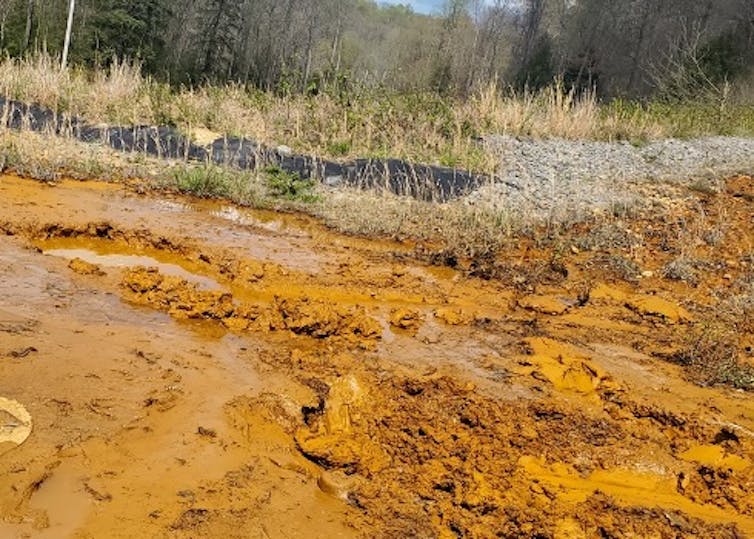
Acid mine waste turns rocks orange along Shamokin Creek in Pennsylvania.
Jake C/Wikimedia Commons, CC BY-SA

Across Appalachia, rust-colored water seeps from abandoned coal mines, staining rocks orange and coating stream beds with metals. These acidic discharges, known as acid mine drainage, are among the region’s most persistent environmental problems. They disrupt aquatic life, corrode pipes and can contaminate drinking water for decades.

However, hidden in that orange drainage are valuable metals known as rare earth elements that are vital for many technologies the U.S. relies on, including smartphones, wind turbines and military jets. In fact, studies have found that the concentrations of rare earths in acid mine waste can be comparable to the amount in ores mined to extract rare earths.

Scientists estimate that more than 13,700 miles (22,000 kilometers) of U.S. streams, predominantly in Pennsylvania and West Virginia, are contaminated with acid mine discharge.

A closer look at acid mine drainage from abandoned mines in Pennsylvania. Pennsylvania Fish and Boat Commission.

We and our colleagues at West Virginia University have been working on ways to turn the acid waste in those bright orange creeks into a reliable domestic source for rare earths while also cleaning the water.

Experiments show extraction can work. If states can also sort out who owns that mine waste, the environmental cost of mining might help power a clean energy future.

Rare earths face a supply chain risk

Rare earth elements are a group of 17 metals, also classified as critical minerals, that are considered vital to the nation’s economy or security.

Despite their name, rare earth elements are not all that rare. They occur in many places around the planet, but in small quantities mixed with other minerals, which makes them costly and complex to separate and refine.

A mine and buildings with mountains in the background.
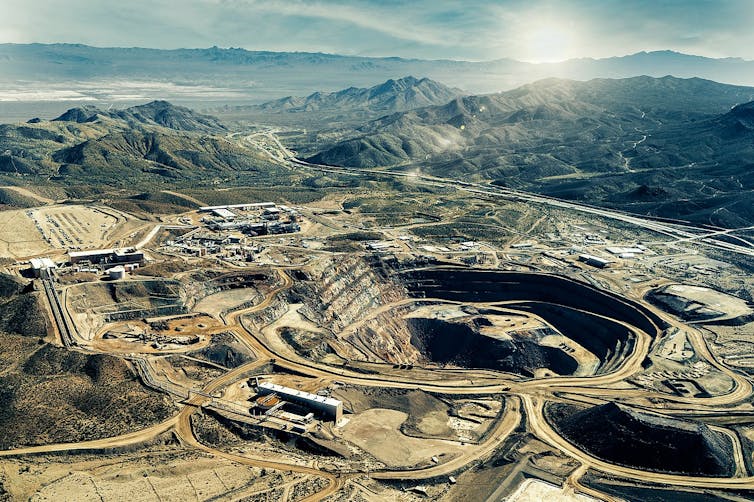
MP Materials’ Mountain Pass Rare Earth Mine and Processing Facility, in California near the Nevada border, is one of the few rare earth mines in the U.S.
Tmy350/Wikimedia Commons, CC BY-SA

China controls about 70% of global rare earth production and nearly all refining capacity. This near monopoly gives the Chinese government the power to influence prices, export policies and access to rare earth elements. China has used that power in trade disputes as recently as 2025.

The United States, which currently imports about 80% of the rare earth elements it uses, sees China’s control over these critical minerals as a risk and has made locating domestic sources a national priority.

The U.S. Geological Survey has been mapping locations for potential rare earth mining, shown in pink. But it takes years to explore a locations and then get a mine up and running.
USGS

Although the U.S. Geological Survey has been mapping potential locations for extracting rare earth elements, getting from exploration to production takes years. That’s why unconventional sources, like extracting rare earth elements from acid mine waste, are drawing interest.

Turning a mine waste problem into a solution

Acid mine drainage forms when sulfide minerals, such as pyrite, are exposed to air during mining. This creates sulfuric acid, which then dissolves heavy metals such as copper, lead and mercury from surrounding rock. The metals end up in groundwater and creeks, where iron in the mix gives the water an orange color.

Expensive treatment systems can neutralize the acid, with the dissolved metals settling into an orange sludge in treatment ponds.

For decades, that sludge was treated as hazardous waste and hauled to landfills. But scientists at West Virginia University and the National Energy Technology Laboratory have found that it contains concentrations of rare earth elements comparable to those found in mined ores. These elements are also easier to extract from acid mine waste because the acidic water has already released them from the surrounding rock.

Metals flowing from acid mine waste make a creek look orange.
Acid mine drainage flowing into Decker’s Creek in Morgantown, West Virginia, in 2024.
Helene Nguemgaing

Experiments have shown how the metals can be extracted: Researchers collected sludge, separated out rare earth elements using water-safe chemistry, and then returned the cleaner water to nearby streams.

It is like mining without digging, turning something harmful into a useful resource. If scaled up, this process could lower cleanup costs, create local jobs and strengthen America’s supply of materials needed for renewable energy and high-tech manufacturing.

But there’s a problem: Who owns the recovered minerals?

The ownership question

Traditional mining law covers minerals underground, not those extracted from water naturally running off abandoned mine sites.

Nonprofit watershed groups that treat mine waste to clean up the water often receive public funding meant solely for environmental cleanup. If these groups start selling recovered rare earth elements, they could generate revenue for more stream cleanup projects, but they might also risk violating grant terms or nonprofit rules.

To better understand the policy challenges, we surveyed mine water treatment operators across Pennsylvania and West Virginia. The majority of treatment systems were under landowner agreements in which the operators had no permanent property rights. Most operators said “ownership uncertainty” was one of the biggest barriers to investment in the recovery of rare earth elements, projects that can cost millions of dollars.

Not surprisingly, water treatment operators who owned the land where treatment was taking place were much more likely to be interested in rare earth element extraction.

A map shows many acid mine drainage sites, largely in the column from the southwest to the northeast.
Map of acid mine drainage sites in West Virginia.
Created by Helene Nguemgaing, based on data from West Virginia Department of Environmental Protection, West Virginia Office of GIS Coordination, and U.S. Geological Survey

West Virginia took steps in 2022 to boost rare earth recovery, innovation and cleanup of acid mine drainage. A new law gives ownership of recovered rare earth elements to whoever extracts them. So far, the law has not been applied to large-scale projects.

Across the border, Pennsylvania’s Environmental Good Samaritan Act protects volunteers who treat mine water from liability but says nothing about ownership.

A map shows many acid mine drainage sites, particularly in the western part of the state.
Map of acid mine drainage sites in Pennsylvania.
Created by Helene Nguemgaing, based on data from Pennsylvania Spatial Data Access

This difference matters. Clear rules like West Virginia’s provide greater certainty, while the lack of guidance in Pennsylvania can leave companies and nonprofits hesitant about undertaking expensive recovery projects. Among the treatment operators we surveyed, interest in rare earth element extraction was twice as high in West Virginia than in Pennsylvania.

The economics of waste to value

Recovering rare earth elements from mine water won’t replace conventional mining. The quantities available at drainage sites are far smaller than those produced by large mines, even though the concentration can be just as high, and the technology to extract them from mine waste is still developing.

Still, the use of mine waste offers a promising way to supplement the supply of rare earth elements with a domestic source and help offset environmental costs while cleaning up polluted streams.

Early studies suggest that recovering rare earth elements using technologies being developed today could be profitable, particularly when the projects also recover additional critical materials, such as cobalt and manganese, which are used in industrial processes and batteries. Extraction methods are improving, too, making the process safer, cleaner and cheaper.

Government incentives, research funding and public-private partnerships could speed this progress, much as subsidies support fossil fuel extraction and have helped solar and wind power scale up in providing electricity.

Treating acid mine drainage and extracting its valuable rare earth elements offers a way to transform pollution into prosperity. Creating policies that clarify ownership, investing in research and supporting responsible recovery could ensure that Appalachian communities benefit from this new chapter, one in which cleanup and clean energy advance together.

The Conversation

The authors do not work for, consult, own shares in or receive funding from any company or organization that would benefit from this article, and have disclosed no relevant affiliations beyond their academic appointment.

ref. America’s next big critical minerals source could be coal mine pollution – if we can agree on who owns it – https://theconversation.com/americas-next-big-critical-minerals-source-could-be-coal-mine-pollution-if-we-can-agree-on-who-owns-it-272029

Health and competence are shaping Trump’s presidency. What about his predecessors?

Source: The Conversation – Canada – By Ronald W. Pruessen, Emeritus Professor of History, University of Toronto

One year into U.S. President Donald Trump’s second term, questions about his health and competence are as pervasive as the gilt sprawling through the Oval Office.

These questions grew even louder following his rambling speech this week at Davos, where he repeatedly referred to Greenland as Iceland, falsely claimed the United States gave the island back to Denmark during the Second World War and boasted that only recently, NATO leaders had been lauding his leadership (“They called me ‘daddy,’ right?”).


Read more:
Trump’s annexation of Greenland seemed imminent. Now it’s on much shakier ground.


Do swollen ankles and whopping hand bruises signal other serious problems? Do other Davos-like distortions and ramblings — plus a tendency to fall asleep during meetings — reveal mental decline even more startling than Joe Biden’s in the final couple of years of his presidency?

This is not the first time in White House history that American citizens have had concerns about the health of their president — nor the first time that historians like me have raised questions.

The experiences of Trump’s predecessors remind us of the dangers inherent in the inevitable human frailty of the very powerful.

Presidents with physical health issues

Frailty can entail crises in physical health like William Henry Harrison’s 1841 death from pneumonia 32 days after his inauguration or Warren G. Harding’s heart attack and death in 1923.

Frailty can also involve weaknesses in brain function, which impact the capacity for analysis and problem-solving.

Bodily trauma can have obvious effects on presidential competence. Sometimes it’s a temporary impact, as with Dwight D. Eisenhower’s 1955 heart attack and recovery. But sometimes it’s permanent: Woodrow Wilson never recovered his capacities after an October 1919 stroke, with White House leadership languishing for 18 months under his wife’s gatekeeping until his death.

In other cases, the effect of physical ailments on competence was less clear — and therefore debatable. Franklin D. Roosevelt’s heart problems during the Second World War grew serious enough to contribute to his April 1945 death. Did they also compromise his mental capacities during the controversial Yalta Conference?


Read more:
By VE Day in 1945, Stalin had got what he wanted in Poland – now Putin may get what he wants in Ukraine


Did John F. Kennedy’s undisclosed Addison’s disease and medication regimes affect his ability to navigate major challenges like the Cuban Missile Crisis or Vietnam?

Mental health concerns

There have also been debates about the possible competence consequences of the behavioural tendencies and mental health conditions of several American presidents:

• Did Abraham Lincoln’s bouts of deep depression affect leadership capacities during multiple Civil War crises, including the Union defeat at Chancellorsville in May 1863 or during cabinet conflicts?

• Did Theodore Roosevelt’s impulsivity help shape what even his secretary of state once privately called the “rape” of Colombia in order to build the Panama Canal? (Harvard psychologist and philosopher William James said Roosevelt was “still mentally in the Sturm und Drang period of early adolescence”).

• Did Richard Nixon’s periodically high stress levels and alcohol consumption influence his decision-making on the Cambodian incursion of 1970 or the Watergate crisis?


Read more:
Supreme Court’s ruling in Trump v. United States would have given Nixon immunity for Watergate crimes — but 50 years ago he needed a presidential pardon to avoid prison


Questions and concerns about Trump’s physical and mental health, then, aren’t unique — even if the causes for concern are far more numerous than they were for previous presidents.

The impact of physical health on competence seems the less urgent of worrisome issues. While the Trump presidency as a whole has been notoriously prone to dishonesty, exaggeration and avoidance, the current medical team seems to be offering reasonable transparency.

Tests have been identified — for example, an October 2025 CT scan to assess potential heart issues — and relatively non-alarming diagnoses have been offered (“perfectly normal” CT scan results; common “chronic venous insufficiency” is responsible for swollen ankles).

More troubling is Trump’s mental health — both his full cognitive capacities and his psychological profile.

Cognitive issues?

In 2018 and 2025, Trump was given the Montreal Cognitive Assessment (MoCA) a screening tool for possible dementia. Despite the president’s claim to having “aced” the test, his score has not been revealed.

Numbers matter here. Out of a maximum 30 points, scores below 25 suggest mild to severe cognitive issues.

Of equal importance, the MoCA provides no insight into markers of mental competence, like reasoning and problem-solving. Well-established test batteries cover such ground (the Wechsler Adult Intelligence Scale is widely used), but Trump has not likely worked through any. (Neither, to be sure, have any predecessors — though none have raised the concerns so evident in 2026.)

Unofficial diagnoses of personality characteristics also fuel debate about Trump’s competence and mental health. The scale of the president’s ego is a prime example of concern.

Psychological issues?

On one hand, in the absence of intensive in-person assessment, psychiatrists are understandably reluctant to apply the label of “narcissistic personality disorder” (NPD) as defined by the American Psychiatric Association’s Diagnostic and Statistical Manual of Mental Disorders (DSM). On the other hand, many observers are also understandably struck by how Trump’s behaviour matches the DSM’s checklist of symptoms for the disorder.

The president clearly displays the grandiose sense of self-importance seen as a primary marker. Trump’s “I alone” and “I could shoot someone on Fifth Avenue” boasts of earlier years have grown exponentially by 2025-26. He’s depicted himself as pope or “King Trump” bombing protesters.

More serious are his endless and false claims that he won the 2020 presidential election, that he has the right to torch constitutional norms like “due process” that are enabling ICE abuses in Minneapolis and elsewhere, and that he can disregard the need for congressional approval on policies like reducing cancer research and other health programs.

Trump’s declaration that only “my morality” will determine his defiance of international laws and standards (as in threats to Greenland and Canada and his actual invasion of Venezuela) are also deeply troubling, especially given serious questions about that morality in terms of the Jeffrey Epstein files.

Psychiatrists also associate NPD with a sense of open-ended entitlement. Comic examples emerge: rebranding the (now) “Donald J. Trump and John F. Kennedy Center,” his lack of embarrassment in relishing the absurd FIFA Peace Prize or María Corina Machado’s surrender of her Nobel Peace Prize.

Brazenness

Trump’s willingness to trample upon rights within the U.S. and his apparent eagerness to disrupt and dismantle the building blocks of the post-Second World War international order are also possible signs of psychological problems.


Read more:
Venezuela attack, Greenland threats and Gaza assault mark the collapse of international legal order


He is equally brazen in fostering the wealth of his family and friends: for example, accepting emoluments like multi-million dollar donations for a White House ballroom that will surely be given Trump branding (to compete with the Lincoln Bedroom?) and using Oval Office prestige to turbo-charge massive real estate and financial ventures.

The Trump family’s World Liberty Financial cryptocurrency enterprise “earned” more than $1 billion in 2025, after all.

Against the backdrop of the looming mid-term elections, Trump’s ever-compounding ego and appetites remain of burning concern — along with his overall physical health and mental competence. Other presidents faced similar questions even without the current storm of scandals and extremes.

Will Trump relish the distinction of leaving his predecessors in the dust on this front too?

The Conversation

In the past, Ronald W. Pruessen has received funding from the Social Sciences and Humanities Research Council of Canada.

ref. Health and competence are shaping Trump’s presidency. What about his predecessors? – https://theconversation.com/health-and-competence-are-shaping-trumps-presidency-what-about-his-predecessors-273880

A government can choose to investigate the killing of a protester − or choose to blame the victim and pin it all on ‘domestic terrorism’

Source: The Conversation – USA – By Stephanie A. (Sam) Martin, Frank and Bethine Church Endowed Chair of Public Affairs, Boise State University

Has it become perilous to exercise free speech in the U.S.? nadia_bormotova/iStock Getty Images

The question the First Amendment keeps asking, across wars and panics and moral crusades, is whether a democracy can tolerate the possibility of persuasion.

There’s a certain school of thought that says no. Persuasion is too perilous.

I call this way of thinking “swallow-a-fly logic.” I’m referring, of course, to the popular children’s song where a woman ingests a fly and then keeps devouring bigger animals to fix it, until she dies from eating a horse.

It leads to the “old lady who swallowed a fly” theory of obedience: If we let someone with a message we don’t like speak out, people might be persuaded. If people become persuaded, they might stop supporting the war, the president, the government, itself. If support evaporates, enlistment drops or compliance weakens as the state loses leverage. If enlistment drops, the government might fall. And if there is no government, then who cares about the First Amendment?

By this way of thinking, free speech is dangerous because the public is too influence-able, and influence is too unpredictable, and security is too precious.

The constitutional tradition of free speech, when it is working at its best, says yes anyway, go ahead and speak. The alternative is a politics in which the state survives by making dissenters illegitimate as citizens.

That’s what happened to Renée Good when she was shot and killed by ICE in Minneapolis on Jan. 7, 2026. Her resistance had made her menacing.

A crowd of protesters on a city corner in the night.
People gather on Jan. 8, 2026, for a protest of the killing of Renee Nicole Good in Minneapolis, Minn.
Stephen Maturen/Getty Images

Dissent as a virus

I’m a professor of public service and vice chair of the National Communication Association’s Communication and Law Division. My research examines how news institutions shape civic life and how freedom of expression is both a fundamental human right and a fundamental part of democracy.

In modern First Amendment doctrine, the government usually cannot punish speech unless it crosses narrow lines like incitement.

But when national security is invoked, the rules for speech appear to change. Dissent is treated less as persuasion to be debated and more like a virus to be contained before it harms public morale. That containment logic, either overt or covert, has repeatedly reappeared whenever protest has become politically inconvenient and unpalatable to those in power. It’s the kind of thinking that led to Jimmy Kimmel’s suspension from “Jimmy Kimmel Live!” after poking fun at President Donald Trump.

A terror memo. A protest. A killing.

National Security Presidential Memorandum 7, issued by the Trump administration in September 2025, relies on logic from the lady and the fly. It frames “domestic terrorism” and “organized political violence” as national security crises. It tells federal agencies to work together to investigate and stop suspected threats, a framework that enlarges the set of things the state can plausibly treat as suspect, including the freedoms of association and belief.

The language in the memorandum affirms legitimate counterterrorism work while leaving room to treat political dissent as out of bounds. But the First Amendment protects protest speech.

Still, if the language of the Trump memo is somewhat abstract, Minneapolis has provided a brutally concrete example.

When an ICE agent shot and killed Good, a 37-year-old U.S. citizen, federal officials characterized the encounter as an act of self-defense by an agent afraid of being run down by Good in her car.

Local authorities have disputed that framing.

The incident was captured on video that widely circulated and intensified public scrutiny. According to Good’s wife, the couple were protesters who confronted heavily armed agents determined to scare them away. No one tried to run anyone over, she said.

Amid this controversy, the story took a sharp turn. Homeland Security Secretary Kristi Noem said Good appeared to have been committing “an act of domestic terrorism.” Trump called Good “very violent” and “very radical.”

Reports claim that Department of Justice leadership pushed federal prosecutors to investigate Good’s widow, even as the department declined to open a civil rights probe into the shooting itself.

At least six federal prosecutors in the Minneapolis U.S. attorney’s office resigned in response.

Soon after Renée Good was killed by an ICE officer, DHS Sec. Kristi Noem claimed that Good had committed “domestic terrorism.”

Turning victims into suspects

The state has two choices when a death occurs that’s politically dangerous to the government.

It can investigate the killing with transparency and center the victim’s rights alongside public accountability as organizing principles. Or it can treat the killing as an opportunity to put the victim on trial in the court of public legitimacy.

The second choice avoids holding government accountable, shifts conversation toward the target’s supposed behavior and character, and expands the blame to include the people who loved and stood with the dead.

When this happens, the government does not have to win in court. It only has to keep the stigma circulating by asserting that a particular speaker undermines respect for elected officials. Indeed, that’s one of the reasons Trump offered for Good’s shooting by the ICE officer: “At a very minimum, that woman was very, very disrespectful to law enforcement,” he told reporters.

The United States has been here before. Around EG: During? World War I, the U.S. Supreme Court issued several free speech decisions in cases mostly remembered as disputes over protest and draft resistance. But their underlying engine was the swallow-a-fly theory. Opposing the war might ruin the nation, so political dissidents had to be stopped, and the court affirmed the government’s right to silence strident speakers.

The Cold War era sharpened the same approach but made it about identity. The Smith Act, passed in 1940, curbed speech that advocated the violent overthrow of the government. In practice, Smith Act cases treated any type of communist sympathy as illegal, presumptively falling outside democratic tolerance.

The government did not have to prove a threat was real and required response. Instead, it had to show that certain ideas were too dangerous to be part of open conversation.

Finally, in Brandenburg v. Ohio from 1969, the Supreme Court went in the opposite direction, affirming free speech rights even for those advocating vile ideas.

The justices overturned the conviction of a Ku Klux Klan leader and held that the government cannot punish advocacy just because it is extreme, hateful or possibly perilous. Only speech “directed at inciting or producing imminent lawless action and is likely to incite or produce such action” may be quelched, the court wrote. The danger has to be real, and it has to be happening right now. Otherwise, citizens are free to say what they will.

New ways to chill speech

So, if the Supreme Court has settled the issue, why does it feel alive again now?

Contemporary crackdowns rarely present themselves as crackdowns. They present themselves as “coordination,” “threat assessment,” “financial disruption,” “extremism prevention” and, increasingly, as necessary defenses against “domestic terrorism.”

The Trump administration’s September 2025 national security memorandum is exactly the kind of framework that makes these routes attractive, because it invites the state to treat political conflict not as disagreement but as a security threat – something to be managed by the tools and instincts of national security.

Seen in this light, the resignations of federal government attorneys in Minneapolis are not just a bureaucratic drama. They are a window into the government’s underlying theory of the case. Investigate victims and their associates instead of scrutinizing the state’s use of force. Frame the victim’s death as the inevitable consequence of being their type. As Trump said of Good: She was a “professional agitator.”

Minneapolis is not just a tragedy. It is a test of whether the country still backs the central promise of modern free speech doctrine. Government may not suppress speech and association simply because it fears what the public might come to believe.

The Conversation

Stephanie A. (Sam) Martin does not work for, consult, own shares in or receive funding from any company or organization that would benefit from this article, and has disclosed no relevant affiliations beyond their academic appointment.

ref. A government can choose to investigate the killing of a protester − or choose to blame the victim and pin it all on ‘domestic terrorism’ – https://theconversation.com/a-government-can-choose-to-investigate-the-killing-of-a-protester-or-choose-to-blame-the-victim-and-pin-it-all-on-domestic-terrorism-273434

Colonial tax records hold 3 lessons for South Africa today – economic historian

Source: The Conversation – Africa – By Johan Fourie, Professor, Department of Economics, Stellenbosch University

In 1825, a tax collector compiling a census in South Africa’s Cape Colony paused to write a poem in the margin of his work. In it, he complained about the idle chatter of townsmen in Stellenbosch and uncooperative taxpayers. It is a tiny window on the regular frustrations of a 19th-century taxman. But the poem survives only because the bureaucracy did.

Year after year, from the 1660s to the 1840s, local officials appointed by the Dutch East India Company and, after 1806, the British colonial government, recorded settler households, their harvests and their labour obligations in ledgers known as opgaafrolle (tax censuses). Read closely, these records provide fleeting glimpses of lived experience; taken together, they allow us to trace long-term social and economic dynamics.

We often treat the past as distant. But the 18th-century Cape Colony also serves as an experiment for current-day economic historians in state capacity, market trust and inequality. Those themes remain central to South Africa today, and to the experience of many African economies shaped by colonial institutions.

Over the past year, my team and I at the Laboratory for the Economics of Africa’s Past at Stellenbosch University have published three studies that return to the Cape’s archival record with new data and new methods. Together, they suggest three lessons that still resonate: the non-neutrality of administrative data; how markets are social as well as economic institutions; and how inequality endures.

1. Data is never neutral

The opgaafrolle were fiscal instruments, introduced under Dutch East India Company rule in the second half of the 17th century and maintained under Batavian and British administrations in the early 19th century. Their purpose was straightforward: to record who lived where, what they owned, what they produced and what could be taxed.

In a paper co-authored with colleagues and students, we analyse the complete series of tax censuses for Stellenbosch and Drakenstein, two of the earliest and wealthiest districts of the Colony, close to Cape Town, between 1685 and 1844. These records allow us to trace kinship networks, marriage patterns, changes in agricultural output and the evolution of slave ownership over nearly 160 years.

The Cape was a slave economy. Enslaved people, brought from territories across the Indian Ocean, were recorded as assets in settler households. Indigenous Khoesan people are not included in these records, although there is little doubt that they, too, worked on settler farms. They are traced in later records.

For this study, we simply wanted to know what these detailed records, unique for their time, revealed about life at the Cape. We found they could be used to understand not only the economy, but also social life. For example, surnames showed marriage patterns that preserved wealth within the family.

The broader lesson is that data – in this case, administrative data – is never neutral. Some things are never recorded, like the Khoesan workers on farms. And when things are recorded, they can easily be biased, for a variety of reasons. Cape farmers underreported production to reduce their tax burden, for example. Enslaved people, by contrast, were recorded with far greater consistency in the censuses, partly because “owners” were not required to pay a slave tax.

Any serious engagement with administrative data, past or present, therefore requires attention to incentives and institutions. This is particularly important as South Africa today debates policy using census and administrative data whose limitations are often poorly understood. There are real consequences for planning and accountability.

2. Markets are social institutions before they are economic ones

Tax records tell us what households declared about their productive activities. To understand more about their consumption, we need different sources.

In another paper, we turn to the Cape Orphan Chamber’s auction records. These auctions were held when estates were liquidated, often after a death, and they recorded who bought what, at what price, and from whom. The dataset covers the period from 1701 to 1825 and has recently been fully transcribed.

What emerges is a picture of markets embedded in social relationships. Auctions were public events. Family members often bid on household goods to keep them within the family or to support widows and children. Credit – borrowing to invest in new tools or to acquire enslaved people – flowed along kinship lines. Consumption – buying an ox, or a wagon, or a Bible – was a public signal of status, belonging and obligation.

This matters for contemporary Africa. Economic policy often treats markets as anonymous spaces where prices alone coordinate behaviour. Yet across much of the continent, markets still operate through trust and reputation. For example, one recent study shows African firms in historically pastoral regions remain smaller, partly because pastoralists are less likely to trust those outside the immediate family.

Even today, credit access, business partnerships and labour arrangements remain deeply relational. The Cape’s auctions remind us that markets have always been social institutions and that ignoring this leads to poor policy design.

3. Inequality is not a modern deviation but a historical constant

South Africa’s extreme inequality is often attributed to 20th-century industrialisation, apartheid policy and post-apartheid failures. While all of these matter, they do not tell the full story.

In another paper, I measured inequality in the Cape Colony between 1685 and 1844. The study used an expanded set of tax censuses, as well as probate inventories – lists of assets that people owned when they died – and slave valuation rolls – the lists created to compensate slave owners during the period of emancipation.

Wealth was highly unevenly distributed from the earliest periods of settlement. Today the situation would be described as severe inequality.

Even if we only consider settlers (and exclude enslaved and Khoesan inhabitants), wealth was very skewed. A small elite owned most productive resources.

Even more surprising, similar patterns appear in the limited records we have for Khoesan settlements.

In other words, wealth was severely unequally distributed not only between groups but also within.

This perspective forces us to rethink how we talk about inequality today. If inequality has deep historical roots, then it cannot be understood simply as a recent malfunction of modern capitalism, nor fixed by narrow technical adjustments to tax rates or social transfers.

Inequality, in other words, is not an anomaly to be corrected back to some imagined baseline of equality, but a recurring outcome of how societies organise power and production. That does not make severe inequality morally acceptable, but it does shift the policy question. The relevant issue is not whether inequality exists, but whether those at the bottom are becoming less poor and are more able to move up.

Looking back to think forward

The 18th-century Cape Colony does not offer ready-made policy solutions. What it offers is perspective. It shows how states govern through what they can observe and record, how markets operate through social ties as much as prices, and how inequality can persist across centuries.

The frustrated tax collector in Stellenbosch could not have imagined that his tax records would one day inform debates about governance, markets and inequality. Yet they can. They remind us that the past continues to shape the constraints within which policy is made, and the possibilities for change.

The Conversation

Johan Fourie receives funding from Riksbankens Jubileumsfond.

ref. Colonial tax records hold 3 lessons for South Africa today – economic historian – https://theconversation.com/colonial-tax-records-hold-3-lessons-for-south-africa-today-economic-historian-273407

Lebanon’s orchards have been burnt, wildlife habitat destroyed by Israeli strikes – raising troubling international law questions

Source: The Conversation – Global Perspectives – By Mireille Rebeiz, Chair of Middle East Studies, Dickinson College

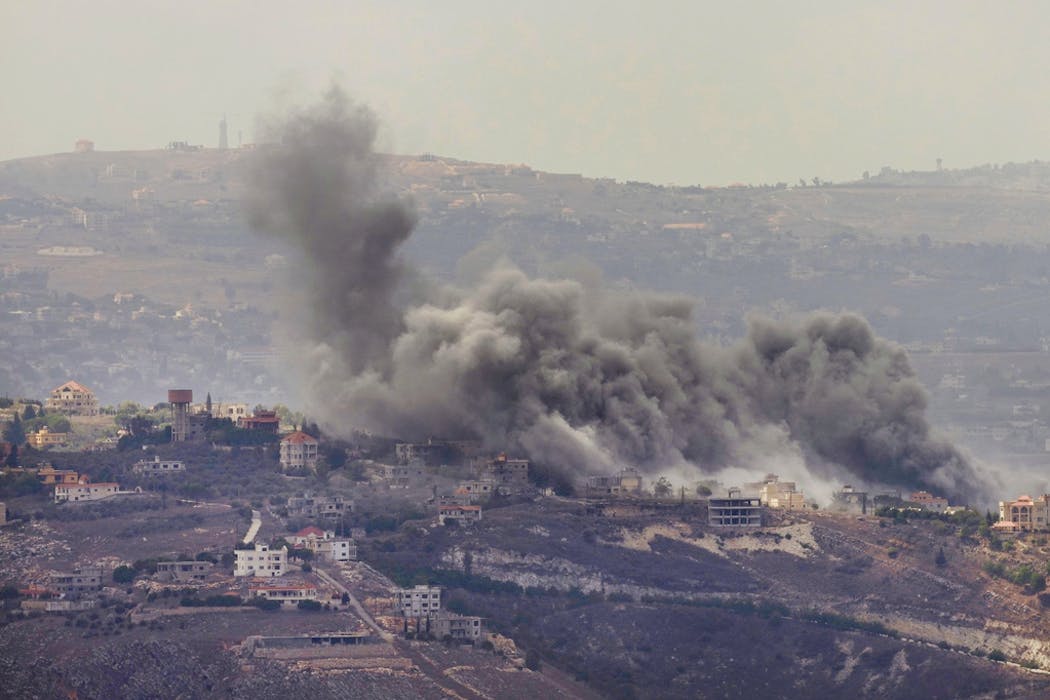
Smoke rises from Israeli airstrikes on southern Lebanese villages on Sept. 23, 2024.
AP Photo / Hussein Malla

More than a year after a ceasefire nominally ended active fighting, much of southern Lebanon bears the ecological scars of war. Avocado orchards are gone and beehives destroyed. So, too, are the livelihoods they supported. Meanwhile, fields and forests have disappeared under the intense fire caused by white phosphorus shelling. Shrapnel and unexploded bombs, however, remain.

Such grim realities are a window into the massive ecological destruction brought to Lebanon as a result of the 2024 war between Hezbollah and Israel. The number of Israeli airstrikes from October to November of that year ranked among the highest globally in the 21st century.

The conflict proved disastrous for human life, with more than 4,000 people killed, more than 17,000 injured, and 1.2 million civilians displaced internally. But a relatively uncovered aspect of the destruction was the significant effects to the environment.

Farmlands, olive groves, and pine forests were extensively burned by Israel’s airstrikes. Water resources were polluted. Pipelines and waste management were partially or completely destroyed. And the extensive dropping of ordnance and debris left a widespread trail of toxic dust and hazardous chemicals.

The damage to the Lebanon’s environment will have long-term consequences for the country’s agriculture and economy, and on its people’s mobility.
Repairing the damage would involve a multi-year reconstruction project costing an estimated US$11 to $14 billion, according to one World Bank assessment.

As experts in Middle East studies and environmental law, we believe that this destruction also indicates a grave breach of international environmental law and raises the question of whether Israel committed war crimes in Lebanon by deliberately targeting natural resources and engaging in environmental warfare.

Environmental destruction in Lebanon

During the latest war — the sixth such Israeli invasion of Lebanon since 1978 — Lebanon lost around 1,910 hectares of prime farmland, 47,000 olive trees and around 1,200 hectares of oak forests, according to Lebanese state figures.

According to Amnesty International, Israel used white phosphorus, a highly reactive chemical that burns at extremely high temperatures when exposed to air. While international humanitarian law does not necessarily ban its use for military necessity, it clearly dictates that white phosphorus must never be used against civilians.

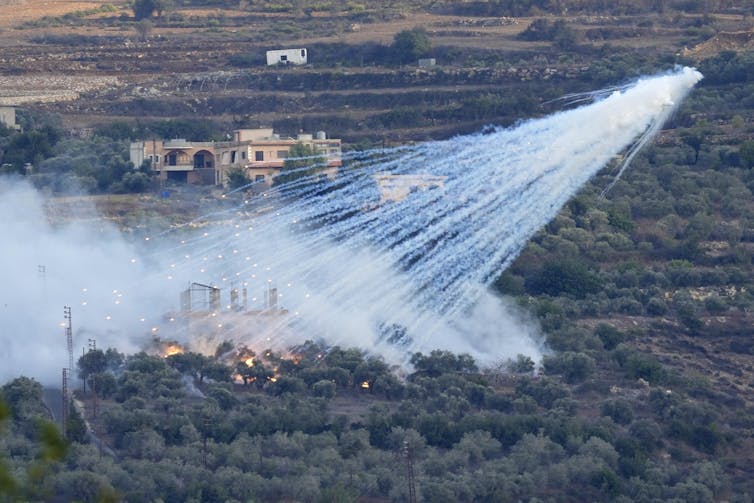
White smoke billows over a field on fire.
A shell that appears to be white phosphorus from Israeli artillery explodes over a house in a Lebanese village along the border with Israel on Oct. 15, 2023.
AP Photo / Hussein Malla, File

Data collected by Amnesty International’s Citizen Evidence Lab suggests that Israel deliberately used this incendiary substance in densely populated villages in southern Lebanon to push the civilians out and make their lands unusable. Many civilians were killed, and several had long-term injuries, such as respiratory damages and severe burns.

As to the environment, white phosphorus destroyed fruit, vegetable and olive harvests, burned agricultural lands and left them polluted. White phosphorus also ignited large-scale fires that ravaged oak and pine forests and devastated wildlife. Natural habitats were destroyed, pushing animals whose species are already under stress, such as striped hyenas, golden jackals, and Egyptian mongoose, into residential areas, putting them at risk of being killed.

In the course of the conflict Israel also used cluster munitions, which are widely banned by international law. A cluster bomb consists of several smaller bombs that explode at different times to cover wider areas. But some of these cluster munitions do not explode on impact, thus threatening civilians’ lives and targeting civilians indiscriminately.

Due to these various chemicals and munitions, Lebanon’s soil and water have been contaminated with heavy metals, military scrap, and unexploded bombs.

To be sure, underlying conditions that preceded Israel’s bombing campaign likely worsened the extent of the resulting environmental damage. For example, there are no clear domestic laws in Lebanon banning asbestos, and data indicates the country continued importing the toxic substance well into the early 2000s, well after it had been banned in most other countries.

Several urban and industrial sites were heavily bombed during the 2024 war, especially in south Beirut and Tyre, a major city in southern Lebanon. There is little doubt that the resulting debris contains high levels of asbestos and other toxic substances, which were released with the destruction of buildings, pipelines, paints, roofs, tiles and other old structures.

Environmental protection in armed conflict

Current international humanitarian law provides limited environmental protection during armed conflict. Article 8(2)(b)(iv) of the Rome Statute qualifies a war crime as any attack launched “in the knowledge that such attack will cause widespread, long-term and severe damage to the natural environment which would be clearly excessive in relation to the concrete and direct overall military advantage anticipated.” The cumulative nature of these criteria — being widespread, long term and severe — establishes a high bar for proving a war crime of this nature.

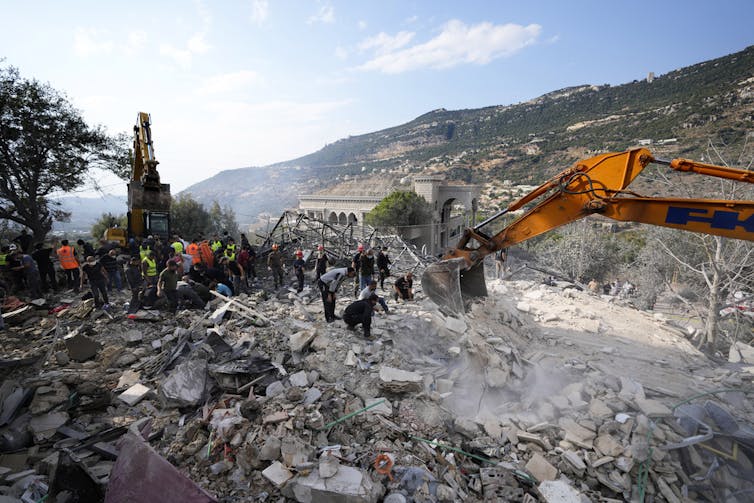
Rescue workers sift through a large pile of rubble.
Rescue workers use excavators to remove the rubble of a destroyed house hit in an Israeli airstrike in northern Lebanon, on Nov. 10, 2024.
AP Photo / Hassan Ammar

Additional legal frameworks include the 1976 ENMOD Convention prohibiting environmental modification techniques for military purposes and Protocol I to the Geneva Conventions that prohibits methods of warfare intended or expected to cause widespread, long-term and severe environmental damage.

In Feb. 2024, International Criminal Court Prosecutor Karim Khan announced a policy initiative prioritizing environmental crimes within the existing Rome Statute framework.

Further, a growing international movement is pushing to recognize “ecocide,” defined as the mass destruction of ecosystems, as a fifth international crime alongside genocide, crimes against humanity, war crimes, and the crime of aggression. If adopted, this legal framework would significantly lower the threshold for prosecuting environmental destruction during armed conflict.

Even so, the documented environmental impacts in Lebanon already raise substantive questions regarding the application of international humanitarian law and the legal requirement that military commanders weigh anticipated civilian and environmental harm against expected military gains before launching an attack.

The actions of Israel and other countries in recent years, however, have more broadly raised questions over the viability of international law and institutions’ ability to hold those accused to account.

Moving forward

Although Israel and Lebanon agreed to an internationally supervised ceasefire in Nov. 2024, it has largely been a truce in name only, with continued Israeli strikes targeting southern Lebanon and Beirut since then. Meanwhile, though Lebanon remains committed to the terms of the ceasefire, including the disarmament of Hezbollah, the armed Shiite movement has refused to entirely give up its arms.

Under U.S patronage, negotiations between Lebanon and Israel continue today, with discussions of a land border agreement and the return of Lebanese hostages. But, the negotiations so far have stuck largely to political issues with no mention of environmental damages.

In fact, the question of environmental reparations is not without precedent. Since 2006, the United Nations General Assembly has adopted 19 consecutive resolutions on the Jiyeh oil spill, caused by the Israeli bombing of fuel storage tanks during the July 2006 war. The destruction released up to 30,000 tons of oil into the Mediterranean, contaminating 170 kilometers of Lebanese coastline. The U.N. secretary-general assessed damages at US$856.4 million, and the assembly has repeatedly called upon Israel to assume responsibility for prompt and adequate compensation — calls that have gone unanswered for nearly two decades.

For the Lebanese people, particularly those who experienced firsthand environmental destruction, the question of Israel’s alleged environmental crimes is not merely an intellectual exercise. Rather, many environmental groups inside and outside Lebanon argue that addressing such issues is necessary to ensure the promotion of human rights in the region and equitable access to unpolluted farmland, water and forests.

The Conversation

Mireille Rebeiz is affiliated with the American Red Cross.

Josiane Yazbeck is affiliated with TERRE Liban and With the International Center for Comparative Environmental Law (CIDCE).

ref. Lebanon’s orchards have been burnt, wildlife habitat destroyed by Israeli strikes – raising troubling international law questions – https://theconversation.com/lebanons-orchards-have-been-burnt-wildlife-habitat-destroyed-by-israeli-strikes-raising-troubling-international-law-questions-271577

Dams can destroy lives and ecosystems. But it doesn’t have to be like this

Source: The Conversation – UK – By Jeremy Allouche, Professor in Development Studies, University of Sussex

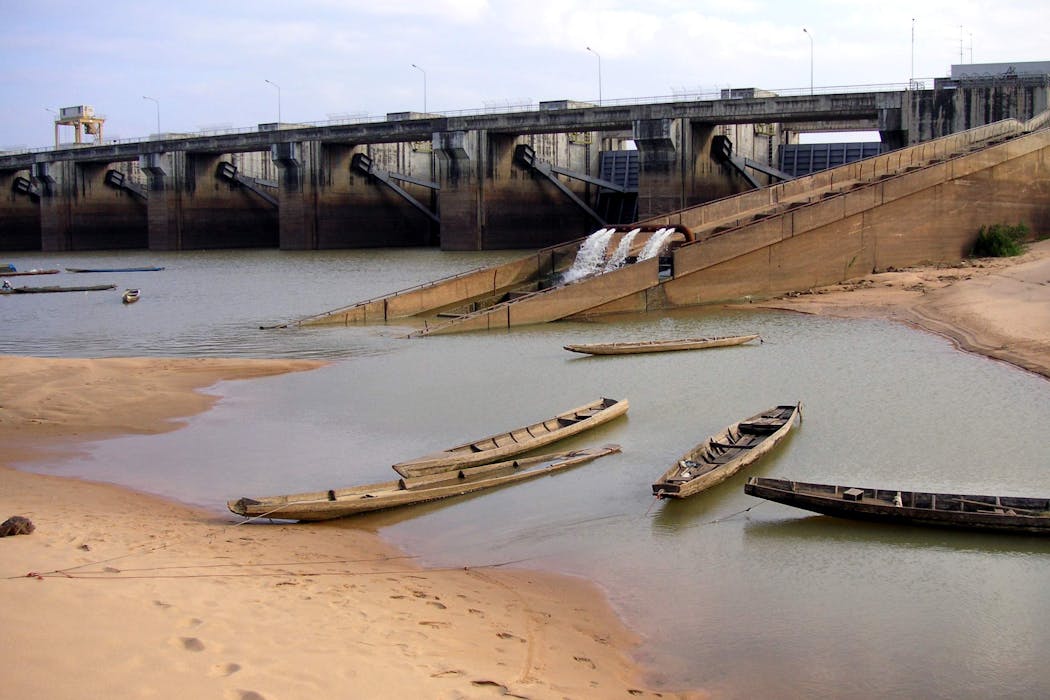
Pak Mun Dam in Ubon Ratchathani, Thailand. Sabrina Kathleen/Shutterstock

Thirty years after the Pak Mun dam was built in Thailand, the traditional way of fishing in the Khong Chiam district has completely stopped as the dam blocks the seasonal migrations of a wide range of fish.

Many men have had to leave their homes to find work elsewhere because they couldn’t fish or farm locally anymore, while their wives are often left alone to look after their children. People with disabilities and the elderly have not been included in compensation and livelihood rehabilitation programmes, even though they are among the groups most affected by changes in mobility, access to water and food systems.

My team and I have been documenting the knock-on effects of this dam development by carrying out interviews with people living in these communities. My research highlights that if the environmental consequences of dam building had been better predicted and monitored, a lot of the ongoing disruption could have been avoided.

In 1982, a environmental impact assessment for the Pak Mun dam was prepared by a team of Thai engineering consultants. Environmental impact assessments are used to identify, predict and evaluate the possible consequences of a proposed project before it begins. They have been in use for many years, but some governments bypass their recommendations.

If completed more rigorously, this assessment for the Pak Mun dam could have anticipated these negative social and environmental consequences and might have influenced decisions about the building and maintenance of this dam. But according to research, this impact assessment was weak.

One study noted that the environmental impacts of the dam – mainly on fish – were either unquantified or understated. Another study noted that the site location had moved and that required a new assessment rather than replying one the first one. The limits of this assessment has led to ongoing contestation between the central and provincial government and the affected communities and activists.

This is far from the only example of a lack of consideration for the long-term knock-on effects of dams on communities and nature. In 2025, the Indian government allegedly fast-tracked the construction of the enormous Sawalkot hydropower project on the Chenab river without conducting any environmental and social impact assessment.

Large-scale projects like this affect millions of people and the environment around them. Without ample impact assessments, they proceed without establishing just what effect they will have on the surrounding landscape, nature and communities. As a result, any negative consequences are not easily avoided.

While this new political dynamic of circumventing impact assessments is worrying, social and environmental impact assessments are valuable if used appropriately. As part of my research, I have spoken to dozens of impact assessment consultants and academics to assess the status quo.

By 2033, the global market for environmental impact assessments could be worth an estimated US$5.8 billion (£4.3 billion). While the impact assessment process is seen as valuable by consultants and academics, some of our interviewees worried that costly recommendations often get lost in the process of project implementation once the document has been produced.

Ideally, impact assessments should be based on scientific knowledge and involve substantial public participation and situated community knowledge, especially by those who are at risk of adverse consequences, as well as clear accountability mechanisms.

In practice, there are problems. Impact assessment is a political process; it is not based purely on evidence and scientific facts. It is influenced by the economics of dam building. Dams are often also important symbols of nationalism, so they hold high political status.

Without ensuring systematic follow-up to an impact assessment, it can simply become a paper chase to secure a development permit. With more consideration, the “afterlife” of impact assessments can be much more effective.

Who is responsible?

Who, in terms of responsibility, should be held accountable for shortcomings in the implementation of impact assessment plans? Should it be the government that should be responsible for making sure the different regulations and norms are followed?

Should it be the commercial banks, development banks and bilateral donors (such as foreign aid provided by the UK government’s Foreign Commonwealth and Development Office) that fund projects who should monitor the requirements they had elaborated? Or should it be the private sector?

My research shows that the responsibilities lie with all of these parties.

In most countries, most of the information and data is controlled by the proponents of building the dam. Project managers and engineers may be suspicious of external impact assessor consultants, so they do not always share the relevant information.

Civil society, ranging from local campaign groups and activist to non-governmental organisations, have pushed for standards and laws that ensure rules are followed during and after any impact assessment. For this to work, impact assessments need to be dynamic so responses to possible changing consequences can change.

When environmental policy and tools like impact assessments are being questioned, it is even more important to create a policy process that ensures long-term accountability for impact assessments and prevent further losses and damages to the communities and the environment.


Don’t have time to read about climate change as much as you’d like?

Get a weekly roundup in your inbox instead. Every Wednesday, The Conversation’s environment editor writes Imagine, a short email that goes a little deeper into just one climate issue. Join the 47,000+ readers who’ve subscribed so far.


The Conversation

Jeremy Allouche receives funding from the British Academy, for the project, Anticipatory evidence and large dam impact assessment in transboundary policy settings: Political ecologies of the future in the Mekong Basin. The author would like to thank the other team members, Professor Middleton (Chulalongkorn University Thailand), Professor Kanokwan Manorom (Ubon Ratchathani University, Thailand), Ass. Professor Chantavong (National University of Laos) & Dr. Kanhalikham (National University of Laos) for their input

ref. Dams can destroy lives and ecosystems. But it doesn’t have to be like this – https://theconversation.com/dams-can-destroy-lives-and-ecosystems-but-it-doesnt-have-to-be-like-this-270910