Novel ‘body-swap’ robot provides insights into how the brain keeps us upright

Source: The Conversation – Canada – By Jean-Sébastien Blouin, Professor, School of Kinesiology, University of British Columbia

Imagine driving a car with a steering that doesn’t respond instantly and a GPS that always reflects where you were a second ago. To stay on course, you must constantly infer how to steer the wheel from outdated information.

Our brains do exactly that every time we move: sensory signals reach the brain tens of milliseconds after an event and motor commands take similar time to travel to the muscles, which then need extra time to generate force. In other words, the brain is always working with “old news” and must predict the future outcome of every action.

This predictive ability is most impressive when we stand upright because it requires keeping a tall, top‑heavy body balanced on two small feet.

Balance challenges

Scientists have long known that neural delays make balance hard to control. Even in healthy young adults, it takes about one-sixth of a second for information from the feet, muscles and inner ears to reach the brain and for a corrective signal to return to the muscles. Simple physics models treat the body as a mass balanced around the ankles and predict that if the delay is too long, standing becomes impossible.

The physical properties of our bodies similarly shape how we move. Just as a large van steers more sluggishly than a compact car, a large person standing upright resists motion and feels sudden pushes or bumps less sharply.

To test whether the brain treats delayed signals similar to changes in body mechanics, a team at the University of British Columbia and the Erasmus University Medical Centre in the Netherlands built a life‑size “body‑swap” robot.
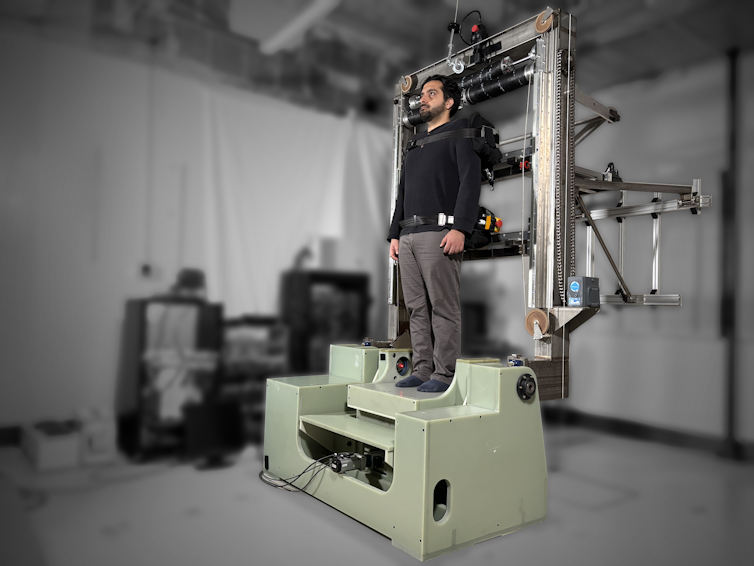
A man stands in a large piece of machinery.
A participant stands in the ‘body-swap’ robot at the University of British Columbia.
(Sensorimotor Physiology Lab/UBC), CC BY-NC-SA

Participants stand on two force‑sensing footplates and are secured to a padded frame. Motors move the frame in response to the forces they generate, making the whole system behave like their real body swaying under gravity.

Crucially, the robot can alter the simulated body mechanics on the fly: it can make you feel lighter or heavier, add or remove energy from your motion, or insert a delay between your forces and the motion you feel — mimicking the brain’s own sensory‑motor lag.

Three experiments

With this tool, researchers asked whether the brain treats time (delay) and space (body dynamics) independently, under three experiments:

1. Changing body dynamics and delays alter balance similarly: Participants stood while the robot inserted a 0.2‑second lag between their commands and resulting motion. That pause — a blink of an eye — caused larger sway and pushed many participants to a virtual “fall” boundary. Similarly, sway increased when the robot made the body feel lighter or added energy to the motion, much like a gust of wind pushes you forward.

2. Delays feel like altered body mechanics: With the delay turned off, participants adjusted their bodies’ mechanical properties until their sensation matched the delayed condition they had just experienced. They chose a lighter body or a setting that added energy. When they were asked to make the delayed condition feel “natural,” participants selected a heavier body or a setting that dissipated energy from the motion. Hence, tweaking the body’s mechanical properties can recreate or cancel the feeling of delayed information.

3. Improving balance under delay: Volunteers who never experienced the robot stood on it with the 0.2‑second delay present, combined with a heavier body or one that dissipated energy from the motion. Their balance improved instantly: sway dropped by up to 80 per cent and most participants no longer reached the virtual fall boundary.

Blending time and space

Taken together, the three experiments support one conclusion: the brain does not store separate solutions for “late information” and an “unstable body.”
Instead, it maintains a unified internal model that blends time and space into one representation of movement.

When sensory feedback is outdated and the body feels unstable, adding heaviness and dissipating energy from the motion restores balance. Conversely, making the body lighter or adding energy reproduces the instability caused by delays. In either case, a unified representation of balance is used to keep you upright.

These findings are more than a laboratory curiosity. As we age or when diseases damage long nerves, signals travel slower and are more disrupted, leading to balance deficits and a higher risk of falls. According to the World Health Organization, about one in three older adults falls each year, and falls are the leading cause of injury‑related hospital stays, costing health systems billions of dollars.

The body‑swap robot offers a new perspective to this problem: assistive devices and wearable exoskeletons that supply just enough “helpful resistance” the moment a person begins to sway can counteract the destabilizing effects of neural delays.

They also raise a broader question: have the body sizes of animals and the mechanics that compensate for neural delays evolved to enhance their survival?

The next time you lean over a sink or chat in a doorway, remember that your brain is quietly juggling time‑and‑body representations in the background. The fact that you never notice this balancing act may be the most astonishing finding of all.

The Conversation

Jean-Sébastien Blouin receives funding from the Natural Sciences and Engineering Research Council of Canada.

Patrick A. Forbes receives funding from the Dutch Research Council (NWO).

ref. Novel ‘body-swap’ robot provides insights into how the brain keeps us upright – https://theconversation.com/novel-body-swap-robot-provides-insights-into-how-the-brain-keeps-us-upright-270846
The race to mine the Moon is on – and it urgently needs some clear international rules

Source: The Conversation – UK – By Adam Urwick, Junior analyst, RAND Europe, RAND Europe

The vision of mining space for resources is no longer science fiction. The Moon’s proximity to Earth and the presence of precious resources make it an increasingly attractive prospect for exploitation.

Resources thought to be present on the Moon include uranium, potassium,
phosphorus, water ice, platinum group metals and helium-3. The last of these is a rare isotope that could help power relatively clean fusion energy in future.

There are billions of dollars in it for companies able to kickstart mining operations, even if such returns are still years away. Technological breakthroughs in launch and exploration capabilities are occurring at breakneck pace. In the US, Seattle-based startup Interlune, working with Iowa industrial manufacturer Vermeer, is developing an electric lunar excavator designed to extract helium-3.

Their prototype can process up to 100 metric tons of lunar soil per hour. Interlune plans a 2027 mission to confirm helium-3 concentrations before deploying a pilot plant in 2029.

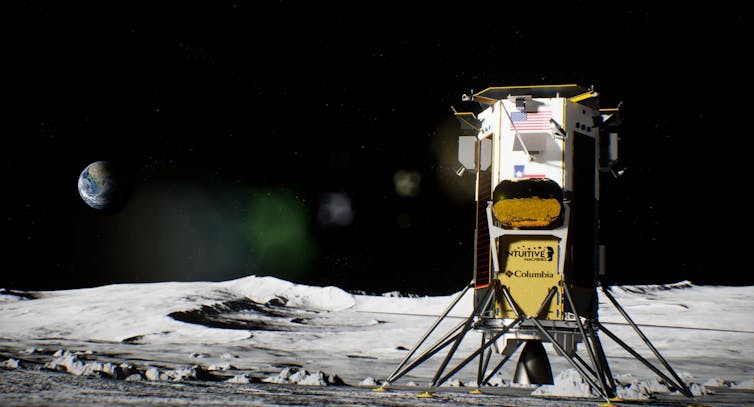
The Pittsburgh-based space company Astrobotic is developing the Griffin-1 lander to transport a rover designed by the California-based company Astrolab for surface analysis. A different lander called Nova-C,, built by Intuitive Machines in Houston, is being designed to conduct analysis of lunar soil and rock under Nasa’s Prism programme. Prism is a science and technology initiative designed to support various aspects of lunar exploration.

Meanwhile, Nasa’s Polar Resources Ice Mining Experiment 1 (Prime-1), which was carried to the Moon this year by an Intuitive Machines lander, demonstrated Honeybee Robotics’ Trident drill on the lunar surface. Trident both drills and extracts samples of lunar soil.

SpaceX’s giant Starship rocket, which has a large payload capacity and reusable design, could send multiple large experiments to the Moon, and cut launch costs by as much as US$250–US$600 (£188-£451) per kg. Assuming it overcomes its teething problems, Starship could be the game changer that makes large-scale lunar infrastructure and resource missions economically viable.

While US-led initiatives have been commonplace in lunar exploration, new political and corporate players are emerging globally. China aims to achieve human lunar landings by 2030, with plans for the robotic construction of lunar bases in partnership with Russia and other nations. This would establish an international Lunar Research Station by 2035.

Nova-C
Intuitive Machines’ Nova-C lander is being used to test capabilities relevant to mining.
Intuitive Machines

Australia’s 2026 rover will put its mining expertise to work extracting oxygen and collecting soil on the Moon, while Japan’s Slim mission focuses on precision landings that can target resource-rich areas. At the same time ispace, a Japanese company, is developing a mini rover to explore lunar resources.

In the EU, the Argonaut programme is developing the Esa (European Space Agency)‘s first lunar lander, with the involvement of a growing body of industrial enterprises across Europe. These missions are critical for gathering data and capabilities needed to understand what’s actually available on the Moon and how we might one day mine it.

Frozen treaties

Yet despite evolving technical capabilities, the international legal framework governing exploitation of the Moon is both very limited and frozen in the Cold War era. The 1967 outer space treaty established that space cannot be subject to national appropriation, but debate remains as to whether this prohibition extends to private entities extracting resources.

The treaty’s article I declares exploration shall benefit “all mankind”, yet provides no mandatory mechanism for sharing benefits, leaving it entirely to nations that have conducted activities to decide how, or whether, to share benefits at all.

The 1979 Moon agreement attempted to designate lunar resources as the “common heritage of mankind” and establish an international regime for exploitation. This agreement received only 15 ratifications, and none from spacefaring powers. The “common heritage” concept met fierce opposition from industrialised countries, who viewed it as restricting their technological advantage.

National legislation, as well as other types of agreement, has filled the vacuum. The US Commercial Space Launch Competitiveness Act of 2015 granted American citizens rights to extract space resources. Luxembourg, UAE and Japan followed with similar laws. The Artemis accords of 2020, which are non-binding arrangements between the US and other countries, have provided for voluntary coordination among like-minded states. They have established principles for lunar activity including transparency and safety zones.

However, they function more as a coalition agreement than a universal law. Clear
international property-rights frameworks would determine which nations capture value. The current state of ambiguity primarily benefits those with clearer frameworks and first-mover advantages, and indicates a missed opportunity for equitable benefit-sharing from space resources.

The pursuit of profit raises paramount scientific and environmental concerns.
Astronomers caution that large-scale mining activities could disrupt ongoing research and preservation of the lunar environment, leading to calls for development of comprehensive lunar laws and regulations to manage these activities responsibly.

Esa’s push for a zero debris charter, which it hopes will gain global recognition by 2030, reflects a growing awareness that mining and resource use in space must go hand in hand with responsible behaviour.

As lunar mining and exploration accelerate, the security dimension also becomes
increasingly complex and fraught, with the potential for conflict between nations. Valuable lunar resources such as water ice and rare metals are concentrated in limited, highly contested regions.

In the absence of internationally binding governance agreements, the risk of overlapping claims, operational interference and even direct confrontation is real. Exclusion zones and safety zones around mining sites could serve as flashpoints for disputes over access, resource rights and commercial interests.

The possibility of competing governance frameworks, such as the Artemis Accords and the Outer Space Treaty, to manage claims could further exacerbate the risk of conflict. The urgent need for international cooperation and transparent, equitable frameworks is clear.

The international community stands at a crossroads. The technology enabling lunar
resource extraction is arriving faster than most anticipated. Policymakers and legislators have a waning opportunity to design and implement governance that keeps pace with innovation and growing appetites for lunar resources.

Binding international agreements – particularly between the great space powers – which emphasise principles of stewardship, clarify access rights and support common benefits from lunar development would ensure the Moon becomes a proving ground for the equitable and sustainable development of space.

The Conversation

The authors do not work for, consult, own shares in or receive funding from any company or organisation that would benefit from this article, and have disclosed no relevant affiliations beyond their academic appointment.

ref. The race to mine the Moon is on – and it urgently needs some clear international rules – https://theconversation.com/the-race-to-mine-the-moon-is-on-and-it-urgently-needs-some-clear-international-rules-270943

What Labour’s migration reforms mean for LGBTQ+ asylum seekers

Source: The Conversation – UK – By Diego Garcia Rodriguez, Leverhulme Research Fellow, Faculty of Social Sciences, University of Nottingham

Gwoeii/Shutterstock

The UK government’s recently-announced plan to overhaul the asylum system rests on the idea that protection for refugees should be temporary and subject to regular review.

Currently, refugees are usually granted five years’ permission to stay, after which they can apply for settlement (indefinite leave to remain). Under the new proposals, recognised refugees would first receive “core protection” – 30 months’ leave, renewable after review. The government is also proposing a system that would make some people wait 20 years for settlement.

Like in Norway and Denmark, the UK is proposing allowing refugee status to be revoked and people deported if their country of origin is deemed to have become “safe”. In 2021, Denmark judged parts of Syria safe to return to and revoked or refused renewals for hundreds of Syrians, even as charities warned that returnees still faced serious risk.

For LGBTQ+ people, these plans present particular risks that could undermine their safety and ability to live openly.

Home Office data shows that, in 2023, 1,377 asylum claims (2% of the total) included sexual orientation as part of the basis for asylum. Equivalent gender identity statistics are not available.

For these asylum seekers, “safety” does not switch on when their countries’ laws change or a conflict stops. States can look stable on paper while people remain unsafe in their family homes, neighbourhoods, workplaces and at police stations.

The Home Office uses its official guidance about countries to evaluate whether it would be “safe” to return someone. It also might refer to relevant case law from the Upper Tribunal, a UK court that deals with immigration and asylum cases.

Some nationalities are treated as coming from “designated” safe states under British law, which can affect how asylum claims are processed. LGBTQ+ asylum charities have argued that countries are sometimes deemed safe even when they are dangerous for LGBTQ+ people.

Asylum seekers waving out of the window of a hotel in London.
The UK wants to end the use of hotels to house asylum seekers.
BalochLenses/Shutterstock

In my research, I have encountered such examples. For example, I have met LGBTQ+ Namibians whose asylum claims were rejected after Namibia’s supreme court recognised foreign same-sex marriages (though same-sex marriage is still not legal in the country), despite evidence of well-founded fear of persecution and a lack of state protection.

My research interlocutors from countries labelled “safe” emphasised the differences between official “safety” and everyday threats. An Indian lesbian woman explained: “Being who I am in India, I wouldn’t be safe there, that’s why I left after my family started to threaten me.”

A lesbian woman speaking from Brazil, where she was deported from the UK after initially fleeing due to violent threats, said: “People think Brazil is safe, but it’s not, and you’re lucky to be alive if you’re LGBT here … It’s not about it being legal or illegal, you need to look at real life, what’s going on with people around you, churches, your boss.”

Both global and local non-profit organisations that support LGBTQ+ people have recorded high levels of violent deaths of LGBTQ+ people in Brazil, including the most killings of trans people in any country for 18 consecutive years.

The UN refugee agency has warned that misusing “safe country” concepts risks breaching the principle of non-refoulement: the duty not to return someone to persecution.

Under the UK’s asylum proposals, once a country is declared safe, refugees seeking to remain in the UK would have to prove that it would be dangerous for them to return.

If the possibility of being deported remains for 20 years, many will plan for life back under secrecy and return to the “closet” to stay safe. This may complicate their asylum applications, as the Home Office expects that claimants live “openly” as LGBTQ+ when assessing their applications.


Read more:
Many people think it’s impossible to be LGBTQ+ and religious – this ‘homosecularism’ is dangerous for asylum seekers


Increased precarity

LGBTQ+ claimants tend to have thin safety nets. Family support is often absent because relatives are part of their persecution. While other claimants lean on organisations linked to their ethnic communities, I have found in my work that many LGBTQ+ people avoid them due to fear of stigma or violence.

A lesbian Nigerian woman told me that staff at a community organisation described same-sex relationships as something to “cast out”. Another said: “Not all people are going to accept you as you are”. This does not mean the UK is not welcoming or safe. Many asylum seekers have found support in LGBTQ+ organisations, inclusive churches and wider community spaces.

Additionally, the government’s plans to remove its obligation to provide accommodation and support for asylum seekers could make their situations more precarious – leading to homelessness, exploitative “sofa surfing” and risky survival strategies.

A fair asylum system should not declare whether a country is “safe” but, instead, assess whether an asylum seeker would be safe if returned there. That is the basic logic of refugee protection under the refugee convention, which says that states must not “expel … a refugee” to a place “where his life or freedom would be threatened”. In the UK, “safe country” lists are a modern policy tool introduced in the late 20th century as part of domestic law.

If Labour’s reforms turn refugee protection into a renewable status, the predictable result is more wrongful returns. This risks establishing a misleading picture of “real” refugees as only those fleeing wars, dismissing queer claimants facing targeted persecution.

The Conversation

Diego Garcia Rodriguez receives funding from the Leverhulme Trust. He is a Research Fellow at the University of Nottingham and a trustee at the LGBTIQ+ asylum charity Time To Be Out.

ref. What Labour’s migration reforms mean for LGBTQ+ asylum seekers – https://theconversation.com/what-labours-migration-reforms-mean-for-lgbtq-asylum-seekers-271239

Driverless taxis are heading to the UK, but it’s still not clear who to blame when something goes wrong

Source: The Conversation – UK – By Paurav Shukla, Professor of Marketing, University of Southampton

Driverless in San Francisco. Tada Images/Shutterstock

Driverless taxis are a bit like buses. You wait ages for one, and then a fleet arrives all at once. The US firms Waymo and Uber have both said their vehicles will be on the streets of London in 2026.

But as this transport technology speeds towards the UK, it seems to be outpacing any widespread agreement over a basic social contract. Robots are due to arrive on British roads without a clear sense of who is responsible when things go wrong.

Imagine you are in the backseat of a driverless taxi, responding to messages on your phone, when suddenly your AI chauffeur crashes into something – or someone. In the silent moments that follow, there is no driver to turn to.

Is the car maker to blame or the programmer who wrote the software? Perhaps it’s the app company that organised the ride. Is it the city authority that permitted the journey, or even you, the passenger, for failing to intervene?

For now, the answer isn’t clear to the public.

Most people don’t know who pays out, or who apologises, when a driverless taxi makes a mistake. And this isn’t just a legal technicality – it is the fault line under a trillion-dollar industry, which could be stopped in its tracks by uncertainty.

Our research reveals that “liability communication” – how companies and authorities explain who is legally in charge and under what conditions – for autonomous vehicles (AVs) is a mess. It is fragmented, riddled with legal jargon and unclear.

This is partly down to the caution with which many western economies – including the US – are approaching AV adoption. In the UK, the government’s pilot scheme is moving ahead slowly.

Others are racing ahead. China, for example, with its high tolerance for experimentation, has created a booming AV ecosystem, with over 32,000km of roads available for AV testing, and 16,000 test licences issued. AV trials have been normalised while legal frameworks are still being drawn up.

But while the UK’s approach may seem sensible, caution without clear communication risks feeding scepticism rather than confidence in the future of driverless cars.

Safety feature

Making the case for safety also needs to be localised. Although enthusiasts highlight millions of safe rides in the US, there’s no point referencing the safety record of AVs in a city built around a grid system that is completely different to the narrow and winding old streets of the UK.

If safety is uncertain, uptake will probably stall, especially in messy streetscapes. And they don’t get much messier than London’s irregular roads.

Uncertainty also brings tension. Some politicians and companies appear fairly bullish, promising a safety revolution and tens of thousands of new jobs. Meanwhile, London’s own taxi trade warns of chaos, citing stalled vehicles, accessibility worries and glaring safety gaps.

London taxi with IHouses of Parliament in background.
Who’s in the driving seat?
Sergii Figurnyi/Shutterstock

Our review shows that this tension is partly to do with poor communication, including gaps in messaging over things like safety and risk, or compensation and complaints. The language apparently aimed at consumers is often ambiguous or overly technical instead of being accessible.

There are other simple steps that UK authorities could take to make things less confusing. One is that every driverless taxi ride should begin with a short, plain-English briefing about who is legally responsible for the journey.


Read more:
‘Robot’ buses could bring more environmental benefits than public transport with drivers


The wording should be composed with consumer groups and accessibility experts, not just lawyers and engineers. And before you even book, the app should explicitly state who insures the vehicle, the software and the ride itself.

A country that gets the communication about AVs wrong will fight every hiccup on social media, at town halls and in the courts. A country that gets it right will turn each minor incident into proof that the system, and the people behind it, are accountable.

To achieve this, liability communication needs to be treated as a safety feature, not a legal footnote. Only then will people be able to truly benefit from the AV promise of cleaner, safer, accessible urban mobility. But the wording needs to be designed for general consumers, not lawyers. Without this, AV adoption risks becoming a slow-motion pile-up.

The Conversation

Paurav Shukla received funding from Trustworthy Autonomous Systems Programme, funded by the UKRI Strategic Priorities Fund.

Tugra Akarsu does not work for, consult, own shares in or receive funding from any company or organisation that would benefit from this article, and has disclosed no relevant affiliations beyond their academic appointment.

ref. Driverless taxis are heading to the UK, but it’s still not clear who to blame when something goes wrong – https://theconversation.com/driverless-taxis-are-heading-to-the-uk-but-its-still-not-clear-who-to-blame-when-something-goes-wrong-269233

​From head to mistletoe: the curious biology of elves

Source: The Conversation – UK – By Michelle Spear, Professor of Anatomy, University of Bristol

Roman Samborskyi/Shutterstock.com

As Christmas Eve draws near, we’re reminded of the tireless elves behind the scenes, toiling in workshops to bring festive magic to life.

Imagine Santa’s elves not as fantasy figures but as highly adapted beings designed for the unique demands of their world. From enhanced resilience to happy hormones and efficient energy production, each adapted anatomical feature serves a purpose, allowing them to work joyfully, and without pause, in a cold climate that would challenge the rest of us.

Through the lens of this imagined elf, we take a look at general anatomy, using scientific principles and a nod to the Will Ferrell movie Elf to fill in some of the festive details.

Ho-ho-hormones

The remarkable cheer and endurance of an elf can be attributed to a finely tuned endocrine system that supports both their emotional resilience and energy needs.

Their pituitary glands probably produce high baseline levels of serotonin and endorphins – often called “feel-good hormones” – helping them maintain a naturally cheerful disposition even under the pressures of Christmas deadlines.

Beyond individual happiness, elves surely must thrive on teamwork in the workshop. An elevated capacity to release oxytocin, the “bonding hormone”, helps foster strong social connections, promoting a collaborative and harmonious working environment.

With extra oxytocin receptors in the brain, elves would quickly form bonds with each other, boosting morale and creating a positive atmosphere that is crucial for high-stress, close-quarters work. Also essential for good elf and safety.

Presumably, elves would require adaptable sleep patterns to handle the long hours leading up to Christmas. Their pineal glands could produce a specialised form of melatonin, allowing them to reset their internal clocks on demand.

This adaptation would support both sustained alertness during extended shifts and quick recovery naps, keeping them fresh and focused throughout the season.

Good skin and elf care

In the north pole’s long winters, elves may rely on their skin’s heightened ability to synthesise vitamin D even in low-light conditions. This helps regulate mood and energy by supporting serotonin production, which promotes emotional stability, and enhancing mitochondrial function for efficient energy production.

Their skin might also be rich in melanin that adapts to seasonal light changes, maximising their sunlight absorption without risk of seasonal-affective disorder.

A dark polar night tableau.
Elves’ skin is perfectly adapted to dark polar nights.
Esa Ylisuvanto/Shutterstock.com

Sugar and spice

The elf digestive system is probably optimised for processing high-carbohydrate, high-sugar diets without succumbing to the energy crashes humans might experience.

To thrive on a diet rich in sweets, elves would rely on high levels of sucrase, maltase and amylase — enzymes that break down sugars and starches quickly. This enzymatic boost allows for rapid glucose release, sustaining their energy without the usual sugar crash, and keeping them fuelled for long hours in the workshop.

Elves’ livers could also play a crucial role, storing vast reserves of glycogen for quick energy release when needed, especially during the busiest days of the festive season. Their small intestines might boast enhanced villi – tiny, finger-like projections that line the gut – increasing the surface area for nutrient absorption and ensuring every candy cane is put to good use.

Elves might have highly efficient mitochondria – the tiny powerhouses inside cells that convert food into energy – allowing them to produce energy from nutrients more effectively. This could keep their energy levels steady without sharp crashes, helping them remain upbeat and active throughout their lengthy work shifts.

Cold comfort

Thriving in the subzero temperatures of the north pole requires more than a good set of thermals. Elves’ circulatory systems probably feature counter-current heat exchange mechanisms – where warm blood flowing out heats up cold blood coming back in – similar to those found in penguins’ feet and human testicles, to minimise heat loss in extremities. Blood vessels in their hands and feet would work in tandem to recycle warmth.

Elf respiratory systems are equally impressive, designed to maximise oxygen intake in cold, thin air. With larger-than-average nasal cavities lined with specialised mucous membranes, elves can warm and humidify incoming air, protecting their lungs from the frigid environment.

Hear comes Santa Claus

Acute hearing would be essential for quality control and ensuring every toy meets Santa’s exacting standards.

In a bustling workshop, elves need heightened sensory abilities to stay on task. Their ears, already iconic, might also feature internal adaptations – enhanced auditory canals for picking up subtle sounds.

Elf eyes, adapted for the low-light conditions of the winter months, would probably boast a high density of rod cells – the light-sensitive cells in the retina that help us see in darkness – allowing them to see clearly even during the longest polar nights. Perhaps they’ve also evolved a reflective layer behind the retina, similar to a cat’s tapetum lucidum, giving them a distinctive twinkle and ensuring no detail escapes their gaze.

Sleighing it

An elf’s musculoskeletal system would need to be both robust and specialised for the physical demands of their job. Working long hours crafting toys requires dexterous hands supported by flexible yet strong finger joints, enhanced by tendons and ligaments adapted to repetitive tasks. To avoid the perils of repetitive strain injuries, elves might have increased collagen production, keeping their joints supple and resilient.

With an optimised ratio of fast-twitch muscle fibres (for quick movements) and slow-twitch fibres (for endurance), elves would be perfectly suited for bursts of energy and sustained activity alike, ensuring they can switch seamlessly between nimble toy-making and the occasional snowball fight.

So this Christmas, as you admire the handiwork of Santa’s helpers, spare a thought for the ingenious anatomical adaptations that make the merry work of elves possible.

The Conversation

Michelle Spear does not work for, consult, own shares in or receive funding from any company or organisation that would benefit from this article, and has disclosed no relevant affiliations beyond their academic appointment.

ref. ​From head to mistletoe: the curious biology of elves – https://theconversation.com/from-head-to-mistletoe-the-curious-biology-of-elves-269155

Europe must reject Trump’s nonsense accusations of ‘civilizational erasure’ – but it urgently needs a strategy of its own

Source: The Conversation – UK – By Francesco Grillo, Academic Fellow, Department of Social and Political Sciences, Bocconi University

European leaders must agree on how to respond to the accusation that their continent faces “civilizational erasure”. These were the strongest words used in the most strongly-worded national security strategy ever released by a US government, making it clear that allyship is no longer a given.

And yet, what exactly does “civilizational erasure” mean? The term seems to come straight out of science fiction and deserves qualification. What kind of civilisation is being erased?

The document released by the US government explicitly specifies that this is not about economic decline so much as the “values” that make European nations “reliable allies” to the US.

The implication is that the current administration is worried that “life, liberty and the pursuit of happiness” are no longer foundational to Europe as they were to America. In addition, it seems that Trump is worried that migration is the cause of this problem.

This is curious. As far as “freedom of speech” and “political liberty” go, even the ranking published annually by the hyper libertarian Washington-based Cato Institute acknowledges that six of the top ten most free countries of the world are from the EU. In contrast, the US is tied with the UK at number 17.

The evidence on being “happy” is even worse for Americans (they are ranked 24th by Gallup) and even better for Europeans (four of the top five happiest nations in the world seem to be in the EU, and the fifth is Iceland).

Perhaps the most dangerous symptom of civilizational decline is apparent when we consider the parameter of the ability to pursue “life”. According to the OECD, in 2024, the US spent more on health than any other country per person at over U$12,000 (£9,000) per year (Switzerland, in a distant second place, at US$8,000). Yet Americans’ life expectancy is six years less on average than Europeans’.

Last but not least, migration. The US government seems concerned that too many immigrants will make Europe unrecognisable, but it is the United States that hosts the largest number of first or second-generation immigrants (including Donald Trump, whose mother and four grandparents were all born in Europe). The security strategy’s diagnosis seems oddly oblivious to the role migrants played in building American success.

How should Europe respond?

It is, thus, difficult to see how Europe is being erased. It is nevertheless true that Europe has a problem. Whereas the US has a strategy, Europeans are very far from even agreeing on what their own interests are.

As wrong as the US may be to attempt to establish a strategy on Europe’s behalf, this lack of vision makes it increasingly unsustainable for Europe to remain one of the best places to be born or to live.

Three messages stand out clearly from the strategy. First, the US does not want to be the world’s sheriff and is not going to pay to stabilise the world. There is even the implication here that the US is happy for the world to be divided into cold war-style “areas of influence”.

Second, the US now believes it is a mistake to think exporting democracy or liberalism maximises the chance of world peace and will no longer pursue this agenda. Third, the US believes that nation states are the cornerstone of any possible world order and that multilateralism (a notion encompassing a diverse range of institutions from the UN to the EU) is undermining that.

While Europe does not need to agree on these assertions, it can use each of the three US points to come up with a response.

Friedrich Merz, Keir Starmer,  Volodymyr Zelenskyy and Emmanuel Macron sitting in front of their national flags.
European leaders gathered in London to discuss the path ahead after the US published its security strategy.
Flickr/Number 10, CC BY-NC-ND

It should, for example, be relatively happy to fill the gap left by US retreat. This would see Europe equipping itself to contribute to stability in Europe, North Africa and the Middle East. Europe should probably also acknowledge that the Americans have a point when they say that “exporting democracy” does not necessarily buy peace.

Second, Europe can even agree with the US that “exporting” institutions and market regulations is complicated and not effective. We must simply focus on protecting human rights as much as possible, without asking other countries to imitate our model.

Third, and most important, it is true that international organisations are not working. But Europeans should answer US rhetoric not by going back to small nation states (as the security strategy suggests) but by assuming the leadership of a radical reform of multilateralism.

The international organisations that Trump has criticised, must rapidly become more capable of delivering solutions efficiently. This must include the EU because it’s obvious that any kind of strategy cannot be led by 27 individual nations working separately.

European civilization is not imploding. It is, however, true that such a civilization requires financial, political and defence resources. These were once bought cheaply from allies who no longer wish to subsidise Europe’s way of life.

It is time for a European security strategy. And one whose message, in a nutshell, is that Europeans are ready to lead and thrive in the changed geopolitcal climate of the 21st century.

The Conversation

Francesco Grillo is affiliated with Vision, the think tank,

ref. Europe must reject Trump’s nonsense accusations of ‘civilizational erasure’ – but it urgently needs a strategy of its own – https://theconversation.com/europe-must-reject-trumps-nonsense-accusations-of-civilizational-erasure-but-it-urgently-needs-a-strategy-of-its-own-271763

New cancer therapy brings remission for patients with deadly T-cell leukaemia

Source: The Conversation – UK – By Justin Stebbing, Professor of Biomedical Sciences, Anglia Ruskin University

WikeSandra/Shutterstock.com

A small group of patients with an otherwise incurable form of T‑cell leukaemia have seen their cancer driven into remission by an innovative form of immune therapy.

The treatment uses T-cells – a type of white blood cell – from a healthy donor, re-engineered in the lab to recognise and attack leukaemia cells. Unlike personalised cancer therapies made from each patient’s own cells, these can be prepared in advance as an “off-the-shelf” product and given quickly to people in urgent need.

For families facing a disease that has returned after every standard treatment, a ready-made therapy that can clear leukaemia to undetectable levels is a major step forward. The latest results of the first 11 patients, treated at Great Ormond Street and King’s College Hospital, have just been published in the New England Journal of Medicine.

The scientific trick here is particularly clever. In T‑cell leukaemia, the cancer itself is made of T-cells, so simply adding more T-cells from outside would normally cause friendly fire: the therapeutic cells would attack each other as well as the cancer or be rejected by the patient’s immune system. By using gene‑editing tools, researchers have switched off or altered key molecules on the donor T-cells so that they can slip past the patient’s immune defences and focus their attack on the leukaemia cells.

In early studies, some patients with no remaining treatment options achieved deep remissions, where even sensitive tests could no longer detect leukaemia. This then opened the door to a stem cell or bone marrow transplant from a donor, which remains the only realistic route to a long‑term cure for these patients.

T-cells explained.

Nuance lost in the media coverage

For the non-expert, it is tempting to see headlines about “reversing incurable cancer” and assume this is a magic bullet that will soon replace chemotherapy or radiotherapy. The truth is both more modest and, in some ways, more impressive.

This treatment is not designed to be the first thing given to every person with leukaemia. It is a specialist option for the few whose cancer has resisted or returned after standard treatments. In that setting, where the alternative may be palliative care alone, having an extra step on the ladder – one more line of defence – can be life changing, even if it is not perfect.

Another point often lost in media coverage is that this therapy is a bridge, not a destination. In the reported cases, the goal was to reduce the cancer burden enough to make a stem cell transplant feasible.

The engineered T-cells are not expected to provide lifelong control by themselves. Instead, they act as a very powerful but temporary strike against the leukaemia, buying time for the patient to receive a transplant, which can then rebuild a healthy immune and blood‑forming system.

That combined strategy – intensive but time‑limited immune therapy, followed by transplant – is what offers a realistic chance of long‑term survival for some of these patients.

Here, life after such treatment is rarely straightforward. A stem cell or bone marrow transplant can save a life, but it is also one of the most demanding procedures in modern medicine. In the months afterwards, patients are at high risk of serious infections, because their new immune system is still immature and may also be suppressed by drugs used to prevent rejection.

Many people experience profound fatigue, weight loss and emotional distress. A significant number spend repeated spells in hospital coping with complications such as graft‑versus‑host disease, where the donor immune cells attack the patient’s own tissues.

Even years later, survivors may live with chronic skin, gut or liver problems, hormonal changes, fertility issues, or the psychological impact of prolonged illness and uncertainty.

From that perspective, it is important not to present this new T‑cell treatment as a simple one‑time cure, after which life instantly returns to normal. For some patients in the New England Journal of Medicine “case series” (a report on a small set of patients), the therapy was part of a long, difficult journey that had already included multiple rounds of chemotherapy and hospital admissions.

Adding an experimental immune therapy and then a transplant increases both the chances of survival and the complexity of aftercare. After treatment, care isn’t just about checking whether the leukaemia has returned. Patients often need lifelong monitoring for late effects, vaccinations to retrain their new immune systems, and support with returning to work, study and family life.

A transformation hard to overstate

At the same time, for those people and their families, the gains are immense. To walk out of hospital after being told that nothing more could be done, and then later hear the words “no evidence of leukaemia”, is a transformation that is hard to overstate.

Parents describe seeing their children go back to school or play sport. Adults talk about being able to plan a holiday or think about the future again. These very human milestones embody the promise of the science far more clearly than any technical description of gene editing or immune receptors. Yet they rest on decades of painstaking lab work, safety testing and thoughtful choices by doctors, and on patients and families willing to take part in experimental treatments when the outcome is uncertain.

There is also a wider significance beyond this particular leukaemia. If donor‑derived, gene‑edited T-cells can be made safe and effective for one rare and aggressive cancer, the same concept might be adapted for other blood cancers or even some solid tumours.

An off‑the‑shelf cell therapy that can be stored, shipped and given in many hospitals could be far more accessible than bespoke therapies that rely on each patient’s own cells, which are complex and slow to manufacture. That said, scaling up production, ensuring the cells are available equitably, and managing the costs will be major challenges for health systems.

So, where does that leave the public trying to interpret dramatic headlines? It helps to hold two ideas in mind at once. First, this is an extraordinary scientific and clinical achievement for a group of patients who had very few options left, offering real hope where previously there was almost none. Second, it is not a universal cure, and it comes at the price of intense treatment and long‑term follow‑up.

The most honest way to describe it is as an extra lifeline for some people in very specific circumstances – a powerful new tool added to an existing toolbox, not the end of cancer as we know it. That may sound less dramatic than “reversing the incurable”, but for the families involved, it can mean everything.

The Conversation

Justin Stebbing does not work for, consult, own shares in or receive funding from any company or organisation that would benefit from this article, and has disclosed no relevant affiliations beyond their academic appointment.

ref. New cancer therapy brings remission for patients with deadly T-cell leukaemia – https://theconversation.com/new-cancer-therapy-brings-remission-for-patients-with-deadly-t-cell-leukaemia-271643

Farmers and supermarkets worry that extreme weather will stop food getting to consumers – here’s what needs to change

Source: The Conversation – UK – By Mohammed F. Alzuhair, Doctor of Business Administration Candidate and Researcher, Durham University

www.hollandfoto.net/Shutterstock

Storm Amy with its gusts of nearly 100mph brought heavy rain, fallen trees, and transport disruption across parts of the UK in October. Shortly after, a cold spell brought frost risks in several areas. The shift from flooding to frost showed how quickly farmers’ access to fields, harvesting and transport can be disrupted.

It also revealed how heavily the food chain depends on clear, connected information when conditions change suddenly. Without improvements, in this type of extreme weather, supermarkets risk running short of food.

Extreme weather, like the floods and high winds of Storm Bram on December 9, is reshaping UK farming. A recent survey found that 87% of farmers have seen lower productivity because of droughts, floods or heatwaves, and major retailers now link higher food prices to weather-related harvest losses.

A recent UK assessment of resilience in the systems delivering food from farms to shops also identifies how much pressure severe weather places on production and transport.

Storm Amy exposed that clearly. It left fields too muddy for machinery and blocked rural access roads in several areas. Harvesting was paused and collections rescheduled because vehicles could not operate safely or reach farms by normal routes.

When many farms face the same conditions at once, produce reaches distribution centres later and waste risks rise. The storm illustrated how quickly weather can unsettle the flow of food, and how much depends on clear, connected information when conditions shift suddenly.

How information moves through the system is important. Farmers may know frost is coming, but not whether access roads are open nearby, whether rivers are rising in their region, or whether retailers are shifting collection times. Each part of the chain acts on its own information, so decisions are made later than they need to be.

A shared early-warning system could change that by giving farmers, retailers and public agencies (such as local authorities) the same practical signals at the same time. Information about soil conditions, water availability, severe-weather alerts and access, could help the food system can adjust earlier and avoid possible food shortages.

Food is already classified as part of the UK’s critical national infrastructure, meaning disruptions can affect essential services. Projections from the Met Office, the UK’s weather and climate science agency, suggest Britain will face hotter, drier summers and warmer, wetter winters.

They also warn of more frequent extreme events. Even as intense rain falls in some areas, reservoirs in parts of south-east England are entering winter below typical levels, showing how uneven rainfall can leave soils saturated while water storage remains tight.

The rapid shift from heavy rain to colder conditions illustrates what the Met Office describes as compound events – hazards arriving close together that can cause greater disruption than either would on their own. For farmers, this can mean managing soaked ground one day and protecting crops from frost the next, all while keeping collections and deliveries on track.

How Storm Amy affected one farmer.

Data that doesn’t connect

Farmers already monitor soil moisture, field conditions and crop status. Public agencies track rainfall, river levels and flood alerts. Retailers have complicated systems that include transport networks and assessing expected demand. But these numbers sit in different systems, often using different formats, making them difficult to bring together quickly.

At its core, this is a problem of systems not being able to talk to each other when it matters. Work on the food data transparency partnership (which brings together views from government departments and industry) highlights the need for common standards.

Technical groups make the same point – that inconsistent formats and definitions prevent organisations from forming a clear shared view of what is happening on the ground.

Each set of data helps in isolation; the difficulty is that they are not easily viewed together.


Read more:
The UK’s food supply is more fragile than you might think – here’s why it should be a national priority


Supermarkets want change too

In November, Tesco’s UK chief executive, Ashwin Prasad, called for a national framework for farm data, noting that 96% of farmers say inconsistent standards make planning harder. When both the UK’s largest retailer and its suppliers highlight the same barrier, it suggests a deeper, system-wide issue rather than an isolated concern.

Government plans for revising its agricultural policy is starting to acknowledge these issues. There are pilot schemes testing the use of shared environmental data on farms. And the food data transparency partnership is working on more consistent data rules. These efforts are important foundations, but recent events show that more practical, real-time coordination is still needed, especially in emergencies.

Public agencies hold information that no other part of the system can access: regional transport pressures, infrastructure constraints and emergency responsibilities. They are also required to assess climate-related risks under government reporting standards which will start to be introduced in 2026. These assessments depend on accurate, timely data, something that becomes far harder to provide when information is fragmented.

With clearer and more connected information, government bodies could identify which rural roads matter most for moving perishable goods, direct targeted support to farmers when severe weather threatens crops, spot pressure points when multiple regions face disruption, and plan long-term investments in flood management, soil health and water resources.

Why early-warning systems are needed

The UK already has many of the components needed for a modern, connected food-information system, detailed monitoring on farms themselves, national forecasting and sophisticated retail logistics. The priority now is to bring these parts together.

A shared early-warning layer could make a difference. It would not replace existing tools or farmers’ experience, but provide a small set of common signals, soil conditions, water availability, severe-weather alerts and key access-route issues, available to everyone at the same time. To work in practice, it must also ensure that farmers retain clear control over how their data is used so that trust and coordination develop together.

A recent survey found that more than 80% of UK farmers are worried that climate change is “harming their livelihoods”. That sense of pressure underlines the need for systems that help farmers prepare earlier and respond more confidently when conditions change.

Better, more connected data is one of the simplest ways to offer that support, and to help keep food moving smoothly as British weather becomes increasingly unpredictable.


Don’t have time to read about climate change as much as you’d like?

Get a weekly roundup in your inbox instead. Every Wednesday, The Conversation’s environment editor writes Imagine, a short email that goes a little deeper into just one climate issue. Join the 47,000+ readers who’ve subscribed so far.


The Conversation

Mohammed F. Alzuhair does not work for, consult, own shares in or receive funding from any company or organisation that would benefit from this article, and has disclosed no relevant affiliations beyond their academic appointment.

ref. Farmers and supermarkets worry that extreme weather will stop food getting to consumers – here’s what needs to change – https://theconversation.com/farmers-and-supermarkets-worry-that-extreme-weather-will-stop-food-getting-to-consumers-heres-what-needs-to-change-270924

From early cars to generative AI, new technologies create demand for specialized materials

Source: The Conversation – USA – By Peter Müllner, Distinguished Professor in Materials Science and Engineering, Boise State University

The development of new computing technologies drives the demand for improved materials. Yuichiro Chino/Moment via Getty Images

Generative artificial intelligence has become widely accepted as a tool that increases productivity. Yet the technology is far from mature. Large language models advance rapidly from one generation to the next, and experts can only speculate how AI will affect the workforce and peoples’ daily lives.

As a materials scientist, I am interested in how materials and the technologies that derive from them affect society. AI is one example of a technology driving global change – particularly through its demand for materials and rare minerals.

But before AI evolved to its current level, two other technologies exemplified the process created by the demand for specialized materials: cars and smartphones.

Often, the mass adoption of a new invention changes human behavior, which leads to new technologies and infrastructures reliant upon the invention. In turn, these new technologies and infrastructures require new or improved materials – and these often contain critical minerals: those minerals that are both essential to the technology and strain the supply chain.

The unequal distribution of these minerals gives leverage to the nations that produce them. The resulting power shifts strain geopolitical relations and drive the search for new mineral sources. New technology nurtures the mining industry.

The car and the development of suburbs

At the beginning of the 20th century, only 5 out of 1,000 people owned a car, with annual production around a few thousand. Workers commuted on foot or by tram. Within a two-mile radius, many people had all they needed: from groceries to hardware, from school to church, and from shoemakers to doctors.

Then in 1913, Henry Ford transformed the industry by inventing the assembly line. Now, a middle class family could afford a car: Mass production cut the price of the Model T from US$850 in 1908 to $360 in 1916. While the Great Depression dampened the broad adoption of the car, sales began to increase again after the end of World War II.

A black and white photo of two men in an old car.
Henry Ford at wheel, with John Burroughs and Thomas Edison in back seat of a Model T.
Bettmann/Contributor via Getty Images

With cars came more mobility, and many people moved farther away from work. In the 1940s and 1950s, a powerful highway lobby that included oil, automobile and construction interests promoted federal highway and transportation policies, which increased automobile dependence. These policies helped change the landscape: Houses were spaced farther apart, and located farther away from the urban centers where many people worked. By the 1960s, two-thirds of American workers commuted by car, and the average commute had increased to 10 miles.

Public policy and investment favored suburbs, which meant less investment in city centers. The resulting decay made living in downtown areas of many cities undesirable and triggered urban renewal projects.

An overhead shot of a neighborhood made up of neat lines of houses and roads.
Access to cars led to more spread-out neighborhoods, like this one in Milton, Ontario.
SimonP/Wikimedia Commons, CC BY-SA

Long commutes added to pollution and expenses, which created a demand for lighter, more fuel-efficient cars. But building these required better materials.

In 1970, the entire frame and body of a car was made from one steel type, but by 2017, 10 different, highly specialized steels constituted a vehicle’s light-weight form. Each steel contains different chemical elements, such as molybdenum and vanadium, which are mined only in a few countries.

While the car supply chain was mostly domestic until the 1970s, the car industry today relies heavily on imports. This dependence has created tension with international trade partners, as reflected by higher tariffs on steel.

The cell phone and American life

The cell phone presents another example of a technology creating a demand for minerals and affecting foreign policy. In 1983, Motorola released the DynaTAC, the first commercial cellular phone. It was heavy, expensive and its battery lasted for only half an hour, so few people had one. Then in 1996, Motorola introduced the flip phone, which was cheaper, lighter and more convenient to use. The flip phone initiated the mass-adoption of cell phones. However, it was still just a phone: Unlike today’s smartphones, all it did was send and receive calls and texts.

A large, clunky phone.
The Motorola DynaTAC 8000X was the first commercially available cellphone. With innovations and better materials, cellphones later became smaller, more lightweight and adopted touch screens.
Redrum0486/Wikimedia Commons, CC BY-SA

In 2007, Apple redefined communication with the iPhone, inventing the touch screen and integrating an internet navigator. The phone became a digital hub for navigating, finding information and building an online social identity. Before smartphones, mobile phones supplemented daily life. Now, they structure it.

In 2000, fewer than half of American adults owned a cellphone, and nearly all who did it only sporadically. In 2024, 98% of Americans over the age of 18 reported owning a cellphone, and over 90% owned a smartphone.

Without the smartphone, most people cannot fulfill their daily tasks. Many individuals now experience nomophobia: They feel anxious without a cellphone.

Around three quarters of all stable elements are represented in the components of each smartphone. These elements are necessary for highly specialized materials that enable touch screens, displays, batteries, speakers, microphones and cameras. Many of these elements are essential for at least one function and have an unreliable supply chain, which makes them critical.

An infographic showing the elements used in each component of a smartphone
Smartphones contain around 80% of all known stable chemical elements, including some rare earth metals.
Andy Brunning/Compound Interest 2023, CC BY-NC-ND

Critical materials and AI

Critical materials give leverage to countries that have a monopoly in mining and processing them. For example, China has gained increased power through its monopoly on rare earth elements. In April 2025, in response to U.S. tariffs, China stopped exporting rare earth magnets, which are used in cellphones. The geopolitical tensions that resulted demonstrate the power embodied in the control over critical minerals.

Six small piles of minerals.
Piles of rare earth oxides praseodymium, cerium, lanthanum, neodymium, samarium and gadolinium.
Peggy Greb/USDA-ARS

The mass adoption of AI technology will likely change human behavior and bring forth new technologies, industries and infrastructure on which the U.S. economy will depend. All of these technologies will require more optimized and specialized materials and create new material dependencies.

By exacerbating material dependencies, AI could affect geopolitical relations and reorganize global power.

America has rich deposits of many important minerals, but extraction of these minerals comes with challenges. Factors including slow and costly permitting, public opposition, environmental concerns, high investment costs and an inadequate workforce all can prevent mining companies from accessing these resources. The mass adoption of AI is already adding pressure to overcome these factors and increase responsible domestic mining.

While the path from innovation to material dependence spanned a century for cars and a couple of decades for cell phones, the rapid advancement of large language models suggests that the scale will be measured in years for AI. The heat is already on.

The Conversation

Peter Müllner received funding from federal, state, and private organizations including the National Science Foundation, the Department of Energy, the Department of Defense, the National Institutes of Health, the Idaho Global Entrepreneurial Mission, the Micron Foundation, and the Osher Lifelong Learning Institute.

ref. From early cars to generative AI, new technologies create demand for specialized materials – https://theconversation.com/from-early-cars-to-generative-ai-new-technologies-create-demand-for-specialized-materials-269241

Trump administration’s immigrant detention policy broadly rejected by federal judges

Source: The Conversation – USA – By Cassandra Burke Robertson, Professor of Law and Director of the Center for Professional Ethics, Case Western Reserve University

Federal agents search for undocumented immigrants in Chicago on Nov. 6, 2025. Scott Olson/Getty Images

In federal courtrooms across America, a pattern has emerged in cases in which immigrants are being rounded up and jailed without a hearing. That’s a departure from fundamental constitutional protections in the U.S. that provide the right to a hearing before indefinite imprisonment.

In response, federal judges are systematically rejecting the Trump administration’s attempt to drastically expand who can be locked up without a hearing while awaiting deportation proceedings.

The Trump White House policy has been challenged in at least 362 cases in federal district courts, according to a recent ruling by U.S. District Judge Lewis A. Kaplan. Challengers have prevailed in 350 of those cases – decided by over 160 different judges sitting in about 50 different courts across the United States.

Behind those numbers are thousands of people whose freedom hangs in the balance while courts decide whether their imprisonment is lawful.

Trump administration officials claim they are targeting only “the worst of the worst” in immigration enforcement. Yet nearly three-quarters of people detained had no criminal history at all. Of those with criminal histories, many involved only minor offenses such as traffic violations.

The immigrants are in civil immigration proceedings to determine whether they can remain in the United States. Yet under the administration’s new policy, many are being held in jail-like facilities indefinitely, including “state-run prisons located in remote areas, soft-sided tent structures, military bases, and even in prisons in other countries,” according to a report from the Migration Policy Institute think tank.

As a law professor who studies due process in immigration proceedings, I view the overwhelming judicial consensus against this policy as the federal courts performing their essential constitutional function: checking executive overreach. The courts are enforcing fundamental due process protections.

Whether this consensus will prevail, however, depends on appeals courts and, ultimately, the Supreme Court.

Men dressed in military gear stand near a car.
U.S. Customs and Border Patrol Commander Gregory Bovino, center, stands with agents in Metairie, La., on Dec. 3, 2025.
Adam Gray/AFP via Getty Images

A radical reinterpretation

The current controversy centers on a policy shift the Department of Homeland Security implemented in July 2025.

In an internal memo, DHS reinterpreted decades-old immigration law to classify virtually all undocumented immigrants in the U.S. as “applicants for admission” who are subject to mandatory detention under the Immigration and Nationality Act.

For 30 years, this provision applied primarily to people apprehended at the border shortly after entering the country. The new interpretation extends it to anyone present in the U.S. illegally. That includes people who entered years or decades ago, have established families and businesses and are pursuing legal pathways to remain in the U.S.

The practical effect of the change is that people who were previously entitled to request release on bond while their deportation cases proceeded are now subject to automatic, indefinite detention without court review of whether their imprisonment is justified.

Courts overwhelmed by petitions

Within months of the July policy announcement, more than 700 emergency habeas petitions – legal challenges to unlawful imprisonment – reached federal courts nationwide.

In Michigan alone, U.S. District Judge Hala Jarbou – a Trump appointee – received more than 100 individual cases from detainees challenging their imprisonment. Then, 97 additional detainees filed a joint lawsuit. Cases arose across the country as immigrants who were arrested at workplaces, courthouses or during routine check-ins with immigration officers asked federal courts to order their release or grant them bond hearings.

The Trump administration has fought these cases on multiple fronts. It has argued that the detention policy is lawful and that federal courts lack jurisdiction to review it at all. The government has invoked provisions of the Immigration and Nationality Act that it claims strip courts of jurisdiction over certain immigration decisions.

Protesters gather in front of a federal building.
Protesters gather outside an Immigration and Customs Enforcement processing facility in Broadview, Ill., on Nov. 21, 2025.
AP Photo/Nam Y. Huh

But federal judges have largely rejected these jurisdictional arguments. They have found that courts retain the power to review whether detentions comply with the Constitution and federal law.

As one district court judge explained, accepting the government’s position would mean the executive branch could detain noncitizens indefinitely without ever having to justify that detention to a court. It’s a result that would raise “serious constitutional concerns” about suspending habeas corpus, the fundamental right to challenge unlawful imprisonment.

Judge Kaplan similarly concluded that the “current administration’s unilateral decision that all noncitizens … are to be mandatorily detained affords to such individuals no process, let alone due process. It is unconstitutional.”

An explanation on what “due process” means.

The policy’s ripple effects extend beyond the courts.

Immigration and Customs Enforcement detained a record 66,000 people in November 2025 – more than any previous administration had ever held at one time. The American Immigration Council, which advocates for immigration rights, documented 23 deaths in ICE detention during fiscal year 2025. The previous four years combined saw 24 such deaths.

A nationwide remedy

The piecemeal nature of hundreds of individual court rulings creates its own problems. Each emergency petition requires rushed briefing and a hearing. That strains the courts and detained immigrants’ ability to secure representation. Outcomes can vary based on which judge hears a case, creating geographic disparities in who remains detained and who is released.

That’s why the November decision in Maldonado Bautista v. Santacruz is potentially transformative. U.S. District Judge Sunshine S. Sykes certified a nationwide class of noncitizens subject to the policy and separately ruled that the government’s interpretation of the law was wrong – detainees are entitled to bond hearings. Combined with the nationwide class certification, this ruling could require the Trump administration to provide bond hearings to thousands of people currently in mandatory detention.

But implementation has been uneven. Immigration judges – who are Justice Department employees, not independent federal judges – have responded inconsistently to Judge Sykes’ order.

In a recent immigration court decision in Memphis, Tenn., a judge denied a bond hearing request. The judge stated that further guidance from the Executive Office for Immigration Review, a Department of Justice office, was required before complying with Sykes’ order.

Attorneys representing the class say they’ve seen similar resistance from some immigration judges, while others have begun granting bond hearings. They plan to return to federal court in January 2026 to present evidence of this confusion and seek further relief.

The near-unanimous rejection by federal judges – insulated from political pressure by lifetime appointments – demonstrates why the Constitution grants judges life tenure. Federal courts remain the final check when executive action threatens fundamental due process rights.

The Conversation

Cassandra Burke Robertson does not work for, consult, own shares in or receive funding from any company or organization that would benefit from this article, and has disclosed no relevant affiliations beyond their academic appointment.

ref. Trump administration’s immigrant detention policy broadly rejected by federal judges – https://theconversation.com/trump-administrations-immigrant-detention-policy-broadly-rejected-by-federal-judges-271076