Nigerian photographer Michael Oyinbokure challenges stereotypes about migrants

Source: The Conversation – Africa – By George Emeka Agbo, Lecturer in the Arts of Africa, University of Edinburgh

As migration continues to dominate global news and shape political discourse, mainstream media often carry stereotypical images of immigrants, portraying them as displaced, desperate, criminal.

The photographic practice of UK-based Nigerian artist Michael Oyinbokure (also known as Mike Kure) shows how African artists construct counter-narratives. He uses photography to express insider perspectives on life in the diaspora (abroad).

His art photography presents what immigrants bring with them, their resilience, inventiveness, and enduring connection to their homelands.


Read more:
Tender Photo: the newsletter that’s creating a new conversation about African photography


I am a scholar and teacher who uses Oyinbokure’s work as a case study in my undergraduate African Photography course. My research uses the Nigerian case to explore photography as a means for understanding Africa’s colonial and postcolonial histories, including the socio-political forces driving migration.

Through a variety of techniques, Oyinbokure portrays immigrants as people who bear knowledge, cultural heritage and creative traditions. They constantly navigate questions of identity, belonging and survival as they move through different places and build a new life within their host communities.

His photographs offer complexity, dignity and humanity in a world that often seems to lack it.

Who is Michael Oyinbokure?

Born in Lagos, Nigeria in 1997, Oyinbokure studied computer science at the Federal University of Agriculture in Abeokuta. He received a master’s degree in project management from Coventry University in London. But he was fascinated by the possibilities for display and archiving of photographs on internet platforms like Instagram. His own practice as a photographer would follow.

Oyinbokure has been influenced by the work of Seydou Keïta, a renowned Malian photographer, and by Rotimi Fani-Kayode, a Nigerian photographer who moved to the UK with his parents in 1966. This was shortly after Nigerian independence from British colonial rule and during the crisis that climaxed in the Nigeria-Biafra war.

Oyinbokure found in photography a language to convey the experiences of prejudice, displacement, and the crises of identity and belonging that he witnessed in Nigeria and in the UK. He moved there to study in 2022.

In the UK, Oyinbokure turned his camera to his fellow migrants. He showed them busy with economic activities or posing in studio settings. He sometimes enhanced these settings with touches of body painting and costume display. Through these images, he seeks to illuminate displacement and the everyday realities that define the lives of Black immigrants.

Masked realities

A good example of Oyinbokure’s approach to his photo-storytelling is the Masked Realities project in 2024. Here he worked with Lebanese-Nigerian painter Sinatra Zantout and with Nigerian immigrants in Peckham in the UK.

Oyinbokure’s photos show women going about their jobs. They are running traditional African clothing stalls, offering hairstyling services. Their work symbolises both economic mobility and cultural identity.

They tell a story of economic integration within the diaspora, of resilience, of women striving to survive and thrive in a new environment. But beyond documenting labour and survival, the photos encode elements of cultural heritage. The women’s activities and settings project the aesthetics of their African roots.

Some photographs from the series were translated into paintings by Zantout and exhibited alongside the full body of Oyinbokure’s work at the Play Room Gallery in London. A piece from the collaboration received the Dubel Prize. Another artwork from the partnership with a different Nigerian artist, Ken Nwadiogbu, was nominated for the Circa Prize.

Portraits

Besides photographing real-life situations, Oyinbokure also adopts a performative approach that involves careful curation of his subjects. This technique exploits the creative and expressive potential of pose. It incorporates visual elements like costumes, accessories and body painting in a studio set-up.

It recalls the African studio portrait photography of the early 1900s: the genre that brought Mali’s Malick Sidibé and Seydou Keïta into the limelight. With studio backdrops, props, accessories and co-produced poses, these photographers created images that came to signify the placement of Africans within the frame of modernity.

We see similar co-production in Oyinbokure’s Echoes of Pain, The Truce, Crowned in Silence, and In Bloom series.

Sidibé and Keïta’s photos allowed viewers to imagine liberation. Oyinbokure’s, on the other hand, curate the body through facial expressions, body paintings and gestures to speak of the emotional burdens of life in the diaspora.

In Bloom

For instance, he created the In Bloom series by working with a young Somalian woman living in London who was coping with the loss of her parents. Across the images, her facial expressions, body movements, and the blurs produced through multiple exposures evoke a profound sense of loss. This bereavement transcends the personal. It mirrors the broader sense of estrangement that often defines the African migrant experience.

Exhibiting and sharing the photos on Oyinbokure’s website and social media platforms broadens their audience.

The images have been featured in numerous exhibitions, within community spaces and on the international stage. They have been in art shows with names like Echoes of Pain, Boundaries and Borders, Echoes of the Past, and Boundless Horizons.

Pushing boundaries

Oyinbokure is a young artist who continues to push the conceptual boundaries of art photography. Increasingly he is using props and accessories like mats and travel boxes in his work. These carry Nigerian cultural symbolism and evoke movement and migration.


Read more:
The award-winning African documentary project that goes inside the lives of migrants


Many parts of the world are seeing harsh immigration policies and rising racial and xenophobic hostilities. These are often justified by migrants being portrayed as illegal, defiant, and as threats to security and economic stability. This perception is reinforced by images in the media.

Oyinbokure is driven by a desire to tell the stories that are not often told because they do not conform to dominant stereotypes. They are stories of Africans living their lives, carrying with them their cultures, helping to build communities – real people, not faceless numbers.

The Conversation

George Emeka Agbo does not work for, consult, own shares in or receive funding from any company or organisation that would benefit from this article, and has disclosed no relevant affiliations beyond their academic appointment.

ref. Nigerian photographer Michael Oyinbokure challenges stereotypes about migrants – https://theconversation.com/nigerian-photographer-michael-oyinbokure-challenges-stereotypes-about-migrants-264795

Who was Charlie Kirk? The activist who turned campus politics into national influence

Source: The Conversation – USA – By Stephanie A. (Sam) Martin, Frank and Bethine Church Endowed Chair of Public Affairs, Boise State University

Charlie Kirk addresses the 2024 Republican National Convention on July 15, 2024. Al Drago/Getty Images

The fatal shooting of conservative activist Charlie Kirk during a speaking engagement at Utah Valley University on Sept. 10, 2025, has drawn widespread condemnation and renewed attention to the climate of political violence in the United States. To many, Kirk was not just another partisan commentator.

He was one of the most visible leaders of the young conservative movement. Kirk helped shape Republican politics on college campuses, in media and within President Donald Trump’s coalition.

To understand the significance of the attack — and why the reactions to it have been so strong — it helps to know who Kirk was, what the organization he built stood for, and the role he and his allies have played in national debates.

Two men shaking hands while sitting on a stage.
President Donald Trump shakes hands with conservative activist Charlie Kirk at a forum dubbed the Generation Next Summit at the White House on March 22, 2018, in Washington, D.C.
Mark Wilson/Getty Images

Turning Point USA founder

Charlie Kirk was a conservative activist, author and media personality who rose to prominence unusually early.

Raised in the Chicago suburbs, he made national headlines at 18 for founding Turning Point USA, a conservative youth movement. Kirk only briefly attended college. Instead, he chose to devote himself full time to conservative organizing.

That decision became central to the mythos surrounding him: He represented a choice among promising young conservatives to skip higher education in protest of the alleged left-leaning bias of universities.

Over the next decade, Kirk grew into a national figure. Beginning in 2016, he frequently spoke at Trump rallies, which helped him to build an extensive media profile.

In 2020 he published the “The MAGA Doctrine,” a bestselling book that argued in favor of nationalism and Trump’s “America First Agenda.” And his eponymous podcast – “The Charlie Kirk Show” – was downloaded more than 120 million times over the past 10 months, according to Turning Point.

Kirk’s program featured political commentary and interviews with prominent Republican personalities and politicians – guests included Tucker Carlson, Missouri Sen. Josh Hawley, and Florida Gov. Ron DeSantis. These conversations amplified Kirk’s reach well beyond student audiences.

Connecting college students and GOP

Turning Point USA was founded in 2012 by Kirk and Bill Montgomery. Kirk met Montgomery, a retired businessman, after Kirk gave a speech at a conservative youth summit in Kansas. Montgomery urged him not to pursue college but to instead dedicate himself fully to building a youth conservative movement.

Kirk described the early days as lonely: driving to campuses, handing out flyers and trying to recruit students to talk about free markets and limited government.

Turning Point drew significant financial backing from high-profile conservative donors, including Foster Friess, the Wyoming financier; the Richard and Helen DeVos Foundation; and Illinois businessman Richard Uihlein and his family foundation.

By 2024, Turning Point claimed chapters at more than 1,000 campuses, employed more than 400 staffers and had grown its annual budget to over US$8 million

Young women in a crowd holding signs, including one that says 'Joe Biden You're Fired!'
U.S. conservatives gather at The People’s Convention hosted by Turning Point USA in Detroit, Mich., on June 15, 2024.
Adam J. Dewey/Anadolu via Getty Images

Today, Turning Point is best known for hosting large-scale conferences. Its Student Action Summit in Florida regularly draws between 4,000 and 5,000 students and has featured appearances by GOP heavyweights including Donald Trump Jr. and Texas Sen. Ted Cruz. A 2022 gathering in Phoenix, called AmericaFest, attracted more than 10,000 attendees.

Most controversially, the group’s Professor Watchlist webpage publishes the names of academics it accuses of bias against conservatives.

Turning Point has also spun off like-minded subsidiaries, including Turning Point Action and TPUSA Faith. These organizations expand Turning Point’s reach into electoral politics and church organizing. TPUSA’s media division produces a steady stream of popular videos, livestreams and podcasts, a legacy that should ensure Kirk’s influence lasts despite his death.

Expanding national role for Turning Point

Kirk and Turning Point provided important connections for younger conservatives and the Republican Party. In 2016, Turning Point mobilized thousands of students for Trump’s campaign, and Kirk was invited to speak at the Republican National Convention.

By 2020, the organization was playing a more overt political role. Turning Point Action ran voter-registration drives in battleground states, and the group sponsored buses and advertising to bring supporters to Washington, D.C., ahead of the Jan. 6, 2021, “Stop the Steal” rally. Kirk tweeted at the time that Turning Point would be sending “80+ buses full of patriots” to the event.

While he later deleted the message and distanced himself from the violence, it underscored the group’s entanglement in the most contested moments of the Trump era.

Kirk also acted as a crucial media surrogate for Trump. He used his podcast, social media, and speaking tours to amplify Trump’s message and attack critics. He was an early and persistent promoter of Trump’s baseless claims of voter fraud in the 2020 election, helping translate them for younger conservative audiences.

Spreading misinformation, inflaming tensions

Critics argued that Kirk thrived on outrage and intimidation rather than debate.

The Professor Watchlist has been denounced by faculty associations as a blacklist that chills academic freedom. Journalistic investigations by outlets such as The New Yorker raised questions about Turning Point’s finances, including allegations of blurred lines between nonprofit educational work and partisan campaigning.

Kirk was criticized for spreading misinformation, such as false claims of voter fraud in the 2020 election and misleading statements about COVID-19 vaccines and mask mandates. He suggested that public health measures were a form of government control, rhetoric that public health experts argue undermined trust during a crisis.

More broadly, his sharp attacks on political opponents – he framed them not merely as wrong but as dangerous – drew accusations that he fueled polarization and inflamed tensions on American college campuses and beyond.

The Conversation

Stephanie A. (Sam) Martin does not work for, consult, own shares in or receive funding from any company or organization that would benefit from this article, and has disclosed no relevant affiliations beyond their academic appointment.

ref. Who was Charlie Kirk? The activist who turned campus politics into national influence – https://theconversation.com/who-was-charlie-kirk-the-activist-who-turned-campus-politics-into-national-influence-265056

A federal program helps older people get jobs, but the Trump administration wants to get rid of it

Source: The Conversation – USA (2) – By Cal J. Halvorsen, Associate Professor of Social Work, Washington University in St. Louis

The program helps Americans over 55 find job training and short-term employment. Marc Romanelli/Tetra images via Getty Images

For the first time in U.S. history, there are more Americans over 62 than under 18. With the national workforce getting older every year, many economists argue that having people keep working longer than they used to would help maintain a robust labor market.

But it can be hard for many older adults to stay employed past the age of 62, the year they typically become eligible for early Social Security retirement benefits, even when their health is good. In part that’s because approximately half of full-time workers in their early 50s lose their jobs involuntarily by the time they turn 65, possibly due to age bias and discrimination. And because it is much harder for workers over 50 to get hired than their younger counterparts, many of those older Americans exit the labor force before they’re ready to retire when they unexpectedly become unemployed.

As gerontological social work researchers, we have conducted multiple studies on the career aspirations, workplace experiences and civic engagement of older adults.

We’re concerned about the fate of a federal program that helps low-income and unemployed adults age 55 and older get help with employment. The Trump administration has not released more than $300 million in funds – typically disbursed in May – to its grantees in 2025 from the Senior Community Service Employment Program.

And the Trump administration proposes that no money be spent on it at all in the 2026 fiscal year. The effects of this defunding are already rippling across the country, from Florida to Oregon.

Job training for older adults

This federal program has been running since 1965. It provides on-the-job training to people over the age of 55 who are unemployed and have incomes at or below 125% of the federal poverty level, which in 2025 means $19,563 for singles and $26,438 for couples.

The approximately 40,000 older workers who have benefited from it annually in recent years have earned their area’s prevailing minimum wage as a stipend while working part time. With some exceptions, workers can remain in the program for up to four years, but the average tenure was less than half that in 2022, around 22 months.

The program funds job training that takes place at nonprofits and government agencies, such as Goodwill Industries, Easterseals, local social services agencies, and the network of public and nonprofit agencies that serve older adults and their caregivers around the country, called Area Agencies on Aging.

The Department of Labor funds the program through direct grants to states, as well as grants to 20 national nonprofits, which in turn work with local organizations to recruit older adults and train them to do jobs like clerical, janitorial and customer service roles in all 50 states, Washington and U.S. territories. In most cases, at least 75% of federal funds must go directly to wages and benefits for participants, with the payments usually being made by the local and statewide organizations that recruit the participants and place them into host agencies.

The Senior Community Service Employment Program helps older Americans get a wide array of jobs.

Benefits for individuals and communities

This program helps older Americans balance their checkbooks, enjoy better health and engage more regularly with their own communities.

Many participants consider it a lifeline because it helps them to pay their bills and gives them a sense of purpose. For older adults who have trouble finding jobs, the program gets them out of their homes and back into their communities while boosting their self-esteem.

Once they’re trained, many of them find jobs – as many as 26%, according to the most recently posted estimates from the Department of Labor, and up to 38% in 2019, before the COVID-19 pandemic upended the economy and labor markets.

For some participants, the government-supported employment becomes an avenue out of homelessness, a way to boost mental health or an activity that strengthens their relationships.

Through working for the government or nonprofits, participants in this program also learn about other ways they can get help, whether it’s accessing affordable health insurance or other job-training opportunities.

The program’s benefits outweigh its costs at the federal level, the Urban Institute has found. And the government and nonprofit agencies that host these older workers are better able to serve their local communities, partly because the program’s participants often share information about the services they learn about with their relatives and friends.

On the chopping block

In the summer of 2025, Senior Community Service Employment Program grant recipients across the country began to furlough their staff. Program participants have exited ahead of schedule, and prospective participants are missing out on job-training opportunities that would have otherwise been available to them.

The White House said it left the program out of its proposed 2026 budget due to what it said was a failure at moving older workers into unsubsidized employment.

We question this rationale because it ignores the constraints that federal regulations place onto the Senior Community Service Employment Program.

Its grantees are required to enroll unemployed and low-income older adults who have trouble getting jobs. Many can’t find work due to severe disabilities, limited literacy, trouble speaking English, homelessness, being 75 or older, having formerly been incarcerated and other challenges.

To require a program designed to help people who are inherently going to have the most trouble landing jobs – and then to criticize it because all of its participants do not successfully and quickly wind up employed – is a Catch-22. The mission and purpose of the program make that expectation unrealistic.

There’s another Catch-22.

On one hand, the Trump administration has mandated work requirements for health insurance coverage through Medicaid and introduced those requirements for food assistance through the Supplemental Nutrition Assistance Program for the first time for able-bodied adults who are 60 to 64 years old.

On the other hand, it is disrupting the only federal program specifically created to help older adults with low incomes find jobs and become better positioned to earn a living.

These policies effectively remove a ladder while insisting that older adults must climb it.

Improvement and innovation

To be sure, we do see some room for improvement in the program.

For starters, we think it needs new metrics of success beyond job placement rates. Remaining employed requires good health, so it’s worth tracking what happens to the physical and mental health of older adults who participate in this program.

We support the Labor Department’s efforts to find new ways to deliver this job-training program. AmeriCorps, the volunteering and community service arm of the federal government, is also testing a new workforce development program for older workers that we think is promising.

But for now, there are few alternatives to the Senior Community Service Employment Program. In our view, it’s well worth preserving it at a time when older workers face growing pressure to earn a paycheck.

The Conversation

Cal J. Halvorsen is an adviser to two research projects on programs to support older job seekers, funded by the U.S. Department of Labor and AmeriCorps Seniors.

Ernest Gonzales received funding from Senior Service America Inc in 2015.

Nancy Morrow-Howell does not work for, consult, own shares in or receive funding from any company or organization that would benefit from this article, and has disclosed no relevant affiliations beyond their academic appointment.

ref. A federal program helps older people get jobs, but the Trump administration wants to get rid of it – https://theconversation.com/a-federal-program-helps-older-people-get-jobs-but-the-trump-administration-wants-to-get-rid-of-it-262596

Federal subpoenas for transgender care records raise medical privacy concerns and put providers in a legal bind – a health law expert explains what’s at stake

Source: The Conversation – USA (3) – By Margaret Riley, Professor of Law, Public Health Sciences, and Public Policy, University of Virginia

Under medical privacy regulations, health care providers can disclose health information in response to a subpoena, but they are not required to. designer491/iStock via Getty Images

On Sept. 10, 2025, a federal judge blocked the Department of Justice’s attempt to subpoena medical records and other private health information on minors receiving hormone therapy and other gender affirming care at Boston Children’s Hospital.

The move is the first public legal decision after the Department of Justice, in July, issued more than 20 subpoenas to doctors and clinics treating transgender patients under age 19.

A subpoena to Children’s Hospital of Philadelphia, made public by The Washington Post on Aug. 20, demanded documents that are related to virtually any aspect of the care provided, including highly confidential documents like psychotherapy notes.

According to news reports, the Justice Department subpoenas have sown fear and concern, both among people whose information is sought and among the doctors and other providers who offer such care. Some health providers have reportedly decided to no longer provide gender-affirming care to minors as a result of the inquiries, even in states where that care is legal.

I’m a law professor at the University of Virginia specializing in health law. I spend a lot of time teaching future lawyers and medical professionals how medical privacy laws work. Normally, subpoenas demand information relating to specific crimes. But these subpoenas are unusual in how much information they seek, while giving no inkling of any alleged crimes that may have been committed.

The subpoenas also push against the bounds of legal protections on health information.

What is HIPAA and why did Congress pass the legislation?

In the 1990s, growing use of the internet made it increasingly easier to violate people’s health care privacy. Some notorious breaches of privacy involving celebrities, such as USA Today’s revelation that tennis champion Arthur Ashe had AIDS, drove the point home. Genetic testing was also becoming prevalent in clinical care, raising concerns about the privacy of peoples’ genetic information.

In response, Congress passed the Health Insurance Portability and Accountability Act, or HIPAA, in 1996. The legislation required the Department of Health and Human Services to develop a set of privacy regulations specific to health care. These regulations went into force in 2003.

HIPAA prohibits health care providers and people working with them, such as administrative staff, laboratories, pharmacies and health insurers, as well as businesses, from disclosing patients’ health information without their permission. The regulations cover everything in a patient’s medical record as well as any documents or information kept by their health provider relating to their health care.

Most if not all of the information sought by Justice Department subpoenas is the type of information typically covered by HIPAA, meaning that it would generally be illegal for health care providers to disclose it.

DoJ subpoenas relating to transgender youth care push against the bounds of legal protections on health information.

Does HIPAA constrain providers’ response to subpoenas?

HIPAA’s privacy rule has a few exceptions, however – and responding to a subpoena is one of them.

The regulations permit but do not require health care providers to disclose protected health information in response to a subpoena. In other words, providers may choose not to comply with a subpoena. Notably, however, they may face consequences for doing so. For example, a court might find a provider in contempt if it does not disclose the requested information. That can leave health care providers in a difficult position, caught between their interests in protecting their patients and obligations demanded by courts or law enforcement.

If health care providers do choose to share HIPAA-protected health information in response to a subpoena, the regulations outline certain requirements that both providers and, in this case, the government, must follow. Providers must get written authorization from patients before disclosing some types of information, such as psychotherapy notes.

The government, meanwhile, must notify patients whose health information it seeks and provide them with enough information about the crimes or other legal violations that it is investigating so that they can decide whether they want to object to the subpoena. It must also give patients enough time to do so.

The government must also wait until after that time period ends before taking any action on providers’ compliance with the subpoenas. And it must certify to providers that it has followed these rules and that the court has resolved any objections patients may have filed.

Finally, HIPAA requires that when health care providers do disclose protected health information, they disclose the “minimum necessary” to accomplish the intended purpose of the subpoena or other legal request. In the context of a subpoena, that means the health care provider must ascertain the purpose, accuracy and legality of the subpoena before disclosing any information.

The subpoena to the Children’s Hospital of Pennsylvania provides very little information about the government’s allegations, so without more information, the health care providers would be unable to determine the minimum necessary here.

How might shield laws affect privacy protections?

HIPAA acts as a floor for privacy protections. In other words, states cannot pass laws that reduce those privacy protections. But they can introduce laws that offer more protection. Eighteen states and the District of Columbia have so-called shield laws that offer protections both for those providing and those receiving gender-affirming care.

Shield laws are state laws that protect individuals from being required to reveal specific types of information. In the context of gender-affirming care, most of these laws are designed to limit the effect another state’s laws might have on care performed in the state with the shield law. For example, if someone travels from a state where gender-affirming care is banned and receives that care in another state where it is legal, a shield law may protect the people who received or provided the care against civil or criminal charges from the state where the care is banned.

A protest sign saying, We don't want your cis kids to be trans, we want your trans kids to survive
The DOJ subpoenas have sown fear and concern among providers and patients, even in states where providing gender-affirming care to minors is legal.
Nadav Spiegelman, CC BY-NC-SA

Some state shield laws may offer additional privacy protections. For example, Washington law on protected health services does not permit health care providers to respond to any requests for information from out of state that are related to investigations or proceedings relating to services lawfully provided in Washington.

It remains to be seen whether the federal courts will uphold these shield laws, and it is not clear whether they apply at all against a federal subpoena.

How will this play out?

Both the health care providers that have been subpoenaed and the individuals whose health information has been requested may raise objections to the subpoenas.

At this point, the Justice Department has not revealed the underlying claims it intends to pursue. Based on its press release, which mentions “health care fraud,” it seems likely that the government intends to pursue claims under the federal health care fraud statute and the False Claims Act for failing to meet federal requirements or for providing fraudulent billing or claims.

The government may decide to proceed under the Food, Drug, and Cosmetic Act, perhaps alleging that physicians somehow used a drug or device for a prohibited purpose. Given that the press release about the subpoenas refers to “mutilated children,” it is even possible that in some instances, the government might allege violations of a federal law against female genital mutilation. That law was passed to prohibit the removal of female genitals for nonmedical, usually cultural, reasons.

Before any of the subpoenaed health care providers or the people whose health information the government requested can determine how to respond to the subpoenas, they will need more information about the underlying claims. Their lawyers may move to dismiss or modify the subpoenas because they are so broad, arguing that they amount to a fishing expedition rather than a targeted investigation – as Boston Children’s Hospital has done.

These issues will undoubtedly continue to be decided in the courts, and their resolution may take some time. More broadly, however, medical privacy laws were passed to help patients feel comfortable seeking medical care – and the government’s intrusion on medical privacy is likely to make that harder.

The Conversation

Margaret Riley does not work for, consult, own shares in or receive funding from any company or organization that would benefit from this article, and has disclosed no relevant affiliations beyond their academic appointment.

ref. Federal subpoenas for transgender care records raise medical privacy concerns and put providers in a legal bind – a health law expert explains what’s at stake – https://theconversation.com/federal-subpoenas-for-transgender-care-records-raise-medical-privacy-concerns-and-put-providers-in-a-legal-bind-a-health-law-expert-explains-whats-at-stake-264120

Social media nutrition misinformation fuels food-based attachments

Source: The Conversation – Canada – By Pablo Arrona Cardoza, Ph.D. Candidate in Human Nutrition, McGill University

Whether you’re at a party, a family gathering or even at work, chances are you’ve heard someone say: “I’m on the (insert name) diet. It’s amazing!” Or maybe you’ve been the one to say it. Either way, it’s not surprising.

Diet trends are as old as, well, the grapefruit diet of the 1930s. But in today’s social media world, endless online wellness hacks, fad diets and nutrition misinformation are spreading faster than ever.

Why? Quick-fix regimens gain traction easily for many reasons. Our diets are deeply personal and, for some people, evoke a sense of devotion, almost like a religion.

The science of food choices

Food choices are complex. When we go to a supermarket, what we put in our basket is influenced by many factors.

Some are biological, like our brain’s tendency to prefer high-calorie foods. Others are cultural, like the staples we grew up eating. And some are basic business strategy, like the store we shop at nudging our choices by placing certain products at eye level.

Nutrition and public health scientists, however, largely agree that when it comes to eating behaviour, the food environment is key. The food environment refers to the complex systems that determine which types of food we have access to. It has a physical component, such as the grocery stores around our neighbourhood or workplace, but it also includes other important and highly effective factors like marketing.

In our 2023 meta-analysis, we found that exposure to food ads activated brain regions involved in eating behaviour. When people, regardless of age, were exposed to food ads, they ate more food afterwards.

This evidence, alongside a vast body of research, highlights just how strongly our environment influences what we eat, and how much. It also raises an important question: if traditional media and marketing can shape our eating behaviours, how much stronger is that influence today in our infodemic-driven digital reality?

The misinformation problem

Health misinformation on TikTok, Instagram and the like, is nothing new. But during the COVID-19 pandemic, with more time at home, the perfect recipe for the sharing of faulty claims emerged. And the nutrition space was no exception.

Countless personalities on social media spread nutrition “advice” that should be avoided. Two examples that have persisted on social media are the carnivore diet — based solely on eating animal products — and the anti–seed oil movement, which blames seed oils for many diet-related diseases. These controversial and thoroughly debunked recommendations have become so influential that they are even endorsed by the U.S. Secretary of Health.

A 2022 study reviewed more than 60 articles on online nutrition content, and about half concluded that the information quality was low.

Perhaps the more notable aspect, however, is the fervent and often combative way people react during these debates. Why do people display such passion — even tribalism — when discussing food and nutrition? What we eat and what we believe about our food runs deep. So deep, in fact, that it can become part of who we are.

Food and personal identity

Food is connected with identity in intricate ways. It acts as a socio-cultural force that shapes how we see ourselves. But certain traits that overlap with believing in conspiracy theories, such as relying too much on intuition and being antagonistic, can leave some particularly vulnerable to misinformation. They encounter nutrition-related misinformation online and become deeply entrenched in a specific diet and lifestyle.

Adopting a fad diet can also mean finding a community, or at least, a sense of belonging. It’s not just about following a guru figure proclaiming the diet’s benefits; it’s also about dozens of peers confirming those benefits, sharing tips and recounting their experiences. This creates an echo chamber that reinforces beliefs and shields them from external skepticism.

It doesn’t help that many claims about fad diets are framed in almost religious terms. In a 2015 Slate piece, Alan Levinovitz, professor of religion at James Madison University, wrote:

“Evil foods harm you, but they are sinfully delicious, guilty pleasures. Good foods, on the other hand, are real and clean. These are religious mantras, helpfully dividing up foods according to moralistic dichotomies. Of course, natural and processed, like real and clean, are not scientific terms, and neither is good nor evil. Yet it is precisely such categories, largely unquestioned, that determine most people’s supposedly scientific decisions about what and how to eat.”

Elevating claims about the healthfulness of certain diets to the level of the sacred is a striking phenomena. So much so that, for some, criticism of a diet can feel like criticism of the self. This identity-driven attachment is one reason why fad diets thrive on social media. They spread because they offer people something deeper: moral clarity and even purpose.

So the next time you see an influencer promoting their diet, ask yourself: are they sharing evidence-based advice in a composed and balanced way, or are they overly passionate, alarmist and entrenched in their views? If it’s the latter, you may have just spotted a misinformation red flag.

The Conversation

Pablo Arrona Cardoza receives funding from Fonds de recherche du Québec, Nature et technologies..

Daiva Nielsen receives funding support from the Canada Research Chairs program.

ref. Social media nutrition misinformation fuels food-based attachments – https://theconversation.com/social-media-nutrition-misinformation-fuels-food-based-attachments-264073

A massive eruption 74,000 years ago affected the whole planet – archaeologists use volcanic glass to figure out how people survived

Source: The Conversation – USA – By Jayde N. Hirniak, Ph.D. Candidate in Archaeology, Arizona State University

Collecting microscopic glass samples at Border Cave in the Lebombo Mountains in South Africa. Katherine Elmes

If you were lucky 74,000 years ago, you would have survived the Toba supereruption, one of the largest catastrophic events that Earth has seen in the past 2.5 million years.

While the volcano is located in what’s now Indonesia, living organisms across the entire globe were potentially affected. As an archaeologist who specializes in studying volcanic eruptions of the past, I often think about how incredible it is that humans survived this extinction-level event that was over 10,000 times larger than the 1980 Mount St. Helens eruption.

Volume of material ejected during key explosive eruptions. For reference, 1 cubic kilometer (km3) is roughly equivalent to 0.24 cubic miles. The largest circle depicts the Toba supereruption, with the 1980 Mount St. Helens eruption denoted by the smaller green circle.
USGS Volcanic Hazards Program, CC BY

The Toba supereruption ejected 672 cubic miles (2,800 km³) of volcanic ash into the stratosphere, producing an enormous crater roughly 1,000 football fields in length (62 x 18 miles, or 100 x 30 kilometers). An eruption this size would have produced black skies blocking most of the sunlight, potentially causing years of global cooling. Closer to the volcano, acid rain would have contaminated water supplies, and thick layers of ash would have buried animals and vegetation.

With all those odds stacked against Homo sapiens as a species, how did we survive to piece together the story today?

aerial view of an erupting volcano with billowing grey smoke and ash
What did a massive supereruption mean for people around the world?
DigitalGlobe/Maxar via Getty Images

Survival amid the ashes

Human populations living in close proximity to the Toba volcano were probably completely wiped out. Whether people on other parts of the globe were affected is a question that scientists are still investigating.

The Toba catastrophe hypothesis was one prominent school of thought for many years. It proposes that the Toba supereruption caused a global cooling event that lasted up to six years. Its effects, according to the hypothesis, caused human population sizes to plummet to fewer than 10,000 individual people living on Earth.

This scenario is supported by genetic evidence found in the genomes of people alive today. Our DNA suggests that modern humans spread into separate regions around 100,000 years ago and then shortly after that experienced what scientists call a genetic bottleneck: an event, such as a natural disaster or disease outbreak, that leads to a large decline in population sizes. These calamities drastically reduce the genetic diversity in a group.

Whether this apparent reduction in human population size resulted from the Toba supereruption or some other factor is heavily debated. As scientists collect more data from climate, environmental and archaeological records, we can begin to understand what conditions were most important for human survival.

How to study a supereruption’s impact

To piece together what happened 74,000 years ago, scientists have one direct line of evidence they can use: the rock and ash ejected from the volcanic eruption itself. This material is referred to as tephra. Scientists can trace the layers of tephra across the landscape both visually and chemically.

black and white image of a lighter grey blob with a few dark spots on it against a darker grey background
A backscatter image of a volcanic glass shard, taken with a microscope that uses electrons instead of light. The glass here is very small – 50-60 microns, about the diameter of a human hair – and looks light in color. It also appears to contain holes that formed from air bubbles during the time of eruption.
Jayde N. Hirniak

Microscopic volcanic glass called cryptotephra travels the farthest, making it important for understanding the true extent of an eruption. Because cryptotephra is not visible to the naked eye, it can be really challenging to identify. Researchers like me carefully separate out the tiny glass shards by sifting through the dirt and using a micromanipulator, a tool that can pick up and move microscopic grains. This process can feel like looking for a needle in a haystack and can take months to complete for one site.

Every volcanic eruption has a unique chemistry, which scientists can use to determine which eruption a particular sample of volcanic material originated from. For instance, tephra from one eruption might have more iron in it compared to tephra from another eruption. With this knowledge, we can begin to understand how large past eruptions were and who they directly affected.

When I work in the field, I look for cryptotephra that settled on archaeological sites – places with traces of past human activity such as tools, art or even buried remains. I collect samples from areas of the site that have been excavated and bring them back to the lab to extract the microscopic volcanic glass out of the dirt. Then I chemically analyze the glass to figure out the volcanic fingerprint.

first panel shows a woman standing on a ladder working on the dirt face of the wall in front, second panel is a close up of hands carefully picking at the dirt face
Author sampling for cryptotephra at an archaeological site. Samples are collected in a continuous column along an exposed stratigraphic section.
Jayde N. Hirniak

But even if I determine that a certain sample from an archaeological site is from the Toba supereruption, what does that reveal about whether people survived the blast?

Once we identify a tephra or cryptotephra layer, the next step is to look closely at what’s preserved in the archaeological record before and after that eruption. In some cases, people change their behavior after an eruption, such as using a new stone tool technology or eating something different. Sometimes, people even abandon a site, leaving no trace of human activity after a catastrophic event.

Studying volcanic deposits on archaeological sites fills in only one piece of the puzzle, though. Environmental and climate records preserve information on how the local vegetation or global temperatures changed at the time of the eruption. This information helps scientists understand why people made the changes they did.

What does the archaeological evidence reveal?

Given the size and intensity of the Toba supereruption, it almost seems inevitable that humans across the globe would have suffered immensely. However, most archaeological sites tell a story of resilience.

In places such as South Africa, humans not only survived this catastrophic event but thrived. At archaeological site Pinnacle Point 5-6, evidence of cryptotephra from Toba shows that humans occupied the site before, during and after the eruption. In fact, human activity increased and new technological innovations appeared shortly after, demonstrating humans’ adaptability.

This miraculous result was not restricted to South Africa. Similar evidence is also preserved at archaeological site Shinfa-Metema 1 in the lowlands of Ethiopia, where cryptotephra from Toba was present in layers that also preserve human activity.

Here, past humans adapted to changes in the local environment by following seasonal rivers and fishing in small, shallow waterholes present during long dry seasons. Around the time of the Toba supereruption, humans in this region also adopted bow-and-arrow technology. This behavioral flexibility allowed people to survive the intense arid conditions and other potential effects of the Toba supereruption.

Through the years, archaeologists have found similar results at many other sites in Indonesia, India and China. As the evidence accumulates, it appears that people were able to survive and continue to be productive after Toba blew its stack. This suggests that this eruption might not have been the main cause of the population bottleneck originally suggested in the Toba catastrophe hypothesis.

While Toba might not help scientists understand what caused ancient human populations to plummet to 10,000 individuals, it does help us understand how humans have adapted to catastrophic events in the past and what that means for our future.

What could a future disaster mean?

The good news is that we are a lot more prepared now than people were 74,000 years ago, and even then, they were able to adapt and find new solutions in the wake of devastating events. Today, programs such as the USGS Volcanic Hazards Program and the Global Volcanism Program focus on preparation by monitoring active volcanoes through a variety of techniques. In fact, you can check out what volcanoes are currently erupting at any time.

Cartoon showing various ways to monitor for volcanic activity including gas, remote sensing, ground vibrations and deformation
Different methods of volcanic monitoring conducted by the USGS Volcanic Hazards Program.
Lisa Faust, USGS, CC BY

Aside from our increased preparedness, humans are defined by our adaptability to almost any condition, even cataclysmic events. By studying the impact of volcanic eruptions in the archaeological record, we can better understand what conditions were key for human survival in the past and apply these lessons to the future.

The Conversation

Jayde N. Hirniak has received funding from the Hyde Family Foundation, Institute of Human Origins, Geological Society of America, Society for Archaeological Sciences, and the Cave Research Foundation for work related to this topic. This work also involves a collaboration between Arizona State University and the University of Nevada Las Vegas.

ref. A massive eruption 74,000 years ago affected the whole planet – archaeologists use volcanic glass to figure out how people survived – https://theconversation.com/a-massive-eruption-74-000-years-ago-affected-the-whole-planet-archaeologists-use-volcanic-glass-to-figure-out-how-people-survived-254782

How ‘South Park’ could help Democrats win back the young voters the party lost to Trump

Source: The Conversation – USA (2) – By Nick Marx, Professor of Film and Media Studies, Colorado State University

‘South Park’ creators Matt Stone and Trey Parker appear at Comic-Con 2025 in San Diego on July 24, 2025. Amy Sussman/Getty Images

The Season 27 premiere of “South Park” in July 2025 began like so many of the show’s episodes: Resident bigot Eric Cartman is pissed off. He directs his ire at the Trump administration, which had recently pulled federal funding for NPR, because he enjoyed hearing liberals “whine about stuff.” In other words, Cartman is irate that Trump has stolen his hateful, vindictive shtick.

As the episode goes on, other South Park residents join Cartman in rallying against Donald Trump. In the show’s infamously over-the-top style, the president is depicted as thin-skinned, deceitful – and, well, sexually ill-equipped. The episode ends with a surreal, graphic deepfake scene of a totally nude Donald Trump stumbling around a desert.

The White House immediately blasted “South Park” as irrelevant and “desperate for attention.”

The ratings tell a different story. The season premiere scored 6 million viewers across Comedy Central and Paramount+, with even more tuning in two weeks later for the follow-up. Each ensuing episode has further skewered Trump and his administration.

“South Park” has long targeted ineffectual authority figures with ripped-from-the-headlines timeliness, which is made possible by its weekly production schedule. Whereas most animated television shows require months of production lead time, series co-creators Trey Parker and Matt Stone need just a week or two to write, voice and animate an entire episode.

While the ever-churning news cycle has made it more difficult to hold those in power accountable, the cartoon’s timely satire still galvanizes viewer attention. This makes it uniquely suited to channel rage toward Trump and other political leaders – and, perhaps, influence an audience that has recently proved elusive to Democrats.

A history of poking the powerful

The appeal of “South Park” doesn’t necessarily lie in partisan attacks on Republicans.

Its politics have always been all over the map, with both liberals and conservatives railing against the show at various points.

The 2006 episode “ManBearPig” ridiculed former Democratic Vice President Al Gore’s climate activism. In 2014, liberal critics decried an episode titled “Mr. Garrison’s Fancy New Vagina” for deploying transphobic tropes. And “The Pandemic Special,” which aired in 2020, mocked the restrictive vaccine policies promoted by progressives.

Meanwhile, conservative watchdog groups such as the Parents Television and Media Council have long targeted “South Park” for its allegedly harmful influence on children. The none-too-subtly titled 1999 movie “South Park: Bigger, Longer & Uncut” satirized these efforts: Throughout the movie, Kyle’s mom, Sheila, tries to censor the graphic children’s cartoon characters Terrance and Phillip.

That movie also marks one of the earliest appearances of the Iraqi despot Saddam Hussein. It portrays him as a crazed, lecherous supervillain hellbent on taking over the world alongside his gay lover, Satan.

Former Iraqi dictator Saddam Hussein has been a recurring character on ‘South Park.’

The current “South Park” season has animated Trump with the same cutout, stop-motion style as it did with Hussein, implying direct parallels between their dictatorial desires. Behind the scenes, Trump has reportedly been “seething” over the depiction.

In the 2006 two-part episode “Cartoon Wars,” Parker and Stone warred with Comedy Central over the right to show an animated depiction of the Muslim prophet Muhammad.

The network rejected the idea after political violence followed in the wake of a Danish newspaper’s publication of a cartoon featuring Muhammad. Eventually, censored animations of Muhammad aired with disclaimers from Comedy Central, but only after Parker and Stone’s refusal to address the issue before broadcast.

The cartoon continues to relish poking its corporate benefactors. The current season premiered hours after Trump’s Federal Communications Commission approved a merger for the show’s parent company, Paramount. The administration delayed the transaction in order to settle its lawsuit against the Paramount-owned news show “60 Minutes,” which Trump had accused of favorably editing an interview with former Vice President Kamala Harris while she was running as the Democratic nominee for president.

That same day also saw the announcement of a new US$1.5 billion deal keeping “South Park” at Paramount. Parker and Stone’s skewering of Trump sends a message to Paramount in the wake of the “60 Minutes” settlement and the cancellation of “The Late Show with Stephen Colbert”: Let politics dictate your content at your own risk.

A person dressed up as a bunny stands behind an older man who's saluting while wearing a blue suit and red tie.
‘South Park’ has sought to take President Trump down a notch.
Mandel Ngan/AFP via Getty Images

Reaching the right voters

As the Democratic Party’s establishment struggles to appeal to young, internet-savvy, male voters – look no further than party strategists’ attempts to find “a liberal Joe Rogan” – “South Park” is garnering record viewership with young audiences.

The rest of the season, meanwhile, has provided a timely, steady drumbeat of Trump mockery.

The second episode of the current season calls out the Trump administration’s illegal ICE raids. The next episode lampoons Trump’s affinity for lavish gifts and compliments. In it, tech CEOs and world leaders obsequiously note that Trump “does not have a small penis.” The fourth episode depicts him as a negligent and emotionally abusive lover to Satan, further connecting him to the show’s previous portrayals of Saddam Hussein.

Satan is depicted as President Trump’s lover in Season 27 of ‘South Park.’

Despite its penchant for outrageous and, at times, scattershot satire, “South Park” has an important lesson to teach Trump’s political opponents.

The appeal of both Trump and “South Park” to many young men is not in the positive ideas they offer, but in the way they both humiliate their opponents. I research comedy on the right, and I’ve written about how right-wing humor has long thrived on “owning the libs.” Now, “South Park” is owning Trump, and with each new lurid reveal in the Jeffrey Epstein saga, it will have plenty of fodder as the season progresses.

Simply calling attention to Trump’s hypocrisies and corruption – long the forte of media figures such as Jon Stewart, John Oliver and the hosts of the podcast “Pod Save America” – becomes white noise after a while.

But actually animating the sitting president with a micropenis? Making a mockery of the self-serving business deals of the “dealmaker in chief” and his spineless corporate cronies?

Well, those things won’t win an election on their own. But they inadvertently could help Democrats lure back some of the young men who drifted to Trump in 2024.

The Conversation

Nick Marx does not work for, consult, own shares in or receive funding from any company or organization that would benefit from this article, and has disclosed no relevant affiliations beyond their academic appointment.

ref. How ‘South Park’ could help Democrats win back the young voters the party lost to Trump – https://theconversation.com/how-south-park-could-help-democrats-win-back-the-young-voters-the-party-lost-to-trump-263488

How Giorgio Armani mastered the art of outfitting Hollywood stars to sell clothes to the masses

Source: The Conversation – USA (2) – By Elizabeth Castaldo Lundén, Kluge Fellow at the Library of Congress, University of Southern California

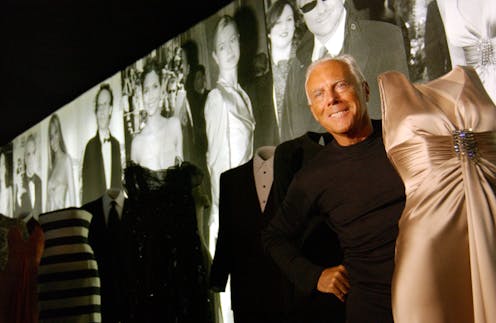
Over the course of his career, Giorgio Armani outfitted characters in more than 200 films. Franco Origlia/Getty Images

The death of Giorgio Armani marks the passing of one of Italy’s most influential fashion designers.

As someone who studies the intersection of fashion, media and entertainment, I think one of the designer’s most impressive feats is how he harnessed Hollywood to extend the global reach of his brand.

Born in Piacenza in 1934, Armani abandoned medical school in 1954 to work at Milan’s La Rinascente department store. There, he developed a passion for fabrics and first learned about fashion licensing, a business strategy that allowed brands to sell luxury designs at affordable prices to middle-class customers.

Observing how the licensed lines of fashion designer Pierre Cardin retailed at La Rinascente at lower prices, Armani came to understand that diversifying a brand to appeal to different customer groups could be a profitable strategy for global expansion.

When he went off on his own in 1975 to co-found his own brand with architect Sergio Galeotti, Armani soon found success by executing simple, relaxed tailoring that rejected the stiff formality of traditional suits.

In 1978, he signed an agreement with Gruppo Finanziario Tessile to produce luxury, ready-to-wear clothing under his close supervision. That deal gave rise to the Giorgio Armani Corporation and its multiple lines aimed at international markets.

Introducing affordable luxury to America

Armani’s first ready-to-wear line debuted in the U.S. in 1979.

The designer had appointed Edward Glantz, a former employee at Barney’s New York, as the product development coordinator for Giorgio Armani U.S.

Glantz was tasked with adapting Armani’s products for Americans, who were accustomed to low-maintenance, affordable clothing. He worked to ensure the designs retained their relaxed elegance by using permanent-press fabrics, which require less ironing than natural fibers, while incorporating cheaper materials to reduce costs.

In Milan, Armani’s jackets retailed for US$600, while his suits went for $800. In the U.S., prices for his sports and formal-wear lines ranged from $150 to $450, and could be found at department stores such as Bergdorf Goodman and Nan Dusking.

But many Americans encountered Armani’s clothes for the first time while watching the 1980 film “American Gigolo.” The protagonist, Julian Kay, a high-priced escort played by Richard Gere, wears lightweight Armani suits that can be worn with a tie for a formal look or paired with jeans and a polo shirt for a more casual style. Part of the trick for this relaxed look involved using softer textiles that were commonly used for womenswear.

As fashion scholar John Potvin noted, “The film introduced American audiences to a visual style which has been much imitated since. Its wardrobe launched Giorgio Armani in the U.S. and … consolidated Richard Gere’s sex symbol image.”

The designs featured in the film came from the white label Armani Collezioni – Armani’s more affordable line targeted at American consumers – meaning audiences could watch Julian’s wardrobe on screen and purchase the similar pieces in stores.

‘American Gigolo’ introduced many Americans to Giorgio Armani’s signature style.

Over the course of the decade, power dressing – donning outfits that communicate authority, competence and confidence – was in vogue, further fueling the popularity of Armani’s sleek, broad-shouldered suits. In 1982, Armani became just the second designer in history to appear on the cover of Time magazine.

But Hollywood is where he continued to flex his brand’s muscles. Over the years, he outfitted characters in more than 200 films.

Titles such as “The Untouchables” (1987) and, more recently, “The Wolf of Wall Street” (2013) featured hard-charging leads who donned Armani suits, reinforcing the brand’s reputation as a symbol of style and power. During this time, Armani managed to earn a reputation as a master tailor, even though his suits were 70% machine-made and partially manufactured in Hong Kong.

Selling ‘prestige and dreams’

Recognizing the importance of celebrity exposure, Armani hired Wanda McDaniel in 1988 as his West Coast liaison to coordinate Hollywood A-listers’ wardrobes for on- and off-screen appearances.

Young woman with long, curly, brown hair holds an award while wearing a bulky, gray jacket and a purple tie.
Actress Julia Roberts dons an Armani suit at the 1990 Golden Globe Awards in Los Angeles.
Darlene Hammond/Getty Images

A former journalist turned Hollywood housewife, McDaniel had observed how entrepreneur Fred Hayman had pampered clients at his Rodeo Drive boutique, Giorgio Beverly Hills – no relation to Armani – making him the go-to outfitter for Hollywood elites.

She worked to apply that same VIP treatment for clients at Armani’s newly inaugurated Rodeo Drive flagship store, which opened in August 1988 to cater to Hollywood celebrities and what the Los Angeles Times described as “the generic working rich.”

In the 1990s, McDaniel became the president of the Rodeo Drive Committee, a nonprofit organization for local business and property owners to shape and promote the shopping district. It had been founded by Hayman, who was also serving as the Oscars’ fashion coordinator.

Armani soon became regularly name-dropped during media coverage of the red carpet, with commentators gushing over the Armani dresses – and, sometimes, unisex suits – that actresses donned as they posed for the cameras. Armani later said that the gowns worn at the Oscars were always the first to sell out in his collections.

The designer’s awareness of the entertainment industry’s promotional power only grew over time, with the company’s Entertainment Industry Relations department – which is still active – overseeing celebrity relationships and styling for the company’s various lines. This paved the way for other fashion houses to establish their own in-house VIP teams.

Reflecting on the significance of the red carpet to his career, Armani once said, “It is about prestige and dreams, but those lead to dollars and cents.”

Tanned man with white hair wearing sunglasses poses on one knee next to a gold plaque.
Giorgio Armani poses next to his Rodeo Drive Walk of Style plaque in 2003.
Chris Weeks/FilmMagic via Getty Images

The Conversation

Elizabeth Castaldo Lundén receives funding from Fulbright and The Kluge Center.

ref. How Giorgio Armani mastered the art of outfitting Hollywood stars to sell clothes to the masses – https://theconversation.com/how-giorgio-armani-mastered-the-art-of-outfitting-hollywood-stars-to-sell-clothes-to-the-masses-264730

Drugged driving – including under the influence of cannabis and prescription drugs – is quietly becoming one of the most dangerous road hazards

Source: The Conversation – USA (3) – By Andrew Yockey, Assistant Professor of Public Health, University of Mississippi

Driving under the influence of drugs – be it prescription, legal or illegal – is just as deadly as alcohol. Darwin Brandis/iStock via Getty Images Plus

In October 2023, an unthinkable tragedy unfolded in Coleman, Wisconsin: An 8‑month‑old girl lost her life when a driver, impaired by cannabis, ran a stop sign and crashed into another vehicle. In February 2025, the driver pleaded guilty to negligent vehicular homicide and drugged driving with a minor passenger – and now faces up to 10 years behind bars.

These preventable circumstances highlight a stark reality: Drugged driving can be just as deadly as alcohol-impaired driving. Meanwhile, driving under the influence of drugs is becoming increasingly common across the United States.

Yet public awareness and policy responses continue to lag behind.

I study the prevalence and risk factors of drugged driving. Although public health messaging in the U.S. has long emphasized the dangers of alcohol-impaired driving, far less attention has been paid to the risks posed by other substances — even as drug-impaired driving becomes more widespread and complex.

Whether the substance is illegal, like methamphetamine, or legal but still impairing – like cannabis, sedating sleep aids or certain prescription drugs like benzodiazepines and pain killers – the result is the same: impaired judgment, dulled reflexes and devastating outcomes on the road.

A different form of impairment

In 2020, an estimated 12.6 million people ages 16 and up drove after using illicit drugs. Of that total, roughly 11.7 million were under the influence of cannabis. In 2018, some 2.3 million people in the United States reported driving under the influence of illicit drugs other than marijuana during the previous 12 months. Globally, roadside surveys worldwide find that between 3.9% and 20% of drivers tested positive for drugs.

While alcohol typically impairs coordination and reaction time, drugs present a more complex picture. Cannabis, for example, slows reaction time and affects spatial awareness. Opioids can cause drowsiness and dizziness. Stimulants like cocaine or methamphetamine may lead to overconfidence and aggressive driving. When drugs are mixed — or combined with alcohol — the risks increase dramatically.

Cannabis, in particular, presents a unique challenge: It’s the most commonly used federally illegal drug in the United States, and public perception often downplays its risks behind the wheel.

Research from the AAA Foundation for Traffic Safety reveals that over 80% of cannabis users admit to driving just hours after using the drug, and nearly 20% believe their driving got much better. Multiple studies have found that drivers with THC, the primary psychoactive compound in cannabis, in their bloodstream are about twice as likely to be involved in a fatal crash – either as the cause or as a victim – compared with those who haven’t used drugs or alcohol. For alcohol, with a blood alcohol content of 0.08%, the odds of dying in a motor vehicle crash are approximately 13 times higher than sober drivers.

View of a man's reflection as he smokes marijuana through a pipe at the wheel of a car.
Cannabis slows reaction time and alters spatial awareness – factors that can be deadly behind the wheel.
JasonDoiy/iStock via Getty Images Plus

Outdated laws and patchy enforcement

Every U.S. state has laws prohibiting drug-impaired driving, but enforcement varies dramatically.

Some states, such as Texas and California, use “impairment-based” laws, which rely on observable signs of impairment. Others, such as Ohio and Wisconsin, use per se laws, setting thresholds for drugs like THC — such as 5 nanograms per milliliter of blood.

Then there are zero-tolerance laws, in states like Georgia and Rhode Island, which penalize drivers for having any trace of a controlled substance while behind the wheel, regardless of whether they’re impaired at the time.

These inconsistencies create legal gray areas in how the laws are interpreted and enforced. For instance, in Illinois, it is a crime to drive with any trace of a controlled substance in your system, even if you are not impaired — and even if the drug was legally prescribed. In Arizona, medical cannabis patients cannot be convicted solely based on THC presence, but prosecutors can still argue impairment.

Detection is the biggest hurdle

A significant factor in the inconsistency from state to state is that there is no standardized way to measure drug impairment as there is with blood alcohol content.

While alcohol can be tested on the spot using a breathalyzer, detecting drug use is far more complicated. THC and other substances can linger in the body long after their impairing effects have worn off. Meanwhile, newer synthetic drugs such as spice or bath salts may not be detected at all without specialized equipment.

To address this, many states are turning to oral fluid testing — or saliva tests — which can detect recent drug use more quickly. As of late 2023, 27 states had authorized some form of roadside oral fluid screening.

Public misconceptions and potential solutions

Unlike alcohol, where there’s a clear legal limit of 0.08% blood alcohol concentration, there’s no easy-to-understand number for cannabis. Laws around driving after cannabis use vary widely and can be confusing. Scientists are still figuring out how much THC it takes to affect a person’s driving skills and to what degree, so it stands to reason that people don’t know how to judge it for themselves.

Another twist is that the roadside tests that cops use to spot drunk drivers don’t work as well for drug impairment. THC can linger in the body long after the high fades, so a test might not tell the whole story. New testing tools, like saliva swabs and eye-tracking, are being developed, but are not yet ready for application in real-life scenarios.

So what can you do? The big takeaway is that if you feel “different,” you’re probably driving differently, too. The National Highway Traffic Safety Administration’s “If You Feel Different, You Drive Different” campaign is a helpful reminder that even if you think you’re fine, your driving might not be.

If you’re riding with friends, don’t be shy about speaking up if someone looks or behaves as if they are impaired. Planning ahead with a designated driver or ride-share can make all the difference.

At the end of the day, it’s about making smart, safer choices – and being honest with ourselves and each other about what it really means to be safe on the road.

The Conversation

Andrew Yockey does not work for, consult, own shares in or receive funding from any company or organization that would benefit from this article, and has disclosed no relevant affiliations beyond their academic appointment.

ref. Drugged driving – including under the influence of cannabis and prescription drugs – is quietly becoming one of the most dangerous road hazards – https://theconversation.com/drugged-driving-including-under-the-influence-of-cannabis-and-prescription-drugs-is-quietly-becoming-one-of-the-most-dangerous-road-hazards-263410

Alien: Earth – how realistic are the extraterrestrials? Three experts rank them

Source: The Conversation – UK – By Thomas Haworth, Reader in Astrophysics, Queen Mary University of London

The TV series Alien:Earth has introduced a number of new creatures to the much loved, albeit terrifying, Alien franchise.

But how realistic are the new aliens? That’s a question that we – a trio of scientists who are also great fans of the franchise and show – have tried to tackle with a ranking. To be clear, we are not trying to find flaws in the show. Like many fans we are simply having fun using science to analyse the creatures.

All species in the series draw inspiration from real living organisms and processes seen on Earth, but crank it up to the extreme. We therefore won’t explore all those parallels, but instead focus on how plausible the organisms are in terms of underlying processes such as physics, chemistry, metabolism and evolution.

1. The tick

Our most plausible creature is the large blood-sucking tick. On Earth, the deer tick Ixodes do swell to the size of a walnut when feeding, which is not too different from the Alien:Earth tick. In the show, we see it attack the jugular and quickly take on a couple of pints of blood.

The perhaps surprisingly quick death of the unfortunate prey most likely results from hemorrhagic shock due to how quickly the blood is lost. It is possible that some sort of chemical agent (perhaps an anticoagulant, as has repeatedly evolved in blood predators on Earth) is also injected. We do see a defence mechanism in episode five where the ticks release an airborne toxin to prevent them being removed from their host. Chemical defences like poisons and venom are common in animals and plants on Earth to deter predators.

In later episodes, we see it break containment (with the help of another alien) but we’ll assume it is simply seeking a body of water to lay its tadpoles in, rather than exhibiting intelligence. Horrifically, we see nothing that completely prohibits a life form like this.

2. D. plumbicare (the plant pod)

This creature, which as discovered and named in the show by the crew of the USCSS Maginot, benefits from not having been seen much (at the stage of writing, we have viewed the first six episodes). As the series progresses, it could move down our list. Initially, the character Kirsh questions whether it is flora or fauna. The science officer’s analysis ultimately shows they classify it as a carnivorous plant. Its green colour could indicate it also uses chlorophyll the way photosynthetic organisms like plants do on Earth.

Not an ideal shape for photosynthesis.
Youtube, CC BY-SA

However, a near spherical body is in fact the worst structure for photosynthesis. It lacks any of the surface area enhancing adaptations you’d expect from a photosynthetic organism, such as leaves. This would be particularly important given it appears to hang underneath covering structures like cave roofs. Perhaps this is why it needs to capture prey: rather than evolving more efficient light capturing mechanisms, it instead alternates between photosynthesis and predation, depending on the resources available.

This is known as mixotrophy in science, but is a feature only of single-cell organisms on Earth. “Carnivorous” plants are not mixotrophs as they merely source compounds like nitrates, potassium and phosphorus from captured insects, rather than carbohydrates. Animals are heterotrophic, meaning they get energy by consuming other organisms.

Some organisms, such as corals, have bacterial symbiotes – “friendly” parasites – that can photosynthesise energy for them from the sun, which could be the case here.

3. Trypanohyncha ocellus

T. ocellus is the lovable little eyeball octopus parasite. It attacks its host, removing an eyeball and then takes over entirely via connections to the brain.

T Ocellus captured in the lab.
youtube, CC BY-SA

This may seem like pure science fiction, but there are parasites on Earth that replace body parts and even control their host’s behaviour. However, the latter are usually relatively simple organisms, like the Ophiocordyceps fungus where taking over the brain of another animal is a necessary part of their life cycle. The behavioural changes these parasites induce are simple, such as moving the host towards light, water or the scent of a predator.

Toxoplasma gondii, for example, is a parasite that alters the behaviour of mice, making them less avoidant of the smell of cat urine. The infected mice are therefore more likely to be eaten by cats, which then spread long-lasting parasite spores in their faeces.

T. ocellus, in contrast, is very mobile, highly intelligent and strong, showing behaviour like monitoring situations and distracting humans. This behaviour is plausible with distributed ganglia (clusters of nerve cells) in the tentacles, similar to octopuses.

The length of these tentacles, however, exceeds that of similar structures on Earth, such as chameleon tongues, and is therefore somewhat implausible (but nevertheless incredibly cool). Our main issue here is why it needs to be parasitic at all – this is ultimately a formidable life form without requiring that.

4. The fly

First seen in episode 6, the fly appears to consume metal and metal ores and it pre-digests its food by spitting an enzyme, similar to flies on earth. Our main issue with it is that it’s unclear whether this is a supplement (such as iron and other trace elements in our diet) or a main energy source.

There is a process on Earth known as chemolithotrophy (literally “rock eating”) in which energy and biomass production can be harnessed by oxidation (removal of electrons from) of geochemicals – including iron, manganese and other metals.

On Earth, this is exclusive to single celled archea such as Ferroplasma and bacteria such as Acidithiobacillus, organisms generally associated with very slow growth. Multicellularity is energetically demanding, not to mention flying, meaning metal oxidation is not a very plausible energy source for the fly.

Of course, the metal could simply be a supplement, albeit a very large one, needed to create a metallic shell. Biomineralisation of iron compounds into the teeth of marine molluscs like chitons and limpets, who need hard teeth graze on rocky surfaces, is well documented.
A similar mechanism could explain the hard metals in the Xenomorph’s exoskeleton (which it needs to be able to scratch through the metal in a ship’s hull).

5. The Xenomorph

The Xenomorph might come in at the bottom of this plausibility ranking, but it takes the top spot in our hearts/chests. The main problem with it is its impossibly fast growth rate, transitioning from a relatively small chest-burster to a fully grown adult in a very short period of time.

The Xenomorph.
The Xenomorph.
Youtube, CC BY-SA

Very crudely, if we assume it has a similar metabolic efficiency to humans, and that it weighs roughly 100 kg, then it would need to consume and convert millions of calories of food (over a tonne of pork-like meat) in what seems to be a few days at most. Of course, it could have a much higher metabolic efficiency than humans, though it would always be bound by the conservation of mass and energy. You can’t acquire more biomass than you consume. And we never see it eat, not even its initial host.

Circumventing this would require an ultradense (entirely hypothetical) energy source that it carries with it from the egg (Ovomorph). But energy has to enter the system at some point, implying the Queen would have to eat or capture huge amounts of energy somehow.

Another issue for the Xenomorph is that, if it did need to eat the huge amount of creatures it kills, it would rapidly deplete any prey resource and there would probably be no stable ecosystem that could support it. However, in the expanded universe, it seems that the Xenomorphs are artificial beings, created from a bio-weapon intended to obliterate an ecosystem, leaving a clean slate. In which case, they seem very effective.

The Conversation

Thomas Haworth receives funding from The Royal Society and UKRI.

Jen Bright receives funding from BBSRC

Chris Duffy does not work for, consult, own shares in or receive funding from any company or organisation that would benefit from this article, and has disclosed no relevant affiliations beyond their academic appointment.

ref. Alien: Earth – how realistic are the extraterrestrials? Three experts rank them – https://theconversation.com/alien-earth-how-realistic-are-the-extraterrestrials-three-experts-rank-them-263553