Source: The Conversation – UK – By Alexandra Consterdine, Senior Lecturer in Sociology of Sport, Exercise and Health, Liverpool John Moores University
Olympic swimmer Ben Proud has become the first British athlete to join the Enhanced Games – a controversial new event that allows athletes from all over the world to compete using performance-enhancing drugs. The prize money on offer can hit US$1 million (£730,000). But the swimmer, who won a silver medal at last year’s Paris Olympics, has sparked sharp criticism from sporting bodies after announcing he would be taking part.
In essence, Proud’s decision challenges the core values of fair play and athlete safety. While he frames it as a pursuit of human potential, motivated by financial reward, critics argue it undermines clean sport, poses health risks and is very likely to damage his legacy.
It also leaves him unable to compete in future Olympic Games and raises questions about his suitability to receive public funding.
The Enhanced Games will debut in Las Vegas in May 2026. The event offers prizes of US$250,000 per event and US$1 million for breaking the world record. It was created as an alternative to sport controlled by the International Olympic Committee, with athletes being permitted to use substances approved by the US Food and Drug Administration (FDA). These could include steroids, testosterone and growth hormones.
Athletes will compete in swimming (50m and 100m freestyle, 50m and 100m butterfly), athletic events (100m sprint, 100m/110m hurdles) and weightlifting (snatch, clean and jerk). So far, five elite-level swimmers have signed up, including four-time world champion Megan Romano. She is the first American and the first woman to commit. Australian Olympic swimmer James Magnussen has indicated that he will come out of retirement to compete in the 50m freestyle.
The event has had to look to alternative sources for funding. International venture capitalists and private investors have provided a multimillion-dollar investment into the project – reportedly Peter Thiel (co-founder of PayPal) and German entrepreneur Christian Angermayer are among those backing the project.
But outside the world of venture capitalism, the World Anti-Doping Agency (Wada) has labelled the Enhanced Games “dangerous and irresponsible”. The governing bodies Aquatics GB and UK Sport have condemned Proud’s decision.
As well as his Olympic success, Proud is also a former world and European champion in the 50m freestyle. So you might think he has little left to prove. But in an interview, the swimmer said his goal is to test the limits of human potential, and become the fastest man on the planet.
But, of course, the question of money is looming large. Proud has also admitted that this played a major part in his decision. Elite-level swimming, compared to sports like men’s football, rugby and tennis, does not offer big financial wins for athletes.
Proud claimed that prize money of US$250,000 would take “13 years of winning world championship titles” to earn. A gold medal at the world championships in 2025 would have earned a swimmer US$20,000 at most.
Inequality in sport
Within sport, there are deep divisions in terms of how it is financed and supported, with variations in sponsorship, commercial investment and viewing figures. At the high-performance level, this inequality is most keenly felt in minority sports such as swimming, where even highly successful athletes struggle for financial rewards.
In fact, the British Elite Athletes Association (the independent representative body) has warned that the majority of athletes funded by the World Class Programme from UK Sport will not be able to afford to stay in their sport until the 2028 Los Angeles Olympics without a funding increase.
According to a survey done by the association last year, two thirds of the 87 respondents who travelled to Paris in 2024 said they would be forced to quit before 2028. This could put British sport in a precarious situation with potentially serious ramifications.
It would mean that the number of athletes representing the UK would fall, with consequences for the longevity of sports programmes, community initiatives and grassroots schemes to get people more active. At a time of rising obesity levels, sedentary lives and declining health, the UK cannot ignore the positive effects of getting more exercise, bolstered by sporting role models.
So while it could earn him serious prize money, Proud’s decision is a direct challenge to clean sport values. And it risks normalising drug use in sport, undermining decades of anti-doping efforts. Experts have defined clean sport as being free of “drugs and other forms of artificial enhancements”.
What’s more, it pits athlete autonomy against their responsibility to the public. There is a tension between Proud’s decision to test his limits and the responsibilities he has as a role model – and a recipient of public funding.
And the health risks of performance-enhancing drugs is a problem. Even if FDA-approved, the use of otherwise-banned substances in competitive sport introduces unknown long-term health consequences, especially when used in extreme training environments.
This highlights the inherent contradiction of sport as a desirable, healthy activity, while at the same time promoting potentially dangerous practices.
And the impact on an athlete’s legacy and reputation cannot be overstated. Proud’s Olympic achievements are now likely to be overshadowed by his association with a movement widely condemned by sporting bodies. Regardless of his success at the Enhanced Games, his presence there could shut him out of the many opportunities that sporting heroes can enjoy long after they’ve retired.
Alexandra Consterdine does not work for, consult, own shares in or receive funding from any company or organisation that would benefit from this article, and has disclosed no relevant affiliations beyond their academic appointment.
Source: The Conversation – UK – By Siobhan Keenan, Professor of Shakespeare and Renaissance Literature, De Montfort University
How did Shakespeare become the world’s greatest playwright? It’s a question that has long fascinated scholars and fans alike. My latest research suggests that one answer lies in the Bard’s close collaboration with his leading man, Richard Burbage.
Their partnership lasted more than 25 years, and as my new book, Richard Burbage and the Shakespearean Stage, reveals, the creative chemistry between writer and actor transformed their art and elevated their respective profiles – a bit like an Elizabethan Martin Scorsese and Robert De Niro.
Shakespeare and Burbage’s careers likely started in the 1580s. But the first time we hear of them being members of the same acting company is in 1595.
In March that year, the pair was paid £20 (about £8k today) alongside the famous Elizabethan clown, Will Kemp, for performing two plays at court before Queen Elizabeth I with a troupe known as the Lord Chamberlain’s Men (named after the lord chamberlain, Henry Carey). At this stage, Shakespeare and Burbage were newcomers on the flourishing Elizabethan theatrical scene. But they soon made their mark.
By the turn of the century the Lord Chamberlain’s Men had moved to the legendary Globe theatre, and the pair had become famous. Shakespeare was being praised by contemporaries as “the most excellent” writer of comedies and tragedies in English, while Burbage had become the Elizabethan stage’s newest star, with a breakout performance as Shakespeare’s witty and wicked tragic hero, Richard III.
One fan apparently admired Burbage’s Richard III so much that she even arranged a secret off-stage rendezvous with him, only for Shakespeare to get there first, sending word to Burbage that William the Conqueror was before Richard III – or so claimed gossipy lawyer John Manningham in 1602.
There aren’t any contemporary reviews of Burbage’s Richard III, or his other early performances, but we know that he was especially admired for his versatility and the authenticity of his acting.
This included an ability to portray powerful emotions convincingly and to immerse himself in his roles completely, “putting off himself with his Clothes” as contemporary Richard Flecknoe put it in 1664 – like an early modern Daniel Day-Lewis. These qualities were to prove a source of powerful inspiration to Burbage’s fellow actor and company playwright, Shakespeare.
Writing for Burbage
When Shakespeare became a member of the Lord Chamberlain’s players, it marked a significant new phase in his career as an actor and writer. For perhaps the first time, he found himself writing regularly for the same group of players – a position he would enjoy for the rest of his career.
It’s not surprising that he started to tailor his plays for the men and boys he knew would act in them. Sometimes he even mistakenly wrote their names instead of their characters’ names in his scripts.
But in Burbage’s case the collaboration proved an especially rich and enduring one, the mutual talents of writer and actor inspiring the creation of a series of memorably complex and believable tragic heroes of a kind not seen not known before on the English stage.
These range from tragic kings, such as King Lear and Macbeth, to murderously jealous husbands, such as Othello and Leontes (A Winter’s Tale). They also include roles shaped by another of Burbage’s talents – the ability to feign madness convincingly. The most famous example of this is Hamlet.
The story was not new when Shakespeare created his updated Hamlet play around 1601, probably a star vehicle for Burbage. The role is famously demanding in length – 1,338 lines in the edition published in 1604. It also requires incredible versatility in its performer, who must play several roles in one: grieving son, bereft lover and revenger.
Perhaps most memorably of all, Hamlet must put on an “antic” or mad disposition, as he seeks to conceal his plans of revenge from Claudius, the uncle who murdered his father and married his mother.
Hamlet’s feigned madness can be found in Shakespeare’s source, but Shakespeare’s late Elizabethan reworking of the play gives more room to Hamlet’s performance of madness – including his sudden changes in speech and behaviour – and it creates more uncertainty about whether the madness remains a performance or becomes the real thing in the character.
Implicitly, Shakespeare made these changes influenced by his experience of working with Burbage and to give his star more room to show off his versatility and his aptitude for playing men who had gone mad. The result was a hit for both: Hamlet became one of Shakespeare’s most famous plays and its hero one of Burbage’s most memorable roles.
For many years, the conversation about Shakespeare’s authorship has focused on his work with other playwrights. But Burbage also helped shape Shakespeare’s plays, and his role in the Bard’s creative process deserves more recognition.
Siobhan Keenan received funding from the Society for Theatre Research.
The Middle East is experiencing a period of intense political and economic turbulence, with several countries in the region embroiled in conflict. These conflicts are taking place against the backdrop of an escalating climate crisis.
In 2023, global thinktank the Carnegie Endowment for International Peace concluded that Middle Eastern countries “are among the world’s most exposed states to the accelerating impacts of human-caused climate change – including soaring heatwaves, declining precipitation, extended droughts, more intense sandstorms and floods, and rising sea levels”.
The capacity of a society to receive, process and act upon climate-related information is at the heart of an effective climate change response. Media plays an important role: it is central to advancing public understanding of climate change and its connection to individual, communal and national security.
Yet over the past two decades or so, media coverage of climate change in the Middle East has been among the lowest in the world. According to the University of Colorado Boulder’s Media and Climate Change Observatory, media organisations in the Middle East each produced an average of around one article about climate change in August 2025 – compared with 66 articles for North American media in the same month.
Wars and climate change are inextricably linked. Climate change can increase the likelihood of violent conflict by intensifying resource scarcity and displacement, while conflict itself accelerates environmental damage. This article is part of a series, War on climate, which explores the relationship between climate issues and global conflicts.
The lack of climate coverage in the Middle East is because media outlets there face a number of structural problems. How does one talk about climate change when armed conflicts are spiralling out of control, or when public discourse is monopolised by what are perceived to be more pressing issues?
Jordan presents a useful example to help us understand these challenges and how to overcome them.
Media in Jordan
Jordan has long played a stabilising role in the Middle East. It has accepted large numbers of refugees from neighbouring conflicts and has acted as a mediator and peace broker between Middle Eastern rivals. However, climate change is threatening Jordan’s stability.
Raed Abu Soud, Jordan’s minister of water and irrigation, said in May 2025: “Jordan is grappling with one of the most severe water crises in the world, with per-capita water availability dropping to just 60 cubic metres per year.”
A host of other factors are worsening the situation. Economic underdevelopment in Jordan is leading to persistent unemployment and public unrest, while regional conflicts are undermining social cohesion.
How Jordan responds to the risks presented by climate change, and preserves its stability, is extremely important for the Middle East and beyond. Public understanding of this challenge is going to be pivotal to an effective response. And here enters the role of media.
Our research on climate change in Jordan has involved analysing more than 2,500 news articles in the country’s major print media and carrying out extensive interviews with local people. We have found that, while climate change is becoming a more important topic in the country, there are still many barriers preventing a coherent climate change discussion there.
It is common in Jordan, as in many other countries affected by conflict, for conversations related to climate change to be pushed to the background when other crises emerge. Since 2023, when the war in Gaza began, Jordanian media outlets have understandably been drawn to covering the humanitarian crisis there at the expense of climate change.
This has been exacerbated by the fact there are very few journalists in Jordan who work consistently on climate-related issues and can offer accurate and timely coverage. The shortage of climate journalists is a common problem across the Middle East.
When climate change is covered by Jordanian media, it is often discussed as a secondary consideration relative to geopolitical threats – not as a challenge in its own right. Due to the country’s policy of hosting refugees, Jordanian media outlets have often portrayed their country as a “second victim” of the civil war in Syria and the intractable Israel-Palestine conflict. Refugees are depicted as another strain on scarce resources.
Climate change discourse in Jordan tends to be heavily influenced by international partners including foreign governments, charities and funding bodies.
There are numerous externally funded educational and vocational courses focused on climate change available in Jordan for various audiences, including media professionals. While this facilitates the advancement of climate change discussions, it can distance climate coverage from the local context and knowledge. This is particularly true if external partners merely “teach” Jordanians what they believe is necessary, without fully understanding the specific challenges Jordan faces.
It can also erode trust between Jordanians and these foreign partners. In some of the cases we studied, journalists in Jordan saw climate change as part of a western-imposed agenda aimed at controlling developing countries.
Jordan is highly important for the Middle East, Europe and beyond. Without effective climate adaptation, it risks losing its role as a refugee haven and regional stabiliser.
Media can play a vital role in advancing climate change discourse in the Middle East, both by holding governments to account and raising awareness of climate issues. Some studies suggest that public concern correlates with the volume of media coverage, and attention can fade when other issues dominate the media space.
Sustained, inclusive coverage is essential to ensure long-term engagement and informed public participation in climate action, even during times of political and economic turbulence.
Marianna Poberezhskaya received funding for the associated research project from the Climate Social Science Network.
Imad El-Anis receives funding from the Council for British Research in the Levant and the Climate Social Science Network.
Marwa Mustafa received funding from Climate Social Science Network.
At the end of our conversation, Nathan (a pseudonym) kept repeating, almost to himself: “Perhaps we should have done more. Perhaps we could have done more. Perhaps there was something we could have done about the camp itself. About the dogs. We kept on hearing the dogs. Every night.”
Nathan, a senior surgeon in one of Israel’s bigger hospitals, was talking about the Sde Teiman camp, an army camp in the Negev desert in southern Israel which, following the October 7 2023 attack on Israel, was turned into a holding facility for detainees from Gaza.
Initially, this camp served to imprison members of the Nukhba force, the Hamas unit which led the massacre in southern Israel. But since then, and throughout Israel’s subsequent assault on Gaza, Sde Teiman has been a “black site” in which Palestinians captured by the Israeli army inside Gaza were held, including many who say they were not involved in the fighting.
Nathan never stepped foot in the camp. But he was one of a small number of Israeli doctors who volunteered to work in a medical facility which operated next to it, where some of the most badly injured detainees from Sde Teiman received medical treatment. This facility was set up after many Israeli hospitals refused to admit anyone suspected of taking part in the October 7 massacre, many of whom were severely injured.
Nathan’s decision to serve in this facility was not a simple one, he explained to us. While he had no reservations about treating detainees from the camp, and saw it as his duty as a doctor to treat patients no matter who they were (especially if no one else would treat them), his work at Sde Teiman’s medical facility – which he has kept secret from family and colleagues – continues to haunt him. “Ultimately,” he said, “it made me into a war criminal.”
The Insights section is committed to high-quality longform journalism. Our editors work with academics from many different backgrounds who are tackling a wide range of societal and scientific challenges.
We interviewed Nathan for a book we have been writing on torture in Israel. In our research, conducted over the past five years with the Israeli human rights organisation, the Public Committee against Torture in Israel (Pcati), we investigated the extent to which healthcare systems and other civic institutions have become complicit in the processes of torture that have become more widespread and brutal since the October 7 attacks.
After harrowing accounts also began to emerge from the medical facility, we set out to investigate it. Stories from this facility told of patients held in humiliating and degrading conditions, of sub-standard medical care leading to medical complications (including unnecessary amputations due to constant handcuffing), and of patients dying due to neglect.
Nathan, and two other doctors we interviewed who worked there, provide new insights into the conditions inside the medical facility – and more generally, the conduct of the Israeli healthcare system in the wake of the October 7 attacks. Their stories allow us to see, as they all made clear in various ways, how even people with the best intentions can become complicit in war crimes.
‘They were all in unbearable pain’
Shortly after the October 7 2023 attacks, Nathan got a call from the Israeli Ministry of Health asking him if he would be willing to treat some of those who had committed the atrocities. The ministry approached a small number of doctors after many Israeli hospitals and some doctors had refused to treat people widely regarded in Israel as savage terrorists.
Doctors have an ethical obligation to care for all patients, regardless of who they are or what they have done. Indeed, the Israeli healthcare system had prided itself on its long record of treating all patients equally, including enemycombatants, suicide bombers and Hamas leaders. But after the October 7 attacks, for reasons we explore below, hospitals started turning such patients away.
The medical facility at Sde Teiman was set up so detainees held in the main camp could receive medical treatment without having to be admitted to public hospitals. Recalling the first time he visited the facility, Nathan told us: “I had no idea where I was going or what to expect.” He did not expect it to be anything but a temporary fix – and certainly did not imagine himself working there for many months.
BBC News report on treatment of prisoners in the Sde Teiman detention centre, August 2024.
In the first few weeks, without adequate equipment, suitable medications, a functioning logistical apparatus and even a proper institutional affiliation, the doctors had to improvise and rely on their resourcefulness. “By the end, this facility was well-equipped compared to a field hospital … But the point is,” Nathan insisted, “a field hospital should be temporary; you cannot really perform operations in a tent in the middle of the desert.”
When we met at the end of 2024, Nathan was not at ease and seemed very worried. Several times during our conversation, he told us that “no one can know who Nathan is”. Seeing how concerned he was at being exposed, we were surprised he had agreed to be interviewed at all. But unknown to us, a few days before we contacted him, he had attended a public talk we gave about our research on torture being conducted by Israel. This is probably why, when we reached out, he immediately agreed to meet us.
In addition to Nathan and the two other doctors who worked in the facility, we also interviewed others who were involved in its operation in some way: two members of the Israel Medical Association’s ethics board, a medical ethics expert who advised doctors working in the Sde Teiman facility, and human rights practitioners who investigated it. We also interviewed medical staff and healthcare professionals from seven of Israel’s largest hospitals, as well as several Israeli government officials working in the healthcare system and Ministry of Justice.
While most interviewees spoke under condition of anonymity, Nathan was particularly guarded. He was mostly scared that he or his family would be targeted by rightwing Israeli activists if they knew he had treated “terrorists”. But he was also concerned about his colleagues’ reactions – even his direct line manager had no idea what he had been doing, beyond that he had been called up for military reserve duty.
Furthermore, Nathan wanted to protect himself from criticism from members of the leftwing community who saw anyone involved with the Sde Teiman facility as a war criminal. Yet it was clear that he too saw the very existence of the medical facility as a crime – even though he always tried to provide the patients there with the best possible care.
Indeed, Nathan told us that while working there, he had tried repeatedly to get the medical facility shut down. “The patients there could not receive the treatment they needed. They all needed to be admitted to a normal hospital.”
After many months, once “it was no longer an emergency situation” – and when Nathan realised his efforts to shut the facility down were futile – he felt he could not “be there any longer”, and quit.
Cuffed, blindfolded and wearing diapers
We approached Ben (also a pseudonym) for an interview because of his involvement with another human rights organisation, to ask about the medical treatment of Palestinians in Israeli prisons after the October 7 attacks. It was only during our conversation, when he heard that we were writing about the medical facility at Sde Teiman, that he told us he, too, had been called late in 2023 to serve there.
Ben, a much more junior doctor than the other doctors we interviewed, works in one of Israel’s public hospitals. He recalled being asked by a colleague if he would help perform a procedure on a patient from Gaza he had previously treated. He immediately got in his car and drove to Sde Teiman, following the directions he’d been given over the phone – not knowing exactly where he was going.
Once he got to the medical facility, Ben said he was astonished by what he saw. Even though this was late December and the place had been operational for more than two months, “patients were still wearing nothing but diapers”. He told us they were still cuffed to their beds and blindfolded at all times, including while receiving medical treatment. They were not allowed to get out of bed, so had to defecate in bed when they needed to relieve themselves.
Ben carried out the procedure he was called to perform. But once he got home, the reality of what he’d witnessed dawned on him: “I decided not to step into that facility ever again.”
Because they were cuffed, the nursing staff had to do everything for the patients. They washed them, changed their diapers, and even had to feed some of them liquid food through straws. These accounts were confirmed by the other two doctors we interviewed who had worked in the facility.
Doctors describe conditions inside the Sde Teiman medical facility: BBC News, May 2024.
Nathan told us several times: “You must emphasise the care and dedication of the nurses” who bathed, fed and cared for people few others were willing to care for. Yet while this was undoubtedly noteworthy, especially under those circumstances, most of these patients would have been able to go to the toilet, shower and feed themselves had they not been restrained to their beds 24 hours a day. Using such restraints indiscriminately on patients violates Israeli law, and is considered a form of torture according to ethical codes both in Israel and internationally.
“At first, [the cuffing] may have been necessary because we treated very dangerous people” who had just carried out a brutal massacre, Nathan explained. He described a severe attack on one female staff member which he witnessed, confirming: “We had several instances in which patients assaulted staff.”
But, he continued: “They had no justification after the first few weeks. By then, other precautions could have been introduced, and assessments could have been conducted to determine who might pose a danger to staff and still needed to be cuffed.”
Nathan said that eventually, many of the patients seen by the doctors and nurses were not dangerous. “Arrangements should have been made so those patients could be cared for in a general hospital in Israel.”
After visiting the Sde Teiman medical facility in late February 2024, members of the Israeli Ministry of Health’s ethical committee reported that all patients were still chained to their beds by all four limbs – despite the fact that, by the Israeli army’s own admission in December 2023, many Sde Teiman detainees were by then not suspected of being related to Hamas or other militant factions. Many of those incarcerated in Sde Teiman, including some who had been held for many months and were chained to their beds, would eventually be released without charge.
‘We did everything we could’
Nathan’s account was supported by our third interviewee, Yoel Donchin – a senior anaesthesiologist who also served in the medical facility for many months. Donchin described some of the patients he treated to the New York Times in June 2024, explaining that one was paraplegic, another severely obese, and a third had needed to use a breathing tube since childhood. Donchin concluded it was “highly unlikely” that any of them were involved in the fighting. “They take everyone,” he said, referring to the Israeli army’s actions in Gaza.
Since he had already spokenpubliclyabout his experiences in the facility, Donchin was easy to locate. Unlike Nathan and Ben, he was happy for us to use his real name, and had no reservations about his involvement there.
After he publicly defended his decision to serve in the facility, Donchin and the rest of the medical team working there was criticised by human rights organisations including members of Pcati’s board. Treating patients there, they claimed, was “a moral disgrace and a violation of every ethical principle” to which doctors must commit.
But, a couple of hours into our long conversation in his quiet home in a suburb of Tel Aviv, we began to reconcile the facts we knew about Sde Teiman with Donchin’s account of his time working in the medical facility. He equated the situation in Israel immediately after October 7 to “a multi-casualty event”, explaining that in such conditions, “medical ethics is different”. In the chaos of the first few weeks after the attacks, he told us, “no one knew what they were doing. The hospitals were swamped with patients and the system was overwhelmed.”
Donchin said that even some Israeli soldiers wounded in the Hamas attack could not get the full care they needed. In the aftermath of October 7, he told us: “The entire [Israeli] healthcare system was in complete disarray. In the first month, there was no state to speak about whatsoever.”
Within this chaos, Donchin told us: “We did everything we could.” He explained that when the nutrition patients needed was not supplied, staff would buy it themselves. When a patient needed to be seen by a specialist, they would use their personal networks to bring in colleagues with the needed expertise – either having them come to the facility or, when that was impossible, having them provide advice over a video call.
Yet while these may have been effective emergency measures, “they should not have been the solution”. Ultimately, Donchin said, these “compromises and improvisations” meant the doctors were operating under “a black flag of illegality”.
According to the medical ethics expert who advised doctors working in Sde Teiman: “In this first month, treating those who’d just taken part in the massacre posed particular challenges”, because some were very dangerous and aggressive. “General hospitals are not set up to treat patients who pose such risks to staff.”
However, he also said that “Israel had detailed contingency plans in place for such a scenario, which included preparing a dedicated ward for enemy combatants in one of the main hospitals. But those were never implemented.”
‘He should be left to rot’
Many of the nearly 200 Hamas militants who took part in the October 7 attacks and were captured inside Israel were wounded in the fighting. At first they were taken to general hospitals, but word quickly got out – leading to widespread reports of mobs raiding hospital wards, attacking staff and patients they suspected of being Palestinian.
To protect the safety of both patients and staff, Israeli hospitals began refusing to admit these patients. But some medical staff also expressed their “difficulties” with treating those whom they suspected of having committed the October 7 atrocities.
On October 11 2023, Moshe Arbel, Israel’s health minister at the time, officially endorsed this reluctance by issuing an ordinance stating that general hospitals should not treat “terrorists from Gaza”. This guidance also enabled Israeli hospitals to refuse treatment to any Palestinian arriving from any incarceration facility.
Staff working in some of these hospitals told us in the aftermath that they had regularly heard colleagues making statements such as “Gaza should be erased” or “as far as I am concerned, all babies in Gaza are terrorists and can die” – sometimes in formal staff meetings and in front of Palestinian colleagues.
We also heard stories of medical staff demonstrating explicit disregard to the injuries and wellbeing of those they suspected were part of Hamas’s Nukhba force – and in some cases, Palestinian detainees from Gaza more generally.
For example, Nathan described calling a senior specialist when he needed urgent advice about treating one of the detainees in Sde Teiman, only to be told: “As far as I am concerned, he should be left to rot.” And according to Ben: “On October 8, I witnessed a doctor inserting a tube into the lungs of a patient from the Nukhba force without anaesthetising him. There were likely other such cases.”
“Paradoxically,” Ben told us, “the doctors in Sde Teiman’s medical facility had a much deeper commitment and understanding of their responsibility to provide care to these patients.” It was in the general hospitals, he said, that he had found more “verbal violence, less care” – and some cases of physical abuse.
As an underequipped and understaffed makeshift facility, according to those who worked at Sde Teiman, if a patient needed urgent treatment that could not be provided on site, they would sometimes be taken to one of Israel’s general hospitals. Nathan described spending long hours on the phone each time, calling different hospitals until he could find one willing to admit a patient. But it was the very existence of the Sde Teiman medical facility that allowed many hospitals to shirk their responsibilities, since these patients were apparently already receiving treatment.
And when a hospital procedure was performed, the patients were quickly sent back to the Sde Teiman medical facility, as described in this leaked letter to Israel’s Ministry of Health from a doctor working in the facility:
Patients after major operations, such as abdominal surgeries for intestinal resections, are brought back after about an hour of post-op observation to the Sde Teiman medical facility, which is staffed most of the day by a single doctor, accompanied by a nursing team, some with no more than medic training.
Eventually, staff at the Sde Teiman medical facility managed to get some patients released from being handcuffed to their beds by all four limbs, and to enable them to wear hospital robes rather than diapers. But regardless of their effort to provide better care, and regardless of their important struggles and partial successes, to treat people in the Sde Teiman medical facility was, in the view of many observers as well as some of the doctors themselves, to become complicit in violations of international and Israeli law.
The anonymous letter submitted to Israel’s Ministry of Health claimed conditions in the facility often resulted “in complications, and sometimes even in the patient’s death”:
This makes all of us – the medical teams and … those in charge of us in the health and defense ministries – complicit in the violation of Israeli law, and perhaps worse for me as a doctor, in the violation of my basic commitment to patients, wherever they are – as I swore when I graduated 20 years ago.
The doctors’ dilemma
Ben only visited the Sde Teiman medical facility once, yet the regret stayed with him. “I should have turned around the moment I saw the patients were treated while naked and cuffed to their beds,” he told us. “To treat patients there was not only a violation of our ethical codes as doctors – it was to take part in war crimes, if not crimes against humanity. This was not something I was willing to consider.”
He continued: “To serve there effectively mediated the crisis that would have been caused had no doctor agreed to do so. The medical staff allowed the facility in Sde Teiman to continue operating, and the existence of the facility allowed the hospitals to refuse treating those patients.”
While the Sde Teiman detention camp held many hundreds of detainees over long periods, its medical facility could treat no more than 15 patients at a time. Usually, only detainees identified with acute injuries were received – often only after their condition had already deteriorated. This meant lesions would frequently get infected, according to our interviewees, leading to amputations of limbs that could have easily been prevented.
In the main detention camp, untreated illnesses led to complications, debilitation and, in some cases, death. The most recent public data shows that between October 2023 and July 2024, at least 36 detainees died inside Sde Teiman. To a slightly lesser extent, the withdrawal of care has also become the standard in other prisons and detention facilities where Palestinians are held. According to the most recent (still unpublished) data we have received from Physicians for Human Rights (Israel), from October 2023 to July 2025, 52 Palestinians have died within military facilities and 41 inside Israeli prisons.
Denying medical care to an imprisoned person may itself amount to torture. While commonly imagined as breaking someone’s bones, pulling out their fingernails or applying electric shocks, torture can take many other forms. When someone is sick or injured, denying them the treatment they need and preventing them from getting any pain relief can be a way of causing unbearable pain and unnecessary suffering.
For Donchin, to refuse to treat patients would have meant becoming an accomplice in this crime. “For me, the alternative – to provide no care at all, to show no compassion – was impossible,” he said, adding that it is one thing to think about these questions in theory, a completely different thing when you see a person suffering right in front of you.
In contrast, for Ben, the only right thing to do was to refuse to work inside Sde Teiman’s temporary medical facility – especially when state-of-the-art hospitals were only a short car drive away. “Treating patients there doesn’t save them, since it leaves them outside the healthcare system that could have given them the lifesaving treatment they so needed,” he told us.
But as we were concluding our conversation, he added: “There are no right answers here. It is a huge tragedy, no matter which way you look at it.”
The Sde Teiman medical facility was finally shut down in October 2024 when, following a petition to Israel’s High Court of Justice by several human rights organisations including Pcati and Physicians for Human Rights, the population of the main detention camp was significantly reduced.
By the time Nathan sat down to talk to us, the medical facility had been shut for a good few months. But the man we met was still utterly defeated, visibly broken. He kept asking himself if he had done enough – or if he should or could have done more. This is when he concluded: “Perhaps there was something we could have done about the camp itself.”
While he never stepped foot inside the main camp, he told us he could hear very clearly the yelling and the barking of the dogs. “Maybe we could have done more about the camp itself.”
Whereas Ben and Donchin seemed to draw some comfort from their belief that they had done the right thing (despite reaching opposite conclusions), Nathan did not share that conviction. On the one hand, it was clear to him that he had become complicit in crimes. The conditions in the medical facility failed even to comply with what he called the “stripped-down law” that Israel had adapted to treat these people – let alone international human rights law and all medical codes of ethics.
Yet at the same time, Nathan felt he could not abandon these patients. When we met him, he was still torn about what he had done, still wondering whether he had made the right decisions.
Comparing our findings with testimonies that have emerged over the last two years, we can say with confidence that the use of torture by the Israeli security forces has increased both in scale and severity since then – though this has been denied by the Israeli government and military.
According to numerousverifiedreports, many of the detainees in Sde Teiman were subjected to sexual violence ranging from forced nudity and humiliation to rape; constant cuffing that led to injuries and in some cases the amputation of limbs; and beatings using batons, metal bars and the butts of guns and boots, sometimes until detainees lost consciousness.
Similar practices were reported in almost all Israeli prisons and detention facilities where Palestinians were held after the October 7 attacks.
The stories of the doctors working at Sde Teiman should not distract from the gravity of this wider story of abuse and torture. But the dilemmas the doctors faced, and the impact it has had on their lives, show the complexities, if not impossibilities, faced by Israelis who are trying to resist the atrocities Israel has been committing in Gaza (and the West Bank) in the aftermath of the October 7 attacks.
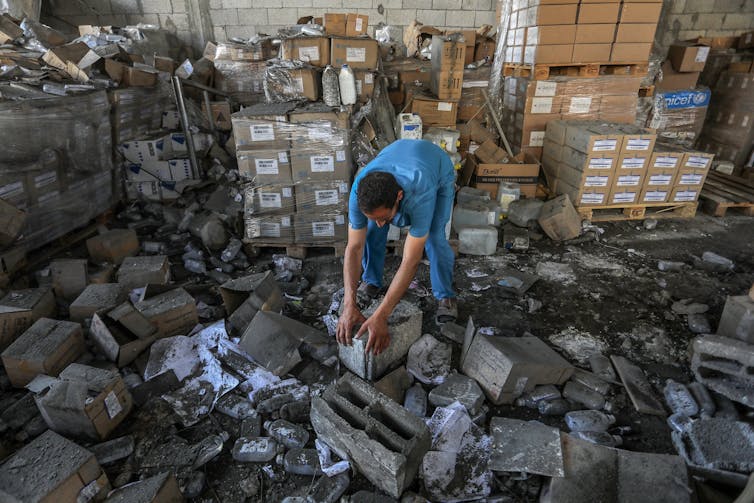
A Palestinian hospital worker inspects damage to a bombed pharmaceutical warehouse in Khan Yunis, southern Gaza, May 2025. Anas Mohammed/Shutterstock
In its July 2025 report, Physicians for Human Rights Israel claimed that the “broader targeting of Gaza’s healthcare system” amounts to a dismantling of the “existing conditions of life with effects into the future”, and should therefore be seen as a violation of the UN’s 1948 Convention On Genocide.
The doctors we met, alongside the other medical staff in the Sde Teiman facility, attempted to counteract the dehumanisation and abandonment of life that allows genocides to happen. In different ways, they tried to stop the atrocity that was evolving in front of them and to remedy the conditions that made it possible. Yet they still, in their view, found themselves complicit in the very crimes they tried to prevent.
As much as their story is a story of the impossible dilemmas these doctors faced, it is also a story of people who at least did what they could to counter this almost-inevitable complicity. Not only by insisting on the humanity of the people in front of them, and therefore also of their own, but also by refusing to remain silent.
Response to this article
The Israeli Medical Association (IMA) was contacted by The Conversation during the editing of this article. Its response, which is reflected in the final article, included the following comments:
According to Israeli Ministry of Health guidelines, all patients in the Sde Teiman medical facility were treated according to conventional Israeli medical standards, meaning the level of care there was higher than what they would have received in Gaza.
The IMA has continuously spoken out on humanitarian issues throughout this war and will continue to do so. On August 5 2025, we reaffirmed our long-standing policy on the assurance of medical care during armed conflict.
The destruction of Gaza’s healthcare is tragic, but there is no “mass killing, detention, torture and abuse of medical personnel” [as was stated in the Physicians for Human Rights Israel report, July 2025]. There have been some medical personnel that were suspected or proven terrorists. The IMA has made it very clear that all patients are to be treated equally.
The Israeli military was contacted by The Conversation about the findings in this article, but did not provide a response. When previously contacted by the BBC about allegations of abuse and torture in the Sde Teiman medical facility, it said it “completely rejects accusations of systematic abuse of detainees”.
Global security indicators suggest a significant deterioration in peace and stability. By most accounts, the world is now more violent and more dangerous than at any point in recent history.
In 2024, the number of state-based conflicts worldwide reached its highest level since 1946. Military expenditures have risen for 10 consecutive years, surpassing $2.7 trillion annually.
A record number of children have been victims of armed conflict, and gains in women’s rights hang in the balance around the world amid record levels of conflict.
The world is confronting converging crises. In September 2024, the United Nations convened the Summit for the Future, an initiative by the UN secretary-general aimed at addressing the collapse of the post-Cold War multilateral system, as well as the increasing number of conflicts and humanitarian emergencies. All of this is occurring in the climate change era.
These crises are interlinked, as violence becomes more likely as a consequence of rising temperatures and drought conditions. Militaries are also responsible for high levels of greenhouse gas emissions and environmental destruction from war amounting, in some cases, to the crime of ecocide.
Increased military spending
The overwhelming response to rising global violence and insecurity has been to boost military funding.
In Europe, this is partly driven by a justified fear of Russian aggression following its invasion of Ukraine in 2022. The risk of Russia dragging NATO into a conflict remains a constant concern, which was evident when Russia recently sent drones over Polish and Romanian airspace.
At the 2025 NATO summit, under pressure from the Americans, members pledged to allocate five per cent of their GDP annually to core defence needs and defence and security-related expenses by 2035. Most European countries had already increased their military budgets in 2024; so has Russia.
China’s military spending has consistently increased over the past 30 years. The United States, the world’s largest military spender, also boosted spending in 2024 as it continues to send vast amounts of military aid to Israel amid allegations it’s committing genocide against the Palestinians.
Meanwhile, organizations invested in peacemaking and peacebuilding continue to face funding shortages. The sector has been described as “being stripped and downsized.”
This was on display when Donald Trump’s administration defunded and shut down the United States Institute of Peace, a congressionally established institution, within months of taking office.
Nevertheless, peace organizations have struggled with funding cuts for some time, experiencing reduced support for core costs and a shift towards more project-based funding, which has increased competition and pressure from donors.
Nonetheless, violence against women and girls remains severe in places like Afghanistan, where the Taliban has created a system of gender apartheid, and Palestine, where the Reem Alsalem, UN Special Rapporteur on Violence Against Women and Girls, has called Israel’s deliberate killings of Palestinian women and girls a femi-genocide.
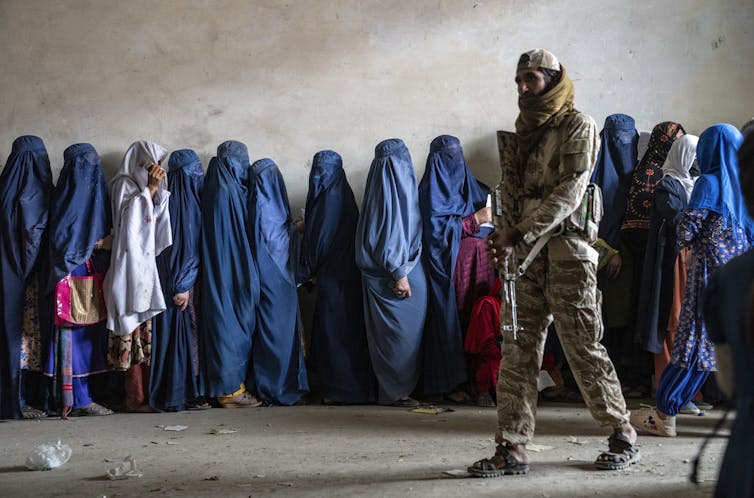
A Taliban fighter stands guard as women wait to receive food rations distributed by a humanitarian aid group in Kabul, Afghanistan, in May 2023. (AP Photo/Ebrahim Noroozi, File)
A global crisis of violence
In this more globally fragmented world, international peace architecture is crumbling amid growing tensions between powerful states, and humanitarian needs continue to rise largely due to violent conflicts. So why do governments persist in spending more on their militaries and arms, while investing very little in peacebuilding and peacemaking?
This trend is only making the world more dangerous for everyone. As Chris Coulter, executive director of the Berlin-based Berghof Foundation, a non-governmental and non-profit organization supporting people in conflict, reminds us: “A truly secure world needs dialogue and peacebuilding, not just defence budgets.”
Many others in the peace community have made similar appeals.
The world is still learning how to build sustainable peace. Many of the peace agreements signed over the past few decades have fallen apart, and parties have resumed fighting. Even in places where agreements have held, structural and everyday violence remains widespread, especially for women.
Deal-making rather than solutions
We are also witnessing a concerning shift from peacemaking to deal-making, along with the abandonment of liberal peacemaking norms, such as inclusivity and impartiality.
Further evidence of the failure of peacemaking is the move towards short “tactical pauses” in fighting rather than the negotiation of more sustainable solutions to conflicts.
Unless states rebalance their investments towards peacebuilding, the current trajectory points to escalating insecurity, further undermining international norms, human rights and security. Disproportionately relying on military spending for security purposes fails to prevent conflict and has a detrimental impact on gender equality, human rights and peacemaking.
States must resist the urge to continually increase their military budgets to the excessive levels they are now approaching; instead, they must also invest in peace research, mediation efforts and peacebuilding organizations.
Jenna Sapiano does not work for, consult, own shares in or receive funding from any company or organisation that would benefit from this article, and has disclosed no relevant affiliations beyond their academic appointment.
A tree-lined street in downtown Vancouver providing shade to pedestrians.(Adam Skoyles), CC BY
The housing affordability crisis is top of mind for many around the world, including Canadians. Between 2019 and 2024, house prices in Toronto and Montréal had an average annual increase of 6.7 per cent and 10.2 per cent, respectively.
Prices throughout the country are expected to continue increasing over the next decade and as a result, the pressure is intense to rapidly increase residential development.
Yet, municipal governments must balance this pressure with other tasks, like preparing for the effects of climate change. Some of the most pressing challenges for cities include meeting their housing and climate change goals without massive changes in land use to maintain green spaces and the benefits they provide to people.
Natural spaces like parks and woodlands provides many diverse benefits to city residents, from helping to cool off surrounding neighbourhoods to providing recreational areas.
The advantage these spaces have over grey infrastructure is that they can simultaneously help combat multiple challenges faced by cities, including poor air quality, heatwaves and flooding. When nature is intentionally used to combat these types of challenges, it is referred to as nature-based solutions.
Nonetheless, nature-based solutions are still rarely implemented in developments. Therefore, it’s important to identify and use key opportunities that can help communities balance their competing goals by increasing the use of nature-based solutions.
By highlighting these opportunities, we can inform municipal governments, developers and residents about how communities can be built to successfully combat climate change and other challenges.
In our recent study, we interviewed planners and developers throughout Ontario to identify these opportunities.
Nature in development
A green roof at the Woodward’s 43 building in downtown Vancouver. The trees provide habitat for birds, store carbon, absorb rainwater and cool surrounding areas. (Adam Skoyles), CC BY
Municipal planners and private land developers across Ontario are obliged by provincial policy to consider nature in their decisions about the planning and development of neighbourhoods.
However, this largely happens because they are required by law to protect municipal natural heritage systems (large woodlots or wetlands, for example), and not because they understand or support the benefits from nature, such as flood prevention.
Natural features that fall outside the natural heritage system, such as smaller woodlots or individual trees, are not protected by provincial policy. Instead, they can be protected by municipal policy or bylaws. However, these policies and bylaws vary, and some municipalities do a better job than others in protecting nature for their residents.
Developers often see protected nature as a barrier to development, but some of them also understand that it provides benefits to residents. Some try to make use of nature in innovative ways, like building natural pathways or naturalized creeks through a subdivision.
Unfortunately, municipalities sometimes push back against these innovations because of concerns over maintenance costs and worries about possible interference with infrastructure.
They stated that planning policies and bylaws are also starting to change in ways that can address these concerns. For example, many municipalities have established tree canopy targets or introduced more restrictive stormwater management requirements.
But climate change is rarely stated as the reason for a change to policy and bylaws. For example, a city might recognize tree cover is important for the city environment and introduce a tree protection bylaw, but that does not mean the bylaw addresses climate change.
Similarly, developers might plant trees to beautify a neighbourhood and make it more desirable for home buyers, but they might not do this to reduce climate change impacts. Addressing climate change only implicitly or as a side effect makes it much harder to co-ordinate different actions and can limit their overall effectiveness.
A main reason why the climate change benefits of nature are considered only implicitly is that planners and developers are uncertain about how reliable the information is for quantifying these benefits.
Another problem is that municipalities differ in how they address these issues, which creates highly variable regulatory conditions. Having province- or nation-wide standards would help fix this issue.
Though they are not yet widely implemented across Canada, some municipalities use green development standards as a key mechanism for introducing benefits of nature in developments. These standards work, for example, by mandating a minimum percentage of green landscaping on a development site. Unfortunately, Ontario’s recently passed Bill-17 has created uncertainty around these standards.
Ways to support nature-based solutions
There are key opportunities to support building more sustainable and climate-ready communities through increased use of nature-based solutions in developments. These opportunities largely come through policy, tools and people:
Provincial and municipal policy changes that consider the climate change benefits of nature-based solutions could help increase its use in development. This could be done by strengthening and expanding green development standards, like those currently implemented in some cities.
Developing and using tools that can rigorously quantify the climate change benefits of nature-based solutions could also have substantial impact. These tools could clarify the benefits of nature-based solutions and provide a solid argument for their increased use.
Collaboration between the public and private sectors is crucial to encourage increased use of nature-based solutions. Whether it is working together to craft realistic policy goals or to incorporate new tools, both sectors are key to ensuring changes are effective and efficient.
Adam Skoyles has received funding from Environment and Climate Change Canada.
Michael Drescher receives or has received funding from the Social Sciences and Humanities Research Council of Canada, Environment and Climate Change Canada, the Ontario Ministry of Agriculture, Food and Agribusiness, and the Natural Assets Initiative. Michael Drescher has had a volunteer position for Carolinian Canada and has worked with the Ontario Land Trust Association.
Economists have argued for years that council tax in the UK was rushed in and badly thought out. After the poll tax fiasco of the early 1990s, a substitute was urgent. The answer was council tax, but this was almost as unfit for purpose as the poll tax it replaced.
So if the experts know council tax is an unfair mess, why has there been no reform? There seem to be three main reasons. First, while everyone can think of big improvements, there is no consensus on what exactly should replace it. So although almost any sensible reform would be better, nothing changes.
The second reason is politicians’ and policymakers’ fear of rocking the boat. There would certainly be losers as well as winners from any decent reform – and those losers would complain vociferously.
Finally, council tax is cheap to collect and yields a lot of revenue. Perhaps there is also the fear that if the stone is lifted, we would also need to address the problem of paying for local government.
Historically “domestic rates” were the main source of local government income in the UK, but their contribution to local spending had fallen to a low of about 10% by 2010.
Since then, local governments have increasingly borne the burden of austerity, however, with the result that council tax now covers 30% of their spending. But the system is creaking. The Thatcher government’s deeply unpopular flat-rate “community charge” (poll tax) was a per-person levy supposed to pay for local services. Council tax was a hybrid – part property tax and partly a charge levied by local government.
These days, the house values providing the tax-base for council tax are still fixed at hypothetical 1991 values, even for new houses. But in the real world, UK house prices have increased, more than fivefold since 1991. And in London they have increased by a factor of eight compared to only 3.5 in the north, creating another problem of perceived fairness.
To make matters worse, the house values themselves were not used to calculate the tax, but rather eight value bands. These have not been updated, still stopping at £320,000 – reflecting the prices of a forgotten world. The result is the single occupant of a house worth £2.5 million may pay less than their married neighbours with a child in a one-bedroom flat.
The poll tax was supposed to represent a payment by residents for local services, so is levied on people not property. To retain an echo of this per-person charge, council tax has a 25% discount for single people. Paying is the liability of the occupier, not the owner.
So how could it be improved?
The most obvious reform for property taxes is to revalue all houses at current prices and wrap up stamp duty (another bad and unpopular tax) and council tax in a single payment. This could be charged as a percentage of a home’s value – a “proportional property tax” (PPT). Then all houses would be revalued every year.
There are objections and complications to such an obvious reform. It would be impossible to remove the government’s stamp duty revenues without replacing them. So a proportion of the total revenue from any PPT would go to the Treasury, with the rest helping to fund local government. The total revenues would still have to be divided between the two.
A second complication is older people who bought houses in the 1980s, for example, and who are now retired. For them, paying the same proportion of current values as those in work might be a stretch. One suggestion is that housing-rich, income-poor people could roll up their tax liability, so it was only paid when they sold the house or after they died.
However, some oppose such a delay since it removes the incentive to downsize (a move that would cost less if stamp duty had been abolished as part of the reform).
But could people suddenly find their liability leap fivefold if their house was revalued?. This fear is unfounded, since the tax would not be the assessed value of the house but some very small proportion – maybe 0.5%. Still, it might need strong and articulate political leadership to convince people of this.
As for the task of revaluing houses every year, these days AI can give accurate and almost instantaneous valuations. But homeowners should have a right to appeal the valuation. This would be free if experts judged the AI value was more than 5% out. If not however, the homeowner would be stuck with that valuation and would also have to pay the costs of the appeal.
To solve the problem of dividing the revenues of a PPT, there should be both nationally and locally set rates of tax on the value of houses. A recent calculation concluded that a rate of 0.11% of house values would offset the Treasury’s lost stamp duty revenue. On a £1 million house, that works out as £1,100 a year.
Councils would then set their own rates, with the receipts paying for local services. This would provide some incentive to permit new house building, as tax receipts would rise to cover the extra costs rather than disappearing into national coffers.
This would also resolve the problem of how to divide PPT revenues between local and national government and avoid imposing a sudden, massive jump in property tax liability for people in southeast England. This is where the majority of £1 million-plus houses are located.
Setting the local rate at a uniform national 0.51% – yielding the same national total as council tax – would mean the owner of the £1 million house suddenly being hit with an annual bill not of £1,100, but £6,200. This would create serious opposition. So where house prices were higher, the local rate could be lower and still yield the same revenue.
An advantage of the PPT is that it could also be an effective and collectable wealth tax. Houses are the biggest element in personal wealth so the national rate of PPT could even be set higher than the 0.11% rate, increasing Treasury revenues and addressing appeals for a wealth tax.
This article was co-published with LSE Blogs at the London School of Economics
Paul Cheshire receives funding from ESRC. He is affiliated with the Centre for Economic Performance.
Our understanding of female-male power relationships in animals has changed over time. Evolutionary biologists once thought that male mammals held clear-cut power over females. Later, species with pronounced female power over males were presented as exceptions in a landscape of strict male power. Spotted hyenas and certain primates, including bonobos and most lemurs, were examples of female dominance.
These views were reinforced by the assumption that males and females competed over different resources: males over females, and females over food.
But it’s not that simple, as the research of our colleagues and our own work on various primates has shown.
We reviewed studies of primate species and found that power relationships between the sexes varied significantly. In our sample, only 25 species exhibited clear male power, 16 exhibited clear female power, and the remaining species (about 70%) exhibited moderate or no sex biases in power. Most primate females can compete directly with males and often overpower them.
Size and strength differences between males and females
Males don’t always have all the power even when they are much larger and stronger than females.
In an earlier study, we showed that female mandrills in Gabon sometimes outrank males that are more than three times heavier than them.
Gorillas are an interesting case too. Apart from the big difference between males and females in body and canine tooth size, they are also typically presented (by scientists and non-scientists) as the species with the strictest male-biased power over females among great apes. They’ve become the “male power archetype” among animals.
We drew on 25 years of data about mountain gorillas in Uganda, to test if males strictly overpower females. Our findings suggest that females may leverage support from the most powerful males to gain power over other males. Or they may leverage access to themselves, and some males yield to females to acquire such access.
Our findings in mandrills and gorillas contribute a new perspective on the ecology and evolution of female-male power relationships in great apes and other primates that is not solely based on size and strength. They call for future work to investigate similar long-standing assumptions regarding the evolutionary origins of intersexual relationships across species.
Factors influencing power across primates
Our comparative analysis showed that intersexual power is influenced by different factors. Generally, females rely less than males on physical force and coercion in order to gain power. Female power is more likely to prevail in species that are monogamous, have little or no body size difference between adult females and males, and/or forage primarily in trees. These are conditions that give females greater control over reproduction.
By contrast, male power is more likely to prevail in species where males mate with multiple females, are primarily terrestrial, and have larger bodies or greater weapons than females.
Even when these conditions are met, however, there isn’t always a clear-cut bias in intersexual power of a social group or species.
Male mandrills and gorillas mate with multiple females and are terrestrial. In these species males generally have more power than females, and the highest ranking individual in a group’s social hierarchy is always a male. Yet power is not clear-cut and females can overpower other males.
What males and females compete for
Finally, our studies suggest that females and males often compete directly over access to resources.
In the comparative study across primates, we found that contests between females and males represented on average almost half of all contests in a social primate group.
In the study on mountain gorillas, we found that power relationships between females and males determined priority of access to a precious food resource, and when a female overpowered a male, she always had priority over him.
Altogether, these new findings suggest that:
most primate societies do not have clear-cut sex-biases in power
even in species with extreme male-biases in size and strength, females can overpower males
females and males compete directly over similar resources.
These findings refine our interpretation of intersexual relationships across animals. They caution against oversimplified views based solely on physical strength while neglecting the complexity of their social landscape.
Finally, this work shows that the human profile does not really resemble other primates where there is clear male dominance or clear female dominance. Instead, humans are closer to those “intermediate” species with moderate and flexible dominance relationships. This can inform attempts to reconstruct power relationships between men and women in early humans.
Elise Huchard receives funding from CNRS and the French Agence Nationale pour la Recherche (ANR).
Nikos Smit does not work for, consult, own shares in or receive funding from any company or organisation that would benefit from this article, and has disclosed no relevant affiliations beyond their academic appointment.
A special train left the Egyptian capital of Cairo for Aswan, a town close to the border with southern neighbour Sudan, in July 2025. The train, publicised by the Egyptian government as shiny, air-conditioned and free of charge, runs a weekly service. It is transporting Sudanese refugees who are willing to go back home. Sudan, however, has been in the midst of civil war since April 2023.
The train arrives in Aswan after around 12 hours. Travellers then continue via bus or ferry into Sudan. Little is known about what happens when travellers arrive in the country.
As at mid-2025, more than 190,000 Sudanese refugees had gone back home from Egypt. This is a five-fold increase in returns from 2024. Egypt hosts the largest number of Sudanese who have fled the war. More than 1.2 million Sudanese have crossed into Egypt since April 2023, making them the largest refugee community there.
The army-led Sudanese government – which regained control of Khartoum in March 2025 after losing the capital two years earlier – promotes return as part of its alleged efforts for post-conflict stabilisation and reconstruction.
However, camouflaged behind Egypt’s voluntary return programme is a far more complex political reality, with refugees in the centre.
Initially, Egypt kept its borders relatively open, allowing women, children and older men to enter visa-free under a long-standing deal with Sudan.
As refugee numbers rose, however, new restrictions were imposed and brutally enforced from June 2023. These restrictions were codified in a new law adopted in 2024.
Egypt has a contentious history of refugee protection. In recent years, refugees have faced hostile sentiments from host communities and rising xenophobia. Sudanese refugees in particular have been denied access to public spaces or rental property, and have faced physical violence.
The government’s response has focused on appeasing domestic audiences in the face of economic decline by providing external scapegoats. This does not bode well for the future of refugee protection in Egypt.
Countries often scapegoat refugees and other migrants to retain legitimacy with their own citizens, especially when there are pervasive inequalities that states cannot or will not bridge. This is the case in Egypt.
Egypt and Sudan’s shifting relations
Refugee hosting is never just a question of humanitarian or ethical protection measures. It is deeply embedded in domestic and external policy interests, as well as the global geopolitical context.
Egypt changed its open-border agreement with Sudan on 10 June 2023. It required all Sudanese to obtain visas before entry. Wait times stretched to two to three months, and an illicit market of visa “facilitators” sprang up, charging between US$1,500 and US$2,500 per person.
Egypt’s reception of displaced Sudanese took a more restrictive and controlling approach, including deportations. Its asylum law, passed in December 2024, formalises these harsh measures. Vague national security clauses enable status revocations and penalise the “illegal” entry of refugees.
While the civil war continues to rage in many regions of Sudan, army-led forces have control of the centre and east of Sudan, supporting the push for the special train programme.
Additionally, Egypt has been a core beneficiary of European Union (EU) efforts to stop onward migration from Africa and the Middle East to Europe. Though Egypt is no longer one of the most significant routes to Europe – this has shifted to Libya – Egyptians make up one of the largest national groups of irregular migrants arriving in Europe. With rising numbers of refugees in Egypt, the EU fears the situation could spiral.
To address this, Egypt signed a 7.4 billion euro (US$8.7 billion) deal with the EU in March 2024 to increase control of its (sea) borders and cooperate on returns from Europe. Thus, Egypt’s return of refugees to Sudan is in the EU’s interests.
Under such complicated settings, refugees become pawns. Egypt’s train, therefore, serves domestic policy interests of reducing Sudanese refugees, addresses the general hostile environment these refugees face and supports Cairo’s external policy interests.
What about the refugees?
When it comes to Sudan, the big question is whether states are violating a core tenet of refugee protection: the principle of non-refoulement. This states that countries cannot return refugees to a country where they would face torture, cruel, inhuman or degrading treatment or punishment and other irreparable harm.
Many Sudanese may choose to return not because they’re hopeful but as a result of economic hardship in Egypt, uncertainty with regard to their legal status, and fear.
The UN Refugee Agency advances three “durable solutions” for the return of refugees:
resettlement to a third country, which has become increasingly difficult in the current global environment. The US, for instance, suspended all its resettlement programmes in January 2025.
Though army-controlled areas in Sudan like Khartoum, Sennar and El Gezira have seen relative calm, key conflict zones like Darfur and Kordofan are still actively contested. Humanitarian agencies caution that the ongoing violence undermines the voluntary nature of return.
What can be done
Usually after a conflict ends, the UN Refugee Agency draws up tripartite agreements with the countries of origin and asylum, and itself. This establishes the conditions for refugees to return and establishes proper reintegration programmes.
In the Egypt and Sudan case, however, it’s not clear who is financing the return train. Where is the tripartite agreement between Sudan, Egypt and the UN Refugee Agency? Is this even on the table given the continuing conflict in Sudan?
The trickiest part is what happens in the long run for those returning to conflict. This can amount to what scholars call “slow deportation”, where return, even when allegedly voluntary, undermines a serious commitment to refugee protection.
What Sudanese refugees need is not air-conditioned trains. Rather, they need protection of their full political, social and legal rights, as the world promised in the aftermath of the atrocities of the second world war in 1951.
Franzisca Zanker receives funding from the European Research Council for the project “The Political Lives of Migrants: Perspectives from Africa” (Grant no: 101161856).
Dina Wahba does not work for, consult, own shares in or receive funding from any company or organisation that would benefit from this article, and has disclosed no relevant affiliations beyond their academic appointment.
A little blue pill is creating a stir in Hollywood – and no, it’s not Viagra. It’s propranolol, a beta blocker originally designed for heart conditions, that’s now making its way into dressing rooms, award ceremonies and even first dates.
At red carpet events this year, actors Kristen Bell, Rachel Sennott and Natasha Rothwell all mentioned taking beta blockers. But they weren’t the first.
In 2022, Khloé Kardashian admitted she borrows her mother’s pills to calm her nerves. And last year, at the Golden Globe awards, Robert Downey Jr. quipped: “I took a beta blocker, so this will be a breeze.” What’s behind this unlikely trend – and how did a drug for heart disease become a Hollywood anxiety fix?
To understand why A-listers are reaching for heart medication, we need to look at how these drugs actually work.
Beta blockers, such as propranolol and atenolol, were first developed in the 1960s to treat heart conditions such as high blood pressure, arrhythmias (irregular heart rate) and angina. Doctors soon discovered they also worked for other conditions, including migraines and an overactive thyroid.
The use of beta blockers for anxiety was first identified in 1965, when they demonstrated calming effects during clinical trials aimed at treating rapid heart rate associated with hyperthyroidism. Although licensed to treat anxiety in the UK, propranolol is increasingly prescribed off-label (prescribing a drug for a condition it’s not officially approved to treat, based on clinical judgment and available evidence) in the US as it remains unlicensed by the Food and Drug Administration.
So how do beta blockers help with anxiety? Adrenaline is a hormone that activates the body’s fight-or-flight response, often causing symptoms such as rapid heartbeat, sweating and trembling. Beta blockers work by blocking adrenaline’s effects on specific sites in the body called beta receptors.
When beta blockers attach to the beta receptors in the heart, they prevent adrenaline from exerting its usual effects. This leads to a slower heart rate and weaker heart contractions. This, in turn, lowers blood pressure by reducing the heart’s demand for oxygen. By blocking adrenaline, beta blockers help to reduce the physical symptoms of anxiety – racing heart, trembling hands and sweating.
But how well does it actually work for anxiety? The research paints a complex picture. In one study, patients who took propranolol had significantly lower anxiety and depression compared with those who received a placebo.
Another study looked at two different doses of propranolol (20mg and 40mg) and found that both doses led to noticeable improvements in anxiety levels compared with participants who didn’t take any anxiety medication.
However, a recent review of the evidence concluded that while propranolol may help with physical symptoms of anxiety, the evidence that it helps in comparison to other anxiety medication is limited – a lot of the clinical trials have few participants and are of low quality.
Unlike Valium (diazepam), the benzodiazepine known in the 60s as “mother’s little helper”, propranolol is not addictive. It doesn’t produce sedation or euphoria, and its risk of dependence is low. However, it’s not without risks or side-effects.
Common side-effects include dizziness, fatigue, cold hands and feet, and vivid dreams. More serious risks – though rare – include heart failure, breathing difficulties and allergic reactions.
People with asthma, diabetes or certain heart conditions need to consult a doctor or pharmacist as beta blockers are often unsuitable for them.
There have also been increasing cases of propranolol being used in overdose. It may cause your heart to slow down too much, lead to dizziness, shaking or seizures and make breathing difficult.
The prescription reality
Despite not appearing in national guidelines, doctors are increasingly prescribing propranolol for anxiety. Research shows doctors view it as a pragmatic, low-risk option – especially for patients on long waiting lists for counselling or reluctant to take antidepressants.
Propranolol targets the body’s response to anxiety, not the underlying psychological causes. It may help someone deliver a speech without shaking or take an exam without sweating, but it won’t address persistent worry or panic attacks. As such, it’s best seen as a short-term aid rather than a long-term solution.
Before you start raiding your mum’s medicine cabinet for a dose of red-carpet calm, remember it’s a beta blocker, not a bravery booster. It won’t fix your fear of public speaking or make you smoother on a first date – though it might stop your hands from shaking while you try.
Dipa Kamdar does not work for, consult, own shares in or receive funding from any company or organisation that would benefit from this article, and has disclosed no relevant affiliations beyond their academic appointment.