Autocrats have long lists of political enemies. This is how Donald Trump has tried to silence his

Source: The Conversation – Global Perspectives – By Justin Bergman, International Affairs Editor, The Conversation

The list of people Donald Trump has punished or threatened to punish since returning to office is long. It includes the likes of James Comey, Letitia James, John Bolton, as well as members of the opposition, such as Adam Schiff, Mark Kelly and Kamala Harris.

In fact, he has gone so far as to call Democrats “the enemy from within”, saying they are more dangerous than US adversaries like Russia and China.

According to Lucan Way, a professor of democracy at the University of Toronto, when a leader attacks the opposition like this, it’s a clear sign a country is slipping into authoritarianism.

As Way says in episode 5 of The Making of an Autocrat:

 In other kind of countries with weaker justice systems, you can literally jail members of opposition or bankrupt them. In a country like the United States, where the rule of law is quite robust, this is not possible, you can’t just jail rivals at will.

But Trump has other ways of making the cost of opposing him too high for his critics to bear. This includes investigations, lawsuits, audits, personal attacks – anything to distract and silence them.

The effect is his opponents become much more reluctant to engage in behaviour they know that Trump won’t like, Way says.

So it really has this kind of broader silencing effect that I think is quite pernicious.

Listen to the interview with Lucan Way at The Making of an Autocrat podcast, available at Spotify, Apple, or wherever you get your podcasts.

This episode was written by Justin Bergman and produced and edited by Isabella Podwinski and Ashlynne McGhee. Sound design by Michelle Macklem.

Newsclips in this episode WCNC, MS NOW, WHAS11, and Radio Free Europe.

Listen to The Conversation Weekly via any of the apps listed above, download it directly via our RSS feed or find out how else to listen here. A transcript of this episode is available via the Apple Podcasts or Spotify apps.

The Conversation

Lucan Way has received funding from the Social Science and Humanities Research Council of Canada.

ref. Autocrats have long lists of political enemies. This is how Donald Trump has tried to silence his – https://theconversation.com/autocrats-have-long-lists-of-political-enemies-this-is-how-donald-trump-has-tried-to-silence-his-272252

From Kathmandu to Casablanca, a generation under surveillance is rising up

Source: The Conversation – Global Perspectives – By Amani Braa, Assistant lecturer, Université de Montréal

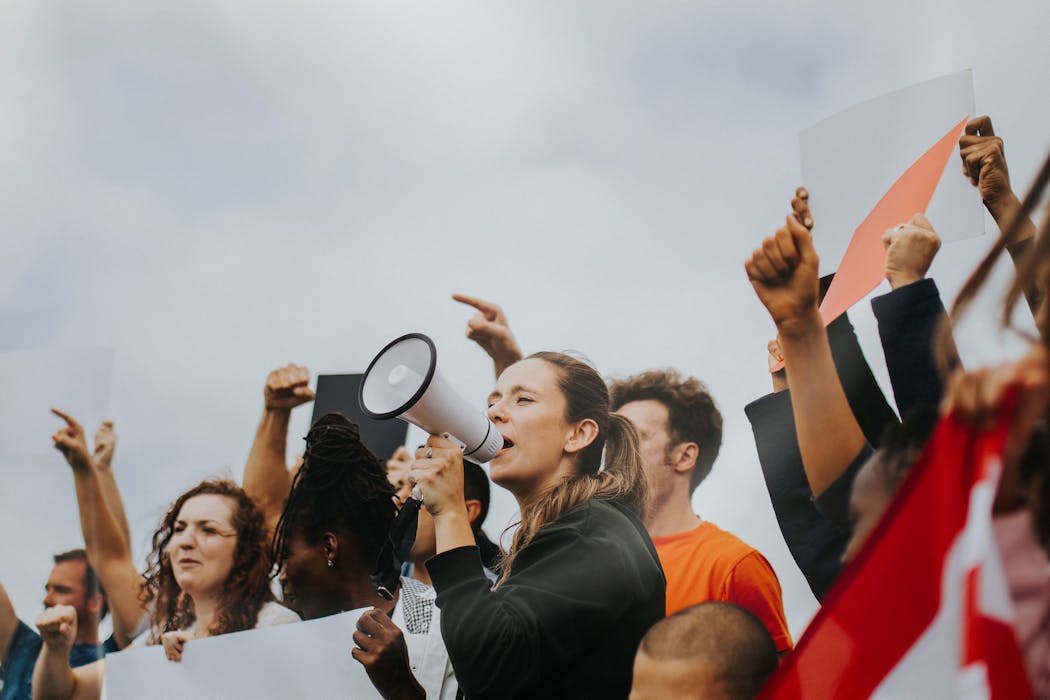
In 2025, youth-led protests erupted everywhere from Morocco to Nepal, Madagascar and Europe. A generation refused to remain silent in the face of economic precariousness, corruption and eroding democratic norms and institutions.

Although they arose in different contexts, all the protests were met with the same playbook of responses: repression, contempt and suspicion towards youth dismissed as irresponsible.

Mobilization across several continents

In Morocco, the #Gen212 movement, which originated on social media, denounced the high cost of living, police violence, muzzling of civil society and lack of opportunities. This mobilization, which began digitally on platforms such as Discord, quickly spilled over from screens into concrete action taken in several cities across the country.

In Madagascar, young people took to the streets at the end of September in a climate of high pre-election tensions to demand real change before being violently repressed. In Nepal, thousands of young people occupyied public spaces, demanding genuine democracy and an end to the corruption that is undermining the country.


À lire aussi :
Gen Z protests brought about change in Nepal via the powers — and perils — of social media


In Europe, too, youth are mobilizing against authoritarian excesses and persistent inequalities. In Italy, France, and Spain, young people are taking to the streets to protest gender-based violence, unpopular reforms and police repression and to demand recognition of their political rights.

Although the contexts are very different, these mobilizations share the same goal of refusing injustice and demanding that marginalized voices be heard.

Authorities call youth immature and irrational

These movements are often treated as fleeting emotional outbursts, even though they express structured political demands for social justice, freedom, economic security, access to dignity and participation.

Yet the responses by governments have been heading in a totally different direction — towards increased repression. Young protesters are being monitored, arrested, stigmatized and sometimes accused of treason or of being manipulated by foreign powers.

In Morocco, for example, nearly 2,500 young people have been prosecuted, with more than 400 convicted — including 76 minors — since September 2025. The charges include “group rebellion,” “incitement to commit crimes” and participating in armed gatherings. More than 60 prison sentences have been handed down, some of them for up to 15 years.

This mass judicialization of a peaceful movement has been denounced by Amnesty International, which points to excessive uses of force and the increasing criminalization of protest.

In Madagascar, the response was just as brutal: at least 22 deaths, more than 100 injuries and hundreds of arbitrary arrests were recorded during youth demonstrations against corruption and electoral irregularities.

According to the United Nations, security forces used rubber bullets and tear gas to disperse the crowds. The crisis culminated in the flight of President Andry Rajoelina, which confirmed that, far from defusing the conflict, the crackdown revealed institutions’ fragility in the face of politicized youth.


À lire aussi :
Coups in Africa: how democratic failings help shape military takeovers – study


A discourse referring to parental responsibility

The actions of the young people who have been arrested during recent protests are often attributed to lack of parental responsibility.

In Morocco, for example, the Home Office has called on parents to supervise and guide their children. In Indonesia, the Philippines, Peru and Nepal alike, authorities call on parents to supervise, guide or restrain their children, shifting the political conflict into the family sphere.

This trend illustrates what national security researcher Fatima Ahdash calls the “familialization” of politics: instead of addressing the social, economic and ideological causes of protests, governments turn them into a matter of home education, depoliticizing, individualizing and privatizing the protests in the process. Families become the prism through which young people’s political behaviour is interpreted, evaluated and sometimes punished.

This response isn’t new, but it’s taking on unprecedented proportions in a global context of democratic fragility and authoritarian recentring of power marked by the restriction of freedoms, the control of protest and the criminalization of social movements.

States are adopting a defensive stance, treating youth engagement not as a civic resource but as a threat to be neutralized. This hardened stance is symptomatic of a deeper problem: youth are refusing to be satisfied with empty promises and forced compromises, but they face powers unable to recognize the legitimacy of their anger and aspirations..

Silencing criticism

Repression in response to criticism has become a tactic governments use to avoid being questioned. But this strategy is becoming increasingly fragile.

That’s because first, it denies the legitimacy of the anger being expressed. Secondly, it ignores a fundamental reality: that this anger is rooted in collective experiences of social decline, discrimination and political powerlessness. It’s not empty anger. It expresses a demand for social, political and environmental change that institutions are struggling to grasp.

Unlike mobilizations likr the Arab Spring of 2011, the current protests led by Generation Z are horizontal; they are decentralized, have no identifiable leaders, and are rooted in the urgency of the present.

They also originate on social media, organize themselves into autonomous micro-cells, reject structuring ideological narratives, and favour a politics of everyday life — meaning they reject precariousness while calling for immediate dignity and concrete justice.

Their esthetic is fluid, borrowing from digital codes — memes, manga, visual remixes — and their forms circulate through emotional affinities rather than imitation. This makes them elusive to the powers that be, but powerfully viral.

These movements stir up political emotions (anger, but also hope) and create new languages, digital practices and forms of engagement that often lie outside traditional parties.

One unifying visual element keeps coming up: the black flag with a skull and crossbones wearing a straw hat, a symbol taken from the manga One Piece. More than just a nod to pop culture, this Jolly Roger embodies a thirst for justice, freedom and rebellion shared by a globalized youth, from Kathmandu to Rome.

In Serbia, for example, a student uprising in early 2025 with no visible leader united thousands of people around a simple slogan: more democracy. The movement spread to other generations, without any party or hierarchy, challenging a government that tried to stifle the protests through force and stigmatization.

Evading censorship

Meanwhile, the young people of Cuba Decide are mobilizing on digital platforms to demand a democratic referendum in the midst of constant surveillance. Thanks to encrypted tools and alliances abroad, they are circumventing censorship and amplifying their voices beyond borders.

While criminalizing young people and their protests may slow their momentum, it doesn’t solve anything. It only undermines the social contract, fuels political disenchantment and reinforces polarization. What’s more, it risks pushing demands for reform to outright refusal of the status quo.

Recent protests remind us of an obvious fact: young people are not “the future,” but political entities in the present. Governments need to hear not just the noise of protest, but the clarity of the demands: justice, dignity, representation and a future.

La Conversation Canada

Amani Braa received funding from the Fonds de Recherche du Québec – Sociétés et Culture (FRQ-SC).

ref. From Kathmandu to Casablanca, a generation under surveillance is rising up – https://theconversation.com/from-kathmandu-to-casablanca-a-generation-under-surveillance-is-rising-up-270624

The battle over a global energy transition is on between petro-states and electro-states – here’s what to watch for in 2026

Source: The Conversation – USA (2) – By Jennifer Morgan, Senior Fellow, Center for International Environment and Resource Policy and Climate Policy Lab, Tufts University

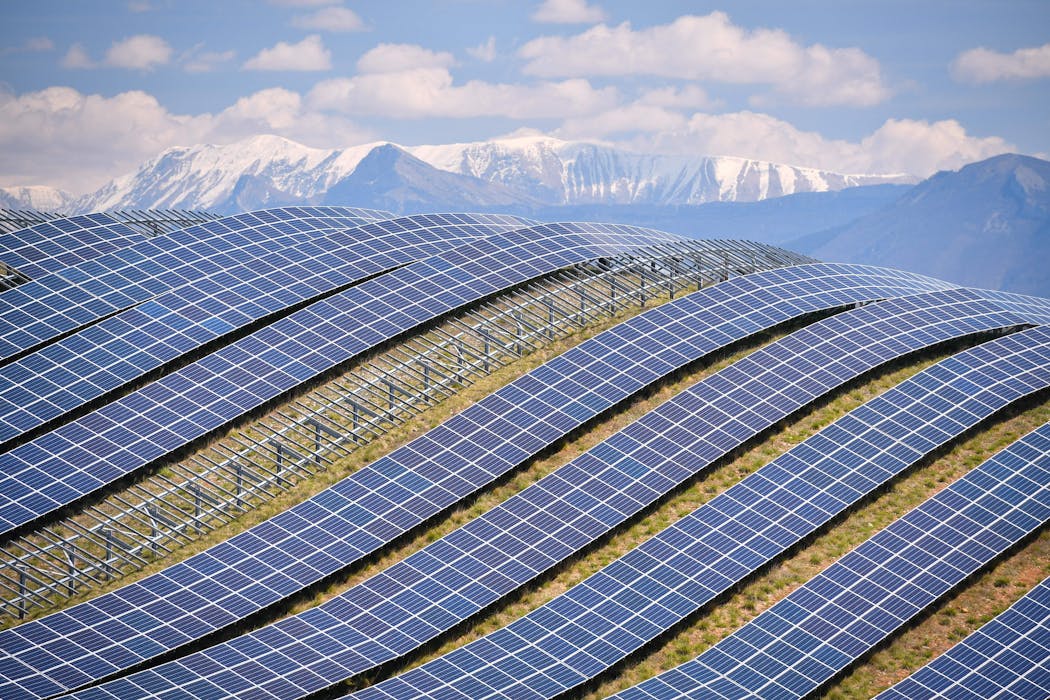
Solar power has been expanding quickly, but natural gas is also booming. Gerard Julien/AFP via Getty Images

Two years ago, countries around the world set a goal of “transitioning away from fossil fuels in energy systems in a just, orderly and equitable manner.” The plan included tripling renewable energy capacity and doubling energy efficiency gains by 2030 – important steps for slowing climate change since the energy sector makes up about 75% of the global carbon dioxide emissions that are heating up the planet.

The world is making progress: More than 90% of new power capacity added in 2024 came from renewable energy sources, and 2025 saw similar growth.

However, fossil fuel production is also still expanding. And the United States, the world’s leading producer of both oil and natural gas, is now aggressively pressuring countries to keep buying and burning fossil fuels.

The energy transition was not meant to be a main topic when world leaders and negotiators met at the 2025 United Nations climate summit, COP30, in November in Belém, Brazil. But it took center stage from the start to the very end, bringing attention to the real-world geopolitical energy debate underway and the stakes at hand.

Brazilian President Luiz Inácio Lula da Silva began the conference by calling for the creation of a formal road map, essentially a strategic process in which countries could participate to “overcome dependence on fossil fuels.” It would take the global decision to transition away from fossil fuels from words to action.

President Lula Da Silva gestures with his hands as he speaks in front of a picture of the Amazon.
Brazilian President Luiz Inácio Lula da Silva speaks at COP30, where he promoted the idea of a road map to help the world speed up its transition from fossil fuels to clean energy.
AP Photo/Andre Penner)

More than 80 countries said they supported the idea, ranging from vulnerable small island nations like Vanuatu that are losing land and lives from sea level rise and more intense storms, to countries like Kenya that see business opportunities in clean energy, to Australia, a large fossil-fuel-producing country.

Opposition, led by the Arab Group’s oil- and gas-producing countries, kept any mention of a “road map” energy transition plan out of the final agreement from the climate conference, but supporters are pushing ahead.

I was in Belém for COP30, and I follow developments closely as former special climate envoy and head of delegation for Germany and senior fellow at the Fletcher School at Tufts University. The fight over whether there should even be a road map shows how much countries that depend on fossil fuels are working to slow down the transition, and how others are positioning themselves to benefit from the growth of renewables. And it is a key area to watch in 2026.

The battle between electro-states and petro-states

Brazilian diplomat and COP30 President André Aranha Corrêa do Lago has committed to lead an effort in 2026 to create two road maps: one on halting and reversing deforestation and another on transitioning away from fossil fuels in energy systems in a just, orderly and equitable manner.

What those road maps will look like is still unclear. They are likely to be centered on a process for countries to discuss and debate how to reverse deforestation and phase out fossil fuels.

Over the coming months, Corrêa plans to convene high-level meetings among global leaders, including fossil fuel producers and consumers, international organizations, industries, workers, scholars and advocacy groups.

For the road map to both be accepted and be useful, the process will need to address the global market issues of supply and demand, as well as equity. For example, in some fossil fuel-producing countries, oil, gas or coal revenues are the main source of income. What can the road ahead look like for those countries that will need to diversify their economies?

A man speaks into a microphone. Behind him, a person holds a sign reading: 'Shell: Own up, clean up, pay up'
Nigeria’s Bodo community is suing Renaissance Africa Energy Company Limited, an oil consortium that acquired Shell’s Nigerian subsidiary, over two major oil spills in the Niger Delta in 2008. Shell admitted liability and settled with the community in 2014, committing to cleanup efforts. However, the Bodo community has been critical of the quality and transparency of Shell’s cleanup, and is seeking further damages and remediation. Here, activists protest the company’s actions.
Leon Neal/Getty Images

Nigeria is an interesting case study for weighing that question.

Oil exports consistently provide the bulk of Nigeria’s revenue, accounting for around 80% to over 90% of total government revenue and foreign exchange earnings. At the same time, roughly 39% of Nigeria’s population has no access to electricity, which is the highest proportion of people without electricity of any nation. And Nigeria possesses abundant renewable energy resources across the country, which are largely untapped: solar, hydro, geothermal and wind, providing new opportunities.

What a road map might look like

In Belém, representatives talked about creating a road map that would be science-based and aligned with the Paris climate agreement, and would include various pathways to achieve a just transition for fossil-fuel-dependent regions.

Some inspiration for helping fossil-fuel-producing countries transition to cleaner energy could come from Brazil and Norway.

In Brazil, Lula asked his ministries to prepare guidelines for developing a road map for gradually reducing Brazil’s dependency on fossil fuels and find a way to financially support the changes.

His decree specifically mentions creating an energy transition fund, which could be supported by government revenues from oil and gas exploration. While Brazil supports moving away from fossil fuels, it is also still a large oil producer and recently approved new exploratory drilling near the mouth of the Amazon River.

Norway, a major oil and gas producer, is establishing a formal transition commission to study and plan its economy’s shift away from fossil fuels, particularly focusing on how the workforce and the natural resources of Norway can be used more effectively to create new and different jobs.

Both countries are just getting started, but their work could help point the way for other countries and inform a global road map process.

The European Union has implemented a series of policies and laws aimed at reducing fossil fuel demand. It has a target for 42.5% of its energy to come from renewable sources by 2030. And its EU Emissions Trading System, which steadily reduces the emissions that companies can emit, will soon be expanded to cover housing and transportation. The Emissions Trading System already includes power generation, energy-intensive industry and civil aviation.

Fossil fuel and renewable energy growth ahead

In the U.S., the Trump administration has made clear through its policymaking and diplomacy that it is pursuing the opposite approach: to keep fossil fuels as the main energy source for decades to come.

The International Energy Agency still expects to see renewable energy grow faster than any other major energy source in all scenarios going forward, as renewable energy’s lower costs make it an attractive option in many countries. Globally, the agency expects investment in renewable energy in 2025 to be twice that of fossil fuels.

At the same time, however, fossil fuel investments are also rising with fast-growing energy demand.

The IEA’s World Energy Outlook described a surge in new funding for liquefied natural gas, or LNG, projects in 2025. It now expects a 50% increase in global LNG supply by 2030, about half of that from the U.S. However, the World Energy Outlook notes that “questions still linger about where all the new LNG will go” once it’s produced.

What to watch for

The Belém road map dialogue and how it balances countries’ needs will reflect on the world’s ability to handle climate change.

Corrêa plans to report on its progress at the next annual U.N. climate conference, COP31, in late 2026. The conference will be hosted by Turkey, but Australia, which supported the call for a road map, will be leading the negotiations.

With more time to discuss and prepare, COP31 may just bring a transition away from fossil fuels back into the global negotiations.

The Conversation

Jennifer Morgan does not work for, consult, own shares in or receive funding from any company or organization that would benefit from this article, and has disclosed no relevant affiliations beyond their academic appointment.

ref. The battle over a global energy transition is on between petro-states and electro-states – here’s what to watch for in 2026 – https://theconversation.com/the-battle-over-a-global-energy-transition-is-on-between-petro-states-and-electro-states-heres-what-to-watch-for-in-2026-272205

Facing protests and new threats from Trump, is the Iranian regime on its last legs?

Source: The Conversation – Global Perspectives – By Amin Saikal, Emeritus Professor of Middle Eastern Studies, Australian National University; The University of Western Australia; Victoria University

Iran’s Islamic regime is once again faced with nationwide popular protests and a potential confrontation with Israel and the United States.

Protesters have flooded Tehran and many other major cities in recent days, calling for the downfall of the regime. The US and Israel have also voiced strong support for the protesters.

At least 20 people have reportedly been killed, with around 1,000 arrested.

Despite the regime’s increasing vulnerability, though, it might be too early to write its obituary.

Why Iranians are so angry

Public discontent with the Islamic regime has been building for years.

The current wave of protests was triggered in late December by the collapse of the Iranian currency and the rising cost of living. However, the public’s fury is rooted in wider societal grievances. These include:

  • the regime’s theocratic impositions, such as the mandatory headscarf (hijab) rule that women are increasingly flouting in public
  • widespread corruption and mismanagement of the economy under severe US-led sanctions
  • the costly support for a network of proxy militant groups in Lebanon, Gaza, Iraq and Yemen, and
  • the regime’s top-down approach to water governance that has left the country increasingly vulnerable to drought.

The current wave of protests was initially sparked by bazaaris (traditional business owners and shopkeepers). However, in the last week, it has swelled to include university students and those from the “Women, Life and Freedom” movement that took to the streets following the death of a young woman, Mahsa Amini, in the custody of the morality police in 2022.

The regime severely cracked down on those protests, but they have continued in other forms over the past few years.

More threats from Trump

The regime is also facing external pressure from the US and Israel.

US President Donald Trump has warned the Iranian government not to kill protesters, saying the US was “locked and loaded” to act.

In recent days, both Trump and Israeli Prime Minister Benjamin Netanyahu have also threatened another round of military action if Tehran rebuilds its nuclear capability and refuses to curtail its missile industry.

Netanyahu, who has relentlessly castigated the regime as an existential threat, initiated a 12-day war with Iran last June. The US briefly entered the war by bombing Iran’s three main nuclear sites, after which Trump claimed to have “obliterated” Iran’s nuclear program.

Many experts and the UN’s nuclear watchdog, the International Atomic Energy Agency (IAEA), have since cast doubt on this claim.

The foundations of the Iranian program reportedly survived the US and Israeli bombings. Some 400 kilograms of highly enriched uranium, still missing, could potentially enable Tehran to assemble a few nuclear bombs in moments of desperation. There also haven’t been new talks between Iran and Western powers to negotiate a new nuclear deal, either.

In recent days, Trump has accused Tehran of seeking new nuclear sites and attempting to replenish its missile stocks, threatening to “eradicate that build-up”.

Prepared to defend itself

While unpopular, the Iranian regime can still rely on many repressive instruments of state power.

These include the powerful Islamic Revolutionary Guard Corps (IRGC) and the well-equipped and well-trained Basij paramilitary force used to crack down on dissent. The regime also has intelligence services, revolutionary committees and a network of clerical circles.

The fortunes of these forces are closely tied to the survival of the regime. Many of them are headed by figures who were involved in setting them up following the toppling of Shah Mohammad Reza Pahlavi’s pro-Western monarchy in the revolution of 1978–79. They are fully cognisant of the fact that if the regime goes down, they will, too.

The regime has also prepared to defend itself long-term against any foreign threats. It has invested heavily in an asymmetrical warfare strategy and developed a potent defence industry. Since the end of the war with Israel, it has reportedly focused on rebuilding its missile capabilities and acquiring fresh supplies of arms and air defence systems from Russia and China.

Yet, the Islamic government still faces a critical situation, especially following the Trump administration’s toppling of Venezuela’s leader in recent days.

Many Iranians both inside and outside the country want to see the fall of the clerical regime and Reza Pahlavi, the son of the last shah, to return from exile to head a transitional government to democratise Iran.

However, Trump has reportedly not favoured regime change in Iran, possibly fearing the political transition may not be orderly and could be as bloody and disruptive as the one that followed the shah’s fall in 1979. He has also made clear his focus is on the Western hemisphere.

Iran is a very complex country with a diverse population of 93 million people. It is also strategically placed, with the longest coastline on the oil-rich Persian Gulf in a traditional zone of major power rivalry. These considerations should be on Trump’s mind when deciding how to handle Iran.

The Conversation

Amin Saikal does not work for, consult, own shares in or receive funding from any company or organisation that would benefit from this article, and has disclosed no relevant affiliations beyond their academic appointment.

ref. Facing protests and new threats from Trump, is the Iranian regime on its last legs? – https://theconversation.com/facing-protests-and-new-threats-from-trump-is-the-iranian-regime-on-its-last-legs-272795

Venezuela, Gaza, Ukraine: is the UN failing?

Source: The Conversation – Global Perspectives – By Juliette McIntyre, Senior Lecturer in Law, Adelaide University

The United Nations turned 80 in October last year; a venerable age for the most significant international organisation the world has ever seen.

But events of recent years – from last weekend’s Trumpian military action to seize Venezuelan President Nicolás Maduro and Russia’s unlawful invasion of Ukraine in 2022, to the ongoing humanitarian catastrophe in Gaza – represent major challenges to the UN system.

Many are now asking whether the United Nations has any future at all if it cannot fulfil its first promise of maintaining international peace and security.

Has the UN reached the end of its lifespan?

The UN Security Council

The organ of the UN that plays the main role maintaining peace and security is the UN Security Council.

Under the rules established by the UN Charter, military action – the use of force – is only lawful if it has been authorised by a resolution from the UN Security Council (as outlined in Article 42 of the Charter), or if the state in question is acting in self-defence.

Self-defence is governed by strict rules requiring it to be in response to an armed attack (Article 51). Even then, self-defence is lawful only until the Security Council has stepped in to restore international peace and security.

The Security Council is made up of 15 member states:

  • five permanent (China, France, Russia, the United Kingdom and the United States – also known as the P5)

  • ten non-permanent members elected for two-year terms.

Resolutions require nine affirmative votes and no veto from any permanent member, giving the P5 decisive control over all action on peace and security.

This was set up expressly to prevent the UN from being able to take action against the major powers (the “winners” of the second world war), but also to allow them to act as a balance to each other’s ambitions.

This system only works, however, when the P5 agree to abide by the rules.

Could the UN veto system be reformed?

As aptly demonstrated by the Russians and Americans in recent years, the veto power can render the Security Council effectively useless, no matter how egregious the breach of international law.

For that reason, the veto is often harshly criticised.

As one of us (Tamsin Paige) has explained previously, however, self-serving use of the veto power (meaning when a member state uses its veto power to further its own interests) may be politically objectionable but it is not legally prohibited.

The UN Charter imposes no enforceable limits on veto use.

Nor is there any possibility of a judicial review of the Security Council at the moment.

And herein lies one of the most significant and deliberate design flaws of the UN system.

The charter places the P5 above the law, granting them not only the power to veto collective action, but also the power to veto any attempt at reform.

Reforming the UN Security Council veto is thus theoretically conceivable – Articles 108 and 109 of the charter allow for it – but functionally impossible.

Dissolving and reconstituting the UN under a new charter is the only structural alternative.

This, however, would require a level of global collectivism that presently does not exist. One or more of the P5 would likely block any reform or redesign that would see the loss of their veto power.

An uncomfortable truth

It does, therefore, appear as though we are witnessing the collapse of the UN-led international peace and security system in real time.

The Security Council cannot – by design – intervene when the P5 (China, France, Russia, the UK and US) are the aggressors.

But focusing only on the Security Council risks missing much of what the UN actually does, every day, largely out of sight.

Despite its paralysis when it comes to great-power conflict, the UN is not a hollow institution.

The Secretariat, for instance, supports peacekeeping and political missions and helps organise international conferences and negotiations.

The Human Rights Council monitors and reports on human rights compliance.

UN-administered agencies coordinate humanitarian relief and deliver life-saving aid.

The UN machinery touches on everything from health to human rights to climate and development, performing functions that no single state can replicate alone.

None of this work requires Security Council involvement, but all of it depends on the UN’s institutional infrastructure (of which the Security Council is an integral part).

The uncomfortable truth is we have only one real choice at present: a deeply flawed global institution, or none at all.

The future of the UN may simply be one of sheer endurance, holding together what can still function and waiting for political conditions to change.

We support it not because it works perfectly, or even well, but because losing it would be much worse.

Should we work towards a better system that doesn’t reward the powerful by making them unaccountable? Absolutely.

But we shouldn’t throw out all of the overlooked good the UN does beyond the Security Council’s chambers because of the naked hypocrisy and villainy of the P5.

The Conversation

Tamsin Phillipa Paige received an Endeavour Fellowship from the Department of Education in 2014 (in effect through 2015 and 2016), funding her work on the UN Security Council.

Juliette McIntyre does not work for, consult, own shares in or receive funding from any company or organisation that would benefit from this article, and has disclosed no relevant affiliations beyond their academic appointment.

ref. Venezuela, Gaza, Ukraine: is the UN failing? – https://theconversation.com/venezuela-gaza-ukraine-is-the-un-failing-272703

A regime change in Venezuela could have grim consequences for Canada’s oil sector

Source: The Conversation – Canada – By Philippe Le Billon, Professor, Geography Department and School of Public Policy & Global Affairs, University of British Columbia

Following Nicolás Maduro’s capture in Caracas by United States military forces, active planning for political transition in Venezuela has intensified in Washington, D.C.

For the U.S., the prize is the prospect of reviving one of the world’s largest proven oil reserves and reshaping global energy markets in its favour.

But the ripple effects would extend well beyond Caracas and the U.S. A Venezuelan oil revival could also subtly increase American leverage over Canada — particularly Alberta — through its impact on oil prices, investment flows and longstanding debates about Canada’s energy future.

At first glance, this may seem counterintuitive. Canada is traditionally a close American ally and its largest foreign oil supplier. Yet Canada and Venezuela largely compete in the same heavy-oil regional and global markets, and shifts in supply from Canada to Venezuela would widely reverberate across the Canadian economy and political landscape.

Heavy crude, lower prices and U.S. refineries

If U.S. sanctions on Venezuela are lifted and the country’s oil sector is partially revived, even a modest increase in production could have outsized effects on prices — especially for heavy crude. American Gulf Coast refineries are specifically configured to process heavy crude, historically sourced from Venezuela, Mexico and Canada’s oilsands.

More Venezuelan barrels on the market would increase competition for these refineries and possibly those in the American Midwest. This could push down the price premium currently enjoyed by Canadian heavy crude, such as Western Canadian Select.

For U.S. refiners, cheaper crude is good news. For Canadian producers, it could squeeze margins already vulnerable to global price volatility and high production costs.

In this sense, Venezuela’s return would not simply add supply; it would challenge Canada’s niche in the U.S. oil import market.

Investment trade-offs and the oilsands dilemma

Oil markets are not just about barrels — they’re about capital. Investors make choices about where to place long-term bets, and those choices are increasingly shaped by climate policies, energy transition expectations and geopolitical risk.

A perceived opening in Venezuela could redirect some international investments away from Alberta’s oilsands. Even if Venezuela remains risky, the idea of accessing vast reserves at lower costs may appeal to investors looking for short-term gains in a declining oil market.

This shift could further undermine already fragile (and climate-threatening) prospects for new oilsands expansion and make additional pipeline projects to Canada’s West Coast even harder to justify.

If global capital sees fewer long-term returns in high-cost, high-carbon oil, Alberta may find itself competing not just with renewables, but with other oil producers closer to U.S. markets. This could play in favour of an additional pipeline to Canada’s West Coast to reach China, which may not see so many shipments from Venezuela, especially if the U.S. pressures Caracas to privilege its own market and companies.

Economic pressure and the politics of separatism

Weaker oil revenues could also reshape Alberta politics. Much of the province’s separatist rhetoric has historically rested on the idea that Ottawa “takes” Alberta’s oil wealth through federal transfers and environmental regulations.


Read more:
Alberta has long accused Ottawa of trying to destroy its oil industry. Here’s why that’s a dangerous myth


If oil revenues decline structurally due to lower prices and reduced investment, the economic foundation of this grievance weakens. A less oil-dependent Alberta may have fewer material incentives to push for sovereignty, even if political frustrations remain.

This doesn’t mean discontent would disappear. But it suggests that long-term changes in global energy markets could quietly reduce the appeal of resource-based nationalism in Canada’s West.

The urgent case for diversification

For Alberta and Canada more broadly, the lesson is clear: economic diversification is no longer optional; it’s an urgent necessity. Betting on sustained high oil prices has always been risky; betting on them in a world of messy energy transition is increasingly untenable.

This means doubling down on alternative export revenues, from clean technologies and critical minerals to advanced manufacturing, agri-food and knowledge-based services. It also means investing in workforce transitions, regional innovation and infrastructure that supports economic resilience beyond oil.

The prospect of Venezuela’s return to oil markets underscores why Canada cannot rely indefinitely on being the “safe” oil supplier to the United States.

A Venezuelan oil boom remains unlikely

All of this, however, rests on a big “if.” A rapid and large-scale revival of Venezuela’s oil sector is improbable. Years of mismanagement, underinvestment and sanctions have left infrastructure in poor condition.

Production costs are high, oil quality is low and the carbon footprint of Venezuelan heavy crude is significant, a growing liability in a carbon-constrained world.

What’s more, U.S. oil company interests don’t always align with American energy security and geopolitical policy objectives, and expectations of an oil surplus in the coming decades dampen enthusiasm for massive new investments.

Political uncertainty remains acute, and even American firms like Chevron operate under fragile arrangements that could be reversed. Though it’s unlikely, a more revolutionary, post-American intervention government in Venezuela might even seek retribution against the U.S. and other foreign companies seen as complicit in past pressure campaigns.

In short, Venezuela’s oil is vast, but monetizing it at scale is another matter.

Lessons from past regime change efforts

History offers sobering lessons about past efforts to bring about regime change.

In Iraq, Iran and Libya, attempts to reshape energy sectors through regime change or coercive pressure often backfired. Production disruptions, political instability and nationalist backlash frequently undermined both investor confidence and geopolitical objectives.

There are some reasons to assume Venezuela would be different, including ongoing negotiations between U.S. President Donald Trump’s administration and the regime in Caracas, limited economic and military options for the former Maduro regime and a growing consensus among major powers that they can gain from a return to imperialist “spheres of influence.”

But energy markets reward stability more than ideology, and regime change rarely delivers it quickly.

Who else loses from lower oil prices?

Finally, it’s worth noting that lower oil prices would not hurt Canada alone. In the U.S., the first casualties would likely be some oil producers, particularly smaller shale firms with high debt and thin margins. While a few large American oil companies might benefit from cheaper acquisitions and refinery gains through access to cheaper Venezuelan supply, many smaller U.S. producers could suffer.

This complicates the notion that the U.S. would unambiguously “win” in the event of a Venezuelan oil revival. Energy geopolitics creates winners and losers on all sides.

In the end, Venezuela’s political future may matter less for Canada because of what happens in Caracas and more because it highlights a deeper reality: oil no longer offers the geopolitical and fiscal certainty it once did. For Canada, adapting to that reality, rather than betting against it, may be the most strategic move of all.

The Conversation

Philippe Le Billon does not work for, consult, own shares in or receive funding from any company or organisation that would benefit from this article, and has disclosed no relevant affiliations beyond their academic appointment.

ref. A regime change in Venezuela could have grim consequences for Canada’s oil sector – https://theconversation.com/a-regime-change-in-venezuela-could-have-grim-consequences-for-canadas-oil-sector-272694

How I’m helping rice farmers in India harness the power of fungi in the soil

Source: The Conversation – UK – By Emily Servante, Postdoctoral Researcher, Cereal Symbiosis, Department of Plant Sciences, University of Cambridge

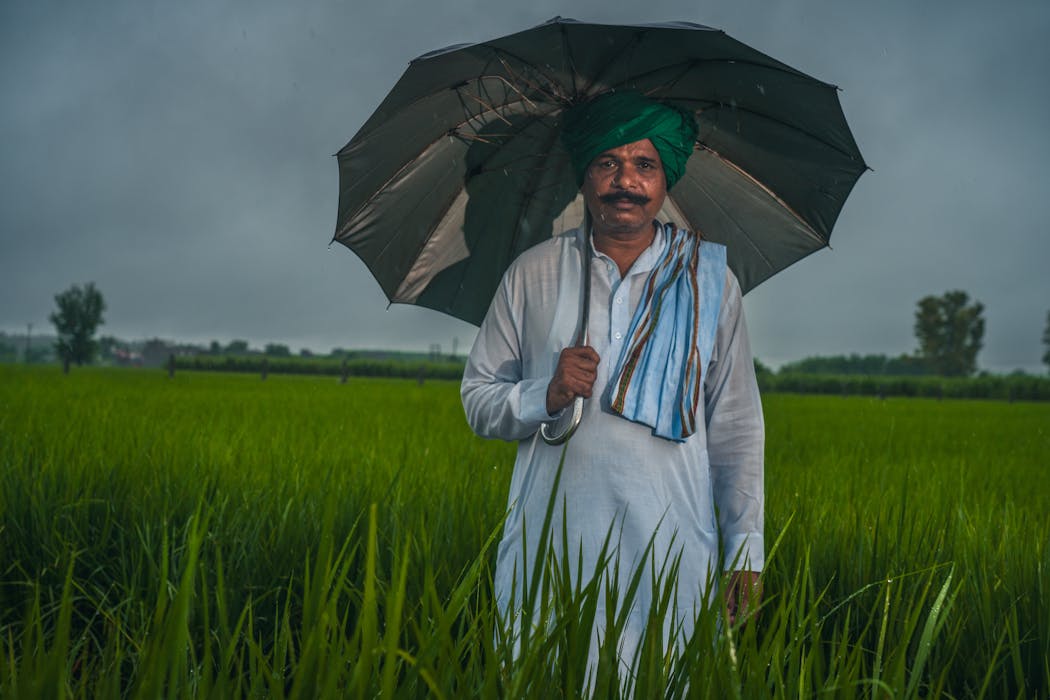
Ramphal. a rice farmer from Chamrori vilaage in India. Tilda, CC BY-NC-ND

It’s an exciting time to be a microbiologist working in rice research. A global push towards the cultivation of water-saving rice is enabling farmers to harness the power of microbes that thrive in less water.

Some farmers already use rice production systems that reduce or eliminate the length of time rice is submerged in a flooded paddy field. At the sowing stage, planting of pre-germinated seeds (direct seeding) rather than traditional transplanting of small plants into flooded paddies reduces the need for waterlogged fields. Waterlogged rice paddies emit huge amounts of methane, a potent greenhouse gas.

Similarly, an irrigation practice known as alternate wetting and drying uses pipes drilled into fields to encourage water management and intermittent flooding, reducing water usage and methane emissions.

Among microbes thriving in less water are arbuscular mycorrhizal fungi. These are beneficial soil fungi that live inside plant roots and help to extend plants’ reach into the soil to collect nutrients, acting as “natural biofertilisers”.

Arbuscular mycorrhizal fungi are aerobic, meaning they require oxygen for survival. This makes them more likely to be well suited to the drier, more aerated soils (with air spaces to allow efficient exchange of nutrients, water and air) that are increasingly promoted in sustainable rice systems.

To test this theory, I stepped out of the Crop Science lab at the University of Cambridge and into the field at the International Rice Research Institute (IRRI) in the Philippines.

Using some ink stain and a microscope, I examined roots from IRRI 154, a direct-seeded water-saving rice variety developed by the institute.

The results were striking: in IRRI 154 grown in traditional flooded paddy conditions, there were no signs of arbuscular mycorrhizal fungi colonising the rice roots. But in irrigated, non-flooded “dry” conditions, the fungi were present in up to 20% of the root. This was a clear indication that water-reducing farming practices like dry direct-seeding can promote arbuscular mycorrhizal fungi colonisation in rice.

Similarly, a recent study reported that arbuscular mycorrhizal fungi help rice grown under alternate wetting and drying in Senegal to have increased resilience to changes in water and nutrient levels.

Arbuscular mycorrhizal fungi don’t just help plants access nutrients. They can also provide resistance to pathogens and increased survival in harsh climate conditions such as drought. Encouraging them to colonise rice plants could therefore enhance the overall resilience of rice, an increasingly important trait in the face of climate change and water shortages.

By supporting and even boosting beneficial microbes like these, our team at the Crop Science Centre also hope to reduce the use of synthetic nitrogen fertilisers. Fertilisers are a major source of nitrous oxide (N₂O), a potent greenhouse gas. One alternative is for farmers to apply biofertilisers, products containing live beneficial microorganisms such as arbuscular mycorrhizal fungi to promote growth.

Determining and testing optimal formulations and application strategies is a big challenge for researchers like me. The effectiveness of biofertilisers depends on several critical quality-control factors. This includes avoiding contamination, preventing spoilage during storage, successful establishment in the soil and efficient colonisation of plant roots.

The soil is a complex environment. Solutions need to be tailored to local landscapes and specific situations. That’s where an ongoing partnership with Tilda, a UK rice brand, comes in. Tilda successfully implemented water-saving alternate wetting and drying with thousands of basmati farmers in India. Since this encourages the arbuscular mycorrhizal fungi, it has enabled my colleagues and I to put our science into practice.

I visited farmers in Haryana and Uttar Pradesh to ask about their thoughts on using local arbuscular mycorrhizal fungi-based biofertilisers to reduce the use of synthetic fertiliser. To my surprise, many had heard of “mycorrhizae” and were optimistic about its potential.

landscape shot of rice farms, green fields
Rice farms around Alahar village in India.
Tilda, CC BY-NC-ND

Our first mission was to check the presence of arbuscular mycorrhizal fungi in Pusa 1, a popular basmati variety grown in the area. Together with the rice farmers in Haryana, we turned the local rice market (mandi) into a lab, setting up ink staining and microscopes for people to see. I found the characteristic tree-like structure of arbuscular mycorrhizal fungi in a root, and ran outside to tell the crowd of over 20 farmers and agronomists to take a look.

From lab to field

Having confirmed that the fungi were present in Pusa 1 basmati, and with advice from Tilda’s local agronomists, we decided to test two locally available “mycorrhizae” biofertilisers in 31 pilot farms.

We visited the farmers involved in this pilot in September 2025. In Uttar Pradesh, we visited the family farm of Bhoti Devi, a female farmer, and gathered under a tree for shade while discussing field observations with her and some other farmers in the area.

The farmers told me that the rice with added mycorrhizae biofertiliser appeared to have increased root growth and a higher number of tillers (farm machinery with rotating blades that churn up and aerate the soil), indicating a potential boost in yields. I shared images from my own tests in Cambridge which showed similar results. It was so exciting to share and compare our observations.

In Haryana, ten farmers similarly described improved root growth. This visible improvement gives us and farmers confidence that these biofertilisers could be improving crop performance while water-saving techniques are being used. Now, we’re gathering data from this season to confirm these initial observations.

Indian woman in orange dress, sat smiling
Bohti Devi, a rice farmer from Alahar village.
Tilda, CC BY-NC-ND

Our next steps for the biofertiliser testing are two-fold: to investigate whether we can apply them to reduce the use of synthetic fertiliser, and to examine the composition and sustainability of the available commercial biofertiliser products. This will ensures they reduce the use of synthetic fertiliser and associated greenhouse gas emissions. With more than 4,000 farmers in Tilda’s network, tests can be scaled up to assess the effects of reduced synthetic fertiliser on rice yields.

Translating our lab-based research into a real-world, scalable application is a dream scenario. From breeding programmes at IRRI in the Philippines to farmer fields in India, water-saving rice systems like direct seeding and alternate wetting and drying are promoting the presence of arbuscular mycorrhizal fungi in rice roots.

Together with rice farmers in India, we can explore how to use more natural biofertilisers to reduce synthetic fertilisers and build more sustainable farming systems.


Don’t have time to read about climate change as much as you’d like?

Get a weekly roundup in your inbox instead. Every Wednesday, The Conversation’s environment editor writes Imagine, a short email that goes a little deeper into just one climate issue. Join the 47,000+ readers who’ve subscribed so far.


The Conversation

Emily Servante is collaborating on a project with Tilda, funded by the Ebro Foundation.

ref. How I’m helping rice farmers in India harness the power of fungi in the soil – https://theconversation.com/how-im-helping-rice-farmers-in-india-harness-the-power-of-fungi-in-the-soil-269209

There’s a huge loophole in the new UK ban on daytime junk food ads

Source: The Conversation – UK – By Beverley O’Hara, Lecturer in Public Health Nutrition, Leeds Beckett University

Rech Alcances Frisardi/Shutterstock

New advertising restrictions on unhealthy food and drink have come into force in the UK, targeting products deemed to be high in fat, salt or sugar. From now on, TV, radio or online adverts that feature these foods will be banned before 9pm.

The advertising ban is part of a government plan to halve childhood obesity by 2030. It includes a range of strategies including marketing and advertising controls on unhealthy food, changes to retail environments such as removing high-calorie foods from checkouts, and industry targets to reformulate unhealthy products.

The government wants to incentivise brands to reformulate and promote healthier options, and there is some evidence that this approach can be successful. The sugar tax, for instance, has reduced total sales of sugar from soft drinks by 35% since it was introduced in 2018.

Restrictions on promotions of less healthy foods in supermarkets and online retailers have also led to a small reduction in the sales of these products.

The government is generally reluctant to disclose the extent to which lobbying by industry has a bearing on regulation, citing issues of confidentiality. However, implementation of the new legislation, which was originally due to come into force in October 2025, was delayed and ultimately amended to exempt “brand advertisements”.

In essence, companies cannot advertise a restricted product, but are allowed to advertise their brand. This means they can comply with the legislation by advertising their brand or range as long as they do not show a specific identifiable less healthy product. So a fast-food chain could show its logo or other elements of its brand identity but could not show its burgers or milkshakes.

Losing this “appetite appeal” in adverts may not be a big problem for brands. Some of the most iconic food adverts do not feature the specific food product.

Instead of explicit images of foods, creatives can use storytelling and emotion to do the persuading. It now seems that the creative sector is chomping at the bit to meet this challenge by finding inventive ways to get the brands noticed.

When it announced the brand exemption in May 2025, the government said it wanted to ensure that the food industry “has confidence to invest in advertising” while simultaneously wishing to “protect children from advertising of less healthy products”. In truth, both can’t be achieved simultaneously. The exemption is effectively a massive loophole and points to the government’s capitulation to industry pressure.

The fact that outdoor advertising is not included in the restrictions is also a missed opportunity. Since the regulations were announced in 2020, there has been a marked increase in spending on outdoor advertising like billboards and posters on bus shelters by food companies. Outdoor advertising of less healthy foods is pervasive and effective.

bus shelter with adverts for mcdonald's and kfc
There will be no ban on outdoor adverts.
Jun Huang/Shutterstock

Bans on this form of advertising, as happened across the Transport for London network from 2019, for example, have been shown to reduce spending on calories from less healthy foods and are widely accepted by the public. But the food industry tempts cash-strapped local authorities into selling council-owned sites to advertise their products.

Restricting marketing of less healthy foods on television and online but not extending the measures to outdoor advertisements does not make sense. There is a need for a coordinated national strategy on outdoor advertising to make the ban apply across the board, which should include restrictions on non-council owned assets such as billboards and displays.

Taken together, the current set of policies on less healthy foods are a step in the right direction, but they need to go much further. Of course, providing more transparency on lobbying from the food industry would be a start.

Implementing policies using the stricter 2018 nutrient profiling model would also help because it has a different approach to scoring sugar, salt, fibre and calories. This means it is harder for products to be classed as healthy.

While policies that restrict marketing and promotion of less healthy foods can incentivise companies to reformulate their products, this approach has significant limitations from a public health perspective.

Other initiatives like the sugar reduction programme may benefit individual health, but risk creating new environmental problems. Some non-sugar sweeteners have been identified as environmental contaminants, meaning that products reformulated to be “healthier” for consumers may actually prove harmful to the planet.

This tension highlights the broader complexity of public health nutrition policy, where improvements in one domain can inadvertently create problems in another.


Read more:
Some artificial sweeteners are forever chemicals that could be harming aquatic life


The UK cannot reformulate its way out of a poor national diet. A big part of the problem of diet and health in the UK is the poor overall quality of what people are eating.

Policies on less healthy foods are just one part of the solution. It is much more complex and challenging to increase the proportion of healthier foods in people’s diets, which is why the government should invest in public health nutrition research.

If the UK is serious about preventing diet-related poor health, it needs to consider its food culture and values. It must be possible to find ways to increase the appeal, cost and convenience of healthier foods. This new advertising ban is a small part of the puzzle that is improving the national diet. But essentially, eating better needs to get a lot easier.

The Conversation

Beverley O’Hara does not work for, consult, own shares in or receive funding from any company or organisation that would benefit from this article, and has disclosed no relevant affiliations beyond their academic appointment.

ref. There’s a huge loophole in the new UK ban on daytime junk food ads – https://theconversation.com/theres-a-huge-loophole-in-the-new-uk-ban-on-daytime-junk-food-ads-272410

Three ways to tackle injustice without being a full-time activist

Source: The Conversation – UK – By Joshua Hobbs, Lecturer and Consultant in Applied Ethics, University of Leeds

Rawpixel.com/Shutterstock

Many people want to try to address injustice, but don’t know where to start. Some forms of injustice can be addressed by donating money to charities or aid organisations. However, as the American political theorist Iris Marion Young argued, many of the most serious injustices in the world are structural and require political solutions.

Structural injustices are not the result of people deliberately acting wrongly, but instead come about when large numbers of people act in tiny, normal and morally acceptable ways. Without necessarily meaning to, they help perpetuate injustices such as sweatshop labour, as well as factors that lead to poverty and climate change. We might say that these injustices are baked into society.

Individual efforts – for example by buying less, donating to charity or buying ethical alternatives – can’t solve these problems entirely. The structures will remain unchanged without political action. Becoming an activist is a way of taking up what philosophers call our “political responsibility” for structural injustice.

But despite all the injustice in the world, and the pressure from social media to care loudly about every issue, devoting a significant amount of time to activism isn’t achievable for everyone.

Most people – especially those with caring responsibilities – have scarce free time to develop the requisite knowledge about the political issues or the relevant skills to take part. People also need to manage the practicalities of activism, such as attending a demonstration or participating in a letter-writing campaign. Some forms of activism also require skills, such as speaking in public or expressing political views online.

If this sounds intimidating, here are three small ways you can help tackle injustice.

1. Activism light

Getting involved in activism doesn’t have to be a full-time job. For those with other commitments, it’s still better to do something rather than nothing.
This might mean engaging in small ways around other commitments, for example, by attending occasional protests or posting political content on social media.

You might worry that this route is minimally effective, and engaging in what may appear to be tokenistic activity is certainly a concern here if that time could be better spent on more effective alternatives.

But lots of small actions can quickly add up when they take place as part of a collective effort. Engaging in smaller forms of activism can also provide learning opportunities. Small actions can help skill you up to participate more effectively in more complicated and demanding forms of activism in the future.

A young man scrolling on his phone indoors
Posting online can be a form of ‘activism light’.
DimaBerlin/Shutterstock

2. Work within existing social roles

A second way to address structural injustice without becoming activists comes from the ethicist Robin Zheng. Zheng argues that we can alter unjust structures by pushing the boundaries of our existing social roles.

We all occupy various social roles, such as parent, teacher or friend. As these roles are part of the social structures we live in, performing these roles with “a raised consciousness” can help challenge injustice from where we already are.

This doesn’t have to be by doing anything additional, but by doing what we already do – differently. For example, as teachers we might educate our students on the injustice of sweatshop labour, or as parents we might prioritise gender equality in raising our children.

3. Be a scaffolder

Finally, you might support the activism of others without engaging in activism yourself. This (often unrecognised) work is vital for the success of collective political action. Without it, activism would be more burdensome for activists, and much activism would simply not occur.

Take, for example, the role of many ordinary citizens within black communities during the 1960s struggle for civil rights in the US who supported activists without engaging in activism themselves. Rather than attending protests, many supported the actions of those who did, through supplying food, transport or places to stay.

Engaging in scaffolding could be as simple as looking after someone’s child so that they can attend a protest, or providing protesters with food or coffee.

Scaffolding can still take place even if you don’t come into contact with activists in your everyday life. Campaigns exist where people can sponsor activists by organising training, covering the costs of childcare and transportation, or even paying the bail of those detained while protesting.

Supporting activism at a distance without providing financial contributions is more difficult. Crafting supplies for protesters is one way this can be achieved – as in the case of the “pussyhats” created by knitting circles around the world for attendees at the Women’s March on Washington.

Challenging unjust structures can seem daunting, but it is something we all can do without becoming full-time activists.

The Conversation

Joshua Hobbs does not work for, consult, own shares in or receive funding from any company or organisation that would benefit from this article, and has disclosed no relevant affiliations beyond their academic appointment.

ref. Three ways to tackle injustice without being a full-time activist – https://theconversation.com/three-ways-to-tackle-injustice-without-being-a-full-time-activist-271248

Odysseus the destroyer? Christopher Nolan’s new Odyssey adaptation revives an ancient moral question

Source: The Conversation – UK – By Michael La Corte, Research Associate, Curation and Communication, University of Tübingen

Imagine waking up to find strangers in your home – eating your food, killing your animals, then laughing as they blind you. Later, they tell the world you were the monster.

We are describing one of the better known episodes of Homer’s Odyssey, written around the late 8th or early 7th century BC. The intruders are protagonist Odysseus’s men, and the “monster” they attack is Polyphemus, a solitary giant shepherd later remembered only as a cyclops.

For centuries, we’ve followed the hero’s journey without asking what it costs. But what if the cyclops wasn’t the monster, but just one of many lives shattered along the way?

Director Christopher Nolan’s new adaptation of The Odyssey hits cinemas in July 2026. But will it celebrate Odysseus as the clever hero – or finally confront the wreckage he leaves in his wake?

Homer’s Odyssey, composed at the turn of the 8th to the 7th century BC, follows Odysseus, king of Ithaca, as he struggles to return home from the Trojan war, outwitting monsters, gods and fate. It’s a tale of resilience and cunning – and the template for countless stories since: the clever man triumphs over the monstrous other and sails home in glory.

We know the pattern by heart. But we rarely ask: who gets trampled along the way, and whose story is never told?


This article is part of Rethinking the Classics. The stories in this series offer insightful new ways to think about and interpret classic books and artworks. This is the canon – with a twist.


In the scene of Odysseus v Polyphemus, the cyclops is cast as a brute, a savage who traps the hero and his men in a cave. Odysseus responds with legendary cunning: wine, lies, a sharpened stake – and escape.

From the outside, it’s textbook heroism, yet Homer himself hints at the cost of that victory. He has Odysseus reveal his name only after the escape: “Tell them it was Odysseus, sacker of cities, who blinded you.” It’s a moment of pride, not necessity – the spark that seals his fate. In that instant, the clever survivor becomes the arrogant aggressor, and the story’s moral axis begins to tilt.

Yet if we shift perspective, the story changes. Polyphemus is a solitary shepherd, living in peace. Strangers break into his home, steal his food, kill his livestock, and leave him blinded and broken. His cave isn’t a prison but a home under siege. His violence, while brutal, emerges from desperation. You could easily argue that Polyphemus isn’t the villain. He’s the victim.

Painting of a cyclops throwing a huge rock at a boat
Odysseus and Polyphemus by Arnold Böcklin (1896).
Museum of Fine Arts Boston

This reversal reveals a troubling pattern: our cultural instinct to root for the protagonist, no matter what they do – as long as the cause feels noble. From ancient epics to Hollywood blockbusters, we excuse deception, destruction, even murder, if it serves the “greater good”.

We cheer when the hero escapes – but rarely look back at what’s left behind. A burned city. A grieving family. A blinded shepherd. If it fits the story, we accept the collateral damage as necessary. That’s the seductive logic of heroism: clean endings, messy consequences.

In Homer’s writing, Polyphemus gets a single moment of anguish – a prayer to Poseidon, his father – and then vanishes from the story. His voice, his pain, his version of events do not fit the heroic arc.

And this pattern continues. Empires and conquerors have long branded enemies as “barbarians”, “savages” or “monsters” to justify violence. From Roman propaganda to colonial domination in the Americas and Africa – and, more recently, to claims of “denazification” in Ukraine – this tactic dehumanises the “other side” and erases their stories. Strip the enemy of humanity, and their suffering becomes legitimised.

If history is so often written by the victors, we must ask: what remains of heroism when we finally listen to the so-called monsters? As global conflicts polarise public discourse around heroes and villains, the stories we choose, and those we silence, matter more than ever.

The trailer for The Odyssey.

What if we shift the spotlight? Polyphemus becomes more than a monster – he’s a mirror, showing how unchecked heroism can slip into cruelty. Cleverness isn’t virtue. And survival at others’ expense isn’t always justified.

Odysseus, the “man of many turns” is brilliant but ambiguous. His actions bring destruction alongside triumph. For every hero who returns, many suffer or are lost. True heroism lies not just in daring escapes, but in owning the cost left behind.

The cyclops’ tale warns us how easily we dehumanise those in the hero’s way. How we flatten complexity to fit a script. How we justify harm if the story feels right. Rethinking Polyphemus complicates Odysseus and challenges us as storytellers and audiences.

The real challenge for Nolan’s The Odyssey won’t be spectacle or scale, but perspective. Will it dare to look beyond the hero? Will it give voice to those left in his shadow? Clint Eastwood did just that with Flags of Our Fathers (2006) and Letters from Iwo Jima (2006), telling the story of the battle of Iwo Jima from opposing sides. By letting the “enemy” speak, he shattered the illusion of a single, righteous story.

If Nolan embraces that sort of complexity, The Odyssey won’t just retell a myth but will challenge us to rethink who we name as heroes and to listen more closely to those we once dismissed as monsters.


Looking for something good? Cut through the noise with a carefully curated selection of the latest releases, live events and exhibitions, straight to your inbox every fortnight, on Fridays. Sign up here.


This article features references to books that have been included for editorial reasons, and may contain links to bookshop.org. If you click on one of the links and go on to buy something from bookshop.org The Conversation UK may earn a commission.

The Conversation

The authors do not work for, consult, own shares in or receive funding from any company or organisation that would benefit from this article, and have disclosed no relevant affiliations beyond their academic appointment.

ref. Odysseus the destroyer? Christopher Nolan’s new Odyssey adaptation revives an ancient moral question – https://theconversation.com/odysseus-the-destroyer-christopher-nolans-new-odyssey-adaptation-revives-an-ancient-moral-question-270312