With less charitable giving flowing directly to charities, a tax policy scholar suggests some policy fixes

Source: The Conversation – USA (2) – By Ray Madoff, Professor of Law, Boston College

Sometimes, very rich people approach philanthropy with a degree of whimsy. tiero/iStock via Getty Images Plus

Law professor Ray Madoff is the co-founder and director of the Boston College Forum on Philanthropy and the Public Good. In an interview with Emily Schwartz Greco, The Conversation U.S. philanthropy and nonprofits editor, Madoff sums up some of the main points about charitable giving she makes in her 2025 book, “The Second Estate: How the Tax Code Made an American Aristocracy.” This interview has been edited for length and clarity.

How has charitable giving changed over the past 50 years?

Giving has pretty much remained flat as a percentage of personal disposable income. It’s been stable by that measure at about 2%. What’s changed is where that charitable giving is going.

In the early 1990s, about 6% of all giving was going to intermediaries, like foundations and donor-advised funds, and 94% was going directly to charities: hospitals, universities, churches, organizations curing diseases, all sorts of things.

Donor-advised funds, or DAFs, are charitable investment accounts that can serve many of the functions of a foundation – but with fewer rules and regulations.

Fast-forward to today, and there’s been a huge transformation with dramatic growth in giving to intermediaries. Today, around 40% of U.S. giving from individual donors goes instead to charitable intermediaries, and 60% of those donations go straight to charities.

The cover of a book is shown with the title 'The Second Estate: How the Tax Code Made an American Aristocracy.'

University of Chicago Press

When money donated to charity through intermediaries primarily went to foundations, those assets were subject to a 5% payout rule. It was imperfect, but still, at least 5% of those funds, for the most part, had to go to charity.

Now, due to the rise of donor-advised funds, none of this money going to intermediaries is subject to payout rules.

That’s because there are no payout rules that apply to donor-advised funds, and foundations can meet their payout minimum by giving to a donor-advised fund.

Charitable giving, in other words, used to be more connected to what I’d call “charitable getting.” Now, the money is often landing in what’s essentially a halfway house, with no obligation to get out.

What is the current state of play with respect to the tax rules governing charitable giving?

There’s a tale of two systems for charitable giving.

Most Americans have no ability to get any tax benefits for their charitable giving, while the wealthiest Americans can get benefits that are worth up to 74% of the value of their donations.

The reason most Americans get no tax benefits is that they can only offset their income tax if they itemize their tax returns, instead of taking the standard deduction.

Prior to the tax reform package that President Donald Trump signed into law in 2017, about 70% took the standard deduction and 30% didn’t. Once those reforms took effect, the share of taxpayers who were itemizing fell below 10%.

The more than 90% of taxpayers who claimed the standard deduction in 2022, for example, couldn’t get any tax breaks tied to their charitable giving.

What do you expect to see change due to provisions in the big tax and spending package that Trump signed into law on July 4, 2025?

The government is adding a new deduction for non-itemizers. Starting in 2026, they will be able to deduct up to US$1,000 of their taxable income when they file their taxes, if they give at least that amount to charity. That means some charitable tax benefits will be available for people who take the standard deduction.

It’s very hard to tell what kind of impact that is going to have.

If charities publicize this, it might encourage some people to give who might not otherwise give to donate. But it could also cause a lot of confusion and make other people think that there is a $1,000 cap on tax benefits for all charitable donations. I think it’s going to be a difficult messaging problem.

As a matter of policy, I also think it’s not very well drafted. I do think we should be giving charitable tax benefits to non-itemizers, but a better format would be to give everybody a tax credit so they have the same dollar-for-dollar benefit, regardless of their income bracket.

And rather than imposing a ceiling, we should impose a floor, as a certain amount of giving is going to happen even with no incentives.

It’s going to be interesting to see what happens.

Ray Madoff sums up some of the main points made in her book ‘The Second Estate: How the Tax Code Made an American Aristocracy.’

Are there other policy changes that you support?

I have two proposals.

First, I believe that private foundations and donor-advised funds should have to distribute their funds that are reserved for charity within some set time period.

Second, I think that just as other Americans are subject to limitations on their tax benefits, the wealthiest should be subject to limitations on their tax benefits too.

If it’s important for you and me to help pay down the national debt, then why isn’t it important for Warren Buffett to do so?

Is there a risk that giving might decline due to these changes?

If they had to spend it quickly, maybe there would be less money set aside in these charitable intermediaries.

But if someone has no intention to disburse those funds, then I think it wouldn’t matter that their money is no longer getting halfway to actually being received by charities.

Do you believe that the philanthropy of rich people is helpful?

Philanthropy is often used as shorthand for something that is great for society.

But philanthropy includes a lot of not-great things.

Sometimes people make mistakes. Just because someone is good at making money, it doesn’t mean they’re good at solving other people’s problems.

For example, actor Brad Pitt, maybe with good intentions, decided he was going to fix housing problems after Hurricane Katrina in New Orleans’ 9th Ward. He got architects to build houses that are now falling apart. It’s a massive problem.

Sometimes their gifts aren’t so well-intentioned.

Rich philanthropists may donate to groups calling for lower taxes. Or they try to curry favor with the White house by helping pay for the construction of Trump’s new ballroom, which is going to be built with charitable money.

Charity expert Bill Schambra has brought to light what he calls “philanthropy’s original sin: Early U.S. foundations supported eugenics – the pseudoscience movement that sought to encourage “fit” people to have kids and to stop people deemed “unfit” from doing so, sometimes through forced sterilization.

Today, there’s another common problem: the philanthropy of whimsy.

One example is what happened with the nonprofit pre-K-8 school for low-income children in East Palo Alto, California, that Facebook co-founder Mark Zuckerberg and his wife, Priscilla Chan, funded. He was saying “Oh hey, I think I’m going to solve the problems of poverty in East Palo Alto.” And then, “Oops, I changed my mind.”

The school is slated to close at the end of the 2025-2026 year.

That’s why, generally speaking, I don’t think we should assume that what’s done with philanthropy is better than what’s done with tax dollars.

A nonprofit East Palo Alto school that had been funded by Mark Zuckerberg and Priscilla Chan lost that funding. It will close.

What about MacKenzie Scott, Jeff Bezos’ ex-wife? She’s given about $26 billion to charity since 2019.

I am a big supporter of how MacKenzie Scott does her philanthropic giving. She seems to be trying to do the right thing. She’s trying to build civil society, which I think is good. She’s giving to existing organizations, with no strings attached.

A lot of it is about power. If you give money to institutions, as Scott is doing, then the institutions have power. If you keep the money yourself, and you drip it out, then you have power.

The Conversation

Ray Madoff was an adviser to and supporter of the Initiative to Accelerate Charitable Giving, a coalition of philanthropists, foundations and academics.

ref. With less charitable giving flowing directly to charities, a tax policy scholar suggests some policy fixes – https://theconversation.com/with-less-charitable-giving-flowing-directly-to-charities-a-tax-policy-scholar-suggests-some-policy-fixes-271677

‘If you don’t like dark roast, this isn’t the coffee for you’: How exclusionary ads can win over the right customers

Source: The Conversation – USA (2) – By Jaclyn L. Tanenbaum, Associate Teaching Professor, Florida International University

Imagine you are searching for a new mattress online and find something surprising. The retailer displays an ad featuring a “Mattress Comfort Scale” running from 1 (soft) to 10 (firm), followed by the message that if your firmness preference is at either end, this mattress is not for you. Wait … what? A retailer telling someone not to buy its product? No way!

Why would a company tell potential buyers that the product might not suit them? Our team of professors – Karen Anne Wallach, Jaclyn L. Tanenbaum and Sean Blair – examines this question in a recently published article in the Journal of Consumer Research.

Marketers spend billions trying to persuade consumers that a product is right for them. But our research shows that sometimes the most effective way to market something is to say that it isn’t for them. In other words, effective marketing can mean discouraging the wrong customers rather than convincing everyone to buy.

We call this “dissuasive framing.” Instead of saying a product is perfect for everyone, a company is up front about who it might not be for. Surprisingly, that simple shift can make a big difference.

We ran experiments comparing ads with dissuasive versus persuasive framing. For example, one coffee ad said, “If you like dark roast, this is the coffee for you.” Another said, “If you don’t like dark roast, this isn’t the coffee for you.” Most marketers assume the first version would work better. But for people who prefer dark roast, the second message outperformed it.

Across different products, from salsa to mattresses, and in a real Facebook campaign for a toothbrush brand, we consistently saw the same results. The dissuasive ad drove more engagement and clicks, making the brand feel more specialized and its product more appealing for the right customers.

Why? You might think it’s about fear of missing out, or reverse psychology, but we ruled out those explanations. Instead, we found that what really drives the effect is the perception of a stronger match between personal preference and product attributes.

When a message signals that a product may not suit everyone, consumers see it as more focused on a specific set of preferences. This sense of focus, which we call “target specificity,” makes the product feel like a better match for customers whose preferences align with it. For others, it feels less relevant, which helps companies reach their goal of attracting those who are most likely to buy.

Our results show a clear trend: When companies set boundaries in their messages, products appear more focused. This messaging strategy makes the intended customer feel like the product is a better match for them. People assume that if a product isn’t meant for everyone, it must be more specialized. That sense of specificity makes those in the target audience feel the product was designed just for them.

Why it matters

These findings challenge one of marketing’s most enduring assumptions: that effective marketing comes from directly persuading customers that a product matches their needs. In today’s crowded marketplace, where nearly every brand claims to be “for you,” dissuasive messaging offers an alternative. By clearly signaling that a product may not be right for customers with different preferences, brands can communicate focus and specialization. Consumers see this as a sign that the company understands its own product and who it will best serve.

Our work also helps explain how people make what psychologists call compensatory inferences. This means consumers often believe that when a product tries to do too many things, it ends up doing each of them less well. Think of an all-in-one tool that can cut, twist, open and file – but few would say it performs any of those tasks better than the dedicated tool.

From a practical standpoint, dissuasive framing helps marketers communicate more effectively by defining the boundaries of their product’s appeal. In doing so, brands can build trust, strengthen connections with the right customers, and avoid spending their marketing dollars on those unlikely to purchase.

What still isn’t known

Our research focused on products with clear attributes, such as taste or comfort, and on consumers who already knew their preferences. Future work could test how this approach works when people are less certain about what they like or when choices reflect self-expression rather than product fit.

Even with these open questions, one conclusion stands out. Defining whom a product is not for can help the right customers see that it truly fits them. By focusing on preference matching rather than universal appeal, brands can make their messages more targeted, more efficient and ultimately more effective. In other words, telling the wrong customers “This isn’t for you” can actually help the right ones feel that it is.

The Conversation

The authors do not work for, consult, own shares in or receive funding from any company or organization that would benefit from this article, and have disclosed no relevant affiliations beyond their academic appointment.

ref. ‘If you don’t like dark roast, this isn’t the coffee for you’: How exclusionary ads can win over the right customers – https://theconversation.com/if-you-dont-like-dark-roast-this-isnt-the-coffee-for-you-how-exclusionary-ads-can-win-over-the-right-customers-269080

Philly’s walkable streets and public parks offer older residents chances to stay active – but public transit and accessibility pose challenges

Source: The Conversation – USA (3) – By Laura Baehr, Assistant Professor of Physical Therapy and Rehabilitation Sciences, Drexel University

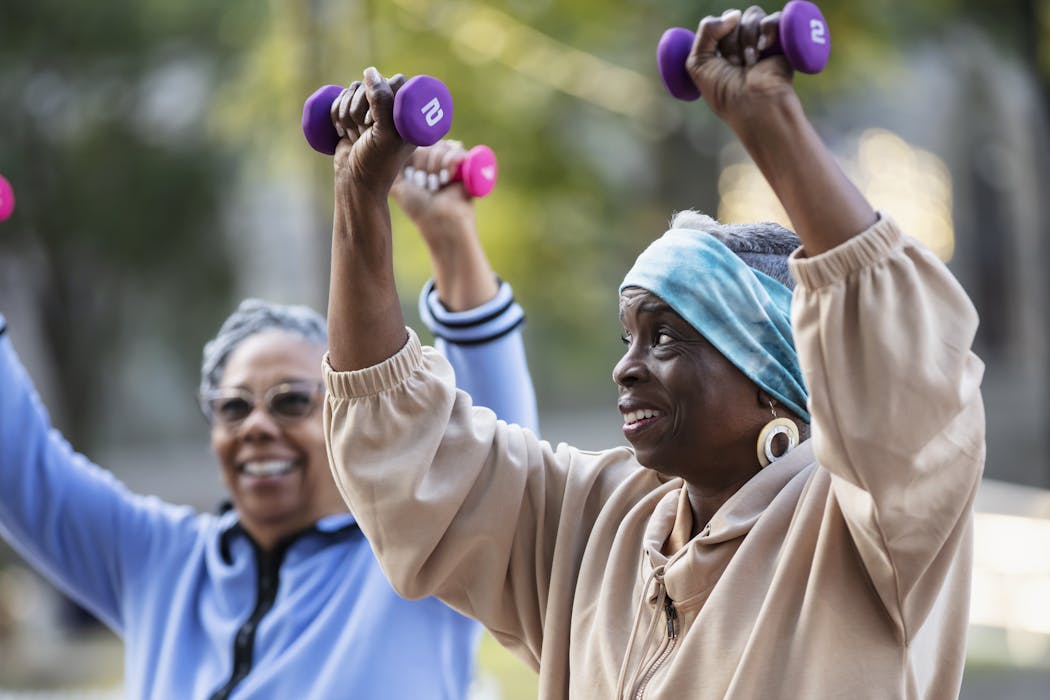
Daily movement and regular strength training support healthy aging. kali9.iStock via Getty Images Plus

One in five Philadelphians are age 60 or older, and the city’s senior population has been growing for at least the past decade.

I’m a Philly-based physical therapist and researcher who studies how to boost physical activity for seniors and people with disabilities. Patients, participants in the studies I conduct, and older community members alike often ask me: “What should I do to stay healthy?”

My answer is simple: Movement is one of the most powerful tools we have to support our bodies and minds, and to stay independent as we grow older.

The World Health Organization recommends that all adults, no matter their age, should aim for at least 150 minutes of cardio activities per week, and strength training twice a week. Older adults should also practice balance training through activities like tai chi, yoga or dance to prevent falls.

But most older adults don’t meet all these metrics. In fact, in Philadelphia, 30% of seniors report having difficulty with mobility activities like walking or climbing stairs.

While staying active is key to aging independently, the environments where we live also influence these outcomes. Think about “blue zones,” places where some of the healthiest and longest-living people in the world reside. They usually live longer because of a combination of social connections, movement opportunities and diets.

Philly is definitely not a blue zone, but there are pros to moving through your golden years here … and some cons.

Urban infrastructure

Philadelphia’s regular street grid, close neighborhoods and the fact that much of Center City is accessible by foot help explain why Philly was named the most walkable city in the U.S. by USA Today for the past three years.

If you’re taking in the city on foot, you’re very likely to stumble upon a public park like one of the five historic squares designed by William Penn in the 1680s, the massive Fairmount Park – which is over 10 times the size of Central Park in New York – or the bustling Clark Park in West Philadelphia, among others.

In fact, 95% of all Philadelphia residents – and 94% of those 65 and older – live within a 10-minute walk of a public park. However, those parks tend to be smaller and lower-quality for people in low-income neighborhoods.

Philly’s public transit system, however, tends to receive less praise.

In the beginning of 2025, over 700,000 people rode some form of Southeastern Pennsylvania Public Transportation Authority, or SEPTA, public transit daily. But this year was marked by dramatic service cuts – though they were quickly reversedfunding uncertainty and fare increases.

Public transportation is directly linked to the overall health of a city and its residents. Healthy public transportation can stimulate local economies, improve air quality and increase access to work, school and health care for everyone, whether they own a car or not.

And the physical activity often required to get to and from a bus, train or trolley stop can provide some extra movement for riders.

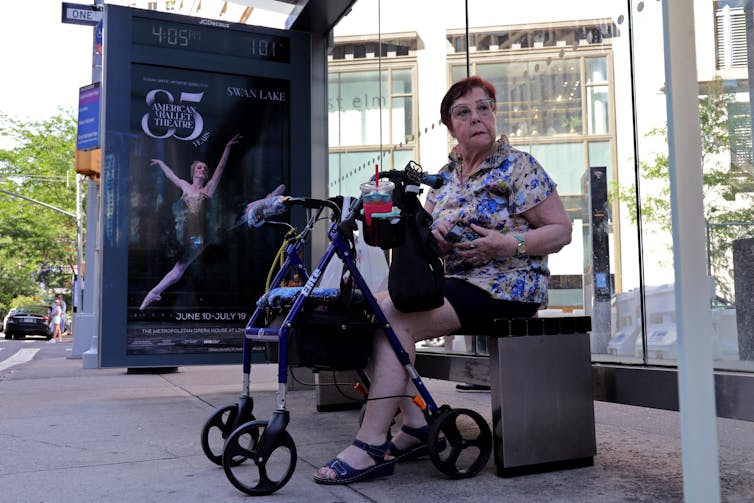
Woman with walker sits on bench under a bus shelter
Adults 65 and older can ride SEPTA free of charge with a SEPTA Key Senior Fare Card.
Leonardo Munoz/AFP via Getty Images

Since older adults make up a significant portion of SEPTA riders, service cuts mean that some seniors cannot get where they need to go, are less physically active and may become lonelier.

Of course, Philly’s historic cobblestone streets, narrow alleyways and uneven sidewalks aren’t wheelchair- or cane-friendly, and are a challenge for people with mobility limitations. However, in 2023, Philadelphia settled a class action lawsuit over inaccessible sidewalks and curb ramps that resulted in a federal mandate that requires the city to install or fix 10,000 curb ramps by 2038. Philly has installed or fixed about 25% of that total so far.

Philadelphia also has many historic buildings, and this designation allows for a loophole to Americans with Disabilities Act compliance laws. These buildings are often inaccessible to people who use wheelchairs or other mobility devices.

Services for seniors

In 2011, Philly launched the Mayor’s Commission on Aging to support policies and projects that aim to improve the quality of life of older adults.

At the time, the U.S. was experiencing a massive shift in demographics. The number of adults age 65 and older grew by nearly 40% from 2010 to 2020. According to research from the Pew Charitable Trusts, Philly experienced a similar, albeit less dramatic, upward trend. The city’s senior population grew by 22% from 2013 to 2023.

The Mayor’s Commission on Aging advocates for older residents and often partners with agencies like the Philadelphia Corporation on Aging that focus on seniors. PCA offers several programs to support senior independence and wellness, such as the Senior Housing Assistance Repair Program and the Caregiver Support Program, which provides help for the family and friends who support seniors.

Older couple stretch in a park
Public parks can be great places for residents to get in their steps or exercise outdoors.
FG Trade/E+ Collection via Getty Images

PCA also oversees 28 senior community centers throughout the city. Each of the centers offers a variety of free or low-cost classes, including nationally recognized physical activity programs that improve strength, balance, quality of life and other important health metrics for older adults.

The Salvation Army Kroc Center of Philadelphia in North Philadelphia is another great resource for older Philadelphians. The state-of-the-art health club offers fitness, swimming and gardening opportunities. An annual membership is US$451 for adults over age 62, and the club accepts some insurance wellness benefits.

In 2026, I will partner with the Kroc Center to launch Bingocize, an evidence-based physical activity program for older adults, as part of a research study funded by the Arthritis Foundation. We hope to find out if the new program boosts physical function and physical activity, and improves arthritis symptoms and quality of life. We’re also looking at what factors will make the program sustainable at the Kroc Center long after the study is over.

I believe Philly has more work to do when it comes to providing seniors access to physical activities that promote healthy aging. But the seeds planted over a decade ago to protect and support the city’s rapidly growing aging population demonstrate a commitment to positive change, and an understanding that where we live affects individual and collective health.

Read more of our stories about Philadelphia, or sign up for our Philadelphia newsletter on Substack.

The Conversation

Laura Baehr receives funding from the Department of Defense, the Arthritis Foundation, and the Clinician-Scientists Transdisciplinary Aging Research Coordinating Center (a National Institutes of Health National Institute on Aging funded center).

Laura Baehr has worked with the Philadelphia Mayor’s Commission on Aging and with Philadelphia Corporation on Aging.

ref. Philly’s walkable streets and public parks offer older residents chances to stay active – but public transit and accessibility pose challenges – https://theconversation.com/phillys-walkable-streets-and-public-parks-offer-older-residents-chances-to-stay-active-but-public-transit-and-accessibility-pose-challenges-270038

How writing about places people know makes the climate crisis less abstract

Source: The Conversation – UK – By Sam Illingworth, Professor of Creative Pedagogies, Edinburgh Napier University

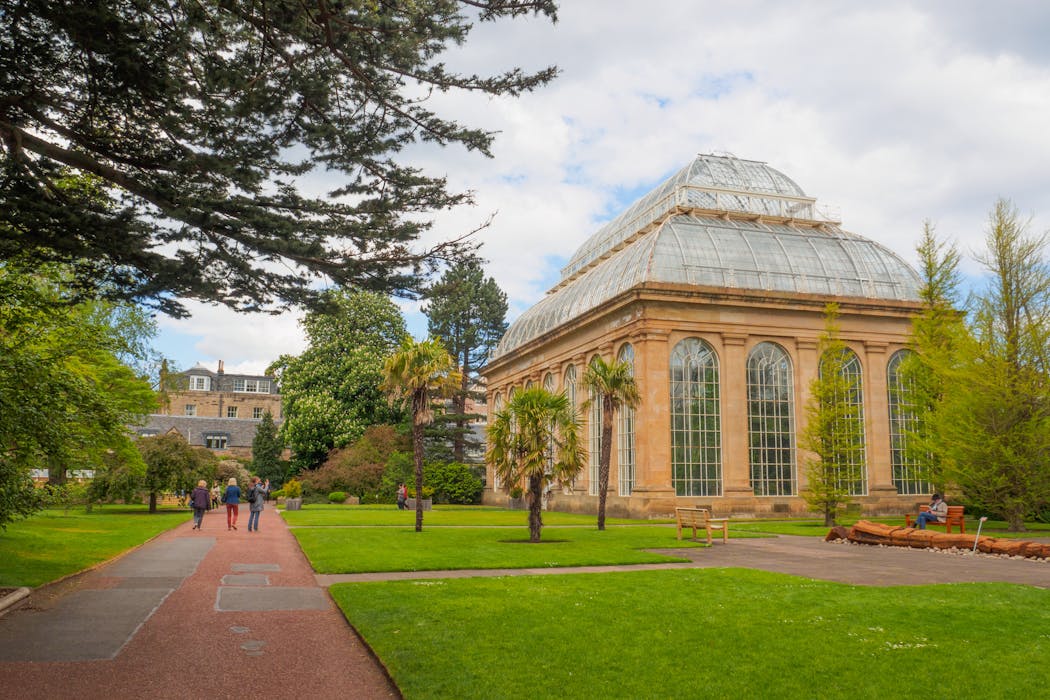
The Victorian tropical palm house at the Royal Botanic Gardens in Edinburgh, Scotland. Prettyawesome/Shutterstock

The discourse around climate change can lead to anxiety, detachment or resignation because it often stretches language in ways that make the world feel distant.

Global averages and abstract temperature thresholds make it harder for people to relate to climate change in their own specific location. And while the language of sustainable development appeals to rationality, it fails to engage people creatively and collectively.

But we have discovered that writing about local places that people are already connected to changes this dynamic and gives people a way to examine their own assumptions within a recognisable framework.


Read more:
How stories of personal experience cut through climate fatigue in ways that global negotiations can’t


Across our research in the UK and Sweden, grounding dialogue in the environments people know consistently improved understanding of climate issues and shifted the tone of discussion.

When participants begin with places they care about, they move away from remote fears and towards more constructive reflection. They draw on memory, observation and the granular details of daily life. Climate thinking becomes easier when it is tied to real places because it helps people connect abstract ideas to what they see and experience. This pattern appears across community projects, university teaching and collaborative studies.

The city of Lund in southern Sweden provides a distinctive perspective on this issue because it is shaped by mobility. Many students arrive, stay briefly, then move on. At the same time, the area’s gardens, parks, bike paths and nature reserves offer spaces for lingering and reflection.

Similarly, the city of Edinburgh in Scotland holds a transient student population alongside a deep sense of local community. This again creates a tension between movement and belonging.

yellow flowers blooming, old building in background
The botanical gardens of Lund, Sweden.
Michael Persson/Shutterstock

Our work and other research shows that short exercises rooted in wetlands, coasts, gardens, museums or neighbourhoods can help people situate themselves in unfamiliar settings. Participants in our research are invited to write brief descriptions of what they notice, what appears to be changing and how this affects their own thinking. This creates space to test ideas without the defensiveness or polarisation that often accompanies climate debate.

A poem about a tidal line or a short essay about a street after heavy rain asks the writer to pay close attention. That attention becomes inquiry. It sharpens their observation, exposes assumptions and prompts questions about meaning and significance. This is analytical rather than sentimental.


The climate crisis has a communications problem. How do we tell stories that move people – not just to fear the future, but to imagine and build a better one? This article is part of Climate Storytelling, a series exploring how arts and science can join forces to spark understanding, hope and action.


Facts alone aren’t enough

Our shared work suggests that this approach localises the climate crisis without turning it into individual anecdote. Creative writing does not replace scientific explanation. It creates a structure through which readers relate evidence to the world they live in.

When someone writes about a familiar hill or a particular stretch of coastline, they are not claiming universal insight. They are sharing a real-life example. They are showing how climate data connects to a concrete place, which makes the discussion more accessible and helps others respond with observations from their own contexts.

This matters because climate communication sometimes assumes that information alone will drive change. Evidence shows that it rarely does. People need ways to integrate new knowledge with their own experience. Place-based writing provides that structure. It anchors reflection, keeps ideas from drifting into abstraction, and introduces creative constraints that demand clarity. Choosing which details carry meaning or which elements to omit reveals how people prioritise environmental concerns and interpret change.


Read more:
You don’t have to be a net zero hero – how focus on personal climate action can distract from systemic problems


Our teaching with undergraduates demonstrates this clearly. Students write short texts about specific places and discuss them in small groups. The task does not assess style. It assesses attention. People explain why they chose their place and what climate-related issues they observed or inferred. Listening to others exposes how local climate knowledge is produced, circulated and sometimes misread.

It highlights the tension between perception and evidence and requires each writer to discern which ecological questions feel most urgent in their own backyard.


Don’t have time to read about climate change as much as you’d like?

Get a weekly roundup in your inbox instead. Every Wednesday, The Conversation’s environment editor writes Imagine, a short email that goes a little deeper into just one climate issue. Join the 47,000+ readers who’ve subscribed so far.


The Conversation

The authors do not work for, consult, own shares in or receive funding from any company or organisation that would benefit from this article, and have disclosed no relevant affiliations beyond their academic appointment.

ref. How writing about places people know makes the climate crisis less abstract – https://theconversation.com/how-writing-about-places-people-know-makes-the-climate-crisis-less-abstract-270206

MMRV: what families need to know about the UK’s new chickenpox vaccine

Source: The Conversation – UK – By Ed Hutchinson, Professor, MRC-University of Glasgow Centre for Virus Research, University of Glasgow

The UK has added chickenpox to the routine childhood vaccination schedule for the first time, using a combined MMRV jab that also protects against measles, mumps and rubella. Here’s what parents need to know.

What is the new chickenpox vaccine?

The first thing to say is that the MMRV vaccine is not actually new. It’s been safely used in other countries (including the US, Australia and Germany) for decades, and has been available privately in the UK for some years. This year, MMRV is being introduced into the UK childhood vaccination schedule and will be available free of charge through the NHS.

The MMRV vaccine protects against four different viruses. For decades in the UK, the MMR vaccines have been used to safely protect children against a trio of particularly horrible infections: measles, mumps and rubella. The MMRV vaccine has one extra component, which protects children against the varicella zoster virus (VZV).

VZV might sound unfamiliar, but it causes some very familiar diseases. If you have ever had chickenpox, that was the point at which you caught VZV. Chickenpox is a short illness, but VZV is incurable – the virus will remain hiding in your nervous system for the rest of your life. In about one-third of people, it will eventually reactivate, causing a large, painful patch of infected skin known as shingles.

Recent research has shown that VZV reactivations also increase the risk of dementia in older adults.

Is the vaccine safe?

The MMRV vaccine has been used safely for decades. Like all vaccines, it was only approved for use because any risks from getting the vaccine are much less than the risks from having an infection.

How will the vaccine be given?

The MMRV vaccine is given as an injection in the upper arm or thigh. Typically, two doses are required for full protection. The NHS provides details of the vaccination.

When will children receive it?

In the future, children will be offered the vaccine alongside other childhood vaccines at 12 and 18 months. If your child was born before January 1, 2026 different timings may apply.

What if my child has already had chickenpox?

Children over six years are already likely to have caught chickenpox. You can’t normally catch VZV twice, so they will not normally be offered the new vaccine. If your child is over six but hasn’t had chickenpox, you may wish to consider getting the vaccine privately.

Why is the NHS introducing a chickenpox vaccine now?

The UK waited longer than many countries to introduce chickenpox vaccination, partly because of debates about the cost, and partly because it was unclear how long-lasting the protection would be.

Data from the US, where the vaccine has been used since the mid-1990s, now shows that the vaccine does provide robust, long-lasting protection.

There were also arguments about shingles. If you are infected with VZV, your immunity against the virus is boosted each time you encounter someone with chickenpox, and this can help unvaccinated people prevent VZV reactivations. The fact that there is now a shingles vaccine means that this is less of a problem than it used to be.

Is chickenpox really a serious illness?

Most cases of chickenpox are uncomfortable but resolve without severe illness, though some scarring is common. In rare cases, though, chickenpox can progress to cause very severe disease involving the lungs or brain, which can cause lifelong effects or even be fatal.

Even if chickenpox itself proves to be merely unpleasant – which in itself is worth protecting against – the fact that VZV is incurable and can cause serious diseases such as shingles and dementia in later life makes the chickenpox vaccine worth taking.

If you already had chickenpox – and if you are an adult who didn’t have the chickenpox vaccine, you probably did – there are other vaccines that can prevent your VZV reactivating, an event that would cause shingles and could increase your risk of dementia.

These shingles vaccines are freely available through the NHS if you are over 65, or if you have a weakened immune system.

A child with chickenpox.
Chickenpox can leave scars.
Dragana Gordic/Shutterstock.com

Will the vaccine stop chickenpox completely?

Chickenpox is highly contagious and, at the moment, global elimination seems a long way off. However, with widespread use of the MMRV vaccine, the UK could join the group of countries where chickenpox – and the diseases that follow it – change from being nearly universal to rare events.

The Conversation

Ed Hutchinson receives grant funding from UKRI and the Wellcome Trust. He is the Chair of the Microbiology Society’s Virus Division, a Board Member of the European Scientific Working Group on Influenza, an unpaid scientific advisor to Pinpoint Medical, and has sat on an advisory board for Seqirus.

ref. MMRV: what families need to know about the UK’s new chickenpox vaccine – https://theconversation.com/mmrv-what-families-need-to-know-about-the-uks-new-chickenpox-vaccine-272691

How can Labour escape the doom loop in 2026?

Source: The Conversation – UK – By Matthew Flinders, Founding Director of the Sir Bernard Crick Centre for the Public Understanding of Politics, University of Sheffield

The PM insists he’ll still be in office at the end of the year. Flickr/Number 10 , CC BY-NC-ND

The British media’s obsession with the end of Keir Starmer’s premiership continues, with New Year’s coverage focusing on whether the prime minister will survive 2026.

Starmer began the year by telling BBC broadcaster Laura Kuenssberg that he can – and even that he will lead the Labour party into the next general election. But unless the most unradical of politicians does something very radical very quickly, the elections in May 2026 are likely to produce a leadership challenge.

However, leadership is not the core problem that the Labour party – or indeed, any party – really needs to focus on. The problem is that British politics is trapped in a “doom loop” that is, to some extent, of its own making.

It is lost in a self-reinforcing negative feedback cycle in which an initial problem triggers responses that worsen the original problem, locking the system into a spiral of decline.

Poor economic performance since the 2008 global financial crisis and a marked slowdown in productivity growth has led to poor UK performance in real wage growth and living standards. Low growth, high taxes and rising debt interest leads to declining confidence on the bond markets which leads to higher borrowing costs which, in turn, stifle growth and make deficits harder to tackle.

Although Rishi Sunak fought the 2024 election on the basis that it was possible to “reverse the creeping acceptance of a narrative of decline”, the public was not convinced.

In opposition, Starmer rejected the need for grand narratives or ideological ties. And he did not “win” the election thanks to a positive vision for Britain but largely due to the weight of disillusionment with the chaos of successive Conservative governments.

If anything, the doom loop has simply continued under Starmer, this time as what would become known as “miserabilism”. His governing style has been based around dampening expectations, emphasising national crises and blaming previous governments.

A perceived lack of ambition and a style and persona that emphasised grim necessity over hope and belief has exacerbated the problem. The paradox of such a pessimistic approach is that it has only added to a narrative of “broken Britain” that has increased populist pressures.

The problem is not (just) Starmer. The deeper problem is that none of the main contenders to replace him seem capable of offering a bold story of renewal and achievement that can stimulate collective confidence and national self-belief. Nor, if we are honest, are the leaders of the main opposition parties.

Towards the end of 2025 the doom loop was almost deafening. In October, BBC Radio 4 asked its listeners, “What kind of a state are we actually in?” before summarising their responses in the following terms:

If you pull out the kaleidoscope there are record delays for court cases, prisoners are being released, doctors are striking, water companies are pumping raw sewage wherever they can (preferably into lakes, rivers and the sea, that’s where they like to put it). We are one of the world’s richest seven economies and yet it does not feel like that by listening to the news … Bins on the streets, rats in the kitchen, gangs running prisons, knifes in the schools, university system broken, asylum system broken, benefits system broken, social housing system broken, politics broken, broken railways, poisoned rivers, failing high streets … you’d head for the hills if they weren’t strewn with rubbish.

An absence of ideas in response to these problems has created the political vacuum that Nigel Farage’s Reform party has exploited with such zeal. For Farage the story is simple – the UK is stuck in a spiral of decline that can only be broken by a combination of economic nationalism, cultural conservatism and populist politics.

Whether you believe in Farage’s diagnosis of the problem or prescriptions for reform, what he offers is a vaunted solution to the doom loop problem that is clear and confident.

The power of narrative

As academics Alex Prior and Clara Eroukhmanoff have argued, political leaders not only need a clear narrative but they also have to be compelling characters within that narrative. Margaret Thatcher offered both the narrative and persona. She acknowledged the existence of challenges while telling a story about how she intended to fix them.

Tony Blair did the same. Meanwhile, the loss of a Conservative majority in 2017 was attributed to Theresa May “performing neither the narrative nor the persona”.

Starmer is not, and never has been, a storyteller. The limits of his performative competence were demonstrated in his 2026 New Year “things will get better” message to the British public. His argument that “decline” really will be “reversed” was unconvincing, his body language and facial expressions betrayed a lack of inner belief and the whole video has a tragi-comic dimension that is difficult to miss.

A New Year message from the PM.

It’s easy to dismiss political storytelling as spin or selective framing – to call it propaganda or a manipulative tool for circumnavigating rational thought. But humans are storytelling animals. Understanding and ideas evolve through narratives.

Stories are sense-making and sense-giving modes of communication. They frame issues and they have an emotional appeal that resonates with their audiences. The “story paradox” is that they can bind people together and they can tear communities apart.

The dominant narrative in British politics is destructive, cynical and polarising. It focuses on failure and perpetuates the doom loop.

The question for 2026 is less about Starmer’s future and more about whether the political class can rebut this dominant and dangerous narrative of “broken Britain” with a positive and inclusive story about nurturing social change, building flourishing communities, generating inclusive growth and playing a role in the emergent world order.

But most of all this story must connect with the day-to-day concerns and lived experiences of voters and be able to radically reshape the tone of public debate. Britain urgently needs to tell a different story.

The Conversation

Matthew Flinders does not work for, consult, own shares in or receive funding from any company or organisation that would benefit from this article, and has disclosed no relevant affiliations beyond their academic appointment.

ref. How can Labour escape the doom loop in 2026? – https://theconversation.com/how-can-labour-escape-the-doom-loop-in-2026-272758

V&A East: the spirit of the 19th-century cultural campus of ‘Albertopolis’ lives on

Source: The Conversation – UK – By Bill Sherman, Director of the Warburg Institute, School of Advanced Study, University of London

This year the V&A opens its new outpost in east London. In 2025 it unveiled the so-called Storehouse, and its new V&A East Museum opens in April 2026. V&A East is part of a new cultural campus, on the site of the 2012 Summer Olympics, dedicated to collections, education and policy.

Designed by Diller Scofidio + Renfro (DS+R), the architecture firm best known for the giant Shed at the end of Manhattan’s High Line, the Storehouse serves as the new home for hundreds of thousands of objects that are not on display in the Museum’s main galleries in South Kensington.

It will be joined by the V&A East Museum, which will aim to spotlight making and the power of creativity to drive social change. It will open with the exhibition The Music Is Black: A British Story, which will reveal how Black British music has shaped British culture.

When the V&A East Storehouse opened it was met with both critical and popular acclaim, offering a beleaguered museum sector a glimpse of what London’s deputy mayor for culture called “the museum of the future”. However, if the V&A has created a new kind of institution, it’s fair to say, it has done so by going “back to the future”.

Indeed, that was the title of one of the early presentations I myself helped to create in 2016, when I was the V&A’s director of research and collections, to secure the approval of both the Museum’s Board of Trustees and London’s Mayor.


Read more:
How the new V&A Storehouse is reshaping public access to museum collections


We drew inspiration from our recent record. As it happens, the three-year period during which V&A East was conceived saw three of the most successful exhibitions in the Museum’s history – David Bowie Is (2013), Disobedient Objects (2014) and Alexander McQueen: Savage Beauty (2015). Each of these exhibitions was a masterclass in museology (the practice of organising, arranging and managing museums) devoted to subjects once seen as difficult if not impossible to display.

We also met with people who had designed ambitious commercial and cultural infrastructures, including one of Germany’s largest hardware chains and one of Australia’s busiest public libraries. We visited other institutions devoted to giving new access to non-displayed collections such as Glasgow’s Museums Resource Centre and Rotterdam’s Boijmans Van Beuningen Museum, whose dramatic Depot opened in 2021 as “the world’s first publicly accessible art storage facility.”

These new projects pointed us, in turn, to a history that stretched back to the middle of the 19th century, when the V&A grew out of the Great Exhibition of 1851. This first World’s Fair attracted more than six million visitors and provided both collections and capital for the South Kensington Museum (the precursor to the V&A and the Science Museum). This institution was the first to offer food to visitors and evening hours. It was also supported by the first system of artificial lighting.

The decades that followed the fair saw pioneering developments in how museums were run. There were strides in technologies of reproduction such as photography and plaster casts. There was increasing circulation of collections to remote locations. Makers and artists were incorporated more into the galleries. There was also a core commitment to integrating research and teaching in the museum.

In those years, the Victoria and Albert Museum became part of a campus (known half-jokingly as Albertopolis) bringing together complementary institutions devoted to collections, education and policy. This was the explicit model not only for V&A East but for the redevelopment of the entire Queen Elizabeth Park in the wake of the 2012 Summer Olympics. In planning both the Storehouse and the new museum that will open next spring, we worked closely with partners (first UCL and the Smithsonian and later Sadler’s Wells, London College of Fashion, BBC Symphony Orchestra and others) who could create new synergies with old collections.

The V&A East Storehouse may well be the world’s largest cabinet of curiosities. It is certainly the most democratic: the Victoria and Albert Museum’s new facility in East London is free to visit and sits at the intersection of four of the UK’s most diverse and deprived neighbourhoods.

“It holds everything,” according to the V&A’s website, “from the pins used to secure a 17th century ruff to a two-storey section of a maisonette flat from the Robin Hood Gardens housing estate, demolished in 2017.” Other artefacts include The Kaufmann Office, the only complete interior by architect Frank Lloyd Wright outside of the US.

Visitors can not only see these “reserve collections” through a dizzying vista of open shelving but can order up to five items for a closer look. They can explore displays made by artists-in-residence and members of the community. They can look down through the glass-panelled floor into a state-of-the-art conservation lab. The project puts a national collection into the hands of the people and makes the experience no more daunting than a trip to the local Ikea, or, for that matter, the Westfield Shopping Centre, through which most people will pass on their short walk from Stratford Station.

When the project was conceived, Martin Roth, the V&A’s Director, asked us to turn the museum inside out, giving our visitors new insights into how collections are made, preserved and shown. Gus Casely-Hayford, the Director of V&A East, wants to bring a different demographic to the V&A, including local people who may never have been to a museum.

Its opening will complete East London’s new cultural campus. Only time will tell if the experiment of V&A East is as successful as Prince Albert’s visionary model in South Kensington.


Looking for something good? Cut through the noise with a carefully curated selection of the latest releases, live events and exhibitions, straight to your inbox every fortnight, on Fridays. Sign up here.


The Conversation

Bill Sherman receives funding from Research England.

ref. V&A East: the spirit of the 19th-century cultural campus of ‘Albertopolis’ lives on – https://theconversation.com/vanda-east-the-spirit-of-the-19th-century-cultural-campus-of-albertopolis-lives-on-272103

As the Milan Winter Olympics approach, what are the environmental expectations?

Source: The Conversation – Global Perspectives – By Alizée Pillod, Doctorante en science politique, Université de Montréal

Italy is preparing to host the 25th Winter Olympic Games next month — from Feb. 6 to the 22nd, followed by the Paralympic Games from March 6 to the 15th.

After the excitement of the Paris Summer Games in 2024, which had sustainability at the heart of its planning strategy, the Milan Winter Games will be decisive in determining whether there’s truly a major shift happening within the Olympic movement.

Will the organizing committee be able to keep its green promises?

As a doctoral student in political science at the University of Montréal, my work focuses on both climate communication and environmental policy development, including in the sports sector.

Winter Games in the climate era

It should be noted that few sectors are as dependent on weather conditions as outdoor sports.

The climate crisis is making it increasingly difficult to practise sports, especially winter sports. The cancellation of the Alpine Ski World Cup in Mont Tremblant last year due to lack of snow is just one striking example of what’s happening.

According to a study by the University of Waterloo, only 10 former Olympic sites will remain viable for hosting future Winter Games by the year 2050. By 2080, that number could drop to just six.

At the same time, hosting mega sporting events such as the Olympics generates a considerable carbon and environmental footprint.

Although generally smaller than the Summer Games, the Winter Games have been the subject of many environmental controversies, particularly in relation to the destruction of preserved nature reserves.

For the most recent Games in Beijing in 2022, more than 20,000 ancient trees were felled to make room for an expanded ski area and the construction of infrastructure, including access roads, car parks and lodging facilities.

High-level sport is therefore caught in a conflict of both being affected by and contributing to global warming.

Agendas set new standards

In light of these challenges, the International Olympic Committee (IOC) has adopted several policies in recent years to reduce the footprint of the Games, such as the Olympic Agenda 2020, with strategic objectives that were reiterated in 2021 with the Olympic Agenda 20+5.

After Paris 2024, the Milan-Cortina Games will be the first Winter Games to have to comply with these requirements.

Two of the goals are to promote sustainable Games and to make the Games a springboard for achieving the United Nations’ Sustainable Development Goals.

To this end, the IOC now requires host cities to reduce their CO₂ emissions and promote the concept of legacy to encourage the reuse or converstion of existing venues when the event is over.

Milan-Cortina on the green track

Fortunately, it looks like the Italian organizing committee has decided to make the fight against global warming a central part of its strategic plan. From the outset, it implemented a rigorous process for assessing its greenhouse gas emissions.

In its second report on its sustainability strategy, published in September 2025, the committee also presented several measures to further reduce the carbon footprint of the event.

The flagship initiatives include a commitment to use 100 per cent renewable energy and limit food waste by redistributing any surplus food to local charities. In an effort to encourage the circular economy, more than 20,000 pieces of equipment from the Paris Games were repurchased.

In terms of infrastructure, the focus is once again on reusing existing facilities and using temporary structures that will be dismantled after the Games, as they were in Paris. In total, nearly 90 per cent of the venues will fall into this category.

The few new permanent buildings being built will become training centres for Italy’s future elite athletes, or be converted for other uses. Like the one in Paris, the new Olympic Village in Milan will become a university residence, for example.

The plan also includes adaptation measures. With global warming, natural snowfall is becoming increasingly rare and the use of artificial snow is becoming the new norm to offer athletes optimal performance conditions. The organizing committee has therefore decided to modernize its artificial snow production systems to respond more effectively to needs in the event of abnormally warm temperatures this winter.

An ambitious plan, but not flawless

While the plan looks reassuring on paper, its implementation still presents a number of challenges.

Beyond the chronic delays in the progress of the work and colossal budget overruns (spending so far is at least double the initial budget), the construction of new infrastructure in the mountains necessarily has a significant environmental footprint.

It’s also worth noting that the Milan-Cortina Games will take place at venues spread across four areas in northern Italy: Milan, Cortina, Valtellina and Val di Fiemme. Together, these venues cover an area of more than 20,000 square kilometres, making these the most widely dispersed Games in history. As a result, there will be not one but six resort sites for athletes.

This undoubtedly explains why most of the budget is allocated to the development of public transport, particularly the rail network, in order to facilitate travel between the various venues. Sports infrastructure, meanwhile, accounts for less than a quarter of the total budget.

In addition, some of the construction projects have been controversial. The brand new bobsled track in Cortina, for example, has been heavily criticized because it required the felling of several hundred trees. Although these numbers are far lower than those in Beijing, the fact remains that hosting the Games leads to the disruption of local biodiversity.

In terms of temporary facilities, the committee has pledged to restore ecosystems and, more broadly, offset all residual emissions, in particular by buying carbon credits. However, pessimists will argue that what has been destroyed can never be fully restored, and that no financial or ecological compensation can truly erase the impact.

In terms of adaptation, it should be noted that the production of artificial snow, even when it’s optimized, uses a lot of water and energy, in addition to degrading soil quality. So this solution, which is supposed to mitigate the effects of global warming, paradoxically ends up contributing to it, highlighting the importance of better thinking about adaptation solutions.

Finally, residents fear gentrification. In Milan, the construction of the Olympic Village led to the eviction of residents, and the rents planned once the site is converted into student accommodation are considered too high. From a social justice perspective, therefore, it’s worth asking who will truly benefit from the new facilities in the longer term.

A genuine turning point?

Overall, the Milan-Cortina strategy shows a real evolution in the way we think about the sustainability of the Winter Games. The organizers have learned from previous Games and are now proposing even more innovative approaches.

Although the anticipated greenhouse gas emissions are lower than in Beijing or in Pyeongchang, those for Milan-Cortina are still estimated at nearly one million tonnes of CO₂ equivalent. In this context, hopefully the committee will succeed in implementing all the measures planned to offset as much as possible.

Furthermore, the next Winter Games will take place in the French Alps. The brand new organizing committee for the 2030 Games is no doubt closely monitoring the choices that were made on the Italian side, aware of the growing climate challenges that await it.

In the meantime, we can count on the athletes and para-athletes, who, as I write these lines, are already hard at work getting ready to dazzle us once again, if only for a moment.

La Conversation Canada

Alizée Pillod is affiliated with the Centre d’Études et de Recherches Internationales de l’Université de Montréal (CERIUM), the Centre de recherche sur les Politiques et le Développement Social (CPDS) and the Centre for the Study of Democratic Citizenship (CSDC). Her research is funded by the Fonds de Recherche du Québec (FRQ). Alizée has also been awarded the Departmental Recruitment Scholarship in Public Policy (2021), the Rosdev Scholarship for Excellence in Environmental Studies (2023), and the Scholarship for Excellence in Public Policy from the Maison des Affaires Publiques et Internationales (2025). She has previously collaborated with the Ouranos consortium, the Quebec Ministry of the Environment, and the INSPQ.

ref. As the Milan Winter Olympics approach, what are the environmental expectations? – https://theconversation.com/as-the-milan-winter-olympics-approach-what-are-the-environmental-expectations-270626

Venezuelans are reacting to Maduro’s capture with anger, fear, hope and joy

Source: The Conversation – Global Perspectives – By Matt Wilde, Lecturer in Human Geography, University of Leicester

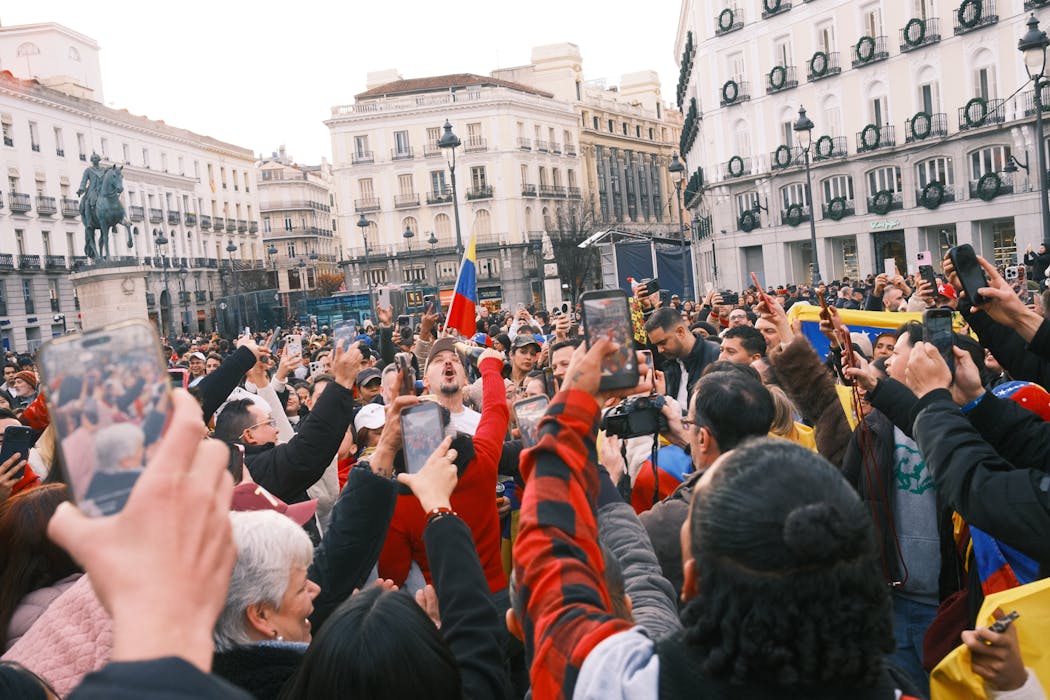
Venezuelans celebrate the news of Nicolás Maduro’s capture in Puerta del Sol, Madrid, on January 3. Harry Rodgers

When the news broke of Nicolás Maduro’s arrest following a US attack on Venezuela on January 3, que locura (“what madness”) was the line that seemed to capture the moment. As Venezuelans around the world reached for their phones and anxiously followed the news, they grappled to make sense of what they were seeing.

Drawing on our long-term ethnographic research with Venezuelans living in Spain, the US and Venezuela itself, the insider accounts and interviews detailed below show the diverse ways in which these events are being experienced and understood.

In the Spanish capital of Madrid, many Venezuelan migrants celebrated what they saw as a long-awaited turning point. But across Venezuela’s diaspora and inside the country, others described an uneasy quiet and deep fears about what might come next. These contrasting reactions reveal a moment shaped as much by uncertainty and suspicion as by relief and hope.

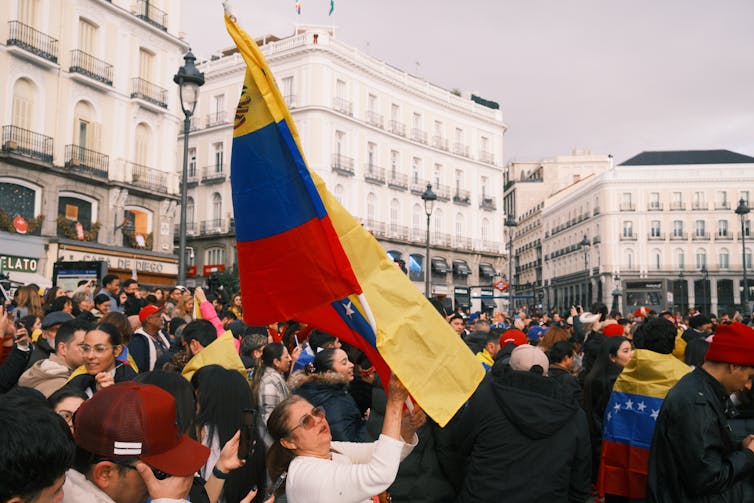
At the Puerta del Sol square, home of Madrid’s regional government, we joined hundreds of Venezuelans as they met to celebrate the news that Maduro had been taken into US custody. After beginning as a small gathering, the numbers soon swelled and a party atmosphere took hold.

Anti-government chants such as y ya cayó, y ya cayó, este gobierno ya cayó (“it fell, it fell, this government fell”) and se fue, se fue, (“he’s gone, he’s gone”) reverberated around the square.

Venezuelans, many of whom have claimed political asylum in Spain, hugged, shouted, cried and danced under a 32-metre-high Christmas tree, enjoying a welcome moment of reprieve. One older Venezuelan woman dressed as the US president, Donald Trump, handed out fake dollar bills as a “reward” for capturing Maduro.

Another attendee, a 26-year-old delivery rider, described how he partied until the early hours of the morning in a bar hung with Venezuelan flags. “I’m very, very happy,” he said. “They finally captured that dictator.”

A woman dressed as Donald Trump during celebrations in a public square in Madrid.
A woman dressed as Donald Trump during celebrations in the Puerta del Sol square in Madrid, Spain.
Harry Rodgers

But these jubilant scenes were not the only reaction. Other Venezuelans we spoke to expressed a more cautious and contingent hope. In an interview conducted over the weekend in Madrid, a Venezuelan woman called Araceli described how she didn’t feel comfortable attending the Puerta del Sol celebrations.

“I just feel very sad. I am happy Maduro’s going to be in jail, but I know the repercussions. I know what a war means.” She continued through tears: “I just want my family to be safe. I just want the simple things. I can’t celebrate until I know my family are safe.”

Such sentiments were echoed by Guillermo, a Venezuelan man we interviewed online who is currently living in the US city of Chicago. “It’s confusing. I’m happy that Maduro has lost power, but scared because I fear the consequences of the US taking over my country.”


Read more:
Donald Trump’s raid on Venezuela foreshadows a new ‘great power’ carve-up of the world


Many Venezuelan migrants want the chance to return home to a stable country, but are concerned about how Venezuela’s heavily militarised regime will respond to the US attack. Since Maduro’s capture, security forces and pro-government motorcycle gangs known as colectivos have patrolled the streets of Venezuela’s capital, Caracas.

They are also deeply suspicious of Trump’s motives. In the aftermath of Maduro’s abduction, Trump said the US would “run” Venezuela, though several prominent Republicans swiftly backpedalled on this assertion.

Reaction inside Venezuela

This sense of caution is playing out on Venezuela’s streets as well. Ernesto, a small business owner in the central city of Barquisimeto, described to us how his friends and neighbours are responding to Maduro’s arrest.

“A lot of anticipation and uncertainty. There’s joy that Maduro has been taken away, but no one is celebrating in public. Lots of people won’t go out because they’re worried that they’ll be stopped and robbed of their car and money if they’re out on the street. Others have gone out to stock up on groceries and gas in case of shortages.”

The removal of Maduro is also bringing longstanding political tensions to the fore. Luis, originally from the Venezuelan city of Valencia, sent us a voice note describing how he had to leave family WhatsApp groups to avoid political arguments. “Oh, you’re the best Donald Trump, oh thank you so much! Make Venezuela Great Again! It makes me so sad and angry,” he recounted sarcastically.

A woman waves the Venezuelan flag during celebrations in Madrid.
Harry Rodgers

Anger at what many perceive to be naked imperialism from the US is expressed by Venezuelans across the political spectrum, including those who never supported the Bolivarian Revolution that was initiated by Maduro’s predecessor, Hugo Chávez.

“I am sceptical,” says Jaime, a resident of Caracas. “I don’t know if I should be happy because I don’t like Trump’s tone. He continues with his theory that we stole his oil and it sets a terrible precedent. Losing our sovereignty over the resource that sustains Venezuela would be something terrible.”

Such concerns are shared by Valentina, a retired academic based in Valencia. She told us: “Imagine, we’re being invaded by the US! It’s horrible but we can’t do anything, just wait and see what their administration will be like.”

These diverse reactions show how geopolitical ruptures are lived through families, friendships and daily routines, shaping intimate decisions and relationships in the process. As Venezuela becomes the focal point for a seismic realignment of the global political order, ordinary Venezuelans once again find their lives being restructured by forces beyond their control.

Across Venezuela’s transnational population, the present moment is marked simultaneously by hope, fear and profound uncertainty about what the future holds.

The Conversation

The research for this article was funded by the British Academy (SRG2324240415) and the Economic and Social Research Council (ES/2878167).

ref. Venezuelans are reacting to Maduro’s capture with anger, fear, hope and joy – https://theconversation.com/venezuelans-are-reacting-to-maduros-capture-with-anger-fear-hope-and-joy-272717

‘Neither Gaza nor Lebanon!’ Iranian unrest is about more than the economy − protesters reject the Islamic Republic’s whole rationale

Source: The Conversation – Global Perspectives – By Kamran Talattof, Professor of Near Eastern Studies, University of Arizona

The aftermath of a protest in Hamedan, Iran, on Jan. 1, 2026. Mobina/Middle East Images/AFP via Getty Images

A familiar slogan has echoed through the streets of various Iranian cities in recent days: “Neither Gaza nor Lebanon, I sacrifice my life for Iran.”

That phrase has been chanted at protests that have sprung up around Iran since Dec. 28, 2025. The spark of the uprising and bazaar strikes has been economic hardship and government mismanagement.

But as an expert of Iranian history and culture, I believe the slogan’s presence signals that protests go deeper than economic frustration alone. When people in Iran chant “Neither Gaza nor Lebanon,” they are, I believe, rejecting the theocratic system in Iran entirely. In other words, the current crisis isn’t just about bread and jobs, it’s about who decides what Iran stands for.

The origins of the slogan

The phrase “Neither Gaza nor Lebanon, I sacrifice my life for Iran” first gained prominence during the 2009 Green Movement, when hundreds of thousands of people protested a disputed presidential election in Iran.

It has since appeared in successive major demonstrations, from the 2017-18 economic protests to the 2019 fuel price uprising. It was also prominent during the 2022 “Women, Life, Freedom” movement, sparked by the death of an Iranian-Kurdish woman, Mahsa Amini, following her detention by Iran’s morality police for not wearing a “proper” hijab.

The phrase ties together two key aspects of successive Iranian protest movements: domestic economic, political or social grievances and an explicit rejection of the government’s justification for that hardship – namely, that sacrifice at home is necessary to fulfill ideological goals of “resistance” abroad.

In particular, the slogan targets the Islamic Republic’s decades-long support for Hezbollah in Lebanon and Hamas in Gaza.

Estimates suggest that the regime has channeled between US$700 million and $1 billion annually to regional allies since the 1980s – funds that many Iranians argue should instead address domestic infrastructure, health care and education.

From alliance to resentment

Understanding the full meaning of the slogan requires historical context. Under the U.S.-aligned Pahlavi monarchy, which ruled from 1925 to 1979, Iran maintained diplomatic and economic ties with Israel while pursuing modernization.

The Shah’s opponents, particularly leftist groups, exploited these connections, using slogans like “Iran’s become Palestine, why sit still, O people?” to mobilize against the monarchy.

Indeed, many of the Islamic revolutionary leaders that ousted the Shah in 1979 had ties with Palestinian groups.

After the revolution, the Islamic Republic inverted both its ties to the U.S. and Iran’s relationship with Israel, making anti-Israel rhetoric and support for Palestinian causes central to its identity.

Ruhollah Khomeini, the leader of the Islamic Revolution, declared solidarity with oppressed Muslims worldwide, positioning Iran as the vanguard of resistance against what he called “Western imperialism and Zionism.”

But this ideological commitment came with substantial costs for Iranians.

Iran’s support for Hezbollah during Lebanon’s civil war, its backing of Hamas in the Palestinian group’s fight against Israel, and its involvement in Syrian and Iraqi conflicts have contributed to international sanctions, diplomatic isolation and economic pressure on Iran. And these burdens have fallen disproportionately on ordinary citizens rather than the ruling elite.

Economic crisis and political defiance

“Down with the Islamic Republic” is also chanted alongside “Neither Gaza nor Lebanon” in the current uprising – the most serious that the Iranian government has faced in years.

But neither lethal force – at least 1,203 arrests and more than two dozen deaths thus far – nor supreme leader Ali Khamenei’s Jan. 3 order for a harsher crackdown has quelled the unrest.

A man in traditional Iranian garb speaks.
Supreme leader Ayatollah Ali Khamenei speaks in Tehran on Jan. 3, 2026.
Office of the Iranian Supreme Leader via AP

Instead, protests have expanded to 110 cities and villages.

The demonstrations illustrate how economic and political grievances intersect in Iran. When demonstrators chant “Neither Gaza nor Lebanon” while protesting bread prices and unemployment, they are not compartmentalizing issues – they are drawing a direct line between foreign policy choices and domestic suffering.

The slogan makes three simultaneous arguments.

First, it rejects imposed solidarity. Many Iranians, including those sympathetic to Palestinian rights, resent being conscripted into conflicts that are not their own. And the government’s insistence that Iranians must make sacrifices for distant causes breeds resentment rather than unity. Take the government’s effort to portray the 12-day war with Israel in June 2025 as a moment of national resistance. Rather, many Iranians instead blamed the leadership for either provoking the conflict or failing to meaningfully defend the country from Israeli – or American – bombs.

The slogan also demands accountability for resource allocation. When state media broadcasts funerals for fighters killed in Syria or Yemen while Iran’s hospitals lack basic supplies, the disconnect between rhetoric and reality becomes glaring.

And finally, the protest message reclaims political belonging rooted in Iranian national history – and not just the ideological concerns of the Islamic Republic. By invoking Iran specifically, “I sacrifice my life for Iran,” protesters assert that their primary allegiance is to their own country, not to transnational ideological movements, regional proxies or the ruling government’s ideology.

The limits of solidarity

For all its longevity, however, the slogan has proven divisive. While some see it as a necessary assertion of self-determination after decades of enforced sacrifice, others – including some Iranian leftist intellectuals and activists – view it as abandoning solidarity with oppressed peoples.

But it doesn’t need to be an either/or. Many protesters risking bullets to demand “Iran first” are not expressing indifference to the suffering of Palestinians. Rather, they are insisting that effective solidarity requires a functioning state capable of supporting its own citizens, and that genuine liberation begins at home.

Regardless, the Islamic Republic’s response has been to frame criticism as betrayal, suggesting that those who question support for Gaza or Lebanon are complicit with imperialism – a narrative enforced through a mix of rhetoric and coercion.

But this framing increasingly fails to persuade a population that has watched living standards decline while billions of dollars flow to foreign conflicts. The effects of sanctions and shrinking foreign-currency revenues have pushed the Iranian state to raise taxes on households while shielding military and ideological spending. Meanwhile, the dollar’s daily surge and the rial’s rapid collapse have accelerated inflation and eroded purchasing power.

Authoring one’s own story

Undoubtedly, economic grievances underpin the current protests in Iran. However, the slogans used in Iranian protests – be they over election disputes, economic crises or women’s rights – indicate a broader critique of the Islamic Republic’s governing philosophy.

In the current wave of protests, demonstrators articulate through slogans both what they reject – “Down with the Islamic Republic” – and what many now seek to happen: “This is the final battle; Pahlavi will return,” a reference to the exiled Crown Prince Reza Pahlavi.

The “Neither Gaza nor Lebanon” chant asks: What does it mean for a government to prioritize foreign conflicts over domestic welfare? How long can imposed solidarity substitute for actual prosperity? And who has the right to determine which causes are worth sacrifice?

Such questions extend beyond Iran. They challenge assumptions about how governments invoke international causes to justify domestic policies and when citizens have the right to say, “Our story comes first.”

As such, the chant “Neither Gaza nor Lebanon, I sacrifice my life for Iran” is, I believe, both protest and reclamation. It rejects the Iranian state’s narrative of mandatory sacrifice while asserting the right of people to author a national story focused on Iran’s own needs, challenges and aspirations.

The Conversation

Kamran Talattof does not work for, consult, own shares in or receive funding from any company or organization that would benefit from this article, and has disclosed no relevant affiliations beyond their academic appointment.

ref. ‘Neither Gaza nor Lebanon!’ Iranian unrest is about more than the economy − protesters reject the Islamic Republic’s whole rationale – https://theconversation.com/neither-gaza-nor-lebanon-iranian-unrest-is-about-more-than-the-economy-protesters-reject-the-islamic-republics-whole-rationale-265696