2025 was the year protein ‘jumped the shark’

Source: The Conversation – Canada – By Stuart Phillips, Professor, Kinesiology, Tier 1 Canada Research Chair in Skeletal Muscle Health, McMaster University

Thirty years ago, when I began studying protein metabolism, I would never have guessed that 2025 would be spent explaining why more protein is not always better.

Protein was once the quiet macronutrient that was always assumed sufficient. Carbs had their era, and fat had its moment in the sun. Protein arrived late, but I welcomed the attention.

The phrase “jumped the shark” comes from a now-infamous 1977 episode of the iconic sitcom Happy Days, when the character Fonzie (Henry Winkler) literally water-skied over a shark. It was the moment the show sacrificed solid plot and logic for spectacle. In 2025, dietary protein repeated Winkler’s performance and crossed the line from evidence-based nutrition into performance theatre.

In 2025, protein became a metabolic Jack-of-all nutrients: protein for fat loss, protein for longevity, protein for weight loss, protein for hormone balance, protein for menopause, protein for people on GLP-1 drugs, protein for people who exercise, protein for people who do not. Protein everywhere, and the more, the better.

Despite a number of prominent voices promoting very high protein intakes in 2025, the reality is that the research data hadn’t changed. It was the messaging and volume that had been turned up.

Protein is not the cake

One reason protein is so easy to overhype is that its effects are real, but conditional. Protein supports muscle function and adaptation, but it does not act in isolation.

I use analogies because they capture biology surprisingly well. Protein does not bake the cake; exercise does. Protein is the (thin) layer of icing (or the sprinkles on the icing). Once the cake is properly iced, adding more icing does not turn it into something else. At some point, you are just decorating.

Biology is full of plateaus. Protein is no exception.

How much protein is enough?

The recommended dietary allowance (RDA) of 0.8 grams of protein per kilogram of body weight per day (g/kg/day) was never designed to optimize muscle mass, muscle strength or support healthy aging. It was designed to be the minimal dose to balance nitrogen in the body. Nitrogen balance is used as a proxy for protein balance since protein is the only significant source of nitrogen we consume.

Over the past two decades, many researchers, including myself and several colleagues, have argued that higher protein intakes are often justified. Intakes of 1.2 to 1.6 g/kg/day appear to support better muscle maintenance and adaptation, but in reality, only when combined with resistance exercise.

But here is the critical point that was lost in 2025’s protein enthusiasm: there is no strong, rational, evidence-based case for going beyond this range for most people (and yes, that includes folks in the process of weight loss and those crushing the big weights five or six days per week).

Meta-analyses pooling dozens of resistance exercise training (strength training) studies consistently show that the benefits of protein supplementation plateau at about 1.6 g/kg/day. Beyond that, additional protein does not increase lean mass or strength.

This axiom is not controversial, even if it became controversial in the minds of online influencers.

Muscle is built by resistance exercise

Protein is the bricks. Resistance exercise is the construction crew. You can deliver bricks all day long, but without workers and a blueprint, nothing gets built. When protein intake is increased to above deficiency intakes in people who are not performing resistance exercise, changes in lean mass are trivial or nonexistent.

When resistance exercise is present, additional protein can (very) modestly enhance gains in lean mass and strength, but the effects are small and saturable. More is not endlessly better.

Protein and weight loss: managing expectations

Protein hype was especially evident in discussions of weight loss. Protein was credited with boosting metabolism, melting fat, preventing fat gain in perimenopause or suppressing appetite indefinitely. These claims sound appealing. They are also grossly overstated.

Protein does not cause weight loss on its own; you need an energy deficit for that. It does not meaningfully increase long-term energy expenditure, and while it can reduce appetite in short-term studies, these effects often diminish over time, leaving a small overall benefit.

Where protein does matter during weight loss is in helping preserve lean tissue, particularly when paired with resistance exercise. But even here, the protein effect is modest, and the distinction between lean mass and muscle mass is frequently blurred.

Protein without resistance exercise, during weight loss, does very little. Exercise is the major driver that helps lean mass retention. Protein is the supporting material.

Protein leverage: Real, but not limitless

Another concept that resurfaced in 2025 was protein leverage, the idea that humans eat until protein needs are met, potentially over-consuming energy when diets are lower in protein.

There is good evidence that protein leverage exists. But it operates within limits. Once basic protein needs are met, adding more protein does not continue to suppress appetite and depress energy intake endlessly. Notably, the intake at which protein’s appetite-suppressing effect wanes is, uncomfortably for social media pundits, only marginally higher than intakes people generally consume. Again, biology is not fooled by abundance.

Why did this happen in 2025?

My best explanation is that it often takes about 17 years for solid scientific evidence to filter into public awareness and practice.

Perhaps the social media world needed time to “do their research” — that is, read papers and form their conclusions — to catch up to what protein researchers had been doing for decades? But social media can spin things, and not always in the right direction.

Protein research matured in the 1990s and early 2000s. We refined methods, tested dose responses and clarified mechanisms. What we are seeing now is not a scientific breakthrough, but a delayed cultural uptake, amplified by social media, marketing and a wellness industry that thrives on extremes.

Unfortunately, as another lesson learned in 2025, neither science nor nuance fares well online.

Bringing protein back to reality

Protein matters. It always has. It supports muscle, function and health across the lifespan. Many people, especially older adults, very likely benefit from consuming more than the RDA.

But 2025 was not the year protein finally got its due. It was the year protein was oversold, overvalued and overhyped. Protein supports adaptation; it does not cause it. It helps preserves lean tissues (which is not muscle) during weight loss; it does not drive fat loss. And beyond a certain point, more protein is simply more protein, not more benefit.

The science of protein has not been revolutionized; we just need to listen to it again.

The Conversation

Stuart Phillips owns patents licensed to Exerkine and has received honoraria for speaking from Nestle, Optimum Nutrition and Danone. He receives funding from the National Science and Engineering Research Council, the Canadian Institutes for Health Research, the US National Institutes of Health, Dairy Famers of Canada, teh US National Dairy Council.

ref. 2025 was the year protein ‘jumped the shark’ – https://theconversation.com/2025-was-the-year-protein-jumped-the-shark-272614

Digital payments can expand financial inclusion — but only under the right conditions

Source: The Conversation – Canada – By Mesbah Sharaf, Professor of Economics, University of Alberta

Digital payments are often presented as a way to bring more people into the financial system. Mobile wallets, online transfers and app-based payment systems are now central to how governments, banks and technology firms talk about expanding access to financial services.

This is particularly significant today. Around the world, governments are investing heavily in digital finance as part of broader development and sustainability strategies. In Canada, public efforts have focused on strengthening digital payment infrastructure and regulation rather than expanding access directly.

Payments Canada is undertaking a multi-year modernization of core payment systems, including the development of a real-time payment rail, while the federal government has introduced a consumer-driven banking framework to support secure data sharing and innovation in financial services.

From emerging economies to high-income countries, digital payments are seen as tools for inclusion, resilience and growth, from India’s Unified Payments Interface to Brazil’s PIX instant payment system.

At the same time, digital payments do not work equally for everyone. Our recent research suggests a more complex picture of digital payments.

A more complex picture

Digital payment technologies can support financial inclusion, especially in places where traditional banking services are limited.

By reducing the need for physical bank branches, digital platforms can lower costs, save time and make basic financial services easier to use, particularly for low-income and rural populations who can access accounts and payments through mobile phones rather than in-person banking.

Evidence from multiple countries shows that digital financial services reduce transaction costs and expand access to formal financial tools for households and small businesses that were previously excluded.

For many households and small businesses — particularly in developing and emerging economies — this has expanded access to accounts and payment services.

Foundations matter for adoption

In our study, we reviewed research from the past decade about how digital payment technologies affect financial inclusion worldwide.

One of our key findings is that digital payment systems tend to perform best when certain conditions are already in place. Reliable internet and mobile networks, affordable devices and basic digital skills all matter for people to be able to use and benefit from digital payments.

Where these foundations are weak or uneven, adoption remains limited, even when digital payment options are widely available. Research shows that limited digital infrastructure, low internet access and weak technology readiness can act as significant barriers to adoption, meaning that simply introducing new technology does not guarantee that people will use it.

Trust also plays a crucial role. People are more likely to use digital payments when they trust the financial system behind them and feel confident their money is safe, and when security and privacy concerns are addressed.

In countries where financial institutions are weak or consumer protection is limited, digital platforms often struggle to gain widespread acceptance. This was the case with Nigeria’s eNaira, where fewer than 0.5 per cent of the population was using the digital currency a year after launch and most wallets remained inactive.

In such settings, cash frequently remains the preferred option, even when digital alternatives exist.

Persistent gender and socioeconomic gaps

Gender gaps are another recurring pattern. Across many countries, women are less likely than men to use digital financial services. These differences aren’t caused by technology itself, but by broader social and economic factors.

Women often have less access to mobile phones, lower digital literacy and less control over financial resources. As a result, digital payment systems can reflect — and sometimes reinforce — existing inequalities rather than eliminate them.

Income and education levels also influence adoption. People with higher incomes or more education are generally better positioned to adopt digital payments and benefit from them.

For lower-income users, concerns about fees, data costs, security and usability can discourage regular use. This helps explain why many digital payment platforms report high registration numbers but much lower levels of sustained activity.

The institutional and regulatory environment also shapes outcomes. Evidence shows that digital payments are more effective when supported by clear rules, strong consumer protections and well-functioning oversight.

When regulation is unclear or enforcement is weak, users may hesitate to rely on digital platforms for everyday transactions. When digital payments are integrated into a broader, trustworthy financial ecosystem, they are more likely to contribute to meaningful inclusion.

Promises and limits of technology

Newer technologies, such as blockchain-based payment systems, are sometimes presented as a way to overcome these challenges. While they may offer advantages in specific contexts, our research shows the evidence remains cautious.

Their effectiveness depends heavily on regulation, institutional capacity and user confidence. As with other digital tools, outcomes vary widely across countries and communities.

It’s clear that digital payments are not a simple solution. Their impact depends on how they’re designed, regulated and used within existing social and economic systems.

For policymakers and firms, this has important implications. Expanding financial inclusion is not just about introducing new technologies or increasing the number of digital accounts. It requires attention to affordability, usability, trust and the barriers faced by groups that are already disadvantaged. Without this broader perspective, digital finance risks widening gaps rather than closing them.

Digital payments can play a valuable role in promoting financial inclusion, but only under the right conditions. The evidence shows that technology can support inclusion, but it cannot replace the institutional, social and policy foundations on which inclusive financial systems ultimately depend.

The Conversation

The authors do not work for, consult, own shares in or receive funding from any company or organisation that would benefit from this article, and have disclosed no relevant affiliations beyond their academic appointment.

ref. Digital payments can expand financial inclusion — but only under the right conditions – https://theconversation.com/digital-payments-can-expand-financial-inclusion-but-only-under-the-right-conditions-272555

Venezuela attack, Greenland threats and Gaza assault mark the collapse of international legal order

Source: The Conversation – Canada – By Jorge H. Sanchez-Perez, Assistant Professor, Department of Philosophy, University of Alberta

The American invasion of Venezuela — along with fresh threats to annex Greenland — provide the world with a unique opportunity to perform a post-mortem examination on what was once known as the international rules-based legal order.

This legal order was based on rules enshrined in the United Nations Charter of 1945. Its collapse creates uncertainty that requires careful consideration from all those interested in world peace.


Read more:
Trump’s intervention in Venezuela: the 3 warnings for the world


First, however, it’s important to understand what legal orders are and how they can collapse.

Social rules come in different forms — some might be religious, some moral. But complex political communities tend to be ruled by another set of rules, legal ones.

Legal rules tend to be organized in what are commonly called legal orders, and these orders guide the actions of members of the political communities in their everyday lives. One goal of most legal orders is, usually, co-ordination among those who are part of a social group.

When we think about legal orders, we usually focus on the ones that are closer to our political communities, such as those connected to our cities, provinces and states. But there’s one legal order that tends to be ignored more often than not — the international legal order.

International law

One defining feature of international legal orders is that they are far removed from people within their own political communities, so negotiations to establish shared rules are usually carried out by representatives of large states or other powerful political entities.

Even though the international legal order feels isolated from everyday rules — like city laws telling us which side of the road to drive on — it shares the same basic features that make any system of co-ordination work.

One key feature is meeting the expectations of the people within a political community. For a legal order to last over time, it must do this. In other words, because legal orders are systems of co-ordination, they tend to endure as long as their rules are expected and accepted, even if those rules are unjust.

Although some people believe that a law must be just to count as law, that view is hard to sustain when we look at the past few hundred years of human history. Many periods offer clear examples of both domestic and international legal systems that upheld deeply unjust and morally troubling positions.

Yet it would be difficult to argue that there was no legal order in places like the Ottoman Empire or Nazi Germany. In both cases, genocide — among the gravest moral failures imaginable — occurred within functioning legal systems. This suggests that legal orders can persist even while enabling repeated immoral actions.

History also shows, however, that legal orders do collapse, and often more quickly and more frequently than many might expect.

The Ottoman Empire and Nazi Germany, for example, ceased to exist a long time ago. From a broader historical perspective, the legal order of the Roman Republic in the second century BCE no longer exists and bears little resemblance to the system governing modern Rome within Italy today.

Like the other legal orders mentioned, the post–Second World War order increasingly looks like a relic rather than a binding reality — a fact we must clearly recognize if we hope to save some of its positive features.

Fundamental rights

After the Second World War, one of the main agreements among most political communities around the world was that the previously held right to wage wars against other countries was no longer acceptable. Sovereignty consequently became one of the cornerstones of the international legal order.

This was enshrined in Articles 1 and 2 of the United Nations Charter. The logic was simple: as the charter’s preamble notes, repeated wars had brought immense suffering to people entitled to fundamental rights based on their dignity, worth and equality. As a result, this new order abolished the right of political communities to wage war for any reason.

In practice, however, this order rested on a watered-down version of that ideal. Even when sovereignty and human rights were violated via military action, the appearance of an aim to protect them had to be maintained. Powerful states could breach these principles so long as they preserved the illusion that they were attempting to uphold and safeguard sovereignty and rights.

This unspoken rule — that power could override law if the façade remained intact — underpinned the international legal order from 1945 to 2023.

As the world watched the assault on Gaza unfold — deemed a genocide by the United Nations — many western political communities that had helped build the post-war legal order abandoned even the pretense that sustained it.

Once the illusion of respect for sovereignty and human rights collapsed, the system lost a key element that had kept it functioning. This is why I’ve argued previously that the rules-based international order went to Gaza to die at the hands of those who created it.

Annexation made easy

Unlike U.S. President George W. Bush’s war in Iraq, which was framed by American diplomats as defending human rights, Donald Trump’s invasion of Venezuela and the capture of Nicolás Maduro weren’t presented as respecting any lofty principles.

His actions were grounded on the views that the U.S. has a claim to Venezuela’s oil. The intervention was driven by economic interests and hearkened back to the the Monroe Doctrine, an 1823 U.S. policy that promoted American imperialism.

The events in Venezuela suggest the post-1945 international legal order, which emphasized sovereignty and fundamental rights, has been replaced by one more like the pre-Second World War system, when nations could go to war for almost any reason.


Read more:
Trump’s squeeze of Venezuela goes beyond Monroe Doctrine – in ideology, intent and scale, it’s unprecedented


Under the legal order now in place, Canada and Greenland could easily be the next targets of American annexation. Similarly, Taiwan could be annexed by China and Ukraine by Russia.

What the world is witnessing now is the international rules-based order being stripped of whatever value it once had. It is time to accept this reality if we are to build a better international order next time.

The Conversation

Jorge H. Sanchez-Perez receives funding from the Social Sciences and Humanities Research Council of Canada (SSHRC).

ref. Venezuela attack, Greenland threats and Gaza assault mark the collapse of international legal order – https://theconversation.com/venezuela-attack-greenland-threats-and-gaza-assault-mark-the-collapse-of-international-legal-order-272690

Climate education proposals will prepare young people in England for changing careers and society

Source: The Conversation – UK – By Andrew Charlton-Perez, Head of School of Mathematical, Physical and Computational Sciences and Professor of Meteorology, University of Reading

PeopleImages/Shutterstock

The review of the national curriculum and assessment in England has proposed three big sets of changes for climate education.

First, to prepare learners for a changing world, it suggests that climate education should be one of five big “applied knowledge areas”: key points of focus that cut across all subject disciplines within the curriculum.

Second, as part of making citizenship teaching compulsory for all key stages, it proposes that age-appropriate climate education should be part of primary teaching. Third, it proposes that climate education is expanded and modernised within specific subjects: geography, science and design and technology.

If implemented together, these changes would bring education in England closer to the comprehensive coverage of climate, sustainability and nature that many people in the sector, including ourselves, have long recommended. It would begin to align education in England with countries around the world, such as Lebanon and Argentina that are seeking to bring climate education into their curricula. Young people have also long been clear about their ambitions for climate education.

The review focuses on the school curriculum. But its effects would extend across the whole education system. What is taught in schools shapes the knowledge, skills and expectations that young people bring into further and higher education. The review will influence qualification design, teacher training and school inspection priorities.

The response to the review has, however, been mixed. Laura Trott, shadow education secretary, has said that “forcing primary schools to use precious time to teach deprived pupils about media literacy and climate change before ensuring that they can read, write and add up is not going to encourage social mobility”.

At the other end of the spectrum, the Climate Majority Project expressed disappointment that the review framed climate as a technical or economic issue, “rather than the all-encompassing context shaping every young person’s future”.

Jobs for the future

The backdrop to the review’s proposals is the accelerating green transition and its impact on UK jobs and growth. Without improved climate education, school leavers in the UK are likely to remain at a significant disadvantage compared with their international peers.

In some countries, such as Sweden and Italy, education for sustainable development is a universal entitlement, meaning they’re better suited for the jobs of the green transition.

The case for climate education goes much further. It’s about preparing young people for the world they already inhabit: one increasingly shaped by climate change, biodiversity loss and limited resources. High-quality climate education helps learners make sense of these realities. It allows them to build critical thinking and problem-solving skills. Importantly, they can connect their learning to real-world purpose.

Children on field trip outdoors
Climate education helps young people understand the world they already live in.
NITINAI THABTHONG/Shutterstock

And far from detracting from core learning or social mobility, climate education deepens both. Global benchmarking systems such as Pisa, which compares education worldwide, increasingly recognise environmental literacy as an indicator of quality education.

The UK’s independent Climate Change Committee, which advises government on how to adapt and prepare for climate change as well as holding them accountable, has warned of the dangers of skills shortages. A lack of climate-related skills, the committee claims, are already constraining the country’s ability to prepare for and respond to climate change impacts. These include extreme weather, heatwaves and flooding.

Ensuring that all young people develop strong climate and nature literacy will therefore be essential for both personal resilience and national prosperity. This matters for every learner, regardless of whether they enter an explicitly “green” profession. All jobs and sectors will need to adapt.

There’s work to be done, though, in making the recommended changes a reality in schools. Luckily, there is already a substantial body of work showing how the curriculum could be changed.

Student campaign organisation Teach the Future has carried out a project that systematically reviews the existing English national curriculum. It suggests precise edits to embed climate and ecological education throughout. Sustainability, climate science and ecological justice are integrated into existing subjects, rather than treated as optional extras.

Alongside that sits the curriculum for climate literacy developed by the Royal Meteorological Society. University College London has also put together a detailed policy proposal. Together, these documents provide a robust foundation for the teams appointed to draft the new curriculum.

Curriculum change is much more than a framework for particular subjects. These changes will only make a genuine difference to learners, schools and society when every teacher has access to high-quality professional development and teaching resources. Consistent sector-wide standards should ensure that all young people benefit.

The curriculum review gives the education system in England a clear opportunity. Climate should be part of a high-quality education system.

The Conversation

Andrew Charlton-Perez receives funding from the Department for Education. He is affiliated, in a personal capacity, with the Labour party as a member and campaigner.

Charlotte works for the Environmental Association for Universities and Colleges (EAUC), who are recipients of Department for Education funding to support the delivery of the Climate Ambassadors project. In a personal rather than professional capacity, she is affiliated with the Green Party.

ref. Climate education proposals will prepare young people in England for changing careers and society – https://theconversation.com/climate-education-proposals-will-prepare-young-people-in-england-for-changing-careers-and-society-270733

Buy-now-pay-later rules in the UK will change in 2026, but will they offer protection or exclusion?

Source: The Conversation – UK – By Adeola Y. Oyebowale, Assistant Professor in Banking, University of Doha for Science and Technology

New rules are coming. Andrey_Popov/Shutterstock

Buy-now-pay-later is an appealing proposition. You get what you want now, but you delay settling the bill until later, with no interest and no fees.

It’s how lots of things are bought. The UK’s buy-now-pay-later (BNPL) sector has nearly 23 million users and was worth £28 billion in 2025.

In 2026 though, it will face a major transformation. From mid-July, its lenders – the likes of Klarna and PayPal – will be regulated in the UK for the first time by the Financial Conduct Authority watchdog.

This marks a major change for a sector that has largely operated outside consumer credit regulation – and could fundamentally change how millions of people manage their their finances.

The government says the new legislation is designed to protect shoppers, end the “wild west” of some BNPL schemes, and even drive economic growth.

So from July, BNPL lenders will have to run affordability checks. They will also need to be more transparent about terms and conditions, establish a proper system for handling customer complaints, and prove that they are financially stable.

And it’s easy to see why the sector might require a bit more oversight. A quarter of UK users have experienced late payment charges, with younger shoppers increasingly affected by missed payments. (BNPL providers make money out of this, but their primary revenue comes from taking a percentage of each BNPL transaction from the retailer, plus a service fee.)

There is also research which suggests that many people use credit cards (typically carrying interest rates of around 20%) to make their interest-free BNPL payments, raising serious questions about financial literacy and debt spirals.

But the coming protections may significantly change the market, imposing operational costs that could affect smaller providers. This may lead to greater market dominance by major players like Klarna and Clearpay, potentially stifling innovation and reducing choice.

And choice is surely what has made BNPL so appealing and successful in the first place. It was an innovative new payment method that disrupted the world of traditional credit.

Research in behavioural economics shows us that people tend to favour instant rewards and consider split payments to be more manageable.

Aussie rules

The UK’s change to BNPL regulation follows a similar move in Australia in June 2025. And while it is too early for a definitive evaluation, not everything there has run as smoothly as anticipated.

Banks, now legally required to scrutinise all financial commitments during credit assessments are reportedly advising some customers to close BNPL accounts to improve their borrowing capacity. It has also been claimed that consumers who used BNPL to manage cash flow sensibly now face barriers to accessing mortgages.

The same problems may be avoided in the UK, if affordability checks are designed to fit BNPL’s short-term, interest-free nature. Yet whether this provides sufficient protection remains contentious. Research shows that nearly one in five BNPL users are layering debt, using credit cards to fund their payments.

But strict regulation creates a significant risk of its own. Research on consumer credit regulation suggests that if BNPL becomes inaccessible, vulnerable consumers do not simply stop borrowing. Instead they borrow elsewhere, often at much greater cost.

They may turn to overdrafts with punishing fees, payday lenders with minimal oversight, or informal lending with no consumer protection.

Looking at who uses BNPL, the demographic data complicates this further. With usage concentrated in deprived areas and among younger populations, the regulatory framework will disproportionately affect financially constrained groups.

For these users, BNPL often serves as a budgeting tool allowing the cost of groceries or other essential purchases to be managed over time. Affordability checks might protect some people from overextending themselves financially, but they will also mean transactions are declined for responsible people using BNPL to manage predictable, necessary expenses.

Klarna app on phone next to calendar with dates circled.
BNPL can be used to manage expenses.
Ascannio/Shutterstock

The regulations will succeed or fail based on outcomes we can only measure later on. So if BNPL default rates decline but unauthorised overdraft usage rises, a problem has been shifted rather than solved.

Likewise, analysing which demographic groups are most often refused BNPL permission will show whether regulation disproportionately excludes the vulnerable populations it aims to protect.

Either way, millions of BNPL users will experience material changes to a financial tool many have integrated into routine spending patterns. For some, particularly those at risk of debt spirals, increased protections will prevent financial harm.

For others, including responsible users managing cash flow during temporary shortfalls, affordability checks may create new barriers without providing any meaningful protection at all.

The Conversation

The authors do not work for, consult, own shares in or receive funding from any company or organisation that would benefit from this article, and have disclosed no relevant affiliations beyond their academic appointment.

ref. Buy-now-pay-later rules in the UK will change in 2026, but will they offer protection or exclusion? – https://theconversation.com/buy-now-pay-later-rules-in-the-uk-will-change-in-2026-but-will-they-offer-protection-or-exclusion-263763

How eggs can help you come off Wegovy – cracking the problem of weight-regain

Source: The Conversation – UK – By Adam Collins, Associate Professor of Nutrition, University of Surrey

Oksana Mizina/Shutterstock.com

For millions of people, weight-loss injections such as Wegovy and Mounjaro have felt like a breakthrough that finally makes eating less feel easier. In a few short years, these so-called GLP-1 drugs have reshaped how obesity is treated and how people think about appetite and willpower. But their success raises an awkward question that more people are now facing: what happens when you stop taking them?

People come off GLP-1 drugs for many reasons – cost, side-effects or because they have reached a weight they are happy with. Growing numbers are looking for ways to ease off these injections or replace some of their effects with food. One surprisingly simple option worth considering – whether you are still using GLP-1 drugs, tapering them down or stopping altogether – is the humble egg.

The central problem with almost all weight-loss methods is weight regain. After weight loss, the body pushes back, increasing hunger and nudging metabolism in ways that encourage weight to return, driven by a powerful physiological and metabolic drive. Long-term studies of GLP-1 drugs show that once people stop taking them, they regain more than half of the weight they lost.

This rebound may be even stronger than other dieting methods because of how GLP-1 drugs interact with appetite hormones. Evidence suggests that the body’s own release of the satiety hormone GLP-1 after meals may be reduced, either because GLP-1 is broken down more quickly or because the body becomes less sensitive to it. Hunger then returns faster, making weight maintenance feel like an uphill struggle.

Eggit strategy for life after Wegovy

This is where eggs might help. They are naturally nutritious, providing high-quality protein that contains all essential amino acids, along with vitamin D and a wide range of micronutrients. They are also the most sustainable form of animal protein and among the most affordable.

Historic concerns about eggs and health have steadily faded as the evidence has become clearer. Earlier health scaremongering around eggs has now been much diminished. In the UK, egg consumption is rising, with around 37 million eggs eaten each day – roughly three to four per person per week.

Eggs on a packing production line.
Thirty-seven million eggs are eaten each day in the UK.
Remberto Nieves/Shutterstock.com

One reason eggs matter here is their effect on appetite. Eating eggs has been repeatedly shown to help people feel fuller for longer and eat less at later meals, including among people who are overweight or obese. This is partly because protein in eggs triggers the release of the body’s own GLP-1, while also suppressing the hunger hormone ghrelin.

In this sense, eggs act as a natural GLP-1 agonist rather than a drug. The effect is amplified when eggs are combined with fibre-rich foods, such as wholegrain toast, which further boosts GLP-1 release and brings additional health benefits. This makes eggs a useful surrogate for some of the appetite-controlling effects of injections, particularly for people reducing their dose or stopping altogether.

Eggs also have a role for people who are still taking GLP-1 drugs. Losing weight does not just mean losing fat; muscle is often lost too, particularly when taking GLP-1 drugs. Preserving muscle requires adequate protein intake, yet this can be difficult when appetite is suppressed and food intake is low.

Studies suggest that protein intakes of around 1g per kilogram of body weight or higher are associated with greater preservation of muscle. Eggs offer a practical, portion-controlled way to reach these targets when larger meals are unappealing.

Beyond protein, eggs provide nutrients that many people struggle to get enough of. The UK population is generally at risk of low vitamin D intake, particularly during winter. And a 2025 study found that people taking GLP-1 drugs were falling short on several key nutrients, including calcium, iron, magnesium, potassium and vitamins A, C, D, E and K.

This matters because people with obesity may already have deficiencies in nutrients such as vitamin E, selenium and zinc. Eggs may be a cost-effective way of addressing nutritional shortfalls, particularly for those using GLP-1 drugs.

So this may be a good moment to rediscover the virtues of an everyday food. Eggs are not nature’s Wegovy or Mounjaro, and it would be misleading to frame them that way. But their effects on appetite, protein intake and nutrition should not be overlooked.

Whether you are considering GLP-1 drugs, currently using them or planning your exit strategy, eggs may turn out to be a quiet ally. As more people come off these powerful medications, simple foods like this could play an important role in what comes next.

The Conversation

Adam Collins is a member of the British Lion Eggs Nutrition Advisory Group, serving as a paid consultant.

ref. How eggs can help you come off Wegovy – cracking the problem of weight-regain – https://theconversation.com/how-eggs-can-help-you-come-off-wegovy-cracking-the-problem-of-weight-regain-271883

A speeding clock could solve Darwin’s mystery of gaps in animal fossil records

Source: The Conversation – UK – By Max Telford, Jodrell Professor of Zoology and Comparative Anatomy, UCL

Trilobites were among the first complex animals. Couperfield/Shutterstock

The oldest fossilised remains of complex animals appear suddenly in the fossil record, and as if from nowhere, in rocks that are 538 million years old.

The very oldest of these are simple fossilised marks (called Treptichnus) made by something worm-like with a head and a tail. A host of other animals appear rapidly, ancestors of the diverse animal groups we know today: ancient crab-like arthropods, shelled molluscs and the forebears of starfish and sea urchins.

The rapid arrival of animals so different to each other (and their absence in even slightly older rocks) was a headache for Charles Darwin because it seemed to go against his idea of gradual evolution – and it has confused scientists ever since. However, a recent paper may provide a solution.

In 1859, Darwin wrote in On the Origin of Species: “If my theory be true … during these vast … periods of time, the world swarmed with living creatures. To the question why we do not find records of these vast primordial periods, I can give no satisfactory answer.”

Today, scientists are in disagreement about when these ancient animals evolved. The problem stems from a late 20th-century invention called the molecular
clock
.

As I explain in my book the Tree of Life, the molecular clock relies on the idea that changes to genes accumulate steadily, like the regular ticks of a grandfather clock. If this idea holds true then simply counting the number of genetic differences between any two animals will let us calculate how distantly related they are – how old their shared ancestor is.

For example, humans and chimpanzees separated 6 million years ago. Let’s say that one chimpanzee gene shows six genetic differences from its human counterpart. As long as the ticks of the molecular clock are regular, this would tell us that one genetic difference between two species corresponds to one million years.

The molecular clock should allow us to place evolutionary events in geological time right across the tree of life.

When zoologists first used molecular clocks in this way, they came to the
extraordinary conclusion that the ancestor of all complex animals lived as long as
1.2 billion years ago. Subsequent improvements now give much more sensible estimates for the age of the animal ancestor at around 570 million years old. But this is still roughly 30 million years older than the first fossils.

This 30-million-year-long gap is actually rather helpful to Darwin. It means that there was plenty of time for the ancestor of complex animals to evolve, unhurriedly splitting to make new species which natural selection could gradually transform into forms as distinct as fish, crabs, snails and starfish.

The problem is that this ancient date leaves us with the idea that a host of ancient animals must have swum, slithered and crawled through these ancient seas for 30 million years without leaving a single fossil. Researchers expect gaps in the fossil record but this one would be a whopper.

Red starfish under water.
Starfish evolved their shape hundreds of millions of years ago.
Rich Carey/Shutterstock

A popular explanation for the missing fossils is that, for 30 million years, complex animals were tiny and squishy and so hard to fossilise. And then, around 540 million years ago, so the theory goes, these tiny animals began to grow larger, perhaps due to increasing oxygen levels. It is this increase in size that some scientists have used to explain the sudden appearance of complex animals in the fossil record.

The new paper by palaeontologist Graham Budd and mathematician Richard Mann gives a different explanation for the chasm between the ancient ancestor predicted by the molecular clock, and the more sudden, later appearance of complex fossils. Budd and Mann suggest that the molecular clock may not tick quite as regularly as we thought.

The new idea is that the moment that any big group of organisms first appears, evolution speeds up.

To return to our example, for a period of a few million years our imaginary clock could have ticked not once per million years but twice. A faster ticking clock would make it appear as if more time was passing, like pressing fast forward on a video, and this would push the age of the animal ancestor further back into the past.

Faster changing genes would also allow the animals’ appearance to change more quickly. This solves Darwin’s dilemma as it would make it easier for the various branches of the animal tree to become different from each other. The first animal ancestor could quickly diversify into vertebrates, molluscs, arthropods and starfish.

The overall effect of the new idea is to bring the age of the ancestor of complex animals much more in line with the appearance in the fossil record of its immediate descendants.

While the speeding clock idea needs testing, it could explain other mismatches between molecular clocks and fossil record. Perhaps the first flowering plants really existed for tens of millions of years before finally leaving a fossil. And it could help settle scientific debates about whether early primates, carnivores and rodents really lived alongside the last dinosaurs.

For the origins of the animals at least, I feel sure that Darwin would approve.

This article features references to books that have been included for editorial reasons, and may contain links to bookshop.org. If you click on one of the links and go on to buy something from bookshop.org The Conversation UK may earn a commission.

The Conversation

Max Telford does not work for, consult, own shares in or receive funding from any company or organisation that would benefit from this article, and has disclosed no relevant affiliations beyond their academic appointment.

ref. A speeding clock could solve Darwin’s mystery of gaps in animal fossil records – https://theconversation.com/a-speeding-clock-could-solve-darwins-mystery-of-gaps-in-animal-fossil-records-263988

Is Keir Starmer’s silence on Venezuela a mistake? What history tells us

Source: The Conversation – UK – By Martin Farr, Senior Lecturer in Contemporary British History, Newcastle University

It is unlikely that within the first few days of a great global event – one moreover triggered by its closest ally launching a coup and kidnapping a head of state – a British government has said so little. It took 16 hours for it to say anything at all, and then, not much. And it has said not much thereafter.

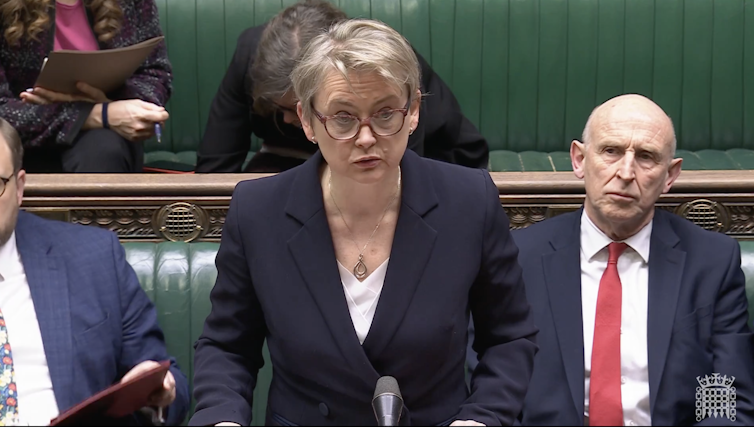
So little said, at such length: the prime minister, in his Sunday morning BBC TV interview; James Kariuki, chargé d’affaires in the UK Mission to the United Nations at Monday morning’s Security Council emergency session; and Yvette Cooper, foreign secretary, for over two hours in the House of Commons on Monday evening.

Yvette Cooper speaking in parliament.
The Foreign secretary makes a lengthy statement to the Commons on Venezuela.
Parliament TV

This is both explicable and arguable. For Britain, Venezuela is not particularly significant. There are trade interests but it is far away, of foreign tongue; absent from domestic political discourse. The last time a British prime minister and a Venezuelan president met – Tony Blair and Hugo Chavez – was in 2001.

However, other than in times of actual war (1812) the nadir in US-UK relations concerned Venezuela. A long-forgotten crisis was triggered in 1895 by a dispute over the border between it and British Guiana. The spat elicited the equally forgotten Olney corollary – a proposition from the US government which nonetheless repays reacquaintance in light of recent developments: “Today the United States is practically sovereign on this continent.”

The present crisis similarly concerns hemispheric hegemony. It evokes the better-known 1823 Monroe doctrine, as a warning to the old world to stay out of the new. It adds resource competition (oil: Venezuela has rather a lot, much of it exported to China), while challenging the post-1945 “rules-based order” (reminding us that it was only ever convention-based) and threatening to replace it with one based largely on power. And there’s the upending of the 1648 Westphalian states system, which found fulfilment 300 years later in the creation of the UN.

Hence fears as to what precedent the president has set. Outrage at the Security Council from Russia and China was purely performative given that Trump could not have done more to legitimise their plans for Ukraine and Taiwan. Moscow was almost wistful, admiring how the Americans had managed with Venezuela in an hour what they had failed to do with Ukraine in four years.

Channelling James Monroe and Richard Olney, but with Ukrainian ally Volodymyr Zelenskyy in mind much more than either, Keir Starmer would never break publicly with Trump over something in the Americas. Canada is the exception, as was made clear in the pushback against the US when Trump suggested a Commonwealth realm should become America’s “51st state”.

Silence buys influence?

Insofar as the UK government has a distinct response, it’s that there should be a transition to democracy in Venezuela, ideally by including opposition figures. Trump has said he won’t pursue so left-field an option.

The lack of contact with the president – Starmer unwisely saying publicly that he was seeking it – is embarrassing, and summoned the inevitable clichés about puppets and poodles. The hope (increasingly more than the expectation) is that silence buys influence.

If that was not a green light from the UK, there is one red line. Greenland. The clarity of the government’s response to Trump’s predations is surprising, if the reason for it is not. Denmark has long been a close UK ally, not least over Ukraine. But siding publicly with Copenhagen over Washington is something else Starmer would not ordinarily have been expecting to have to do.

But American-led international crises have upended other Labour premiers. In 1950, Clement Attlee rearmed for the Korean War, with cuts in public spending to pay for it. Labour was out of office the following year.

The next decade, Harold Wilson declined to have a public opinion over the Vietnam war, thereby infuriating both the Americans and the young he enfranchised in 1969. Labour was out of office the following year.

The best known example remains Iraq. On the back of two landslide election triumphs in 2003, Blair split his party and inflamed the public. Labour’s parliamentary majority was slashed two years later. Unquestioning support for an American president became Blair’s nemesis.

He was comfortable with that. But Trump has transgressed the only recognisable facet of what political identity Starmer actually has: adherence to the rule of law, and international law at that. Yet he can only be mute.

The apparent inconsistencies between Starmer’s past and present can be reconciled by the elemental fact that he’s prime minister. What animated the student, the activist, the lawyer, the MP, cannot in office.

Laura Kuenssberg and Keir Starmer sitting opposite each other.
The prime minister in a New Year’s interview with the BBC.
Flickr/Number 10, CC BY-NC-ND

But it is that failure – that refusal – to opine that most exasperates MPs. Cooper’s fractious Venezuela statement highlighted fissures within Labour that are evident whenever the US, or Israel, is concerned.

Maduro was the kind of leader who gives leftwing governments a bad name, which is why only the hard left – Richard Burgon, John McDonnell – are incensed. The main threats to Starmer’s leadership come from the soft left – Angela Rayner, Andy Burnham – where such affairs have less salience, and the right – Wes Streeting, Al Carns – where they’re merely awkward.

For May’s impending local and national elections the impact may be clearer, and graver. The Liberal Democrats, Greens, Your Party, SNP and Plaid Cymru accept gratefully a gift that will go on giving on innumerable doorsteps throughout the spring.

The Conservatives happen to agree with the government’s policy, if not necessarily its delivery. Few of their voters will care about recondite international law. Fewer still, Reform UK voters. Almost unheard of, Nigel Farage, too, has been mute.

Desperate to engineer a narrative reset in 2026, Starmer, this mildest of prime ministers – politically, temperamentally – now finds himself faced with the so-called Donroe doctrine, Trump’s “update” to the Monroe doctrine.

It would be somewhat to understate to say that this was not the start to the year for which Starmer was hoping. As we gaze upon the most imperial of presidencies, he can only dream of a similar premiership.

The Conversation

Martin Farr does not work for, consult, own shares in or receive funding from any company or organisation that would benefit from this article, and has disclosed no relevant affiliations beyond their academic appointment.

ref. Is Keir Starmer’s silence on Venezuela a mistake? What history tells us – https://theconversation.com/is-keir-starmers-silence-on-venezuela-a-mistake-what-history-tells-us-272837

Should AI be allowed to resurrect the dead?

Source: The Conversation – UK – By James Muldoon, Associate Professor in Management, University of Essex

The growing industry of ‘grieftech’ enables people to interact with dead relatives. Deepbrain AI

When Roro (not her real name) lost her mother to cancer, the grief felt bottomless. In her mid-20s and working as a content creator in China, she was haunted by the unfinished nature of their relationship. Their bond had always been complicated – shaped by unspoken resentments and a childhood in which care was often followed closely by criticism.

After her mother’s death, Roro found herself unable to reconcile the messiness of their past with the silence that followed. She shared her struggles with her followers on the Chinese social media platform Xiaohongshu (meaning “Little Red Book”), hoping to help them with their own journeys of healing.

Her writing caught the attention of the operators of AI character generator Xingye, who invited her to create an AI version of her mother as a public chatbot.

“I wrote about my mother, documenting all the important events in her life and then creating a story where she was resurrected in an AI world,” Roro told me through a translator. “You write out the major life events that shape the protagonist’s personality, and you define their behavioural patterns. Once you’ve done that, the AI can generate responses on its own. After it generates outputs, you can continue adjusting it based on what you want it to be.”

During the training process, Roro began to reinterpret her past with her mother, altering elements of their story to create a more idealised figure – a gentler and more attentive version of her. This helped her to process the loss, resulting in the creation of Xia (霞), a public chatbot with which her followers could also interact.

After its release, Roro received a message from a friend saying her mum would be so proud of her. “I broke down in tears,” Roro said. “It was incredibly healing. That’s why I wanted to create something like this – not just to heal myself, but also to provide others with something that might say the words they needed to hear.”

Grief in the age of deathbots

As I recount in my new book Love Machines, Roro’s story reflects the new possibilities technology has opened for people to cope with grief through conversational AI. Large language models can be trained using personal material including emails, texts, voice notes and social media posts to mimic the conversational style of a deceased loved one.

These “deathbots” or “griefbots” are one of the more controversial use cases of AI chatbots. Some are text-based, while others also depict the person through a video avatar. US “grieftech” company You, Only Virtual, for example, creates a chatbot from conversations (both spoken and written) between the deceased and one of their living friends or relatives, producing a version of how they appeared to that particular person.

Video by The Guardian.

While some deathbots remain static representations of a person at the time of their death, others are given access to the internet and can “evolve” through conversations. You, Only Virtual’s CEO, Justin Harrison, argues it would not be an authentic version of a deceased person if their AI could not keep up with the times and respond to new information.

But this raises a host of difficult questions about whether estimating the development of a human personality is even possible with current technology, and what effect interacting with such an entity could have on a deceased person’s loved ones.

Xingye, the platform on which Roro created her late mother’s chatbot, is one of the key prompts for proposed new regulations from China’s Cyberspace Administration, the national internet content regulator and censor, which seek to reduce the potential emotional harm of “human-like interactive AI services”.

What does digital resurrection do to grief?

Deathbots fundamentally change the process of mourning because, unlike seeing old letters or photos of the deceased, interacting with generative AI can introduce new and unexpected elements into the grieving process. For Roro, creating and interacting with an AI version of her mother felt surprisingly therapeutic, allowing her to articulate feelings she never voiced and achieve a sense of closure.

But not everyone shares this experience, including London-based journalist Lottie Hayton, who lost both her parents suddenly in 2022 and wrote about her experiences recreating them with AI. She said she found the simulations uncanny and distressing: the technology wasn’t quite there, and the clumsy imitations felt as if they cheapened her real memories rather than honoured them.

Official trailer for the grieftech documentary Eternal You.

There are also important ethical questions about whose consent is required for the creation of a deathbot, where they would be allowed to be displayed and what impact they could have on other family members and friends.

Does one relative’s desire to create a symbolic companion who helps them make sense of their loss give them the right to display a deathbot publicly on their social media account, where others will see it – potentially exacerbating their grief? What happens when different relatives disagree about whether a parent or partner would have wanted to be digitally resurrected at all?

The companies creating these deathbots are not neutral grief counsellors; they are commercial platforms driven by familiar incentives around growth, engagement and data harvesting. This creates a tension between what is emotionally healthy for users and what is profitable for firms. A deathbot that people visit compulsively, or struggle to stop talking to, may be a business success but a psychological trap.

These risks don’t mean we should ban all experiments with AI-mediated grief or dismiss the genuine comfort some people, like Roro, find in them. But they do mean that decisions about “resurrecting” the dead can’t be left solely to start-ups and venture capital.

The industry needs clear rules about consent, limits on how posthumous data can be used, and design standards that prioritise psychological wellbeing over endless engagement. Ultimately, the question is not just whether AI should be allowed to resurrect the dead, but who gets to do so, on what terms, and at what cost.

This article includes a link to bookshop.org. If you click the link and go on to buy from bookshop.org, The Conversation UK may earn a commission.

The Conversation

James Muldoon does not work for, consult, own shares in or receive funding from any company or organisation that would benefit from this article, and has disclosed no relevant affiliations beyond their academic appointment. James is the author of Love Machines: How Artificial Intelligence is Transforming Our Relationships (Faber).

ref. Should AI be allowed to resurrect the dead? – https://theconversation.com/should-ai-be-allowed-to-resurrect-the-dead-272643

How a ferocious 19th-century hurricane helped Irish people get their British pension

Source: The Conversation – UK – By Robyn Atcheson, Open Learning Tutor in Social History, Queen’s University Belfast

An illustration of the ‘Night of the Big Wind’ from 1839. Wikipedia, CC BY

Sunday January 6 1839 signalled the end of the festive season, the last of the 12 days of Christmas. The people of Ireland woke to light snow and many were looking forward to the evening’s celebrations.

January 6 was known as Nollaig na mBan – “women’s Christmas” when womenfolk across the country took a day off from their traditional domestic chores as a reward for all their efforts, and visited friends and family.

The temperature rose dramatically by mid-afternoon before rain started around 3pm. The Ordnance Survey had been carrying out observations at Phoenix Park in Dublin for a decade and their readings showed how quickly the atmosphere was changing during the day. As evening approached, people were aware of an approaching storm.

By 10pm Ireland was hit with the full force of a hurricane that would last at least eight hours. It had travelled over the Atlantic Ocean, gathering momentum, before crashing over the west coast. Waves even broke over the top of the Cliffs of Moher. And so the destruction began.

A perfect storm

The Enniskillen Chronicle wrote the next day: “The gale increased in violence until it became a perfect hurricane, unroofing houses, blowing down chimneys, prostrating boundary walls, and almost everything that offered resistance.”

As windows shattered and the thatch on rooftops blew away, the people of Ireland were in darkness, only able to see in the flashes of lightning and the light of an apparent aurora borealis. In recorded memories of the event, the main sensory experience was the sheer noise of the storm – “the deafening roar of a thousand pieces of artillery”, a reporter wrote on January 10.

Thousands of trees were blown down across Ireland. Fires broke out, fanned by the fierce winds. Along the Tyrone-Monaghan border there was a fire in almost every townland (the name for settlements before modern towns were established). In Dublin, the Bethesda Chapel caught on fire, burning the church, its attached school, six town houses and the House of Refuge for “reclaimed females”.

The river Liffey overflowed, there were flash floods in Strabane and all the water was reportedly blown out of a canal near Tuam. The earth was stripped alongside the river Boyne, exposing the bones of soldiers killed in battle 150 years earlier. Fish were found six miles inland while vegetation even 40 miles inland tasted of brine.

It is difficult to calculate the number of lives lost that night. Estimates put the death toll between 250 and 300 people. Many sailors died at sea, including the captain and entire crew of the Andrew Nugent, wrecked off Arranmore Island. Lord Castlemaine was fastening his bedroom window at Moydrum Castle in Athlone when the storm blew it open, hurling him across the room and killing him instantly.

Those who died in the aftermath, from injuries, pneumonia, frostbite or other related consequences of the storm, have never been counted. Stacks of hay and corn were devastated by fire. The houses that suffered the most were those of the lower classes.

Storm then famine

Some families and communities were only just recovering from the effects of the storm by 1845 when Ireland faced another national catastrophe with the first failure of the potato crop.

As they sought to make sense of the seemingly apocalyptic event they had lived through, people turned to religion and superstition. The storm was variously interpreted as a battle between English and Irish fairy folk, the devil causing havoc, and as a warning from God that the day of judgement would soon arrive. With the onslaught of the Great Hunger six years later, it is no wonder that people were afraid to name this terrible event.

By the end of the century, the “Night of the Big Wind” had become the most common name used by the poor to discuss the trauma of January 1839. It had become easier to discuss this freak occurrence than the more traumatic An Gorta Mór, the Irish term for the Great Hunger of the late 1840s.

In a strange twist, cultural memories of the night were also to become very lucrative in the next century. In 1909 the Old Age Pension Act was implemented in the United Kingdom. Old age was deemed to include those 70 years old and above.

In Ireland – still part of the UK at this point – this was a problem, as birth registration had not been made compulsory until 1864. Many old people, particularly Catholics, had no way to prove they were over the threshold. Memories and anecdotal evidence were turned to as a means of establishing whether someone was eligible.

Being able to give an account of your memory of “the Big Wind” was a sure-fire way of establishing you were over 70. Pension bureaucracy noted that quite a lot of people had the same memory and even recounted it in the same phrase: “I was able to eat a potato out of my hand on the ‘Night of the Big Wind’.”

This was an expression that was easy for people to remember, and showed the individual was old enough to feed themselves in 1839. By March 1909, 80,000 people in the United Kingdom had applied for the pension – 70,000 of them were Irish.

One such pensioner was Tim Joyce from Co. Limerick who cheerfully recounted: “I always thought I was 60. But my friends came to me and told me they were certain sure I was 70, and as there were three or four of them against me, the evidence was too strong for me. I put in for the pension and got it.”


Looking for something good? Cut through the noise with a carefully curated selection of the latest releases, live events and exhibitions, straight to your inbox every fortnight, on Fridays. Sign up here.


The Conversation

Robyn Atcheson does not work for, consult, own shares in or receive funding from any company or organisation that would benefit from this article, and has disclosed no relevant affiliations beyond their academic appointment.

ref. How a ferocious 19th-century hurricane helped Irish people get their British pension – https://theconversation.com/how-a-ferocious-19th-century-hurricane-helped-irish-people-get-their-british-pension-271653