New federal loan limits will worsen America’s nursing shortage and leave patients waiting longer for care

Source: The Conversation – USA (3) – By Kymberlee Montgomery, Senior Associate Dean of Nursing, Drexel University

There aren’t enough people training to become nurses to meet the rising demands for nurse practitioners and registered nurses. Iconic Prototype/iStock/Getty Images Plus

There is growing need for nurses in the United States – but not enough nurses currently working, or students training to become nurses, to promptly see all of the patients who need medical care.

Tens of thousands of nurses have left practice since the pandemic, and many more plan to leave within a few years, according to the 2024 National Nursing Workforce Survey, which reviews the number of registered nurses working in the U.S.

Meanwhile, the U.S. Bureau of Labor Statistics projects that there will be an average of 189,100 openings for registered nurses each year through 2032. In addition, there will be a need for approximately 128,400 new nurse practitioners by 2034 – making it the fastest-growing occupation in the country.

The tax and spending package signed into law in July 2025 will take effect on July 1, 2026. Among other things, it will likely make it even harder for people to take out loans and help pay for a graduate nursing degree.

We are nurses and professors who oversee large nursing programs at universities. We believe that new restrictions on how nursing students can take out federal loans to pay for their education are likely to prevent people from pursuing advanced nursing roles.

These new regulations will cause the shortage of practicing nurses to intensify – in turn, worsening the quality of care patients receive.

Clinics may offer fewer appointments, hospitals may be forced to reduce services, and nursing programs may have to accept fewer students. As a result, some patients will wait longer, travel farther, or not see nurses altogether.

Three young women wearing teal scrubs stand around a dummy of an older woman lying in a hospital bed.
Nursing students work in a simulation lab at the Florida A&M University Campus School of Nursing in Tallahassee in April 2023.
Glenn Beil/Florida A&M University via Getty Images

Paying for nursing education

Someone can become a registered nurse with an associate or bachelor’s degree. But a graduate-level degree is needed for other nursing roles – including nurse practitioners, nurse anesthetists and nurse midwives.

Nursing school costs vary greatly, depending on which degree students are seeking and whether they attend a public or private school. Roughly three-quarters of graduate nursing students rely on student loans and graduate with debt to pay for programs that can range from US$30,000 to $120,000 or more.

We have found that nursing students, unlike medical students, often work while enrolled in their programs, stretching their education over longer periods and accumulating additional costs.

The tax and spending law eliminates several federal grants and loan repayment programs for nurses and aspiring nurse educators – faculty members who teach nursing students in colleges and universities.

The law also sharply restricts how much money graduate nursing students can borrow through federal student loans.

Approximately 59% of 1,550 nurses surveyed in December 2025 said that they are now less likely to pursue a graduate degree with the new borrowing limit changes.

A fractured system

Nurse practitioners provide the majority of primary care in the U.S. – particularly in rural areas and communities with few physicians.

In addition, certified registered nurse anesthetists administer anesthesia for surgeries and procedures in many areas. Meanwhile, certified nurse-midwives deliver babies and provide prenatal and postpartum care, especially in areas where there are few obstetricians.

Long waits for new patient appointments are now common across the country, with national surveys showing that patients often wait weeks to months before they receive medical care.

About a decade ago, new patients could often book appointments within days to a few weeks; but today, there are fewer available medical appointments and medical professionals to treat them. This is particularly true for many medical practices serving women, older adults and rural communities.

One of us – Dr. Montgomery – is a women’s health nurse practitioner who routinely sees patients wait months for new appointments in the mid-Atlantic. These delays translate into postponed cancer screenings, delayed medication management and untreated chronic conditions.

Research consistently shows that nursing shortages are associated with worse patient outcomes, including higher mortality and delayed treatment.

Nursing left off the professional degree list

Under the new law, the Department of Education created a classification system that distinguishes professional from nonprofessional graduate degrees. Nursing is now considered a nonprofessional degree.

As a result, graduate nursing students will soon face lower borrowing limits than they currently do.

Previously, there was no need to label nursing as professional or not, because federal student loan borrowing was not capped in a way that required this distinction.

Now, students in professional graduate programs, such as medicine and law, may borrow up to $50,000 per year in federal loans and $200,000 in total.

Graduate nursing students, by contrast, will soon face a federal student loan cap of $20,500 per year and $100,000 total over the course of their education – a significant reduction from prior borrowing options.

The new law also eliminates the Direct PLUS Loan program. This separate, federal student loan program allows students to borrow up to the full cost of attendance of graduate nursing school after they reached annual loan limits on traditional federal loans.

More than 140 members of Congress from both political parties urged the Department of Education in December 2025 to reverse course and classify nursing as a professional degree.

The faculty bottleneck

Graduate loan limits will worsen another critical problem – the shortage of nursing faculty.

There are currently 1,693 full-time vacancies for nursing faculty positions, according to a survey in 2024 by the American Association of Colleges of Nursing. Of those open positions, 84% require or prefer a doctoral degree.

Universities cannot admit nursing students if there are not enough faculty to teach them.

Nursing programs in the U.S. turned away more than 80,000 qualified applicants to baccalaureate and graduate nursing programs in 2023, in part because they did not have enough faculty.

Better solutions exist

There are policy changes that could prevent this domino effect.

Policymakers could classify nursing as a professional degree for loan purposes, aligning borrowing limits with the documented costs of accredited programs.

Congress and individual states could expand scholarships and loan-repayment programs for nurses who teach or serve in rural and underserved communities.

Universities and governments could work together to share nurse training costs.

Graduate nursing education is not a luxury. It is a cornerstone of the country’s health care system.

Helping nurses afford an education is not just about nurses – it is about patients, communities and the future of medical care in the U.S.

The Conversation

Mary Ellen Smith Glasgow is an AACN Board Member. The views, analyses, and conclusions expressed in this article are those of the authors and do not necessarily reflect the official policy or positions of the American Association of Colleges of Nursing.

Kymberlee Montgomery does not work for, consult, own shares in or receive funding from any company or organization that would benefit from this article, and has disclosed no relevant affiliations beyond their academic appointment.

ref. New federal loan limits will worsen America’s nursing shortage and leave patients waiting longer for care – https://theconversation.com/new-federal-loan-limits-will-worsen-americas-nursing-shortage-and-leave-patients-waiting-longer-for-care-271807
How tourism, a booming wellness culture and social media are transforming the age-old Japanese tea ceremony

Source: The Conversation – USA (3) – By Małgorzata (Gosia) K. Citko-DuPlantis, Assistant Professor in Japanese Literature and Culture, University of Tennessee

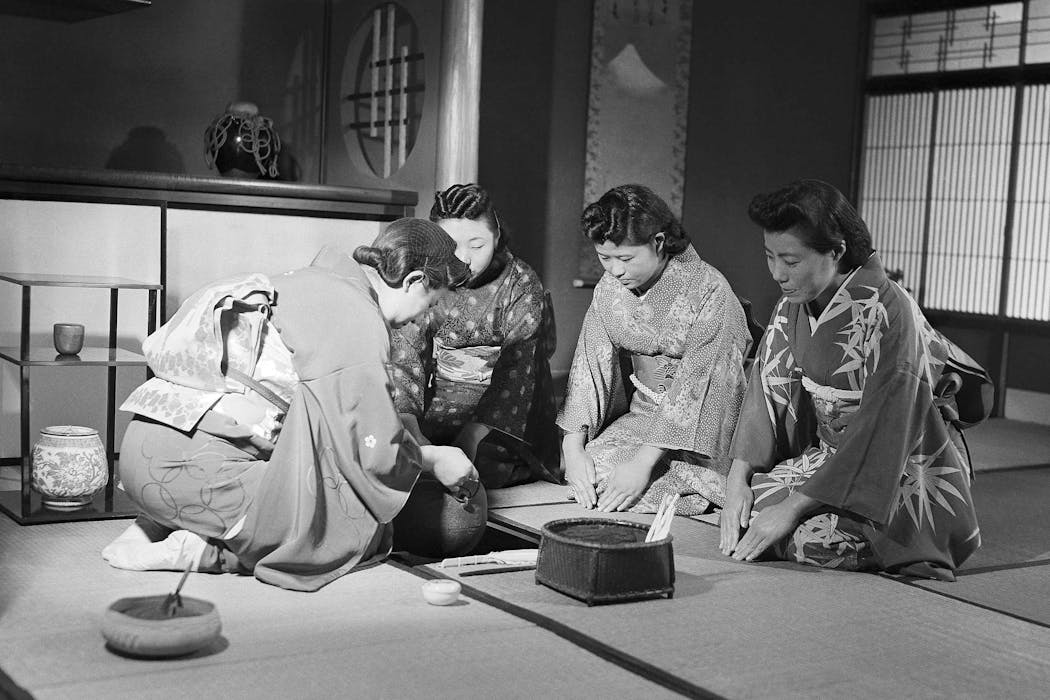
A traditional Japanese tea ceremony in Japan on Dec. 18, 1947. AP Photo

One of Japan’s most recognizable cultural practices – the Japanese tea ceremony, known as chanoyu, or chadō – is being reshaped by tourism, wellness culture and social media.

Matcha, the Japanese powdered green tea that is used during the ceremony, has entered the global marketplace. Influencers post highly curated tearoom photos, wellness brands market matcha as a “superfood,” and cafés worldwide present whisked green tea as a symbol of mindful living.

The Japanese tea ceremony is deeply rooted in the ideals of Zen Buddhism, but the current matcha hype has little to do with the tea ceremony. Green tea has become part of the on-the-go coffee culture. On social media, a centuries-old spiritual practice is compressed into a 15-second reel.

As a scholar of premodern Japanese literature and culture, I know that this commercialization is not without tension. The reflective values of the Japanese tea ceremony trace their origins to a monastic routine.

History of the Japanese tea

Tea arrived in Japan from China in the eighth century. Emperor Shōmu served powdered tea, an ancestor to what we today know as matcha, to Buddhist monks in 729 C.E.

Around the end of the 12th century, the practice of serving tea became more widespread after the Zen monk Eisai returned from China with matcha tea seeds from the plant that was to become the source of much of the tea grown in Japan today. He also brought with him the knowledge of how tea rituals were practiced in Chinese Buddhist temples.

Wild tea grew in Japan, but the tea grown from Eisai’s seeds became known as “honcha” or true tea. Matcha soon spread through Zen monasteries, where it was believed to generate greater enlightenment than long hours of meditation.

As Zen Buddhism gained influence among the warrior class in the 13th century, monks carried tea culture beyond temple walls. In 1483, Ashikaga Yoshimasa – Japan’s military ruler, or shogun, who was also a patron of the arts, constructed one of the earliest tearooms. The tearoom was inside his villa in Kyoto, later known as the Temple of the Silver Pavilion or Ginkakuji. There, the tea ceremony was both a contemplative act and an occasion to display Chinese calligraphy, paintings and ceramics.

What matters is the moment

The most transformative figure in the history of the Japanese tea ceremony was a 16th-century tea master, Sen no Rikyū. Rejecting ostentation, he favored locally made utensils, rough ceramics, and small, rustic spaces designed to quiet the senses.

This aesthetic and moral principle – known as “wabi” – valued imperfection, humility and mindful presence. Grounded in simplicity, wabi guided everything from the size of the room to the angle of a flower stem.

Serving as tea master to military leaders, or shoguns, who supported his activities, Rikyū transformed the tea ceremony to reflect ideals of wabi.

A poem by Rikyū captures his philosophy:

cha no yu to wa
tada yu o wakashi
cha o tatete
nomu bakari naru
koto to shiru beshi

To understand the tea ceremony
Is simply this:
Heat the water,
Whisk the tea,

And drink.

The poem’s clarity echoes a foundational sensibility of the tea ceremony: what matters is the moment itself.

Rikyū’s grandson Sōtan and his three sons carried on the traditions of tea ceremony. Their three schools – Ura Senke, Omote Senke and Mushanokōji Senke – differ in tea whisking styles, utensils they use and levels of formality, yet continue to preserve Rikyū’s principles to date. All three schools have headquarters in Kyoto.

The ritual of impermanence

The manner of preparing powdered green tea depends on the techniques and practices of the various schools. The following description is based on the Ura Senke way of preparation.

A full tea gathering, or “chaji,” may last several hours. Every choice – from utensils to food to flowers – reflects the season, time of day and purpose of the occasion, whether welcoming guests, marking a farewell or observing a celebration.

A Japanese tea ceremony and the power of simplicity.

The ceremony takes place in a tearoom or “chashitsu,” decorated only with a hanging scroll and a single flower – both selected to set the gathering’s spiritual tone.

Guests assemble in a waiting room and taste the hot water used for tea. They then proceed along a water-sprinkled garden path meant to wash away the “dust” of the outside world.

After greeting the host, they cleanse their hands and mouths and enter the tearoom through a small door, the “nijiriguchi.” The passage from the ordinary way of the world to the contemplative way of tea symbolizes humility.

Inside, they admire the scroll, kettle and hearth before taking their seats.

In the guests’ presence, the host builds the charcoal fire and serves a carefully prepared seasonal meal: rice, soup, seafood or vegetables, pickles, sake and a principal sweet.

When the meal ends, the host briefly re-enters alone to replace the scroll with flowers, sweep the room and arrange the utensils for “koicha,” the thick tea that forms the heart of the gathering. At that time the guests have been asked to leave the room. They re-enter once the bell or gong is run. The host reenters the room as well with chawan – the whisk – and all the utensils; the tea is served.

A jar of fresh water representing yin is paired with the fire’s yang. Yin (feminine) and yang (masculine) are two opposing yet complementary forces in Chinese philosophy that represent the duality and balance found in the universe. The tea jar or “chaire,” wrapped in silk, is set out on a stand chosen for the occasion. A gong or bell summons the guests to return.

The host enters with the tea bowl or “chawan,” a white linen cloth, a whisk and a bamboo scoop. Each utensil is cleaned, and the bowl is warmed, dried and filled with three scoops of powdered tea before hot water is added and kneaded with the whisk into a smooth, thick mixture. The single bowl is shared among all guests, then returned to the host. The tea jar and scoop are cleaned and presented for close viewing.

The charcoal fire is built again for “usucha,” or thin tea, which gently prepares guests to return to everyday life. Thin tea is prepared in a way similar to that of thick tea, except that less tea powder, and of a lower quality, is used. Dry sweets accompany this lighter, frothier tea, served in individual bowls. When the final cup is finished, guests express their gratitude, depart along the garden path and leave the host watching quietly from the tearoom door.

Underlying the entire ritual is the principle of “ichigo ichie” – “one time, one meeting.” No gathering can ever be repeated. Every season, every person, every breath is singular.

The tea ceremony, often translated in English as “the Way of Tea,” trains participants to feel that fleetingness, to hold the moment warmly and attentively before it dissolves.

The rise of global matcha culture

Today, the tea ceremony lives a double life. While traditional schools continue to teach Rikyū’s disciplined aesthetics, matcha has entered its global afterlife of commercialization and popular culture.

A wooden plate holding a blue ceramic bowl, a whisk, a cup and a spoon.
A traditional Japanese tea set for making matcha green tea.
AP Photo

The explosion of matcha consumption has led to a high demand. Prices for high-grade ceremonial matcha have risen dramatically, and producers struggle to meet demand. Japan now exports far more matcha than ever before.

Many people encounter matcha not through Zen teachings or formal tea ceremonies but through lifestyle trends and the contemporary fascination with “calming rituals.” On social media, matcha is promoted as a wellness routine and lifestyle aesthetic.

In this new landscape, the Japanese “Way of Tea” exists both as a revered cultural practice and as a global commodity – its spiritual heart intact but circulating in forms its earliest practitioners could scarcely have imagined.

The Conversation

Małgorzata (Gosia) K. Citko-DuPlantis does not work for, consult, own shares in or receive funding from any company or organization that would benefit from this article, and has disclosed no relevant affiliations beyond their academic appointment.

ref. How tourism, a booming wellness culture and social media are transforming the age-old Japanese tea ceremony – https://theconversation.com/how-tourism-a-booming-wellness-culture-and-social-media-are-transforming-the-age-old-japanese-tea-ceremony-262310

The five best TV shows about the American revolution – recommended by a historian

Source: The Conversation – UK – By Stuart Salmon, Tutor in History, University of Stirling; University of Edinburgh

Any discussion of films and TV series about the American revolution has to start with a caveat. There have been historical movies for as long as there have been movies, but films and TV series about the great founding event of the US have been thin on the ground, certainly until the 21st century.

In 1917, an American director was even prosecuted for making Spirit of 76, a film about the revolution that criticised America’s new ally Great Britain. It wasn’t until 1985 that Hollywood tried a big budget retelling of the American revolution, with Revolution (1985).

Sadly the Al Pacino vehicle, while spectacular, had an incoherent storyline and was an unmistakable flop. It was another 15 years before Hollywood tried again with The Patriot (2000). The Patriot was more financially successful but arguably even less popular among the historical community (including myself).

Amid all these flops, however, a few gems emerged in a different medium – television. I’m a historian of the American revolution and these are my favourite ways the story has been told on TV.


Read more:
During World War I, a silent film spoke volumes about freedom of speech


1. Turn: Washington’s Spies (2014-17)

This four season AMC TV series stars Jamie Bell as patriot spy Abraham Woodhull, who was a leading figure George Washinton’s successful spy network, the Culper Ring. The series was based on the book Washington’s Spies by Alexander Rose (2006).

The series has 40 episodes, and each one is action packed. For me, it conjures up the secret war of the revolution brilliantly. The series explores some of the most intriguing characters of the war of independence, but most interesting for me was Ksenia Solo’s interpretation of Peggy Shippen, an American woman who spied for the British then married patriot hero Benedict Arnold and helped him defect to the British. This is a major plot line in the later seasons.

The trailer for Turn: Washington’s Spies.

The series’ main villain was British officer John Graves Simcoe (Samuel Roukin), whose historical counterpart was a very different character to the one portrayed in the series. His memoir is one of the key primary sources for the British experience of the war of independence. I have been lucky enough to read Simcoe’s handwritten copy.

2. John Adams (2008)

This wonderful HBO miniseries stars Paul Giamatti and Laura Linney as John and Abigail Adams, the power couple of the American revolution. The series is based on the book John Adams by David McCullough (2001). Linney and Giamatti both won Emmy awards for the show and brilliantly portray their complex but likeable characters.

The trailer for John Adams.

While John Adams is in the title, his wife Abigail has an equal role in the series. My favourite scene is where Abigail puts herself and her children in smallpox quarantine in revolutionary war Boston. This happened as shown and sheds light on the bizarre quarantine regime where people would sew small particles of smallpox spores into their skin and shut themselves away for at least two weeks in the hope of catching a lighter version of the disease but building immunity.

The series creates a great picture of two hugely influential figures in the American revolution and the history of the US. The couple arguably established many of the key features of the role of president and first lady. They wrote each other thousands of letters in their 54 year marriage but the most fascinating is Abigail’s letter to John on the eve of the Declaration of Independence (John played the key role in getting it passed by Congress). She urges John to “remember the ladies”. It is a hugely important early feminist document, which is now widely used as a teaching aid.

3. Franklin (2024)

This Apple TV+ miniseries is based on the book Dr Franklin Goes to France: How America Was Born in Monarchist Europe by Stacy Schiff (2005). It chronicles Benjamin Franklin’s attempts to get an alliance with France during the war of independence.

The trailer for Franklin.

Directed by Tim Van Patten and featuring a strong performance by Michael Douglas in the titular role the series covers some of the same historical ground as John Adams. Both Adams (played by Eddie Marsan) and Franklin spent much of the revolutionary war in Europe attempting to secure alliances with the European powers.

This series is very entertaining and gives a warts and all picture of Franklin as a septuagenarian. For an account of the young Franklin, his autobiography is well worth a read and it also gives a great picture of life in colonial Pennsylvania.

4. Liberty! The American Revolution (1997)

If there was just one film or TV series that inspired me to study, write about and teach the American revolution, it was this six-part documentary. It reached me at exactly the right time – about a year before I began my final year undergraduate course on the American revolution.

The first part of Liberty! The American Revolution.

The series contains contributions from some of the key historians of the American revolution, such as Pauline Maier, Gordon Wood and Bernard Bailyn. It also has readings of the words of participants on both sides of the American revolution by actors including a pre-fame Phillip Seymour Hoffman. The wide-ranging coverage spawned an excellent tie-in book.

While it did not neglect to show the diversity of the American revolution, more attention could have been paid the contributions of women, African Americans and Indigenous Americans. Historian Gary Nash’s book the Unknown American Revolution (2005) was one of key works in recognising this diversity. There have been other documentaries on the American revolution but it was this one which shaped the course of my career in history.

5. Hamilton (2021)

While technically a televised stage show (available to watch on Disney+), Hamilton is undoubtedly the most popular work of media with an American revolutionary theme. Drawing on Ron Chernow’s biography of the first US treasury secretary Alexander Hamilton, Lin Manuel Miranda’s hip-hop musical tells the tale of it’s eponymous founding father with amazing energy and humour.

The trailer for Hamilton.

I have been intrigued by the musical’s anti-hero/villain Aaron Burr since reading Gore Vidal’s novel Burr (1973) as a teenager and Leslie Odom Jr. does a wonderful job at bringing across the conflicted third vice president. Jonathan Groff, meanwhile, nearly steals the whole film as George III, despite only appearing for a few minutes.

The film covers the years 1776 to 1804 without seeming to miss many momentous events. While the best way to see Hamilton is live, until there is a big-budget film adaptation this is only way to enjoy the show with the original Broadway cast. Historically, it takes some liberties – Hamilton was not as enlightened on slavery as the musical suggests for example – but it gives a wonderful impression of the revolutionary era.

Do you have a favourite television show about the American Revolution that didn’t make our list? Let us know in the comments below.


Looking for something good? Cut through the noise with a carefully curated selection of the latest releases, live events and exhibitions, straight to your inbox every fortnight, on Fridays. Sign up here.


The Conversation

Stuart Salmon is affiliated with Universities and Colleges Union (UCU).

ref. The five best TV shows about the American revolution – recommended by a historian – https://theconversation.com/the-five-best-tv-shows-about-the-american-revolution-recommended-by-a-historian-270612

What the US strike on Venezuela could mean for global oil prices

Source: The Conversation – UK – By Adi Imsirovic, Lecturer in Energy Systems, University of Oxford

Venezuela’s state-owned PDVSA has been used as a cash cow by Maduro. JBula_62/Shutterstock

The capture of former Venezuelan president Nicolás Maduro by the US intelligence services and armed forces has resulted in a frenzy of speculation about its consequences. But there is no doubt that the events were closely linked to the oil riches of the country. While the political situation in Venezuela remains fluid, there is far more certainty about its position as an oil producer.

For a start, Venezuela has one of the highest proven oil reserves in the world. The number frequently thrown around is 300 billion barrels, more than any other country, including Saudi Arabia.

But it’s important to be cautious about the numbers coming from the outside of the Organisation for Economic Cooperation and Development (OECD). Statistics used within the OECD clearly distinguish between proved, probable, possible and contingent reserves and require consistency over time.

Proven reserves are defined as the oil in the ground that can be extracted economically, with the prevailing technology. It is a variable, not a constant – and the Venezuelan reserves estimate goes back to 2008.

As oil prices increase, the reserves increase too. This is because higher profits can justify the higher costs of extracting additional oil that would otherwise remain in the ground.

Initial production is usually easy due to the natural gas pressure of the well. Over time, this pressure falls and additional measures such as gas and water injection may have to be used – and these are expensive.

In 2008, the international oil prices approached US$140 (£104) a barrel. Currently, most of the Venezuelan oil sells at a US$25 discount to the Brent benchmark, at around US$35 a barrel. All other things being equal, the current proven oil reserves may be well below 100 billion barrels – less than a third of the figure that’s frequently cited.

The problem with Venezuela’s oil

Most Venezuelan oil is very heavy (tar-like) and contains a lot of sulphur. This makes production and transportation very expensive. Heavy oil needs to be diluted with naphtha (a liquid hydrocarbon) or gas oil first, and sulphur must be removed during the processing with expensive hydrogen.

Only very sophisticated refineries on the US Gulf Coast and some new refineries in India, the Middle East and China can process this kind of oil. It is no coincidence that Venezuelan oil is sold at huge discounts relative to other grades.

American oil companies started their activities in Venezuela almost a century ago, and by 1960s, the US was the largest foreign investor in the country. In line with most countries in the Organization of the Petroleum Exporting Countries (Opec), the Venezuelan oil industry was nationalised in 1971 and turned into the country’s oil monopoly, Petróleos de Venezuela SA (PDVSA).

The Venezuelan oil industry then suffered from decades of political mismanagement, purges and US sanctions. Due to the lack of investment, production in the country has fallen from over three million barrels a day (mbd) in the early 2000s to below one mbd last year (see the graph below). This decline was particularly noticeable during the Maduro regime when the ruling party used PDVSA as a cash cow, investing little or nothing back into the industry.


Read more:
What does international law tell us about the US seizure of an oil tanker off the coast of Venezuela?


Due to the state of the oil sector, even a relatively small increase in oil production in Venezuela would require billions of dollars of investment. A significant increase would require years of massive funding – even with a stable political environment.

It is not clear that events in Venezuela will have any significant immediate impact on the global oil market. The initial reaction was for the oil price to fall. But the global oil market is oversupplied right now and even the total loss of Venezuelan exports (which is unlikely) would have only a minor impact on the prices.

The decline of Venezuelan oil production:

In the long term, the state of the industry can only improve (barring wars and civil strife). Additional barrels from Venezuela would only make life harder for Opec and other producers by making the oversupply worse. Indeed, oil prices tumbled again after US President Donald Trump vowed to seize up to 50 million barrels of Venezuelan oil.

Claims that the events would hurt China seem overblown. China (together with India) has been a major buyer of Venezuelan oil, but it represented no more than 5% of the volume of Chinese imports. Canada is another producer of heavy oil, and it has been shifting its exports from the US to China for some time. This trend is likely to continue.

Overall, there is little economic rationale for a “takeover” of the Venezuelan oil industry. If the US wanted Venezuelan oil, it could simply have lifted the sanctions imposed by Trump in 2019 and let their oil companies buy it, like everyone else.

It is the long-term political consequences of this legally dubious US action that are worrying the oil market. President Trump appears to have a growing appetite for military adventure which may include further attacks on Iran, a major oil-producing nation and a member of Opec.

Nobody is quite sure what Trump may do next, and the US action may also be used to legitimise Russia’s invasion of Ukraine. This had already rattled energy markets. The last thing the oil market needs right now is more uncertainty.

The Conversation

Adi Imsirovic does not work for, consult, own shares in or receive funding from any company or organisation that would benefit from this article, and has disclosed no relevant affiliations beyond their academic appointment.

ref. What the US strike on Venezuela could mean for global oil prices – https://theconversation.com/what-the-us-strike-on-venezuela-could-mean-for-global-oil-prices-272858

The menopause gap: why some women suffer more and get less care

Source: The Conversation – UK – By Dipa Kamdar, Senior Lecturer in Pharmacy Practice, Kingston University

Mama Belle and the kids/Shutterstock

Menopause is often described as “the change”, but for millions of women worldwide it is more than a biological milestone. It is a cultural, social and medical turning point. While most women experience menopause, their journeys are not the same. Ethnicity, culture and access to healthcare shape how symptoms are felt, understood and treated. These differences are rarely acknowledged, leaving many women invisible in public conversations about midlife health.

Menopause marks the end of reproductive years and is defined clinically as 12 months after the final menstrual period. Natural menopause usually occurs between the ages of 45 and 55, with the average age in the UK being 51. The transition that leads up to it, known as perimenopause, can last several years and is characterised by fluctuating hormone levels, particularly oestrogen.

Up to 80 percent of women develop symptoms linked to falling levels of oestrogen, progesterone and testosterone. Researchers have identified more than 40 possible symptoms. Because oestrogen acts on receptors throughout the body, its loss is associated with increased risks of long-term health issues such as osteoporosis, heart disease, diabetes and mood disorders.

Symptoms vary widely. Hot flushes, night sweats and sleep disturbances are common, as are mood changes, joint pain, vaginal dryness and reduced libido. Symptoms can last an average of seven years. Although these effects are widespread, their intensity and meaning differ across cultures. Research including the The Study of Women’s Health Across the Nation and further work by the British Menopause Society highlights notable variations in how menopause is experienced. There appear to be some differences in hormonal patterns across ethnic groups, although more research is needed to understand why symptoms differ.

Women of African and Caribbean descent tend to experience more severe and longer-lasting vasomotor symptoms, including hot flushes and night sweats. Sleep problems, mental health issues and weight gain are also reported more often. Cultural expectations and stigma can make open discussion difficult, leaving many women without appropriate support.

Women of South Asian descent (India, Pakistan and neighbouring regions) tend to reach menopause earlier, with average ages around 46 to 47 years compared with 51 in western populations. Earlier menopause increases the risk of long-term health conditions such as heart disease. South Asian women also report more urogenital symptoms, such as vaginal dryness, urinary issues and reduced libido. However, conversation about sexual health is often limited due to cultural norms.

Women of East Asian descent (China, Japan and others) often report fewer hot flushes but more musculoskeletal pain, forgetfulness and low libido. In many East Asian cultures, menopause is viewed as a natural stage of ageing, which reduces the likelihood of seeking medical support.

Women of White European heritage report vasomotor symptoms more frequently than East Asian women, but often with less intensity than those experienced by African and Caribbean women. Although access to healthcare is generally greater, inequalities still affect diagnosis and treatment.

Across many minority communities, social stigma and cultural silence remain significant barriers. In some cultures, menopause is associated with loss of femininity or fertility, discouraging women from discussing symptoms. In others it is viewed as a natural process that does not require medical input. Some women prefer natural approaches to symptom management, often due to cultural beliefs or limited trust in medical interventions.

Practical barriers make access to care even more difficult. Language barriers can prevent effective communication with clinicians. Health literacy gaps mean many women are unaware of options such as hormone replacement therapy (HRT). Educational materials often lack representation, with leaflets failing to depict women from diverse backgrounds. Many women report feeling dismissed when seeking help. Socioeconomic inequalities including lower income and limited access to healthcare further widen gaps in symptom management and long-term health outcomes. These issues are compounded by mistrust of the healthcare system, often rooted in historical and ongoing inequities.

For the first time, women aged 40 to 74 attending NHS health checks will now be asked about menopausal symptoms. By embedding menopause into routine checks, policymakers hope to normalise discussion, improve diagnosis and ensure that all women receive appropriate support. However, the benefits may not be evenly distributed. Evidence shows that some women from ethnically minoritised communities are less likely to access these health checks, particularly those who already face barriers to recognition and treatment. If uptake remains unequal, the policy may unintentionally reinforce disparities rather than address them. The challenge for the NHS will be to adapt outreach and service delivery so that menopause support reaches the women who need it most.

Addressing these inequalities requires culturally sensitive healthcare. Information needs to be available in multiple languages and formats, including clear explanations of symptoms, consequences and treatment options, both hormonal and non hormonal. Healthcare professionals must be trained to recognise cultural differences in how symptoms are described and interpreted. Women also need safe spaces to discuss their experiences without judgement.

Menopause is not only a phase of symptom management. It is a critical stage for long-term health. Menopause is universal, but its experience is not. Biological variation, cultural norms and systemic inequalities shape how women navigate this transition. Recognising these differences is essential for building equitable healthcare that supports all women, regardless of ethnicity or culture, through one of life’s most significant milestones.

The Conversation

Dipa Kamdar does not work for, consult, own shares in or receive funding from any company or organisation that would benefit from this article, and has disclosed no relevant affiliations beyond their academic appointment.

ref. The menopause gap: why some women suffer more and get less care – https://theconversation.com/the-menopause-gap-why-some-women-suffer-more-and-get-less-care-272753

‘Metamaterials’ could transform our lives – and sports equipment is at the vanguard

Source: The Conversation – UK – By Thomas Allen, Senior Lecturer, Department of Engineering, Manchester Metropolitan University

Metamaterials – artificially made materials with properties that aren’t found in the natural world – are poised to transform daily life. Their unique properties are enhancing products from sporting goods to consumer electronics and beyond.

As a sports engineer and the person leading on health applications within the UKRI-funded UK Metamaterials Network, I have unique insights into how metamaterials are enhancing sporting goods.

Specifically, they are helping to make sport and exercise more accessible, inclusive, and safer.

Metamaterials are made with meta-atoms (Figure 1). These building blocks have a specific geometry that has been engineered to allow the material to perform specific functions and have particular properties. Their functions may be related to acoustics, chemistry, electromagnetism, magnetism, or the material’s mechanical properties.

Metamaterials and sport

Metamaterials sit between products and materials. They are not materials in the traditional sense because their design is intrinsically linked to that of the product they are used within to enhance performance.

The rapid-uptake, multibillion dollar sporting goods sector has relatively low barriers to market entry, making it an ideal space for testing new and emerging technologies.

As a result, it has been an early adopter of metamaterials, particularly mechanical metamaterials (Figure 2), as described in an Institution of Mechanical Engineers report on sports engineering.

Auxetic metamaterials have been widely explored and adopted within sporting goods. Auxetic behaviour is an example of a “negative property”, achievable with metamaterials (Figure 3). Materials with negative properties behave in the opposite way to conventional expectations. When we stretch a conventional material lengthwise, its cross section will contract.

Auxetic metamaterials behave in the opposite way, with their cross section expanding when we stretch them lengthwise. This unusual and counterintuitive behaviour can improve the performance of sporting goods. The property is described by something called Poisson’s ratio, which is a measure of the deformation in a material in response to the direction of loading (force).

Auxetic metamaterials can improve comfort, fit, and impact protection in products such as body protection and helmets. They exhibit synclastic curvature, meaning they form a “dome shape” when bent, which may improve the fit of helmets and knee pads, for example.

Their enhanced indentation resistance allows for more flexible body protection that can still protect against concentrated loads, such as from impacts with rocks and studs. Auxetics can also control unwanted vibrations, which is useful in equipment like bats, bikes, rackets, skis, and snowboards. Other examples of sporting goods featuring mechanical metamaterial geometries include airless basketballs, bike saddles, and footwear.

The potential for metamaterials extends beyond traditional sporting goods. They could help people with disabilities and injuries to play sport and exercise. Potential applications span braces, prosthetics, orthotics, and rehabilitation devices. Because such items are typically classed as medical devices, they are subject to more stringent regulations than sporting goods, posing challenges for the uptake of metamaterials.

Other types of metamaterials besides mechanical could bring benefits to the sport and exercise sector. This includes metamaterial-enhanced products that could actively adapt their properties to fit the movement pattern, shape, and size of the user. For these reasons, metamaterials have the potential to make sport and exercise products more inclusive for a diverse range of users.

Metamaterial research in the UK

Metamaterials are engineered to have extraordinary properties that make products smaller, lighter, simpler, and more powerful. On December 1, 2025, the Institution of Mechanical Engineers published a policy report on unlocking the potential of metamaterials. The report was produced in partnership with our UK Metamaterials Network. It offers a perspective on how we can harness metamaterials to drive innovation, strengthen industry and address global challenges.

That said, several challenges must be addressed for their full potential to be realised. First, the UK must continue doing fundamental research to remain globally competitive in this field. Second, adoption by industry is slow, highlighting the need to bridge research and commercialisation.

Third, metamaterial prototypes are often made using methods that are not well-suited for mass production, limiting their potential to be scaled up. Fourth, a skilled workforce is needed to develop and deploy these technologies effectively. Raising awareness, establishing shared definitions, and testing products featuring metamaterials against agreed standards are critical to drive adoption and foster public trust.

Challenges of metamaterials in sport

Appropriate standards and regulations in sport help designers, increase consumer confidence in products, and support international trade. Sports products must often comply with safety standards and rules set by sports governing bodies. There may even be value in having specific standards for metamaterials, offering unified definitions and test frameworks.

Manufacturing presents another challenge. Metamaterials used within sporting goods are typically made using established methods like 3D printing, machining, and injection moulding. Because the enhanced properties of metamaterials often rely on complex geometric arrangements, they can be costly and slow to mass produce. This highlights a need for efficient manufacturing methods.

Despite these challenges, metamaterials are becoming increasingly common in sporting goods. I have only highlighted a few in this article, but I would imagine that they will become even more commonplace in the future. Being able to tailor unique material properties to their function, as well as making them suited to specific individuals, makes metamaterials a powerful tool for sports engineers.

This is a really exciting time for metamaterials in the UK, and in the sports engineering sector, specifically. I am looking forward to seeing this specialised technology continue to make sport and exercise more accessible, inclusive, and safer.

The Conversation

Thomas Allen receives funding from the Engineering and Physical Sciences Research Council (EPSRC) as a co-investigator of the UK Metamaterials Network. He worked with HEAD Sport GmbH on auxetic composites for rackets and supervises a PhD student funded by Rheon Labs Ltd. He was an author of the IMechE reports on metamaterials and sports engineering.

ref. ‘Metamaterials’ could transform our lives – and sports equipment is at the vanguard – https://theconversation.com/metamaterials-could-transform-our-lives-and-sports-equipment-is-at-the-vanguard-270840

How worried should we be that political leaders keep making oblique Nazi references?

Source: The Conversation – UK – By David L Collinson, Distinguished Professor of Leadership and Organisation, Lancaster University

Several high-profile political leaders have in recent months been seen apparently dabbling in Nazi allusions. In many cases, dog whistle messages send oblique signals to supporters. These are pitched at a frequency that most listeners can’t hear but are meaningful to those seeking confirmation of their own views.

When challenged, the people using these tactics often respond with strong and furious rebuttals. After emphasising their shock that they would be associated with Nazi imagery or ideas, they typically go on the offensive. They express indignation and moral outrage. Then, they demand an apology.

These hostile counterattacks often place their critics on the defensive. If the allusion to the Nazis becomes too obvious to deny, perpetrators typically claim they weren’t aware of the historical association and insist it was all an innocent mistake.

This is the dog whistle playbook: strategic ambiguity followed by belligerent counterattack, and then, if needed, plausible deniability.

Of the many recent cases of Nazi allusions, Elon Musk’s straight-arm salute – a gesture he performed twice at a rally celebrating Donald Trump’s second inauguration – is one of the most notorious.

Far from denying he’d made the gestures, Musk went on the attack dismissing criticisms as “pure propaganda”. He argued that critics in the Democratic party were conducting “ideological witchhunts” and needed “better dirty tricks” because Adolf Hitler references are “sooo tired”. Musk also made a series of Nazi-themed puns on social media.

One month later, Steve Bannon, Donald Trump’s one-time chief strategist and key figure in the Maga movement, also made a straight-arm salute at the conservative political action conference. Unlike Musk, Bannon denied any Nazi intent, describing the gesture as a “wave”. While Bannon was able to insist this wasn’t a Nazi salute, his critics’ outrage might have helped send a signal to Nazi sympathisers, reinforcing their loyalty and support.

Within the space of a few weeks in 2025, two senior figures in the Maga movement had been engulfed in controversies surrounding alleged Nazi salutes. For years, Trump has flirted with Nazi imagery, given comfort and even pardons to far-right extremists and been reluctant to criticise white supremacists. In November 2025 Trump reposted an AI-generated image of himself in front of what looked a lot like a Nazi eagle emblem (but without the swastika).

He has called political opponents “vermin” and argued that immigrants are “poisoning the blood of our country”. These words are associated with Hitler. Trump has also been quoted as saying “Hitler did some good things” and for asking US generals to be more like those of the Third Reich.

The dictator’s playbook

In Germany, dog whistles are a particularly sinister aspect of far-right politics, communicating coded signals that appear to convey a secret admiration for the Nazis. Such messages are often innocent enough to pass over the heads of the masses, yet iconic enough to resonate with others.

In 2024 Björn Höcke, one of the leading figures of the Alternative for Germany (AfD) party, was found guilty of knowingly using a Nazi slogan “Alles für Deutschland” at a rally. This slogan is forbidden under German law. It was the central slogan of the SA or Storm Troopers, Hitler’s paramilitary group from the Weimar years. Höcke insisted he was innocent because he was unaware of the Nazi links.

And if we reexamine Hitler’s own playbook, his speech to workers at the Siemens Dynamo Works factory in November 1933 never mentioned the word “Jews”. When Hitler talked of a “small rootless international clique” his supporters knew exactly to whom he was referring. Once Hitler had consolidated the power of the Nazis, this gave them, and many others, permission to vilify and scapegoat Jews more explicitly. In effect, the permission-giving facilitated the incremental usurpation of power.

While substantial differences clearly exist between the Third Reich and contemporary politics, there also seem to be disturbing overlaps. Rather than ensuring their messages could never be confused with Nazi references, some leaders seem comfortable using dog whistle signals and strategic ambiguity, hostile counterattacks and plausible deniability.

Some Nazi allusions might be viewed as innocent mistakes or as historical accident but their continued prevalence is starting to look like more than a coincidence.

The Conversation

The authors do not work for, consult, own shares in or receive funding from any company or organisation that would benefit from this article, and have disclosed no relevant affiliations beyond their academic appointment.

ref. How worried should we be that political leaders keep making oblique Nazi references? – https://theconversation.com/how-worried-should-we-be-that-political-leaders-keep-making-oblique-nazi-references-271893

Venezuela’s civil-military alliance is being stretched — if it breaks, numerous armed groups may be drawn into messy split

Source: The Conversation – Global Perspectives – By Rebecca Hanson, Associate Professor of Latin American Studies, Sociology and Criminology, University of Florida

Armed demonstrators march in support of President Nicolas Maduro in Caracas, Venezuela, on Sept. 23, 2025.
AP Photo/Ariana Cubillos

The immediate political void left in Venezuela by Nicolás Maduro’s abrupt removal from power has been filled by the former vice president, Delcy Rodríguez, who was sworn in as interim president on Jan. 5, 2026.

But the situation is far from stable. Rodríguez represents just one of multiple and competing interests within a Venezuela elite composed of a precarious civil-military alliance officially committed to a leftist populist ideology called Chavismo.

Delcy and her brother Jorge Rodríguez, the longtime right-hand man of Maduro, are the leading faces of the civilian factions. Interior Minister Diosdado Cabello and Defense Minister Vladimir Padrino López, both members of the armed forces, represent its military interests.

Even this rough civilian-military split represents just the institutional dimensions of power in Venezuela. There are also numerous armed groups and organizations with distinct interests that will respond differently to what happens in the coming days and weeks.

As scholars who have spent decades researching these armed groups, we know that Chavista leadership now faces a stark dilemma: Does it acquiesce to U.S. pressure and coercion over domestic economic and policy decisions or does it resist? Both paths risk armed conflict of varying severity, with wide-ranging consequences for the country’s future stability.

Below, we identify the main armed actors and examine how they may respond to choices made by Chavismo’s leadership in response to Trump’s use of force.

A fragile unity

If current elite cohesion holds and Chavista leadership acquiesces to Trump’s designs on the country, in our opinion the likelihood of large-scale armed conflict remains low.

Over the years, the government has consolidated loyalty by installing officers at the helm of state institutions and granting access to resources such as oil, gold mining and drugs. Future government cohesion would be contingent on the military’s continued control of key institutions, as well as the legal and illicit markets that underpin senior officers’ wealth.

But the risk of instability also lies outside of elite unity, with the armed “colectivos.” These diverse groups range from loyal government supporters to factions more critical of the government. Although their numbers are unknown, colectivos are numerous, coordinated, often heavily armed and control significant territory – including in the country’s capital.

Three masked and armed men stand guard.
Masked members of a ‘colectivo’ group stand on the sidelines of a political march in Venezuela in 2020.
AP Photo/Matias Delacroix

While many are now driven primarily by economic interests, a subset retains insurgent, ant-imperialist commitments. Should Chavista elites be perceived as acquiescing to U.S. pressure going forward, these groups could interpret such accommodation as ideological betrayal and turn to guerrilla violence.

As a founder of one of the largest and most powerful colectivos put it when we interviewed him in 2021: “As long as imperialism exists, armed struggle will always be present because imperialism seeks to destroy the people.”

While colectivo members were largely quiet immediately after Maduro’s abduction, some videos released on social media and news outlets have shown men believed to be colectivo members harassing reporters and people in the streets.

Potential for political rupture

It remains unclear how durable the current unified but already fraught Chavista front will prove. Indeed, the Rodríguez civilian wing and the Cabello-Padrino López military apparatus likely have different levels of tolerance for Trump’s propositions.

The Rodríguez siblings have generally adopted a pragmatic posture: In recent years, Delcy has shown a willingness to move away from state-led socialism toward market-oriented policies in an effort to stabilize the Venezuelan economy. Moreover, embracing free-market policies could help the siblings attract support from business elites and segments of the broader population.

Military factions have increased their political weight since the death of Hugo Chávez, Maduro’s predecessor. These military forces want economic controls that allow them to benefit from crony capitalism and guarantee their interests in strategic enterprises – including oil, gold, food distribution and drug markets. Moreover, Chavismo’s anti-imperialist nationalist ideology is particularly salient within the armed forces.

Trump’s statements indicating the U.S. would be the de facto ruler of Venezuela was likely perceived within Chavista circles as overtly blatant imperialism and an intentional public humiliation. While the Rodríguez siblings may be prepared to absorb this to preserve stability and their own survival, hard-line military figures could be far less inclined to do so.

For now, the civilian leadership is at least officially committed to Maduro. Still, Trump’s framing of the Maduro operation as an overt spectacle of subjugation raises the military’s political cost of continued alignment with a civilian leadership potentially seen as acquiescing to Washington’s demands.

Whether this perceived affront translates into defection will also depend on how any potential Rodríguez realignment threatens or preserves the military’s economic interests.

Two political leaders smile at one another as they ride a car during a rally.
Interim Venezuelan leader Delcy Rodríguez, left, smiles at Venezuelan Defense Minister Padrino Lopez during a commemoration of Hugo Chavez in Caracas, Venezuela, in 2023.
AP Photo/Matias Delacroix

The contours of resulting conflict

An open rupture over the role of the U.S. in Venezuela would likely result in asymmetrical conflict between the U.S. and Venezuelan armed forces.

The National Bolivarian Armed Forces of Venezuela consists of roughly 123,000 active personnel supported by about 8,000 reservists. The Bolivarian Militia, a fifth component of the armed forces that integrates civilian volunteers into the military, adds an estimated 200,000–300,000 members to this count. Although severely weakened by a years-long economic crisis, Venezuela’s armed forces remain a formidable actor.

This conflict would also probably engage the colectivos, who have collaborated with the armed forces for years as part of what Maduro has called the Unión Cívico Militar. In short, we would see both formal armed conflict and guerrilla warfare break out.

The relationship between the government and police forces has long been characterized by mistrust, but high-ranking officials are aware that the continued future of their institutions are tied up with Chavismo’s survival.

Of Venezuela’s more than 140 police forces, the most powerful are the Policía Nacional Bolivariana, or PNB, the CICPC, the investigative and forensic police, and the SEBIN, the political intelligence police that have become synonymous with torture. The PNB and CICPC have benefited from widespread corruption under Chavismo. Their officers are involved in rampant extortion and kidnapping, and both have played central roles in systematic state violence during the Maduro era. At the same time, the CICPC is widely seen as lacking ideological loyalty to the government and at some moments has bucked state policy and directives.

Three armed police officers ride in the back of a pickup truck.
Police patrol in La Guaira, Venezuela, after President Donald Trump announced that President Nicolás Maduro had been captured and flown out of the country.
AP Photo/Matias Delacroix

Police forces are more closely aligned with the military than Delcy and Jorge Rodríguez’s civilian faction. In the case of a rupture, this alignment would likely hold.

The role of criminal and guerrilla groups

Meanwhile, numerous gangs and criminal organizations operate across Venezuela, ranging from groups of 10 to 12 men to more sophisticated “mega-gangs” with over 100 members. While the Trump administration has often mischaracterized these groups, it is true that relationships between the Maduro government and some groups allowed them to become more organized, better armed and more capable of governing the territories they control, though others were weakened or dismantled by the state.

Gangs and criminal organizations have no ideological loyalty to the government; their priority is preserving control over illicit markets, including drugs, kidnapping, extortion and food distribution. In the event of a civil-military split, such groups may well remain neutral, choosing instead to focus on protecting their criminal businesses and potentially using instability to expand them.

At the same time, Delcy and Jorge Rodríguez could revive a familiar strategy: negotiating informal agreements with gangs in exchange for calm in the streets and tacit support.

In the past, Chavista governments have barred police forces from entering gang-controlled areas and tolerated gang dominance over illicit markets. While such arrangements can produce short-term territorial stability, they also deepen tensions with the police.

The final major armed players in Venezuela are guerrilla political groups. The National Liberation Army, or ELN, and FARC dissident groups operate in multiple states along the Venezuela-Colombia border. Well-armed and deeply enmeshed in illegal mining, extortion and smuggling, both groups have benefited from Chavismo’s rule. They have largely moved away from pursuing national political power toward capturing local state infrastructure and establishing parallel authorities to control illicit markets. Nevertheless, insurgent ideologies and opposition to demobilization efforts in Colombia remain central to understanding their motivations.

Guerrilla organizations such as the ELN and FARC dissidents would also likely seek to preserve – and potentially expand – their control over illicit economies in any future political arrangement. Unlike local gangs, however, these groups maintain articulated political agendas, even if those agendas remain largely oriented toward Colombia. Any future alignment of these groups would reflect both ideological commitments and a strategic calculation that civilian factions aligned with Washington would pose a greater threat to their political and economic interests.

Addressing this constellation of armed groups through state-building and multilateral cooperation could go some way toward providing Venezuelans with stability in the post-Maduro era. But that is far from guaranteed in this uncertain moment, especially if the Trump administration continues its policy of direct coercion over Venezuelan affairs.

The Conversation

The authors do not work for, consult, own shares in or receive funding from any company or organization that would benefit from this article, and have disclosed no relevant affiliations beyond their academic appointment.

ref. Venezuela’s civil-military alliance is being stretched — if it breaks, numerous armed groups may be drawn into messy split – https://theconversation.com/venezuelas-civil-military-alliance-is-being-stretched-if-it-breaks-numerous-armed-groups-may-be-drawn-into-messy-split-272670

LA fires showed how much neighborliness matters for wildfire safety

Source: The Conversation – USA (2) – By Elizabeth A. Logan, Associate Director of the Huntington-USC Institute on California and The West, USC Dornsife College of Letters, Arts and Sciences

Eaton fire survivors gather in Altadena, Calif., to talk about recovery six months after the LA fires. Sarah Reingewirtz/MediaNews Group/Los Angeles Daily News via Getty Images

On Jan. 7, 2025, people across the Los Angeles area watched in horror as powerful winds began spreading wildfires through neighborhood after neighborhood. Over three weeks, the fires destroyed more than 16,000 homes and businesses. At least 31 people died, and studies suggest the smoke and stress likely contributed to hundreds more deaths.

For many of us who lived through the fires, it was a traumatic experience that also brought neighborhoods closer together. Neighbors scrambled to help each other as burning embers started spot fires that threatened homes. They helped elderly and disabled residents evacuate.

A man turns a hose on a burning house while another runs.
Samuel Girma runs to get another hose as he and others try to stop the Eaton fire from spreading to more homes in Altadena, Calif. Girma was in the area on a construction job. The other man lives nearby.
Robert Gauthier/Los Angeles Times via Getty Images

As the LA region rebuilds a year later, many people are calling for improvements to zoning regulations, building codes, insurance and emergency communications systems. Conversations are underway about whether rebuilding in some locations makes sense at all.

But managing fire risk is about more than construction practices, regulations and rules. It is also about people and neighborliness – the ethos and practice of caring for those in your community, including making choices and taking steps on your own property to help keep the people around you safe.

Three men, one an older man, stand in the still-smoky ruins of what was once a home, with fire damage all around them.
Neighbors who lost their homes to a fire in Altadena, Calif., on Jan. 9, 2025, talk amid the ruins.
Zoë Meyers/AFP via Getty Images

As LA-area residents and historians who witnessed the fires’ destruction and have been following the recovery closely, we believe building a safer future for fire-risk communities includes increasing neighborliness and building shared knowledge of the past. Much of that starts in the schools.

Neighborliness matters in community fire safety

Being neighborly means recognizing the connectedness of life and addressing the common good, beyond just the individual and family network.

It includes community-wide fire mitigation strategies that can help prevent fires from spreading.

During the Southern California fires, houses, fences, sheds, roofs and dry vegetation served as the fuel for wind-blown fires racing through neighborhoods miles away from forested land. Being neighborly means taking steps to reduce risks on your own property that could put your neighbors at risk. Following fire officials’ recommendations can mean clearing defensible space around homes, replacing fire-prone plants and limiting or removing burnable material, such as wood fencing and sheds.

A woman closes her eyes as she hugs her cat.
Denise Johnson holds her cat Ramsey after the Eaton Fire. Her home was one of the few in her immediate neighborhood that survived, but recovery will take time for everyone.
AP Photo/Jae C. Hong

Neighborliness also recognizes the varying mental health impacts of significant wildfire events on the people who experience them. Being neighborly means listening to survivors and reaching out, particularly to neighbors who may be struggling or need help with recovery, and building community bonds.

Neighbors are often the first people who can help in an emergency before local, state and federal responders arrive. A fast neighborhood response, whether helping put out spot fires on a lawn or ensuring elderly residents or those without vehicles are able to evacuate, can save lives and property in natural disasters.

Fire awareness, neighborliness start in school

Community-based K-12 schools are the perfect places for learning and practicing neighborliness and providing transformative fire education.

Learning about the local history of wildfires, from the ecological impact of beneficial fire to fire disasters and how communities responded, can transform how children and their families think about fires and fire readiness.

However, in our view, fire history and safety is not currently taught nearly enough, even in fire-prone California.

A man pushes an older woman in a shopping cart along a pathway with apartments on one side and sand on the other, and thick smoke behind them.
Jerome Krausse pushes his mother-in-law in a shopping cart on a path along the beach as they evacuate amid fires in Pacific Palisades on Jan. 7, 2025.
AP Photo/Richard Vogel

California’s Department of Education Framework and Content Standards for K-12 education offer several opportunities to engage students with innovative lessons about wildfire causes, preparedness and resilience. For example, fourth grade history and social science standards include understanding “how physical environments (e.g., water, landforms, vegetation, climate) affect human activity.” Middle school science standards include mapping the history of natural hazards, though they only mention forest fires when discussing technology.

Schools could, and we believe should, include more fire history, ecological knowledge and understanding of the interconnectedness of neighborhoods and neighbors when it comes to fire safety in those and other classes.

Elementary schools in many states bring in firefighters to talk about fire safety, often through programs run by groups like the California Fire Prevention Organization. These efforts could spend more time looking beyond house fires to discuss how and where wildfires start, how they spread and how to make your own home and neighborhood much safer.

Models such as the U.S. Fire Administration’s collaboration with Sesame Workshop on the Sesame Street Fire Safety Program for preschool kids offer examples, blending catchy phrases with safety and science lessons.

The National Fire Protection Association’s Sparky the Fire Dog shares some simple steps that kids can do with their parents and friends to help keep their neighborhood safer from wildfire.

Including knowledge from Indigenous tribal elders, fire management professionals and other community members can provide more robust fire education and understanding of the roles people play in fire risk and risk reduction. Introducing students to future career pathways in fire safety and response can also help students see their roles in fire safety.

As LA recovers from the 2025 fires, fire-prone states can prepare for future fires by expanding education about fire and neighborliness, and helping students take that knowledge home to their families.

Remembering, because it will happen again

Neighborliness also demands a pivot from the reflexive amnesia regarding natural and unnatural disasters to knowing that it will happen here again.

There’s a dangerous, stubborn forgetfulness in the vaunted Land of Sunshine. It is all part of the myth that helped make Southern California such a juggernaut of growth from the late 19th century forward.

The region was, boosters and public officials insisted, special: a civilization growing in the benign embrace of the environment. Anything grew here, the endless Los Angeles Basin could absorb everyone, and if there wasn’t enough water to slake the thirst of metropolitan ambitions, engineers and taxpayers would see to it that water from far away – even very far away – would be brought here.

The Southland is beautiful, but a place can be both beautiful and precarious, particularly in the grip of climate change. These are lessons we believe should be taught in K-12 classrooms as an important step toward lowering disaster risk. Living with fire means remembering and understanding the past. That knowledge, and developing more neighborly behavior, can save your life and the lives of your neighbors.

The Conversation

Elizabeth A. Logan receives funding from the Sierra Nevada Conservancy and the WHH Foundation.

William Deverell receives funding from the Sierra Nevada Conservancy and the WHH Foundation.

ref. LA fires showed how much neighborliness matters for wildfire safety – https://theconversation.com/la-fires-showed-how-much-neighborliness-matters-for-wildfire-safety-272505

RFK Jr. guts the US childhood vaccine schedule despite its decades-long safety record

Source: The Conversation – USA (3) – By Jake Scott, Clinical Associate Professor of Infectious Diseases, Stanford University

Vaccines on the childhood schedule have been tested in controlled trials involving millions of participants and are constantly monitored for safety. GeorgiNutsov/iStock via Getty Images

The Trump administration’s overhauling of the decades-old childhood vaccination schedule, announced by federal health officials on Jan. 5, 2026, has raised alarm among public health experts and pediatricians.

The U.S. childhood immunization schedule, the grid of colored bars pediatricians share with parents, recommends a set of vaccines given from birth through adolescence to prevent a range of serious infections. The basic structure has been in place since 1995, when federal health officials and medical organizations first issued a unified national standard, though new vaccines have been added regularly as science advanced.

That schedule is now being dismantled.

In all, the sweeping change reduces the universally recommended childhood vaccines from 17 to 11. It moves vaccines against rotavirus, influenza, hepatitis A, hepatitis B and meningococcal disease from routine recommendations to “shared clinical decision-making,” a category that shifts responsibility for initiating vaccination from the health care system to individual families.

Health and Human Services Secretary Robert F. Kennedy Jr., who has cast doubt on vaccine safety for decades, justified these changes by citing a 33-page assessment comparing the U.S. schedule to Denmark’s.

But the two countries differ in important ways. Denmark has 6 million people, universal health care and a national registry that tracks every patient. In contrast, the U.S. has 330 million people, 27 million uninsured and a system where millions move between providers.

These changes follow the CDC’s decision in December 2025 to drop a long-held recommendation that all newborns be vaccinated against hepatitis B, despite no new evidence that questions the vaccine’s long-standing safety record.

The CDC announced an overhaul to the childhood vaccine schedule, bypassing the established process for making vaccine recommendations.

I’m an infectious disease physician who treats vaccine-preventable diseases and reviews the clinical trial evidence behind immunization recommendations. The vaccine schedule wasn’t designed in a single stroke. It was built gradually over decades, shaped by disease outbreaks, technological breakthroughs and hard-won lessons about reducing childhood illness and death.

The early years

For the first half of the 20th century, most states required that students be vaccinated against smallpox to enter the public school system. But there was no unified national schedule. The combination vaccine against diphtheria, tetanus and pertussis, known as the DTP vaccine, emerged in 1948, and the Salk polio vaccine arrived in 1955, but recommendations for when and how to give them varied by state, by physician and even by neighborhood.

The federal government stepped in after tragedy struck. In 1955, a manufacturing failure at Cutter Laboratories in Berkeley, California, produced batches of polio vaccine containing live virus, causing paralysis in dozens of children. The incident made clear that vaccination couldn’t remain a patchwork affair. It required federal oversight.

In 1964, the U.S. surgeon general established the Advisory Committee on Immunization Practices, or ACIP, to provide expert guidance and recommendations to the CDC on vaccine use. For the first time, a single body would evaluate the evidence and issue national recommendations.

A drawing of a boy on crutches watching children play
This editorial cartoon commenting on the polio vaccine won the Pulitzer Prize in 1956.
Tom Little via Wikimedia Commons

New viral vaccines

Through the 1960s, vaccines against measles (1963), mumps (1967) and rubella (1969) were licensed and eventually combined into what’s known as the MMR shot in 1971. Each addition followed a similar pattern: a disease that killed or disabled thousands of children annually, a vaccine that proved safe and effective in trials, and a recommendation that transformed a seemingly inevitable childhood illness into something preventable.

The rubella vaccine went beyond protecting the children who received it. Rubella, also called German measles, is mild in children but devastating to fetuses, causing deafness, heart defects and intellectual disabilities when pregnant women are infected.

A rubella epidemic in 1964 and 1965 drove this point home: 12.5 million infections and 20,000 cases of congenital rubella syndrome left thousands of children deaf or blind. Vaccinating children also helped protect pregnant women by curbing the spread of infection. By 2015, rubella had been eliminated from the Americas.

Hepatitis B and the safety net

In 1991, the CDC added hepatitis B vaccination at birth to the schedule. Before then, around 18,000 children every year contracted the virus before their 10th birthday.

Many parents wonder why newborns need this vaccine. The answer lies in biology and the limitations of screening.

An adult who contracts hepatitis B has a 95% chance of clearing the virus. An infant infected in the first months of life has a 90% chance of developing chronic infection, and 1 in 4 will eventually die from liver failure or cancer. Infants can acquire the virus from their mothers during birth, from infected household members or through casual contact in child care settings. The virus survives on surfaces for days and is highly contagious.

Early strategies that targeted only high-risk groups failed because screening missed too many infected mothers. Even today, roughly 12% to 18% of pregnant women in the U.S. are never screened for hepatitis B. Until ACIP dropped the recommendation in early December 2025, a first dose of this vaccine at birth served as a safety net, protecting all infants regardless of whether their mothers’ infection status was accurately known.

This safety net worked: Hepatitis B infections in American children fell by 99%.

A unified standard

For decades, different medical organizations issued their own, sometimes conflicting, recommendations. In 1995, ACIP, the American Academy of Pediatrics and the American Academy of Family Physicians jointly released the first unified childhood immunization schedule, the ancestor of today’s familiar grid. For the first time, parents and physicians had a single national standard.

The schedule continued to evolve. ACIP recommended vaccinations for chickenpox in 1996; rotavirus in 2006, replacing an earlier version withdrawn after safety monitoring detected a rare side effect; and HPV, also in 2006.

Each addition followed the same rigorous process: evidence review, risk-benefit analysis and a public vote by the advisory committee.

More vaccines, less burden

Vaccine skeptics, including Kennedy, often claim erroneously that children’s immune systems are overloaded because the number of vaccines they receive has increased. This argument is routinely marshaled to argue for a reduced childhood vaccination schedule.

One fact often surprises parents: Despite the increase in recommended vaccines, the number of immune-stimulating molecules in those vaccines, called antigens, has dropped dramatically since the 1980s, which means they are less demanding on a child’s immune system.

The whole-cell pertussis vaccine used in the 1980s alone contained roughly 3,000 antigens. Today’s entire schedule contains fewer than 160 antigens, thanks to advances in vaccine technology that allow precise targeting of only the components needed for protection.

What lies ahead

For decades, ACIP recommended changes to the childhood schedule only when new evidence or clear shifts in disease risk demanded it. The Jan. 5 announcement represents a fundamental break from that norm: Multiple vaccines moved out of routine recommendations simultaneously, justified not by new safety data but by comparison to a country with a fundamentally different health care system.

Kennedy accomplished this by filling positions involved in vaccine safety with political appointees. His hand-picked ACIP is stacked with members with a history of anti-vaccine views. The authors of the assessment justifying the change, senior officials at the Food and Drug Administration and at HHS, are both long-time critics of the existing vaccine schedule. The acting CDC director who signed the decision memo is an investor with no clinical or scientific background.

The practical effect will be felt in clinics across the country. Routine recommendations trigger automatic prompts in medical records and enable nurses to vaccinate under standing orders. “Shared clinical decision-making” requires a physician to be involved in every vaccination decision, creating bottlenecks that will inevitably reduce uptake, particularly for the more than 100 million Americans who lack regular access to primary care.

Major medical organizations, including the American Academy of Pediatrics and the American College of Obstetricians and Gynecologists, have said that they will continue recommending the full complement of childhood vaccines. Several states, including California, New York and Illinois, will follow established guidelines rather than the new federal recommendations, creating a patchwork where children’s protection depends on where they live.

Portions of this article originally appeared in a previous article published on Dec. 18, 2025.

The Conversation

Jake Scott does not work for, consult, own shares in or receive funding from any company or organization that would benefit from this article, and has disclosed no relevant affiliations beyond their academic appointment.

ref. RFK Jr. guts the US childhood vaccine schedule despite its decades-long safety record – https://theconversation.com/rfk-jr-guts-the-us-childhood-vaccine-schedule-despite-its-decades-long-safety-record-272788